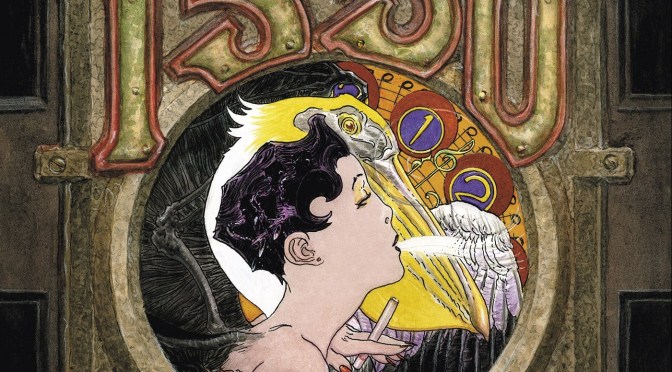
Book Review: Speak Easy by Catherynne M. Valente

Speak Easy is every bit as weird and wonderful as I could hope for or expect of a new novella by Catherynne M. Valente. As is characteristic of the author’s work, Speak Easy is a lush tapestry of beautiful prose, full of cunning wordplay, richly detailed descriptions, and a cast of eccentric characters.

My favorite thing about any Cat Valente book is the sense of space she achieves in every world she creates. The hotel Artemisia is no different. Reading Speak Easy is like walking into the hotel and taking a guided tour with someone who has lived there their entire life. They know all its nooks and crannies, but there’s really no end to the secrets of the place. Every page of this book is full of life and color and drama, and Valente seems to almost effortlessly weave a picture of a vibrantly wonderful world.

Speak Easy is being sold as a retelling of The Twelve Dancing Princesses, but you may not see it unless you know the original fairy tale very well. Valente is a shrewd scholar of fairytales and mythology of all kinds, and she has a keen talent for adding her own embellishments and twists. Her deep love, appreciation, and understanding of the form shines from every single page.

At the same time, though, there’s an awful lot packed into this slim little story. It’s not just an old fairytale; it’s also A Midsummer Night’s Dream and a particular moment in America’s literary history. It’s tragedy and comedy and heaven and hell and the exploration of these dualities. It’s a story about creativity and what it takes to be an artist. It’s a story about stories and where they come from and who they belong to.

It will break your heart in the best way. Not gently, though.

My first exposure to Valente’s work was her Fairyland books for young readers, which I read aloud to my daughter until she finally decided she was too old for bedtime stories any longer. I’ve since decided that every single thing Cat Valente writes deserves to be read aloud, just for the sheer joy of feeling her words roll off one’s tongue. Read it to a baby (goodness knows they don’t know any better) or to your pet or just to yourself in the privacy of your own home. Just do it, because it’s beautiful. Then go do the same with all of Valente’s other work.

The only negative of this book is that the hardcover is extremely expensive. Unless you are a collector of books, I’d suggest opting for the ebook, which is the best $5 you could spend this year.
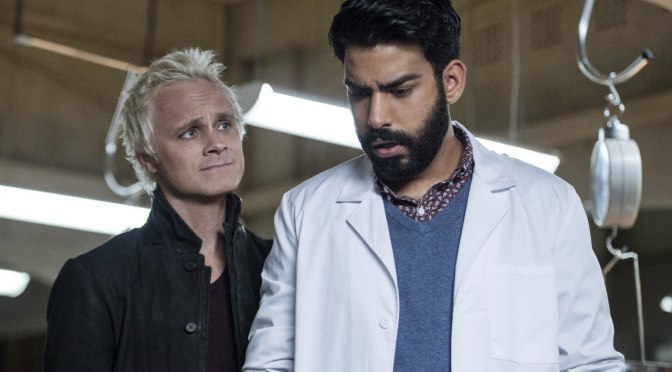
iZombie: “Love & Basketball” is the best episode of the season so far

No Peyton this week, and no Vaughn, but there’s so much else going on in “Love & Basketball” that I can [mostly] forgive these sins. “Love & Basketball” is one of those rare episodes of television that manages to be just jam-packed with really interesting stuff, full of important emotional moments, and very funny. It would be very easy for this episode to become incoherent with so much going on, but it’s masterfully balanced here.

The episode picks up right where last week’s left off, with Liv and Major making out big time. Which Liv puts a big time stop to almost immediately, and there is so much that I love about this interaction and the following morning when Liv wakes Major up by taking his blood pressure. This is probably the funniest Major has ever been, which is a nice change after several weeks of him sort of alternating between boringly tortured and boringly insufferable to everyone around him. I still don’t love Liv and Major as a pairing, but I can kind of see the appeal now at least.

I even found myself rather liking Major when, after Liv delivers a long, basketball coach brain-inspired pep talk in Major’s (disgusting, by the way) bedroom, he just responds with a lovingly indulgent, “God, you are so weird.” If you are a Liv/Major shipper, this is basically a perfect episode for you, as it’s peppered throughout with these kind of cute moments. I do think the emotional arc of them going from wanting to tear each other’s clothes off to being best friends again to ending the episode with having a real serious relationship talk was a lot to squeeze into a single episode, but it mostly worked here. It didn’t even completely monopolize the episode; there was plenty of time for advancing other plots and revealing new information about other characters.

The larger of the two B-plots in “Love & Basketball” is definitely the actual case of the week, which Clive ends up mostly working alone. Even then, this storyline this week is much less about the actual murder mystery (which is, frankly, almost too convoluted) and more about giving Clive a good deal more screen time than he’s had so far this season. In the end, this turns out to be almost entirely in service of advancing the Meat Cute plot, which has apparently not been abandoned.

This is another story thread that this episode manages to pull of nicely, even though it seems like it would be a lot to squeeze in. Honestly, though? I think the most important part of these scenes is the new insight that we gain into Clive’s character. He’s apparently the kind of guy who will beat the shit out of a child abuser, which makes me like him even more than I previously did.

While following Clive around, we also get to see more of the new character that was introduced last week: Dale Bozzio the FBI agent. We learn a couple of big things about her. First, she’s totally hilarious. Second, she’s also interested in what happened at Meat Cute.

Finally, in the third major story thread this week, Ravi finally gets his hands on more of the tainted Utopium that he needs in order to re-develop the cure for Liv and the rest of the zombies. This is a pretty significant development, but the best thing about it in this episode is that we get a scene with just Ravi and Blaine. Fighting over the tainted Utopium. While “Friday I’m in Love” (Get it? The Cure!) plays in the background, which is my favorite thing that has ever happened on this show.

Leftover thoughts:

  • “Clear eyes, full stomachs, can’t lose” is a great line.
  • I hate the conflict between Gilda/Rita and Liv over Major. Gilda/Rita doesn’t even seem to like him very much, and I can always do without this type of sexual competitiveness and jealousy between women. It’s not entertaining to me. At all.
  • Blaine comes up with the very best business names. I’m sure I’d heard it before, but Shady Plots as the name of his funeral business? GENIUS.
  • The other medical examiner in Tacoma was super racist, right? If they were just trying to portray a kind of humorous city vs. country rivalry between Ravi and this guy, I feel like they went a little overboard with that dude’s really hostile bigotry. It wasn’t the whole scene, but it was early enough in the scene that it made it hard for me to laugh when the tone was more playful later in the conversation. I just felt bad for Ravi and Clive being stuck dealing with this jerk.
  • I don’t really get what’s going on with the zombies at Max Rager. How is it possible that this scientist lady doesn’t know that the zombies they are paying Major to kill are sentient people? That stuff was all just weird.

Magazine Review: Nightmare Magazine, October 2015, Queers Destroy Horror! Special Issue

While I’m not a regular reader of magazines, I have become absolutely hooked on the various Destroy SF projects of the last couple of years. October’s Nightmare Magazine special issue, Queers Destroy Horror was another great entry into the series.

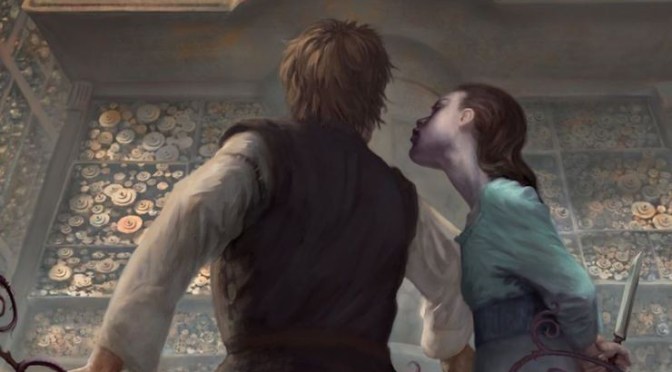
The surprise for me in reading this issue, though, was that I found myself less enchanted with the fiction this time around and much more interested in non-fiction pieces, most of which were excellent.  Sigrid Ellis’s powerful piece about her complicated relationship with the works of Stephen King, “The Language of Hate” is worth the $2.99 I paid for the issue all by itself. The same could be said for Lucy A. Snyder’s “The H Word: A Good Story” and Michael Matheson’s “Effecting Change and Subversion Through Slush Pile Politics.”

The roundtable discussion and the author spotlights as well were particularly excellent in this issue, although I do find it a little disingenuous how often some version of the phrase ‘I don’t think of myself as a [identity] author” appeared. I know that identity issues are complicated (I’ve got my own, thanks), but still. I just find it a little cliché, this coyness about how one’s identity informs one’s work, and I sometimes think that it gets in the way of more useful insights. That said, there are still plenty of interesting things being said here.

While the non-fiction sections of this issue were superb, that’s not to say there was no good fiction, either. Matthew Bright’s Dorian Gray tale, “Golden Hair, Red Lips,” was a great way to kick off the issue, and I loved Alyssa Wong’s story, “Hungry Daughters of Starving Mothers.” My favorite of the short stories, though, was “Dispatches from a Hole in the World” by Sunny Moraine. It’s a wonderfully dark and atmospheric story, as well as a delightfully inventive and timely piece whose specific subject matter works perfectly to place it in a particular time and space and address a particular community. I loved it, although I expect that those less interested in or connected to the goings on of the internet may not quite “get it.”

While most other entries in the Destroy SF catalog include flash fiction, Queers Destroy Horror opted for poetry instead. Unfortunately, I’m not terribly into poetry as a general rule, but I did enjoy Lisa M. Bradley’s “The Skin Walker’s Wife” and Amal El-Mohtar’s Snow White-inspired poem, “No Poisoned Comb.” When I do like poetry, I usually prefer these sort of narrative pieces, and these two really hit the spot.

As always, I highly recommend checking out all of the Destroy SF material. I don’t know that I’d say there’s something for everyone, but it’s a great project that consistently turns out high quality collections of work that puts a spotlight on ordinarily marginalized voices in genre literature. It’s great stuff, and it’s not too late to buy this issue.

Minority Report: Sadly, I think I’m done with this show

“Honor Among Thieves” is another middling-to-bad episode of this almost-certainly doomed show, and I think this is likely the last episode I will have anything to say about. Even now, my thoughts on Minority Report are primarily general thoughts and disappointment that the show wasn’t better than it’s turned out to be.

This week’s episode was a pretty classic monster/case-of-the-week format, which worked marginally better than a couple of previous similar ones have for the show, but it still just didn’t make a lot of sense. I didn’t understand how Vega got fooled by the fake EMTs in the beginning of the episode, and it’s really all downhill from there as the story continues to develop.

There are a lot of flashbacks this week, detailing the removal of the precogs from the original milk bath and their initial release into the world, which apparently consisted of little more than a “Whoops! Sorry!” and a fat paycheck from the government before they were tossed out into the streets in a bad part of town and left to their own devices. On the one hand, that would be pretty much expected behavior for the US government. On the other hand, I have a very hard time believing that the kind of evil government that would enslave children would then encourage them to disappear so completely without some way of keeping track of them.

It’s also just plain painful to see how naïve the precogs were, especially the boys. It definitely helps to provide a little more understanding of why Agatha thinks they can’t take care of themselves. That said, I do not buy at all the idea that, in the beginning, it was Arthur who was the soft-hearted one who just wanted to help people. Even if that was the case, there’s really no hint in this episode of how or why Arthur and Dash so completely swapped opinions. I’m also not sure why they even bothered unveiling this bit of history this late in the season, especially when the rest of the episode goes on to further establish Arthur as a pretty big deal in the international organized crime scene. It doesn’t add depth to his character; rather, it makes him seem a hypocrite.

This episode also marks the first time that I haven’t enjoyed the show at least a little bit. Any sense of fun that the show has had up to this point seems to have drained out of it, and all that’s left seems to be a grim determination to finish these ten episodes so everyone can move along to other, hopefully more successful projects. I will probably finish watching the series, but I doubt I’ll be writing about it unless it somehow gets incredibly good sometime in the next three weeks. Right now, though, the show has become its own wet blanket.

Supergirl: “Stronger Together” is a solid followup to last week’s overstuffed pilot

“Stronger Together” is a strong second episode for Supergirl after a slightly overstuffed (though very informative) pilot. However, it feels as if there are a couple of different shows being mashed together here, and I’m not sure that it’s entirely working.

There’s the show about Kara Zor El, plucky young super hero growing into her powers and figuring out her place in the world with the help of her friends. Then there’s the show with secret government agencies, a prison full (or, I guess, not full any longer) of evil aliens, and Kara’s presumed-dead-but-really-evil aunt, General Astra. These two shows so far seem to have very little to do with each other, their tones so disparate, and they are even so visually different that transitions between them feel jarring.

On the one hand, it’s nice to see a super hero property avoiding some of the darkness that has become so increasingly characteristic of the genre, but Supergirl seems less intent on eschewing it altogether and more committed to just keeping the dark parts of the show almost completely divorced from the brighter parts. And so, half of this episode was Kara adorkably fumbling her way through her first days as a superhero, and the other half was her finding out that her mom’s evil twin wants to murder her.

Still, it’s an awfully enjoyable show.

Melissa Benoist continues to bring a sort of irrepressible awkward charm to Kara Zor-El while also showing to advantage in her action scenes. One thing I noticed this week that I really like about the way this Supergirl is being portrayed is that whether it’s Benoist’s natural physique or some strategic padding, Supergirl has got some seriously visible upper body strength. While the character isn’t devoid of sex appeal, it seems as if the show is dedicated to presenting her as tough, practical, and sensible first.

The show also isn’t jumping too quickly into the implied-to-be-impending love triangle between Kara and James and Winn. I was especially concerned about Winn after his moment of indignation in the pilot of Kara’s lack of interest in dating him, but he seems to be settling comfortably into being a true and loyal friend to her. This week, while Winn did seem slightly competitive with James, I didn’t get any of the Nice Guy™ vibes that I detected in the first episode. James, on the other hand, got to have a somewhat romantic moment with Kara this week, but it wasn’t overdone and didn’t feel like a rush on the part of the writers to push Kara into a romantic relationship. Incidentally, this was one of the episode’s best scenes, title drop and all.

My personal favorite scenes this week, though, were all scenes between women.

Alex and Kara’s fight was important, and I’m very glad that the seemingly too-quick resolution of their conflict in the pilot wasn’t the end of any complexity in their relationship. So far, the show seems to be avoiding a lot of the standard troubled sibling relationship tropes in favor of showing a complicated but generally happy friendship between Kara and Alex. Certainly they have disagreements, but they seem to also care really deeply for each other in a way that colors all their interactions.

The next standout scene was Kara’s fight with General Astra. I think they could have played up the trauma Kara likely experienced upon meeting her mom’s evil twin, but it was a pretty badass fight. The show’s visual effects come off a little hokey at points, but I actually enjoy that as I feel it makes for a more authentic comic book feel. I don’t think anyone is watching this for realism.

Finally, I adored the final scene of the episode. With so few female-led superhero projects in production, Kara picking up Cat Grant’s car is a nice subversion of regular super hero tropes. Also, it just looks cool. Hovering in the air, Kara looks positively angelic, and this might be the most sort of iconic moment of of the series so far.

Speaking of Cat Grant, though, brings me to my one major criticism of this episode: It seems a little hypocritical of an ostensibly feminist show to be CGI-ing the shit out of Calista Flockhart’s face. At first I thought there was just a general soft focus in the scenes at CatCo, which tend to be very pastel-colored, but the more I saw it, the more I realized that it’s just on Cat Grant’s face. I totally see Cat as a character who is vain and image-obsessed, but that would mean lots of make-up or maybe some too-young designer outfits. This is actually someone going in during post-production and removing all the lines in her face so she looks like a creepy android or something. Needless to say, I hate this so much.

Overall, though, I’m still enjoying the show a lot, and I can’t wait to find out how the interview went.

Book Review: The Last Witness by K.J. Parker

The Last Witness is decidedly not my kind of book. If I wasn’t making a point of reading all of the Tor.com novellas in publication order, I would never have picked this one out based just upon its back cover copy. Needless to say, I’m glad that I’m working on this reading project, because I would be sad to have missed this little gem of a story.

The Last Witness deals with some rather heavy ideas about memory and storytelling—specifically the stories that we tell others and ourselves. It’s a fascinatingly speculative story with an intriguing perspective and a main character with a powerful magic that is the very definition of a double-edged sword. He can steal memories, but he remembers them all perfectly, himself. The story answers some of the questions that must be asked as a matter of course once you think up that kind of magic power.

As the story unfolds, we learn more and more about Parker’s wonderfully unreliable narrator, where he came from, and what having this power has made of him. There’s not a lot in this premise that is terribly surprising, but the story is well-constructed, and when the twist comes near the end it’s, well, not unexpected exactly, but so perfectly placed and executed that it provokes a deep emotional response as one is forced to change the way one thinks of the narrator and the story he’s told up to that point.

My biggest criticism of the book is that there are parts that are just plain confusing. Because of the mechanics of the narrator’s magical ability, he sometimes has a difficult time differentiating between his own natural memories and those that he’s gleaned through his work. While everything becomes clear by the end of the story, there were several times in the first third or so where I found myself struggling to make sense of it. This isn’t aided, either, by the fact that there are no chapters or other markers to clarify shifts between the narrator’s memories and other people’s memories that are being remembered by the narrator or between flashbacks and the present day events of the story. It’s not bad enough to make the story unreadable, but I could definitely see this being off-putting for people who (unlike myself) have no problem abandoning a book partway through.

I don’t expect that The Last Witness will be among my favorites of the Tor.com novellas, but I’m happy to have read it. It’s a solidly written story with an interesting protagonist, a clever twist, and a satisfying conclusion.

Doctor Who: “The Zygon Invasion” is just kind of boring

[SPOILER ALERT]

I was so excited to see Clara have so much more to do in “The Zygon Invasion” than she has the whole rest of the season that I didn’t even realize that she was replaced by Zygon before she’d spoken half a dozen words. I only called it about a minute before it was actually revealed to the audience, and I’m usually pretty good at detecting evil twins. I’m not sure if I’m happy to have been surprised by what was really a pretty well-written episode or if I’m just terribly irritated by the revelation that Clara is once again being reduced to furniture.

Aside from that, this was (objectively) a fairly good episode and one of few in the Moffat era to pass the Bechdel test. With Jemma Redgrave returning as Kate Stewart, Ingrid Oliver reprising her role as Doctor fangirl Osgood, and several minor female characters making their Doctor Who debuts, it’s an episode that is just packed full of women in key roles. Peter Capaldi has really settled into his role as the Doctor, and he continues to be great fun to watch. I even rather like the Zygons, although I’m not sure where the show is going with this storyline.

Here’s the thing about this episode, though: I just didn’t like it. Clara being damseled is part of the reason, certainly. There’s not much that will annoy me more about any story than female characters being reduced to objects in need of rescue. But that’s not entirely it, either.

Mostly, I found the episode to be thematically muddled and, frankly, boring. Honestly? I think I’m just almost unable to get really excited about this show anymore unless it does something really fascinating, which it didn’t manage to do this week.

The peace with the Zygons that was negotiated in the anniversary special seems highly impractical, and the desire of the Zygon radicals this week—supposedly to live openly rather than secretly and in hiding—seems eminently reasonable enough that it’s hard to see them as entirely villainous. On the other hand, with the Zygons having, apparently, made no effort to resolve their problem through diplomatic channels, their violence seems disproportionately and absurdly unnecessary and counterproductive. By using language that ties the Zygons to real-world terrorists, the show is inviting a comparison that doesn’t really stand up to any real scrutiny.

Doctor Who is a show that only rarely addresses these kind of real world political issues, and it’s disappointing to see it done in this manner, if only because this shallow treatment of complex issues risks becoming incoherent. Things didn’t break down entirely this week, though, and the second half of the two-parter might make more sense of the copious set-up we were presented with this week. We’ll see.

Ash vs. Evil Dead: “El Jefe” greatly exceeded my expectations

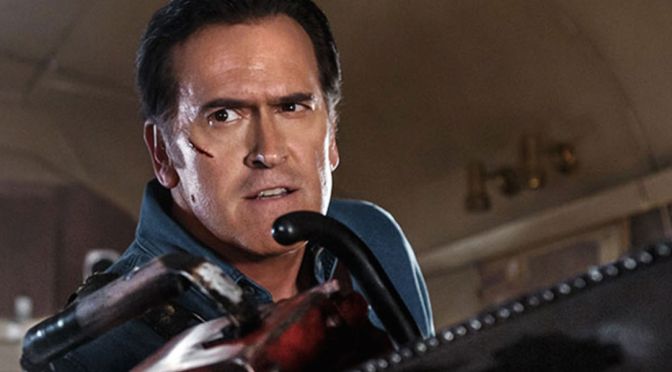
Ash vs. Evil Dead is, so far, everything I hoped it would be. My expectations weren’t high for this show, but I have to admit that my hopes were, and Starz has delivered.

My biggest fear about this television adaptation was that, in a time where grit and grimness is highly popular, it would take the material far too seriously. Fortunately, that isn’t the case so far. In fact, in “El Jefe” I think the material was treated with exactly the level of seriousness it deserves.

That said, most of this first episode was devoted to introducing characters. establishing the show’s mythology, and setting up the initial crisis. All of these things are accomplished by the end of these first forty minutes, and the episode is tightly scripted, fast-paced, and hilariously entertaining.

Ash himself is less likable that I remember, although to be fair it’s been probably ten years since I last watched Army of Darkness, which gives a much better picture of Ash’s character than Evil Dead ever did. Still, Bruce Campbell is ridiculously charming, and he makes the most incredibly goofy faces. I could have done without seeing him grossly proposition a girl young enough to be his daughter, although Kelly (Dana DeLorenzo) seems like a character who can hold her own with an old creepy. In any case, that bit of weirdness was basically entirely made up for by getting to see Ash smash a bunch of vases against his own face while fighting an evil doll—and the CG for that scene was perfectly terrible, by the way.

Ash’s sidekicks, Pablo (Ray Santiago) and the aforementioned Kelly, fit into the Evil Dead universe perfectly, and Ray Santiago could give Bruce Campbell a run for his money in the silly faces department. Pablo’s almost blind faith in Ash is endearing, and Kelly so far doesn’t fit neatly into any particular stereotypes. I also like that while Pablo may be smitten with her and Ash might leer at her, the camera treats Kelly with respect; I can’t think of any pervy shots of her, anyway, which helps to reassure me that Kelly doesn’t just exist to be ogled or end up a love interest.

The other major character that got a lot of screen time this week was state police officer Amanda Fisher (Jill Marie Jones), whose first encounter with the evil force Ash has awakened (in a scene that highlights the dangers of mixing drugs and ancient books of magic) ends with her having to shoot her partner’s head off, which earns her a suspension from the force and an internal investigation. Amanda’s introductory scenes are the only ones in this first episode that I think were at all scary, but they also felt very consistent with the tone of the old Evil Dead films, with a similar visual effects style that relies chiefly upon great gouts of fake blood. While Amanda is moping in a diner after her traumatic experience, we get to meet Lucy Lawless’s character, Ruby, the only main character who remains mysterious by the end of this episode.

Overall, this episode greatly exceeded my expectations, and I’m now legitimately excited about this show instead of just in it for the nostalgia factor. The next test for Ash vs. Evil Dead will be whether or not the show continues to hold up without Sam Raimi at the helm for every episode. Next week, someone else takes the reins, and we’ll find out. Hopefully, we’ll also get to see more of Lucy Lawless.

Weekend Links: October 31, 2015

A Softer World comes back from the dead for Halloween.

Publisher’s Weekly has posted their list of the best sci-fi, fantasy, and horror books of 2015.

Strange Horizons finally got around to reviewing season five of Game of Thrones, and I think this is pretty spot-on.

You know how lots of people seem to think that Game of Thrones is some kind of historical documentary? There’s a new university course to help perpetuate that misconception!

Flavorwire has a list of the 20 creepiest haunted houses and mansions in literature.

Speaking of haunted houses, both Jezebel and Motherboard published profiles this week on Margee Kerr, who does science on how and why people experience fear and has recently published a fascinating-sounding book on what she’s learned so far.

Web Urbanist explains the symbology of gravestones.

If you’re looking for something scary to watch this weekend, Ms. Magazine’s multi-part Feminist Guide to Horror Movies might give you some guidance.

For fans of movie gore, there’s this very cool Cinematic History of Fake Blood:

Deadspin will tell you everything you’ve ever wanted to know about the man who played Vigo the Carpathian in Ghostbusters II.

Space.com asks sci-fi authors what they think alien megastructures might be like.

While Gizmodo points out that most Earth-like planets haven’t even been born yet.

Suvudu interviewed Updraft author Fran Wilde.

SFF World interviewed Jane Yolen.

Slade House and Cloud Atlas author David Mitchell writes about the influence of Ursula K. LeGuin’s Earthsea novels.

Robert Jackson Bennett has some opinions about princesses.

James Davis Nicoll is planning The Year of Tanith Lee.

Rocket Stack Rank looks at the influence of the Locus Recommended Reading List on the Hugo Awards.

jennre has a wonderfully comprehensive post on women in early sf.

At the Barnes & Noble blog, a much less comprehensive but still refreshing list of 6 SFF books challenging gender roles that aren’t by Joanna Russ.

I’m always excited to see another new collection of women’s science fiction stories, and Sisters of Tomorrow looks like it’s going to be a good one.

Finally, and this is big news for writers out there, submissions opened today for Lightspeed Magazine’s POC Destroy Science Fiction issue. I loved Women Destroy, and this year I’ve been greatly enjoying Queers Destroy, so I expect POC Destroy to be up to the same high standards as the rest of the Destroy projects.


iZombie: Peyton is great, but Peyton plus Blaine is better

iZombie surprised me this week, by following up last week’s very good episode with another that I like even better. “Even Cowgirls Get the Black and Blues” is an episode about heartbreak, which it deals out in spades, and, relatedly, the ultimate randomness and meaninglessness of the universe. Nevertheless, this is also an episode full of hope, although I wouldn’t exactly call it optimistic, either.

The biggest surprise this week by far was how much Peyton was in the episode. Last week, we seemed to have gotten her back in exchange for no Blaine at all, but this week we get some of both—and both together, which is something I never knew I always wanted. Peyton and Blaine together is only my second favorite development of the episode, though.

The very best thing that happened this week? Peyton and Liv’s actual reunion at the start of the episode. After the last few episodes, which really focused on the breakdown of basically all of Liv’s relationships and Liv’s growing feelings of isolation and disconnectedness, it’s so nice to see something in her life going well. I was a little concerned last week when Peyton just left the birthday cake for Liv, but it turns out she really was just busy. When Liv tracks Peyton down at the gym, Peyton is pleased to see her friend, apologetic about the months of radio silence, and ready to talk about things.

Unfortunately, Liv is called away to help Ravi, but this isn’t the last we see of Peyton. Honestly, though, after all the time this show has spent sidelining and just plain disappearing Peyton altogether, I find it a little hard to credit this turnaround in their treatment of this character. This week sort of doubled down on Peyton’s storyline from last week and tied it together with Blaine’s in a way that makes me think that Peyton is going to continue to play a significant role in this season’s overarching plot. That said, the show has teased Peyton’s importance before with no payoff, so I’m trying to manage my expectations about this until I see at least a few more episodes in this same vein.

Blaine, of course, is shaping up to be a great villain, and this week he’s delightfully evil as he continues looking for the recipe for the tainted Utopium from the boat party. I pretty much loved everything about every scene Blaine was in this week. His texting henchman is excellent, and all of the Blaine scenes this week had the great balance of darkness and humor that characterizes this show at its best.

Aside from Peyton’s return, the other big emotional component of this episode concerns Liv’s relationship with Major. I’m very surprised to see this plot moving along as quickly as it seems to be, although I’m also not convinced that this really is Major’s rock bottom. If it is, it’s going to be profoundly unsatisfying and will really cement Major’s position as one of the most boring ex-boyfriends on television.

In basically every way possible, Major behaves abominably to everyone he comes in contact with this week, which is par for the course with this fetid pile of unexamined privilege. The difference between this week and every other week, however, is that we’re actually starting to see him being called out on it. Peyton has been back all of two days and has noticed what a weirdo Major is being. Ravi actually confronts Major about his bizarre behavior. Even Liv finally goes to Major and tells him that they are for real over. And then Major shows up on Liv’s doorstep and it looks like maybe this thing is back on—although I’d call it even odds that making out with his zombie ex-girlfriend might just be another rung on Major’s descent into crisis.

The problem with Major, of course, is that he’s just plain unlikable. I think I could deal with that if Major’s character arc was taking him towards being a villain, but he’s just awful as a romantic hero. Peyton’s return and her reunion with Liv, with its hugs and apologies and empathy, really helps to highlight just how terribly unreasonable Major has been in the way he’s treated Liv. It was gratifying this week to see Liv herself get to call Major out for this, but the ending of the episode reveals just how much Liv is still dealing with her own feelings of self-loathing, guilt, and shame—and how vulnerable and starved for affection she really is.

Overall, “Even Cowgirls Get the Black and Blues” is a solid episode. The murder mystery sort of fades into the background, and the effects of the murdered woman’s brain on Liv was subtly and sensitively handled, which was a nice change from some recent episodes where Liv picked up a few too many of her brains’ worst qualities. I liked the way that the randomness of the murder ended up echoing the randomness of Liv’s being turned into a zombie in the first place, and it was good to see Liv starting to deal with her feelings in a better way than she has been. Key to that development is Peyton’s return, and it’s very clear that Peyton’s forgiveness and acceptance of Liv is vitally important. I just hope that Peyton sticks around this season.

Miscellaneous thoughts:

  • Ravi’s new girlfriend, Stephanie, seems nice, but I got a sort of weird vibe when she congratulated him on banging Peyton.
  • Minor is a great name for that dog, which is totally adorable.
  • Is Babineaux getting a love interest? That would be swell, because that poor man hasn’t had much to do this season so far.
  • Ravi was awesome this week, in general. He dressed like a cowboy, was a supportive friend to Liv, and called Major out in a pretty significant way.

Sci-fi and Fantasy books, tv, films, and feminism