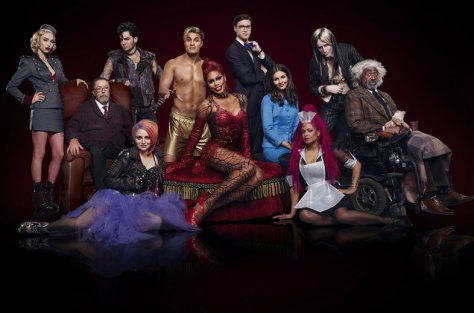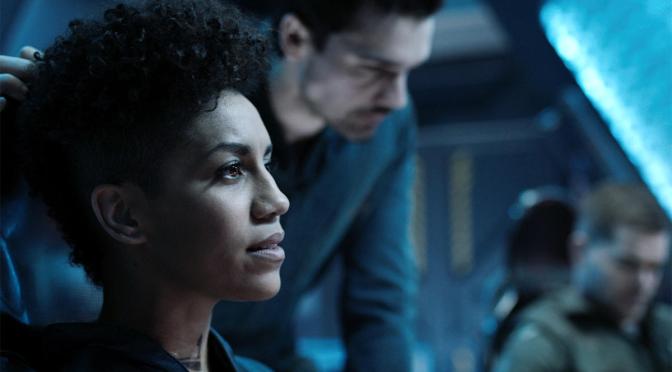
Category Archives: Television

The Expanse: “Godspeed” doesn’t go as fast or as far as I hoped it would

After all last week’s great setup, I rather expected “Godspeed” to be a more action-packed episode and to move at a faster clip through the remainder of the story from Leviathan Wakes. Instead, this episode focuses a lot more on some compelling emotional beats and then stops just short of a major climax that I was really looking forward to seeing. So, in a way, “Godspeed” was something of a letdown. At the same time, however, the episode flows nicely for the most part; there’s some necessary character development, especially for Holden; and the CGI team really brought their A-game in bringing the space action to life. This wasn’t the episode I wanted or expected it to be, but it’s not bad, and the preview for next week’s episode looks promising enough that I’m glad that this last bit of Leviathan Wakes material is being given more room to breathe.

Book and show spoilers below.

“Godspeed” opens with Avasarala and Cotyar investigating the derelict stealth ship that Fred Johnson directed them towards last week. They’re having the wreckage explored, and the place is just dripping with evidence—an expensive warship with one of the stolen drives from the Bush shipyards, full of dead crew all of whom are found to have last worked at Protogen, which ties this all clearly to Jules-Pierre Mao and to the destruction of Phoebe. It’s not long before Avasarala has put together a significant portion of the plot between Mao and Errinwright, and she soon has both men in a room together to straighten things out. After this conversation, Mao is spooked, but Errinwright is still in denial about what Avasarala knows, which leads Mao to terminate their association. Still, plots are afoot, and Avasarala doesn’t have the full picture just yet, even if she is much cleverer than Errinwright gives her credit for being.

Sadly, though, most of this still feels like buildup to future events. I love Chrisjen Avasarala. I could watch just ten straight hours a year of her being the smartest person in every room, and the costumes, hair and makeup for this character are always exquisite. But none of what happened this week felt urgent, and none of it resolved anything. This season began Avasarala’s story with a dramatic attempt on her life, which was good. It gave us some real action on Earth and raised the personal stakes for the character, which led to her discovery of Errinwright’s plotting against her. That was good, entertaining stuff. Now, it feels as if the show is trying to send Avasarala down the rabbit hole to see how deep things go, but without much support. Mao and Errinwright might be worthy opponents for our Chrisjen, but they haven’t gotten much screen time before now, and watching the unraveling of their plans isn’t the best way to make them feel threatening. Cotyar is inscrutable, and he doesn’t seem in danger of getting a big shot of character development any time soon. Even Avasarala herself seems somewhat flat and one note so far this season, in spite of Shohreh Aghdashloo’s formidable acting chops.

Having read Caliban’s War, I expect that this is simply because there’s not a whole lot for her to do until Bobbie Draper shows up in a couple more episodes. It’s just unfortunate that in the meantime, the politicking on Earth feels less and less consequential with each scene we see. Much of what Avasarala is uncovering now is stuff that took her halfway through Caliban’s War to figure out (and then only with Bobbie’s help), which makes my concern now that by the time Bobbie Draper gets to Earth and Chrisjen meets her, they won’t have much to do together. This might make sense if somehow the show is hoping to squeeze the rest of Caliban’s War into the back half of this season, but that would make for either a lot of rushing things or a lot of cut book material. With the show being so true to the books up to this point, that seems unlikely, which could suggest invented material for the show, as with the pre-Ganymede scenes for Bobbie and her unit, but that’s been a mixed success at best. I guess we’ll find out in a couple of weeks once Bobbie gets to Ganymede and the Eros stuff is behind us.

There was, incidentally, no sign of the Martians this week, as aside from the brief scenes of Avasarala, Mao and Errinwright the rest of the episode followed through on Miller’s suggestion to Fred Johnson last week that they use the Nauvoo to ram Eros and the protomolecule into the sun. There was some great character work in these segments, especially from Chad L. Coleman as Fred Johnson and Steven Strait as Holden, two characters who had to deal with making major decisions in this episode. There’s also a great deal of fantastic CGI space action, with the launch of the Nauvoo a particular highlight and the boarding of Eros another. From a technical standpoint, the show absolutely nailed the things it needed to nail this week. When it comes to maintaining a cohesive narrative and thematic arc, “Godspeed” is somewhat less successful.

Things start out well enough on the Tycho with a pre-credits introductory scene in which Miller and Fred Johnson bring Holden and Naomi in on their plan for the Nauvoo and Eros. Holden, self-righteous as ever, is still sore about Miller killing Dresden, but he quickly sees the necessity of dealing with Eros as soon as possible and agrees to help with relatively little fuss. The scene is good, but the sudden end of Holden’s antipathy towards Miller after this final short display of it is too abrupt and feels unearned. It’s only Naomi who is willing to talk to Miller before they go back to Eros, but later in the episode when Miller is in danger, Holden seems to have forgotten their disagreement entirely. Any kind of short interaction between Holden and Miller to resolve their argument would have made a difference here, and we surely could have given up a few seconds of CGI spaceship porn to make room for it.

The standout scenes of the episode showed the commandeering and launch of the Nauvoo, but here the sheer CGI gorgeousness of it almost overshadowed the rest of what was happening. The scenes of the Mormons being evacuated from the Nauvoo, which also serves as their temple, are heart wrenching, but again this is material that feels somewhat rushed over. Jeff Clarke is perfectly cast as Elder McCann and imbues the Mormon leader with a humane earnestness that makes him a surprisingly likable minor character, and he deserved a little more consideration than he got. On the other hand, the final scene of Fred Johnson ordering the launch is perfectly executed, and Chad L. Coleman makes the most of his own limited on screen time to effectively convey Fred’s conflicted feelings about what they’re doing.

When Holden and company reach Eros, they find a small ship docked with the station full of doctors on a humanitarian mission to help the people trapped inside. Deciding how to deal with this might be the hardest thing Holden has had to do to date, and it’s certainly Holden at his most compelling so far. When the doctors on the Marasmus mistake the Rocinante for Martian ship, Holden plays along, hoping to scare them away from Eros without violence, but before the Marasmus can make their escape it’s discovered that they have already been inside the station and in contact with the protomolecule. The captain of the Marasmus intends to broadcast their Eros findings to the rest of the solar system, which could only add to the chaos and misinformation that has been fueling many of the events that have taken place since Holden’s own ill-advised broadcast about the destruction of the Canterbury. Holden has been through a lot since then, and circumstances have continually forced him to compromise his ideals and adapt to unfamiliar situations, which has made him far more circumspect about spreading information. In the end, Holden is forced to destroy the Marasmus, a symbolic killing of his own old self that should have interesting repercussions for the character down the road.

The pacing of the episode is strange throughout the hour, and the ending feels both sudden and anticlimactic. It’s not that it’s particularly telegraphed earlier on or anything, but the news that it’s Eros that is changing course and heading towards Earth just isn’t at all surprising when it happens. The voices coming from the station all this time have been a clear hint that something there might be sentient, and it prevents the ending of “Godspeed” from functioning as a proper cliffhanger, especially since we already know that Naomi can remotely disable the detonator that Miller has his finger on. It’s pretty obvious where this is going, and I just wish it would hurry up and get there so it can move on to whatever comes next.

Miscellaneous Thoughts:

  • “The Mormons are gonna be pissed.”
  • I loved the quick scene of Mao watching the news and finding out that his assets are frozen. François Chau has these amazing subtle facial expressions that make him perfect for this role and highly entertaining to watch. I’ll never not get a kick out of seeing wealthy business tycoon villains get the wind taken out of their sails.
  • Andrew Rotilio continues to be all charm as Diogo.
  • Not enough Alex and Amos, to be honest.
  • Even a weak episode of The Expanse has a lot of things going for it.
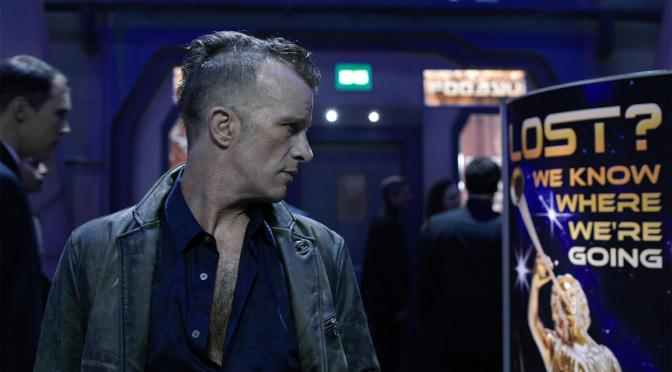
The Expanse: “Static” is a solid set-up for major events coming next week

After last week’s action-packed season premiere, “Static” is a fairly quiet interlude that splits its time between character development moments—as various people deal with fallout from last week’s events—and exposition and set up for another major event (or two) next week that should wrap up the end of Leviathan Wakes material and put us into Caliban’s War in episode five. The Expanse has always laid out its episodes in this sort of cyclical pattern, alternating between action and exposition, punctuating the flow of its overall story with periods of calm and excitement, but with mixed success. The show’s quieter episodes have had a tendency to feel like wheel-spinning, and there’s some of that here, but there’s also copious evidence that the show’s writers have taken some of the common criticisms of season one to heart and found a much better balance between exposition and events. To be sure, there are a few clunky moments in “Static,” but it was never boring, and there’s plenty going on the keep viewers excited for next week’s episode.

Spoilers below for the episode and books.

“Static” starts with an event leftover from last week, the destruction of Deimos by the Earth navy, which comes even before the opening credits. The opening shot of Earth’s missiles zooming towards Deimos quickly cuts to Bobbie Draper and her squad of Martian marines watching the news, which details the tiny moon’s complete obliteration and the deaths of all seventeen of its residents. We then get a short scene of Avasarala and Errinwright discussing the possible war with Mars, which turns to a voiceover on top of scenes of the Martian marines training. It’s a smart use of a couple of minutes that further sets up the rivalry between the Avasarala and Errinwright philosophies and highlights the seriousness of the situation. This whole opening sequence also resonates thematically with the rest of the episode (and, I expect, much of this season of the show), which deals heavily with ideas about the value of human life, whose lives matter, and the ease and difficulty with which different characters treat different lives as disposable. Sadly, Chrisjen doesn’t get much to do the rest of the episode, though her “What the fuck is that?” when she finally gets a message back from Fred Johnson near the end of the hour promises that she’ll have plenty to do in the next episode or two.

Similarly, Bobbie and the rest of the Martian marines are subjected to a somewhat boring and, frankly, redundant subplot this week. We get to see the way that the three native-born Martians single out and pick on the Earth born Private Travis, which was already touched upon in the first episode of the season. In the end, this relatively minor personnel issue is resolved and Bobbie and company are sent on to Ganymede, which book readers will recognize as the place where we first meet Bobbie in Caliban’s War. I suspect that all this time spent with Bobbie’s team is meant to help viewers connect with her and them before the Ganymede incident, but all these characters struggle with likability—probably because they spend so much time on petty bickering. It’s an interesting adaptational dilemma, though, if you think about it. On the one hand, I’m glad that the show didn’t work too hard to paint Bobbie and her team as overly soft and lovable. Bobbie’s not, in general, a super likable character, and the show is portraying her pretty much how she appeared in the book. On the other hand, they’re going to a lot of trouble to try and make the viewer care about this team of people and it’s, one, not working very well and, two, strongly telegraphing that this group of characters is marked for tragedy. The ominous way that Sutton pronounces “Ganymede” is a dead giveaway.

Most of “Static” takes place at Tycho Station, to which the Rocinante and Fred Johnson have returned with prisoners from Thoth. While the crippled ship is being repaired, its crew is fractured. After shooting Dresden last week, Miller is out, banished from the Rocinante by a furious, self-righteous Holden and from Tycho by Fred Johnson, who is himself struggling to figure out next steps in how to deal with Eros and the conflict between Earth and Mars that is sure to spill over into the Belt and Outer Planets. Holden and Naomi have a disagreement about Miller and Dresden, which sends Naomi off the Rocinante for some girl time with Fred Johnson’s assistant, Samara, and leads Holden to focus on interrogating their most important prisoner, a scientist named Paolo Cortazar. Amos starts the episode by having a commiserating drink with Miller but turns out to be instrumental in getting Cortazar to talk. Meanwhile, Alex is eaten up with guilt over the deaths of the twenty-five Belters on the second boarding pod at Thoth, and he spends the whole episode running and rerunning simulations of the fight in order to figure out a way that he could have saved them. All of this works together to produce a strange effect that is probably not quite exactly what the writers hoped for. The idea of breaking up the crew and then putting them back together at the end of the episode is a solid one, and it ought to be enough to fuel an episode, but the truth is that not all the conflicts here really work. There aren’t always clear consequences for characters’ actions, and the interpersonal stakes feel low when compared to the major events happening in the story.

This is probably most glaring in Miller’s storyline this week. In his first appearance of the episode, Miller is assaulted and berated by Holden, who is outraged at Miller’s extrajudicial killing of the unarmed Dresden. Fred is more quietly angry at Miller, perhaps angry less at Miller’s action and more at Miller’s usurping of Fred’s authority in the situation, perhaps for some other complex reason. It’s not always easy to tell with Fred Johnson, who is still a somewhat mysterious character in the show. In any case, Fred orders Miller off Tycho ASAP and sends Miller off to, presumably, find a ship to take him off. However, this isn’t what Miller does at all. It turns out that almost no one is actually that upset with Miller. In fact, some of the Belters on Tycho seem almost to hero worship the ex-cop, and Miller loafs around the station for somewhere between a day or so and a couple of weeks. The timeline is confusing. He has a drink with Amos, then goes to the Mormon temple on Tycho and lets some poor nice Mormon waste time giving Miller the whole spiel about the generation ship, the Nauvoo, parked outside Tycho. Miller is also having visions of Julie Mao, who seems to be beckoning him back to Eros, so he decides Eros needs to be destroyed and goes back to Fred Johnson to suggest that they use the Nauvoo to do it, and Fred agrees with no real argument. It’s a weird storyline because it feels important and somewhat dramatic during the watching, but its internal logic doesn’t actually hold up to much scrutiny. It’s Fred’s easy agreement at the end that really killed my suspension of disbelief, but this plot overall relies a little too heavily on the ability of viewers to fill in blanks and imagine character motivations and rationalizations that aren’t adequately supported by what is shown on screen.

The disagreement between Holden and Naomi is an obvious one. Holden, self-righteous prig that he is, hates that Miller shot Dresden, who was unarmed and not obviously presenting any imminent threat to the people who were in the room with him on Thoth. Naomi, however, sees the wisdom of Miller’s decision, though she isn’t entirely approving of it being so unilaterally decided and carried out, and she urges Holden towards forgiveness and clemency or at least pragmatism. This argument sends the two apart for most of the remainder of the episode, with Holden working with Fred and Amos to get information out of the scientist, Cortazar, while Naomi drinks and plays and dances with her new friend Samara. Before the end of the episode, Holden and Naomi have one more conversation where they reconcile, and this puts them right with each other in time for whatever comes next for them. The thing is, this is the first test of their relationship, but it never feels truly consequential. When they aren’t in the same room, it’s as if the two characters don’t even exist to each other, and their reconciliation feels too easily accomplished at the end after such a significant philosophical disagreement.

Still, “Static” is a good episode that does a lot of necessary ground laying for next week’s major events. The Nauvoo exposition was nice and not too clunky, the use of the Eros noises as a soundtrack was mostly well-done, and while quieter than the first two episodes of the season, this one didn’t feel slower or less interesting. I’m happy to see that we’re on track to finish Leviathan Wakes by the end of episode four, though. I cannot wait to get deeper into Caliban’s War material. The back half of this season should be awesome for female characters, and that is definitely relevant to my interests.

Miscellaneous Thoughts:

  • I love Errinwright’s line at the end of the opening sequence, where he turns Avasarala’s own words against her: “It’s like you always said; Earth must come first.” This is a great way of pointing out Chrisjen’s own hypocrisy in using rhetoric that can be easily interpreted in ways she doesn’t intend but probably should have been able to foresee.
  • I noticed that “Nauvoo” doesn’t set off spellcheck, so I googled it and learned an interesting bit of Mormon history that I was previously unaware of, so that was neat.
  • It’s interesting how Amos is used this week to relate to both Miller and Cortazar. One man has a rough exterior but an excess of empathy, while the other has been altered to feel none, yet Amos connects with both of them. I’m not always sure that the writers are sure what they want Amos to be.
  • I would have loved to see Alex’s story given more time this week, as well as some more interaction with other characters. He felt very alone and adrift in his pain, but it seemed as if this mini-storyline was almost an afterthought.
  • I genuinely hated the short EDM montage with the music made from the Eros recording. I’m not big on montages in general, but this one in particular was egregiously bad. It communicated nothing that hadn’t already been conveyed in the previous scenes, and it was heavy handed way of making a thematic connection between disparate storylines.

Powerless: NBC’s new un-super-powered comedy is clever, fun, and a nice surprise in general

I didn’t have high hopes for Powerless, to be honest. I don’t watch many half-hour sitcoms anymore at all, and this one had a couple of big changes in development that made the finished product something other than what I initially got moderately excited about when I first heard about it. Predictably, much of the pilot episode–bad-puntastically titled “Wayne or Lose”–was already spoiled by the trailers leading up to it, but I was pleasantly surprised to find the show overall well-constructed, slickly produced and consistently funny, with a well-chosen cast that has good chemistry right out of the gate. It’s what I imagine might happen if circa 2008 Zooey Deschanel had a baby with an obscure DC comics title, but in a good way.

Spoilers ahoy!

Vanessa Hudgens plays likable ingenue Emily Locke, who arrives in Charm City bright-eyed and bushy-tailed and ready for her first day as the head of R&D at Wayne Security. Hudgens does a great job of selling Emily’s wide-eyed excitement about the city and her new position, but her sunny optimism is tempered by real ambition and a deep-down belief in herself and her ability to make a positive impact on the world. Emily’s determination to be better (a motto she writes in permanent marker on a whiteboard) is something I genuinely appreciate as a personal and professional goal in my own life, and the show it’s a motto that feels real and achievable. Sure, Emily may have gotten it from the enormous Bruce Wayne-authored business bible she carries around with her for half the episode, but I rather think it’s one of the few motivational tools she has that really is all hers. I certainly hope so, since it’s written in permanent marker.

Emily’s sunny disposition is obviously not shared by the rest of the Wayne Security team. Boss Van Wayne (Alan Tudyk in excellent form) just wants to be transferred to the Gotham City offices and jumps at the opportunity to “fail up.” We learn that Van’s assistant, Jackie (Christina Kirk), started off very like Emily but has been worn down by the work environment. Danny Pudi, Ron Funches, and Atlin Mitchell round out the R&D department as Teddy, Ron and Wendy, respectively, and they too have spent enough time having their ideas dismissed and dreams crushed that they aren’t exactly welcoming to Emily, who (it turns out) is their fifth new boss in the last year. This obviously isn’t an altogether original setup for a workplace/fish-out-of-water comedy, but it’s a formula that works and the DC universe setting is enough of a twist to keep me interested.

Speaking of the setting, it’s really smartly done, and there are a ton of great comic book and genre references for longtime comics fans to catch and for less fannish folks to google after the episode. The use of obscure-ish heroes and villains like Starro, Jack O’Lantern, and Crimson Fox works well to firmly place Charm City (invented for the show) in the DC universe of the comics, but also firmly separate from everything else currently in production for film or television in the DC universe. Other details–like Adam West’s voiceover in a Wayne Security commercial for Joker anti-venom or Emily’s father being played by the 1978 Superman‘s Jimmy Olsen, Marc McClure–will be even less obvious for casual viewers but more delightful for serious fans of the genre and obsessive googlers like myself.

In the, end, though, there’s not much (yet, at least) about Powerless that is particularly unique or groundbreaking. It’s got a diverse cast, but that’s pretty bare minimum these days. It’s got a quietly progressive message, but it remains to be seen if that is nurtured into something more than a milquetoast slogan on a whiteboard. There’s a good deal of feminist potential here, but female friendships and mentoring relationships must also be nurtured and grown to really count for much.

Still, this is a promising first episode, smart and funny without being cynical, sunny and sweet without being cloying. Two weeks into what might be the apocalypse (and is a depressing time to live through regardless), Powerless has turned out to be exactly the sort of lighthearted thing I want to watch, especially now that the first season of The Good Place is over.

And speaking of The Good Place, do yourself a favor and go watch it immediately if you haven’t already.


The Expanse: “Safe” and “Doors & Corners” are a thrillingly ambitious start to Season Two

Season two of The Expanse isn’t wasting time with handholding or revisiting last season’s material, so I hope everyone has been paying attention. “Safe” is a whirlwind of fresh exposition and new character introductions that moves through the aftermath of the Eros massacre at a blistering pace to set the stage for the Battle of Thoth Station that takes place in “Doors & Corners.” It’s a good thing these two episodes were aired together because they would each have been frustrating to write about separately, one being a huge helping of infodumping mixed with survivor’s guilt and the other being dominated by the lengthy battle sequence that overshadows its first half. As a pair, these episodes work well as an introduction to the themes and conflicts of the show’s second season. Apart, not so much.

Spoilers ahead for the episodes and the first two books of the series!

Having read Leviathan Wakes last year and Caliban’s War in preparation for this season, I wasn’t expecting to see Bobbie Draper (newcomer Frankie Adams) so soon, but “Safe” opens with her introduction. It’s a smart transition into the new season, immediately adding an additional layer of complexity to the story by starting with a new character, kicking off a dialogue-heavy episode with some action, and showing the audience Mars for the first time. Chronologically, this scene takes place before the start of Caliban’s War, and by the end of “Doors & Corners” we’re still pretty firmly in Leviathan Wakes territory, which makes me curious about how far into the second book we can reasonably expect the show to get this year. My guess is not nearly as far as I’d like, especially in Bobbie’s story, but I like this opening scene so much and Bobbie’s viewpoint is utilized so well in “Safe” that I can’t be upset about it.

It’s great to see Mars at last, and they do a good job here of communicating to the audience what the dream of Mars is—a terraformed paradise as we see in Bobbie’s snapshot of the future Mariner Valley—and what that means to young people like Bobbie. She and the rest of the Martian military get a good amount of screen time in these episodes as they work, possibly in vain, to avoid war with Earth. If the show is planning on following the course of the books, the groundwork being laid here is essential to getting viewers invested in these characters, their conflicts and their fates. So far, they’re nailing it, following up the initial action scene with some more domestic scenes of military camaraderie and using Bobbie’s interactions with Lieutenant Sutton (Hugh Dillon) to give us a ton of exposition about Mars and their goals in the solar system while also deftly painting Bobbie as a tough, passionately opinionated woman who often seems to only be barely held in check by her military training and discipline. When Bobbie ends “Safe” with the observation that war with Earth may be necessary and inevitable, she looks like she might be willing (and certainly seems capable) of waging that war all by herself.

On the Rocinante, “Safe” picks up with them having just left doomed Eros. Kicking off this first Roci segment with Holden’s nightmare that they may all be infected by protomolecule was a touch melodramatic—it’s very obviously a dream, and the ongoing fears Holden and the rest of the crew have after the trauma of their experiences on Eros are better communicated elsewhere—but in the broader context of two solid episodes that work in such excellent harmony, it’s practically forgettable and definitely forgivable. I suppose it serves as a reminder of what the protomolecule looks like so that we recognize it when Amos opens up a canister of it a couple minutes later, but I’m not sure it’s truly necessary, especially when the canister is confirmed by others to be the same stuff that they saw on Eros and they also have recorded scientific notes on the substance that explain more about it. Still, the fact that everything in “Safe” happens so quickly and in so many short scenes that it’s easy to lose this tiny dream sequence in the crush of information being thrown at the viewer almost makes it worse and more silly to have included it in the first place. In any case, the protomolecule canister is soon safely (hopefully) hidden near an asteroid, and the Rocinante is on its way back to Tycho and Fred Johnson with the other evidence found on Eros.

Much of the time spent with the Roci crew in “Safe” as well as parts of the first half of “Doors & Corners” is dedicated to the characters’ various reactions to trauma and survivor’s guilt. Alex (Cas Anvar) in particular struggles with his feelings of guilt and shame over not having rescued more of the Belter population of Eros, and it’s nice to see him getting more to do and the beginnings of a more distinct character arc this season. Meanwhile, Miller and Holden are still recovering from the massive dose of radiation they were subjected to on Eros. Miller is still angry at Amos for killing Miller’s friend Sematimba, while Holden is still unsure if he has what it takes to lead the crew. The resolution of the conflict between Miller and Amos works for the characters even if it is somewhat expected. It’s Alex, incidentally, whose basic decency sets the stage at the end of “Safe” for Miller and Amos to finally let bygones be bygones, and the cheese story is definitely in the running for my favorite scene from either of these episodes. It’s a great scene of domestic bliss on the Rocinante before they return to Tycho and get back into the shit.

Even more expected than the conflict and resolution between Miller and Amos, and somewhat spoiled by the season previews, is the start of the romance between Holden and Naomi, which I was surprised to not hate nearly as much here as I did when I read Leviathan Wakes. I mean, there’s still no way that Holden could ever possibly deserve Naomi Nagata, who is an actual perfect angel, and I still feel like things are very one-sided, with Naomi as the primary provider of emotional support. With Naomi also being responsible for Amos and whatever his deal is, it doesn’t seem quite fair. Still, Steven Strait and Dominique Tipper are both hot, and they have a nice chemistry that makes it fun to watch them squish their bodies together. It also helps that there’s nothing overwrought about the relationship and it doesn’t take up much screen time so it hasn’t completely outstayed its welcome yet.

The Rocinante material is dialogue heavy for all of “Safe” and this continues through the first half of “Doors & Corners” after they arrive at Tycho to report in with OPA leader Fred Johnson (Chad L. Coleman). There’s a lot of sly exposition in these first few minutes that helps to give us a much better understanding of the OPA, its factions, and how the events at Eros have changed things in the Belt. Fred Johnson gets nearly as much screen time in this one episode as he did all last season, and we see a new depth to his character now that he’s playing a larger role in the story. Coleman brings a decent gravitas to the role, and this week we get to see a lot of Fred Johnson’s complexity as he finds himself pushed back into a martial role that is far different than the politicking that he wants to be doing.

On Earth, we’re already starting to dig into some of Chrisjen Avasarala’s Caliban’s War content, and it’s interesting to see how this material is being adapted to try and keep it from getting too far ahead of the Rocinante plot, which still has probably two more episodes worth of Leviathan’s Wake material to cover. Avasarala’s story this season starts with an assassination attempt right after she’s given a public statement blaming Fred Johnson and the OPA for the Eros incident and the attack on the Donnager. She contacts an old friend of her son’s, Cotyar, to join her security team and work as a spy, though it’s still not clear by the end of “Doors & Corners” exactly what Cotyar is for. Avasarala herself splits her time between working to prevent all-out war between Earth, Mars and the Belt and trying to puzzle out Errinwright’s plot against her so she can keep working to prevent the war without getting herself murdered in the process. Shohreh Aghdashloo is always a commanding presence as Avasarala, and I generally find her to be the most fascinating character on the show. Unfortunately, much of her story in these first couple of episodes feels repetitive, as if it’s just spinning its wheels until the other plots catch up.

That said, even while spinning its wheels, the Avasarala plot manages to be compelling enough to mostly hold its own, especially in “Safe” though Avasarala also gets a great scene with Admiral Souther in “Doors & Corners.” There are several scenes of actual UN meetings which are entertaining if you appreciate that sort of peeking into the workings of government, and it appears that several other characters are going to play larger roles here as the season continues. Having read the first two books of the source material, I’m glad to see so much of it showing up here, and I’m hopeful that this means we’ll get significantly far into Caliban’s War later this season. My only concern is that by starting to dig into the conspiracy against Avasarala this early, it could be redundant to do it all over again later if the show decides to hew too closely to the source material. So far, however, the show has mostly made smart adaptational choices, seeming both cautious about huge changes and appropriately reverent of the books. I don’t think there’s much to really worry about on that score.

Overall, these two episodes are a pitch perfect start to the new season. There’s a certain amount of risk-taking going on with introducing some completely new characters and expanding the roles of some others requiring more skillful juggling to do everyone justice, and the show so far is pulling it off. Thematically, these episodes are solidly ambitious, but in a way that grows organically out of the previous season. The exploration of various forms of survivor’s guilt in “Safe” and the journey of the Roci crew towards something like healing (but that, ultimately, turns out to be political awakening) was particularly well done. Bobbie’s point of view offers an important new perspective on Mars that rounds out the viewer’s understanding of the major factions in the solar system, and by the end of “Doors & Corners” we have a much better idea of what the protomolecule is and some inklings of what that might mean to the warring factions. Visually, the show is a marvel, with gorgeous costumes and props, excellent sets and practical effects, and slick, polished CGI to enhance great photography.

The Expanse continues to be the most exciting thing on television, and I can’t wait to see what happens next.

Miscellaneous Thoughts:

  • I know that “I don’t use sex as a weapon, little ones; I use weapons as weapons” is sort of the Bobbie Draper pull quote of the night, but I actually don’t love it. I am still feeling pumped from Bobbie’s speech at Phoebe, though.
  • A line I do love: Naomi saying “I’m not scared. I’m angry.”
  • I liked the scene with Mao and Errinwright plotting together, but it felt somewhat derivative. The roses made Mao feel a little bit President Snow-ish, and the location they used looks very similar to one I’ve seen in a couple of other SyFy productions. I might be wrong about the specifics, but either way it all seemed a little too paint-by-numbers for me. I’d have liked to see something more visually distinctive and memorable.
  • I’ve never been wholly on board, in the books or on the show, with Miller’s creepy obsession with Julie Mao, but it seems like that has been wound down now. Here’s hoping.
  • On the one hand, Holden and Naomi banging in the airlock is hot as hell. On the other hand, if that airlock was open to space for them to come in, wouldn’t that hard ass wall be cold as shit?
  • The FedEx branding on the boarding pods was a nice touch.
  • Loved the ending of “Doors & Corners.” I love that scene in the book, and it was deployed here for maximum “Oh, shit!” effect. Good job, show.

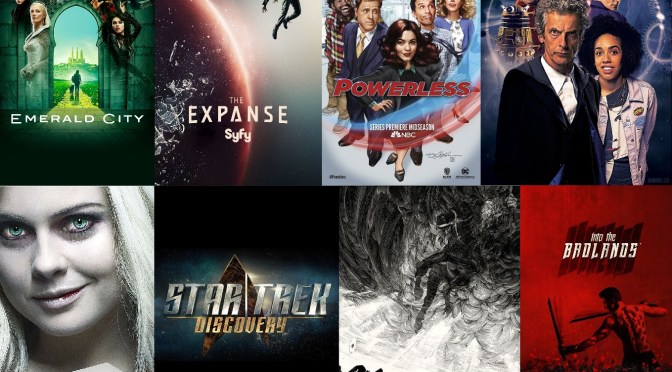
What I’m Looking Forward to in 2017: Television

2016 was a weird year for television. While there were a few things I was interested in, some of the shows I liked best from 2015 didn’t have new seasons and the things I was excited about in 2016 didn’t particularly deliver. It’s a new year, though, and I think it’s going to be at least a marginally better one for television. Several of my favorite shows are returning, and there are a handful of new things coming out that I’m really looking forward to.  Here are the things I’m most excited about.

Emerald City – January 6 on NBC

I don’t necessarily think Emerald City is going to be good, but it looks gorgeous (all ten episodes are directed by Tarsem Singh) and I’m shamefully susceptible to dark, gritty reimaginings of well-loved stories.

The Expanse – February 1 on Syfy

The Expanse  is the best sci-fi show since Battlestar Galactica, and it’s coming back in less than a month. I finally got around to reading the second book of the series, Caliban’s War, last month, and it’s only made me much more excited to see how the show adapts it. Also, I finally get why everyone is so excited about Bobbie Draper, and I cannot wait.

Powerless – February 2 on NBC

Listen, I don’t know what the deal is with this show. The concept seems fun, and it’s got a few actors in it that I like, but we’re less than a month from its premiere date and there’s no proper trailer for it. I haven’t seen any teasers or ads or any evidence that NBC is interested in promoting this show at all, and that has me worried. Still, I’m going to tune in on February 2 and give it a chance, even if all this lack of promotion doesn’t seem to bode well for it.

iZombie Season 3 – April 4 on The CW

iZombie is one of my favorite shows of recent years, just in general, and season two ended with a pretty significant game changing event so I can’t wait to see what happens next.

The Handmaid’s Tale – April 26 on Hulu

I’d love it (I’m sure we we all would) if this new adaptation hadn’t turned out to be much more timely than expected, but it’s hard to dampen my enthusiasm for anything Margaret Atwood-related.

Doctor Who Series 10 – April on the BBC

I’m probably less excited about the actual show than I am about this being the final year of Steven Moffat as show runner, but new companion Bill seems cool.

Star Trek: Discovery – May on CBS

Information is still only slowly coming out about this show, but there is no universe in which I’m not over the moon thrilled about a new Star Trek show. This is probably the show I’m most looking forward to in 2017.

Into the Badlands Season 2 – Spring/TBA on AMC

Into the Badlands is the best show of 2015 that didn’t get nearly the amount of attention and praise that it deserved. After taking until halfway through 2016 to even confirm season two, AMC still hasn’t given an exact air date for it. I will literally drop everything to watch this show whenever it appears, though.

American Gods – TBA on Starz

I’m not a huge Neil Gaiman fangirl, but I loved American Gods when I first read it almost fifteen years ago. I’m down for a TV adaptation of it.

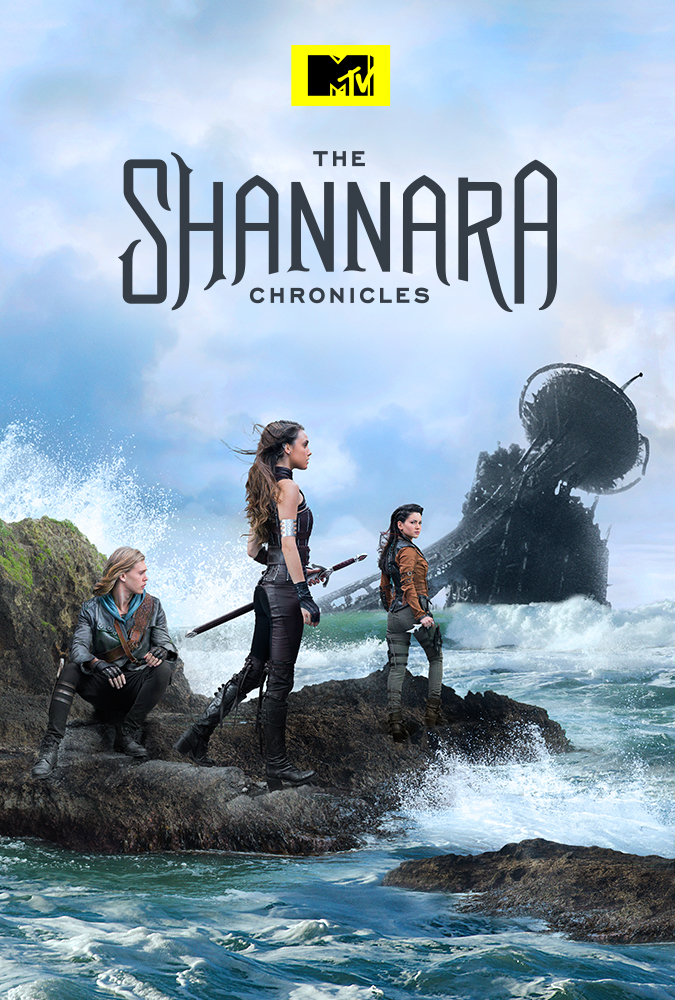
The Shannara Chronicles – TBA on MTV

It’s definitely a somewhat unpopular opinion, but I kind of loved The Shannara Chronicles last year. There’s no announced date for it, but I can’t imagine MTV dragging it out til 2018.

The Best of 2016: Movies and Television

This has been a weird year for me when it came to television and movies. Writing it all down in preparation for this post, I found that I definitely watched more than I thought I did, but I feel like I haven’t watched pretty much anything. Partly, this is because I spent a ton of time traveling this spring and summer. Partly, I’ve been too depressed to write about what I did watch. And partly, I actually haven’t watched as much this year as I normally would because several shows that I have enjoyed and am looking forward to aren’t getting their next seasons til 2017. When it came to movies, there just wasn’t that much that I was really looking forward to this year, particularly since I’m not very interested in any of the Marvel and DC superhero flicks. All in all, it’s just been a light year of TV and movie watching for me, and I’m mostly okay with that. On the bright side, most of what I did watch was good stuff that I don’t feel like I wasted my time on, and there’s some comfort in feeling like I nailed “quality not quantity” for once.

Favorite Television

The Expanse – SyFy
Hands down, The Expanse is the best sci-fi show on television these days. Season one did suffer from some of the same problems as Leviathan Wakes, the first in the book series, but the early addition of the incomparable Shohreh Aghdashloo as Chrisjen Avasarala prevented the show from being quite so much of a complete sausage fest. Thomas Jane managed to make Miller tolerably complex, and Steven Strait was perfectly infuriating as colossal dipshit Holden. I do think the show could have cut some stuff to squeeze more of Leviathan Wakes‘ content into the first season, and there are times when the show’s pacing is just atrocious, but it’s beautifully shot, largely well-written, and pretty much perfectly cast. I mean, have I mentioned that they got Shohreh Aghdashloo? Season two will start airing with a double episode on February 1, 2017. In the meantime, you can stream the whole first season on Amazon Prime.
You can read my full coverage of season one here.

The Shannara Chronicles – MTV
My love for this show is likely an unpopular opinion, but I really did think that it was–overall–surprisingly decent. For one thing, it’s lovely to look at, with scene after scene of incredible scenery porn in the far-future ruins of the Pacific Northwest, and while some parts of it (particularly the look of the elf city) do owe a bit too much to Lord of the Rings, it’s not really quite like anything else out there. As someone who grew up watching Xena and Hercules and Buffy: The Vampire Slayer, I have a longstanding appreciation for somewhat campy fantasy, and as someone who loved Terry Brooks’ books as a teenager, I was happy to see the show geared more for teens than adults. And sure, The Shannara Chronicles rehashes a lot of plot points from The Fellowship of the Ring. And sure, the teen drama can be tiresome at times because I’m an adult woman. And sure, the show has some problematic tendencies, such as casually adding in some attempted rape or senselessly killing minor characters for drama. But it’s a fun show to watch, and it was even more fun to write about.
You can read my season one posts here.

Game of Thrones – HBO
Speaking of shows that are problematic as all get out and fun to write about, Game of Thrones is still a thing that is happening. Every season is worse than the one before, and there’s no reason at all to think that this is going to change anytime soon, but I just can’t quit this show, you guys.
I’ve written thousands and thousands of words about this show, and you can read them all here.
Or just read my season six stuff.

Lucifer – FOX
I’ve never read the comic book this show is (apparently very loosely) based upon, so I came to Lucifer with basically no expectations. It didn’t even look that great in the early trailers for it, and Fox pushed back its original airdate once or twice, which is never encouraging. Imagine my surprise when it turned out to be a pretty decent show after all. Season one certainly stumbled a few times, but star Tom Ellis is handsome and charming enough in the titular role to make up for quite a few missteps in other areas. Season two started off a little rocky with some clunky changing of gears and the total abandonment of a season one plot that just never quite worked, but in the last few episodes it’s developed into a truly excellent show. The supporting cast has grown, everyone is getting a bit more to do, and all the characters feel a lot more lived-in this time around, and the easy chemistry between the members of the ensemble makes Lucifer a real joy to watch.
I’ve fallen behind on writing about Lucifer, but you can read my reviews of season one and part of season two here.

iZombie – The CW
Season 2 of iZombie wrapped up back in April, and so much has happened in my life since then that it feels like a lifetime ago. It’s also been very disappointing to not have any new episodes this fall; the Season 3 premiere isn’t until April 2017, which even now feels terribly far away. Season 2 was great, though, with some real progress made on understanding the show’s growing zombie epidemic, some really memorable cases of the week, and a finale that sets up a game change for the upcoming third season that I can’t wait to see.
Check out my iZombie coverage here.

Favorite Movies

The Lobster
This weird and wonderful little movie only got a limited release in the US back in the spring, and I didn’t actually get to see it in the theater. In it, Colin Farrell plays a man in a dystopian near-future society where all adults must be paired off and married or else they will be turned into an animal of their choice. It’s a beautiful, absurd, vaguely Vonnegut-esque and darkly hilarious story that lampoons our societal obsession with marriages and families that conform to specific bourgeois ideals. The deadpan humor and somewhat nihilistic ending may not be for everyone, but it’s exactly the kind of bold and clever risk-taking I like to see and that can really only be found in this kind of independent film.

Tale of Tales
I’ve always said that my favorite fairy tales are the weird ones, and I’ve lamented the fact that the really strange stuff tends to be passed over in favor of endless retellings and adaptations of princess stories. With Tale of Tales, based on a 17th century Italian fairy tale collection, a bunch of weird stuff has finally been brought to the big screen, and it’s glorious. I love every sumptuous detail of this movie from start to finish. Every frame of the film is stunning, with a gorgeous naturalistic quality that makes the fairy tale world seem real and lived in. The interconnected stories mirror and echo each other in strange and unexpected ways that provide plenty of material for dissection and analysis, but the film can also just be enjoyed simply as a viscerally affecting experience. This is the only film of 2016 that I can see myself watching over and over again for many years, as it’s the kind of production that I expect to see something new in on every viewing.

Equals
I wasn’t at all excited about this movie when saw the trailer for it, even though I love Kristen Stewart and like Nicholas Hoult just fine. When it got poor reviews, I just sort of wrote it off altogether, and I only came back to it late in the year when I stumbled across it on Amazon Prime. It turns out that Equals is actually a solidly decent movie. Stewart and Hoult turn in fine performances, and they have a good chemistry that sells their romance well. Everything in the movie is sleek and clean in a way that is rather charmingly retro, putting me in mind of classic sci-fi stories of this type. The movie isn’t breaking any new ground thematically, and much of the plot is regurgitated classic tropes, but everything is so lovingly crafted and generally well put together that I can forgive it for being derivative. Equals isn’t a great film, but it’s a perfectly nice and enjoyable example of its type of story, which made it a great comfort-watch in late December of this year from hell.

Warcraft
I feel like almost everyone hated this movie except me, and I’ll admit that it wasn’t completely accessible for folks who weren’t already fans of Warcraft going in. But, dammit, this movie was enjoyable, and it seemed so obviously made with love that I couldn’t help kind of adoring it.
You can read my full review here.

Ghostbusters
There was never any universe in which I wouldn’t have loved this movie, and my enjoyment of it was only enhanced by the knowledge that thousands of whiny entitled manbabies hated it. I hope they make a dozen sequels.
I wrote a full review of this one when I saw it.

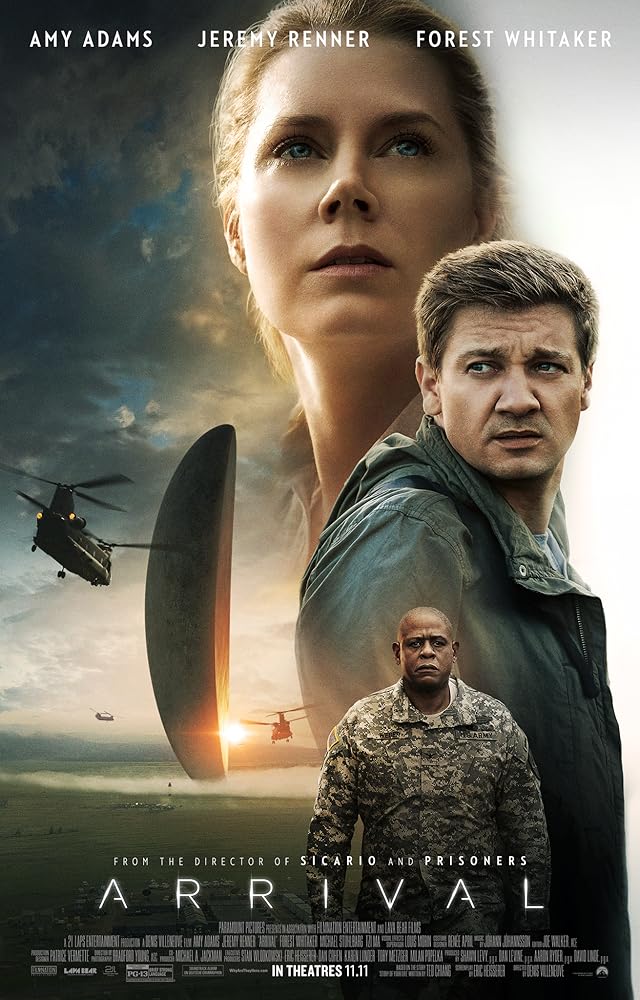
Arrival
Arrival is the movie that I expect to win all the genre awards this coming year, and it deserves them all. It’s a serious original story with some good ideas, a good cast (Amy Adams is superb.), and good production values. There’s not a whole lot to say about the plot that won’t spoil it, but I was extremely pleased at how the adaptation of Ted Chiang’s marvelous “Story of Your Life” turned out. It’s a challenging story to adapt, and it worked with only a handful of relatively minor changes to smooth the translation from page to screen. That said, if you haven’t read the story, be sure to whether you see the movie or not.

Rogue One: A Star Wars Story
I actually won’t be seeing this one until this Friday or Saturday, but let’s be real. It’s definitely going to be one of my favorite movies of the year, so I’m going to go ahead and slip it on at the end here.

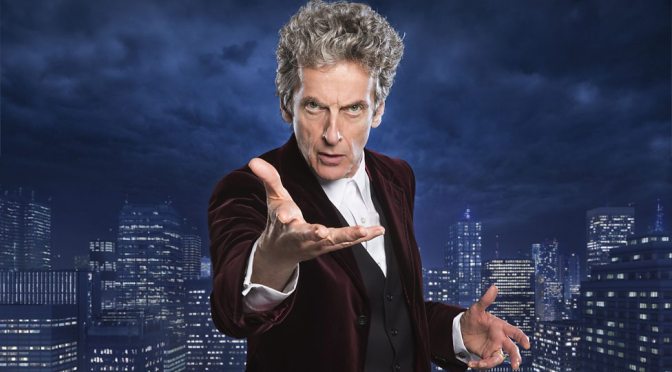
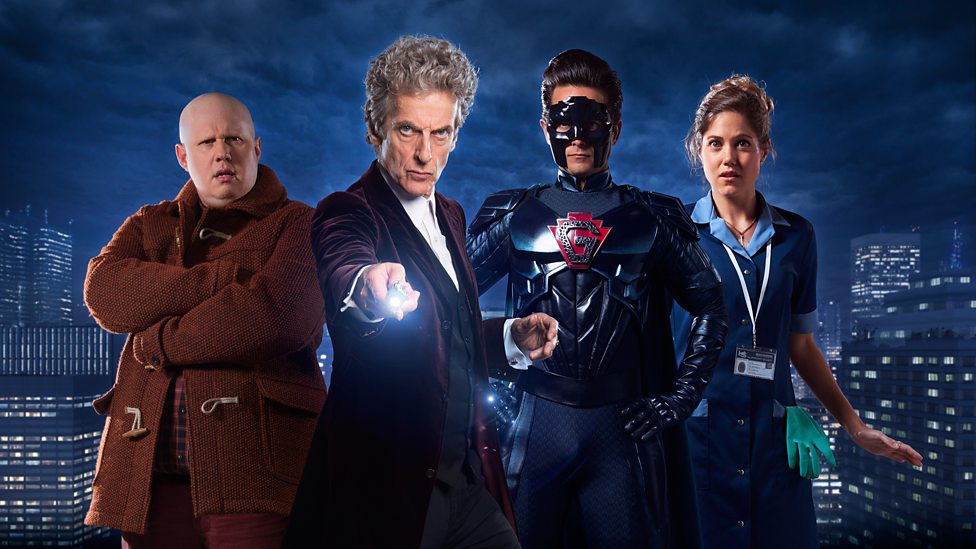
Doctor Who: “The Return of Doctor Mysterio” is a fun, fast-paced garbage fire

I’d love to say that I loved “The Return of Doctor Mysterio,” especially after it’s been such a long time since we last had any Doctor Who at all. It was an enjoyable enough hour, but of the sort that I rather hate to enjoy because as soon as I think about it for more than a minute it all begins to fall apart. This has long been true of Steven Moffat-penned episodes in general, but this one is even worse than usual. Let’s start with some positives, though. Some spoilers ahead.

First, “The Return of Doctor Mysterio” has a coherence that has often been lacking in the last couple of seasons of Doctor Who, and it’s refreshing. The episode is internally consistent, makes smart use of time travel, and overall makes good working sense. It also fits nicely within the broader timeline of the show, taking place, for the Doctor, shortly after his last long night with River Song (at the end of last year’s “The Husbands of River Song”) and addressing, sort of, some issues raised in season seven’s “The Angels Take Manhattan.” That said, these previous episodes certainly aren’t required viewing to enjoy this one, which is good. Moffat sometimes tends to show off his encyclopedic knowledge of the show, but there’s nothing too arcane here, just some mostly cleverly-worked-in references for fans who have been paying attention the last few years.

Second, Matt Lucas is back as Nardole, and he’s now the Doctor’s Companion. I’ve liked Matt Lucas for some time and thought it a shame to waste him on a throwaway role in last year’s Christmas special, so I was thrilled to see him get a chance to grow the part again this year. Nardole is excellent as comic relief, but Lucas also injects some much-needed warmth and empathy into an hour that was unexpectedly dark for a Who Christmas special. I understand that Lucas and Nardole will return in season ten as a series regular, and I’m looking forward to seeing how he fits into the Doctor’s adventuring. In this episode, he does spend far too much time on lazily-written expository speeches, but he gets to fly the TARDIS and spend some time ruling 12th century Constantinople (“firmly but wisely”).

Finally, “The Return of Doctor Mysterio” does, despite its significant flaws (which I’m getting to), manage to be fun to watch. Its pace can only be described as “romping”; the hour absolutely flew by, but without the frenetic quality of many recent Moffat episodes. I’ve often felt that Moffat era Who uses breakneck pacing to cover up hole-filled plotting with a shoddy whiz-bang veneer, but “Doctor Mysterio” avoids that, instead keeping things moving along. No fast-talking deus ex machina shenanigans here. Only sensible progression through the above-mentioned coherent storyline. Even the time travel and flashbacks make perfect sense and work well within the story being told. For Moffat era Who, this is a great episode.

Except.

What the fuck is “The Return of Doctor Mysterio” supposed to be about?

Is it about the Doctor’s irresponsibility with alien technology? Kind of, I guess. Except that said alien technology ends up saving the day in the end.

Is it about the difficulties of being a super-powered human? Not really. Masked vigilante Grant’s (a rather dull Justin Chatwin) point of view is never inhabited by the viewer. Some of his problems and concerns are alluded to, but aside from his puberty-induced x-ray vision, which is played mostly for laughs, his super powers are never an actual problem. Instead, he’s basically invulnerable and his super speed and flying powers make it possible for him to successfully lead a seemingly rich and fulfilling double life. Sure, the Doctor does some handwringing about how hard the double life thing must be, but none of the Doctor’s worries are shown to be well-founded.

Is it about the duality of man (and I do mean man—there’s only a single named, speaking woman in the episode, but more on her later)? Maybe, but if so the messaging here is much less coherent than the surface story being used to communicate it. I mean, something something parallels between the Doctor and Grant and the compartmentalization of their identities as men and as superheroes? It feels as if, by the end of the episode, we’re supposed to feel as if some profound observation has been made and we’ve been given some new insight into the Doctor’s character, but neither of those things have been accomplished.

Is it about poking fun at the absurdity of superhero genre conventions? Only if by “poking fun” one means “playing every trope pretty much completely straight.”

Is it about gender? Could be, but if so it’s a sexist garbage fire of garbled messaging on the issue.

The episode’s singular woman, Lucy (Charity Wakefield, making the most of things), is a sort of Lois Lane character, right down to her apparent inability to recognize the man she has known for over twenty years if he takes his glasses off and does his best Batfleck impression. Lucy starts off promising enough, seeming to be a competent and perceptive investigator, but she’s quickly sidelined once the Doctor arrives, gets sexualized and then damselled in the final act, and ultimately has nothing much to do other than have the wholly unearned epiphany that she was in love with the nanny all along. I’d say that this all amounts to a systemic destruction of the character, but it’s done so casually, with so little appearance of malice and with such an obvious wink and nod from Moffat (as if it’s all a big joke that we’re all supposed to be in on), that I think it’s likely that all these choices are totally intentional. Steven Moffat has always been cavalier in his disregard for Doctor Who’s female characters, with a strong penchant for robbing them of agency and turning them into prize objects to be manipulated by and in service of the always more-important-to-Moffat male characters on the show.

It’s nonetheless perversely impressive to see how efficiently Moffat can squeeze a wildly regressive character “arc” into a single episode. Lucy never does get to fully understand the story that she’s in—indeed, the story that she was actively investigating at the top of the hour. We learn from Grant that Lucy, while married and a new mother, has recently been abandoned by her husband, and this turns out—even though it’s literally never mentioned by Lucy herself—to be the problem in her life that needs solving. Instead of getting satisfactory answers to her questions or succeeding in her investigation of the alien invaders, Lucy’s “happy” ending is a renewed interest in domestic life and faith in monogamous hetero coupledom. Her career isn’t even mentioned in the end, and her emotional energies are directed more towards helping Grant—not to adjust to a new domestic life of his own, though. Rather, she encourages him to at least remain open to the possibility of continuing his super-heroics in the future.

It would be profoundly depressing if Doctor Who still had the power to surprise and dismay me with this crap. As it is, I just found myself sighing and rolling my eyes. Thank goodness, we’ve only got one more year of Steven Moffat to go. And, hey, new companion Bill looks like she has some potential. It’ll be interesting to see how Moffat manages to screw up come April.

Fox’s Rocky Horror remake is dull, sexless and even more problematic than the original

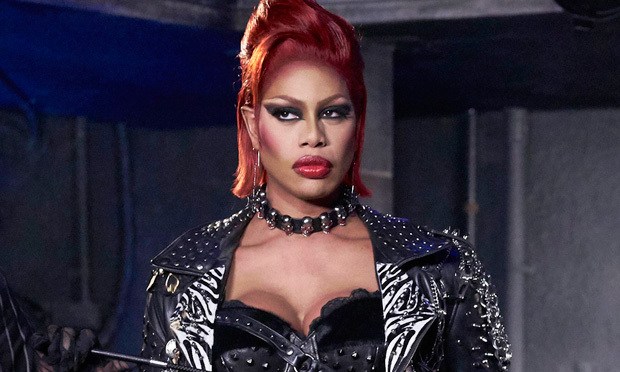
rocky-horror-press-fox-2016-billboard-1548Remakes of old movies are probably never necessary, but they can often be redeemed if they can breathe new life into old stories and present the audience with a fresh perspective on dated material. Sadly, Fox’s clunkily titled The Rocky Horror Picture Show: Let’s Do the Time Warp Again does neither of these things. Instead, it somehow manages to sanitize and straighten a classic piece of queer theater and highlight all of the problematic aspects of the original film at the same time.
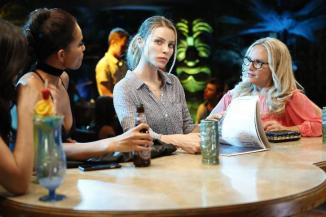
First things first, though. There are a few things to like about this new production. Laverne Cox (while in my opinion miscast—more on that later) sparkles in the role of Frank, and a couple of her songs are truly excellent. Annaleigh Ashford’s Columbia is pitch perfect, and she does the best job of anyone on the cast to make this role her own. It’s good to see a production that is so diverse in its casting in general, and this is especially apparent in the crowd scenes. Finally, the costumes are pretty great.

So, this new Rocky Horror isn’t a complete disaster. Still, it’s not good, either.

From pure craft standpoint, this reimagining of Rocky Horror is a bit of a mess. The framing device of the theater and the choice to include some of the audience participation that is common at the still-ongoing midnight showings of the original film sounded interesting when the show was in development and suggested a sincere attempt to introduce a new generation of young people to Rocky Horror. The execution of this concept was terrible, though, from beginning to end. Even decisions that in theory work really well to set this production apart from the 1975 movie—for example, the choice to cast the Usherette for the show’s opening number—fail to hit their mark.

Ivy Levan’s soulless rendition of “Science Fiction Double Feature” is illustrated with her empty-eyed vamping around an old-timey movie theater with no coherent sense of tone or meaning. Like, I literally don’t know what they’re going for here. Similarly, while Reeve Carney’s performance as Riff Raff is overall workmanlike, his introductory solo (in “There’s a Light (Over at the Frankenstein Place) is characterized by absurd overproduction and a truly bizarre set of incomprehensible facial expressions. It’s genuinely weird and not in a good way. This kind of emotional disconnect is (with a few exceptions) a consistent thread throughout the show, as if everyone learned the words of their songs but had no idea how to bring any of the characters to life. Lowlights include the worst version of “The Sword of Damocles” I’ve ever seen and a “Planet Schmanet Janet” that wildly misses its mark, tone-wise.

The whole show would likely have benefited from live performances, which might have felt more organic. Instead, everything kind of ranges from somewhat to ridiculously overproduced, which gives the whole thing a slightly sterile feel that is enhanced by the too-clean cast and pristine (if nice-to-look-at) costumes. There’s an affectation of high camp here, but it’s too self-conscious and purposeful to have the disheveled charm of the original. Probably the perfect example of what I mean comes when we get to the floor show. Frank has Columbia, Rocky, Brad and Janet decked out in gold costumes with gold makeup, but the makeup doesn’t run when they move to the water. The original Rocky Horror had a messiness, a sort of homemade quality, that made its weird world feel real and lived in, and this remake doesn’t have that.

Perhaps the greatest sin of this Rocky Horror, however, is the sheer sexlessness of it all. There’s very little chemistry between any of the characters. Brad and Janet seem not just innocent and unworldly, but practically childlike. The connection between Columbia and Eddie feels real enough, but it’s such a small, fast-moving section of the film—and with the dinner party scene missing its cannibalistic implications—that it isn’t actually very impactful. Laverne Cox is stunningly beautiful and oozes sex appeal, but all of Frank’s interactions with other characters have been toned down so much that it’s never actually clear if any sex happens at all. Instead, everything comes off as just slightly saucy play. This is also true of Janet’s big song, “Touch-a Touch-a Touch-a Touch Me,” throughout which she and Rocky gambol around a bed like a couple of thirteen-year-olds having a sleepover—I don’t think he even touches a boob. Meanwhile, Columbia and Magenta are very specifically non-sexual in their interactions. Even the climactic orgy in the pool is stripped of most of its sensuality. Lips barely even touch, and none of the ones that do belong to two women.

Even stripping most of the sex out of the show and making what remains almost aggressively heterosexual doesn’t allow the show to completely avoid the problematic messaging of the original. In fact, it almost highlights these things even more, and the casting of a trans woman as Frank actually deepens some of the more unfortunate implications of Frank’s predatory behavior. The toning down of Frank’s “seduction” of Brad and Janet here accentuates rather than mitigates that this is rape. While there’s less actual sexual content to the encounters, the coercion is exaggerated and then highlighted by the absence of any sense that Brad or Janet are overcome by either passion or pleasure. Instead, their decisions to give in to Frank’s advances feel both more calculated and less earned.

Rocky Horror has never been a paragon of sense-making cinema, but this production turns absurdity into straight up gibberish. It does nothing to address the problem of the damaging and dated depraved queer trope, and even adds a new dimension to it by inserting a trans woman into the role of Frank—which feels especially irresponsible in a time when public fears of trans women continue to incite violence and are motivating anti-trans legislation all over the place. Sure, the ultimate “message” of Rocky Horror is still about sexual freedom, but what was significantly transgressive forty years ago is positively tame by modern standards and made more so by the determined effort to sanitize and straighten the production so it could be aired in an 8:00pm Thursday timeslot.

Miscellaneous Thoughts:

  • It’s bittersweet to see Tim Curry as the Criminologist.
  • Christina Milian is a fine Magenta, but her wigs are godawful. That bright magenta is too on the nose, and the wigs are so monochromatic they look cheap.
  • I know I said I liked the costumes, but I hated Rocky’s gold boxers with a passion. They’re hideous and incredibly unsexy.
  • The conventioneers weren’t terrible, but they did all kind of blur together into a kind of indistinct countercultural blob of attractive bodies.
  • I wish Ben Vereen had gotten a little more screentime to stand out. His scenes felt rushed and a waste of his talent. Great legs, though.
  • Seriously, though, Laverne Cox’s version of “I’m Going Home” is incredible. Like, she’s so good that it almost redeems this whole shitshow.
  • Last thing: Richard O’Brien’s recent garbage statements about trans women have honestly kind of soured me on Rocky Horror altogether.

Lucifer: The best part of “Lady Parts” is said lady parts

lady-partsAfter a couple of weeks off writing due to some extremely inconvenient life stuff, I’m back now and catching up with Lucifer. As is often the case with this show, “Lady Parts” is a bit of a mixed bag. Following a good season opener that successfully rebooted the series and a couple of solid episodes that further established a new normal, this one could be generously described as set-up for things down the road but perhaps more accurately described as filler, with every character and plot spinning their wheels until the last few minutes of the hour.
The episode starts positively enough, with an interesting body discovery (though we never seen these guys again) and Lucifer back in therapy with Doctor Linda. I’ve been happy to see the show back off a little on his therapy sessions in general, but this is a good one. Lucifer’s philosophy of distraction and Linda’s deep sigh at the end of the scene are perfectly delivered. Unfortunately, this is one of the episode’s few highlights. Nothing else in the next forty-five minutes works quite so well as this exchange, mostly because Lucifer’s obsession with distraction quickly becomes farcical as he spends all his time this week pushing his new philosophy of deflection and conflict avoidance on his friends and family.

Chloe is not doing well following Dan’s request for a divorce last week, and she’s rather predictably throwing herself into her work and bottling up her feelings. The thing is, this isn’t all that interesting or dramatic. Chloe has always been a Serious Person, with a straight up hall monitor kind of personality, so her current funk doesn’t actually change her behavior. Poor Lauren German has been subjected to some of the worst writing of any actor on this show, and I feel like she does what she can with what she’s given, but Chloe’s best moments are always when she lets loose a little and that never quite happens here. A girls’ night out with Maze, Ella, and Linda has a ton of potential, but it’s ultimately a missed opportunity. It’s not without a couple of funny moments, but we don’t learn anything new about Chloe, she never really opens up, and in the end she’s unable to set her work aside and have fun.

It also doesn’t help that the whole girls’ night out thing is basically a set-up by Lucifer, who has wagered with Maze that she won’t get Chloe to relax. There’s an attempt to tie this to the case of the week, but it’s a tenuous connection at best and Chloe’s outrage at the betrayal of female friendship doesn’t ring quite true in the same episode in which she bemoaned her own lifelong lack of female friendship. That said, I am pleased by the development, late as it is, of a real friendship between Chloe and Maze, and I’m looking forward to seeing that odd couple sharing a living space. And for all that Chloe complains that she hasn’t had female friends, she does seem to genuinely like other women, which is nice. It’s refreshing to see a character whose lack of female friends is pretty explicitly about lack of time and opportunity rather than due to internalized misogyny or some kind of “not like other girls” syndrome. I just wish this Chloe-needs-friends plot was given more time to breath, and I hope (though I don’t expect) that it gets some consistent development going forward.

The biggest thing that isn’t working right now, however, is Lucifer’s mom. Last week, she was sentenced by Lucifer to a life as a human, she’s taken over the life of the woman, Charlotte, whose body she is inhabiting. This week, Maze drops by to visit, and as much as I love Tricia Helfer—and she’s game—there’s basically nothing about this that isn’t terrible, and I don’t know how the show can make it okay.

First, this is another woman’s life. Charlotte was, so far as we know, not the world’s best person, but still. That’s her house, her kids, her husband. For one thing, wouldn’t someone notice the change? For another, even if no one notices and the switch is pulled off with no one getting suspicious, it’s still deeply unethical. It’s particularly cruel to the aforementioned husband—who apparently is now being sexually manipulated—and children. That the show plays this essentially for laughs is kind of gross. It’s not funny, and I genuinely don’t see any way for this to be turned around into something positive.

Still, secrets on Lucifer have a way of coming out. With any luck, this one won’t last long. I only hope that when it breaks, the show takes the time to deal with the consequences in a reasonable fashion. I said to start with that this episode feels like it was mostly set-up. Here’s hoping that they’re setting up something good.

Miscellaneous Thoughts:

  • I’m frankly surprised that the “Dammit, Leroy” guy isn’t an internet celebrity after that performance.
  • Ella used to steal cars, which is moderately intriguing.
  • And Linda worked her way through college as a phone sex operator. I never liked Linda’s sexual relationship with Lucifer, and it had seemed as if the show was distancing itself from that characterization of her as a sort of sexpot, but I guess they aren’t really.
  • “Cosmos are yummy.” I mean, I disagree, but D.B. Woodside’s delivery of this line was amazing.
  • Maze and Chloe are going to be roommates!

What to Read and Watch While Leaves Are Falling

Sure, I already published a fall reading list that should keep me very busy until 2017, but this is my favorite time of year. I just had a birthday (Thirty-four, eek!), the leaves are changing, the nights are getting slightly chilly (at least here in southwest Ohio), and I’m in the mood for comfort reading and watching some fall favorites. For me, that mostly means witches, obviously, though there are a few other things on here that are just more generally fall-feeling.

What are you reading and watching as the weather changes?

Stories to Pair With Pumpkin Spice Everything (Don’t Judge Me):

Witches of Lychford by Paul Cornell
I read this little gem when it came out last September, and I fell in love with it. It’s a nice, seasonally appropriate read, and Cornell has a sequel–the more wintry The Lost Child of Lychford–coming out November 1 from Tor.com. If you haven’t read Witches, now is a perfect time to enjoy it. If you have read it, it’s a perfect time to refamiliarize yourself with it ahead of its sequel.

Of Sorrow and Such by Angela Slatter
This is another of the 2015 Tor.com novellas; it’s another witch story; and it’s another great read. While you’re at it, check out her recent short story at Tor.com, “Finnegan’s Field,” which is a good, creepy changeling tale. I haven’t gotten around to reading Slatter’s couple of short story collections, yet, but her 2016 novel, Vigil, is definitely on my to-read list.

The Library at Mount Char by Scott Hawkins
This is a book that I also read last September and really wished that I’d saved it for another month or so. It’s dark and funny and just a little scary, a great book if you’re like me and don’t usually like straight up horror but still want to get into the spirit of Halloween.

Monstrous Little Voices: New Tales from Shakespeare’s Fantasy World by Jonathan Barnes, Adrian Tchaikovsky, Emma Newman, Kate Heartfield, and Foz Meadows
It’s still the year of the 400th anniversary of William Shakespeare’s death, and this collection of novellas is a perfect way to celebrate. Foz Meadows’ Coral Bones is probably my favorite, and it can be read alone, but I enjoyed reading all five tales together. Highly recommended for reading outdoors with a cup of tea on a crisp fall evening.

Hag-Seed by Margaret Atwood
Hogarth has been celebrating Shakespeare differently–by having well-known authors re-envision the Bard’s plays in novel form. Obviously, you should read everything by Margaret Atwood, always, but her retelling of The Tempest is a really exceptional examination of its themes of prison, grief, vengeance, and the transformative value of literature.

Nightmare Magazine‘s Destroy Horror! Special Issues
This year we’ve got People of Colo(u)r Destroy Horror! which is well worth checking out. If you only read one story in the issue, make sure it’s Terence Taylor’s “Wet Pain.” It’s also not too late to pick up last year’s Queers Destroy Horror! and 2014’s Women Destroy Horror! This project just gets better and better, you guys.

The Starlit Wood: New Fairy Tales edited by Dominik Parisien and Navah Wolfe
This book is brand new (literally–it’s got a 10/18 pub date), but it might be my most anticipated anthology of the year. It’s got an absolutely to-die-for table of contents–with stories by ton of my favorite authors–and a gorgeous cover. I almost never get hardcover books unless I find them at the used bookstore, but this one is a must-have for my shelf.

The Lady and Her Monsters: A Tale of Dissections, Real-Life Dr. Frankensteins, and the Creation of Mary Shelley’s Masterpiece by Roseanne Montillo
Sometimes, reality is even better than fiction, and this 2013 examination of the genesis of Frankenstein is well-researched and highly readable. Even if you haven’t read the novel, The Lady and Her Monsters offers a fascinating glimpse into the life of Mary Shelley and how she came to write a classic of horrific science fiction.

Films and Television to Watch While Curled Up Under a Blanket:

Practical Magic (1998)
I cannot go a single October without watching Practical Magic at least once. I just watched it the other night with my thirteen-year-old daughter (her first time), and was struck again by how much I love it. It’s by no means a very good movie–there’s nothing like a critical watching of it to make one aware of every absurdity and plot hole–but I will always want to watch movies about women saving each other.

Hocus Pocus (1993)
Hocus Pocus is a Halloween classic that I’ve been watching for over twenty years now, and I can’t imagine stopping anytime soon.

Sleepy Hollow (1999), The Nightmare Before Christmas (1993) and Corpse Bride (2005)
This trio of Tim Burton flicks are seasonal must-watches.

Ghostbusters (2016)
loved the new Ghostbusters, and I cannot wait to rewatch it in the lead-up to Halloween. I remember enjoying the original movies as a kid, but this reboot is more fun that those ever were.

Ash vs. Evil Dead (2015-now)
This show is definitely a problematic fave, but if you like artfully splattered gore, Bruce Campbell, and Lucy Lawless, Ash vs. Evil Dead is a ton of fun.

Lost Girl (2010-2016)
This show is basically Buffy the Vampire Slayer‘s more diverse, sexier, more Canadian descendant. It definitely starts to fall apart a bit in later seasons, but the first three or four seasons are pretty solid.

Gilmore Girls (2000-2007, 2016)
With a Netflix revival of Gilmore Girls coming out on Thanksgiving, now is the perfect time to binge watch the show in preparation.