Category Archives: Book Reviews

Book Review: Goldenhand by Garth Nix

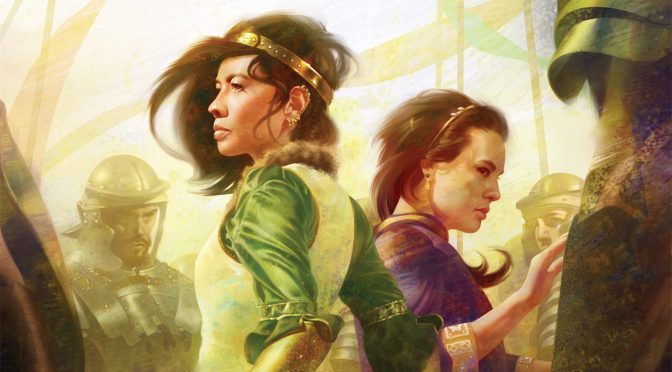
Goldenhand is a welcome return to Garth Nix’s Old Kingdom universe, but it unfortunately feels, overall, a bit half-baked. It’s an enjoyable read if one doesn’t think too hard about it, but the truth is that Goldenhand is problematic in numerous ways that detract from the joy of revisiting such a well-loved fantasy world.

Goldenhand is a direct continuation of Lirael’s story following the events of Abhorsen and picking up about a year or so later. It also incorporates events from the novella The Creature in the Case, which continued the story of Nicholas Sayre after he returns to Ancelstierre at the end of Abhorsen. Lirael has been hard at work learning in her role as Abhorsen-in-waiting to her sister, Sabriel, and she’s given the chance to take on more responsibility when Sabriel and Touchstone go on their first vacation in twenty years. Meanwhile, after accidentally freeing and empowering a dangerous free magic creature, Nick is on his way back towards the Old Kingdom in pursuit of it. Meanwhile, Chlorr is still stirring up trouble in the north, and it turns out there’s a whole previously unmentioned group of people that are being used for Chlorr’s nefarious ends. There’s a lot going on, at least ostensibly. Perhaps the biggest problem with Goldenhand is that, despite the ambitious worldbuilding and great number of things happening, none of it particularly works.

It was interesting at first to be introduced to Ferin and her people, but with only Ferin as a point of view for that part of the world and no sense of what normal life is like for the tribes, there’s ultimately very little to learn about these new people and their culture. Ferin herself has a very specific and non-normative experience within that culture—she was raised to be basically a sacrifice, sequestered from the rest of the tribe and denied even the humanity of a proper name (“Ferin” is from a childish mispronunciation of “Offering”)—and she’s the only one of her people the reader meets directly. The rest are faceless villains and obstacles for our heroes to overcome, and there’s no real sense of who these people are and how they normally fit into the regular fabric of the Old Kingdom. This diminishes the reader’s investment in Ferin’s history and struggle, and it’s not helped along by Ferin’s extremely practical nature. She’s so pragmatic about everything that happens to her that it ends up feeling as if she isn’t affected very much by anything she goes through. This would be frustrating in a minor character, but Ferin is a point of view character for fully half of this book, and it’s extremely difficult to become really immersed in a perspective that is so poorly socialized and without enough context for understanding why and how she’s the way she is. Ferin is a weird character, and not in a good way. Rather, she takes up a lot of page space without ever being compelling enough to be a proper balance or complement to Lirael, who we already know from previous books.

Sadly, Lirael, too, is a lot less interesting this time around. Lirael and Abhorsen were heavily focused on Lirael’s journey to discovering her own identity and finding her place in the world, and there was a clear and well-executed character arc as she came of age. Goldenhand gives us a Lirael who is much more confident and self-assured to start with, which isn’t necessarily a bad thing, but this Lirael doesn’t have nearly so much to learn or so far to travel, for all that she goes fully from one end of the Kingdom to the other. Some attention is paid both to Lirael’s lost hand and her grief over her missing friend, the Disreputable Dog, but neither of these things are given the weight they ought to have. Indeed, Prince Sameth has already built a magical gold hand for Lirael by the start of the book, which effectively erases her disability. Most of Lirael’s thoughts about her hand are marveling at how functional the magical prosthetic is rather than lamenting the loss of the real hand. Similarly, Lirael does at times miss the Dog, but with everything else going on there’s not much time for truly exploring her feelings of sadness and loss. Instead, Lirael’s primary arc in this book is a romantic one, mostly centered around her growing feelings for Nick and her relationship with him. While Lirael’s final dealing with Chlorr/Clariel seems intended to be a climax for the story, it happens quickly and the novel is then ended rather abruptly, which prevents the event from having much emotional weight.

This lack of impact is, frankly, characteristic of Goldenhand. Erasing Lirael’s disability and glossing over her grieving process in favor of focusing on her burgeoning relationship with a man she barely knows (and who doesn’t get much development of his own, by the way) makes for a very slight novel. Both that romance and Lirael’s quest to stop Chlorr once and for all rely far too much on previous books in the series to generate what interest they do hold. If you haven’t read Lirael, Abhorsen, and Clariel (and preferably The Creature in the Case as well), you’re likely to find yourself more than a little at sea in Goldenhand. Goldenhand is not an entry point into the Old Kingdom for new readers; it’s a book for superfans who will consume anything they can get in this setting without being too picky about things making sense. This overall effect might have been counteracted if Ferin’s story was stronger, but Ferin’s goals and purpose are never quite clear; she is trying to do something to save her people I guess, but most of her chapters are taken up by an aimless chase that never manages to feel dangerous or high stakes enough to justify its existence. Instead of acting as a powerful new addition to the series, Ferin’s story functions mostly as a rather dull and uninspired distraction in what might otherwise have been a decent piece of fan service.

While Garth Nix does a lot of work here to expand the world of the Old Kingdom and provide more theoretically fertile ground for, presumably, future sequels, Goldenhand is plagued with enough craft problems and various missteps that it’s hard to get very excited to learn what comes next. Unless it involves queer Ellimere (I mean, come on—everyone else has been paired off heterosexually now) and lots of Mogget (there was not nearly enough Mogget in this book), I can’t say I’m very interested.

Book Review – Ghostland: An American History in Haunted Places by Colin Dickey

If you want to read ghost stories, read something besides this book. Certainly, Ghostland: An American History in Haunted Places contains ghost stories, but if you’re looking for titillating tales of terror for an autumn evening, you won’t find it here. Colin Dickey’s Ghostland isn’t about scaring its readers; rather, it’s a smartly eclectic work of history that looks to examine the whole ghost story phenomenon. Why do we tell ghost stories? Whose stories get told? What do these stories tell us about the places and people with which they’re associated? What do these stories say about the ways in which we, as a society, interact with death and with history? How do ghost stories help us connect with our past—and in what ways do they help us disconnect from aspects of the past that are unpleasant? If Dickey isn’t entirely successful in answering all these questions, he’s nonetheless crafted an engaging work of popular history that does a great job of introducing these ideas to the reader and encouraging further inquiry.
Ghostland is at its strongest early on, and Dickey’s exploration of the Winchester house in San Jose, California remains my favorite part of the book. Born and raised in Ohio, myself, I’d only heard the sensationalized story of the house and its unusual history, so it was wonderful to read such a thorough and well-researched counterpoint to the more mystical narrative. I appreciate the more feminist interpretation of Sarah Winchester’s life, although I must admit that I sometimes think Dickey’s conclusions about her motives are a bit of a stretch. Even if this is the case, however, the story and the way that it’s been embroidered and exploited over the years still serves as a perfect illustration of the points Dickey is trying to make about the way that female eccentricity is peculiarly pathologized. I tweeted early on while reading the book that the read would be worth it for this chapter alone, which is still true, but the whole book is packed full of these sorts of fresh looks at old stories.

Dickey’s thoughtful analysis touches on issues of gender but also includes issues of race and delves into some of the uglier episodes of U.S. history. Some of his chapters, such as those dealing with the slave trade and plantation culture of the South could easily be developed into whole books on their own, and I sincerely hope to see someone take these ideas and run with them. Ditto for Dickey’s look at some of the legends and ghost stories surrounding Native Americans. Throughout Ghostland, I often felt as if there was an enormous body of material and research that this book, ambitious as it is, was only capable of skimming the surface of. It would be great to see some of Dickey’s bigger ideas—especially about the ways in which ghost stories serve to erase and whitewash history—given more space to breathe. Here, the treatment of these concepts is necessarily brief (this isn’t that long a book) and sometimes shallow, and there are sometimes jarring shifts in tone and subject between chapters, particularly in the back half of the book.

Also evident in Ghostland is the author’s love of architecture and literature, and both of these things figure largely in Dickey’s historical analysis. Sadly, there are no photos in the book, which would have been a great addition to the stories it contains. Dickey dwells often on unusual architecture as being sort of inherently predisposed to being perceived as “haunted,” and it would have been nice to see some illustrative examples. Similarly, while the book is meticulously footnoted, it could have benefited from a bibliography or other section with suggestions for further reading or even just a list of literary works mentioned in the text. These lacks wouldn’t be felt so keenly in a more focused book, but in a history so wide-ranging, offering so many glimpses into little-known and lesser understood topics, some further guidance on where to look for more of the same would be much appreciated. That said, if you don’t mind digging through the notes at the back of the book, there are a wealth of resources, just not organized in the most useful possible way.

Ghostland is, on the whole, an excellent primer for the subjects that it covers. It’s full of interesting and entertaining information, and Dickey puts forward a lot of thought-provoking ideas that make this book a perfect reference for writers as well as readers. The questions that Dickey sets out to answer here are worthy ones, and there’s a lot to think about regarding the way we produce and consume ghost stories. With genre conversations often focused these days on issues of diversity and representation, Ghostland is a potentially very valuable conversation starter. I only hope that it is treated as the beginning of the conversation and not the end of it.

Buy the Book:

Amazon | Barnes & Noble | IndieBound

Further Reading:


Book Review: Runtime by S.B. Divya

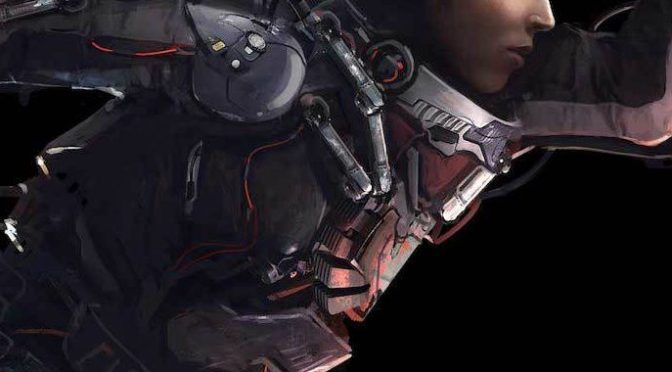
I read all of Tor.com’s novellas, which is a good thing because I otherwise might have missed out on this gem by S.B. Divya. I would never have picked up a story about a cyborg endurance race on my own, but I’m glad I read this one. Runtime is a marvel of world building and character portraiture wrapped around a perfectly executed straightforward plot and just the right amount of smart-but-not-overbearing social commentary. It’s a near-perfect use of the novella length, and I cannot wait to see what S.B. Divya does next.

Marmeg Guinto is as prepared as she’ll ever be for the grueling Minerva Sierra Challenge, but she’s nonetheless not nearly as prepared as some of the other racers, with their support teams and wealthy sponsors. In a race where people compete and win on the strength of extreme body modifications, Marmeg has cobbled together her cyborg enhancements from cheap parts, black market materials, and sometimes literal garbage. Still, she’s determined to race well enough to win a better future for herself and her family. When she actually gets out on the trail, however, things don’t go entirely as planned, and Marmeg soon has to make some hard choices that put her future plans in jeopardy. The surface narrative here is simple enough and fits neatly into the popular genre of stories about young people who participate in extreme sports or contests in order to help their families in dystopia-ish futures. It could have been banal, but S.B. Divya does several things in Runtime that elevate it above the usual stories of its type.

Partly, this is accomplished by cleverly adding layers of meaning and nuance to a simple story. Within the simple framework of the race/survival story lies a cleverly integrated fable with something to say about cheating and good turns. Wrapped all around the story and built into the fabric of Divya’s excellent world building is some insightful social commentary about capitalism, gender, immigration, and community. It sounds like a lot, but it never feels like too much for the reader to take in. There’s never any obvious lecturing or moralizing, which is often a mistake made in these kind of stories, and the ending is satisfying and thematically appropriate without feeling pat.

The heroine, Marmeg, also accounts for a great part of Runtime’s appeal. She’s a nicely complex character but without falling into either any of the common Strong Female Character tropes or the common Morally Grey Character tropes. Instead, she’s highly distinctive, with a backstory and personality that are both well-considered and well-constructed. The key here is the specificity of this character and her background. Marmeg isn’t a Generic Dystopian Heroine, and the reader’s understanding of her situation, her family, and what she’s willing to sacrifice for them is absolutely necessary for the story to work. Fortunately, Divya communicates all of this information clearly and concisely with sparely elegant prose that is perfectly styled for the story she’s telling.

Where S.B. Divya excels most notably, however, is in simply balancing all the many moving parts of this novella. The race itself necessarily takes center stage, but Marmeg is a strong enough personality to really carry the story by getting the reader invested in it. There’s a nicely cinematic quality to the action, enough to earn this little book a place on my ever-growing list of things I’d like to see adapted for film or television. Marmeg’s peril feels like a very real threat, and there are a couple of small subplots that nicely augment the main story and could provide fodder for more stories or even a full-length novel in this same universe. Every piece of Runtime is meticulously crafted and fitted together with every other piece in order to make a whole that is even greater than the sum of its parts.

Book Review: The Ghoul King by Guy Haley

I didn’t hate Guy Haley’s first Dreaming Cities novella, The Emperor’s Railroad, though it wasn’t one of my favorite reads of the year so far. Nonetheless, I was intrigued enough to read this second installment of the series. The Ghoul King seemed to promise more action and a female character with something to do besides die for male character development, and I was hoping to see Haley dig a little deeper into some of the potentially very cool world building of his post-apocalyptic landscape. Sadly, I found myself disappointed on all counts with this book, and this is another series that I’m very unlikely to continue with.
Here’s the thing about these books: they’re fine. Haley has a handful of neat ideas, and a solid (if a bit hackneyed) premise. Quinn is a perfectly serviceable anti-ish-hero; the angels are theoretically compelling antagonists; and a post-apocalypse full of zombies and robot dragons marauding brigands and petty feudal-esque politics should offer plenty of minor conflicts and quests for an itinerant adventurer. Unfortunately, once you get past the initial observation of “huh, that’s cool,” there’s very little actually happening under the surface. Haley is great at window dressing, and the books’ appeal is helped along by sharp-looking covers, but when I finished both of these books I was just sort of like “is that it?”

Quinn is as inscrutable and laconic as ever in The Ghoul King, but he never manages to be in the least bit likeable or even interesting. Perhaps because of the choice to have the action narrated again from a point of view that isn’t Quinn’s, Quinn remains a bit of a cipher, as the first person narrator is never quite able to connect with him or get to know him on a personal level at all. Once again, Quinn is a sort of cowboy-ish character who rides into town, impresses the locals and rides away with his cloak of mystery intact. He’s a notably old-fashioned construct of stoic masculine heroism that just… isn’t fun to read about at all. Unless that’s your thing, in which case do you, but it’s not much fun for me.

There are a couple of female characters this time around, though only one, Rachel, plays a major role in the action. In fact, she’s the instigator of this novella’s adventure. Unfortunately, she’s also—through sheer ineptitude and ignorance—kind of the story’s main antagonist as well, and Rachel’s search for pre-apocalypse technology doesn’t end well for pretty much anyone. It’s an almost archetypal arc, with Rachel cast as a sort of Eve who lures men on a fruitless quest for knowledge that ends in tragedy and, ultimately, their expulsion from the seat of knowledge and into an uncertain future. On the one hand, there’s something almost mythologically epic going on. On the other hand, it doesn’t seem as if Haley has anything in particular to say with any of the mythology he’s crafting.

Certainly not every story has to be deep and insightful, and there’s something to be said for straightforward, uncomplicated adventure stories, but there still has to be something to engage the reader, make them care about the events they’re reading about, and keep them coming back for more. Without a likeable protagonist or any discernable message, and with the world building stalled out (there’s not much new information revealed in this volume at all, sadly) this series doesn’t do that for me.

This review is based on an advance copy of the book received through NetGalley.

Book Review: Return of Souls by Andy Remic

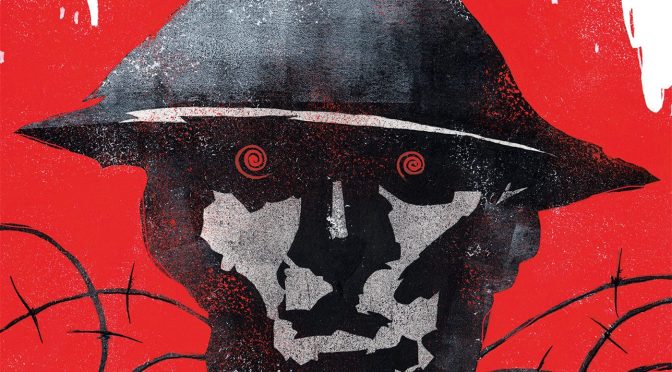
I won’t be reading anything else by Andy Remic. I didn’t care for most of his first Tor.com novella, A Song for No Man’s Land, but it got interesting right at the end. Unfortunately, Return of Souls doesn’t deliver on what little promise its predecessor held. Instead, it doubles down on everything I didn’t like about the first book in this planned trilogy and adds a heaping dose of blatant misogyny that makes it a deeply unpleasant read.
Spoilers at the end, so beware.

Once again, we’re following Robert Jones through his time in World War I, only he’s come somewhat unhinged since the events of the first book and we’re now navigating his deteriorating mental state and his journeys through a sort of dark, war torn Wonderland, still pursued by the walriders that were introduced in A Song for No Man’s Land. Though all his friends died in the last book, this time around Robert is joined by a mysterious young woman named Orana who also seems to be running from the walriders. I’m sure that there are other things going on in this novella (I think I remember Bainbridge’s ghost showing up at least once), and I still get the feeling that Remic has some point that he’s trying to manfully make about war or something, but all of that is eclipsed by the sheer disgustingness of Robert’s relationship with Orana.

I mean, come on.

First off, Orana is barely even a character at all. Instead, she seems to be a sort of generalized embodiment of Remic’s ideals of womanhood, created to both tempt Robert and to motivate him to new acts of chivalrous heroism. Over and over again, Orana is described in infantilizing and fetishistic terms as childlike, naïve and in need of protection. When Robert and Orana finally have sex, even Robert feels as if he’s raping her, and indeed it’s difficult to understand exactly how this strange child-woman in need of rescue could be truly consenting. Either way, it’s gross to read.

But, wait! It gets worse. After about a hundred pages of detailing Robert’s creepily paternalistic relationship with Orana, the final revelation of the book is that Orana was a walrider all along and was, I guess, using Robert Jones to help her reach her home? Or maybe she was just tricking him deep into walrider territory? Or maybe Orana’s transformation really is just a misogynistic commentary on the inherent duplicitousness of women? I don’t even know, and it’s hard to care very much. Robert Jones is a highly unlikeable and, frankly, boring character, and honestly, by the time I got to the end of the book I was just ready for it to be over. Unfortunately, there’s no real ending here, just this major revelation and a sort of teaser for the trajectory of the final book in the trilogy, which I just don’t think I can bring myself to read.

I’d like to say that it’s not Return of Souls, it’s me, but I’m having a hard time even thinking of reasons why other people might enjoy this title. Its pace is slow, and its prose is only workmanlike. Its horror elements are sloppy, and its fantasy elements, drawn from real-world mythology, are poorly researched and badly implemented. Robert Jones is a character in turns profoundly dull and remarkably despicable, but he’s at no point enjoyable to read about. There’s no humor to speak of in the book, no spark of fun or joy to speak of; rather, it’s just unrelentingly dark and almost nihilistic in tone. But, hey, maybe that’s your thing. I won’t be back for more, though.

Book Review: The Jewel and Her Lapidary by Fran Wilde

I adored Fran Wilde’s debut novel, Updraft, so I was thrilled when I learned she had written one of Tor.com’s novellas. The Jewel and Her Lapidary was one of my most anticipated books for the first half of 2016, so imagine my surprise and dismay when I turned out to just not care for it very much.
Where Wilde excels, of course, is with world building, which was proven amply in Updraft and confirmed here. I loved the idea of the Jewels and Lapidaries in this novella, and I found the magic system Wilde describes interesting enough. And I liked the framing of the story as piece of folk history. Unfortunately, for all the fine world building on display, there’s just not a whole lot else going on here. I knew going in that this novella was somewhat on the shorter side, but there’s barely even a short story worth of actual story buried under all this world building, and it’s not that interesting of a story.

Instead of a proper novella, this feels like background work for a novel, which would be a much better use for such a complicated premise and would have given the characters, in particular, much more room to breathe. It’s hard to really get a sense of Lin and Sima and their relationship with such limited exposure to them, and most of what we learn about their friendship feels like an awful lot of telling rather than showing. For that matter, it’s unclear whether we should even consider their relationship a friendship or not, as the bond between Jewel and Lapidary is kind of weirdly symbiotic, not entirely consensual (they are assigned to each other in infancy), and has the Lapidary in a decidedly subordinate position. The thing is, none of the implications of this—which are all genuinely fascinating—are examined in the text, and instead Lin and Sima’s relationship is portrayed as somewhat simplistically sister-like.

Worst of all, the story, such as it is, ends so abruptly that it feels unfinished and was certainly unsatisfying. While I don’t require a happy ending, the melancholy of this one was an unpleasant surprise; the vague cover art and the book description suggested something that was going to be much lighter in tone than what I got. Sure, one isn’t supposed to judge a book by its cover, but this one is misleading at first glance, and being an ebook reader I only really looked at the cover the one time. Things get fairly dark very quickly in this little book, and then they just end bittersweetly—with a distinct emphasis on the bitter part. Which would be fine if this story was part of some longer work to give it some context, but the framing device (much as I do like it) of it as folklore just isn’t quite enough to keep it from being rather unrelentingly and yet meaninglessly sad.

The Jewel and Her Lapidary isn’t the worst thing I’ve read this year, but it wasn’t great. There are the bones of a potentially great fantasy world here, but they’re wasted without a compelling story to bring them to life. I’m bummed by how little I liked this much-looked-forward-to book, but do I have to say that I’m definitely here for it if Wilde decides to revisit this universe in a longer format. In the meantime, I can always reread Updraft, and I’ve got Cloudbound to look forward to next month.

Book Review: A Court of Mist and Fury by Sarah J. Maas

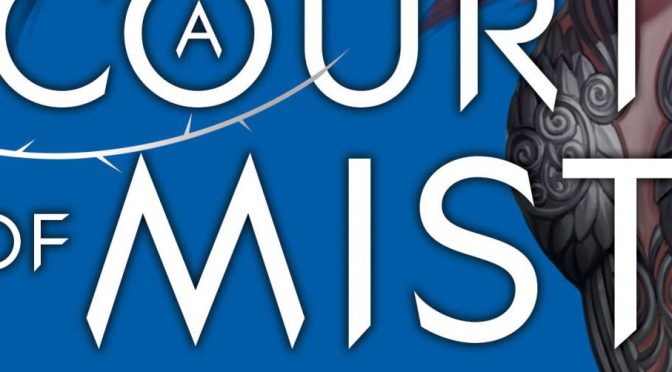
I really liked A Court of Thorns and Roses when I read it last year, so I was looking forward to A Court of Mist and Fury quite a bit. After how neatly ACOTAR seemed to wrap things up, especially with the romance between Feyre and Tamlin, I wasn’t entirely certain where ACOMAF was going to take things, and I was honestly very concerned that it was going to veer into tiresome love triangle territory. I needn’t have worried. ACOMAF wasn’t what I thought it would be, but it was engaging, exciting, and sexy enough that I read it in a single day.
Light spoilers below.

After the events of ACOTAR, Feyre has fallen into a deep depression that Tamlin doesn’t seem to notice or care about, even as the day of their wedding approaches. She ends up rescued from the untenable situation by none other than Rhysand, which I expect most readers will see coming a mile away. However, the rest of the story is much less expected. Though it functions as essentially an “after the fairytale” narrative, ACOMAF for the most part doesn’t rely on tired tropes or worn out gimmicks, and Sarah J. Maas does a great job in this book with Feyre’s character development as Feyre recovers from her harrowing experiences in the first book and finally has the time and space to process her feelings about and examine her relationship with Tamlin. ACOMAF is a book about healing from trauma and disappointment. It’s also a book about finding a space where you can grow to be your best self and fighting for it.

While Feyre’s growth throughout the novel is exceptional, and the development of her relationship with Rhysand is well-executed, most of the other secondary and tertiary characters never manage to fully come to life. While the seeds of ACOMAF Tamlin certainly existed in ACOTAR, the revelation of him as a truly villainous character is somewhat abrupt and borders on straight up character assassination although it’s presented more as a clever plot twist. Surprise! The main love interest from book one is an abusive piece of trash! There is also a whole cast of new characters that Feyre meets at the Night Court, but they are largely interchangeable and barely exist except to further Feyre’s story and development. All this is fine, really, as it’s clear throughout that Feyre is the main character, but still. It wouldn’t hurt for some of the side characters to have a bit more to do in a 600+ page book.

Here’s the thing about this book that makes it kind of great, though. Whereas ACOTAR was a fairly straightforward fairytale retelling, ACOMAF transforms Feyre’s story into something much grander. It’s not quite epic fantasy, but it’s much more than a simple romance. In fact, the trajectory of this series (and Maas’s Throne of Glass series as well) reminds me far more of pulpy boys’ adventure stories and other heroes’ journeys of the 20th century, for all that Maas has a modern sensibility when it comes to characterization of her leading ladies. Feyre’s depth and nuance is at odds, to a certain degree, with her fairly straightforward adventures, but Maas makes it work. Wonderfully.

ACOMAF and its predecessor are probably more firmly in the fledgling New Adult genre, with their frank depictions of sex and more grownup understanding of relationships, but however this series is classified I’m glad it exists at all. It’s not a perfect book, with its heavy focus on its heroine, who can occasionally be tiresomely self-aware, to the exclusion of the other characters, and while Maas tries (in her way) to include some diversity I wouldn’t recommend this title on that score. Some plot developments feel a little too heavily scripted, some feel downright forced, and not everything truly makes good sense. But A Court of Mist and Fury scratches a very particular itch for me and, I expect, for many girls and women who enjoy the same sort of self-aggrandizing, moderately sexy fluff reading. It’s a specific kind of almost-adolescent wish-fulfillment fiction that is seldom done well enough to be more than a mildly embarrassing guilty pleasure.  Sarah J. Maas does it marvelously, and she consistently creates books that I can see myself reading over and over again. Proudly.

Book Review: Too Like the Lightning by Ada Palmer

Ada Palmer’s Too Like the Lightning is a tremendously, gloriously wonderful book that seems like an obvious contender for all of the genre awards next year. It’s a remarkably original, refreshingly optimistic (but not cloyingly so), and deeply challenging read that demands the reader’s full attention. It’s a novel that is difficult at times, but it’s very much worth taking the time—and it may take quite a while—to work through.
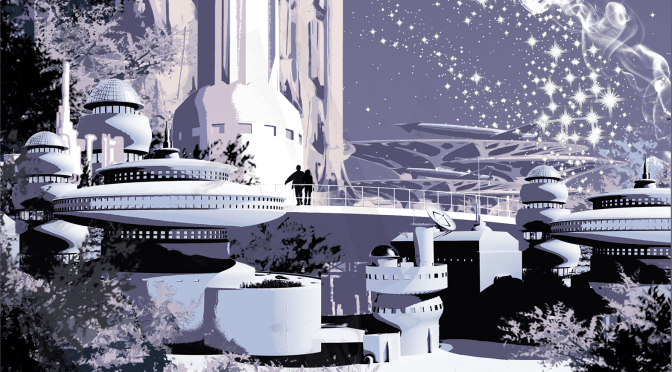
The narrator, Mycroft Canner, is a convict in a utopian future where the world is administered collectively by enormous “hives” of philosophically like-minded people and tied together with a system of flying cars that have made travel faster and safer than ever before. As a convict, Mycroft’s sentence is a life of servitude and enforced poverty; he and others like him are essentially public property, bound in service to the community for life. Too Like the Lightning is the first part (I understand the series is planned as four books) of Mycroft’s account of significant events in the year 2454.

There’s not much to say about the plot that wouldn’t be a spoiler, but suffice it to say that there are several slowly, methodically unfolding mysteries contained in this book. It’s a story that isn’t as complicated as it seems, with much of the book’s seeming complexity owing to Ada Palmer’s intricately humane portrayal of Mycroft Canner as a character rather than to any particular complexity of the plot itself. Some of the novel’s high reading level also comes from the affectation (Palmer’s and Mycroft’s) of telling the story in such an antiquated fashion (in the style of the 18th century from which most of the book’s characters’ philosophies are taken). As a great lover of 18th and 19th century literature and philosophy, this put Too Like the Lightning about a hundred and ten percent right up my alley, but it definitely makes for a novel that may require some googling in order to truly appreciate it if you don’t have the requisite background to “get” it right away.

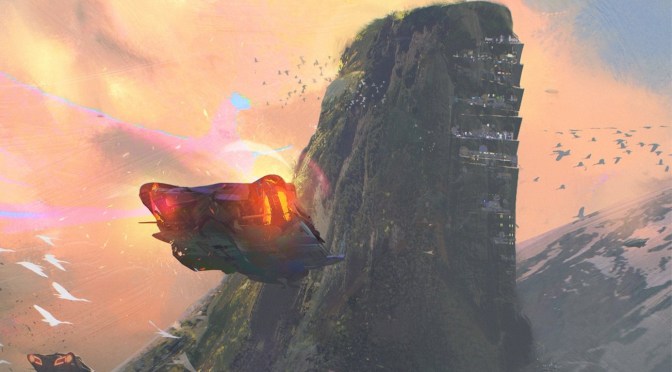
Where Too Like the Lightning really shines is in the worldbuilding department, and there aren’t even proper words to describe how delightful it is to read something so fresh and different. Certainly, one can see marks of many of the usual genre influencers along with the influences of more literary classics as well as works of philosophy and actual history, but Too Like the Lightning really isn’t quite like anything else I’ve ever read. For one thing, in a sea of modern dystopias that seek to explore all the ways in which theoretical utopias can fail, Palmer’s imagined future stands out for being an actually utopian one, and the book is a sort of look at what makes that kind of utopia tick. From eliminating gendered language to banning public displays of religion to the system of flying cars that are teased on the book’s cover to the reorganization of family life, Palmer has thought of answers for nearly all the world’s problems. Those she hasn’t, she’s been sure to include a group of people—the Utopians—in her book that are dedicated to improving on near-perfection.

Margaret Atwood has said that every utopia has a little dystopia in it, and Too Like the Lightning digs deep into examining this idea, looking for and often directly at some of the underlying ugliness that supports the world its author has dreamed up. Mostly, this is accomplished through the observations of the narrator, Mycroft, who offers a unique perspective on a world that he is decidedly set apart from while still embroiled in the events he’s recounting. Mycroft’s personal history, which is one of the central mysteries of the book, comes into play about two thirds of the way through and in a significant way that forces the reader as well as some of the other characters to wrestle with some big ideas. I won’t say it was entirely unexpected, but it’s a pretty major twist and I love a book that challenges my expectations the way this one did.

All things considered, though—little dystopia or not—the world of Too Like the Lightning is one I wouldn’t mind living in, and I feel privileged to have gotten to spend so much time there with this novel. If there’s one problem with it, it’s only that there’s not enough of it. There is no real resolution to most of the problems and conflicts the book introduces, which makes me think that the ultimate success of it is going to rely on the how well things go with the rest of the series. That said, I have a feeling it’s going to be just fine, and I can’t wait to read Seven Surrenders and find out what happens next.

This review is based on a copy of the book received through NetGalley.

Book Review: Central Station by Lavie Tidhar

It would have been useful to know in advance that Central Station is a novel that was cobbled together from a collection of related short stories. While there is much to love about the finished product, it nonetheless has a somewhat disjointed feel to it that makes it somewhat difficult to fully appreciate the novel’s strong points. It’s not incoherent, exactly, just slightly garbled in execution, which is too bad because Central Station is otherwise a gorgeously imagined, smartly written, ambitious work of thoughtful futurism.
Perhaps the strongest aspect of Central Station is Lavie Tidhar’s lovely prose, which brings his vision of a future Tel Aviv to life with great depth and richness. There’s an almost magical, mythmaking quality to his descriptions of Central Station, its inhabitants and their lives that reminds me of nothing more than Ray Bradbury’s The Martian Chronicles, to which Central Station is an obvious successor, if not intentionally than certainly through serendipity. While most of Central Station’s chapters have been edited so that they no longer entirely stand alone, there is still the feeling of it being constructed from a series of slice-of-life vignettes clustered around an overarching narrative—primarily concerned with the comings and goings of people through Central Station, which is here a major hub of travel between Earth and space—and core themes—mostly perennial sci-fi big ideas about war and religion and artificial intelligence and robots and how technology effects the human condition.

Along with crafting a striking and memorable setting, Tidhar has also populated his future Tel Aviv with a fascinating cast of characters. Sadly, this is another area in which the book is sold short in the marketing department, as its cover copy focuses on introducing Boris Chong as if he’s the main protagonist of the novel. Certainly, Boris’s experiences are important and effectively work as bookends to the rest of the stories, and the book description correctly communicates that Central Station is a sort of family drama, but Boris actually turns out to be one of the least compelling characters in the book. Instead, I found myself drawn more to Boris’s ex-lover, Miriam, Carmel the data vampire, the book dealer Achimwene, and the robot priest R. Brother Patch-It. Even the fraught romance between Boris’s cousin Isobel and the robotnik Motl somewhat overshadows Boris’s contribution to the narrative, which makes the decision to sell the book as Boris’s story somewhat unaccountable.

The missteps in the back cover copy of the book are mostly made up for, however, by its absolutely stunning retro-futurist cover by Sarah Anne Langton, which is more than enough reason to have it on your shelf. It’s a perfect package for such a lovely book, and it nicely telegraphs the fusion of classic sci-fi themes and posthumanist sensibilities contained within its pages. There’s very little new under the sun when it comes to storytelling, and Tidhar hasn’t reinvented the wheel with this book, but he definitely brings a refreshingly new and important perspective to the material he tackles. Central Station is a book that is perhaps too “literary” to get the readership it deserves, but it’s certainly worth a look for any serious reader of science fiction, especially if you think you prefer the classics.

This review is based on a copy of the title received from the publisher via NetGalley.

Comic Review: Faith

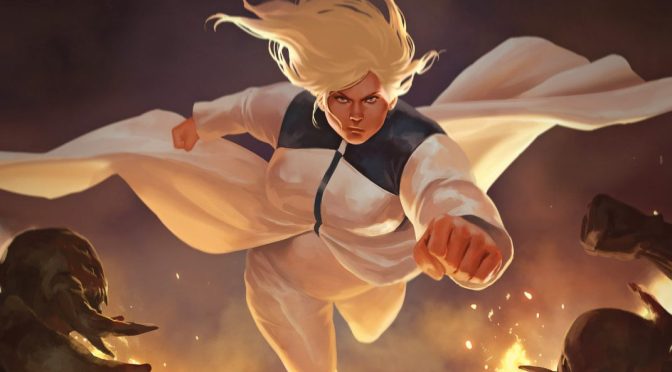
I mean, seriously. How perfectly gorgeous is this cover?

Faith had me at its gorgeous cover art, particular for issue two, which is so beautiful and so joyful that it makes me happy just looking at it. The comic itself is delightful fluff, not devoid of depth and meaning but bright and optimistic (yet without being Pollyannaish). I’ve never been particularly interested in superheroes, and the last couple of decades’ trend towards darkness, grittiness, antiheroism, and generalized cynicism has turned me even more off of the genre. In that landscape, Faith is a breath of fresh air that makes me wonder what else I might be missing by so completely avoiding super hero comics.

The thing that first put Faith on my radar was its titular character, who is a fat geeky woman—something that makes her a character very close to my heart. As I said, I loved that cover art, which does nothing to hide or minimize its heroine’s size, instead showing her as beautiful, strong and heroic, reveling in her abilities. I love how much space Faith takes up in these covers, and I love how unapologetically she seems to do it. They’re powerful images for me, a large woman in my almost mid-thirties, and they’re the kind of images that I’m glad exist for younger women and girls.

The interior art is similarly excellent. The artists are clearly unconcerned with making Faith conventionally pretty which makes her feel more real and gives the book a nice, naturalistic, relatable quality that supports its story of a young woman reinventing herself after some personal upheaval. Faith is also not sexualized, though she is sexy and at times sexual, and it’s refreshing to see art that is so free of any demeaning, leering male gaze.

Faith’s geek status is a major part of her relatability as a character, and it also makes the comic a bit of interesting meta commentary on comics, fandom, and geek culture in general. After some personal upheaval, Faith hangs up her cape (theoretically, anyway) and moves to Los Angeles to be a pop culture blogger before she’s forced by circumstance to put her costume back on and get back into the superhero game. It’s not unusual for superheroes to have secret identities, and even Faith’s job in media isn’t unusual, but her particular situation is uniquely and distinctively of the early twenty-first century. I have a feeling that, years from now, this is going to date this book, and it’s possible that it won’t hold up well to the test of time, but it’s a specificity that adds to the authenticity of Faith’s earnest storytelling. You can tell, both in the art and the smart, funny writing, that the people behind this book really care about geek culture and have a good amount of inside knowledge.
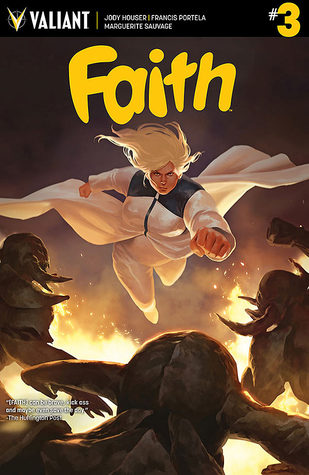
None of this is to say that Faith is a perfect comic. Mostly, it just can’t be all things to all people. It tries with regard to diversity, but the reality is that it’s still showcasing the adventures of a relatively privileged white woman. While Faith is wonderfully relatable to me (another relatively privileged white woman), she also highlights to me how much more and better diversity is still needed in comics, and in pop culture in general. Faith also doesn’t tackle any particularly meaty material; the total lack of cynicism in the book is nice, but some readers may find it too light on substance (though I can’t state enough how much I love that there’s nothing in the book about body image issues—that’s one tired theme I can do without forever).

Finally, it might be a nitpick, but I think also worth pointing out that the title of the comic, Faith, and some of the vaguely religious styling of some of the art (like on #2, where Faith has almost a halo and is surrounded by white doves) could be off-putting for some. While I generally don’t avoid everything with Christian overtones, I know that was imagery that gave me pause, even if I did find it pretty to look at. It made me unsure what to expect to find in the book, in terms of themes and messaging, mostly. As an atheist (albeit pretty lowkey these days), I don’t like to be preached at, and that imagery definitely gave me pause and led to me putting off reading the book for longer than I otherwise might have.

Still, Faith is a book that’s worth checking out, falling squarely in “superhero comic for people who don’t like superheroes” territory. It hasn’t exactly motivated me to rush to read more superhero books, but it has reassured me that there’s something for me in the genre after all.