
Category Archives: Fantasy

Book Review: Passing Strange by Ellen Klages

Passing Strange is an absolutely magical story and by far my favorite thing I’ve read so far in 2017. In this gorgeously imagined romance, Ellen Klages brings the queer side of 1940s San Francisco to glittering life and peoples it with characters who are fresh and interesting and yet still feel like the kind of old friends one wants to visit with over and over again. It’s a book that works precisely because of the specificity of its characters and its setting in time and space, and Klages does a great job of balancing the reality of history with the light fantasy elements she introduces over the course of her story. It’s still early in the year, but I fully expect Passing Strange to make a lot of year’s best lists, my own included.

Structurally, Passing Strange is slightly odd, with a lopsided framing story that leads off with an almost too-long sequence in the modern day (or possibly the near future) that introduces an extended flashback and then a final very short coda that wraps up both stories with a clever punchline. While the payoff is totally worth it in the end, it did make for a bit of a slow start to the book, and I was a little disappointed that Helen Young didn’t get more page time in the middle parts, especially when there were other characters introduced who felt much less consequential overall as a consequence of the bookends of Helen’s present day story. The problem, however, is mostly a matter of managing expectations. It’s not that Helen is unimportant after all or that other characters are given too much importance in the narrative. It’s simply that the early focus on Helen kind of leads the reader to think we’re getting more of Helen’s story, and the realization that we’re not takes a while and then doesn’t fully make sense until very late in the book. That said, once I figured out what Klages was doing, I found it easy to appreciate the deliberate way in which she reveals her story.

Passing Strange is less a straightforward love story (though romance figures largely in it) and more a detailed portrait of a specific time and place and an examination of a particular set of experiences, here, the lives of queer women in San Francisco in the 1940s. I love the way Klages introduces her characters once the flashback starts, and the picture she paints of all these interconnected women, their struggles and friendships and the joy they have in spite of often difficult circumstances is vivid and real-feeling. Klages seamlessly weaves together scenes of sweetness with scenes of visceral pain without shying away from depicting the ugliness of the era (which is sadly not always very different from our current one) but without dwelling on darkness. It’s a balancing act that can be hard to manage, and Klages does so superbly, crafting a story that is true to reality but still ultimately optimistic.

If there’s any real complaint to be made about Passing Strange, it’s that the fantasy elements of the story are only slight until the very end, when magic is almost (but not quite) a deus ex machina. It’s hinted at throughout the book that magic is both real and not very uncommon, but there’s only one actual magical event of any significance, and it’s not tied to the other magics that are described elsewhere in the book. Just in general, I would have loved to see all of the various magic and witchery suggested in the story be expanded upon more fully, to be honest. The richness of 1940s San Francisco is a lush backdrop for the story already, but Klages hints at an equally rich world of magic just out of the reader’s sight.

All this said, Passing Strange is still a near-perfect novella. The few complaints I have about it all amount to just wanting more of it. I want more stories about women loving women, and I want them to have grand romances, magical adventures, and happy endings. As delightful as Haskell and Emily and their friends are, they aren’t enough. Passing Strange deserves to be more than a singular work of its type, and if Ellen Klages ever decides to revisit this setting or any of these characters, I’m here for it. If anyone else is writing anything like this I’m looking for it.

This review is based on an advance copy of the book received from the publisher through NetGalley.
Book Review: Windwitch by Susan Dennard

I read Truthwitch around this time last year and enjoyed it in spite of its flaws, which were, well, many. But it was the start of a new series, and it featured a great friendship between two young women and had an interesting idea for a system of magic. Plus, while my tastes certainly skew towards the literary end of SFF, I appreciate some light reading to break up my routine from time to time. So I was pretty excited about Windwitch after enjoying its predecessor so much. Unfortunately, it turned out to be my biggest reading disappointment in a long while. Windwitch is the absolute worst sort of boring, insipid, YA claptrap I’ve read in years.
In Truthwitch, the story revolved primarily around Safi and Iseult, but Windwitch finds the two girls separated entirely. Obviously, based on the title, readers of the first book could expect Merik to feature largely in this one, and he does, but he is also disconnected from Safi and Iseult so that none of the primary characters from the last book actually interact with each other in any significant way. Instead, they’re shuffled around and paired off with others–Safi with Vaness and then both of them with a group of Hell-Bards, Iseult with Aeduan, and Merik with Cam and then sort of with his sister Vivia (who has been upgraded to a POV role)–but none of these interactions are very compelling, and very little actually happens at all, in spite of the book feeling fast-paced for most of its page count.

Safi and Vaness go on a journey, get captured a couple of times, and have to escape, only to learn that they don’t actually know what they’re doing. Iseult and Aeduan are also going on a journey, but they never get anywhere and then end up learning that they have to do something different from what they thought they were doing for the whole rest of the book. And Merik is trying to do something in Nubrevna but then finds out that he didn’t actually know anything about anything. Which, I guess, is supposed to be the main theme of the book–this whole no one knowing anything–but by the end of the book I found I simply didn’t care. It’s not even that the characters make foolish decisions or that everything feels so contrived and senselessly convoluted. Frankly, it’s all just so boring that I ended up just skimming whole chapters to get through it faster, and don’t think I missed out on anything.

None of this is helped by the fact that major aspects of the Witchlands’ magic system are still not very well-explained. It was only about halfway through this book that I finally decided that I’m just going to understand people who are “Cleaved” to be something like zombies, for example, even though I don’t think it’s at all conclusive from the text that this is the case. The magic of all the various characters continues to feel poorly defined, and the way Dennard uses it in the story is inconsistent. I’m sure that she has rules for how she’s writing the Witchlands magic, but whatever they are they’re basically incomprehensible to the reader. This was true enough in Truthwitch, and I called it forgivable because it was a first book in a new series and I otherwise enjoyed it. I thought that surely some of the fuzzier details of things would come into focus in this second book. They did not.

To add to these problems, none of the relationships or character arcs in Windwitch are at all interesting or entertaining except for Vivia’s and hers is subordinated to her brother Merik’s. Vivia didn’t figure largely in Truthwitch, but here she becomes a POV character with an interesting motivation–she’s trying to run her country while her father is ill, and she’s facing sexism in Nubrevnan society while also struggling with her ongoing grief over her mother’s death and her feelings of rather well-justified resentment toward her brother for the way that he has been given choices, responsibilities, and power that Vivia has had to work hard for. In the whole book, Vivia is the only character who has clearly defined and sensible motivations that are complex enough to generate real interest in her story, but she’s not given much page space and much of it is wasted on her almost obsessive thinking about her unspoken and possibly unrequited romantic feelings for another woman. I love women who love women, and goodness knows we could use more lesbians in fantasy, but this sort of relentless pining with no progression in the relationship is tiresome under normal circumstances. Here, where Vivia is legit dealing with a crisis situation as her country starves while being on the brink of war, her constant thoughts about the object of her affection are just plain intrusive–for Vivia and the reader.

Elsewhere, Iseult and Aeduan’s interactions are a study in what I guess passes for romantic/sexual tension. The difference here is that neither of them seem to have the least bit of self-awareness about their burgeoning attraction. I’m sure all this barely contained wanting to bone is great fuel for shippers and fanfic writers, but again there’s very little forward progress on that front. The revelation that Aeduan shares Nomatsi heritage with Iseult starts off feeling significant, but it never bears any actual fruit in terms of a deeper understanding or fellowship between them. Their physical interactions are too PG to ever be truly sexy, all written with a weirdly puritanical coyness that I found actively unpleasant to read.

They could have been worse, though. They could have been more like the interactions between Merik and his sidekick Cam or between Safi and the hell-bard (and by the way, I don’t think Susan Dennard actually knows what a bard is) Caden. The thing is, while I hate the dull, predictable chemistry between Safi and Caden, and I hate the way that Vaness is allowed to fade into the background of Safi’s POV sections, and I hate Safi’s sort of generalized insouciance and her terrible jokes… I despise Merik and his treatment of Cam.

Cam is a trans boy with what sounds like vitiligo, and he’s clever and brave and loyal and long-suffering. Because Merik is pretty much an asshole to Cam through the whole book about everything. The worst part, however, is just how much time Merik (well, Susan Dennard, really) spends commenting on Cam’s transness. It’s as if Dennard decided to make Merik the mouthpiece for her to work through all her own confused feelings about trans people, and Cam spends most of the book being misgendered inside Merik’s head–until the very end of the book when Merik magnanimously decides that he needs to focus on thinking about Cam with the proper pronouns. It’s not good enough. Cam is obviously trans from the beginning of the book, and Merik’s inability to either understand or accept that for almost four hundred pages doesn’t reflect well on him. It’s only when Merik meets someone who know’s Cam’s original name that things seem to click for Merik, and a ridiculous amount of page space is dedicated to Merik essentially marveling that being trans is a thing.

Being cis myself, I don’t feel qualified to fully unpack all this, but it seems like a particularly ham-handed way of including a trans character. Without any scenes from Cam’s POV, there’s very little insight into how he feels about any of this. The disconnect between the way Merik talks to Cam and the way he thinks about Cam is messed up as well. He’s very particular about calling Cam “boy” throughout the book–which has a weird racial dynamic as well, since Merik codes white and Cam is described as being dark-skinned with lighter patches–but he consistently thinks of Cam as “girl” even though he first knew Cam only as a boy. It’s just a huge mess of a well-meaning (I think) but ultimately insufficient attempt at inclusiveness.

Which is pretty par for the course with this book, which is, overall, a big mess in which almost nothing really works. The things that do work–Vivia’s storyline, Aeduan (though not Aeduan with Iseult)–seem to work almost be accident, not through any particular skill or intention of the author. Honestly, I’m not quite sure anymore what Susan Dennard is trying to do with this series. I might come back for Bloodwitch next year, because I do like Aeduan and am mildly interested to see if anything gets any better, but Windwitch honestly made me question every positive feeling I had about Truthwitch.

Book Review: Dusk or Dark or Dawn or Day by Seanan McGuire

It’s early enough in the year that I don’t have much to compare it to yet, but I feel confident in saying that Dusk or Dark or Dawn or Day is one of the year’s great novella-length works. It’s smartly written, well-paced, has a compelling cast of characters and an original mythology, and is altogether compulsively readable. It’s perfect reading for a cold day or a rainy afternoon, exactly the sort of thing that is easy to zip through in a single sitting like I did.
It might be easy to just focus on the characterization of this book as “that book about the ghost who works at the suicide hotline,” but Dusk or Dark or Dawn or Day is something really special and interesting that isn’t done justice by that facile, humorous-sounding description. Yes, Jenna is a ghost and she works at a suicide hotline, but this isn’t a funny book and, while a fast read, isn’t really the kind of light reading that superficial description would suggest, either. There’s some lightness here, but this is a book that deals mostly with themes relating to grief and mortality and Seanan McGuire has something quite serious to say about these issues. She does touch on some ideas about community and found family, but those are mostly incidental to the story and more implied than explicitly examined in the text.

Because the book is so emotionally and thematically weighty, the plot is a fairly basic one. After the introduction of Jenna’s predicament and some explanation of her life as a ghost, Jenna and her friend, a witch, have to rescue a bunch of other ghosts when they mysteriously disappear. We never meet any of the disappeared ghosts, so there’s not much emotional stake in their rescue, but the book isn’t really about them at all. Instead, the first person narrative puts the reader completely inside Jenna’s head for the duration of the story. And while Jenna is a kind and caring person, there’s an interesting detachment in her ways of caring for her pets (all elderly cats) and the people in her after-life, and McGuire does a great job of exploring how Jenna’s circumstances have changed her perspective and her understanding of life and death.

McGuire also has an interesting take on witches here, where they have magics tied to any number of things–streets, rats, corn… presumably the options are basically unlimited–that fuel their powers and inform and limit their abilities. The relationship between witches and ghosts is complex and adversarial rather than symbiotic, but it adds another dimension to the reader’s understanding of the themes. Like ghosts, witches exist in a social space somewhat removed from humanity, and both ghosts and witches live extended lifetimes and are subject to forces and motivations outside their control. McGuire’s “What If?” question in this book is broad and perhaps ill-defined, but I love the multiple angles from which she’s chosen to try and answer it.

Looking back on the reading experience of this one, I think the genius of Dusk or Dark or Dawn or Day is that McGuire has used an extremely simple and fairly straightforward plot in order to hang a ton of mythology and worldbuilding upon, but she’s managed to do it in a way that feels complete and not as if it’s just an introduction to a bigger fictional world or a longer series. Sure, there’s tons of storytelling potential here, and there is at least one character (Delia, if you want to know) that I’d love to see McGuire return to in the future. But Jenna’s story in this volume is completely self-contained and entirely emotionally satisfying. I would definitely like to read more about this fantasy world, but I don’t think any sequels are necessary. I’d love for these kinds of singularly lovely standalone stories become a trend even more than I want to see sequels or companions to this story.

This review is based upon an advance copy of the title received from the publisher through NetGalley.

Book Review: The Bear and the Nightingale by Katherine Arden

The Bear and the Nightingale is an excellent fairy tale-inspired historical fantasy that should appeal to fans of Naomi Novik’s Uprooted and Catherynne M. Valente’s Deathless. Katherine Arden has crafted a well-researched, beautifully written, and overall marvelously realized debut novel that nonetheless has some deep and unsettling flaws that I expect will keep it from being among my favorite novels of 2017 and, frankly, make it somewhat unlikely that I will return to the series (this is the first of a planned trilogy).
First, the good.

If you like historical fantasy or fairy tale retellings, this one is a great choice. Arden has chosen a couple of somewhat obscure-to-Anglophone-readers fairy tales to use as the backbone of her story, and she’s chosen a setting–circa 14th century Russia–that isn’t widely used. Both of these factors set The Bear and the Nightingale nicely apart from the ongoing glut of retold and reimagined fairy tales on the market. These things are always a dime a dozen, so it’s refreshing to see something original being done in the genre, and to have an original idea coupled with a well-researched setting that offers a great sense of place is something really special.

I also kind of love that The Bear and the Nightingale isn’t a romance, though it has some romantic, in the literary sense, elements. Instead, it’s a bildungsroman of sorts, beginning before the birth of its primary protagonist, and Vasilisa grows from precocious child to independent young woman over the course of the novel. Romantic relationships barely figure into the story at all, and it instead focuses on exploring Vasilisa’s relationships with her family and community in order to explore bigger ideas about tradition, religion, gender equality, and growing up. Too often, books like this focus primarily on getting their heroine heterosexually paired off and settled down at the end, so I’m always glad to read something that avoids that narrative that domestic partnership and nuclear familial conventionality are the ultimate happy ending. The somewhat ambiguous, but hopeful, ending of The Bear and the Nightingale suits me far better.

Sadly, while the good parts of The Bear and the Nightingale are excellent, the bad parts are pretty terrible. Mostly, the bad parts all involve Vasilisa’s stepmother, Anna Ivanovna, for whom everything is terrible all the time.

**Spoilers below this line.** Continue reading Book Review: The Bear and the Nightingale by Katherine Arden

Book Review: Goldenhand by Garth Nix

Goldenhand is a welcome return to Garth Nix’s Old Kingdom universe, but it unfortunately feels, overall, a bit half-baked. It’s an enjoyable read if one doesn’t think too hard about it, but the truth is that Goldenhand is problematic in numerous ways that detract from the joy of revisiting such a well-loved fantasy world.

Goldenhand is a direct continuation of Lirael’s story following the events of Abhorsen and picking up about a year or so later. It also incorporates events from the novella The Creature in the Case, which continued the story of Nicholas Sayre after he returns to Ancelstierre at the end of Abhorsen. Lirael has been hard at work learning in her role as Abhorsen-in-waiting to her sister, Sabriel, and she’s given the chance to take on more responsibility when Sabriel and Touchstone go on their first vacation in twenty years. Meanwhile, after accidentally freeing and empowering a dangerous free magic creature, Nick is on his way back towards the Old Kingdom in pursuit of it. Meanwhile, Chlorr is still stirring up trouble in the north, and it turns out there’s a whole previously unmentioned group of people that are being used for Chlorr’s nefarious ends. There’s a lot going on, at least ostensibly. Perhaps the biggest problem with Goldenhand is that, despite the ambitious worldbuilding and great number of things happening, none of it particularly works.

It was interesting at first to be introduced to Ferin and her people, but with only Ferin as a point of view for that part of the world and no sense of what normal life is like for the tribes, there’s ultimately very little to learn about these new people and their culture. Ferin herself has a very specific and non-normative experience within that culture—she was raised to be basically a sacrifice, sequestered from the rest of the tribe and denied even the humanity of a proper name (“Ferin” is from a childish mispronunciation of “Offering”)—and she’s the only one of her people the reader meets directly. The rest are faceless villains and obstacles for our heroes to overcome, and there’s no real sense of who these people are and how they normally fit into the regular fabric of the Old Kingdom. This diminishes the reader’s investment in Ferin’s history and struggle, and it’s not helped along by Ferin’s extremely practical nature. She’s so pragmatic about everything that happens to her that it ends up feeling as if she isn’t affected very much by anything she goes through. This would be frustrating in a minor character, but Ferin is a point of view character for fully half of this book, and it’s extremely difficult to become really immersed in a perspective that is so poorly socialized and without enough context for understanding why and how she’s the way she is. Ferin is a weird character, and not in a good way. Rather, she takes up a lot of page space without ever being compelling enough to be a proper balance or complement to Lirael, who we already know from previous books.

Sadly, Lirael, too, is a lot less interesting this time around. Lirael and Abhorsen were heavily focused on Lirael’s journey to discovering her own identity and finding her place in the world, and there was a clear and well-executed character arc as she came of age. Goldenhand gives us a Lirael who is much more confident and self-assured to start with, which isn’t necessarily a bad thing, but this Lirael doesn’t have nearly so much to learn or so far to travel, for all that she goes fully from one end of the Kingdom to the other. Some attention is paid both to Lirael’s lost hand and her grief over her missing friend, the Disreputable Dog, but neither of these things are given the weight they ought to have. Indeed, Prince Sameth has already built a magical gold hand for Lirael by the start of the book, which effectively erases her disability. Most of Lirael’s thoughts about her hand are marveling at how functional the magical prosthetic is rather than lamenting the loss of the real hand. Similarly, Lirael does at times miss the Dog, but with everything else going on there’s not much time for truly exploring her feelings of sadness and loss. Instead, Lirael’s primary arc in this book is a romantic one, mostly centered around her growing feelings for Nick and her relationship with him. While Lirael’s final dealing with Chlorr/Clariel seems intended to be a climax for the story, it happens quickly and the novel is then ended rather abruptly, which prevents the event from having much emotional weight.

This lack of impact is, frankly, characteristic of Goldenhand. Erasing Lirael’s disability and glossing over her grieving process in favor of focusing on her burgeoning relationship with a man she barely knows (and who doesn’t get much development of his own, by the way) makes for a very slight novel. Both that romance and Lirael’s quest to stop Chlorr once and for all rely far too much on previous books in the series to generate what interest they do hold. If you haven’t read Lirael, Abhorsen, and Clariel (and preferably The Creature in the Case as well), you’re likely to find yourself more than a little at sea in Goldenhand. Goldenhand is not an entry point into the Old Kingdom for new readers; it’s a book for superfans who will consume anything they can get in this setting without being too picky about things making sense. This overall effect might have been counteracted if Ferin’s story was stronger, but Ferin’s goals and purpose are never quite clear; she is trying to do something to save her people I guess, but most of her chapters are taken up by an aimless chase that never manages to feel dangerous or high stakes enough to justify its existence. Instead of acting as a powerful new addition to the series, Ferin’s story functions mostly as a rather dull and uninspired distraction in what might otherwise have been a decent piece of fan service.

While Garth Nix does a lot of work here to expand the world of the Old Kingdom and provide more theoretically fertile ground for, presumably, future sequels, Goldenhand is plagued with enough craft problems and various missteps that it’s hard to get very excited to learn what comes next. Unless it involves queer Ellimere (I mean, come on—everyone else has been paired off heterosexually now) and lots of Mogget (there was not nearly enough Mogget in this book), I can’t say I’m very interested.

Book Review: The Ghoul King by Guy Haley

I didn’t hate Guy Haley’s first Dreaming Cities novella, The Emperor’s Railroad, though it wasn’t one of my favorite reads of the year so far. Nonetheless, I was intrigued enough to read this second installment of the series. The Ghoul King seemed to promise more action and a female character with something to do besides die for male character development, and I was hoping to see Haley dig a little deeper into some of the potentially very cool world building of his post-apocalyptic landscape. Sadly, I found myself disappointed on all counts with this book, and this is another series that I’m very unlikely to continue with.
Here’s the thing about these books: they’re fine. Haley has a handful of neat ideas, and a solid (if a bit hackneyed) premise. Quinn is a perfectly serviceable anti-ish-hero; the angels are theoretically compelling antagonists; and a post-apocalypse full of zombies and robot dragons marauding brigands and petty feudal-esque politics should offer plenty of minor conflicts and quests for an itinerant adventurer. Unfortunately, once you get past the initial observation of “huh, that’s cool,” there’s very little actually happening under the surface. Haley is great at window dressing, and the books’ appeal is helped along by sharp-looking covers, but when I finished both of these books I was just sort of like “is that it?”

Quinn is as inscrutable and laconic as ever in The Ghoul King, but he never manages to be in the least bit likeable or even interesting. Perhaps because of the choice to have the action narrated again from a point of view that isn’t Quinn’s, Quinn remains a bit of a cipher, as the first person narrator is never quite able to connect with him or get to know him on a personal level at all. Once again, Quinn is a sort of cowboy-ish character who rides into town, impresses the locals and rides away with his cloak of mystery intact. He’s a notably old-fashioned construct of stoic masculine heroism that just… isn’t fun to read about at all. Unless that’s your thing, in which case do you, but it’s not much fun for me.

There are a couple of female characters this time around, though only one, Rachel, plays a major role in the action. In fact, she’s the instigator of this novella’s adventure. Unfortunately, she’s also—through sheer ineptitude and ignorance—kind of the story’s main antagonist as well, and Rachel’s search for pre-apocalypse technology doesn’t end well for pretty much anyone. It’s an almost archetypal arc, with Rachel cast as a sort of Eve who lures men on a fruitless quest for knowledge that ends in tragedy and, ultimately, their expulsion from the seat of knowledge and into an uncertain future. On the one hand, there’s something almost mythologically epic going on. On the other hand, it doesn’t seem as if Haley has anything in particular to say with any of the mythology he’s crafting.

Certainly not every story has to be deep and insightful, and there’s something to be said for straightforward, uncomplicated adventure stories, but there still has to be something to engage the reader, make them care about the events they’re reading about, and keep them coming back for more. Without a likeable protagonist or any discernable message, and with the world building stalled out (there’s not much new information revealed in this volume at all, sadly) this series doesn’t do that for me.

This review is based on an advance copy of the book received through NetGalley.

Book Review: Return of Souls by Andy Remic

I won’t be reading anything else by Andy Remic. I didn’t care for most of his first Tor.com novella, A Song for No Man’s Land, but it got interesting right at the end. Unfortunately, Return of Souls doesn’t deliver on what little promise its predecessor held. Instead, it doubles down on everything I didn’t like about the first book in this planned trilogy and adds a heaping dose of blatant misogyny that makes it a deeply unpleasant read.
Spoilers at the end, so beware.

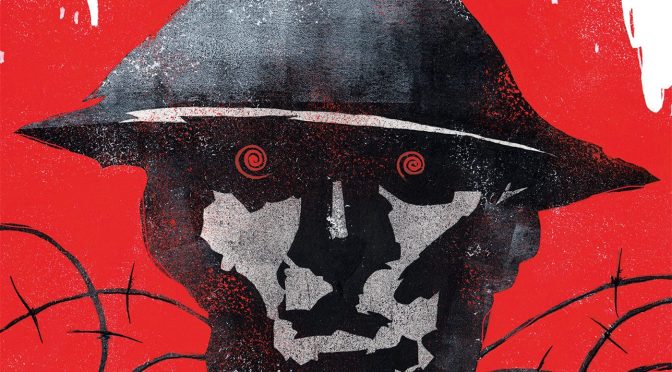
Once again, we’re following Robert Jones through his time in World War I, only he’s come somewhat unhinged since the events of the first book and we’re now navigating his deteriorating mental state and his journeys through a sort of dark, war torn Wonderland, still pursued by the walriders that were introduced in A Song for No Man’s Land. Though all his friends died in the last book, this time around Robert is joined by a mysterious young woman named Orana who also seems to be running from the walriders. I’m sure that there are other things going on in this novella (I think I remember Bainbridge’s ghost showing up at least once), and I still get the feeling that Remic has some point that he’s trying to manfully make about war or something, but all of that is eclipsed by the sheer disgustingness of Robert’s relationship with Orana.

I mean, come on.

First off, Orana is barely even a character at all. Instead, she seems to be a sort of generalized embodiment of Remic’s ideals of womanhood, created to both tempt Robert and to motivate him to new acts of chivalrous heroism. Over and over again, Orana is described in infantilizing and fetishistic terms as childlike, naïve and in need of protection. When Robert and Orana finally have sex, even Robert feels as if he’s raping her, and indeed it’s difficult to understand exactly how this strange child-woman in need of rescue could be truly consenting. Either way, it’s gross to read.

But, wait! It gets worse. After about a hundred pages of detailing Robert’s creepily paternalistic relationship with Orana, the final revelation of the book is that Orana was a walrider all along and was, I guess, using Robert Jones to help her reach her home? Or maybe she was just tricking him deep into walrider territory? Or maybe Orana’s transformation really is just a misogynistic commentary on the inherent duplicitousness of women? I don’t even know, and it’s hard to care very much. Robert Jones is a highly unlikeable and, frankly, boring character, and honestly, by the time I got to the end of the book I was just ready for it to be over. Unfortunately, there’s no real ending here, just this major revelation and a sort of teaser for the trajectory of the final book in the trilogy, which I just don’t think I can bring myself to read.

I’d like to say that it’s not Return of Souls, it’s me, but I’m having a hard time even thinking of reasons why other people might enjoy this title. Its pace is slow, and its prose is only workmanlike. Its horror elements are sloppy, and its fantasy elements, drawn from real-world mythology, are poorly researched and badly implemented. Robert Jones is a character in turns profoundly dull and remarkably despicable, but he’s at no point enjoyable to read about. There’s no humor to speak of in the book, no spark of fun or joy to speak of; rather, it’s just unrelentingly dark and almost nihilistic in tone. But, hey, maybe that’s your thing. I won’t be back for more, though.

Book Review: The Jewel and Her Lapidary by Fran Wilde

I adored Fran Wilde’s debut novel, Updraft, so I was thrilled when I learned she had written one of Tor.com’s novellas. The Jewel and Her Lapidary was one of my most anticipated books for the first half of 2016, so imagine my surprise and dismay when I turned out to just not care for it very much.
Where Wilde excels, of course, is with world building, which was proven amply in Updraft and confirmed here. I loved the idea of the Jewels and Lapidaries in this novella, and I found the magic system Wilde describes interesting enough. And I liked the framing of the story as piece of folk history. Unfortunately, for all the fine world building on display, there’s just not a whole lot else going on here. I knew going in that this novella was somewhat on the shorter side, but there’s barely even a short story worth of actual story buried under all this world building, and it’s not that interesting of a story.

Instead of a proper novella, this feels like background work for a novel, which would be a much better use for such a complicated premise and would have given the characters, in particular, much more room to breathe. It’s hard to really get a sense of Lin and Sima and their relationship with such limited exposure to them, and most of what we learn about their friendship feels like an awful lot of telling rather than showing. For that matter, it’s unclear whether we should even consider their relationship a friendship or not, as the bond between Jewel and Lapidary is kind of weirdly symbiotic, not entirely consensual (they are assigned to each other in infancy), and has the Lapidary in a decidedly subordinate position. The thing is, none of the implications of this—which are all genuinely fascinating—are examined in the text, and instead Lin and Sima’s relationship is portrayed as somewhat simplistically sister-like.

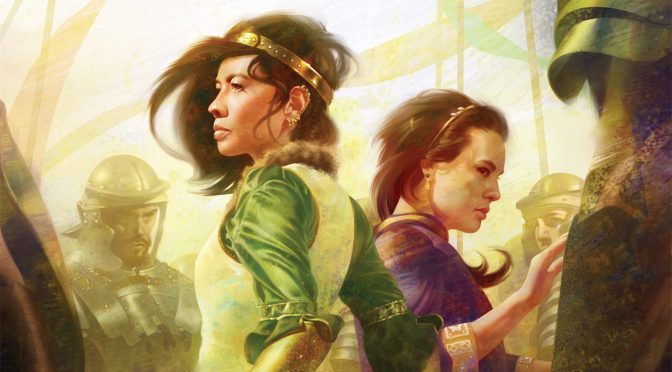
Worst of all, the story, such as it is, ends so abruptly that it feels unfinished and was certainly unsatisfying. While I don’t require a happy ending, the melancholy of this one was an unpleasant surprise; the vague cover art and the book description suggested something that was going to be much lighter in tone than what I got. Sure, one isn’t supposed to judge a book by its cover, but this one is misleading at first glance, and being an ebook reader I only really looked at the cover the one time. Things get fairly dark very quickly in this little book, and then they just end bittersweetly—with a distinct emphasis on the bitter part. Which would be fine if this story was part of some longer work to give it some context, but the framing device (much as I do like it) of it as folklore just isn’t quite enough to keep it from being rather unrelentingly and yet meaninglessly sad.

The Jewel and Her Lapidary isn’t the worst thing I’ve read this year, but it wasn’t great. There are the bones of a potentially great fantasy world here, but they’re wasted without a compelling story to bring them to life. I’m bummed by how little I liked this much-looked-forward-to book, but do I have to say that I’m definitely here for it if Wilde decides to revisit this universe in a longer format. In the meantime, I can always reread Updraft, and I’ve got Cloudbound to look forward to next month.

Book Review: A Court of Mist and Fury by Sarah J. Maas

I really liked A Court of Thorns and Roses when I read it last year, so I was looking forward to A Court of Mist and Fury quite a bit. After how neatly ACOTAR seemed to wrap things up, especially with the romance between Feyre and Tamlin, I wasn’t entirely certain where ACOMAF was going to take things, and I was honestly very concerned that it was going to veer into tiresome love triangle territory. I needn’t have worried. ACOMAF wasn’t what I thought it would be, but it was engaging, exciting, and sexy enough that I read it in a single day.

Light spoilers below.

After the events of ACOTAR, Feyre has fallen into a deep depression that Tamlin doesn’t seem to notice or care about, even as the day of their wedding approaches. She ends up rescued from the untenable situation by none other than Rhysand, which I expect most readers will see coming a mile away. However, the rest of the story is much less expected. Though it functions as essentially an “after the fairytale” narrative, ACOMAF for the most part doesn’t rely on tired tropes or worn out gimmicks, and Sarah J. Maas does a great job in this book with Feyre’s character development as Feyre recovers from her harrowing experiences in the first book and finally has the time and space to process her feelings about and examine her relationship with Tamlin. ACOMAF is a book about healing from trauma and disappointment. It’s also a book about finding a space where you can grow to be your best self and fighting for it.

While Feyre’s growth throughout the novel is exceptional, and the development of her relationship with Rhysand is well-executed, most of the other secondary and tertiary characters never manage to fully come to life. While the seeds of ACOMAF Tamlin certainly existed in ACOTAR, the revelation of him as a truly villainous character is somewhat abrupt and borders on straight up character assassination although it’s presented more as a clever plot twist. Surprise! The main love interest from book one is an abusive piece of trash! There is also a whole cast of new characters that Feyre meets at the Night Court, but they are largely interchangeable and barely exist except to further Feyre’s story and development. All this is fine, really, as it’s clear throughout that Feyre is the main character, but still. It wouldn’t hurt for some of the side characters to have a bit more to do in a 600+ page book.

Here’s the thing about this book that makes it kind of great, though. Whereas ACOTAR was a fairly straightforward fairytale retelling, ACOMAF transforms Feyre’s story into something much grander. It’s not quite epic fantasy, but it’s much more than a simple romance. In fact, the trajectory of this series (and Maas’s Throne of Glass series as well) reminds me far more of pulpy boys’ adventure stories and other heroes’ journeys of the 20th century, for all that Maas has a modern sensibility when it comes to characterization of her leading ladies. Feyre’s depth and nuance is at odds, to a certain degree, with her fairly straightforward adventures, but Maas makes it work. Wonderfully.

ACOMAF and its predecessor are probably more firmly in the fledgling New Adult genre, with their frank depictions of sex and more grownup understanding of relationships, but however this series is classified I’m glad it exists at all. It’s not a perfect book, with its heavy focus on its heroine, who can occasionally be tiresomely self-aware, to the exclusion of the other characters, and while Maas tries (in her way) to include some diversity I wouldn’t recommend this title on that score. Some plot developments feel a little too heavily scripted, some feel downright forced, and not everything truly makes good sense. But A Court of Mist and Fury scratches a very particular itch for me and, I expect, for many girls and women who enjoy the same sort of self-aggrandizing, moderately sexy fluff reading. It’s a specific kind of almost-adolescent wish-fulfillment fiction that is seldom done well enough to be more than a mildly embarrassing guilty pleasure.  Sarah J. Maas does it marvelously, and she consistently creates books that I can see myself reading over and over again. Proudly.

Book Review: Pride’s Spell by Matt Wallace

I don’t know if I’ve mentioned this lately, but I love Matt Wallace’s Sin du Jour series so very, very much. Sure, I might have started off feeling a little tepid towards it, but it’s new entries have quickly become some of my most anticipated new releases. They’re only getting better over time, and Pride’s Spell is the best one yet. It’s a smart, action-packed, hilariously absurdist romp and probably the most fun thing you can read this summer.

This installment takes half of the team to Hollywood, where they’re doing the catering for an important movie premiere that takes a sinister turn. That doesn’t mean the folks who stay behind in New York are off the hook, though. There’s not a lot to be said about the plot without giving the whole thing away, but if nothing else about this book appeals to you, it’s worth reading just to read the truly superb action scene where a dude fights an evil Easter Bunny.

That said, there’s a lot to love about Pride’s Spell, and it’s good to see the world Matt Wallace is creating start to feel a bit more lived in. There’s a definite monster-of-the-week feel to it that keeps each installment fresh and interesting, but three books in there’s also an internal logic emerging that is finally making the Sin Du Jour world feel fully realized. It also helps that the overarching plot of the series is starting to take shape and make a bit more sense out of the sometimes random-seeming events. The copious pop culture references will likely date the books in the future, but right now they work well to keep these stories grounded enough in reality that the reader can accept some of their more surreal qualities.

Distinct character arcs are starting to come together as well, particularly Lena’s, which was the biggest surprise of this book for me. When I read Envy of Angels, I rather thought that Lena’s roommate, Darren, would end up being the main character, but instead it’s Lena and her experiences that have been increasingly foregrounded. I’m glad because, while Darren’s rocky adjustment to the new job isn’t completely boring, I’d much rather read about Lena’s burgeoning friendships with other women, her professional accomplishments, and even her messy relationships with men. She’s a delightfully complex character who does everything with an admirable if occasionally ill-advised fierceness that makes her both admirable and relatable.

The only major issue I see with Pride’s Spell is that I don’t know if anyone will be able to make heads or tails of it without having read the previous installments of the series. While each novella is a self-contained adventure, there’s a lot going on, and enough references here to the previous books that I could definitely see an uninitiated reader feeling a bit adrift. The good news is that the series is really excellent and improving over time, and it’s not too late to start from the beginning. Sin Du Jour is a fast, fun read perfect for breaking reading slumps or relaxing between more challenging books. You could start with Pride’s Spell, and a clever reader will catch up quickly, but you really owe it to yourself to go back and read the first couple installments.

This review is based on an advance copy of the title received from the publisher through NetGalley.