Weekend Links: December 19, 2015

Obviously, this whole week (and most of the last several weeks, really) has been dominated by Star Wars coverage. Unfortunately, I won’t be seeing the film until at least Tuesday, possibly even next Tuesday depending on how quickly I can get my holiday baking done (I’m finished with candy-making, but I’ve still got gingerbread reindeer, miniature gingerbread houses, and three flavors of French macarons that I’m planning on making in the next few days). That doesn’t mean I haven’t paid any attention to any Star Wars stuff, though.

This five hour Darth Vader “Yule log” video is much better than the actual Star Wars holiday special:

Jimmy Fallon, the Roots, and the cast of The Force Awakens sing the Star Wars theme a cappella, which is delightful:

The Force Awakens is likely the last exciting genre film release of 2015, but don’t worry. Den of Geek is already looking forward with 30 of 2016’s must-see fantasy and sci-fi films.

Meanwhile, at the Barnes & Noble Sci-Fi and Fantasy Blog, they’ve already got a list up of 42 new releases to look for in 2016. I thought 2015 was a great year for reading, but next year is only going to be better. I’d say that I can’t wait, but I’m still finishing a few things from this year.

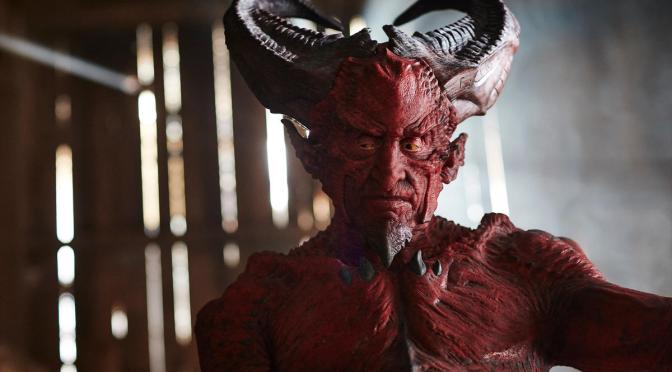
io9 contends that Legend is the weirdest Ridley Scott movie of all time, to which I can only respond, “Yeah, so?” Maybe it’s just because I saw it at a formative age–right on the cusp of changing from a little girl who loved horses to one who loved dragons and wizards–but Legend (along with Willow) will always be a film that I just uncritically adore.

Tor.com discusses where to start with reading the works of Dianna Wynne JonesHowl’s Moving Castle, in my opinion, which also gives you an excuse to start watching Studio Ghibli films if you haven’t already.

Michael Moorcock’s birthday was this week. If you haven’t read his stuff, you should think about doing so soon.

The Toast published the sequel to “The Ones Who Walk Away From Omelas” that no one ever asked for.

At Kirkus, there’s a list of books to read if you like The Expanse.

At LitStack, there’s a lovely post in praise of difficult genre fiction.

At LitHub, Rebecca Solnit has an excellent new essay: “Men explain Lolita to me.” Because of course they do.

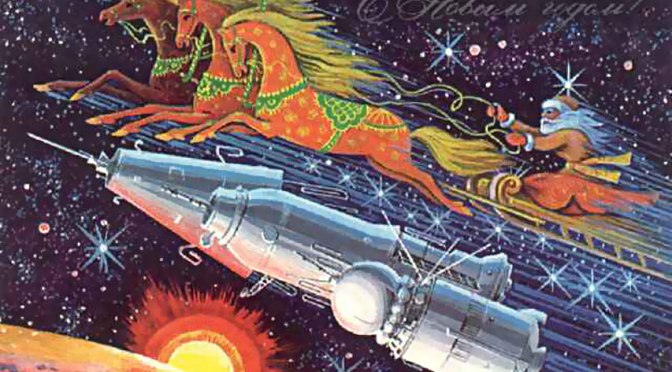
Finally, this Dangerous Minds post about Soviet-era sci-fi holiday cards might be my favorite thing I’ve seen this week. They’re all just so wonderfully weird and strangely beautiful.


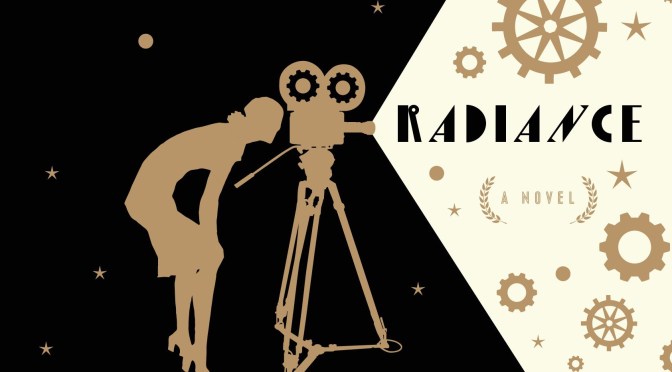
Book Review: Radiance by Catherynne M. Valente

I’m always torn, when reading anything by Catherynne M. Valente, between feeling just incredible awe at her skill as a wordsmith and storyteller and being overcome by crushing feelings of inadequacy and self-loathing because she’s so brilliant and talented and only a couple of years older than me. I’m always happy when she’s written something new, and Radiance was perhaps my most-anticipated novel of 2015. Even better, it’s everything I dreamed it would be.

The most wonderful thing about Valente’s work is that it’s all the same, but also that it’s all remarkably different and unique. Radiance is like nothing I’ve ever read before, but it’s also very reminiscent of Valente’s other recent work. Earlier this year, I read her novella, Speak Easy, and Radiance has much in common with that shorter work, to the point where I get the feeling that both stories grew out of some of the same research. What is certain, though, is that these two works represent a sharp shift in Valente’s adult work. Radiance, in particular, seems to represent a decided shift away from some of the author’s fairy tale themes, in favor of gothic romance, noir, and proto-sci-fi influences.

Valente’s work has always skewed literary and is often avant garde, and this is her most ambitious and experimental (or at least most successfully so) novel yet. In Radiance, Valente eschews traditional prose forms in favor of presenting the story in the form of found objects: newspaper clippings, movie scripts, interviews, and so on. While this decision can be occasionally frustrating and even confusing at times (mostly in the first third of the book), it pays off in the end as Valente creates a haunting portrait of a mysterious woman that also functions as a love letter to a part of cinematic history that many readers may not be familiar with.

Radiance is a masterpiece of non-linear storytelling, and Valente deftly weaves together numerous threads to build a world that is beautifully surreal and create characters who are wonderfully compelling. Every detail Valente includes works towards the overall effect of the book, which is whimsical and melancholy and epic in scale and deeply personal all at once.

There are no words to adequately encompass any Valente novel, though. You’ve simply got to read it for yourself. When you do, I highly recommend opting for print over the ebook, as this sort of found object style is highly tactile and benefits from being read on dead trees. My only complaint is that Tor Books didn’t print the book particularly well. It’s fine, and I do love the cover, but the interior design is average at best. I would have loved to read this in a format that utilized page layout and typography to enhance the reading experience. It would have been just that much more magical.

Childhood’s End: “The Children” is a fitting (and welcome) end to this flawed adaptation

After the complete disaster that was the middle part of this mini-series, I adjusted my expectations for “The Children” way down, and this was probably a good thing as it allowed the more or less decent finish to the show to leave me pleasantly surprised instead of disappointed again. I was happy to see things finally start to come back together in about the last hour of part three, and I’m glad to be able to say that Childhood’s End comes to a close with some semblance of dignity.

“The Children” continues to struggle with the task of just filling all of the time allotted to it, and as in “The Deceivers” there’s a truly unfortunate amount of completely superfluous material that distracts from and obfuscates the main story and confuses the message. Unlike the bittersweetly profound ending of Arthur C. Clarke’s novel, the ending of this adaptation feels deeply pessimistic, injected with a nihilism that rather contradicts the idea that humanity’s ultimate purpose could be to basically become one with the universe.

Far too much time in “The Children” is taken up by checking in on the Stormgrens and watching Ricky slowly die from whatever space cancer he picked up on Karellen’s ship. Ellie and Ricky are the most boring imaginable couple, and Ricky’s still being haunted by his dead first wife, who is even more boring. Both Ellie and Annabel seem to exist only to have feelings for and about Ricky, and he only seems mildly-to-moderately irritated that they exist at all. All of the dullness and lack of characterization of all of these characters is on display in this episode, where they literally have nothing to do but die (or still be dead, in Annabel’s case). Ricky and Ellie are completely disconnected from any of the rest of the characters, most of the time they spend on screen is dealing with Ricky’s impending death, and even the few moments we see of them actually interacting with each other are basically the exact same shots we were shown in previous episodes.

Another major part of this episode deals with the Greggsons and their creepy children. They move to New Athens, supposedly the “last free city on Earth,” but this plot goes nowhere, as the kids’ ascension to a new level of consciousness is something that can’t be stopped. There’s some creepy stuff with children showing up to Nazi salute Jennifer Greggson, and there’s plenty of concerned face-making and futile angry speeches, but there’s not much actually going on. What little does happen over the course of this episode is ineffectual and pedestrian at best—nonsensical and unintentionally funny at worst. I laughed aloud more than once at the Greggsons’ antics.

What I found most striking about these sequences, to be honest, was the failure of world building. We don’t get to see much of New Athens, and the purpose of the place is highly simplified compared to the way Clarke describes the place in the book. In the novel, New Athens is a refuge for creative people, trying to recapture something of the culture that dwindles over the course of a couple of hundred years after the Overlords’ arrival. It’s also a large scale intentional community intended to try and put some of the ideas of Plato’s Republic into practice and create a place of industry and art as a sort of cultural revival. While I don’t agree at all with the premise (in both book and mini-series) that peace and plenty would cause human creativity to atrophy, the exploration of these ideas in the novel was done with an intelligence and nuance that is totally absent from this adaptation, in which New Athens is presented more like some kind of objectivist wonderland where people can go to avoid the peace and plenty brought by the Overlords.

The only story line that has consistently worked throughout this mini-series has been Milo’s, but even that one faltered a bit early in this final installment. I want to love the romance between Milo and Rachel. The thing is, it’s cute, but it never quite feels real—probably because, like Stormgren, Milo seems perpetually irritated by his lover’s mere existence. The important thing, though, in the end, is that Milo fulfills his role in the story. While there’s some weird stuff early in this episode where astrophysicist Milo is supposedly researching what’s going on with Earth’s children—which seems rather outside Milo’s area of supposed expertise—the last hour of Childhood’s End is dominated by Milo’s journey to the Overlords’ planet, where he learns what Earth’s ultimate fate is going to be, and his return home, where he ends up giving the final testimony that we saw part of at the beginning of “The Overlords.” I can’t say that this is perfectly executed, but it’s definitely done creditably enough that I got a little teary before the credits rolled.

As a feminist, I feel compelled to comment on what was, for me, if not the biggest failure of the mini-series, certainly its most annoying flaw—namely, its piss poor use of its women characters. Arthur C. Clarke’s novel had a women problem—he could imagine world peace and free love, but he couldn’t seem to imagine a woman who didn’t fit comfortably into the shoes of a 1950s housewife. Indeed, Clarke only imagined one woman in his book who could even really qualify as a character at all. This adaptation seemed at first determined to address these issues, and it was gratifying in the beginning to see so many women being included in the story at all. Unfortunately, none of these characters turn out to contribute anything to the events that unfold on screen, with the debatable exception of Rachel.

At the very least, it definitely can’t be argued that any of the show’s women got anything resembling a character arc of their own. Peretta perhaps comes the closest, if only because she’s the only female character in Childhood’s End whose story wasn’t entirely centered around a man, but Peretta’s characterization is uneven, and her ending is so cynical and abrupt that it’s profoundly unsatisfying. Of the rest of the ladies, Rachel is the one who is most like an actual character, but her character development is decidedly subordinated to Milo’s, and she dies off screen after he abandons her on Earth. Ellie is obsessed with motherhood and Ricky, to the degree that she has any goals or desires at all, and Amy is little more than an empty (-ish, and only figuratively, since she spends most of her time on screen pregnant) vessel who makes nurturing noises at her husband and children, who all get more lines than she does. Annabel, of course, isn’t even that much of a character; she’s only a figment of Ricky’s imagination, where she smiles gently, barely speaks, and mostly just poses in angelic white so Ricky can feel sad and guilty about her.

Overall, I have to say that I think the mini-series would have done much better to just hew closer to the source material. By trying to right some of the wrongs in the book (and I feel like that’s a generous assessment of the show writers’ motives), the show has actually managed to only compound the problems of the novel. I can forgive Arthur C. Clarke—a gay man in the early 1950s—for his retrograde ideas about women, but I can’t feel that charitable towards in a show that in 2015 is actually even more regressive than its sixty-year-old source material.

All that said, though, Childhood’s End is a largely successful and moderately enjoyable adaptation of a sci-fi classic. Perhaps it’s single largest problem is that it’s wildly over-long. Many of the most boring and rage-inducing parts of the show wouldn’t have existed at all if it weren’t for the decision to drag the story out to nearly six hours. Underneath a lot of extra nonsense, there’s still the core of a good story, and the adaptation got enough things right that it more or less communicates the best and biggest ideas of Clarke’s novel.
The Expanse: “The Big Empty” is full-on excellent

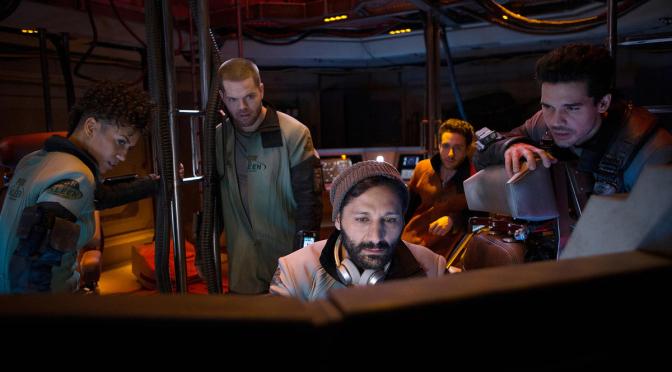
“The Big Empty” moves the story of The Expanse along, but only minutely. I’d hoped that this second episode would include more actual plot, but instead it’s a lot more world building and set-up for the rest of the season—sadly, without most of the sense of fun that “Dulcinea” had. Instead, the tone of “The Big Empty” is decidedly darker, and the mood is almost dour as we’re shown more of the show’s world.

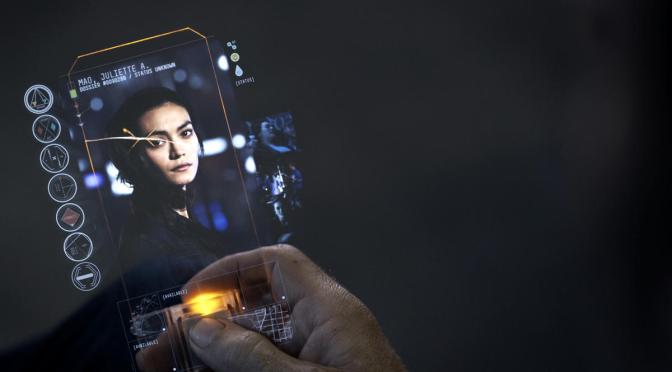
Detective Miller spends most of his time this episode lurking around Julie Mao’s old apartment trying to piece together where she might have disappeared to since she’s clearly not on Ceres any longer. He does take a break to investigate some other things and casually police brutalize a couple of people, but there’s not a whole lot of movement in this storyline. That said, I think that so far the Miller stuff is my favorite part of the show—in spite of Miller’s ridiculous hat. I love the way the show is slowly exploring Ceres, and it’s very clear that the place is well thought out and meticulously crafted for television.

On Earth, Chrisjen Avasarala is still embroiled in some kind of political intrigue. This is the slowest feeling and least interesting of the show’s several plots, which is too bad since Avasarala is still very much the single most interesting character that we’ve been introduced to so far. However, I think that, long-term, this story line is going to pay off big time. Even after just two episodes we can start to see how these stories are all interconnected. I’m pretty sure Avasarala’s is just a slower burn than the others, likely because she’s a character who doesn’t even appear in the first volume of the book series. She may not have much to do until later this season if the show is trying to preserve a timeline from the novels, so I’m trying to be patient and not judge these parts of the show too harshly yet.

The part of the episode that I was most looking forward to as a book reader was seeing how the Canterbury survivors are getting on, and this was sadly the part of “The Big Empty” that I found myself most disappointed with. In Leviathan Wakes, basically the first thing Holden does is broadcast the accusation that Mars was behind the attack on the ice hauler, but this is actually one of the last things that happens in this second episode, which means that the fallout from that decision is being pushed off until episode three.

This leisurely pacing would be less frustrating if the rest of the Canterbury survivors’ time was put to better use this week. Instead, we’re treated to the better part of an hour of their floundering around in space dealing with the contrived drama of several unfortunately coinciding problems with their shuttle and space suits and radio. On the one hand, I admire the dedication the show has to really nailing down the idea that space is basically trying to murder people at all times. It’s a dangerous place, and the idea that human life is extremely fragile outside the nurturing atmosphere of Earth is an important one that is central to understanding the situation of those who live in space. On the other hand, even though the show demonstrated in “Dulcinea” that it’s not squeamish about killing off characters, the Cant survivors’ peril never felt, well, particularly perilous at all. It was, at every step of the way, obvious that they were going to get rescued or else there wouldn’t be much of a story to tell.

The bright side, though, is that “The Big Empty” ends right where it ought to, and now that a lot of world building stuff has been done two or three times in the first couple of episodes the show should be moving along at a faster clip with the actual story.

Miscellaneous thoughts:

  • Are they recentering the Cant crew’s story around Naomi? Amos said that he considered her the captain now, which would be awesome, but I don’t want to get too excited yet. I never did care much for Holden in the book, so Captain Naomi would be a positive change, but I’m holding off on celebrating until I get some confirmation.
  • I do not like that Holden’s dead girlfriend, Ade, was whitewashed on the show. In the book, she was a black Nigerian woman, and I thought maybe that she had been whitewashed to avoid just fridging her for some white dude’s character development, but the more I think about it, the more I don’t like it, especially if the memory of Ade is going to be showing up every week. If you really must sacrifice some poor woman on the altar of male character development like this, why can’t it be a black woman that haunts a dude’s dreams?
  • Loved the shot of the shuttle being picked up by the Donnager. Very Star Wars-esque.

Childhood’s End: “The Deceivers” is the opposite of what I hoped it would be

Well, that was a fucking disaster. Enough so that I want to take back everything positive I implied about this miniseries after the first installment, although I’m still slightly hopeful that the third part will make a bit more sense of things. “The Deceivers” is, ostensibly, all about revelations and the hunt for truth. However, probably a full half of the episode can only be described as filler material that has little or nothing to do with the overarching story or themes of Childhood’s End.

The character that I had the highest hopes for in this episode was Peretta, who seemed intended to represent the plight of religious believers after the arrival of the Overlords, but her storyline ended up going nowhere. Indeed, it felt as if the show’s writers just didn’t quite know what to do with her or, perhaps, as if they had written (and maybe even filmed) more than made it into the final cut of the episode. In any case, Peretta’s story, especially her supposed “friendship” with Ellie Stormgren, feels half-baked at best. Peretta’s connection to Jake and his family and her job as a counselor don’t make much sense, and Peretta comes off as irrational and paranoid.

Portraying Peretta’s religious beliefs as unreasonable seems to be the whole point, and this material is presented in a manner so completely without sensitivity and nuance as to make it uncomfortable to watch, even for a mean old atheist like myself. While there are certainly some strange and unsympathetic religious people in the world—and I can only imagine how they’d behave in a first contact situation—this show’s treatment of Peretta is, frankly, just cruel. Her suicide at the end of the episode is not unexpected, but it does feel meaningless. Perhaps it is meant to be tragic, but by creating the character as such an unlikable presence throughout the preceding hour and a half, the show squashes any gentle feelings the viewer may have about Peretta’s death.

That’s only the beginning of this episode’s problems, though. While I was feeling optimistic after “The Overlords” did so well at capturing some of the spirit of Arthur C. Clarke’s novel, it quickly became obvious that most of the problems I had originally foreseen having with this adaptation were just pushed off into this middle part of it. There really are just two serious issues with this miniseries, though:

  1. There’s not enough source material to fill nearly six hours of television, and the way the source material is being supplemented is clumsy (at best).
  2. Condensing the source material’s multi-century timeline into just a couple of decades diminishes the impact of the story by reducing the book’s more epic scale into something much smaller and more personal, but not in a good way.

Peretta and her added story is the biggest way so far that the show has tried to expand upon the source material with terrible results, but “The Deceivers” also includes a new subplot—about Ricky Stormgren being sick and not being able to have children—that is also a colossal waste of time. It’s through this subplot that the show comes closest to revealing what is actually going on with the Overlords and their mysterious presence on Earth, but the whole episode is frustratingly coy about the matter, and the actual revelation is being saved for the final installment of the miniseries. This episode ends with Peretta’s death and the birth of a baby with creepy glowing eyes.

Miscellaneous thoughts:

  • The only parts of “The Deceivers” that really worked were the scenes with Milo and Rachel, though I mostly just ended up feeling bad for poor Rachel.
  • It’s a shame to get Julian McMahon to act in this and then waste him so entirely on a completely forgettable role.
  • The translation of the “dinner party” may be the worst book-to-film scene/sequence adaptation I’ve ever seen.
  • Why make a magic space Ouija board at all if it’s not going to be used in any way like a Ouija board?
  • The one way in which I think Childhood’s End is completely successful is in creating the look of Karellen. Charles Dance looks amazing in the makeup and prosthetics. I’m only sad that they couldn’t spring for more Overlords to show up. Probably they shouldn’t have blown their budget on that stupid Ouija board.
  • I literally cackled at the glowing baby eyes.

The Expanse: “Dulcinea” starts this series off with a bang

“Dulcinea” covers essentially the first forty pages of Leviathan Wakes, the first novel in the Expanse book series by James S.A. Corey, plus (apparently) some material from the second book. It’s something far more than just a pilot episode, but it definitely has something of the pilot feel about it, with its heavy focus on world building and character introductions. Still, it’s a thoroughly engaging hour of delightfully pulpy sci-fi television and an excellent start to a series that many sci-fi fans (myself included) have high hopes for.

The show seems to be combining three different stories. Detective Miller (Thomas Jane) on Ceres Station is investigating the disappearance of an heiress, Julie Mao (Florence Faivre), who ran off to join an activist movement after college. Jim Holden (Steven Strait) is the unwilling second in command of an ice-hauling spaceship in the asteroid belt. And Chrisjen Avasarala (Shohreh Aghdashloo) is a powerful and rather terrifying politician on Earth.

Most of “Dulcinea” is obviously set-up for the rest of the season’s plot, and very little actually happens in this episode that isn’t exposition. However, the episode ends with the sudden explosion of the ice hauler, which is sure to provide an impetus for plenty more actual action in the second episode. If the rest of the season follows the first book as closely as this episode seems to, we’re in for a hell of a ride.

Of course, what I’m most excited about is Avasarala. Leviathan Wakes is a book that has something of a problem with female characters—rather, a lack of them, and a lot of misuse of the few that it has—enough that I likely won’t continue reading more of the novels. Avasarala is an unusual character, though, and I can’t wait to see what her role is going to be in the show.

If the show was just a straight adaptation of Leviathan Wakes, I probably wouldn’t be watching it, but Avasarala is just fascinating. It’s not uncommon to see shady government types in science fiction, but usually they’re white dudes in suits.

Miscellaneous thoughts:

  • If you’ve read Leviathan Wakes, you’ll remember that the novel is peppered with allusions to Don Quixote, and this is reflected in the episode title which refers to the imaginary object of Don Quixote’s unrequited love.
  • My favorite detail of the first episode is the cracked screen on Miller’s handheld device. I’m not a huge fan in general of the “devices in the future are all clear glass” aesthetic, but this is one of many nice touches that make the world of The Expanse feel lived in.
  • I wish they had more consistently cast very tall actors as Belters, although the explanation that different people have different “tells” helps to explain that away for book readers.

Childhood’s End: “The Overlords” is a mix of brilliant and bizarre adaptational decisions

I was not at all sure that this adaptation would be even remotely good. The promotional material and trailers looked slick, but the obvious changes that were being made from the source material weren’t encouraging ones. Having actually gotten to watch the first installment of the mini-series, though, I’m glad to say that most of my biggest fears about Childhood’s End were unfounded. That said, while “The Overlords” manages to mostly capture the spirit of Arthur C. Clarke’s novel, it’s also deeply flawed and often at odds with itself as it tries to translate Clarke’s 1950s vision of the future for consumption by a post-postmodern audience.

Right out of the gate, the adaptation makes its first misstep, and it’s a big one. Rather than opening, as the book did, with the arrival of the Overlords’ spaceships, we’re introduced right away to Milo Rodricks (Osy Ikhile) recording his final testament at the end of the world. Obviously this isn’t a spoiler for anyone who’s read the novel, but it basically gives a whole story away for those who haven’t. Unfortunately, the story that this opening scene tells isn’t the story that is going to unfold over the next several hours. I suspect the show’s writers thought this would be a clever way of setting up and demolishing the audience’s expectations, but it really just ruins the surprise. Worse is that it spoils the ending without really telling the audience anything useful. Instead, it functions as an immediately “shocking” cold open that is more a cheap trick to generate interest than an intriguing taste of things to come.

The next character introduced is Ricky Stormgren, played in all his Mid-Western dullness by Mike Vogel. I’m honestly just confused by the decision to replace Arthur C. Clarke’s U.N. Secretary-General Rikki Stormgren with this slice of mayo-covered white bread from Missouri, and it’s a major adaptational change that works chiefly to undermine Clarke’s original message by, quite deliberately, making the United States the center of the world for the purposes of this miniseries. Clarke’s decision to make Karellen’s ambassador an officer of the U.N. was a meaningful one, and while the U.N. isn’t viewed today with the same optimism as it was in 1953, the idea that a white farmer from middle America would serve as a unifying figure for all humanity is just plain laughable. This casting choice and story change reveal a decidedly US-centric agenda that ignores half a century or more of history and reproduces a particularly boring science fiction trope that Clarke himself deliberately subverted in his novel. As if to add insult to injury, that Karellen’s other choice was a Korean woman—a much better option in many, many ways—is something of a running joke throughout “The Overlords.”

I’m getting ahead of things, though.

After the first two brief—very brief in Ricky’s case—character introductions, Childhood’s End jumps straight into the story. The opening sequence of the Overlords’ arrival is really incredible. It perfectly captures the momentousness of the event and introduces several more major characters before returning to Milo and Ricky. We spend some time with Hugo Wainwright, the cynical media mogul (played by an extremely dour Colm Meaney) who coins the term Overlords to describe the aliens and then becomes a vocal opponent of the changes the world is undergoing, before returning to Ricky and Milo.

While Ricky is busy serving as Karellen’s ambassador to humanity—in a profoundly silly sequence of press conferences and meetings with foreign dignitaries—Milo is growing up in a rough part of town, a wheelchair-bound boy genius with a loving, but drug-addicted mother who struggles to relate to her brilliant son. I understand the necessity of beefing up the character’s backstory, but I don’t see why Milo couldn’t have just been a college-educated black South African like his book counterpart instead of this condescendingly stereotypical story of a disadvantaged black boy in the U.S. I suppose we can be grateful that the character wasn’t just whitewashed altogether, but this is another failure on SyFy’s part to really bring Arthur C. Clarke’s vision of the future to life.

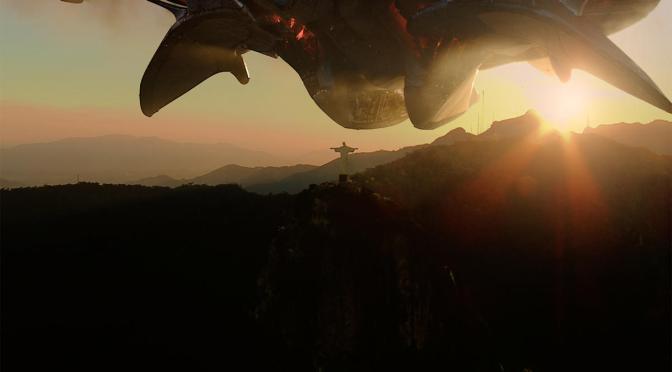
Interestingly, the only major character introduced so far that isn’t U.S. American is Peretta, a highly religious Brazilian girl whose mother committed suicide during a crisis of faith after the appearance of the spaceships. While it seems almost certain that Peretta will be a more interesting character than Wainwright and present better opportunities for exploring the series’ themes surrounding faith and spirituality and their conflict with science and progress, I couldn’t help but roll my eyes when I realized that of course the extremely religious character is a Latino woman. And of course she’s set up in opposition to the progressive white male Midwestern farmer. If it’s not cynical, it’s certainly a disingenuous set-up.

The thing about Childhood’s End, though, is that it somehow manages to more or less retain most of the spirit of the classic novel in spite of some not insignificant adaptational decisions. For those of us who love the book and its vision of a globalized progressive future, this U.S.-centric adaptation may be a disappointment in some ways, but it also may not be a bad thing in this day and age. Certainly white male Midwesterners in 2015 aren’t exactly known for progressive thinking, but perhaps Ricky Stormgren will serve as an inspiration.

Miscellaneous thoughts:

  • The melancholy cover of “Imagine” over scenes of the world’s suffering was a little too on the nose in the opening.
  • Charles Dance has the most amazing voice. He is a perfect Karellen.
  • Excellent use of classic alien invasion and abduction tropes. I about lost it when Karellen first sends the ship for Ricky. This stuff helps to lighten up material that is actually quite serious.
  • I adored the #freedomleague ads. They’re exactly the kind of awful crap I would expect to be made by the type of people who get angry about things like world peace and the end of hunger.
  • Maybe Ricky would be less insufferable if he would put on a shirt that’s not plaid.
  • All of the stuff about Ricky’s dead wife was a waste of space and time that could have been much better spent on literally anything else. It’s incredibly boring and moderately sexist, to boot.
  • Wainwright and his Freedom League could have been used more smartly. I liked that the show kept in the kidnapping of Stormgren, but Wainwright was never a proper antagonist, and the group was too easily defeated in the end.
  • The final reveal of Karellan was amazing. I’m so glad they’re using makeup and prosthetics instead of CGI for this.

Supergirl: “Hostile Takeover” is an aggressively mediocre winter finale

“Hostile Takeover” is really the first half of a two-part episode, and it literally ends in the middle of a fight scene, which makes it hands down the most frustrating winter finale of anything I’m watching this year. Aside from that, it’s a largely run of the mill episode of Supergirl, with most of the shows greatest weaknesses on full display.

I was really looking forward to more Astra stuff, and while this episode did deal with her, it unfortunately felt relegated to B-plot status. Certainly, Kara’s interactions with Astra weren’t nearly as interesting or satisfying as the evolution of Kara’s relationship with Cat Grant. This week’s revelations about Astra suggest a level of moral ambiguity that Supergirl just isn’t well-equipped to handle, and even Melissa Benoist’s excellent performance isn’t enough to keep this all from being a big mess.

The biggest surprise this week is that maybe Astra isn’t quite a villain after all—except she totally is, because this show sucks at exploring grey areas. It turns out that back on Krypton, Astra was something of an eco-terrorist, concerned with ending the environmental degradation that eventually led to the planet’s destruction. Kara’s mother, Alura, captured and imprisoned her sister, and Astra blames Alura for Krypton’s fate. Now that Astra is free, she’s got some similarly nefarious plan to prevent humans from destroying Earth the way Kryptonians wrecked their planet. The problem, of course, is that Astra’s methods are questionable, so she must be stopped, I guess.

The obvious issue with this storyline is that it’s patently ridiculous. I can totally believe that the Kryptonians wrecked their planet—goodness knows, we sure are, and they’re just like us—and the Astra as eco-terrorist stuff isn’t a terrible idea, but the execution of it in this episode is just awful. Poor Kara is supposed to be just absolutely tortured by all these revelations, and there is some crying and stuff, but there’s not any serious examination of any of the issues, so in the end none of this is at all convincing and it’s not even very clear exactly what the crying was about.

The actual B-plot, which deals with a member of CatCo’s board scheming to oust Cat Grant from her own company, fares much better, though it’s also silly. Basically, this dude has managed to hack/leak a whole bunch of Cat’s potentially embarrassing emails. Kara uses her super hearing to find out the plot, and then James, Winn, and Lucy do some corporate espionage to save Cat’s job. That stuff isn’t that important, though, because the real point of all this is to finally let Cat figure out that “Kira” is Supergirl. I love how self-congratulatory Cat is when she’s confronting Kara about her identity; this scene was everything I could have wanted it to be, and I’m very much looking forward to seeing how this changes their relationship going forward.

Miscellaneous thoughts:

  • The Hank and Alex dynamic has a new dimension of fun after last week’s reveal that he’s actually the Martian Manhunter. This week he just casually and hilariously reveals that he can read minds.
  • Kara really should have a clearer understanding that this hologram thingy is not her actual mom.
  • I hate the conversation about Kara between James and Winn more than I’ve hated anything this show has done so far.
  • I always love this show’s fight scenes, but this week’s action sequences seemed a little lackluster.

Book Review: Genrenauts #1, The Shootout Solution by Michael R. Underwood

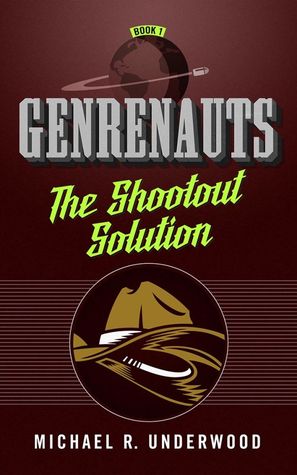
Genrenauts: The Shootout Solution is the first in a new series of novellas by Michael R. Underwood that explores and interrogates genre tropes with a premise that is basically like what would happen if the mid-90s television show Sliders got mashed together with the popular fiction section of a Barnes & Noble. It’s a fun idea, and it more or less works.
Leah Tang is a great protagonist who’s funny, smart and resourceful. It’s not often that an Asian-American woman gets to be front and center in a speculative genre, and this makes her a great choice to take the lead in a story that is very overt in its critical examination of genre standards. It’s nice to see Leah’s race and gender considered as positive job qualifications that, along with her background as a stand-up comedian, make her uniquely and especially qualified for the work the Genrenauts are doing.

Starting the series off with a look at the Western genre, which isn’t widely read these days by the under-60 crowd, is an especially smart move on the part of the author. I expect that this is the genre that younger readers will be least familiar with, which makes it a perfect introduction to the Genrenauts world and an ideal backdrop for establishing characters and easing the audience in to some of the deeper ideas that Underwood is concerned with.

As an exploration of genre as a concept and an in-depth look at some of the more widely used tropes of genre fiction, The Shootout Solution feels a little simplistic, though it hints at more sophisticated genre analysis to come. Hopefully, future books in this series will raise the stakes and broaden their scope, as this one never felt particularly dangerous, and the actual solution, when it’s discovered, was obvious and too-heavily telegraphed to surprise anyone with a higher than 101 level understanding of literary criticism.

The author himself has referred to this book as the “pilot episode” of this series, and it definitely reads like one. Much of what we get in The Shootout Solution is worldbuilding, character introductions, and set-up for the rest of the series, so this volume ends up a little light on plot. Like many a promising pilot, The Shootout Solution feels just incomplete enough on its own to make me want to come back for more of the series.

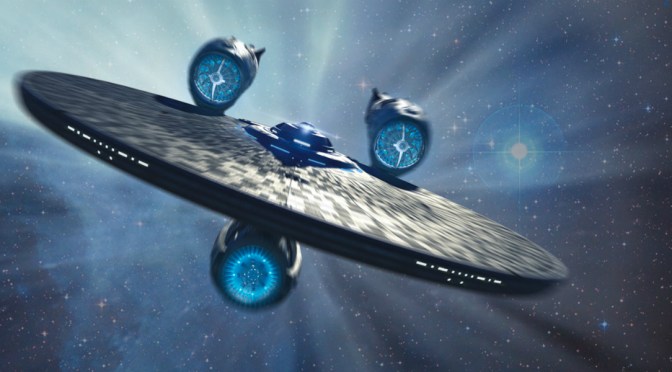
Star Trek Beyond: Is this trailer for real?

I would love to believe that this is a cruel trick being played on us all, but this appears to be an actual trailer for the third Star Trek reboot movie.

I’m not sure what is most upsetting about this.

Is it the terrible music that ought to be completely inappropriate for Star Trek? Is it the slapstick-y “comedy”? Is it the liberal use of the “hot alien babe” to market the movie? Is it that Uhura screams in terror and gets physically pushed behind a man more than once in just 90 seconds? Is it that the Enterprise is getting destroyed again?

I don’t even know where to start with how much I hate basically everything about this disaster of a trailer. These reboot flicks have so far been more fun than otherwise, even if they haven’t been actually good, but I’d love it if they would quit calling these atrocities Star Trek.

They’ve taken out everything that was unique and compelling and powerful about Gene Roddenberry’s vision of the future and replaced it with space babes and raised eyebrows and ironic detachment. It might be an entertaining spectacle, but it’s not Star Trek in any meaningful way.

Sci-fi and Fantasy books, tv, films, and feminism