Category Archives: Television

5 SFF Adaptations That Would Greatly Improve Genre Diversity in TV and Film

Another day, another list of upcoming SFF adaptations that is a big, depressing sausage fest.

I feel like the common wisdom on the issue of diversity in media is that things are improving, but it’s very telling when just a quick count of the properties listed on this list of upcoming or possibly upcoming book-to-film/television adaptations shows forty based on work by men, but only five based on work by women. It probably goes without saying, but there are also only a couple of people of color on the list.

Moving on to the subjects of the projects, things are somewhat better, but not much. A full half of the projects focus on men’s stories, more if you count ensemble projects whose main characters are men. Only two projects are primarily about women. It’s a depressing toll, especially when we’d all like to believe that television and film are improving in diversity. If this list represents any improvement at all, it’s not good enough.

I don’t pretend to know exactly what would be good enough, but there are numerous books and comics that I think would improve the film and television landscape. Certainly, any of these would be significantly more interesting than another crop of shows starring square-jawed white dudes.

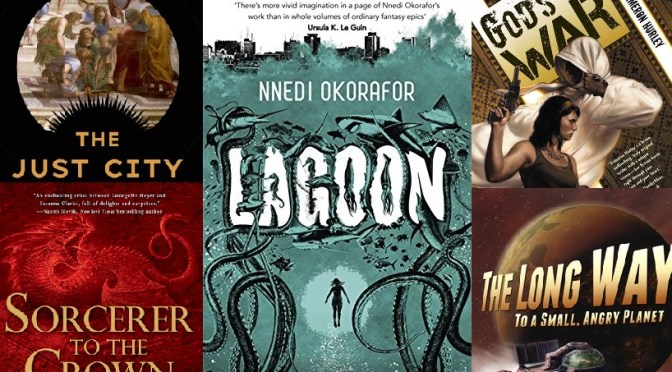
  1. The Long Way to a Small, Angry Planet by Becky Chambers
    Space opera has gotten popular again, and this one is very good. I’d love to see it as an ongoing television series, though that would require some expansion upon the source material. However, the novel itself is very episodic in nature, being told as a sequence of vignettes, each one focusing on a different character. This would lend itself well to being adapted as a miniseries or as a short series on a digital platform such as Netflix or Amazon, or it could be easily streamlined into a long film. The major downside of this book is that the high number of alien characters would require expensive special effects to produce, but the right production company could create something really wonderful if they were willing to spend the money on it.
  2. Lagoon by Nnedi Okorafor
    This book just begs to be made into a big summer blockbuster a la Independence Day. I want to see it at the drive-in.
  3. Sorcerer to the Crown by Zen Cho
    Like Jonathan Strange & Mr. Norrell, but more fun. Either film the book as it is for a delightful miniseries, or start where the book ends and continue the adventures of Prunella and Zacharias. Or both. Both would be good.
  4. God’s War by Kameron Hurley
    While I’m not often a fan of just lifting characters from a book and writing all new stories around them for television, Kameron Hurley’s Beldame Apocrypha would be perfect for that treatment. Nyx is an amazing character of a type that doesn’t often get to be female, and her shifting crew of associates would make great fodder for a gritty sci-fi bounty hunter sort of thing. The world and characters Hurley created in this series are more than strong enough to carry a long-running television show, which would allow some of the bigger plots of the books to be explored at leisure.
  5. The Just City by Jo Walton
    The goddess Athena gathers thinkers and dreamers from all ends of history in order to build Plato’s Republic. Apollo decides to become human so he can grow up as a child in the Just City. There are robots. And Socrates. And philosophical debates out the wazoo. I would watch this on TV, and I think I’m not the only one.

Obviously, I’m not saying no more square-jawed white dudes, ever, but all of these suggestions would make for a very nice change in the current landscape of entertainment. They would be even better if we could get more diversity behind the camera and in writing rooms for them as well.

The truth is that every time there are new surveys of the industry, it’s proven over and over again that the needle of diversity hasn’t moved much in thirty years. While there have been somewhat more actors of color in highly visible roles, it’s simply not true that things have really improved that much overall. The same can be said for the presence of women in cinema, and those who don’t fit neatly into the gender binary fare even worse.

Any (but preferably all) of the five works I suggest here would be a step in a better direction.

iZombie: “Max Wager” pays off, bigtime

“Max Wager” was a solid episode that advanced all my favorite plots while also not making things too easy for Liv and Major, whose relationship troubles ate up perhaps a tad too much of the hour. Still, even Liv and Major doing sad vanilla Skype sex couldn’t ruin an episode that had so much good stuff going on.

It looks like Liv and Major are really happening, which I’m not super thrilled about, but it does give Ravi a reason to spend the whole episode testing over a hundred different types of condoms to find out which one might let Liv and Major have sex. The answer is none of them, because zombie virus is very tiny, and Ravi proves that he is the world’s best friend before the end of the episode when he bursts in on Liv and Major to, I guess, physically stop them from having sex if he had to. Also, Ravi’s condom-balloon unicorn is great. Also, also, I would like it if Ravi and Peyton would start making out again now, but I’ll settle for companionable roommate breakfast together.

I was happy to see Clive get a little more to do this week, and while the chance meeting between Clive and Dale and Liv and Major was a little cringeworthy at times (entirely because of Major, who apparently knows well enough to say “Native American” but not enough to avoid making vaguely racist and unfunny “jokes”), I was mostly just glad to see that the show is moving things along between Clive and Dale. It really helps to establish that Clive has a life and personality and goals when he’s not just hanging around with Liv—which was also called out in the scene. I think this was supposed to be amusingly self-aware, but it fell flat with me. I don’t want a self-aware quip about how underdeveloped Clive is or how underused he is in the show. Just fix it, please.

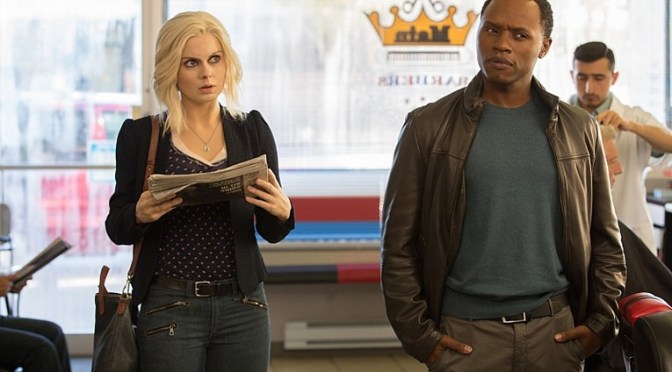
Once again, Peyton is back, and while I always wish we got to see more of her, she got some good material this week. While we’re first introduced to Big Bad Stacey Boss with Liv at the barbershop (which was an incredible scene, by the way), we only find out who this extremely creepy little guy is when he shows up at Peyton’s office to threaten her into stopping her investigation of his illegal activities. She isn’t going to stop, obviously, but in Stacey Boss the show has managed to create its most legitimately scary villain yet.

The best scenes of the episode were all Blaine’s, though. David Anders does an amazing job of balancing evil, humor, and pathos. Literally every time this guy is on screen, things get interesting, whether he’s talking with his dad, drunkenly philosophizing at Liv, or maudlinly murdering his own grandfather.

It’s all a perfect set up for the absolute gut punch at the end of the episode when, at first, we think Major has murdered Blaine’s dad (making Blaine’s killing of his beloved grandfather tragically unnecessary) only to find out that Major hasn’t been murdering any of the zombies that have disappeared. He’s only freezing them, presumably to be thawed and cured at a later date. Though this makes Major’s brief flirtation with self-destruction earlier in the season somewhat more inexplicable than it already was, it’s good to know that Major isn’t a total monster.

Aside from my general boredom with the Liv and Major drama, my only real criticism of this episode is that with a title like “Max Wager,” I expected to see some Vaughn. In the end, though, any disappointment I felt at the lack of Vaughn du Clark was more than mitigated by the abundance of Blaine and the introduction of a new villain to love-hate.

Supergirl finds its balance with “Fight or Flight”

This was my favorite episode of Supergirl yet, and it’s the first episode of the show so far that feels truly cohesive. Though it did slip into too-cheesy territory a couple of times, “Fight or Flight” worked really well thematically and finally brought all the show’s parts into a mostly comfortable balance. It’s the first time so far that I’ve felt like Kara’s regular life, her superhero alter ego’s trials, and the DEO belong in the same universe.

The first order of business in this episode is Supergirl’s interview with Cat Grant, which doesn’t go well and has Supergirl flying off in the middle of it after getting flustered and outing herself as Superman’s cousin. Cat then goes on to write her profile of Supergirl as more of a think piece on millennials. On the one hand, I think we’re all more than tired of the ubiquitous anti-millenial screeds disguising themselves as serious thought these days. On the other hand, Supergirl didn’t give Cat much to work with.

Kara, on the other hand, is much more capable of handling her tempestuous boss and gives a pretty impassioned speech defending Supergirl. I like that Kara’s transformation into Supergirl doesn’t make her flawless, and I really appreciate the way the show is portraying her different strengths and weaknesses in different situations. It’s interesting to see the way the show is exploring Kara’s dual identities. Unlike many superheros, Kara is in many ways more confident in her regular life, and it’s putting on her suit that turns her awkward and uncertain. As Supergirl she’s tongue-tied, but as Kara she’s totally willing to stand up to someone as fearsome as Cat Grant.

Speaking of Cat Grant, it was nice to see her loosen up a little this week and break out of stock character tropes. If she’s not going to be a villain, it’s good for her to be humanized some, and we get a good amount of that here. I love that, though Cat is very particular about her coffee and the environment in her office and thinks nothing of being verbally abusive about lack of perfection in these areas, she’s not threatened by criticism. This is something that we’ve seen in previous episodes as well, but it stood out to me this week, particularly when Kara disagreed with Cat’s portrayal of Supergirl in her magazine article. While I wouldn’t say Cat was encouraging to Kara in this scene, she also seemed to listen to her and take her seriously rather than simply dismissing her criticisms out of hand.

All that said, I can’t tell exactly what the show wants the relationship between Cat and Kara to be. For all her antagonistic qualities, I feel like Cat would be a great mentor. Otherwise, I worry that she’ll end up being too one note to be really interesting. With so many other things going on in the show, it’s important that each part avoid being boring. Calista Flockhart and Melissa Benoist work well together, and I’d hate to see the show squander a potentially great dynamic by adhering to closely to stereotypes.

The bad guy of the week this time around turns out to be an old foe of Superman, one who he hasn’t been able to defeat: Reactron. There’s a great moment when Kara mocks the villain’s name only to find out that James Olsen is the one who thought it us, and this might be my favorite Kara moment of the episode. She’s had such a huge crush on James, who is a little older and ridiculously handsome and just kind of generally dreamy, and the show has managed to capture perfectly that moment when someone finds out that the object of their affections isn’t a total paragon of wonderfulness, but is in fact a regular person who sometimes has ridiculous ideas just like anybody else.

In her conflict with Reactron—who wants to kill Supergirl to hurt Superman after finding out about their familial relationship—Kara is also trying very hard to differentiate herself from her cousin and build up her own reputation independently of any expectations based on her relationship to Superman. For both personal and PR reasons, it’s important that Kara manages to figure out, as she says, “what Supergirl means.”

The good news is that, by the end of this episode, both she and the audience have a much better idea of that. Even better news would be if this episode marks the end of Superman’s looming presence over this show. While I think it’s good for the show to address the issue, I think that focusing too much on Supergirl’s struggle to escape from under Superman’s shadow does more to invite comparisons than to dismiss them. I loved this episode, and I even loved the cheesy IM conversation between Kara and Superman. In fact, that is a great place to end this exploration of these themes for now. Clark’s sweet words of encouragement to Kara ought to act like closure for this subject and allow her (and the show) to move on to bigger and better things.

Stray thoughts on the episode:

  • I would 100% watch Keeping Up with the Kryptonians.
  • NO ONE on this show can keep a secret. They are literally all the worst at this. Every one of them.
  • Maxwell Lord is basically what I think would happen if Pharma Bro and Tony Stark had a baby.
  • I am so happy that Perd Hapley is the newscaster in National City.
  • Winn is really adorable, but he needs a personality trait or two besides “devoted to Kara.” So far, the show hasn’t made him into a total Nice Guy™, but there’s really no telling how long that can last if they don’t give the poor guy something else to do.
  • Alex and Kara seemed more like real sisters in this episode than they have before. The final scene with them hanging out is my favorite thing that’s happened in this show ever. Hopefully this is the beginning of a long term trend away from the somewhat canned-sounding platitudes that have been far too characteristic of their relationship before now.

Doctor Who: “The Zygon Inversion” is great, but only if you turn off your brain

“The Zygon Inversion” was not at all what I was expecting, but the more I think about it, the more I think that it’s probably exactly the sort of thematically confused, unsatisfying pablum I ought to expect from this show by now. Frankly, it was just a kind of bizarre episode made all the more frustrating for being technically very good.

We start with getting a different perspective of last week’s cliffhanger. It turns out that, while Clara’s being body-snatched she’s actually trapped in a sort of weird nightmare house where she is somewhat aware of what Zygon-Clara is up to and slightly capable of influencing Zygon-Clara’s actions. Nonetheless, she doesn’t have enough influence to prevent Zygon-Clara from destroying the plane carrying the Doctor and Osgood.

Straight from there, Zygon-Clara goes to destroy the life of, apparently, the first other Zygon she finds. Though he tries to escape, she succeeds in disabling the poor fellow’s ability to shapeshift, forcing him to reveal himself as an alien to a rather unimpressed-looking group of teenagers outside his apartment.

Meanwhile, real Clara is rewinding Zygon-Clara’s memories and sees that two people (Osgood and the Doctor, natch) managed to parachute out of the blown-up aircraft. Cut to Osgood and the Doctor, who have landed on a beach surrounded by wreckage that is curiously devoid of any other people. This sort of glossing over and trivializing of tragedy is both annoyingly characteristic of the show and rather at odds with the pacifist message of this episode in particular. The Doctor may profess all he likes that he doesn’t like this sort of thing, but his silence here is telling. He’s more concerned with Osgood’s broken glasses than with anyone else who might have been on the crashed plane.

Speaking of Osgood, I’ve never much liked her, but I found myself falling a bit in love with her this week, perhaps precisely because she’s such an unusual and slightly irritating character. I still can’t stand her silly costumes, but I love how much thought she’s clearly put into the idea of how she would go about trying to take over the world. It’s also worth noting that Osgood and her strict insistence on not revealing whether she is human or Zygon is possibly the single thing in this whole two-parter that makes proper sense. Goodness knows, the new mythology introduced here, with the Zygon pods and their needing a “live feed” to what’s in Clara’s brain (because apparently the Zygon’s aren’t just shapeshifters now) is more than a little silly.

Elsewhere, Zygon-Clara thinks she’s found the Osgood box, a device that will supposedly end the cease-fire, but instead she’s only got a laptop with a pretty mocking video telling her that she hasn’t got the box at all. She soon receives a call from the Doctor, during which he tips her off to Clara having the information that Bonne (Zygon-Clara’s real name, it turns out) wants.

This leads into another scene of weird and nonsensical lore-expansion as Bonnie goes to Clara’s pod to interrogate her. Bonnie is able to psychically link with Clara to chat, and we learn that even their heartbeats are linked, so they can’t lie to each other. Clara tells Bonnie about the Osgood box, although it’s pretty obvious that Clara is telling the truth very cleverly, and Bonnie sets off (with Clara’s pod in tow) to find the box for real.

In the meantime, Osgood and the Doctor go searching for the Zygon that Bonnie forcibly revealed after video of the incident has gone viral. They manage to find him, hiding a shop and completely devastated by his affliction. In a powerfully affecting scene, they confront the unmasked Zygon only to have him kill himself right before their eyes. Unfortunately, we’re not given much time to be affected by this turn of events because that’s when Zygon-Kate and a couple of Zygon-UNIT officers show up to take Osgood and the Doctor to the Zygon command center where Clara’s pod was stored. By the time they get there, Clara’s pod is gone and Bonnie has discovered the problem with the Osgood box—there’s two of it. In a tense scene, we learn that Zygon-Kate is actually real Kate, which is good (although it begs the question of how Bonnie didn’t know that Kate wasn’t a Zygon all this time), but also quickly compounds the problem. The Doctor, Osgood, and Kate rush off to where Bonnie is, where Kate immediately tries to figure out how to use the second box.

The last fifteen minutes of the episode are dominated by what is essentially one long, impassioned monologue by the Doctor as he talks us through this standoff. Peter Capaldi is absolutely at his best here, and the monologue itself is well-written, but it pretty much completely ignores the crux of the matter that was supposedly at hand last week—the desire of at least some of the Zygons to live openly among humans without having to hide their true selves, which led them to some regrettable and ill-advisedly radical and violent actions—in favor of addressing an altogether different issue. Namely, the general destructiveness of war and the ultimate futility and counterproductivity of violence as a way of resolving disagreements.

It’s a great speech, as far as it goes, and certainly Capaldi’s performance is superb, but it feels disconnected from and insensible of the underlying issues, and the return to the status quo at the end of the episode is profoundly unsatisfying as it solves nothing. The truth is, if you think about it much at all, the speech doesn’t go very far at all, and on rewatching it to write this, I was struck by the degree to which the Doctor entirely ignores the quite legitimate concerns and anger and fear of both Bonnie and Kate. Instead of actually engaging with the two women, the Doctor berates and shames them into compliance with his wishes by insulting and infantilizing them in turn.

Earlier in the episode, the Doctor quipped to Bonnie that he is old enough to be her messiah. This seemed like a weird thing to say (not least because he wouldn’t be Bonnie’s messiah, what with her not being human), and it becomes plain to see by the end of this scene that the Doctor has some very strange and inflated ideas of himself. I’m not quite ready yet to call it a messiah complex, but it’s decidedly odd and unfortunately grating, mostly because the Doctor seems absolutely incapable here of empathizing with or even granting basic respect to either Kate or Bonnie, although most of his ire seems to be reserved for the Zygon woman.

It’s downright uncomfortable to watch as he shouts Bonnie down, refuses to call her by her chosen name, and belittles her, only to then turn around and condescendingly offer her forgiveness for the things that she’s done. The spiritual connotations here are very clear, and unpleasant. They are also, so far, unexamined, and the overall tone of the episode is that the Doctor is the hero of this story.

In the midst of the Doctor’s rant, Bonnie accuses him of creating an untenable situation with his original peace agreement, which she insists is unfair to the Zygons—and it is unfair. In response, the Doctor denies any responsibility for the problems and blames Bonnie for the current impasse. The thing is, Bonnie is right. The terms of the peace agreement, like the terms of many agreements throughout history, may have been the best short term solution to an immediate problem, but they clearly are not perfect. While Bonnie’s argument that the Zygons have been treated “like cattle” doesn’t hold much water, and in fact seems to have been written to purposefully portray the character as unreasonable and even hysterical, the basic complaints introduced in “The Zygon Invasion” last week—in short, that the Zygons wanted to be free to be their authentic selves—were not unreasonable at all. It’s only by almost entirely refusing to engage with this reality that the Doctor is able to be seen as the voice of reason, and in the end Bonnie’s complaints are swept aside as she becomes a new Osgood dedicated to keeping the peace. The Doctor has succeeded in browbeating her into capitulation to the point where she gives up her own identity and adopts one that is shaped around creepy worship of the Doctor.

Needless to say, the messaging here is confused at best. Personally, I find it all a little creepily sinister. Most of all, though, I find it to be predictably reflective of Steven Moffat’s own uncritical fanboy views of the Doctor. Unfortunately, Steven Moffat’s dedication to Doctor Who doesn’t extend to preserving the things that have made the show such a long-running institution, and the biggest problem that I have with this episode, aside from the oddly religio-fascist messaging, is Moffat’s willingness to abandon canon and reshape it to suit his immediate needs with no thought to the long-term viability of the changes that he makes.

I think what annoys me the most about the type of expansions of Doctor Who lore that we’ve seen in these last two episodes is that they are so mystical in nature. This is another thing that is highly characteristic of the Moffat era, but I just don’t like it at all. The show has never shied away from dabbling in metaphysics, and there is no doubt that Doctor Who has always been more accurately categorized as fantasy than science fiction, but still.

Moffat era Who seems increasingly content to leave its own questions unanswered and is getting more and more concerned with what kind of stories and developments might be “cool” and less and less concerned with what actually makes sense within the Doctor Who universe. While I don’t have the history with or attachment to the Zygons that I did to, say, the Weeping Angels, the devolution of the Zygons into overly mystical absurdity is following a somewhat similar trajectory as the Angels’ decline.

Much of the show, even when it did deal with ghosts and monsters and mythological creatures, was about exploring more science fictional explanations for those various phenomena, with very few things ever being explained away by seemingly magical things. Here, we have magical-seeming explanations presented unquestioned and used for what seems to be pure storytelling convenience. Something that Steven Moffat seems to have never learned is that creativity is often about working within existing constraints (such as established lore in a shared universe, for example) in order to tell a great story. Instead, Moffat is far too quick to discard parts of canon that he finds inconvenient and change things however he likes in order to tell the stories that he wants to tell, regardless of basic sense-making and completely heedless of the history of the show or the work of people who came before him.

Unfortunately, this also ends up being disrespectful of the audience. It toys with audience expectations and discounts our intelligence in a way that highlights to me that Steven Moffat truly does view the rest of fandom (i.e. every fan who isn’t Steven Moffat) with complete and total disdain.

“The Zygon Inversion” might be a great episode, but only if you don’t think about it at all. I, for one, miss the days when this wasn’t the best I had to say about this show.
Ash vs. Evil Dead: “Bait” is a perfect balance of humor, drama, and fake blood

This week, the show picked up right where last week’s episode left off and continued to deliver on the early promise it showed in its first half hour.

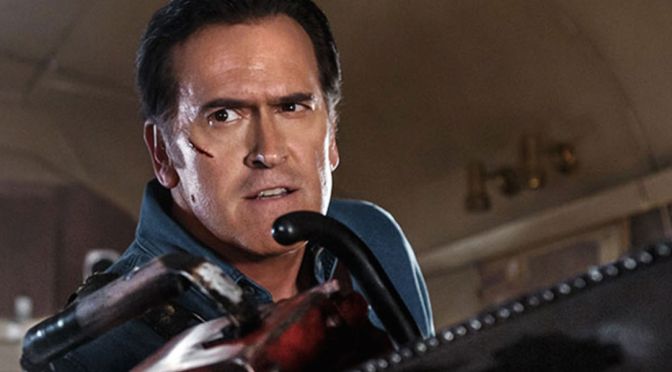
“Bait” is the first episode of the show without Sam Raimi at the helm, but I can’t see that it suffers for it. Director Michael J. Bassett retains much of the distinct style Raimi has created for the franchise, but he isn’t afraid to add a few of his own flourishes, either. It has the effect of making the episode feel both reassuringly familiar and refreshingly different. Ash vs. Evil Dead isn’t like anything else on television right now, and it’s shaping up to be something very special.

Anyone who has read my writings on Game of Thrones must know that I have a deep and abiding love for awkward family dinners (this probably also explains my love of Gilmore Girls), and “Bait” delivers a great example of the form. From the moment that Ash and Pablo burst in to “rescue” Kelly, every scene with guest star Mimi Rogers is perfectly handled. The dinner itself was riotously funny as Ash tried to get get Kelly’s mom to admit that she was evil, and the subsequent fight is wonderfully bloody.

I was a little disappointed that Kelly herself didn’t get much to do throughout and was essentially a damsel in distress once her mother was revealed as a deadite, but I actually think there’s a certain sense of realism to this. There’s some very real horror in what Kelly has to go through in this episode, and Dana DeLorenzo does a nice job of balancing drama and humor in order to bring Kelly to life as a character with, I think, the potential to be downright trope-defying. The real test will be how Kelly’s character is handled going forward as we see how she emerges from this crucible.

Kelly being damseled can actually be compared to Pablo’s slightly similar situation earlier in the episode. On the way to Kelly’s house, Ash and Pablo are attacked on the road by their old boss, and it’s quickly clear (and explicitly, verbally called out) that Pablo doesn’t know what to do in spite of Ash’s assurance that getting hit will trigger fighting instincts. Pablo does fight, but ineffectively, and he ultimately has to be rescued by Ash as well, which is what prepares Pablo to be more helpful later on in the episode. There’s a nicely devised symmetry to the character arcs of Pablo and Kelly in this episode that prevents Kelly’s brief damsel moment from being a sexist misstep, although I still contend that she could have been a little more involved in the action.

All that said, “You know they were Jewish, right?” was a perfectly hilarious line, shot with gorgeous irony in the beautiful morning sunshine. What I loved about this scene was that, while it establishes Kelly as a sort of wise-cracking character, it also allows room for her to show real emotion and grieve with dignity. This is something that isn’t often seen in this kind of entertainment, where film-length projects often rush around from action scene to action scene and don’t devote much time to these sorts of character moments.

While Ash and company are having the family dinner from hell, Amanda Fisher is investigating the trailer park attack, which strikes her as similar and perhaps related to her own experience. She is shooed away from the scene by the actual officer in charge, since she’s still not back to work, but before she goes she finds a business card for Books from Beyond. The end of the episode sees her arriving there, while Ash, Pablo, and Kelly are on their way, which sets us up for next week’s show.

I would have liked to see a little more of Amanda Fisher this week, but there just wasn’t time with only a half hour to work with. However, I think the thirty-minute runtime is an asset for the show rather than a detriment. It encourages smart use of the time and prevents overlong scenes of blood and gore. So far, the show has been an agreeable mix of its parts, and the pacing is pleasantly engaging.

All it needs is more Lucy Lawless.

iZombie: “Love & Basketball” is the best episode of the season so far

No Peyton this week, and no Vaughn, but there’s so much else going on in “Love & Basketball” that I can [mostly] forgive these sins. “Love & Basketball” is one of those rare episodes of television that manages to be just jam-packed with really interesting stuff, full of important emotional moments, and very funny. It would be very easy for this episode to become incoherent with so much going on, but it’s masterfully balanced here.

The episode picks up right where last week’s left off, with Liv and Major making out big time. Which Liv puts a big time stop to almost immediately, and there is so much that I love about this interaction and the following morning when Liv wakes Major up by taking his blood pressure. This is probably the funniest Major has ever been, which is a nice change after several weeks of him sort of alternating between boringly tortured and boringly insufferable to everyone around him. I still don’t love Liv and Major as a pairing, but I can kind of see the appeal now at least.

I even found myself rather liking Major when, after Liv delivers a long, basketball coach brain-inspired pep talk in Major’s (disgusting, by the way) bedroom, he just responds with a lovingly indulgent, “God, you are so weird.” If you are a Liv/Major shipper, this is basically a perfect episode for you, as it’s peppered throughout with these kind of cute moments. I do think the emotional arc of them going from wanting to tear each other’s clothes off to being best friends again to ending the episode with having a real serious relationship talk was a lot to squeeze into a single episode, but it mostly worked here. It didn’t even completely monopolize the episode; there was plenty of time for advancing other plots and revealing new information about other characters.

The larger of the two B-plots in “Love & Basketball” is definitely the actual case of the week, which Clive ends up mostly working alone. Even then, this storyline this week is much less about the actual murder mystery (which is, frankly, almost too convoluted) and more about giving Clive a good deal more screen time than he’s had so far this season. In the end, this turns out to be almost entirely in service of advancing the Meat Cute plot, which has apparently not been abandoned.

This is another story thread that this episode manages to pull of nicely, even though it seems like it would be a lot to squeeze in. Honestly, though? I think the most important part of these scenes is the new insight that we gain into Clive’s character. He’s apparently the kind of guy who will beat the shit out of a child abuser, which makes me like him even more than I previously did.

While following Clive around, we also get to see more of the new character that was introduced last week: Dale Bozzio the FBI agent. We learn a couple of big things about her. First, she’s totally hilarious. Second, she’s also interested in what happened at Meat Cute.

Finally, in the third major story thread this week, Ravi finally gets his hands on more of the tainted Utopium that he needs in order to re-develop the cure for Liv and the rest of the zombies. This is a pretty significant development, but the best thing about it in this episode is that we get a scene with just Ravi and Blaine. Fighting over the tainted Utopium. While “Friday I’m in Love” (Get it? The Cure!) plays in the background, which is my favorite thing that has ever happened on this show.

Leftover thoughts:

  • “Clear eyes, full stomachs, can’t lose” is a great line.
  • I hate the conflict between Gilda/Rita and Liv over Major. Gilda/Rita doesn’t even seem to like him very much, and I can always do without this type of sexual competitiveness and jealousy between women. It’s not entertaining to me. At all.
  • Blaine comes up with the very best business names. I’m sure I’d heard it before, but Shady Plots as the name of his funeral business? GENIUS.
  • The other medical examiner in Tacoma was super racist, right? If they were just trying to portray a kind of humorous city vs. country rivalry between Ravi and this guy, I feel like they went a little overboard with that dude’s really hostile bigotry. It wasn’t the whole scene, but it was early enough in the scene that it made it hard for me to laugh when the tone was more playful later in the conversation. I just felt bad for Ravi and Clive being stuck dealing with this jerk.
  • I don’t really get what’s going on with the zombies at Max Rager. How is it possible that this scientist lady doesn’t know that the zombies they are paying Major to kill are sentient people? That stuff was all just weird.

Minority Report: Sadly, I think I’m done with this show

“Honor Among Thieves” is another middling-to-bad episode of this almost-certainly doomed show, and I think this is likely the last episode I will have anything to say about. Even now, my thoughts on Minority Report are primarily general thoughts and disappointment that the show wasn’t better than it’s turned out to be.

This week’s episode was a pretty classic monster/case-of-the-week format, which worked marginally better than a couple of previous similar ones have for the show, but it still just didn’t make a lot of sense. I didn’t understand how Vega got fooled by the fake EMTs in the beginning of the episode, and it’s really all downhill from there as the story continues to develop.

There are a lot of flashbacks this week, detailing the removal of the precogs from the original milk bath and their initial release into the world, which apparently consisted of little more than a “Whoops! Sorry!” and a fat paycheck from the government before they were tossed out into the streets in a bad part of town and left to their own devices. On the one hand, that would be pretty much expected behavior for the US government. On the other hand, I have a very hard time believing that the kind of evil government that would enslave children would then encourage them to disappear so completely without some way of keeping track of them.

It’s also just plain painful to see how naïve the precogs were, especially the boys. It definitely helps to provide a little more understanding of why Agatha thinks they can’t take care of themselves. That said, I do not buy at all the idea that, in the beginning, it was Arthur who was the soft-hearted one who just wanted to help people. Even if that was the case, there’s really no hint in this episode of how or why Arthur and Dash so completely swapped opinions. I’m also not sure why they even bothered unveiling this bit of history this late in the season, especially when the rest of the episode goes on to further establish Arthur as a pretty big deal in the international organized crime scene. It doesn’t add depth to his character; rather, it makes him seem a hypocrite.

This episode also marks the first time that I haven’t enjoyed the show at least a little bit. Any sense of fun that the show has had up to this point seems to have drained out of it, and all that’s left seems to be a grim determination to finish these ten episodes so everyone can move along to other, hopefully more successful projects. I will probably finish watching the series, but I doubt I’ll be writing about it unless it somehow gets incredibly good sometime in the next three weeks. Right now, though, the show has become its own wet blanket.

Supergirl: “Stronger Together” is a solid followup to last week’s overstuffed pilot

“Stronger Together” is a strong second episode for Supergirl after a slightly overstuffed (though very informative) pilot. However, it feels as if there are a couple of different shows being mashed together here, and I’m not sure that it’s entirely working.

There’s the show about Kara Zor El, plucky young super hero growing into her powers and figuring out her place in the world with the help of her friends. Then there’s the show with secret government agencies, a prison full (or, I guess, not full any longer) of evil aliens, and Kara’s presumed-dead-but-really-evil aunt, General Astra. These two shows so far seem to have very little to do with each other, their tones so disparate, and they are even so visually different that transitions between them feel jarring.

On the one hand, it’s nice to see a super hero property avoiding some of the darkness that has become so increasingly characteristic of the genre, but Supergirl seems less intent on eschewing it altogether and more committed to just keeping the dark parts of the show almost completely divorced from the brighter parts. And so, half of this episode was Kara adorkably fumbling her way through her first days as a superhero, and the other half was her finding out that her mom’s evil twin wants to murder her.

Still, it’s an awfully enjoyable show.

Melissa Benoist continues to bring a sort of irrepressible awkward charm to Kara Zor-El while also showing to advantage in her action scenes. One thing I noticed this week that I really like about the way this Supergirl is being portrayed is that whether it’s Benoist’s natural physique or some strategic padding, Supergirl has got some seriously visible upper body strength. While the character isn’t devoid of sex appeal, it seems as if the show is dedicated to presenting her as tough, practical, and sensible first.

The show also isn’t jumping too quickly into the implied-to-be-impending love triangle between Kara and James and Winn. I was especially concerned about Winn after his moment of indignation in the pilot of Kara’s lack of interest in dating him, but he seems to be settling comfortably into being a true and loyal friend to her. This week, while Winn did seem slightly competitive with James, I didn’t get any of the Nice Guy™ vibes that I detected in the first episode. James, on the other hand, got to have a somewhat romantic moment with Kara this week, but it wasn’t overdone and didn’t feel like a rush on the part of the writers to push Kara into a romantic relationship. Incidentally, this was one of the episode’s best scenes, title drop and all.

My personal favorite scenes this week, though, were all scenes between women.

Alex and Kara’s fight was important, and I’m very glad that the seemingly too-quick resolution of their conflict in the pilot wasn’t the end of any complexity in their relationship. So far, the show seems to be avoiding a lot of the standard troubled sibling relationship tropes in favor of showing a complicated but generally happy friendship between Kara and Alex. Certainly they have disagreements, but they seem to also care really deeply for each other in a way that colors all their interactions.

The next standout scene was Kara’s fight with General Astra. I think they could have played up the trauma Kara likely experienced upon meeting her mom’s evil twin, but it was a pretty badass fight. The show’s visual effects come off a little hokey at points, but I actually enjoy that as I feel it makes for a more authentic comic book feel. I don’t think anyone is watching this for realism.

Finally, I adored the final scene of the episode. With so few female-led superhero projects in production, Kara picking up Cat Grant’s car is a nice subversion of regular super hero tropes. Also, it just looks cool. Hovering in the air, Kara looks positively angelic, and this might be the most sort of iconic moment of of the series so far.

Speaking of Cat Grant, though, brings me to my one major criticism of this episode: It seems a little hypocritical of an ostensibly feminist show to be CGI-ing the shit out of Calista Flockhart’s face. At first I thought there was just a general soft focus in the scenes at CatCo, which tend to be very pastel-colored, but the more I saw it, the more I realized that it’s just on Cat Grant’s face. I totally see Cat as a character who is vain and image-obsessed, but that would mean lots of make-up or maybe some too-young designer outfits. This is actually someone going in during post-production and removing all the lines in her face so she looks like a creepy android or something. Needless to say, I hate this so much.

Overall, though, I’m still enjoying the show a lot, and I can’t wait to find out how the interview went.

Doctor Who: “The Zygon Invasion” is just kind of boring

[SPOILER ALERT]

I was so excited to see Clara have so much more to do in “The Zygon Invasion” than she has the whole rest of the season that I didn’t even realize that she was replaced by Zygon before she’d spoken half a dozen words. I only called it about a minute before it was actually revealed to the audience, and I’m usually pretty good at detecting evil twins. I’m not sure if I’m happy to have been surprised by what was really a pretty well-written episode or if I’m just terribly irritated by the revelation that Clara is once again being reduced to furniture.

Aside from that, this was (objectively) a fairly good episode and one of few in the Moffat era to pass the Bechdel test. With Jemma Redgrave returning as Kate Stewart, Ingrid Oliver reprising her role as Doctor fangirl Osgood, and several minor female characters making their Doctor Who debuts, it’s an episode that is just packed full of women in key roles. Peter Capaldi has really settled into his role as the Doctor, and he continues to be great fun to watch. I even rather like the Zygons, although I’m not sure where the show is going with this storyline.

Here’s the thing about this episode, though: I just didn’t like it. Clara being damseled is part of the reason, certainly. There’s not much that will annoy me more about any story than female characters being reduced to objects in need of rescue. But that’s not entirely it, either.

Mostly, I found the episode to be thematically muddled and, frankly, boring. Honestly? I think I’m just almost unable to get really excited about this show anymore unless it does something really fascinating, which it didn’t manage to do this week.

The peace with the Zygons that was negotiated in the anniversary special seems highly impractical, and the desire of the Zygon radicals this week—supposedly to live openly rather than secretly and in hiding—seems eminently reasonable enough that it’s hard to see them as entirely villainous. On the other hand, with the Zygons having, apparently, made no effort to resolve their problem through diplomatic channels, their violence seems disproportionately and absurdly unnecessary and counterproductive. By using language that ties the Zygons to real-world terrorists, the show is inviting a comparison that doesn’t really stand up to any real scrutiny.

Doctor Who is a show that only rarely addresses these kind of real world political issues, and it’s disappointing to see it done in this manner, if only because this shallow treatment of complex issues risks becoming incoherent. Things didn’t break down entirely this week, though, and the second half of the two-parter might make more sense of the copious set-up we were presented with this week. We’ll see.

Ash vs. Evil Dead: “El Jefe” greatly exceeded my expectations

Ash vs. Evil Dead is, so far, everything I hoped it would be. My expectations weren’t high for this show, but I have to admit that my hopes were, and Starz has delivered.

My biggest fear about this television adaptation was that, in a time where grit and grimness is highly popular, it would take the material far too seriously. Fortunately, that isn’t the case so far. In fact, in “El Jefe” I think the material was treated with exactly the level of seriousness it deserves.

That said, most of this first episode was devoted to introducing characters. establishing the show’s mythology, and setting up the initial crisis. All of these things are accomplished by the end of these first forty minutes, and the episode is tightly scripted, fast-paced, and hilariously entertaining.

Ash himself is less likable that I remember, although to be fair it’s been probably ten years since I last watched Army of Darkness, which gives a much better picture of Ash’s character than Evil Dead ever did. Still, Bruce Campbell is ridiculously charming, and he makes the most incredibly goofy faces. I could have done without seeing him grossly proposition a girl young enough to be his daughter, although Kelly (Dana DeLorenzo) seems like a character who can hold her own with an old creepy. In any case, that bit of weirdness was basically entirely made up for by getting to see Ash smash a bunch of vases against his own face while fighting an evil doll—and the CG for that scene was perfectly terrible, by the way.

Ash’s sidekicks, Pablo (Ray Santiago) and the aforementioned Kelly, fit into the Evil Dead universe perfectly, and Ray Santiago could give Bruce Campbell a run for his money in the silly faces department. Pablo’s almost blind faith in Ash is endearing, and Kelly so far doesn’t fit neatly into any particular stereotypes. I also like that while Pablo may be smitten with her and Ash might leer at her, the camera treats Kelly with respect; I can’t think of any pervy shots of her, anyway, which helps to reassure me that Kelly doesn’t just exist to be ogled or end up a love interest.

The other major character that got a lot of screen time this week was state police officer Amanda Fisher (Jill Marie Jones), whose first encounter with the evil force Ash has awakened (in a scene that highlights the dangers of mixing drugs and ancient books of magic) ends with her having to shoot her partner’s head off, which earns her a suspension from the force and an internal investigation. Amanda’s introductory scenes are the only ones in this first episode that I think were at all scary, but they also felt very consistent with the tone of the old Evil Dead films, with a similar visual effects style that relies chiefly upon great gouts of fake blood. While Amanda is moping in a diner after her traumatic experience, we get to meet Lucy Lawless’s character, Ruby, the only main character who remains mysterious by the end of this episode.

Overall, this episode greatly exceeded my expectations, and I’m now legitimately excited about this show instead of just in it for the nostalgia factor. The next test for Ash vs. Evil Dead will be whether or not the show continues to hold up without Sam Raimi at the helm for every episode. Next week, someone else takes the reins, and we’ll find out. Hopefully, we’ll also get to see more of Lucy Lawless.