Category Archives: Books

What to Read and Watch While Leaves Are Falling

Sure, I already published a fall reading list that should keep me very busy until 2017, but this is my favorite time of year. I just had a birthday (Thirty-four, eek!), the leaves are changing, the nights are getting slightly chilly (at least here in southwest Ohio), and I’m in the mood for comfort reading and watching some fall favorites. For me, that mostly means witches, obviously, though there are a few other things on here that are just more generally fall-feeling.

What are you reading and watching as the weather changes?

Stories to Pair With Pumpkin Spice Everything (Don’t Judge Me):

Witches of Lychford by Paul Cornell
I read this little gem when it came out last September, and I fell in love with it. It’s a nice, seasonally appropriate read, and Cornell has a sequel–the more wintry The Lost Child of Lychford–coming out November 1 from Tor.com. If you haven’t read Witches, now is a perfect time to enjoy it. If you have read it, it’s a perfect time to refamiliarize yourself with it ahead of its sequel.

Of Sorrow and Such by Angela Slatter
This is another of the 2015 Tor.com novellas; it’s another witch story; and it’s another great read. While you’re at it, check out her recent short story at Tor.com, “Finnegan’s Field,” which is a good, creepy changeling tale. I haven’t gotten around to reading Slatter’s couple of short story collections, yet, but her 2016 novel, Vigil, is definitely on my to-read list.

The Library at Mount Char by Scott Hawkins
This is a book that I also read last September and really wished that I’d saved it for another month or so. It’s dark and funny and just a little scary, a great book if you’re like me and don’t usually like straight up horror but still want to get into the spirit of Halloween.

Monstrous Little Voices: New Tales from Shakespeare’s Fantasy World by Jonathan Barnes, Adrian Tchaikovsky, Emma Newman, Kate Heartfield, and Foz Meadows
It’s still the year of the 400th anniversary of William Shakespeare’s death, and this collection of novellas is a perfect way to celebrate. Foz Meadows’ Coral Bones is probably my favorite, and it can be read alone, but I enjoyed reading all five tales together. Highly recommended for reading outdoors with a cup of tea on a crisp fall evening.

Hag-Seed by Margaret Atwood
Hogarth has been celebrating Shakespeare differently–by having well-known authors re-envision the Bard’s plays in novel form. Obviously, you should read everything by Margaret Atwood, always, but her retelling of The Tempest is a really exceptional examination of its themes of prison, grief, vengeance, and the transformative value of literature.

Nightmare Magazine‘s Destroy Horror! Special Issues
This year we’ve got People of Colo(u)r Destroy Horror! which is well worth checking out. If you only read one story in the issue, make sure it’s Terence Taylor’s “Wet Pain.” It’s also not too late to pick up last year’s Queers Destroy Horror! and 2014’s Women Destroy Horror! This project just gets better and better, you guys.

The Starlit Wood: New Fairy Tales edited by Dominik Parisien and Navah Wolfe
This book is brand new (literally–it’s got a 10/18 pub date), but it might be my most anticipated anthology of the year. It’s got an absolutely to-die-for table of contents–with stories by ton of my favorite authors–and a gorgeous cover. I almost never get hardcover books unless I find them at the used bookstore, but this one is a must-have for my shelf.

The Lady and Her Monsters: A Tale of Dissections, Real-Life Dr. Frankensteins, and the Creation of Mary Shelley’s Masterpiece by Roseanne Montillo
Sometimes, reality is even better than fiction, and this 2013 examination of the genesis of Frankenstein is well-researched and highly readable. Even if you haven’t read the novel, The Lady and Her Monsters offers a fascinating glimpse into the life of Mary Shelley and how she came to write a classic of horrific science fiction.

Films and Television to Watch While Curled Up Under a Blanket:

Practical Magic (1998)
I cannot go a single October without watching Practical Magic at least once. I just watched it the other night with my thirteen-year-old daughter (her first time), and was struck again by how much I love it. It’s by no means a very good movie–there’s nothing like a critical watching of it to make one aware of every absurdity and plot hole–but I will always want to watch movies about women saving each other.

Hocus Pocus (1993)
Hocus Pocus is a Halloween classic that I’ve been watching for over twenty years now, and I can’t imagine stopping anytime soon.

Sleepy Hollow (1999), The Nightmare Before Christmas (1993) and Corpse Bride (2005)
This trio of Tim Burton flicks are seasonal must-watches.

Ghostbusters (2016)
loved the new Ghostbusters, and I cannot wait to rewatch it in the lead-up to Halloween. I remember enjoying the original movies as a kid, but this reboot is more fun that those ever were.

Ash vs. Evil Dead (2015-now)
This show is definitely a problematic fave, but if you like artfully splattered gore, Bruce Campbell, and Lucy Lawless, Ash vs. Evil Dead is a ton of fun.

Lost Girl (2010-2016)
This show is basically Buffy the Vampire Slayer‘s more diverse, sexier, more Canadian descendant. It definitely starts to fall apart a bit in later seasons, but the first three or four seasons are pretty solid.

Gilmore Girls (2000-2007, 2016)
With a Netflix revival of Gilmore Girls coming out on Thanksgiving, now is the perfect time to binge watch the show in preparation.
The SF Bluestocking Fall Reading List

I didn’t make it through my entire Summer Reading List, though I did better than I thought I would and even ended up reading a few things (albeit mostly comics) that weren’t on there. There’s not as much coming out over the next few months that I’m excited about, but I figure that just means more time to read some of what I missed this summer. Here’s what I have on my list:

fall2016tornovellsTor.com Novellas
I always read all of these when they come out, and I cannot recommend them enough. I love that they’re such a variety of stories, which helps me to read outside my normal genres and preferences pretty regularly (it’s good to try new things!), and the $2.99 price tag means I can buy one almost every week without breaking the bank. The only one slated to come out this fall that I may skip is Andy Remic’s The Iron Beast. I’ve read the first two books in that series and haven’t enjoyed either of them, so I think I could spend my time better elsewhere.

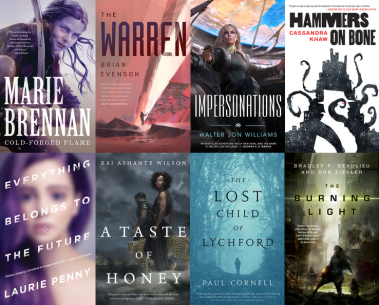
  • Cold-Forged Flame by Marie Brennan – September 13
  • The Warren by Brian Evenson – September 20
  • Impersonations by Walter Jon Williams – October 4
  • Hammers on Bone by Cassandra Khaw – October 11
  • Everything Belongs to the Future by Laurie Penny – October 18
  • A Taste of Honey by Kai Ashante Wilson – October 25
  • The Lost Child of Lychford by Paul Cornell – November 1
  • The Burning Light by Bradley P. Beaulieu and Rob Ziegler – November 1
  • The Iron Beast by Andy Remic – November 8, if you’re interested.

fall2016magsMagazines
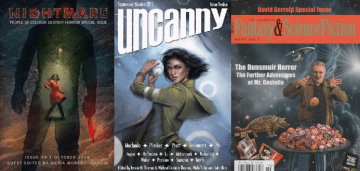
I backed the Kickstarter earlier this year for Lightspeed‘s POC Destroy SF project, and POC Destroy Horror and POC Destroy Fantasy will be coming out in October and December, respectively. I also backed Uncanny Magazine‘s Year Three, and I’m looking forward to that in addition to a couple of issues I haven’t gotten around to yet from Year Two. I also bought a subscription to Fantasy & Science Fiction because it’s been on sale for $5, so I will surely be reading some issues of that as well.

Must-Read (Fiction) Books

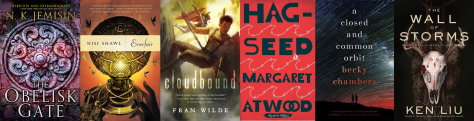
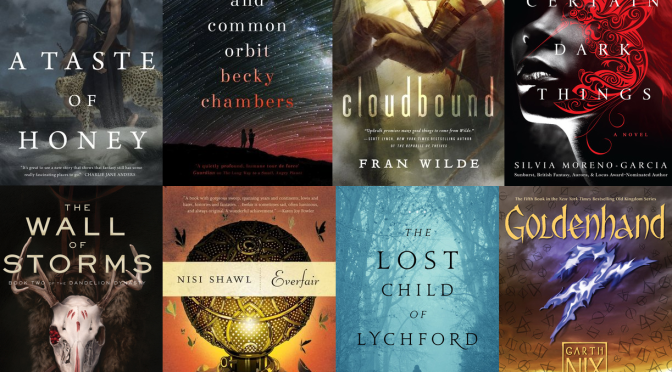
  • Everfair by Nisi Shawl (already finished, actually)
  • The Obelisk Gate by N.K. Jemisin (halfway through)
  • Death’s End by Cixin Liu
  • Cloudbound by Fran Wilde
  • Hag-Seed by Margaret Atwood
  • Three Dark Crowns by Kendare Blake
  • A Closed and Common Orbit by Becky Chambers
  • Certain Dark Things by Silvia Moreno-Garcia
  • The Wall of Storms by Ken Liu
  • Goldenhand by Garth Nix
  • Infomocracy by Malka Older

fall2016books

Nice-to-Read-If-I-Have-Time (Fiction) Books

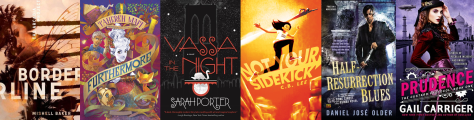
  • Borderline by Mishell Baker
  • Vassa in the Night by Sarah Porter
  • Furthermore by Tahereh Mafi
  • Black Wolves by Kate Elliot
  • Half-Resurrection Blues by Daniel José Older
  • Midnight Taxi Tango by Daniel José Older
  • Prudence by Gail Carriger
  • Not Your Sidekick by C.B. Lee
  • Heroine Complex by Sarah Kuhn

fall2016books2

Nonfiction That I Have No Idea How I’m Going to Fit in But That I Really Want to Read Before the End of the Year

  • How to Suppress Women’s Writing by Joanna Russ
  • Speculative Blackness: The Future of Race in Science Fiction by André M. Carrington
  • Green Planets: Ecology and Science Fiction edited by Gerry Canavan and Kim Stanley Robinson
  • My Life on the Road by Gloria Steinem
  • Hunger Makes Me a Modern Girl by Carrie Brownstein

What are you reading this fall? Is there anything I’ve missed that I simply must check out?

Book Review: Runtime by S.B. Divya

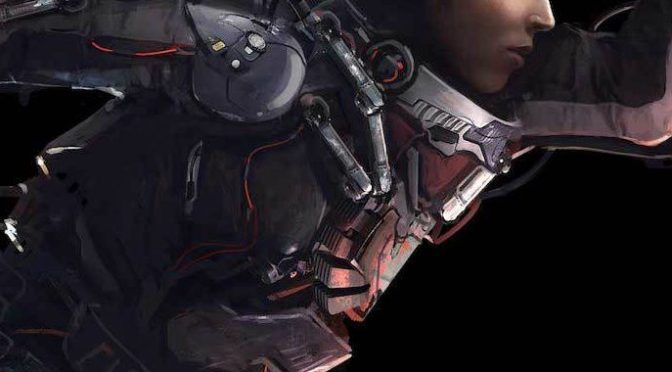
I read all of Tor.com’s novellas, which is a good thing because I otherwise might have missed out on this gem by S.B. Divya. I would never have picked up a story about a cyborg endurance race on my own, but I’m glad I read this one. Runtime is a marvel of world building and character portraiture wrapped around a perfectly executed straightforward plot and just the right amount of smart-but-not-overbearing social commentary. It’s a near-perfect use of the novella length, and I cannot wait to see what S.B. Divya does next.
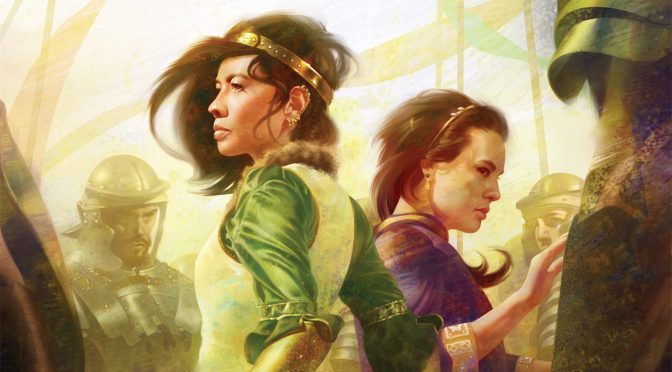
Marmeg Guinto is as prepared as she’ll ever be for the grueling Minerva Sierra Challenge, but she’s nonetheless not nearly as prepared as some of the other racers, with their support teams and wealthy sponsors. In a race where people compete and win on the strength of extreme body modifications, Marmeg has cobbled together her cyborg enhancements from cheap parts, black market materials, and sometimes literal garbage. Still, she’s determined to race well enough to win a better future for herself and her family. When she actually gets out on the trail, however, things don’t go entirely as planned, and Marmeg soon has to make some hard choices that put her future plans in jeopardy. The surface narrative here is simple enough and fits neatly into the popular genre of stories about young people who participate in extreme sports or contests in order to help their families in dystopia-ish futures. It could have been banal, but S.B. Divya does several things in Runtime that elevate it above the usual stories of its type.

Partly, this is accomplished by cleverly adding layers of meaning and nuance to a simple story. Within the simple framework of the race/survival story lies a cleverly integrated fable with something to say about cheating and good turns. Wrapped all around the story and built into the fabric of Divya’s excellent world building is some insightful social commentary about capitalism, gender, immigration, and community. It sounds like a lot, but it never feels like too much for the reader to take in. There’s never any obvious lecturing or moralizing, which is often a mistake made in these kind of stories, and the ending is satisfying and thematically appropriate without feeling pat.

The heroine, Marmeg, also accounts for a great part of Runtime’s appeal. She’s a nicely complex character but without falling into either any of the common Strong Female Character tropes or the common Morally Grey Character tropes. Instead, she’s highly distinctive, with a backstory and personality that are both well-considered and well-constructed. The key here is the specificity of this character and her background. Marmeg isn’t a Generic Dystopian Heroine, and the reader’s understanding of her situation, her family, and what she’s willing to sacrifice for them is absolutely necessary for the story to work. Fortunately, Divya communicates all of this information clearly and concisely with sparely elegant prose that is perfectly styled for the story she’s telling.

Where S.B. Divya excels most notably, however, is in simply balancing all the many moving parts of this novella. The race itself necessarily takes center stage, but Marmeg is a strong enough personality to really carry the story by getting the reader invested in it. There’s a nicely cinematic quality to the action, enough to earn this little book a place on my ever-growing list of things I’d like to see adapted for film or television. Marmeg’s peril feels like a very real threat, and there are a couple of small subplots that nicely augment the main story and could provide fodder for more stories or even a full-length novel in this same universe. Every piece of Runtime is meticulously crafted and fitted together with every other piece in order to make a whole that is even greater than the sum of its parts.

Book Review: The Jewel and Her Lapidary by Fran Wilde

I adored Fran Wilde’s debut novel, Updraft, so I was thrilled when I learned she had written one of Tor.com’s novellas. The Jewel and Her Lapidary was one of my most anticipated books for the first half of 2016, so imagine my surprise and dismay when I turned out to just not care for it very much.
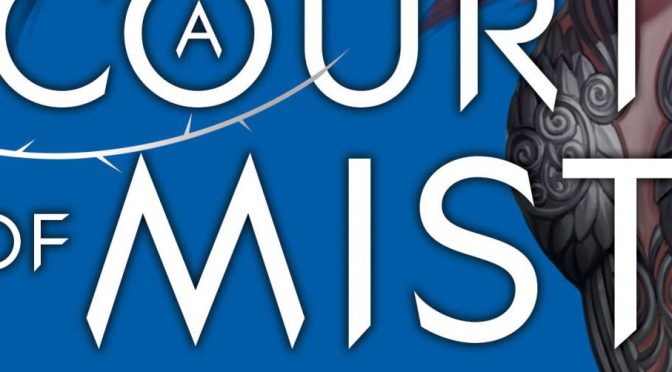
Where Wilde excels, of course, is with world building, which was proven amply in Updraft and confirmed here. I loved the idea of the Jewels and Lapidaries in this novella, and I found the magic system Wilde describes interesting enough. And I liked the framing of the story as piece of folk history. Unfortunately, for all the fine world building on display, there’s just not a whole lot else going on here. I knew going in that this novella was somewhat on the shorter side, but there’s barely even a short story worth of actual story buried under all this world building, and it’s not that interesting of a story.

Instead of a proper novella, this feels like background work for a novel, which would be a much better use for such a complicated premise and would have given the characters, in particular, much more room to breathe. It’s hard to really get a sense of Lin and Sima and their relationship with such limited exposure to them, and most of what we learn about their friendship feels like an awful lot of telling rather than showing. For that matter, it’s unclear whether we should even consider their relationship a friendship or not, as the bond between Jewel and Lapidary is kind of weirdly symbiotic, not entirely consensual (they are assigned to each other in infancy), and has the Lapidary in a decidedly subordinate position. The thing is, none of the implications of this—which are all genuinely fascinating—are examined in the text, and instead Lin and Sima’s relationship is portrayed as somewhat simplistically sister-like.

Worst of all, the story, such as it is, ends so abruptly that it feels unfinished and was certainly unsatisfying. While I don’t require a happy ending, the melancholy of this one was an unpleasant surprise; the vague cover art and the book description suggested something that was going to be much lighter in tone than what I got. Sure, one isn’t supposed to judge a book by its cover, but this one is misleading at first glance, and being an ebook reader I only really looked at the cover the one time. Things get fairly dark very quickly in this little book, and then they just end bittersweetly—with a distinct emphasis on the bitter part. Which would be fine if this story was part of some longer work to give it some context, but the framing device (much as I do like it) of it as folklore just isn’t quite enough to keep it from being rather unrelentingly and yet meaninglessly sad.

The Jewel and Her Lapidary isn’t the worst thing I’ve read this year, but it wasn’t great. There are the bones of a potentially great fantasy world here, but they’re wasted without a compelling story to bring them to life. I’m bummed by how little I liked this much-looked-forward-to book, but do I have to say that I’m definitely here for it if Wilde decides to revisit this universe in a longer format. In the meantime, I can always reread Updraft, and I’ve got Cloudbound to look forward to next month.

Book Review: A Court of Mist and Fury by Sarah J. Maas

I really liked A Court of Thorns and Roses when I read it last year, so I was looking forward to A Court of Mist and Fury quite a bit. After how neatly ACOTAR seemed to wrap things up, especially with the romance between Feyre and Tamlin, I wasn’t entirely certain where ACOMAF was going to take things, and I was honestly very concerned that it was going to veer into tiresome love triangle territory. I needn’t have worried. ACOMAF wasn’t what I thought it would be, but it was engaging, exciting, and sexy enough that I read it in a single day.
Light spoilers below.

After the events of ACOTAR, Feyre has fallen into a deep depression that Tamlin doesn’t seem to notice or care about, even as the day of their wedding approaches. She ends up rescued from the untenable situation by none other than Rhysand, which I expect most readers will see coming a mile away. However, the rest of the story is much less expected. Though it functions as essentially an “after the fairytale” narrative, ACOMAF for the most part doesn’t rely on tired tropes or worn out gimmicks, and Sarah J. Maas does a great job in this book with Feyre’s character development as Feyre recovers from her harrowing experiences in the first book and finally has the time and space to process her feelings about and examine her relationship with Tamlin. ACOMAF is a book about healing from trauma and disappointment. It’s also a book about finding a space where you can grow to be your best self and fighting for it.

While Feyre’s growth throughout the novel is exceptional, and the development of her relationship with Rhysand is well-executed, most of the other secondary and tertiary characters never manage to fully come to life. While the seeds of ACOMAF Tamlin certainly existed in ACOTAR, the revelation of him as a truly villainous character is somewhat abrupt and borders on straight up character assassination although it’s presented more as a clever plot twist. Surprise! The main love interest from book one is an abusive piece of trash! There is also a whole cast of new characters that Feyre meets at the Night Court, but they are largely interchangeable and barely exist except to further Feyre’s story and development. All this is fine, really, as it’s clear throughout that Feyre is the main character, but still. It wouldn’t hurt for some of the side characters to have a bit more to do in a 600+ page book.

Here’s the thing about this book that makes it kind of great, though. Whereas ACOTAR was a fairly straightforward fairytale retelling, ACOMAF transforms Feyre’s story into something much grander. It’s not quite epic fantasy, but it’s much more than a simple romance. In fact, the trajectory of this series (and Maas’s Throne of Glass series as well) reminds me far more of pulpy boys’ adventure stories and other heroes’ journeys of the 20th century, for all that Maas has a modern sensibility when it comes to characterization of her leading ladies. Feyre’s depth and nuance is at odds, to a certain degree, with her fairly straightforward adventures, but Maas makes it work. Wonderfully.

ACOMAF and its predecessor are probably more firmly in the fledgling New Adult genre, with their frank depictions of sex and more grownup understanding of relationships, but however this series is classified I’m glad it exists at all. It’s not a perfect book, with its heavy focus on its heroine, who can occasionally be tiresomely self-aware, to the exclusion of the other characters, and while Maas tries (in her way) to include some diversity I wouldn’t recommend this title on that score. Some plot developments feel a little too heavily scripted, some feel downright forced, and not everything truly makes good sense. But A Court of Mist and Fury scratches a very particular itch for me and, I expect, for many girls and women who enjoy the same sort of self-aggrandizing, moderately sexy fluff reading. It’s a specific kind of almost-adolescent wish-fulfillment fiction that is seldom done well enough to be more than a mildly embarrassing guilty pleasure.  Sarah J. Maas does it marvelously, and she consistently creates books that I can see myself reading over and over again. Proudly.

Book Review: Too Like the Lightning by Ada Palmer

Ada Palmer’s Too Like the Lightning is a tremendously, gloriously wonderful book that seems like an obvious contender for all of the genre awards next year. It’s a remarkably original, refreshingly optimistic (but not cloyingly so), and deeply challenging read that demands the reader’s full attention. It’s a novel that is difficult at times, but it’s very much worth taking the time—and it may take quite a while—to work through.
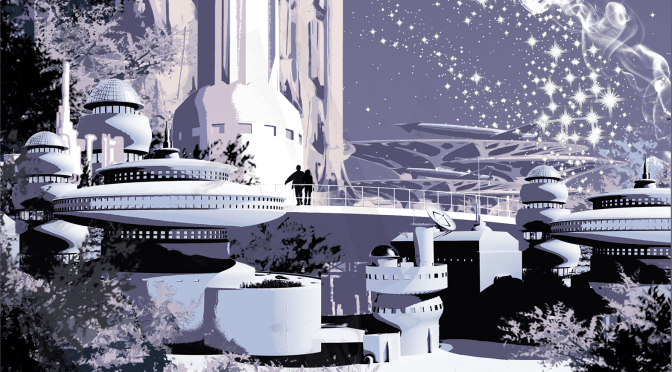
The narrator, Mycroft Canner, is a convict in a utopian future where the world is administered collectively by enormous “hives” of philosophically like-minded people and tied together with a system of flying cars that have made travel faster and safer than ever before. As a convict, Mycroft’s sentence is a life of servitude and enforced poverty; he and others like him are essentially public property, bound in service to the community for life. Too Like the Lightning is the first part (I understand the series is planned as four books) of Mycroft’s account of significant events in the year 2454.

There’s not much to say about the plot that wouldn’t be a spoiler, but suffice it to say that there are several slowly, methodically unfolding mysteries contained in this book. It’s a story that isn’t as complicated as it seems, with much of the book’s seeming complexity owing to Ada Palmer’s intricately humane portrayal of Mycroft Canner as a character rather than to any particular complexity of the plot itself. Some of the novel’s high reading level also comes from the affectation (Palmer’s and Mycroft’s) of telling the story in such an antiquated fashion (in the style of the 18th century from which most of the book’s characters’ philosophies are taken). As a great lover of 18th and 19th century literature and philosophy, this put Too Like the Lightning about a hundred and ten percent right up my alley, but it definitely makes for a novel that may require some googling in order to truly appreciate it if you don’t have the requisite background to “get” it right away.

Where Too Like the Lightning really shines is in the worldbuilding department, and there aren’t even proper words to describe how delightful it is to read something so fresh and different. Certainly, one can see marks of many of the usual genre influencers along with the influences of more literary classics as well as works of philosophy and actual history, but Too Like the Lightning really isn’t quite like anything else I’ve ever read. For one thing, in a sea of modern dystopias that seek to explore all the ways in which theoretical utopias can fail, Palmer’s imagined future stands out for being an actually utopian one, and the book is a sort of look at what makes that kind of utopia tick. From eliminating gendered language to banning public displays of religion to the system of flying cars that are teased on the book’s cover to the reorganization of family life, Palmer has thought of answers for nearly all the world’s problems. Those she hasn’t, she’s been sure to include a group of people—the Utopians—in her book that are dedicated to improving on near-perfection.

Margaret Atwood has said that every utopia has a little dystopia in it, and Too Like the Lightning digs deep into examining this idea, looking for and often directly at some of the underlying ugliness that supports the world its author has dreamed up. Mostly, this is accomplished through the observations of the narrator, Mycroft, who offers a unique perspective on a world that he is decidedly set apart from while still embroiled in the events he’s recounting. Mycroft’s personal history, which is one of the central mysteries of the book, comes into play about two thirds of the way through and in a significant way that forces the reader as well as some of the other characters to wrestle with some big ideas. I won’t say it was entirely unexpected, but it’s a pretty major twist and I love a book that challenges my expectations the way this one did.

All things considered, though—little dystopia or not—the world of Too Like the Lightning is one I wouldn’t mind living in, and I feel privileged to have gotten to spend so much time there with this novel. If there’s one problem with it, it’s only that there’s not enough of it. There is no real resolution to most of the problems and conflicts the book introduces, which makes me think that the ultimate success of it is going to rely on the how well things go with the rest of the series. That said, I have a feeling it’s going to be just fine, and I can’t wait to read Seven Surrenders and find out what happens next.

This review is based on a copy of the book received through NetGalley.

Book Review: Central Station by Lavie Tidhar

It would have been useful to know in advance that Central Station is a novel that was cobbled together from a collection of related short stories. While there is much to love about the finished product, it nonetheless has a somewhat disjointed feel to it that makes it somewhat difficult to fully appreciate the novel’s strong points. It’s not incoherent, exactly, just slightly garbled in execution, which is too bad because Central Station is otherwise a gorgeously imagined, smartly written, ambitious work of thoughtful futurism.
Perhaps the strongest aspect of Central Station is Lavie Tidhar’s lovely prose, which brings his vision of a future Tel Aviv to life with great depth and richness. There’s an almost magical, mythmaking quality to his descriptions of Central Station, its inhabitants and their lives that reminds me of nothing more than Ray Bradbury’s The Martian Chronicles, to which Central Station is an obvious successor, if not intentionally than certainly through serendipity. While most of Central Station’s chapters have been edited so that they no longer entirely stand alone, there is still the feeling of it being constructed from a series of slice-of-life vignettes clustered around an overarching narrative—primarily concerned with the comings and goings of people through Central Station, which is here a major hub of travel between Earth and space—and core themes—mostly perennial sci-fi big ideas about war and religion and artificial intelligence and robots and how technology effects the human condition.

Along with crafting a striking and memorable setting, Tidhar has also populated his future Tel Aviv with a fascinating cast of characters. Sadly, this is another area in which the book is sold short in the marketing department, as its cover copy focuses on introducing Boris Chong as if he’s the main protagonist of the novel. Certainly, Boris’s experiences are important and effectively work as bookends to the rest of the stories, and the book description correctly communicates that Central Station is a sort of family drama, but Boris actually turns out to be one of the least compelling characters in the book. Instead, I found myself drawn more to Boris’s ex-lover, Miriam, Carmel the data vampire, the book dealer Achimwene, and the robot priest R. Brother Patch-It. Even the fraught romance between Boris’s cousin Isobel and the robotnik Motl somewhat overshadows Boris’s contribution to the narrative, which makes the decision to sell the book as Boris’s story somewhat unaccountable.

The missteps in the back cover copy of the book are mostly made up for, however, by its absolutely stunning retro-futurist cover by Sarah Anne Langton, which is more than enough reason to have it on your shelf. It’s a perfect package for such a lovely book, and it nicely telegraphs the fusion of classic sci-fi themes and posthumanist sensibilities contained within its pages. There’s very little new under the sun when it comes to storytelling, and Tidhar hasn’t reinvented the wheel with this book, but he definitely brings a refreshingly new and important perspective to the material he tackles. Central Station is a book that is perhaps too “literary” to get the readership it deserves, but it’s certainly worth a look for any serious reader of science fiction, especially if you think you prefer the classics.

This review is based on a copy of the title received from the publisher via NetGalley.

Comic Review: Faith

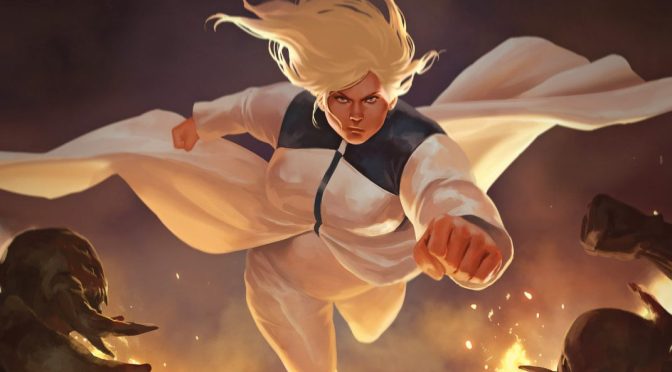
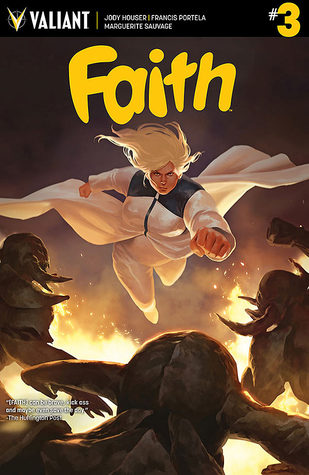
I mean, seriously. How perfectly gorgeous is this cover?

Faith had me at its gorgeous cover art, particular for issue two, which is so beautiful and so joyful that it makes me happy just looking at it. The comic itself is delightful fluff, not devoid of depth and meaning but bright and optimistic (yet without being Pollyannaish). I’ve never been particularly interested in superheroes, and the last couple of decades’ trend towards darkness, grittiness, antiheroism, and generalized cynicism has turned me even more off of the genre. In that landscape, Faith is a breath of fresh air that makes me wonder what else I might be missing by so completely avoiding super hero comics.

The thing that first put Faith on my radar was its titular character, who is a fat geeky woman—something that makes her a character very close to my heart. As I said, I loved that cover art, which does nothing to hide or minimize its heroine’s size, instead showing her as beautiful, strong and heroic, reveling in her abilities. I love how much space Faith takes up in these covers, and I love how unapologetically she seems to do it. They’re powerful images for me, a large woman in my almost mid-thirties, and they’re the kind of images that I’m glad exist for younger women and girls.

The interior art is similarly excellent. The artists are clearly unconcerned with making Faith conventionally pretty which makes her feel more real and gives the book a nice, naturalistic, relatable quality that supports its story of a young woman reinventing herself after some personal upheaval. Faith is also not sexualized, though she is sexy and at times sexual, and it’s refreshing to see art that is so free of any demeaning, leering male gaze.

Faith’s geek status is a major part of her relatability as a character, and it also makes the comic a bit of interesting meta commentary on comics, fandom, and geek culture in general. After some personal upheaval, Faith hangs up her cape (theoretically, anyway) and moves to Los Angeles to be a pop culture blogger before she’s forced by circumstance to put her costume back on and get back into the superhero game. It’s not unusual for superheroes to have secret identities, and even Faith’s job in media isn’t unusual, but her particular situation is uniquely and distinctively of the early twenty-first century. I have a feeling that, years from now, this is going to date this book, and it’s possible that it won’t hold up well to the test of time, but it’s a specificity that adds to the authenticity of Faith’s earnest storytelling. You can tell, both in the art and the smart, funny writing, that the people behind this book really care about geek culture and have a good amount of inside knowledge.
None of this is to say that Faith is a perfect comic. Mostly, it just can’t be all things to all people. It tries with regard to diversity, but the reality is that it’s still showcasing the adventures of a relatively privileged white woman. While Faith is wonderfully relatable to me (another relatively privileged white woman), she also highlights to me how much more and better diversity is still needed in comics, and in pop culture in general. Faith also doesn’t tackle any particularly meaty material; the total lack of cynicism in the book is nice, but some readers may find it too light on substance (though I can’t state enough how much I love that there’s nothing in the book about body image issues—that’s one tired theme I can do without forever).

Finally, it might be a nitpick, but I think also worth pointing out that the title of the comic, Faith, and some of the vaguely religious styling of some of the art (like on #2, where Faith has almost a halo and is surrounded by white doves) could be off-putting for some. While I generally don’t avoid everything with Christian overtones, I know that was imagery that gave me pause, even if I did find it pretty to look at. It made me unsure what to expect to find in the book, in terms of themes and messaging, mostly. As an atheist (albeit pretty lowkey these days), I don’t like to be preached at, and that imagery definitely gave me pause and led to me putting off reading the book for longer than I otherwise might have.
Still, Faith is a book that’s worth checking out, falling squarely in “superhero comic for people who don’t like superheroes” territory. It hasn’t exactly motivated me to rush to read more superhero books, but it has reassured me that there’s something for me in the genre after all.

Book Review: Pride’s Spell by Matt Wallace

I don’t know if I’ve mentioned this lately, but I love Matt Wallace’s Sin du Jour series so very, very much. Sure, I might have started off feeling a little tepid towards it, but it’s new entries have quickly become some of my most anticipated new releases. They’re only getting better over time, and Pride’s Spell is the best one yet. It’s a smart, action-packed, hilariously absurdist romp and probably the most fun thing you can read this summer.
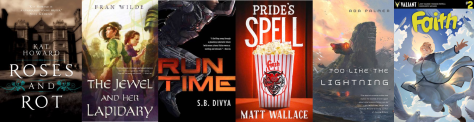
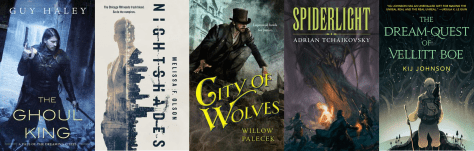
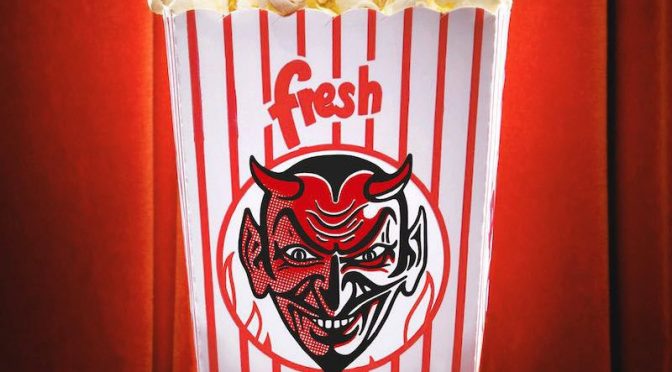
This installment takes half of the team to Hollywood, where they’re doing the catering for an important movie premiere that takes a sinister turn. That doesn’t mean the folks who stay behind in New York are off the hook, though. There’s not a lot to be said about the plot without giving the whole thing away, but if nothing else about this book appeals to you, it’s worth reading just to read the truly superb action scene where a dude fights an evil Easter Bunny.

That said, there’s a lot to love about Pride’s Spell, and it’s good to see the world Matt Wallace is creating start to feel a bit more lived in. There’s a definite monster-of-the-week feel to it that keeps each installment fresh and interesting, but three books in there’s also an internal logic emerging that is finally making the Sin Du Jour world feel fully realized. It also helps that the overarching plot of the series is starting to take shape and make a bit more sense out of the sometimes random-seeming events. The copious pop culture references will likely date the books in the future, but right now they work well to keep these stories grounded enough in reality that the reader can accept some of their more surreal qualities.

Distinct character arcs are starting to come together as well, particularly Lena’s, which was the biggest surprise of this book for me. When I read Envy of Angels, I rather thought that Lena’s roommate, Darren, would end up being the main character, but instead it’s Lena and her experiences that have been increasingly foregrounded. I’m glad because, while Darren’s rocky adjustment to the new job isn’t completely boring, I’d much rather read about Lena’s burgeoning friendships with other women, her professional accomplishments, and even her messy relationships with men. She’s a delightfully complex character who does everything with an admirable if occasionally ill-advised fierceness that makes her both admirable and relatable.

The only major issue I see with Pride’s Spell is that I don’t know if anyone will be able to make heads or tails of it without having read the previous installments of the series. While each novella is a self-contained adventure, there’s a lot going on, and enough references here to the previous books that I could definitely see an uninitiated reader feeling a bit adrift. The good news is that the series is really excellent and improving over time, and it’s not too late to start from the beginning. Sin Du Jour is a fast, fun read perfect for breaking reading slumps or relaxing between more challenging books. You could start with Pride’s Spell, and a clever reader will catch up quickly, but you really owe it to yourself to go back and read the first couple installments.

This review is based on an advance copy of the title received from the publisher through NetGalley.

The SF Bluestocking 2016 Summer Reading List

So, last year, I didn’t manage to make it through my whole summer reading list, so this year I’m going to do something a little different since there’s even more this year than last year that I want to get through. So, instead of pretending as if I’m definitely going to get through everything, I’m just going to treat this as a sort of long list that I’ll be pulling from for my reading over the next three months or so. There are definitely a few must-reads here, but there’s many more nice-to-reads that I don’t know if I’ll get to. It’s just going to depend on how much time I’m able to spend reading and writing, to be honest.

AlreadyRead

Summer and Summer-ish Books I’ve Already Finished, With Reviews Coming Soon

  • Roses and Rot by Kat Howard
  • Central Station by Lavie Tidhar
  • Too Like the Lightning by Ada Palmer
  • A Court of Mist and Fury by Sarah J. Maas
  • The Jewel and Her Lapidary by Fran Wilde
  • Runtime by S.B. Divya
  • Return of Souls by Andy Remic
  • Pride’s Spell by Matt Wallace
  • Rat Queens Volume 3: Demons
  • Lumberjanes (comic)
  • Faith (comic)

Tor.comNovellas

Tor.com Novellas

I generally read all of these either through NetGalley or as they come out, but I’m thinking of relaxing on that after this summer, particularly in regard to series that I don’t care much for. That said, I do plan to finish reading all of this summer’s titles at least.

  • The Jewel and Her Lapidary by Fran Wilde (already read)
  • Runtime by S.B. Divya (already read)
  • Return of Souls by Andy Remic (already read)
  • Pride’s Spell by Matt Wallace (already read)
  • The Ghoul King by Guy Haley
  • Nightshades by Melissa F. Olson
  • City of Wolves by Willow Palecek
  • Spiderlight by Adrian Tchaikovsky
  • The Dream-Quest of Vellitt Boe by Kij Johnson

SciFiMustReadsScience Fiction Must-Reads

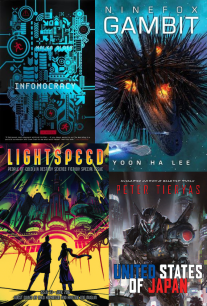
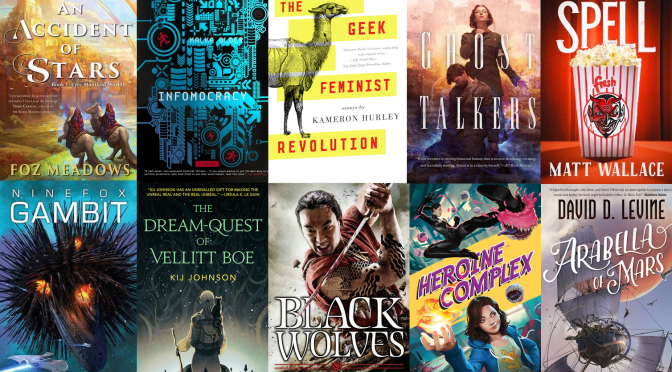
  • Infomocracy by Malka Older
    I’m not super into near-future stuff, but I’ve been making a real effort to read outside my comfort zone in the last couple of years and I got an ARC of this one through NetGalley.
  • Ninefox Gambit by Yoon Ha Lee
    Yoon Ha Lee’s short story collection, Conservation of Shadows is one of my favorites in recent years, so to say that I’m super excited about this novel is something of an understatement. It’s definitely one of my most anticipated books of 2016.
  • Lightspeed’s POC Destroy Science Fiction! Special Issue
    Rewards were just delivered for Kickstarter backers the other day, and I can’t wait to dig into this over the weekend.
  • United States of Japan by Peter Tieryas
    I feel like this is going to be a perfect summer blockbuster of a novel.

FantasyMustReads

Fantasy Must-Reads

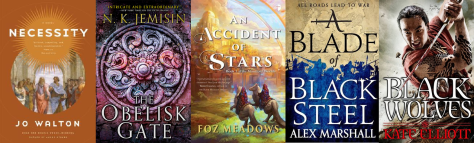
  • Necessity by Jo Walton
    The first two books in this trilogy were some of my favorite reads last year, and I am very much looking forward to this volume.
  • The Obelisk Gate by N.K. Jemisin
    The Fifth Season was hands down my very favorite novel of 2015, and I fully expect this one to be every bit as good.
  • An Accident of Stars by Foz Meadows
    Foz Meadows’ “Coral Bones” was a wonderful read, and this book has people riding kangaroo things on the cover, so I’m excited for this novel-length work.
  • A Blade of Black Steel by Alex Marshall
    Second in a series. I loved the first one, so I can’t miss this one.
  • Black Wolves by Kate Elliot
    I’ve never managed to really fall in love with anything by Kate Elliot, in spite of it her work, objectively, ticking off basically all my boxes for favorite book criteria, but I’m still going to give this book a go because it’s so highly recommended and often suggested by literally everyone else who likes the same stuff I do.

Miscellaneous Must-Reads

  • The Geek Feminist Revolution by Kameron Hurley
  • ODY-C Volume 2 Sons of the Wolf by Matt Fraction and Christian Ward
  • The Paper Menagerie and Other Stories by Ken Liu

Books I Really Want to Read, But Am Not Sure I Realistically Will Be Able To Because I’m Only Human

  • The Devourers by Indra Das
  • Ghost Talkers by Mary Robinette Kowal
  • Heroine Complex by Sarah Kuhn
  • Arabella of Mars by David D. Levine
  • The Dinosaur Knights by Victor Milan
  • The Vagrant by Peter Newman
  • The Cupid Reconciliation by Michael R. Underwood
  • Strangers Among Us edited by Susan Forest and Lucas K. Law
  • Invaders edited by Jacob Weisman
  • Hunger Makes Me a Modern Girl by Carrie Brownstein
  • My Life on the Road by Gloria Steinem
  • The Notorious RBG  by Irin Carmon and Shana Knizhnik