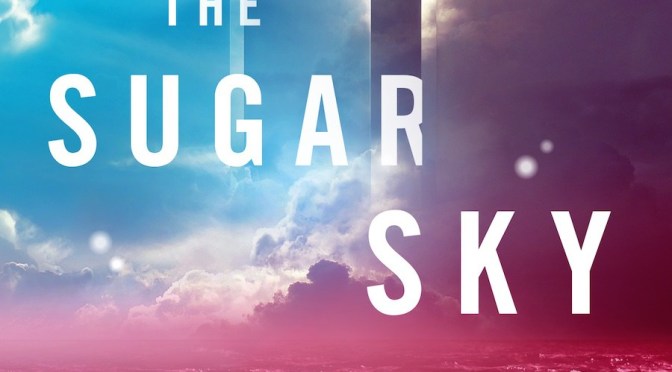
 So, I’ve finally figured out what it is about Seanan McGuire’s Wayward Children that prevents me from really loving these books the way so many other people do. I just, on a fundamental level, don’t find the fantasy of this series to be an appealing one. I’m slightly distrustful of anything, in general, that smacks of radical individualism, so I’m just not especially taken with the idea that some people are just too special and different for the world they’re born into and must travel to an entirely different world to achieve self-actualization and fulfillment, with the finding and keeping of that world as their personal happy ending. It’s fine. I get it. I think I would have loved this stuff when I was a teenager. In my mid-thirties, however, I struggle with some of the broader implications of it, which impacts my overall enjoyment of the story. I don’t begrudge anyone else the escapist fantasy of a better world of their very own, but my own fantasies at this point in my life are less escapist and more about making this world a better, kinder and more just place for everyone.
All that said, Beneath the Sugar Sky is by far my favorite installment of the Wayward Children to date. Though the series may not, generally, be my cup of tea, there’s a lot to like about this volume, which both delves a bit deeper into the overall mythology of the series and gives the universe of the Wayward Children a welcome infusion of lightness after two installments that were decidedly darker in tone. Without losing any of the series characteristic gravitas and utilizing a refreshingly straightforward fantasy quest narrative, McGuire uses Beneath the Sugar Sky to explore a Nonsense world, Confection, that’s been built, layer after layer after layer, out of baked goods. It’s an altogether more purposeful-feeling story than either of the previous two books in the series, and that includes a stronger and more satisfying ending than its predecessors as well.
The book starts off by introducing a new point of view character, Cora, who has just recently arrived at Eleanor West’s school after a stint as a mermaid. She’s a likeable and engaging character, but she’s sadly not given much to do once Rini arrives and the quest kicks in to gear. If there’s any major craft problem with this novella it’s simply that there are too many point of view characters and none of them ever quite feel like main characters. At the same time, though, this ensemble quality is one of the things I enjoyed most about Beneath the Sugar Sky, as it works to offset the strong messaging about the importance of individuals and the value of individual identities and personal journeys to self-actualization. I would have liked more of Cora, mostly because I really, really like Cora, but I wouldn’t want to sacrifice a minute of time the book spends with Kade or Rini or Nadya, either.
The quest narrative and Nonsense setting makes this the most purely fantastical of the Wayward Children books yet, and it leaves behind almost entirely the mystery of Every Heart a Doorway and the Gothic-toned family drama of Down Among the Sticks and Bones. While Every Heart primarily dealt with the fallout after children are expelled from their worlds and Sticks and Bones delved into one of the doorway worlds, Beneath the Sugar Sky offers a full-on epic journey as Rini and her new friends search for the pieces of her mother, Sumi, and try to find a way to put her back together again before Rini is erased from existence. Straightforward as this quest may be, there’s still plenty of room for creative flourishes, twists and turns, and a couple of genuine surprises that let us know that McGuire isn’t sticking strictly to any storytelling formula. The worldbuilding is as at least as inventive as in the previous two books of the series, and there’s a delightfully joyous tone in McGuire’s descriptions of Confection that makes the chapters set there (and that’s most of them) great fun to read.
So, Beneath the Sugar Sky is fine. I’m still not sold on the whole premise of this series as a desirable fantasy, but I think that’s just me being curmudgeonly. Certainly, after this book, it’s started to grow on me a bit more. I like that this book is a standalone, albeit to a lesser degree than either of the first two as it deals with events from the first book in particular. Still, I’ll be recommending it to some of my similarly curmudgeonly acquaintances who weren’t enchanted by Every Heart, and I’m somewhat more excited to see what Seanan McGuire does next in this universe, especially if it involves more of Cora.
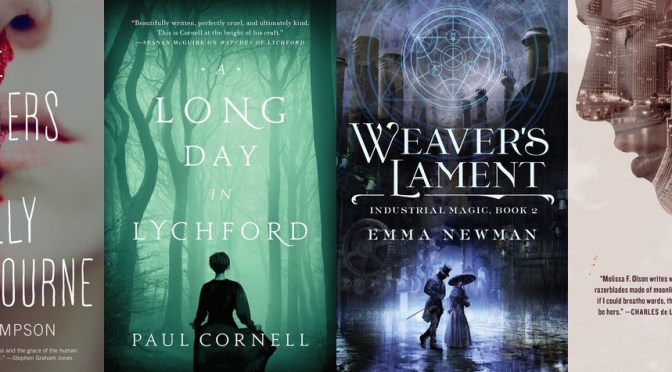
 The Murders of Molly Southbourne
 A Long Day in Lychford
 Weaver’s Lament
 Switchback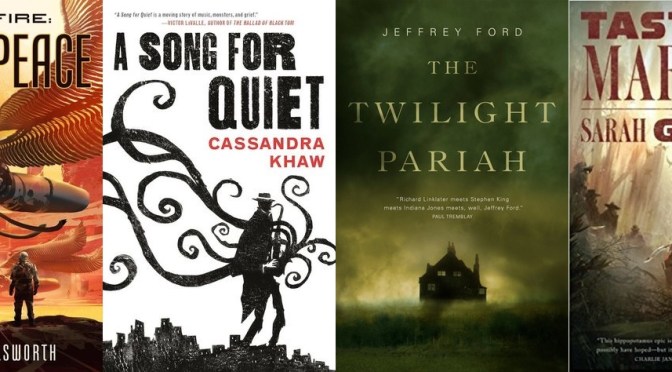
 Starfire: A Red Peace
 A Song for Quiet
 The Twilight Pariah
 Taste of Marrow


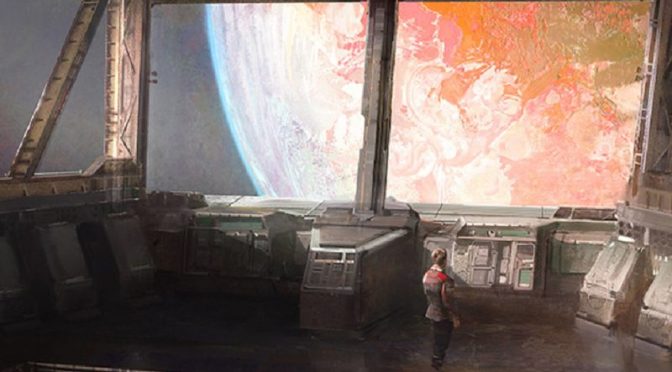
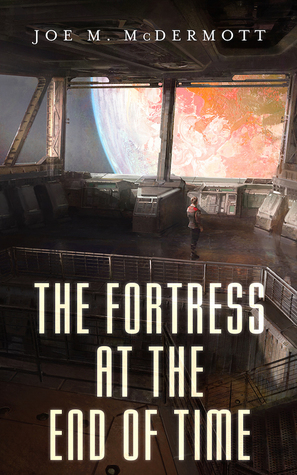 Joe M. McDermott’s The Fortress at the End of Time might be a little bit genius, but I can’t decide if I loved it or hated it. It’s got a great classic sci-fi sensibility if, but I’m generally not one for classics. It’s a novel that, while short, is often boring, but intentionally so and in a way that mostly works if you’re a patient reader. It’s got some big ideas that are worthy of considered exploration, but none that are particularly fresh. It’s solidly written with a distinctive voice and style, but there’s nothing especially exceptional about it. It’s a book that I’m glad to have read because it is a bit outside of my usual fare and a nice change, but I don’t feel compelled to read either more of McDermott’s work or more of this sort of thing in general. It’s not that The Fortress at the End of Time is unremarkable or pedestrian; it’s just a profoundly workmanlike example of its type of thing–thoughtful medium-hard military-ish sci-fi that has something to say about some stuff–if you like this sort of thing. I can easily imagine this being a book that lots of other people love, but I can’t muster any very strong feelings about it, myself.
 It’s early enough in the year that I don’t have much to compare it to yet, but I feel confident in saying that Dusk or Dark or Dawn or Day is one of the year’s great novella-length works. It’s smartly written, well-paced, has a compelling cast of characters and an original mythology, and is altogether compulsively readable. It’s perfect reading for a cold day or a rainy afternoon, exactly the sort of thing that is easy to zip through in a single sitting like I did.
 I didn’t hate Guy Haley’s first Dreaming Cities novella, The Emperor’s Railroad, though it wasn’t one of my favorite reads of the year so far. Nonetheless, I was intrigued enough to read this second installment of the series. The Ghoul King seemed to promise more action and a female character with something to do besides die for male character development, and I was hoping to see Haley dig a little deeper into some of the potentially very cool world building of his post-apocalyptic landscape. Sadly, I found myself disappointed on all counts with this book, and this is another series that I’m very unlikely to continue with.
 I won’t be reading anything else by Andy Remic. I didn’t care for most of his first Tor.com novella, A Song for No Man’s Land, but it got interesting right at the end. Unfortunately, Return of Souls doesn’t deliver on what little promise its predecessor held. Instead, it doubles down on everything I didn’t like about the first book in this planned trilogy and adds a heaping dose of blatant misogyny that makes it a deeply unpleasant read.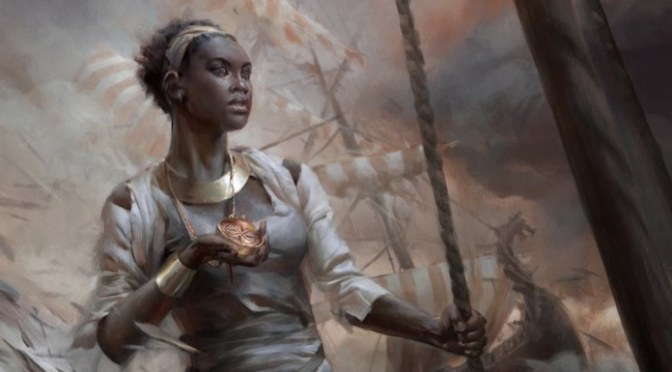
 I expected to love The Drowning Eyes, but I’m sad to say I only liked it. The gorgeous cover art and the book’s description had me very excited about it, but it just wasn’t quite what I expected.
 I received a free advance copy of this title from the publisher via NetGalley.
 SF Bluestocking