Tag Archives: 2015 books

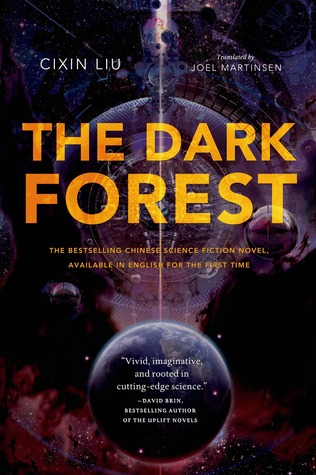
Book Review: The Dark Forest by Cixin Liu

I loved The Three-Body Problem when I read it earlier this year, but I wasn’t really certain what to expect from The Dark Forest, especially with a different translator from the first book. While I didn’t find it to be–overall–as compelling as I found its predecessor, I think The Dark Forest might be the better of the two books if it wasn’t for a sometimes clunky translation.

The difference in translation is subtle but apparent from the beginning, and this is exacerbated by a shift in style from the first book. The Dark Forest is largely an exploration of a couple of interlocking metaphors, relying largely on poetic language and imagery to discuss some heavy ideas. There’s not a ton of plot going on–basically, people are scrambling to figure out what to do about the impending alien apocalypse–and its story unfolds far more slowly than so few events seem to warrant.

It turns out that a four hundred year wait for aliens to arrive for an epic showdown isn’t all the exciting when the aliens have destroyed your ability to make scientific and technological advancements that might allow you to win. It’s mostly just one long, soul-crushing existential crisis punctuated by various smaller actual crises.

The book opens with a lovely metaphorical prologue, which is immediately engaging, although I felt as if some of the poetry of the language must be lost in translation, but then it’s a slog for the first three quarters before transforming into a riveting page turner in the last act. For most of the book, I just felt a little confused and frustrated because so little actually happens–and much of what does happen doesn’t really matter–but in the last hundred and fifty or so pages, it all comes together and makes sense. The translation is still sometimes awkward, but the extended metaphors that Liu has been weaving finally cohere in a climax that is smart and well worth the struggle to get to.

The Dark Forest‘s translation may not be up to the same standard as The Three-Body Problem‘s, but it’s still well-worth reading. It’s a clever, beautiful, and at times darkly hilarious book that both neatly fits into sci-fi traditions and continues to broaden the horizons of the genre with a refreshingly different perspective on perennial science fiction questions.

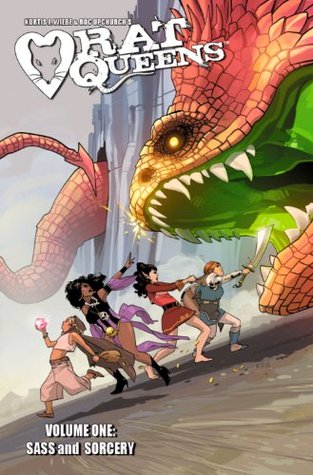
Book Review – Rat Queens, Volume 1: Sass and Sorcery

So, there’s really no good reason I put off reading this comic for so long. I think I was just turned off by the word “sass” in the title of this first collection. I don’t think there’s any word used to describe women that pisses me off more than “sass” (or any iteration thereof).

I’m glad I finally relented and picked it up, though, because Rat Queens is fucking excellent.

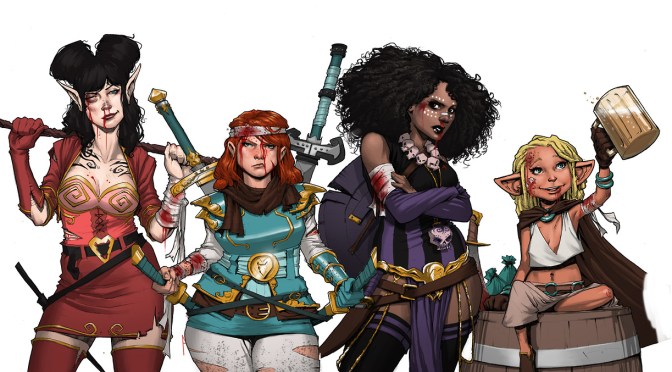
The Rat Queens–Hannah, Dee, Violet, and Betty–are one of several groups of adventurers working out of a town called Palisade. However, we learn early on that not everyone appreciates what the Rat Queens and their fellow mercenaries bring to the town. When someone tries to have all the adventurers killed, hijinks ensue as the Rat Queens try to save the day.

In many ways, this series is a pretty straight forward sword and sorcery adventure of the R-rated persuasion (it’s very full of coarse language, sex, drugs, and tons of extremely bloody violence). However, it’s not the usual sort of testosterone-fueled romp one might expect from this genre. Which is refreshing.

Even better, it’s nothing so simple as just gender-flipping things and writing about a bunch of women who “act like men.” Rat Queens plays with a lot of the genre-standard tropes in really clever and extremely funny ways, and it also develops each of its characters with loving attention to detail and a clear commitment to treating them all like full human beings.

This is especially apparent in the artwork, which is consistently nicely done. The main characters are a group of diverse women with plausible body types wearing adventure-appropriate costumes that reflect their roles and personalities. This in itself is enough to recommend the book to me, but when you toss in a good sprinkling of visual gags and some excellently-drawn action–without any obvious fan service–I consider the artwork a home run.

My only criticism is that I actually could have done with a little more exposition about each woman’s background, and I would love to know a little more about some of the secondary characters, too. Some of this, I’m sure, is just because I’m used to reading novels, which have fewer space limitations than comics have. Mostly, though, I just really love these characters and want to know everything about them.

I guess I’m just going to have to hope that the series runs for a long time.

Rat Queens is exactly the kind of feminist comic I want to read–mostly in that its feminism is all in the execution of the work, with no preachy, ham-handed messages getting in the way of a good story, and no ugly, sexist artwork to get in the way of my enjoying it. It’s an almost perfect comic that I can’t wait to read more of.

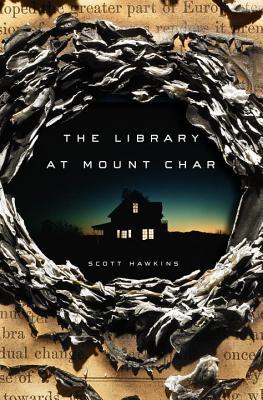
Book Review: The Library at Mount Char by Scott Hawkins

So, I’ve gotten pretty good at picking books to read these days so that I have a minimal number of bad reading experiences, which is great, and it’s a skill I’m happy to have finally mastered as I approach my mid-30s. The downside of this skill, however, is that I often feel like about every other book that I read is a new favorite, or my favorite book of [genre], or at least my favorite book of the current year, or the last six months or last five years, or whatever. You get the idea. The point is, eventually that “favorite” distinction starts to lose all meaning, especially since I seldom reread anything anymore. But still, sometimes I really mean it.

This time, I really, really mean it.

The Library at Mount Char is certainly my favorite book that I’ve read this summer, perhaps my favorite this year so far. It’s not the best book I’ve read lately, but it’s definitely the most fun I’ve had reading in a good while. Absolutely enough fun to earn itself a place on the running list of “favorites” I keep in my head.

I knew straight away that I would love this book because I was moved to giggles in the first paragraph, which introduces us to a protagonist who only gets more weird and wonderful as you continue reading. I don’t know if The Library at Mount Char will last as one of my favorites, but its heroine, Carolyn, definitely makes my list of all-time favorite female characters.

We first meet Carolyn covered in blood and walking barefoot down a highway. She’s just killed a man, but she’s actually thinking about tacos. I fell in love with her immediately.

We soon learn that Carolyn is one of twelve “librarians” who started off as orphaned children adopted by a mysterious “Father” and taken to live in a library. Father isn’t a god, exactly, but he’s something of an all-powerful and ancient wizard kind of guy. Each of the twelve adopted siblings has been assigned a catalog–one portion of Father’s incredibly vast body of knowledge–that they alone are responsible for, and to study from another’s catalog brings a heavy punishment. Carolyn’s catalog is languages. Michael’s is animals. David’s is war. Jennifer’s is healing. Margaret’s is death. Other siblings’ roles are less obvious or well-defined, but it’s obvious that, all together, the breadth of their studies is pretty comprehensive. The story begins with Father’s disappearance and the librarians scrambling to figure out what has happened.

Although there are a couple of other important point of view characters–Erwin and Steve–Carolyn is undeniably the main character, and Carolyn is who I found most compelling and interesting to read about, even from other characters’ point of view. She’s a smart and resourceful woman, and she’s self-reliant in a way that I found refreshing. Her flaws are real and serious–never cute or quirky, although Scott Hawkins writes about all of his characters with a dry sort of humor that had me laughing aloud more than once. Due to her unusual upbringing, Carolyn’s not always great at being human. She can be narcissistic and is sometimes callously cruel, and she has to fuck up big time before she becomes who she needs to be by the end of the book.

This, I think, is what I like best about Carolyn. She’s allowed to be kind of awful in a way that female characters often aren’t, and there’s not a hint of apology for her in the text. She’s not always relatable or sympathetic, the mistakes she makes have terrible consequences, and she actually does some things that are kind of evil, but at no point was I not on Carolyn’s side. Every step of the way I was cheering for her to be successful in her ultimate goal (which is a pretty amazing goal that I’m not going to spoil).

Hawkins’ prose is perhaps just workmanlike, but he has a knack for capturing hyperviolence as well as humor and even some very tender moments in an almost naturalistic way. The world he’s created doesn’t feel real exactly, but it feels alive and lived in, with just a hint of high camp in in the details. The action scenes have a cinematic quality to them that makes me hope that someone gets the rights to film this story (although I think it would require a tv miniseries to do it properly). Overall, there’s an absurdist quality and a kitschiness to the novel that I found deeply enjoyable. And while the prose may not be especially beautiful, it’s highly readable and the story is structured in such a way that I didn’t want to put the book down at all (which is why I read it less than a day, in basically two long sessions).

The Library at Mount Char is definitely a book I will be evangelizing for this fall and winter, and I’m actually looking forward to reading it again myself, perhaps closer to Halloween when the nights are longer and colder and I can curl up under a blanket with this book and a warm drink. In the meantime, I’ll be suggesting to everyone I know that they read this book that way.

Do it. You won’t regret it.
Book Review: The House of Shattered Wings by Aliette de Bodard

debodard-houseofshatteredwings1
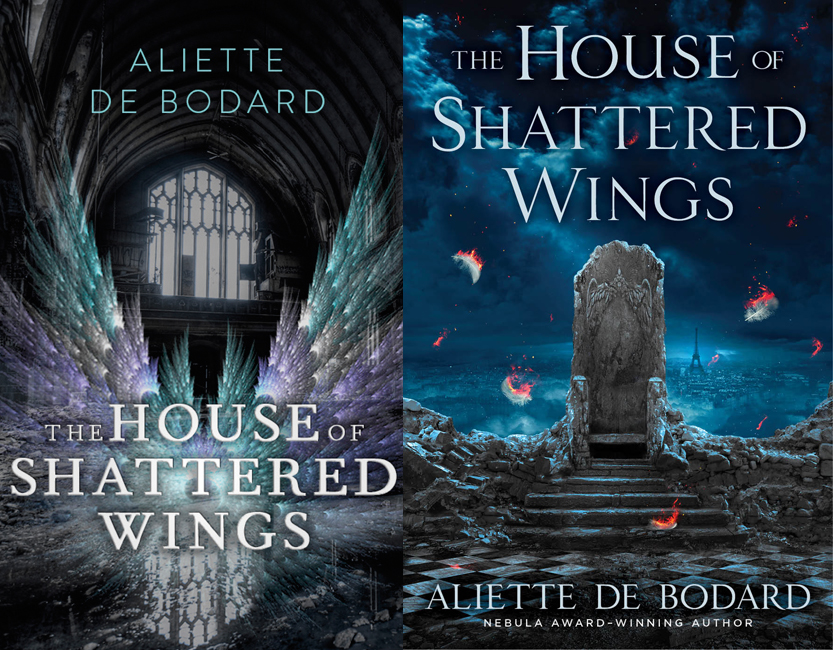
One thing the book DOES have going for it, at least, is gorgeous cover art in both the UK (left) and US (right).

I want so much to say that I loved The House of Shattered Wings, but I actually found it a little disappointing. Aliette de Bodard’s On a Red Station, Drifting is one of my all time favorite novellas, and I really enjoyed her Obsidian and Blood trilogy even though I’m not usually into the magical detective genre, but The House of Shattered Wings just didn’t really impress me. Which sucks, because there’s not much I dislike more than being let down by a book I’ve been so highly looking forward to.

Not that The House of Shattered Wings is a particularly bad book, either. It just doesn’t quite manage to deliver on its really excellent concept. This is primarily because, in the end, it turns out to be an awfully shallow book. This shallowness is characteristic of de Bodard’s previous novel-length work as well, but I think it worked for Obsidian and Blood because the setting there (15th century Tenochtitlan) was so unique and the genre (sort of a magical noir detective thing) of that series is largely plot- rather than either setting- or character-driven. Unfortunately, in The House of Shattered Wings the plot is thin, and the book is dragged further down by shoddy world-building and poor characterization.

As with de Bodard’s earlier work, one of the things that most attracted my to this book was the description of its setting in the cover copy. Post-apocalyptic Paris? After some kind of devastating magical war? With fallen angels involved? Sounds awesome! Except it just never manages to come to life on the page. Everything feels just a bit sterile, too contrived and theatrical to feel real.

The characters as well are all a bit flat and underdeveloped. Madeleine and Philippe have the most potential, but it’s all squandered by the fairly predictable ending of the book. Isabelle is the character that I found most compelling, but she’s never a point of view character, so we don’t get to know her very well and her thoughts and motivations remain largely opaque. Selene, on the other hand, is a character who might have benefited from being left more mysterious. In general, I felt like every revelation about all of the characters was more to do with their history than anything they were actually going through in the book. And that history sounds a lot better to read about than the story de Bodard decided to tell.

The setting might as well be a flat painted backdrop for all the depth it has; the characters were dull and without much growth; and while there are a lot of potentially neat story details and some very cool ideas about magic and religion and colonization and identity, none of them are ever quite done the justice they deserve. I didn’t hate The House of Shattered Wings, and I may check out its sequel when that comes out, but I will probably just be paying more attention to de Bodard’s short fiction for a while instead.

The SF Bluestocking 2015 Fall Reading List

I didn’t read as much this summer as I’d hoped to, but I think I’m finally coming out of my reading slump. With my daughter back in school, my days are my own again, and I’ve already been able to start reading and writing more. I’m not 100% certain about what I’ll be doing this fall, as I am beginning to look for a new day job after a couple of years of staying home, but right now my fall reading plan is pretty ambitious, mostly because there’s just an amazing amount of great stuff coming out over the next few months.

Currently, I’m finishing up Cixin Liu’s The Dark Forest, which was on my summer reading list. I should be done with it in a day or so, and then I’ll be moving along to Margaret Atwood’s The Heart Goes Last so I can be sure to have it finished and post my review prior to its September 29 release date.
After that, I’ve got an ARC of An Apprentice to Elves by Elizabeth Bear and Sarah Monette that archives on NetGalley on October 13th, so that’s kind of a priority. I didn’t realize that one was the third book in a trilogy (I was drawn in by the gorgeous cover, mostly), so I’ll probably have to read the first two books as well. Unfortunately, I’ve recently read some negative reviews of the first two books that make me think this series might not be my cup of tea. If I do read these, it will be before the end of September, but I might not.

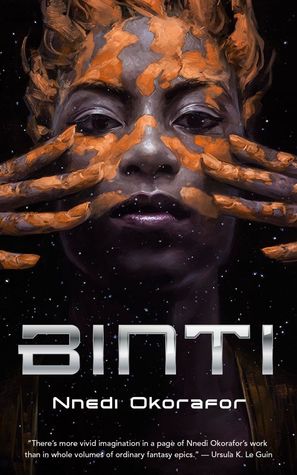
Probably my biggest plan and the thing I’m most looking forward to this fall is to read all of Tor.com’s new novellas that are being published one every week or so between now and November. The one I can’t wait for is Binti by Nnedi Okorafor, but I’m excited about all of them. There are ten in total, with publishing dates from September 1 to November 17. The big question, for me, is do I want to collect all the paperbacks or do I want to just buy the ebooks, which are much cheaper, and only get paper copies of my favorites?

In any case, the tentative plan (in the hopes that I really am out of my slump) is that I want to read one novella plus one or two novel-length works (or sometimes graphic novels/comics) each week between now and Thanksgiving. On the list so far:

Comics/graphic novels:

  • The Wicked + The Divine
  • Ms. Marvel
  • Ody-C
  • Rat Queens
  • Lumberjanes

A few leftovers from my summer reading list that aren’t necessarily priorities but that I do intend to read soonish:

  • The Magicians by Lev Grossman
  • The Buried Giant by Kazuo Ishiguro
  • Station Eleven by Emily St. John Mandel

I am also super stoked about the Nightmare Magazine Queers Destroy Horror special issue in October. Queers Destroy Science Fiction was really excellent, and I loved all of last year’s Women Destroy issues, so I expect this one to be up to the same high standard. And just in time for Halloween!
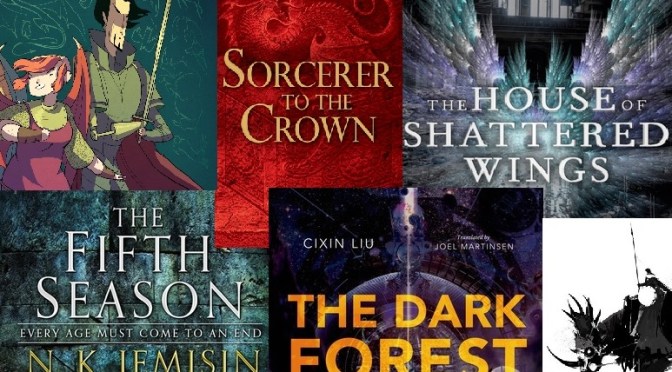
My fall list isn’t quite as diverse in terms of authors as my summer one was, but it’s a good mix of different types of books. I’m really looking forward to having some comics in the mix as well. It’s going to be a good season, I think.

Book Review: The Fifth Season by N.K. Jemisin

N.K. Jemisin’s The Fifth Season is probably the book I’ve been looking forward to the most this year (it’s at least tied with Catherynne Valente’s Radiance), and it’s hands-down the best book I’ve read so far in 2015. I mean, I’m still totally devastated by it like a week after finishing it, but in a good way.
Even the prologue of this book–and I mostly despise prologues–is equal parts harrowing and thrilling. It does a great job of setting the mood for the next 500 pages, and when it’s put in proper context by reading the rest of the book–and I highly recommend going back and rereading the prologue when you’re done–it’s even more impressive.

The Stillness is one of the most unique fantasy worlds created in recent years. I love the idea of the world being wracked by repeated apocalypses, and Jemisin’s imagining of the sorts of cultures and societal structures that might arise as a way of dealing with such an unpredictable environment is sensible and richly detailed. The magic, orogeny, is wonderfully creative, well-conceived, and beautifully executed throughout the novel. I especially liked the terminology used to describe orogeny and orogenes. Especially notable are the differences in the ways that different characters talk about orogeny, including the ways in which the book’s orogene characters talk and think about themselves. Even the slur, “rogga,” works well precisely because it’s so reminiscent of other, more familiar slurs.

At the same time, however, there is no symbolism or allegory here. The orogenes are not a metaphor. Rather, Jemisin uses the fantastic to create a picture of something real and true about humanity, but free of any obvious real-world parallels (although not without identifiable real-world and literary inspiration). The Stillness is not a mirror of our world or a vision of our future. Instead it’s an exquisitely original fantasy world peopled with characters that are deeply and often heartrendingly human.

The story is broken up into three narrative threads: that of Essun, a mother of a dead son and a missing daughter who is searching for her murderous husband; that of Damaya, an orogene child; and that of Syenite, a young orogene on an important mission. Damaya and Syenite’s stories are told from a fairly close third-person point of view, but it’s the second person point of view used for Essun’s sections that is the most arresting part of the novel. Essun is absolutely captivating, and the second-person point of view works to make the reader intensely involved in the story, grants a sense of immediacy to the narrative, but also creates just enough detachment so that one isn’t completely overwhelmed with all the things that Essun is dealing with.

Even still, Essun’s story just destroyed me, and I’m torn between wishing desperately for the next book in the series and thinking that it’s probably best that I’ll have a year or so to recover before then.

The Fifth Season is one of those rare fantasy novels that manages to be both an incredible triumph of world-building and amazing character-driven story. It’s a smart, inventive, fast moving book that deftly weaves together its fractured narratives to create a nearly flawless gem of storytelling. I have loved everything I’ve read by N.K. Jemisin, but this book really is a masterpiece.

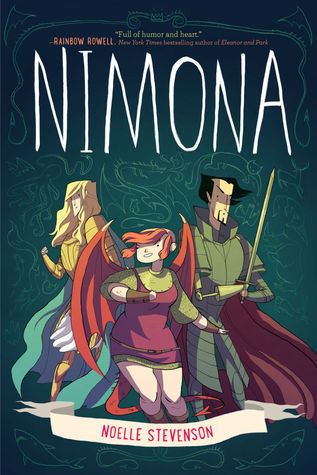
Book Review: Nimona by Noelle Stevenson

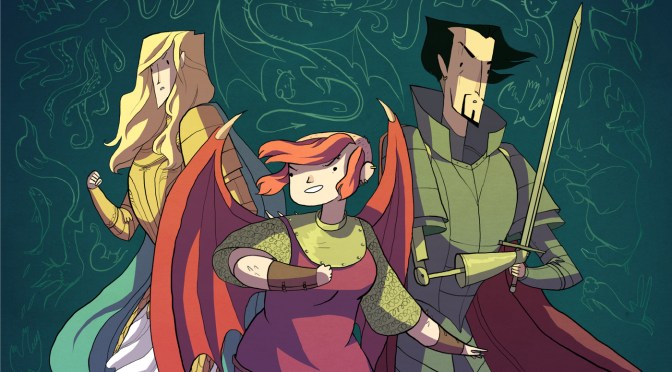
Nimona is actually my twelve-year-old daughter’s book. I knew it was good when she didn’t even want to put it down long enough for us to check out at the book store. When she finished it the next day, I knew I had to read it myself. I’m so, so glad I did.
So, apparently Nimona started life as a web comic,  but to read the whole thing now you have to buy the book.

It’s totally worth it. You should go buy it right now. Maybe even buy two copies, because this is a book that I could easily see reading over and over again. Also the sort of book that your friends aren’t going to return after you force them to borrow it, so it won’t hurt to have an extra copy laying around.

The art is simple, especially at the beginning, which again betrays  Nimona‘s internet origins, but I found it enjoyable to see the work evolve over the course of the story. Noelle Stevenson’s style is fluid and impressionistic. Every panel looks as if it’s in motion, which adds a sense of realism that is reflective of the naturalistic portrayal of the characters and their relationships. At the same time, Stevenson avoids realistic or consistent color schemes in favor of constantly changing palettes that tell a story of their own and convey moods extremely effectively. I especially liked the oranges in the middle of the book and the acid greens near the end.

Nimona herself is a great character. Though at times she skirts a little too close to Manic Pixie levels of quirkiness, she doesn’t exist in service to anyone’s story but her own. I love the growth of her friendship with Lord Blackheart, and it’s nice to see a bit of gender role reversal here, with Nimona as the rash, bloodthirsty one and Blackheart as a temporizing force and voice of reason. Blackheart and Sir Goldenloin are both nicely written, with a good backstory, and the ending of their story feels organic and earned. I also really appreciate that the only other two significant characters, The Director and Dr. Blitzmeyer, are women, another smart authorial choice that avoids the fantasy convention of marooning female characters in a sea of testosterone. While Nimona doesn’t get much interaction with these women, just their existence avoids one of the biggest problems I tend to have with fantasy stories in general.

The thing about Nimona is that it’s utterly charming. It’s funny and smart and sweet and deploys its pathos in exactly the right ways at exactly the right times to tug at the reader’s heartstrings. Like many web comics, it does tend to meander now and then, but the story is overall well-conceived and deftly executed with a minimum of sidetracking so that it’s cohesive when published in a single volume.

Nimona is a great book and a fast read, and it might (probably) will make you cry. Highly recommend.


The SF Bluestocking 2015 Summer Reading List Report

Well, perhaps predictably, I have not managed to finish my own summer reading list. Best laid plans, and all.

Breaking my foot back in May and being laid up with that most of the summer sounds like the sort of thing that would have given me all kinds of extra time to read, but instead I’ve found myself in a bit of a reading slump and spent most of the first half wallowing in pain and self-pity. The last month or so since getting my cast removed has been a significant improvement. Though I’m still not 100% better, I’ve started working out again, and this week I think I’m going to start walking daily to try and work back up to doing 2-3 miles a day like I was before the broken foot–ideally before it gets too cold and unpleasant for me to be out. In the meantime, I’ve been trying to enjoy the last bits of summer that are left, going to outdoor plays, checking out food festivals, hitting farmer’s markets, and just generally trying to be out of doors as much as I can.

The good news is that I think I’m coming out of the funk I was in most of the summer. The bad news is that I’ve so far been doing other stuff besides reading, and I’m also behind on some writing stuff as well. While I’m finally catching up on my reading some, I’ve not yet gotten back on track with writing book reviews, though that’s changing as well. I should have reviews coming out this week and next for The Fifth SeasonNimonaRat Queens Volume 1: Sass & Sorcery, and The House of Shattered Wings. By then, I should also be done with The Dark Forest, and hopefully that will get me more or less back on track with what I’d like to be doing in terms of output.

So, here’s what I did manage this summer:

  • Annihilation by Jeff VanderMeer – This one was on my list, and I finished it. Review here.
  • An Ember in the Ashes by Sabaa Tahir – List, finished. Review here.
  • The Philosopher Kings by Jo Walton – List, finished. Review here.
  • Shadowshaper by Daniel José Older – List, finished. Review here.
  • The Long Way to a Small, Angry Planet by Becky Chambers – List, finished. Review here.
  • Childhood’s End by Arthur C. Clarke – List, finished. Review here.
  • The Dinosaur Lords by Victor Milán – List, finished. Review here.
  • The Fifth Season by N.K. Jemisin – List, finished. Review here.
  • The House of Shattered Wings by Aliette de Bodard – List, finished. Review soon.
  • The Dark Forest by Cixin Liu – List. Currently reading.
  • Spindle by W.R. Gingell – Self-published by the author. ARC received through NetGalley. Finished. Review here.
  • Sorcerer to the Crown by Zen Cho – NetGalley ARC. Finished. Review here.
  • Empire Ascendant by Kameron Hurley – NetGalley ARC. Finished. Review here.
  • Nimona by Noelle Stevenson – Borrowed from my 12-year-old. Review here.
  • Rat Queens Volume 1: Sass & Sorcery – Not on my original list. Review soon.

I actually didn’t do too bad, all things considered. Fifteen books in the last two months. Ten of the fifteen from my original reading list, plus five that weren’t on there. Of the five books that I didn’t get to, one I’ve sort of lost interest in due to mediocre reviews (The Invasion of the Tearling), one is an ARC that I will definitely be reading within the next month (The Heart Goes Last), two are more literary works that I really could read anytime (Station Eleven and The Buried Giant) and one (The Magicians) is the basis of a tv show that I’m looking forward to, but that won’t be starting until at least February of 2016, so it’ll keep, too.

Probably a couple of these will make it on to my fall reading list, which can be looked for this week as well. It looks like I probably won’t be as lucky with ARCs this fall as I was over the summer, but there are plenty of upcoming releases that I’m pretty excited about that I’m sure will keep me busy. Which doesn’t even touch on the new fall shows I plan on checking out, which will be another separate post in the next week.

Book Review: Empire Ascendant by Kameron Hurley

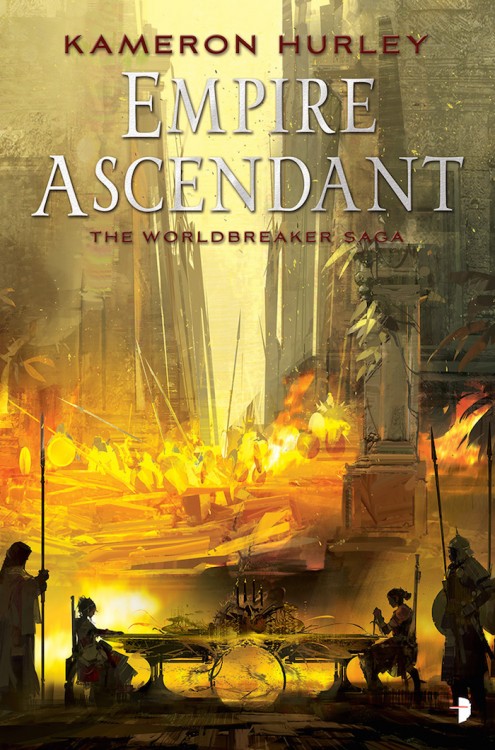
empire-ascendant-by-kameron-hurley-495x750[This review is based on an advance copy of the book received through NetGalley.]

Empire Ascendant is a brutal read, which is somewhat to be expected from Kameron Hurley in general, and certainly to be expected in the follow-up to The Mirror Empire. The world of The Worldbreaker Saga is a harsh one, and this second book in the series turns the grimdark up to eleven.

Unfortunately, I’m just not loving this series the way I did Hurley’s God’s War trilogy. I liked The Mirror Empire well enough, but it took me about a third of Empire Ascendant to get my bearings and figure out what was going on. In addition to the increased blood and higher body count, there are several new POV characters who I had a hard time placing in the narrative, which was confusing. Additionally, though it’s been less than a year since I read the first book, it turns out that it wasn’t actually all that memorable.

Except for Zezili, a character I adored in the first book but whose page time in Empire Ascendant is greatly reduced, I found myself barely recognizing most of the characters until partway through the novel. I did enjoy Anavha’s parts, but his story line seemed to move at a painfully slow pace. Ahkio spends most of the book being ineffectual, as does Lilia. The invading empress from the other world is somewhat humanized, but we don’t see much of her except near the beginning and end of the book. For basically all of the characters, everything just goes from bad to worse to worst for some five hundred pages, and by the end of the book I found myself just unable to engage with that level of darkness any longer.

The thing is, this isn’t a technically bad book. Quite the opposite, actually. It’s a technically brilliant book that I just don’t know if I’m capable of appreciating right now, which is sad because it’s a book that I’ve been eagerly anticipating for months. There’s still a lot going on in this series that I think is fascinating, and I have no doubt that I’ll go on to read the third book in the series when it comes out as well.

I think, though, that the reality is that this is not a series for the faint of heart. The role reversal and the interrogation of gender and the implicit (so implicit they actually become explicit) criticisms of genre mainstays are well worth checking out, but I think that it’s the very subversiveness of this series that makes it such difficult reading. Empire Ascendant isn’t a book that can be read lightly. It demands (and deserves) all of the reader’s attention, but it’s, frankly, so  concerned (and rather self-consciously so) with subverting tropes and challenging expectations that it becomes weighed down with it’s own seriousness and self-importance.

In the end, I want to love everything about this series as much as I loved Zezili in the first book or as much as I loved all of the God’s War books, but I think I’m going to have to settle for only being able to objectively know the value of them and recognize the excellence of Kameron Hurley’s craft–which has certainly improved since her God’s War days. Empire Ascendant shows Hurley’s growth as a writer, but I feel like it also shows a notable lack of joy or humor when compared to her earlier work–which translates directly to me finding this new series increasingly unenjoyable.

Book Review: Sorcerer to the Crown by Zen Cho

[This review is based on an advance copy of the book obtained through NetGalley.]

If you loved Jonathan Strange & Mr. Norrell, you owe it to yourself to read Zen Cho’s Sorcerer to the Crown. At the same time, though, I’m not sure I’d compare it to Jonathan Strange & Mr. Norrell if I hadn’t just recently read the older novel.

Sorcerer to the Crown really has much more in common with the works of Jane Austen in both style and tone. While Jonathan Strange & Mr. Norrell is a broad-ranging pastiche that pays tribute to many genres while being very much its own thing, Sorcerer to the Crown is something simpler and purer–more earnest in its adherence to old-fashioned language and storytelling conventions. That said, Sorcerer to the Crown is a wildly original and deeply unconventional twenty-first century novel and a great deal of fun.

The book opens with a very young black boy named Zacharias being shown off to a bunch of white men to prove his (and his race’s) magical capabilities. While the ominous tone of the prologue is somewhat at odds with much of what follows in the novel, I think it’s a pretty excellent way of infusing the rest of the book–which would not be inaccurately described as a “romp”–with an undercurrent of darkness that keeps things grounded and provides a sort of baseline for the exploration of POC experiences in the rest of the story. It’s a prologue that shows the reader immediately what kind of book this is, which is the perfect sort of prologue if an author really must include one.

The rest of the story takes place after Zacharias has managed to find himself in the position of being the most eminent sorcerer in England. We quickly learn that his high office has earned Zacharias no shortage of enemies and is more a nuisance than anything else. He’s not even certain he wants the office at all, but there’s no way for him to give it up. Instead, he determines to make the best of it and try and enact what change and bring what progress he can while he still has time. To that end, Zacharias has to deal with magical school girls, Malaysian vampires. scheming racists, and angry dragons.

It’s a wild ride.

The characters in Sorcerer to the Crown can all be a little one-dimensional at times, and I didn’t always find Zacharias to be particularly likable, although I absolutely loved Prunella. Some things seemed a little too tidy at the end, and I’m not sure I entirely buy the romance, which was so restrained as to be almost nonexistent. Although it is kind of refreshing that the book isn’t overly focused on the romance, I would have preferred a more gradual growth of affection over time. As it was, the resolution of the romance felt somewhat tacked on and less earned than it could have been.

Still, Sorcerer to the Crown is a thoroughly enjoyable read. From beginning to end, it hits all the right notes that I look for in a book. It’s a very different perspective than we’re usually offered in Regency-set fantasies. It’s fast-paced and interesting enough that even though a great deal happens it never feels overstuffed or overlong. It’s whimsical without being precious and clever without being pretentious. Best of all, it’s a downright funny book, and I found myself chuckling aloud more than once. Definitely in my top ten books of the year so far.