Category Archives: Television

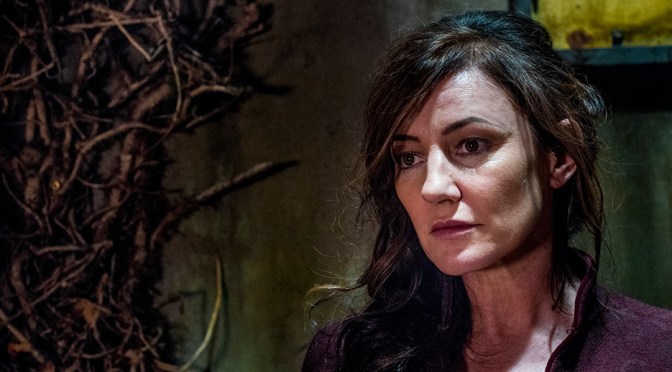
iZombie: “Dirt Nap Time” digs deeper into a bunch of this season’s plots

“Dirt Nap Time” contains another unremarkable case of the week as well as another tediously irritating brain for Liv to eat (though by no means as terrible as last week’s). What is lacks in case of the week panache, however, it makes up for in interesting plot developments, which are occurring at the show’s habitual near-breakneck pace this season.

**Spoilers ahead.**

The episode opens right where the last one ended, with Major having to answer for where his other dose of the cure is. Liv gets a great unlikeable moment when she refers to Natalie unkindly as Major’s “zombie hooker friend,” which she immediately apologizes for, though it’s still a bit of meanness that serves as a reminder that Liv isn’t a flawless heroine. Much of this episode is subsequently taken up with Liv trying to find out who stole the cure from the morgue, but both the prime suspects—Blaine and Don E.—convincingly deny responsibility. Interestingly, the prime suspect from the viewer’s perspective last week seemed to be Fillmore Graves, but that theory is largely weakened this week with the revelation that Justin hasn’t told anyone else about the cure yet; he was apparently waiting until he could ask Major about it.

The other thing Justin asks Major about this week is if Major minds Justin asking Liv out on a date, which is weird. On the one hand, I get it, “bro code” or whatever. On the other hand, it’s 2017. On the other other hand, it seems really early for Liv to be dating again and for Major to be so seemingly okay with it. I know that they can’t be together while Liv is still a zombie, but literally just two weeks ago they were reconnecting in a way that strongly suggests that they are (or at least ought to be) an endgame couple. I’m not a fan of overwrought relationship drama, in general, but this episode seemed to just be going to the opposite extreme with this. Maybe it shouldn’t be completely torturous for Major to see his friend going for it with Liv, and maybe Liv shouldn’t spend her whole life moping about Major, but at the same time it feels unbelievable that they wouldn’t have more feelings about what’s going on between them. That said, Liv’s date with Justin at the Scratching Post is a highlight of the episode. If it wasn’t developing so quickly, I’d have far more positive feelings about their obvious chemistry and the adorableness of their passing notes back and forth between Major.

The murder mystery this week starts off well enough, with a surprisingly promiscuous preschool teacher, but the interrogations of various persons of interest are a mixed bag and the revelation of the murderer, while somewhat unpredictable, is surprising in a way that manages to be both bad and dull. It’s weird. The worst part about it, though, is Liv’s bizarre behavior while on preschool teacher brain. It’s genuinely unsettling to see her baby talk at adult people and play with puppets in the interrogation room, and it’s for the most part extremely unfunny. iZombie is really at its best when it lets Liv’s brains-induced personality shifts show us something unexpected about the murder victims and give us a better sense of who they are as individuals. It’s that insight that makes Liv and her visions valuable for solving cases, and it’s disappointing to see the show waste two weeks in a row on over-the-top portrayals of unpleasant caricatures instead of actual characters. It diminishes interest in the murders and it makes Liv herself unlikeable while its going on.

Perhaps the most interesting storyline this week is Peyton’s work on the dominatrix murder case. She and the public defender handling the case are working together to hammer out a deal for the accused murderer, and it’s reiterated that without the guy’s confession Peyton’s case is flimsy. Indeed, when the details of the case are laid out, none of it adds up, and things take another turn for the unusual when another lawyer shows up to oust the public defender and refuse Peyton’s offer of a plea deal. When the accused hangs himself in his jail cell, Peyton goes to Ravi to ask about getting Liv to eat the guy’s brain and find out his secrets. Although the dead man has a history of mental illness that Ravi and Peyton both acknowledge that Liv won’t like, Ravi sets the brain up in his blue memory serum anyway. It’ll need to soak for ten days, so it’s uncertain if we’ll get to see new developments on this front next week or if it’ll have to wait until the episode after that.

Miscellany:

  • I’m having a very hard time giving a shit about Blaine’s redemption arc or whatever. I always loved villainous Blaine; he’s been a great antagonist. And amnesia Blaine was a potentially interesting way to craft a redemption arc for a character who is such a garbage person. But faking-his-amnesia Blaine is just villainous Blaine with an extra layer of assholery on top, no matter how much time he spends feeling sad about Peyton dumping him.
  • Major’s decision to stay at Fillmore Graves makes sense, but there’s no way this is going to turn out well, right?
  • What happened with the guinea pig?!
  • “We don’t all want to be astronauts, Liv.”
  • “It is sorta like being the drummer for Spinal Tap.” -Ravi, on Liv’s boyfriends
  • Liv telling Don E. to “use his words” was the only laugh-out-loud moment of the episode for me.
  • So… Justin is now on video going full zombie. That’s probably not a great development for zombies in general.
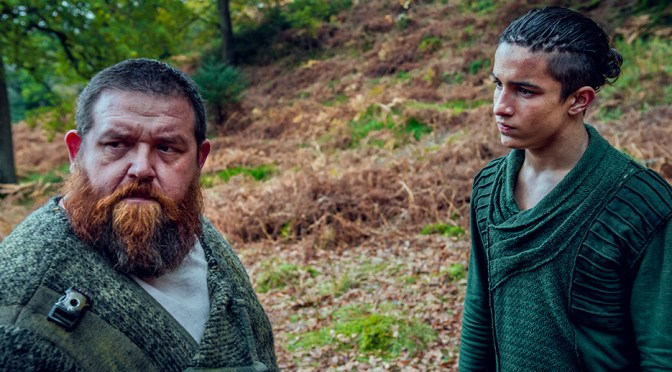
Into the Badlands: “Nightingale Sings No More” is a great set-up for next week’s finale

In addition to being a truly excellent episode on its own, “Nightingale Sings No More” is a creditable lead-in to next week’s season finale, setting up the finale’s major conflicts while offering some dramatic payoff of its own. It’s a briskly paced hour with a good mix of character work, dramatic moments and action, including one of the season’s best fights. Most importantly, however, the show seems poised to end with a decisive wrap-up of the season’s major storylines next week rather than a frustrating cliffhanger like the first season did. What will be interesting next week is to see if things are tidily concluded in anticipation of not getting a season three or if there will be hints of next season’s potential storyline.

**Spoilers ahead.**

The pre-credits scene reveals some more of Bajie’s past—and that the Widow is Bajie’s lost apprentice, Flea. It’s almost disappointing how obvious it was, especially after I know I wrote this speculation down in my notes weeks ago, but it works well enough. It’s also a revelation that quickly bears fruit, as Bajie and his erstwhile protégé are reunited this week. Some shows might have made us wait for that, but Into the Badlands is nothing if not prone to racing through story and not wasting time on diversions. In the flashback scene, we also learn that young Minerva had the book of Azra when she came to the monastery and that it’s something that she was asked by Bajie to keep secret from the Master and the other abbots there—a secrecy that Bajie also asks M.K. to enter into later in the episode when they are trying to steal the Widow’s book to combine with Sunny’s pocket watch (something tells me the watch is the key to deciphering the book). Bajie ends the episode presumably captured (along with M.K.) by the Widow, and this storyline will likely feature largely in next week’s finale.

Sunny is quickly changed out of that ridiculous white number Chau gave him and into something much more practical, but right as Sunny and the Widow are about to formulate their strategy against Quinn, Quinn’s flunky Gabriel shows up and drops several info-bombs on Sunny—namely that Veil is Quinn’s wife now and that it was the Widow who sold Veil to Quinn in the first place—before suicide bombing the Widow’s compound. In the ensuing chaos, Sunny escapes into the woods and seems intent on facing Quinn alone if need be. Sunny’s trust in the Widow hasn’t been robust at the best of times, but obviously finding out about the Widow’s betrayal of Veil—even sans details—sends him off on his own. It’s a little disappointing that he didn’t stick around for an explanation, but I expect something of that sort may yet occur next week. By the end of this episode, the Widow seems overdue for a reckoning.

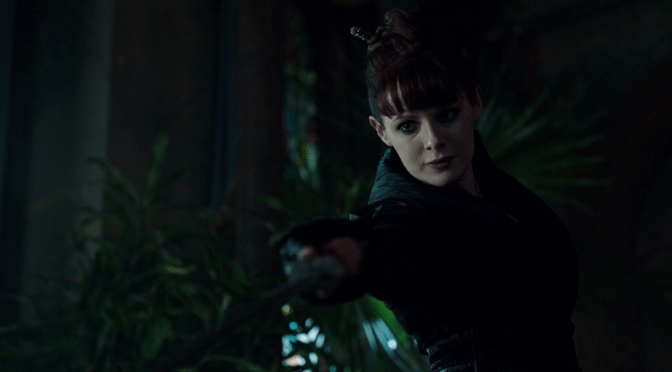
Meanwhile, the reunion between Tilda and M.K. is sweet, but somewhat sullied when it turns out that Odessa was a cog being shipped on the same boat where M.K. went on a rampage and killed his mother and a whole bunch of other people. While it’s a little too convenient that Odessa would have this first-hand knowledge, it’s also a good way to force Tilda to really think about who her friend is and what he’s capable of and whether or not she’s okay with that. Interestingly, Tilda seems to have chosen a side by the end of the episode. When she goes to ask her mother where M.K. is, it turns into a broader confrontation about the Widow’s general ethics in her war to change the Badlands, and this turns into a gorgeously executed mother-daughter fight scene in the Widow’s conservatory that effortlessly accomplishes the twin goals of serving the story/characters and looking amazing. Though the scene ends with Tilda seemingly killed—after begging her mother to kill her, even—that’s, if anything, a confirmation that she’s definitely not dead.

At Quinn’s not-so-secret hideout, things go from bad to worse for Veil, who tries to stand up to Quinn and has Henry taken away from her and finds herself locked up in the ventilation room. A lot of shows might have decided to have Veil raped to show how bad things are for her, but after last week’s near miss it seems that Veil is off the hook for having to experience sexual violence for character growth. I hate that the bar here is so low to pass, but “not unnecessarily depicting the rape of female characters” is always a bonus in a fantasy drama, and Badlands finds plenty of other ways to put its women through hell. For Veil, being separated from her son and kept in isolation is torture enough, and when Lydia finally brings Henry to her—along with the news that Quinn has rigged the whole complex to explode before he’ll let Henry be taken away from him—their situation takes on a renewed sense of urgency. Quinn’s mental state is obviously deteriorating in a major way, and there’s no telling exactly what will set him off or when. As Lydia says, they can’t wait for Sunny; they’re going to have to find a way out on their own.

Miscellany:

  • Quinn’s careful grooming of Gabriel is chilling.
  • Bajie’s ploy to infiltrate the Widow’s compound was a much needed bit of light humor in an otherwise serious and quite dark episode.
  • Waldo is still touting his no emotions philosophy, and no one ever listens to him.
  • I kind of love that Odessa wasn’t jealous. Maddison Jaizani really sells the moment, too. I only wish the Odessa/Tilda relationship would get more screen time.
  • It’s interesting that it’s Odessa who rats M.K. and Bajie out to the Widow after she expressed her own lack of trust in the Widow just recently. I guess she’s more scared of M.K. than she is distrustful of the Widow, but I wonder what she’d think if she knew the Widow had similar powers to M.K.’s and that she’s trying to reawaken them.
  • The casual cruelty of the Widow telling Tilda to call her “Baron” rather than “Mother” seemed a little pre-emptive. While Tilda has been having some doubts about the Widow for a while, their relationship has otherwise been pretty normal (for them), and it seems weird that it’s the Widow who would be the first to upset the status quo in this fashion.
  • Tilda’s echoing of the Widow’s “Don’t start what you can’t finish” just destroyed me.

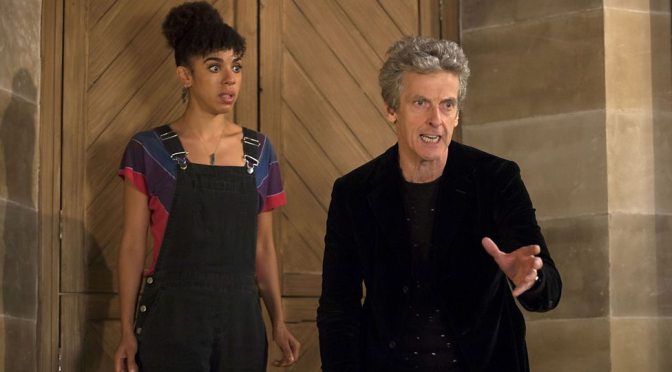
Doctor Who: “Oxygen” is a good episode that could have used a bit more room to breathe

**Spoilers abound.**

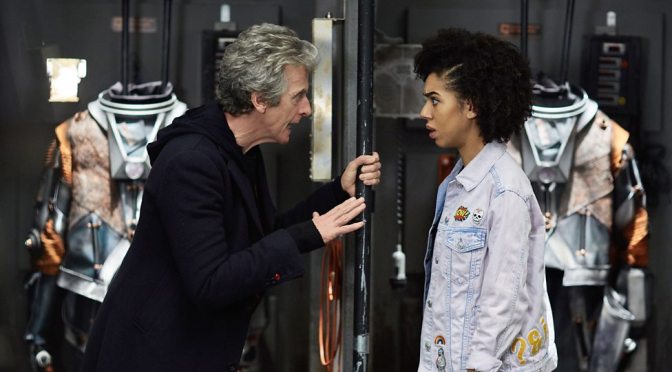
“Oxygen” is another solid Doctor Who adventure, for all that it retreads some of the same thematic ground that was already covered in “Smile” and “Thin Ice” just a couple weeks ago, specifically regarding the dangers of robots (of a sort) executing their programming in a more extremely literal fashion than is strictly healthy for humans and the dangers of unfettered capitalism, which is also not particularly healthy for humans. It’s an ambitious enough episode in that it takes a strong stand and conveys a coherent progressive message, but it suffers from being a bit overstuffed and at times feels distracted as it tries to touch on more topics than can reasonably be done justice in just forty-five minutes. It’s an episode that, while overall well-done, could have benefited from some tighter editing and spending a little more time on the central thesis instead of getting sidetracked with ideas and asides that never quite fit within the main narrative.

The episode begins with two events. First, a nice-seeming couple is working on a space station when they are attacked by what appear to be some kind of space zombies. Meanwhile, the Doctor is pining for space and feeling cooped up being stuck on Earth to guard whatever (whoever, really) is in the secret vault that he and Nardole have secreted under the university. While Nardole does his best to keep the Doctor on Earth, Bill is game for a space jaunt, and soon enough the three of them are answering a distress beacon on the now seemingly abandoned space station. The bare bones of the rest of the story is that there are no space zombies (a disappointment, to be honest); just a bunch of company-owned space suits designed to sell oxygen to workers on a mining station in an especially evil take on the idea of a company town; the station itself is kept empty of air, and all air needed by the workers is metered out through the suits. At some point, either someone at the company or the AI technology in the suits themselves realized that it was cheaper for the company to not have human workers at all, and the suits have been systematically killing their occupants as a cost-cutting measure.

For an episode of Doctor Who, it’s surprisingly dark, and perhaps the most interesting thing about this story is that there are some real consequences for the characters in the end. Bill gets another glimpse of a future that isn’t, at least in some ways, as optimistic as she might prefer. More importantly, she is not only in real danger; she has a serious brush with death that must highlight just how dangerous her travels with the Doctor can be. The deaths of most of the workers on the space station are permanent, however, and the Doctor is only able to rescue two out of forty of them, which gives “Oxygen” a staggeringly high body count, even compared to similar episodes. That the news of the event leads to the eventual downfall of capitalism as humanity’s economic system of choice is cold comfort, especially when the Doctor adds to that bit of information that humans still find new and different mistakes to make after capitalism. Surely this will be true if humanity survives long enough to spread to the stars, but still. This is a family show.

What’s most surprising and compelling about this episode, however, is that it’s the Doctor himself who faces perhaps the most significant and transformative change of the episode. When Bill’s space suit malfunctions right as they’re about to go into the vacuum of space, the Doctor gives her his own helmet to save her life. It works, but though the Doctor’s tolerances to space are greater than any human’s, he’s still injured, left blinded until they can return to the Tardis, where he expects to be healed (or at least says so). In the end, however, we learn that the Doctor is still blind, which may well be a permanent state of affairs, at least until his next regeneration. Going forward, it puts him at a decided disadvantage for future adventures—offering an unprecedented chance for the show to explore disability in a thoughtful manner—and gives him a secret that he’s keeping from Bill, who has no idea that the treatment the Doctor underwent on the Tardis didn’t work. The Doctor is a character who’s defined by periodic major changes, but there’s never been a time in the rebooted show where the Doctor experienced this type of potentially profound change. It will be interesting to see how the show handles it in the weeks to come.

Miscellany:

  • I like Matt Lucas quite a bit, and I was happy to see him get some more screen time this week, but I’m still not sold on this weird dynamic between Nardole and the Doctor.
  • This was the most passive I think Bill has been to date, and I’d have loved to see her have a bit more to do, even if the episode was already overstuffed with happenings. This was the first time Bill has felt so purely like a tourist in an episode, and had so little to contribute to the solution of the hour’s problem.
  • The blue guy and every interaction anyone had with him would be my top pick for what to cut to make room for everything else to have a bit more time to shine.
  • Alternatively, just a straight up extra 15 minutes would have done this episode some good.

iZombie: “Some Like It Hot Mess” fails at humor but succeeds at storytelling

“Some Like It Hot Mess” is season three’s first brain flop, in which Liv eats a brain from someone so unlikable that it also makes Liv herself largely unlikable and definitely unfunny. It still manages to be a decent episode, with some great emotional moments, a significant setback and a major reveal, but Liv’s “hot mess” brain is absolutely an albatross around its neck.

**Spoilers ahead.**

The episode opens with an introduction to party girl Yvonne, who will be this week’s murder victim, and she doesn’t seem like a bad sort. Self-absorbed and flighty, sure, but not the worst. However, as we get to see more of Yvonne’s personality through Liv after she eats Yvonne’s brain, it starts to grate. I’m not really sure what the joke is here, to be honest. I suppose it’s that Yvonne is vapid, talentless and irredeemably self-centered, but none of that is particularly funny, and the portrayal works mostly in cheap stereotypes without much depth of thought. While iZombie often plays with stereotypes and worn tropes for comedic value, the show’s treatment of Yvonne is genuinely unkind and oftentimes unpleasant to watch—particularly when you can tell that the show was going for a laugh and it doesn’t land.

That said, it’s possible that the writers wanted to use this experience, for Liv, as a way of reiterating for the audience why it’s so crucial to Liv that she get the cure for her zombie-ism. More than once in this episode, Liv’s brain-influenced behavior is hurtful to her friends, damaging to her relationship and/or professionally embarrassing. The thing is, this is all stuff we’ve seen many times before in one way or another, and while all of that is heightened by consuming the brain of someone as unpleasant as we’re supposed to think Yvonne was, this heightening feels superfluous. It’s especially so in light of the fact that Liv starts the episode off expressing her fatigue over the whole zombie/vision thing; this makes the cringeworthy saga of Liv on “hot mess” brains feel particularly torturous in a way that’s, frankly, at least as fatiguing for the audience as it must be for poor Liv.

The star player of the week is Robert Buckley as Major, who we first see gleefully scarfing down ice cream with his reinvigorated taste buds at the beginning of the hour. As expected, he starts to lose his memories soon enough, though not before pranking Liv by answering the door and pretending to have forgotten her. It’s a fine line to walk, and the scene could have come off as cruel, but it works largely because once Liv is inside the house we learn that Major has been writing letters to everyone he cares about—including a very fat and tear-stained one for Ravi. Major is coping, and it’s sweet. Of course, then he gets on a bus to Walla Walla, where his mom and her girlfriend (wife?) live, which is terrifying for Ravi and Liv, who have no idea where he is, but offers us an interesting and unknown before now part of Major’s backstory. He’s always been a very reactionary character, responding to things that happen to him, and the extra depth provided by even the barebones story of his parents’ divorce and his choosing his dad over his mom is a nice development, even if his mom doesn’t enter into the story again. iZombie doesn’t often include these kinds of grace notes in character development, probably because it’s such a wildly plot-heavy show.

Speaking of plot! The big revelation of the episode, of course and finally, is that Blaine has been faking his amnesia—for months. It’s Don E. who convinces Ravi of Blaine’s duplicity, and Ravi who gives Peyton this information in another scene that walks a fine line; Ravi is still hung up on Peyton, and she knows this, but Ravi does (barely) manage to deliver the news in a way that doesn’t come off as self-serving or jealous. While Peyton doesn’t take it well, she does seem to take it to heart, and it’s Peyton who smartly maneuvers Blaine into confessing it all to her: he did lose his memories, but only for a couple days, and he’s been faking ever since because it gave him the chance at a fresh start. It’s a surprisingly sympathetic performance, but we oughtn’t forget that Blaine is an actual murderer and that his sexual relationship with Peyton has been under false enough pretenses to arguably amount to rape by deception. In any case, that the memory loss is temporary is good news for Major and should be good news for Liv (who is already planning her own ice cream feast), but by the time the gang gets back to the morgue, the place has been tossed and the cure is missing. Worse, Major gave his other dose to Natalie.

Miscellany:

  • Clive’s exasperated “Oh, boy” when he hears a brief description of Yvonne’s personality was the single perfect comedic moment of the episode.
  • What kind of monster drinks pepper vodka straight?
  • Peyton is working that dominatrix murder case, and she points out that the confession seemed fishy with there being so little hard evidence connecting the suspect to the murder.
  • I feel like there was some point trying to be made about Nice Guys™ in the interrogation of Yvonne’s friend from the grocery store, but I don’t really know what point that was.
  • I wonder why Blaine is making Ravi’s blue stuff.
  • I have a strong suspicion that the obvious suspect isn’t who took the cure from the morgue. My money is on Fillmore Graves taking it.

Into the Badlands: “Sting of the Scorpion’s Tale” is a sharp return to form after a couple of slow weeks

After some slower episodes mid-season, Into the Badlands was back in peak form this week with “Sting of the Scorpion’s Tale,” which continues to pull the show’s different storylines back together and brings back the martial arts action (sadly lacking in the last few weeks) in a big way. It’s nice to see how this show has developed and improved over its first season, and 1ith just two episodes left in season two, things seem to be really shaping up for a decisively epic finale after this week’s events. One of the major frustrations of the first season of Into the Badlands was its bizarre cliffhanger ending that left pretty much everything unresolved; if anything, I’m starting to suspect that season two may have too tidy an ending (though the advantage of that would be starting season three with essentially a blank slate to soft-reboot the series if they wanted to). Either way, this episode brought a nice infusion of energy and urgency to a story that had been lagging a little for a couple weeks, and that bodes well for the final two episodes of the season.

**Spoilers below.**

The episode opens with the Widow and her butterflies attacking Baron Hassan in a lovely (if too short for my taste) fight sequence that ends with poor Hassan losing his head. We shortly learn why when the Widow and Tilda arrive at Quinn’s bunker for an exchange of grisly trophies. While the Widow was taking care of Hassan, Quinn carried out his own assassination—of Baron Broadmore. And all Broadmore’s wives and children, which doesn’t sit well with the Widow, who still fancies herself a protector of women and children. She’s appalled, but not enough to break their alliance off just yet, and she even defends her decision to Tilda later in the episode when Tilda confronts her mother about having turned Veil right back over to Quinn. It continues to feel as if there’s a major conflict brewing between mother and daughter here, and I have a strong suspicion that it’s going to happen very soon.

Sunny, M.K. and Bajie finally make it through the wall, only to find out that Baron Chau’s clippers are involved in smuggling people into the Badlands—because of course Chau is always looking for new cogs to sell to the other barons. Sunny is able to turn this to his advantage though, and once Chau learns who he is, Sunny is able to formulate a plan that allows him to free M.K. and Bajie as well. I didn’t love Chau’s weirdly long, very clunky new update to Sunny, but their plan to draw out the Widow and defeat her is plausible enough, as is Sunny’s ultimate betrayal of Chau as soon as the Widow tells him that she can take him to Veil. What’s less plausible is that both M.K. and Bajie start off thinking that Sunny has really betrayed them, which makes no sense and is literally the opposite of everything we know about Sunny at this point.

The final major storyline of the week is one that I wasn’t expecting but that, in hindsight, should have been pretty predictable. With both Lydia and Veil back in his possession, but now without an heir and with his brain tumor continuing to progress and likely to kill him, Quinn is thinking about the future—and he’s got his eye on baby Henry to take Ryder’s place. All Quinn has to do is marry Veil to make it official, which he proposes over a dinner of raw steak in a scene that makes Lannister family dinners seem healthy and functional. Veil is ready to kill Quinn before willingly going through with this farce, but Lydia encourages her to instead go through with it, if only to protect Henry, and this is an honestly fascinating dynamic.

While Lydia was jealous and distrustful of Quinn’s other second wife, Jade, there’s none of that here. Instead, Lydia—despite her own seemingly confused feelings for Quinn—is encouraging and kind to Veil. Sure, Lydia is pragmatic about the marriage, but it’s made clear that she sees this as about survival, a temporary sacrifice that will keep Henry safe and secure Veil’s future, even if it means submitting to violation. Overall, this forced marriage is handled with a reasonable amount of sensitivity, and Veil is fortunately saved in the nick of time from being actually raped on her wedding night—and she’s saved by the news that Sunny is back, which is obviously a huge relief to her and also sends Quinn off to prepare to defend the bunker. I only hope that Veil gets another chance to kill Quinn herself before Sunny gets to him.

Miscellany:

  • Veil’s “What does your being sorry do for me?” was a powerful and necessary moment.
  • I hope we aren’t going to get a Tilda-M.K.-Odessa love triangle, but Tilda and M.K.’s joy at being reunited was still sweet.
  • So, Sunny is definitely going to find out what the Widow did to Veil, right? Because that is not going to go over well.
  • Kind of a bummer to not see Jade at all this week. I kind of thought Sunny and company might meet her on their way, but apparently not. I hope she hasn’t been written off the show entirely.
  • Speaking of people written off the show, what ever happened to all the folks Sunny pissed off on his way back to the Badlands? Could dealing with all those enemies be the premise of season three?

Doctor Who: “Knock Knock” is fine, I guess

Doctor Who has always been an inconsistent show, and “Knock, Knock” is the first stumble of this season. It’s not that it’s terrible; it’s just that there’s nothing particularly good about it, either. The story is pedestrian, the special effects are lackluster, the scares aren’t scary enough, and Bill isn’t given nearly enough to do. Your mileage may vary, but I found it to be an overall very “meh” episode that failed to satisfactorily explore its themes.

**Spoilers below.**

The increased focus on showing us some of the companion’s life apart from the Doctor continued this week, with the whole episode’s story built around Bill moving out on her own—into a house with five housemates. They struggle, as many young students do, to find something affordable, but eventually settle on a huge, old house that’s serendipitously offered to them, suspiciously cheap (natch) by a very strange old man. It’s a classic horror movie set-up, and the first half or so of the episode follows the expected horror show formula: Bill and her friends sign an obviously shady contract, move in to their ill-advised lease, and the house eats one of them right away. The Doctor shows up, and hijinks ensue as the solve the mystery of the house and its appetites.

It’s the back third or so of the episode where all the actual Doctor Who happens, but there’s not much depth here. When the Doctor is helping Bill move in, he invites himself into the house and introduces himself to her new housemates, but steamrolls right over Bill’s objections and her attempts to set a totally reasonable boundary. This could, very generously, be interpreted as being in parallel to the toxic relationship between the episode’s antagonist and the wooden woman we come to find out is his mother. Even more tenuously, this theme of relationships needing to have proper boundaries set and respected could be connected to the final scene of the episode where it’s all but revealed that the Doctor’s prisoner is the Master (I mean, obviously it’s the Master, right?), but that’s a real stretch. I suppose the story of the boy who wanted to save his mother is a little sad, but it’s tough to have strong sympathetic feelings for a guy who murdered a couple dozen young people in the last sixty or so years.

All in all, it’s simply not clear what message we’re supposed to take away from any of this. The Doctor oversteps a reasonable boundary with Bill, but the ends here—Bill’s five housemates are all rescued by the end of the episode—seem to justify the means. Bill and her friends really were wrong to rent the house to begin with, the Doctor was right to be suspicious, and through the Doctor’s quick-thinking the day is saved. It’s a facile thesis, and the ending, with the five eaten young people (though, interestingly, only the five, not the eighteen or so others before them) rescued and whole, completely sidesteps having to deal with any permanent consequences for any of the decisions anyone made in this episode. Even the ending of the Landlord and his mother is depicted as more bittersweetly tragic than anything else, and he’s a literal murderer responsible for the deaths of numerous people and who has been keeping his own mother imprisoned and taking advantage of her memory loss for decades. It’s genuinely wild that anyone thought this story was a great idea.

Listen, though. It’s fine. The bar for this show’s success has been set absurdly low for the better part of a decade now, and this episode isn’t without its positives. There’s a genuinely funny moment when Bill breaks the news to one of her boy housemates that she prefers girls, and the boy in question just smiles good-naturedly and responds kindly and with good humor, just like any decent person ought to in that situation. The casting of David Suchet (of Poirot fame) as the Landlord is inspired. We finally do get very close to confirmation of who the Doctor and Nardole have got imprisoned (though Matt Lucas is still shamefully underused in this role). While “Knock, Knock” won’t go down as a standout episode in any aspect, it’s a perfectly serviceable bit of almost-mid-season filler/fluff. I suggest not thinking too hard about it. The folks running the show certainly didn’t.

Miscellaneous Thoughts:

  • Even that episode title was something of a missed opportunity. Was “Knock” not good enough? Or was “Knock on Wood” already taken?
  • Also, maybe it’s just because I recently had to deal with a bug infestation in my own home, but yuck. Also, also, where did all those bugs go at the end?

iZombie: “Spanking the Zombie” is half hilarity and half heartbreak

“Spanking the Zombie” is basically half fun murder mystery and half heartrending tragedy, but somehow it works. I do have a couple quibbles about it, but it’s overall a very good episode that avoids the biggest potential pitfalls in its concept, advances the overarching plot of the show in a big way and has a strong chance of making the viewer cry like a baby at the end.

**Spoilers below.**

This week, Liv and Clive are investigating the murder of Roxanne Greer, a dominatrix known to her clients as Sweet Lady Pain. Unfortunately, Roxanne’s brain isn’t fresh. Ravi has been keeping it soaking in memory serum for a couple of weeks, which leads to one of the grosser brain-cooking scenes in the show’s history. The blue color of the liquid the brain’s been in is a very unsettling non-food color, and pan-frying it doesn’t improve the look of it. Liv is also apprehensive about eating dominatrix brain at all, and her reluctance only just manages to avoid being kinkshaming. It’s a fine line, but they manage to convey pretty effectively that it’s more about that sort of thing being outside Liv’s personal comfort zone rather than having it come off as truly judgmental.

Liv almost immediately has a vision, which turns out to be the first of many intense visions she experiences this week, an unintended effect of the memory serum—which is interesting, since it supposedly had no effect on Blaine at all. I have the feeling that chances of Blaine faking his amnesia have risen considerably with this development, though we don’t see Blaine (or Peyton) at all this week. The other interesting thing that’s done with Liv’s visions this week is that, instead of filming all the visions so the audience gets to see what Liv sees, we see much more of Liv’s visions from the point of view of other characters. It’s a neat way of showing a little more of the mechanics of this mythology, and it feels significant, though it’s not clear what the significance of this new perspective might be just yet.

The murder mystery itself is nicely twisty and provides an excuse to bring back two of my favorite minor characters: erstwhile weatherman Johnny Frost (Daran Norris) and sleazy defense attorney Brandt Stone (Ken Marino), who are even more fun together than they have been apart. Obviously neither man is the murderer, but they are instrumental in figuring out who is. While they’re at it, they bring a level of humor and snark that, along with Liv’s vamping around dominatrix-style, makes this one of the funniest cases of the week in the show’s history. The only problem with this case is the wrap-up. Once the actual murderer is captured, he basically confesses immediately—with an odd line to the effect that it doesn’t even matter how or why he murdered Roxanne—and that’s the last we see of the guy.

It’s a strange anticlimax to an otherwise entertaining story, and the crack about the murderer’s motives and the details of the crime not mattering might be meant in a meta, self-deprecating way by the show’s writers, but it mostly just feels weirdly abrupt and dismissive of the whole previous half hour of storytelling. In a way, it’s true that the show’s murder mysteries are often episode filler and comic relief between more dramatic moments and more overarching plots, but it’s not true that these stories don’t matter or that no one cares about the resolution of them, even in an episode that’s about to end with a gut punch like this one does.

This episode starts and ends with Major. First, we see him participating in his first actual mercenary mission with the Fillmore Graves crew, during which he ends up being stabbed a whole bunch of times. When he returns to Seattle, he collapses and his friend Justin brings him to the morgue, where Ravi and Liv realize that it’s time for Major to take the cure, memory loss or not. First, though, they have to keep him alive until his stab wounds heal up enough that they won’t immediately kill him when he turns human, so they stabilize him and take him home. After Ravi goes to his own bed, Liv and Major kind of rekindle their relationship and say some tragically bittersweet goodbyes. It’s beautiful and sad, and I have so much love for how messy Liv and Major’s relationship is. They never manage to be quite at the same place at the same time, but there’s something wonderful about their quiet, consistent love for each other. Next week, I guess we’ll find out if Major really is going to lose his memories and what that’s going to mean for their friend group.

Miscellaneous Thoughts:

  • “Frankly, I resent being questioned every time a hooker or stripper or dominatrix gets killed in this town.”
  • All of Liv’s scenes with Jimmy the sketch artist were excellent.
  • Lack of Ravi/Peyton/Blaine drama was a definite plus this week. Ravi actually got to be likable again.
  • Don E. makes a new zombie/friend, and the Scratching Post is open for business, but this storyline felt decidedly tertiary and was completely disconnected from the main story this week. It’s fine, and cool scene with them playing air guitar together on the bar, but I still don’t see where this stuff is going.
  • No follow-up on Justin’s shock when he learns about the zombie cure, and he isn’t fully briefed on it before he disappears from the episode, but I can only imagine that this is going to be a big deal in the next week or two. Surely he will go back to Fillmore Graves and tell people there, and I have a feeling it’s not going to go over well.
  • “Give me a new name. One that’s less silly.” Oh, Major.

Into the Badlands: “Black Heart, White Mountain” is laser-focused, but on all the wrong things

Season two of Into the Badlands has, overall, been a vast improvement on the first season, which was too short to really develop its ideas and suffered, furthermore, from poor pacing. The expanded episode order of season two has really given the writers more room to play and the whole story has been allowed to breathe in a way that just, generally, improves the viewing experience. However, too much of a good thing is possible, and “Black Heart, White Mountain” slows things down to a frustrating degree, with most of the episode laser-focused on Sunny, which means that the far more interesting storyline—Quinn and the Widow’s attack on new Baroness Jade—doesn’t get nearly enough screen time to do it justice.

**Spoilers below.**

The pre-credits scene this week is the beginning of a lengthy dream sequence Sunny has while unconscious, broken up into parts that stretch across most of the episode. It turns out that in Sunny’s dream life, he lives with Veil and their son, Henry, on a small farm in the woods, but as the episode goes on Sunny finds himself haunted and tormented by ghosts from his past that destroy his dream life while picking at all Sunny’s worst fears and insecurities. An aura of tragedy has surrounded Sunny all season, and it becomes palpable in this episode; Sunny is terrified that he will never be able to truly leave his past as a Clipper behind him and that it will poison everything he tries to do forever; he worries that his past will get people he loves killed; and he’s scared that his child might follow in his footsteps. It’s all pretty straightforward redemption arc material.

What’s not entirely clear is how the viewer is meant to feel about Sunny’s anxieties. On the one hand, in-universe, his concerns seem to be well-founded. The Badlands are an ugly place, and Sunny has made a long list of enemies. Without eliminating or making peace with his enemies and changing the whole rotten system, it seems likely that Sunny will never fully escape his past and that his son may make similar decisions to cope with living in such a deeply messed up world. On the other hand, it also feels as if we may be meant to see Sunny as different, even as uniquely incorruptible, persevering as he is to try and build a better life for himself and his family and to do the right thing as much as he’s able. Perhaps we’re meant to think Sunny’s anxieties are exaggerated or neurotic, and they’re being set up as potential conflict between Sunny and the more optimistic characters in his life, namely M.K. and Veil, both of whom have a faith in Sunny that Sunny doesn’t have in himself. Sunny seems like the kind of guy who would “selflessly” leave his family behind to save them from himself. I just hope that tired old trope isn’t the direction things are heading.

While Sunny is working through his inner demons, Bajie and M.K. have to figure out a way to save him. While their bonding and the revelations about both characters are well-done, like Sunny’s dream sequence they just take up far too much space in the episode. Things get slightly more exciting when they finally arrive at the monastery, where they try to sneak in and out while the monks are having dinner, only to be discovered (predictably) by the Master. The ensuing fight is underwhelming, and in the end M.K. and Bajie manage to find a cure for Sunny’s condition and make their getaway without too much trouble. That the Master is left, presumably, alive is simply par for the course with this show; all of Sunny and Bajie’s journey so far has basically been about pissing off every person of note in the world on their circuitous route back to the Badlands. I only wish the Master felt like more of a credible threat. This is the first episode in which the Master has been portrayed as explicitly villainous, and we still don’t know enough about her motives to be certain that M.K. and Bajie haven’t simply misunderstood what the Master is trying to do with the monastery and the way she trains those who share their “gift.” The ease with which she’s outwitted and defeated here doesn’t make her seem very dangerous.

The most interesting thing to me about this storyline, however, is Bajie’s story about his novice, Flea. When he first tells M.K. about her, Bajie lets M.K. believe that Flea died at the monastery, but we learn at the end that that’s not the case after all. Instead, Bajie freed Flea before he left, and he’s been searching for her ever since; the Badlands is the only place he hasn’t looked yet. Also, probably, the city that M.K.’s book and Sunny’s compass might lead them to. After killing off Ava so unceremoniously last week (and mostly forgetting about her this week), it was nice to have a missing woman who isn’t fridged, even if Bajie’s story about Flea has some holes in it and confuses his motivations. This is the first we’ve heard of Flea, and Bajie’s stated goal of finding her seems at odds with his previous reluctance about going to the Badlands at all. Generously interpreted (assuming we are to believe it at all, which is still questionable), this Flea story adds some depth and complexity to Bajie’s character, but it doesn’t feel organic or like a truly integrated part of his personality, and it’s rather a big change from what we’ve been shown about Bajie so far. That Bajie has stolen and kept Sunny’s compass further confuses things as it suggests that Bajie may just be out for himself after all. We’ll see.

The storyline that is shortchanged this week mostly concerns Jade, who is the first Baron targeted by Quinn and the Widow in the war of revenge against their former confederates. We first see Jade this week in the bath, but she quickly works out that something is wrong when her servants don’t respond to her calls, and she goes to see what’s going on. It turns out that her cogs are in revolt, her clippers are defecting, and Quinn and the Widow are in her house, capturing her by the time she’s finished getting dressed. There’s not much actual combat to be seen here, probably due to time constraints, which is too bad as I’m positively itching to see Jade get to actually fight; she certainly seems game for the challenge. Instead of a fight, we get a short conversation between Quinn and Jade where he accuses her of tearing apart his family and she stubbornly points out that he did that himself. Jade truly loved Ryder, and that’s something that Quinn doesn’t understand and isn’t willing to truly engage with. Jade is ready to die and tells Quinn so, but in the end, he decides to exile her instead.

This is either a sad ending for Jade or the start of a new and glorious redemption/revenge arc for her, and there’s some great potential here if the show decides to develop her character more. It’s far more interesting than anything Sunny, Bajie and M.K. did this week, in any case, and the storyline could have benefited from just a generally deeper treatment. Sarah Bolger as Jade nailed her scenes with Quinn, but it’s left unclear what she said that caused him to decide to spare her life, and we see almost nothing of note with the Widow and what went into her decision-making process here. The Widow doesn’t kill women; she just gives them to predatory men when it’s convenient to her, apparently. This is way beyond “problematic fave” territory at this point and well into “undeniably garbage, self-serving White Feminist” neighborhood. I’m curious how much longer Tilda is going to stick with her mother at this rate. She cannot be totally okay with this, right? Maybe if this storyline was given a bit more time to play out, we’d know.

Miscellaneous Thoughts:

  • Having Sunny start his dream sequence without his tattoos is a nice touch, though a little on the nose.
  • Artemis looks just like Samara from The Ring, and it’s kind of hilarious.
  • I wish they’d saved the episode title “The Hand of Five Poisons” for this episode. It would have worked on so many levels, so it’s a real missed opportunity.
  • What possible good could a gas mask do for Sunny when he starts having trouble breathing because his lungs are collapsing or whatever? It didn’t even look cool.
  • I would love to see a little more of the Master’s history with Bajie, as their antipathy felt very personal.

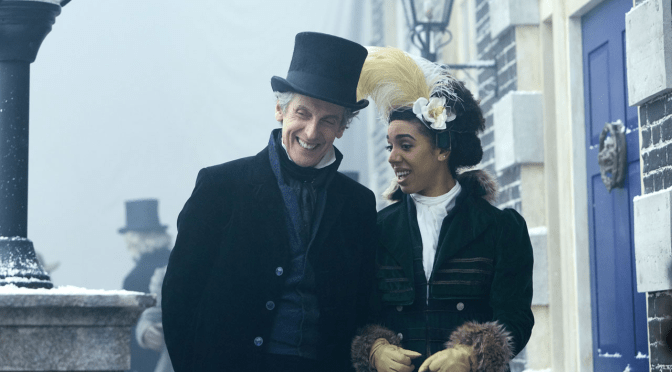
Doctor Who: “Thin Ice” is the best episode of the season yet, but it’s still a mixed bag

In “Thin Ice,” the Doctor and Bill visit the last ever Thames Frost Fair and uncover a mystery, as the Doctor and his companions are always wont to do. It’s highly reminiscent of other Regency-to-Victorian era episodes of the show as well as of the season five adventure, “The Beast Below.” If this season of the show has an overarching theme so far, it seems to be rehashing all the show’s old tropes in new arrangements, and this is both fascinating and frustrating. To be fair, there’s precious little new under the sun, and I don’t expect to be blown away by the originality of the show week after week, but I’m not certain that this most recent iteration of the series is doing enough to set itself apart from previous seasons. There’s some great stuff in “Thin Ice,” but there’s also some tiresomely dull stuff, a tendency to zoom past emotional moments without giving them time to really land, and a sense of self-righteous smugness about some of the episode’s messaging.

Once again, Bill is proving herself to be a great companion to the Doctor, and we’re starting to see more and more of the easy chemistry and nicely accomplished comedic timing between Pearl Mackie and Peter Capaldi. Bill’s a little bit street wise, and she’s got a sensible level of independence along with a stubborn streak that lets her stand up to the Doctor, who can be a little bit of an intellectual bully at times. Bill’s confidence and cleverness let her adapt to unexpected situations, and the joy she takes in novel experiences is infectious and quite fun to watch. At the same time, this season is continuing very deliberately the themes of the last two seasons relating to the Doctor’s lack of humanity, and like previous companions, Bill is becoming something of a conscience for her mentor. Unlike with the last couple of companions, however, the show is doing a great job of truly showing us why and how Bill is up to that often onerous task.

**Spoilers below.**

This week’s mystery revolves around a great beast chained to the bottom of the Thames, where an unscrupulous nobleman, one Lord Sutcliffe, is feeding it humans in order to extract a valuable and highly efficient fuel that the beast produces as waste. It’s a simple enough plot and a straightforward mystery without any unexpected twists or turns, but that’s fine. There’s something to be said for that kind of comfort television, and “Thin Ice” is definitely in the comfort TV neighborhood. It’s got lighthearted fun, cute kids, and a happy ending where a racist asshole gets what’s coming to him. There’s not much not to like about it. Unfortunately, there’s not much in particular to actively praise about the episode, either.

Perhaps the episode’s biggest problem, though it’s by no means a dealbreaker, is the ease with which it skips from emotional beat to emotional beat without taking time to really examine why these moments are supposed to work. Bill’s concerns about facing racism in Regency England are quickly moved past, as are her concerns about her potential to change the future in unexpected ways. In a show that in general takes a blithe attitude towards its treatment of most of the usual ethical and practical considerations surrounding time travel, it may be best to just leave it alone. I did rather like the Doctor messing with Bill about it, but even that isn’t terribly funny if you think about it; he’s joked around Bill’s concerns rather than actually answering them.

When a little boy dies right in front of Bill’s eyes, she’s outraged at the Doctor’s lack of reaction—and it’s not touched on, but he saves his sonic screwdriver without making a move to save the child—but even this is quickly glossed over. At first Bill seems deeply upset by the experience, and she’s angry with the Doctor for being able to move past it so quickly, but she moves past it fast enough herself. It’s an interesting way that the Doctor seems to corrupt his companions. By removing them so far in space and time from their natural contexts, the companions are often forced to abandon normal human standards of ethics and morality in favor of more broadly logical, but surely less humane, rules for living. For all that the show continues to try and portray the companions as a humanizing force in the Doctor’s life—and the Doctor gives Bill a great deal of power and agency in their partnership this week by treating her as a sort of commander—the ways in which the 2000-year-old Doctor changes his companions tend to never be adequately dealt with, and this episode is no different.

As far as the overall messaging of this episode, it’s a decidedly mixed bag. It’s nice to see fictional whitewashing called out, and I’m always happy to see a racist get punched in the face, but did the Doctor really need to give a long-winded speech about the sanctity of life or whatever? The decision to free the Thames sea serpent thing at the end of the episode is laudable, but it’s done with an awfully self-satisfied tone considering that there’s no assurance that the beast isn’t going to leave to be a human-eating menace elsewhere. As fantastical as the episode was, we also get a reminder that a black girl couldn’t inherit a fortune in 1814, which necessitates it being given to a little white boy with a much smaller role in the episode. It’s fine, I guess. Whatever. But the overall tone of the episode verges on smugness, especially in the delivery of the Doctor’s lines about whitewashing and his speech about what the true measure of humanity’s goodness is.

For all that the folks behind the show do seem to be making an effort to engage with and address common criticisms, they’ve still got a regrettable tendency to always want to prove that the Doctor is the smartest and best person in the room. He might need a human companion to keep him in check and remind him to do the human thing, but that’s not going to stop the Doctor from making self-indulgent pedantic speeches that challenge the humans around him to be better than they are. Yay.

Miscellaneous Thoughts:

  • The episode seems to imply that Frost Fairs were common occurrences on the Thames, but they weren’t. Even during a mini Ice Age that caused more extreme than usual winters in England, the Thames never froze solid enough for this kind of thing more than once every ten years or so.
  • I guess Nardole is part of the overarching plot this season but not adventuring with the Doctor and Bill. Too bad, though. I would like to see Matt Lucas get a bit more to do.

iZombie: “Wag the Tongue Slowly” hangs some decent plot progress on a slight case of the week

After last week’s fast-paced hour of watching Ravi metaphorically punch himself in the crotch over and over again, “Wag the Tongue Slowly” is a bit lighter and, for the most part, a lot more fun. There’s no particular aspect of the episode that stands out as excellent, but there are modest advances made on all the season’s important storylines so far and the murder mystery of the week is entertaining, even if it is predictable. Even still, the episode ends on something of a low note, which makes me concerned about how far and deep the overall sense of foreboding they’re building is going to go and what that means for the characters we’ve come to love over the last couple of years. iZombie has always had a feeling of tragedy about it, but that’s being explored this season to a far greater degree than ever before.

**Spoilers below.**

The episode begins and ends with Blaine still not having recovered his memories of his previous life, which doesn’t bode well for Major or, eventually, Liv, who would also like to someday not be a zombie. However, this is potentially good news for Blaine and Peyton, who are very cozy now. There’s an interesting dynamic between Peyton and her friends because of this, but there’s a problem: no one in the situation comes off looking particularly good. Peyton’s an Assistant DA, which makes her involvement with Blaine—amnesia or not—a pretty significant ethical issue. Ravi’s been a disaster over Peyton all season. Major is relatively chill, though more due to fatalism than anything else, and Liv was actually kind of monstrous towards Peyton this week, piling on a guilt trip as if it’s Peyton’s fault that the memory serum isn’t working.

It’s an ugly moment for Liv, and an interesting choice to include in an episode where Liv eats the brain of someone so unlikable, especially when it seems clear that this ugliness is all Liv. Similarly, at the start of the episode, before Liv even partakes of gossip brain, she gives a recap of Ravi’s exploits last week that borders on mean-spirited. It’s not as if Liv has always been a perfectly likable protagonist, but her friendships with other characters are central to the show and a key to its popularity. This unkindness is a sharp corner in Liv that hasn’t been explored before. There’s always been some question of how much of Liv’s personality is her and how much is from the brains she eats, and this episode presents another possibility—that the brains might (at least sometimes) act as an intensifier for Liv’s personality rather than taking over her personality.

Meanwhile, Major finally makes some progress in his search for Natalie, with Ravi’s help of course. I could have done with more of Major and Ravi hanging out together, but it’s good to see some actual movement on this storyline, even if it turns out to be frustrating. Major actually finds Natalie, who’s awake and apparently trapped by some zombie businessman who’s keeping her locked up in a hotel, although it doesn’t seem as if she’s there entirely against her will. Needless to say, she’s not happy to see Major, and she insists that he leave her where she is so he doesn’t get himself killed. Before leaving, Major gives Natalie a dose of the zombie cure and a heads up about the amnesia thing, which is, frankly, a strange place to leave things. It doesn’t explain who took Natalie or why, it doesn’t resolve Major’s hunt for her except in the most basic fashion, and leaving a syringe of the zombie cure out in the wild feels like set-up for it to be used for purposes other than its intended one. Ravi’s Don Quixote allusion is nice, as is the use of “I Don Quixote” in the background, though.

The murder mystery, as I already mentioned, is a predictable one, but it’s still fun to watch. Office gossip Cheryl is underdeveloped as a victim, and what we do learn about her isn’t flattering. It’s no surprise that she’s pissed off everyone she works with to the point that they’re willing to play a dangerous “prank” on her. It was mildly surprising that Cheryl’s death wasn’t actually intentional, but the basic method of her death was obvious as soon as they started introducing all the people she worked with and every one of them had strong motives. These fast-paced interrogation montages are something the show has done before, and I like it every time, but this time was made even better by the hilarious faces Clive makes throughout. His and Liv’s “Ahhhh!” when they learn that Cheryl was a gossip was perfectly timed and a laugh out loud moment.

The final piece of story that is touched on this week is the ongoing investigation of the murder of Wally and his family. Liv and Clive split a stack of messages from an online forum between them to look for evidence, and they find information that points them towards a local shooting range that turns out to be run by a man whose brother died at the recent Max Rager party. He claims to have solid proof of the existence of zombies—at least of the shambling type—and he’s also got a conviction that “you can’t murder what ain’t alive.” While the shooting range owner has an alibi and Liv and Clive don’t have any solid evidence against him, this surely isn’t the last we’ve seen of this fellow.

Miscellaneous Thoughts:

  • “That can’t be the best use of taxpayer dollars.”
  • “Dude, don’t pitch problems.”
  • Ravi’s obsession with the porn actress was kind of extra gross after his behavior last week. Guess he’s just gonna wallow for a while in that hole he dug.
  • Wham Bam Gun Range. That is all.