 Victor LaValle’s Destroyer
Issues 2 and 3
by Victor LaValle and
Dietrich Smith
The first issue of Destroyer was all promise, with it’s compelling and timely premise and gorgeous artwork. Issues 2 and 3 deliver on a lot of that promise. There’s a lot more action in these issues as well as a lot more depth of feeling as we delve into the real meat of the story. The literary allusions are a little on the nose, especially in a work that’s a little too serious to fall under the category of pastiche, but as the story gets darker I find these humorous nods to the book’s inspirations to be a welcome bit of lightheartedness. Also, and probably because I’m not a great reader of comic books, my favorite thing about this series so far is Victor LaValle’s essay at the end of Issue 3 where he writes about how the two different endings of Mary Shelley’s Frankenstein led him to write this comic.
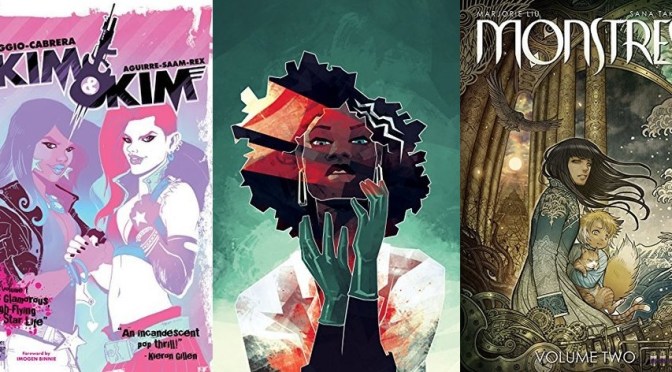
 Kim & Kim Vol. 1
by Magdalene Visaggio, Eva Cabrera, Claudia Aguirre, Zakk Saam, and Katy Rex
Full disclosure: Kim & Kim was an impulse buy because I happened to see someone mention it on Twitter right when I was looking for something to put me over the $25 threshold for free shipping. It sounded cute, but it turned out to be even more fun than expected, a nice balance of sci-fi bounty hunting adventures and character-driven drama with a bright, punk rock aesthetic. The only downside of the book is that Issue 4 ends on a little bit of a sad note, and it’s not clear if/when there’s going to be an Issue 5. In the meantime, however, Kim & Kim creator Magdalene Visaggio is currently offering free pdf copies of Volume 1 to anyone who donates at least $20 to The Trevor Project or Trans Lifeline through Friday, August 4, 2017:
https://twitter.com/MagsVisaggs/status/892926247076081664
 Monstress Volume 2: The Blood
by Marjorie Liu and Sana Takeda
The second trade paper installment of Monstress is, like the first, a true thing of beauty. Every page is filled with Sana Takeda’s sumptuous artwork, which is in turn full of gorgeous details, erudite flourishes that reference numerous artistic inspirations, and subtly lovely colors that marvelously convey setting and mood. With a title like “The Blood” I was rather expecting more of the same unflinching brutality as in the first book, but that’s not so much the case. Instead, this volume combines Maika’s continued search for answers about her identity, the increasing danger posed by the Monstrum that lives inside her, and a seafaring journey with a fascinating and visually distinctive new cast of minor characters.
 Angel Catbird, Vol. 3:
The Catbird Roars
by Margaret Atwood, Johnnie Christmas, and Tamra Bonvillain
Angel Catbird has never been more than a light, fun likely-vanity project of Margaret Atwood’s, and it didn’t suddenly transform to something more profound in its final volume. The Catbird Roars has the same deliciously silly verbal puns and visual gags that characterized the first two volumes, the same occasional side-barred cat facts encouraging readers to keep their pets indoors, and the same fast-paced absurdist plot that has our heroes dealing with the evil rat army once and for all. The biggest thing that sets this volume apart from the rest is the excellent foreword by Kelly Sue DeConnick, which tells us more of the inspirations and thought process behind Angel Catbird and to put it into a historical context that explains some of its quirks. As someone who is only lately getting into reading comics and doesn’t have a wide knowledge of the longer and broader history of the form, this information really helped me to understand and enjoy the book more fully.

 The Ghost Line
 The Lamb Will Slaughter the Lion
 Acadie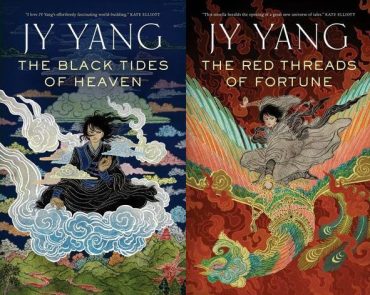
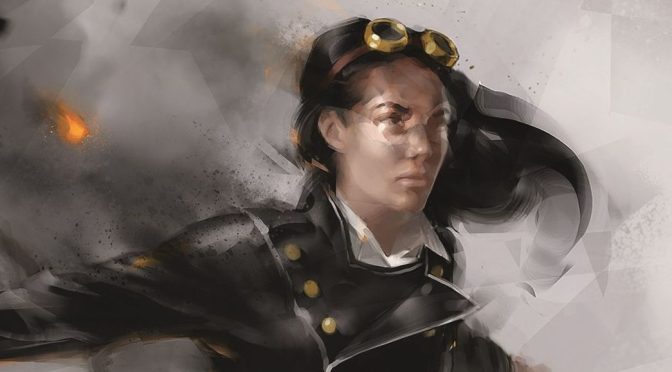
 The Guns Above is a whip-smart, fast-paced, and surprisingly funny military fantasy. I didn’t think that I was interested in reading stories about a woman having to overcome systematic sexism anymore, and I was double not interested in reading anything like a redemption arc for that woman’s sexist antagonist, but Bennis manages to breathe some new life into both of those stories. I’m very glad that I was interested enough in airships to read this book despite my misgivings, as it turned out to be a wonderfully readable, remarkably fun and ultimately optimistic (but not cloyingly so) take on its subject matter.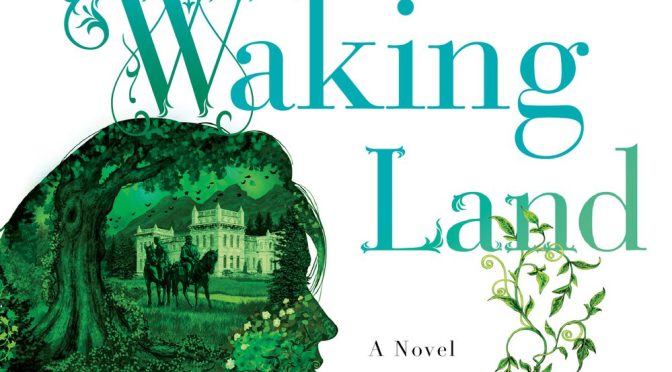
 This book was slow enough in its first third or so that I nearly put it down in frustration, but when it gets good it gets very good. It’s got some issues with exposition and pacing that are likely just due to its being a first novel, but there’s quite a lot to enjoy about it nonetheless. For one thing, it’s got a drop dead gorgeous cover (designed by Kathleen Lynch and illustrated by Ben Perini), and inside you’ll find an intriguing magic system, a resourceful (if flawed) heroine, and an interesting take on fantasy politicking, and if The Waking Land isn’t a great read, it’s still a more or less promising debut that sets up Callie Bates as an author to watch.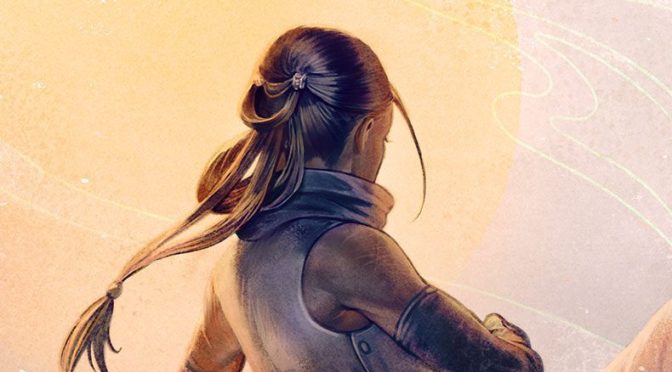
 Dianna Gunn’s Keeper of the Dawn combines a smartly plotted adventure with a sweetly written romance in a richly imagined fantasy world with plenty of space for more stories if the author chooses to return to it. Unfortunately, it’s all a bit much for a novella-length work. It’s a little overstuffed, and the sequence of events, while well-considered, has a tendency to read like a run-on sentence of “and then this happened and then this happened” and so on; all characters aside from the protagonist are underdeveloped, sometimes to the point of being cardboard; and the denouement could have used good deal more space to breathe. Still, there’s a lot to like about Keeper of the Dawn, and there aren’t so many YA lesbian romances featuring asexual heroines that it’s not still important representation despite its flaws—especially when the biggest flaw is simply that the story could have used another hundred pages or so to address its shortcomings.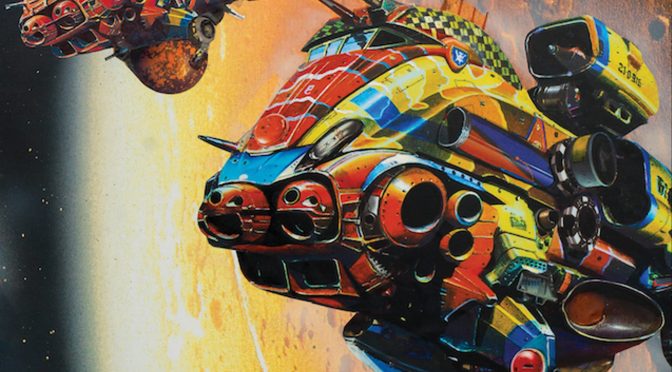
 The new John Joseph Adams-edited anthology, Cosmic Powers, is the first great anthology of the year, jam-packed with smart, entertaining sci-fi adventure stories that bring a nicely modern sensibility to old ideas and tropes. There are several recurring themes throughout the anthology. Religion figures largely in many of these stories, and several of the stories deal with gods or with beings who have amassed nearly godlike power with the aid of time and technology. Artificial intelligences of various kinds make several appearances, as do post-humans of multiple kinds. Examinations of families both biological and found are significant as well, and several stories look at the responsibility of people to each other, personally, and to humanity as a whole; it’s “the personal is political” writ across space and time. It’s a remarkably cohesive collection that nonetheless contains a wonderful variety of stories by a diverse group of authors to offer a well-rounded perspective on the idea of stories that take place on a cosmic scale.
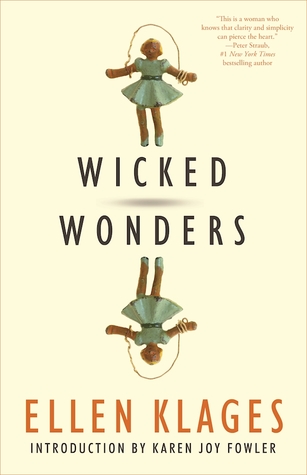 Ellen Klages is having a good year, which is also a boon for those of us who love good short fiction. Klages’ Tor.com novella, Passing Strange, is sure to be among the best of 2017, and it was a fortuitous discovery for me as I hadn’t read anything by Ellen Klages before. When I saw that she had a new collection of short fiction coming out from Tachyon just a couple of months later, I was thrilled. I was even more thrilled when I got approved for the ARC on NetGalley, and my excitement turned out to be totally warranted. Wicked Wonders is, with one significant and honestly baffling exception, full of consistently thoughtful, clever, affecting stories, all overlaid by a sort of gently reassuring feeling of nostalgia.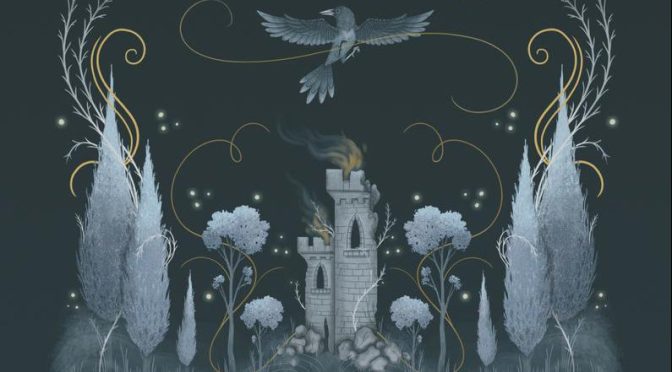
 I didn’t find out about Spindle Fire until about three weeks before its release date, but I was excited when I first read about it. I love fairy tale retellings, and I’d been looking for something that would be a kind of lighter read to help me break out of a reading slump I’ve been in for a couple of weeks. I loved the idea of splitting the story of Sleeping Beauty between two girls, the cover is gorgeous, and the title was getting a decent amount of buzz leading up to its release date. Sadly, Spindle Fire turned out to be a dreary slog of a book. The sisters, Aurora and Isabelle, barely interact and only in the first couple chapters; both Aurora and Isabelle have significant disabilities, but the way they are handled in the text is not great; the romances are at once overwrought and dull; the major “twist” is heavily telegraphed; and the book just, overall, feels choppy and disjointed, with more focus on randomly (and occasionally nonsensically) pretty turns of phrase than on building a coherent plot or cohesive character arcs.
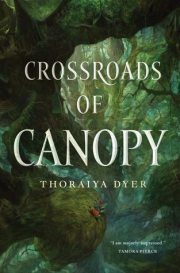 Best Fantasy Novel – Crossroads of Canopy by Thoraiya Dyer
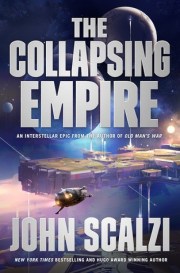 Best Science Fiction Novel – The Collapsing Empire by John Scalzi
 Best Magazine – FIYAH Literary Magazine, Issue 1, Rebirth
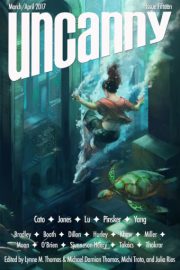 Best Novella – “And Then There Were (N-One)” by Sarah Pinsker
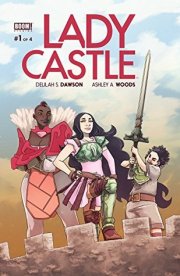 Best Comic Book – Ladycastle #1 by Delilah S. Dawson and Ashley A. Woods
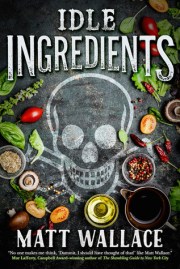 Best Sin du Jour Novella – Idle Ingredients by Matt Wallace
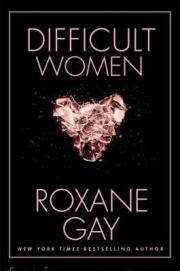 Best Non-SFF Thing I Read – Difficult Women by Roxane Gay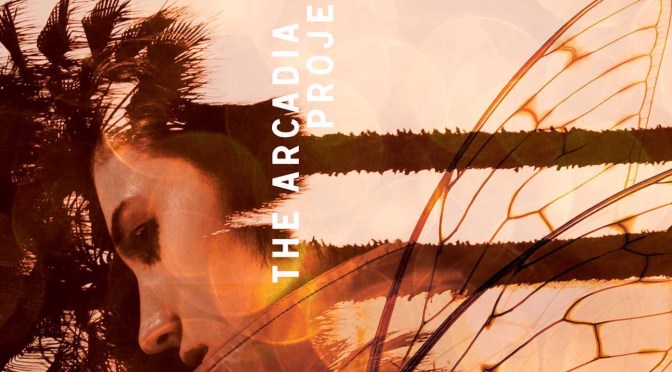
 I’m not a great reader of urban fantasy and I’ve been (sort of and unsuccessfully) avoiding new series, so I’d skipped Mishell Baker’s Borderline when it came out last year. I cannot tell you how glad I am that I finally read it. It’s a solid story that ticks off a lot of run-of-the-mill urban fantasy boxes while still being clever and original enough to be interesting. Baker takes a smartly naturalistic approach to describing the setting—I’m not a fan of L.A.-set stories in general, but she does a wonderful job of conveying a sort of warts-and-all love for the city without either romanticizing it or dwelling on ugliness. And Millie Roper is a fucking iconic protagonist with a strong and uniquely relatable (for me) narrative voice.
 SF Bluestocking