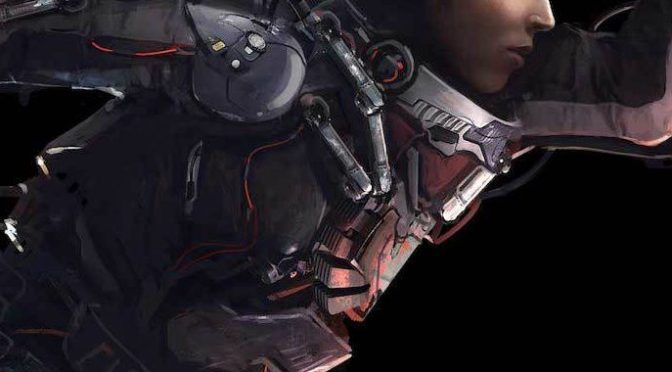
 I read all of Tor.com’s novellas, which is a good thing because I otherwise might have missed out on this gem by S.B. Divya. I would never have picked up a story about a cyborg endurance race on my own, but I’m glad I read this one. Runtime is a marvel of world building and character portraiture wrapped around a perfectly executed straightforward plot and just the right amount of smart-but-not-overbearing social commentary. It’s a near-perfect use of the novella length, and I cannot wait to see what S.B. Divya does next.
Marmeg Guinto is as prepared as she’ll ever be for the grueling Minerva Sierra Challenge, but she’s nonetheless not nearly as prepared as some of the other racers, with their support teams and wealthy sponsors. In a race where people compete and win on the strength of extreme body modifications, Marmeg has cobbled together her cyborg enhancements from cheap parts, black market materials, and sometimes literal garbage. Still, she’s determined to race well enough to win a better future for herself and her family. When she actually gets out on the trail, however, things don’t go entirely as planned, and Marmeg soon has to make some hard choices that put her future plans in jeopardy. The surface narrative here is simple enough and fits neatly into the popular genre of stories about young people who participate in extreme sports or contests in order to help their families in dystopia-ish futures. It could have been banal, but S.B. Divya does several things in Runtime that elevate it above the usual stories of its type.
Partly, this is accomplished by cleverly adding layers of meaning and nuance to a simple story. Within the simple framework of the race/survival story lies a cleverly integrated fable with something to say about cheating and good turns. Wrapped all around the story and built into the fabric of Divya’s excellent world building is some insightful social commentary about capitalism, gender, immigration, and community. It sounds like a lot, but it never feels like too much for the reader to take in. There’s never any obvious lecturing or moralizing, which is often a mistake made in these kind of stories, and the ending is satisfying and thematically appropriate without feeling pat.
The heroine, Marmeg, also accounts for a great part of Runtime’s appeal. She’s a nicely complex character but without falling into either any of the common Strong Female Character tropes or the common Morally Grey Character tropes. Instead, she’s highly distinctive, with a backstory and personality that are both well-considered and well-constructed. The key here is the specificity of this character and her background. Marmeg isn’t a Generic Dystopian Heroine, and the reader’s understanding of her situation, her family, and what she’s willing to sacrifice for them is absolutely necessary for the story to work. Fortunately, Divya communicates all of this information clearly and concisely with sparely elegant prose that is perfectly styled for the story she’s telling.
Where S.B. Divya excels most notably, however, is in simply balancing all the many moving parts of this novella. The race itself necessarily takes center stage, but Marmeg is a strong enough personality to really carry the story by getting the reader invested in it. There’s a nicely cinematic quality to the action, enough to earn this little book a place on my ever-growing list of things I’d like to see adapted for film or television. Marmeg’s peril feels like a very real threat, and there are a couple of small subplots that nicely augment the main story and could provide fodder for more stories or even a full-length novel in this same universe. Every piece of Runtime is meticulously crafted and fitted together with every other piece in order to make a whole that is even greater than the sum of its parts.

 I didn’t hate Guy Haley’s first Dreaming Cities novella, The Emperor’s Railroad, though it wasn’t one of my favorite reads of the year so far. Nonetheless, I was intrigued enough to read this second installment of the series. The Ghoul King seemed to promise more action and a female character with something to do besides die for male character development, and I was hoping to see Haley dig a little deeper into some of the potentially very cool world building of his post-apocalyptic landscape. Sadly, I found myself disappointed on all counts with this book, and this is another series that I’m very unlikely to continue with.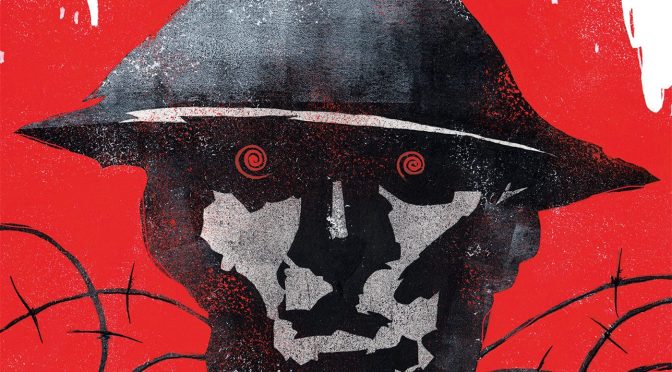
 I won’t be reading anything else by Andy Remic. I didn’t care for most of his first Tor.com novella, A Song for No Man’s Land, but it got interesting right at the end. Unfortunately, Return of Souls doesn’t deliver on what little promise its predecessor held. Instead, it doubles down on everything I didn’t like about the first book in this planned trilogy and adds a heaping dose of blatant misogyny that makes it a deeply unpleasant read.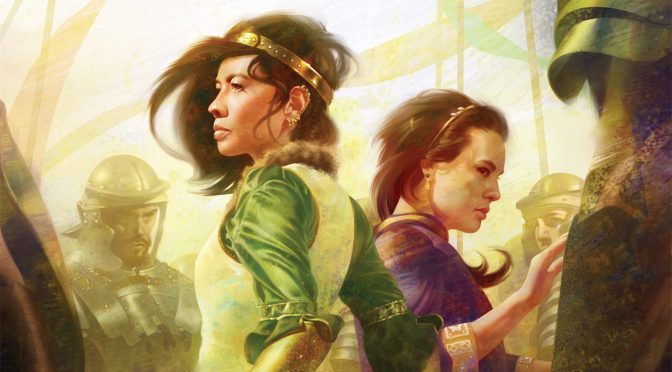
 I adored Fran Wilde’s debut novel, Updraft, so I was thrilled when I learned she had written one of Tor.com’s novellas. The Jewel and Her Lapidary was one of my most anticipated books for the first half of 2016, so imagine my surprise and dismay when I turned out to just not care for it very much.
 I don’t know if I’ve mentioned this lately, but I love Matt Wallace’s Sin du Jour series so very, very much. Sure, I might have started off feeling a little tepid towards it, but it’s new entries have quickly become some of my most anticipated new releases. They’re only getting better over time, and Pride’s Spell is the best one yet. It’s a smart, action-packed, hilariously absurdist romp and probably the most fun thing you can read this summer.
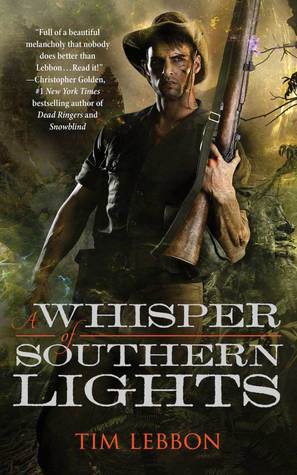 A Whisper of Southern Lights is the second novella I’ve read by Tim Lebbon, and it’s probably the last. I didn’t care much for Pieces of Hate a couple of months ago, or that book’s bonus novelette “Deadman’s Hand,” but I thought I would check this one out nonetheless. Generally Tor.com’s novellas are of good quality, and I thought that perhaps I just needed to give Lebbon’s Assassin Series a second try. Unfortunately, I liked this entry of the series even less than the previous installment.
 The Emperor’s Railroad is an utterly pedestrian story that is only rescued from total mediocrity by some intriguing world building. Unfortunately, Guy Haley’s novella never manages to full utilize the potential of its setting, and the ending leaves the reader with far more questions than answers.
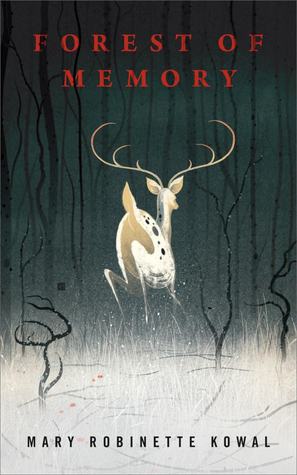 Mary Robinette Kowal’s Forest of Memory is one of my favorite of Tor.com’s novellas to date. It’s an interesting exploration of memory and the authenticity of experiences in a world in which nearly all human experience is filtered through a technological lens. Smartly, Kowal doesn’t dwell much on the actual future technology she’s imagined, and she also avoids the pitfalls of attempting to examine the broader societal effects of that technology. Instead, she focuses squarely on a single character and her personal experiences in order to tell a singularly excellent story.
 Every Heart a Doorway is a sort of interesting twin to The Girl Who Raced Fairyland All the Way Home, which I reviewed yesterday. In many ways, they are very similar books, both being fairly sophisticated examinations of the children’s portal fantasy genre, but Seanan McGuire’s novella of course has sharper edges and a more nuanced message than Catherynne M. Valente’s middle grade masterpiece. Like Valente’s series, however, Every Heart a Doorway is a book that is absolutely necessary for its audience, which I would say is primarily teens and young adults, but ought to include basically everyone. It’s a book that many people will identify with, and those who don’t see themselves in its pages could probably stand to learn a few things from it.
 Pieces of Hate is, technically, an okay book. However, it’s exactly the sort of thing that I normally try to avoid like the plague because I kind of hate it. It’s one of the better examples of its kind of story, but it’s still not my cup of tea. There’s very little that I find more boring than a fridged wife—nameless, even, to add insult to injury—and a manly revenge quest in which the only other women encountered are prostitutes who are (of course) repulsive to the protagonist. It’s a level of casual misogyny (either the author’s or the characters’—it doesn’t matter) that I found alienating from page one.
 SF Bluestocking