Category Archives: Fantasy

Book Review: The Drowning Eyes by Emily Foster

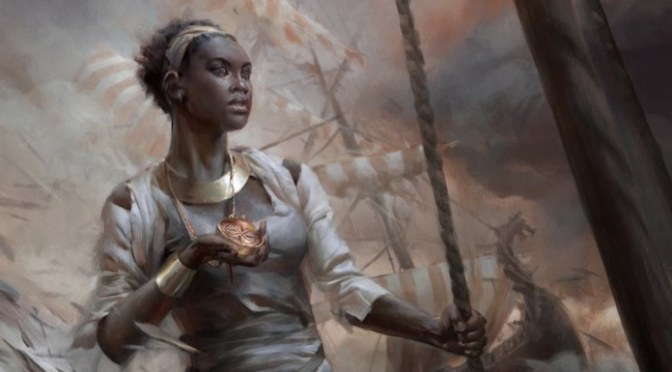
I expected to love The Drowning Eyes, but I’m sad to say I only liked it. The gorgeous cover art and the book’s description had me very excited about it, but it just wasn’t quite what I expected.

In spite of the way the book description reads, The Drowning Eyes is told almost entirely from Tazir’s point of view. I had expected it to be more equally split between Tazir and Shina, so this was a disappointment. Worse, Shina’s viewpoint was utilized suboptimally in addition to simply being underused; while it did offer a point of view through which the reader is given some extra information, mostly about Shina herself, there’s just not enough of it, and Tazir’s stronger personality is much more interesting and entertaining to read. Instead of being a good complement to Tazir’s sections, Shina’s brief POV scenes ended up being a somewhat irritating distraction from the real meat of the story.

I also thought there would be more swashbuckling adventure. Disappointingly, there was basically none. This was largely made up for by Shina’s actually really fascinating weather magic and the accompanying sort of religious order that she’s part of, but still. I feel like I was promised pirates, and all I received was the rather mysterious Dragon Ships, which are never really explained very well and aren’t actually that big a threat to the characters over the course of the journey described in the book. This also has the effect of making it feel throughout the book as if we’re being told over and over again how high the stakes are without it being backed up by any action that the reader is privy to.

It’s a problem, particularly when the personal stakes are plenty high enough to carry the story all on its own. Shina’s trauma could have been handled better and given a little more page space, and I would have loved to see more interaction with Shina and Tazir regarding Shina’s decision to give up her eyes. I love the whole idea of this practice, personally; all the best magic systems have heavy costs for power, and this is one that deserves to be explored more than it was. Tazir in general is a fascinating example of a type of female character that doesn’t usually get to exist—a somewhat grizzled, world-weary, and slightly misanthropic sea captain. I would read a dozen books about her adventures is Emily Foster would just write them. The supporting characters of Kodin and Chaqal are somewhere between underdeveloped and superfluous—especially Kodin—but this is something that, again, could be helped by just a couple more pages dedicated to each of them.

Where things really fell apart for me in this book was the abrupt ending to Shina’s quest and the disorienting shift five years into the future. Frankly, I just don’t care for it, and I would rather have seen Shina’s search for the idol wrapped up a little more neatly. The break between Chaqal and Tazir and then the one between Tazir and Kodin could have still been handled similarly, but closer to the events that actually precipitated these changes in the characters’ relationships. I suppose there’s something to be said for capturing the messiness of human relationships or something, but I would rather read a story that shows things happening instead of reminisces on them years after the fact.

Even with my criticisms of it taken into account, The Drowning Eyes is a wildly enjoyable novella. It’s full of a lot of things that I love in fantasy, and I sincerely hope that it’s part of some larger fantasy setting that we’re only just being introduced to. Probably the biggest issue I have with this novella is that it feels very much as if it’s only a part of something much larger, and I feel frustrated at not having that something larger in my hands to read right now.

Book Review: Lustlocked by Matt Wallace

I received a free advance copy of this title from the publisher via NetGalley.
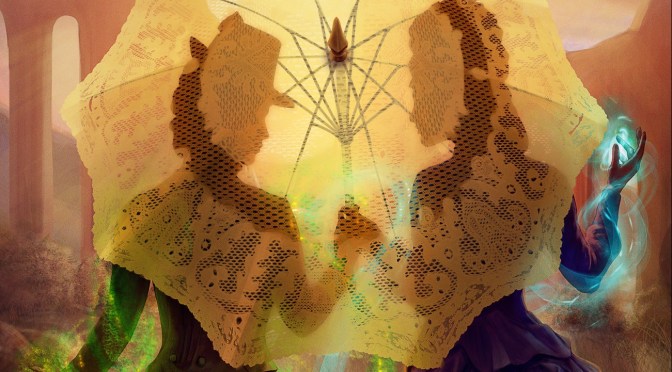
Lustlocked is the second in Matt Wallace’s Sin du Jour series, which began with the riotously funny Envy of Angels late last year. When I read the earlier volume, it was as part of my ongoing project of reading all of Tor.com’s new novellas, but I didn’t expect to like it much. Instead I found it quite enjoyable—smart and fast and a thoroughly fun read. I couldn’t wait for Lustlocked, and I was not disappointed.

It picks up more or less right where Envy of Angels ended, with Lena and Darren still kind of reeling from their experiences during their first days on the job at Sin du Jour and now faced with the decision of whether or not to sign on to the company on a more permanent basis. Of course they do, or there’d be very little story left to tell, and they (and we) quickly learn that there’s never a boring day at this catering outfit. The first job after Lena and Darren sign their contracts is a huge formal wedding for goblin royalty, which quickly gets out of hand when the bride complains that her in-laws aren’t always as nice to her as they could be and resident witch Boosha decides to do something about it.

Where Envy felt a little disjointed and too busy, with the fish-out-of-water story of Lena and Darren seeming almost incidental to the various other, more interesting storylines happening around it, Lustlocked finds a much better balance. There’s still an awful lot going on, including a sort of prologue that still seems somewhat out of place and disconnected from the main plot, which concerns a goblin wedding, but Lustlocked never feels overstuffed the way its predecessor sometimes did. Aside from the prologue, things flow along at a respectable and pleasantly methodical pace.

Where this second installment of the (hopefully open-ended and long-running) series really shines, though, is in continuing to bring to life its world and characters. Every new revelation about the mythology Matt Wallace is creating for this series is a new delight, and between Lustlocked itself and the bonus short story at the end (which was an excellent surprise) there was a ton of character background and development. I loved the sequence where Lena and Darren are being given a tour of the building, where I was glad to meet a couple of new characters. Wallace’s descriptions of food are delectably creative and full of vivid sensory descriptions, while his knowledge of the restaurant/catering/food business is definitely up to the task of making Sin du Jour feel like a real and lived-in place.

My only real criticism of the series so far is that I’m not quite sure what exactly Darren is there for. He didn’t make much of an impression on me in Envy, and he wasn’t much more present in Lustlocked. While Lena is really coming into her own as a character, Darren just kind of… exists. In a series as jam-packed with characters as this one, especially when being told in novella-length pieces, I kind of feel like every character really needs to exist for a specific reason. Lena is his roommate, and even she doesn’t seem to like or think about Darren very much at all, so he sadly ends up feeling superfluous.

In a bittersweet-in-hindsight turn of events, I read Lustlocked the day that David Bowie died, which feels a little like destiny, as it’s heavily implied in the book that David Bowie is/was an actual goblin king. I think this book might always be a little special to me because of that, as it’s a lovely tribute to the man, and one that I especially like because it is such pure, unadulterated fun. Of course David Bowie could be actual goblin royalty—IRL headcanon accepted.

Magazine Review: Fantasy Magazine, December 2015, Queers Destroy Fantasy!

Perhaps it’s because fantasy is my first and forever true love under the SFF umbrella, but I’m convinced that the Fantasy Magazine entries in the DestroySF project are the best. At the very least, they’ve been consistently my favorite magazines in the series. Queers Destroy Fantasy has, hands down, the best fiction in any of the Destroy issues so far.
A new Catherynne M. Valente story is always a treat, and “The Lily and the Horn” is a near-perfect fairy tale where wars are waged by pitting poisoners against unicorn horns. Like much of Valente’s work, it’s a story concerned with interrogating very old fantasy tropes, and it’s full of her characteristically beautiful language and meticulously structured prose.

Kai Ashante Wilson is a newish author who I only discovered this year when I read his Tor.com-published novella, but I quickly fell in love with his work. I was thrilled to see a new story by him in this magazine, and “Kaiju maximus®: ‘So various, So Beautiful, So New’” did not disappoint.

“The Lady’s Maid” is a weird and subversive and deeply unsettling tale by Carlea Holl-Jensen. It deals with a maid who is charged with caring for a strange mistress and the mistress’s many interchangeable heads. I actually enjoy being unsettled by stories, so of course I loved this one.

Richard Bowes’ “The Duchess and the Ghost” takes a turn towards more magical realism than simple fantasy, and it’s a haunting story about identity and the tradeoffs and compromises we make in order to survive in a world that is often hostile and unsafe.

The first of the reprints, Shweta Narayan’s “The Padishah Begum’s Reflections,” somewhat mirrors Valente’s “The Lily and the Horn” in tone. It’s similarly in the fairy tale vein, though “The Padishah Begum’s Reflections” is more like a steampunk Arabian Nights story than anything else, being told from the point of view of a clockwork princess. This is probably my favorite story in this magazine.

“Down the Path of the Sun” by Nicola Griffith is a fantasy with an almost post-apocalyptic feel to it, although the setting is never quite explained. It’s the only story in this issue that I didn’t care for, but that is largely a personal preference as I found the brutal rape described in the story to be highly unpleasant to read and not nearly as effective as the author seemed to think it would be.

Austin Bunn’s “Ledge” starts off slow, even boring, but it rewards the patient reader by delivering a great and very memorable ending.

Finally, “The Sea Troll’s Daughter” by Caitlin R. Kiernan is a nice piece of sword and sorcery with a woman character in the sort of gruff, tough adventurer role that is too often reserved for men. It’s not a particularly groundbreaking story, but it’s fun.

The non-fiction in Queers Destroy Fantasy was somewhat disappointing, with only Ekaterina Sedia’s piece on fashion standing out, but the author profiles are, as always, wonderful and well worth reading.

Book Review: Radiance by Catherynne M. Valente

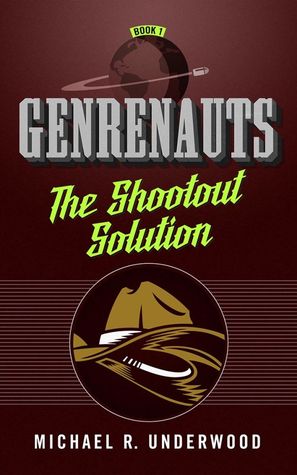
I’m always torn, when reading anything by Catherynne M. Valente, between feeling just incredible awe at her skill as a wordsmith and storyteller and being overcome by crushing feelings of inadequacy and self-loathing because she’s so brilliant and talented and only a couple of years older than me. I’m always happy when she’s written something new, and Radiance was perhaps my most-anticipated novel of 2015. Even better, it’s everything I dreamed it would be.

The most wonderful thing about Valente’s work is that it’s all the same, but also that it’s all remarkably different and unique. Radiance is like nothing I’ve ever read before, but it’s also very reminiscent of Valente’s other recent work. Earlier this year, I read her novella, Speak Easy, and Radiance has much in common with that shorter work, to the point where I get the feeling that both stories grew out of some of the same research. What is certain, though, is that these two works represent a sharp shift in Valente’s adult work. Radiance, in particular, seems to represent a decided shift away from some of the author’s fairy tale themes, in favor of gothic romance, noir, and proto-sci-fi influences.

Valente’s work has always skewed literary and is often avant garde, and this is her most ambitious and experimental (or at least most successfully so) novel yet. In Radiance, Valente eschews traditional prose forms in favor of presenting the story in the form of found objects: newspaper clippings, movie scripts, interviews, and so on. While this decision can be occasionally frustrating and even confusing at times (mostly in the first third of the book), it pays off in the end as Valente creates a haunting portrait of a mysterious woman that also functions as a love letter to a part of cinematic history that many readers may not be familiar with.

Radiance is a masterpiece of non-linear storytelling, and Valente deftly weaves together numerous threads to build a world that is beautifully surreal and create characters who are wonderfully compelling. Every detail Valente includes works towards the overall effect of the book, which is whimsical and melancholy and epic in scale and deeply personal all at once.

There are no words to adequately encompass any Valente novel, though. You’ve simply got to read it for yourself. When you do, I highly recommend opting for print over the ebook, as this sort of found object style is highly tactile and benefits from being read on dead trees. My only complaint is that Tor Books didn’t print the book particularly well. It’s fine, and I do love the cover, but the interior design is average at best. I would have loved to read this in a format that utilized page layout and typography to enhance the reading experience. It would have been just that much more magical.

Book Review: Genrenauts #1, The Shootout Solution by Michael R. Underwood

Genrenauts: The Shootout Solution is the first in a new series of novellas by Michael R. Underwood that explores and interrogates genre tropes with a premise that is basically like what would happen if the mid-90s television show Sliders got mashed together with the popular fiction section of a Barnes & Noble. It’s a fun idea, and it more or less works.

Leah Tang is a great protagonist who’s funny, smart and resourceful. It’s not often that an Asian-American woman gets to be front and center in a speculative genre, and this makes her a great choice to take the lead in a story that is very overt in its critical examination of genre standards. It’s nice to see Leah’s race and gender considered as positive job qualifications that, along with her background as a stand-up comedian, make her uniquely and especially qualified for the work the Genrenauts are doing.

Starting the series off with a look at the Western genre, which isn’t widely read these days by the under-60 crowd, is an especially smart move on the part of the author. I expect that this is the genre that younger readers will be least familiar with, which makes it a perfect introduction to the Genrenauts world and an ideal backdrop for establishing characters and easing the audience in to some of the deeper ideas that Underwood is concerned with.

As an exploration of genre as a concept and an in-depth look at some of the more widely used tropes of genre fiction, The Shootout Solution feels a little simplistic, though it hints at more sophisticated genre analysis to come. Hopefully, future books in this series will raise the stakes and broaden their scope, as this one never felt particularly dangerous, and the actual solution, when it’s discovered, was obvious and too-heavily telegraphed to surprise anyone with a higher than 101 level understanding of literary criticism.

The author himself has referred to this book as the “pilot episode” of this series, and it definitely reads like one. Much of what we get in The Shootout Solution is worldbuilding, character introductions, and set-up for the rest of the series, so this volume ends up a little light on plot. Like many a promising pilot, The Shootout Solution feels just incomplete enough on its own to make me want to come back for more of the series.

Book Review: Winter by Marissa Meyer

This entire series of books has been middling at best, and Winter is no different in that regard than its predecessors. Still, it’s an enjoyable read. The biggest problem with Winter is simply that it’s enormously overlong. At over eight hundred pages, and broken up into nearly a hundred chapters, most of which are very short, it’s a monstrously lengthy read. Unfortunately, there’s just not enough going on in Winter to justify all that length, and while I did enjoy it, my biggest feeling when I finished was resentment at how long it took to finish.
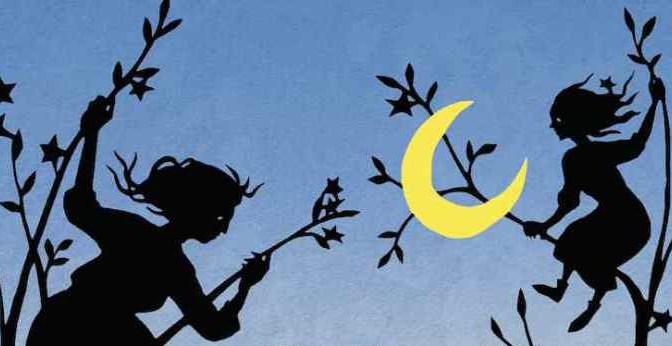
The first three books in this series (I’m not counting Fairest, which I haven’t—and don’t intend to—read) were each one better than the one before. Although none of them exhibited any particular excellence, there was definitely a trend towards improvement that unfortunately seems to have plateaued—and that’s only if one is being generous. To be honest, Winter is just a huge disappointment.

I loved Cress in her book (after feeling very lukewarm about Scarlet), and I had hoped that Winter would be a similarly interesting character. Sadly, she’s not. For most of the book it felt as if even the author wasn’t sure exactly what to do with Winter, and the princess often languishes in the background, both figuratively and literally. While Marissa Meyer has often utilized fairy tale elements in interesting ways in this series, her choice to include Snow White’s poisoning and the glass coffin was simply a mistake. It had no significant effect on the story, never felt as if Winter was in any real danger, and was just one of the many ways in which Winter was kept sidelined and ineffectual in her own book.

The truth about Winter is that, for all its ridiculous length, not much actually happens in its pages. It’s as if all the story was told in the first three books and this one is just eight hundred pages of tying up loose ends. Winter’s personal story never manages to feel like much of a story at all, and while I appreciate that Meyer didn’t end Winter’s tale by having her be cured of her mental illness, I rather felt as if Winter was actually forgotten by the end of the novel, which focused mostly on wrapping up Cinder’s story. I mean, good, I guess, that Winter gets her man in the end, but that’s frankly more irritating than not, since it’s just part of the compulsory romantic pairing off of all the series’ characters.

This isn’t to say there’s nothing to like about Winter, but there’s absolutely nothing about this story that deserved such a lengthy treatment. Meyer does a nice job of cramming a happy ending into the last fifty or so pages for everyone, but it’s all really just a little too neat without having any particular dash of cleverness or panache. Even Cinder’s decision to reject being queen in favor of turning the Lunar government into some kind of democracy (it’s rather vague) just feels too on the nose and follows less from the story or character Meyer has created up to this point than it does from sheer convenience. The author wants Cinder to give up being queen and go back to Earth, and so she does.

It’s this sort of writing for narrative convenience that makes this series’ ending ultimately unsatisfying. After four books (six if you count a prequel and the upcoming collection of short stories that correspond to each book) and eight hundred pages in this one alone, all filled with things supposedly happening, none of it matters. We get the ending Marissa Meyer wanted to write, but it’s not an ending that feels real or earned or at all worth the journey to get there.

The best thing I can say about this series is that it’s an enjoyable read, but it’s got so little substance that I can’t recommend it except as pure guilty pleasure fluff reading. That may have its place, but this final book stretched too long to even be as enjoyable as the previous entries in the series.

Book Review: Domnall and the Borrowed Child by Sylvia Spruck Wrigley

Domnall and the Borrowed Child is the definitely weakest of Tor.com’s novellas published to date. It’s not bad, but it’s a little too short and doesn’t have any standout qualities to elevate it above the ordinary.
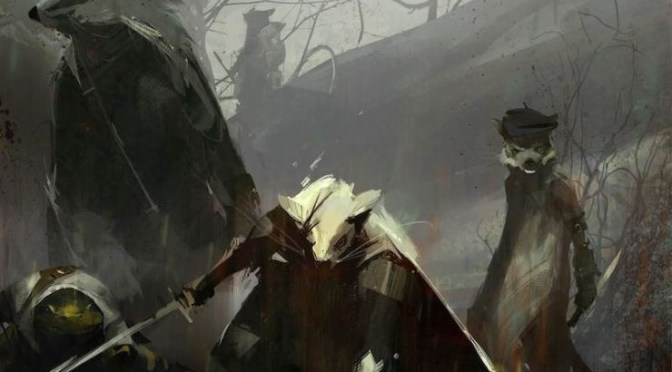
The story has the kernel of an interesting idea, but it’s not very well-developed, and even just hours after finishing the book I find myself struggling to remember details of it. I like the concept of a faerie people in decline and struggling to survive on the margins of modern society, and this is alluded to throughout the story, but the story is too small and too personal to be really effective at communicating anything substantial about these hinted-at themes. I could see it being a nice fit for a larger collection of work exploring these ideas in greater depth, but it falls a little flat as a standalone tale.

None of the characters are particularly distinguished, and the elderly Domnall’s sexual interest in his young protégé is just plain creepy. Domnall had the potential to be an interesting character, but I just never felt like he truly came alive. The characters that I found truly fascinating were Micol and the human girl the fairies entranced, but neither of these characters gets a point of view in the novella and the human girl doesn’t even get a name. Sadly, what this means is that there are more interesting stories here than Domnall’s, and that knowledge colors the whole experience of reading Domnall and the Borrowed Child.

It’s bad enough reading a dull story; it’s far worse to read a dull story with potentially wonderful stories trapped inside it.

Book Review: The Builders by Daniel Polansky

The Builders is a wild ride from start to finish, and it’s my favorite so far of Tor.com’s new series of novellas. It’s a wonderful use of the form, and Daniel Polansky has managed to make a great many parts move like clockwork in a fast-paced, riveting revenge story with a deeply satisfying ending.

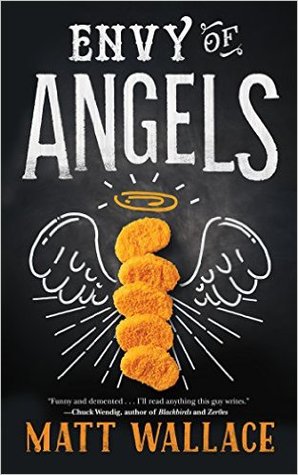
The best thing, on a technical level, about The Builders is Polansky’s clever use of its short length and the cinematic effect he produces by chopping the story up into short chapters, most only one or two pages long. There’s very little telling here, just showing, and each chapter is like a scene in a movie, painting a compelling picture that moves the story forward. It makes the book compulsively readable, and I could hardly bear to put it down.

There’s not much about The Builders that is particularly original or groundbreaking, but that is more than made up for by the sheer skill Polansky exhibits by arranging a collection of old tropes and a commonplace plot into a masterfully woven tapestry of a story. It goes to prove that, while there is very little new under the sun in the realm of storytelling, there’s definitely something to be said for doing something that’s been done before—but doing it very, very well.

Of course, this isn’t to say that everything about The Builders is expected. Indeed, I’ve never seen this kind of getting the old gang back together for one last revenge quest job story done in quite this way before. You know, with animals. It’s, perhaps surprisingly, pretty great.

Cute little forest animals have never been so grimdark, which also makes this the funniest thing I have read this year. ­­­I highly recommend it.

Book Review: Envy of Angels by Matt Wallace

Probably my favorite thing about this first round of Tor.com novellas has been the wide variety of different stories they have included, and this one is definitely the one that is most different from all the rest. I didn’t have any particular expectations for Envy of Angels, not having read anything else by Matt Wallace, and I increasingly find that I rather enjoy reading like this. It turns out that Envy of Angels is a smart and very funny urban fantasy.

I love any book that makes me laugh out loud, and Envy of Angels did so more than once. It is a seriously hilarious story involving a couple of down-on-their-luck chefs, a catering company whose only clients are demons, and an angel that tastes just like chicken nuggets. Basically, Darren and Lena are looking for work, they get hired on at Sin du Jour, and this story deals with basically their first day of work.

It’s been a good while since I’ve used the phrase “hijinks ensue” unironically, but it’s definitely appropriate here.

I can’t write too much about the plot without spoiling half the jokes, so I will just say that this is an excellent little story to read if you need a break from reading all of this year’s fantastic more-serious novels. I finished Envy of Angels in a single afternoon because I didn’t want to put it down, so I’d also suggest being sure to just go ahead and make sure you’ve got a couple of hours free when you sit down to it.

I won’t say that Envy of Angels is a masterpiece, because it’s not. Some of the characters are a little too one-dimensional, the tone of the story can be uneven at times, the prose is workmanlike at best, and I occasionally felt as if the author wasn’t quite as clever as he thinks he is. Still, this is a super fun read, and sometimes that’s enough.

I don’t see myself searching out Matt Wallace’s other work anytime soon, but I’m definitely looking forward to the next Sin du Jour novella. Goodness knows, by the end of January I’m sure I’ll be ready for another light, fast, humorous read to chase away the winter doldrums.

Book Review: Of Sorrow and Such by Angela Slatter

Of Sorrow and Such is a thoughtful piece of work whose contemplative tone would be restful if its subject matter wasn’t so infuriating. I love a good witch story. The thing is, stories about women being mistreated make me actually angry. This one does so in a great way.

I adore witches of all sorts, and I have had a special place in my heart for these sort of vaguely historical witch stories since the first time I read The Witch of Blackbird Pond over twenty years ago. Edda’s Meadow is much less historical and much vaguer as a setting, but it definitely scratches that same itch. Also like The Witch of Blackbird Pond, Of Sorrow and Such is a book that is fundamentally (even more so, really) concerned with the relationships between women and how we help each other survive (or not) in hostile, sometimes murderously, misogynistic societies.

I think what I love best about witch stories is the way that they work on multiple levels to examine ideas about how women exist in the world. To be a witch is both a metaphor and a depiction of a kind of reality, and not just a historical one. Angela Slatter’s practiced deployment of these ideas tells me that she knew exactly what kind of story she was writing, and she skillfully manipulates her characters and setting for maximum emotional effect.

Mistress Gideon is a great character. In many ways she’s exactly the sort of woman that can be a role model for readers, but Slatter never places that burden upon her protagonist. She’s therefore allowed to be much more than that, and Slatter gives us a main character who is kind and wise and motherly and loving and fiercely protective of her daughter and friends, but who is also not all-knowing, who can be cruel when she thinks she needs to be, and who is quite capable of murder.

The other women that surround Mistress Gideon are just as well-drawn. Her daughter, Gilly, is both lovable and infuriating. The other women we meet also have their own assortments of good and bad qualities. From the passionate young shapeshifter who desperately wants to be herself to her repressed spinster sister-in-law to the pastor’s wife who won’t leave her husband but also won’t submit to his literally poisoning her, these might not be women I want to be, but they are certainly lifelike enough that I can imagine meeting them.

This, really, is Angela Slatter’s gift. She brings these characters to life and I love them and want to read more about them. Though this is the only thing I’ve read by this author, it’s most assuredly only the first thing. I am very much looking forward to reading more of her work in the future.