All posts by SF Bluestocking

The Shannara Chronicles: “Dweller” is the show at its high fantasy best

The Shannara Chronicles continues to improve in its second season, giving us a strongly entertaining episode in “Dweller.” I’m a little skeptical of just how much plot is happening per episode in this show, just, you know, in general, and there’s a lot going on in “Dweller,” but it all, somewhat miraculously, worked this week. The show has a tendency to use a lot of storytelling shorthand, and that’s apparent in every storyline in this episode, but most of that shorthand is smart, and the couple of groanworthy instances of coincidence that do pop up are pretty forgivable ones. There’s also a higher than Shannara-average amount of genuinely good acting in this episode, which helps solidify the emotional beats, though there are still a couple that don’t quite land on target. It’s not perfect, but “Dweller” is about as good as The Shannara Chronicles gets.

**Spoilers ahead!**

Bandon (and Tamlin) (but mostly Flick)

The episode opens with Queen Tamlin being visited by Bandon, who is there to tell her that the Warlock Lord hasn’t forgotten the debt she owes him. Apparently, Tamlin was young and new to ruling during the last war against the Warlock Lord, and she bargained with him to help her people and preserve her kingdom. It’s not clear exactly what the terms of the agreement were, but it seems this is a piper who demands to be paid. What will be interesting to see in the coming weeks is whether the threat of the Warlock Lord drives the scheming Tamlin to a genuine alliance with the elves or if she’s going to try for a better deal with the forces of darkness.

The rest of Bandon’s considerable screen time in “Dweller” is spent making his way toward Paranor with Flick Ohmsford. When they stop to take a break so Bandon can get shirtless and show off how ripped he is, Flick tries to make the case that people are actually okay and that maybe bringing back the Warlock Lord isn’t a great idea. Bandon’s a true misanthrope though, and his counterpoint is that people are terrible and Allanon in particular is the worst. To prove his point, Bandon takes Flick on a detour to a farm we soon learn is Bandon’s childhood home. It’s been fixed up a bit since demons wrecked the place in season one, and there’s a new family living there. Bandon approaches the family to ask if he and his “uncle” could get food and lodging for the night and they’re happy to help the travelers, but over dinner Bandon’s simple question about what the family thinks of magic-users elicits a violently hateful response. Worse, it becomes clear that the family knows the story of their home’s previous inhabitants; they’ve even saved the disgusting muzzle Bandon’s own parents had forced on him. It’s not terribly surprising when things take a scary turn. Bandon conjures winds to push the farmer and his wife against the wall of the abode, and he captures their tween son, forces the muzzle on him and then squeezes the boy’s neck until blood starts coming out of the kid’s mouth and nose.

And this is one of the emotional beats that doesn’t quite land the way it seems to be intended. It seems as if we’re supposed to consider Bandon’s experiment here seriously. He basically bet Flick that these common people, of the sort that Flick insists are mostly decent folk, aren’t and that he can prove it, and in a sense Bandon succeeds at this when he prompts the family about magic and their murderous opinions about magic-users come right out. Like many fearful people, this family is full of hateful opinions about what they don’t understand, and they think safety will come from destroying the object of their fear. However, Bandon’s moral reasoning here is childish and simplistic. It’s not ignorant farmers who murder magic-users and craft discriminatory policy, though they may support political or military leaders who do. It’s bad systems that foster ignorance in a populace, allow bigotry to take hold in government, and fail to root out abusers of power. It’s difficult to take Bandon’s grievance seriously when it’s so clearly a case of misdirected rage. Bandon has been a victim of some real injustice, and he’s also been a victim of bad luck, but this family isn’t the agent of his pain, even if they do have some terrible opinions.

Bandon’s decision to kill the young son, in particular, makes it difficult to give much merit to Bandon’s point of view. It’s an especially brutal death and filmed in almost lascivious detail, often focusing on the face of the boy while he’s being murdered, but it’s through dialogue while the murder is occurring that Bandon makes his final point, such as it is. The farmers opined that the son of the previous family was just “born damaged,” and Bandon repeats those words back to them as he murders their child. This is framed as irony, but also as real pathos; Flick’s face as he watches Bandon is sad, and it seems that the audience is also supposed to feel saddened and sympathetic towards Bandon. It’s a moment that doesn’t work for me and shouldn’t work for most people. Bandon is killing a child. Because he’s mad that people dislike and distrust magic. And he’s mad about his parents and about Allanon. But he’s using magic to kill a child in front of the child’s parents. It’s nonsensical. It’s not sympathetic. It’s actually heinously evil, and the only thing Bandon’s actions here should have proved to anyone is that, yeah, magic is powerful and dangerous, but also that Bandon is stupidly, senselessly cruel.

I just don’t have a lot of patience for these sorts of narratives these days, especially when the parallels to real-world current events are as unsubtle as they are here. Any urge the viewer might have to cheer Bandon on for murdering a child to punish the child’s bigoted parents is an ugly urge that ought to be tamped down rather than encouraged. Flick may be overestimating the goodness of the common people, but murdering children isn’t the moral equivalent of being poorly informed and frightened of magic, especially when another major theme of this show is that magic actually is dangerous, that it has a price, and that it’s important that magical power doesn’t fall into the wrong hands. This whole storyline in this episode is a messy metaphor that doesn’t stand up to scrutiny and tries to require the viewer to accept the absurd proposition that Bandon and this family of farmers are essentially moral and ethical equals. It’s a nasty case of both-sides-ism that is as frustrating as it tries to be timely.

General Riga

We don’t see much of Riga this week. There’s just one short scene that pops in back at Graymark to see how he’s taking the apparent loss of his entire force of men there. Trackers were sent after Allanon and his friends after they escaped, but they’ve been unsuccessful. In a fit of rage, Riga kills the man who brought him this bit of bad news and then tells his single remaining lackey that they need to contact Edain to hurry up the shipment of weapons they’re supposed to be getting from Leah. My biggest question here is: who is going to use all those weapons? It looks like Riga and this one captain or whatever are literally the last men standing at Graymark.

Eretria, Garet Jax, Ander, Lyria and Leah

Right after the opening credits, the group that escaped from Graymark last week is already splitting up, with Eretria and Garet Jax being sent to Leah. At Graymark, they realized that all of the Crimson soldiers were using weapons made of Leah steel, which suggests a secret alliance between Riga’s forces and the human kingdom. On the road, Garet Jax wakes up from a nightmare and discloses a little more of his backstory to Eretria, though it’s not much more than we already knew about his being part of the Border Guard and surviving a massacre. When the pair arrive in Leah, they find Ander, who’s worried about Catania and starting to be suspicious of Edain, getting sort-of rejected by Lyria, who is professing her love for Eretria. Seriously. In an obvious piece of plot convenience theater, Jax and Eretria show up right as Lyria is telling Ander that she’s in love with Eretria. It’s silly, but I like Eretria and Lyria, so I’m willing to accept it.

The news and evidence that Eretria and Jax bring about the weapons the Crimson are getting from Leah alarms Ander, but he never doubts them. It’s actually kind of impressive how easily he believes them about Edain’s treachery, and the elf king is quick to come up with a plan that allows them to catch Edain in the act of moving weapons from Leah to the Crimson. It’s not clear how much information they get out Edain and his co-conspirators, but it does seem that Queen Tamlin is working hard to maintain enough plausible deniability to avoid being implicated. She claims that she had no knowledge of Edain or his activities, and she even organizes the execution of Edain and the Leah men he was working with—though it’s Ander who actually executes his former friend.

The final scenes in Leah this week are Lyria and Eretria and then Lyria and her mother. Eretria is leaving Leah again to go help Wil, but before she goes she advises Lyria to rethink her relationship with Tamlin. Eretria points out that Tamlin needs Lyria more than Lyria needs her mother, and this gets the wheels in Lyria’s head turning. After Eretria is gone, Lyria goes to Tamlin and tells her mother how things are going to be from now on. It seems that Lyria is going to pull the trigger on marriage to Ander after all, but she makes it very clear to Tamlin that she intends to be a real ruler and that Tamlin will have to earn her as an ally. I’m starting to get very worried about Lyria’s lifespan, though. Tamlin seems to have at least some real love for her daughter, but she’s also got the threat of the Warlock Lord to worry about, and Ander already has two dead girlfriends, one of them a black woman. It also increasingly feels as if Eretria and Wil are the show’s endgame couple, which would be in line with the books. Sure, the show is rather famously divorced from the source material, but still. I’m going to be extremely pissed off if Lyria ends up fridged to make way for Wil and Eretria to pair off.

Wil, Allanon and Mareth

While Eretria and Jax head of the Leah, the rest of our heroes are off to Paranor, where they hope to rescue Flick. First, though, Mareth approaches Allanon about his being her father, which he denies and rather cruelly rejects her, refusing to even consider training her to control her magic, which is really all she wants. Allanon insists to Wil that the druid sleep ought to have made him infertile, and it made me actually cackle to imagine a younger Allanon telling Mareth’s mom that they don’t need to use condoms because he’s totally infertile, only for her to find out a couple months later that he was incorrect. I can’t help it. It’s just such a line, and Allanon is being such an asshole to Mareth. I mean, even if he doesn’t believe she’s his daughter, he could still help her out with her magic problem since that’s kind of his job and a moral imperative or whatever. Instead, he’s just kind of a dick to her throughout the episode.

It’s a great week for druid detours, though Allanon’s isn’t as sinister as Bandon’s. Allanon is taking Wil to retrieve the Sword of Shannara, which is hidden at the grave of Wil’s father, Shae. The elder Ohmsford’s final resting place is inside a huge, beautiful cave that, from the top, looks like a giant vagina surrounded by trees, which isn’t at all a heavy-handed bit of visual language suggesting rebirth. However, before Wil can get his dad’s sword and symbolically come of age and power as he raises up an inherited phallic symbol he has to defeat the huge tentacle-spider—the titular “Dweller”—that stalks the cave in a sequence that’s shamelessly cribbed from Peter Jackson’s Lord of the Rings.

I’m not even kidding about the vagina cave.

I poke a little fun, but I loved this stuff. The vagina tree cave is hilariously on the nose. The visual and even auditory references to the Shelob sequence from The Return of the King are such an obvious homage to a good movie that it’s hard to get mad about them. There’s some great banter and a lot of evidence that Austin Butler is growing as an actor. The Dweller doesn’t look bad; at the very least the compositing is competent so that it feels like there’s a real creature in the scene with decent lighting. The defeat of the Dweller through teamwork was nice. Shae Ohmsford’s “grave” is baffling (I have so many questions), but it looks awesome, and the Sword of Shannara is another great-looking prop. Most importantly, for all that there’s a lot of story and character stuff crammed in here, it never feels perfunctory or rushed and it all makes a reasonable amount of sense if you’re willing to suspend your disbelief and enjoy the high fantasy of it all.

Miscellany:

  • Eretria stole the Elfstones back for Wil when they were at Graywatch, which answers my question from last week, but her explanation was basically “I saw these sitting around and thought you might need them” and that is deeply silly and really stretches the limits of what you can get away with having happen off screen.
Star Trek: Discovery – “Magic to Make the Sanest Man Go Mad” could have been great

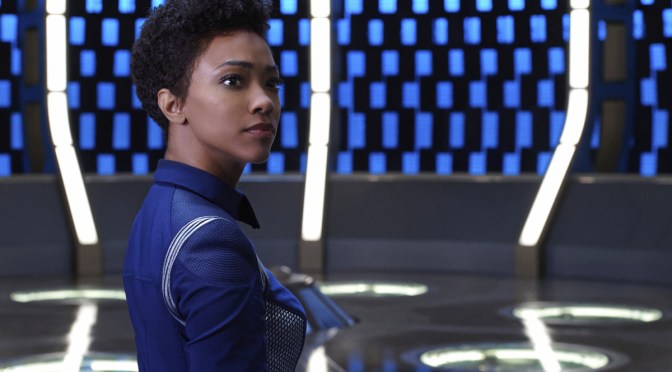
So, “Magic to Make the Sanest Man Go Mad” is definitely my favorite episode of Star Trek: Discovery to date. It’s a time loop episode, which is one of my favorite genres of sci-fi television stories, and it’s, for the most part, really well done. It’s often hand-wavy about science and logic, but that’s been the Star Trek way since forever and isn’t really a negative to my mind. There’s some interesting character work going on, especially for Lieutenant Stamets, who we’ve seen little of since he injected himself with the tardigrade DNA. It also brings back Rainn Wilson as Harry Mudd, which is rather earlier than I expected but welcome nonetheless. ALSO, there is a space whale. It’s not a perfect hour, by any stretch, but it’s pretty good, and it’s a pleasantly standalone episode that I could see rewatching on its own in the future.

**Spoilers ahead.**

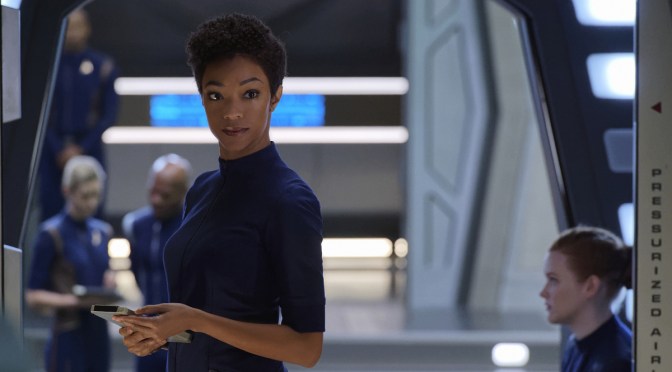
The episode opens with a party that’s notable in Trek history for actually feeling like a party that real young people might go to and enjoy. There’s drinking and dancing and people making out, and it’s nice to get another look at life on the Discovery when there’s not a crisis going on. Of course, right as Tyler is about to ask Burnham to dance, a crisis starts, and it starts with an endangered space whale that needs a lift to, I guess, a space whale sanctuary of some kind. The space whale turns out to be Harry Mudd’s way onto the Discovery, and he comes out, phaser blazing, to take over the ship, find out its secrets, and sell them to the Klingons. He’s only got thirty minutes to accomplish this, but Mudd’s got a time crystal that lets him murder Lorca and destroy the ship time and time again to perfect his strategy. Also, for funsies. Fortunately, through cleverness and teamwork, the Discovery crew foils Mudd’s plans. And they get to talk about their feelings, to boot.

It ticks a lot of classic Trek boxes—time loop, Mudd, weird space creature, feelings, friendship—and these overlap quite a lot with all my personal boxes that are ticked by this episode—time loop, weird space creatures, feelings, friendship, smooching, Rainn Wilson. For Trekkie reasons and personal reasons, I basically uncritically love about the first 85% or so of the episode, but that first 85% is also a smartly constructed, well-executed and highly entertaining bit of television. For most of the hour, it manages to strike a great balance between hijinks, romance, science and the darkness that’s characteristic of this Trek iteration. Certainly, it’s a much better balance than existed in the previous several episodes, and it makes it that much more disappointing when it fails, pretty spectacularly, to stick its landing. I just don’t know what the Discovery writers—and costumers and directors and anyone else involved in the end of this episode—were thinking by tacking on such a tonally dissonant mess at the end of an otherwise excellent hour, but that’s a thing that has happened.

In a lot of ways, this is a Stamets episode. Due to his combining his DNA with that of the giant space tardigrade, he’s now outside the normal spacetime continuum, so he’s the only member of the Discovery’s crew to realize what’s going on. After last week’s brief glimpse of the new, post-tardigrade Stamets, it was nice to get a better idea of how he’s doing these days and how much he’s changed. Here, we find a kinder, gentler Stamets, capable of and willing to give Burnham dancing lessons and relationship advice, but most of Stamets’ time this week is spent trying to convince Burnham and Tyler to help stop Mudd and save the ship. Anthony Rapp does a fantastic job of portraying a coherent character arc for Stamets, and it’s Stamets’ reactions to the experience of being trapped in Mudd’s time loop that are the most interesting thing about the episode. His journey through feelings of anxiety, frustration, resignation, fatalism, and desperation to put a stop to it are compelling and heartfelt.

The stress and trauma of experiencing the ship being destroyed time and time again is conveyed to the viewer largely through confident editing as we see short snippets of many instances of the time loop in the first three quarters of the episode. It’s not always entirely clear how Stamets is supposed to have learned all the information we’re meant to believe he’s learned from each loop, but the episode is fast-paced and fantastically-premised enough in the first place that it’s not hard to suspend disbelief. Rapp’s skillful portrayal of Stamets’ arc is mirrored by Harry Mudd’s arc, in which Mudd starts the hour gleefully murdering Lorca over and over again, only to become fatigued by the experience in the end. By the time Mudd stops the time loop, he’s entirely lost interest in killing Lorca and is simply anxious to get his promised pay-out from the Klingons, and this is what allows Stamets, Burnham and Tyler to trick him into ending the time loop at all. Thinking that he’s captured the ship and Michael Burnham, Mudd cheerfully transmits their coordinates to, theoretically, some waiting Klingons, only to find out that the ship that is coming to meet them contains his wife, Stella, and her arms-dealing father.

And this is where things get bad.

Listen. There’s definitely something a little off, just overall, with the way Harry Mudd is written on this show. I’ve written before about similar characters in other shows, usually white, almost always men, who we’re supposed to understand as Lovable Rogues. They’re crude, sexist, sometimes racist, generally self-serving, often craven and greedy, but they somehow manage to have all these negative qualities in a way that we can be convinced is charming. So, we like these characters, rather in spite of ourselves. The thing is, in order for these characters to maintain their lovableness, their transgressive behaviors can’t be too transgressive. Stealing stuff (especially from the rich and powerful), getting in fights, treating romantic partners poorly, being generally unreliable, that sort of thing works. Gleefully murdering hundreds of people dozens of times over as part of your plan, motivated by revenge and spite and not a little bit of a greed, to sell out the Federation to a brutal adversary is a more than a little outside the “Lovable” Rogue wheelhouse. The cruelty and sadism of Mudd’s actions in this episode are genuinely dark and horrifying, far beyond anything that should be accepted as the sort of whacky hijinks that make Lovable Rogues beloved.

To be fair, Mudd’s actions take a toll on him. However, whereas it’s obvious that Stamets’ desperation to bring the time loop to an end comes from a place of caring for others and not wanting to see any more suffering or experience more pain, Harry Mudd’s fatigue seems more connected to boredom and actual physical exhaustion after well over 24 hours without sleep while he ran and reran the scenario of taking over the Discovery. Mudd doesn’t feel guilty or ashamed of his actions; he’s simply achieved maximum catharsis through murder, and he’s now impatient to be done so he can get his payday and, presumably, hit the sack. It’s also not clear, in the final time loop, how much damage Mudd has actually done on the Discovery. In previous versions of the loop, he killed multiple people on his way to the bridge, but even if he didn’t physically harm anyone this last time through the time loop, Stamets exists as a witness to Mudd’s litany of crimes in earlier iterations of the event. Mudd has proven himself to be unprincipled and dangerous, and by the episode’s end he’s still in possession of sensitive information, even if his ability to monetize that information is greatly reduced.

So, you’d think that Harry Mudd, once his plan was foiled, would be arrested and imprisoned pending trial for whatever crimes he’s committed, even if all they can get him on is “conspiracy to commit.” You would be incorrect in thinking that, however. Instead of facing any kind of actual punishment or legal consequences, Mudd finds himself tricked into ending the device he used to create the time loop and escorted to the transporter room, where he’s not greeting Klingon guests like he expects, but is instead faced with his wife, the mythical Stella, and her father, a wealthy arms dealer. I hate this.

So, apparently, in the Original Series, Harry Mudd’s wife, Stella Grimes, was a famously nagging harpy of a woman, with the punchline of one Harry Mudd episode, in which he’d made a Stella fembot (as part of a whole scheme of selling fembots), being the creation of hundreds of robot Stellas who can all harangue him at once. That’s obviously a damaging (and sadly pernicious) misogynistic stereotype, and it would be a disaster to replicate uncritically in 2017. Still, the ending of “Magic to Make the Sanest Man Go Mad” is little more than a variation on that theme. The only problem is that Discovery’s Stella isn’t a middle-aged harridan, ready to hound her wayward husband; she’s young (like, young enough to be Rainn Wilson’s daughter young, and looks younger), and she seems to have genuine affection for Mudd. I just… don’t know what they were going for here.

Discovery!Stella, as I said, is younger than her husband by quite a bit, younger enough that it’s hard not to suspect that Mudd has preyed upon her youth and ignorance in order to finagle his way into an advantageous marriage. This perception isn’t helped by the confused portrayal of Stella as both somewhat aggressively overbearing and rather stupid, while her father, Baron Grimes, is portrayed as patronizingly indulgent of his daughter’s foibles. It’s like the people in charge of coming up with this stuff kind of understood that it’s not 1967 anymore, so they tried to soften the trope of the Nagging Wife in several ways and to create Stella as a sympathetic and humorous character. This is apparent in her dialogue, though there isn’t much of it, but also in the costuming of Stella and her father. They’re both in get-ups that could have come straight from the Original Series, Stella in bright synthetic fabric and her father in some kind of pleather old-timey mobster number. Compared to the show’s other excellent costumes, these are retro in all the wrong ways, and contribute to the complete tonal dissonance of this ending when set against the rest of the episode.

For an otherwise strong episode to end on such a strange, regressive note, especially when it’s so at odds with the tone of the rest of the hour, is a huge disappointment. I loved the time loop; I loved Stamets; I loved Burnham’s burgeoning romance with Tyler; I loved the party and Tilly and the space whale; but I hate, with a passion, that Harry Mudd’s “punishment” for all the many crimes he committed in this episode is still, in the year of our Lord 2017, having to return to the mildly unpleasant wife he jilted.

Miscellany:

  • I loved Stamets’ story about how he met his partner. That story, coupled with the sensible advice he gives Burnham, helps to put this new, softer side of Stamets that we’re seeing post-tardigrade in a context where we can see that this sensitivity in him isn’t entirely new or unprecedented and helps to diffuse some of the sense of body-snatching I had watching Stamets in the last episode.
  • I’m starting to reconsider my early perception of Cadet Tilly as neuroatypical. It seems weird that her allergies and mild snoring would keep her from having a roommate before Burnham arrived, but the issue of Tilly being neuroatypical hasn’t been addressed since, and she’s seemed to behave fairly typically in the intervening episodes. Which doesn’t rule out neuroatypicality, but I’m not going to give this show credit for representation if I have to imagine it all in my head.
  • Tilly seems fun at parties. Also, I like her friendship with Burnham better when they are just young women being friends. Because of Burnham’s background as a mutineer, she’s a somewhat inappropriate mentor or professional role model for Tilly, which is a concern, but it also bothered me to see a black woman character, herself so in need of love and guidance, being made to mentor a white woman. I’d much rather see them have a more equitable relationship and, as in this episode, see more of what Tilly brings to the table as a friend and confidant to Burnham.
  • What emotion was Lorca supposed to be expressing as he turned the ship over to Mudd? Seriously? This moment felt like it could be character development; perhaps we’re meant to understand from this that Lorca’s learned from past mistakes and doesn’t want to repeat them. Certainly, in the moment, before it’s revealed that the Discovery crew has executed a plan to foil Mudd, Lorca’s sentiment seems real enough. But we’ve also seen as recently as last week that Lorca has a manipulative and calculating side to him that hasn’t been trained out by Starfleet. His submission to Mudd is feigned, after all, so it’s also possible that Lorca just has a fantastic poker face.
  • I like Burnham and Tyler together. Very cute.

State of the Blog and Weekend Links: October 29, 2017

So, the thing about depression, at least the way mine works, is that, sometimes, when I get towards the end of a depressive period, I feel like things are going to get better, but that feeling can last for weeks or even months with little actual change in my mood or productivity. Which is sort of where I’m at these days. The good news, of course, is that things aren’t getting worse. The bad news is that no matter how much I feel like things are looking up, there’s no telling how much longer it’s going to be before I actually am better.

So, this week, I only managed to write my regular Star Trek: Discovery and Shannara Chronicles coverage, in spite of having intended to write quite a bit more than that. It just didn’t happen, so I’m more than a little disappointed with myself. It didn’t help, either, that I was mired all week long in a book that I just didn’t enjoy, even though I’d been super hyped for it. I kept reading and reading and hoping it would get better, but it did not. It was a bummer. Fortunately, I’ve been reading some better stuff this weekend. I started reading Fonda Lee’s Jade City yesterday, and this morning I raced through Matt Wallace’s upcoming, penultimate Sin du Jour novella, Gluttony Bay, which is fantastic.  No one writes action like Matt Wallace.

With Halloween coming up on Tuesday, it’s a good time to read something spooky.

Lit Reactor has a list of the 20 Best Horror Stories Available Online for Free.

At Electric Literature, there’s an indepth look at some of Alvin Schwartz’s Scary Stories to Tell in the Dark.

Book Riot lists 7 Monstrous, Feminine and Free Short Stories.

At Nerds of a Feather, Chloe N. Clark continued her Horror 101 series with a post about the uncanny.

This Skiffy and Fanty discussion on Indigenous Representation in Horror (with Darcie Little Badger, Nathan Adler and Stephen Graham Jones) is a must-listen.

The Murders of Molly Southbourne author Tade Thompson was interviewed at Lightspeed.

At the Barnes & Noble Sci-Fi and Fantasy Blog, Kameron Hurley answered some questions about her upcoming collection of Nyx short stories, Apocalypse Nyx. Hurley’s Beldame Apocrypha trilogy is still my favorite of her work, so I am stoked.

The Learned Fangirl picks apart black representation in Doctor Who‘s modern era.

At Winter is Coming, you can read about Brienne of Tarth and the Role of Absent Mothers in Game of Thrones.

I really enjoyed this HuffPo profile of Frances Glessner, the “Mother of Forensic Science.”

It’s super sad and frustrating that this is so hard for so many mostly-white writers to understand, but Chuck Wendig explains that not being inclusive is also a political choice.

A Lying Cat Pop is definitely on my Christmas list now.

The Shannara Chronicles: “Graymark” keeps up the pace but feels a little small

After a slower, soapier hour last week, The Shannara Chronicles is back with a more action-focused hour in “Graymark.” Short scenes continue to give an illusion of a fast pace, but this is coupled in this episode with an actually fast—one might say too fast—pace. Seriously. A lot of ground is covered in “Graymark,” which is exciting, but the speed with which all this travel and story happens has the unfortunate effect of making the world of Shannara feel remarkably small. This lack of epicness plagued the show’s first season as well, but the first couple episodes of season two involved somewhat less travel and the time-lapses between events within those episodes were handled a little more deftly than they are in this one, making it less notable. In an episode focused largely on a single major event/quest, it would have been nice for it to have more of a feeling of consequence. What I loved about “Graymark,” however, is how unabashedly high fantasy it is. The Shannara Chronicles has always been a show that owned its late-70s-to-mid-80s origin, but it was in rare retro form this week.

**Spoilers below.**

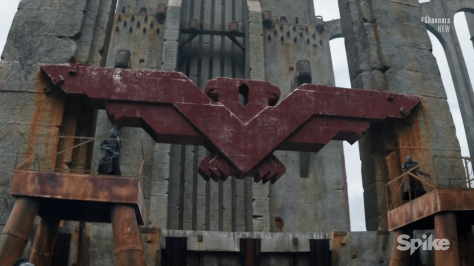
The episode opens at the titular fortress—complete with unsubtly Nazi-ish decoration and a whole lot of razor wire—where Allanon is being imprisoned and tortured by General Riga, who is dead set on rooting out and banishing all magic from the Four Lands. The way to do that, Riga thinks, is by destroying the Codex of Paranor, which is the repository of all remaining druid knowledge. Allanon tries appealing to Riga’s sense of justice and points out that the Warlock Lord is their common enemy, but Riga insists that “the true enemy is magic.” Having no luck with torturing the information he needs out of Allanon, Riga’s plan is to hunt down Wil Ohmsford and torture him until Allanon gives in to Riga’s demands. Fortunately for Riga, he doesn’t have to do much hunting.

I’m not kidding about the lack of subtlety.

Immediately after the opening credits, Eretria has managed (with a little help from Garet Jax) to track down Wil. As great as it is to have Wil and Eretria reunited, this all feels a little too easy and convenient. The two of them do have a couple of good conversations, though some of that was recapping season one events, presumably for viewers who are new to the show this year. The important thing, though, is that Eretria brings the news of Allanon’s capture by General Riga right at the time when Wil needs to find Allanon for his own reasons (to save Flick), so the two of them, along with Garet Jax and Mareth, are going to go extract Allanon from Graymark. And that’s basically the rest of the episode.

It’s a great quest adventure set-up in the high fantasy tradition, with clear stakes and a straightforward plan and it goes about how anyone familiar with the genre would expect. I only wish it had been given a little more room to breathe instead of smushing all this story into a single episode.

It’s not even that there’s just so much story here. There’s just an awful lot of torture, and it’s unpleasant to watch. Depictions of torture in general can be fraught, not least because torture is not a thing that works, which makes it irresponsible to depict in a favorable light. The good news is that’s not what’s going on here. Neither Allanon nor Wil are willing to give in to Riga’s torture. The bad news is twofold: first, the torture is depicted with an almost pornographic relish, which is gross, and, second, it undermines Riga as a sympathetic villain. Even as we learn about the death of Riga’s wife and unborn child (sigh) and his mother being attacked while pregnant by the magical creatures whose influence made Riga himself immune to magic, we see scene after scene of Riga coldly and viciously torturing two of the show’s main protagonists.

One gets the sense that Riga has some fundamental principles that he’s guided by and that his war against magic is something of a crusade that he feels morally justified in waging, but the way he tortures Allanon and Wil seems unbound by any rules of engagement or ethical concerns. If torture was a tactic that worked, it might be possible to accept it as part of the fantasy setting, but it’s shown two or three times over in this episode to be ineffective, making Riga’s continued reliance on it morally indefensible. He learns nothing of value here and doesn’t advance his cause at all, so his decision to use torture ends up feeling either profoundly stupid or indefensibly cruel. If Riga is stupid, it undermines his status as the most compelling villain of the series so far; if he’s wantonly cruel, it makes it really difficult to see him as sympathetic or misunderstood and diminishes the chance of any kind of redemption for him. Regardless, it’s not a good look.

What does work, surprisingly enough, is the plan for how to escape Graymark. It would have been nice to see a little more of the planning process, and the episode is a little hand-wavy about some things (like, how did Garet Jax get that map of the fortress?), but the plot of the episode is smartly put-together and well-executed. While Eretria’s reunion with Wil seemed easily accomplished earlier in the episode, there are enough real challenges in the course of this rescue plan to provide a sense of real drama and concern for the characters. Eretria and Mareth both get opportunities to use their particular skills to further the quest, and they even seem to be becoming friendly after each of them being somewhat suspicious of the other on first meeting. The episode even manages to provide space for some Garet Jax back story, though he’s not completely demystified by the end of the hour. While there’s a lot going on, and I would have liked to see more of some of the non-torture parts, what we did get on screen is nicely balanced between action, exposition and character work.

The best part of the episode, of course, is the final action scene as Allanon, Wil, Eretria, Jax, and Mareth finally escape from Graymark. It’s a well-choreographed fight scene, we get to see some magic, and all the characters get a chance to shine a little. The rain was a bit much, but it looked cool and, really, that’s what matters.

Miscellany:

  • Ander is engaged to marry Lyria.
  • Catania is missing. Ran off back to Arborlon according to Edain, though we know better.
  • Queen Tamsin knows that Edain is Riga’s man. Sounds like she may be funding the Crimson and fomenting this whole civil war thing that’s going on with the elves.
  • Honestly could have done without the scenes in Leah altogether this week. There’s enough else going on that they felt intrusive and out of place rather than truly important or interesting in their own right.
  • It’s not clear if the elfstones Riga now has are the real ones or not. It seems like there have been fake ones used at other times in the show, but they’re never commented on here one way or the other.

Star Trek: Discovery – “Lethe” is largely forgettable

So, the thing about “Lethe” is that, though I really liked some things about it and have a vague feeling that it’s a continuance of the show’s improvement, it’s not an especially memorable episode. Its emotional beats are fine, but they’re pedestrian, and the episode, overall, relies a little too much on well-worn tropes and by-the-numbers storytelling to make its points, which are slight. Add an ending that’s a bit maudlin and you’ve got an altogether forgettable hour that entertains while it’s running but doesn’t stick around to make you think very much.

**Spoilers ahead.**

The episode opens with a look at two new mentoring relationships. Captain Lorca has taken Ash Tyler under his wing in the days since their escape from the Klingons, and the beginning of the hour finds them going through a training simulation in what—contrary to Trek canon—appears to be a holodeck. I’m not a stickler for that sort of thing, though, and I suppose that if there is going to be an anachronistic holodeck it would be on a state-of-the-art science ship like the Discovery. After they get through the sim, Lorca offers Tyler the recently vacated security chief position, which I guess takes care of that loose end that I’d totally forgotten about. Also, obviously nothing could possibly go wrong with this idea. I’m sure Ash Tyler is totally okay and fit for duty and completely ready to take on an important position in the Discovery team. I’m also sure that no one else on this ship with a crew of hundreds had any interest or qualification or familiarity with the job that might make them a better prospect for the position. What could possibly go wrong?

Meanwhile, Burnham is mentoring Tilly, mostly by helping her develop a strict regime of healthy eating and exercise, though they still have time to bond a little over how hot Ash Tyler is. There was a little of this slice-of-life stuff last week after several episodes without it, and I’m glad to see more of it in this episode, though the friendship between Burnham and Tilly still feels a little contrived and perfunctory. That said, it’s early yet. There’s still time for their relationship to develop the real, lived-in quality that other Trek friendships have had, and while I’m not totally sold on this one yet, both women are interesting and likable. Mostly, what I’d like to see is for the friendship between Burnham and Tilly to get the same kind of hour-long focus that Burnham’s relationships with the men around her get. This show initially got me really excited about it with marketing featuring Burnham and Georgiou, and it’s deeply disappointing how devoid of relationships between women it’s actually turned out to be. All this is to say, YES, more, please, of Burnham and Tilly. Maybe go really wild and introduce another girlfriend or two for them.

Burnham and Tilly are introducing themselves to Tyler when Burnham collapses, writhing on the floor in pain. Burnham’s foster father, Sarek, is in trouble; while en route to a secret meeting where he was supposed to negotiate with the Klingons, a Vulcan extremist, resentful over Sarek’s love of humans, tries to assassinate the ambassador. Sarek, injured and his ship knocked off course and lost in a nebula, reaches out with his mind for Burnham. Once it’s confirmed what has happened, Lorca is quick to approve a mission for Burnham, Tilly and Tyler to go retrieve Sarek, which they do, using a device that works like a Vulcan mind meld that allows Burnham to track Sarek on his disabled ship. It also sends Burnham on a trip into Sarek’s subconscious, where he’s dwelling on the day Burnham was denied entrance into the Vulcan Expeditionary Force, reliving it over and over as he lingers near death.

This is fine, but ho-hum. Sarek’s failings as a father have been adequately covered several times over through his relationship with Spock in previous Treks, so there’s not much new here. The irony of Sarek sacrificing Michael’s prospects in favor of his biological child’s only to have Spock reject the opportunity and join Starfleet instead isn’t that great of a shock and doesn’t really justify an hour-long episode to deal with it. Burnham’s sanguine response to the knowledge shows us something about her, but there’s a sense of inevitability about the way she comes to terms with the way parents and children disappoint each other that doesn’t ring true. From the way she reintroduces herself to Tyler at the end of the episode as “Michael Burnham, human,” it seems like this wasn’t intended to be about the fraught nature of parent-child relationships at all but about Burnham’s understanding of herself and her own identity. This, again, is fine, but the whole message, in addition to being trite, is garbled and unclear. And none of this is helped along by the fact of this show being a prequel, which prevents any of the danger Sarek is in from ever feeling truly consequential, which in turn blunts all the emotional moments.

On the Discovery, Lorca has much more interesting problems. They just aren’t particularly Star Trek-ish problems. His friend Admiral Cornwell is so concerned about his recent behavior that she shows up for an in-person meeting with him, where she expresses her observation that he’s changed following some recent traumas and her fears that he’s not competent to captain a ship, especially one as important as the Discovery. On his best behavior, Lorca puts on a reasonably convincing show of being okay and points out that, unorthodox as his methods may be, he does get results. Cornwell doesn’t seem quite convinced, but she’s convinced enough to have a few drinks and sleep with him. It’s only when she wakes up in the night, gently touches a scar on his back, and suddenly finds herself pinned down with a phaser in her face that she’s certain Lorca isn’t fit for duty. Before she can head back to Starfleet headquarters, however, Cornwell has to go fill in for Sarek at the meeting with the Klingons, which is, naturally, a trap.

Either predictably or surprisingly (and I’m leaning toward predictably), Lorca isn’t rushing to rescue the admiral from the Klingons. Cornwell explicitly threatened Lorca’s job before leaving the Discovery, and his plaintive “Don’t take my ship; she’s all I’ve got” had a ring of truth to it that makes me think we might be about to find out what Lorca will do to protect the only thing he’s got. I guess we’ll find out next week if Lorca’s refusal to immediately chase after Cornwell is motivated by a sincere desire to play by the rules in a last-ditch effort to rescue his career or if it’s a cynical choice to leave her in Klingon hands as long as possible. I’m not sure there’s any middle ground here.

Miscellany:

  • So, Stamets has obviously been straight-up body-snatched, right?
  • I’d like to see Amanda Grayson get a little more to do than just be a supportive mother. She seems nice, I guess.
  • I want a “DISCO” shirt.
  • It’s nice to see a man Lorca’s age with an age-appropriate partner, even if the professional ethics of their sleeping together aren’t great.

State of the Blog and Weekend Links: October 22, 2017

This year’s fall colors continue to be somewhat disappointing, but the weather has been nice and I’ve enjoyed being able to have open windows and fresh air so far into October. Sure, all the leaves have surned a sort of weird, muddy yellow-brown color, but it’s been in the mid-to-high 70s all week. That said, I’m still pretty pleased that temperatures are finally going to be down into the 50s and 60s this week, as all this nice weather has started to cut into soup, chili and squash season and I’m ready for fall cooking. I’ve got a spice cupboard full of curry and tandoori and five spice and other warm things that have just been waiting for some cooler weather.

I didn’t write much this week, though I did do my normal coverage of Star Trek: Discovery and The Shannara Chronicles. What I did do was quite a bit of reading; I made it through several books, which I’m looking forward to writing about soon. This week, watch for the regular Star Trek and Shannara posts, though tomorrow’s Star Trek review may not be out til Tuesday as I have several errands that will keep me out of the house and away from the computer tomorrow. My big goals in the coming week, however, are to 1) exercise every day, at least 30 minutes of cardio because I need to get back on track at some point, and 2) write three book reviews, because I have a significant backlog again and a lot of them are excellent books that I have lots of feelings about. Three book reviews won’t get me caught up by the end of the week, but if I could do that between now and, say, Thanksgiving, I might be caught up.

On the bright side, I’m well past my reading goal for the year, with two and half months still to go.

I am in love with this new Lego set honoring the women of NASA:

I’m also in love with Dave Eggers’ NYT profile of Chimamanda Ngozie Adichie.

“Why Frankenstein’s Monster Haunts Queer Art” is a must-read.

While I’m not a reader of contemporary war literature, I found this piece on the whiteness of that genre compelling and important.

SFWA President Cat Rambo has a two-part response to Fireside’s #BlackSpecFic report that is worth reading. It’s good to see the findings of that report being taken seriously and that steps are being taken to address some of the genre’s problems.

At Speculative Chic, Barbara A. Barnett wrote about the intersections of horror and comedy.

The G kicked off a new series on Worldbuilding over at Nerds of a Feather.

“Annalee Newitz is Imagining the Future of Work” and I am frantically trying to find a space to fit her debut novel into my reading schedule.

More required reading: Gabrielle Bellot’s piece on the enduring power of Octavia E. Butler’s Kindred.

One of the books I read this week was Silvia Moreno-Garcia’s upcoming novel of manners, and I loved it. I also loved Moreno-Garcia’s essay on the genesis of The Beautiful Ones. I recommend reading both essay and book. (It’s out Tuesday! There’s still time to pre-order!)

The Shannara Chronicles: “Wraith” proves the show hasn’t forgotten its soapy roots

One of the things I loved about season one of The Shannara Chronicles was how unabashedly YA the show was, and, while I enjoyed the season two premiere, I nevertheless had some mixed feelings about what seemed to be a turn towards more adult-targeted action fantasy. The second episode of the season, “Wraith,” takes a step back from action in favor of focusing on soap opera and political intrigue, and it’s deliciously fun. It does feel decidedly less YA than last season, with several older characters being introduced and last year’s crop of teens played by twenty-somethings feeling much more their actual age. It’s another aspect of the shift in tone with the show’s move from MTV to Spike, but it still works. “Wraith” is a solidly enjoyable hour that smartly uses short scenes and quick cuts to keep things moving along briskly in a dialogue-heavy episode.

**Spoilers ahead!**

Wil & Mareth

The episode opens with Wil and Mareth running from the wraiths that found them last week. Or, rather, Wil is running to Shady Vale to find his uncle Flick and Mareth is sticking with him because she insists that Wil is her best chance of finding Allanon. When the two of them duck into a very pretty cave to escape the wraiths, we learn that Mareth is Pyria’s daughter and was estranged from her mother before Pyria’s death back in season one. As they continue towards Shady Vale, Wil and Mareth argue over magic, with Wil insisting that he’s just an ordinary guy who wants to live an ordinary life and Mareth opining that having magic is a gift and a responsibility—while also pointing out that no matter what Wil says, he’s still been using his magic and that if he really didn’t want it he would have gotten rid of the elfstones long since. It’s a pretty classic fantasy theme, but it’s perennially interesting to see characters work through the whole magic-as-burden-and-curse vs. magic-as-gift-and-responsibility debate; I only hope the show doesn’t get distracted and forget they brought it up.

When Wil and Mareth arrive at Shady Vale, they find Wil’s childhood home in shambles, but Flick Ohmsford is still alive. Wil patches his uncle up a bit, and Flick gives some more history of Wil’s father Shea Ohmsford, Allanon, and the last war against the warlock lord. It turns out that Shea wasn’t driven mad by overusing the elfstone, but from refusing to embrace his power. It seems that this might be the encouragement and validation Wil needed to embrace his identity as a Shannara, although it’s at odds with everything Flick raised Wil to believe all these years. Still, I’m inclined to forgive this inconsistency in the interest of moving along from this boring ass plot. I’m very interested in Mareth and her hunt for her deadbeat druid dad, but Wil—adorable as he is—has always been the weakest character of the show, and his family drama in deeply boring.

Eretria, Lyria & Leah

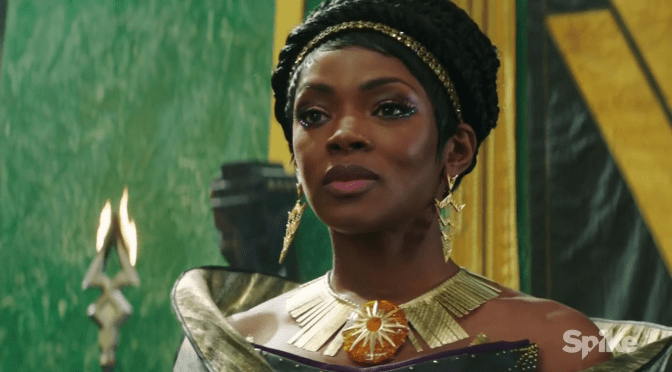
Last time we saw this pair, they’d been captured by Rovers, and I was looking forward to seeing them escape this week. Instead, they are “rescued” almost immediately by a bounty hunter named Garet Jax, who hints at Lyria’s secret identity before knocking Eretria out and leaving with Lyria. In a surprising (due to timing only) twist, Lyria turns out to be the princess of the human kingdom of Leah; Garet Jax was sent by her mother, Queen Tamsin, to retrieve her. Tamsin is currently receiving the still-struggling King Ander, and she wants the elven king to marry Lyria and unite their kingdoms after years of disagreement between them. Ander has some reservations and doesn’t want to be trapped in a loveless marriage. We find out that he and Catania are now in a relationship, though she believes it’s his duty as king to do what’s best for his people, even if that does mean a political marriage. Eretria shows up and is justifiably upset with Lyria, which is exacerbated by Tamsin’s manipulation. Eretria’s about to leave with Allanon to go find Wil when General Riga shows up and kidnaps the druid. She decides to go after them, sending Catania to tell King Ander about what’s happened, but Catania is intercepted by one of Ander’s guards, who kills her (or at least stabs her), outing himself to the audience as a Crimson collaborator.

It is a lot to take in.

Fortunately, all this mess of events is delivered in short, snappy scenes that stay laser-focused on their point. If anything, we could have used a handful of interstitial scenes to explain some of what’s going on. I would have liked to see a little of Eretria tracking Garet Jax and Lyria, for example, and it would have been nice to have a little more of a sense of the relationship between Ander and Catania before now. I mean, how did that happen? Still, there’s something rather refreshing about the lack of hand-holding here and there’s a pleasing kind of honesty about the show being willing to just go balls to the wall with this mix of family drama and political intrigue. And it helps that the intrigue is so delightful. Ander isn’t always the most likeable fellow, and we’re still getting a sense of who he is as a king, so it’s not obvious yet whether Tamsin is justified or not in her vendetta against the elves. Her self-interested calculation may be perfectly sensible. Similarly, Tamsin’s assessment of her daughter and Tamsin’s frank statements to Eretria are at least somewhat accurate. Lyria is at best an unreliable narrator, and it will be interesting to see what she does next. It’s a little disappointing to see what seemed last week to be a sweet and healthy same-sex relationship broken up this early in the season, but there’s always the hope of a happy reunion later on.

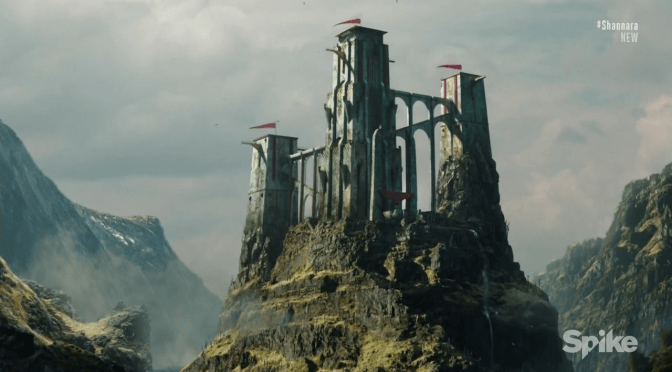
What works both best and worst about the stuff going on in Leah is probably Leah itself. The wide shots of Tamsin’s castle are almost cartoonish, and there’s a very poorly composited green screen shot right as Ander and Allanon arrive, but the interior sets are decent enough. I suspect these might be reused sets from Arborlon in season one, but changes in set dressing, lighting and costuming help to make Leah feel real and lived in. The bordello scene is surprisingly not disgusting towards women and could even have been a bit more risqué without being amiss. Overall, there’s something of an Emerald City-inspired feel to it all that I liked, for wall that it is derivative. I liked the variety of costumes—even Lyria’s bizarre open-crotched dress. What I appreciated most of all, however, was the diversity. While the first season of the show had a tendency to cast actors of color in significant supporting roles against a backdrop of whiteness (a common criticism of shows attempting to bring diversity to the screen), Leah is full of diverse crowd shots that make it clear that this is a criticism that someone in charge, somewhere, heard and took to heart and has worked to improve upon in this little corner of television.

Bandon

Bandon is still hunting for Wil when he comes upon some of Riga’s Crimson torturing a healer from Storlock. Bandon kills the Crimson soldiers and takes over torturing the gnome, reading his mind to find out where Wil went. He leaves the gnome alive, even heals him, before leaving to go find Wil, who is still in Shady Vale with Flick and Mareth. When Bandon finally catches up to Wil, we find out that he doesn’t want to kill Wil; he wants Wil as an ally, even trying to manipulate Wil into compliance by reading Wil’s mind and bringing up Wil’s own grievance against Allanon, who Bandon insists is the real enemy. What Bandon really wants, however, is the skull of the Warlock Lord, and he’s been told that “the Shannara” knows where it is. It’s not Wil who knows, though; it’s Flick, who was there when Allanon and Shea Ohmsford defeated the Warlock Lord and hid his parts. When Wil refuses to join Bandon, Bandon takes Flick and gives Wil three days to find Allanon and bring Allanon to Bandon.

It’s a difficult task that Bandon sets for Wil, kind of unreasonably so, but this is a fantasy show. I figure next week will be another action-adventure episode, with Wil rushing to find and rescue Allanon so they can go and rescue Flick. What is most surprising in all of this, to be honest, is the fast pace at which events are unfolding. Last season had a couple of very strange side-quest episodes, including the ridiculous “Utopia,” and I’m hoping we don’t get anything like that this time around. At the same time, oh-god-please-nothing-as-godawful-as-“Utopia” is a pretty low bar to clear. I’d much rather see the show sort out its pacing problems and be positively good instead of just not terrible.

Miscellany:

  • I still hate the wraith-vision shots. They’re cheap and lazy and don’t actually work to build up tension or anticipation.
  • I love that bisexuality is treated so nonchalantly in this show. That said, I worry that same-sex relationships aren’t treated with the same seriousness and legitimacy as straight ones.


Star Trek: Discovery – “Choose Your Pain” tries to have everything at least two ways

After the clinical, impersonal sterility of last week’s bleakly dull episode, “Choose Your Pain” is a breath of fresh air and a reminder of the great potential this show possesses. The grimdark elements are still firmly and problematically in place, but at the core of “Choose Your Pain” is a glimmer of unironic optimism that is wholly Star Trek and that has been largely absent from the series so far. At five episodes into a 15-episode season, Discovery is, rather frustratingly, still establishing its identity, but it felt much surer of itself this week than last. Though it’s not entirely without problems, it’s an altogether better-constructed episode with a more compelling and complete story than either of the last two episodes, and it certainly works to help regain some of the momentum lost since the two-part premiere.

**Spoilers below.**

The episode begins with a meeting between Captain Lorca and his bosses at Starfleet, who are taking the Discovery out of action for the time being. Though we haven’t seen but the one major mission so far, apparently the ship has already made a name for itself, jumping all over the place to engage the Klingons and defend Federation space, and the higher-ups are concerned that the Klingons might try to capture the ship or figure out its technology. Lorca isn’t happy about having to take this step back from active duty, but there’s no hint of what he might do next because before, he even makes it back to the ship from his meeting, his shuttle is captured by Klingons and he’s promptly tossed into Klingon prison where he meets blatant fan service character Harry Mudd (a great use of Rainn Wilson’s talents) and Lieutenant Ash Tyler, a Starfleet officer captured at the Battle of the Binary Stars who has survived for eight months being raped by the Klingon woman who commands the ship. It’s a weird, excessively dark set-up, and much of what happens on the Klingon ship after Lorca’s arrival is nonsensical.

Harry Mudd is played with less disreputable rakish charm and more genuine pathos and anger at what he perceives as Starfleet’s elitism and lack of care for the common people, and this is a genuinely interesting idea that doesn’t go anywhere. We get some backstory for Lorca, who, it turns out, was famously (or famously enough that Mudd recognized his name) the single survivor when the ship he previously commanded was lost early in the war. The twist here is that Lorca destroyed the ship and its crew himself, to prevent them from being captured and tortured by Klingons, which makes it very weird later in the episode when Lorca bonds with Lieutenant Tyler and the two of them leave Mudd behind while they fight their way off the Klingon ship. Lorca knows exactly what fate he’s leaving Mudd to, and it’s hard to see Lorca or Tyler as sympathetic characters when they are willing to do something so unconscionable for petty revenge.

My frustration with this storyline is exacerbated by the fact that this unlikely escape happens too easily; not only are Lorca and Tyler able to overpower their guards with a simple ruse, but they are able to commandeer a small, two-person fighting ship with such minimal trouble that it happens entirely offscreen. By the time they are found by the Discovery, however, they’ve got four or five more small fighters chasing them, which means that there are personnel to fill them and that those personnel were able to launch their ships quickly enough that they are right on top of Lorca and Tyler. This points to a relatively large crew on the main Klingon ship, but they only encountered their two guards, a couple other Klingons in the hallways, and the Klingon captain herself. It’s a level of silly, hand-waving whiz-bang storytelling that depends on its audience failing to think even the least bit critically about the basic mechanics of how the story is supposed to unfold, and I hate it.

Meanwhile, on the Discovery, we get a more Saru-focused storyline. In Lorca’s absence, Saru is acting captain, and the Discovery is the only ship with the capabilities needed to locate and rescue Lorca once he’s captured, so the burden of managing this task is on Saru’s shoulders. It’s a time for Saru, potentially, to shine in a leadership position, but he’s suffering from a lack of confidence and comparing himself to other successful captains as he tries to ascertain whether he’s doing a good job. Complicating matters for Saru is Burnham’s report that the spore drive is depleting their tardigrade navigator to such a degree that it may jeopardize their continued ability to travel. Saru won’t hear of suspending use of the spore drive, however, even when Burnham’s theory about the tardigrade is supported by Lieutenant Stamets and Dr. Colber. Burnham is banished to her quarters, perennially doomed to Cassandra status, which effectively cuts her out of the story for much of the episode’s second half, during which time the ship’s final jump using the tardigrade practically kills the poor creature. Even that (with the added likelihood that the tardigrade is sentient, to boot) isn’t enough to sway Saru away from wringing every last drop of life from the creature if they need to in order to accomplish their mission.

Frankly, it’s not a great look for the first officer, for all that it’s a humanizing and compelling story, and once again Burnham is proven correct by the end of the episode, even as she’s castigated in the narrative for her high-handed methods. It’s deeply frustrating to watch her be right, over and over again, but also being constrained by a hierarchical system that punishes her for stepping out of line. It was tolerable enough when she was in trouble for mutiny; that’s a major offense, and her actions had severe consequences. But it’s starting to feel like Burnham is right about something new every week, only to have her every action and motive distrusted and second-guessed and criticized. Saru confining her to quarters this week was especially upsetting as it meant that Burnham wasn’t able to help implement her own solutions to their problem; Stamets takes the risk of injecting himself with tardigrade DNA so he can navigate the ship. Sure, he’ll almost certainly have to deal with consequences at some point for violating Earth’s anti-eugenics laws, but he also gets much of the credit for saving the day.

Burnham, on the other hand, gets to clean up the mess, of both the tardigrade, who has gone into a deep hibernation, and of Saru’s feelings—it turns out he’s angry and jealous and resentful towards Burnham for robbing him of his chance to study under Captain Georgiou. I’m very interested in the ways in which Burnham’s story is about how she chafes in the strictly hierarchical structures of Starfleet, and I think there is plenty of potentially useful commentary that could be made on the Starfleet ideal and the Trek vision of the future in general, but I’m not entirely confident that this show has the capability of examining those things in the way they deserve. There are glimmers of insight every now and then, and there’s interesting set-up for these big ideas—for example, Saru’s clear disdain for Lorca, which takes on a new depth of meaning when set against his obvious love and respect for Georgiou—but there’s not much payoff so far. Still, the Star Trek optimism shines through in spite of itself, in moments like the Burnham’s revival of the tardigrade or in her ability to bury the hatchet with Saru.

My major takeaway from this episode is that the people behind this show still aren’t certain what they want the show to be. At times, it’s as if they envision it as the unholy love child of Game of Thrones and Battlestar Galactica, but at others it’s Star Trek through and through. I’m just not sure if all those different stylistic and philosophical parts are ever going to make a coherent story.

Miscellany:

  • I want to know more about Harry Mudd’s little scorpion friend.
  • Lorca’s vision problems are seeded at the beginning of the episode, there’s a reminder when he’s captured and drops the injector he uses for his medicine, and the Klingon captain tortures him by shining bright lights in his face, but there’s no actual payoff? The bright light torture is obviously uncomfortable, but it doesn’t even do any serious temporary damage that would hinder Lorca’s escape or force him to make a decision about getting proper medical care for his condition.
  • Cadet Tilly: “I love feeling feelings!” (I loved the scene with Tilly and Burnham having lunch together, which is exactly the sort of slice-of-life stuff I’ve been missing so far on this show.)
  • Also Cadet Tilly: “That’s so fucking cool!” (On the one hand, I appreciate the sentiment; on the other hand, it’s very weird to hear the f-bomb on Star Trek, which in my day was a family show.)
  • The final scene with Stamets and Colber was nice, both confirming the characters’ relationship and providing more of the domesticity I love in Trek and that provides reasons to care about the characters.
  • So… Burnham and Tilly are the only major female characters at this point, but I guess good job for not killing off any more women of color this week?
  • Speaking of two ways, looks like we’re getting some Mirror Universe funtimes soon!

State of the Blog and Weekend Links: October 15, 2017

Autumn continues apace, though the weather here in Cincinnati has still been positively summery most of the week. Leaves are falling, though they haven’t changed color much; we never do get especially spectacular fall colors here, but they are usually prettier than this. It’s slightly disappointing, especially after this terrible, horrible, no good, very bad year. Still, it’s not awful.

I’ve been working on getting back into the healthful routines that were working for me so well back before I broke my foot a couple years ago, which means calorie counting (still a work in progress), cardio, walking and daily Duolingo practice (I’m up to 46% fluent in German now!). I’m doing a terrible job of quitting energy drinks, but I’m getting there, and I did bake like twelve dozen cookies (five spice snickerdoodles and chocolate chip, yum!) yesterday, which is not healthy, but the fact that I have the energy for baking is kind of a good sign. Huzzah for mild-to-moderate lessening of my depression!

This week, I reviewed the excellent Laksa Media anthology, Where the Stars Rise: Asian Science Fiction & Fantasy. I also continued my coverage of Star Trek: Discovery, which sadly took a turn for the worse, and wrote about the first episode of the new season of The Shannara Chronicles, which was surprisingly decent. It wasn’t as much as I’d hoped to write, but it was better than last week. The new routine, even if I’m not sticking to it perfectly, is already helping my mood and energy levels immensely, and while I didn’t write as much as I wanted to this week, the writing itself went easier and faster than it has in a while.

If you’re looking to read more diversely and don’t know where to start, there’s a new subscription box you should check out: Afrofuture Books.

The next installment of Sarah Gailey’s The Fisher of Bones is up at Fireside: “Discovery.”

I haven’t read it yet because I’m waiting for the book, but Hodderscape has an excerpt up from Becky Chambers’ next book, Record of a Spaceborn Few.

Alex Wells’ sequel to Hunger Makes the Wolf has a cover and title, Blood Binds the Pack.

You can also read an excerpt from Gluttony Bay, Matt Wallace’s penultimate Sin du Jour novella.

Paul Semel interviewed Spencer Ellsworth, author of the excellent Starfire: A Red Peace and its upcoming sequel, Shadow Sun Seven.

Elizabeth Bear wrote about the Big Idea in her new novel, The Stone in the Skull.

Kristin Cashore kicked off a whole series on how she wrote Jane, Unlimited.

There’s a new Ann Leckie interview at Skiffy and Fanty.

There’s a great interview at SPECPO with Uncanny Magazine‘s new poetry editor, Mimi Mondal.

N.K. Jemisin, Annalee Newitz and Cory Doctorow talked about Writing the Fantastic in 2017 at Science Friday.

Ann Leckie and N.K. Jemisin talked about what makes a classic at NYCC.

Tor.com covered Tamora Pierce in conversation with some of the authors she’s inspired.

Twitter says they’re definitely going to do something about their Nazi problem now. I’ll believe it when I see it.

Book Review – Where the Stars Rise: Asian Science Fiction & Fantasy

Where the Stars Rise is a wonderfully diverse collection of Asian science fiction and fantasy that deserves to be on the shelves of anyone serious about being well-read in the genre. Like all good anthologies, there’s something here for almost anyone, while at the same time the collection has a distinctive character that’s all its own. A running theme of the collection is identity, with story after story examining ideas about racial, cultural and personal identity. Experiences of racist oppression figure largely in these stories, but so do experiences of parenthood, disability, trauma, loss and grieving, aging, and displacement or immigration. With a near-even split between science fiction and fantasy and a wide range of subgenres included, this is a remarkably well-rounded anthology that I found had a good mix of well-known and new-to-me short fiction writers. That a portion of the proceeds from its sales goes to benefit Kids Help Phone, Canada’s only 24/7 free and anonymous counseling and information service for young people, is an extra enticement to support the title (and Laksa Media more generally—all of their titles support charity).

The book starts with “Spirit of Wine” by Tony Pi, a cleverly droll fable set in Song Dynasty China. It’s the first of several historical (or historical-ish, anyway) stories with a sort of folkloric sensibility, though the rest appear later in the collection. Pamela Q. Fernandes’s “Joseon Fringe,” Minsoo Kang’s “Wintry Hearts of Those Who Rise,” Deepak Bharathan’s poetically lovely “Udātta Śloka,” and Anne Carry Abad’s trickster myth “Moon Halves” round out the stories in this group. As a huge fan of folk-inspired fantasy of all kinds, I was thrilled to see a nice assortment of stories of this type in the anthology.

Other stories struggle with the weight of history and work on processing some of the ugliness of diasporic experiences. “Rose’s Arm” by Calvin D. Jim deals with, among other things, anti-Japanese racism in a steampunk-ish alternate 1928 Vancouver. In Miki Dare’s “A Star is Born,” an elderly Japanese woman recalls her experiences in an internment camp in the 1940s. “Vanilla Rice” by Angela Yuriko Smith examines the existential threat that white supremacy poses to individuals. In “Meridian,” Karin Lowachee offers a futuristic take on the trauma of failed adoptions, an issue that is unfortunately timely. E.C. Myers’ “The Observer Effect” is a superhero story that discusses whitewashing and the importance of representation.

I adored Fonda Lee’s story, “Old Souls,” an acerbically intelligent story involving reincarnation and an ancient grudge. It’s probably the most commercial and polished story in the collection, and it’s got me hyped for Fonda Lee’s upcoming book, Jade City, which is her first novel for adults. “Weaving Silk” by Amanda Sun is probably my favorite story in Where the Stars Rise; I loved the way Sun turned her central conceit over and over, working it throughout her post-apocalyptic story like a bright thread. S.B. Divya’s “Looking Up” was another favorite. I’d read Divya’s novella, Runtime, and enjoyed it last year, and “Looking Up” is another showcase for her understanding of complex familial relationships but in a very different setting from Runtime’s.

The final story of the collection is “The Orphans of Nilaveli” by Naru Dames Sundar, and it’s as sharp and incisive a piece of flash fiction as I’ve seen this year. The story of a future Sri Lanka where people use programmable technology to blind themselves to others that they don’t want to see is both deeply specific and broadly applicable to the ways in which so many people already pretend that inconvenient Others don’t exist. It’s a short but powerful story that is the one I would choose if asked to name a single story from this anthology that everyone ought to read.