All posts by SF Bluestocking

iZombie: “Abra Cadaver” breathes life into a pretty standard dead magician murder mystery

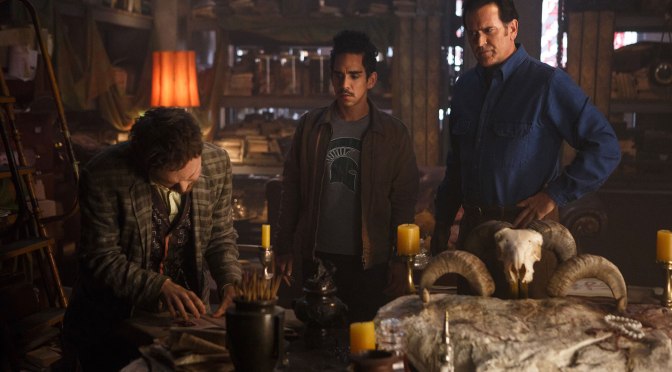
It seems that it’s a requirement that every police procedural show must eventually do an episode involving stage magicians, and iZombie’s time to continue this tradition has come. In “Abra Cadaver,” Liv eats the brain of a death-obsessed magician with a penchant for explaining his colleagues’ best tricks on YouTube.

It’s nice to see an episode where the murder mystery of the week is more than just incidental to more important goings on, although this mystery turns out to be not as clever as the writers think it is. The best parts of this episode are all the parts that aren’t the investigation of Sid Wicked’s murder, and we finally get to see the show begin to address the enormous elephant that’s been in the room since the beginning—how Liv’s being under the influence of the brains she eats affects her relationships.

Post-, well, not –coital, but post-probably-hand-stuff, I guess, Major talks a good game about how he’s cool with all incarnations of Liv, but it turns out that he’s much more bothered than he wants Liv to believe. By the end of the episode, Liv has gotten very weird from morbid magician brains, and Major has gotten very weirded out by it. I might be annoyed that Major’s brief flirtation with the most boring drug problem ever is so quickly forgotten, but this shift in direction for Major and Liv spawns one of my favorite interactions on the show so far when Major asks Ravi and Peyton about Liv’s personality changes.

My love for this scene might have something to do with the fact that it immediately follows Peyton shutting down Ravi’s awkward and totally unwelcome and inappropriate attempt to ask her for relationship advice. Left to his own devices, Ravi ends up dumping his girlfriend, Steph, later in the episode, which is actually the lowlight of the episode. Steph, weirdly and annoyingly, has decided to throw a Guy Fawkes Day celebration for Ravi—a couple of weeks late—and it’s every bit as cringeworthy as you could expect. It’s a really lazy way of dealing with a character who’s outlived her usefulness to the narrative the show is building.

Steph was introduced as Ravi’s new, relatively cool-seeming girlfriend a couple of weeks ago, and now she’s suddenly, well, this? I don’t buy it. And I didn’t like it. I ship Ravi and Peyton as much as the next person (which is to say a lot), but I hate to see this kind of character assassination in service to that. It could just as well have been handled by Ravi saying at some point that it just didn’t work out with Steph. There was no need to humiliate her on screen like this, and it didn’t make Ravi look good either.

By far my favorite parts of the episode, though, are the scenes of Liv and Blaine hanging out together trying to figure out who is killing zombies. By the end of their time together, I want nothing more than for them to get married already and make some beautiful zombie babies. In all honestly, though? Liv and Blaine have about ten times the chemistry that Liv and Major do, and we know that Blaine isn’t totally thrilled about being de-zombified. Liv and Blaine giving into their obviously sexual tension would be a great way for him to get re-zombified.

“Abra Cadaver” is a solid episode overall, and it hit most of the right notes, but it could have made better use of its premise. Personally, I could have used more magic puns, but it’s still a solid example of iZombie at its near-best and a nice entry into the annals of the dead magician murder mystery genre.

Miscellaneous thoughts:

  • How did Liv not even seem to notice that the dog in Dale’s file looked an awful lot like Major’s new canine friend?
  • Please stop trying to make Blaine and Peyton happen.
  • Who is the mysterious woman who drops off something at Babineaux’s place?
  • Speaking of Babineaux, I really like him and Dale together.
Book Review: The Builders by Daniel Polansky

The Builders is a wild ride from start to finish, and it’s my favorite so far of Tor.com’s new series of novellas. It’s a wonderful use of the form, and Daniel Polansky has managed to make a great many parts move like clockwork in a fast-paced, riveting revenge story with a deeply satisfying ending.
The best thing, on a technical level, about The Builders is Polansky’s clever use of its short length and the cinematic effect he produces by chopping the story up into short chapters, most only one or two pages long. There’s very little telling here, just showing, and each chapter is like a scene in a movie, painting a compelling picture that moves the story forward. It makes the book compulsively readable, and I could hardly bear to put it down.

There’s not much about The Builders that is particularly original or groundbreaking, but that is more than made up for by the sheer skill Polansky exhibits by arranging a collection of old tropes and a commonplace plot into a masterfully woven tapestry of a story. It goes to prove that, while there is very little new under the sun in the realm of storytelling, there’s definitely something to be said for doing something that’s been done before—but doing it very, very well.

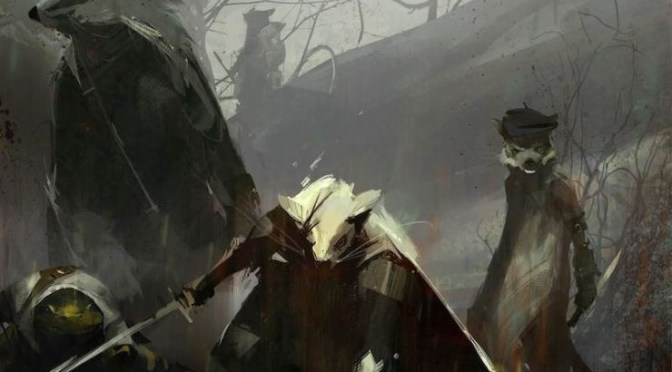
Of course, this isn’t to say that everything about The Builders is expected. Indeed, I’ve never seen this kind of getting the old gang back together for one last revenge quest job story done in quite this way before. You know, with animals. It’s, perhaps surprisingly, pretty great.

Cute little forest animals have never been so grimdark, which also makes this the funniest thing I have read this year. ­­­I highly recommend it.

Minority Report: “American Dream” offers a glimpse of a different, better show

After a week without an episode, Minority Report is back with one that reminds me of a lot of the things that initially attracted me to the show in the first place. “American Dream” isn’t great, but it is good, and it’s definitely the most I’ve enjoyed this show in a while.

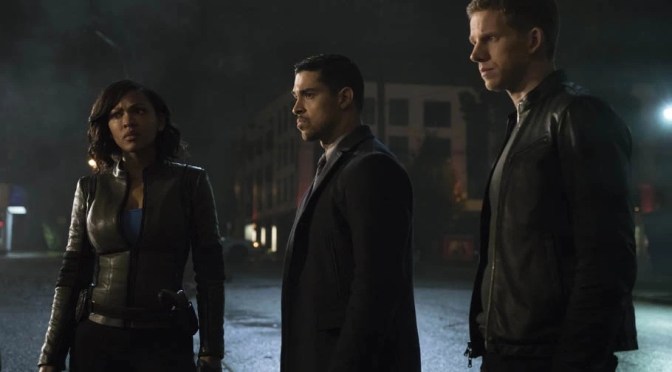
This episode does something that I think is one of the best things it could have done at this point: it lets Vega’s boss, Blake, in on the precog secret. Blake has been completely underutilized up to this point, which is a shame, but “American Dream” does its best to make up for lost time, with Blake joining Vega and Dash to investigate an impending murder in the poor, immigrant neighborhood where Blake himself grew up.

We learn that in 2025 the US government granted citizenship to some ten million undocumented immigrants, but that the “compromise” (in the true, Republican sense of the word) negotiated in exchange for that amnesty was the repeal of the 14th Amendment. Blake was one of the unfortunate children born in the US after that repeal, as was this week’s pre-murder suspect. The episode spends most of its time exploring what that status means to the people who are affected by it, focusing heavily on Blake’s experiences as a child of immigrants and a member of a marginalized community. This is definitely the best job the show has done to date with integrating world building with character development, though it does turn a little after school special in the end.

My biggest complaint about this episode is that it doesn’t manage to dig deep enough into any of its big ideas. It also sidelines its female star in favor of exploring a secondary character who they’ve actually made more interesting than either of the leads. Blake’s background is interesting enough that he could have carried a whole series himself, and indeed Wilmer Valderrama does most of the heavy lifting in this episode. Poor Vega exists at a similar-in-some-ways intersection of identities and experiences, but somehow the show just never has managed to really explore those and she’s relegated to background decoration in this episode.

The worst part about all of this is that it indicates, to me, large structural flaws in the whole premise of the show. Vega has suffered all along from poor writing and inconsistent (and unlikable) characterization, and Dash is just bland. These leads have always struggled to distinguish themselves in comparison to more interesting secondary characters, and this episode offers a glimpse of what the show might have been like if they’d centered the narrative around someone else altogether. Blake’s well-drawn background, his naked ambition, and his interesting connection to pre-crime make him far more qualified to be a lead protagonist than Vega has proven to be.

I’ve felt from the very beginning that Minority Report was a show that has a lot of potential, and I’ve spent the last several episodes bemoaning the ways in which the show has failed to live up to its early promise. It’s nice to see the show exploring some of its more interesting ideas, even if it is almost certainly too little too late. It feels obvious to me after this episode that the show’s writers just have never known what to do with Vega and should probably have chosen a character they could have written well from the start.

Miscellaneous thoughts:

  • The more I think about all this, the more it makes me angry for Megan Good, who I think has done the best she can with the material she’s been handed.
  • Wilmer Valderrama is ridiculously handsome and charismatic.
  • I about lost it when that guy got a drone in the face. That was the funniest thing that has ever happened on this show, if for no other reason than it was a pretty random thing to have happen.
  • I also about lost it when that guy tore a page out of a first edition of The Origin of Species. I know it’s a prop, but still.

Supergirl: “Livewire” gives us a cool new villain and examines troubled mother-daughter relationships

So, this episode actually aired out of order, with CBS deciding to hold off on showing an episode that dealt with events they thought might be uncomfortably similar to events in the real world this past week. It looks like last week’s episode really did wrap up the who comparing Supergirl to Superman thing, which is encouraging, but this week’s focus on every character except Supergirl left our heroine a little sidelined in her own show.

I was a little concerned that the show’s tendency to race through story might cause “Livewire” to feel extremely out of place, but the only thing that really felt off was the revelation that James and Lucy are apparently very much back together now. This had already been telegraphed by Lucy showing up in National City to begin with, so it’s not surprising that she’s continuing to be a roadblock to any romance between James and Kara. Sadly, this is such a boring and totally expected development that my eyes about rolled out of my head when I saw it, and this isn’t helped by the fact that Lucy is little more than a pretty face so far. I can only hope that when we finally get to see the episode that “Livewire” replaced it gives Lucy more of a personality so we can understand what James sees in her.

Ultimately, though, this early interlude serves just to get James out of town for Thanksgiving, minimizing Kara’s boy troubles and making room for Eliza Danvers to come into town to spend the holiday with her daughters and for Kara to have a ton of bonding time with Cat Grant, who basically steals the whole episode. What few scenes Cat doesn’t steal are stolen by villain of the week Livewire (Brit Morgan), who is great to watch in spite of a pretty nonsensical origin story.

Livewire starts the episode as a contentious radio shock-jock, Leslie Willis, who has been mentored by Cat Grant but who oversteps when she decides to denigrate Supergirl on the air in an opening sequence that is one of the more naturalistic pieces of writing that we’ve seen on the show so far. Leslie’s dislike of Supergirl feels real and her insulting tirade against our superheroine is also sharply funny. I can see why Cat hired Leslie in the first place. Unfortunately for Leslie, Cat has very specific plans for Supergirl’s “brand,” and she won’t stand for being undermined by Leslie’s grudge.

When Leslie refuses to let Cat dictate her content, Cat simply busts Leslie down to covering traffic until her contract with CatCo runs out. It’s on her first day in the traffic ‘copter that Leslie gets struck by lightning-via-Supergirl, falls into a coma, and then wakes up with superpowers and an even bigger ax to grind against Supergirl and Cat Grant both. Mostly, though, this plotline functions as an exploration of Cat Grant’s character through examining her relationships with Livewire and Supergirl, and it works perfectly to make Cat much more well-rounded and relatable character. As a fan of Cat since episode one, I am thrilled to see her given so much new depth this week.

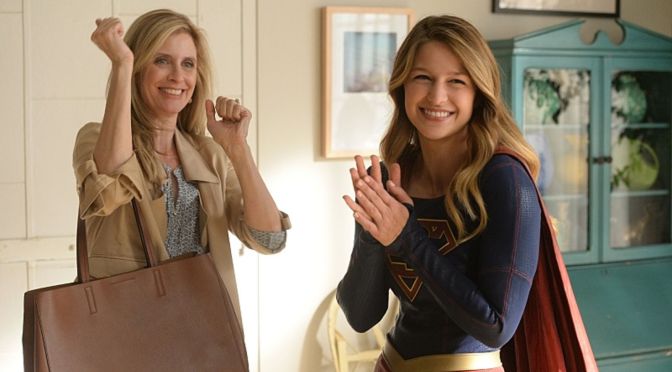
Meanwhile, Kara’s foster mother, Eliza Danvers has come to National City for Thanksgiving. Kara is excited to share the newest developments in her life with the woman who raised her through her teen years, but big sister Alex is certain that Eliza is not happy about the situation. Alex is right, of course, and Eliza can’t even make it through dinner before lighting into Alex for failing to sufficiently protect Kara. These sequences also give us our first flashbacks to Kara’s life when she first came to Earth, which is a nice change, but the Alex/Eliza stuff is really just completely overshadowed by the much more interesting interactions between Kara, Cat, and Leslie.

It doesn’t help that things between Alex and Eliza are mostly resolved by the end of the episode. I expect for a super hero show to have unbelievable things going on, but I expect that to be confined to the actual super hero portions of the show. The idea that ten years of mother-daughter strife can be fixed with a couple minutes of hugging it out on Thanksgiving just doesn’t feel true, which is too bad. It’s very important in a show like this that the more “out there” comic book elements are balanced by a naturalistic approach to its human drama. Rushing through these issues minimizes their emotional impact and makes them too unrealistic to counterbalance the absurdity of aliens and cyborgs and magical lightning powers. This has been a problem in the show since the pilot, and it’s worrisome that this is starting to feel like one of Supergirl’s defining characteristics. I’d hate to see it become the show’s downfall.

Miscellaneous thoughts:

  • Is the radio shock-jock character even a recognizable archetype in the modern age? While Leslie Willis isn’t alone in recent television history, I would seriously question whether or not a lot of young people would recognize the inside of a radio station anymore.
  • Winn’s dad is in prison, apparently. Since I’ve never read any of the comic books that this series is based on, I have no idea who any of these characters are, but I guess Winn’s dad probably is (or is going to be) some kind of supervillain. Frankly, I’ve felt for a while now that Winn himself gives off some faint future-supervillain vibes, so this isn’t terribly surprising.
  • Who on earth made the decision to use a cover of “Take Me to Church” for a mother-daughter bonding scene? This show is usually pretty obvious with its use of modern pop music, but this was bonkers. I haven’t seen a musical decision this baffling and bizarre since that time on Glee when Idina Menzel and Lea Michelle did a mother-daughter duet of “Poker Face.”
  • They really are moving right along with the “Hank Henshaw is a villain” storyline.
  • I still feel at times that including the DEO headquarters as a setting makes the whole show feel a little disjointed. Even when an episode is, like “Livewire” is, objectively not overstuffed with story, having those extra setting shifts can make it feel busier than it is.
  • Livewire herself felt a bit half-baked in this episode, but she’s definitely the most interesting villain-of-the-week we’ve seen so far. With her only being captured, not killed, I’m very hopeful that we’ll see her again in the future.
  • Speaking of villains, where is Astra? Even if they’re saving another showdown between her and Supergirl for a finale episode, it seems like we ought to get an update on her occasionally.
  • “You’ve always been my super girl” was the one like out of all the Eliza/Alex stuff that really worked for me. There might have been a tear or two.

Doctor Who: “Sleep No More” is a disaster in every possible way

“Sleep No More” definitely numbers among Doctor Who’s worst episodes. Although it may not be the absolute worst in history, I can’t think of one that I’ve disliked more. That said, it’s not an episode to inspire a great deal of, well, anything. My singular thought as the episode ended was just “What the fuck did I just watch?”

The episode begins by skipping the opening credits in favor of jumping straight into a confusing and frustrating forty-five minutes of found footage nonsense. The story—a pretty standard base under siege plot—is introduced by creepy scientist Rasmussen, who is too-obviously some kind of villain, and we’re then introduced one by one to the unfortunately forgettable members of a doomed rescue party.

The only character this week who got anything like a development arc was Chopra, but even he was sadly one note. The show cast its first transgender actor, Bethany Black, as genetically engineered “grunt” 474, but her talents are largely wasted in the role, and the secondary plot where 474’s self-sacrifice helps Chopra to see the grunt’s humanity is underdone, unconvincing, and ultimately irrelevant as both characters involved die within moments of each other. Deep-Ando is separated from the rest of the group early on and dies alone as well. Rescue party leader Nagata was barely present and contributed little, but she did at least get to escape with the Doctor and Clara in the Tardis at the end.

Speaking of Clara, she fades into the background here almost as much as any of the secondary cast members this week. With Jenna Coleman’s definitely impending departure from the show and Clara’s possibly impending death (hey, it is rumored) coming as soon as next week, it’s incredibly saddening to see her once again marginalized in the story with almost nothing to do. It’s no comfort, either, that the Doctor is just as ineffectual this week. It only makes me wonder what the point of this episode is at all.

I have seen some posts praising the found footage format and the horror elements of the episode, but I didn’t find it compelling or frightening in the least. The shaky camera work was occasionally nauseating, but never managed to convey the sense of panic that I think was intended. The monster of the week was more silly than anything else, and if the sleep dust monsters weren’t absurd enough to look at, with their rather disgusting-looking heads like huge gaping (and vaguely scatological) orifices, the Doctor’s various theories and explanations made the monsters just plain ridiculous.

It’s not a great sign when even the Doctor ends the episode with an exasperated exclamation that none of it makes sense, and that’s exactly what happened here. The whole way through the episode, I kept waiting for it all to finally congeal into something resembling a coherent story, but it just never happened.

Ash vs. Evil Dead: “Books from Beyond” is some yappening and not a lot of happening

I had very high hopes for “Books from Beyond,” so I was a little disappointed when this episode felt like a bit of a step back after the first two really excellent half hours of the show. It’s not a terrible half hour of television, but it’s not particularly scary, not as funny as the last couple episodes, and it doesn’t do as much as it ought to move the story along.

After a week without Lucy Lawless, it was nice to see her back in the opening minutes of this episode, although I think her scene might leave us with rather more questions than answers about her character. I had kind of expected her to play a bigger part in the action this week, as the preview for the episode seemed to imply she would, but she only has perhaps five minutes of screen time. It’s not quite a deal breaker, but it is irritating to feel misled by promotional material in this way.

What’s more unfortunate this week is that Lawless’s Ruby isn’t the only female character to find herself somewhat sidelined once Ash and company arrive at the bookstore. While Ash and Pablo deal with ancient book expert and obvious weirdo Lionel (Kelson Henderson), Kelly is left to keep an eye on a handcuffed Amanda Fisher, who’s got no idea what’s going on but is convinced that Ash is responsible for it. Kelly has almost nothing to do this week, and Amanda doesn’t have anything useful to do. Both women end up only hindering Ash’s efforts to find a way to stop the evil he’s unleashed, but the largest portion of their time is spent doing nothing at all. This would be annoying enough if all the interesting stuff was happening where the women aren’t, but that’s sadly not the case here.

You wouldn’t expect a demon-summoning to be boring, but this one somehow manages it. There are some funny moments, but there are even more missed opportunities. Aside from this episode’s failure to include Kelly and Amanda in most of the action, the summoned demon and the ensuing fight just doesn’t end up being particularly well-done on any level. The demon itself is dull-looking, the show has toned down it’s characteristic gore, and the huge number of creepy specimen jars that are shown over and over again throughout the episode are never used to their full possible effect. Considering how much the camera lingered on all those jars of pickled fetus-looking things, I kept expecting them to at some point end up out of the jars and attacking Ash’s face. Not having that happen is a major missed opportunity.

Overall, “Books from Beyond” is simply a much slower-paced episode than the last two. It wasn’t bad, but it didn’t deliver on the promise of the episode preview. On the one hand, I’m not certain it’s reasonable to expect that the show could have kept up the level of energy and humor that characterized the first couple of episodes. On the other hand, I’m not sure the show works if it doesn’t somehow manage that. When you add in the fact that the show seems to have lost interest in its female characters, at least temporarily, “Books from Beyond” is layer upon layer of letdown.

Miscellaneous thoughts on the episode:

  • I did love Lionel’s costume, although I think his jacket really needed to have elbow patches.
  • They are seriously having Pablo get “friend-zoned”? I hate that trope so much. It’s the worst sort of low key misogynist bullshit.
  • I hate to harp on the fetus jars thing, but that really was an enormous disappointment. I know they already did Ash fighting a comically small opponent in episode one, but this would have been a whole bunch of exceptionally gross-looking comically small opponents, which is clearly an entirely different thing.
  •  Best line of the night: “Well, you two learned a very valuable lesson today: Cops don’t help.”
  • That said, I’m starting to get the feeling that the show either has a total disdain for Amanda Fisher or just doesn’t have any idea what to do with her. She’s clearly a tough, capable person, but this week in particularly she functioned as nothing but an obstacle to our heroes while also ending the episode worse off than she started it. I thought the show was moving towards having her join up with Ash and company, but that seems to not be the case. I suppose this may mean that Amanda is going to end up working together with Ruby (who is downright sinister at this point), but I’m not exactly holding my breath on that, either, after this week’s mishandling of her character. It is still early in the series, but Amanda deserves better than what she’s been given so far.

Weekend Links: November 14, 2015

This week would have been Kurt Vonnegut’s 93rd birthday, and there’s a new animation of a talk he gave at NYU in 1970:

The winners of this year’s World Fantasy Awards were announced this week.

Which brings us to, probably, the biggest genre news of the week, which is the decision to replace the current World Fantasy Award statuette–a stylized bust of influential horror author and notoriously vile racist H.P. Lovecraft–with something less upsetting and more in line with what the awards actually represent.

In other news, Starbucks has already fired the first shots in this year’s War on Christmas, and national treasure Chuck Tingle has written porn about it.

Geek Feminism looks at why new musical Hamilton is so popular with geek feminists.

Atlas Obscura goes on a quest to find the fairytale capital of the world.

At the Barnes & Noble Sci-Fi and Fantasy blog, a look at why there’s never been a better time to be a sci-fi and fantasy reader.

The Oatmeal made a comic about Gene Roddenberry, and now I’ve got something in my eye.

Tamora Pierce did a Reddit AMA.

Fantasy Literature interviewed Ann Leckie.

SyFy posted this video about their process of adapting The Expanse:

Tor.com has a big list of upcoming sci-fi and fantasy adaptation projects. It’s sadly about 90% adaptations of work by and about men, but I have some suggestions that would shift that balance a little.

The Atlantic looks at why there are so many Catholics in science fiction.

New Republic examines the work of the group of  writers they call The New Utopians.

HuffPo examines the trend towards optimism in science fiction.


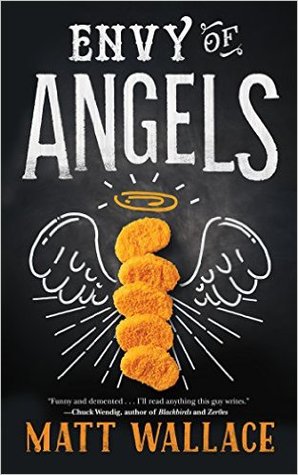
Book Review: Envy of Angels by Matt Wallace

Probably my favorite thing about this first round of Tor.com novellas has been the wide variety of different stories they have included, and this one is definitely the one that is most different from all the rest. I didn’t have any particular expectations for Envy of Angels, not having read anything else by Matt Wallace, and I increasingly find that I rather enjoy reading like this. It turns out that Envy of Angels is a smart and very funny urban fantasy.
I love any book that makes me laugh out loud, and Envy of Angels did so more than once. It is a seriously hilarious story involving a couple of down-on-their-luck chefs, a catering company whose only clients are demons, and an angel that tastes just like chicken nuggets. Basically, Darren and Lena are looking for work, they get hired on at Sin du Jour, and this story deals with basically their first day of work.

It’s been a good while since I’ve used the phrase “hijinks ensue” unironically, but it’s definitely appropriate here.

I can’t write too much about the plot without spoiling half the jokes, so I will just say that this is an excellent little story to read if you need a break from reading all of this year’s fantastic more-serious novels. I finished Envy of Angels in a single afternoon because I didn’t want to put it down, so I’d also suggest being sure to just go ahead and make sure you’ve got a couple of hours free when you sit down to it.

I won’t say that Envy of Angels is a masterpiece, because it’s not. Some of the characters are a little too one-dimensional, the tone of the story can be uneven at times, the prose is workmanlike at best, and I occasionally felt as if the author wasn’t quite as clever as he thinks he is. Still, this is a super fun read, and sometimes that’s enough.

I don’t see myself searching out Matt Wallace’s other work anytime soon, but I’m definitely looking forward to the next Sin du Jour novella. Goodness knows, by the end of January I’m sure I’ll be ready for another light, fast, humorous read to chase away the winter doldrums.

5 SFF Adaptations That Would Greatly Improve Genre Diversity in TV and Film

Another day, another list of upcoming SFF adaptations that is a big, depressing sausage fest.

I feel like the common wisdom on the issue of diversity in media is that things are improving, but it’s very telling when just a quick count of the properties listed on this list of upcoming or possibly upcoming book-to-film/television adaptations shows forty based on work by men, but only five based on work by women. It probably goes without saying, but there are also only a couple of people of color on the list.

Moving on to the subjects of the projects, things are somewhat better, but not much. A full half of the projects focus on men’s stories, more if you count ensemble projects whose main characters are men. Only two projects are primarily about women. It’s a depressing toll, especially when we’d all like to believe that television and film are improving in diversity. If this list represents any improvement at all, it’s not good enough.

I don’t pretend to know exactly what would be good enough, but there are numerous books and comics that I think would improve the film and television landscape. Certainly, any of these would be significantly more interesting than another crop of shows starring square-jawed white dudes.

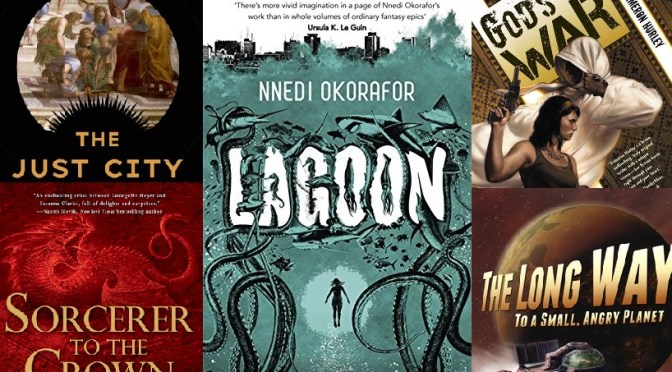
  1. The Long Way to a Small, Angry Planet by Becky Chambers
    Space opera has gotten popular again, and this one is very good. I’d love to see it as an ongoing television series, though that would require some expansion upon the source material. However, the novel itself is very episodic in nature, being told as a sequence of vignettes, each one focusing on a different character. This would lend itself well to being adapted as a miniseries or as a short series on a digital platform such as Netflix or Amazon, or it could be easily streamlined into a long film. The major downside of this book is that the high number of alien characters would require expensive special effects to produce, but the right production company could create something really wonderful if they were willing to spend the money on it.
  2. Lagoon by Nnedi Okorafor
    This book just begs to be made into a big summer blockbuster a la Independence Day. I want to see it at the drive-in.
  3. Sorcerer to the Crown by Zen Cho
    Like Jonathan Strange & Mr. Norrell, but more fun. Either film the book as it is for a delightful miniseries, or start where the book ends and continue the adventures of Prunella and Zacharias. Or both. Both would be good.
  4. God’s War by Kameron Hurley
    While I’m not often a fan of just lifting characters from a book and writing all new stories around them for television, Kameron Hurley’s Beldame Apocrypha would be perfect for that treatment. Nyx is an amazing character of a type that doesn’t often get to be female, and her shifting crew of associates would make great fodder for a gritty sci-fi bounty hunter sort of thing. The world and characters Hurley created in this series are more than strong enough to carry a long-running television show, which would allow some of the bigger plots of the books to be explored at leisure.
  5. The Just City by Jo Walton
    The goddess Athena gathers thinkers and dreamers from all ends of history in order to build Plato’s Republic. Apollo decides to become human so he can grow up as a child in the Just City. There are robots. And Socrates. And philosophical debates out the wazoo. I would watch this on TV, and I think I’m not the only one.

Obviously, I’m not saying no more square-jawed white dudes, ever, but all of these suggestions would make for a very nice change in the current landscape of entertainment. They would be even better if we could get more diversity behind the camera and in writing rooms for them as well.

The truth is that every time there are new surveys of the industry, it’s proven over and over again that the needle of diversity hasn’t moved much in thirty years. While there have been somewhat more actors of color in highly visible roles, it’s simply not true that things have really improved that much overall. The same can be said for the presence of women in cinema, and those who don’t fit neatly into the gender binary fare even worse.

Any (but preferably all) of the five works I suggest here would be a step in a better direction.

iZombie: “Max Wager” pays off, bigtime

“Max Wager” was a solid episode that advanced all my favorite plots while also not making things too easy for Liv and Major, whose relationship troubles ate up perhaps a tad too much of the hour. Still, even Liv and Major doing sad vanilla Skype sex couldn’t ruin an episode that had so much good stuff going on.

It looks like Liv and Major are really happening, which I’m not super thrilled about, but it does give Ravi a reason to spend the whole episode testing over a hundred different types of condoms to find out which one might let Liv and Major have sex. The answer is none of them, because zombie virus is very tiny, and Ravi proves that he is the world’s best friend before the end of the episode when he bursts in on Liv and Major to, I guess, physically stop them from having sex if he had to. Also, Ravi’s condom-balloon unicorn is great. Also, also, I would like it if Ravi and Peyton would start making out again now, but I’ll settle for companionable roommate breakfast together.

I was happy to see Clive get a little more to do this week, and while the chance meeting between Clive and Dale and Liv and Major was a little cringeworthy at times (entirely because of Major, who apparently knows well enough to say “Native American” but not enough to avoid making vaguely racist and unfunny “jokes”), I was mostly just glad to see that the show is moving things along between Clive and Dale. It really helps to establish that Clive has a life and personality and goals when he’s not just hanging around with Liv—which was also called out in the scene. I think this was supposed to be amusingly self-aware, but it fell flat with me. I don’t want a self-aware quip about how underdeveloped Clive is or how underused he is in the show. Just fix it, please.

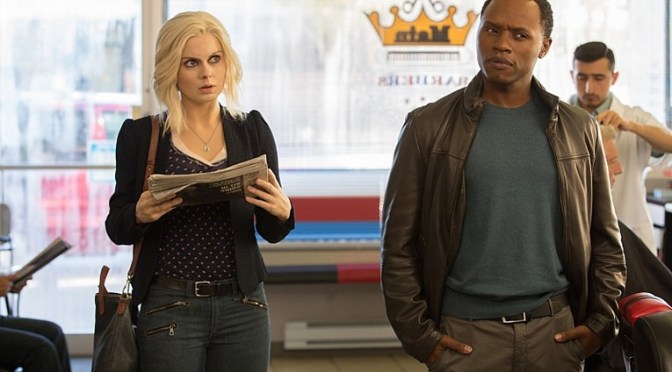
Once again, Peyton is back, and while I always wish we got to see more of her, she got some good material this week. While we’re first introduced to Big Bad Stacey Boss with Liv at the barbershop (which was an incredible scene, by the way), we only find out who this extremely creepy little guy is when he shows up at Peyton’s office to threaten her into stopping her investigation of his illegal activities. She isn’t going to stop, obviously, but in Stacey Boss the show has managed to create its most legitimately scary villain yet.

The best scenes of the episode were all Blaine’s, though. David Anders does an amazing job of balancing evil, humor, and pathos. Literally every time this guy is on screen, things get interesting, whether he’s talking with his dad, drunkenly philosophizing at Liv, or maudlinly murdering his own grandfather.

It’s all a perfect set up for the absolute gut punch at the end of the episode when, at first, we think Major has murdered Blaine’s dad (making Blaine’s killing of his beloved grandfather tragically unnecessary) only to find out that Major hasn’t been murdering any of the zombies that have disappeared. He’s only freezing them, presumably to be thawed and cured at a later date. Though this makes Major’s brief flirtation with self-destruction earlier in the season somewhat more inexplicable than it already was, it’s good to know that Major isn’t a total monster.

Aside from my general boredom with the Liv and Major drama, my only real criticism of this episode is that with a title like “Max Wager,” I expected to see some Vaughn. In the end, though, any disappointment I felt at the lack of Vaughn du Clark was more than mitigated by the abundance of Blaine and the introduction of a new villain to love-hate.