All posts by SF Bluestocking

Doctor Who: “Heaven Sent” doesn’t quite hit its emotional targets, but it’s still good

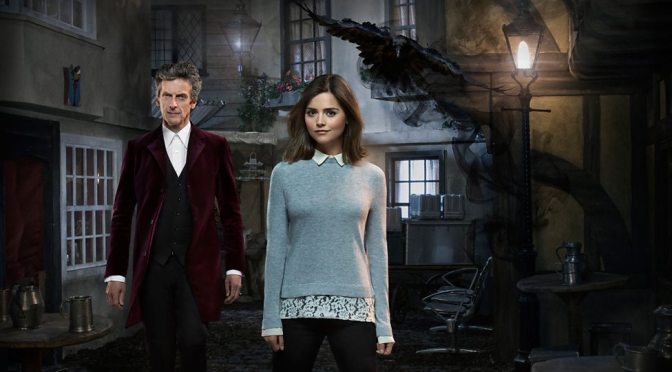
“Heaven Sent” is a near-perfect episode of Doctor Who and a reminder that Steven Moffat isn’t completely and irredeemably awful and a blight on the history of the show, but is in fact a very good writer capable of creating truly compelling television. It’s by far the best episode of Doctor Who in recent years, though perhaps that’s because the Doctor is the only character on the screen for the vast majority of it—something that I would suggest is Steven Moffat’s ideal for the show, judging by the show’s increasing disregard for and neglect of all characters who aren’t the Doctor.

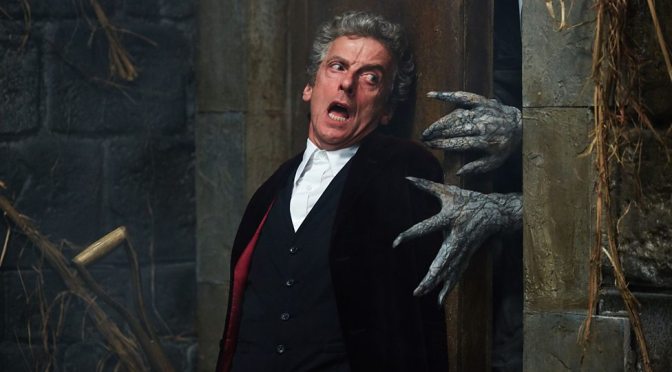
That said, Steven Capaldi has been the show’s strongest asset for some time, and “Heaven Sent” finds him imprisoned in a mysterious castle and pursued by an actually quite frightening, if also mysterious, creature in a voluminous robe. This creature can only be outrun temporarily, though it moves slowly, and the only thing that will stop it (also only temporarily) is the Doctor offering it a truthful confession. Something, something, the Doctor has a mind-palace—I mean mind-TARDIS—where he’s working through his feelings about Clara’s death and figuring out how to “WIN,” and also he has to spend literally billions of years punching through a giant harder-than-diamond wall with his fist. It’s a much better episode than it sounds, though, and Capaldi is at the top of his game here as he explores the castle and talks at Clara inside his head.

The problem that I have with this episode is a problem that is ongoing and omnipresent in Moffat’s work as both a writer and showrunner. While “Heaven Sent” could be read as a great episode that gives the Doctor time to grieve his lost companion, it just never manages to feel really real, and this is entirely due to Steven Moffat’s unwillingness to do the actual work required to actually elicit the emotional responses that he wants the audience to have. Instead, Moffat tells us how he thinks we ought to feel, regardless of whether or not it’s supported by anything that we’ve been shown so far.

The overall effect of this is that, while it’s possible to sort of objectively understand what Moffat is trying to communicate, it’s difficult to actually really get it. It’s unfortunate, particularly in an episode as well-written as this one. If Clara had been utilized more intelligently and developed as a fully-realized character over the past couple of seasons, this episode (and “Enter the Raven,” for that matter) would have been absolutely devastating. As it is, it’s not even enough to bring a tear to the eye.

Steven Moffat is a capable writer and can come up with clever ideas from time to time, but he’s never quite managed to learn that he can’t script the audience’s reactions. The most emotional moments of a Moffat episode always rely on implications, narrative shorthand, and straight up telling the audience what feelings to have. This is as true now as it was all the way back in “Blink” and “Silence in the Library/Forest of the Dead.” I don’t suppose I can reasonably expect this style to change after all this time, but it’s disappointing nonetheless.

“Heaven Sent” could have been perfect, but instead we have to settle for close-but-no-cigar.

Weekend Links: November 28, 2015

I can’t tell if my favorite cool thing I’ve seen this week is these gorgeous tilt-shift astronomy photos or this story about jetpacks being used to fight fires in Dubai.

My favorite funny thing of the week, though? Mightygodking’s 2016 election Magic: The Gathering cards.

The World Fantasy Award is looking for a new statuette design to replace the bust of H.P. Lovecraft.

Meanwhile, S.T. Joshi continues to have a public meltdown about it. The Arkham Digest reports, and there’s a good piece at Salon on the mixed legacy of H.P. Lovecraft.

Robert Jackson Bennett has some thoughts on worldbuilding.

At Black Gate, Sarah Avery looks at why we love enormous fantasy book series.

Ian Sales has some ideas on reasons to be cheerful in space opera.

Lit Reactor lists 5 Ray Bradbury stories that tell us everything we need to know about writing.

The Mary Sue talks about Supergirl vs. Jessica Jones. Turns out the world is wide enough for both. And more.

io9 looks at how Doctor Who managed to waste Clara Oswald.

Games Radar collects 25 of the most kick-ass TV heroines.

Tor.com has a roundup of the covers for their winter publishing schedule, and they look so good.

Tycho Journal wants to reinvent the sci-fi magazine.

Read “On Pandering” over at Tin House.

If you’re looking for something to read, Largehearted Boy is collecting all the “Year’s Best” lists you could ever hope for.


Supergirl: “How Does She Do It?” doesn’t do it for me

“How Does She Do It?” would have been a better episode if it wasn’t aired out of order (transposed with last week’s “Livewire”), but as it is it feels redundant. This isn’t helped by its heavy focus on a couple of ideas that are just plain boring: the “friend zone” and the question of whether or not women ever can “have it all.” The good news, I suppose, is that Supergirl does manage to do a couple of somewhat fresh things with such utterly pedestrian material. The bad news, of course, is that it’s still utterly pedestrian material.

I like that the show uses the phrase “friend zone” almost ironically, but I hate the it uses the phrase at all. I also hate how determined the episode is to force Kara to be Super Adult about things, no matter how gratifying it is to see a woman on screen setting boundaries in an assertive fashion. If Kara is capable of dealing with both James and Lucy so firmly and kindly (like a grown up), why hasn’t she been able to communicate her feelings to James? James and Lucy’s getting back together this episode is also a little spoiled by having already seen last week’s episode, where James spends all his time (while on vacation with Lucy!) pining after Kara.

While Kara is mooning over James and turning her adorkableness up to eleven, she has admirers of her own. First is Winn, who is a little more tolerable this episode than he has been in the past, though still slightly creepy. Next is Cat Grant’s son, Carter, who has a very cute crush on Supergirl and who Kara is a very inept babysitter for. Finally, there’s Maxwell Lord, who is apparently so totally obsessed with Supergirl that he’s willing to blow up his own things in order to test her abilities.

This last is the major plot of the episode in lieu of the normal bad guy of the week, which is a nice change. Essentially, Lord wants to put Supergirl through her paces to get a better feel for what her true skill set is, which also allows the viewers the same opportunity. What we get, then, is a show chock full of Supergirl doing all different kinds of things, and what we learn is that she’s still working on figuring out the best ways to help people. She has a pretty impressive range of abilities to work with, and in this episode we see her trot out all of them in order to deal with the challenges Lord has set for her. We see again that Supergirl is still learning her own limits, and she’s not entirely successful in the end; she saves a train full of people, but she has to watch as a man that has been manipulated by Lord kills himself practically in front of her.

This ties in neatly with the exploration of “having it all” through Kara’s overall experiences in the episode. She’s trying to be Supergirl and a DEO agent of sorts and Cat Grant’s assistant, and this episode also sees her taking on the additional responsibility of watching Carter. It’s obviously too much for any one person to do, even with super powers, which might have been a rather boring message of the episode, but the show doesn’t stop with just the demonstration of this fact. Instead, the writers have tried to wrap things up much more explicitly and heavy-handedly by giving Cat Grant a speech about it. Unfortunately, the words Cat has to say don’t make a lot of sense, especially coming out of the mouth of a character who is so obviously an extraordinary (and extraordinarily privileged) woman. It’s yet another example of this show being so self-consciously feminist that it circles back around to being, well, not sexist, but incoherent and unhelpful.

The most interesting part of this episode to me was the comparison between Kara/Supergirl and Maxwell Lord. He talks about wanting to help people, but he doesn’t trust any of the existing systems (government, etc.) that do help people. Kara, on the other hand, is also someone who professes to want to help people, but where Lord seems mostly dedicated to interrogating and criticizing the things and people he doesn’t trust—and putting people in danger in order to do so—Kara is actually out there doing the work of trying to help people.

Supergirl is an imperfect hero, but she’s constantly trying to do her best. She may not always be able to save everyone, and she doesn’t have the right answer to every problem, but she’s all in for doing the work and learning and growing and improving her methods. This might be the most progressive message the show has delivered so far, and it’s one that seems almost unintentional in an episode that is ostensibly (and obnoxiously) exploring other far less interesting ideas.

Miscellaneous thoughts:

  • Carter Grant is a decidedly odd child.
  • Seeing how James and Lucy get back together made me like Lucy a lot more and James a lot less—especially when I think of how shady he acts in the chronologically next episode that we saw last week.
  • There were more seeds of Hank Henshaw being evil this week.
  • Still no Astra, though she is at least mentioned.
  • I hate the scene with Alex and Lord. Seriously gross.
  • If the writers would quit putting nonsensical “feminist” tirades in Cat Grant’s mouth, I think she’d be my favorite character.

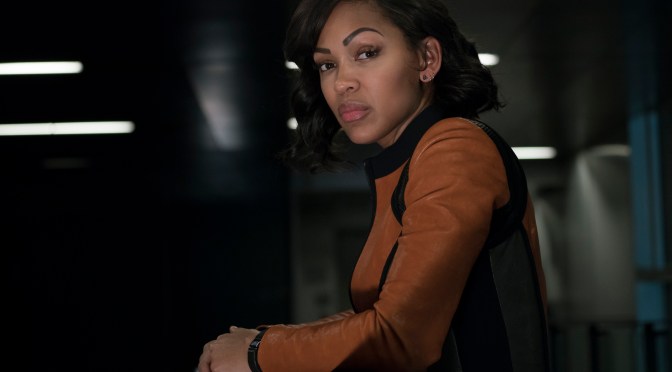
Minority Report: “Memento Mori” is a solid set up for next week’s finale

We’re up to what is likely the penultimate episode of Minority Report, and it feels like the show is just now starting to hit a new and more comfortable stride as it’s moved away from the case-of-the-week format that it stuck to earlier in the season. “Memento Mori” delves deeper into the conspiracy our protagonists brushed up against last week as well as the DIA’s plot to re-enslave the precogs. Even more than I did last week, I feel like this is the show that Minority Report should always have been.

The show has always been at its best when it explores its larger themes and elaborates on its overarching plot, and it’s been doing more and more of that as it nears its probable ending. It may be too little, too late to save the show (though it’s still not officially cancelled), and it’s still not entirely living up to the potential of its premise, but it’s been an enjoyable couple of weeks.

The best scene of this week was Dash, Vega, Blake, and Akeela all hanging out together at the beginning of the episode, and I’m terribly sad that this is almost certainly the only time we’ll get to see this happen. It’s nice to see Dash in a somewhat normal environment, and I like seeing the whole team spending time together doing something not murder-related. It’s a chance for us to see the chemistry between Vega and Blake, though it’s also one more reason to be bummed about the impending cancellation of the series. Personally, I’ve always rather liked the idea of Vega and Dash together, but Vega and Blake would have worked, too. I don’t always care for romantic drama in these kinds of shows, but a little more romance would have helped to soften the often unlikeable Vega, especially if the show never intended to do much with her family relationships or her friendship with Akeela.

Dash does have a vision this week, and there is a case, this is all stuff that ties into the bigger intrigues and ideas behind the show. A senator who is working to pass a bill allowing genetic tinkering with fetuses is the target of a politically motivated attack, and it’s tied back to the Memento Mori terrorist group that we were introduced to last week. The ideas introduced in this plot are only tangentially related to the bigger things going on in the show as well as getting a little garbled in their delivery, but it mostly works even if viruses don’t work at all the way the show’s writers seem to think they do.

The most important things that are happening in this episode concern the DIA and Blomfield’s plan to recapture and use the precogs. Early in the episode, Arthur tries to get Blake to blackmail someone in the DIA in order to put an end to Blomfield’s machinations, but Blake refuses in no uncertain terms. When Arthur gets someone else to do his dirty work, Blomfield turns to the private sector to keep his plans moving forward. When Blomfield turns up at Wally’s place looking for the precogs, we finally get to see Blomfield becoming a truly terrifying villain. Wally manages to be momentarily successful at getting Blomfield and his thugs to leave him alone, but Blomfield is already pretty successful at finding the precogs without Wally’s assistance.

Before the end of the episode, Blomfield has managed to locate Agatha, who goes to Arthur after being flushed from her hiding place on Libertarian Island (or whatever). Agatha is still having the vision of Vega standing over them in the milk bath, and now her vision shows Vega ordering some unseen person to “put them in.” This ominous revelation caps off the episode, and we’re all set up for next week’s finale.

Ash vs. Evil Dead: In “Brujo” the show’s women continue to be short-changed

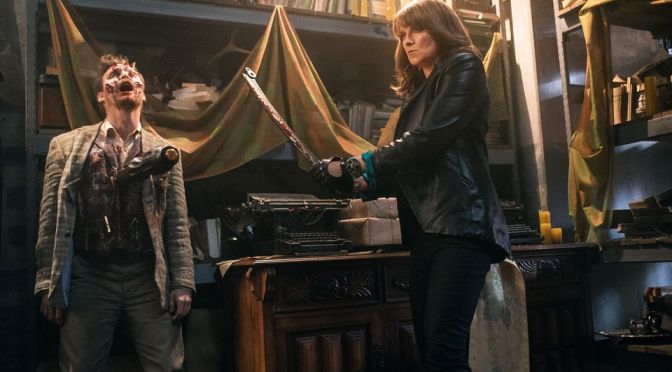
This week brings another shift in pace and tone for Ash vs. Evil Dead, and “Brujo” is an entertaining half hour of television. It’s nice to see the show mixing things up a bit and avoiding following a formula from episode to episode. While I haven’t loved every piece of the show so far, they’ve all been enjoyable in their own way and I could easily see this being a show that ends up being greater than the sum of its parts in the end.

The episode begins with Amanda Fisher, who is attacked by the not-quite-dead bookstore owner from last week after being left handcuffed to a ladder. Fortunately, Ruby arrives right in time to rescue her, and the two women are now teaming up and combining their quests to find Ash. This is a positive development, especially for Amanda, who the show hasn’t seemed to know what to do with since the first episode. It’s a little disheartening just how wrong both Amanda and Ruby are about what’s going on, and I’m concerned by how little screen time they’re getting when it feels like they’ve got so much to learn.

Obviously, the show is Ash vs. Evil Dead, not Amanda and Ruby Fight Evil, and with only a half hour per week it would be easy for the show to lose focus if it spent too much time with these secondary characters. Unfortunately, I feel like the show is doing Ruby and Amanda a disservice by moving their stories along so slowly. Ruby may benefit from a bit of mystery, but Amanda continues to suffer from lack of characterization and just not having a lot to do when she is on screen.

All that said, I’m not entirely convinced yet that Ruby isn’t evil herself. At this point, it’s early speculation on my part, and I could be wrong—goodness knows, it would be nice if the show wouldn’t do the expected thing and make her secretly evil all along—but carrying around a severed hand of sinister provenance seems more than a little suspicious.

There’s relatively little actual action in this episode, but there is a short sequence while Ash and company are on the road to Pedro’s uncle’s house where they find themselves being chased by a huge, roiling cloud of evil. Unfortunately, this bit feels a little overlong and doesn’t manage to be exciting, scary, or funny. Instead, it serves mostly to allow us to see that Kelly is having a decidedly weird headache that she can’t seem to shake. It gave me a bad feeling about how things were going to go for her in the rest of the episode, and I was correct to be apprehensive.

While Ash is getting high and exploring his trip to try and learn how to undo the evil he’s summoned, and Pedro is working on building a new prosthetic for Ash, we learn that Kelly has been possessed by last week’s demon. I hate this so, so much.

I wasn’t thrilled last week with Kelly being cut out of most of the action, but I suppose someone had to keep an eye on Amanda. The week before that, Kelly was effectively made into a damsel in distress, but I forgave it because it seemed to work as the beginning of her character arc. However, in “Brujo” Kelly starts off incapacitated by debilitating headaches and ends the night still possessed by a demon. With the lack of attention paid to the other women in the show, it’s beginning to feel like they’re all being actively sidelined in favor of exploring Ash as an anti-hero and developing Pedro as Ash’s loyal sidekick.

The worst part of all of this is that the show began its run with a lot of promise, and I had high hopes that it might utilize women in interesting roles that defy some of the more irritating genre tropes. In fact, that seemed to be part of what the show was explicitly offering with its promotional materials and trailers. There might be plenty of episodes left in which things might improve, but right now things just get worse and worse each week for the show’s women. It’s not a deal breaker for me, yet, but it’s definitely gotten grating already.

Doctor Who: I only wish that “Face the Raven” was the end of an era (namely, Moffat’s)

“Face the Raven” was as good as it could be, but by no means as good as I would have liked it to be. This looks to be Jenna Coleman’s last episode in the role of Clara Oswald, which had been the rumor before the season started, and it’s frankly a relief to have it over with. The facts that it’s the second episode of the season written by a woman and that it’s actually pretty well written—both nice changes for Doctor Who—are really just a bonus.

Given the state of the show after over five years of Steven Moffat doing his best to destroy everything good about it, my expectations of it are pretty low, and “Face the Raven” exceeded them. That’s not saying much, and the episode did have some great moments, but it’s all tempered by my general dissatisfaction with the series and with Clara’s tenure as companion in general.

In “Face the Raven,” Clara and the Doctor receive a phone call from previous acquaintance Rigsy, who has a problem: he’s got a mysterious counting-down tattoo on the back of his neck. In a somewhat senselessly convoluted plot, it turns out that Rigsby has been framed for a murder at an alien refugee camp in London that is being run by the Doctor’s most recent frenemy, Ashildr/Me (Maisie Williams), who has contrived this scenario to draw the Doctor into a trap because she’s decided to trade the Doctor to some unknown “them” in exchange for protection for her little alien enclave.

It’s nice to see Maisie Williams returning so soon, and I suspect that we could see her sometime in the next couple of weeks as well, judging from the “…to be continued” at the end of this episode. Her performance here wasn’t as strong as it was in “The Woman Who Lived,” but she wasn’t given nearly so much to work with here. Still, I adore Maisie Williams, and Me/Ashildr is as good a recurring character as has been introduced during the Moffat era. Me’s plan in this episode may be a little silly to start with, but once it all goes sideways, Williams does an excellent job of portraying the character’s conflicted feelings, her regret, and her fear of the Doctor’s wrath.

Peter Capaldi turns in a much more understated performance this week than I expected. I rather thought we would see a fit of overly verbose histrionics over Clara’s death, but instead his reactions here stick to the realm of the believable, and it’s gratifying to see that Clara’s final moments weren’t entirely focused on the Doctor—at least not for his part.

Clara, of course, is (as always) a mixed bag this episode. She oversteps the bounds of her role as companion and does something that is, honestly, wildly stupid and results in her death. Even within the questionable logic of the episode it’s a decision that only makes marginal sense. However, Clara’s courage and kindness as she faces her death, talking the Doctor down from his desire for vengeance and doing what she can to protect Me and reassure Rigsy, is well-done. At the same time, though, it’s terribly frustrating that, in her final moments, Clara thinks almost entirely of the Doctor and his feelings. It’s frustrating that Clara’s death was so clearly a result of her own poor decision making, and it’s infuriating that years of piss-poor characterization diminish the emotional impact of it all. Worse, Moffat’s inability or unwillingness to truly kill characters off ensures that Clara’s death doesn’t have the feeling of finality that would make it really tragic.

Make no mistake. I’ve never disliked Clara herself. I’ve only been incredibly disappointed and dissatisfied by her treatment in the narrative of the show. Jenna Coleman is a talented actor, and she brought a great deal of charm to the role, but she’s never been enough of a superwoman to overcome as much awful writing as her character has been subjected to. No one could be, and it’s an unmitigated shame that my strongest feeling about Clara’s final episode is gladness that this chapter of Doctor Who is finally done with. I’d like to say that I’m hopeful that a new companion will provide just the sort of fresh start the series needs, but I don’t expect any real change as long as Moffat holds the reins.

Mockingjay, Part 2 is a satisfying finish to a solidly good-but-not-great film series

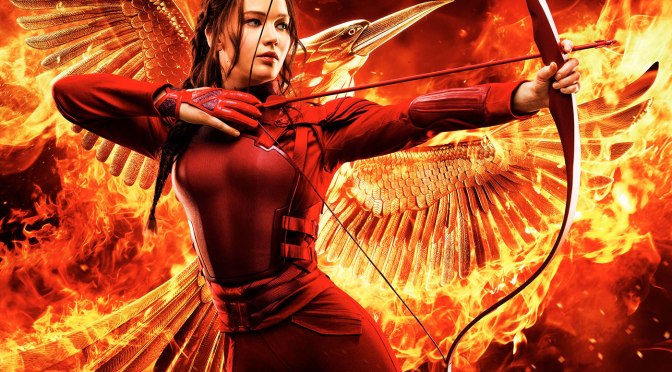
It’s an unpopular opinion, to be sure, but I’ve always loved Mockingjay the best of Suzanne Collins’ trilogy. Indeed, it’s a book that is different enough from the first two installments that it could easily have been a standalone novel with just some minor tweaks—and would perhaps have been stronger for it; certainly Catching Fire suffers more than a little from middle book syndrome, but also from too-much-like-the-first-book syndrome, and The Hunger Games could probably all have been condensed into a hundred pages or so. Alas, we live in an epoch of YA book trilogies and an age of turning book trilogies into blockbuster movie tetralogies, so Mockingjay Part 2 is necessarily imperfect. Still, it’s a good movie and a great finish to the series. It almost does the book justice.

The film begins with Katniss testing out her voice for the first time since being strangled by Peeta at the end of Mockingjay Part 1, and this is an excellent, if just a bit too on the nose, opening for a story about a young woman finding her voice. Things quickly get on track, though, and Mockingjay Part 2 is off at a relentless pace towards the ending; it doesn’t feel like almost two and a half hours when it’s over.

Mockingjay Part 2 really shines in its action scenes, which are well-thought-out and deployed at nicely spaced intervals in the film. Of these, by far the best is the long sequence in the sewers beneath the Capitol as Katniss and company try to make their way to President Snow’s mansion so that Katniss can assassinate him. It’s an absolutely harrowing journey, and it manages to be chaotic and tense as well as carried out with obvious purpose. The unleashing of the mutts and the struggle to escape from them was a wonderful incorporation of straight-up horror elements to great effect. It all unfolds perhaps a little too methodically, but as a stylistic choice this works, and it’s reflective of the general visual and tonal melodrama of both of the Mockingjay films.

Speaking of the visual style of this film, it’s very clearly a war movie. Things are grey and dark and gritty and grim, and the violence is—while it’s kept pretty strictly PG-13—enough to be both visually striking and emotionally affecting. The several major character deaths in the film were all handled in ways that implied the awfulness of their ends while never looking right at it, and this is accomplished without feeling coy or disingenuous. It’s a well-considered situation where less really is sometimes more, and in an era of increasingly graphic trauma and death being acceptable to show in film, Mockingjay does a masterful job of showing how much power mere implication can still exert.

Some of the dialogue is a little stilted, and franchise fatigue seems to be lurking just around the slightly frayed corners of some of the main actors’ performances. In particular, Katniss seems bone-weary in this installment in a way that feels like more than just Jennifer Lawrence’s good acting, but it’s not obvious enough to ruin the movie.

What stood out to me more than that was the sad underuse of so many of the secondary and tertiary characters. Katniss’s mother and sister barely appear, which lessens what should be nothing short of complete emotional devastation in the third act. Finnick and Annie’s wedding is similarly rushed and causes similar third act emotional problems. Jena Malone turns in a potentially powerful performance as Johanna Mason, only to have it feel, in the final presentation, as if large portions of it were left on the cutting room floor. The same can be said for Elizabeth Banks as Effie Trinket and Woody Harrelson as Haymitch, both of whom don’t get nearly enough screen time. Philip Seymour Hoffman’s Plutarch, of course, is at times notably missing from places where he might have played a significant part, which made me sad all over again over the actor’s untimely death.

Some of the very small roles were practically nonexistent. During production, much was made of Gwendoline Christie appearing in Mockingjay, but she only had a role in one relatively small scene early in the movie. Stanley Tucci only showed up momentarily in a couple of Capitol broadcasts, and I don’t think the surviving tributes Beetee and Enobaria even got lines.

The biggest complaints I’ve seen about the film so far, though, have been regarding the execution of the Katniss-Gale-Peeta love triangle throughout the film and the ending of it in general, and I must say I don’t share these criticisms.

While the love triangle did take on increased significance in this final film, I think it was appropriately done and sensitively handled so as not to infringe too much on the other ideas and themes that Mockingjay examines. I could have done without the slightly creepy conversation between Gale and Peeta where they were negotiating a sort of truce while they thought Katniss was sleeping; I’m never a fan of men talking about a woman as if she’s their property, and there’s definitely a kind of proprietary tone here as Gale and Peeta agree that they’ll wait for Katniss to choose between them, as if she doesn’t have any other choices. Katniss’s feelings, on the other hand, were shown beautifully, and it’s easy to follow and relate to Katniss’s emotional arc.

I’ve seen some moaning about the lack of an epic ending, but I can’t help but simply dismiss that as a silly and wrongheaded grievance put forward by people who appear to have missed the point of The Hunger Games series entirely. It turns out that it’s fundamentally anti-fascist, actually, and it’s at its heart a tragedy of Shakespearean proportion. The ambiguity of its ending is essential and, frankly, beautiful, and while it’s well-done in the film I felt that it could have been, if anything, more bittersweet.

All that said, I thought I’d cry more in this movie, but the only thing that really brought the tears was that damn cat.

Miscellaneous thoughts:

  • I remain disappointed in the look of the mutts. The use of the faces and features (and perhaps the actual dead bodies) of people Katniss knows was an incredible bit of psychological horror in the books, and it’s too bad that none of the movies managed to capture that.
  • Tigris was very close to how I imagined her when I read the book. A+ casting, costuming, and make-up.
  • I hated the casting of Sam Claflin as Finnick, but he really pulled it off this film.
  • I love Effie so much, and of all the underused characters in this movie, she was the one whose absence I felt most keenly.
  • I love the visual language of the scene of Snow’s execution. It reminds me a lot of the early scenes in Rome in Julie Taymor’s 1999 Titus (which is a great film—go watch it), and there are a lot of interesting parallels between Katniss’s and Titus Andronicus’s respective positions as potential kingmakers. I feel like there’s no way this is accidental, and someone should definitely write a scholarly piece on this.
Weekend Links: November 21. 2015

Let’s start the weekend with a piece of great, though not exclusively SFF-related advice from Terrible Minds: Google before you share stuff.

We’re moving into the season of “Year’s Best” lists, and while I haven’t gotten mine quite together yet (trying to read a few more things in the next couple of weeks) they’re starting to trickle out, reminding me of how much I still want to read in the next month or so.

  • The Barnes & Noble Sci-fi and Fantasy Blog has got 25 of the Best SFF Books of 2015, which I’ve only read a dozen of.
  • The SFWA just released their Nebula reading list, of which I haven’t counted how many I’ve read, but it’s a small enough percentage to make me feel like I’ve missed out on almost everything this year.

So, it turns out that an actual white nationalist organization is creating their own H.P. Lovecraft award.

If that’s not enough to make you feel happier about the replacement of Lovecraft as the face of the World Fantasy Awards, there’s a sensible reminder at the Atlantic that this turn of events won’t destroy Lovecraft’s legacy. I suspect, though, that literal white nationalists using Lovecraft’s likeness for their own ends will do much more to damage the man’s image than anything else.

In interesting news, it looks like Kurt Vonnegut’s Cat’s Cradle may be getting a television adaptation.

Inverse breaks down some of the interesting recent changes at SyFy with a look at what’s coming up from the network over the next few months.

Microsoft has released their (FREE) Future Visions story collection, with work from Elizabeth Bear, Greg Bear, David Brin, Nancy Kress, Ann Leckie, Jack McDevitt, Seanan McGuire, and Robert J. Sawyer.

At Futurity, an exploration of why sci-fi is so obsessed with Mars.

At Slate, there’s a great piece on pulp science fiction’s legacy to women in science.

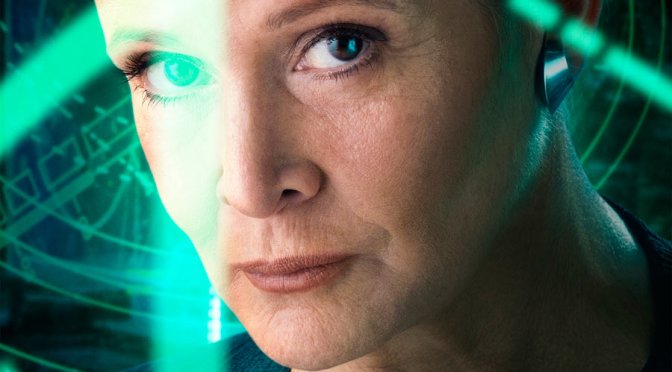
And at C-Net, a look at why Carrie Fisher looks so right in the new Star Wars movie.


The Huntsman: Winter’s War just made it onto my must-see list

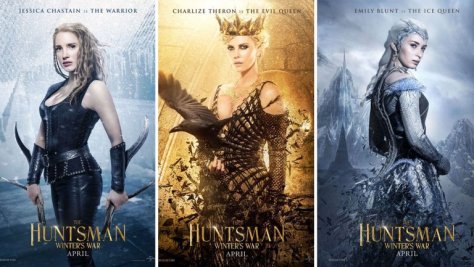
So, first I saw these amazing character posters:

TheHuntsmanWintersWarPosters

And while I still don’t understand how this movie has managed to get all three of these women on board, I was kind of excited.

I actually rather liked Snow White and the Huntsman to begin with, and I was disappointed when Kristen Stewart got booted from the sequel. The huntsman was the most boring part of that movie, and I honestly don’t care to see a movie about him at all. However, it looks like this one isn’t going to be. Or, it is, but it’s also going to be about a big magical war with two evil queens in it this time. Plus Jessica Chastain.

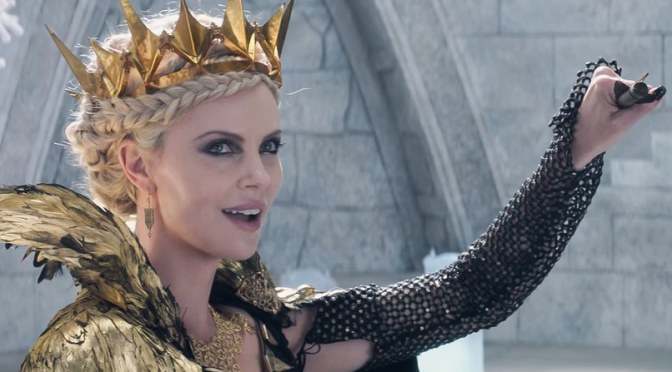
At least that’s what I got out of the trailer when I finally watched it today. I’m not sure it makes a lick of sense, but there’s basically no universe in which I don’t go see this movie just to see Charlize Theron and Emily Blunt vamping around in gorgeous costumes. If the film is at all coherent, that’ll just be a bonus.

Book Review: Domnall and the Borrowed Child by Sylvia Spruck Wrigley

Domnall and the Borrowed Child is the definitely weakest of Tor.com’s novellas published to date. It’s not bad, but it’s a little too short and doesn’t have any standout qualities to elevate it above the ordinary.

The story has the kernel of an interesting idea, but it’s not very well-developed, and even just hours after finishing the book I find myself struggling to remember details of it. I like the concept of a faerie people in decline and struggling to survive on the margins of modern society, and this is alluded to throughout the story, but the story is too small and too personal to be really effective at communicating anything substantial about these hinted-at themes. I could see it being a nice fit for a larger collection of work exploring these ideas in greater depth, but it falls a little flat as a standalone tale.

None of the characters are particularly distinguished, and the elderly Domnall’s sexual interest in his young protégé is just plain creepy. Domnall had the potential to be an interesting character, but I just never felt like he truly came alive. The characters that I found truly fascinating were Micol and the human girl the fairies entranced, but neither of these characters gets a point of view in the novella and the human girl doesn’t even get a name. Sadly, what this means is that there are more interesting stories here than Domnall’s, and that knowledge colors the whole experience of reading Domnall and the Borrowed Child.

It’s bad enough reading a dull story; it’s far worse to read a dull story with potentially wonderful stories trapped inside it.