All posts by SF Bluestocking

Ash vs. Evil Dead: “The Dark One” is a near-perfect finish to a solid first season

The frantic pacing of last week’s penultimate episode feels like it’s mostly paid off, as “The Dark One” is a nearly perfect finale to the first season. While I’m still a little bummed that we didn’t get more fighting with Evil Ash, and I still think Amanda Fisher was criminally poorly utilized, this episode was truly excellent as well as being, hands down, the most truly horror-filled half hour of the season.

Last week’s “Bound in Flesh” ended with Pablo being possessed by the front cover of the Necronomicon. This week, he’s spirited away by Ruby, dragged down into the basement of the house to be used in, well, obviously nothing good. Ash follows, reluctantly, to try and rescue his young friend. Meanwhile, Kelly and Heather find themselves trapped upstairs until Kelly is thrown out by the house and has to try and find a way back in. It sounds chaotic, but on screen all these moving pieces are perfectly harmonized and manage to feel fast-paced but not rushed as in some previous episodes.

I’ve written pretty consistently about the ways that I think Amanda Fisher was served badly in the narrative of the season, and I still stand by everything I’ve ever said about her. She was a likeable character that the writers just never seemed to know what to do with. What I found interesting about this last episode, however, is that even though Amanda’s story was disastrously mishandled and unforgivably botched at every turn, the effect of her death and her return as a Deadite actually worked as intended—if the intent was to raise the stakes for all of the other characters in this final showdown (of sorts) with Ruby.

The most truly masterful part of “The Dark One” is the real sense of peril that pervades the episode, and Amanda Fisher’s death made this possible by showing that any one of the characters could die—even when as important-seeming as she was. When Pablo got possessed by the book, that danger felt real. Similarly, when Kelly is ejected from the house, I was legitimately concerned for her safety. Poor Heather, who I thought might have a chance, actually didn’t make it through the episode.

One of the enduring problems of the horror genre, especially in television, is getting the audience to believe the danger that characters face. In an ongoing series, there’s some expectation that most of the people we meet and care about will be around for a good while. Ash vs. Evil Dead, though, has definitely proven that it’s not afraid to kill people off, and if it doesn’t kill its characters outright it’s certainly willing to torture them. Even now, I get the feeling that the only person in the show who is really, truly safe is Ash himself.

The other way in which this episode shined was in the sheer amount of actual horror it delivered. The Evil Dead franchise has always been secondarily comedic, and there were still a few laughs this week, but there were also great gouts of fake blood and body parts, flayed skin, Pablo vomiting up Ruby’s “babies” and said babies (actually about the size of a kindergartener) running around and attacking people. Kelly’s time outside the house is just harrowing, and Pablo’s ordeal was a masterpiece of body horror that was actually difficult to watch. That it was all filmed as artfully as anything else in the series so far was just a bonus.

I have seen some complaints about the actual ending of the episode, but I think Ash’s deal with Ruby was exactly in character while still reflecting his emotional journey over the course of the season. Ash has never been a particularly intelligent or forward-thinking guy, so of course he would sell out the rest of the world to save these young people that he’s come to deeply care for in spite of himself. The trio riding off into the post-apocalyptic hellscape Ash has created is a perfect set up for the second season of the show.

Miscellaneous thoughts:

  • The roaches from Heather’s crotch felt weirdly out of place. So much of the horror of Evil Dead has always been gore and blood and Deadites that the bugs seemed like a weird thing to include. It was also kind of a weirdly sexualized and gendered horror, if you think about it, which doesn’t seem quite fair to a character who is going to end her time on the show getting her head dropkicked by Kelly.
  • When Kelly was outside the house, all I could think was “please no tree rape.” Thank goodness they didn’t go that direction.
  • Ruby’s Basic Instinct pose is iconic.

Sherlock: “The Abominable Bride” displays all of this show’s worst tendencies in one place

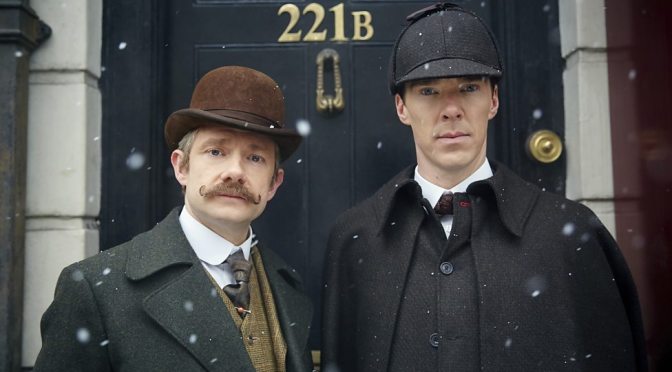
I’m not quite sure how to encapsulate my disappointment and disgust for “The Abominable Bride” in just a few hundred words. Sherlock has never been one of my favorite shows, and it’s far from even being my favorite iteration of the relatively recent spate of Sherlock Holmes adaptations—hello, Elementary. Still, I really liked the first and second series of it. Each of those six episodes was fast-paced, cleverly plotted, and gorgeously filmed, and Sherlock has the distinction of being one of the first shows to integrate text messaging in a way that was both visually interesting and useful to its storytelling.

However, it’s always been a show that suffers from a serious case of Steven Moffat, Mark Gatiss, and their obsession with their ideal of a Great Man who is a total trash monster of a human being but is so full of genius that we’re supposed to forgive his every garbage word and action (that Moffat and Gatiss write). In Sherlock, of course, this is exemplified in the titular character, but the show’s John Watson is also pretty unlikable. Both of these pieces of work—either Moffat/Gatiss OR Sherlock/Watson, I guess—are in rare form in “The Abominable Bride,” which is not a fun old-timey holiday special like it was marketed as, but instead turns out (in a twist worthy of M. Night Shyamalan) to be a journey into Sherlock’s “mind palace” (a phrase and concept so insufferably pretentious that I hate to even type it).

Most of the episode, then, takes place inside Sherlock’s head, and it’s, frankly, a new insight into his character that I wish I didn’t have. The whole ninety or so minutes is just a mix of things that don’t make much sense and things that make me hate Sherlock with a deep and abiding passion. That is to say, it’s pretty much straight fan service at this point, but only for the fans to whom all of Moffat and Gatiss’s worst tendencies are assets rather than annoyances. For me, “The Abominable Bride” was just one long, escalating feeling of outrage.

Probably the worst part of the episode for me was the way it handled its women characters. Largely, this is because none of them are proper characters at all. Instead, they are women the way that Sherlock imagines them.

Mrs. Hudson is a petty, passive-aggressive shrew, and the joke about her is that she’s angry because Watson doesn’t give her any lines in his story. Both Watson and Sherlock are “comically” amazed that she would feel this way and literally point out that bringing tea is Mrs. Hudson’s only function in the narrative.

Mary Watson is an almost mythical presence in Sherlock’s mind palace, but she also, ultimately, is given little to do. Instead, she largely figures into things as a competitor for her husband’s time and affection, and Watson’s neglect of his wife and their marriage is treated as a joke while Mary’s feelings are portrayed (to the degree that they are portrayed at all) as decidedly secondary to her husband’s and Sherlock’s. In the end, Mary Watson is a largely silent figure and cheerfully indulgent of her husband and his friend. It’s as if she is representative of how the viewer ought to feel; we might be irritated with Sherlock and Watson, but we’re also meant to accept it as the necessary price of their greatness.

Poor Molly Hooper may be the worst-served woman in “The Abominable Bride.” Previously on the show, she’s shown some romantic interest in Sherlock, and Sherlock has behaved terribly to her every chance he gets. Here, inside Sherlock’s mind, we see that he, on some level, thinks of Molly as a man. Certainly, he doesn’t think of her as sexual or attractive, and in the mind palace we see this represented with Sherlock’s imagining of Molly in drag. On another level, Sherlock sees Molly as part of a somewhat incomprehensible-to-him mass of womankind—but a mass of women who are also secretive and furtively malevolent.

Throughout the episode are sprinkled numerous running jokes that seem to refer to criticisms the show has received regarding its treatment of women, but they seem more a mockery of the show’s critics than any sincere attempt at conversation. The main “villain” in Sherlock’s mind palace is a secret society of murderous feminists, and by the end of the episode they don’t even matter because they were just a way for Sherlock to work through his feelings about/for Moriarty the whole time.

Probably the worst sin of “The Abominable Bride,” however, is the revelation of Sherlock’s drug abuse/addiction, which has previously gone entirely unmentioned in this iteration of Sherlock Holmes. I do remember an instance in an early episode of Sherlock using multiple nicotine patches, but that’s it. So the reveal here that the whole episode was just Sherlock overdosing on the plane from the end of the last episode came as a surprise, to say the least, but not a good one. The reactions of Mycroft and Sherlock in the real world of the show are totally unearned and inexplicable, a perfect example of Steven Moffat’s tendency to rely on his audience’s arcane fandom knowledge and uncritical suspension of disbelief to make the emotional beats of his stories work. You know, instead of just putting in the work himself to write a stories and emotional/character arcs that feel natural and make sense.

Miscellaneous thoughts:

  • Lestrade’s facial hair was kind of hot.
  • So was Molly Hooper’s mustache.
  • The costumes for Mary Watson and the Bride were gorgeous.
  • The queerbaiting in this episode was atrocious.

Weekend Links: January 2, 2016

Happy New Year! As I said yesterday, I’m definitely looking forward to kicking this year’s ass. First, though, I’ve got to make it through what is passing for winter in southwest Ohio but really feels much more like spring. The abundance of increasingly redundant year-end retrospective posts says early January, but the amount of bird shit on my car says mid-March. Regardless of the number of very confused songbirds outside my window, there’s not been an awful lot going on this last week, although that doesn’t mean I haven’t rustled up anything interesting.

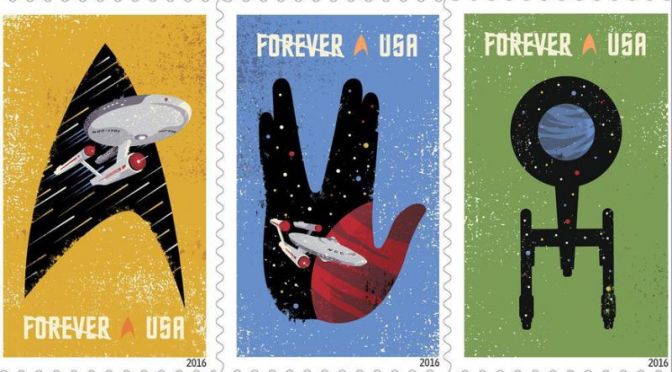
The USPS announced that they will be releasing Forever stamps in 2016 with Star Trek designs. Also some very cool-looking stamps with planets on them AND some special stamps just featuring Pluto.

George R.R. Martin has a lengthy update on what’s going on with The Winds of Winter. It’s not great news–it seems very unlikely now that we’ll see it before late this year–but it’s nice to know.

Rhianna Pratchett shared some memories of her late father in The Guardian.

N.K. Jemisin has a new column in the New York Times. In her first installment, she tells us what’s good and new in sci-fi and fantasy.

The L.A. Times looks at book trends to watch for in 2016. Science fiction, paper books, and diversity are all on the menu.

Fandom Following has a great piece up on media realism.

Mythcreants examines five bad defenses of bad stories.

This year mark’s the four hundredth anniversary of the Bard’s death, and Tor.com kicks off the year with a great list of gender-, race-, and sexuality-bent Shakespeare.

The Daily Dot talks about why we need more diverse superheroes.

Okayafrica collects the best moments of 2015 in African sci-fi.

Taylor Swift released a new music video, for her song “Out of the Woods,” and it’s pretty excellent:


Happy New Year! Time to kick 2016’s ass!

This is the first year in a long time that I’ve felt like making proper New Year’s resolutions, although I did have a few half-assed ones last year. Frankly, it’s just really nice to be starting the year off with a goal greater than just not being completely crushed under the weight of depression and anxiety. I haven’t felt this level of positivity since, well, maybe ever. It certainly helps that 2015 was a pretty alright year for me, all things considered.

That said, I think that part of the reason I did have some struggles in 2015 is because I didn’t really have a proper plan for the year. So, 2016 is going to be largely about establishing routines and building better habits. It’s also going to be a year about getting on the road to achieving some long term goals, now that I’m at a point where I’m no longer just dealing with immediate crises all the time.

Health and Fitness Goals

My go-to resolution in this category, for years has been “quit smoking.” This was always a lie, because I loved smoking and didn’t really want to quit, but in 2015 I did it anyway. It turns out smoking hinders bone healing, so I gave it up cold turkey when I broke my food, and it seems silly to start up again now—especially since I made it through the holiday season without doing it.

After breaking my foot last year, basically all of my health and fitness goals except quitting smoking were heavily compromised for the rest of the year. By Thanksgiving, I was ready to just give up, and the last week I’ve basically been subsisting on leftover cookies and Red Bull, with the occasional McDonald’s double cheeseburger(s). All that is stopping as of Monday (I’ve still got a few leftovers to deal with). Concrete goals:

  1. Walk at least one mile, at least five days per week, leftover broken foot pain and swelling permitting.
  2. Do 30-45 minutes of cardio at least five days per week.
  3. Start logging my meals in MyFitnessPal again. This was actually really helpful last year, so I think it’s a good habit to get back into.
  4. No more energy drinks. I want to get back to only drinking water and the occasional tea or coffee.
  5. No more fast food. Or at least much, much less than I’ve been having. It’s all terrible for me, it doesn’t even taste that good, and it makes me feel like shit afterwards most of the time.
  6. Cook more often and more adventurously. To this end, I’ve already subscribed to RawSpiceBar, which will get me three new spice mixes, plus recipes, every month. I am super excited about this.

Professional Goals

This is the year that I finally break down and go to college. After three years of no regular job, and with very few prospects, I’m doing it. If I get started now, my hope is that I can finish my bachelor’s in three years and get a decent job by the time my daughter is out of high school.

  1. Finish the college application process by January 30.
  2. Figure out how I’m going to pay for college.
  3. Keep looking for part time and freelance work to supplement my partner’s income and help defray some college expenses.

Financial Goals

2015 was the first year in a long time where we were consistently caught up on things. Even my breaking my foot and my daughter fracturing her elbow a few months later weren’t completely devastating events. My daughter and I both got new computers, and I was able to replace/upgrade some things in my kitchen. 2016, however, is going to be a year of paying things off and saving money.

  1. Have an actual written budget for our household.
  2. Start being more conscientious about writing grocery lists—and sticking strictly to them. Probably the number one way in which we overspend is by buying extras at the grocery store.

Blogging and Writing Goals

In 2015, I started SF Bluestocking as a new and more serious blogging project to encourage me to write when I realized that using Tumblr as my main platform was actually stifling my productivity. This blog has been steadily gaining readers month after month, and I’ve probably written more in the last six months than I had in the previous two years. In 2016, I hope to continue to grow the blog, but I’m also starting to recognize that my vision of what it could be is bigger than what I can accomplish on my own, but also highly dependent on how the next year shapes up in terms of my furthering my education. In the long term, obviously, university will make me a better writer and increase the quality of my work. Short term, though, I expect that I will at some point become temporarily less active, so I’m trying to plan accordingly.

  1. I need to set realistic goals for myself. This means that perhaps I can’t keep up writing about half a dozen or so shows every week AND read AND see movies AND write about other things that I’m interested in AND have a life away from my computer. So sometime in the next couple of days, I’m going to sit down and make a calendar, with deadlines and everything, to help me manage my time better.
  2. I need to work with other people. While I am concerned about my ability to manage things here and go to school full time, I think that finding a partner or two or three for this endeavor would be more of a help than a hindrance. I feel like SF Bluestocking is a project that will only benefit by a bigger and more diverse group of people working on it. I don’t have a plan for this yet, but my goal is to figure it out by the end of March.
  3. I used to write a lot of fiction, but I haven’t in many years even though I loved doing it and wasn’t terrible at it. In 2016, unrelated to the SF Bluestocking project, my goal is to write one piece of short fiction, at least 1500 words, every month.
  4. And have one finished piece of fiction by the end of the year that I would feel comfortable trying to get published.

Personal and Lifestyle Goals

This is where I’m getting into weird territory because I can’t remember the last time I was in a good enough spot on January 1 to even be contemplating this sort of thing. It’s a real testament to my improved mental health that I’m able to do it this year, so I don’t want to go crazy with making huge plans that I won’t actually go through with. Instead, I’ll stick to just a few modest goals that feel pretty doable.

  1. Learn a new language. I’ve already downloaded Duolingo on my phone, and I’m starting with German. It’s kind of cheating, since I took three years of German in high school, but that was over fifteen years ago, and I’ve apparently forgotten a lot.
  2. Once a month, do something nice with my daughter, just the two of us. We don’t spend enough quality time together, which is too bad, because, really, she just gets cooler the older she gets (currently twelve).
  3. Keep my home work space clean. There’s a lot about it that isn’t ideal, but the least I can do is minimize clutter. Hopefully, this will help with some of my productivity issues.
  4. Read more mindfully. Last year, I’d hoped to read two books a week, but feel short. This year, I’m scaling back my reading goal by about 25% and planning to be even choosier about what I read than I already have been. The biggest change, though, is that I’m planning to read at least one nonfiction title per month. I feel like I forget nonfiction exists sometimes if I don’t make a point of seeking it out on purpose, so this year I’ll be doing that.

Looking back at this list, I feel like it’s longer and more ambitious than I originally intended, but I’m gonna just go with it.

What’s your New Year’s resolution/plan?

Best of 2015: Favorite Books

2015, just objectively, has been an amazing year to be a reader, and it’s highly unfortunate that breaking my foot in May sent me into a reading slump that prevented me from getting to enjoy as much of what was published this year as I hoped to. I came in right at ten books behind on my goal of reading two books a week, and I can think of probably twenty books off the top of my head that I would love to have gotten around to this year.

Still, I made it through over ninety books in 2015, most of them new releases, though I did read a couple of classic sci-fi novels and check out a few things that were being adapted to film or television. While most of what I read was excellent (Yay, me, for making good choices!), there were a couple of disappointments (I’m looking at you, The Dinosaur Lords). It was a good year, and it was tough to pare this list down to a reasonable number of favorites. Obviously, “reasonable” is a subjective term.

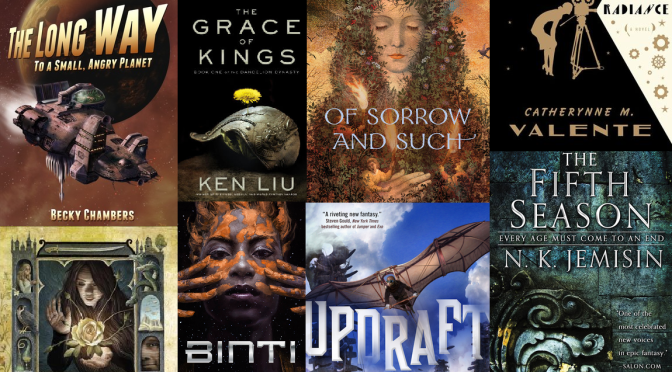
The Fifth Season by N.K. Jemisin

N.K. Jemisin quickly became one of my favorite authors when I discovered her a couple of years ago, so The Fifth Season was one of my most anticipated 2015 releases. Jemisin didn’t disappoint, delivering a new fantasy epic that is both enormous in scope and deeply personal. If only for Jemisin’s mastery of her craft, this is one of the most important novels of the year. There’s very little to say about it without spoiling the whole thing for those who haven’t read it, but I will tell you that it’s the most devastating thing I read in all of 2015. The Fifth Season just destroyed me. In a good way.

The Long Way to a Small, Angry Planet by Becky Chambers

This delightfully original space opera is the only book I read twice this year. It’s a sort of space road trip story told in vignettes that take place over the space of some months on a ship that is traveling to a remote part of the galaxy to drill a wormhole that would connect an unstable but resource-rich planet to a kind of galactic federation. It’s a book about family that exemplifies the old adage that home is where the heart is, but it’s also a book about gender and sex and war and politics and what it means to have humanity. It’s funny, smart, and poignant in turns, and while it’s a book that wears its progressive ideals very much on its sleeve, it never turns sanctimonious.
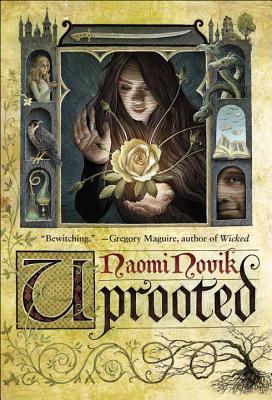
Uprooted by Naomi Novik

I had read and enjoyed the first couple of Naomi Novik’s Temeraire novels some years ago, but hadn’t really followed her work very closely until I saw Uprooted getting an enormous amount of buzz in the early months of 2015. Having pleasant memories of Novik’s earlier books, I thought I’d give Uprooted a try, and I quickly fell in love. Agnieszka is a wonderfully funny and clever heroine, and she’s got a friend, Kasia, who figures largely in the story as well, which is important as it prevents the novel from being a straightforward kind of “Beauty and the Beast” romance. Instead, Uprooted is primarily about a young woman learning her own power, growing up, and finding her place in the world. If you like Robin McKinley, Patricia C. Wrede, Diana Wynne Jones, and Tamora Pierce, you will love Uprooted.
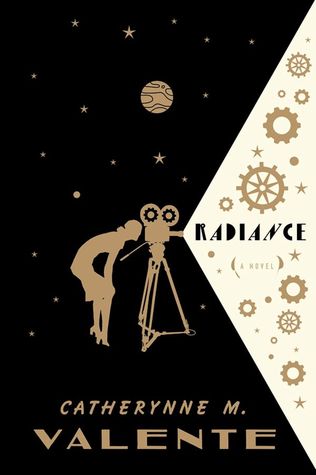
Radiance by Catherynne M. Valente

Radiance had me at “decopunk pulp SF alt-history space opera mystery.” You know, if I wasn’t already definitely going to read it because, honestly, I would read the phonebook cover to cover if it had Catherynne Valente’s name on the byline. I will say that I think my opinion of the book suffered a little from my own exceedingly high expectations, but it’s a remarkably ambitious tome that is largely successful in its aims. It’s experimental and literary, but not inaccessibly so, and Valente’s lush prose is always a delight. Valente also published a couple of novellas in 2015—Speak Easy, which is a sort of retelling of “The Twelve Dancing Princesses” in the 1920s with Zelda Fitzgerald, and Six-Gun Snow White, which had been previously published before but is definitely worth rereading.
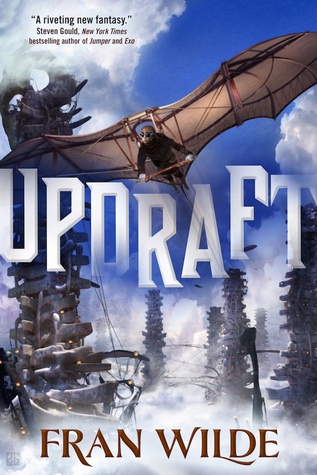
Updraft by Fran Wilde

Fran Wilde’s debut is probably my favorite debut of the year. It definitely feels almost more like a YA book than most of the other work I’ve been interested in recently, with its teenaged protagonist and coming-of-age themes. Where Updraft really shines, though, is in bringing to life one of the most unique and interesting fantasy worlds I’ve read about in ages. With a heroine, Kirit, who eschews all of the most common and irritating YA protagonist tropes, it’s an absolutely winning combination and one of the year’s most inventive and original books.
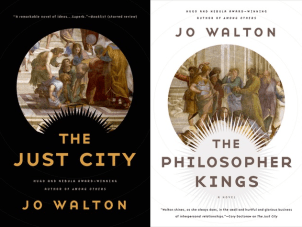
JoWaltonThessalyThe Just City and The Philosopher Kings by Jo Walton

The Just City was one of the first books I read this year, and I was thrilled to learn that it had a sequel coming out just a few months later. These books, the first two in a planned trilogy, explore what might happen if the goddess Athena gathered thinkers, philosophers, and dreamers from every end of human history to try and build Plato’s Republic on an island in antiquity. Apollo becomes a human so he can learn about equal significance, and Socrates shows up to debate with everyone and instill revolutionary ideas in the community’s robots. If you love philosophy and think that a book whose climax is a lengthy debate between Socrates and Athena sounds good, you should read this series before the final volume arrives in mid-2016.

A Crown for Cold Silver by Alex Marshall

I didn’t read a ton of epic fantasy this year because I’ve been more focused on reading diversely and broadening my horizons to include more science fiction and more literary work, but I couldn’t help but pick up this one. It’s almost a pastiche, though I’d say it plays most of the regular epic fantasy and grimdark tropes just straight enough to not be altogether outside the genre. That said, A Crown for Cold Silver is definitely a genre-critical and self-aware novel that, at the same time, doesn’t take itself too seriously. It’s every bit as violent and bloody and morally ambiguous as The First Law or A Song of Ice and Fire, but with a sense of humor that makes it a much more enjoyable read.
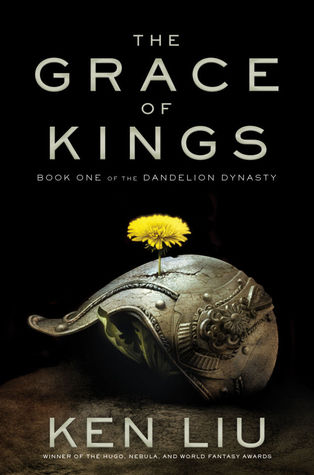
The Grace of Kings by Ken Liu

Ken Liu has coined the term “silkpunk” to describe what he’s creating in this first novel in a new trilogy, The Dandelion Dynasty, and I’m happy that I’ll be able to look back many years from now and know that I read this stuff before it was “cool.” The Grace of Kings is a captivating mix of Eastern and Western literary and historical influences that is worth reading if only because it’s so unique as a work of epic fantasy. While this first installment in the series is mostly focused on male characters, it’s not devoid of interesting and diverse women who are set to figure more prominently as the series continues. The book itself is a slow starter, but once you get into it you’re almost guaranteed to fall for its rather rakish charm.

The Traitor Baru Cormorant by Seth Dickinson

The Traitor Baru Cormorant has the distinction of being the most technically perfect novel I read in 2015. It’s just, objectively, absurdly good—well-conceived, perfectly paced, tightly plotted, just excellently written overall. It’s also incredibly dark and perhaps a little more pessimistic than I would have preferred in the end, but I think I could forgive this book almost anything because it gave us the character of Baru Cormorant. As I get older, I find that my favorite characters are, increasingly, women of the complex and ruthless variety, and Baru is definitely that. She’s not a woman who I’d ever want to be, but she’s exactly the sort of woman I love reading about.
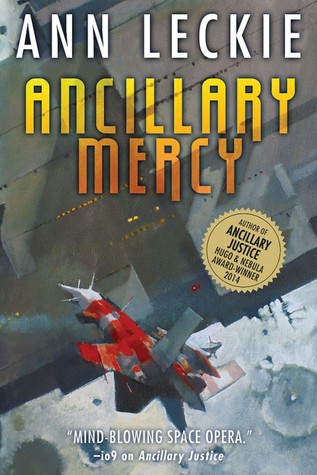
Ancillary Mercy by Ann Leckie

This conclusion to Leckie’s Imperial Radch trilogy was everything I could have wanted it to be. It’s a wildly entertaining and fast-paced finale to one of the most compelling original space operas in recent years, and it manages to wrap up the series in a satisfying way while also leaving plenty of room for sequels—a somewhat likely possibility as the author has said she intends to write more in the Imperial Radch world in the future. While I loved to see how things work out for all my favorite characters from the first two books—Breq, Seivarden, and Tisarwat in particular—Ancillary Mercy introduces a couple of new characters that I found surprisingly endearing. All in all, a solid finish even if it doesn’t quite match the sheer inventiveness of Ancillary Justice.
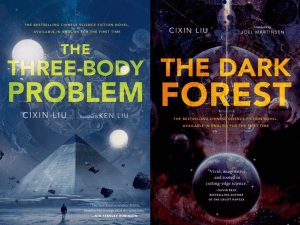
CixinLiuThree-BodyThe Three-Body Problem and The Dark Forest by Liu Cixin

Though The Three-Body Problem was technically a 2014 release, I read it this year after it was nominated for a Hugo Award and then just had to read The Dark Forest when it came out a couple of months later. These might be the most unusual books I read this year as I seldom read translated fiction and had never read anything translated from Chinese before. I’m so glad I did, though. This pair of books were definitely not easy reads—they’re very cerebral, heavy on philosophy, and owe a great deal to a lot of classic “hard” sci-fi that I haven’t read (as well as to a lot of previous Chinese SF that I’m, of course, also not familiar with)—and the fact that the two books have different translators makes them feel subtly stylistically different, almost as if they had two different authors altogether. Even still, they’re some of my favorite reads of the year, if for no other reason than I appreciate the chance to read something written from a perspective and in a context so different from my own. If you do read these, I highly recommend buying them; with any luck, commercial success for this series will encourage the publication of more translated work in the U.S.
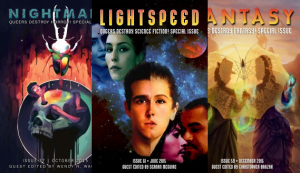
Queers DestroyQueers Destroy SF!

I’ve been following Lightspeed Magazine’s Destroy SF projects since their very first Kickstarter, and they really only get better over time. This year, Queers Destroy Fantasy! was by far the best issue of the bunch, but they are all worth checking out. I’ve discovered several new authors in the pages of these magazines; the reprints prove that diverse authors have always been around if you just keep an eye out for them; and the essays and author profiles are fascinating and often powerfully written. 2016 will bring us POC Destroy SF!, with the Kickstarter planned to start in mid-January. In the meantime, it’s not too late to buy the past issues of Women Destroy and Queers Destroy.
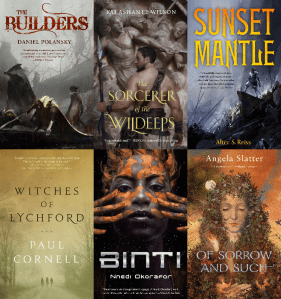
Tor.com NovellasTor.com Novellas, Various Authors

Tor.com has been publishing great fiction for years, but this was the first year that they published novellas, and this has been one of my favorite developments in the world of SFF this year. I’ve always loved novella-length work and felt like shorter novels don’t get enough attention, but that seems to be starting to change. The first round of Tor.com novellas was published this fall, and they were all at least good. My favorites were Kai Ashante Wilson’s Sorcerer of the Wildeeps, Daniel Polansky’s The Builders, and Angela Slatter’s Of Sorrow and Such. Binti by Nnedi Okorafor, Sunset Mantle by Alter S. Reiss, and Witches of Lychford by Paul Cornell were also strong titles.
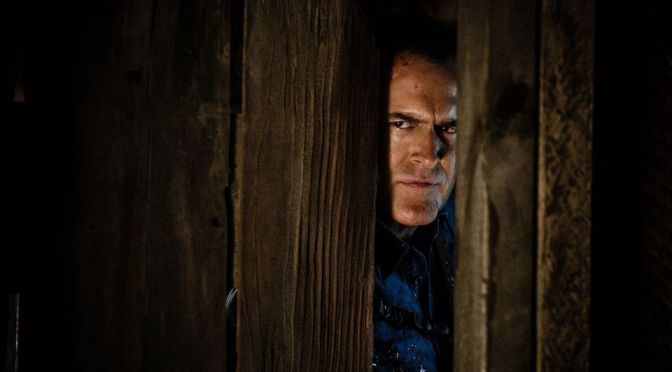
The Expanse: In “CQB” shit gets REAL

While Avasarala gets a bit of a break this week and Miller’s investigation is moving along at a glacial pace, shit gets real for the Cant survivors in “CQB.” We’re also introduced to a new character, Fred Johnson, who is busy building a generation ship for Mormons but is also involved with the OPA. It’s an eventful episode, and the show is starting to move away from its (necessarily) heavy focus on world building in favor of more and better storytelling.

Once again, I have to compliment the decision to avoid any attempt to squeeze this story into an episodic narrative. In “CQB” the strengths of the “one long movie split into ten parts” approach start to become even more apparent, although it ends with another near-cliffhanger that might be frustrating—especially now that we’re stuck waiting a full week to find out what happens next. That said, I can’t wait to watch the whole series in one sitting eventually.

Perhaps the greatest positive of this storytelling style is that it allows for a flexible approach to including characters and switching between storylines. This week, we’re only given a couple of short scenes with Avasarala after the previous episode was dominated by her presence. By giving her a short break, the episode makes time for Fred Johnson, whose story as introduced in this episode both clarifies and complicates things. It’s good to see the show taking advantage of the freedom they have to slowly introduce characters and concepts without having to try and give every character equal time in each episode. It allows for the building of a lot of suspense, and as the mystery gets thicker each week I look forward to seeing more pieces of the puzzle revealed like this.

The big event of “CQB,” of course, is the close quarters battle referred to by the title, which takes place on the Donnager when it’s attacked and boarded by the same mysterious ships that destroyed the Canterbury. There were a couple of moments where this little saga started to get a little tiresome, most notably during the scenes where Holden is trying to rescue the rest of the Cant survivors, but there was some great stuff here, too.

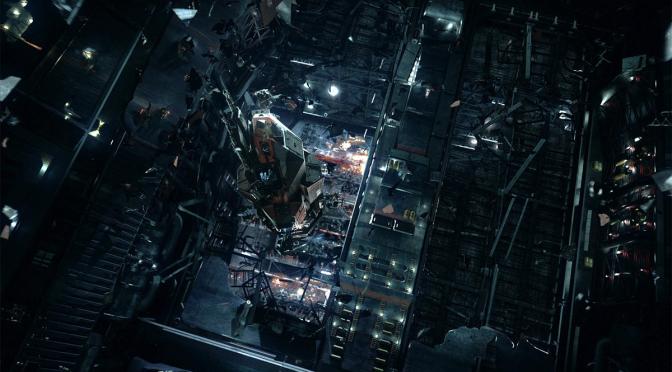
I know this is a high-budget prestige show, but it’s still pretty impressive the things that the production team is able to accomplish. The battle scenes on the Donnager are a perfect example of smart decision making behind the scenes, and the show has managed to craft an important battle scene that has a good sense of scale and feels action-packed in spite of most of the scale and action being only implied. The exemplary instance of this is when Lopez, Holden and company are trying to escape across a bridge (an interesting callback to Star Wars, which seems to influence a good deal of the aesthetic of The Expanse) while being shot at from all sides. It’s nicely done, but it a way that seems calculated to not break the bank. I feel like the show is more interested in spending their budget on costumes and extras to build up the world rather than in blowing their wad on two minutes of combat in episode four.

Overall, “CQB” is a great achievement. It moves all of the stories along, thickening the plot and introducing new strands even as it lets the viewer untangle some of its web. On the emotional front, I do think the show is still struggling a little to make us really care deeply about its characters, but they definitely succeeded in pulling heartstrings with the destruction of the Donnager and the deaths of Shed and Captain Yao this week. At the same time, the revelation that Havelock is (at least for the moment) still alive couldn’t have come at a better time to cheer me up, and Avasarala’s contemplativeness was an excellent way to balance out some of the episode’s more stimulating parts.

Miscellaneous thoughts:

  • Avasarala might not get a lot of screen time this week, but the scene with her talking with her grandson on the rooftop is one of my favorite scenes on the show so far. I love how well they’re doing at letting her exist as a complex and sometimes contradictory character without being judged or punished by the narrative. Too often, women characters only get to be clever, ambitious and ruthless at great cost to themselves, but Avasarala has a pretty good life.
  • “Slingshotting” is such a wildly irresponsible and stupid idea, of course people are going to do it.
  • Octavia Muss’s face when Miller was digging around in that dude’s leg for the thing was exactly what I was feeling.
  • Speaking of Muss, I want more of her, please.
  • When the episode didn’t open with Havelock’s dead body I was pretty sure he was going to make it, but I was still happy when that fact was confirmed.
  • Shed’s death was exactly like it was in Leviathan Wakes, but I’m not sure the show really communicated how traumatic that was for everyone who witnessed it. I think this is because they just didn’t have red enough blood, so the gruesomeness of it kind of got lost in the dark palette of the Donnager scenes.

Best of 2015: Favorite Television

2015 has been a sort of strange year for television. On the one hand, there were quite a few shows that I was excited about at the beginning of the fall season, but when it came down to it I found that I just didn’t have time to watch all of them (The Last Kingdom and The Bastard Executioner were two that didn’t make the cut). Of the ones that I did watch, a couple turned out to be totally unwatchable disappointments (Scream Queens and Heroes Reborn fell into this group). And a couple of the shows I was most looking forward to (X-Files, The Shannara Chronicles, Lucifer, The Magicians, Shadowhunters) don’t actually premier until January. Most of what I’ve watched this year, then, has been things that I was already watching and enjoying. Only a few of the year’s new shows really stuck, and at least one of those is almost certainly not getting a second season.

Jessica Jones

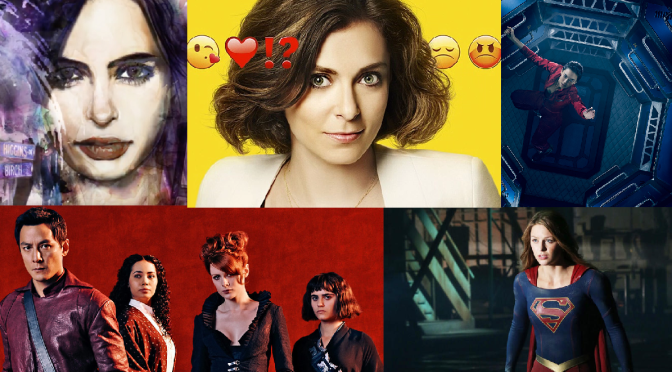
This Netflix gem is kind of objectively the best new show of the year. It can be tough to watch, with its themes about rape and abuse, in spite of the fact that none of the sexual violence is ever actually shown on screen. Jessica Jones is a deeply compelling character who fits a lot of common noir tropes, but a lot of that is subverted by her journey being one of personal healing rather than a revenge tale. In the end, Jessica wants mostly to protect others rather than just avenge herself, making her a complicated and fascinating feminist hero. I can’t wait to see what she does next.

Supergirl

This year CBS gave us a very different kind of feminist hero in Supergirl, and I love that we now live in a world where both Kara Danvers and Jessica Jones are getting their own vastly different shows. Supergirl is much more overtly and earnestly feminist than the Netflix series, which can be frustrating at times, especially when the show garbles its 101 level messaging, but Melissa Benoist carries the whole show on her super-strong shoulders by creating a Kara who is tough and brave, but most of all deeply kind. When Strong Female Characters are often imagined as ass-kicking fighters, it feels pretty revolutionary to have a super-powered woman on television who is as deeply empathetic and caring as Benoist’s Supergirl.

Crazy Ex-Girlfriend

Crazy Ex-Girlfriend is a show that I almost didn’t watch at all because I found the title so off-putting. It’s also the show that’s been, by far, the most pleasant surprise of the year. Hot shot lawyer Rebecca is so miserable with her life that she makes a totally bonkers decision to move to a small town in California where her ex-boyfriend, Josh, lives. It’s an absurdly silly premise, but I haven’t related to a character this much in a very long time. I, too, struggle with mental illness, and I, too, have often thought that making some enormous and ill-advised change in my life would somehow magically fix everything. Essentially, this show is a humorous take on how this kind of insane decision could work out for someone. Spoiler alert: everything is terrible-ly hilarious. Also, there are songs, because everyone involved in the show is a musical theatre nerd.

The Expanse

It’s great to see SyFy actually getting back to its roots and producing more, well, sci-fi. I didn’t love their adaptation of Childhood’s End (although I appreciate the attempt), but The Expanse is truly excellent. It’s space opera, but also a sort of mash-up with a noir detective story and a futuristic political drama. There are several notable women characters, including Chrisjen Avasarala (played by the incomparable Shohreh Aghdashloo), who I am certain is going to end up being the iconic character of the show. It’s worth watching just for her parts, but the rest of it is pretty great, too.

Into the Badlands

For some reason, almost no one seemed to talk much about Into the Badlands during its six-episode first season on AMC, but it’s a fucking excellent show that has surprisingly feminist sensibilities as well as some of the most incredibly choreographed martial arts fight scenes I’ve ever seen on television. Just in general, Into the Badlands is a gorgeously imagined and shot show, with highly saturated colors, striking cinematography, and great costumes. It’s also got a relatively diverse cast headed up by two Asian men (Daniel Wu and Aramis Knight) in the lead roles. A black woman (Madeleine Mantock) is the main character’s love interest, but she’s also a doctor and a revolutionary of sorts in her own right. The numerous other women on the show also eschew stereotyping, and while they exist in a fairly sexist fictional world, their roles and struggles aren’t entirely dictated by that. The only negative of this show is that it’s only six episodes for now and a second season hasn’t been confirmed, which makes the cliffhanger ending at the end of episode six potentially very frustrating/upsetting.

Minority Report

This show had tepid ratings and mediocre reviews and is the abovementioned likely-cancelled show, but I enjoyed it. The actors had a decent chemistry, though the writing could have been stronger all around, and I’d have liked to see the show explore more of its bigger ideas instead of adhering mostly to a case of the week format. Sadly, Fox has a tendency to invest in development for interesting sci-fi shows but then cut them off quickly if they don’t perform well, and that’s what happened with Minority Report. The news that their episode order had been cut from thirteen to ten after something like episode three of the first season didn’t help ratings. Still, the show was entertaining and had a lot of promise. It even managed to wrap up episode ten in a way that will act as a reasonably satisfying end to the story if there are no more episodes. It’s still available for binge watching on Hulu if you run out of other things to watch.

Best of 2015: Favorite Movies

I never feel like I get to see as many movies as I’d like, but looking back at 2015 I have to admit that I saw almost everything I wanted to see this year. And everything was so good. Partly this is because, as I get older, I just get better at picking and choosing what media to consume, so I don’t waste my time with nonsense, but also 2015 was just a great year for genre films.

Jupiter Ascending

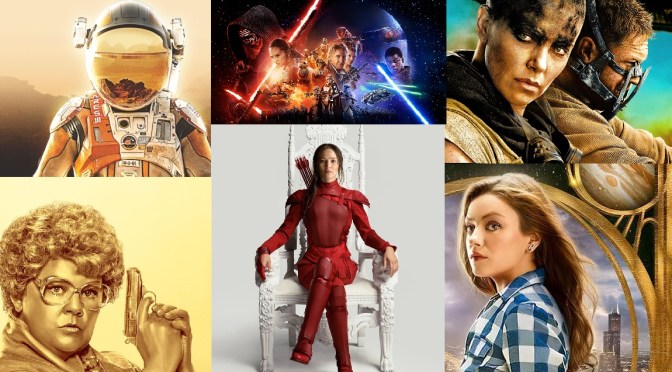
This is a kind of strange film to love because it’s, objectively, kind of a mess. However, it’s also beautiful and weird and ambitious, and tough, funny, clever Jupiter is a stand-out female protagonist. It’s not often that this type of wish-fulfillment escapist hero’s journey is written for or about women, so it was a refreshing change of pace in a world of testosterone-fueled grimdark action films. I think (and certainly hope) that twenty years from now, people will look at Jupiter Ascending with the same kind of fondly uncritical indulgence with which we recall 1980s fantasy films like Legend and Willow.

SpySpy

I actually didn’t get to see this until late in the year because I, frankly, didn’t think I’d be very interested in it. I will, of course, forever regret not seeing Spy in a theater.

It’s great to see Melissa McCarthy getting work where the joke isn’t that she’s fat. This movie is an excellent showcase of her acting abilities, and she brings brave, smart Susan Cooper to life with both sensitivity and good humor. While the examination of the spy movie genre isn’t particularly deep or groundbreaking, the movie more than makes up for any shortcomings in that department by being riotously funny and delightfully vulgar. It also doesn’t hurt that most of the movie’s important characters are women, and their interactions are all the best parts.

Inside Out

This movie’s strange concept is one that ends up working rather surprisingly well, and I’ve never felt so many feelings about a movie that is just about feelings. Many more thoughtful people than I have already written about how important Inside Out is, what a great achievement it is, how useful it is as a tool for helping children talk about their feelings, and so on. I totally agree with all of that stuff. However, my favorite thing about Inside Out is actually the character design for the feelings, which are not actually solid objects in the inner world the movie depicts. Instead they seem to be made up entirely of tiny, slightly fuzzy motes of, well, whatever feelings are made of, I guess. It’s just such a clever and lovely way of representing something abstract and somewhat ephemeral, and I never get tired of watching it on as big a screen as possible so I can see every detail.

Advantageous

This quiet little independent sci-fi film showed up on Netflix a few months ago having never even played in the artsy theaters in Cincinnati, so I didn’t know much about it when I watched it for the first time. It turns out that it’s a lovely and understated feminist movie about a future dystopia, and it’s absolutely worth dropping everything you’re doing and watching right this second. There’s not much that I can say about it without spoiling the whole thing, but Jacqueline Kim is incredible in it. She also co-wrote it with director Jennifer Phang, whose work I will definitely be looking out for in the future.

The Martian

I’d read this book earlier in the year and enjoyed it, and the movie didn’t disappoint. It’s funny and smart and exactly what one would expect of a big budget affair based on a best-selling novel and starring Matt Damon, which is to say really, solidly very-good-but-not-great. This might be the most purely entertaining film I saw this year, perhaps because—just due to the nature of the thing—there isn’t much to criticize about it, and I appreciate the occasional movie that I don’t have to think too hard about.

The Hunger Games: Mockingjay Part 2

I feel like I’m one of just a few people who even cared that this movie came out, although its sales numbers belie that. It’s a movie that felt strained almost throughout, largely because its stars had all sort of aged out of the franchise by the time they even started filming. Still, it’s a creditable ending to the series, true to the spirit of the franchise, and on par in production value with the previous films.

Mad Max: Fury Road

I grew up watching Mad Max movies, but this is the first time I’ve gotten to identify with a character who got to be part of the action, which makes a huge difference. Imperator Furiosa, the wives, and the Vuvalini are all amazing, revolutionary women characters, and the low key eco-feminist message of the movie is a great bonus. George Miller’s visual style is incredible. By centering the action and characters in each frame, he manages to eliminate a lot of the male gaze that would normally be focused on sexualizing the scantily clad women. It also works well to show off his impressive use of practical effects and gives the film a remarkable amount of distinctive character. I will definitely be watching this two-hour car chase again and again.

Crimson Peak

I love literally everything about Crimson Peak. While the trailers for it seemed to suggest that it would be a horror flick, it turns out to be a fairly straightforward gothic romance, although it subverts most of the more troubling gothic tropes. It’s definitely a movie that I think only really appeals to a certain sort of bookish, literary nerd who also loves voluminously pretty dresses, which I feel is the only reason that this movie wasn’t as universally beloved as it deserves to be. It’s a wonderfully woman-focused story with women characters who have an almost alarming amount of agency, and its climax is two women having an epic knife fight while dressed in absurdly billowy nightgowns. A nearly perfect film, and probably my favorite of the year. The only thing that would have been better would be more of Tom Hiddleston’s butt.

Star Wars: The Force Awakens

The Force Awakens is so good, you guys. It’s basically everything good about the original trilogy and none of the bad stuff. It’s excellent to see some diversity in space fantasy, and Carrie Fisher is back as General Leia. The movie definitely feels a bit derivative at points, and it hits a lot of the same beats that A New Hope did, but in a way that is pleasantly familiar and made fresh again by building the story around characters that don’t fit the usual (read: white and male) mold of characters who get to have hero’s journeys.

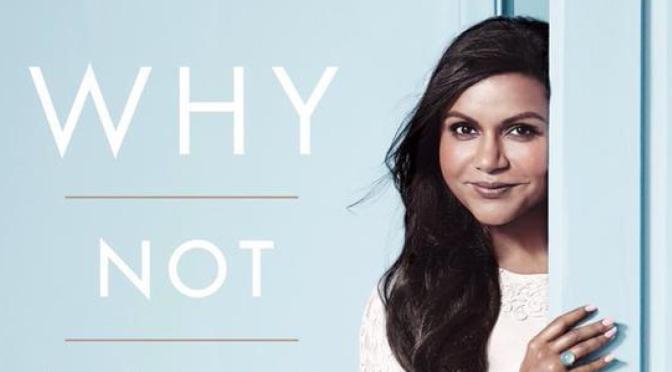
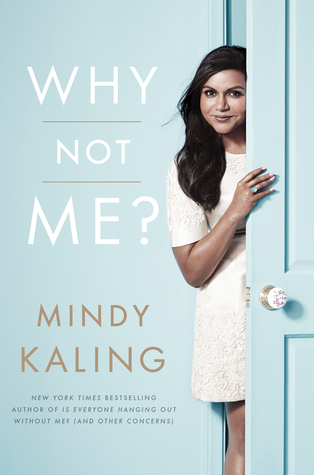
Book Review: Why Not Me? by Mindy Kaling

I read Why Not Me? as part of my last ditch (and probably doomed) effort to catch up on my 2015 Goodreads challenge and finished it in just a few hours. Like Mindy Kaling’s first book, this one is a fast, enjoyable read with a moderate amount of insight into all kinds of things that Mindy Kaling is interested in. Also like Mindy Kaling’s first book, this one makes me want to be best friends with her, because she seems to be utterly delightful.

I say that, of course, with the full understanding that Mindy Kaling is obviously not going to be delightful to everyone. In fact, she’s clearly a little self-absorbed, a little out of touch, super smart, somewhat nerdy, and not above being occasionally awful. Basically, Mindy Kaling seems like a real human being, albeit far more successful most of the rest of us.

What I love best about Mindy Kaling, though, is that her real human being-ness never feels like a schtick or an act or a ploy to make us like her. Sure, she’s endearingly self-deprecating, but always about actual flaws. She kind of weirdly humblebrags about her McDonald’s addiction, but I suspect that she really does eat too much McDonald’s, and I can relate to that because I, too, eat too much McDonald’s. Her story about dragging B.J. Novak to a play against his will sounds exactly like the sort of thing a real person might do. So, also, does her story about the time she gave a teenage girl a kind of bullshit answer to a serious and worth-answering question.

The advice that Kaling offers at the end of her book is thoughtful, but not too obnoxiously wise. Her thoughts on her work and career are amusing and sharply observed, but delivered without rancor. There’s definitely a little bit more of “work hard and good things will come to you” advice, but it’s not offered without at least a basic awareness of the role played by luck and privilege.

Why Not Me? is not a great work of literature, but Kaling is a clever and funny essayist who isn’t weighed down by pretension. I enjoyed Is Everyone Hanging Out Without Me? (And Other Concerns) but this follow-up book is altogether better and showcases a Kaling who is more confident, more assertive, and even more readable than she was before.

The X-Files Reopened builds our expectations up to epic heights

If you’re a stickler for spoilers, I actually suggest skipping this video altogether, but if you’re like me and don’t care about learning a few things in advance, it’s amazing.  I haven’t been this excited about anything in a very long time, and I’m thrilled to learn that there are going to be some stand-alone monster of the week episodes in the mix.

The only problem, of course, is that there’s no way that six episodes is going to be anywhere near enough.