All posts by SF Bluestocking

iZombie: “Method Head” has a little of everything I love about this show

An uncharitable viewer may call “Method Head” overstuffed and disjointed, but I think I can say, without being entirely uncritical, that this episode managed to include basically all of my favorite things about iZombie. Sure, there’s a lot going on, and one of the major gut punches from the winter finale is resolved far too easily and quickly, but this episode seriously has everything. They even managed to squeeze scenes with Vaughn and scenes with Blaine into one episode, which almost never happens. Even better, in spite of all its moving parts, “Method Head” mostly works, although parts of the very meta case of the week fall a little flat.

The episode picks up the morning after Liv and Major’s breakup and Ravi’s discovery that their rat had reverted to being a zombie. All things considered, Liv and Major seem to be doing alright post-breakup, and they continue to be friendly throughout the episode, so it’s really Ravi who has the truly unfortunate news to share. Definitely the rat, New Hope, is back to being a zombie, almost certainly Major (and Blaine) will go back to being zombies, they’re right back at square one on the cure front, and they are out of tainted utopium. The only bright side here is that they know where they might be able to get more utopium—their search area is still a hundred acres, though. It’s a new raising of the stakes for the show and its characters and a renewal of the urgency that marked the series’ first season, which is nice, especially as the case of the week format has gotten a little stale.

I like the way this episode made use of title cards to move things forward in time, and it did a decent job of showing what everyone was up to over the remainder of the holiday season. It was a little sad watching Liv trying to get back into Clive’s good graces, but my complaint here is actually that the passage of time wasn’t enough. In the most generous reading of things, Clive was only mad at Liv for about two weeks, and by the end of this episode their status quo seems to have been restored.

This is especially disappointing after Liv’s very convincing devastation over it in the winter finale. This week she seems to have gotten over it relatively quickly, and we don’t see much of her sadness or stress or how she’s been emotionally affected by either her falling out with Clive or her breakup with Major. Certainly, I don’t expect Liv to sit home moping and eating pints of ice cream, but her arc this week was a very sharp turnaround after her apparent grief back in December.

The case of the week deals with the murder of an actor on the set of a show called Zombie High, which Liv apparently loves, and there are some fun moments, but I don’t think this idea was used to its maximum potential. There are some funny moments, but nothing that sticks in my mind even just a few hours after watching it. The one line I do remember—a teen actor suggests a show starring a zombie, and Clive replies, “That’s dumb”—is just too on the nose, but most of the rest of the Zombie High stuff is highly forgettable. The investigation does get Liv and Clive back together, but I would honestly have rather seen that drag out for a couple of episodes at least. It would have been interesting to explore who Liv is without that aspect of her life, and it would have given Clive some room to be developed as something more than just Liv’s way to play police officer.

The biggest surprise this week, for me anyway, was that it was Major’s story line that was the most interesting thing happening. Usually Major is the worst, but his scenes with Vaughn were excellent, even if I totally called it that the “whistleblower” thing was a loyalty test. It was predictable and obvious, but it worked, and I’m very interested to see how deep Major is willing to go down this rabbit hole.

Miscellaneous thoughts:

  • Dale and Clive have a very cute relationship, but I wish we got to see a little more of it.
  • “Hair color: white as snow.” I kind of wish the writers hadn’t wasted that Santa murder. They could easily have gotten a full episode of puns out of that.
  • Gilda/Rita and Vaughn are an incredible amount of fun to watch together. They hate each other so very, very much.
  • I was genuinely concerned for Dale when she went to talk to Blaine.
  • Looks like things could get real interesting for Major in the next week or two if Dale tracks the dog down to his place.
  • Peyton is missing in action. Again. Still.
The Shannara Chronicles: “Fury” goes backwards in order to move forward

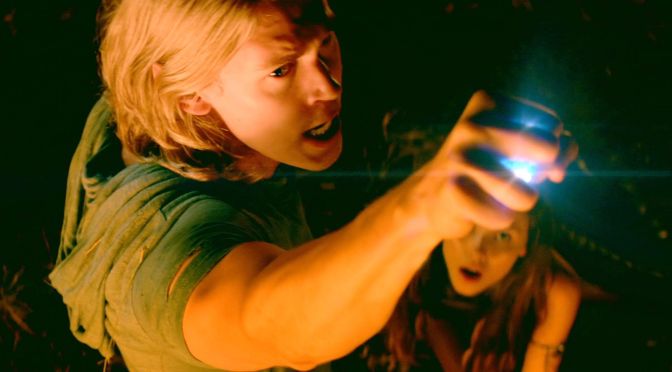
The two-part opener for The Shannara Chronicles wasn’t a perfect piece of television, but it was marvelously entertaining and superbly beautiful to look at. “The Chosen” also did a creditable job of introducing all the show’s major characters and conflicts and setting up the major quest that will occupy the rest of this first season. The show’s third episode, “Fury,” is a step backwards in several ways, and it does become a little bogged down at times, but by the end it seems ready to move along to the real meat of the story.

After the fast-moving, plot-heavy “The Chosen,” the order of the day in “Fury” is to take a step back, metaphorically, and dedicate some time to character development. This is mostly a good thing, and Eretria especially improves upon further acquaintance, where we learn more about her motivations and what her life is like when she’s not out in the woods being a sexy, wise-cracking rogue. Amberle, who is a serious young woman, turns out to also be smart and funny once you get to know her a little more, and Poppy Drayton has noticeably relaxed into her role. Wil is in turns sweet and stupid and infuriating, but I think he’s overall likeable and not nearly as insufferable as other characters of this type.

Unfortunately, the episode also takes a step back more literally, by having our heroes travel all the way back to Arborlon before they can continue on their quest. More on that later, though. Before that can happen, there are some detours and another seemingly significant character is introduced.

While Allanon manages to save Wil and Amberle from the fury from the end of “The Chosen,” he’s injured in the process, and his incomplete instructions to them send Wil diving into the Silver River to get some kind of healing mud. It’s a good thing Allanon was just planning on healing himself with his druid powers, though, because by the time Wil gets out of the river, Eretria has shown up and has a dagger to Amberle’s neck. As they’re dragged through the woods to the Rover camp, Amberle takes Wil to task for falling for Eretria’s “half-baked Rover seduction” and the show’s love triangle is officially born.

Things continue to move along nicely once they reach the Rover camp and meet Eretria’s “father” Cephalo, who is almost inexplicably obsessed with the elfstones and is convinced that threatening Amberle’s life is the way to get Wil to share their secrets. Joke’s on Cephalo, though. Wil truly doesn’t know how to use the stones, Amberle is pretty resourceful, and Eretria isn’t totally on board with the plan. Before all that stuff can really come to a head, however, the Rovers find themselves under attack by the second fury, who has tracked Wil and Amberle to the camp. While people scatter in chaos, Wil desperately pulls out the elfstones and is able to use them to destroy the demon. Cephalo tries to take the stones, but Allanon shows up just in time to rescue Wil and Amberle, and put them back on the way to Arborlon where they’re supposed to be.

On the way back to the elven city, they come across a destroyed farm in the countryside. While searching for survivors, they find a boy chained up in a barn wearing a very creepy mask. He introduces himself as Bandon (which is a legitimately awful fantasy name; I hate it so much) and tells them that it was his parents who had locked him up, though he doesn’t share the reason why. It’s a very strange kind of random encounter that I don’t remember being in the book, and Bandon turns out to be a very strange character.

When they finally reach Arborlon, they receive a cool welcome, as abandoning your sacred post like Amberle did is pretty frowned upon. Here is where things go a little off the rails, though, and it feels like the show was just killing time for the last ten or so minutes of the episode. Literally none of this stony-faced posturing and lengthy deciding whether Amberle would be allowed near the Ellcrys was at all necessary. Just let her in the tree, dammit, and move along to figuring out who the spy in Arborlon is so we can move along to some real questing. Unfortunately, the unmasking of the spy is going to have to wait until episode four.

Miscellaneous thoughts:

  • I feel like a dirty old lady for saying it, but Austin Butler is surprisingly hot. I would have had the hugest crush on him twenty years ago. Also, Amberle totally checking him out was one of the funniest moments of the show so far. She might be a little too serious at times, but she’s not made of stone.
  • I would have liked to see a little more time spent on the emotional fallout of Pyria’s death, which seems like it should be a pretty big deal for both Allanon and Amberle. Sadly, I don’t think the show will ever have time to revisit this.
  • Cephalo threatening to kill Eretria is already tiresome because it’s such a toothless threat.
  • I didn’t love the elfstone props in the first episode, but they actually look pretty cool when Wil uses them.
  • The vibe between Amberle and her uncle Ander is very odd. I know the characters are supposed to be fairly close in age, but it definitely feels more like kissing cousins than almost-siblings, which is what I think is the intent.
  • I guess Bandon has visions of some kind, and that’s probably going to be important later on.
  • I hope this is the end of Wil threatening to bail on the quest.

The Expanse: “Rock Bottom” sets us up for a wild ride to come

“Rock Bottom” is another solid episode that moves things along nicely, especially on Ceres, where Detective Miller is having the worst day.

First though, the episode opens with Chrisjen Avasarala, who I greatly missed last week and is in ruthlessly noble (or maybe nobly ruthless) rare form as she casually uses her position and inside knowledge to extort favors from a guy who doesn’t want to be involved with whatever she’s up to. I have said before that Shohreh Aghdashloo is creating Chrisjen Avasarala as a new science fiction icon, and every episode she’s in only further confirms that to be the case. This week, she doesn’t have a lot to do, but Avasarala’s ability to switch roles (here, between nurturing grandmother and cutthroat political player) is amazing to watch, if somewhat chilling.

My only criticism of Avasarala is really about the way she’s been written into this first season of the show. Since the character doesn’t appear in Leviathan Wakes, which material is primarily what has been adapted in the show so far, I’m concerned that not having much to do is going to be a perennial problem for Avasarala, especially if the show is pulling the current stuff she’s up to from the written material of later books. As much as I appreciate Avasarala, I would almost rather have waited until season two if it meant that I didn’t feel as if her storyline was so largely static and disconnected from the events in the Belt. That said, this week we did get to see her negotiate for use of a spy on Tycho, and we learned about her personal connection to Fred Johnson, which seems like a crucial bit of backstory and could turn out to be interesting later on. Still, I hate to see such a great character spending so much time basically spinning her wheels while there is much more interesting stuff going on elsewhere.

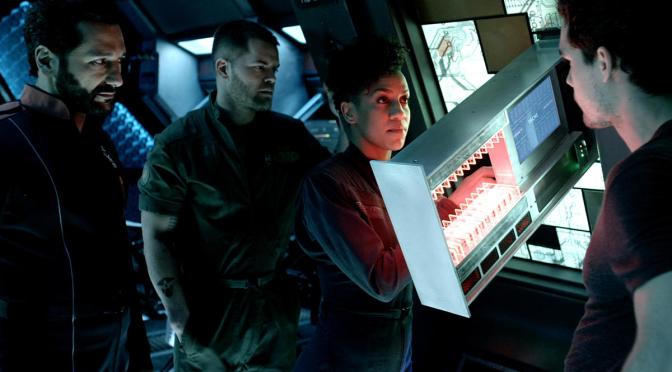
I kind of feel as if Holden and the rest of the Cant survivors’ journey ought to be the main event, but their arrival at Tycho and the sequence of events that end with them shipping back out on the Rocinante to go retrieve Fred Johnson’s mysterious contact, Lionel Polanski, are actually somewhat underwhelming. The show did manage to capture some of the tenseness in the first meeting between Johnson and Holden, but the more I see him, the more I’m not entirely happy with Steven Strait’s portrayal of Holden. Unless, of course, it’s the intention of the show that his face is supposed to be the most punchable one in every episode, in which case, mission accomplished. “Biggest dipshit in the universe,” indeed.

The negotiations that lead to Holden and the others all being able to leave Tycho together, which were pretty significantly detailed in Leviathan Wakes, feel a little glossed over and hand-wave-y here. I can understand the desire to avoid showing us a whole lot of people standing around arguing, and the generous reading of this adaptational choice is that the show’s writers don’t want to be holding the audience’s hand and that they trust us to figure things out for ourselves. This is certainly possible, but the explanation for how the crew all gets to leave together is almost a blink and you miss it moment, and I found myself filling in the details with recollections of how things went down in the novel. It’s not a huge problem, but it could definitely have been made a little more clear what happened.

The thing about the Rocinante crew’s time on Tycho that works, though, is the time that is spent this week showing us some more about who these characters are. Having them go out drinking and conversing in pairs (Holden and Naomi, Amos and Alex) is a nice reprieve from the constant stream of crises they’ve faced so far and continues some of the respite the characters got a taste of last week, but without ever feeling permanent. Instead, while the episode ends on a somewhat hopeful note for the crew, it also feels as if there is very clearly a storm on the horizon for them as the leave Tycho in their newly disguised ship.

Miller’s tribulations on Ceres steal the show this week, though this is mostly because Jared Harris is absolutely magnetic as Anderson Dawes. After being tased and kidnapped at the end of “Back to the Butcher,” Miller wakes up in a bad place and finds himself being interrogated/punished by Dawes, who it turns out is one of the show’s most compelling (albeit frightening) characters so far. More pertinently to Miller’s situation, Anderson Dawes is a true believer in his cause (Belter liberation), and he thinks that Miller is a traitor to their people. When Dawes realizes that Miller isn’t dangerous—that the detective is really just kind of sadly and creepily obsessed with Julie Mao—he decides to cut his losses and have Miller thrown out an airlock.

Fortunately, Octavia Muss shows up just in the nick of time to rescue Miller, and they retreat to Miller’s place, where Miller finally pieces together some of the last pieces of the puzzle of what’s going on with Julie Mao, the Scopuli, the OPA, and the destroyed ships. When he thinks he’s got it figured out, Miller finally gives in to Muss’s advice from last week. He takes it to his superior, Captain Shaddid, who promptly confiscates Miller’s evidence and fires him. Poor Miller just can’t get a break.

Miscellaneous thoughts:

  • I really like Octavia Muss, but the show doesn’t really seem to know quite what to do with her. This week was the most we’ve seen her get to do all season, but as soon as she’d outlived her usefulness, she’s shuffled off screen with unceremonious abruptness.
  • Naomi Nagata continues to be one of the show’s most interesting characters, but whatever her secret/mystery is has started to become somewhat infuriating. I’d love to get some piece of concrete information about her.
  • I’m a little baffled by this episode’s subplot with the space cops (unsurprisingly the same kind of brutal pigs as regular cops), the asteroid miners, and the suicide attack. While it’s tangentially connected to other things (nephew Diogo is one of the kids Miller busted in an earlier episode), it’s a fairly lengthy sequence that doesn’t have any direct impact on the rest of what’s going on, nor does it give us any new insight into other characters. If it’s just a bit of world building, it’s effective, but almost unnecessarily bleak and not that informative. Also, while Diogo is only listed on IMDb for two episodes, surely the show isn’t going to just leave things like this, with him just floating out in space by himself.

Weekend Links: January 9, 2016

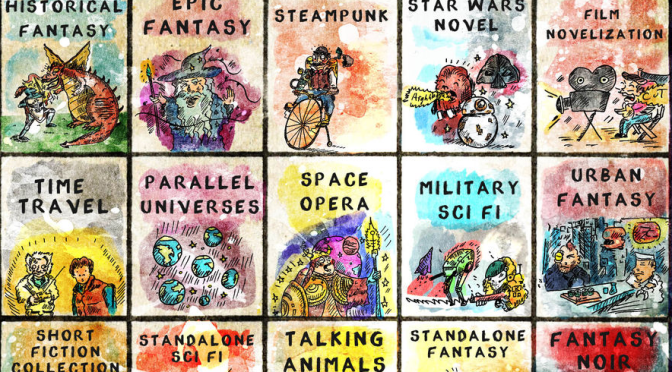
I haven’t done any yearly reading challenge things before because I usually like to just read whatever sounds good when I finish a book, but I think I might use this SFF bingo card from the B&N Sci-Fi and Fantasy Blog this year. There’s a nice variety on here, and I’m always looking for new things to read outside my comfort zone. Plus, it’s so pretty, I can’t wait to print it out so I can hang it up next to my work space.
Speaking of reading habits, it’s definitely become the fashion in the last couple of years for those of us of the feminist persuasion to declare, loudly and publicly, that we’re not reading any books by men, or by white men, or whatever. I’m guilty of this myself, a couple of years ago, and I don’t regret it–it’s actually a great way to shock oneself into reading more diversely–but Jia Tolentino at Jezebel makes a pretty compelling case for why we should all shut up about it already.  I don’t entirely agree, but I do approve of preemptively calling out the inevitable rash of self-congratulatory New Year’s think pieces on the topic.

Fandom Following is a voice of reason in the wilderness, with a good explanation of why we shouldn’t care about Game of Thrones season six passing up the books.

Hayao Miyazaki turned 75 this week.

Smart Bitches Trashy Books tells us all about Mary Wollstonecraft.

The Mary Sue tells us all about lesbian vampires.

George Lucas’s ex-wife apparently played a big role in make the first Star Wars trilogy as great as it was. I wish I could say I was surprised by this.

Also at the Mary Sue this week, “John Boyega and the Importance of the Unlikely Hero.”

As previously “unlikely” heroes become more likely and white dude heroes become less likely, racist and sexist white dudes have come out of the woodwork to cry about it. Laurie Penny has some advice for them.

The Root interviewed Nnedi Okorafor on putting Africans at the center of science fiction.

io9 lists 75 sci-fi and fantasy films to watch for in 2016.

At Fantasy Faction, publishers list their most-anticipated SFF novels of the year.

MCM Buzz gives us 6 new fantasy authors to watch in 2016.

Hodderscape has a sneak peek at A Closed and Common Orbit, Becky Chambers’ follow-up to The Long Way to a Small, Angry Planet, which is one of my most anticipated novels this year.

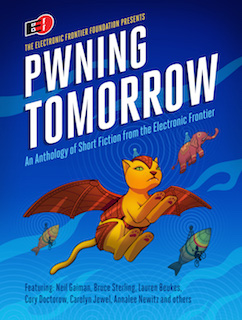
If you’re looking for some cheap/free fiction this week, the Electronic Freedom Foundation just published a speculative fiction anthology, Pwning Tomorrow. You can donate to the EFF and download the anthology here. The rather impressive table of contents includes Cory Doctorow, Charlie Jane Anders, Kameron Hurley, Neil Gaiman, and many more of today’s most popular authors. It’s like they saw Microsoft’s Future Visions and decided to top it. By a lot.
 

Why you should drop what you’re doing and watch Into the Badlands immediately

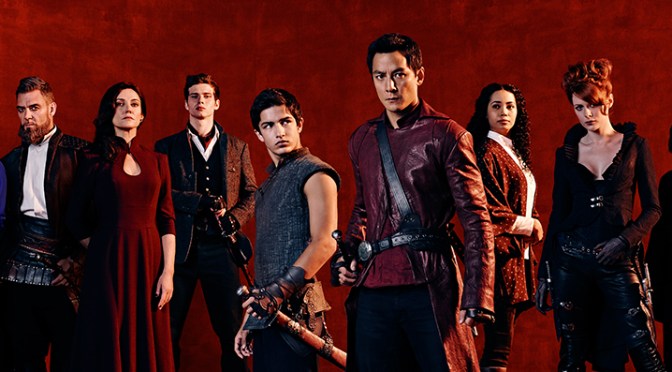
Listen. You should absolutely watch this show. I know it aired last year. I know it’s gotten largely middling reviews. I know it’s a slow starter. I know it ended on a bit of a cliffhanger in episode six. I know that AMC is dragging their feet on renewing it. But it’s really, really fucking good. Much better than its reviews give it credit for and much better than the overall tepid reception of the show would suggest. And there are actual reasons why this show should be on everyone’s watch list, reasons that have nothing to do with my own almost uncritical fangirling over it.

It’s a martial arts fighting show

Into the Badlands’ martial arts coordinator, Huan-Chiu Ku, has worked on numerous highly recognizable martial arts projects, including Crouching Tiger, Hidden Dragon and Kill Bill, and what he brings to the small screen is probably the best and most beautifully choreographed fights scenes to ever make their way to television. Every one of this show’s fights is at least good, and a high proportion of them are just breathtaking. If you at all enjoy choreographed martial arts, Into the Badlands is a must-see piece of the genre.

With an Asian lead

There’s a long, sad history of martial arts shows and films being made with white male leads in American cinema, but Into the Badlands has not one, but two Asian men in lead roles. Daniel Wu (Chinese-American) plays Sunny, and Aramis Knight (Indian/Pakistani/German) plays his apprentice, M.K. I’d be lying if I said that Daniel Wu’s gorgeous face wasn’t part of the reason I watched this show.

And a black woman as the main character’s love interest

Sunny is paired in the show with Veil (the luminous Madeleine Mantock), a doctor in the show’s post-apocalyptic town. If you’re old enough, as I am, to remember when Romeo Must Die cut out Jet Li kissing Aaliyah because audiences reacted with horrible racism to their interracial relationship, you’ll understand why Sunny and Veil’s relationship is important. What’s even better, though, is that Veil is so much more than just Sunny’s lover. As the show goes on, Veil proves to be a tough, resourceful, compelling character in her own right, which brings me to my next point.

And a whole host of badass women characters who mostly defy stereotyping

Veil might be my favorite character in Into the Badlands, but there’s also the Widow and her daughters, who are supposedly fighting to make a better world, including Tilda, who isn’t sure that her mother’s way is right. There’s Lydia, the formidable wife of the Baron Quinn, and there’s Quinn’s new (and ambitious) young wife, Jade. There’s Zypher, who has the same job as Sunny, but for another Baron. I would love to see at least a couple more women of color in the mix, but the diversity of personalities, roles, skills, and values these female characters display is also important and refreshing in a genre that often relegates women to a couple very passive or tokenized roles.

And surprisingly feminist sensibilities in general

I wouldn’t say that Into the Badlands is definitely a feminist show. Certainly, it doesn’t have any particular feminist message that it’s trying to get across. However, it’s a show that cares about being inclusive and diverse. It cares about examining power structures and oppression, and it cares about having a real conversation about it. It’s not a show that pretends to have all the answers; it’s a show that gives us a whole bunch of characters trying to figure things out, and it’s compelling as hell.

There’s really just nothing else like it on TV right now

The thing is, I’m not sure what we can reasonably compare Into the Badlands to. Sure, it’s firmly in the SFF genre, but its peculiar mix of post-apocalyptic and feudal influences (It’s loosely adapted from the Chinese classic Journey to the West) is pretty unique. It’s also bright and beautiful, filled with vivid and heavily saturated colors, excellent costumes, and amazing hair and makeup. It’s an original concept with a highly creative and recognizable style.

The story isn’t particularly groundbreaking, but it doesn’t need to be; it’s well done, nicely acted, and cleverly plotted over the six episodes of the first season. Admittedly, the first couple of episodes feel more full of potential than greatness, but I appreciate that the show doesn’t condescend to its audience. Events unfold in a natural progression, plot developments never feel forced or contrived, and there are several genuine surprises, especially in the back half of the season, that make the material feel fresh.

Watch it. ASAP. And then let AMC know that we want more of it.

Book Review: Future Visions – Original Science Fiction Inspired by Microsoft

Future Visions had me at Ann Leckie (also at “free” because who passes up free stories?), but it turns out that Microsoft’s first foray into sci-fi publishing is actually a solidly good collection of work. I honestly wasn’t at all certain that it would be, and, worse, I was more than a little concerned that it would end up being little more than an extended, fictionalized advertisement for Microsoft products. Instead, it’s a well-produced anthology of hard sci-fi that ranges from very recognizable speculation about the near-future to space opera.
First, though, there’s a forward and an introduction, both written by Microsoft Research executives and both of which sound a little too much like marketing copy, even though the only thing they’re “selling” is ideas. Still, Harry Shum and Rick Rashid do a decent job of kicking things off and giving the reader a little bit of insight into what the rest of the book contains. If nothing else, this pair of essays will be an interesting bit of context for future scholars who might examine Future Visions as an artifact of our times. This will be even better if this project turns out to be a recurring one. As someone with a scholarly interest in these things myself, I would love to look back someday at ten or twenty or fifty years’ worth of Future Visions and see how things have gone.

The opening piece of fiction is a delightful piece by Seanan McGuire, whose work I really ought to check out more of because I always enjoy her short fiction when I come across it. Her offering here, “Hello, Hello,” is an optimistic tale about the impact voice and body language translation technology could have on the lives of people with disabilities. It also suggests an interesting way in which this type of technology could expand our understanding of our world. The story is told with sensitivity and humor, and it’s sweet without being cloyingly so.

Greg Bear’s “The Machine Starts” is a rather darker story that examines some of the potential hazards of quantum computing. Something about how it could break the whole damn multiverse. It’s bad enough knowing that we’ve all got a couple of doppelgangers, just statistically, but now we’ve got to also worry that they could be actual alternate universe versions of us. Thanks, Microsoft.

“Skin in the Game” by Elizabeth Bear is the first story that I didn’t care much for, but it’s still not awful. I was surprised, though, as I’ve loved all the books I’ve read by this author. The Nancy Kress entry, “Machine Learning,” is another story that I found dull and a little uninspired, though your mileage may vary.

“Riding with the Duke” by Jack McDevitt is reminiscent of the work of Philip K. Dick and Kurt Vonnegut, so of course I loved it. It’s my favorite combination of optimism and cynicism—smart, funny, and deeply fucked up.

“A Cop’s Eye” is basically a comic book, and the story is just okay. I like the idea of police officers using technology to help people, but I feel like a lot more needs to change than some tech advances in order to make this story a real possibility. The art is simplistic and rather boring, and just getting to read it was a hassle as however it’s embedded into the file I was reading on my Nook HD would only crash the device’s reader when I tried to turn the page to it. I ended up reading it in the Nook app on my Surface, which worked fine, so maybe it’s just my device starting to show its age, but still. Very irritating.

Robert J. Sawyer’s “Looking for Gordo” is an excellent first contact story. It’s also another optimistic piece, although it does examine some of the arguments for and against trying to contact other life in the galaxy. If you like this story, I highly recommend checking out Liu Cixin’s Three-body series, which deals with some of the same ideas.

I tried so hard to stick it out and finish David Brin’s “The Tell,” but I just couldn’t. I won’t say it’s unreadably bad, but it definitely was, for me, impossible to do anything but skim it, skip to the end, and hope it made more sense. Unfortunately, it didn’t. The story deals with prediction-making, I guess, but really it felt much more like a long, dry, self-indulgent think piece. Again, I don’t know that I’d say it’s bad, but I certainly found that it wasn’t for me.

I wasn’t sure what to expect from Ann Leckie’s story, having only read her novels so far. I can’t tell if “Another Word for World” is set in the same universe as the Imperial Radch series, but it’s definitely in that neighborhood—definitely space opera, but also similar to the more sociological sci-fi of Ursula K. LeGuin or Karen Lord. It’s a story about colonialism, treaties, and the problems inherent in relying too much on translation devices. It’s also my favorite piece of Future Visions, and this book is definitely worth downloading (for FREE) just to read this story, though I do recommend giving the rest a try as well.

The Shannara Chronicles: “The Chosen” is a Tangerine Dream soundtrack away from greatness

Though I loved them as a teenager, I don’t think I’ve even cracked the spine of a Shannara book in at least ten years. Still, I was delighted when I heard there was a television series in development based on Terry Brooks’ novels. With so much recent fantasy fare that is decidedly grimdark, The Shannara Chronicles is a much-needed palate cleanser, and since I’m a sucker for nostalgia projects there was basically no chance that I wasn’t going to watch (and love) this show. It’s definitely the most fun I’ve had watching a fantasy epic in a long time, and I would even argue that it’s solidly well-conceived, with decent acting, good plotting, and nice pacing.

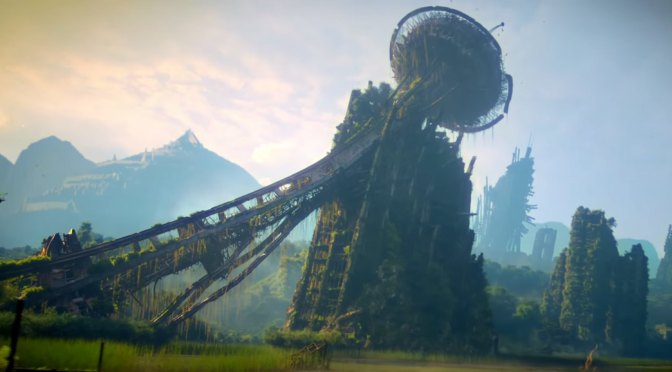
The opening shots and credits for The Shannara Chronicles are absolutely gorgeous, and the whole show so far is just one stunning piece of CGI scenery porn after another. It’s so pretty that I don’t even care that after thousands of years, none of the metal structures they show would still be standing in any form. It’s not as if the broken Space Needle, desiccated ship, or various rotten vehicles and satellite dishes and so on add any particular sense of realism to the setting. They are cool, though, and the vivid, highly saturated colors put this show essentially one Tangerine Dream soundtrack away from aesthetic perfection. I can even forgive the show for creating an elven city that looks—no joke—like they just tried to imagine what might happen if Lothlorien and Minas Tirith had a baby city in the post-apocalypse. In fact, I rather like this kind of overt callback to LOTR. It’s probably best for Shannara to just own its heritage right out of the gate.

The costuming is nicely contemporary-feeling, but without just being a showcase for designer dresses like some other teen shows. I don’t feel like I’ve been transported in time when I see the show’s elves or Rovers, but I also don’t feel like I’ve been transported to prom night at a prep school. The costumes for Amberle and Eretria are reasonably practical for the activities the women are engaging in, which I appreciate, and neither of them is overly sexualized.

The show in general displays a pleasantly frank attitude towards sexuality, in line with its YA sensibility and current trends in YA fiction. There’s no sex actually confirmed to be happening, but Amberle is not assumed to be virginal, in spite of being an elf princess. Her aunt actually assumes otherwise when Amberle goes to her for help, thinking that the princess could be dealing with an unwanted pregnancy. While this is somewhat played for laughs, it’s indicative of the show’s relaxed way of dealing with teenage sexuality—in this future world it’s normal, accepted, and issues seem to be handled practically and non-judgmentally. There is a love triangle suggested (Amberle, Wil, Eretria), but the show so far hasn’t made romance a too-central part of the story it’s telling. Instead, it seems more concerned with just introducing us to the characters, introducing the characters to each other and getting on with the adventure.

The actual story is pretty pedestrian stuff—an evil dark lord coming back with demons, a farm boy with a great destiny and a secret heritage, Manu Bennett as sexy Gandalf—but it’s done well, and I’d always rather see a derivative tale told nicely than an avant garde disaster. The show definitely struggles with dialogue in this first episode, though. Although I’m not always hip to kids’ lingo these days, I actually enjoy the teen-speak of the young adult characters, but there were more than a few hilariously bad speeches. Hopefully this will get worked out better in future episodes as they find a balance between creating relatable young characters and plausible fantasy heroes. One area the writers shined in, on the other hand, was in incorporating expositional dialogue. So many sci-fi and fantasy projects get bogged down with clunky, uninteresting exposition, but this one works it in pretty deftly. I won’t say it’s not noticeable, but it’s not ham-fisted or dull.

Probably my favorite thing about the show so far, though, is the ways in which it improves upon the source material. Admittedly, it’s been a good while since I read the book, but I remember it as heavily focused on Wil, with Amberle in particular as a much less active character. Here, though, Wil’s hero’s journey exists in parallel with Amberle’s and they support each other on their way. Even Eretria seems a bit more lifelike than I remember, though it’s not clear yet where she fits into the bigger story except as the other prong of the love triangle. Regardless, it’s nice to see the story kind of updated and expanded to give the girls larger and more heroic roles, and I’m legitimately excited to see what happens next.

Miscellaneous thoughts:

  • The show could definitely be more racially diverse. There are a lot of people of color in crowd scenes and background roles, and it’s cool to see a black woman as the Commander of the elven army, but all of the main roles except Manu Bennett’s Allanon were cast with white people. So it’s not the worst show in terms of diversity, but it could have been better.
  • I would have especially liked to see more of the Rovers cast as non-white actors. I know it’s from the books, but if you’re going to use tired old stereotypes of travelling people in your story, you could at least not make them all super white to boot.
  • I don’t like the chestplate thing that Manu Bennett wears. It looks weird.
  • The CGI scenery looked amazing, but the CGI for the demons left something to be desired.

The Expanse: “Back to the Butcher” feels like a calm before a storm

“Back to the Butcher” feels like the show letting out a sort of sigh after four episodes of high tension, action-filled spectacle. Everyone gets to relax a little, including we viewers, and it’s interesting to see what the show’s characters do with their brief quiet time.

So far, while the show has avoided a truly episodic narrative, there’s still been a definite pattern and rhythm to the storytelling and how it shifts between Miller, the Cant survivors, and Avasarala. Last week was the first time since episode one that a new point of view was introduced. This week, Avasarala doesn’t appear at all, and there is a lengthy flashback sequence about Fred Johnson instead. It’s informative, but it stops short of telling the full story of this character and how he went from being Fred Johnson, The Butcher of Anderson Station, to Fred Johnson, high level OPA member. Having read Leviathan Wakes, I am familiar with the story, but I’m not sure if the Anderson Station stuff made much sense to anyone who hasn’t read at least the first book. It seems like there is enough information offered to let the viewer connect the dots, but I expect that next week we’ll hear more about it from Fred himself.

The reason we spend so much time on Fred Johnson, of course, is that he’s the first/only person to offer the now-fugitive Cant survivors some kind of lifeline. When the episode opens, they’re adrift in space, turning everything off so they can’t be found, and with a dead Martian (sadly, Lopez didn’t make it) on their purloined and highly recognizable ship. Catching up on newsfeeds now is also the first time the Cant survivors learn of how Holden’s announcement has gone over on the stations.

It’s an interesting situation for the crew, and while the debate over what to do next isn’t exactly compelling, I am just happy that there is a debate. In the book, this was all story that was told from Holden’s point of view, and it’s greatly improved by adapting it as an ensemble drama. I’m especially (still) enjoying Naomi’s increased importance on the show, and I love her friendship with Amos. This time on the ship—renamed the Rocinante when they finally decide to accept Fred Johnson’s offer of help—is a nice respite for everyone, and while there’s not a ton of actual time dedicated to it, there’s a lot of well-done touches that bring these characters to life a little more.

On Ceres, Miller is still digging deeper into his investigation of Julie Mao, to the point that he’s stopped drinking and is alienating his friends and coworkers. He’s approached this week by Anderson Dawes, who offers him a trade; Dawes will give Miller the guy who attacked Havelock if Miller will keep Dawes in the loop on the Julie Mao case. This all seems to be related in a subtle way to Miller’s crisis of identity and his torn loyalties, and it’s cleverly sharing screen time this week with what’s going on at Star Helix while Miller is busy elsewhere. I was legitimately surprised by Miller’s kidnapping at the end of the episode, though. That’s not at all where I thought things were going, and now I have to wait until next week to see a whole lot of shit hit the fan on the station.

Miscellaneous thoughts:

  • I want to know everything about Naomi.
  • Holden’s face when he finally gets his coffee might be the first time I’ve really found him likeable.
  • I like Octavia Muss a lot, but I wish she’d be given more to do than just act as a voice of reason and be ignored by Miller. It feels as if the show kind of wants to give her a bigger role, but they don’t want to actually do it, and so she’s turning out to be less a character and more of a device to be an impediment to Miller and give the appearance of the show having more female characters than it does. Here’s hoping that she gets more to do later on.
  • The Anderson Station story kind of destroyed me. It’s great world building and character background, too, but it’s good on its own and is a great example of how to properly utilize flashbacks.
  • Jared Harris steals every scene he’s in as Anderson Dawes. He’s a much more menacing-seeming character on the show than in Leviathan Wakes, but I like it.

Supergirl: “Blood Bonds” turns back every advance made in the last episode

I’m a little concerned that Supergirl is starting to become tiresome. After a winter finale that ended literally in the middle of what seemed to be a pivotal fight, I expected something much better than what we’re given in “Blood Bonds,” which is a huge mess of spinning wheels and downright silly diversions that do nothing to move any of the show’s several major plots forward.

The fight that we were in the midst of in the last episode was wrapped up within moments this week when Non kidnaps Hank Henshaw. The rest of the episode is concerned largely with figuring out how to get Henshaw released without “negotiating with terrorists.” A secondary plot in the episode is Kara trying to convince Cat Grant that Kara is definitely not Supergirl, even though Cat is not stupid, and there’s even a sort of tertiary plot with James and Winn stalking and harassing Maxwell Lord. In short, “Blood Bonds” is a huge mess, and while it was another amazing episode for Kara’s character, I’m finally starting to doubt that Melissa Benoist is really capable of carrying the whole show on her own indefinitely.

Non’s kidnapping of Hank is actually pretty anti-climactic in the end. It does give us a glimpse of Alex Danvers in charge, which is nice, but I’m still a little confused by what feels like a very abrupt about face on Alex’s part regarding her distrust of Hank. I’m not sure how learning that he’s an extremely powerful alien just completely put an end to all of Alex’s questions and concerns. I’m also not sure what the show is going for, more broadly, with Non and Astra. There were several flashback sequences this week that shed a little more light on this pair and our understanding of Astra is certainly improved, but there’s also that scene where Non just murders some guy for no real reason. In any case, everything is back to the status quo by the end of the episode: Astra is on the loose and still an ecoterrorist, and Kara has conflicted feelings about it. The only thing that’s changed at all is that Kara now knows that Hank is actually Martian Manhunter—but that’s literally the only forward progress on any front in this episode.

When Kara isn’t negotiating with actual terrorists this week, she’s working absurdly hard to try and prove to her boss that she’s not Supergirl. Cat has threatened to fire her because she thinks that if Kara is Supergirl, then saving people is way more important than answering phones and bringing Cat coffee, and Kara’s fight to keep her position at CatCo, while somewhat absurd, produces the most authentically emotional moments of the episode. Melissa Benoist and Calista Flockhart have a great onscreen dynamic, and I would absolutely watch a show that was just about their relationship. The only problem with this all is that, again, I’m not really sure what the show is going for. Kara is obviously the worst at keeping a secret, but I think Cat would not be a bad person to let in on things, and if it’s the job that Kara is really worried about, I feel pretty certain that Cat could be persuaded to let her keep it. It just doesn’t make that much sense, for all the it’s fun to watch.

The tertiary plotline in “Blood Bonds” is almost too silly to bother mentioning. While Kara is busy this week, James and Winn decided, for some reason, that they were going to launch their own investigation into Maxwell Lord. Clearly, Max is a turd of a human being, and he’s acted shady about all kinds of things so far, but I don’t think he’s done much that James and Winn would know about to trigger their snooping. Alternatively, if they really think Max is so dangerous, I feel like their half-baked plan to spy on him somehow is just ridiculous. In any case, it gets James into trouble when he’s caught by a couple of Max’s goons and Max decides to beat up on him a little—which also gets him in trouble with Kara, who doesn’t like her human friends taking even the smallest, most calculated risks. The best part of this whole debacle, though? James doesn’t manage to find out anything new about Max at all; it’s only revealed to the audience at the end of the episode that Max is doing some kind of science experiment on a young woman who bears a more-than-passing resemblance to Supergirl.

This show is almost increasingly inconsistent, and its reliance on Melissa Benoist’s talent to redeem so many huge, glaring flaws seems certain to be its undoing. As much as I love her, and as much as I have so far maintained that Melissa Benoist is a delightful angel who definitely does carry the show, there’s ultimately only so much that one woman can do. Supergirl needs to decide what kind of show it wants to be or else it’s going to force viewers to decide whether or not they want to stick with it.

Miscellaneous thoughts:

  • I hate Maxwell Lord with a passion. As far as I’m concerned, his is definitely the most punchable face on television right now. It’s not that he’s such a great villain or anything. He’s just a huge douchebag.
  • They should have done the Hank Henshaw kidnap before revealing his identity to the audience. There was basically no sense of real peril or danger for him this week, which made everything Alex and Kara were going through to rescue him feel like melodramatic theatre.
  • I love seeing Kara work through her feelings about things. That’s definitely the thing this show does best, and while it may struggle in many other areas, Kara’s character growth is always excellent.