iZombie: “Twenty-Sided, Die” is the best episode

“Twenty-Sided, Die” is by far the strongest episode of the season so far, and it’s probably my personal favorite episode of iZombie of all time. It’s got a good case of the week along with some excellent big picture plot development, and Liv gets to DM a D&D game for her friends. Spoiler: It’s glorious.

**Real spoilers below.**

Last week’s episode ended on a tense note, with Ravi going alone and unarmed into a meeting for the local zombie conspiracy theorists, and this episode starts with showing us how that goes. Fortunately, it’s not as awful as it could have been, and Ravi gets out intact, but it’s definitely a meeting full of bad news for Seattle’s zombies. Harley Johns has identified Floyd Baracus as a zombie, and he’s got files on numerous other people he suspects. He’s also got a plan to kidnap a zombie and starve it, then publicize it in order to convince the public of the existence of zombies and to highlight the threat they pose. Thinking quickly, Ravi reveals his identity and claims to be working on a zombie vaccine, urging Harley and the others to delay their plans. At the end of the episode, however, we find out that even Ravi’s sensible urging of caution isn’t enough to stop Harley and his brother from capturing a zombie at the first opportunity. They’ve collared a berserk Don E. and brought him straight to Ravi thinking that Ravi might have a tranquilizer that would calm Don E. down.

Don E. is going berserk, of course, because he’s gotten into Blaine’s new product: the brain of a WWII veteran and ladies’ man that has been soaking in Ravi’s blue memory serum liquid for twenty days. After Tanner enjoys the experience after eating a tiny sliver of the blue brain as a test, Don E. takes a much larger piece for a spin, and it looks like they’ve discovered the potential downside of the product. Too bad Blaine isn’t around to know about it. Riding the high of the initial successful test of blue brains, Blaine heads out to the well where he dumped his dad last week to have a nice, long gloat. Too top off the list of things Blaine doesn’t know about that might derail Blaine’s optimism, the episode ends with Mr. Boss coming back to town, an unexpected development that doesn’t bode well for pretty much any of the main cast and adds yet another subplot to an already packed story.

This week’s murder mystery is a weird one. A dungeon master running a weekly D&D game night is poisoned, and his circle of gamer friends—including police sketch artist Jimmy and IT guy Vampire Steve—come under suspicion for the crime. However, as Liv and Clive slowly clear each member of the group, they stumble upon a hidden room at the DM’s apartment that houses some advanced looking computers tied to Russian power plants. It’s weird, and it’s even weirder when the case goes unsolved by the end of the episode. Apparently, it’s a situation that’s enough about Liv and Clive’s pay grade that the FBI takes over, which offers a chance for Dale Bozzio to come back and break Clive’s (and our) heart all over again. It’s unclear so far whether this is the end of this case and the final nail in the coffin of the Clive-Dale romance or if this is yet another new story thread being woven into the mix, but it seems awful late in the season to be bringing back not one, but two characters that it seemed we’d seen the last of so long ago.

The highlight of the episode is Liv on dungeon master brains. Sure, her dice-rolling outside the game setting is odd and leans a little too hard on supernerd stereotypes, but Liv pressing her friends into service so she can run a D&D session in an effort to trigger a vision is everything perfect about this show. Of course Peyton is the kind of player who asks why they can’t just kill the quest giver for the reward instead of going on the quest. Ravi resuscitating Peyton’s character to keep her in the game was hilarious—and of course Ravi is an engaged and knowledgeable player despite mocking this particular kind of nerdery. Obviously Major plays a paladin. And even more obviously, Clive is the guy who isn’t into it until he is and then he’s really into it. It’s a scene that is clearly written and filmed with love for the game and deep knowledge and care of the show’s characters, and everyone in it seems to be having so much fun it’s infectious. I would definitely watch this group play D&D Critical Role-style, is what I’m saying.

Miscellany:

  • After the meeting at the beginning of the episode, Ravi meets a photographer named Rachel, who I’m curious to see more of. She wants to photograph a zombie, but it also seems like she could be a possible new love interest for Ravi.
  • Ravi hiding all Major’s hatemail is very sweet.
  • Major inviting this Shawna woman over sight unseen is just weird. (Also just plain ill-advised.)
  • Not as weird as how totally fine Major is with Liv dating Justin. He’s even giving Liv his stash of brain tubes so she can be herself with Justin.
  • It’s also not as weird as Liv being much more girlfriend-y with Justin than has really been established so far. This show has never been a romance-heavy program, but we’ve only seen them go on a couple of dates, and things onscreen have been decidedly PG so far. I dunno. It’s fine. Honestly, I’m just worried for Justin. He seems nice, and Liv’s boyfriends do not have a great life expectancy.
  • Liv finally meets Chase Graves, and he’s intense. Also, flirting with Liv? I kind of ship it because I’m trash, but also because I’m firmly on Team Protect Justin.
  • Peyton is getting increasingly suspicious about the dominatrix murder case, especially when her boss Baracus tells her to drop it and then Liv tells her that Baracus was one of the dominatrix’s clients.
  • Best line delivery of the episode: Clive shouting, “Where is the lich?!”
iZombie: “Eat a Knievel” takes some risks, but not necessarily the right ones

After a couple of lackluster episodes, I had high hopes for “Eat a Knievel” after seeing the preview for it last week. Eh. It’s alright. The case of the week is decent, if predictable, and there’s some major progress made in some of the show’s other plotlines as well. Not all the plot progress is great, and there’s at least one highly questionable turn of events, but “Eat a Knievel” is at least a solid enough episode to deserve its extremely rad title.

**Spoilers ahead.**

The best development of the week is Blaine’s return to villainy. Last week ended with Blaine shot and left for dead by one of his dad’s flunkies; this week starts with Blaine hunting down one of his own ex-clients to ask for a scratch and directions to where Don E. and Angus are working. It ends with Blaine encasing his father’s feet in cement and dropping him into a well on their family property before heading off to have an almost-touching reunion with Don E. Blaine has always been best as a villain, and his amnesiac turn sucked a good deal of the life out of him; returned to zombie form and freed from the constraints of trying to be a better man, he showed more vim and vigor this week than he has in the whole rest of the season so far. The only thing missing was a Blaine musical number.

The other event of significance is the apparent murder of Vivian Stoll, right after she figured out that Major is human. This is the questionable part of things. The arrival of Vivian and Fillmore Graves on the scene at the end of season two was promising, and they figured largely in the first couple episodes of season three before being moved to a decidedly back burner in recent weeks so the show could focus more on the personal drama of Major’s illness and de-zombie-fying and Blaine’s faked amnesia. While we’ve seen some of the Fillmore Graves crew (mostly in Major’s storyline), there hasn’t been any new development on the bigger Fillmore Graves storyline (whatever that’s supposed to be) in weeks.

When one of the first scenes in this episode was a sort of update meeting with Clive, Liv and Major reporting to Vivian, it seemed that we might be coming back around to some of the bigger picture zombie stuff that Fillmore Graves represents. Instead, what we get is the Fillmore Graves leadership team killed and the company taken over by Vivian’s brother-in-law, who’s some kind of aggressively militaristic loose cannon. It’s unlikely that any good will come of this change in management, and it seems at least somewhat likely that the new guy is behind Vivian’s death to begin with, but with Vivian dead Major’s secret (that he’s human again) is still safe—even if Major himself is decidedly less so.

The case of the week involved the murder of one “Finn Vincible,” who is less Evel Knievel (excellent episode title pun, though) and more Jackass. The identity of the murderer—Finn Vincible’s producer, Rudy—is heavily telegraphed from the very start of the investigation, though it takes most of the episode to ferret out his motive. Because this season seems to be all about investigating the murders of the worst people, we learn that Finn “pranked” Rudy by supposedly fake-banging Rudy’s then-girlfriend-now-wife. Rudy only finds out that the affair was real when his wife gives birth to a baby that is obviously Finn’s, so Rudy sabotages one of Finn’s stunts. There aren’t too many surprises here, and it would have been nice to get a little more interaction with Finn’s acquaintances, but it’s a totally serviceable murder mystery that doesn’t interfere too much with all the much more interesting and significant stuff that’s happening around it in this episode.

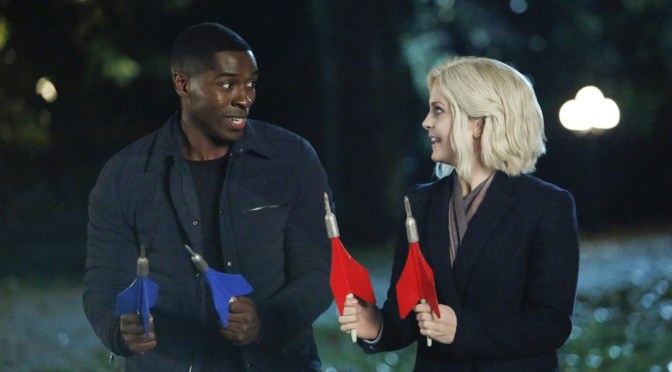
Liv on jackass brain isn’t as hilarious as she could have been, but she’s also not nearly as insufferable and unfunny as she was on the last couple brains she’s had. It’s almost all worth it for the shot of Liv sitting in on an interrogation with staples in her face; Clive’s facial expression in that scene alone is almost enough to carry the whole episode. His reaction faces to Liv’s antics have always been great, but they’re reaching a whole new level of amazing now that Clive knows that Liv is a zombie and understands how the brains affect her. The other thing that happens with Liv on jackass brains is her second date with Justin. She cooks up some brains for him so they can be on the same brain together, and then they go out and play with lawn darts before sharing a nice kiss. It’s really too bad that Justin seems doomed; I like him a lot (even if it does still seem weird how fast Liv has moved past Major), but he’s already had multiple foreshadowing events that suggest that the iZombie universe is out to kill him.

The episode finishes with Liv and Ravi trying to sneak into an anti-zombie conspiracy theorist event, but Liv is forced to turn back at the door when they realize that the zombie-haters are checking blood pressure at the door to prevent exactly this sort of thing. In the end, we’re left with an almost-cliffhanger—I mean, it’s tense, but it’s not really high stakes enough for proper cliffhanger status—as Ravi enters into the anti-zombie event alone to find out what these folks know and how organized they really are.

Miscellany:

  • “Stop talking. You had me at ‘money.’”
  • I suppose this episode finally lays to rest the theory that it was the Fillmore Graves folk who stole the cure from the morgue. The more I think about it, the more my money is on Blaine as the culprit. We saw him messing around with making his own batch of Ravi’s blue memory serum, so could Blaine be looking to sell the cure for top dollar and then charge people for the memory serum as well to “cure” the temporary amnesia? With no other likely suspects, this seems as plausible as any other theories I’ve seen.

Movie Review – King Arthur: Legend of the Sword

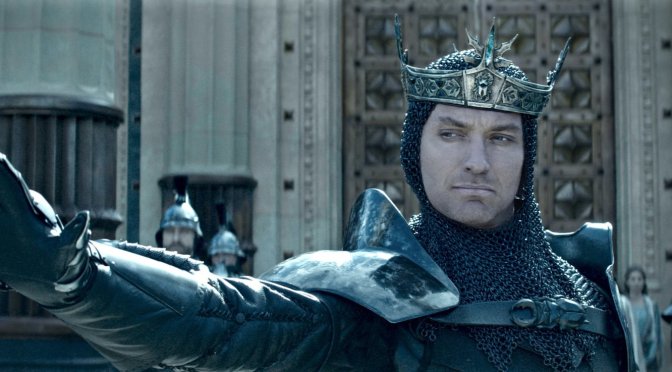
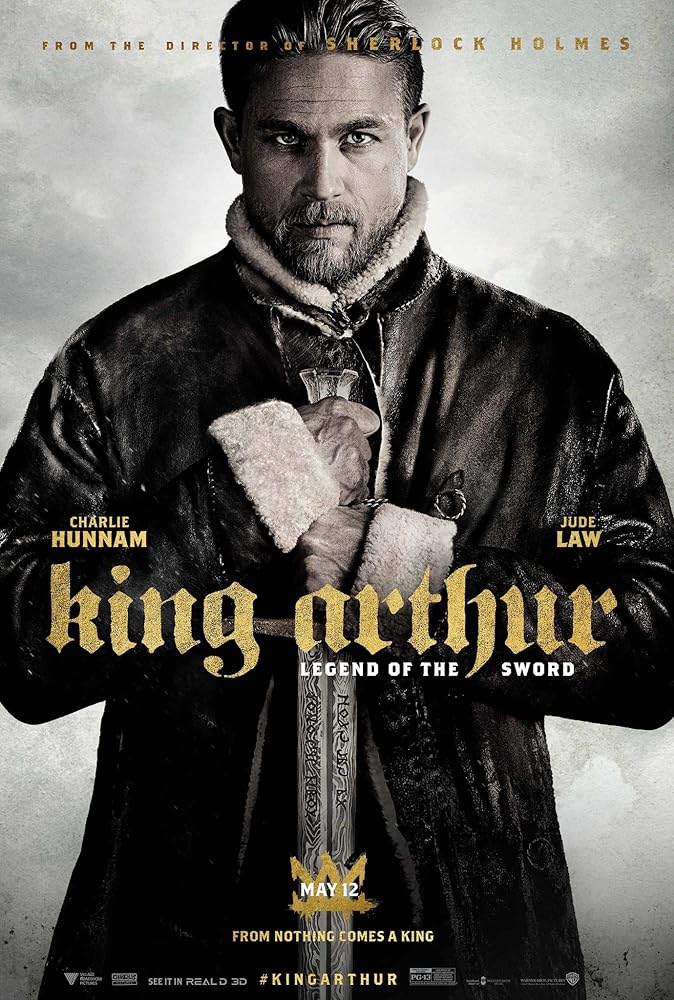
As a longtime lover of all things Arthurian for whom Lock, Stock and Two Smoking Barrels used to be a favorite movie, there was no way that I wasn’t going to go see this glorious mess at the first opportunity. If you’re like me, and the trailer for King Arthur: Legend of the Sword filled you with unironically joyful anticipation for this film, you will probably love the finished product, which is basically the trailer, but two hours long and on an enormous screen in a dark room. It’s all giant magic war elephants, fast-talking heist-planning, aggressively ugly action scenes, and hilariously confused imagery. I don’t think I stopped smiling from the first frame to the last, though I also lost count of the number of times I gleefully whispered, “What the fuck?” to myself. I adore this movie.
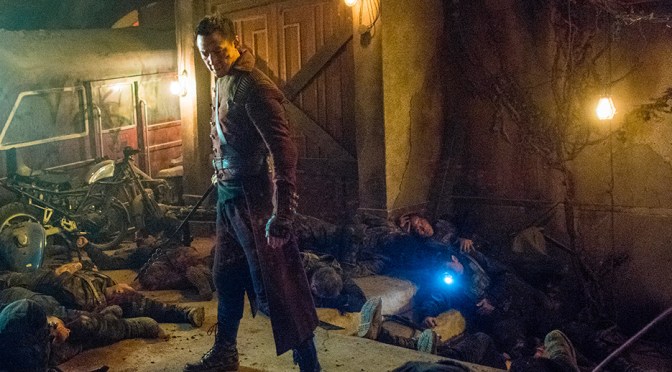
To the degree that King Arthur deserves serious analysis, it’s not as bad as you might expect. Like all of Guy Ritchie’s oeuvre that I’ve seen (which admittedly isn’t all, as I’m by no means a great fan of his), this movie is heavily focused on exploring the filmmaker’s seemingly complicated feelings about class and masculinity. What’s interesting about King Arthur, however, as opposed to Ritchie’s early work, is the presence of women and the way that the film’s masculine identities are constructed around the characters’ interactions with women. Whereas movies like Snatch and Lock, Stock didn’t feature any women at all, being entirely concerned with men and their homosocial interactions as a microcosm within which to explore broader (if only slightly) social issues, women figure prominently in King Arthur and in a variety of roles.

It’s not that the women of King Arthur are particularly interesting on their own—indeed, only the Mage and Maggie get any appreciable speaking time—the way they exist in the narrative and what they mean to the male characters is kind of fascinating.

Arthur’s mother could almost be considered a classic case of fridging, but the truth is that the deaths of Arthur’s parents occur at the same time in a scene that, visually, recalls the murder of Bruce Wayne’s parents several iterations of the Batman origin story as much as anything else. And make no mistake about it, this King Arthur is a super hero, which is an obvious and natural modern interpretation of the source material that ought to be accepted in order to best understand and enjoy this version of the story. While it’s primarily Arthur’s father, Uther, whose death Arthur must come to terms with to learn how to control the power of Excalibur, the trauma of his mother’s death is revisited numerous times throughout the movie as well, and she’s not forgotten or ignored even if she isn’t especially important.

While King Arthur has commonly been interpreted as a Christ figure, our earliest significant image of this Arthur is his being pulled out of the river like Moses when he’s found floating on the Thames by some prostitutes, who then raise the boy in their brothel in Londinium. These women (with a single, sadly fridged exception, Lucy) remain unnamed, and while the adult Arthur seems to respect and care for them—even working as a sort of bouncer for the brothel and taking actions to keep the women safe and avenge wrongs against them—the montage of Arthur’s childhood suggests that he was largely left to run wild, growing up on the streets with a couple of similar-age male friends and being taught how to fight by some of the adult men in their neighborhood community. It’s a kind of bizarre case of trying to have one’s cake and eat it, too; we’re meant to understand these women as important to Arthur, to understand Arthur as a man who likes and cares about women (and, to be fair, Arthur in the movie is unfailingly polite, gentle and respectful of the women he interacts with), but we’re also meant to understand Arthur as having practically raised himself. He’s a fantasy of a very literally self-made man, pulling himself up by his bootstraps through hard work, cleverness and a charm I would normally describe as “rakish” if it wasn’t so weirdly sexless (not that he’s lacking sex appeal, however).

Many critics have pointed out that the mythology of the movie, just in general, has little to do with classic Arthuriana, and one of the more interesting departures from the source material is to eschew Merlin almost entirely. He’s mentioned, almost as if the writers wanted to make sure the audience knew that they had read some King Arthur stuff, but Arthur’s magical mentor here is instead a woman who works for Merlin. The Mage is never given a proper name, and this interestingly works well to prevent the audience from projecting expectations on her. I spent the whole movie thinking she would eventually be revealed as Morgana or Nimue or maybe even Guinevere, but she never was, and it’s kind of amazing. Though the Mage doesn’t get much of a character arc of her own (the film is pretty strictly from Arthur’s point of view), the decision to avoid naming her as any of the classic Arthurian women lets us interpret her without any of the centuries of baggage those names carry, allowing the Mage to exist as a wholly original character. Surprisingly, she never becomes a love interest for Arthur—is not, in fact, sexualized at all—and while she is at one point captured by Vortigern she’s also never portrayed as a damsel in distress. Instead, Arthur is able to simply negotiate for her release in exchange for himself, and she’s returned unharmed and ready to help him in his final battle against Vortigern. We never actually see her trapped or suffering or powerless on screen, and though she doesn’t save herself from this situation, it’s a minor beat in the larger story and her capture and release is never given enough emotional weight to conform to the usual damsel in distress pattern. All in all, it’s a neat way of averting an all-too-common (and frankly boring) sexist trope.

Maggie is a woman working in Vortigern’s household, and while it’s not entirely clear what her job is—Cook? Maid? Concubine? Vortigern sarcastically calls her a representative of the people, but then he also has her escorting him when he travels, so who knows?—her importance in the story is as a spy for the resistance against Vortigern. Maggie is competent, brave and loyal to the cause. Oddly, though, she never actually interacts directly with Arthur. Instead, she reports on her spying to Bedivere, and her most memorable interactions are with Vortigern when he realizes (somehow) that she’s a spy. What’s interesting about Maggie is that she doesn’t die tragically once her duplicity is found out, but lives right on to the end of the movie, where it’s visually hinted at that she is paired off with Bedivere.

If Arthur is meant to be understood as a man who values and respects women, even as he avoids romantic entanglements, Vortigern is the opposite. One of Vortigern’s first actions in the movie is to sacrifice his wife to gain magic powers so he can defeat his brother, Uther. One of his last actions is to sacrifice his daughter to the same evil-seeming creature (which, incidentally, is three women and a bunch of slimy tentacles) in exchange for yet more power in his futile quest to possess Excalibur. This is by no means a feminist film, and it may be the most generous interpretation of it, but it’s easy to read Vortigern’s willingness to destroy women—even those he claims to love—as a key to his downfall and Arthur’s respect for women as a key to his success.

Ultimately, though, this is a movie about masculinity. Arthur’s coming of age and acceding the throne is tied directly to his ability to control Excalibur, a sword (this sword, even) being a classic phallic symbol. Vortigern’s power is represented in an enormous tower, even more aggressively phallic than Arthur’s sword—especially when we consider that Arthur treats Excalibur casually (e.g. letting it drag on the ground, allowing it to be passed around and carried by his various friends, easily lending it to Bedivere so that Bedivere can knight Arthur’s friends) and with some ambivalence of feeling (there’s a whole sequence where he tries to throw the sword away and the Lady of the Lake has to convince him to take it back), while Vortigern’s tower is jealously guarded and vigorously defended. It feels as if this wants to be a rejection of toxic masculinity—represented by Vortigern and his armies—in favor of a more sociable, constructive masculinity as represented by Arthur, with much of the meaning conveyed through their respective interactions with women, but it’s honestly a mixed bag. There’s a lot to analyze, but for a movie that’s not actually about women at all, there are so many female characters that it’s genuinely hard to make heads or tails of what the filmmakers are trying to say about them.

Miscellany:

  • Charlie Hunnam wears far too many shirts in this movie. Yeah, there’s a nice scene where he wakes up and pulls his shirt off and we get to feast our eyes upon his gorgeous back muscles, but even that was too short. Know your audience, Guy Ritchie.
  • Someone ought to write more about the bizarre use of religious and pagan imagery in this movie. It’s downright bananas, and it doesn’t even stick to just classic Arthurian retelling stuff like trying to visually represent the conflict between Roman-influenced Christianity and the indigenous religions of Britain.
  • In an age where the artfully gritty gore of Game of Thrones and the surreal stylized hyper-violence of American Gods are the fashion, this movie’s violence feels almost old-fashioned. There’s a high body count in King Arthur, but there’s very little blood and no guts to speak of. Also notably absent is the sexualized violence against women that is so endemic in Game of Thrones. When Lucy is abused by the Vikings early in the film it’s left deliberately vague what has happened to her, her injuries are painful-looking but relatively minor, and (most importantly) we’re not shown any of that violence at all—much less shown it in the gleefully gratuitous torture-porny manner that Game of Thrones has popularized. The violence of King Arthur is largely sanitized comic book-style violence, and that’s a good thing.
  • Jude Law is an absolutely perfect scenery-chewing villain.
  • I genuinely hope that a miracle happens and this movie is financially successful enough for it to continue as a franchise. I would gladly watch a dozen more just like it.

Into the Badlands: In “Wolf’s Breath, Dragon Fire,” are you fucking kidding me with this?

Sometimes a show is disappointing for doing the easy, predictable thing. Into the Badlands, however, disappoints by doing something so unexpectedly cruel it verges on nihilistic.

**Spoilers ahead.**

As a conclusion to the season, “Wolf’s Breath, Dragon Fire” is far better than the season one finale at wrapping things up, but there’s still quite a lot of unanswered questions and unfinished business by the end, even regarding the show’s biggest storylines. Unfortunately, basically everything in the episode is completely overshadowed by the senselessly unnecessary and tragic death of Veil, which is hands down the most infuriating thing I’ve seen on television so far in 2017.

It’s been a tough season for Veil from start to finish, as she’s spent ten episodes as Quinn’s prisoner, trying to survive and protect her infant son from Quinn’s increasing brain tumor-fueled madness and violence. The damsel in distress trope is played out enough on its own, but it worked well for most of the season, partly because there’s still a certain amount of novelty in the damselled romantic lead being a black woman and partly because Veil has had numerous opportunities throughout the season to distinguish herself as a strong character with as much agency as her volatile circumstances have allowed.

In a sense, this continues in the finale; Veil’s death is, more or less, by her own hand as she runs herself through in order to strike a killing blow against Quinn. But the way that we get to that point in the first place is just absurd, even for a show in which characters routinely take a bananas amount of punishment before dying. Quinn, having survived Sunny’s season one attempt on his life—nursed back to health by Veil herself—has survived a brain tumor all this season. He’s survived the Widow and Lydia and even just narrowly missed out on another attempt on his life by Veil on their wedding night. Just in this episode, Quinn survives his own explosion to collapse the tunnels of his hideout, and he then survives being impaled through chest twice before he even lays hands on Veil. Honestly, just the idea that Sunny wouldn’t make damn sure of a killing blow of his own before turning his back on Quinn is absolutely mindboggling, and it costs Veil her life.

Honestly, I just don’t know if I can keep watching this show after this. It’s the second time this season that a woman has been blatantly fridged (I haven’t forgotten Ava), and that this time it’s the only woman of color in the main cast is unforgivable. Veil was a great character who was a valuable bit of representation in a show with a tendency to give white women the more exciting, ass-kicking storylines. Even through all the shit Veil had to put up with this season—which, frankly, got to be straight up torture porn at times—she endured and schemed and was constantly waiting for her moment to escape. There’s no reason at all to have Veil sacrifice herself in this way except to reorient the narrative so that the viewer is reminded that this show really is all about Sunny after all.

I suppose, in Sunny’s story, Veil is disposable. Which… fine. But I don’t want to watch a story where that’s the case, especially when we’ve been told all season that it wasn’t.

For a more in-depth write-up of just how fucked up this all is and why it’s hurtful and disappointing, be sure to check out Monique Jones’s piece on the episode over at Black Girl Nerds.

Doctor Who: “Extremis” isn’t nearly as interesting an experiment as Steven Moffat thinks it is

**This is a spoilery review.**

You can tell, watching “Extremis,” that Steven Moffat thinks he’s very clever. It’s a Moffat episode through and through, with all the self-satisfied smugness and overwrought convolutions that come along with that. The thing is, “Extremis” isn’t experimental or groundbreaking or particularly intriguing. It’s what amounts to a dream sequence mashed together with an extended flashback. Which is fine. But there’s not much actual story here, just exposition about the past and set-up for the future, none of which is nearly as compelling as Steven Moffat seems to think it is.

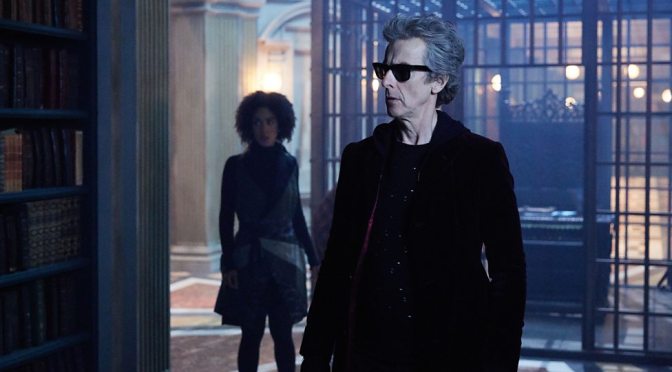
Perhaps the most significant part of the episode, if only because it’s the part of the episode that’s easiest to make good sense of, is the flashbacks that work on multiple levels. Most viewers have been saying for weeks that the vault under the university must contain Missy, and this is confirmed in “Extremis.”  While it’s not clear what for (and it could be any number of things, really), sometime shortly after the end of the Doctor’s time on Darillium Missy is sentenced to death, and the Doctor is summoned to be her executioner. While the Doctor hems and haws about whether he should pull the kill lever and Missy begs for her life, Nardole shows up and reads to the Doctor from River Song’s diary. He’s been sent by River to take care of the Doctor, which explains why he’s been lurking around all season, just waiting for this episode to have something important to do.

The other half of the episode finds the Doctor (seemingly) called upon by no less personage than the Pope himself to help translate an important religious text. It’s this part of the episode that is most frustratingly Moffat-eque, falling apart to a large degree if you think about it for more than a minute. There are some great moments, both humorous and dramatic, and we’re introduced to a menacing new enemy of humanity, but the truth is that the Veritas and the Doctor’s quest to understand it just doesn’t add up to anything that makes much sense at all. In the end, we learn that what we’ve been watching is simply a simulation being run by an invading species of aliens to work through how they’re going to get past Earth’s defenses. As other characters commit suicide in droves at their realization of their own unreality and his friends simply dissolve into pixels, the AI Doctor inside the simulation puts it all together and turns out to be so lifelike that his own way of dealing with unreality is to send an email to the real Doctor and let him know what’s going on, setting up what seems to be the big bad of the season.

Unfortunately, none of this holds up to much scrutiny. The biggest unanswered question, though, is a simple one, and the lack of an answer undermines the whole premise of the episode: If what we are watching, for most of the episode, is a simulation put on by aliens with a plan to invade Earth, and the real Doctor doesn’t find out about any of this until the end of the episode when the simulation Doctor contacts him, where did the invading aliens get the data for their simulation? And if they can either access data (such as the Doctor’s blindness) that only the Doctor and Nardole know about and they can build a meticulously lifelike simulation for their purposes, are they seriously still limited by a quirk of random number generation? Also, they can’t lock down their network so that their own AIs can’t become self-aware and contact real people outside the simulation? It’s such a common Moffat-era Who problem that complaints about it are frankly just banal at this point.

In the end, “Extremis” isn’t nearly as profound or experimental as Steven Moffat intends it to be, but it nonetheless manages to be entertaining. The Pope and several Cardinals pouring out of Bill’s bedroom to interrupt her date is legit hilarious, even if it does happen in the simulation. The Doctor’s suggestion to Bill that she go for it with real life Penny, even though Bill thinks Penny is out of her league, is sweet. Michelle Gomez is a constant delight as Missy. There are some interesting ideas about religion and faith being explored, even if only in the most facile manner. Like many a Moffat-penned episode, “Extremis” is fine as long as one doesn’t think too hard about it.

Miscellany:

  • One Moffat-era trope I wish would disappear forever is people all over the universe being absolutely terrified of the Doctor’s wrath after basically reading the first page of his Google search results. It’s tiresome and patronizing, and the Doctor isn’t actually that dangerous unless you’re a Dalek.
  • I hope we get to see more of Bill with Penny, who seems nice.
  • The visual comparison of River Song’s diary to a Bible is potentially interesting, but it’s pretty much left at that.
  • After last week’s episode using zombie imagery of a kind, it seemed redundant to have this one do the same, even if it was a different take on the zombie look and especially if these zombie aliens are going to make another appearance or two.

State of the Blog and Weekend Links: May 21, 2017

I would love to have a week go by without some large (or at least large-feeling) part of it spent on dealing with life crises. This week, it was my car again; after having some expensive work done on it last week, I was back at the shop again this week with more mystery problems. Fortunately, everything has been under warranty, but it’s still stressful and frustrating and time-consuming to deal with when I’d much rather be working on other things. Add to that the fact that apparently no one makes/sells a classy-looking cat cookie cutter small enough to be cut out in fondant that would fit on top of a cupcake (my daughter has pretty specific late birthday cupcake desires), and it’s not been a great week.

That said, I’m looking forward to the rest of May and June. Hopefully my car troubles are finally solved (I’m really trying to be optimistic about it); this week is my daughter’s last week of 8th grade; Into the Badlands wraps up tonight, which will free up my Mondays for a little while; and a week from this Monday is the premiere of Still Star-Crossed, which is probably the thing I’m most excited to watch this summer. This week, I’ll also be figuring out my schedule for my big summer blogging project, Let’s Read! Gormenghast, and I expect to be starting that the first week of June. It’s shaping up to be an awesome next few months, barring any major disasters.

The big story of this weekend is the Nebula Awards, which were given out last night. Congratulations to all the winners!

Earlier in the week, George R.R. Martin talked a little bit about all the Game of Thrones spinoff series pilots that HBO has ordered. I’m still processing my feelings about this, but I’m basically stuck on appalled horror at the thought of it all at the moment. I guess we can only hope that Benioff and Weiss aren’t involved in any of it.

In more exciting news, a new anthology edited by Navah Wolfe and Dominik Parisien was announced this week: Robots vs. Fairiesset to be released in trade paperback in January 2018.

Also released this week was the first proper trailer for Star Trek: Discovery. I’m still a little concerned about the final project after its production delays and creative staff shakeups, but this looks awesome:

If you’re looking for something good and short and fiction to read this week, be sure to check out Mikki Kendall’s “Snow White” over at Fireside Fiction.

Black Gate has an exclusive preview of Archipelago, a new shared world serial novel being Kickstarted by Charlotte Ashley, Andrew Leon Hudson and Kurt Hunt. They had me at “pirates, monsters and world-changing magic.” Check out the campaign.

At Lady Business, Ira and Anna tried to boil the Vorkosigan Saga down to five books. I’ve been meaning to read this series for a while, and this is genuinely helpful guidance for where I might want to start with it.

Tor.com is selling a bundle of their Hugo-nominated works for just $20, perfect if you aren’t a Worldcon member.

Tor.com and the Barnes & Noble Sci-Fi and Fantasy Blog teamed up for a Space Opera Week, which was slightly underwhelming overall, but did manage to produce some good individual posts:

Perhaps the best contributions to Space Opera Week, however, were from Cora Buhlert on her own blog:

Finally, Pornokitsch talked about the largest ever analysis of film dialogue and how totally unsurprising the revelation that women have been getting shortchanged was.

Book Review: Keeper of the Dawn by Dianna Gunn

Dianna Gunn’s Keeper of the Dawn combines a smartly plotted adventure with a sweetly written romance in a richly imagined fantasy world with plenty of space for more stories if the author chooses to return to it. Unfortunately, it’s all a bit much for a novella-length work. It’s a little overstuffed, and the sequence of events, while well-considered, has a tendency to read like a run-on sentence of “and then this happened and then this happened” and so on; all characters aside from the protagonist are underdeveloped, sometimes to the point of being cardboard; and the denouement could have used good deal more space to breathe. Still, there’s a lot to like about Keeper of the Dawn, and there aren’t so many YA lesbian romances featuring asexual heroines that it’s not still important representation despite its flaws—especially when the biggest flaw is simply that the story could have used another hundred pages or so to address its shortcomings.
While the secondary characters leave quite a bit to be desired, Lai is a mostly well-crafted protagonist with a distinct character arc and notable growth over the course of the book. Her early motivations are a little obscured by the trauma and disappointment of her failure in the trial to become a priestess—it would have been nice to have a deeper understanding of why being a priestess was so important to her and what it was about her mother and grandmother that made her want so much to emulate them. The failure to achieve a lifelong dream works well as the spark to start off Lai’s journey, but there’s too much time spent in the early part of the book dealing with Lai experiencing some mild-to-moderate bullying and struggling with her own resentment over her widower father’s remarriage. It delays the start of the story, and it’s confusing and frustrating when none of this stuff is revisited later or resolved by the end of the book.

That said, once Lai gets going, things improve a great deal. Her decision to run away is impulsive, but it makes sense for her as a character, and the early aimlessness of her journey as she tries to figure out what to do with her life after such a major disappointment is relatable, if not always entirely compelling. Still, even at her lowest point, Lai never falls into the unnecessarily and unpleasantly melodramatic angst that some teen heroines are prone to, and once she discovers the possibility of a future that though different than what she had hoped for herself has the potential to be equally fulfilling, Lai is steadfastly driven to succeed. One particularly admirable trait of Lai’s is that, though she is disappointed by her early failure, she never loses a core of confidence in herself that sustains her through hard times and encourages her to find different ways to achieve her goals of worshiping her goddess and honoring the memories of her mother and grandmother.

The worldbuilding is overall strong, and the idea of sister cultures separated by hundreds of years and miles but still connected through their shared faith is an interesting one. As with many other aspects of the book, it would have been nice to see some of these ideas given more space for development, but fortunately Gunn doesn’t overdo it with details. Necessary exposition about the world is delivered in a competently sparing fashion that never overwhelms the reader with history and backstory. Much of the in-universe history is only learned as Lai learns it on the page and with a minimum of info-dumping. There are a couple of issues with unfortunate implications—primarily with the strict-seeming binary gendering of social roles—and the use of stereotypes as shorthand for cultures and characterization but nothing especially egregious.

Finally, the romance between Lai and Tara is nicely done, without relying too heavily on hackneyed YA romance tropes. At the same time, it’s a romance with a good, comfortable, lived-in quality, without any major relationship-derailing conflicts and with an uncomplicated happy ending. The depiction of Lai’s asexuality seems sensitive, and it’s nice to see a YA-targeted romance that deals so frankly with issues of consent and addresses the potential problems of mismatched sex drives in a healthy and mature way. As a love interest, Tara isn’t extremely exciting, but what she lacks in excitement (which too often means emotional or physical danger in romance) she more than makes up for by being a solid, kind and caring presence, helping Lai to settle into her new community and being a supportive partner to Lai as she undergoes her new set of trials to become a Keeper of the Dawn.

In the end, the biggest shortcoming of Keeper of the Dawn is that it ought to have been longer. There’s a novel-sized story here, especially with the decision to include so much material about Lai’s life before she runs away, and to squeeze it into a novella-sized word count, some areas have to suffer. Another hundred or two hundred pages would have made that decision easier to justify, and it would have offered plenty more space for Lai to work through her issues with her father and stepmother and to explore her feelings about her best friend achieving the goal she had for herself. It also would have allowed the ending of the story to play out less hurriedly, giving more room for Lai to have a return journey instead of just a time-jump and for her to, again, process her feelings about returning to her people and family of origin. The extra length would also have allowed Gunn to give more depth to the secondary characters and add even more worldbuilding flourishes to make her fantasy world come alive.

iZombie: “Dirt Nap Time” digs deeper into a bunch of this season’s plots

“Dirt Nap Time” contains another unremarkable case of the week as well as another tediously irritating brain for Liv to eat (though by no means as terrible as last week’s). What is lacks in case of the week panache, however, it makes up for in interesting plot developments, which are occurring at the show’s habitual near-breakneck pace this season.

**Spoilers ahead.**

The episode opens right where the last one ended, with Major having to answer for where his other dose of the cure is. Liv gets a great unlikeable moment when she refers to Natalie unkindly as Major’s “zombie hooker friend,” which she immediately apologizes for, though it’s still a bit of meanness that serves as a reminder that Liv isn’t a flawless heroine. Much of this episode is subsequently taken up with Liv trying to find out who stole the cure from the morgue, but both the prime suspects—Blaine and Don E.—convincingly deny responsibility. Interestingly, the prime suspect from the viewer’s perspective last week seemed to be Fillmore Graves, but that theory is largely weakened this week with the revelation that Justin hasn’t told anyone else about the cure yet; he was apparently waiting until he could ask Major about it.

The other thing Justin asks Major about this week is if Major minds Justin asking Liv out on a date, which is weird. On the one hand, I get it, “bro code” or whatever. On the other hand, it’s 2017. On the other other hand, it seems really early for Liv to be dating again and for Major to be so seemingly okay with it. I know that they can’t be together while Liv is still a zombie, but literally just two weeks ago they were reconnecting in a way that strongly suggests that they are (or at least ought to be) an endgame couple. I’m not a fan of overwrought relationship drama, in general, but this episode seemed to just be going to the opposite extreme with this. Maybe it shouldn’t be completely torturous for Major to see his friend going for it with Liv, and maybe Liv shouldn’t spend her whole life moping about Major, but at the same time it feels unbelievable that they wouldn’t have more feelings about what’s going on between them. That said, Liv’s date with Justin at the Scratching Post is a highlight of the episode. If it wasn’t developing so quickly, I’d have far more positive feelings about their obvious chemistry and the adorableness of their passing notes back and forth between Major.

The murder mystery this week starts off well enough, with a surprisingly promiscuous preschool teacher, but the interrogations of various persons of interest are a mixed bag and the revelation of the murderer, while somewhat unpredictable, is surprising in a way that manages to be both bad and dull. It’s weird. The worst part about it, though, is Liv’s bizarre behavior while on preschool teacher brain. It’s genuinely unsettling to see her baby talk at adult people and play with puppets in the interrogation room, and it’s for the most part extremely unfunny. iZombie is really at its best when it lets Liv’s brains-induced personality shifts show us something unexpected about the murder victims and give us a better sense of who they are as individuals. It’s that insight that makes Liv and her visions valuable for solving cases, and it’s disappointing to see the show waste two weeks in a row on over-the-top portrayals of unpleasant caricatures instead of actual characters. It diminishes interest in the murders and it makes Liv herself unlikeable while its going on.

Perhaps the most interesting storyline this week is Peyton’s work on the dominatrix murder case. She and the public defender handling the case are working together to hammer out a deal for the accused murderer, and it’s reiterated that without the guy’s confession Peyton’s case is flimsy. Indeed, when the details of the case are laid out, none of it adds up, and things take another turn for the unusual when another lawyer shows up to oust the public defender and refuse Peyton’s offer of a plea deal. When the accused hangs himself in his jail cell, Peyton goes to Ravi to ask about getting Liv to eat the guy’s brain and find out his secrets. Although the dead man has a history of mental illness that Ravi and Peyton both acknowledge that Liv won’t like, Ravi sets the brain up in his blue memory serum anyway. It’ll need to soak for ten days, so it’s uncertain if we’ll get to see new developments on this front next week or if it’ll have to wait until the episode after that.

Miscellany:

  • I’m having a very hard time giving a shit about Blaine’s redemption arc or whatever. I always loved villainous Blaine; he’s been a great antagonist. And amnesia Blaine was a potentially interesting way to craft a redemption arc for a character who is such a garbage person. But faking-his-amnesia Blaine is just villainous Blaine with an extra layer of assholery on top, no matter how much time he spends feeling sad about Peyton dumping him.
  • Major’s decision to stay at Fillmore Graves makes sense, but there’s no way this is going to turn out well, right?
  • What happened with the guinea pig?!
  • “We don’t all want to be astronauts, Liv.”
  • “It is sorta like being the drummer for Spinal Tap.” -Ravi, on Liv’s boyfriends
  • Liv telling Don E. to “use his words” was the only laugh-out-loud moment of the episode for me.
  • So… Justin is now on video going full zombie. That’s probably not a great development for zombies in general.

Into the Badlands: “Nightingale Sings No More” is a great set-up for next week’s finale

In addition to being a truly excellent episode on its own, “Nightingale Sings No More” is a creditable lead-in to next week’s season finale, setting up the finale’s major conflicts while offering some dramatic payoff of its own. It’s a briskly paced hour with a good mix of character work, dramatic moments and action, including one of the season’s best fights. Most importantly, however, the show seems poised to end with a decisive wrap-up of the season’s major storylines next week rather than a frustrating cliffhanger like the first season did. What will be interesting next week is to see if things are tidily concluded in anticipation of not getting a season three or if there will be hints of next season’s potential storyline.

**Spoilers ahead.**

The pre-credits scene reveals some more of Bajie’s past—and that the Widow is Bajie’s lost apprentice, Flea. It’s almost disappointing how obvious it was, especially after I know I wrote this speculation down in my notes weeks ago, but it works well enough. It’s also a revelation that quickly bears fruit, as Bajie and his erstwhile protégé are reunited this week. Some shows might have made us wait for that, but Into the Badlands is nothing if not prone to racing through story and not wasting time on diversions. In the flashback scene, we also learn that young Minerva had the book of Azra when she came to the monastery and that it’s something that she was asked by Bajie to keep secret from the Master and the other abbots there—a secrecy that Bajie also asks M.K. to enter into later in the episode when they are trying to steal the Widow’s book to combine with Sunny’s pocket watch (something tells me the watch is the key to deciphering the book). Bajie ends the episode presumably captured (along with M.K.) by the Widow, and this storyline will likely feature largely in next week’s finale.

Sunny is quickly changed out of that ridiculous white number Chau gave him and into something much more practical, but right as Sunny and the Widow are about to formulate their strategy against Quinn, Quinn’s flunky Gabriel shows up and drops several info-bombs on Sunny—namely that Veil is Quinn’s wife now and that it was the Widow who sold Veil to Quinn in the first place—before suicide bombing the Widow’s compound. In the ensuing chaos, Sunny escapes into the woods and seems intent on facing Quinn alone if need be. Sunny’s trust in the Widow hasn’t been robust at the best of times, but obviously finding out about the Widow’s betrayal of Veil—even sans details—sends him off on his own. It’s a little disappointing that he didn’t stick around for an explanation, but I expect something of that sort may yet occur next week. By the end of this episode, the Widow seems overdue for a reckoning.

Meanwhile, the reunion between Tilda and M.K. is sweet, but somewhat sullied when it turns out that Odessa was a cog being shipped on the same boat where M.K. went on a rampage and killed his mother and a whole bunch of other people. While it’s a little too convenient that Odessa would have this first-hand knowledge, it’s also a good way to force Tilda to really think about who her friend is and what he’s capable of and whether or not she’s okay with that. Interestingly, Tilda seems to have chosen a side by the end of the episode. When she goes to ask her mother where M.K. is, it turns into a broader confrontation about the Widow’s general ethics in her war to change the Badlands, and this turns into a gorgeously executed mother-daughter fight scene in the Widow’s conservatory that effortlessly accomplishes the twin goals of serving the story/characters and looking amazing. Though the scene ends with Tilda seemingly killed—after begging her mother to kill her, even—that’s, if anything, a confirmation that she’s definitely not dead.

At Quinn’s not-so-secret hideout, things go from bad to worse for Veil, who tries to stand up to Quinn and has Henry taken away from her and finds herself locked up in the ventilation room. A lot of shows might have decided to have Veil raped to show how bad things are for her, but after last week’s near miss it seems that Veil is off the hook for having to experience sexual violence for character growth. I hate that the bar here is so low to pass, but “not unnecessarily depicting the rape of female characters” is always a bonus in a fantasy drama, and Badlands finds plenty of other ways to put its women through hell. For Veil, being separated from her son and kept in isolation is torture enough, and when Lydia finally brings Henry to her—along with the news that Quinn has rigged the whole complex to explode before he’ll let Henry be taken away from him—their situation takes on a renewed sense of urgency. Quinn’s mental state is obviously deteriorating in a major way, and there’s no telling exactly what will set him off or when. As Lydia says, they can’t wait for Sunny; they’re going to have to find a way out on their own.

Miscellany:

  • Quinn’s careful grooming of Gabriel is chilling.
  • Bajie’s ploy to infiltrate the Widow’s compound was a much needed bit of light humor in an otherwise serious and quite dark episode.
  • Waldo is still touting his no emotions philosophy, and no one ever listens to him.
  • I kind of love that Odessa wasn’t jealous. Maddison Jaizani really sells the moment, too. I only wish the Odessa/Tilda relationship would get more screen time.
  • It’s interesting that it’s Odessa who rats M.K. and Bajie out to the Widow after she expressed her own lack of trust in the Widow just recently. I guess she’s more scared of M.K. than she is distrustful of the Widow, but I wonder what she’d think if she knew the Widow had similar powers to M.K.’s and that she’s trying to reawaken them.
  • The casual cruelty of the Widow telling Tilda to call her “Baron” rather than “Mother” seemed a little pre-emptive. While Tilda has been having some doubts about the Widow for a while, their relationship has otherwise been pretty normal (for them), and it seems weird that it’s the Widow who would be the first to upset the status quo in this fashion.
  • Tilda’s echoing of the Widow’s “Don’t start what you can’t finish” just destroyed me.

Doctor Who: “Oxygen” is a good episode that could have used a bit more room to breathe

**Spoilers abound.**

“Oxygen” is another solid Doctor Who adventure, for all that it retreads some of the same thematic ground that was already covered in “Smile” and “Thin Ice” just a couple weeks ago, specifically regarding the dangers of robots (of a sort) executing their programming in a more extremely literal fashion than is strictly healthy for humans and the dangers of unfettered capitalism, which is also not particularly healthy for humans. It’s an ambitious enough episode in that it takes a strong stand and conveys a coherent progressive message, but it suffers from being a bit overstuffed and at times feels distracted as it tries to touch on more topics than can reasonably be done justice in just forty-five minutes. It’s an episode that, while overall well-done, could have benefited from some tighter editing and spending a little more time on the central thesis instead of getting sidetracked with ideas and asides that never quite fit within the main narrative.

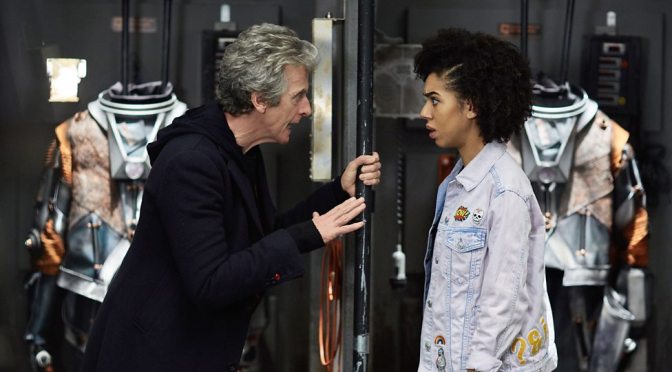
The episode begins with two events. First, a nice-seeming couple is working on a space station when they are attacked by what appear to be some kind of space zombies. Meanwhile, the Doctor is pining for space and feeling cooped up being stuck on Earth to guard whatever (whoever, really) is in the secret vault that he and Nardole have secreted under the university. While Nardole does his best to keep the Doctor on Earth, Bill is game for a space jaunt, and soon enough the three of them are answering a distress beacon on the now seemingly abandoned space station. The bare bones of the rest of the story is that there are no space zombies (a disappointment, to be honest); just a bunch of company-owned space suits designed to sell oxygen to workers on a mining station in an especially evil take on the idea of a company town; the station itself is kept empty of air, and all air needed by the workers is metered out through the suits. At some point, either someone at the company or the AI technology in the suits themselves realized that it was cheaper for the company to not have human workers at all, and the suits have been systematically killing their occupants as a cost-cutting measure.

For an episode of Doctor Who, it’s surprisingly dark, and perhaps the most interesting thing about this story is that there are some real consequences for the characters in the end. Bill gets another glimpse of a future that isn’t, at least in some ways, as optimistic as she might prefer. More importantly, she is not only in real danger; she has a serious brush with death that must highlight just how dangerous her travels with the Doctor can be. The deaths of most of the workers on the space station are permanent, however, and the Doctor is only able to rescue two out of forty of them, which gives “Oxygen” a staggeringly high body count, even compared to similar episodes. That the news of the event leads to the eventual downfall of capitalism as humanity’s economic system of choice is cold comfort, especially when the Doctor adds to that bit of information that humans still find new and different mistakes to make after capitalism. Surely this will be true if humanity survives long enough to spread to the stars, but still. This is a family show.

What’s most surprising and compelling about this episode, however, is that it’s the Doctor himself who faces perhaps the most significant and transformative change of the episode. When Bill’s space suit malfunctions right as they’re about to go into the vacuum of space, the Doctor gives her his own helmet to save her life. It works, but though the Doctor’s tolerances to space are greater than any human’s, he’s still injured, left blinded until they can return to the Tardis, where he expects to be healed (or at least says so). In the end, however, we learn that the Doctor is still blind, which may well be a permanent state of affairs, at least until his next regeneration. Going forward, it puts him at a decided disadvantage for future adventures—offering an unprecedented chance for the show to explore disability in a thoughtful manner—and gives him a secret that he’s keeping from Bill, who has no idea that the treatment the Doctor underwent on the Tardis didn’t work. The Doctor is a character who’s defined by periodic major changes, but there’s never been a time in the rebooted show where the Doctor experienced this type of potentially profound change. It will be interesting to see how the show handles it in the weeks to come.

Miscellany:

  • I like Matt Lucas quite a bit, and I was happy to see him get some more screen time this week, but I’m still not sold on this weird dynamic between Nardole and the Doctor.
  • This was the most passive I think Bill has been to date, and I’d have loved to see her have a bit more to do, even if the episode was already overstuffed with happenings. This was the first time Bill has felt so purely like a tourist in an episode, and had so little to contribute to the solution of the hour’s problem.
  • The blue guy and every interaction anyone had with him would be my top pick for what to cut to make room for everything else to have a bit more time to shine.
  • Alternatively, just a straight up extra 15 minutes would have done this episode some good.