The Expanse: “Cascade” is an incisively thoughtful exploration of systems failures

I suspect that “Cascade” may not end up being a fan favorite episode due to its lack of action and excitement, but it’s one of the best written episodes to date when it comes to thematic coherence and the emotional weight of its character arcs. It’s also an episode that gives us a much better look at the show’s imagined future of Earth, a deftly accomplished bit of revelatory exposition that gives us a fuller picture of the context in which the events of the show have happened. There’s not a ton of forward movement on the main plots this week, but the character work, exposition and set-up in “Cascade” seem sure to be invaluable as we move into the final three episodes of the season.

**Spoilers below.**

On Ganymede, the Rocinante crew split up to look for news of Mei and Dr. Strickland, Holden and Naomi going one direction while Amos and Prax go another. While their search makes up their plot and accounts for most of their actions in this episode, it’s secondary to the deeper story being told here, which is about the breakdown of communications and relationships between members of the crew, a system failure that is paralleled and emphasized by the cascading system failure—helpfully explained by Prax—that is currently taking place on Ganymede Station. Prax’s line, “The station’s dead already; they just don’t know it yet,” is positively foreboding, implying a time limit on the group’s activities on Ganymede (a feeling backed up by the social and governmental breakdowns we see on the station—the place is a powder keg) as well as suggesting that the damaged relationships between the Roci crew members may also be past a point of no return.

Against the backdrop of the dying station, Naomi and Holden, unquestionably the leaders (in an almost parent-like role) of the Rocinante crew, are still and increasingly at odds over the way things have been going, primarily because of Naomi’s growing discontent over the amount of violence and damage that they bring with them wherever they go. The tragedy on the Weeping Somnambulist has exacerbated the situation, and Naomi is not dealing well with Holden’s seeming indifference to the event. For his part, Holden feels guilty, but he’s rather desperately holding to the debatable belief that they did the right thing. Meanwhile, Amos seems to be becoming both increasingly unhinged and increasingly introspective, on a necessarily self-centered, inward-looking journey as he examines and tries to understand his own violent tendencies. Perhaps paradoxically, Amos’s disconnection from his friends only seems to leave him further unmoored and more prone to acts of extreme violence, though he’s so far still been able to be reined in before actually senselessly murdering anybody.

The good news for the Roci crew this week is that they manage to find a solid lead on the whereabouts of Mei and Dr. Strickland, though they still have no idea why Strickland took the girl in the first place and there’s plenty of reason to be apprehensive about what’s going on. Though Holden and Naomi haven’t found any evidence of protomolecule infection on Ganymede, it seems likely that the off-the-beaten path unsurveilled sections of the station where Strickland took Mei would be a perfect hiding place for some secret mad scientist stuff. The bad news is that Mars has ordered a no-fly zone around Ganymede, which will make it difficult, if not impossible, for Alex to retrieve them even if they are successful in rescuing Mei and discovering what Strickland is up to.

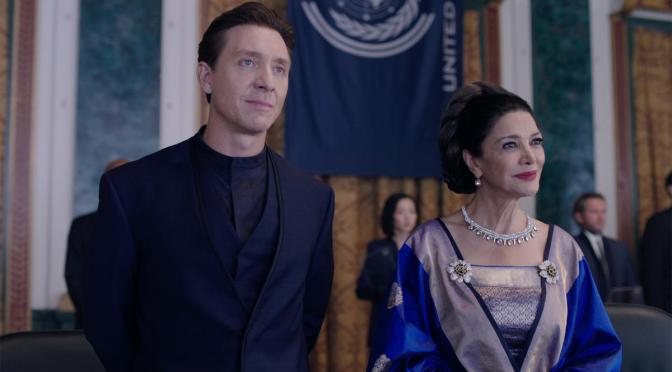
On Earth, the “peace conference” is wrapping up. Though Admiral Nguyen thinks that Bobbie has simply cracked from the trauma and stress of her experience on Ganymede, Avasarala still has some questions she hopes Bobbie can answer. Unfortunately, Bobbie is locked in her room until the Martian delegation is prepared to leave. While Bobbie is using every sharp metal implement she can find to break out of her room so she can see the ocean, an increasingly distraught-seeming Errinwright is going through the data from Bobbie’s armor, which evidently confirms to him that the events on Ganymede were connected to whatever Jules-Pierre Mao is up to. Apparently wracked with guilt and worry about the consequences, Errinwright finally goes to Avasarala and tells her everything he knows, giving her all the information he has on the protomolecule project. This Errinwright and Avasarala scene is great, if only because of the complexity and nuance of feeling both actors are able to convey with relatively few words. It’s not a long scene, but it’s something of a watershed moment, with Errinwright essentially throwing himself on Avasarala’s mercy. While Chrisjen’s not ready to tear up the existing government of Earth just yet by outing Errinwright for his illicit activities, it’ll be interesting to see just how it plays out in the coming weeks.

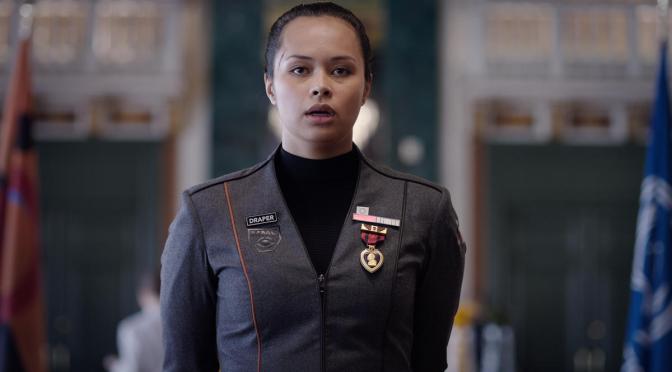
The showpiece and most deeply impactful part of “Cascade,” however, is Bobbie Draper’s journey through the streets of New York to see the ocean. Once she escapes from her room, Bobbie quickly realizes that she has no idea how to get to the ocean, and she’s disoriented and kept perpetually off balance by the bright sunlight and open spaces. She also finds that Earth isn’t very much like what she thought (or was taught) it was at all. As she roams the streets of New York near the UN, she finds not a decadent world of lazy, entitled people, but a dystopian hellscape where many people are barely subsisting on basic income, at least some healthcare needs aren’t being met, the environment has been significantly poisoned and opportunities for legitimate work are scarce. I imagine that this view of The Expanse’s Earth is no more completely representative of the state of the planet than a view inside the UN or of Holden’s parents’ farm, but it’s an important counterpoint to those more sanitized images that has been completely missing up until now. So far, Earth, largely due to Chrisjen’s self-assured and hyper-competent presence on screen, has been allowed to see like one area of the solar system that more-or-less had its shit together, but it’s revealed here—to Bobbie and the viewer—to be just another broken and possibly failing system. Bobbie’s emotional journey in this episode is one of the most compelling single-episode arcs of the show to date, and it marks Bobbie’s arrival, finally, as a primary protagonist that the viewer can truly empathize and identify with.

Miscellaneous Thoughts:

  • I loved the Alex scene on the Rocinante. It was a nice bit of levity in an otherwise serious (and at times quite dark) episode. However, it was slightly overlong, especially with that obnoxious music playing.
  • “Truth and fact aren’t the same thing” might be the best evidence yet that Martens is fucking evil.
  • I loved the small but significant detail of Bobbie using her Purple Heart to finish popping out that window. Nice symbolism, if a little on the nose.
  • I want more Cotyar scenes.
  • “Every shitty thing we do makes the next one that much easier.”
  • Chrisjen tells Bobbie that Mars was testing the protomolecule as a weapon, which seems somewhat supported by the no-fly zone around Ganymede, but I didn’t think Mars had any more official connection to Mao and the protomolecule than Earth did. Interesting.
  • “Fuck you, ma’am.”
Me too, Naomi. Me, too.

The SF Bluestocking Winter 2017 Reading List Wrap-Up

Spring has already sprung here in Ohio, both technically and actually, judging from the amount of allergy trouble I’ve been having the last couple of weeks, and I’m working on getting together my reading list for the next three months (look for it this week!), but I thought first I’d take a look at what I’ve read in the first three months of 2017. Last year was such a terrible year for me that I ended up struggling a lot to write much about what I read, though I read quite a bit. The good news is that this year I’ve been off to a pretty strong start, getting through most of my Winter Reading List and even reading a couple of things that weren’t on there. I’ve even written about almost everything I’ve read, even if it was just a short blurb and a star rating on Goodreads, although I am still finishing up my last few reviews of titles from my winter list.

This post, however, is about celebrating the best and most exciting of what I’ve read in the last three months.

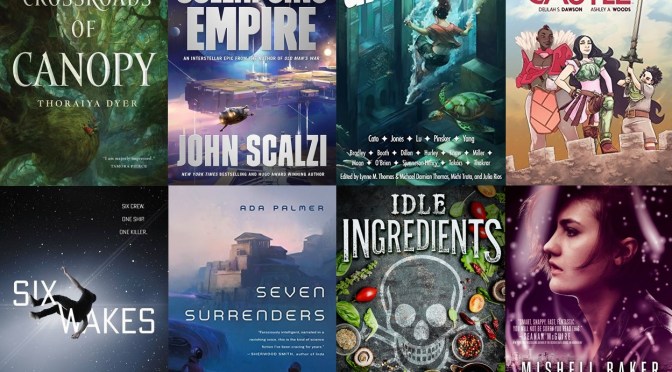
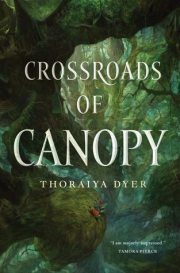
29939303Best Fantasy Novel – Crossroads of Canopy by Thoraiya Dyer
Crossroads of Canopy is a gorgeously imagined book about a young woman’s political awakening when she’s forced to question everything she knows about her society and herself. It’s set in a marvelously unique fantasy world in which people live in cities built in the tops of trees in an enormous rain forest, and it’s worth reading for the inventive worldbuilding alone, but it’s also got a wonderfully difficult and complex protagonist in Unar. Crossroads is a story about the roots of a revolution, and I cannot wait to see what happens next in Thoraiya Dyer’s Titan’s Forest series. While it’s not as thrillingly groundbreaking as, say, N.K. Jemisin’s The Fifth SeasonCrossroads of Canopy is, for me, similar in the the sense that it’s exactly the sort of thing I think of when looking towards the future of the genre, especially as it broadens to include epic fantasy that isn’t set in some analogue or other of medieval Europe.

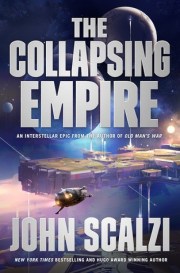
29939160Best Science Fiction Novel – The Collapsing Empire by John Scalzi

This book was a complete surprise to me in every way. I’ve always rather intended to pick up something by John Scalzi, but I’ve never quite gotten around to it as I seldom read work by white men and have been mostly interested in new books, standalone titles, and debut authors in the last couple of years. Tons of people I know love Scalzi’s work, though, and since The Collapsing Empire is his newest book and the first in a series, it seemed like as good a time as any to check him out, especially when I got a surprise early copy in the mail from the publisher. It’s really good and hands down the most enjoyable thing I’ve read so far this year, smartly plotted and fast-paced, with lots of snappy dialogue and a great sense of humor. I couldn’t put it down.

33775885Best Magazine – FIYAH Literary Magazine, Issue 1, Rebirth
The first issue of FIYAH is excellent from its beautiful cover art to its collection of perfectly curated short fiction. With evidence mounting up that black readers and writers aren’t being served and included the way they should be in genre publishing, FIYAH is a uniquely valuable space for stories by, for and about black people. My favorite story in this issue was “Chesirah” by L.D. Lewis, but “The Shade Caller” by DaVaun Sanders and “Long Time Lurker, First Time Bomber” by Malon Edwards were also standouts. If I have any complaint about the magazine, it’s that I’d love to see more nonfiction content in it, but that’s purely a personal preference. Issue 2 will be out on April 1.

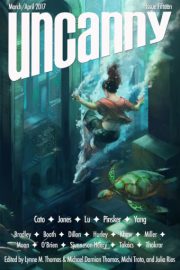
marapr17_issue15covermed-340x510Best Novella – “And Then There Were (N-One)” by Sarah Pinsker
I at least try to read all of Tor.com’s novellas as a matter of course, and they’re pretty prolific, so I would have expected one of those to be my favorite so far. However, the fine folks at Uncanny just published their first ever (short) novella in #15, and it’s wonderful. Sarah Pinsker’s story of a convention–SarahCon–for Sarah’s from thousands of alternate reality might be my favorite novella of the last several years, to be honest. It’s smart and funny and thoughtful in perfect proportions. It was enchanting from page one, and it’s a story and concept that has been often on my mind ever since I read it. “And Then There Were (N-One)” will be available to read for free online on April 4.

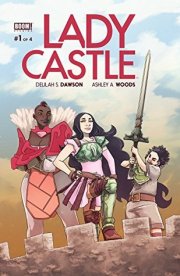
33964649Best Comic Book – Ladycastle #1 by Delilah S. Dawson and Ashley A. Woods
I only read one comic in the last three months, but it was a good one. Since the sad/infuriating circumstances that led to the indefinite hiatus of Rat Queens, I’ve had a definitively medieval-fantasy-comic-shaped hole in my life, and Ladycastle is the perfect thing to fill it with. The art is slightly more cartoonish than I usually prefer, but it grew on me as I fell in love with the story and characters. The only problem with it is that there isn’t more of it, and they seem to be working on a slow production schedule with a couple months between issues. I want it all now.

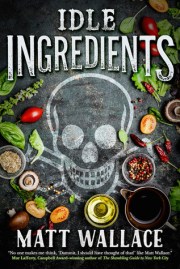
31216072Best Sin du Jour Novella – Idle Ingredients by Matt Wallace
Okay, so it’s the only Sin du Jour book published so far this year, but it’s awesome. And look at that cover! I always buy these as ebooks to save space, but the covers just keep getting better and better and I know I’m going to have to have them for my shelf. And this is why my dreams of getting rid of all my stuff and living some kind of minimalist backpacker lifestyle will always stay just dreams. Seriously, though you should be reading this series. They’re sharply written, laugh-out-loud funny, and have some of the best action scenes you’re going to find in print. This volume went a little heavier on character development, but in the last one a dude fought an evil Easter Bunny demon thing and it was rad.

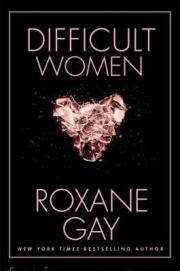
31707853Best Non-SFF Thing I Read – Difficult Women by Roxane Gay
I’ll just quote from my own review of this title to explain why I loved it so much: “The stories in this volume are, from start to finish, thoughtful, clever, funny, tragic and hopeful in turn. These stories are a rage-filled paean to the strength and resilience and weakness and fragility and everything in between of women. This is an ugly, heart-wrenching, beautiful book, and if Roxane Gay wrote three hundred forty-four more stories like this I would treat them like a devotional and reread them every year for the rest of my life.” There are a couple of stories in this collection that are slightly SFF, but for the most part this collection is deeply rooted in the real world and real women’s experiences.

Honorable Mentions:

  • Borderline and Phantom Pains by Mishell Baker – I skipped the first book in this series last year, but I’m so glad I finally got around to reading it now.
  • Six Wakes by Mur Lafferty – A riveting locked-door mystery in space, with clones.
  • Brother’s Ruin by Emma Newman – I loved this first book in a new gaslamp fantasy series by the author of Planetfall. Probably my favorite thing I’ve read yet by Emma Newman.
  • Seven Surrenders by Ada Palmer – This makes me feel about sci-fi the way that Crossroads of Canopy and The Fifth Season make me feel about fantasy.
  • Tor.com’s “Nevertheless, She Persisted” Short Fiction Event – This is well worth reading, but it just didn’t fit into any of my other categories here.

Biggest Disappointments:

  • Windwitch by Susan Dennard – I liked Truthwitch quite a lot last year, but this book only magnified all the problems of worldbuilding and character that were only minor plagues on the first one.
  • Miranda and Caliban by Jacqueline Carey – I was hyped to finally read something by this author, but this book felt unnecessary and self-indulgent, without much to say for itself or about Shakespeare or The Tempest.
  • The Bear and the Nightingale by Katherine Arden – I wanted to like this much-buzzed-about book more than I did, but I had a hard time getting past the casual normalization of marital rape, the villainization of the rape victim, and the trivialization of her eventual sad fate.

Book Review: Borderline by Mishell Baker

25692886I’m not a great reader of urban fantasy and I’ve been (sort of and unsuccessfully) avoiding new series, so I’d skipped Mishell Baker’s Borderline when it came out last year. I cannot tell you how glad I am that I finally read it. It’s a solid story that ticks off a lot of run-of-the-mill urban fantasy boxes while still being clever and original enough to be interesting. Baker takes a smartly naturalistic approach to describing the setting—I’m not a fan of L.A.-set stories in general, but she does a wonderful job of conveying a sort of warts-and-all love for the city without either romanticizing it or dwelling on ugliness. And Millie Roper is a fucking iconic protagonist with a strong and uniquely relatable (for me) narrative voice.
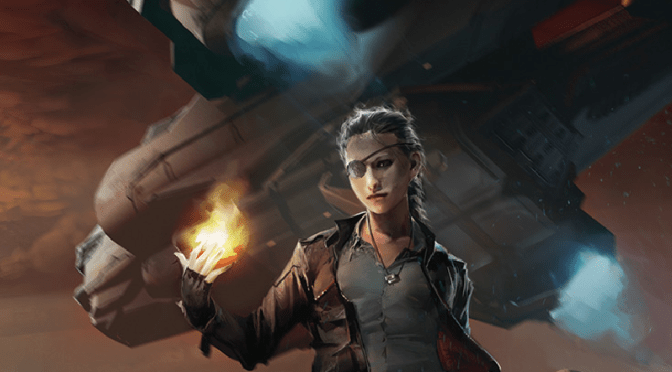
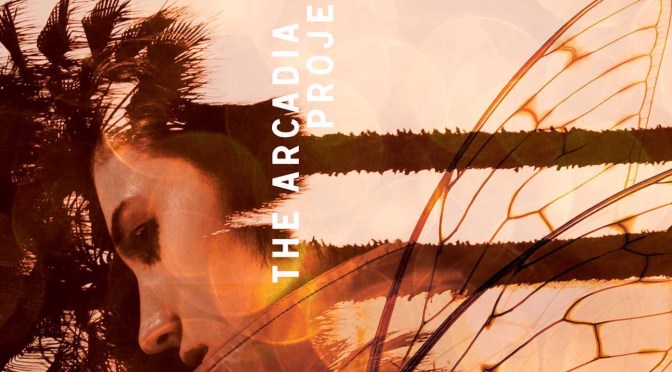
While I don’t read a ton of urban fantasy, I like it better when the fantastical element is fairies, as opposed to vampires or werewolves, and I especially like the way Baker imagines fairies in this series. The Arcadia Project is a more-or-less government-overseen system that manages the interactions between Earth and Arcadia, which is otherwise a largely straightforward fairyland filled with the usual fairy creatures, high and low fae, and copious magic. It turns out that humanity relies on magic—specifically the inspiration of fairy “Echoes” (think personal muses for artists and thinkers of all kinds)—for most great human endeavors, artistic and otherwise, and the Arcadia Project acts as a sort of ICE for fairies traveling to and from Arcadia. To help maintain the secrecy of the Project, its administrators recruit agents primarily from psychiatric hospitals, with the idea that those who see the world differently may be more open to and accepting of the work, but also with the knowledge that those who are marginalized due to documented mental illness are unlikely to be believed if they do tell others about the Project. Millie, who has borderline personality disorder and is still recovering from a suicide attempt that left her a double amputee, is a perfect candidate for the job.

Millie also has a background in film—she was going to film school at UCLA prior to her suicide attempt—and the film industry features largely in Borderline. Many of the secondary and tertiary characters are in some way involved in the industry, and much of the action takes place in a movie studio. It’s a very specific part of Los Angeles that I’ve seldom read about, mostly because I don’t find it particularly interesting, but Mishell Baker shows real skill in making the L.A. of the Arcadia Project feel real and lived-in. There’s a great sense of place and plenty of specific-feeling details so that even the places that are obviously invented for the book fit right in to the broader aesthetic. I wouldn’t quite say that it rises to the point of the city itself being a character, which is common in urban fantasy, but it’s a vividly immersive setting nonetheless.

It’s Millie herself, however, who truly elevates the book and makes it one of the best and most interesting urban fantasies I’ve read in years. While I’m not sure how much of my own struggles with mental illness (mostly depression and anxiety) overlap with Millie’s, there’s so much about her experience that feels familiar, and I expect that this will resonate deeply with many people who have had similar issues. Many, many people have written and talked about the value of representation in fiction, and all of that is fully applicable here. Millie will be a highly relatable protagonist for many, and for many more she’ll be a character that will, hopefully, help readers gain some new understanding of an experience that isn’t often depicted in genre fiction. Here, too, Mishell Baker takes a naturalistic approach, refusing to sugarcoat the reality of Millie’s mental and physical conditions, and both Millie’s borderline personality disorder and her double amputations have obvious impacts on her ability to function, and sometimes just exist, in the world. Millie’s troubled relationships and fraught interactions with nearly everyone she meets make for compelling drama and add another level of specificity to the story that sets it well apart from other work in a subgenre often plagued by over-reliance on tired tropes and cliché storytelling conventions.

I may have been late to the party on this series, but Mishell Baker is an author to watch, and I can’t wait to find out what Millie gets up to next. Borderline is a superb first novel and a great start to a freshly compelling new series.

Into the Badlands: “Force of Eagles Claw” goes a little slow, but with an eye to the future

After last week’s excellent season premiere, “Force of Eagle’s Claw” slows things down a little and switches point of view less often for longer scenes and some quieter character work. Even the fight scenes this week were for the most part less flashy and even more utilitarian to the plot. It’s a good change of pace and provides an even fuller picture of the current state of affairs in the Badlands than we got last week. There’s a certain amount of unevenness, if only because Sunny and Bajie are so much more fun to watch than everything else, but it’s a solid episode, overall, that sets up some compelling options for the future of the show.

**Spoilers ahead.**

After being sold out to the Engineer last week, Sunny finds himself being prepped to fight to the death with Mouse for the privilege of being the Engineer’s new champion. He tries to refuse, stating that he doesn’t kill for others anymore, but he’s not being given an option. Instead, Sunny’s shackled to the treacherous Bajie and tossed into what passes for a fighting ring. Rather than staying and fighting for the Engineer’s entertainment, Sunny and Bajie flee up some stairs towards freedom, but they still have to fight their way out in a fight sequence that gets as bloody as I think this show has ever gotten when they escape through a huge fan and toss Mouse back into it, where the unfortunate man is practically vaporized into red spray all over the Engineer and his henchmen. As a fan of comic levels of gore, I appreciated this scene.

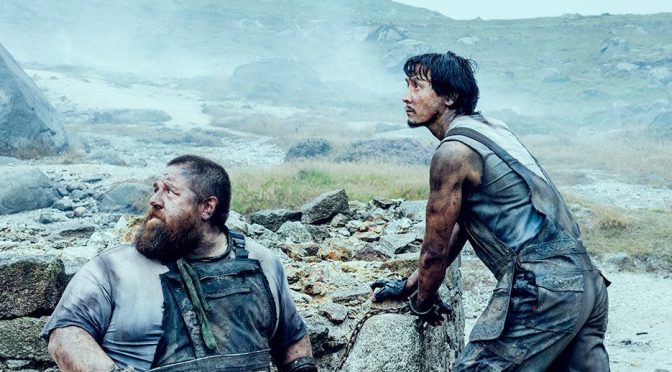
Sunny and Bajie finally escape the mines, but not without a vow from the Engineer that he’s not letting them go so easily. Nonetheless, the rest of their journey in this episode is largely uneventful. They hike through a land of rather lovely rolling green hills that Bajie calls the Outlying Territories, which is almost suspiciously devoid of any signs of other human life but provides a gorgeous backdrop to Sunny and Bajie’s bickering. Daniel Wu and Nick Frost have a great chemistry together, and their characters are near-perfect foils for each other. Watching Bajie’s seedy charm bounce off Sunny’s taciturnity is consistently entertaining with plenty of sharply-written dialogue and a couple of nice surprises. It turns out that Sunny isn’t completely humorless, and we get further confirmation that Bajie has some useful skills. They end the episode on the wrong side of an enormous, ancient wall that runs the whole border between the Badlands and the Outlying Territories, but I expect both their skills will come in handy in the weeks to come.

After leading her Butterflies to kill a group of rapist Clippers last week, Tilda is due for a stern talking to from Waldo, who is apparently working directly for and with the Widow now. Waldo advises Tilda that part of the key to being a good regent (and to just staying alive) is being able to bottle up one’s feelings and follow orders. Tilda insists, however, that killing those rapists was the right thing to do, and I agree. Waldo’s advice to Tilda in this scene comes off as somewhat mansplain-y, and I don’t love the way he compares her to the absent Sunny, especially when even Waldo admits that Sunny wasn’t immune to emotion, either. It’s also worth pointing out that Waldo is somewhat hypocritical here, since he’s apparently been subtly undermining the whole system for years, which seems like a much bigger act of rebellion than Tilda executing some rapists.

Later, we come upon Tilda and the Widow practice sparring, which Waldo is interrupting to have a sort of strategy meeting with the Widow. Ryder has called for a conclave of all the Barons, where he’s going to complain that the Widow’s taking back of her oil rigs is unlawful. It’s a way to avoid an all-out war, apparently, but it’s also baldly cowardly, which seems like a semi-ballsy move for a guy who has managed to get himself installed as the Baron of multiple territories. The Widow is ready for war, but Waldo advises caution and diplomacy. This conversation as well had the potential to come off as mansplaining on Waldo’s part, but I think it worked better than the previous talk between him and Tilda. The Widow is a mature woman, and Emily Beecham imbues her with a sort of ambitious, very physical energy that prevents her from ever seeming subservient. Whereas Tilda may look up to Waldo as a mentor, the Widow keeps him as an advisor and their interactions—even when they don’t entirely agree—have a strong sense of collaboration and equal footing.

Ex-Baroness Lydia ended last season by returning to her father’s religious commune, and we see her in this episode seeming to have settled back in nicely. At any rate, she’s officiating a marriage ceremony and looks as happy and content as we’ve ever seen her, though the rebuke she receives after thanking the community for accepting her back suggests that she isn’t quite as accepted as she thought. When a couple of Nomads arrive and disrupt the wedding, killing the groom and several more men before making to steal and rape the bride and other women, it’s Lydia who leaps into action to protect the group. This fight scene, brutal and harrowing as it is with the threats of rape, is probably my favorite of the season so far as it shows us a side of Lydia that we haven’t seen before and reveals just how much she’s been changed by her time away from her father and these people.

Unfortunately, Lydia’s reunion with her son Ryder later in the episode isn’t as successful a scene. It works well enough as a continuation of Lydia’s themes from earlier and to further highlight Lydia’s change in status since last season, but the revelation that Quinn was responsible for protecting Lydia’s father and his flock isn’t particularly surprising or interesting, and neither is the family drama between Ryder and his estranged mother. Judging from how much Ryder seemed to rely on Jade for leadership last week, it’s hard to disagree with Lydia’s assessment of her son’s abilities as a Baron, and if she was just planning to reiterate that hurtful truth I’m not sure what she hoped to gain by visiting her son at all. I feel like, ultimately, the real conflict here is still between Lydia and Jade, but we don’t see Jade in this episode at all, which is a shame. I can think of several ways that Jade’s presence, either to interact with Lydia or just to interact with Ryder about Lydia, could have improved this storyline.

At the temple, M.K. continues to train with the Master, who takes him to a room full of mirrors and tells him that there are many versions of himself living inside him and that it’s one of them that is blocking his progress. In order to move forward, M.K. must defeat this other self, which also turns out to mean that he must come to terms with a significant event in his past. It’s pretty straightforward, with some expected callbacks to Luke Skywalker’s similar journey in Star Wars, but things aren’t made so easy for M.K. While his showdown with Dark M.K. is the most visually striking fight scene of the episode, M.K. is ultimately unsuccessful in defeating his darker impulses and must be pulled out of the vision (or whatever it is) by the Master. I don’t expect this storyline to be narratively groundbreaking stuff, but it’s nice to see M.K. being allowed to face real obstacles in his path to enlightened heroism.

The final thread of this week’s story confirms that Quinn is, indeed, alive and not some kind of awful hallucination of Veil’s, and this is where things get weird. Apparently, after what looked like a fatal ass-kicking from Sunny, Quinn was found by Veil as she was leaving town. Instead of leaving him to die like she probably ought to have, she rescued him and doctored him up until he could turn right around and keep her a prisoner in his very creepy (kudos to the set designer and props department) underground lair. Quinn still has several dozen clippers who have remained loyal to him in his current exile, and he’s styled himself as something of a religious leader, blaming his previous failures and current problems on his lack of faith and failure to observe old rites. To avoid such failure in the future, Quinn has become newly dedicated to religion and is baptizing Veil’s baby, Henry, in blood. It’s strange and gross and melodramatic and Marton Csokas is really living it up as Quinn. I have no idea where this is going, but it’s fun as heck to watch.

Miscellaneous Thoughts:

  • Is it weird that I think Nick Frost is moderately sexy, even covered in dirt and wearing those awful overalls?
  • M.K.’s roommate has run away, which seems significant. I smell a future nemesis in the making.
  • So, is Lydia going to end up with the Widow or will she somehow reconnect with Quinn? Or is she going to do something else entirely, since she has tons of information and expertise about things? She pointed out that most of Ryder’s cogs worship the same gods as she does, and that feels like foreshadowing.

State of the Blog and Weekend Links: March 26, 2017

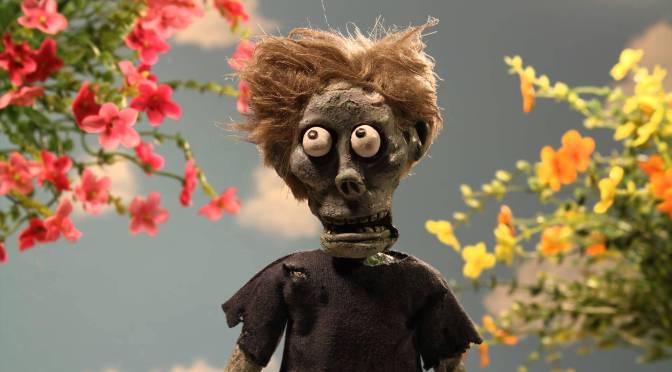
This week was a productive one for me in spite of everyone in my household getting sick (my kid has seriously caught every single bug that’s gone around her junior high this year) and getting the stressful news that my car’s transmission is about shot (after we’ve recently spent quite a lot on other repairs instead of buying something new). On the bright side, however, the AHCA didn’t even make it to a vote, which means 24 million people aren’t going to lose their insurance soon, Beauty and the Beast was better than I thought it’d be, and there’s finally a trailer for season three of iZombie. Also, while I was hoping to find a funny picture of a zombie with some flowers or something by googling “springtime zombie” for a header image, I instead found this adorable springtime zombie video that I’m so happy to know is a thing that exists in the world:

This coming week, I’ll be continuing with coverage of Into the Badlands and The Expanse; I’ve read several books that I’m planning to review; and I will be releasing my spring reading list, which will have my rough plan of what I’ll be reading and writing about over the next three months.

Sadly, due to life stuff, this has been another somewhat light week for links.

I did love this Genevieve Valentine piece at Vice on how Disney actually made Beauty and the Beast darker than the original fairy tale.

There were a couple of interesting Big Idea posts this week:

There’s a full trailer now for Hulu’s adaptation of The Handmaid’s Tale. It looks good, but I’m honestly not certain I’ll watch it. We’ll see.

Speaking of dystopias, nerds of a feather, flock together continued their Dystopian Visions series this week:

The Book Smugglers announced their Summer 2017 season of short fiction around the theme “Gods and Monsters.” I am excite.

Sarah Gailey continued her series on iconic SFF costumes with The Woman in White.

Angry Robot is offering a 12-month subscription plan for ebooks of their new releases. At £100 (about $125) for like thirty-five titles, it’s a great deal.

It’s also not too late to pre-order She-Wolf and Cub by Lilith Saintcrow, coming out this Tuesday from Fireside.

Book Review: Hunger Makes the Wolf by Alex Wells

I read quite a few debut novels and had a cool half dozen on my reading list for the first three months of 2017, but Alex Wells’ Hunger Makes the Wolf was the one I was most looking forward to in the first quarter of this year. I’m happy to say that it did not disappoint. While it may lack some of the great depth and the high level of craft of some of the other debuts I’ve read so far this year, Hunger Makes the Wolf more than makes up for it in other areas. It’s a well-conceived, smartly plotted, enthusiastically fast-paced sci-fi adventure with some cool ideas and a couple of excellent lead characters who’ve got plenty growing still to do in future books.
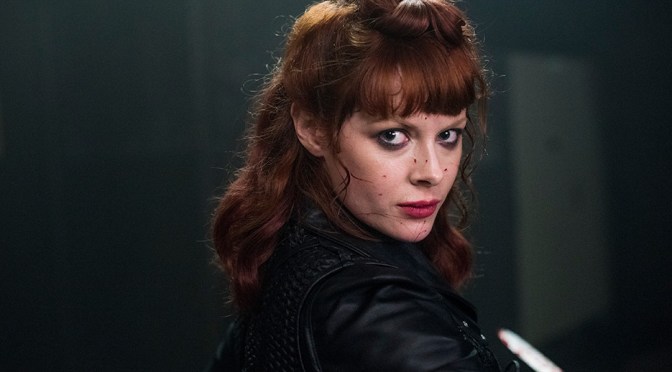
Sometimes you just want to read something fun that reminds you of other things you like, without having to think too hard to understand it, and Hunger Makes the Wolf contains shades of all kinds of things that are relevant to my reading interests. There are shades of Firefly, Dune, Mad Max: Fury Road, and even Star Wars here, and it’s by far the most fun thing I’ve read since I read the first two books of K.B. Wagers’ Indranan War trilogy at the end of last year. Like Wagers, Alex Wells manages to draw elements from many inspirations and still create a story with plenty of originality and individual flair. The overall effect is enjoyably familiar without ever feeling like a clone of someone else’s work, and if you like any or all of the above-mentioned stories, this one will be right up your alley.

I know I’ve said that this isn’t a particularly deep novel, but I don’t know if I can reiterate enough how much that’s not a criticism. The plot is straightforward, with an easy-to-understand conflict and clearly defined villains and heroes. At the same time, the villains are never caricatures of evil, and the heroes have enough internal conflict and nuance to be compelling. Hunger is, at heart, about two things—personal political awakenings and grassroots resistance against tyranny—and Wells comes at these themes with a cleverly simple approach that makes his points easy to understand while still recognizing the complexity of characters and situations. This is all well-supported by a setting that, while obviously derivative of several other popular works, is described in plenty of vivid detail and has several unique quirks—namely an interesting (if somewhat mysterious) magic system—to set it apart from the pack.

Hob Ravani is a great protagonist of the tough-as-nails ass-kicking kind, and her journey of self-discovery is neatly described throughout the novel. The story of a young person stepping into a leadership role they aren’t entirely prepared for might be a little formulaic, but it’s executed here with loving gusto and a great deal of charm. Though Hob’s friend Mag starts off as something of a damsel in distress, she quickly comes into her own as a resistance leader in her own right. Mag’s fledgling romance with another persecuted woman deserved a little more page time, but I’d say that Mag, in general, deserves more page time. I love the way Hob and Mag complement and balance each other in the story, and Wells does a nice job of showing the ways in which people can work together from different directions and points of view to accomplish goals that are bigger than themselves.

If there’s any major criticism I have of Hunger Makes the Wolf it’s that there isn’t enough of it. It stands alone well enough, but it feels very obviously like the first book of a series. Everything about it feels like an introduction, just the first act in a much longer story arc, and there are quite a few things left unresolved at the end of the novel. The good news is that it is the first book in a series. The bad news is that now I have to wait for it, and I’m terribly impatient. It turns out that stories about anti-capitalist space biker witches are kind of my jam.

This review is based on a copy of the book received from the publisher through NetGalley.

The Expanse: “The Weeping Somnambulist” has some great scenes but also some dead weight (**cough**Holden**cough**)

“The Weeping Somnambulist” is only a middling episode of a great show, but it covers a good amount of storytelling ground and marks the very welcome return of Chrisjen Avasarala after several episodes in which she had minimal presence. The scenes on Earth are excellent, there’s some surprisingly good character work for Bobbie Draper (Frankie Adams), and the Rocinante is off on a new mission which wasn’t that interesting this week but seems likely to improve in the next episode or so. After a couple weeks of main characters mostly reacting to events that have happened to or around them, this episode feels much more proactive and forward-moving, even if it’s not always riveting stuff.

**Spoilers below!**

The episode opens with an irritating fake-out. A Ganymede relief ship called The Weeping Somnambulist is boarded by a couple of gun-wielding men wearing the livery of the Martian navy, but it turns out it’s just Holden and Amos in disguise. Apparently the Rocinante is too recognizable to take to Ganymede, so they’re going to commandeer the Somnambulist to get them the rest of the way there. The husband and wife team flying the Somnambulist don’t get any characterization aside from “pissed off at Holden,” so the eventual tragedy they experience isn’t particularly impactful. It doesn’t even work as something that should deeply affect the Roci crew, since they can’t reasonably be held responsible for the Ganymede dock workers’ initial attack on the Somnambulist and it’s similarly unfair to blame them for escalating a situation that had already escalated to guns to heads. Sure, Holden and company might feel guilty for having failed to rescue the couple, but it’s an unreasonable guilt and therefore hard to take seriously. I mean, okay, Holden and company had to get to Ganymede somehow, but it was truly, deeply unnecessary to spend so much time on this boring and trivial plot when there was so much more interesting stuff going on elsewhere in the episode. It dragged the whole episode down into mediocrity, and that’s a shame because the rest of the hour was very good.

On the bright side, Bobbie made it to Earth this week, and the brilliance of execution in this storyline almost makes up for the Roci crew stuff being so dull. When we first see Bobbie this week, Martens is helping her prepare for Earth with necessary drugs and supplements to minimize her discomfort on the planet’s surface. It’s a smart bit of worldbuilding exposition that also works nicely as a character beat, showing us more of Bobbie’s feelings about Earth. These early Bobbie scenes also work as a really wonderfully composed and acted bit of speculative fiction, even out of context, offering the viewer some insight into what it might be like for a human to be setting foot on Earth for the first time ever. Frankie Adams perfectly conveys Bobbie’s complicated feelings of curiosity, awe, pride in her own planet, resentment towards Earth and something a little like nostalgia, and Bobbie’s reactions to her first glimpses of Earth are truly moving stuff.

The peace conference at the UN is predictably unpleasant for pretty much all involved, though it’s highly entertaining for the viewer. The petty one-up-manship is passive aggression hovers somewhere between hilarious and too real as the delegations from both Earth and Mars take calculated swipes at each other before getting down to business. Shohreh Aghdashloo as Chrisjen is always delightful to watch, but it’s again Frankie Adams who steals the show in these scenes. Her frustration and anger at being asked to throw her fellow marine under the bus is palpable, and Chrisjen easily picks up on the lies Mars is telling to try and smooth things over. Even though things are being smoothed over in a way that heavily favors Earth (and at the Martians’ considerable expense), Chrisjen’s priority is ferreting out the truth about what happened on Ganymede. Her second interview with Bobbie is illuminating, but I can’t wait to see these two characters alone together.

The third storyline of the episode concerns Colonel Janus, Dr. Iturbi and their journey to Venus to see firsthand what has happened to Eros. I wasn’t expecting this material, which is either invented for the show or is drawn from the books in the series that I haven’t read yet, but it’s good stuff. The personality conflict between these guys is engaging, though perhaps a little on the nose with their sniping at each other about which one has the corner on Real Science™. As much as I liked these scenes, the only truly important one comes near the end of the episode when they finally get a look at the crater left by Eros and see that there’s some kind of biological material floating around the hole. Iturbi streams the information to Avasarala back on Earth. Learning what Chrisjen will make of this, seeing how she’s already making a connection between Eros and Ganymede and the rest of the generally strange events that have been happening in the solar system, is the other thing I can’t wait for next week.

“The Weeping Somnambulist” is a frustrating episode to watch without another one to follow it with, and this is mostly owing to its very abrupt and, frankly, anticlimactic ending. Bobbie’s emotional distress felt real and her clamming up under orders was a nicely final ending to the peace conference, and the revelation of the Eros crater information felt significant and game-changing, but the ending of the Roci storyline was too slight to compare and not consequential enough to qualify as a cliffhanger. Still, though this whole episode felt somewhat disjointed, inconveniently punctuated as it was by all the boring stuff Holden was doing, I expect the next couple of episodes to have some big narrative payoffs, exciting moments and the thematic coherence that this one lacked.

Miscellaneous Thoughts:

  • I was happy that Doris wasn’t completely forgotten, even if Prax didn’t get to actually send his message of condolences to her family on Mars. It’s still a pretty textbook fridging, though.
  • While the Roci and Somnambulist stuff was boring, Amos and Alex both managed to have individually compelling moments.
  • That necklace that Avasarala wears is a gorgeous piece.
  • I already miss Fred Johnson and Drummer, and there’s no telling when we’ll get to see them again.

Assorted thoughts on Disney’s Beauty and the Beast

In 1991, I turned nine, and I was just starting to change from being a little girl who loved books about horses to being a little girl who loved books about dragons and wizards and spaceships. I fancied myself something of a tomboy still in 1991, but this was well before “princess culture” became ubiquitous enough for liking a Disney princess movie to be mutually exclusive with tomboyishness. Before Beauty and the Beast, my favorite Disney movies were Sleeping Beauty (because it had a great horse and a badass dragon) and Robin Hood (because I had a raging crush on that cartoon fox, natch). Beauty and the Beast had a horse and a Beast (which isn’t that much different from a fox, right?) and it had Belle, who was nothing like any of the princesses before her. I mean, she was white and conventionally pretty, obviously, but she didn’t spend any portion of her movie asleep, and she didn’t have to give up her voice just to have a chance at a dude who couldn’t even remember what she looked like, and this is what passed for progressive in 1991. Most importantly to nine-year-old me, Belle liked books, and she liked them so much that she was gifted a whole enormous library from her Beast, and it was glorious: the grand romantic gesture that first taught me to appreciate grand romantic gestures, and gifts of books are to this day the easiest way for people to buy my affection.

So, let’s just say that there’s a certain degree of uncritical love that I have for Beauty and the Beast, both the Disney movie and basically every iteration of it I’ve gotten my hands on in the years since, from Rose Daughter to Uprooted. When I saw the first trailer for the new live action version, I said right off that it was aggressively ugly but also that I was definitely going to see it. It turns out that it’s every bit as aggressively ugly as I thought it was going to be, but it’s also a surprisingly decent, if still very problematic, update to a beloved childhood classic. Here are my thoughts on it, in no particular order.

Spoilers, obviously.

18th Century fancy French menswear is sexy.

This isn’t important, really. Just a general observation. And a reminder that I need to make time to watch season two of Outlander sometime soon.

This adaptation tried to explain why the whole castle was cursed, and it only somewhat worked.

I was somewhat surprised that this was a thing at all, but it wasn’t a terrible idea. As in the animated film, there’s a short prologue that shows how the Beast gets himself and his whole castle cursed, and special attention is paid to make sure that the audience sees his court and servants as complicit in the prince’s cruelty. They stare and laugh at the disguised sorceress as the prince turns her away, and none of them do anything to stop it. Later in the film, Mrs. Potts weirdly both supports and undermines this when she tells Belle that, after the death of the Beast’s mother, Mrs. Potts and the other servants did nothing to prevent his abusive father from raising the Beast to be the nasty piece of work he was. Unfortunately, the only time we see the Beast’s father is in a flashback to his wife’s deathbed in which he not unkindly steers his grieving son out of the room, an image of relative gentleness that is at odds with what we’ve been told about his treatment of his son.

It makes sense that in this new film Disney would want to address the seeming injustice of a whole household of kind, loving servants being cursed for their master’s bad behavior; it’s just a weird case of a more or less good idea taken both too far and not far enough. The initial scene of the characters at the prince’s ball standing silent and then laughing as he mocks the sorceress is not quite enough to really justify everyone being cursed forever—especially when it’s revealed that they’re also erased from the memories of everyone they knew outside the palace. Disproportionate as the punishment is, this might have been fine if the film had decided to just stick to fairy tale logic. However, piling on that the servants somehow failed in a responsibility to protect the Beast from his father—without ever showing how the father was so bad—only really serves to muddle the message. It would have been much smarter to just stick with “the whole court was decadent and wicked in the moment when it mattered” without trying to also treat the curse as a sort of cosmic justice for a much more nebulous moral failing.

I legit cried at “Belle” and the opening village scene.

Emma Watson isn’t a great vocalist, but this song was nicely done, the village is genuinely lovely, and it’s the one time in the movie that I really felt like it was the animated version brought to life. For me, it was a little bit like first seeing Hobbiton in The Fellowship of the Ring or when Grant and Ellie first see the dinosaurs in Jurassic Park, both scenes that still make me tear up. Your mileage may vary, but I totally loved this sequence.

Belle is kind of an asshole.

Listen. Belle has always been the ultimate Not Like Other Girls heroine, and her desire to get out of her small, provincial town figured largely in the animated film as well. This movie, however, makes Belle’s absolute disdain for the literally illiterate townspeople extremely clear. It’s not just the boorish, sexist Gaston that she dislikes. She’s at best condescendingly indulgent of her neighbors’ foibles and more often openly scornful toward them for, apparently, no other reason than their rural lifestyle and lack of sophistication. The town is pretty and clean, and its people seem to be mostly happy and decent in spite of their lack of privilege—remember this is supposed to be a rural village in 18th century France that has previously been ruled over by cruel and selfish nobility who exploited the people and land for their own gain. It makes sense that a young, relatively privileged girl with an education that is out of reach of most her peers might chafe at the restrictions of rural society and dream of adventure, but Belle’s sheer unbridled hatred of this town and its people doesn’t reflect well on her at all.

On a similar note, the girl hate is even stronger in this film than in 1991.

Just like in the animated version, this film has a trio of nearly identical women whose only character traits are wanting to marry Gaston and not being Belle. It was a sexist, damaging trope the first time around, and I’m disappointed to report that it’s actually worse in this move than it was in the original. Whereas in the animated film, these three women were identically beautiful blondes who seemed vapid but ultimately good-natured, here they’re presented as a group of garishly made-up (in pointed contrast to the natural beauty of the heroine) mean girls with an unexplained antipathy towards Belle in addition to their desire for Gaston. And this film no longer stops at portraying them as silly girls swooning over a man who barely notices they exist. Instead, it makes a point of having Gaston explicitly reject them with a dose of implied slut-shaming and the added humiliation of having Gaston’s horse kick mud on them. It’s a particularly hideous instance of misogyny that also isn’t helped by having Le Fou gleefully reinforce Gaston’s point with a snide “Not gonna happen, girls.”

Le Fou is awful in pretty much every way.

The animated Le Fou was a clownish, craven crony to the toxically hypermasculine Gaston, a cartoon fictional dynamic that rarely occurs to quite such an extreme degree in reality. In the live-action version, Disney has chosen to address this by casting Josh Gad in the role, giving him an unrequited crush on Gaston, and unsuccessfully playing it for laughs. It’s not funny. Josh Gad is not funny in this role, which mostly consists of Le Fou being a stereotype of a catty, faintly effeminate gay man and being mildly misogynistic in ways that validate and complement Gaston’s own misogyny. The “exclusively gay moment” that has been so bragged about is literally about a second and half shot at the end of the movie of Le Fou dancing with another man—an unnamed character who, incidentally, is “outed” as gay in the story when the magic wardrobe dresses him in women’s clothing during the climactic battle and he grins like it’s Christmas, which seems senselessly offhandedly transphobic and further suggests that gay men are simply effeminate dudes.

Literally nothing about this portrayal of Le Fou was at any point a good idea, the execution is horrendous, and Disney’s public crowing about how progressive they are for having a gay dude in this movie is hilariously offensive when you actually see how bad it is.

Luke Evans is a perfect Gaston.

Seriously. He’s delightful, and he plays Gaston with amazing gusto and a surprising amount of charm. This is one of the only roles in this movie that I’d say is perfectly cast, along with Audra McDonald as Madame Garderobe and Stanley Tucci as Maestro Cadenza.

Audra McDonald should sing everything, forever.

She is an actual perfect angel, and though Emma Thompson’s rendition of “Beauty and the Beast” was fine, it’s a straight up crime that the song wasn’t given to McDonald.

There were too many new songs, and every one of them was too long.

The worst offender is a song the Beast sings after Belle leaves to rescue her father. It’s entirely superfluous and puts the brakes on the story for a full three minutes of the Beast verbalizing feelings that could easily have been conveyed in about a ten second shot of him just looking sad. It might have been fine if “Evermore” was a truly good and memorable song, but it’s completely unremarkable and Dan Stevens is only an okay singer.

The animated objects are straight up nightmare fuel.

Dead-eyed little Chip might be the worst, but all the CGI objects are somewhere between mildly unsettling and absolutely terrifying.

The Beast looks much better than I expected.

He looked awful in production stills and trailers, but he works on the big screen and honestly possesses more sex appeal than Dan Stevens does in real life.

This movie is fine, overall.

It’s at least as good as the live action Cinderella was, and if you liked the animated version you’ll probably like this one, too. I don’t know if it’s a movie I’ll want to watch over and over again, but it was worth seeing for nostalgia reasons, even if it did also prove that Disney still has a lot of work to do when it comes to crafting progressive feminist narratives.

Into the Badlands: “Tiger Pushes Mountain” is a beautiful, bloody start to the season

I loved Into the Badlands when the first six-episode season aired back in late 2015, and I was thrilled when confirmation of its second season finally came. It has a unique concept with a distinctive and striking visual style, a diverse cast, and excellent fight choreography, and it even has a decidedly progressive sensibility so I was genuinely confused and disappointed when it seemed that no one I knew was watching it. The good news is that season one of the show is now on Netflix, everyone is watching it (finally, belatedly), and season two has begun and is off to a great start.

“Tiger Pushes Mountain” picks up six months after the end of the first season’s finale, which had several cliffhanger-ish endings, and it serves both as a where-are-they-now episode for those of us who watched the first season and a sort of soft reboot of the series that is mostly accessible to new viewers (though I still highly recommend checking out the first season on Netflix). It’s an episode that shows exactly what kind of show this is, and it sets a tone for the new season that is already proving to be slightly darker, definitely faster paced, and a good deal bloodier than season one was.

**Spoilers below**

Sunny (Daniel Wu) ended season one being betrayed by the River King, and season two opens with Sunny arriving in shackles at the Bordo Mines, which gives us our first action scene of the season before the opening credits even roll. The troll-like overseer of the mine (Stephen Walters, credited as “The Engineer” and bringing a delightful touch of madness to the role) orders the murder of one of the other new arrivals, and Sunny chooses this time to take a stand. He kills several of the Engineer’s henchmen and at least temporarily prevents the murder before being recaptured knocked unconscious.

Sunny wakes up to find himself chained to Bajie (Nick Frost), a disreputable sort of grifter character who immediately assesses Sunny as someone who “looks like trouble.” Nick Frost brings a garrulous energy and louche charm to the role of Bajie that makes him great fun to watch in scenes with Sunny, who has always been a quieter character and spends much of this episode silently trying to think his way out of his current predicament. It’s only about halfway through the episode when Sunny approaches Bajie for help, but Sunny makes a mistake when he lets on to Bajie that he’s planning to escape alone. Bajie’s betrayal of Sunny to the Engineer is expected, but Nick Frost is so likable in the role that I can’t help but hope these crazy kids work things out enough to go on a bigger adventure together.

At the end of season one, M.K. (Aramis Knight) was kidnapped by mystery monks who seemed to share his magical powers, and here we find him several months into his training at a secluded monastery. His mentor at the start is a young woman named Ava (Eve Connelly), but M.K. is anxious to meet the Master. There’s an interesting scene with M.K. and a Nomad boy that he’s sharing a room with in which we learn that the stigma M.K. has faced regarding his powers isn’t the norm everywhere. Among the Nomads, the other boy was treated almost like a god and granted special privileges, so he’s skeptical of the training the Master offers to/forces on them. It’s a smart way of recontextualizing M.K.’s role—he’s not unique, and his understanding of his own powers isn’t the only way of understanding them—and helping the viewer to understand the way in which magic fits into the world of Into the Badlands.

When M.K. finally meets the Master (Chipo Chung, who some will recognize from a couple of memorable turns on Doctor Who), we again get a different perspective on and deeper understanding of M.K.’s gift. M.K., however, just wants to finish his training as soon as possible so he can get back to the Badlands and his friends there. There’s not a ton of forward movement on this storyline this week, and the episode ends with M.K. still firmly stuck at the monastery, but the Master is going to personally take over his training from now on. I expect things are going to get interesting for M.K. next week.

Meanwhile, Ryder (Oliver Stark) and Jade (Sarah Bolger) have abandoned the plantation house and are ruling their three territories from Jacoby’s mansion. Unfortunately, this information is delivered in clumsy exposition in a scene right back at the supposedly abandoned plantation house, which is weirdly overgrown and dusty for just a few months’ absence, especially since all the furniture and stuff is covered and they supposedly left on purpose. Apparently, this is where Ryder hangs out when he’s feeling pensive or just needs a retreat from the responsibility of being the Baron of three territories, even though it seems pretty obvious in this episode that Jade is the one doing the heavy lifting of actually leading and managing things in their new situation. Still, this isn’t the worst way of working in some necessary exposition, and the scene is mercifully short as Ryder is shortly called away to deal with a problem at an oil refinery and Jade joins him.

It turns out that the Widow (Emily Beecham), after the late revelation of her revolutionary ideals last season, has spent the last several months building up her forces and planning to take back the territory she lost. This episode finds her making her first major move, and she and her daughter/Regent, Tilda (Ally Ioannides), meet Jade and Ryder at the refinery. When Tilda explodes a vehicle piled with oil barrels, the Widow chases Jade through the refinery killing every man in her way in a gloriously fun-to-watch fight sequence that culminates in an encounter between Jade and the Widow that I’m certain launched a thousand ships. Seriously. I’m not sure how to read Jade’s expressions as she watches the Widow as anything other than intrigued arousal.

It’s also a fight sequence that works interestingly to lead the viewer to contrast the Widow and Sunny. Both characters ended season one rather down on their luck—Sunny betrayed and captured, the Widow at least momentarily beaten and robbed of her territories and prestige—and their arcs towards regaining what they’ve lost and achieving their goals (which are broadly similar) are rife with parallels and points of obvious comparison. Daniel Wu has said that they wanted to make the action scenes more in service to character and story this season, and they’re successful so far. Though Sunny’s and the Widow’s respective sequences don’t appear exactly at opposite ends of the full episode, they still work to neatly and symmetrically bookend the what-are-they-up-to-now portion of the hour before the show moves on to actual moving-along-the-plot and introducing-the-rest-of-the-season’s-conflicts stuff.

Miscellaneous Thoughts:

  • I was certain the mines were going to be coal mines or, possible, precious metals or gems, but they aren’t. They’re digging for relics from the pre-apocalyptic past, which is a neat idea executed nicely. The dark, filthy mines and the violent overseers with their dilapidated gas masks are downright creepy.
  • Jade’s blue dress is stunning. Best costume of the episode, for sure, though I appreciate the grime on every single inch of the Bordo Mines scenes.
  • Tilda and her sisters killing those rapists was a great scene—I’m always happy to see rapists die—but it also introduces a smidgen of doubt about Tilda’s loyalty to her mother. They clearly don’t agree on every single particular of how they should remake their world, and there’s a potential mother-daughter conflict in the making here that could make for great television.
  • Odds on whether Quinn is really still alive or if this is some kind of nightmare Veil is having after just giving birth? I might have yelled “WHAT THE FUCK?!” out loud when that happened.

State of the Blog and Weekend Links: March 19, 2017

Well, it’s been another week of being less productive than I’d like. It turns out that life is one of those things that just keeps happening. Last Sunday, my daughter came home and was sick, so she stayed home from school on Monday and Tuesday. Then the check engine light came on in my car on Thursday, and in a good news/bad news situation it’s not the same problem I already had it at the shop for like five times, but it is some other problem (a transmission code that I’m having fully diagnosed this coming week) that almost certainly isn’t under warranty. So, that’s fun. Add to that the ongoing saga of President Trump and the GOP’s maliciously cruel plans for the US and the realization that we’re still only a couple months in to this shit show, and I’m still, frankly, in a constant state of “on the edge of a major depressive episode.”

There was good stuff this week as well, though. I found out that the local Girl Scout troop selling cookies at my grocery store take credit cards, which is revolutionary. It’s also why I bought five boxes of Savannah Smiles on Friday. The Expanse got renewed for a third season. I read some good things, and my WoW raid group is making progress in Heroic Nighthold. There’s new episodes of Masterchef Junior to catch up on, and tonight is the start of season two of Into the Badlands, which everyone ought to be watching.

I don’t have a ton of links this week because I really have been trying to spend less time glued to the internet and more time doing productive stuff, but here’s what I read this week.

Fiyah published a report on their 2016 Black SFF Writer Survey.

nerds of a feather, flock together continued their Dystopian Visions series with Half-Life 2The Road, and The Dog Stars.

The Book Smugglers published a good round table discussion about short fiction with Kij Johnson, Elizabeth Bear, and Karen Tidbeck.

Mari Ness continued her series on fairy tales with a look at Giambattista Basile’s Il Pentameron.

Ada Palmer wrote about the world building in her Terra Ignota series at Tor.com and at the Barnes & Noble Sci-Fi and Fantasy Blog.

This collection of thirty years’ worth of covers for The Handmaid’s Tale is pretty neat.