It’s Hugo Ballot Time!

Today is the last day to nominate works for this year’s Hugo Awards to be presented at Worldcon in Helsinki in August.

With the E Pluribus Hugo system in place and after a couple years of being highly mocked public failures (I mean, yikes! How embarrassing!) the Sad Puppies seem to have finally given up this time around. Almost-Nazi and actual garbage monster Vox Day has got a Rabid Puppies list that is exactly the mix of laughably poor taste, feeble attempts at trolling and self-serving picks that I’ve come to expect from him. The Rabids always were more successful than the Sads in affecting the Hugo finalist list, but in light of the rules change–which makes it slightly mathematically advantageous to nominate fewer titles/people–their list this year focuses on just one or two slots per category with the goal of having a “seat at the table.”

Whatever. That doesn’t seem nearly as fun as participating in lively discussions with other fans about what they liked this past year and then nominating a ballot full of work they genuinely enjoyed, but different strokes. Some people just really like paying $50+ to participate in a groupthink exercise they think is gonna piss off liberals, I guess.

In the interest of lively discussion, here’s what I’m nominating:

John W. Campbell Award (Not a Hugo)

Ada Palmer
Too Like the Lightning is an incredible book, unlike almost anything else being written right now to the degree that I’m honestly kind of amazed that it got published by a major publisher (thanks, Tor!). It’s a book that I know, rationally, isn’t for everybody; almost no one seems to love it as well as I did, but it’s something really special.

Cae Hawksmoor
I discovered Cae Hawksmoor’s stuff when I did that huge read-through of fiction by all of last year’s Campbell-eligible writers, and they’ve quickly become one of my favorite writers of long-ish short fiction. Check out their stories “Y Brenin” and “The Stone Garden” at Beneath Ceaseless Skies.

Sarah Gailey
Sarah Gailey is awesome in every way, and her Tor.com novella about feral hippos in America is one of my most-anticipated new releases this year. Before that, however, she also wrote the excellently funny “Bargain” and “Haunted.” This is her last year of eligibility for the Campbell, but I can’t wait to see what she does next.

Best Series

This is a new Hugo category being tested this year, and I’m not totally on board with it, to be honest. It seems likely to end up awarding series work that wouldn’t normally be considered Hugo-worthy, and I’d much rather see a new category for anthologies and story collections instead. We’ll see how this goes, though.

Xuya by Aliette de Bodard
This has been confirmed by the author to be eligible for nomination, which is great because this is the part of De Bodard’s work I’ve always liked best. You can find an introduction to and full bibliography for the series on the author’s website if you haven’t heard of it before.

Fairyland by Catherynne M. Valente
This series was actually my first exposure to Valente’s work years ago when I picked up The Girl Who Circumnavigated Fairyland in a Ship of Her Own Making to read to my daughter at bedtimes. Unfortunately, Sylvia finally quit letting me read aloud to her a couple of years ago, but I basically credit with Catherynne Valente with getting story time to last until Sylvia was 11. The most recent and final installment of the series is last year’s The Girl Who Raced Fairyland All the Way Home, and if it’s not as wonderful as the first book it’s still a perfect ending to the series.

Best Fan Artist

Sadly, I just don’t follow enough art anymore to have strong opinions about who to nominate, but I’m looking forward to seeing who shows up on the final ballot this year.

Best Fan Writer

Sarah Gailey
It turns out I just really like Sarah Gailey, okay? Check out “In Defense of Villainesses” and “Do Better: Sexual Violence in SFF” at Tor.com. If you’re a Harry Potter fan, also don’t miss her series on the Women of Harry Potter.

Bogi Takács
Bogi reviews books and writes about diversity and other stuff at Bogi Reads the World.

Foz Meadows
Foz blogs at Shattersnipe: Malcontents & Rainbows.

Best Fancast

I’m not a huge listener of podcasts, but when I do it’s one of these.

Fangirl Happy Hour

Cabbages & Kings

Midnight in Karachi

Best Fanzine

Lady Business

nerds of a feather, flock together

Black Girl Nerds

The Fandomentals

Best Semiprozine

This category is packed with amazing publications, but here’s what I’ve been mostly reading in the last year. All of these publications offer at least some free content on their websites, and they are all great in their own way. Whether they are on your ballot or not, I can’t recommend each of these enough.

Uncanny Magazine

Beneath Ceaseless Skies

Fireside Fiction

The Book Smugglers

Shimmer

Best Professional Artist

Richard Anderson
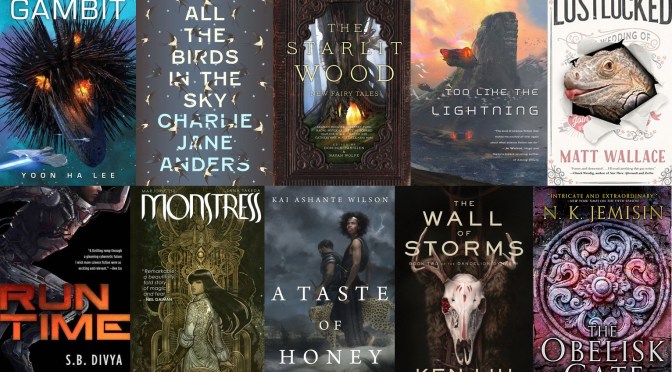
While he doesn’t always do covers for my favorite books, Richard Anderson’s cover art is always gorgeous.

Tommy Arnold
Did the covers for A Taste of Honey and Cloudbound last year. Amazing work.

Best Professional Editor, Long Form

Navah Wolfe at Saga Press
Edited Borderline, which is an amazing find, and A Criminal Magic, another excellent pick. Plus, she co-edited The Starlit Wood, which is a really superb anthology that there isn’t a category for.

Best Professional Editor, Short Form

Lynne M. Thomas and Michael Damian Thomas
This husband and wife team is consistently finding and publishing some of the freshest new sci-fi and fantasy around at Uncanny.  Their commitment to literary excellence, diversity in the genre, and progressive ideals is evident in every issue they publish, and several of my favorite stories of the year first appeared in Uncanny.

Best Dramatic Presentation, Short Form

Black Mirror “San Junipero” – Netflix
I finally watched Black Mirror in 2016 when the new season came out on Netflix, and this is hands down the show’s best episode. In fact, this story of two women finding love with the aid of a technological marvel in the near future is the finest episode of anything I watched in 2016.

The X-Files “Mulder and Scully Meet the Were-Monster” – Fox
The best episode of an otherwise mediocre season of one of my favorite shows ever, this one is funny and smart in the mode of some of my most-loved episodes from the original run of the show.

iZombie “Salivation Army” – The CW
iZombie is a pretty solidly written show in general, and the season two finale was fantastic.

Best Dramatic Presentation, Long Form
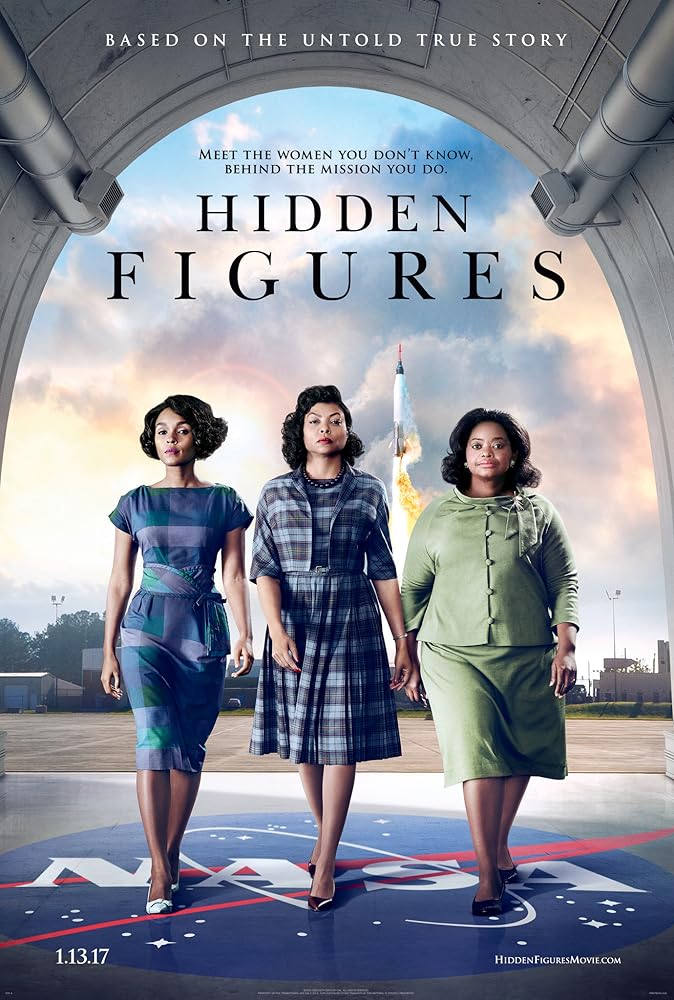
Hidden Figures
Not technically science fiction, but if Apollo 13 can be nominated, then this much more worthy and well-written story ought to be, too. It’s a great movie about a part of history that doesn’t get nearly enough attention.

Rogue One: A Star Wars Story
This may be my all-time favorite Star Wars movie despite its flaws.

Arrival
Based on a story by Ted Chiang, Arrival is a memorable first contact story.
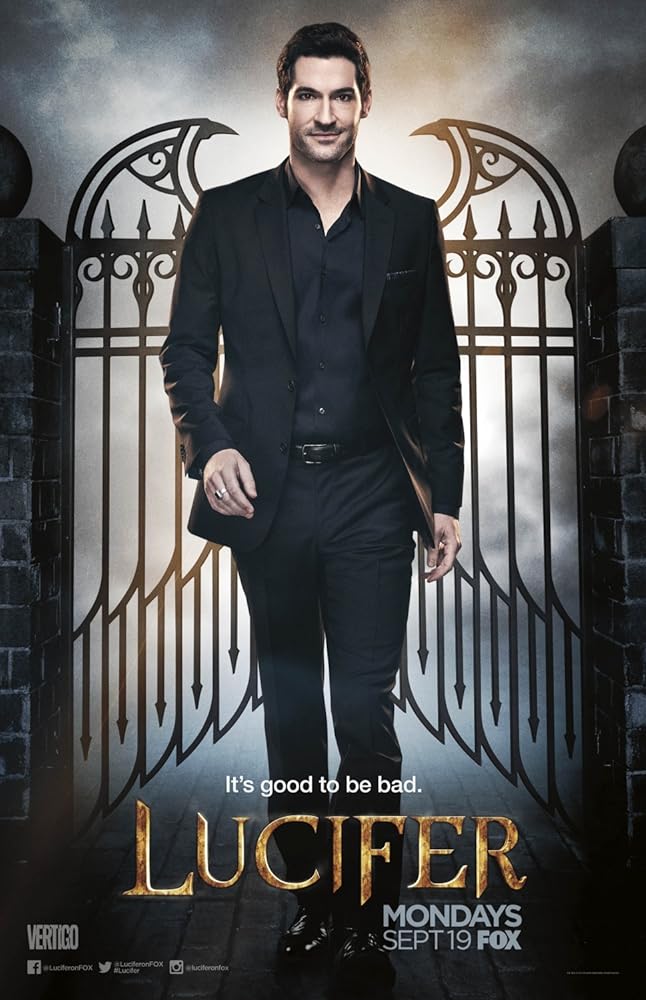
Lucifer – Season 1
Without having any particular standout episodes that I wanted to nominate for short form, Lucifer was probably the biggest surprise of the year for me in television. It’s a very loose adaptation of the Lucifer comics, re-imagined as something like a police procedural with cosmic familial drama, and it’s a concept that doesn’t sound all that appealing. However, it’s for the most part smartly written and genuinely funny with a great cast. Tom Ellis, in particular, is a perfect fit for the titular role, with his good looks and charm making up for the show’s few stumbles in the first season. It’s by far the most fun thing I regularly watch.

The Expanse – Season 1
This is the best sci-fi show since Battlestar Galactica. It’s well-written, based on a popular book series, and has a great cast and excellent production values.

Best Graphic Story

Faith, Volume 1: Hollywood and Vine
I’m not usually into superhero comics, but I loved this one.

Monstress, Volume 1: Awakening
Monstress is the most beautiful comic I’ve read in years. Brutal and poignant.

ODY-C, Volume 2: Sons of the Wolf
I don’t know anyone else who likes this book as much as I do, but I adore it.

Best Related Work
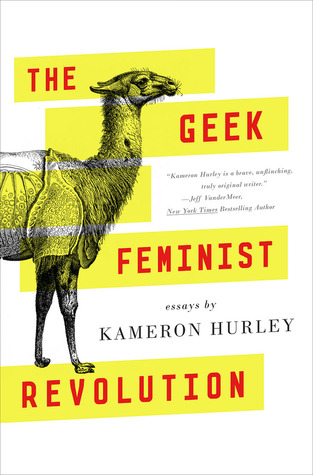
The Geek Feminist Revolution by Kameron Hurley
Obviously.

#BlackSpecFic
Fireside’s report on the state of black authors in SF is a must-read.

For the Love of Spock
I miss Leonard Nimoy.

Best Short Story

“The Super Ultra Duchess of Fedora Forest” by Charlie Jane Anders
I guarantee this is a very long shot, but this retelling of “The Mouse, the Bird and the Sausage” might be my personal favorite story of 2016. Honestly, I just love knowing that it exists at all. You can read it in The Starlit Wood: New Fairy Tales.

“Seasons of Glass and Iron” by Amal El-Mohtar
First published in The Starlit Wood and reprinted in Uncanny, this is a wonderful fairy tale romance.

“Our Talons Can Crush Galaxies” by Brooke Bolander
This story has been pretty universally acclaimed, and it fully deserves all the hype. Also, I get a kick out of how much they hated it over at Rocket Stack Rank. LOL.

“Red Dirt Witch” by N.K. Jemisin
People of Colo(u)r Destroy Fantasy was an issue full of superb fiction, and this story was the best of the lot. I literally wept through the ending, and it’s a story that’s stuck with me ever since.

“Black, Their Regalia” by Darcie Little Badger
Also from People of Colo(u)r Destroy Fantasy, this one is about a group of Native youth surviving in the midst of an apocalyptic plague.

Best Novelette

“Coral Bones” by Foz Meadows
Part of a series of novelettes and novellas based on the works of Shakespeare, “Coral Bones” is about Miranda from The Tempest.

“Spinning Silver” by Naomi Novik
Novik rehabilitates the story of Rumplestiltskin, re-centering the old vaguely anti-Semitic story around a clever and interesting Jewish heroine.

Best Novella

The Ballad of Black Tom by Victor LaValle
I’m not totally loving the current trend of endless Lovecraftian retellings in mainstream publishing, but I loved this title. “The Horror at Red Hook” is one of Lovecraft’s more famously racist stories (spoiler: the “horror” is black and brown people and immigrants), and LaValle has responded by basically retelling the story from the point of view of one of the othered people that Lovecraft had such a pathological fear of. It’s a great story in its own right that has plenty to say in conversation with the work of a such a well-known and vile racist.

A Taste of Honey by Kai Ashante Wilson
Gorgeously imagined story from start to finish.

The Convergence of Fairy Tales by Octavia Cade
The first novella published by The Book Smugglers, and they and Cade hit one out of the park. It’s a rage-filled and viscerally disturbing examination of the roles of women in several classic fairy tales (Sleeping Beauty, the Snow Queen, Snow White, the Frog Prince, and Rapunzel) by weaving the stories together as the tale of a single woman who is raped, impregnated, and abandoned to survive on her own.

Runtime by S.B. Divya
A tightly plotted and fast-paced story of a young woman participating in a harrowing cyborgs-only race in the hope of securing her future and that of her family.
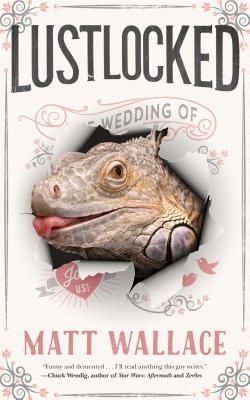
Lustlocked by Matt Wallace
Matt Wallace’s Sin du Jour novellas are always a joy, and this one is nearly perfect. The Sin du Jour crew is catering a goblin wedding when things go hilariously and disastrously awry. It’s heavily implied that David Bowie is actual goblin royalty, which sounds legit. I read this book the day I found out about David Bowie’s death, and it has a special place in my heart because of that association, but it’s also a great book in its own right.

Best Novel

Too Like the Lightning by Ada Palmer
This isn’t the book I had the most fun reading in 2016, but it’s the 2016 book that makes me most excited for the future of the genre. It’s bold and fresh and full of challenging ideas.

All the Birds in the Sky by Charlie Jane Anders
All the Birds in the Sky was one of the first books I read last year, and I said at the time that I didn’t think anything else would top it before the end of the year. While this didn’t quite turn out to be the case–frankly, you just can’t predict a debut novel like Too Like the Lightning–it’s still easily among my favorite reads of the year.
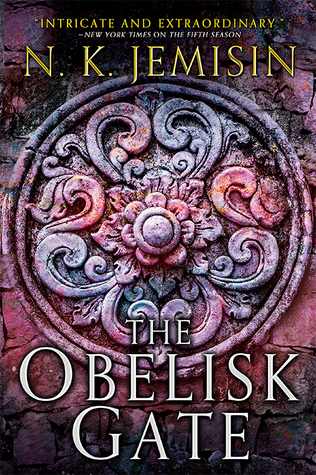
The Obelisk Gate by N.K. Jemisin
The Obelisk Gate is at least as good as its predecessor, The Fifth Season, which I’ve said many times ought to, if there’s any justice in the world, achieve Tolkienesque levels of influence on the fantasy genre. On the one hand, N.K. Jemisin seems intent on earning a rocket or two every year from now on, and I can’t say she doesn’t deserve every one. On the other hand, I like to see these types of awards spread the love around a little. Plus, I think The Stone Sky is going to be a masterpiece when in comes out later this year, so I fully expect Jemisin to be at the top of my nomination list this time next year.

The Wall of Storms by Ken Liu
This novel was a pleasant surprise, the rare second installment in a series that is unequivocally a far better book than the first in its series. I liked The Grace of Kings quite a lot, but The Wall of Storms is next level amazing. Whereas the former had a unique and interesting setting, this second foray into it is compelling and unconventional in ways that its predecessor was not.

Ninefox Gambit by Yoon Ha Lee
I fell in love with Yoon Ha Lee’s work several years ago when I read his short story collection, Conservation of Shadows, and “The Battle of Candle Arc” was one of that book’s most memorable stories. I was thrilled when I heard that Lee was revisiting that setting and the character Shuos Jedao in novel length, and Ninefox Gambit was everything I hoped it would be.
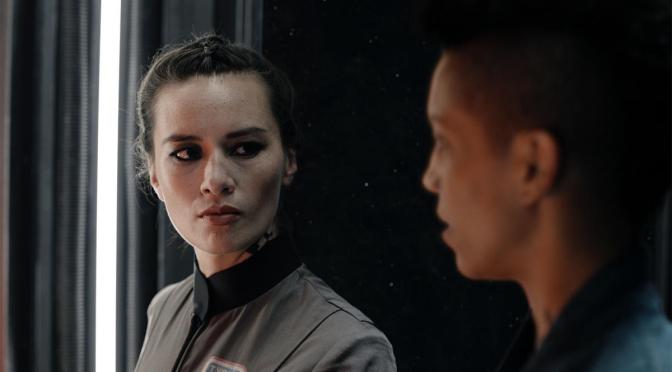
The Expanse: “Pyre” isn’t that hot, but it gets the job done

After the major climax of Eros crashing on Venus (ending the Leviathan Wakes part of the show) and the last couple weeks of gear-shifting as we move completely into Caliban’s War territory, “Pyre” is a somewhat strange episode. Last week’s “The Seventh Man” is probably my favorite episode of the show to date, but “Pyre” is possibly the worst episode of season two so far. Appearing in just a single short scene in “The Seventh Man,” Avasarala is completely absent from “Pyre,” as is Bobbie, who is presumably en route to Earth. “Pyre” introduces a new character, Praxidike Meng (Terry Chen), and then spends most of the episode working to connect him to the Rocinante crew. Meanwhile, Fred Johnson faces a major challenge to his authority that threatens to undo his work for the Belt and jeopardizes the safety of Tycho Station itself. At times, The Expanse has done well with these sorts of more focused episodes, but this one just doesn’t quite work the way it ought. It accomplishes what it needs to do, but without the show’s characteristic deftness and panache and not without some frankly awkward moments.

**Spoilers below!**

The episode starts with a flashback/dream sequence that introduces Praxidike Meng and his daughter, Mei, and this is the first weird moment of the hour. First, we see Prax (as yet unnamed) doing something with plants. Then we see overhead shots of the greenhouses on Ganymede, which is a cool (if belated) way of finally giving the viewers an idea of how Ganymede works. Finally, we see Mei as the figure waving her arms at the marines outside on the surface of Ganymede (as seen very briefly and indistinctly in “Paradigm Shift”) just before the orbiting mirror shatters and comes crashing down through the glass roof.

Cut to Prax waking up on a freight ship that has been commandeered for moving refugees from Ganymede to other stations. He’s found there by his friend, Doris, who breaks the news of his daughter’s death—although it, confusingly, turns out that Mei wasn’t in the greenhouse dome with Prax, but at a doctor’s appointment—and offers to take him with her to Mars, where she still has family and suggests they’ll be able to find work in the terraforming project. The grieving Prax rebuffs her but then changes his mind as the Belter crew of the ship prepare, supposedly, to shift any refugees from Earth and Mars to another ship to be taken back to their planets of origin. As the Inners are being herded to an airlock, Prax isn’t allowed on, because obviously the Inners are going to be spaced, which is exactly what happens. Seriously, this is so heavily telegraphed from the moment Doris first says “Mars” that it’s almost comical. It’s also a significant change from the source material, as nothing like this happens in the books (at least in the first two that I’ve read). More importantly, it’s upsetting and problematic on several levels.

First, it’s a monstrous act of hatred on the part of the ship’s Belter crew. Yes, the man who actually does it tells Prax that “Inners wrecked Ganymede,” but that’s a very thin excuse for capriciously and incredibly cruelly murdering an airlock full of people who not only had nothing to do with the destruction of Ganymede but were themselves displaced victims of the attack. This demonizing of Belters has been something of a theme this season, but this is definitely the worst example of the trend so far and it’s not helped by the other events of this episode. It’s genuinely starting to feel like the show’s writers hate Belters as they depict them over and over again committing increasingly senseless acts of destruction and violence. Anderson Dawes and Fred Johnson’s nuanced rivalry makes sense and is deeply compelling, but most of the rest of the Belters we see aren’t complex, just wantonly, cartoonishly evil and stupid.

Second, the way this event is shown on screen is not far short of sadistic. Because it’s so heavily telegraphed, the viewer knows what is coming early on—if not when Doris first mentions Mars than certainly by the time all the Earthers and Martians are being removed from the main group—and yet we’re still forced to watch it happen in excruciating real time as they’re marched to the airlock, shift to zero-g, Prax and Doris touch fingers through the glass, and then the airlock opens. Even after this bit of lovingly crafted torture, we’re not done yet because there’s still time for a long and unnecessarily gruesome shot of poor Doris gasping for breath in space as she slowly asphyxiates and freezes at the same time. It’s deeply unpleasant to watch and only serves to highlight how terrible the practice of “spacing” really is while pointing to the apparent hypocrisy of Belters who fear that fate themselves but are willing to inflict it on others.

Finally, it’s a pretty textbook fridging of a newly introduced female character in service of Prax’s storyline. Or it would be if Doris’s death was treated as truly impactful and important. Instead, while Prax does try to report the crime when he arrives at Tycho, he doesn’t know the name of the ship he was on or the names of the perpetrators, and although he was on a ship full of other refugees I guess none of them are willing to corroborate his story. When the station doctor on Tycho says she can’t help him, this is the last we hear of it, as the show seems to be pivoting straight into the rest of Prax’s Caliban’s War story instead of dealing appropriately with the tragedy that they invented to fill some time in the episode while other things are happening on Tycho before Prax gets there.

On Tycho, we kick off the episode with Alex and Naomi returning on the Rocinante with Diogo in tow. They’re met at the dock by Holden and Fred Johnson, but when Diogo refuses to tell them anything about where Anderson Dawes has taken Cortazar he’s shuffled off quickly to Tycho station jail and not seen or heard from again from the rest of the episode. This is slightly anti-climactic because it happens so quickly, but we quickly move on to Fred, Drummer, Holden, and Naomi working to figure out how Dawes could get away from them without help (he couldn’t, obv). Fortunately, they don’t have long to wait before Dawes calls them up to officially break up with Fred. Dawes accuses Fred of withholding secrets from the rest of the Belt, which is accurate, and confirms that he has Cortazar. This is also when it comes out that Cortazar wasn’t just puttering around in his cell aimlessly; he’d found evidence of more protomolecule, and it was chattering like it had on Eros. There’s more of this stuff out there, but they aren’t sure yet where it is.

Naomi and Drummer head out to physically go to the antenna Cortazar was using for data collection to find out what he’d learned. I suppose there’s some unspoken concern that Cortazar could have been in contact with the sample that Naomi keeps failing to fire off into the sun, but it rather predictably turns out not to be that. Instead, there’s protomolecule on Ganymede. This sends Holden and Naomi to definitely-not-just-space-google former Protogen employees who may have been working on Ganymede at the time of the attack. In about thirty seconds, they discover Dr. Strickland, a suspiciously overqualified pediatrician who has conveniently been recently photographed with Praxidike Meng who is conveniently on Tycho right this instant. It’s the most egregious example of plot convenience theatre I’ve seen in ages, and I literally laughed out loud when Holden was like, “It can’t really be this easy.” No shit, it can’t, but it is, because this is what the show’s writers decided to go with instead of any number of more organic and less profoundly silly ways of getting Prax onto the Rocinante and all of them on the quest to find Mei.

The other major plot this week isn’t much less absurd than this, and it continues the aforementioned trend of mass Belter character assassination. After it’s pretty well confirmed that Drummer is not the traitor on Fred Johnson’s team, we learn that it’s been one of the other people working on the Tycho control room all along, a man named Edin, who has an unspecified technical job that gives him access to a lot of controls on the station. He’s in league with the OPA faction leader, Staz, and they’ve got a genius plan to take over the station, steal all Fred Johnson’s nukes, and fire them at Earth because what could possibly go wrong? They manage to take over the station’s control room, kill a couple of hostages, and shoot Drummer while trying to get the launch codes for the nukes, but they’re easily defeated when Holden finds out and sends Amos outside the station to cut off the air supply to the control room. Once everyone has passed out, Holden, Naomi and Alex show up and rescue Fred and Drummer.

None of this would be even remotely acceptable—because it’s a hilariously badly conceived plot from start to finish—if it wasn’t for a couple of saving graces. First, I love that when Staz shoots the first hostage Fred basically just shrugs and is like “I’ve seen plenty of death in my time.” Fred Johnson is a consistently well-drawn character, and this coolness under pressure is exactly what I’d expect from him. Second, after the rescue, when Alex is trying to help Drummer stand so she can go get medical attention, she grab’s Alex’s gun and puts bullets in the heads of both Edin and Staz before she limps off on her own. After an episode full of Belter’s being wantonly evil and/or stupid, it’s nice to see a Belter get the chance to do the sensible (albeit brutal) thing, and it further proves that Drummer is a badass.

The episode ends with the Rocinante crew leaving Tycho to investigate Ganymede and search for the protomolecule and Mei Meng, but not without one last fraught exchange between Holden and Fred. In the book it was much more clear that Fred Johnson wanted the Roci crew to stay in his exclusive employ to protect and advance his interests in the Belt, but here the reason for this little break-up is somewhat muddled. Fred and Holden had seemed to be of one mind on most issues over the last couple of episodes, and this week they worked well together and seemed as friendly as they’ve ever been, so Holden’s antipathy towards Fred feels sudden and unearned. On a second, closer, viewing of the episode, this feeling wasn’t as pronounced, but their dynamic still doesn’t quite make sense either.

In the end, I’m not sure it really matters, though. This episode felt oddly cobbled together from disparate parts, as if the writers were working with a checklist of things that needed to happen rather than telling a harmoniously balanced and truly well-conceived story. At the same time, much of the episode felt like filler used to flesh out material that is much less meaty on screen than it seemed in the novel. It’s probably the farthest from the source material the show has ever strayed, and though it remains mostly true to it in spirit, it’s still not an encouraging example of what happens when the writers have to solve adaptational problems. Here, my guess is that they didn’t want the Bobbie and Avasarala plots to get ahead of this one, or perhaps they thought the episode might be overstuffed if they tried to give each plot some time. Either way, coming up with some nonsensical melodrama to fill space and time was the wrong answer and speaks to an unfortunate laziness that I hope we don’t see more of in the future.

On the bright side, next week Bobbie and Chrisjen are back and hopefully in a major way. Thank goodness.

Miscellaneous Thoughts:

  • Love Mei’s backpack. It’s a nice touch with the hologram characters, though I’m now wildly curious about the economics of that kind of disposable consumer good being sent to someplace as far as Ganymede.
  • Holden accusing Drummer of being a traitor made me want to punch him right in the throat more than I usually want to punch Holden in the throat. Peak asshole Holden, for sure.
  • I’m still not loving this Amos subplot, though I felt this week like I had a better idea of where the show is going with it (something something tragic backstory, probably). The whole thing feels almost like an afterthought and understanding what the point of it is requires a pretty significant attention to detail.

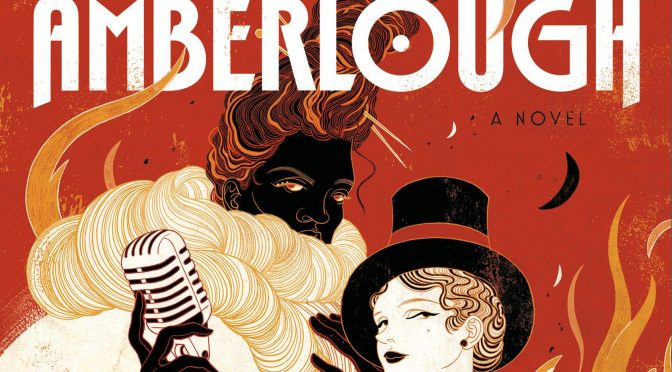
Book Review: Amberlough by Lara Elena Donnelly

Amberlough is a brilliantly inventive and gorgeously accomplished first novel for Lara Elena Donnelly, who manages to both test the limits of the fantasy genre and craft a whip smart and timely political thriller at the same time. Comparisons to Cabaret and Le Carré are accurate enough (and certainly intriguing enough for marketing reasons), though I always think we do a disservice to fresh, original work by using such comparisons to shape reader expectations. Amberlough is a fine novel on its own merits, full of bold world building, great characters, big ideas and a thoughtfully bittersweet ending.

For a fantasy world, this one is remarkably devoid of magic. Amberlough City, where the majority of the novel’s action takes place, is the capital of one of several nation states arranged in a loose confederacy called Gedda. Technologically, culturally and aesthetically, things feel somewhere in the neighborhood of the real world’s 1920s to early 1940s—there are cars and telephones and electric lights and cabarets—which is highly appropriate for a story of the rise of a fascist political party. It’s an interesting decision to write this story as a fantasy novel, and I kept half-expecting there to be some magical or supernatural twist or deus ex machina, but none ever comes. The fantastical element here is only the secondary world itself, and Donnelly does a wonderful job of bringing it to life. It’s a setting that feels familiar without the opportunity of being dryly historical—indeed, the choice to build a secondary world setting frees Donnelly from any demands for historicity—and has a pleasantly lived-in quality that makes Amberlough feel plausible and compelling as any historical fiction would be.

Like the world in which they exist, Amberlough’s characters are also multi-dimensional, well-drawn and with a good level of complexity. The three main characters—Cyril, Aristide, and Cordelia—each have distinctive personalities, motivations and journeys, and the secondary and tertiary cast also has enough depth to not be completely overshadowed by the main characters. That said, Cyril is the king of terrible and stupidly self-and-otherwise-destructive decisions, and Aristide is slightly underutilized for most of the book, so it’s Cordelia who is the real stand-out character. Which is okay. Because I adore her. She’s exactly the sort of difficult woman that I love best to read about, and she undergoes a thorough transformation over the course of the book. Cyril is a self-deprecating fuck-up; Aristide is a charismatic survivor; but Cordelia has a political awakening, and it turns out that Stories About Women Having Powerful and Profound Political Awakenings is my favorite genre of 2017.

Perhaps the most surprising thing about Amberlough is how serious a book it is. It’s not a hopeless novel, but Donnelly doesn’t sugarcoat anything, either. The historical inspirations for the book are fairly obvious, and parallels to the Weimar Republic are easy to discern. It would be easy for this story to be simply a facile and thinly veiled parable about how fascism is bad, but Amberlough is much more than that. Cordelia’s character arc of political awakening is my favorite aspect of the book, probably because it’s, in a weird way, the part of the story that I found most hopeful and encouraging. Cordelia’s story makes me want to (and feel like I could) go punch a thousand Nazis in real life, but the Cyril and Aristide threads are important as well, with much to say about political and personal compromise. Cyril tries to walk a line that he thinks is far wider than it actually is between double agent and straight up collaborator, and it might destroy him and everyone he cares about. Aristide has to deal with his own changing status under the new Ospy regime and find a way to survive when things start to get really scary.

Some readers may not appreciate the ambiguous-at-best-and-quite-probably-devastating ending of Amberlough, but I loved it. Too many writers contort the denouement of their stories in order to please their readers or to just wrap things up tidily, but Donnelly chooses to eschew a happy ending here, opting instead for an impactful and haunting one. Still, I can’t help but wonder what it would have been like to read this book if Hillary Clinton were President. It’s true that antifascist narratives never really go out of style, but in light of our current terrifying political situation in the US, Amberlough has a timely relevance that I can’t imagine was completely intended. This may also be why some of the marketing for the novel seems to undersell it and indicate a much slighter story than it actually is, but either way it’s something of a failure to manage reader expectations. Amberlough isn’t a fun thriller-romance like the cover copy suggests; it’s a powerfully written look at how people exist in the birth of a fascist regime. The message isn’t one of hope; it’s a call for resistance.

State of the Blog and Weekend Links: March 12, 2017

This week hasn’t been as productive as I’d have liked (no week ever is anymore), but it’s been reasonably good. It’s been sunshine-y (albeit chilly), and the check engine light in my car has remained off. While I didn’t write as much as I hoped to, what I did write was (I think) good, and I’ve read a good amount.  I’ve even managed to spend a minimal amount of time this week dealing with politics-induced rage (although there are more reasons than ever to be furious). It’s not been bad, even if my hardcover of The Stars Are Legion STILL hasn’t shown up yet (grrr).

In the coming week, I’ll be covering The Expanse as usual, writing about a couple of recent reads that I loved and maybe talking some about the Hugo Awards since nomination ballots are due by Friday. Other than that, I’ll probably spend the week wrapped up in a blanket with a book because it’s forecast to be probably the longest stretch of cold(-ish) weather we’ve had in Cincinnati all winter.

If you’re looking for March releases (for reading purposes or for feeling-sad-about-not-having-time-to-read-them-all purposes), Tor.com has most of them listed, in fantasy and science fiction.

This week saw the release of Ada Palmer’s Seven Surrenders, and she wrote an interesting piece over at the Tor/Forge blog where speculates on what the future will call our current era.

Also out this week is Alex Wells’ excellent Hunger Makes the Wolf. Wells is interviewed over at Shimmer Magazine.

Silvia Moreno-Garcia wrote a good piece at Book Riot on the women in science we don’t write about.

Mahvesh Murad and Jared Shurin have an anthology, The Djinn Falls in Love and Other Stories, coming out on Tuesday, so they (and some of the authors in the book) popped in at Terrible Minds to share some writing advice.

At Ars Technica, Annalee Newitz is spreading the good news of Fireside Fiction’s existence. You can (and should) support Fireside on Patreon.

If you’re a lover of short fiction, be sure to take advantage of Lightspeed’s current offer of a free three-month subscription to try out the magazine.

At the Wertzone, Adam Whitehead’s first proper entry in his Cities of Fantasy was all about Sigil, which reminded me that it’s been far too long since I played Planescape: Torment.

Mari Ness continued her blog series on fairy tales with a breakdown of how “King Thrushbeard” is all about gaslighting.

nerds of a feather, flock together continued their Dystopian Visions series with posts on Brave New World and The Player of Games, along with an excellent guest post by Paul Kincaid on the history of utopias and dystopias.

With Hulu’s The Handmaid’s Tale adaptation just a few weeks away, Margaret Atwood has started making the rounds to promote the project and talk about her novel. She did an AMA on Reddit, from which Lit Hub collected the highlights. She also wrote a piece of her own at the New York Times, where she talked about her writing process and how she hopes the book is read.

Probably the most exciting thing of the week, however, was Tor.com’s Nevertheless, She Persisted story collection, which featured short fiction by several of my favorite authors:

It’s not as great as all these stories by awesome women, but these photos of the cars from Mad Max: Fury Road all clean and shiny are pretty gorgeous.


The Expanse: “The Seventh Man” is a perfect balance of personal and political

This week, The Expanse shifted gears again in “The Seventh Man.” After last week’s fast-paced mix of exposition and set-up, capped off with a decided feeling of consequence by the Ganymede incident, this episode takes the time to do a couple of hugely important things. On a Martian ship, Bobbie Draper is recovering from her injuries and trying to make sense of her jumbled memories, while on Tycho station there’s a struggle for control as Anderson Dawes and Fred Johnson compete with each other for the opportunity to determine the future of the Belt. It’s an episode that’s light on action but heavy on talking and politics and full of some of the show’s best writing to date.

Spoilers ahead!

There’s only one scene on Earth this week, but it’s a good one. When the news comes in about Ganymede, Avasarala and Errinwright are watching with the Secretary-General and they have to make a quick decision about what to do about it. Errinwright pushes for attacking a Martian target, but Chrisjen advises caution and calls for a peace conference on Earth, where she argues that Earth would have the advantage. The Secretary-General is convinced, so that’s happening, probably next week. It’s interesting to see how the balance of power has shifted in Chrisjen’s favor since Eros, but it’s also obvious that she’s still wary of Errinwright, with whom she’s increasingly at odds.

At Tycho Station, refugees from Ganymede are flowing in, and the Rocinante crew is helping to get people settled on the station. Meanwhile, Anderson Dawes has also arrived on the station, where he’s inviting refugees to Ceres as well as rallying Belters on Tycho. We soon find out why: Having wrangled Ceres, Dawes is on Tycho to make a decisive play to wrest control from Fred Johnson. We get to see Dawes publicly debate Johnson over what the OPA’s next steps should be, and it’s riveting stuff. The real ideological differences that have previously been implied or inferred are made explicit when the two men have to stand in front of a parliament-esque gathering of OPA faction leaders and make their cases. Later, as Dawes schmoozes his way around the station trying to ingratiate himself with Holden and Naomi, then Drummer, then Diogo, pumping them for information, we get a real sense both of how deep the divisions go and how different Dawes and Johnson’s tactics are.

The Tycho sequences are (except for a weird Amos segment) by far the strongest parts of “The Seventh Man,” and they’ve got several things going for them. The dialogue is smartly written. The speeches are entertaining to watch and effectively communicate complex arguments. The increasing tension between Holden and Naomi is well-conveyed as their relationship frays at the edges. Dawes’s connection with Drummer is clearly depicted, with enough on-screen information to intrigue the viewer but without telling us the whole story all at once. Dawes’s encounter with Diogo is pitch perfect and a great/chilling example of the ease with which young people can be manipulated by those they admire. The final short action sequence as Dawes abducts Cortazar is a much-needed break from talking scenes and gives Fred Johnson a clear goal going into the next few episodes. In short, it’s a balanced, cleverly plotted, and well-thought-out storyline that admirably holds up its half of the episode.

If there’s any major criticism I have of the Tycho story this week it’s that Holden’s “character development” doesn’t feel particularly earned. The foreshadowing of having Dawes compare Holden directly to Miller didn’t quite work because there’s not any actual evidence before this episode that Holden has evolved into anything at all, much less into a new Miller. To be fair, I suppose Holden has become more circumspect this season about shouting sensitive and inflammatory information to the whole solar system willy-nilly, but he’s still pretty much the same old frustratingly naïve and self-righteous Holden we’ve come to barely tolerate over a season and a half of the show. His late-night attempted attempt on Cortazar’s life was genuinely unexpected, and not in a good way. That said, his decision to shout over Belters to support Fred Johnson (and his dipshit defense of his actions to Naomi) was exactly what I would expect of him.

The part of the episode I was most excited to see was the Bobbie Draper stuff, which was both just what I predicted it would be and much better than I thought it would be, primarily due to Frankie Adams’ strong acting as she works through Bobbie’s trauma and confusion after the Ganymede incident. After being rescued from her damaged exo suit, Bobbie is taken to the Scirocco for treatment for her injuries and multiple rounds of questioning about what happened on Ganymede. It’s during this questioning that we get some of the blanks from last week filled in, which is pretty much how I suspected things were going to go. I thought we’d see more flashes of the seventh “man” that gives the episode its title, but the Ganymede monster is kept deliberately mysterious and Bobbie is told to not speak of it when she finds out at the end of the episode that she’ll be going to Earth to testify at the UN.

“The Seventh Man” (and The Expanse in general, if we’re honest) is, ultimately, a story about storytelling, but it’s also a story about the personal nature of politics. Powerful people vie to shape narratives to their own purposes, both selfishly and not. Avasarala has an almost preternatural ability to read situations and come up with creatively constructive sources of action to prevent all-out war. We see that she has counterparts among the Martians as well, people with cooler heads than the common soldiery who are working hard to keep the peace as well, even if that means making up a plausible story to cover up an implausible event. Fred Johnson and Anderson Dawes both have stories to tell this week, and both of them are true in their ways—humanity is stronger if they can live peacefully together, and the Belt and Outer Planets need to be self-governing and united against those who don’t have their best interests at heart.

Identity figures largely into all these storylines this week. Avasarala is still working to assert herself in her stronger position following the destruction of Eros; she sees herself as an iconoclastic champion of Earth, and perhaps her greatest pressures come from her own expectations of what she should be achieving. Bobbie Draper has lost her unit in a tragedy that she doesn’t yet understand, which has left her unmoored, and now she’s being sent to Earth, but not as a conqueror or even as a warrior; her navigation of this unfamiliar territory is going to be fascinating in weeks to come. Anderson Dawes sees himself as the true leader capable of uniting the OPA under his control, and his work for the Belt and Outer Planets is confirmed to be real and sincere. However, he also seems burdened with something like self-hatred—a sort of archetypal man-willing-to-do-bad-things-for-good-reasons who knows how to fight, but not how to achieve and maintain peace. Fred Johnson, on the other hand, dreams of real and lasting peace, but his history and status as an Earther makes him an eternal outsider in the Belt. They may respect and appreciate him, but they won’t follow him like they’ll follow Anderson Dawes.

All these various takes on identity are at work with Naomi and Holden. We saw last week that Naomi is identifying more and more strongly with her Belter roots, and this episode continues that trend. She is fully invested in the suffering of those she sees as her people, and she’s deeply admiring of and moved by Anderson Dawes. She’s definitely struggling with some feelings of guilt over deceiving Holden about the hidden protomolecule sample, but her feelings of resentment towards him for his lack of understanding of her are even stronger than guilt. In some ways, Holden’s motivations mirror Fred Johnson’s—he wants to do what he can to help people in the Belt, but he also wants peace in the solar system—but Holden has heroic aspirations as well and is (we learn) at least open to the idea of modelling himself more after his friend Miller. Holden’s arc here isn’t as well-defined as Naomi’s, and it’s certainly not as relatable or likeable, but it does fit within the general thematic neighborhood of what’s going on with everyone else.

The Expanse is always good, but this episode and last week’s “Paradigm Shift” have been truly superb. The show’s characteristically high production values, powerful writing, excellent casting choices and solid acting have worked together to create a deeply affecting new direction for things now that we’re past the relatively weak Leviathan Wakes source material. The deeper we delve into Caliban’s War territory, the better things are getting, and that’s an awesome achievement for a show that was already the best thing on television.

Miscellaneous Thoughts:

  • The blood snowflakes in the opening scene were beautifully gruesome and make for a great image, but that is not how blood works.
  • I didn’t really “get” the Amos stuff. This wasn’t quite a flashback, there wasn’t enough information given about Amos’s past to make sense of his actions, and things are left basically unresolved after he has the conversation with Cortazar about the “procedure.”
  • Jared Harris is perfectly cast as Anderson Dawes. Absolutely magnetic and probably my favorite character to watch aside from Shohreh Aghdashloo as Avasarala.
  • Not enough Alex this week, and I did not like how he talked to Naomi.
  • I feel like Naomi and Holden’s relationship is quickly headed for Greek tragedy territory, but they were still going strong at the end of Caliban’s War, so I’m very interested to see how that shapes up over the rest of this season.

Book Review: Seven Surrenders by Ada Palmer

Ada Palmer’s Too Like the Lightning was one of my favorite novels of 2016, and it was certainly among the year’s most unusual and ambitiously daring pieces of speculative fiction. Nevertheless, it felt a little unfinished, and anyone who loved it has no doubt been waiting with bated breath for the sequel that seemed necessary to complete what Too Like the Lightning started. Seven Surrenders is everything I thought/hoped it would be, with a vivid setting, intricate plot, high level philosophical and political ponderings and fascinating cast of characters, a truly worthy sequel to its brilliant predecessor and a powerfully compelling introduction to the conflict to come in the next book in the series.
The future that Palmer envisions is still utopian-seeming, though some of the shine was certainly worn off by the end of Too Like the Lightning. In Seven Surrenders, we get even more details of the organization of society, government and families in this imagined future, and many of the questions that Lightning left us with are answered. The relationships and interplay between the various Hives are more interesting the more one learns of them, and the ‘bash family unit is more fully explained in this volume as well. In short, everything makes more and more sense the more you read of this series. I love that Palmer doesn’t spend a ton of time on tedious exposition on these matters, which would amount to hand-holding, but a glossary, appendix or wiki could be highly useful.

That said, I read Lightning as an ebook but Surrenders in hardcover and I found it of great convenience to more easily be able to flip back and forward in the book to check information and reread sections to make sure I understood it. This is definitely a title that benefits from being read on dead trees instead of a screen, which I suppose is, incidentally, appropriate given the deliberately old-timey style of Mycroft Canner’s narration. Though I’ve largely transitioned to reading books digitally over the last few years, every now and then a title comes along that gives me a renewed appreciation for books as useful objects, enjoyable tactile experiences and beautiful artifacts. This is one of those books. If you can, get the hardcover. You won’t regret it, and it will look great on your shelf when you’re done.

Mycroft Canner continues to be one of the most challenging characters in the genre. After the revelations about his past crimes in Lightning, he begins Surrenders in something of confessional mood. Though many of the ugly details of Mycroft’s crimes have already been revealed, Surrenders gives us a much deeper understanding of why he did it. We also learn more about nearly all the book’s other characters as their murder conspiracy, which keeps the whole world at peace, is unraveled and falls apart. Mycroft’s relationships to the structures of power in this world are explained. Other characters’ secret identities and motives are revealed. There are plots on plots on plots that are uncovered over the course of four hundred pages that detail just a few days of events and a couple of legit miracles. It’s heady stuff. I suggest taking notes.

The big draw to this series, for me, is still the philosophy and the politics. I wouldn’t say that this is a particularly plausible future society, though that may simply be because I have a very difficult time imagining how we might evolve from here to there, but it’s a marvelous idea for how to organize a peaceful society. The political dynamics are complex and nuanced, and the Saneer-Weeksbooth conspiracy adds a great dystopian element to be explored. Palmer’s ideas about gender are somewhat less well-developed, although significant time is spent on gender in this volume. Mycroft’s use of gendered pronouns is inconsistent and the explanation given for Madame’s plot to reintroduce gender roles into society is less than convincing; frankly, I feel as if there is some huge complicated idea trying to be communicated that I’m just not quite getting. My hope is that this theme will carry on to the next books in the series, which promise to be about war.

Listen. There’s not a ton to write about this series without giving the whole story away, and it’s hard to discuss the ideas in it without it turning into a lengthy thinkpiece, and I can’t even guarantee that you’ll get the concept. But there’s nothing else like this series being published right now. Too Like the Lightning was a revelation, and Seven Surrenders shines even brighter than its predecessor. The stage is set for the next pair of books to explore what a war might looks like in a world that hasn’t warred in centuries, and you can’t possibly want to miss that. I know that this isn’t a series for everybody, but I still can’t help suggesting that everyone read it as soon as possible. It’s a work of rare and special genius.

Thank you to the publisher for sending me an early copy for review. 

State of the Blog and Weekend Links: March 5, 2017

Well, it’s been another slow week for me, mostly because I spent half of it back and forth to the auto shop having my car worked on, which took up a ton of time and energy. I think I’ve finally got the problem with the car sorted, however, and I’m hoping to have a few weeks before I have to take it back again (there’s still a couple other tiny issues that I’d like to get cleared up as well). In the meantime, I’m trying to just not stress out about it, with mixed success, because it is pretty stressful and I’m prone to anxiety even without good reason.

In other news, I’ve been slightly better this week at ignoring the noisy collapse of American democracy. I read several books (Agents of DreamlandFinal Girls, and Hunger Makes the Wolf), which leaves me with just four titles left on my planned reading list for the month of March. I’m kind of excited because I’m hoping that this will let me work in Borderline and Infomocracy this month before I want to get a head start on some April releases I have ARCs of. I also saw a couple of movies (Get Out and Operator, both excellent) that I have some thoughts on and might write proper reviews of if I have the time and inclination this week, but with weather turning positively springlike (I’ve never seen my town so green this early in the year) I may spend a lot of time outdoors enjoying it since I didn’t have the chance this past week because of the above-mentioned car troubles. We’ll see.

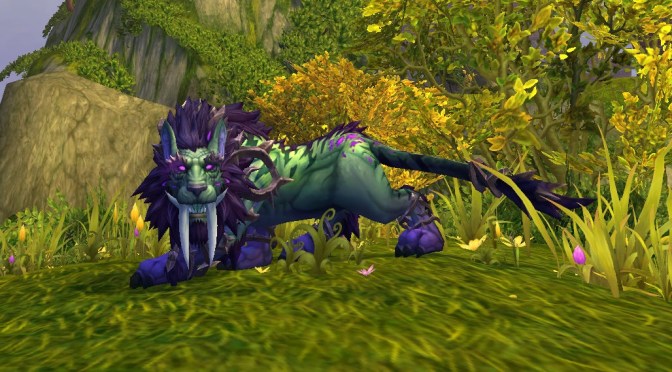
Also, I unlocked some new druid catform skins in WoW, and that was probably the highlight of my week.

newcat2
Why, yes, I HAVE been dreaming for months of lime-green tiger cat form, thank-you-very-much.

Links are a bit light this week. I feel like I read a ton, what with spending so much time stuck at home sans transportation, but not much that caught my interest. Probably the most exciting things of the week have all been news items rather than opinion or analysis pieces.

FIYAH posted the cover and table of contents of their second issue, Spilling Tea, out April 1, and it looks great.

Aliette de Bodard shared an updated bibliography of her Xuya universe.

The BBC is making a show based on the life of lesbian landowner Anne Lister and her search for a wife in the 1830s.

Neil Gaiman unveiled a trailer for a documentary about the genesis of American Gods.

Silvia Moreno-Garcia published a multi-author interview on the experiences of POC in SFF publishing.

I enjoyed this Fantasy Faction piece on winter in fantasy.

The Verge has a great list of March new releases in sci-fi and fantasy if you’re looking for something new to read this month.

nerds of a feather, flock together kicked off a new blog series on dystopian fiction that will be running for the next couple months.

At the Wertzone, Adam Whitehead introduced a new blog series on cities in fantasy that looks like it’s going to be fascinating.

The Expanse: “Paradigm Shift” is great start to a new chapter in the show’s story

I’m sure I’ve said it before, but season two of The Expanse is goddamned fantastic. After last week’s wrap-up of the last of the Leviathan Wakes storyline, I expected this week’s episode to be something of a bridge between two distinct parts of the season. “Paradigm Shift” is that, to some degree, but it feels even more like a whole new season premiere in structure and tone, with some humor (welcome, after a largely serious couple of weeks), some thematically relevant exposition, some set-up for future plots, great character work and a flashy (if slightly confusing) cliffhanger to leave us wanting more. In a season already full of great episodes, this one might be my favorite yet.

Spoilers below, natch.

There’s no pre-credits scene this week, and the first scene of the episode starts with a look at Mars from space that segues into a flashback to the Mars of 137 years ago, where we meet Solomon Epstein (guest star Sam Huntington), inventor of the Epstein drives that power the ships used in the solar system of The Expanse. Apparently, Epstein was simply trying to get a minor increase to fuel efficiency when he accidentally built the drive that was fast enough and fuel efficiency enough to change the course of human history in the solar system. The Epstein drive is the technology that allowed Mars to gain independence from Earth and enabled the colonization of the Belt and the Outer Planets, but this has also led to the complicated political and military situation between Earth, Mars, and the OPA that fuels the show. It’s an interesting bit of worldbuilding exposition that is spooled out in short pieces over the course of the episode, but it also serves as a thesis statement for the episode and, perhaps, for the rest of this season: the benefits of technological advancement never come without costs. If the protomolecule is, as Colonel Janus tells Avasarala in the U.N. situation room, “the greatest technological leap since the Epstein drive,” what will it mean for humanity?

Things on Earth are relatively quiet this week starting with the abovementioned situation room scene, which primarily works to establish that the Earth government doesn’t know what’s going on yet. They don’t know what happened on Eros, they’re no longer in contact with James Holden or Fred Johnson, and they’re missing some thirty nuclear missiles. They are going to mount a mission to Venus, however, to find out what they can about Eros. Because what could possibly go wrong? Avasarala is even going to send her ex-boyfriend, one Dr. Michael Iturbi (played by the very handsome Ted Whittall), to be her eyes and ears on Venus.

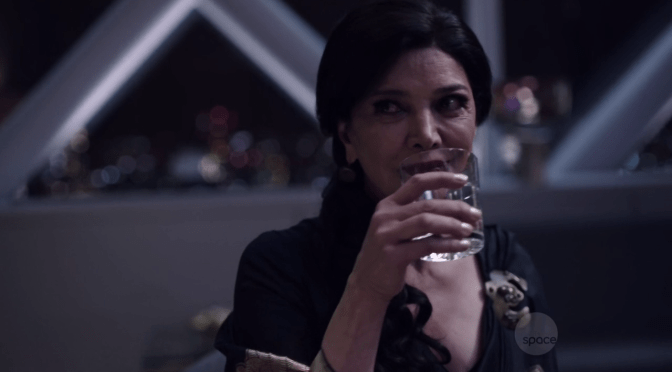
The standout Earth scene of the episode, however, doesn’t come until late in the episode when Chrisjen approaches Errinwright to talk about Jules-Pierre Mao. In short, Avasarala advises Errinwright to use whatever influence he has with the Mao family to get Jules-Pierre to turn himself in, and she gives a compelling speech about what the consequences will be if he doesn’t. Chrisjen Avasarala has been an iconic character since day one, but her rage-filled speech to Errinwright here is certainly her most iconic moment yet. Shohreh Aghdashloo is always glorious in this role, but she’s in rare form throughout the scene, full of arch looks and knowing smirks that shift to barely restrained fury as she makes clear to Errinwright both that she knows about him and Mao and that she has the power and will to destroy them both. Her small hair toss as she walks out the door at the end is a nice little visual punctuation for what just happened.

The Rocinante makes it back to Tycho Station, where they’re greeted as heroes, something that they aren’t all comfortable with. Amos and Alex head off into the station, while Holden and Naomi head straight to Fred Johnson to make their report, where they find out that Fred Johnson has the missing missiles from Earth. Holden is self-righteously pissed off about this, because of course he is, but not everyone on the Roci agrees with him. There’s a pretty obviously impending break between Holden and Fred Johnson, but we also see the seeds of a significant potential break between Holden and Naomi as well. While Holden might believe there shouldn’t be any “sides” he doesn’t seem to be at all aware of the ways in which his own indecision and lack of conviction are pushing Naomi to choose one on her own.

Identity is at the core of the dynamic between the members of the Roci crew. Holden imagines them as a family, and he might think that they’re above the factions and infighting in the solar system, but he is also still very much shaped by his birth and upbringing on Earth. Alex, even as a Martian expat, still retains some of the Martian nationalism that he was raised with, which we see when he suggests that they turn their hidden protomolecule specimen over to Martian scientists. Amos is practical and has a tendency to be a bit of a follower, and it seems that he’s at least partly transferred his loyalties to Holden, leaving Naomi as the only Belter on the Rocinante now that Miller’s gone. Her Belter identity is important to her, as evidenced by her easy connection and bonding with other Belter characters, and we can already see her chafing at being outvoted by the others on the Roci. She craves the company and camaraderie that comes from shared experience, especially when faced with a situation where she disagrees with Holden so profoundly, and it’s easy to see why she pursues a friendship with Samara and aligns herself with the OPA. What’s less easy to see is how this is going to work out; the current state of affairs is definitely not sustainable for either Holden and Naomi’s relationship or for the Roci crew as a whole. Something’s got to give.

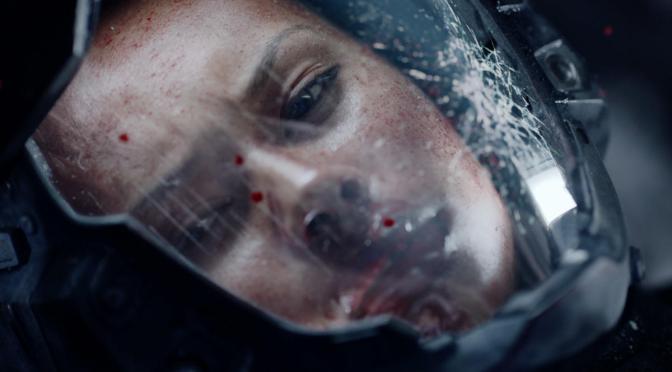
The episode ends on Ganymede, where Bobbie Draper and her unit of Martian marines are stationed and complaining loudly of being stuck guarding farms. Things get interesting pretty quickly, though, when they’re attacked by unknown forces that destroy the Martian ship in the sky and leave Bobbie seemingly the only survivor on the ground. The problem is, it’s difficult to understand exactly what’s happening in the final few shots of the episode. The battle in the sky is visible to the marines down on the surface of Ganymede, and we know that the Martian ship is destroyed and Sutton is killed, but it’s not clear who’s firing on who in the air (though I think we’re meant to understand that it’s Mao’s stealth ships doing most of the shooting). Down on the ground, we see more of what Bobbie sees, so we can see that the U.N. soldiers that she thinks are charging her group are in fact being chased by a seventh figure behind them. It’s also clear enough at the end that the other three members of Bobbie’s team are dead, with their suits slashed open and helmets smashed. The final shot of the episode as well is clear enough, as Bobbie looks up to see a glowing protomolecule blue figure looming over her.

However, while it’s easy enough to understand what has happened if you think about it—or if you just rewatch it several times like I did—I think they could have shown a bit more of the actual action without giving it away entirely. Having read Caliban’s War, I expect that more of this stuff is going to be metered out through flashbacks in future episodes as Bobbie tries to get to the bottom of what happened, but I think that without that outside knowledge I might have been totally lost as to what I’d just watched. Not to mention even more frustrated than I already am at having to wait another full week for resolution to the cliffhanger ending.

Miscellaneous Thoughts:

  • I loved the Epstein scenes, but I didn’t love the choice to have him narrate it himself if he dies like that. That said, I don’t know how else the show could have communicated the information we get from Epstein’s narration, there’s no other character who would have been an appropriate narrator, and what we see on screen wouldn’t have made a lick of sense without narration. So. I guess they kind of had to do it like this.
  • That said, I expect the Epstein scenes are going to be divisive among show watchers. I really liked them and felt they were a smart way of giving us some history of the world while working up to an explicit statement of a thematic thesis. My partner, however, hated the Epstein stuff with a passion and found it unnecessary and jarring. I’m sure he isn’t the only one with that opinion, even if it is totally incorrect.
  • Avasarala’s costumes this week were stunning, as usual, but I loved that soft, flowy black gown she wore to talk with Errinwright best. It’s perfectly, artfully chosen to be restrained and unthreatening, very comfortable-looking and with relatively plain make-up and no jewels. It’s about as laid-back as we’ve ever seen Chrisjen looking, and then she pounces.
  • Holden’s message home was cute, but I think Naomi shouldn’t have to work so hard at managing Holden’s feelings. Yeah, he’s the captain of the ship, but why if he doesn’t want to be and there are at least a couple more people on the Roci who are almost certainly more capable?
  • The martyrdom of Miller and his elevation as a folk hero is predictable, as is Diogo’s almost religious fervor about spreading the news. I like this small detail, though, and it will be interesting to see how that movement develops over the next few weeks.
  • I ship Naomi and Samara so hard.
  • I wish that Bobbie’s exo suit was bigger and tougher looking, but I love the heads up display on it, which was used really smartly in this episode.