Book Review: Difficult Women by Roxane Gay

Listen. It’s almost impossible for any collection of twenty-one short stories to please everyone all of the time, but with Difficult Women Roxane Gay comes closer than most to nailing it. The stories in this volume are, from start to finish, thoughtful, clever, funny, tragic and hopeful in turn. These stories are a rage-filled paean to the strength and resilience and weakness and fragility and everything in between of women. This is an ugly, heart-wrenching, beautiful book, and if Roxane Gay wrote three hundred forty-four more stories like this I would treat them like a devotional and reread them every year for the rest of my life.

Probably what I love best about Difficult Women is that Roxane Gay is so unconcerned with dualities. She avoids trite, reductive storytelling in favor of exploring the complexities of every day life. Gay’s difficult women deal with trauma and loss, they fall in love, and they fuck. They are kind and brave and capricious and cruel and yielding and stubborn and cold-hearted and hot-tempered and more, and every woman Gay writes about here contains multitudes. It’s impressive to find so much intricacy of character in short fiction, and Gay turns out one fascinating story after another.

That said, there’s a significant amount of thematic overlap and repetition between entries in the collection. Sexual violence, dead children, and abusive lovers figure largely in these tales, and this can at times create a sense of grimness that won’t be appealing to all readers. Certainly there are some lighter stories included, but I found those to have a slighter quality than those stories that dealt with weightier material. Altogether, though, the stories of Difficult Women are well-chosen and smartly arranged so that the reader is never overwhelmed by darkness, and those couple of slighter stories, while not among my favorites, perform an important function in the collection as a whole by periodically lightening the mood and offering the reader a perfect opportunity to grab a drink or take a break.

In style and genre, Gay is clearly a writer of wide-ranging interests, with several stories veering into the realm of magical realism and one (“The Sacrifice of Darkness”) that is unambiguously speculative in nature. Gay writes stories in numerous settings about characters of different ages, races and classes, floating in and out of her characters’ lives with what might seem like ease for the reader but I expect is the result of years of life experience and meticulous study of people combined with finely honed craft. Stylistically, these stories all tend towards a forthrightness that challenges the reader to really see and empathize with the characters with all their flaws and defies moralistic judgments. This is a collection that is keenly intellectual, but never self-consciously so. Even Gay’s symbolism is generally natural and easy to grasp, and she doesn’t bother with any too-precious conceits, complex metaphors or arcane allusions that might make the text inaccessible.

In the end, Difficult Women is just what it says it is and what it appears to be. It’s a work of elegant simplicity and brutal honesty and deeply humane reflections on the human condition. I look forward to shamelessly pushing it on literally everyone I know.
Book Review: Dusk or Dark or Dawn or Day by Seanan McGuire

It’s early enough in the year that I don’t have much to compare it to yet, but I feel confident in saying that Dusk or Dark or Dawn or Day is one of the year’s great novella-length works. It’s smartly written, well-paced, has a compelling cast of characters and an original mythology, and is altogether compulsively readable. It’s perfect reading for a cold day or a rainy afternoon, exactly the sort of thing that is easy to zip through in a single sitting like I did.
It might be easy to just focus on the characterization of this book as “that book about the ghost who works at the suicide hotline,” but Dusk or Dark or Dawn or Day is something really special and interesting that isn’t done justice by that facile, humorous-sounding description. Yes, Jenna is a ghost and she works at a suicide hotline, but this isn’t a funny book and, while a fast read, isn’t really the kind of light reading that superficial description would suggest, either. There’s some lightness here, but this is a book that deals mostly with themes relating to grief and mortality and Seanan McGuire has something quite serious to say about these issues. She does touch on some ideas about community and found family, but those are mostly incidental to the story and more implied than explicitly examined in the text.

Because the book is so emotionally and thematically weighty, the plot is a fairly basic one. After the introduction of Jenna’s predicament and some explanation of her life as a ghost, Jenna and her friend, a witch, have to rescue a bunch of other ghosts when they mysteriously disappear. We never meet any of the disappeared ghosts, so there’s not much emotional stake in their rescue, but the book isn’t really about them at all. Instead, the first person narrative puts the reader completely inside Jenna’s head for the duration of the story. And while Jenna is a kind and caring person, there’s an interesting detachment in her ways of caring for her pets (all elderly cats) and the people in her after-life, and McGuire does a great job of exploring how Jenna’s circumstances have changed her perspective and her understanding of life and death.

McGuire also has an interesting take on witches here, where they have magics tied to any number of things–streets, rats, corn… presumably the options are basically unlimited–that fuel their powers and inform and limit their abilities. The relationship between witches and ghosts is complex and adversarial rather than symbiotic, but it adds another dimension to the reader’s understanding of the themes. Like ghosts, witches exist in a social space somewhat removed from humanity, and both ghosts and witches live extended lifetimes and are subject to forces and motivations outside their control. McGuire’s “What If?” question in this book is broad and perhaps ill-defined, but I love the multiple angles from which she’s chosen to try and answer it.

Looking back on the reading experience of this one, I think the genius of Dusk or Dark or Dawn or Day is that McGuire has used an extremely simple and fairly straightforward plot in order to hang a ton of mythology and worldbuilding upon, but she’s managed to do it in a way that feels complete and not as if it’s just an introduction to a bigger fictional world or a longer series. Sure, there’s tons of storytelling potential here, and there is at least one character (Delia, if you want to know) that I’d love to see McGuire return to in the future. But Jenna’s story in this volume is completely self-contained and entirely emotionally satisfying. I would definitely like to read more about this fantasy world, but I don’t think any sequels are necessary. I’d love for these kinds of singularly lovely standalone stories become a trend even more than I want to see sequels or companions to this story.

This review is based upon an advance copy of the title received from the publisher through NetGalley.

Book Review: The Bear and the Nightingale by Katherine Arden

The Bear and the Nightingale is an excellent fairy tale-inspired historical fantasy that should appeal to fans of Naomi Novik’s Uprooted and Catherynne M. Valente’s Deathless. Katherine Arden has crafted a well-researched, beautifully written, and overall marvelously realized debut novel that nonetheless has some deep and unsettling flaws that I expect will keep it from being among my favorite novels of 2017 and, frankly, make it somewhat unlikely that I will return to the series (this is the first of a planned trilogy).
First, the good.

If you like historical fantasy or fairy tale retellings, this one is a great choice. Arden has chosen a couple of somewhat obscure-to-Anglophone-readers fairy tales to use as the backbone of her story, and she’s chosen a setting–circa 14th century Russia–that isn’t widely used. Both of these factors set The Bear and the Nightingale nicely apart from the ongoing glut of retold and reimagined fairy tales on the market. These things are always a dime a dozen, so it’s refreshing to see something original being done in the genre, and to have an original idea coupled with a well-researched setting that offers a great sense of place is something really special.

I also kind of love that The Bear and the Nightingale isn’t a romance, though it has some romantic, in the literary sense, elements. Instead, it’s a bildungsroman of sorts, beginning before the birth of its primary protagonist, and Vasilisa grows from precocious child to independent young woman over the course of the novel. Romantic relationships barely figure into the story at all, and it instead focuses on exploring Vasilisa’s relationships with her family and community in order to explore bigger ideas about tradition, religion, gender equality, and growing up. Too often, books like this focus primarily on getting their heroine heterosexually paired off and settled down at the end, so I’m always glad to read something that avoids that narrative that domestic partnership and nuclear familial conventionality are the ultimate happy ending. The somewhat ambiguous, but hopeful, ending of The Bear and the Nightingale suits me far better.

Sadly, while the good parts of The Bear and the Nightingale are excellent, the bad parts are pretty terrible. Mostly, the bad parts all involve Vasilisa’s stepmother, Anna Ivanovna, for whom everything is terrible all the time.

**Spoilers below this line.** Continue reading Book Review: The Bear and the Nightingale by Katherine Arden

Weekend Links: January 7, 2017

The first week of a new year is generally a slow one for all of us, mostly taken up with previous year wrap-ups and anticipatory posts about the new one. That’s pretty much the case this year, too, except for the slight frisson of fear of authoritarianism that seems to be constantly, anxiously simmering in the background of all my social feeds. So 2017 is off to–generously speaking–an uneasy beginning. For many of us, myself included, the world is an uglier, more frightening and less hopeful place than it was this time last year, and the news is less encouraging each day.

Like (I imagine) many people, I’ve been dealing with things by throwing myself into my work. Also, by putting my congressman’s number on speed dial for when I feel like complaining.

In any case, I’ve written more–or at least more productively and happily–in the last week than I have in the last couple of months, and I’m already in the middle of my fourth read of the year. I’ve been cleaning house and cooking, and taking control of my life where I can. Also, calling my Republican congressman’s office about every other day to complain about stuff and ask him (or asking his poor, beleaguered interns to ask him) to to clarify his garbage opinions.

It helps. Both the productivity and the complaining.

This week, I published six posts here at SF Bluestocking:

I read quite a bit of short fiction between two magazines and what I read online. Here are some of my favorites currently free to read:

Cabbages and Kings posted a retrospective podcast with the editors of FIYAH.

The Barnes & Noble Sci-Fi and Fantasy Blog had an interview with Ken Liu about his Dandelion Dynasty series.

At Tor.com, a great post on Mary Shelley’s post-Frankenstein career.

The B&N blog also rounded up 96 book recommendations from editors for 2017, just in case your to-read list isn’t full enough yet. Also, the 17 most anticipated sci-fi debuts coming out this year.

I loved Rogue One when I finally got to see it on New Year’s Eve, but it wasn’t exactly a flawless movie. Max Gladstone’s suggested fixes make a good deal of sense.

I am honestly baffled by the existence of HBO’s upcoming show, The Young Pope. I mean, what audience are they going for with that? Apparently I’m not the only one, judging by the amount of mockery for the show going around on Twitter.

Futurefire Publishing has one of the first exciting crowdfunding projects I’ve seen this year. $5 gets you an ebook of their Problem Daughters anthology. You can find more news and press about Problem Daughters over at the Futurefire blog.

The other interesting crowdfunding campaign I saw this week is Lawless Lands: Tales from the Weird Frontier. It’s a little steep at $15 for a digital copy of the finished book, but it’s got a pretty good Table of Contents and a neat concept.

This Polish musical about man-eating mermaids is relevant to ALL of my interests:

Last of all, there’s finally a trailer for Hulu’s adaptation of The Handmaid’s Tale, and it looks excellent so far:

Magazine Review – FIYAH Literary Magazine Issue One: REBIRTH

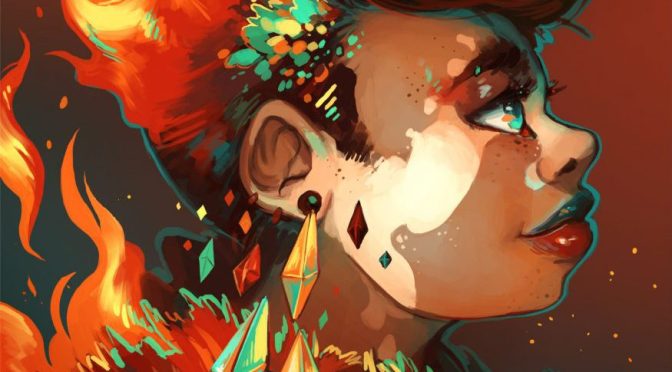
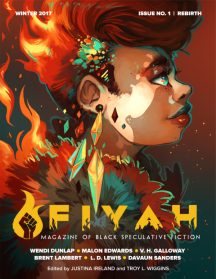
fiyah1In an age of constant reboots and reimaginings of old media, the new FIYAH Literary Magazine stands out as one of the most promising such projects in recent years. Inspired by the work of Jazz Age black writers and motivated by current events and the ongoing dearth of recognition and opportunities for black writers in SFF, executive editors Justina Ireland and Troy L. Wiggins have created a unique and special space that is as much needed now as ever before. From its stunningly beautiful cover art to the very last page of perfectly curated fiction, Issue One: REBIRTH is a gorgeous celebration of black excellence that every serious fan of speculative fiction should be reading this winter.
My personal favorite story of the issue is the final one, “Chesirah” by L.D. Lewis, which combines fantastical and science fictional elements to great effect. My second favorite, V.H. Galloway’s compelling “Sisi Je Kuisha (We Have Ended)”, introduced me to a bit of central African folklore that I knew nothing about before reading it, which then sent me down a marvelously fascinating and informative rabbit hole of internet research about Bantu languages and Congolese history. Meanwhile, “The Shade Caller” by DaVaun Sanders is a thoughtful exploration of otherness and the power of community. An excerpt from Sanders’ novel, The Seed-Bearing Prince is also included, though I skipped it in favor of just buying a copy (just $0.99 for Kindle) and adding it to my to-read list.

The first three stories of the issue didn’t blow me away the same way the final three did, but I suspect it’s a mix of personal preference and the fact that I’m white. All of the stories in FIYAH are by, about and for black people, or at least not for white people. Reading these stories while white, one gets the distinct impression that you are the outsider here, and I found myself throughout feeling grateful for the gift of these deeper glimpses into an experience that I can only ever understand imperfectly. It’s a feeling that I often have while reading the works of people unlike myself, just seldom ever through half a dozen stories in a row.

And this might be the most refreshing thing about FIYAH and the thing that makes this project so important for the SFF community. Here, black stories by black authors are in a unique context, in conversation with each other and not singled out as token stories in other publications where they’re almost forced to be in conversation with whiteness. There’s a unity and cohesiveness to this collection that is too often reserved for more privileged perspectives that are allowed to drown out the voices of minorities. FIYAH gathers the voices of black writers together in a way that both amplifies their collective impact and highlights the diversity within the group.

The only quibble I have about this first issue is actually a technical one. Sadly, the EPUB format (my preferred file type as a Nook user) is not well-formatted, and I was unable to adjust the font size to read it more easily. It also didn’t have the best document navigation, and if I wanted to jump to a story I had to do it from the table of contents page rather than the little menu thingy in the bottom left corner of the device. It’s not a deal breaker, obviously, but it was inconvenient, and I (vainly) hated the reminder that I might need to get my eyes checked as I approach middle age. Fortunately, when you buy the issue, you have access to EPUB, MOBI, and PDF downloads, so it’s easy enough to find one that will work for you, but I’m hoping that this problem is fixed in future issues.

Magazine Review: Uncanny Magazine Issue 14 Jan/Feb 2017

I’ve read Uncanny Magazine sporadically since they started publishing, but I finally decided to back their Kickstarter and subscribe for Year Three. I’d definitely rate that among my best decisions of 2016, not least of all because it means that I’ve gotten to start off 2017 with a brand new issue that is jam-packed full of the usual sorts of excellent stories, poetry and essays that have been characteristic of the publication since the beginning.
Sam J. Miller’s “Bodies Stacked Up Like Firewood” centers around a trans man’s suicide, and is the first story to make me cry in 2017. Miller deftly and sensitively explores the grief of his characters, utilizing a slight speculative element for a haunting effect that left me perfectly primed for reading the second story that has made me cry this year, A. Merc Rustad’s “Monster Girls Don’t Cry.” I just recently read Rustad’s lovely “This is Not a Wardrobe Door” in Fireside, so I was excited to find a second of their stories so soon and thrilled to find that this one is even better than the first. I’m a huge fan of stories where outsiders come to own their identities, and I love a literal metaphor, so “Monster Girls Don’t Cry” is right up my alley. I fully expect it to be one of my favorites of the year.

Kassandra Khaw’s “Goddess, Worm” is nice but not terribly memorable. “The Thule Stowaway” by Maria Dahvana Headley is rather long and challenging, especially if you don’t know the works and biography of Edgar Allan Poe very well. I could see it being a great favorite for the right reader, however. From Theodora Goss comes “To Budapest, with Love,” which is a thoughtful meditation on ideas of alienness that I didn’t find that compelling. “Some Cupids Kill With Arrows” by Tansy Rayner Roberts is a charming and funny romance that I will definitely be linking to all my classics-loving friends when it’s free to read on February 7 (and hounding them to just buy the issue in the meantime). The Ann Leckie reprint, “The Unknown God,” is fine, but not as exciting as some of her other work that I’ve read.

I’m no poetry expert, but I loved Nin Harris’s “Jean-Luc, Future Ghost” and even think I understood it. Longer poems by Carlos Hernandez and Nicasio Andres Reed round out the section but are beyond my ability to critique other than to say I liked them.

Mark Oshiro offers an important perspective on and critique of Fantastic Beasts and Where to Find Them in his essay “Inferior Beasts.” Natalie Luhrs makes an excellent case for romance in “Why You Should Read Romance” and Angel Cruz’s essay, “Blood of the Revolution: On Filipina Writers and Aswang,” is fascinating. The standout essay of the issue, however, is Delilah S. Dawson’s powerful “I Have Never Not Been an Object.” Finally, Julia Rios, in her second issue as print interviewer, talks with A. Merc Rustad and Maria Dahvana Headley, who each offer some great insight into the stories they had in this issue, their respective processes, and what they’ll be up to next.

Like any collection of fiction and essays, Uncanny Magazine #14 has its highs and lows subject to the reader’s tastes, but it’s overall a solid issue of an above average publication. Even the pieces that didn’t especially speak to me personally were obviously chosen with care for their high quality, and I continue to be extremely happy that I finally decided to become a subscriber.

The SF Bluestocking 2017 Winter Reading List

I know it’s a little bit past the actual beginning of winter, but I think from now on I’m just going to break these seasonal reading lists up into more or less three month time periods and name them for the closest corresponding season. It’s just not practical to try and do a full year’s worth of books that I’m excited about, even in January, especially when there are plenty of still-to-be-announced releases for later in the year that I don’t even know about yet. So, this list will get you (and me) through March.

Magazines
I’m starting this year off with magazine subscriptions for the first time in many years. (Like, now that I think about it, I think the last time I regularly read any magazine was Marion Zimmer Bradley’s Fantasy Magazine back in the early ’90s. Yikes.) Here’s what I’m definitely reading (and recommending, natch) in the first few months of 2017:

Tor.com Novellas and Short(-ish) Novels
I plan to continue reading all of these as they are published (or as ARCs if I am lucky and they show up on NetGalley). I know I’ve been full of praise for the last couple of years for Tor.com’s novellas, but I still basically love them. The novella length (and price!) is great for quick reading, and Tor.com publishes a great variety of new and established authors in a good mix of subgenres that offers plenty that I like and enough stuff outside my usual comfort zone to keep things interesting and challenging. After 2016, there are a couple of authors that I will be avoiding in the future because I just don’t care for their books at all, but other than that I expect to keep on reading these faithfully. The first quarter of 2017 has quite a lot to be excited for.

  • Dusk or Dawn or Dark or Day by Seanan McGuire – January 10
  • Sin du Jour: The First Course by Matt Wallace – January 10 (Contains books 1-3 of the series. I probably won’t be rereading it, but if you haven’t read it at least once, you should.)
  • The Fortress at the End of Time by Joe M. McDermott – January 17
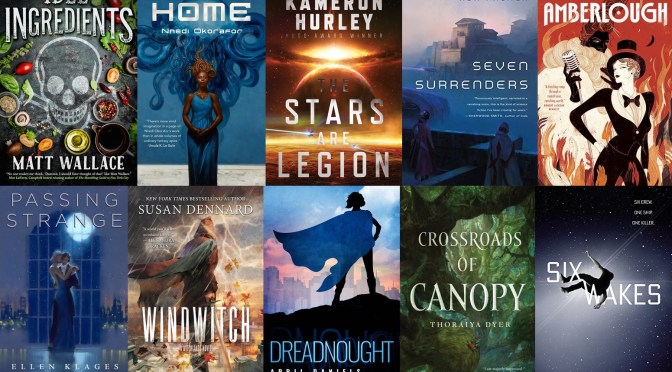
  • Passing Strange by Ellen Klages – January 24
  • Binti: Home by Nnedi Okorafor – January 31
  • Idle Ingredients by Matt Wallace – February 7
  • An Impossible War by Andy Remic – February 14 (This is one I’ll be skipping, but it’s surely a better fit for someone.)
  • Cold Counsel by Chris Sharp – February 21
  • Agents of Dreamland by Caitlin R. Kiernan – February 28
  • Standard Hollywood Depravity by Adam Christopher – March 7
  • Brother’s Ruin by Emma Newman – March 14
  • Chalk by Paul Cornell – March 21

2017-winter-tor

Everything Else
Everything else obviously is the majority of what I’ve got on my TBR list. There are a handful of things here that I’m not 100% sure about, but in order to hit my Goodreads challenge numbers I’ll have to get through most of these. I hope I can, because there’s a ton of great stuff coming out over the next couple of months.

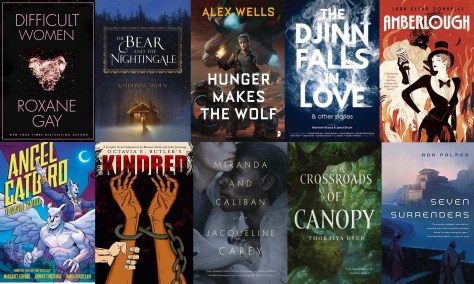
  • Difficult Women by Roxane Gay – January 3
  • Windwitch by Susan Dennard – January 10
  • The Bear and the Nightingale by Katherine Arden – January 10
  • Kindred: A Graphic Novel Adaptation by Octavia E. Butler, John Jennings (Illustrator), Damian Duffy (Adapted by) – January 10
  • Dreadnought by April Daniels – January 24
  • Six Wakes by Mur Lafferty – January 31
  • Crossroads of Canopy by Thoraiya Dyer – January 31
  • Amberlough by Lara Elena Donnelly – February 7
  • The Stars are Legion by Kameron Hurley – February 7
  • Miranda and Caliban by Jacqueline Carey – February 14
  • Angel Catbird Volume 2: To Castle Catula by Margaret Atwood and Johnny Christmas – February 14
  • Seven Surrenders by Ada Palmer – February 21
  • Hunger Makes the Wolf by Alex Wells – March 7
  • The Djinn Falls in Love and Other Stories edited by Mahvesh Murad and Jared Shurin – March 14

2017-winter-novels

What I’m Looking Forward to in 2017: Film

I feel like every year is a lackluster year in film anymore, to be honest, but there are still a few things I’m looking forward to in 2017, just like there were still a few things I enjoyed in 2016. Here’s what’s on my radar right now for the coming year.

Kong: Skull Island – March 3

Kong: Skull Island confuses me because everything about this movie seems way better than I would ever think yet another regressive creature feature deserves. It’s got a good cast (although predictably short on women), amazing looking CGI, and a clever sense of self-awareness that I find appealing. As a longtime lover of creature features, I am intrigued.

Beauty and the Beast – March 17

Beauty and the Beast has never been one of my favorite Disney movies, and this live-action remake is downright aggressively ugly. However, I will probably see it anyway because everyone else will be doing it.

Power Rangers – March 24

I’m a little old for Power Rangers to have been a big part of my childhood, but this looks moderately entertaining. It’s not at the top of my must-see-in-theaters list, but I’ll see it if I have the time and money come late March.

Guardians of the Galaxy Vol. 2 – May 5

I don’t care that much about super heroes, but the first Guardians of the Galaxy movie was a ton of fun. I predict that by May I will definitely be in need of some fun.

Wonder Woman – June 2

I don’t have high hopes for Wonder Woman, to be honest. The trailers and reviews of the other recent DC comics adaptations have been so terrible that I haven’t even bothered with them. Regardless, I do think it’s important to support female-led super hero movies when they come out, few and far between as they are. Hey, maybe I’ll be pleasantly surprised.

Spider-Man: Homecoming – July 7

For all that I say I’m not very much into super heroes, I’ve always had a bit of a soft spot for Spider-Man. Plus, this actually looks genuinely decent, which would be a nice change after multiple troubled adaptation attempts.

Valerian and the City of a Thousand Planets – July 21

This might turn out to be the Jupiter Ascending of 2017, and I’m more than okay with that. I loved Jupiter Ascending. I also loved Luc Besson’s The Fifth Element twenty years ago, and Valerian looks equally stunning. I’m hoping that Rihanna as a shapeshifting alien will make up for the two pouty, pasty-faced leads. Aside from the new Star Wars, this might be my most-anticipated movie of the year.

Blade Runner 2049 – October 6

I hate an unnecessary and redundant sequel/reboot of an iconic film as much as the next person, but Blade Runner 2049 comes out just in time for me to see it on my birthday.

Star Wars Episode VIII – December 15

Obviously.

Annihilation – TBA 2017

There is no trailer or release date yet for Annihilation, based upon Jeff VanderMeer’s novel of the same title, but I expect it to be good and creepy.

What I’m Looking Forward to in 2017: Television

2016 was a weird year for television. While there were a few things I was interested in, some of the shows I liked best from 2015 didn’t have new seasons and the things I was excited about in 2016 didn’t particularly deliver. It’s a new year, though, and I think it’s going to be at least a marginally better one for television. Several of my favorite shows are returning, and there are a handful of new things coming out that I’m really looking forward to.  Here are the things I’m most excited about.

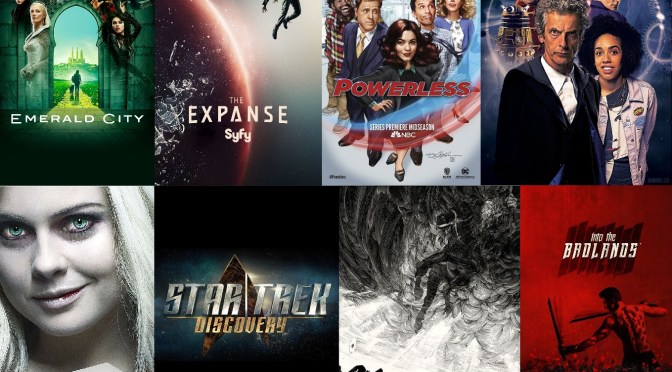
Emerald City – January 6 on NBC

I don’t necessarily think Emerald City is going to be good, but it looks gorgeous (all ten episodes are directed by Tarsem Singh) and I’m shamefully susceptible to dark, gritty reimaginings of well-loved stories.

The Expanse – February 1 on Syfy

The Expanse  is the best sci-fi show since Battlestar Galactica, and it’s coming back in less than a month. I finally got around to reading the second book of the series, Caliban’s War, last month, and it’s only made me much more excited to see how the show adapts it. Also, I finally get why everyone is so excited about Bobbie Draper, and I cannot wait.

Powerless – February 2 on NBC

Listen, I don’t know what the deal is with this show. The concept seems fun, and it’s got a few actors in it that I like, but we’re less than a month from its premiere date and there’s no proper trailer for it. I haven’t seen any teasers or ads or any evidence that NBC is interested in promoting this show at all, and that has me worried. Still, I’m going to tune in on February 2 and give it a chance, even if all this lack of promotion doesn’t seem to bode well for it.

iZombie Season 3 – April 4 on The CW

iZombie is one of my favorite shows of recent years, just in general, and season two ended with a pretty significant game changing event so I can’t wait to see what happens next.

The Handmaid’s Tale – April 26 on Hulu

I’d love it (I’m sure we we all would) if this new adaptation hadn’t turned out to be much more timely than expected, but it’s hard to dampen my enthusiasm for anything Margaret Atwood-related.

Doctor Who Series 10 – April on the BBC

I’m probably less excited about the actual show than I am about this being the final year of Steven Moffat as show runner, but new companion Bill seems cool.

Star Trek: Discovery – May on CBS

Information is still only slowly coming out about this show, but there is no universe in which I’m not over the moon thrilled about a new Star Trek show. This is probably the show I’m most looking forward to in 2017.

Into the Badlands Season 2 – Spring/TBA on AMC

Into the Badlands is the best show of 2015 that didn’t get nearly the amount of attention and praise that it deserved. After taking until halfway through 2016 to even confirm season two, AMC still hasn’t given an exact air date for it. I will literally drop everything to watch this show whenever it appears, though.

American Gods – TBA on Starz

I’m not a huge Neil Gaiman fangirl, but I loved American Gods when I first read it almost fifteen years ago. I’m down for a TV adaptation of it.

The Shannara Chronicles – TBA on MTV

It’s definitely a somewhat unpopular opinion, but I kind of loved The Shannara Chronicles last year. There’s no announced date for it, but I can’t imagine MTV dragging it out til 2018.

Resolutions for 2017

So, last year, I had a huge list of ambitious New Year’s resolutions and ended up accomplishing almost none of them because 2016 was such a garbage year in general and for my partner and me in particular. The last couple of days, I’ve been doing my best to mentally and emotionally unburden myself from all that bullshit, though, and it’s going alright. I’m not going into 2017 with no cares or worries, and I’ve got one last bit of 2016 business (wrapping things up with insurance after a car accident I was in the day before Thanksgiving) that I’m only going to be finished with in another week or two. But compared to how tightly wound and overburdened I was feeling even a week ago, I’m doing pretty well.  However, I’m also determined to not go into 2017 with any very high expectations. My failure to achieve goals and milestones last year was a major part of my latter-half-of-2016 malaise, and I’d hate to go through that a second year in a row.

So this year I’m keeping things simple, thinking smaller, and focusing on reasonably achievable goals that I can revisit and expand upon as the year goes on. Secondarily, I’m concentrating on building new routines and recommitting to routines that have worked well for me in the past. No need to reinvent the wheel, right? I was doing pretty well a couple of years ago. Just gotta get things rolling again.

Reading

  • Last year, I read 108 things that counted as books on Goodreads, when I had a goal of just 72. This year, I expect to read about the same, so I’ve set my Goodreads Challenge goal to 104. Two books a week should be eminently doable.
  • Last year I started with a goal of reading one nonfiction book per month. I totally failed at that, but I still think it’s a reasonable goal if I just plan better, so I’m sticking with it this year with the intention of actually do it.
  • I’ve been happy with the diversity of my reading, for the most part, but I’ve been trying to read more short fiction the last few months. To continue that trend, my third reading goal for 2017 is to read at least one collection of short fiction–a magazine, anthology, or single-author collection–each month. With a couple of Kickstarted projects on their way over the next few months and a subscription to Uncanny‘s Year 3, I don’t think this will be a problem.

Writing

  • In the past, I have struggled to stay caught up on writing about the books that I read. This year, I will be writing about everything immediately and before I start my next book. This should ensure a more steady stream of book content on the blog and prevent any mid-year meltdowns over how behind I’ve fallen.
  • I started last year with the goal of writing at least some fiction every month, and I didn’t. I do have some ideas, though. Instead of a word count or other goal, this year I intend to have just one story written and ready to submit for publication by the end of the year.

Health and Fitness

  • Counting calories. It’s not for everyone, but it was working well for me before I broke my foot, and I appreciate the combination of mindfulness and accountability involved with it. I updated MyFitnessPal today and will be back on track with it starting tomorrow.
  • Drink only water. It’s unbelievable the calories you can unthinkingly consume with sugary drinks. And I’m certain that giving up caffeine will have a positive impact on my sleep patterns and energy level.
  • Yoga. Three days a week.
  • Cardio. At least 30 minutes, five days a week.
  • Walking. 2 miles, five days a week.

Cooking and Food

  • Learn to make my own pasta.
  • Cook with a totally new to me ingredient once per month.
  • Make at least one vegetarian meal each week.

Political

  • Call or write to my legislators weekly. A thankless task for a leftist in suburban Ohio, but it ought to be done.
  • Get involved in local government. Currently looking at opportunities in my town.
  • Hit a Nazi with my purse if I get the chance.

Personal and Miscellany

  • Get a tattoo. I’m about 95% certain of what I’m going to get. Just have to find an artist and get it done.
  • Learn a new skill. I’m thinking knitting, but I haven’t decided yet.