Book Review – Binti: Home by Nnedi Okorafor

I didn’t love Binti when I read it in 2015, in spite of having loved everything else I’d read by Nnedi Okorafor up to that point. It was on the short side for a novella, and I’d recently read Okorafor’s absolutely superb Lagoon, which set the bar high for Binti. There were things I loved about it, but I was definitely in the minority of readers who didn’t consider it one of the top novellas of the year, so I wasn’t sure how I would like Binti: Home. This book is about twice as long as its predecessor and addresses many of the things I considered shortcomings in Binti, though it does end on a particularly unsatisfying near-cliffhanger made even worse by the lack of release date for the planned third book that will complete the series.

The story in Home picks up with Binti and Okwu a year into their studies at Oomza University, and Binti is still struggling to deal with the trauma of her experiences in the first book as well as more generally with the transition to University life. I would have liked to read more about this, but instead the book moves on fairly quickly to Binti’s decision to return home, Okwu in tow, to visit her family and participate in a pilgrimage. There’s something to be said for jumping straight into things, but Binti spent the whole first book getting to university, and it’s somewhat disappointing to see her leaving again so quickly.

That said, part of the reason I struggled to connect with Binti in the first book was because I didn’t think there was a strong enough sense of who she was before she left Earth. In Home, however, we get a much fuller picture of what Binti’s life was like before she decided to go to Oomza. I loved getting to meet her family and friends, and Okorafor does a lovely job of examining how Binti has changed and how the loss of her has affected her community. There is a lot of wonderful exploration of the dynamics of this sort of close-knit family and community and the drama and upheaval caused Binti’s leaving and returning and likely leaving again. After leaving and undergoing so much drastic change and growth away from the other Himba, Binti has to face consequences that she didn’t expect.

I don’t think I realized quite how young Binti was in the first book, which made some things a little weird in this one. I guess because Oomza is a university I perceived Binti as more U.S. college-aged, which seemed backed up by the character’s seeming maturity and independence. In Home, it’s more clear that she’s still a teenager, and what I (in my thirties) would consider a young one. Back within the context of her family and community, Binti feels younger and much less sure of herself, which I found both interesting and frustrating. As happy as I was to see more of Binti with her family on Earth, in some ways her character in Home feels like a significant regression. It’s relatable, sure, to see her revert to some childish behaviors and dynamics with her parents and siblings, but it’s not always altogether enjoyable.

Still, Binti: Home is a significant improvement upon its predecessor. A lot more happens in this volume of Binti’s story, and Binti herself feels much more fully developed in general, even if she does feel very young at times. Okorafor’s themes about identity, home, and family are evergreen ones, and examining them through the story of a Himba girl transplanted across the galaxy and back again bring a freshly fascinating perspective to classic coming of age questions. My only real complaint about Binti: Home is the aforementioned cliffhanger ending. When I finished the last page, I was devastated to realize that was the end and that we don’t know yet when the rest of the story will be out. It needs to be soon.

This review is based upon a free advance copy of the title received from the publisher via NetGalley.

Weekend Links: January 29, 2017

Let’s be real. It’s been a rough week. As things in the U.S. go from bad to worse faster than I even thought they would, it continues to be tough to stay productive or even motivated to write about books and television. Instead, I’ve spent a ton of time on the phone with my dumpster fire of a representative’s office. I’ve signed petitions. I’ve read and spread important news, and I’ve spent a ton of time just sitting in paralyzed silence thinking about how fucked we all are. Finally, yesterday, I just got good and drunk, which helped a little, but I can’t stay drunk forever.

I’m not doing well.

On the bright side, this coming week brings the return of The Expanse, which I’m looking forward to writing about, on Wednesday and Netflix’s Santa Clarita Diet on Friday. I’m not sure if I’ll write about that one or not, but it looks moderately promising. I’m not excited about it, but I’m not excited about much these days. I figure at least it’ll be something to do other than watch the ongoing destruction of America in mute, helpless rage. It turns out watching that video of Richard Spencer getting punched in the face over and over can really only provide so much comfort in these trying times.

I didn’t read that much SFF stuff on the internet this week, mostly because I was glued to real world news instead, but it also seems as if there’s just not the usual volume of long-ish, thoughtful posts that I prefer to read. I suspect that I’m not the only one struggling with productivity and feelings of inadequacy. There were a few good things, though.

Book Riot has a great list of Japanese SF in translation.

Electric Literature posted this cool infographic on how sci-fi influences transportation.

John DeNardo put out Part 3 of his Epic List of SF Books to Look For in 2017 over at Kirkus.

s.e. smith has some good thoughts on gender essentialism and magic.

Mythcreants looked at 6 Unsolved Cases of Missing Women in Spec Fic, and it made me chuckle.

And I’m kind of digging this new Missy Elliot video that surprise dropped the other day:

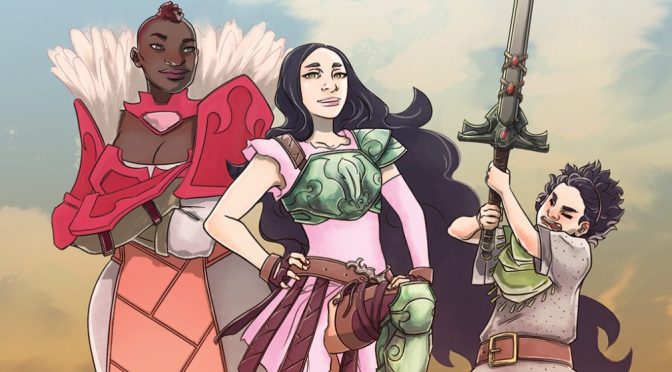
Comic Review: Lady Castle #1

Lady Castle is, for me, the first must-read comic of 2017. I don’t read a ton of comics, to be honest, and I’m pretty choosy about what I spend my time and money on, usually going for limited projects with women writers and artists and steering clear of superhero stuff. I’ve also, in recent years begun avoiding any of the trite ’90s-esque girl power stuff being put out by a certain breed of right on self-identified feminist white dudes, which has sadly left me with a medieval fantasy adventure comic-shaped hole in my life. Long story short, Lady Castle is exactly the comic that I’ve been yearning for over the last several years. It’s perfect and I love it and you should be reading it right now if you haven’t already.

Delilah S. Dawson has been on my to-read list for some time, and this was a great first taste of her work. Lady Castle is smart and funny, with snappy dialogue, but it’s never twee or precious. It’s clever, but straightfowardly so, which works really well to make the book great fun to read, especially in combination with Ashley Woods’ brightly colorful and crisp artwork. I’m not always a huge fan of this style of obviously animation-influenced comic art, but I like it here. Each character is recognizable and distinctive, and the style is a perfect fit for the tone of the story.

Probably my favorite thing about Lady Castle, however, is that it wears its feminism on its sleeve, but without beating the reader over the head with a trite message. The “what if all the men disappeared” set-up isn’t unique or groundbreaking in genre fiction, but the smart, incisive commentary on issues of gender, specifically the difference in governance styles between men and women, is timely and valuable. It’s a great piece of escapist fiction, and I laughed aloud more than once while reading it, but it’s also a book with some smart things to say about important subjects at the perfect time. This is exactly the kind of enjoyable feminist story I want to read to relax and distract myself from the ubiquitous ongoing coverage of U.S. conservatives working to destroy everything good in the world.

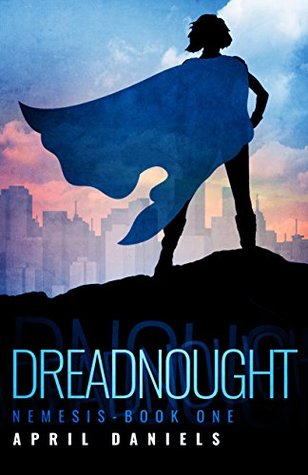
Book Review: Dreadnought by April Daniels

I love that Dreadnought is a thing that exists in the world more than I actually enjoyed reading the book, though I did rather like it. It’s being marketed as great for fans of last year’s The Heroine  Complex and Not Your Sidekick, and both of those were titles that I just never did quite manage to get around to reading, mostly because I’m not super into super hero stories. Like these other books, Dreadnought centers around an unconventional protagonist, in this case a fifteen-year-old closeted trans girl named Danny who has to quickly come to terms with her identity when she is unexpectedly gifted with both superpowers and the body she’s always known she should have. Danny is a smart, plucky, relatable heroine who I expect will be an education for some readers and a much-needed bit of representation for others. Nonetheless, Dreadnought is a book that I read with the constant awareness that it wasn’t for me. Danny’s story of self-discovery and actualization is one that will be compelling for any reader, but I imagine it will resonate most deeply with readers who share more of Danny’s experiences as a trans girl.

Superhero narratives have long dealt with issues surrounding identity and marginalization, and author April Daniels has written a novel firmly in that tradition. Daniels’ geek credentials are on full display here, and it’s obvious that she has a thorough knowledge of genre conventions, which she deploys in a perfectly pitched tale that is both a top notch example of its type and a wholly fresh take on a set of familiar tropes. Dreadnought‘s fairly straightforward hero’s journey structure is a tried and true framework that works well here to provide a foundation upon which Daniels can build a strong, clearly messaged modern superhero story. It’s an excellent example of the value of not reinventing the wheel, and Daniels shows a good instinct for when to utilize common tropes and when to subvert or interrogate them for maximum effect.

I love that there’s no real preamble to Danny’s story. Daniels digs right into things from the first page, with Danny undergoing her transformation almost immediately and being thrust into a vastly changed life by chapter two. The pace of events never does let up, which makes for fast reading. I didn’t make it through Dreadnought in a single reading session, but only because I had other obligations that kept me from it. Each scene in the novel feels necessary and has an easily identifiable purpose, moving along the plot, fleshing out characters, or communicating part of the book’s message. This trimness is a great asset, especially in the YA market where the fashion for some years now has been great sprawling, meandering fantasy stories with indistinct characters and bland ideas. At an economical 276 pages, Dreadnought is a refreshing departure from that trend.

Trans issues take up a lot of page space in Dreadnought, but I still wouldn’t say its a particularly message-heavy title. Danny is a transgender teen, so she’s got a lot of stuff to deal with, but Daniels presents it all matter-of-factly and in a naturalistic enough fashion that most of it feels about the same as reading about any other teen drama. It’s not that Danny’s struggles with parents, friends, doctors, and various associates aren’t specific to her trans-ness; it’s just that these things seldom feel like the point of the book. While Danny’s trans-ness figures largely in the novel and is inextricably bound up with her superhero abilities, being trans is only one part of Danny’s character, and many of the scenarios Danny must deal with as a teen with sudden superpowers are pretty standard stuff for the genre. Sure, she has to deal with some blatant transphobia from her parents and others, and that will no doubt be new to many readers, but a lot of her problems are still just versions of the same banal coming of age crap everyone has to deal with as a teenager trying to figure out their place in the world.

In most ways, Dreadnought is a run of the mill teen power fantasy. It’s always obvious who the villains are in this book, and while it doesn’t flinch away from depicting some darkness, I never felt any real fear that the bad guys were going to win. Even the authorial choice to complicate things by exploring the double-edged nature of super powers as both blessing and curse and the decision to interrogate the whole “with great power comes great responsibility” thing isn’t altogether new or particularly noteworthy. It’s well done, though, and it’s still sadly rare for there to be a book like this written by a trans woman about a trans girl. April Daniels offers a fresh perspective on her topics of choice and has created a great character with whom a disgracefully under-served population will be able to identify. Dreadnought isn’t an exceedingly ambitious novel, but it is a well-written, highly entertaining, and ultimately optimistic origin story of a heroine I look forward to reading more about.

This review is based on a copy of the title received from the publisher via NetGalley.

Book Review: Passing Strange by Ellen Klages

Passing Strange is an absolutely magical story and by far my favorite thing I’ve read so far in 2017. In this gorgeously imagined romance, Ellen Klages brings the queer side of 1940s San Francisco to glittering life and peoples it with characters who are fresh and interesting and yet still feel like the kind of old friends one wants to visit with over and over again. It’s a book that works precisely because of the specificity of its characters and its setting in time and space, and Klages does a great job of balancing the reality of history with the light fantasy elements she introduces over the course of her story. It’s still early in the year, but I fully expect Passing Strange to make a lot of year’s best lists, my own included.

Structurally, Passing Strange is slightly odd, with a lopsided framing story that leads off with an almost too-long sequence in the modern day (or possibly the near future) that introduces an extended flashback and then a final very short coda that wraps up both stories with a clever punchline. While the payoff is totally worth it in the end, it did make for a bit of a slow start to the book, and I was a little disappointed that Helen Young didn’t get more page time in the middle parts, especially when there were other characters introduced who felt much less consequential overall as a consequence of the bookends of Helen’s present day story. The problem, however, is mostly a matter of managing expectations. It’s not that Helen is unimportant after all or that other characters are given too much importance in the narrative. It’s simply that the early focus on Helen kind of leads the reader to think we’re getting more of Helen’s story, and the realization that we’re not takes a while and then doesn’t fully make sense until very late in the book. That said, once I figured out what Klages was doing, I found it easy to appreciate the deliberate way in which she reveals her story.

Passing Strange is less a straightforward love story (though romance figures largely in it) and more a detailed portrait of a specific time and place and an examination of a particular set of experiences, here, the lives of queer women in San Francisco in the 1940s. I love the way Klages introduces her characters once the flashback starts, and the picture she paints of all these interconnected women, their struggles and friendships and the joy they have in spite of often difficult circumstances is vivid and real-feeling. Klages seamlessly weaves together scenes of sweetness with scenes of visceral pain without shying away from depicting the ugliness of the era (which is sadly not always very different from our current one) but without dwelling on darkness. It’s a balancing act that can be hard to manage, and Klages does so superbly, crafting a story that is true to reality but still ultimately optimistic.

If there’s any real complaint to be made about Passing Strange, it’s that the fantasy elements of the story are only slight until the very end, when magic is almost (but not quite) a deus ex machina. It’s hinted at throughout the book that magic is both real and not very uncommon, but there’s only one actual magical event of any significance, and it’s not tied to the other magics that are described elsewhere in the book. Just in general, I would have loved to see all of the various magic and witchery suggested in the story be expanded upon more fully, to be honest. The richness of 1940s San Francisco is a lush backdrop for the story already, but Klages hints at an equally rich world of magic just out of the reader’s sight.

All this said, Passing Strange is still a near-perfect novella. The few complaints I have about it all amount to just wanting more of it. I want more stories about women loving women, and I want them to have grand romances, magical adventures, and happy endings. As delightful as Haskell and Emily and their friends are, they aren’t enough. Passing Strange deserves to be more than a singular work of its type, and if Ellen Klages ever decides to revisit this setting or any of these characters, I’m here for it. If anyone else is writing anything like this I’m looking for it.

This review is based on an advance copy of the book received from the publisher through NetGalley.

Weekend Links: January 22, 2017

So, the inauguration of the runner-up happened. More importantly, however, millions of people around the world, in hundreds of cities and on every continent, came out the day after. I, sadly, didn’t make it to the march in Cincinnati due to car troubles and family obligations, but I have decided that once my car is fixed up this is the last time I miss out on an opportunity to participate in this kind of an event. In the meantime, I spent the week calling my dirtbag congressman’s office every other day this week, for all the good that does (not much, probably), and I’ve continued working on staying busy and productive. I’m doing a shitty job of eating healthy and exercising so far this year, but I’m doing an awesome job at reading books and staying caught up on writing reviews.

This coming week I expect to turn out another three or so book reviews, and I’m also planning on getting started on a series of posts on reading diversely that I’m pretty excited about. I’m also hoping to finally get out to see Hidden Figures, and I’m working on getting caught up on some television watching since the week of February 1 will bring a new season of The Expanse, the beginning of Powerless, and Netflix’s Santa Clarita Diet, all of which I will probably have some things to say about. Frankly, as pumped as I’m feeling about being politically engaged and getting more active in my community, I’m also looking forward to having some work to take my mind off of our new fascist regime and likely impending apocalypse. I hate to fiddle while Rome burns, but it sure beats drowning in impotent rage and overwhelming feelings of general helplessness.

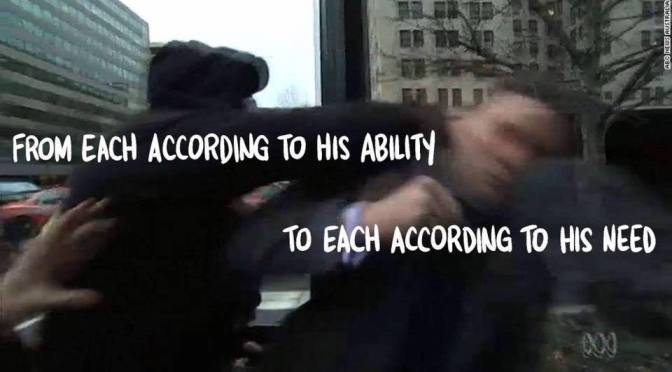
As heartwarming as the Women’s March was to watch yesterday, my favorite moment of the weekend is still actual fucking neo-Nazi Richard Spencer getting punched in the face:

Strange Horizons ran a great roundtable this week On Collective Resistance in fiction and in life.

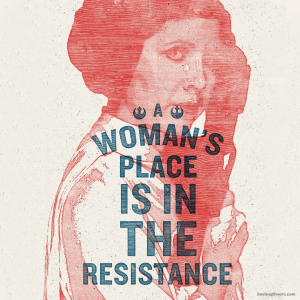
If you need a protest sign for when you join the resistance, Ladies Who Design have got you covered. I suggest this excellent piece:


resist_socialmediaphoto

LitHub has a list of 75 Books for the Next Four Years, for when you’re not out protesting or punching Nazis.

If you finish that, this list of every book Barack Obama recommended during his presidency is pretty awesome.

If you just want to stick to sci-fi and fantasy, John DeNardo continues his 2017 Speculative Fiction Book Lineup over at Kirkus.

I know I’ve been recommending it to everyone for weeks now, but you have got to read the first issue of FIYAHThen you should be sure to read the Camp Fiyah Authors’ Chat.

Mari Ness continues her series on fairy tales over at Tor.com with Challenging Gender Norms: The Brothers Grimm and the Twelve Huntsmen.

It’s simple, but I kind of love this graphic of 15 fairy tales from around the world.

s.e. smith writes about rereading Marion Zimmer Bradley.

Amazon Prime is going to have a six-episode Good Omens mini-series in 2018.

Corrina Lawson at the Barnes & Noble Sci-Fi and Fantasy Blog makes a good case for Recasting Leia Organa. I’ll continue to be devastated either way, but I think this has moved me to Team Recast.

For Edgar Allan Poe’s birthday, Electric Literature collected a bunch of recordings of celebrities reading “The Raven.”

At Apex, this piece on Tecumseh in Science Fiction is fascinating.

Futurefire.net Publishing’s Problem Daughters is still the most exciting crowdfunded project of the year so far, and editor Djibril al-Ayad talked more about it this week over at nerds of a feather.


Book Review: The Fortress at the End of Time by Joe M. McDermott

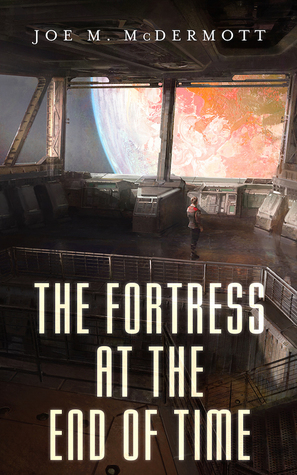
Joe M. McDermott’s The Fortress at the End of Time might be a little bit genius, but I can’t decide if I loved it or hated it. It’s got a great classic sci-fi sensibility if, but I’m generally not one for classics. It’s a novel that, while short, is often boring, but intentionally so and in a way that mostly works if you’re a patient reader. It’s got some big ideas that are worthy of considered exploration, but none that are particularly fresh. It’s solidly written with a distinctive voice and style, but there’s nothing especially exceptional about it. It’s a book that I’m glad to have read because it is a bit outside of my usual fare and a nice change, but I don’t feel compelled to read either more of McDermott’s work or more of this sort of thing in general. It’s not that The Fortress at the End of Time is unremarkable or pedestrian; it’s just a profoundly workmanlike example of its type of thing–thoughtful medium-hard military-ish sci-fi that has something to say about some stuff–if you like this sort of thing. I can easily imagine this being a book that lots of other people love, but I can’t muster any very strong feelings about it, myself.

The story is told in first person from the point of view of one of the most unpleasant characters I’ve had the misfortune to read about in some time. Ronaldo Aldo was raised on Earth and attended a military officers’ school, after which a copy of him (not really a clone, despite what the cover blurb says) is made and stationed on a remote military base at the far end of the galaxy, where he finds himself lonely, bored, and with few opportunities for success or advancement. While the book seems intended to explore the banality of that sort of everyday experience–not everyone can be a Captain Kirk, natch–I found Aldo so unlikable that it was difficult to root for him at all. For me, this is primarily because Ronaldo Aldo is a man who really doesn’t care for women, in spite of being straight and wanting to fuck/possess one (or more) of his own.

The first introduction to Aldo is his attempt to flip a coin with a friend of his over who gets to fuck a woman they are both hanging out with, only to find out that his friend and the woman are already a couple. It speaks to Aldo’s self-centeredness and obliviousness that he didn’t know that the people who are supposed to be his two best friends are in love, and it speaks to Aldo’s deep-seated misogyny that he ever thought it was appropriate to flip a coin for access to a woman’s body. McDermott doesn’t portray this behavior favorably, and I think that it’s intended to make Aldo unlikable from the start as well as set a baseline for his behavior towards women from which we can measure change over the course of the rest of the book.

However, Aldo’s subsequent arc never actually improves his attitudes towards women very much. Throughout the book, Aldo thinks of every woman he meets (and there are few enough of them) in terms of sexual attractiveness, which is consistently gross and off-putting, specifically because there are so few female characters in this book. Aldo’s championing of women at the Citadel feels hollow, and his “romantic” relationships are dysfunctional, with the dysfunction almost entirely on his side. Aldo continues to be slightly obsessed throughout the book with the girl from the very beginning; then he almost immediately becomes infatuated with the beautiful wife of one of the other officers at the Citadel, who he later has an affair with.

Aldo magnanimously gets involved with a young trans woman, but he primarily thinks of her in terms of her beauty and her transness, which is in turns almost fetishized and slightly vilified. Amanda’s transness is suggested to be a ploy to be able to marry a man and thus gain more land on the surface of the planet, and this plays off of some extremely negative tropes about duplicitous trans women who want to “trick” good men into being with them. I’d say that the treatment of this in the book falls in depiction rather than endorsement territory, but I’m not sure it’s handled as well as it could have been. There is quite a lot of time spent on talking about Amanda’s transness, in general but especially about her lack of childbearing ability (Future people can replicate whole people but can’t give a trans woman a uterus yet? Okay.) and there are several times where characters misgender and deadname her in ways that are derogatory and unpleasant to read.

Still, thematically, The Fortress at the End of Time is moderately ambitious, and McDermott does a good job of staying on target with the story he’s trying to tell. There’s not much fat that could have been trimmed here, and the deliberately slow pacing works nicely to highlight McDermott’s theses. The interplay between the planetside monastery and the Citadel could have been given somewhat more page time, but I may only feel that way because I could have done with less of Aldo’s feelings. All in all, though, The Fortress at the End of Time is fine. It’s not great, but it’s good, and sometimes that’s plenty. This isn’t a book that was perfect for me, but if you like this sort of retro-styled sci-fi or if you have a thing for unlikable protagonists and likely unreliable narrators, it’ll be right up your alley.

This review is based on a copy of the title received from the publisher through NetGalley.

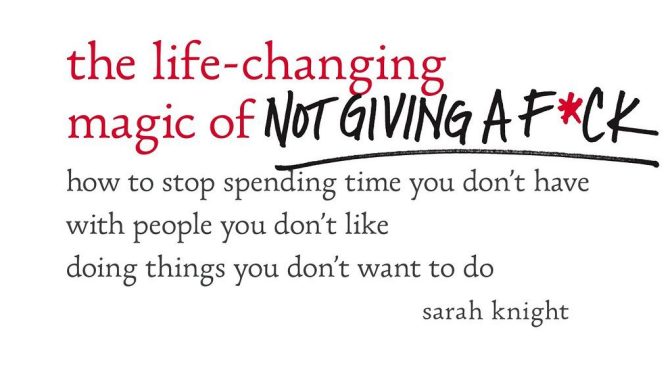
Book Review: The Life-Changing Magic of Not Giving a F*ck by Sarah Knight

So, it’s less than a month into the new year and I have a to-read list a mile long that I’ve already deviated from by reading this. This is exactly why I needed this book, which is all about the type of mental and emotional de-cluttering that I’ve been working on with mixed success for a couple of years now. You could probably also benefit from this book, even if it’s just as a quick-ish afternoon read for a few laughs–though I think most of us could learn at least a couple of things from Sarah Knight’s humorous suggestions for living one’s best life.

The book is well-organized into clearly labeled and defined sections that break things down into manageable chunks, and Knight does a good job of describing a system that can be applied to one’s life in stages. Because this sort of de-cluttering is something I’ve been thinking about and working on for some time, it wasn’t all new information–she’s not exactly reinventing the wheel here–but I found it validating to read something that is supportive of what I’ve been trying to do, and Knight’s systematic approach to things is genuinely useful and helped me realize some of the flaws in my own haphazard way of dealing with life stuff. There is definitely a focus on bourgeois concerns that may be alienating (or at least mildly-to-moderately irritating) to some readers–like, there’s a lot of stuff on weddings and who on earth goes to that many weddings?–but most of Knight’s advice and systems are portable in ways that can be adapted to any lifestyle. The book is also just repetitive enough that if you find your eyes glazing over during another passage about destination bachelorette parties or something, you can–and I learned this from the book!–choose not to give a fuck about it and skip ahead to something more useful to you.

I guess, if you’re religious or just don’t care for repeated usage of the f-word, you could just grab your nearest copy of the prayer for serenity and hope for the best, but there are some great tips here for setting priorities and establishing boundaries that help to maximize your enjoyment of life and minimize stress and resentment. Plus, it is pretty short.

Book Review: Windwitch by Susan Dennard

I read Truthwitch around this time last year and enjoyed it in spite of its flaws, which were, well, many. But it was the start of a new series, and it featured a great friendship between two young women and had an interesting idea for a system of magic. Plus, while my tastes certainly skew towards the literary end of SFF, I appreciate some light reading to break up my routine from time to time. So I was pretty excited about Windwitch after enjoying its predecessor so much. Unfortunately, it turned out to be my biggest reading disappointment in a long while. Windwitch is the absolute worst sort of boring, insipid, YA claptrap I’ve read in years.

In Truthwitch, the story revolved primarily around Safi and Iseult, but Windwitch finds the two girls separated entirely. Obviously, based on the title, readers of the first book could expect Merik to feature largely in this one, and he does, but he is also disconnected from Safi and Iseult so that none of the primary characters from the last book actually interact with each other in any significant way. Instead, they’re shuffled around and paired off with others–Safi with Vaness and then both of them with a group of Hell-Bards, Iseult with Aeduan, and Merik with Cam and then sort of with his sister Vivia (who has been upgraded to a POV role)–but none of these interactions are very compelling, and very little actually happens at all, in spite of the book feeling fast-paced for most of its page count.

Safi and Vaness go on a journey, get captured a couple of times, and have to escape, only to learn that they don’t actually know what they’re doing. Iseult and Aeduan are also going on a journey, but they never get anywhere and then end up learning that they have to do something different from what they thought they were doing for the whole rest of the book. And Merik is trying to do something in Nubrevna but then finds out that he didn’t actually know anything about anything. Which, I guess, is supposed to be the main theme of the book–this whole no one knowing anything–but by the end of the book I found I simply didn’t care. It’s not even that the characters make foolish decisions or that everything feels so contrived and senselessly convoluted. Frankly, it’s all just so boring that I ended up just skimming whole chapters to get through it faster, and don’t think I missed out on anything.

None of this is helped by the fact that major aspects of the Witchlands’ magic system are still not very well-explained. It was only about halfway through this book that I finally decided that I’m just going to understand people who are “Cleaved” to be something like zombies, for example, even though I don’t think it’s at all conclusive from the text that this is the case. The magic of all the various characters continues to feel poorly defined, and the way Dennard uses it in the story is inconsistent. I’m sure that she has rules for how she’s writing the Witchlands magic, but whatever they are they’re basically incomprehensible to the reader. This was true enough in Truthwitch, and I called it forgivable because it was a first book in a new series and I otherwise enjoyed it. I thought that surely some of the fuzzier details of things would come into focus in this second book. They did not.

To add to these problems, none of the relationships or character arcs in Windwitch are at all interesting or entertaining except for Vivia’s and hers is subordinated to her brother Merik’s. Vivia didn’t figure largely in Truthwitch, but here she becomes a POV character with an interesting motivation–she’s trying to run her country while her father is ill, and she’s facing sexism in Nubrevnan society while also struggling with her ongoing grief over her mother’s death and her feelings of rather well-justified resentment toward her brother for the way that he has been given choices, responsibilities, and power that Vivia has had to work hard for. In the whole book, Vivia is the only character who has clearly defined and sensible motivations that are complex enough to generate real interest in her story, but she’s not given much page space and much of it is wasted on her almost obsessive thinking about her unspoken and possibly unrequited romantic feelings for another woman. I love women who love women, and goodness knows we could use more lesbians in fantasy, but this sort of relentless pining with no progression in the relationship is tiresome under normal circumstances. Here, where Vivia is legit dealing with a crisis situation as her country starves while being on the brink of war, her constant thoughts about the object of her affection are just plain intrusive–for Vivia and the reader.

Elsewhere, Iseult and Aeduan’s interactions are a study in what I guess passes for romantic/sexual tension. The difference here is that neither of them seem to have the least bit of self-awareness about their burgeoning attraction. I’m sure all this barely contained wanting to bone is great fuel for shippers and fanfic writers, but again there’s very little forward progress on that front. The revelation that Aeduan shares Nomatsi heritage with Iseult starts off feeling significant, but it never bears any actual fruit in terms of a deeper understanding or fellowship between them. Their physical interactions are too PG to ever be truly sexy, all written with a weirdly puritanical coyness that I found actively unpleasant to read.

They could have been worse, though. They could have been more like the interactions between Merik and his sidekick Cam or between Safi and the hell-bard (and by the way, I don’t think Susan Dennard actually knows what a bard is) Caden. The thing is, while I hate the dull, predictable chemistry between Safi and Caden, and I hate the way that Vaness is allowed to fade into the background of Safi’s POV sections, and I hate Safi’s sort of generalized insouciance and her terrible jokes… I despise Merik and his treatment of Cam.

Cam is a trans boy with what sounds like vitiligo, and he’s clever and brave and loyal and long-suffering. Because Merik is pretty much an asshole to Cam through the whole book about everything. The worst part, however, is just how much time Merik (well, Susan Dennard, really) spends commenting on Cam’s transness. It’s as if Dennard decided to make Merik the mouthpiece for her to work through all her own confused feelings about trans people, and Cam spends most of the book being misgendered inside Merik’s head–until the very end of the book when Merik magnanimously decides that he needs to focus on thinking about Cam with the proper pronouns. It’s not good enough. Cam is obviously trans from the beginning of the book, and Merik’s inability to either understand or accept that for almost four hundred pages doesn’t reflect well on him. It’s only when Merik meets someone who know’s Cam’s original name that things seem to click for Merik, and a ridiculous amount of page space is dedicated to Merik essentially marveling that being trans is a thing.

Being cis myself, I don’t feel qualified to fully unpack all this, but it seems like a particularly ham-handed way of including a trans character. Without any scenes from Cam’s POV, there’s very little insight into how he feels about any of this. The disconnect between the way Merik talks to Cam and the way he thinks about Cam is messed up as well. He’s very particular about calling Cam “boy” throughout the book–which has a weird racial dynamic as well, since Merik codes white and Cam is described as being dark-skinned with lighter patches–but he consistently thinks of Cam as “girl” even though he first knew Cam only as a boy. It’s just a huge mess of a well-meaning (I think) but ultimately insufficient attempt at inclusiveness.

Which is pretty par for the course with this book, which is, overall, a big mess in which almost nothing really works. The things that do work–Vivia’s storyline, Aeduan (though not Aeduan with Iseult)–seem to work almost be accident, not through any particular skill or intention of the author. Honestly, I’m not quite sure anymore what Susan Dennard is trying to do with this series. I might come back for Bloodwitch next year, because I do like Aeduan and am mildly interested to see if anything gets any better, but Windwitch honestly made me question every positive feeling I had about Truthwitch.
Weekend Links: January 15, 2017

Despite this being another week of helplessly spectating the death of US American democracy, I’m, personally, feeling pretty good. I haven’t exercised as much as I’d hoped, and I haven’t eaten as healthy as I’d like, and I’m watching the future of my country be gleefully pissed away by Republicans, but I’ve read quite a bit and been fairly productive, writing three book reviews and accomplishing a ton of research on a series of posts I’m hoping to get out in the next week or two.

We’re still early enough in the year that a lot of what’s being blogged about is still best-of and looking-forward-to posts, so I’ll spare you much of that. The only truly essential reading on that front this week was John DeNardo’s first installment at Kirkus of 225 Speculative Fiction Books to Look Forward to in 2017.

That said, this list of 13 LGBTQ Comics to Look Forward To This Year is pretty exciting as well if comics are your thing. They aren’t usually mine, but I have been getting more interested in them the last couple of years, and a couple of these look like must-reads.

The comic I’m most looking forward to this year, though (aside from new volumes of Saga and Monstress and Bitch Planet, natch), is Ladycastle. It looks delightful.

I’m not at all getting my hopes up, but George R.R. Martin thinks he might get The Winds of Winter out this year.

This Tor.com roundtable on speculative fiction in translation is a must-read.

Nisi Shawl continues her Expanded Course on the History of Black Science Fiction with a look at “The Goophered Grapevine” by Charles W. Chestnutt.

Mari Ness starts what I hope is going to be a long series on the history of fairy tales with a post on Madame d’Aulnoy.

Fantasy Faction wrapped up their series on Gender and Stereotyping in Fantasy with a post on Historical Accuracy.

Yoon Ha Lee wrote about Fruitcake and Gimchi in SPAAACE.

SyFy recapped The Expanse with cats:

Amazon released an English-language trailer for Ronja, The Robber’s Daughter from Studio Ghibli, and it looks magical:

This trailer for Sleight looks excellent:

Finally, there’s a proper trailer for season two of Into the Badlands, which I still consider one of the best and most sadly ignored shows of 2015. I am so stoked for this, you guys: