Movie Review – Star Trek: Beyond

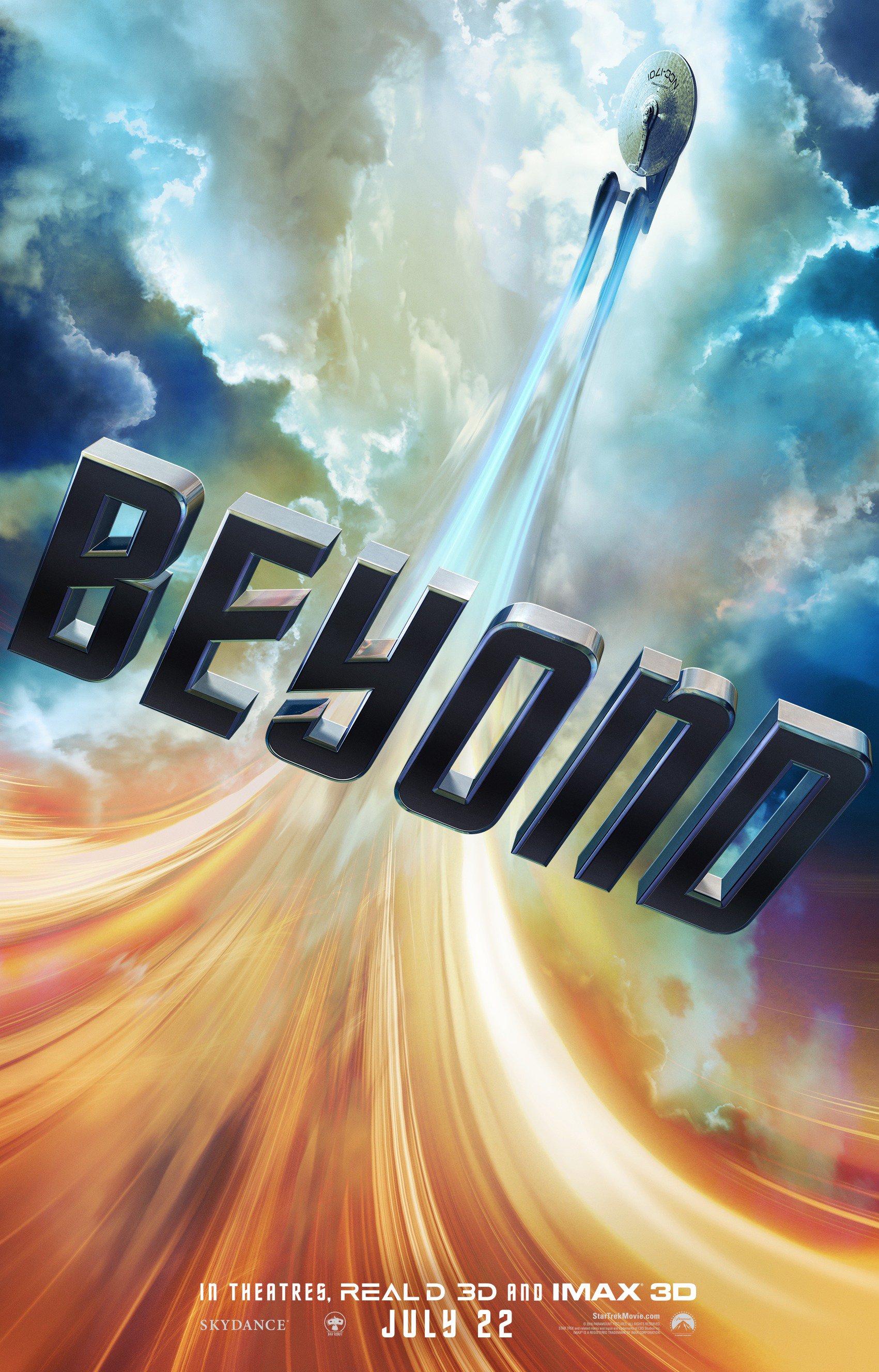
Star Trek: Beyond is an interesting addition to the Star Trek universe. Of the new alternate timeline films, it’s certainly the most Trek-feeling of the bunch, and it’s the best at making use of its ensemble cast. Unfortunately, it’s still just not that great a movie, in spite of being great fun to watch.

Somewhat, but not totally, spoiler-y review ahead.

Beyond opens with the Enterprise already three and a half years into their famous five-year mission, which is somewhat disappointing to begin with. We get to see just the last bit of the crew’s most recent adventure before the movie dives right into James Kirk’s (Chris Pine) existential crisis. Apparently, after several years of being captain of a state-of-the-art spaceship where he’s responsible for a crew of hundreds, he’s now questioning whether he wants to be there at all, and the rest of the movie is basically about how Kirk gets his groove back. While the rest of the cast has a bit more to do in Beyond than in the last two Trek movies, Kirk’s dilemma—which isn’t whether or not to stay in Starfleet, but whether or not to take a promotion to admiral, which it’s frankly unclear how exactly he’s earned—makes up the central emotional arc of the film.

Sure, this is a thin and rather boring basis for getting the audience invested in the story, but it would have been fine if equal attention had been paid to some of the other characters who are also dealing with some life stuff. Spock (Zachary Quinto), in a touching tribute to the late Leonard Nimoy, is dealing with the in-universe death of his mentor, Ambassador Spock, and his relationship with Uhura (Zoe Saldana) is on the rocks, but most of this is explored through Spock’s conversations with McCoy (Karl Urban) and several short shots of Zachary Quinto looking sad. Yes, I cried more than once, because I’m not a monster, but those tears were only partly earned (I really loved Leonard Nimoy, okay?). Spock and Kirk barely interact at all in this film, and their lack of communication could indicate problems in their relationship as well, but their whole inability to be truly emotionally intimate with each other is hand-waved at the end of the film with what feels like a wink to the audience. Kirk and Spock might spend a whole movie with hardly a word to say to each other, and their lack of communication can be explicitly pointed out in conversations with other characters, but really we all know that there could never be any real trouble in that paradise. It’s a missed opportunity to add some depth and nuance to the Kirk/Spock friendship. Instead of examining these ideas further, they instead play the situation almost for laughs.

Much was made in the week or two before the film’s release of the revelation that Hikaru Sulu (John Cho) is gay in the reboot’s alternate universe, but it turns out to be much ado about, well, not nothing, but still not much. Ostensibly, the filmmakers were trying to raise the stakes by having Sulu’s husband and daughter on the Yorktown space station that the Enterprise crew spends most of the movie saving, but the revelation of Sulu’s partner and child happens quickly and without remark. There’s no scene to properly introduce us to Sulu’s family, and between our first sight of them and their reappearance at the end of the movie they are never once mentioned. I suppose the audience ought to be able to infer the personal significance the threat to Yorktown has for Sulu, but he gets a good amount to do in this movie. Would it have killed them to include some line, clichéd as it would be, to the effect of “My family is on that station!”? In a relatively high-paced action flick, it’s easy to lose these kind of subtler character beats in the shuffle of other things going on, and I’d rather have a slightly cliché line to highlight the point than see it get lost as I think Sulu’s story, tertiary as it is, does here.

One relationship that did work well in Beyond was the one between McCoy and Spock, but even that is somewhat overshadowed by the movie’s larger events. Still, there’s real humor and a friendly chemistry on display in the scenes shared by Urban and Quinto. Their adversarial affection is perfectly pitched and cleverly written, and both actors turn in nice performances. I wish the same could be said of Saldana and Cho as the similarly paired-off Uhura and Sulu. While that pair gets to participate in some theoretically important plot material, neither actor seems to really have their heart in it, and Cho’s performance in particular feels at times very wooden. The late Anton Yelchin’s performance as Chekov is little more than workmanlike, but it’s enough for the material he’s given. He’s paired off with Kirk for the parts of the movie that he’s actually visible in, and it’s not bad. It feels as if this movie was written very intentionally to shake up some of the character pairings in order to set it apart from the previous two movies and perhaps to give each character more time to shine, but I’d say this was done with mixed success at best.

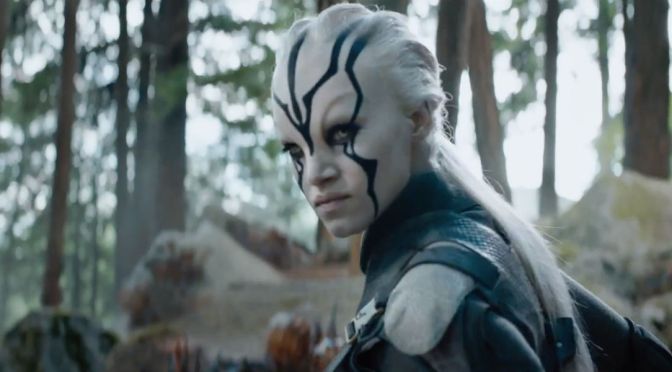
Co-writer Simon Pegg reprises his role as Scotty, and he finds himself paired with relative newcomer Sofia Boutella, who plays the cringeworthily named Jaylah, a young woman trying to escape from the planet the Enterprise crew finds themselves trapped on. I think the intent of all of Jaylah’s scenes with Scotty (and, later, Kirk) is to be sweet, but I found the overall effect to be creepily condescending, and Jaylah to be unusually and selectively naïve and childlike in a way that was consistently unpleasant. She does get a few badass moments, and the struggle to get Jaylah’s crashed ship “house” up and flying sets her up as a sort of engineering savant while also offering some moments of genuine comedy. On the bright side, Jaylah gets something like a character arc as the Enterprise crew hijacks her escape plan and forces her to help them get off the planet and stop the villain, and she even gets a truly happy ending, which was surprising. After the senseless killing of a couple of other new-to-this-installment female characters, I was fully expecting Jaylah to die tragically, so it was a pleasant surprise that by the end of the film her future is actually looking pretty bright.

Let’s talk about this villain, though. I love Idris Elba as much as the next red-blooded woman, but he’s a bit wasted in the role of Krall, who is one of the movie’s biggest problems. It’s not that Elba is a bad actor, and Krall definitely looks the part of a menacing Trek villain, but it’s never really clear exactly what Krall’s motivation is for wanting to commit such an enormous atrocity as killing a space station on the scale of Yorktown. Even when his supposed reasoning is revealed near the end of the movie, it’s not clear what his actual goal is. He’s an old soldier, and he misses war so he thinks a massive act of terrorism is going to turn back the clock on progress? Okay, but that doesn’t actually make much sense, and it doesn’t help that the revelation of Krall’s identity comes seemingly out of nowhere. In hindsight, I think I remember some hints at it throughout the movie, but the pacing is so frantic throughout that the eventual reveal feels blindsiding. It’s obvious that Krall is supposed to work as a sort of foil for Kirk, with both men experiencing doubt, unrest and disillusionment after years in Starfleet, but this isn’t explored enough to make one really care that much about it, and it’s resolved in the same pat fashion as every other conflict of the film.

On a more personal level, though, the biggest problem that I have with Beyond is that, though it does a much better job than the last couple of Trek efforts did at incorporating women characters into the story, women’s representation still kind of sucks. I already mentioned a couple of the issues I had with Jaylah, but to cap it all off she ends up damselled and has to be rescued by Kirk before they leave the planet, after which she is mostly absent until she shows up right at the end to be written out of the narrative. She does get a happy ending, as I stated earlier, but it feels much more like the tying up of a loose end than anything else—so they don’t have a repeat of uncomfortable questions like “Whatever happened to Carol Marcus?” Uhura doesn’t have to be rescued, but I loathe any time when a male character shows up unnecessarily to rescue a woman and it’s called out in the text. It’s not cute or funny, and it’s a simple aversion of the trope that is old and tired enough that it’s become its own trope. It’s 2016, and this is boring and lazy writing.

Also, and this is just sad, for all that Beyond has plenty of women, theoretically doing lots of stuff, it doesn’t pass the Bechdel test. And I get it; the Bechdel test isn’t the be all and end all of measuring the representation of women in film, but it’s honestly kind of impressive just how many women appear in Star Trek: Beyond without any of them actually interacting with each other. I’m not exaggerating when I say that I don’t recall any two female characters exchanging even one word together about anything. Even when Uhura is forced to watch another woman member of the crew get killed, I don’t think they talk to each other. Instead, Uhura only talks with Krall and watches helplessly as he murders the other woman.

This general lack of presence of women in the film is made worse by nearly all of the women characters being completely useless. They get a decent amount of screen time, and they’re all doing things, but none of the things they do seem to actually matter very much. Minor villainess Kalara manages to lure the Enterprise to Altamid, but she’s quickly disposed of. Uhura is desperately working with Sulu to escape their captivity or something, but I’m still not certain I really understand what she actually accomplishes. In the end, all of the captured crew members have to be rescued by Kirk and company. Jaylah has managed to survive alone on Altamid for years, and she’s gotten the radio working in her ship, but it takes Scotty to actually get the thing in the air and off the planet. And, ultimately, Krall is defeated by Kirk in true Trek tradition—in a bout of manly fisticuffs, just two men fighting a symbolic battle between good and evil, chaos and order, civilization and barbarism, progressive values and old hatreds—without a woman in sight.

Here’s the thing, though. I still kind of loved this movie. It was highly enjoyable and had some really excellent action sequences that made me happy to have shelled out for 3D. I was happy to see Shohreh Aghdashloo being typecast as a sci-fi woman of authority; she should be in everything ever, really. I adored the tribute paid to Leonard Nimoy, and I was never bored even when the film was at its most predictable. Of the new Trek films, this one certainly feels the most Trek-like, and that counts for a lot in my book as well. Realistically, I don’t think this (or any of the new Trek movies) will be something I want to watch again anytime soon, but I’m happy to have seen it once, and I recommend it equally for lovers of Star Trek and lovers of high-energy action adventure flicks. And do see it in 3D; Yorktown is worth it.

Movie Review: Ghostbusters (2016)

I loved Ghostbusters.

I rather expected to, to be honest, and I went prepared to enjoy it in spite of its flaws after the trailers for it were so widely criticized and there was so much negativity surrounding its mere existence. Still, when there is so much negativity and outright hatred surrounding a movie, it’s easy to lower one’s expectations.

Ghostbusters is really, really good.

That’s not to say that it’s a flawless film. Some of the humor misses its mark; Chris Hemsworth’s inept receptionist, Kevin, is very one-note; the villain (Neil Casey) is underdeveloped; and there are at least a couple of scenes that seem to have been included literally just because Kate McKinnon is hilarious. I mean, yeah, Kate McKinnon is a riot, but one oughtn’t to let her hijinks take over to the point where they cause pacing problems—and they do, a little. Still, Ghostbusters is exactly what it ought to be: a delightfully funny low-middle brow summer movie whose flaws are far outweighed by its positive aspects, which are practically legion.

By far my favorite thing about Ghostbusters is how it showcases the friendships between its four main characters. It’s refreshingly naturalistic the way these women come into each other’s lives, and it’s great to see a healthy, functional female friend group take center stage in a major summer movie. Kristen Wiig, Melissa McCarthy, Kate McKinnon and Leslie Jones have an easy chemistry together that really sells the evolution of the group as friends and colleagues and makes their interactions a pleasure to watch. Each woman has a distinct role to play, and all of them contribute significantly to the group. Best of all their group dynamic is totally free of anything resembling cattiness or jealousy. Sure, Abby (McCarthy) and Erin (Wiig) have a history that has to be resolved, but Erin and Jillian (McKinnon) are never competitive for Abby’s attention and when new friend Patty (Jones) joins the team she’s accepted quickly and immediately settles into the group as if she’s always been there.

Speaking of Patty, I was very concerned when the first trailer came out that she was going to be a sassy, street smart stereotype. Leslie Jones herself took to Twitter at the time to assure fans that this wasn’t the case, and she was right. Patty Tolan isn’t street smart; she’s book smart, a local historian whose vast knowledge of New York and excellent deductive skills are key to saving the city. That said, criticisms that a black woman is the only non-scientist in the group are reasonable, and while the racial makeup of the cast mirrors that of the original Ghostbusters I’d like to think we can do better than that over thirty years later. If anything, New York City has only gotten more diverse in that time, and with all the ongoing conversations about representation in media—Ghostbusters has itself been at the center of that because of the choice to reboot the franchise with an all-female cast—there are fewer excuses than ever to have a cast as white as this one. Do better, casting directors.

The actual story in Ghostbusters is pretty thin, which is firmly in the tradition of the franchise, but villain Rowan is an interesting choice. For most women and anyone tuned into feminist discourse, Rowan’s misogyny, pathological aggrievement, delusions of grandeur, and his simmering, rage-fueled sense of entitlement will all feel familiar. We have almost all met this man, and if we have we’ve definitely fantasized about how to vanquish him. Ghostbusters taps into that fantasy and provides a pleasant catharsis at the end, in spite of its very silly plot.

Fortunately, what the movie lacks in the storytelling department it more than makes up for in the sheer unadulterated fun department. All four leads fulfill their roles with joy and gusto. Kate McKinnon in particular brings a manic energy to the screen that is downright infectious. Cameos by most of the original cast are for the most part well-integrated, and there are some nicely done visual jokes and references to both the first and second Ghostbusters, though younger children and those unfamiliar with the older films may not catch all of them. While a couple of running gags in the film outstay their welcome, I (and everyone else in the theatre except for maybe one fedora-wearing dude) laughed constantly throughout the nearly two-hour runtime.

Ghostbusters isn’t a cinematic masterpiece by any means—though the special effects are top notch and masterfully walk the line between cartoonish and creepy; be sure to see it in 3D—but it’s a truly excellent summer movie that more than does justice to the original movie and smartly updates the material to entrance a new generation of children with its message that the power of friendship can conquer cynicism and hate. Also, ghosts.

Miscellaneous thoughts:

Charles Dance is an absolute treasure.

I wish they had made better use of the delightful Matt Walsh.

Gertrude the ghost is beautiful.

DO stay through the entire credits.

ghostbusters2016


Weekend Links: July 31, 2016 (Belated)(Very)

I am certain that someday I am going to get my shit together and stay truly caught up on these regular posts, but this past week has not been the week for it for a variety of reasons. I did manage to produce some actual writing in the last week, but the weekend was just awful, productivity-wise. Saturday, we went to Findlay Market for the first time in ages, then hit Ault Park for some Pokemon Go, which my daughter finally downloaded. Yesterday, we ran errands for half the day, then took my daughter and her friend to see the Cincinnati Shakespeare Company perform Macbeth at Washington Park (and play Pokemon). The weather was halfway decent all weekend, and it’s always nice to appreciate the city I’ve lived in all my life, but it was also exhausting and time-consuming. Add to that an unexpected sleepover, watching my sister’s kids today, and like four hours of excruciating burning on my hand from cleaning the peppers I cooked for dinner tonight, and I haven’t accomplished much today aside from some reading. On the bright side, however, this week is looking better going forward. I’ve still got some potentially productivity-killing things going on, but last week’s burst of writing energy was encouraging and I am looking forward to having a week and a half sans all children starting this Thursday during which time I am cautiously optimistic about my ability to get caught up on all kinds of things.

This was a little bit of a slow week in the SFF-related links department, but it was a great week for politics, with Hillary Clinton becoming the official Democratic nominee for President amidst a DNC that was chock full of excellent speeches. Ahead of the convention, Smithsonian recognized the zeitgeist with a great piece on The History of Women Presidents in Film–a history that was much longer and more interesting than I knew before now.

Uncanny Magazine’s Year Three Kickstarter is about halfway done with and less than $120 from their first stretch goal as of this writing. Earlier in the week, Uncanny editors Lynne and Michael were interviewed at Nerds of a Feather to talk about the project.

A new Feminist Frequency video takes on the idea that “women are too hard to animate.”

Autostraddle tells us How to Dress Like Jillian Holtzmann.

NPR looks at the recent-ish trend of serialized fiction.

Entertainment Weekly interviewed director Rachel Talalay of Tank GirlDoctor Who, and Sherlock.

The Barnes & Noble Sci-fi and Fantasy Blog has the announcement of and [impressive] table of contents for Cosmic Powers, an upcoming space opera anthology edited by John Joseph Adams. Seriously, this looks great.

Fireside Fiction released a special report on black spec fic that is required reading for everyone interested in the genre.

Finally, Margaret Atwood is going to be on Midnight in Karachi on August 4th, and Tor.com has some advice on where to start with catching up on her work.

Book Review: A Court of Mist and Fury by Sarah J. Maas

I really liked A Court of Thorns and Roses when I read it last year, so I was looking forward to A Court of Mist and Fury quite a bit. After how neatly ACOTAR seemed to wrap things up, especially with the romance between Feyre and Tamlin, I wasn’t entirely certain where ACOMAF was going to take things, and I was honestly very concerned that it was going to veer into tiresome love triangle territory. I needn’t have worried. ACOMAF wasn’t what I thought it would be, but it was engaging, exciting, and sexy enough that I read it in a single day.
Light spoilers below.

After the events of ACOTAR, Feyre has fallen into a deep depression that Tamlin doesn’t seem to notice or care about, even as the day of their wedding approaches. She ends up rescued from the untenable situation by none other than Rhysand, which I expect most readers will see coming a mile away. However, the rest of the story is much less expected. Though it functions as essentially an “after the fairytale” narrative, ACOMAF for the most part doesn’t rely on tired tropes or worn out gimmicks, and Sarah J. Maas does a great job in this book with Feyre’s character development as Feyre recovers from her harrowing experiences in the first book and finally has the time and space to process her feelings about and examine her relationship with Tamlin. ACOMAF is a book about healing from trauma and disappointment. It’s also a book about finding a space where you can grow to be your best self and fighting for it.

While Feyre’s growth throughout the novel is exceptional, and the development of her relationship with Rhysand is well-executed, most of the other secondary and tertiary characters never manage to fully come to life. While the seeds of ACOMAF Tamlin certainly existed in ACOTAR, the revelation of him as a truly villainous character is somewhat abrupt and borders on straight up character assassination although it’s presented more as a clever plot twist. Surprise! The main love interest from book one is an abusive piece of trash! There is also a whole cast of new characters that Feyre meets at the Night Court, but they are largely interchangeable and barely exist except to further Feyre’s story and development. All this is fine, really, as it’s clear throughout that Feyre is the main character, but still. It wouldn’t hurt for some of the side characters to have a bit more to do in a 600+ page book.

Here’s the thing about this book that makes it kind of great, though. Whereas ACOTAR was a fairly straightforward fairytale retelling, ACOMAF transforms Feyre’s story into something much grander. It’s not quite epic fantasy, but it’s much more than a simple romance. In fact, the trajectory of this series (and Maas’s Throne of Glass series as well) reminds me far more of pulpy boys’ adventure stories and other heroes’ journeys of the 20th century, for all that Maas has a modern sensibility when it comes to characterization of her leading ladies. Feyre’s depth and nuance is at odds, to a certain degree, with her fairly straightforward adventures, but Maas makes it work. Wonderfully.

ACOMAF and its predecessor are probably more firmly in the fledgling New Adult genre, with their frank depictions of sex and more grownup understanding of relationships, but however this series is classified I’m glad it exists at all. It’s not a perfect book, with its heavy focus on its heroine, who can occasionally be tiresomely self-aware, to the exclusion of the other characters, and while Maas tries (in her way) to include some diversity I wouldn’t recommend this title on that score. Some plot developments feel a little too heavily scripted, some feel downright forced, and not everything truly makes good sense. But A Court of Mist and Fury scratches a very particular itch for me and, I expect, for many girls and women who enjoy the same sort of self-aggrandizing, moderately sexy fluff reading. It’s a specific kind of almost-adolescent wish-fulfillment fiction that is seldom done well enough to be more than a mildly embarrassing guilty pleasure.  Sarah J. Maas does it marvelously, and she consistently creates books that I can see myself reading over and over again. Proudly.

All the SDCC Trailers I Care About, Part Three: Television

Most years, SDCC adds a ton of new shows to my watchlist, but this year was mostly recaps of some shows I already watch (like iZombie), recaps and trailers for shows that I don’t watch (The Walking DeadGothamAgents of Shield, etc.), and just a handful of trailers for actual new shows that look good. As with the super hero stuff and movies, these trailers also have a woeful lack of women, with not a single new woman-led show being promoted, which likely accounts for my general apathy towards most of this year’s offerings. Still, there are a couple of shows coming up that I’m looking forward to, even if none of them are quite what I really want to see.

American Gods

American Gods looks amazing, you guys. Ricky Whittle is perfectly cast as Shadow, and the rest of the supporting cast is also excellent. I’m a little disappointed/concerned that there’s been no casting news for Sam Black Crow, who figures much larger in the narrative than Bilquis or Easter or the Djinn–all of whom have already been cast–but I’m hoping they’re just saving her as a surprise for when the show finally airs next year.

Star Trek: Discovery

It’s not much, but I’m glad we got something Trek-related. I’m super stoked about this show, and I can’t wait to see the new crew and have some idea of the plot. I’ve always love DS9 best of the shows, though, so I’m slightly skeptical of this being another ship series. Those always struggled with getting preachy and feeling very after-school-special-y or just with being too episodic without a strong overarching story. That said, it’s not 1995, and I have a lot of hope that this new show is going to reflect the best of some of the newer trends in TV storytelling.

Dirk Gently’s Holistic Detective Agency

Dirk Gently’s Holistic Detective Agency is among the Douglas Adams books that I haven’t ever gotten around to reading, though I am vaguely familiar with the concept of it, so this show wasn’t even on my radar before SDCC, to be honest. In a largely lackluster year for new shows, this one stands out as a quirky adaptation of a work by one of the great humorists of the genre, and it looks hugely entertaining if you enjoy madcap adventures (which I do).

The Exorcist

On the one hand, I’m not sure why anyone thought The Exorcist needed to be revisited. On the other hand, Geena Davis.

The Rocky Horror Picture Show

I am unabashedly excited for this, just like I have been about most of the recent spate of TV productions of musicals. Laverne Cox looks amazing, and Tim Curry is the Criminologist. The inclusion of the audience participation stuff seems iffy, but I like that they’re taking some chances on incorporating some different things into the production so I’ll reserve judgement on it. I’m not expecting great things from this Rocky Horror, but I think it’s going to be fun to watch once.

Lucifer Season Two

There’s not a ton of new footage here, but it’s enough to keep me interested. Season one of Lucifer was inconsistent, to say the least, but I ended up really enjoying the show overall. Tom Ellis often carries the show with just his considerable charisma and excellent good looks, but it’s enough to keep me coming back.

Sherlock Series Four

I generally prefer Elementary to Sherlock, but I’ll watch three or four more episodes of this.

The Expanse Season Two

There are no words for how thrilled I am by The Expanse. It’s the best sci-fi show since Battlestar Galactica in my opinion, and I have every reason to expect season two is going to continue the excellence that characterized the first season of the show. Now I just need them to give us a firm air date for the series so I know how long I have left to get around to reading the second book, Caliban’s War.

(Part One HERE)

(Part Two HERE)

All the SDCC Trailers I Care About, Part Two: Movies

Well, non-super-hero movies, anyway. Well, mostly. I missed Suicide Squad in Part 1, so I’ll put it here.

Sadly, there’s not a whole lot here that’s exciting, though a couple of these look like they’re going to be very watchable trash that’s going to be perfect for late night Netflix-ing in a couple of years. The biggest problem, of course, and the primary factor that keeps me from getting excited about most of these, is the sheer lack of women-led scripts. The only trailer this year to feature a female lead that wasn’t part of an ensemble was Wonder Woman, and it’s more than a little disheartening to see the same trend year after year after year.

Suicide Squad

Suicide Squad ought more properly to have been included in my super hero post, but I just forgot about it entirely, in spite of having thought a lot about it recently as its release date draws nearer. I feel like this movie would be a treasure trove of material to write about here at this blog, and I love Viola Davis. However, Jared Leto’s Joker makes my skin absolutely crawl (which isn’t helped along by his offscreen behavior, either) and I don’t think I can get past the absolutely disgustingness of Margot Robbie’s Harley Quinn. She’s so hyper-sexualized and so infantilized and filmed in such a consistently leering fashion that it makes me furious to even see her.

Fantastic Beasts and Where to Find Them

I’m a little too old to have been interested much in Harry Potter when I was a kid, and I’ve only ever managed to get through the first book as an adult. I quite enjoyed the movies, however, and Fantastic Beasts looks like it’s going to be an interesting addition to the Wizarding world. Unfortunately, the recent furor over J.K. Rowling’s appropriation of Native culture and her erasure of people and history has put a bit of a damper on my enthusiasm for the film. We’ll see, though. Probably my decision on whether or not to see this one will depend on what kind of reviews the movie gets when it actually comes out.

Kong: Skull Island

In the year of our lord 2016. there is a trailer for a brand new King Kong movie, and it actually doesn’t look terrible. It has a far better cast than this sort of thing usually deserves, and it looks entertaining as hell. I figure if nothing else, it’s going to take itself too-seriously enough that it’s going to loop right back around and be hilarious.

Snowden

Speaking of unintentionally hilarious, we’re getting a Snowden movie, because of course we are. Thanks, Oliver Stone.

Blair Witch

Straight from the land of sequels that no one ever wanted or asked for comes Blair Witch, which looks about as good as the original. Interestingly, early reviews have me cautiously optimistic about it, though I’ll definitely wait to watch it at home since I don’t like going to the theater to be scared.

King Arthur: Legend of the Sword

This is hands down my favorite trailer from this year’s SDCC. I don’t get it at all, but I cannot wait to watch it because it’s so bizarre. Roose Bolton and Littlefinger are both in it, and Jude Law is an evil wizard. Charlie Hunnam’s abs make an appearance. Everyone talks like they’re in deleted scenes from Lock, Stock and Two Smoking Barrels. Some kind of giant elephant dragon monster is smashing everything, and there’s a witch and a flying snake thingy. And what is the deal with the costuming? I will almost certainly be there on opening night for this wild ride.

For the Love of Spock

This Kickstarted documentary about the life and influence of Leonard Nimoy isn’t actually a Comic Con trailer, but it did come out last week. Just the trailer had me in tears, and I cannot wait to watch this and have a good long cry about it.

All the SDCC Trailers I Care About, Part One: Super Heroes

As always, there are many (so many) trailers from this year’s San Diego Comic Con, and I have things to say about most of them, so I’ll be splitting this into a couple of posts to have room for commentary. First up, superhero stuff!

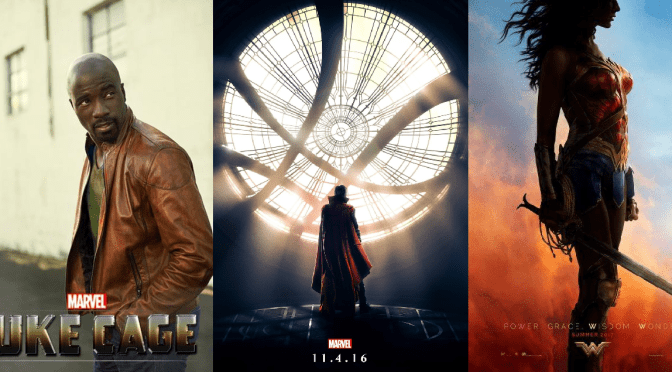
Marvel and Netflix released three trailers at SDCC, for upcoming shows Luke Cage and Iron Fist and a miniseries called The Defenders that will feature, Jessica Jones, Daredevil, Luke Cage and Iron Fist. I was hoping for a season two trailer for Jessica Jones, and I would even have settled for an announcement of another woman-led series, but neither of those things happened. Instead, we just got this trio of mostly-sausage fests.

https://www.youtube.com/watch?v=Ymw5uvViqPU

Of the three, Luke Cage has been the one that I’m most excited about since I already liked Mike Colter in the role on Jessica Jones. However, a trailer with literally not a single woman in sight and the repetition of a pretty gross lyric from an Ol’ Dirty Bastard song doesn’t really inspire me to tune in. I’m sure it will be fine, but I’m starting to think it’s not going to be for me.

Finn Jones seems to have kept his disheveled Loras Tyrell look in this first look at Iron Fist. However, I’m more irritated that the first footage we get to see of the show starts with the heavily implied fridging of Danny Rand’s mom. I mean, alright, that’s one way to start a story, but it’s unoriginal as shit.

https://www.youtube.com/watch?v=wBZtM8q2Z1g

This teaser for The Defenders doesn’t actual show any footage and basically just serves to introduce the concept of the show and its planned 2017 release date. I’m guessing late 2017.

Marvel and FX have teamed up for a new super hero television show, Legion, which is about the eponymous mutant and his struggles with mental health.

I guess he’s Charles Xavier’s son or something, but I don’t know that much about X-Men and am not convinced this concept isn’t going to turn out to be extremely problematic. It’s also hard to tell what tone this show is going for. It seems like it’s trying to be funny, but it all looks so grim and monochromatic and seriousness that I couldn’t tell if it was supposed to be humorous. Maybe a couple more trailers as we get closer to the show’s early 2017 air date will convince me to turn in, but right now I’m only mildly curious about it.

Marvel also shared a new trailer for their Doctor Strange movie, which hits theaters on November 4 of this year.

https://www.youtube.com/watch?v=SfOSYgUYjnA

Listen. Doctor Strange looks slick, and make-up and costuming and whatever that scruff is growing on Benedict Cumberbatch’s face have him looking the part, and I love the magic effects–that folding city looks rad–but I just can’t get on board with this film. It’s blatant Orientalism (something I think we’re going to see in Iron Fist as well) is just downright unpleasant to watch, even for just a couple of minutes. I don’t think I want to subject myself to two straight hours of it, even if Chiwetel Ejiofor is in it. Also, can we talk about how awful Tilda Swinton looks? That’s practically straight up yellowface, and I’m very disappointed in her.

DC and Warner Brothers didn’t have nearly so many properties to share this year, but to their credit the ones they did share were much less problematic-seeming than what Marvel had to offer. Both DC trailers, for Wonder Woman and Justice League actually have me cautiously optimistic that I may someday see a DC movie in a theater again.

I do have some mixed feelings about this Justice League trailer, but it looks a good deal less grim than some other Zack Snyder flicks, and I actually laughed a couple of times during this footage. I have thought since I heard the news that Ezra Miller was well-cast as the Flash, and I’m thrilled to see more of Jason Momoa’s Aquaman. However, I get the feeling that Wonder Woman is being demoted to sidekick status, and it’s disappointing to see that she’s the only woman in the movie (at least so far). Justice League looks marginally more fun than Snyder’s other fare, but still not great.

So, I know I’m still salty about the skeevy poster for Wonder Woman, but I just do not get the hype for this movie. Like, sure, I will probably go see it in order to support women-led films or whatever, and it looks pretty good, but there’s no way this movie is going to really deserve all the “This is the superhero movie we’ve been waiting for!” love that I see it getting in feminist-friendly corners of geekdom. The film does appear to have some incredible artistic action sequences that I’m looking forward to seeing on a big screen, though I saw at least one obvious crotch shot of Wonder Woman in the trailer that is kind of disheartening. In any case, I’m sure Wonder Woman will be okay; it may even turn out to be really good, but at this point in my life, after many years of disappointments, I’m keeping my expectations low. I’d rather be pleasantly surprised than let down once again. Also, this is the only woman-led super hero project with a trailer at this year’s con, so that’s depressing.

(Part 2 covers non-super-hero movies plus Suicide Squad HERE)

Blog Update and [Multi-]Weekend Links: July 24, 2016

Well, it’s been another rough couple of weeks here, unfortunately, and my last burst of productivity before the most recent trip to Huntsville turned out to just not be sustainable. The trip itself was a mixed bag. We accomplished a lot of clearing out of my partner’s late mother’s house, and we retrieved the majority of stuff that he was interested in keeping. However, as much as we got done, it wasn’t enough, and there’s still a decent amount of work still to be done as some yet-to-be-decided point in the future–only next time without air conditioning. On the bright side, even though we were a little overly optimistic about our ability to clear things out in a single weekend, we have a better strategy (or at least some ideas for a better strategy) for the next weekend we head down that should make that our last visit to Huntsville for a long time. Also, I finally got to try Dreamland ribs, which I was almost too exhausted to really enjoy but were almost certainly worth the drive all on their own.

The worst part, this time around, has just been the sheer amount of time it’s taken me to recover fully from the trip. Usually I drag for a couple of days after getting home, but honestly this weekend has been the first one since that I’ve actually felt pretty normal. I’m still not completely back up to speed, and I’m horrendously behind on all kinds of things, but I am finally feeling physically and mentally well enough to really dig into getting caught up. I’ve seen Ghostbusters twice and Star Trek: Beyond once already, so there will be reviews of those coming out this week (spoiler alert: I loved them both). While I haven’t been writing the last couple of weeks, I have been reading, so I’ve got plenty of book reviews planned as well.

You may have noticed a change in the look of the blog, which I’m much happier with than what I had going on before even if it is still a work in progress. In addition to the change in looks, I’ve got some ideas for some new regular features here at SF Bluestocking. Most notably, I’m currently trying to work out some kind of system for reproducing something kind of sort of like SF Signal’s link posts. I haven’t completely figured out how to not spend ages on collecting links every day, and I have a feeling that part of the method is going to mean a reduction in scope and/or frequency from what the wonderful folks at SF Signal spoiled us with all these years, but it was such a valuable resource for the community and I’d love to be able to provide some version of that here. That said, I don’t have an exact timetable yet for when I’ll be rolling out this and other changes. My partner and I still have another trip to Huntsville to wrap up (for real and finally) the last bit of his mother’s last affairs, and I’ve still got some other things to do this summer before my daughter (and niece and nephew) head back to school in the fall. Right now, though, my plan is to just roll changes out as I accomplish them, and whatever I don’t finish this summer I expect to make real strides on during September and October.

In the meantime, I’m hoping that things are going to be more normal from here on out in terms of writing and posting. I didn’t get much done this week, but I did catch up on all my internet reading–except for all the news coming out of SDCC, which will merit its own post or two early this week once I get through it all. For right now, here’s about three weeks’ worth of weekend links:

Fandom Following has been posting plenty of postmortem stuff on season six of Game of Thrones, but the part I’ve been most interested in has been their series on Sexism and Season 6.

If you need a lolsob after that, I highly recommend checking out their Season 6 Carol Awards as well.

The David Gemmell Awards shortlist was announced, and voting is open until August 19, 2016.

There’s about a week left to vote for this year’s Hugo Awards, and Joe Sherry has finished reading all of this year’s nominated novellas and novelettes.

The table of contents for The Year’s Best American Science Fiction and Fantasy Stories 2016 was released, and there’s some great stuff there.

Angry Robot Books turned seven, and publisher Marc Gascoigne stopped in at Fantasy Faction to talk about what he’s learned from founding an award-winning publishing house.

At Salon, Ann and Jeff VanderMeer talked about the value of diversity in science fiction.

Clayton Moore interviewed Ann and Jeff VanderMeer at Kirkus, where they talked about their most recent anthology–the wonderfully enormous Big Book of Science Fiction.

Also at Kirkus, a nice Andrew Liptak piece on The Absurd Kurt Vonnegut.

Meanwhile, at the Barnes & Noble Sci-Fi and Fantasy Blog, T.W. O’Brien writes about Vonnegut’s Cat’s Cradle.

Also at the B&N blog, this nice interview with Faith writer Jody Houser. I loved the comic miniseries when I read it, and issue one of the ongoing book just came out this week.

The Book Smugglers’ Trope Anatomy series continued this month with a look at some of the most insidious and unpleasant narratives surrounding fatness.

It looks like Terry Pratchett’s Wee Free Men is going to be a movie, and penned by his daughter Rihanna.

Ghostbusters came out, and Kate McKinnon’s Jillian Holtzman is marvelously, joyously queer–as a salty parabola.

Gillian Anderson shared an amazing picture of young Kate McKinnon dressed as Scully from the X-Files.

Lethe Press now has a Patreon page where you can support their queer and speculative fiction.

The Learned Fangirl talked about The Never-Ending Debate Over Women in Comedy.

At Terrible Minds, S.L. Huang wrote on the subject of manpain.

Margaret Atwood was interviewed at LitHub, where she talked about Donald Trump, witches and flying cats.

Ursula K. LeGuin called on fantasy and sci-fi writers to envision alternatives to capitalism.

Speaking of Ursula LeGuin, Simon & Schuster’s Saga Press announced that they’ll be publishing an Earthsea omnibus in 2018 to celebrate the 50th anniversary of the series.

Mithila Review has a great list of Asian science fiction and fantasy recommendations from some notable writers and editors.

Tor.com kicks off a series on 100 African Writers of SFF with a look at what’s going on in the genre in Nairobi.

At Mary Robinette Kowal’s blog, Sarah Kuhn talks about her favorite bit of her new novel, Heroine Complex.

Finally, Michi Trota also shows up there to talk about Uncanny Magazine‘s recently started Year Three Kickstarter.

If you back the project for just $25, you get a full year’s subscription to Uncanny, but there’s a ton of great rewards at all backer levels.

Movie Review – Warcraft: The Beginning

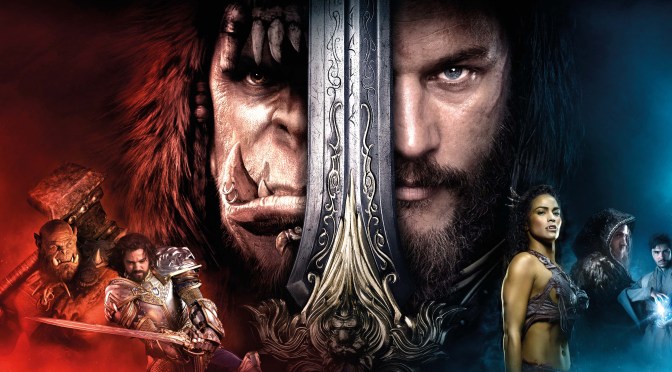
Video game movies are, in general, never good, and Warcraft isn’t, either, if I’m honest. Still, I was pleasantly surprised by it after the numerous very negative reviews it received. It might not be a good movie, in any objective sense of the word, but Warcraft is fun, and it tries hard, tackling its complex source material with an obviously loving respect and attention to detail while also clearly having some thought put into diversity and how to address problems like the lack of women in the story. It’s not perfect, but it’s definitely a movie worth seeing if you like the Warcraft games or if you aren’t too much a snob to enjoy this sort of decidedly middle-brow epic sword and sorcery.

Having only played World of Warcraft, myself, my knowledge of the Warcraft lore adapted for the film is somewhat limited, but from what I can tell, it’s brought to screen more or less faithfully. My partner’s biggest nitpick was that Dalaran isn’t supposed to be floating yet at this point in the story, but the Dalaran scenes were cool-looking enough—and the floating city is iconic enough for WoW players—that I can see why the filmmakers would make that change. The look of the film in general was definitely heavily influenced by WoW, and the orcs in particular looked much the same as they do in the game’s most recent expansion. This is actually true of pretty much everything we see on screen; much of it is lifted straight from the games and simply animated with more polygons. It’s a nice bit of visual continuity to tie the film to the games, but it would have been good to see a little more effort made to give the movie some style of its own as well.

Still, I was prepared for the heavy use of CGI to be completely overwhelming, and it wasn’t at all. Instead, everything looked good, not realistic, but enjoyably fantastical, and the magic effects in particular were excellently conceived and delivered. That said, I’d recommend skipping 3D. There’s plenty of scenery porn (Stormwind!) and some really lovely shots as Anduin Lothar rides around on his griffon, but the 3D never did feel fully immersive, and I can’t say that it added much to the viewing experience. At any rate, whatever the filmmakers thought 3D would add, it wasn’t important enough for the movie to be shot in real 3D, and it shows. It’s not terrible to look at, but you’re better off saving the extra $3-5 you’d spend for glasses.

From a storytelling perspective, the film is clearly overstuffed as it tries to squeeze two games’ worth of story into a movie of watchable length. At 123 minutes, I’d say this is done with mixed success. Another half hour of runtime would have given the story a little more space to breathe and wouldn’t have been too long. If the reportedly godawful Batman v Superman is allowed to drag on for 151 minutes, surely Warcraft could have gotten a little more time to round out its character arcs in a more satisfying fashion. Nearly every problem I have with Warcraft, from its sometimes odd tonal shifts to its clunky exposition to its far-too-rushed character work, could have been solved with just a few more minutes of movie. For all that I’ve seen Warcraft called bloated, I think it would be better described as just bursting at the seams. It’s not so much that there’s too much story; it’s that it’s stuffed into far too small a container.

Sadly, this is most evident when it comes to the treatment of the movie’s female characters. Poor Draka, charming as the very sweet opening scene of the movie is, exists only to give birth and die tragically. The always luminous Ruth Negga is utterly wasted as Queen Taria, whose name I had to google and who has little to do aside from standing around looking beautiful, though she does have a conversation with Garona that gives the movie a Bechdel test pass. Garona’s story is handled in a way that is, frankly, baffling. She’s by far the most developed of the female characters, but much of what passes as character development and arc for Garona happens in a sort of shorthand that just… doesn’t work, especially when it comes to her romance with Anduin Lothar and the friendship she’s supposed to have with Llane Wrynn, which diminishes the impact of the movie’s ending unless you’re familiar enough with Warcraft lore to fill in the blanks yourself.

The thing is, though, in spite of these failures you can tell watching the movie that the filmmakers cared about doing right by all of these women. They aren’t always successful, and sometimes fail entirely, but there’s a mindfulness in the execution of their stories that is refreshing, was even pleasantly surprising for me as I went into the film knowing that Warcraft is basically a complete sausage fest until much later in the game.

Yes, Draka literally exists to give birth and die to save her infant (who Warcraft fans will know is Thrall), but real effort is made to show us something of who Draka is and to make the viewer care about this woman for her own sake. She has a personality—she’s fierce, loyal, and loving, with a nice sense of humor—and her death is legitimately sad, and while we aren’t given much time to mourn her, we also aren’t forced to experience the loss of Draka through the eyes of a male character. Instead, we’re totally denied the reaction of her husband, Durotan, which encourages the viewer to contemplate Draka’s death without regard to whatever manpain it might have caused in some other film and prevents it from being a fridging.

Sure, Queen Taria doesn’t get a lot to do, but the fact that she’s present at all is kind of an achievement after the better part of two decades of Kings of Stormwind having no wives (or mothers) at all. I wasn’t expecting this movie to pass the Bechdel test at all, and Taria’s conversation with Garona is small, but important. Also, it’s worth pointing out that women of color don’t often get cast in the role of the good, gentle, beautiful queen, so one can even make the argument that casting Ruth Negga is quietly significant all on its own. It’s not exactly revolutionary, but you could say that she doesn’t have to do anything necessarily except exist in a space that is usually reserved for white women.

Paula Patton’s turn as Garona seems to be one of the most polarizing parts of the film, though I have to say that most opinions on her performance seem to be negative. However, I completely disagree with her detractors. It’s not Patton’s performance that is bad, though talking around tusks doesn’t help anything. Rather, most of Garona’s speeches are not very well-scripted, and her arc is harmed more than that of any other character by the missing 30 minutes or so of film. Indeed, it feels, over and over again, as if anytime a scene or line needed to be cut short for time, it’s Garona’s part that is diminished. Basically, Garona obviously ought to be the main protagonist of the film, but instead her role was scaled back to make more room for Khadgar or something. As a result, all of Garona’s relationships with other characters feel half-baked, and when it’s important that we feel something about her—the ending of the movie is seriously some Greek tragedy-level stuff—it’s hard to muster up the appropriate level of emotion.

In the end, though, my biggest complaints about women’s representation in the movie are complaints that I’ve always had about the games, particularly World of Warcraft, as well. First, I will forever hate the extreme sexual dimorphism of the non-human characters. Though Draka is definitely portrayed as tough and powerful, as an orc she’s literally less than half the size of the males of her species, who are just ridiculously massive. I’m sure that some people find the “but that’s how Warcraft orcs have always been” argument persuasive, but this is one major way in which the movie could have set itself apart visually from the games. It’s also fairly easily accomplished, since all of the orcs are CGI characters; the filmmakers aren’t limited by anything but their own imaginations (or lack thereof). Second, and most importantly, however, aside from the three named women I’ve discussed, there are almost no visible women in the movie in spite of the Warcraft world being canonically egalitarian. I think I saw one woman knight (or whatever) in Stormwind, but I can’t recall there being any other orc women aside from Draka. Relatively recent studies have found that women (51% of the population) only make up 17% of the people in crowd scenes in popular films, and Warcraft surely falls well below even that sad threshold. This is especially disappointing in a movie that otherwise shows so many marks of consciousness of gender issues.

The rest of the movie is fine, but much of it doesn’t stand out as particularly good or offensively bad. I had high hopes for Daniel Wu as Gul’dan and Clancy Brown as Blackhand, but neither of them were recognizable in their roles. Dominic Cooper was fine as Llane Wrynn, but the Good King is always one of the most boring characters in any movie. Ben Foster was almost comically inscrutable as Medivh, another character who suffers for lack of screen time. Travis Fimmel tried manfully to give Anduin Lothar some depth and gravitas, but is weighed down by awkward writing; his most important relationships—with Llane and Garona—are sadly shortchanged, and a shoehorned in plot concerning Anduin’s son serves more to distract from the character’s story than enhance it.

Finally, Ben Schnetzer’s Khadgar is a little too dull, too bumbling, and generally lacking in personality to be very likeable. He seems intended to be the character whose perspective—as a young man, as an outsider, as a beginning adventurer of sorts—the audience identifies with, but it’s hard to see this magical wunderkind as someone that I’d want to be. If I had to hazard a guess on that score, though, I’d guess that I (a 33-year-old feminist woman) am not exactly the movie’s target audience. If they really want to appeal to me, they ought to have given me sassy silver fox Khadgar from Warlords of Draenor.

Warcraft isn’t a cinematic masterpiece by any means, but it’s watchable enough that I wouldn’t mind going to see it again sans 3D and I’m looking forward to the DVD release. I’m even hoping that the popularity of the movie in China will help make a sequel or two or three happen. Mostly, though, I’m hoping that there’s going to be some kind of director’s cut made available that addresses some of the issues in the theatrical version. That’s the movie I want to see.

Book Review: Too Like the Lightning by Ada Palmer

Ada Palmer’s Too Like the Lightning is a tremendously, gloriously wonderful book that seems like an obvious contender for all of the genre awards next year. It’s a remarkably original, refreshingly optimistic (but not cloyingly so), and deeply challenging read that demands the reader’s full attention. It’s a novel that is difficult at times, but it’s very much worth taking the time—and it may take quite a while—to work through.

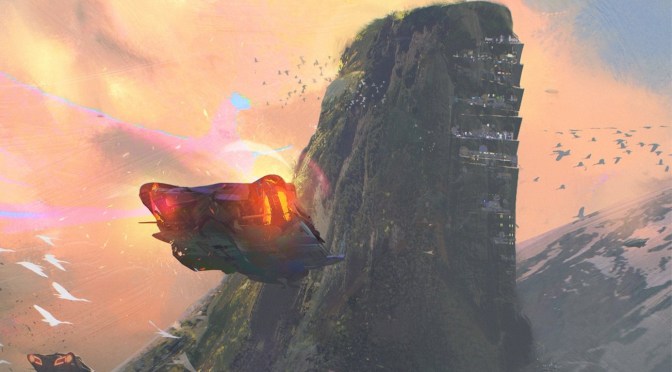
The narrator, Mycroft Canner, is a convict in a utopian future where the world is administered collectively by enormous “hives” of philosophically like-minded people and tied together with a system of flying cars that have made travel faster and safer than ever before. As a convict, Mycroft’s sentence is a life of servitude and enforced poverty; he and others like him are essentially public property, bound in service to the community for life. Too Like the Lightning is the first part (I understand the series is planned as four books) of Mycroft’s account of significant events in the year 2454.

There’s not much to say about the plot that wouldn’t be a spoiler, but suffice it to say that there are several slowly, methodically unfolding mysteries contained in this book. It’s a story that isn’t as complicated as it seems, with much of the book’s seeming complexity owing to Ada Palmer’s intricately humane portrayal of Mycroft Canner as a character rather than to any particular complexity of the plot itself. Some of the novel’s high reading level also comes from the affectation (Palmer’s and Mycroft’s) of telling the story in such an antiquated fashion (in the style of the 18th century from which most of the book’s characters’ philosophies are taken). As a great lover of 18th and 19th century literature and philosophy, this put Too Like the Lightning about a hundred and ten percent right up my alley, but it definitely makes for a novel that may require some googling in order to truly appreciate it if you don’t have the requisite background to “get” it right away.

Where Too Like the Lightning really shines is in the worldbuilding department, and there aren’t even proper words to describe how delightful it is to read something so fresh and different. Certainly, one can see marks of many of the usual genre influencers along with the influences of more literary classics as well as works of philosophy and actual history, but Too Like the Lightning really isn’t quite like anything else I’ve ever read. For one thing, in a sea of modern dystopias that seek to explore all the ways in which theoretical utopias can fail, Palmer’s imagined future stands out for being an actually utopian one, and the book is a sort of look at what makes that kind of utopia tick. From eliminating gendered language to banning public displays of religion to the system of flying cars that are teased on the book’s cover to the reorganization of family life, Palmer has thought of answers for nearly all the world’s problems. Those she hasn’t, she’s been sure to include a group of people—the Utopians—in her book that are dedicated to improving on near-perfection.

Margaret Atwood has said that every utopia has a little dystopia in it, and Too Like the Lightning digs deep into examining this idea, looking for and often directly at some of the underlying ugliness that supports the world its author has dreamed up. Mostly, this is accomplished through the observations of the narrator, Mycroft, who offers a unique perspective on a world that he is decidedly set apart from while still embroiled in the events he’s recounting. Mycroft’s personal history, which is one of the central mysteries of the book, comes into play about two thirds of the way through and in a significant way that forces the reader as well as some of the other characters to wrestle with some big ideas. I won’t say it was entirely unexpected, but it’s a pretty major twist and I love a book that challenges my expectations the way this one did.

All things considered, though—little dystopia or not—the world of Too Like the Lightning is one I wouldn’t mind living in, and I feel privileged to have gotten to spend so much time there with this novel. If there’s one problem with it, it’s only that there’s not enough of it. There is no real resolution to most of the problems and conflicts the book introduces, which makes me think that the ultimate success of it is going to rely on the how well things go with the rest of the series. That said, I have a feeling it’s going to be just fine, and I can’t wait to read Seven Surrenders and find out what happens next.

This review is based on a copy of the book received through NetGalley.