Weekend Links: February 20, 2016

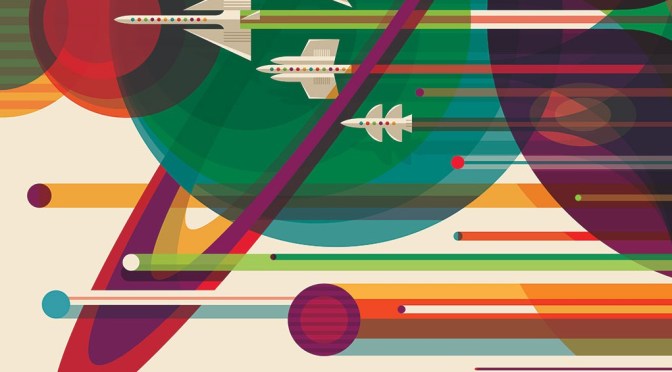
First things first. NASA’s new (FREE!) space travel posters are excellent, and I need them all, very large, to put on every wall of my apartment.

io9 covered the art of Santiago Perez earlier this week, and I wouldn’t mind having prints of that to cover the few square inches of wall space that I can’t cover with space travel posters.

This week’s Fanwankers podcast was all about Game of Thrones and is definitely worth a listen. There’s even a Book Snob Glossary to go along with it if you aren’t familiar with their terminology. I ugly-laughed more than once.

In other news, Ecto Cooler is coming back! Although I don’t think anyone under about thirty cares. My daughter looked at me as if I had two heads when I explained what it was.

Charlie Jane Anders is still promoting All the Birds in the Sky, and she did a Reddit AMA yesterday.

This week saw the release of probably my favorite Tor.com novella to date, Victor LaValle’s The Ballad of Black Tom, and LaValle has been making the rounds to promote the book:

POC Destroy Science Fiction managed to unlock all its stretch goals on Kickstarter, which is exciting. Editors Nalo Hopkinson and Kristine Ong Muslim were interviewed at SF Signal to talk about the project.

Nalo Hopkinson also joined Sunil Patel and Nisi Shawl to talk about POC Destroy SF at Geek’s Guide to the Galaxy this week.

Indrapramit Das has an excellent piece about writing global sci-fi over at Tor.com.

Black Girl Nerds is making the case for (and asking for help with) getting Amazon to give us a Black Sci-Fi, Fantasy, and Horror section.

At Tor.com, Foz Meadows explains that we can’t just adapt SFF books; we have to transform them.

The finalists for the 2015 Aurealis Awards have been decided.

SFWA announced that C.J. Cherryh is their 32nd Damon Knight Grand Master.

Finally, the 2015 Nebula Awards nominee list has been released.

SF Signal has the Nebula list with links to the fiction that can be read for free.

Book Review: Planetfall by Emma Newman

Planetfall is a brilliant portrait of a character and a community both in crises and a meditation on the ways in which the community and the individual are intertwined. It’s a gorgeously realized sci-fi mystery about a secret that festers in the heart of a seeming utopia and threatens to destroy it all.

Renata Ghali followed her dearest friend, Lee Suh-Mi, across the stars to a new planet in search of God, but what they found when they arrived on their new planet was, well, inconclusive. When Suh-Mi disappears, Renata and the rest of their colony have to figure out how to go on without her. Over twenty years later, Suh-Mi’s grandson shows up and starts uncovering the truth that Renata has helped to hide all this time.

Much of the praise I’ve seen for Planetfall has been for its narrator, and I can’t help but concur. Ren is a fascinating character with an unconventional point of view that makes hers a unique perspective to read a story from. She’s an older woman (a youthful seventy or so, in fact), a woman of color, queer, and significantly mentally ill, though the revelation of that last fact sort of creeps up on you as you read her story. The first person present tense narrative provides a nice sense of immediacy and immersion, which becomes increasingly important as the story moves along and Renata’s mental state deteriorates. Over the course of the novel, Ren becomes increasingly anxious and paranoid, then frantic as secrets start to be uncovered. It’s not always an easy thing to read, but it is absolutely riveting.

I only wish that there had been more actual science in Planetfall, although I think that’s more a sign that I’ve been in a mood for harder sci-fi recently than it is a sign that Emma Newman fails the reader in any particular way. Indeed, there are all kinds of interesting ideas on display here, from printing technology to sustainable living and social engineering. This book straddles the worlds of harder sci-fi and more human-focused sci-fi and does both justice, but I would have loved more explanation of how things worked, especially the space travel portion of the colony’s journey, which I felt was very glossed over. Realistically, it doesn’t matter and isn’t really pertinent to the story being told, which is likely why there’s not more detail about the ship and the journey, but I kind of love that stuff.

Finally, I would also have liked to see some of the themes surrounding religion and spirituality in an age of scientific and technological wonders be a little more fully developed. There are all kinds of ideas touched upon regarding the existence of God, the possible ultimate fruitlessness of humanity’s search for God, and even the ways in which faith makes people vulnerable—both to their own bad ideas and to exploitation in service of other people’s bad ideas. Ren is a great protagonist for asking questions and making observations about these things, as she’s a skeptic herself and her disconnectedness from her community makes her often a shrewd observer of people. However, her observations are thoroughly colored by her significant mental illness, making them increasingly unreliable over the course of the book even as more of Ren’s and the colony’s history is revealed, and the rather abrupt ending of the story is somewhat unsatisfying.

All in all, though, Planetfall is a great book. It’s got a lovely, almost meditative pace to it, and it’s an incredible character study of its narrator. As someone who also suffers from depression and anxiety, with a tendency towards reclusiveness, I found Ren incredibly relatable, and I can definitely see this being a book that I will return to in the future.

iZombie: “The Whopper” continues the show’s trend towards generalized excellence

Since returning from the winter break, iZombie has managed to really hit its stride. It’s always been a good show, but the last few weeks it seems to have settled into a comfortably consistent excellence that makes it a joy to watch, but not a whole lot of fun to write about since all I want to do is incoherently and excitedly flail about how much I’m loving the show right now. I haven’t liked iZombie this much since the second half of season one, and it seems to only be getting better.

There’s no Peyton this week, which is a bummer, but there’s really no space for her in this slightly convoluted episode and I’d rather do without her than have her shoehorned in when so much else is going on. Likewise absent are Vaughn and Gilda/Rita, but with so much Blaine and Boss drama happening I didn’t miss Max Rager drama.

Of course, it helps that all of the show’s villains are getting increasingly and more entertainingly intertwined every week. In “The Whopper,” Liv is investigating a murder that has occurred almost at the intersection of all the show’s various villainous schemes. Meanwhile, Blaine’s henchmen have captured Major, who let’s Blaine in on what the “Chaos Killer” is up to, though he doesn’t tell Blaine that he’s working for Vaughn Du Clark. While that’s going on, Stacey Boss is busy promoting Liv’s new boyfriend, Drake, from henchman to hitman.

It’s a solid episode, with a lot of laughs in spite of dealing with some fairly serious material and including a lot of setup for what is being built up to be a major three- or four-way conflict by the end of the season. All the show’s significant players—Liv and company, Blaine, Stacey Boss, Vaughn Du Clark, and the FBI—are getting steadily closer to figuring out how they’re all connected, and it’s obvious that shit is going to get real very soon. The only question is who is going to put all the pieces together first.

I can’t wait.

Miscellaneous thoughts:

  • I loved everything about the scene with the girl they brought in to identify that two-month-old corpse.
  • Blaine’s henchmen are the best. They have such a fun dynamic, and I could watch a whole show just about them.
  • I was glad to see Clive finally point out Liv’s dramatic personality shifts. It’s about time.
  • RIP New Hope.
  • This show has some of the greatest musical choices. That last number was perfect from start to finish.

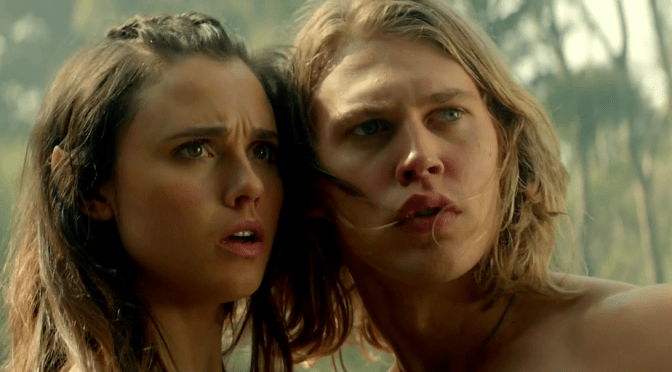
The Shannara Chronicles: “Utopia” is WHAT THE FUCK DID I JUST WATCH?

The Shannara Chronicles is a wild fucking ride, folks. A couple of weeks ago I was ready to ragequit the show. Then last week the show seemed to be improving and getting back on track with the quest to get to Safehold and save the Ellcrys. I knew at least part of “Utopia” would be dedicated to rescuing Eretria, but I didn’t expect it to take the entire episode. And, you guys. I’m not sure I can even put into words what a complete disaster this episode was. There are all kinds of things I expected going into this series, and a few more things got added after I got a good look at the show, but “Utopia” is just mind-blowingly terrible on basically every level.

It starts off more or less how I expected it to, with Eretria being carted off by her evil ex-girlfriend and Wil and Amberle determined to find their friend, although I feel like “friend” is a very generous term for their relationship with the human girl. You know, what with all the subterfuge and thievery and betrayal and stuff. But, okay, they’re friends, and Wil and Amberle are going to find Eretria. But first, they’re going to almost bone, in a very boring and unsexy soft focus scene. Just in case anyone did manage to find Wil and Amberle’s tryst somewhat romantic, it’s interrupted, right when it’s heating up, by the worst possible development: the return of Cephalo.

Listen, I know that there was pretty much no way that Cephalo wasn’t coming back, and I even expected it to be something like this, but it would be nice to be pleasantly surprised once in a while. Sadly, nothing involving Cephalo in this episode is even remotely surprising. Amberle and Wil release him from the troll cage he’s caught in with minimal arguing about it, and Cephalo promptly tries to steal the elfstones again and bails on the party. He doesn’t try to rape anyone, which is good, I suppose, but he is given a completely unearned hero’s death and a touching parting scene where he tells Eretria that she’s “the best thing [he’s] ever done,” because apparently keeping a child as an actual slave and training her to be a thief/murderer and keeping her in line through abuse and by threatening to sell her to your terrifying friends is definitely something to be proud of. I mean, it’s not like Eretria was so desperate for anything resembling safety and love and basic kindness that she fell in with a weird cult this week or anything. Oh, wait. A+ parenting job, Cephalo.

Speaking of the weird cult! So, the elf hunters show up at a weird human settlement that looks less like a fantasy village and more like a hipster farming co-op, and it turns out that’s a pretty accurate description. Somehow, this little village, under the leadership of a guy named Tye, has managed to either save or rediscover quite a lot of pre-apocalypse human technology, everything from anesthetic to electric lights to Star Trek. This makes no sense at all and doesn’t seem to have any thematic purpose. It’s a tempting place for Eretria, but I think that any place where people are nice and she feels secure would be a temptation for her.

The way the citizens of Utopia almost worship the ancient technology is actually creepy, and though this weirdness foreshadows, I guess, the revelation that they sacrifice people to the nearby trolls, it also kind of breaks the fantasy setting. While the world of Shannara was always a post-apocalyptic fantasy world, it wasn’t revealed until much later in the books that it was actually our world, and the reason people didn’t know is because almost nothing survived of it after several thousand years. In the show, they seem to have shortened the timeline, and they’ve certainly been sure to use the detritus of our current world as a backdrop for the fantasy story they’re telling. This has mostly worked, and it’s been a good way for The Shannara Chronicles to set itself apart, visually, from other fantasy worlds. However, it’s definitely a situation where less is more—the dilapidated Space Needle is good for background and world building, but it’s nonsensical to spend most of an episode at a rave on a hipster commune.

It could have been worse, but not by much, and unfortunately this isn’t even so bad it’s good. While I did laugh, often and loudly, at “Utopia,” it was mocking, not mirthful. I will definitely be watching the final two episodes of the season, but I don’t think I’ll be coming back for season two if it happens. I really wanted to like this show, and I think I’ve been a good sport about it and very willing to overlook some of its flaws because it’s nice to look at and a nice break from the darker fantasy fare that is more common these days. “Utopia” is so awful that I want to take back everything nice I ever said about the show, and I’m frankly embarrassed to have defended and recommended it to people.

Whoops.

Miscellaneous thoughts:

  • Apparently Bandon is the next druid.
  • Ander decides that maybe he wants to be King after all.
  • This show should spend less money on cream colored dresses from Anthropologie and more money on making their trolls. Having them dressed in rags and gas masks is lazy and cheap.
  • Why is Eretria’s ex-girlfriend killed? Yeah, she wasn’t a nice person, but that seemed kind of random and unnecessary since she’d already been safely written out of things after she sold Eretria to the hipster cult. She wasn’t even a loose end at that point, so there was no reason to revisit her at all, which makes her death truly gratuitous.

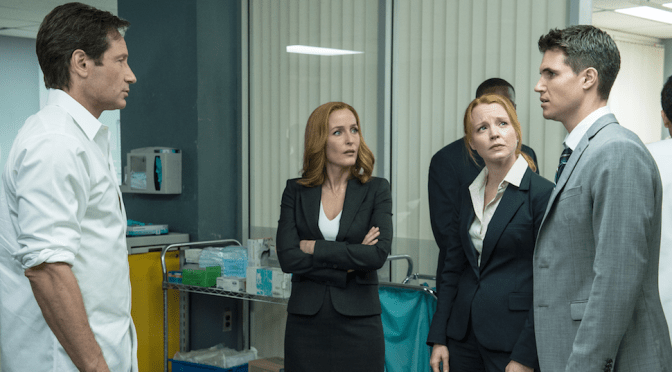
The X-Files: “Babylon” is a confused mess only salvaged by some great Scully/Mulder stuff

“Babylon” almost works, but gets bogged down in its own self-importance. It’s got a message of some kind, about terrorism and faith and the cyclical nature of the universe or something, but it’s senselessly garbled by mixed messaging.

The episode opens with a too-long sequence of a young Muslim man praying, being harassed by rednecks, meeting a friend, and then walking into an art gallery right before the place explodes. We later learn that the two men were suicide bombers who decided to attack the gallery because it was displaying art that they considered sacrilegious. Here’s the thing, though. That revelation feels almost like a betrayal by the time it comes. The first young man, Shiraz, is definitely humanized in the episode’s prologue, and that introduction that heavily suggests to the viewer that we’re about to get a very different story than what is delivered. Furthermore, there’s such a slyness to the way these scenes are filmed that there’s no way this misdirection is unintentional.

Unfortunately, this humanization of Shiraz doesn’t actually work the way I think it’s intended to, even taking into account his mother, Noora’s, insistence that Shiraz never detonated his bomb. Instead, it serves to make the act of terrorism feel even more cold and calculated than if Shiraz had been shown more stereotypically, and it’s not entirely redeemed by the fact that Shiraz is able to mystically—by way of Mulder’s symbolism-laden trip—give the FBI intelligence that helps them root out the rest of the terror cell. In the greater context of the episode, the introductory scenes meant to show us Shiraz as a person turn out to not actually give us very much information about him at all, and in light of his participation in a suicide attack, the veneer of normalcy we’re shown turns out to be very thin.

Even the nods to the hatred and discrimination faced by American Muslims don’t really land properly. The truck full of rednecks mocking Shiraz in the episode opening isn’t specific or unpleasant enough to act as a motive for Shiraz to decide to participate in a suicide bombing. Although many American Muslims deal with that kind of casual hatred and racism daily, it’s shown here as a singular occurrence and not as a very serious event. The idea of anti-Muslim bigotry is supported later in the episode by the ravings of the racist nurse who literally tries to murder Shiraz by turning off his life support, but even this is portrayed more as the aberrant, irrational behavior of an individual rather than a systematic problem that has serious negative impact on the day to day lives of millions of people. Every other character in the episode is shown as at least somewhat sympathetic towards Shiraz—at least recognizing what happened to him as a tragedy—and just genuinely concerned about stopping terrorism, which of course is a laudable goal, but it sets up a self-serving dichotomy where any white viewer who manages to go through life without actively trying to murder or harass Muslims can identify with the “good guys” and feel a little self-righteous about not being one of those bigots who are shown as a minority.

And, frankly, none of this even matters that much, since Shiraz and his terrorist friends aren’t motivated by some high-minded anti-racist ideals. It’s explicitly stated in the episode that this terrorist attack was directly in response to the art gallery displaying sacrilegious art. By removing any guesswork or speculation regarding the terrorists’ motive, the show actually cuts itself off from the avenue it seems to be trying to take by highlighting the unreasonably bigotry of some white Americans as a counterpoint to the unreasonable actions of Shiraz’s terror cell. I get where they were going with these ideas, but the execution is just off, especially when these themes have to share space and time with Mulder and Scully and their respective journeys.

This week, Mulder and Scully are joined by a pair of doppelgangers, Agents Miller and Einstein, who were moderately amusing in scene released in a preview clip last week but who otherwise drag the episode down. Miller is young, handsome, and enthusiastic, but he seems slightly stupid and doesn’t actually have much to do in the episode. Einstein makes more of an impression, but this is mostly because she’s so entirely humorless that it’s actually kind of impressive. While this pair is supposed to be younger versions of Mulder and Scully, I don’t remember Mulder ever being so credulous or Scully ever being so dour. I guess there’s some kind of joke here, but it stopped being funny, or even very entertaining, very early on.

The saving grace of the episode is Mulder and Scully themselves. Looking back on my decades-long love for this show, I have to admit that it’s mostly because of these characters, who are far more memorable than any of the various cases or plots they’ve been involved in. Like the previous nine seasons of The X-Files, Season Ten functions best as a character study, and as with the first four episodes, the best moments of “Babylon” are when Mulder and Scully are together, from Scully’s cheerful “Only the FBI’s most unwanted!” to their final scene of the episode as the hold hands and talk outside the house they once shared. All the years of will-they-or-won’t-they waffling in their relationship has finally matured into a deep, if somewhat ambiguous, intimacy, and their comfort with and love for each other is really beautiful to see. The show might struggle in every other area, but not in this most important one.

Lucifer: “Manly Whatnots” is a string of missed opportunities

We’re now four episodes into Lucifer, and this show just can’t seem to manage anything better than mediocrity. Sure, it’s entertaining, but I can’t help but feel as if every episode so far has missed opportunities for adding some real depth and nuance to the characters and substance to the show. The ridiculously titled “Manly Whatnots” is the most frustrating episode yet on this score.

The case of the week involves the disappearance and supposed murder of a young woman who has gotten involved with a pickup artist guru, which is a great way to get Lucifer involved with a pickup artist guru, which ought to have made for an amazing and thematically resonant episode. Unfortunately, rather than exploring the issues of consent, coercion, abuse, rape and/or stalking this setup perfectly lends itself to, the show decides to play pretty much the whole thing for laughs and only examine a couple of these themes in the shallowest possible fashion. It’s honestly kind of unbelievable just how much the show missed the boat with this one when it should have been an easy slam dunk to tie things together and provide Lucifer with some interesting things to think about regarding his behavior towards Chloe (which is atrocious this week, by the way).

Lucifer’s denseness (the character’s and the show’s, frankly) is incredibly disappointing, and both character and show seem incapable of taking themselves very seriously. Here, the show even goes out of its way to identify the parallels between what Lucifer does and pickup guru Carver’s cult of toxic masculinity and misogynistic exploitation, only to pull all punches at the end of the episode and entirely sidestep any critical examination of Lucifer’s behavior. This might have worked better if the case itself were compelling enough to carry the episode, but there’s really not much going on here and the mystery, well, isn’t much of one.

Furthermore, the reveal of what really happened to Lindsay goes from groan-worthy to cringe-inducing as Lucifer turns on her when he learns about her revenge scheme against Carver, who it turns out was sexually predatory towards Lindsay several years before, wrote about it in his book, and didn’t even remember her name or face, which is why she was able to successfully trick him now. On the one hand, this could be intended to show that Lucifer has a very real character flaw—he believes himself to be the ultimate arbiter of justice and meting out appropriate punishments, but he’s not infallible. Here, even though I tend to agree with him that Carver probably doesn’t deserve to be actually murdered, his fury at Lindsay—who Carver violated and left deeply hurt and damaged by the experience—seems disproportionate. However, this show isn’t that subtle and doesn’t seem capable of handling that sort of nuance. Rather, Lucifer’s anger at Lindsay is portrayed as righteous and works to further elevate him in the narrative as a voice of reason and as the arbiter of justice he seems to see himself as.

It’s a missed opportunity at best and a piece of gross sexism at worst, since Lucifer’s character is established at Lindsay’s expense and to Carver’s benefit—even though Lindsay was treated poorly by the misogynistic Carver and Carver’s reformation is recent, conditional, and selective. He says that he’s fallen in love with Lindsay, but he literally can’t remember her name or face in spite of having taken her virginity. And he continues to profit off of selling his particular brand of aggressive rape culture to other men. So, yeah, sure, he doesn’t deserve to die, but Lindsay and her brother don’t seem to have intended to kill him. They just wanted to extort a ransom from him and break his heart, probably. In any case, the whole saga could have been a much more interesting critique of toxic masculinity and a compelling examination of this facet of Lucifer’s human-ish persona. Instead, it turns into a sort of mealy mouthed morality play that doesn’t have much to say about anything at all.

There are some strides made this week with Chloe’s continued disbelief of Lucifer’s claims about being the Lord of Hell. She’s not quite bought his story yet, but the best scenes of the night were regarding this story, and we learn that perhaps part of the reason Chloe isn’t susceptible to Lucifer’s “charms” is because she doesn’t actually believe in Hell at all, even if she’s not a complete atheist. In another scene, Chloe gets to see the terrible scars on Lucifer’s back where his wings were cut off, and it’s clear that this challenges her understanding, but it’s still not enough to convince her. Unfortunately, Lucifer’s final plan to prove his imperviousness by having her shoot him doesn’t turn out the way he hopes, but we’ll have to wait til next week to find out what happens next.

It’s nice to see the show relying somewhat less on Tom Ellis’s pretty face to carry the whole thing, but even as his charm begins to feel strained and the good humor seems increasingly forced, the writers haven’t managed to inject the show with anything more substantial. This episode totally squanders a promising concept without even scratching the surface of its potential, and with nearly a third of the season gone this doesn’t give me much hope for improvement in the coming weeks.

Miscellaneous thoughts:

  • Who else is totally shipping Maze and Amenadiel after this episode?
  • I’m not sure if Lucifer presenting himself nude to Chloe is just a completely gross act of sexual harassment or if it’s redeemed by the fact that Lucifer is never actually sexually menacing. Also, this is the first time in the show that they’ve managed to have anything even resembling sexual tension between these two characters.
  • Lucifer is a total dick to Dr. Martin this week, and it’s not funny or endearing in any way.

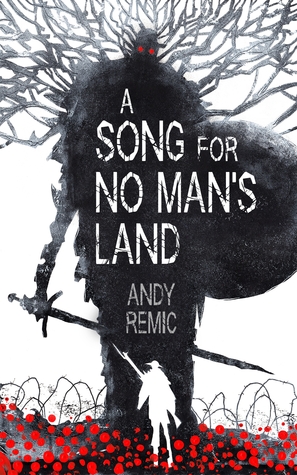
Book Review: A Song for No Man’s Land by Andy Remic

A Song for No Man’s Land is a dull, depressing slog of a novella that never seems to figure out what it wants to say. For all of its short length, it seems to drag on interminably before finally sputtering to a stop right when things seemed to almost start to get interesting. It is the first book in a series of at least three, so perhaps that can be forgiven, but I’m not sure I care enough about Robert Jones to want to come back for more.

The story alternates fairly rhythmically between Robert’s time as a soldier during World War I and his childhood in rural Wales, but neither setting is particularly compelling. Robert’s time in the war is characterized by pretty run-of-the-mill WWI imagery and tropes while the flashbacks to his youth are mostly concerned with introducing the story’s mystical elements. However, the use of Scandinavian mythology (the hulder) seems out of place in a story about a Welshman as well as in a story about WWI. I’m not averse to the idea of forest spirits being upset or angry at the destruction of war (that would be very Princess Mononoke), but it seems an odd choice to co-opt the forest spirits of a neutral country where there was no actual fighting during the war. Alternatively, the forest spirits could be a reference to some similar German creatures, but that still doesn’t explain what they would be doing hanging around in Wales while Robert Jones was a kid.

The other characters introduced never manage to come truly alive, though Bainbridge comes closest. Instead, they’re all simply passing through, and they don’t even seem to have much impact on Robert, much less on the reader. Even Robert’s supposed friend, George, appears abruptly in the final quarter of the book only to come to a senselessly tragic end that left me wondering why he was introduced at all. The only women mentioned are either decidedly subservient figures (mothers, a sister, a nurse) who exist only to coo over or fuck the men in the story—well, mostly just Robert—or they are the demonically horrific Skogsrå that has apparently been menacing Robert Jones since he was a little boy.

The horror elements of A Song for No Man’s Land are sadly underdeveloped. The abovementioned appropriated mythology is made regrettably generic, and the monsters themselves are left largely to the reader’s imagination. I believe that Andy Remic was trying to rely on building a horrific atmosphere and crafting a feeling of terror through language, but his workmanlike prose is just not up to the task. Furthermore, the decision to replace vulgarities with “______” is described in an introductory note as a hat tip to the time of the book’s setting, but it comes off as coy, distracting, and frankly confusing as it’s often not clear what the censored term ought to be. This choice might have made sense if the overall tone of the writing was made to feel antiquated, but in a book that is otherwise modern in its style it just feels like an on the nose anachronism.

One of the reasons I read all of Tor.com’s novellas is because doing so encourages me to read outside my comfort zone and try new things that I wouldn’t normally pick up. Often, this has paid off big time; it’s been nice to discover several new authors to follow, and it’s interesting to read stuff that isn’t my usual cup of tea. Unfortunately, this time it just didn’t work out that way. A Song for No Man’s Land might be a great story for the right reader, but I just couldn’t like it.

Weekend Links: February 13, 2016

This week’s link post is late because I spent a good deal of the day going to a play, Lauren Gunderson‘s The Revolutionists at Cincinnati’s Playhouse in the Park. It’s incredible, and it’s here until March 6, so if you are in or near Cincinnati in the next three weeks, I highly recommend trying to get tickets.

Tomorrow is Valentine’s Day, if that’s a thing you’re into. The Barnes & Noble Sci-Fi and Fantasy Blog has a decent list of 11 Stories of Truly Science Fictional Romance that has more than just the usual suspects on it.

I just discovered Miike Snow’s music video for “Ghengis Khan,” which is a delightful little romance in just four minutes:

If you’re a Parks and Recreation fan, you probably know that February 13th is Galentine’s Day, which makes it a great day to read this Bitch Media post on Rat Queens and the Power of Female Friendship and then check out their whole Alphabet of Graphic Novels by Women.

It’s been a big week over at Women in Science Fiction. They’ve got a new Women in Fantasy Story Bundle available, and a new anthology, Women of Futures Past, that just became available for preorder.

Also available for preorder is Kameron Hurley’s The Stars Are Legion, which just had a cover reveal over at io9.

Tor.com has collected the cover art for all of their spring and summer titles for 2016.

Lightspeed’s POC Destroy SF! Kickstarter has just 6 days left, and they’re still just a little shy of unlocking POC Destroy Fantasy. The Destroy SF project has been excellent from its inception a couple of years ago, and I have every reason to expect this year’s issues will continue that tradition.

Awards season continues to chug along, with shortlists and recommended reading popping up all over.

The British Science Fiction Association posted their shortlist last weekend.

Apex Magazine has a list, with links, of all their award-eligible fiction from 2015.

The Philip K. Dick Awards nominees have been revealed, and you can sign up at their website for a chance to win copies of all of them.

Rocket Stack Rank is a nice resource if you’re looking for short fiction to nominate for this year’s Hugo Awards.

The finalists for the 30th Annual Asimov’s Readers’ Awards can be found listed–with links!–over at SF Signal.

In other free fiction news, there’s a brand spanking new (and quite sharp-looking) site for perusing the works of H.P. Lovecraft.

I’ve been meaning to read some Lois McMaster Bujold for a couple of years now, so I may be putting this “Where to Start with Lois McMaster Bujold’s Vorkosigan Saga” post to good use sometime soonish.

At Ars Technica, Nick Farmer talks about the Belter language he created for SyFy’s The Expanse.

The Book Smugglers have a great guest post from Foz Meadows about her new novella, Coral Bones, and being genderqueer.

It looks like Bryan Fuller is going to be show running CBS’s new Star Trek project.

The Wertzone has a pretty comprehensive list of all the genre adaptations currently in development for film and television.

There are a bunch of new Game of Thrones Pop! Vinyls coming soon, but I only care about Melisandre and Margaery.


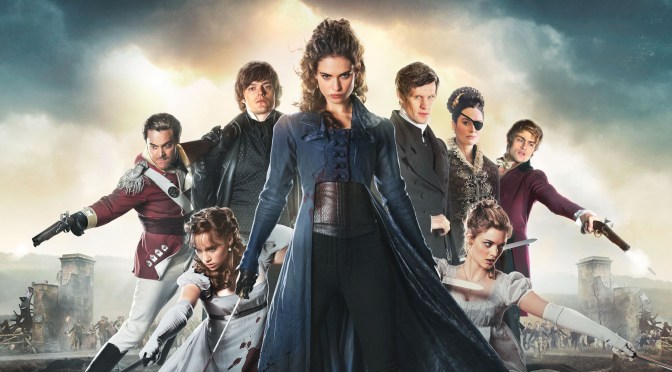
Movie Review: Pride and Prejudice and Zombies

I kind of loved this stupid movie, though I think it’s more for what it could have been than for any of the things it actually was. And unfortunately, one thing Pride and Prejudice and Zombies isn’t is good. It’s not terrible, however, and it is fun, more or less. Mostly, though, P&P&Z is an overstuffed mess of mismatched tropes, frantic pacing, and bizarre tonal shifts as it tries to be far too many things at once.

As a zombie flick, well, this one is sadly hindered by a PG-13 rating. However, P&P&Z still manages to show a surprising amount of halfway decently produced gore. The prologue scene shows us some zombies right away, and I appreciate not having to wait for any big reveal on that score. There are even some interesting ideas here regarding the zombies, and the existence of sentient zombies who don’t eat humans is a potentially compelling concept that is largely squandered by having characters essentially laugh the idea off. The moral dilemma that the sentient zombies should create is pretty much ignored, although there is some kind of hand-waving excuse-making done by vaguely tying the sentient zombies to the four horsemen of the apocalypse, who exist in the narrative for just this singular purpose.

The four horseman are only one of many potentially fascinating mythological ideas that are wasted in this movie. The opening credits detail a lengthy, detailed, and highly entertaining alternate history of an England that colonized the New World and brought back a plague that eventually caused King George to go mad and build a hundred foot wall around the whole city of London. The idea of the zombie disease as a sort of cosmic punishment for the sins of imperialism is reasonably original, and tying that to religion and framing it as the end times with the four horsemen and everything would be plenty good enough to carry a Regency-era zombie film on its own. The zombie cult with their pig brain communion and the conflict between zombie fighters and zombie sympathizers adds an element of moral complexity to the story that deserved to be more fully explored. Unfortunately, there’s just no time here, with such an enormous amount of story to get through.

The reason there’s so much story to get through, of course, is because this zombie movie is also trying to be an adaptation of Pride and Prejudice. The thing is, there’s a reason why the gold standard adaptation of this material is a six-hour mini-series. There’s an enormous amount of story happening in Jane Austen’s novel, and even the 2005 film—which, while a solid adaptation, was widely criticized for omitting parts of the source material—clocks in at twenty-two minutes longer than P&P&Z. With all the zombie material thrown in, P&P&Z moves at a simply blazing pace, and it becomes increasingly convoluted and disjointed as it goes along.

Eventually, it just feels as if the P&P elements are simply strewn throughout the film randomly. Things keep happening that are kind of like the book, but they never seem to mean anything, and even major plot points and emotional beats feel slightly nonsensical. For example, when Lady Catherine (Lena Headey, just making Cersei Lannister faces) comes to confront Elizabeth about her relationship with Darcy, it’s just a thing that occurs that has no real effect even on Elizabeth. Later on, Darcy says something like the “it taught me to hope” line that usually refers to his having learned from Lady Catherine of Elizabeth’s refusal to promise not to marry him, but when he says it here, he’s referring to something completely different.

Similarly, early in the movie, Elizabeth’s Aunt Phillips mentions that they have to plan their trip to the north or whatever, but then the trip—which in the book is a significant event—never happens. Also, Aunt Phillips isn’t even the right aunt—Elizabeth travels to Derbyshire with the Gardiners in the novel. The whole movie just betrays a disrespect for the source material and its fans that is, frankly, infuriating. P&P&Z feels as if it was conceived and written by someone who read the Cliff’s Notes for Pride and Prejudice once, begrudgingly, in ninth grade, and didn’t understand (or care to even try to understand) any of the things that made it a great novel and have turned it into a perennially popular and beloved pop cultural artifact.

I didn’t expect P&P&Z to be a good movie, so I can’t claim to be disappointed upon learning that it isn’t, but I did expect it to deliver a bit more in the fun department than it did. Certainly there’s the enjoyment of watching something with good production values, a great cast, and pretty costumes, but the whole thing was just too gloomy and over-serious to be truly fun. Most of the humor was unintentional, and there was overall too much grit and grime and not enough gore to generate the kind of visceral pleasure a good zombie-killing flick can. P&P&Z contains a lot of the pieces to a marginally acceptable adaptation of Pride and Prejudice, an okay action flick, and dark and morally complex zombie film, but not enough to do any of those things justice.

Miscellaneous thoughts:

  • Darcy’s grave flies were neat, but in a movie that is so overfull of things happening, there’s not really time to appreciate that kind of detail. While they appear more than once, the flies end up being just one of many superfluous flourishes that uses up screen time that could have been better spent on something else.
  • P&P&Z’s action scenes are nicely done, if a bit rushed. I was pleasantly surprised by how well Lily James did as an action heroine, having previously seen her playing waifish princess-y types on Downton Abbey and in Cinderella.
  • On one level, I like the repeated allusions made to a previous Mr. Darcy by having Sam Riley wearing billowy white shirts. Tragically, though, he never does go full Firth for us.
  • They did do a nice job of showing the sisterly relationship between Elizabeth and Jane, and I kind of loved when they got to rescue their men as a sort of bonus on their way to a totally different objective. Too bad about Charlotte, though. Lydia suffers similarly from lack of characterization, and it’s even worse in her case because there’s not much reason to be invested in Jane and Elizabeth’s rescue mission at the end since we haven’t actually gotten to know Lydia well enough to care.
  • I would love to see Matt Smith play Mr. Collins again in a more serious adaptation. I’ve always imagined Collins as a small, slightly weaselly fellow, but Matt Smith’s tall scarecrow of a Collins was a bit of a revelation. It’s only too bad that he was reduced to comic relief in a movie that otherwise took itself far too seriously.
  • I know this all reads like a laundry list of complaints, but I’d be lying if I said I wasn’t going to watch this like twenty-five times when it hits Netflix.
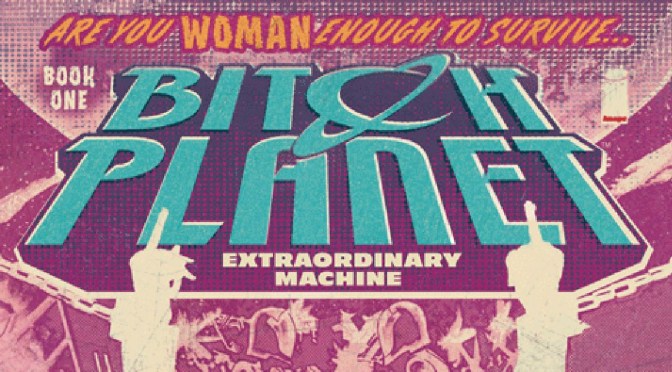
Book Review: Bitch Planet, Volume 1, Extraordinary Machine

I can’t believe I waited so long to read this comic. Like, I’m truly appalled at myself, and now that I’ve read the first five issues, I can’t even remember why I hadn’t been that interested. Bitch Planet is a gorgeously drawn, tightly plotted feminist masterpiece that should be required reading for women everywhere. It’s also brutal and heartwrenching and more than a little uncomfortably close to the truth of many women’s experiences.

The first issue is a shocking bait and switch that sets up the rest of the story, which deals with a group of women judged “non-compliant” and sent to an off-world “Auxiliary Compliance Outpost” colloquially referred to as Bitch Planet. It’s exactly as terrible as it sounds like, and women are imprisoned there for any number of offenses from “wanton obesity” to being a bad mother to murder. It’s as if The Handmaid’s Tale had a comic book baby with a prison exploitation film; as in Margaret Atwood’s classic, the most terrifying part of Bitch Planet is how familiar it feels.

The standout issue of the first arc is definitely #3, which is the first of several issues planned to deal with the story of a single character. This one is about Penny Rolle, and it’s equal parts chilling—with lines like “…see yourself through the fathers’ eyes” and “How long since you prioritized how others see you?”—and empowering. It’s an incredible story of oppression, abuse, and dehumanization—and how a woman can survive those things with her identity and spirit intact. It also does more than any other issue so far to frame non-compliance as active resistance—to be non-compliant is to be victimized by a system that despises women, but it is also a sign of resilience and can be a source of pride.

The only problem that I have with this collection of the first five issues is that it doesn’t include the original comics’ wonderful supplementary materials. Each issue contains essays that complement and expand upon the issue’s themes, and those are further supplemented by letters and, increasingly, photos of folks’ rad NC tattoos. While the comics certainly speak for themselves and can be read and enjoyed just fine without the extra materials, the essays in particular add valuable context and depth to each issue that isn’t made up for by just tacking on a short study guide at the end of the collection. It might be hard to get your hands on the print issues, but digital issues are cheap.