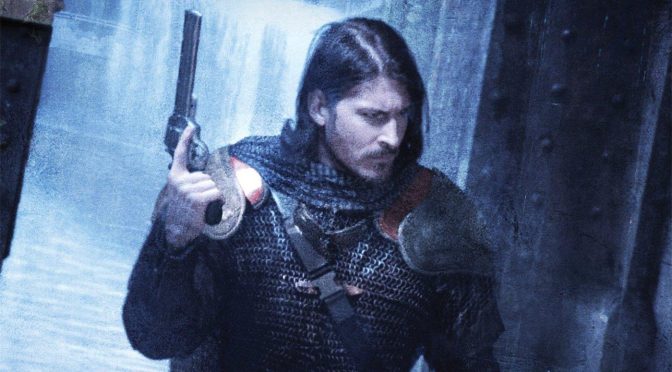
 I didn’t hate Guy Haley’s first Dreaming Cities novella, The Emperor’s Railroad, though it wasn’t one of my favorite reads of the year so far. Nonetheless, I was intrigued enough to read this second installment of the series. The Ghoul King seemed to promise more action and a female character with something to do besides die for male character development, and I was hoping to see Haley dig a little deeper into some of the potentially very cool world building of his post-apocalyptic landscape. Sadly, I found myself disappointed on all counts with this book, and this is another series that I’m very unlikely to continue with.
Here’s the thing about these books: they’re fine. Haley has a handful of neat ideas, and a solid (if a bit hackneyed) premise. Quinn is a perfectly serviceable anti-ish-hero; the angels are theoretically compelling antagonists; and a post-apocalypse full of zombies and robot dragons marauding brigands and petty feudal-esque politics should offer plenty of minor conflicts and quests for an itinerant adventurer. Unfortunately, once you get past the initial observation of “huh, that’s cool,” there’s very little actually happening under the surface. Haley is great at window dressing, and the books’ appeal is helped along by sharp-looking covers, but when I finished both of these books I was just sort of like “is that it?”
Quinn is as inscrutable and laconic as ever in The Ghoul King, but he never manages to be in the least bit likeable or even interesting. Perhaps because of the choice to have the action narrated again from a point of view that isn’t Quinn’s, Quinn remains a bit of a cipher, as the first person narrator is never quite able to connect with him or get to know him on a personal level at all. Once again, Quinn is a sort of cowboy-ish character who rides into town, impresses the locals and rides away with his cloak of mystery intact. He’s a notably old-fashioned construct of stoic masculine heroism that just… isn’t fun to read about at all. Unless that’s your thing, in which case do you, but it’s not much fun for me.
There are a couple of female characters this time around, though only one, Rachel, plays a major role in the action. In fact, she’s the instigator of this novella’s adventure. Unfortunately, she’s also—through sheer ineptitude and ignorance—kind of the story’s main antagonist as well, and Rachel’s search for pre-apocalypse technology doesn’t end well for pretty much anyone. It’s an almost archetypal arc, with Rachel cast as a sort of Eve who lures men on a fruitless quest for knowledge that ends in tragedy and, ultimately, their expulsion from the seat of knowledge and into an uncertain future. On the one hand, there’s something almost mythologically epic going on. On the other hand, it doesn’t seem as if Haley has anything in particular to say with any of the mythology he’s crafting.
Certainly not every story has to be deep and insightful, and there’s something to be said for straightforward, uncomplicated adventure stories, but there still has to be something to engage the reader, make them care about the events they’re reading about, and keep them coming back for more. Without a likeable protagonist or any discernable message, and with the world building stalled out (there’s not much new information revealed in this volume at all, sadly) this series doesn’t do that for me.
This review is based on an advance copy of the book received through NetGalley.
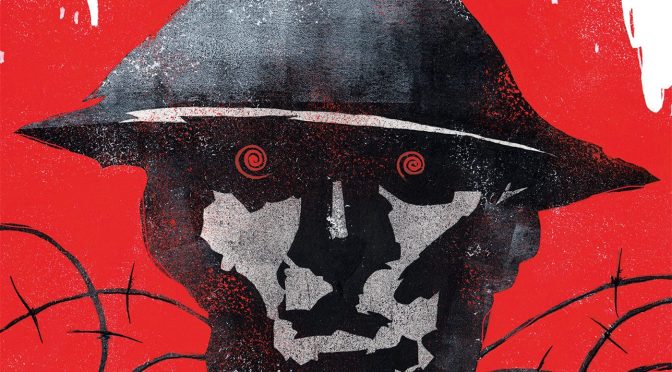
 I won’t be reading anything else by Andy Remic. I didn’t care for most of his first Tor.com novella, A Song for No Man’s Land, but it got interesting right at the end. Unfortunately, Return of Souls doesn’t deliver on what little promise its predecessor held. Instead, it doubles down on everything I didn’t like about the first book in this planned trilogy and adds a heaping dose of blatant misogyny that makes it a deeply unpleasant read.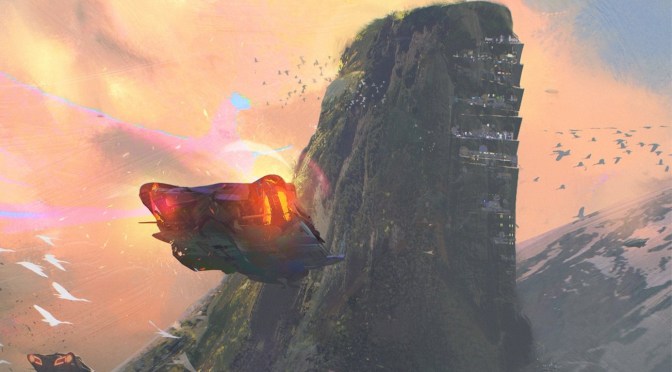
 Ada Palmer’s Too Like the Lightning is a tremendously, gloriously wonderful book that seems like an obvious contender for all of the genre awards next year. It’s a remarkably original, refreshingly optimistic (but not cloyingly so), and deeply challenging read that demands the reader’s full attention. It’s a novel that is difficult at times, but it’s very much worth taking the time—and it may take quite a while—to work through.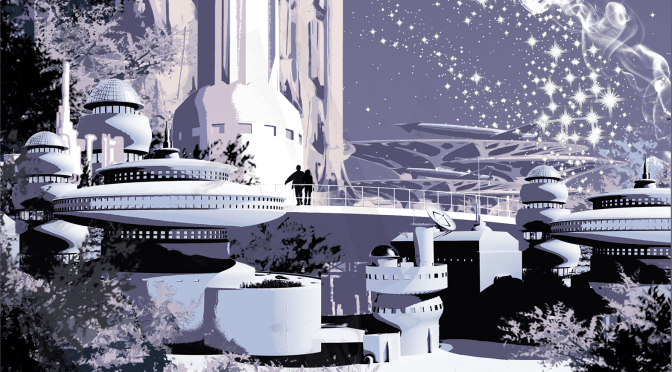
 It would have been useful to know in advance that Central Station is a novel that was cobbled together from a collection of related short stories. While there is much to love about the finished product, it nonetheless has a somewhat disjointed feel to it that makes it somewhat difficult to fully appreciate the novel’s strong points. It’s not incoherent, exactly, just slightly garbled in execution, which is too bad because Central Station is otherwise a gorgeously imagined, smartly written, ambitious work of thoughtful futurism.
 I don’t know if I’ve mentioned this lately, but I love Matt Wallace’s Sin du Jour series so very, very much. Sure, I might have started off feeling a little tepid towards it, but it’s new entries have quickly become some of my most anticipated new releases. They’re only getting better over time, and Pride’s Spell is the best one yet. It’s a smart, action-packed, hilariously absurdist romp and probably the most fun thing you can read this summer.
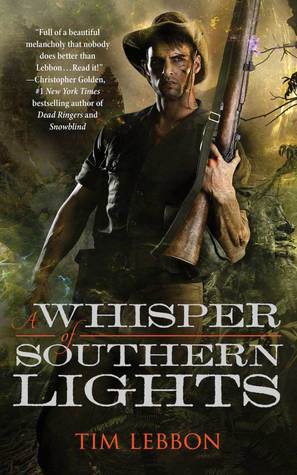 A Whisper of Southern Lights is the second novella I’ve read by Tim Lebbon, and it’s probably the last. I didn’t care much for Pieces of Hate a couple of months ago, or that book’s bonus novelette “Deadman’s Hand,” but I thought I would check this one out nonetheless. Generally Tor.com’s novellas are of good quality, and I thought that perhaps I just needed to give Lebbon’s Assassin Series a second try. Unfortunately, I liked this entry of the series even less than the previous installment.
 Somehow, I’ve never gotten around to reading much by Jane Yolen, so I was excited to see this title pop up on NetGalley prior to its rerelease (with new and striking cover art) as an ebook. Sadly, it was just okay. First published in 1988, Sister Light, Sister Dark has aged fairly well, all things considered, but like many feminist fantasy works of the ‘80s, it tends towards second-wave gender essentialism and a sort of pseudo-pagan sensibility. There’s nothing particularly offensive or terribly problematic about it, really, but it’s a subgenre that has just been done to death and has a definite sameness to similar work that will almost certainly make it feel dated and derivative to modern readers. It’s also a book that has some definite love-it-or-hate-it qualities.
 It’s easy to see why Sylvain Neuvel’s debut novel, Sleeping Giants, is one of the most talked about sci-fi novels of the year. It’s got a gorgeous cover, a great (in very inaccurate) mash-up description (World War Z meets The Martian? Not really.) to sell copies, and it’s compulsively readable from page one. It’s also a book that can be read as seriously or unseriously as you like; on its surface, Sleeping Giants is a blockbuster thriller that (judging from its recently being optioned for film) would be right at home at a movie theater in June, but there’s a good amount of depth to it as well if one cares to look. In short, it’s an excellently written middle brow novel that defies strict genre classification. Between its broad appeal and heavy advance promotion (it’s been on NetGalley since before Christmas, I believe), Sleeping Giants is well-positioned to be one of the most widely read sci-fi novels of 2016. Even better, it’s a novel that deserves to be widely read. Because it’s really, really good.
 The Emperor’s Railroad is an utterly pedestrian story that is only rescued from total mediocrity by some intriguing world building. Unfortunately, Guy Haley’s novella never manages to full utilize the potential of its setting, and the ending leaves the reader with far more questions than answers.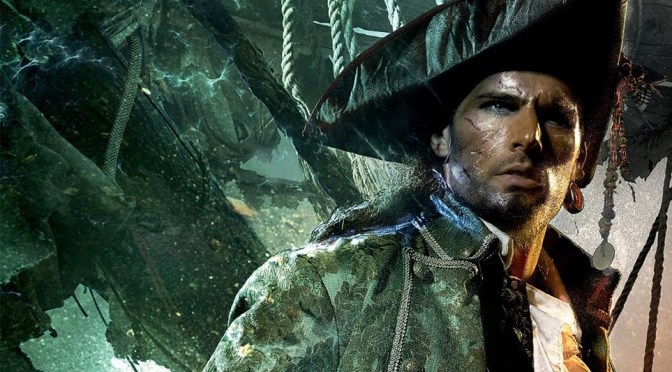
 Pieces of Hate is, technically, an okay book. However, it’s exactly the sort of thing that I normally try to avoid like the plague because I kind of hate it. It’s one of the better examples of its kind of story, but it’s still not my cup of tea. There’s very little that I find more boring than a fridged wife—nameless, even, to add insult to injury—and a manly revenge quest in which the only other women encountered are prostitutes who are (of course) repulsive to the protagonist. It’s a level of casual misogyny (either the author’s or the characters’—it doesn’t matter) that I found alienating from page one.
 SF Bluestocking