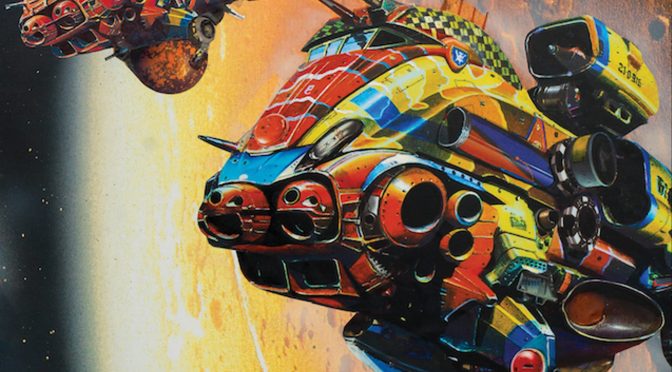
 The new John Joseph Adams-edited anthology, Cosmic Powers, is the first great anthology of the year, jam-packed with smart, entertaining sci-fi adventure stories that bring a nicely modern sensibility to old ideas and tropes. There are several recurring themes throughout the anthology. Religion figures largely in many of these stories, and several of the stories deal with gods or with beings who have amassed nearly godlike power with the aid of time and technology. Artificial intelligences of various kinds make several appearances, as do post-humans of multiple kinds. Examinations of families both biological and found are significant as well, and several stories look at the responsibility of people to each other, personally, and to humanity as a whole; it’s “the personal is political” writ across space and time. It’s a remarkably cohesive collection that nonetheless contains a wonderful variety of stories by a diverse group of authors to offer a well-rounded perspective on the idea of stories that take place on a cosmic scale.
The collection kicks off on a strong note with Charlie Jane Anders’ very clever, very funny adventure story, “A Temporary Embarrassment in Spacetime,” and Tobias S. Buckell’s “Zen and the Art of Starship Maintenance,” which is at least as clever as its predecessor, telling the story of a maintenance robot’s creative circumvention of its own programming. It’s seldom that any anthology starts off with three knock-out stories in a row, but these two are followed up with Becky Chambers’ “The Deckhand, the Nova Blade, and the Thrice-Sung Texts,” a delightful epistolary exploration of the Hero’s Journey from the perspective of an unlikely Chosen One.
The next three stories aren’t as good. Vylar Kaftan’s “The Sighted Watchmaker” is fine, and I’m sure it will be appealing to those who enjoy this kind of thing, but it wasn’t for me. It lost me with the Richard Dawkins epigraph and never quite managed to recapture my interests. I had already read “Infinite Love Engine” by Joseph Allen Hill in a recent issue of Lightspeed, but rereading it didn’t help me “get” it any better than I did the first time. I want to love the sheer weirdness of it, but it verges on a degree of psychedelia that makes it difficult to nail down exactly what the story is about. Still, I expect this is a story that I’ll return to again; I think maybe I just need to read it the right way and it will all make sense. “Unfamiliar Gods” by Adam-Troy Castro, with Judi B. Castro, is a mostly straightforward deal with the devil story, played for laughs and with an absurdist “twist,” but it’s not particularly funny or thoughtful.
Caroline M. Yoachim’s “Seven Wonders of a Once and Future World” covers some of the same thematic ground as “The Sighted Watchmaker,” but more effectively and with an interesting story structure that works well to break up Yoachim’s big ideas into easily digestible portions. “Golden Ring” by Karl Schroeder and “The Universe, Sung in Stars” by Kat Howard similarly work with ideas relating the nature of god and time, but neither of these approach the excellence of “Seven Wonders.” The Kat Howard story is beautifully written, but all the lovely, poetic prose in the world isn’t enough to make up for a somewhat trite premise.
From Alan Dean Foster comes the workmanlike but ultimately anti-climactic “Our Specialty is Xenogeology,” in which a Star Trek-ish team of space explorers almost make first contact but then think better of it. I expected to love A. Merc Rustad’s “Tomorrow When We See the Sun,” having liked all the previous work of theirs that I’ve read, but I didn’t. (Still can’t wait til I get my copy of their first short fiction collection, though. So You Want to Be a Robot and Other Stories came out May 2 from Lethe Press.) I barely remember Jack Campbell’s “Wakening Ouroboros” and Dan Abnett’s “The Frost Giant’s Data,” and together with the sadly unremarkable Kameron Hurley tale, “Warped Passages”—which is only notable due to its seeming connection to Hurley’s excellent space opera, The Stars Are Legion—they made for a finish to Cosmic Powers that wasn’t nearly as strong as its start.
Fortunately, there’s still a few more excellent stories tucked in the middle. Seanan McGuire’s “Bring the Kids and Revisit the Past at the Traveling Retro Funfair!” is a cool, fun adventure with some high stakes. It’s perhaps a little too tidy, but I’d definitely be down to read the continuing adventures of these characters as a novel. Linda Nagata’s “Diamond and the World Breaker” has a similar tone and similarly high stakes, and I loved the exploration of the mother-daughter relationship between Diamond and Violetta. As the current parent of fourteen-year-old girl, I found the conflict relatable, and Nagata does a good job of capturing some of the frustration and joy of watching one’s child grow up. Sandwiched between these two stories is “The Dragon the Flew Out of the Sun” by Aliette de Bodard, a thoughtful musing on the long-term ways that war damages communities and families. It’s the story in the book that is least like any of the other stories collected here, but it resonates in a compelling way with the stories that immediately precede and follow it.
Finally, there’s a new Yoon Ha Lee story, “The Chameleon’s Gloves,” set in his Hexarchate universe but offering a very different perspective than what has been seen of that world so far. Before now, the Hexarchate stories have been very concerned with specifically military stories, with a lot of focus on the complex calendrical mathematics that fuel the Hexarchate’s technology, but “The Chameleon’s Gloves” is a bit smaller, more personal story centered around a character who is something of an outsider to all of that. It’s not my favorite thing Lee has ever written, and if you really want to get a good idea of his oeuvre you ought to pick up his superb 2013 collection, Conservation of Shadows, but it’s a great place to start, especially if you’ve only read Ninefox Gambit and not any of Lee’s short fiction.
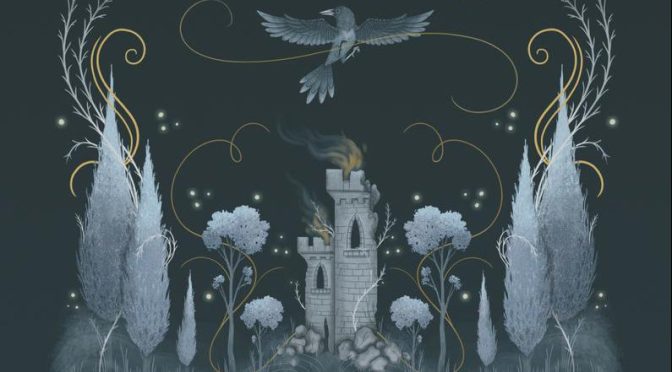
 I didn’t find out about Spindle Fire until about three weeks before its release date, but I was excited when I first read about it. I love fairy tale retellings, and I’d been looking for something that would be a kind of lighter read to help me break out of a reading slump I’ve been in for a couple of weeks. I loved the idea of splitting the story of Sleeping Beauty between two girls, the cover is gorgeous, and the title was getting a decent amount of buzz leading up to its release date. Sadly, Spindle Fire turned out to be a dreary slog of a book. The sisters, Aurora and Isabelle, barely interact and only in the first couple chapters; both Aurora and Isabelle have significant disabilities, but the way they are handled in the text is not great; the romances are at once overwrought and dull; the major “twist” is heavily telegraphed; and the book just, overall, feels choppy and disjointed, with more focus on randomly (and occasionally nonsensically) pretty turns of phrase than on building a coherent plot or cohesive character arcs.
 FIYAH Literary Magazine, Issue Two, Sipping Tea (4/1)
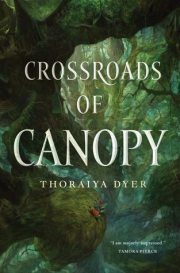 Best Fantasy Novel – Crossroads of Canopy by Thoraiya Dyer
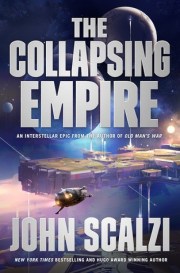 Best Science Fiction Novel – The Collapsing Empire by John Scalzi
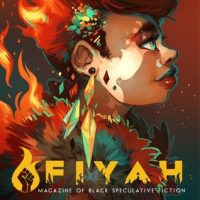 Best Magazine – FIYAH Literary Magazine, Issue 1, Rebirth
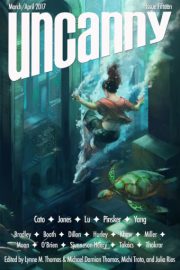 Best Novella – “And Then There Were (N-One)” by Sarah Pinsker
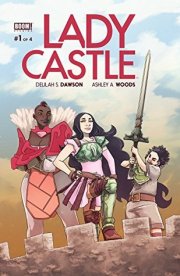 Best Comic Book – Ladycastle #1 by Delilah S. Dawson and Ashley A. Woods
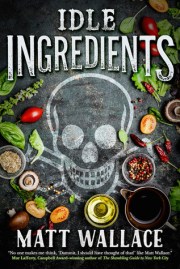 Best Sin du Jour Novella – Idle Ingredients by Matt Wallace
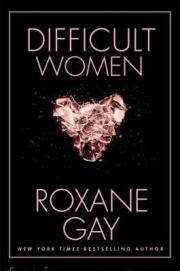 Best Non-SFF Thing I Read – Difficult Women by Roxane Gay
 I’m not a great reader of urban fantasy and I’ve been (sort of and unsuccessfully) avoiding new series, so I’d skipped Mishell Baker’s Borderline when it came out last year. I cannot tell you how glad I am that I finally read it. It’s a solid story that ticks off a lot of run-of-the-mill urban fantasy boxes while still being clever and original enough to be interesting. Baker takes a smartly naturalistic approach to describing the setting—I’m not a fan of L.A.-set stories in general, but she does a wonderful job of conveying a sort of warts-and-all love for the city without either romanticizing it or dwelling on ugliness. And Millie Roper is a fucking iconic protagonist with a strong and uniquely relatable (for me) narrative voice.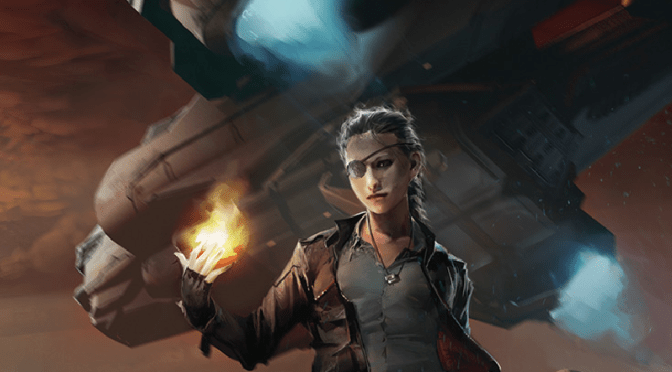
 I read quite a few debut novels and had a cool half dozen on my reading list for the first three months of 2017, but Alex Wells’ Hunger Makes the Wolf was the one I was most looking forward to in the first quarter of this year. I’m happy to say that it did not disappoint. While it may lack some of the great depth and the high level of craft of some of the other debuts I’ve read so far this year, Hunger Makes the Wolf more than makes up for it in other areas. It’s a well-conceived, smartly plotted, enthusiastically fast-paced sci-fi adventure with some cool ideas and a couple of excellent lead characters who’ve got plenty growing still to do in future books.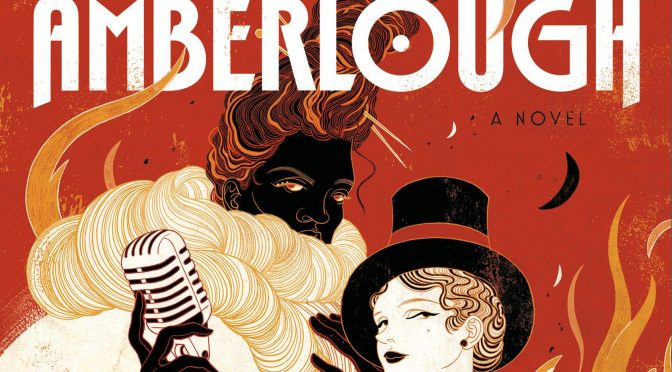
 Amberlough is a brilliantly inventive and gorgeously accomplished first novel for Lara Elena Donnelly, who manages to both test the limits of the fantasy genre and craft a whip smart and timely political thriller at the same time. Comparisons to Cabaret and Le Carré are accurate enough (and certainly intriguing enough for marketing reasons), though I always think we do a disservice to fresh, original work by using such comparisons to shape reader expectations. Amberlough is a fine novel on its own merits, full of bold world building, great characters, big ideas and a thoughtfully bittersweet ending.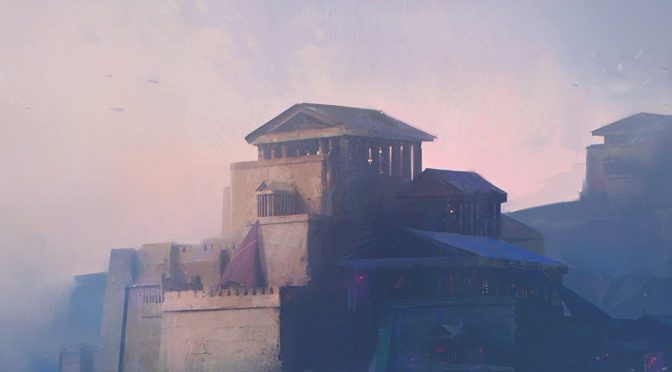
 Ada Palmer’s Too Like the Lightning was one of my favorite novels of 2016, and it was certainly among the year’s most unusual and ambitiously daring pieces of speculative fiction. Nevertheless, it felt a little unfinished, and anyone who loved it has no doubt been waiting with bated breath for the sequel that seemed necessary to complete what Too Like the Lightning started. Seven Surrenders is everything I thought/hoped it would be, with a vivid setting, intricate plot, high level philosophical and political ponderings and fascinating cast of characters, a truly worthy sequel to its brilliant predecessor and a powerfully compelling introduction to the conflict to come in the next book in the series.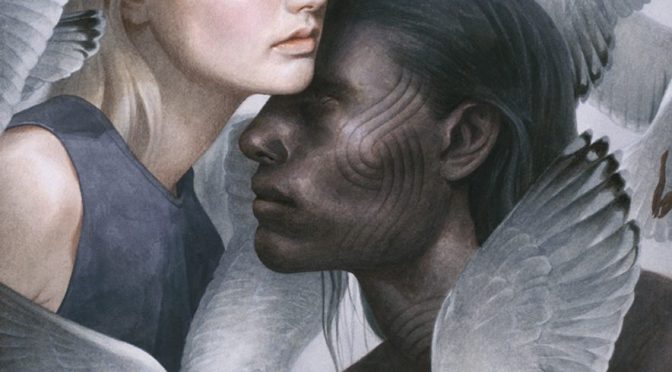
 So, I read Miranda and Caliban because I love Shakespeare and had never gotten around to reading any of Jacqueline Carey’s other work. I also read two other Tempest-based stories last year (Margaret Atwood’s Hag-Seed and Foz Meadows’ Coral Bones—both excellent) and thought it would be interesting to compare this one to the others. For what it’s worth, Miranda and Caliban is beautifully written, well-structured and readable, but the question I kept coming back to the longer I read it was “Is it necessary?” Sadly, I don’t think it is. I don’t regret having read it, but I also wouldn’t say that it deepened my understanding of The Tempest, Shakespeare or their themes, and what insight it gave me into the author’s understanding of these things didn’t impress.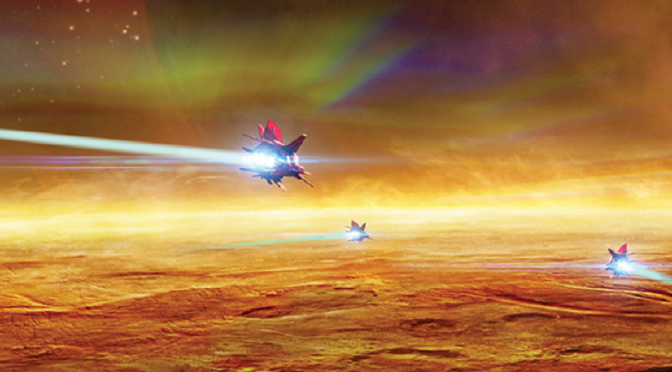
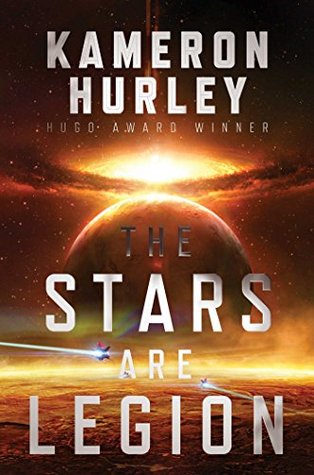 The Stars Are Legion is almost certainly the sunniest novel Kameron Hurley has ever written, which was a pleasant surprise. At the same time, it’s still very recognizably a Kameron Hurley novel, with its badass women, moral ambiguity, and copious grossness. It might be the most ambitious Hurley novel to date, at least thematically; it’s a smart, quick read; and it’s full of the inventive worldbuilding that Hurley is best known for. That it’s a standalone novel rather than the first in yet another new series that I’d have to follow for several years is just icing on the cake.
 SF Bluestocking