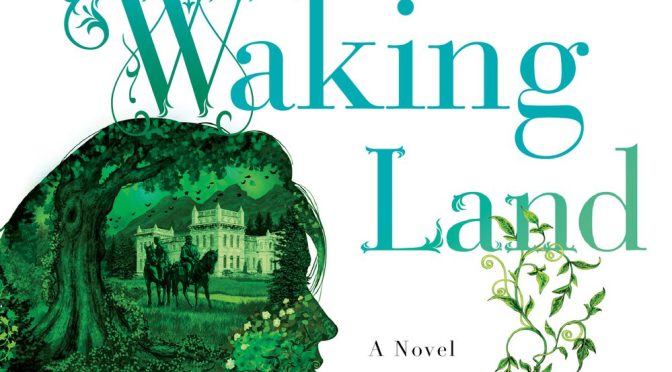
 This book was slow enough in its first third or so that I nearly put it down in frustration, but when it gets good it gets very good. It’s got some issues with exposition and pacing that are likely just due to its being a first novel, but there’s quite a lot to enjoy about it nonetheless. For one thing, it’s got a drop dead gorgeous cover (designed by Kathleen Lynch and illustrated by Ben Perini), and inside you’ll find an intriguing magic system, a resourceful (if flawed) heroine, and an interesting take on fantasy politicking, and if The Waking Land isn’t a great read, it’s still a more or less promising debut that sets up Callie Bates as an author to watch.
Elanna Valtai has been raised like a daughter by the king who exiled her parents after a failed rebellion, but when the king is poisoned she finds herself on the run, forced to confront some unpleasant realities that she’s been kept ignorant of, and discovering parts of herself she didn’t know existed. It’s a solidly conventional fantasy set-up, part coming of age and part political intrigue, but Bates tweaks the narrative just enough to keep things somewhat fresh. Elanna’s attachment to her foster father and the way she identifies with her adopted country turn out to be an interesting exploration of something very like Stockholm syndrome, and there’s a lot of page time dedicated to Elanna’s feelings about her confused identity. It’s easy to follow Elanna’s growth from the sheltered girl who thought she’d come to terms with her childhood trauma to a girl learning that she didn’t even understand what had been done to her to a self-actualized woman who has resolved her inner conflicts and is ready to both forge her own path and work together with others to build a better future for their people.
One thing I love about Elanna is that, though she’s not, in general, unlikeable, she’s written with very little seeming concern about likeability. Instead, while not written in a naturalistic fashion—it’s hard to have true naturalism in this kind of fantasy—she is allowed to just exist and have feelings without any attempts within the text to justify or make excuses for her worst tendencies. When Elanna is selfish or cowardly or uncertain, the text is nonjudgmental and, for a book with first person narration, nicely free of self-loathing. Elanna’s internal conflicts are rarely about whether she feels capable of achieving what she wants; instead, she struggles both with knowing what she wants for herself and with trying to figure out the best way to live up to her inherited responsibilities. That said, in early chapters, Elanna’s self-absorption and ignorance can be tiresome. It makes for a compelling and coherent character arc when she finally starts to grow up a little, and Elanna proves herself time and again as a staunch friend, loving daughter and loyal ally, but there are a solid hundred pages where she borders on being insufferable.
On a more positive note, the setting and supporting characters are mostly strong. Bates has crafted a smartly imagined fantasy world with a sort of 17th century aesthetic and elements of French and what seems like Welsh (or some mix of Welsh, Scottish and Irish) culture. There’s gunpowder-based technology, extravagant palaces, salons with shade of the Enlightenment, and a democratic-revolution-minded rebellion in the works. The magic system is left somewhat ill-defined, but it’s also not overpowered, and none of the book’s major conflicts are resolved through solely mystical means. For a YA fantasy, naming conventions are reasonably good; “Elanna Valtai” is the fussiest name in the book, and the rest of the characters and places are named pronounceably and with consistency and good sense. There’s even some effort made at diversity, though it’s done in that weirdly subtle, vague way that seems calculated to be inoffensive to a presumed white audience.
The biggest problem weighing down the story, however, is a lot of very clunky exposition (including a wholly unnecessary prologue) all of which is only made more unwieldy by the choice to tell the story in first person present tense. While this seems to be the reigning popular point of view for YA fantasy, Bates struggles to make it work here, especially in lengthy expository sections about Elanna’s background, the backgrounds of other characters, the history of the land and the political situation. Sadly, the earliest parts of this novel really are enough of a slog to deter many discerning readers; at 400 pages, The Waking Land feels much longer than it is, and there are faster and more evenly paced options for those without the patience to stick this one out until it gets better.
This review is based on a copy of the title received from the publisher through NetGalley.
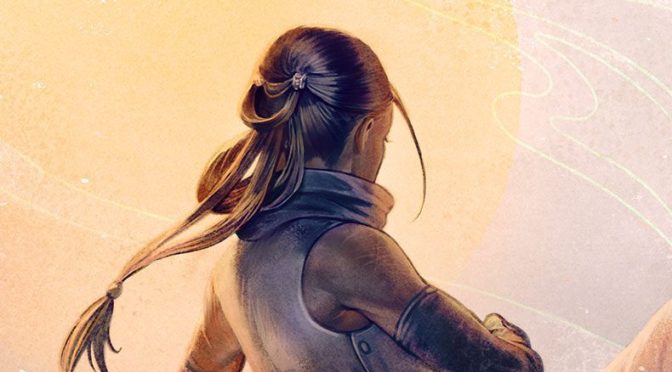
 Dianna Gunn’s Keeper of the Dawn combines a smartly plotted adventure with a sweetly written romance in a richly imagined fantasy world with plenty of space for more stories if the author chooses to return to it. Unfortunately, it’s all a bit much for a novella-length work. It’s a little overstuffed, and the sequence of events, while well-considered, has a tendency to read like a run-on sentence of “and then this happened and then this happened” and so on; all characters aside from the protagonist are underdeveloped, sometimes to the point of being cardboard; and the denouement could have used good deal more space to breathe. Still, there’s a lot to like about Keeper of the Dawn, and there aren’t so many YA lesbian romances featuring asexual heroines that it’s not still important representation despite its flaws—especially when the biggest flaw is simply that the story could have used another hundred pages or so to address its shortcomings.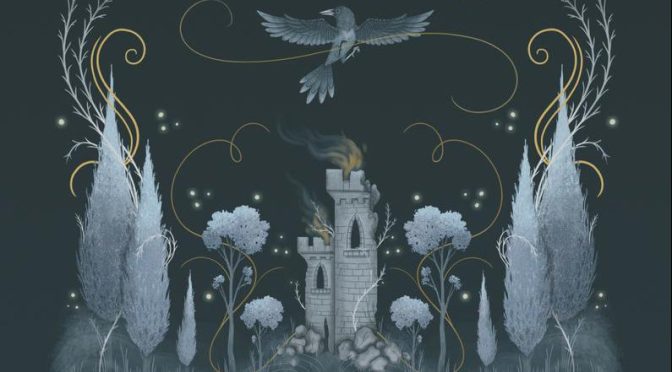
 I didn’t find out about Spindle Fire until about three weeks before its release date, but I was excited when I first read about it. I love fairy tale retellings, and I’d been looking for something that would be a kind of lighter read to help me break out of a reading slump I’ve been in for a couple of weeks. I loved the idea of splitting the story of Sleeping Beauty between two girls, the cover is gorgeous, and the title was getting a decent amount of buzz leading up to its release date. Sadly, Spindle Fire turned out to be a dreary slog of a book. The sisters, Aurora and Isabelle, barely interact and only in the first couple chapters; both Aurora and Isabelle have significant disabilities, but the way they are handled in the text is not great; the romances are at once overwrought and dull; the major “twist” is heavily telegraphed; and the book just, overall, feels choppy and disjointed, with more focus on randomly (and occasionally nonsensically) pretty turns of phrase than on building a coherent plot or cohesive character arcs.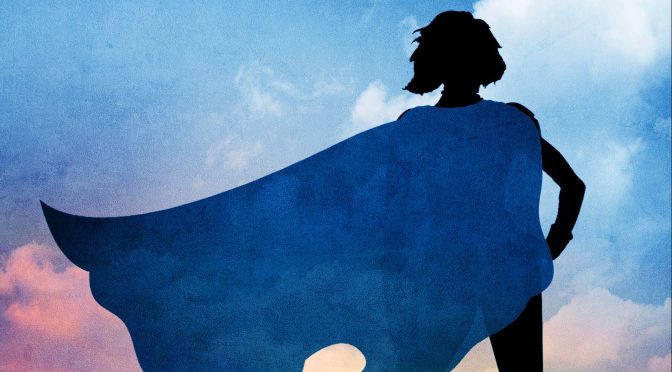
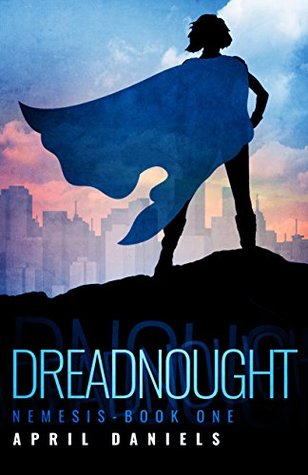 I love that Dreadnought is a thing that exists in the world more than I actually enjoyed reading the book, though I did rather like it. It’s being marketed as great for fans of last year’s The Heroine Complex and Not Your Sidekick, and both of those were titles that I just never did quite manage to get around to reading, mostly because I’m not super into super hero stories. Like these other books, Dreadnought centers around an unconventional protagonist, in this case a fifteen-year-old closeted trans girl named Danny who has to quickly come to terms with her identity when she is unexpectedly gifted with both superpowers and the body she’s always known she should have. Danny is a smart, plucky, relatable heroine who I expect will be an education for some readers and a much-needed bit of representation for others. Nonetheless, Dreadnought is a book that I read with the constant awareness that it wasn’t for me. Danny’s story of self-discovery and actualization is one that will be compelling for any reader, but I imagine it will resonate most deeply with readers who share more of Danny’s experiences as a trans girl.
 I read Truthwitch around this time last year and enjoyed it in spite of its flaws, which were, well, many. But it was the start of a new series, and it featured a great friendship between two young women and had an interesting idea for a system of magic. Plus, while my tastes certainly skew towards the literary end of SFF, I appreciate some light reading to break up my routine from time to time. So I was pretty excited about Windwitch after enjoying its predecessor so much. Unfortunately, it turned out to be my biggest reading disappointment in a long while. Windwitch is the absolute worst sort of boring, insipid, YA claptrap I’ve read in years.
 Goldenhand is a welcome return to Garth Nix’s Old Kingdom universe, but it unfortunately feels, overall, a bit half-baked. It’s an enjoyable read if one doesn’t think too hard about it, but the truth is that Goldenhand is problematic in numerous ways that detract from the joy of revisiting such a well-loved fantasy world.
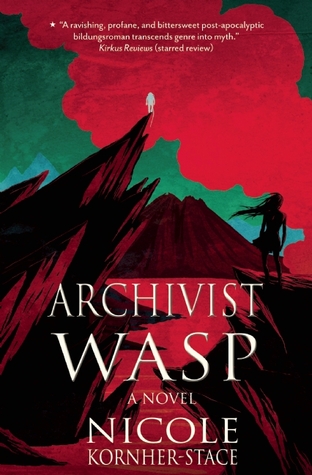 Archivist Wasp is a strange and beautiful story that still managed to be somewhat disappointing to me. I liked it quite a bit, but I didn’t love it the way I thought I would and I’m not sure exactly why except that I feel somewhat misled by an enormous amount of good reviews that were terribly vague about what this book is. At the same time, I do like that Archivist Wasp defies any neat genre categorization. It’s a book that is many things, but mostly it’s hard to describe without giving away the whole story. In any case, I’m not sure exactly what I expected from this book, but what I got wasn’t it, and I can’t say that my expectations were challenged or unsettled in any positive way. I just feel weirdly neutral about the whole thing.
 Whew! Truthwitch is an absolutely exhausting, if exhilarating, read. There’s an enormous amount of stuff going on in this book, and I kind of loved it, but the problem with doing lots of things in a novel is that it’s only seldom that they’re all done well. Like many other ambitious and complex works, especially those intended for a YA audience, Truthwitch is a bit of a mixed bag.
 This entire series of books has been middling at best, and Winter is no different in that regard than its predecessors. Still, it’s an enjoyable read. The biggest problem with Winter is simply that it’s enormously overlong. At over eight hundred pages, and broken up into nearly a hundred chapters, most of which are very short, it’s a monstrously lengthy read. Unfortunately, there’s just not enough going on in Winter to justify all that length, and while I did enjoy it, my biggest feeling when I finished was resentment at how long it took to finish.
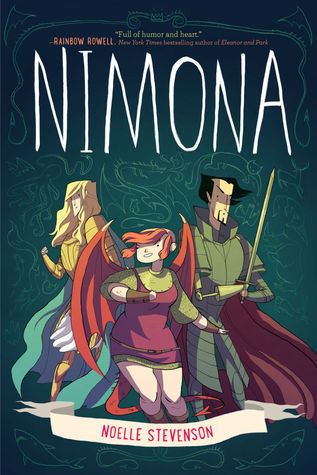 Nimona is actually my twelve-year-old daughter’s book. I knew it was good when she didn’t even want to put it down long enough for us to check out at the book store. When she finished it the next day, I knew I had to read it myself. I’m so, so glad I did.
 SF Bluestocking