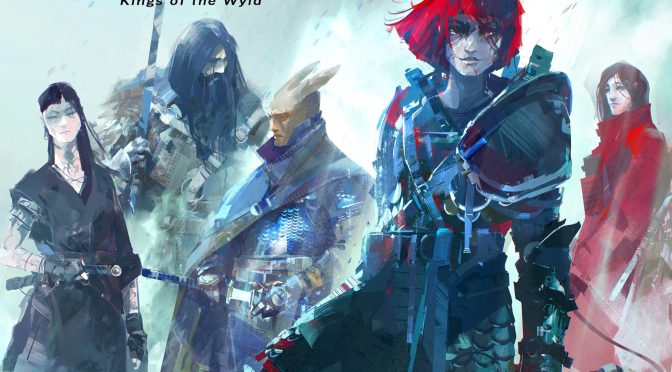
 Nicholas Eames’ freshman novel, Kings of the Wyld, was one of my favorite reads of 2017, a well-written, cleverly observed and often hilariously funny adventure fantasy pastiche that adhered to genre forms while gently poking fun at well-worn tropes and presenting a refreshingly positive and downright heartwarming portrait of non-toxic masculinity in action. So I was pretty hyped to see what Eames would make of this sequel, which showcases a mixed-gender cast from the point of view of a queer teenage girl. Unfortunately, Bloody Rose doesn’t quite rise to the level of excellence of its predecessor, although it’s also by no means a complete failure at the perhaps-too-many things it sets out to accomplish.
Let’s talk about that queer girl narrator first. Tam Hashford is a potentially great character with a pretty solid, if entirely expected, backstory—parents in a band, dead mom, sad childhood—that nevertheless manages to impart her with a reasonable amount of depth and complexity to carry her through her hero’s journey over the course of the novel. There’s a lot to like about Tam, but Eames leans heavily on the dead mom thing for character motivation and to craft moments of emotional resonance while never actually creating the mother as an actual character. Sure, a dead mom is sad, but Tam’s particular story of having a dead mom lacks many specific details that would have made Tam’s pain at losing her mother feel more real. Even more disappointingly, Tam’s relationships with her father and uncle are full of those sorts of specific details, right there on the page where they belong, which makes those relationships compelling and well-drawn but also serves to highlight the lack of care taken with the story of Tam’s mother. As a further consequence of this lopsided attention to detail, Tam’s relationships with her father and uncle really feel meaningful in a way that her relationship with her dead mother never quite manages to. Instead, Tam’s relationship with her mother is best represented by Tam’s relationship to her mother’s musical instrument, and let’s just say—without spoilers—that the symbolism of this instrument in the narrative is confused.
All that said, choosing Tam as the book’s primary point of view is nevertheless a smart move on the author’s part. Writing from the perspective of a relative outsider to—albeit one with some inside knowledge of—the mercenary band life, gives the book a nice balance of distance and intimacy with its subject matter. Tam has plenty of room to grow over the course of the band’s meandering adventures, and Eames pretty much nails every step of her coming of age story. I loved reading her transformation from conflicted, self-conscious girl to confident, self-assured woman. There’s just not much more satisfying to read than a well-executed bildungsroman, and in that respect, Bloody Rose is a true success.
Where Eames also shines as a writer is in the overall crafting of the serial adventures that make up the majority of the book. The chapters are largely episodic, following Tam, Bloody Rose and the rest of Fable as they make their way towards a contract of epic scale, only to find out that the job isn’t what they thought it was. There’s something pleasantly cozy about the intimacy that forms between the characters as their friendships deepen over the course of their travels. However, though there’s a lot to like about the character dynamics in Bloody Rose, they never do quite manage to match the lived-in feel of the relationships between characters in Kings of the Wyld. This is most obviously apparent when it comes to the book’s romances. The longstanding romance between Rose and Freecloud feels lopsided and a bit too told-and-not-shown (and with tragedy telegraphed through nearly every one of their interactions), and the romance that Tam ultimately finds for herself feels abruptly settled, wholly unearned, and far short of fully logical, even within the framework of Eames’s fantasy setting.
On the bright side, that fantasy setting itself feels more alive and fuller of excitement and interest than ever before. There are numerous new characters to join familiar friends and foes from the first book, and Fable’s travels expand impressively upon the world without ever becoming a self-indulgent worldbuilding exercise as epic fantasies can be prone to do. Perhaps more impressively, Eames sets out to really look at and interrogate the world he crafted for Kings of the Wyld and does so in a compelling way that naturally drives story and character growth throughout this novel. As Tam (and the reader) is more immersed in mercenary culture, there are ongoing revelations and developments that reshape her (and our) understanding of her world and the place of herself and her friends in it.
Still, I’m not certain that it’s enough to simply question the underpinnings of one’s own worldbuilding without resolving many of the central questions raised. Bloody Rose is at times deeply concerned with the role and function of mercenary bands in its world and highlights some of the injustices perpetrated by a system that treats bands as celebrities and commoditizes their work, but the ending of the book largely amounts to a return to the status quo. Some characters may have changed or evolved throughout the story, but there’s a good deal of ambiguity about whether the world itself has been fundamentally changed by even the most momentous events of the novel. One can only hope that exploration of some of the deeper themes that were given short shrift in Bloody Rose will provide good fodder for a third book—which I will certainly be looking forward to.
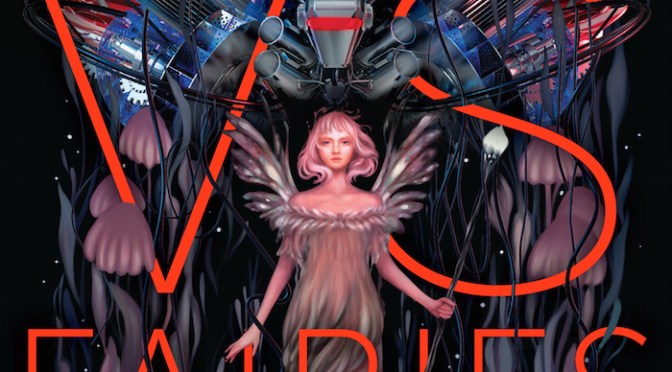
 Robots vs. Fairies is my first reading disappointment of 2018. I loved Dominik Parisien and Navah Wolfe’s first anthology, 2016’s The Starlit Wood, so I was very hyped for this one when it was announced. Unfortunately, Robots vs. Fairies is a bit of a sophomore slump for the editing pair, with a theme that feels more questionable the farther one reads into the collection, stories that largely feel a little too written to spec, and not enough that’s new and interesting to recommend it on those scores. It might work as sort of comfort reading for those who find its table of contents—filled with some of the hottest short fiction writers currently working in SFF—appealing, but if you’re looking for exciting, fresh, innovative work, there’s not much of that here.
 So, I’ve finally figured out what it is about Seanan McGuire’s Wayward Children that prevents me from really loving these books the way so many other people do. I just, on a fundamental level, don’t find the fantasy of this series to be an appealing one. I’m slightly distrustful of anything, in general, that smacks of radical individualism, so I’m just not especially taken with the idea that some people are just too special and different for the world they’re born into and must travel to an entirely different world to achieve self-actualization and fulfillment, with the finding and keeping of that world as their personal happy ending. It’s fine. I get it. I think I would have loved this stuff when I was a teenager. In my mid-thirties, however, I struggle with some of the broader implications of it, which impacts my overall enjoyment of the story. I don’t begrudge anyone else the escapist fantasy of a better world of their very own, but my own fantasies at this point in my life are less escapist and more about making this world a better, kinder and more just place for everyone.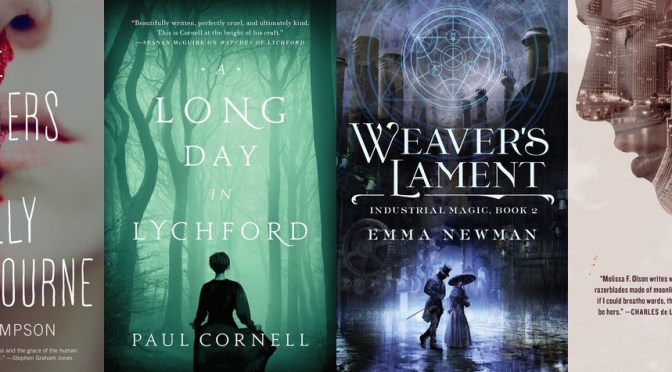
 The Murders of Molly Southbourne
 A Long Day in Lychford
 Weaver’s Lament
 Switchback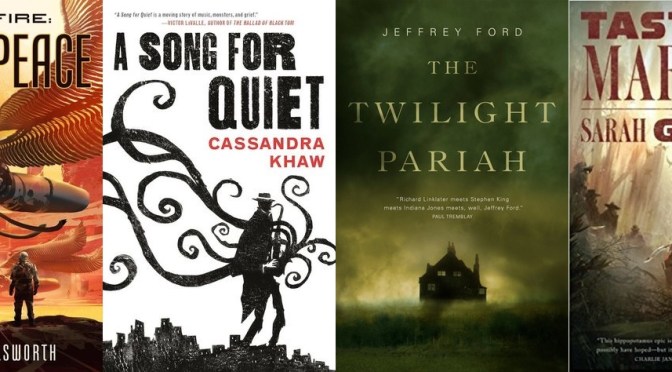
 Starfire: A Red Peace
 A Song for Quiet
 The Twilight Pariah
 Taste of Marrow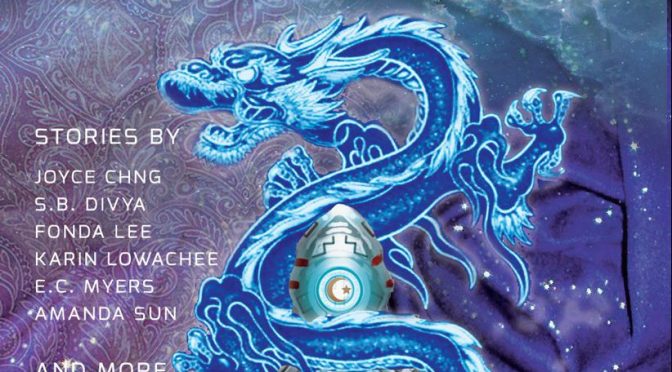
 Where the Stars Rise is a wonderfully diverse collection of Asian science fiction and fantasy that deserves to be on the shelves of anyone serious about being well-read in the genre. Like all good anthologies, there’s something here for almost anyone, while at the same time the collection has a distinctive character that’s all its own. A running theme of the collection is identity, with story after story examining ideas about racial, cultural and personal identity. Experiences of racist oppression figure largely in these stories, but so do experiences of parenthood, disability, trauma, loss and grieving, aging, and displacement or immigration. With a near-even split between science fiction and fantasy and a wide range of subgenres included, this is a remarkably well-rounded anthology that I found had a good mix of well-known and new-to-me short fiction writers. That a portion of the proceeds from its sales goes to benefit Kids Help Phone, Canada’s only 24/7 free and anonymous counseling and information service for young people, is an extra enticement to support the title (and Laksa Media more generally—all of their titles support charity).
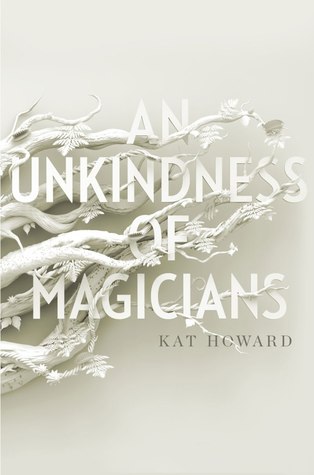 I liked Kat Howard’s debut novel, Roses and Rot, quite a bit and even more in hindsight, and I’ve enjoyed the several pieces of short fiction I’ve read from her since, but An Unkindness of Magicians is still a surprising book. Thematically, it covers a lot of the same ground as Howard’s other work, and like her previous novel this one deals heavily with family drama and magic. However, at its core, Unkindness is nicely summed up by the well-chosen epigraph, a memorable line from Peter S. Beagle’s The Last Unicorn, with which it opens: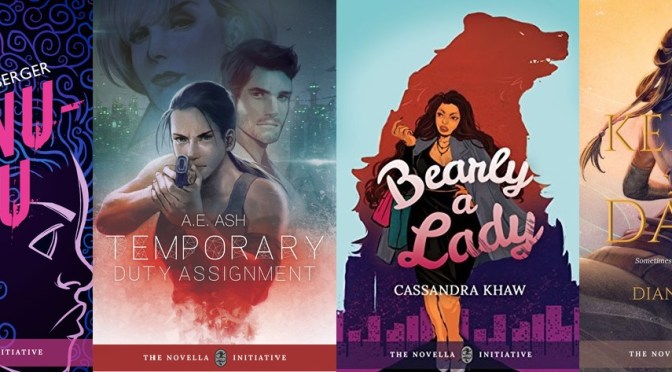
 With just eleven days left on the
  About Keeper of the Dawn, I said that it “combines a smartly plotted adventure with a sweetly written romance in a richly imagined fantasy world,” though I did find it a little overstuffed with plot; it could easily have been a full-length novel, but it was nonetheless an enjoyable read. I didn’t write much about Reenu-You, partly because it dealt with race issues that I (as a white woman) didn’t feel equal to discussing or criticizing in any depth. However, it’s a story that still, months later, has stuck with me. Michele Tracy Berger’s take on corporate malfeasance and the importance solidarity and sisterhood is powerful and timely (and, frankly, likely to be more so in the years to come).
 The first Book Smugglers novella of the summer was Cassandra Khaw’s Bearly a Lady, which is without a doubt the best (or at least my personal favorite) of their releases to date. It’s certainly the most polished of the series so far, largely absent some of the copy-editing issues that plagued (albeit very minorly–I’m just nit-picky) the first couple books. The thing about Bearly a Lady, however, is that it’s simply a great deal of fun, a smart, silly, sexy romp that was exactly what I wanted to read at the time, and I am very hopeful that Khaw will write more stories about Zelda the werebear and her friends. The book is also well worth picking up for Khaw’s essay on
  The most recent Book Smugglers novella is Temporary Duty Assignment by A.E. Ash. Temporary Duty Assignment walks an interesting middle ground between Reenu-You‘s story of people injured an evil corporation and Bearly a Lady‘s light-hearted romance. The sci-fi elements of the book are thoughtful, but it’s the characters that take center stage. Super soldier Sam and scientist Caleb are both delightful, and it’s easy to root for them, both separately and together in this second chance romance. I could have gone for a bit more romance, personally, though I liked that what romance there was, while not without problems, wasn’t especially fraught or complicated. It’s always clear and easy to understand why Sam and Caleb want to be together, and their problems have been ones of timing rather than incompatibility or mistreatment of each other. All in all, Temporary Duty Assignment is a sweet, clever sci-fi romance that’s well worth reading, but if you aren’t sure and want a small taste before diving into the novella,


 SF Bluestocking