All posts by SF Bluestocking

Book Review: The Dinosaur Lords by Victor Milán

DinosaurLordsCover**Trigger Warning: Discussion of Rape**

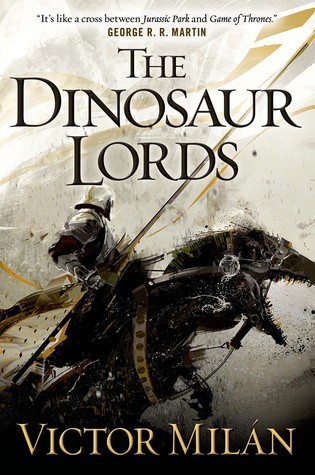
The Dinosaur Lords is being sold as “a cross between Jurassic Park and Game of Thrones,” which sounds pretty rad. I like dinosaurs, and I like medieval fantasy so, even though Victor Milán’s previous work was (apparently) libertarian sci-fi (which would normally be a dealbreaker for me), I decided to give this book a try. It helped that it’s got an absolutely gorgeous (if absurd) cover and that the black and white interior illustrations are similarly lovely. This is also a novel that has been getting an enormous amount of buzz. Its got a quote on the cover from George R.R. Martin, the concept for the book is fun, and the author has done a ton of guest blogging and self-promotion in addition to heavy promotion for it at Tor.

Unfortunately, the concept, packaging and advertising for the book are the best things about it. The Dinosaur Lords is by far the biggest reading disappointment I’ve had this year. To be fair, I probably should have known better than to give this book and its author the benefit of the doubt, but I really, really wanted to read about knights riding dinosaurs. And there was supposed to be an allosaurus as a point of view character!

So (spoiler alert!) the “allosaurus as a POV character” thing was vastly exaggerated in the promotion of the book. In reality, Shiraa’s point of view amounts to just a handful of paragraphs near the beginning and end of the novel. Also, it turns out that dinosaur POVs are boring as shit and even these few paragraphs are more than the book needed of that experiment. This is basically the least of The Dinosaur Lords‘ sins, though.

To be honest, I’m not sure what makes me most angry about this book: its rank misogyny or that the misogyny doesn’t even make much sense. Like, Milán really has to bend over backwards with his storytelling and world building to shoehorn his particular brand of woman-hating into the book. It would end up being laughably bad if it wasn’t too busy alternating between offensively nonsensical and viscerally unpleasant.

The book opens with an author’s note clarifying that Paradise isn’t/wasn’t/will never be earth, which is weird; Milán wanted to make it really clear that this wasn’t a book supporting young Earth creationism. It comes off as really oddly defensive about something that I kind of feel like no one actually cares about, and it’s a, frankly, bizarre way to start a novel. Milán actually touches on this in a guest post over at the B&N Sci-Fi & Fantasy Blog, where he brags at some length about his lazy world building. Apparently, he just sort of chose ideas that he thought sounded “cool” and tossed them all together along with some ideas calculated to increase book sales.

I won’t say that the world building in The Dinosaur Lords is completely atrocious because it’s not. Sure, Milán has shamelessly cribbed from Anne McCaffrey’s Pern, but he actually has some good ideas of his own. Unfortunately, it all just becomes completely bogged down in absurd contradictions that just get worse and worse as the book goes on.

So, Paradise is, from what I can gather, a cultivated world akin to Pern where humans presumably traveled some several hundred years in the past, seeded the planet with plants and animal life to make it suitable for human habitation, set up a kind of inexplicably feudal society, and decided (also inexplicably, because it’s a terrible idea) to keep the whole thing in place by passing down their plans and rules in the form of kind of sacred texts that explain the world and tell people how things are supposed to be run. All of this I could forgive, even though there’s no reason I can think of that any spacefaring species would be attempting a form of government/economy as inefficient and iniquitous as feudalism.

The thing is, The Dinosaur Lords isn’t a story about a scrappy group of underdogs fighting to overthrow an oppressive regime. It’s not even like Game of Thrones, where there are a wide variety of point of view characters who largely exists in the margins of their society and whose stories are interesting studies of complex individuals. Nope. The Dinosaur Lords instead expects us to spend four hundred-odd pages inside the heads of the oppressive regime, with POV characters (besides the allosaurus) including a self-absorbed yes man of a knight, a naive and sheltered imperial princess, a sort of mercenary lord who has lost his lands and army, and a supposed everyman character who spends much of his time thinking about how admirable the right kind of nobility are. Of these characters, the princess is the most interesting, but most of the problems I have with this book come from it’s depictions of female characters.

Paradise is a world that truly is wonderful for its inhabitants. People live for hundreds of years, there’s almost no disease, and any injury that doesn’t outright kill someone will heal in a matter of days. However, women still die in childbirth, I guess because the author doesn’t actually know much about childbirth. Also because it was convenient for him to have Princess Melodia’s mother dead so he wouldn’t have to write about her. So, that’s a thing in this book. Admittedly, I have a special hatred for the Missing Mom trope, but it’s used in an especially lazy manner here, where by the rules of the fantasy world death in childbirth ought to be vanishingly rare.

The way that gender and sexuality is portrayed in the book is just bizarre, in general. Paradise is a world where nudity is no big deal, but women can apparently still feel naked and vulnerable because of their gender. It’s a world where women are sexually “liberated” enough that they can freely have sex with men and each other, but where rape culture continues to thrive and rape is relatively common and no woman is safe from it. Women in Paradise can choose their sexual partners (unless they’re raped), but they still have to get their father’s permission to marry who they want. It’s a world where homosexuality is normalized to the point that one of the most elite military groups in the world is primarily made up of gay and bisexual men but where “boy-fucker” is still an insult. It’s a world where we’re told that women can be fighters as well as men, but with the condescending caveats that to actually participate in warfare is “beneath a noblewoman’s station” and that they have to learn fighting styles that accommodate “woman’s relative lack of muscle.” Also, I think that there is precisely one named female fighter in the book, even though it’s implied that there are many.

Over and over again, the book tells us that women are equal to men but shows that this isn’t really the case. In Paradise, women are decidedly subordinate to men in a disappointingly familiar patriarchal landscape, and they are similarly marginalized in the fabric of the novel. The first female character we see in the book is a random old lady who gets killed while looting bodies after a battle, and Melodia is the only female point of view character besides the allosaurus. It seems promising early on that Melodia is surrounded by so many other female characters, but her ladies are largely a pack of unpleasant catty stereotypes. Even to the degree that they are likable, Melodia and her ladies read like a male fantasy of the way groups of women interact together, and there is nothing particularly real or relatable about them whatsoever.

Perhaps the most disappointing thing about the treatment of women in The Dinosaur Lords is the prevalence of rape. I find it disgusting how ubiquitous rape still is as a cheap plot device and an easy way for authors to add some grimdark seasoning to their settings, and rape is used in exceptionally sickening ways in this book. The worst, though, is Melodia’s fairly graphic rape at the hands of a scheming courtier, and what makes this the worst is that the way it’s written is more like a sex scene in a romance novel than a rape.

The set up for the rape starts about two thirds through the book when Melodia spends an evening dancing with the guy who will eventually rape her. She seems somewhat attracted to him, but then the magic of the evening wears off and she realizes that she’s still devoted to her absent fiance, but not before having to be rescued from this dude because he almost rapes her right then. We’re then treated to an absolutely vile discussion between the rapist and another dude, where they talk about what a cock-teasing bitch Melodia is in one of the grossest scenes I’ve read in any book in a long time–made even more sickening because on some level the reader is supposed to identify and sympathize with the rapist guy.

I about quit reading right then because I was so certain that Melodia was going to be raped by the end of the book, but I kept reading against my better judgment. And there was no rape for a while. Just when I’d been thinking that maybe it wasn’t going to happen after all, though, it did. Melodia is imprisoned and raped by the guy that it was heavily telegraphed she was going to be raped by. The thing is, Milán is so coy about it. The way he writes the actual rape manages to be graphic enough to be so unsettling that I almost vomited, but it also reads like the penultimate sex scene of a romance novel, complete with the fade to black that is normally intended to allow the reader to use their imagination.

After the rape, the word rape is studiously avoided, Melodia seems curiously immune to the normal trauma of being raped, and by the end of the book she seems to have forgotten all about it. All in all, is a singularly awful representation of rape on every level. It doesn’t make much sense that rape is so rampant in the fantasy world as its described; the use of rape culture rhetoric to justify the rape is presented in a way that seems intended to make the reader sympathize with that misogynistic reasoning; the rape itself is sexualized and written in a way that feels like it’s supposed to be titillating; and the experience and aftermath of the rape and its effects on Melodia’s character are minimized and ignored.

I have some other issues with this book, too, like the sheer stupidity of feudal systems, the cliché religion of the Eight Creators (which is also poorly described throughout the book), the regressive sort of “divine right of kings” politics of characters like Melodia and Jaume, the way that Karyl loses his hand but then grows it back immediately because magic, the inconsistency of Rob’s feelings about the aristocracy, the way that much of the exposition feels like it would be more at home in a D&D campaign setting (Paradise would actually make a pretty cool D&D setting), and so on. But the rape of Melodia is the thing that is a dealbreaker for me. Everything else could have been chalked up to the book being somewhat silly, but it still might have been a fun read. But the level of simmering hatred towards women that pervades this novel isn’t fun for me at all.

As far as I can tell, The Dinosaur Lords is little more than a cynical cash grabbing mash-up specifically and explicitly designed to extract money from the pockets of readers who enjoy a good summer blockbuster. In that sense, I suppose, the book is a success. Much like most summer blockbusters, however, The Dinosaur Lords is terribly light on actual substance and heavy on bullshit. Ultimately, I found it to be deeply unpleasant and alienating. I won’t be reading any more of the series.
Book Review: The Long Way to a Small, Angry Planet by Becky Chambers

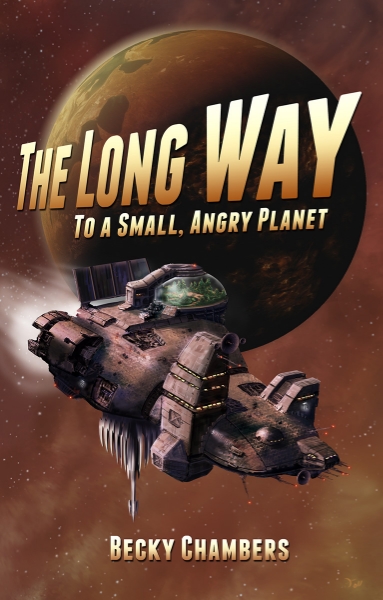
longwayThe Long Way to a Small, Angry Planet is basically like if Firefly had a baby with Star Trek and then that baby had a baby with the best and most sensible elements of social justice Tumblr. It’s not a light read, exactly, but its ideology never overpowers the story being told, either. That said, “ideology” is really too strong a word for a message that pretty much amounts to “people should be nice to each other” coupled with “families come in all shapes and sizes.”

The Long Way starts with a pretty standard space opera character–the young person going out into space for the first time–but the book turns out to be mostly not from this character’s point of view. Instead, it’s actually a series of vignettes in chronological order, over the course of a wormhole drilling ship’s year-long trip to the center of the galaxy and from the perspective of several of the Wayfarer‘s crew.

I honestly have nothing negative to say about this book, and I don’t want to ruin any of the good things about it for people who haven’t read it yet by talking extensively about it here. It’s a book about tolerance and how people learn to live with each other, and it particularly explores different concepts of family, both biological and constructed. It’s a book about the potential of humanity, but it also deals frankly with how small we are in the grand scheme of things. It’s a dream of a future where we humans manage to turn out alright in spite of ourselves and where we find some company on our cosmic journey to being better than we are.

The Long Way is a deeply beautiful and profoundly optimistic book that you owe it to yourself to read if you love science fiction. Or if you just like people. Or even if you don’t like people but want to have some hope for them for a little while. Or if you really don’t like people, but do like aliens, because Becky Chambers writes great aliens. Just, you know, go read this book as soon as possible.

Coming out in the UK on August 13, 2015. And in paperback in the US in summer 2016.

Killjoys is starting to get really awkward for everyone

So “Kiss Kiss, Bye Bye” is another episode that moves things along, which is great, but my main complaint is that it felt like every single scene was just a bit too long (except for the scene with Dutch and Delle Sayeh, which wasn’t nearly long enough). Frankly, it got awkward.

Things are awkward for D’avin and Pawter, as Pawter seems to have–rather inexplicably–mistaken D’avin’s desire to bang her and her own lack of professionalism for an actual relationship. I kind of wanted to cheer when D’avin actually pointed this out, but he’s such a giant douchebag about the whole thing that I can’t. Basically, he’s being a dick and only brings up Pawter’s jerkwad-ery in order to deflect attention from his own so he can bully her into continuing to help him. Pawter, being a huge sucker, is down for that I guess and gives him a lead.

I don’t know which is the worst: John’s mock turtleneck thing, D’avin’s fake arm tattoos, or the guy wearing the red Dr. Horrible costume.

The team goes to break some guy out of a mental hospital, and then they have to go to–I shit you not–some kind of very cheesy interplanetary fetish club so they can get more information. On the way there, John breaks the neural implant thingy that they are trying to use to track Khlyen, but fortunately the fetish club has someone who can help with that, too. D’avin does drugs and makes out with Dutch, then they get some kind of info that isn’t actually useful, then they end up arrested for kidnapping a mental patient I guess. Also, the costumes at the fetish club are so awful, and I’m embarrassed for everyone. Except Dutch, who looks amazing in everything she wears.

In jail (I guess) Delle Sayeh comes to talk to Dutch, and I want them to just run away together and leave D’avin and John to rot. Instead, Delle Sayeh fixes things so they can talk to this Dr. Jaeger that D’avin is looking for. In exchange for–get this!–an unspecified favor at a future date! Because that is always an amazing bargain.

Things go predictably poorly with Dr. Jaeger, who says she can’t really do anything to help D’avin. Back on the ship, John goes to run some errands, and while he’s gone D’avin and Dutch finally bang just like we’ve all been expecting them to for a while now. John gets back just in time to find Dutch’s clothes all over the ship, so he goes to talk about his feelings with Pree. No one (literally no one) is buying that John isn’t jealous, but alright.

Meanwhile, Dr. Jaeger turns on the thing in D’avin’s head and he tries to kill Dutch. I actually really loved this fight scene. It’s well-choreographed and felt enough like a real fight that there was actually a part of me that thought Dutch could kill D’avin–not that she would for show reasons, but that it was a possibility within the world of the show, which is kind of awesome. Fight scenes like this often struggle to communicate any sense of real stakes for the characters, so great job for this show in making that happen.

After tying up D’avin and leaving John to babysit him, Dutch goes to deal with Dr. Jaeger. While she’s gone, D’avin manages to almost kill his brother, and Pawter comes to the rescue. We learn that Pawter is probably someone kind of important when she gives her name as “Eleanor Seyah Simms.” Dutch and Pree come to visit John in the hospital, and then Dutch goes back to the ship, where she and D’avin have a sort of awkward talk that doesn’t actually deal with any of the stuff between them.

I was going to jokingly write that probably next week will be an episode where Dutch and D’avin get trapped somewhere together where they are forced to talk about their feelings, but it turns out that that is literally the description of episode eight.

Weekend Links: August 1, 2015

Den of Geek celebrates the sci-fi movies of Jeff Goldblum.

My Bookish Ways covers all of August’s new releases in science fiction, fantasy, and horror.

Movie Pilot asks (and answers) Why Are We Obsessed With the End of the World?

Apparently “cli-fi” is a thing now, and people have thoughts on it:

Speaking of climate change, Margaret Atwood says “It’s not climate change–it’s everything change.”

The Mary Sue writes about anti-heroines and flawed female protagonists

And Rejected Princesses explains why so many of the princesses featured there are so evil.

I wrote about the movie Advantageous earlier this week, but there’s plenty of other great stuff to read about it, too:


Killjoys’ sixth episode has me cautiously optimistic about the show’s future

“One Blood” is definitely the best constructed episode of this show so far. It’s not perfect, but it’s a damn sight better than most of the previous half of the season, and it’s the first episode that I’ve finished with a real feeling that the story is moving along.

What I liked:

  • Dutch and Khlyen having interactions that help us understand some more of their history together.
  • Fancy. Sean Baek is seriously gorgeous, and he needs a bigger role in this show. He thinks that a trio is a bad idea, so maybe he should join up with Dutch and company to make it a foursome.
  • Dutch’s decision at the end to take active action and go after Khlyen to try and figure out what the hell is going on in the Quad. Finally something is happening to further the overall plot of the series.

What I didn’t like:

  • I do not understand Pawter’s seeming obsession with D’avin. He’s just not that great, to be honest, and I don’t really understand why she is so willing to risk herself to help him when he’s clearly not that into her.
  • I feel like the show is pushing D’avin and Dutch together, but again, D’avin just isn’t that great.
  • The whole “black warrant” thing was, frankly, just plain silly. Sure, maybe D’avin got to “meet the family,” but basically none of them mattered at all except for Fancy. Also, I’m increasingly not on board with the show’s attempts to make being a killjoy seem like a sort of fun thing. No amount of banter and camaraderie is going to cover up that these folks are bounty hunters and paid killers who do most of their work for an evil corporation running a tyrannical government. This needs to be dealt with at some point.

To be fair, this episode definitely felt like things are moving–albeit slowly–towards addressing the ethical issues of being paid killers for an oppressive government. There are four episodes left in this season, and I’m starting to feel a little hopeful that we’ll get some sort of resolution to all of this stuff. Which would be nice, since there’s still no word on if Killjoys will be getting a second season.

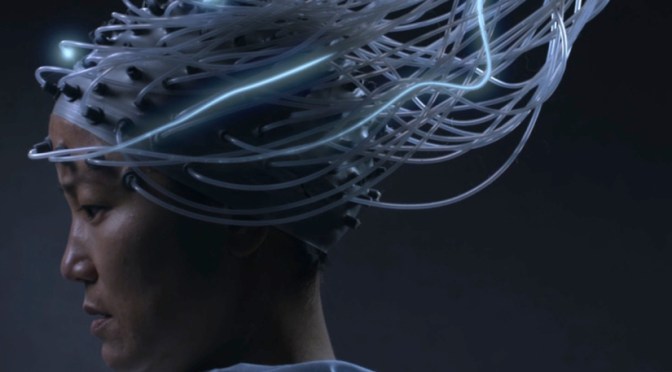
Advantageous is a perfect rainy day feminist sci-fi film

I tend to be skeptical of serious-looking science fiction films that I don’t hear about before they show up on Netflix, but I was interested in Advantageous when I learned that it was written and directed by Asian American women (Jennifer Phang and Jacqueline Kim, who also stars). I got really interested in it when I saw that it was being trumpeted as great feminist science fiction, although I still half expected it would be another entry in the enormous catalog of overly serious sci-fi movies that just don’t quite work for various reasons. It turns out that Advantageous is actually quite excellent, and is part of the rather smaller catalog of science fiction movies that are sensible, interesting, well-written and nicely filmed.

The film centers on the struggle of Gwen Koh, a single mother, to provide stability and opportunities for her daughter, Jules, in a world where that is increasingly difficult. Gwen is seemingly at a high point in her career when she’s informed that she’s just too old to be the spokesperson for a company whose newest product is a radical anti-aging “treatment” where people literally just get a new, younger body to replace their old one. Advantageous deals with Gwen’s struggle to find other ways to support herself and her daughter, her eventual choice to switch bodies in order to keep her job, and how that decision affects her life.

Advantageous is a movie about compromise–both the ways in which Gwen chooses to compromise and the ways in which she is forced to compromise herself. It’s a movie about the backlash to feminism and women’s liberation and the pressures that women face  because of that backlash. It’s a movie about transformation and growth and rebirth. It’s a movie that examines the ways in which women contribute to their own oppression and how we come to terms with that for ourselves and our daughters. It’s about capitalism and inequality and how unlikely it is that we’re actually building anything like a better future.

It’s a melancholy movie, but it’s also hopeful, though not naively so. I felt at the end that the hope was not so much that whatever comes in the future will be good but that whatever comes in the future we will be able to endure and heal and find enough love and joy to (mostly) keep us going. Also, there are flying cars.

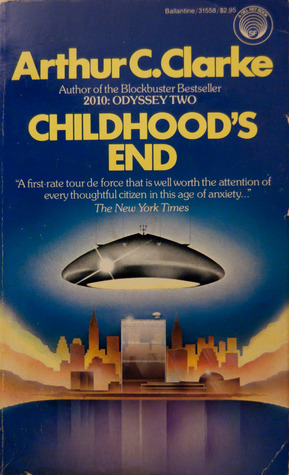
Book Review: Childhood’s End by Arthur C. Clarke

Confession time: I’ve not read very much classic science fiction. As a kid, I was always more into dragons and wizards than space ships and aliens, and as an adult I find I’m just not often interested in reading books that are older than I am. Still, Arthur C. Clarke is one of the greats, Childhood’s End is one of my partner’s favorite books, and it’s getting a miniseries on SyFy later this year, so I felt like it was time to read this one.
I’m glad I did, although it was many of the things that I expected. It’s somewhat simplistic, the characters are rather shallow, and its politics are dated at best. I can see why Childhood’s End is a classic, though. It’s an excellent novel, a fairly quick read, and has some ideas that stand the test of time really well. This makes it an all around worthwhile read for anyone who really loves science fiction.

So, to start with, I hadn’t realized exactly how old this book was. When I started it, I was thinking it was from the 1960s, but it was actually published in 1953. This explains some of the weirdness early in the book, which almost reads as if it’s about the Cold War and the Space Race, but which couldn’t have been. While 1953 was early in the Cold War, the Space Race wouldn’t start for another two years, although apparently in 1953 Clarke didn’t see humanity making it to space before the mid-70s.

Although I don’t read much sci-fi from this period, I always find it entertaining to see what these older writers thought the future would look like then. The flip side of this, though, is that sometimes they were just dead wrong. For example, in a kind of throwaway mention early in the book, Clarke describes white people in South Africa as an oppressed minority by 1975, and I would love to go back in time and pick his brain about what made him think that. By 1953, South Africa was already five years into the apartheid that wouldn’t end until 1994.

Another interesting, if expected, thing about this book and Clarke’s vision of the future is that, like many of the men who wrote science fiction in the mid 20th century, Clarke seems perfectly capable of imagining a future in which humanity sheds all its puritanical sexual mores, but he didn’t imagine a future where women’s liberation happened. There are only a couple of women in Childhood’s End, and they are barely even characters at all. Maia Boyce’s single trait is being really beautiful. Jean Morrel is somewhat more important, but she’s basically a sort of 1950s housewife whose husband can’t be bothered to be “in love with” until the world is literally ending. Apparently post-1990 publications of the book have made one of the astronauts in the first chapter a woman, but not the copy of the book that I read.

Regarding race, Clarke’s dream of the future is even more frustrating. Like many sort of clueless white dudes, he seemed to think that racial slurs would survive into a post-racism world but that they would somehow just kind of magically lose their negative connotations. Which is just not how language works, and betrays a really weird fantasy, in my opinion, of being able to still be just as racist as ever except no one complains about it anymore.

At the same time, though, perhaps the most important character in Childhood’s End is a black man, Jan Rodricks, who is the only human to see the Overlords’ home world and survives to chronicle the last days of the planet Earth. Jan is written in a way that is non-stereotypical, and by the end of the book one definitely gets the feeling that Jan comes closest of any of the characters in Childhood’s End to being Arthur C. Clarke’s ideal of manhood. While the author may have some ideas about race and gender that seem archaic over sixty years later, he was certainly progressive for his time.

The thing about Childhood’s End, though, is that it’s really not a character-driven book. It doesn’t even have a particularly strong plot. Very little actually happens, and if one were to consider the story Clarke tells in this book against the whole backdrop of time, his portrait of humanity is akin to taking a snapshot of a 90-year-old person just moments before they die. Childhood’s End is a book about ideas, and the characters and story are almost incidental to the big things that Clarke wanted to think about in 1953.

In Childhood’s End, Clarke imagines a utopia, then the dystopia inside it. He dreams up a perfect world, then he picks it apart, and then he tells us that none of it matters anyway. I can’t tell if Childhood’s End is profoundly optimistic about humanity or if it’s deeply pessimistic, but it’s definitely given me some things to think about.

One thing I will say unequivocally, though, is that SyFy is definitely going to screw up the adaptation of it. Which is sad, because Charles Dance will be a perfect Karellan and I hate to see him wasted on whatever the nonsense is that SyFy is going to air with the same title as this lovely book.

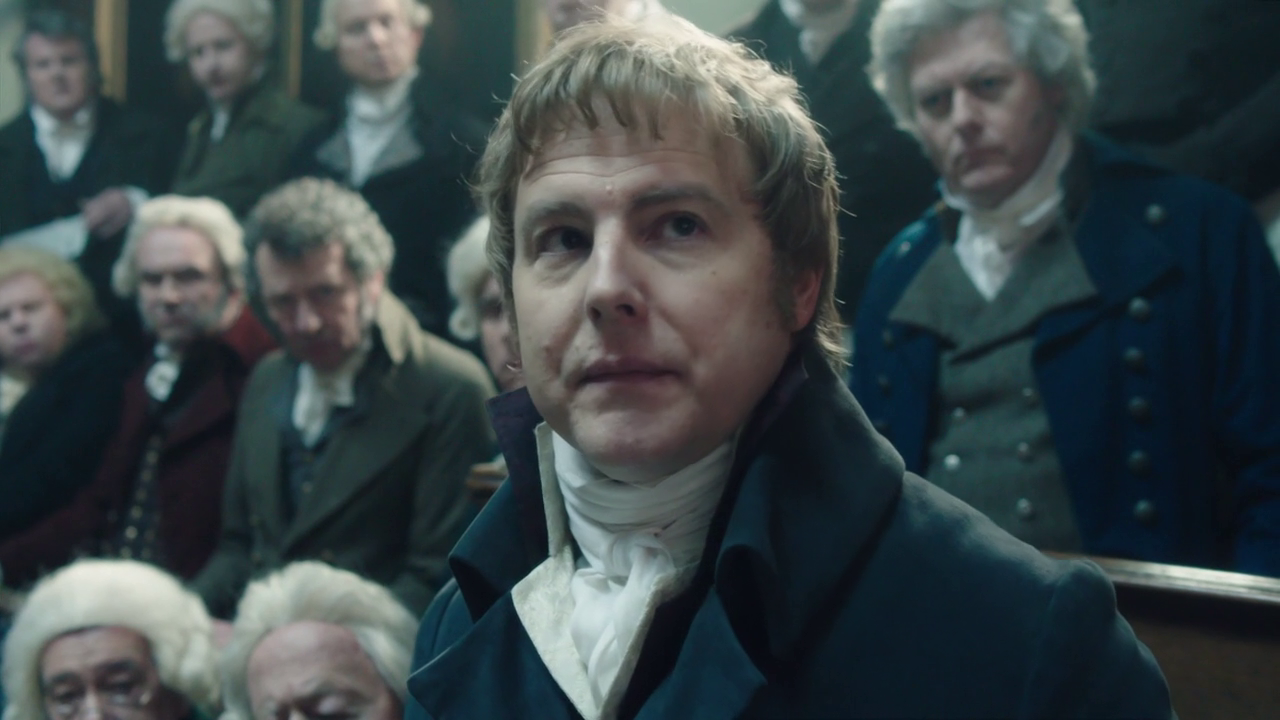
Jonathan Strange & Mr. Norrell Recap: “Jonathan Strange & Mr. Norrell”

So, because I’ve read the book, I feel like I have a pretty good handle on everything that happens in this last episode of Jonathan Strange & Mr. Norrell, but I think that people who haven’t read the book might feel a little let down by it. On the one hand, I’m thrilled that they didn’t dumb things down for the television audience, and I was very excited that the book’s ending was translated almost exactly for the show. On the other hand, I feel like there was a good deal of nuance and many shades of meaning lost in that translation, and I found myself filling in some blanks with information from the novel.

vlcsnap-2015-07-26-14h11m13s249
Sir Walter’s resignation.

“Jonathan Strange & Mr. Norrell” begins in Parliament, where Sir Walter is resigning amid a flurry of reports of new magic being performed all over England. It’s clear that something is happening, and it’s clear that Sir Walter is being blamed for it. The word “revolution” is even used, which is exactly the sort of thing the government would have liked to avoid. After walking out of Parliament, Sir Walter heads to Starecross to visit with his wife. Meanwhile, Mr. Norrell has returned to Hurtfew Abbey, and Jonathan Strange has departed from Venice.

Drawlight and Lascelles.

Drawlight has also left Venice and has returned to England with Jonathan Strange’s messages. However, he is waylaid and murdered by Lascelles. I’m not really sure exactly how this could have been done better on the show, but I didn’t like it. Lascelles here seems almost cartoonishly evil, and I don’t think the show did as good a job as Susanna Clarke did in the book of showing the escalation of Lascelles’s violent behavior and rhetoric, so his decision to murder Drawlight here feels somewhat out of character. Basically, Lascelles in the show has been an asshole, but not a particularly murderous one before now. I was also disappointed that Drawlight wasn’t absorbed into the earth like he was in the book. It was such a beautifully gruesome scene the way Clarke wrote it, and wonderfully symbolic with the land, full of reawakened magic, swallowing Drawlight up entirely.

Lascelles and Childermass.

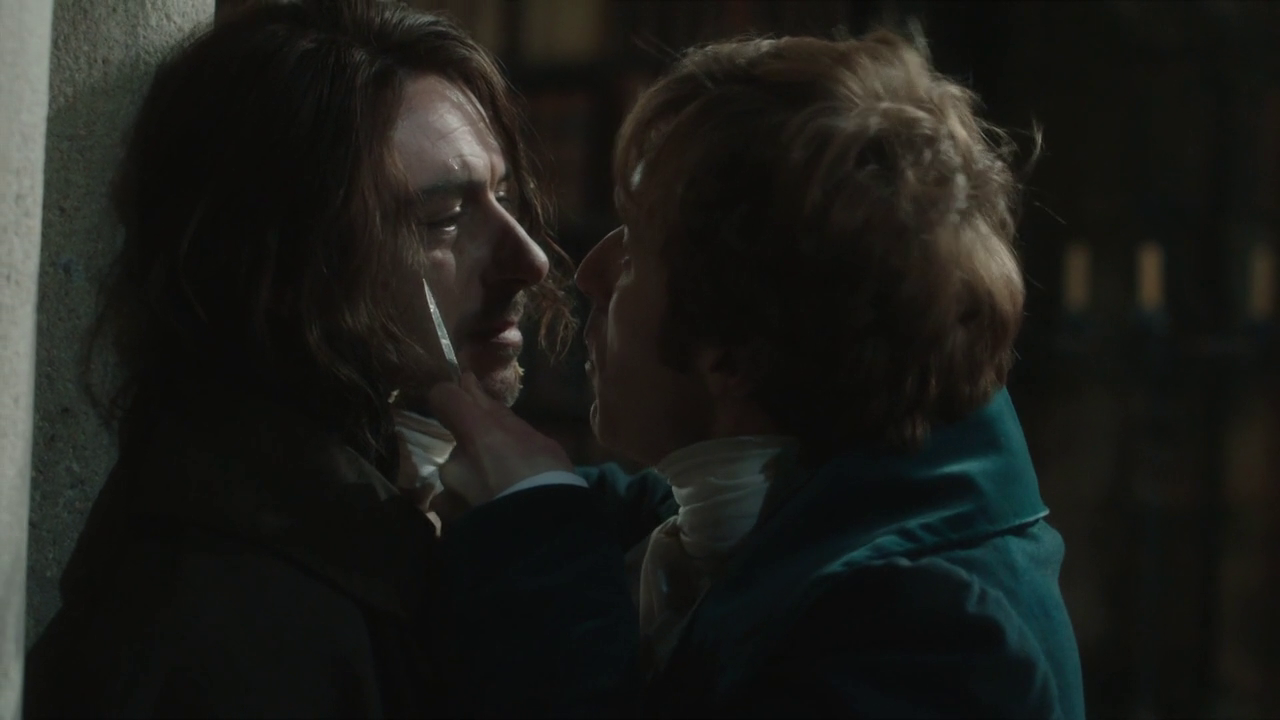
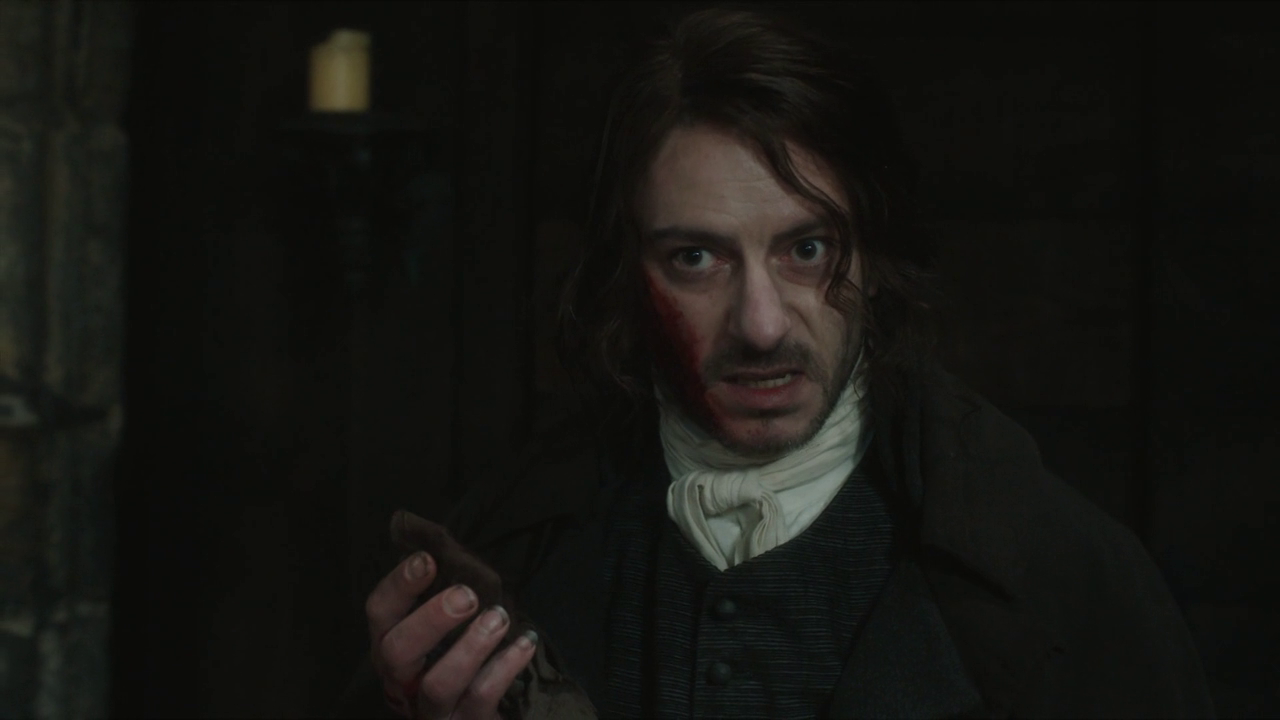
When Lascelles makes it to Hurtfew, things between he and Childermass rather quickly come to a head. While reading his cards, Childermass discovers Lascelles’ murder of Drawlight and misappropriation of Jonathan Strange’s messages. Childermass’s accusation of thievery prompts Lascelles to attack him. While Lascelles does slice Childermass’s cheek, Childermass is able to retrieve the box with Lady Pole’s finger in it. This, he questions Norrell about, but when Childermass asks Norrell’s leave to take the finger back to Lady Pole, Norrell refuses. Finally, Childermass leaves his master, saying goodbye with the sad statement, “You have made the wrong choice, sir, as usual.”

Childermass finally goes.

This is another scene that is changed from the book only slightly, but I think it’s significant. There, the conflict between Lascelles and Childermass occurs similarly, but it ends not with Childermass asking to leave on a mission. In the book, Norrell is forced to choose between Childermass, his servant for some eighteen years, and Lascelles, a recent friend but one who is closer to Norrell in wealth and social status. In the show, Childermass is quitting rather than being sent away, and it mattersJonathan Strange & Mr. Norrell is an exploration of differences, between genders, races, and social classes, and this scene ought to be the climax of the class drama that has been playing out over the previous six episodes. Instead of having Norrell choosing–the worthy Childermass or the wicked Lascelles–the real choice is Childermass’s–to obey Norrell or to finally go his own way–and it doesn’t matter that Childermass says it’s Norrell’s choice.

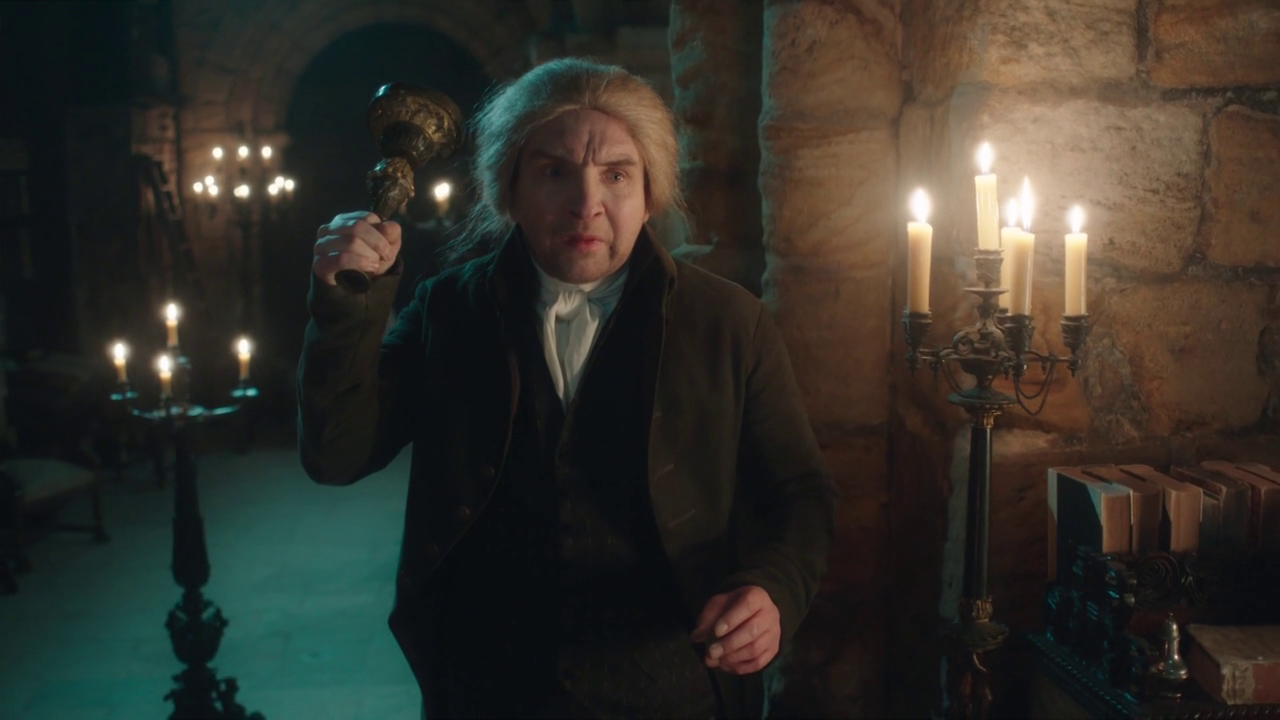
Norrell must face Jonathan Strange alone. With a candlestick, apparently.

A scene that ought to be an indictment of Norrell’s class consciousness and stubborn elitism instead ends up making Norrell seem fairly sympathetic–after all, he’s been duped by Lascelles and now Childermass is abandoning him when Norrell is most in need of a wise companion. It feels to me as if this scene is trying to have things both ways–we’re intended to cheer for Childermass’s emancipation, but we’re also supposed to feel bad for Mr. Norrell. It’s as if the show wants us to believe that Norrell is somehow just a victim of circumstance in this situation, even though that is demonstrably not the case.

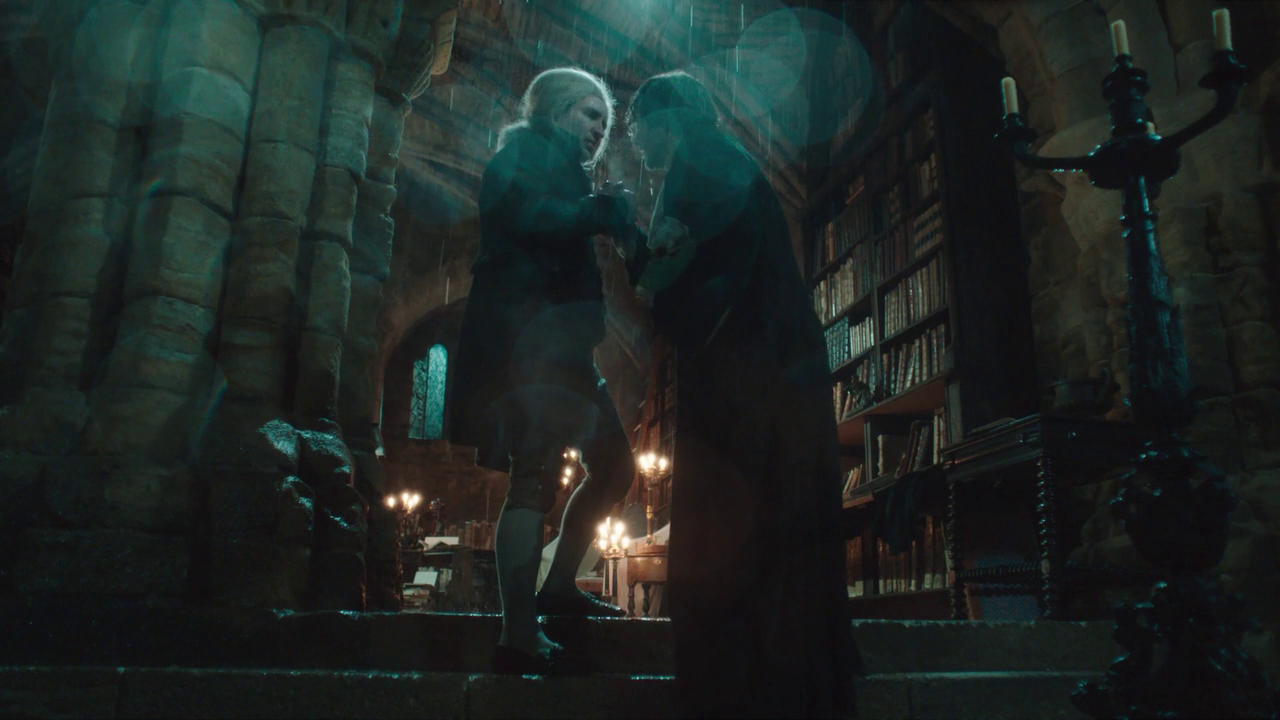
Jonathan Strange and Mr. Norrell in the library at Hurtfew.

With Childermass off on his way to Starecross and Lascelles lost in the labyrinth, Mr. Norrell is left alone to face Jonathan Strange, who has finally arrived. While Norrell has been preparing (sort of) for a fight, it turns out that Strange hasn’t come for revenge at all; he wants Mr. Norrell’s help, to defeat the Gentleman and free Arabella. Their reunion is everything I could ever have wanted, to be honest. It’s sweet and funny and awkward, and while it’s not exactly as it was in the book (in particular, there’s a sort of weird bit of magic that Jonathan Strange does that I didn’t really care for) it captures the spirit of it very well.

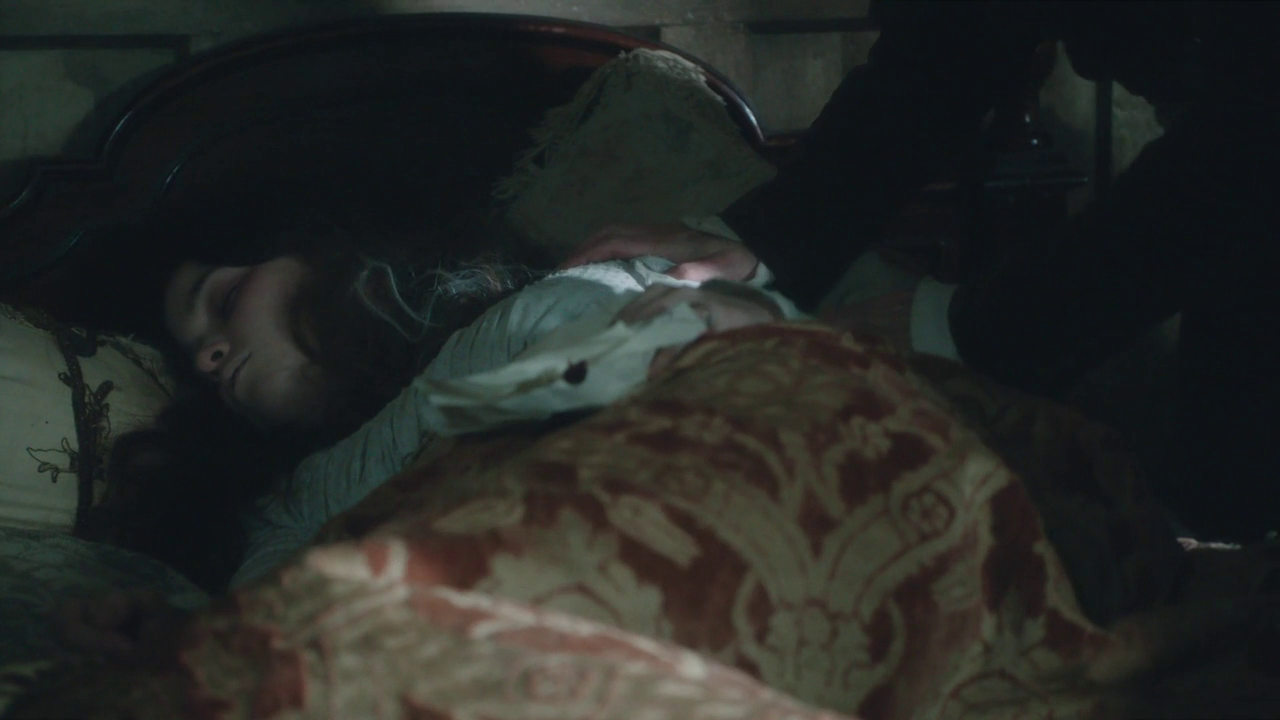
Lady Pole sleeps at Starecross.

By the time Childermass arrives at Starecross, Sir Walter is there and has already been informed by Segundus that Lady Pole is not mad but enchanted. What these men don’t know (because they apparently didn’t bother to really read Jonathan Strange’s letter to her) is that Lady Pole is busy staying at Lost-Hope on purpose in order to watch over Arabella and guide her out of faerie when the time comes.

Sir Walter did manage to catch the part of the letter where it’s mentioned that Stephen Black has been serving the Gentleman, although not the part where Stephen Black was also enchanted against his will. So instead of recognizing Stephen Black’s enchantment, four white dudes lock him into a cell in an asylum. This would be easier to watch if the show was better at dealing with Stephen Black as a character, but it’s not. You would think that possibly Childermass, who is normally so insightful, might speak up for a fellow servant, but he doesn’t (although he’s perfectly willing later to pump Stephen for information). You might think that Segundus and Honeyfoot might recognize Stephen’s affliction as being the same as Lady Pole’s when Stephen is similarly unable to speak of it, but they don’t. You might even think that Sir Walter, who has known Stephen his whole life, might just not be such a dick, but no such luck. It’s truly appalling.

However, what I find more appalling is how little time we really get to spend with Stephen Black in this episode and how little of that time is focused on Stephen Black himself. Just as the show bungles its handling of class dynamics, it also pulls its punches when it comes to dealing with Stephen Black’s experiences of racism as a black man in early 19th century England. We get to see the racism he experiences, but the show neglects to really explore how Stephen feels about it and how it affects his decisions and what it means for his relationship with the Gentleman. A perceptive viewer of the show who is familiar with the book might be able to make something out of what we’re shown, but the examination of racism that characterizes Stephen Black’s narrative is still garbled at best.

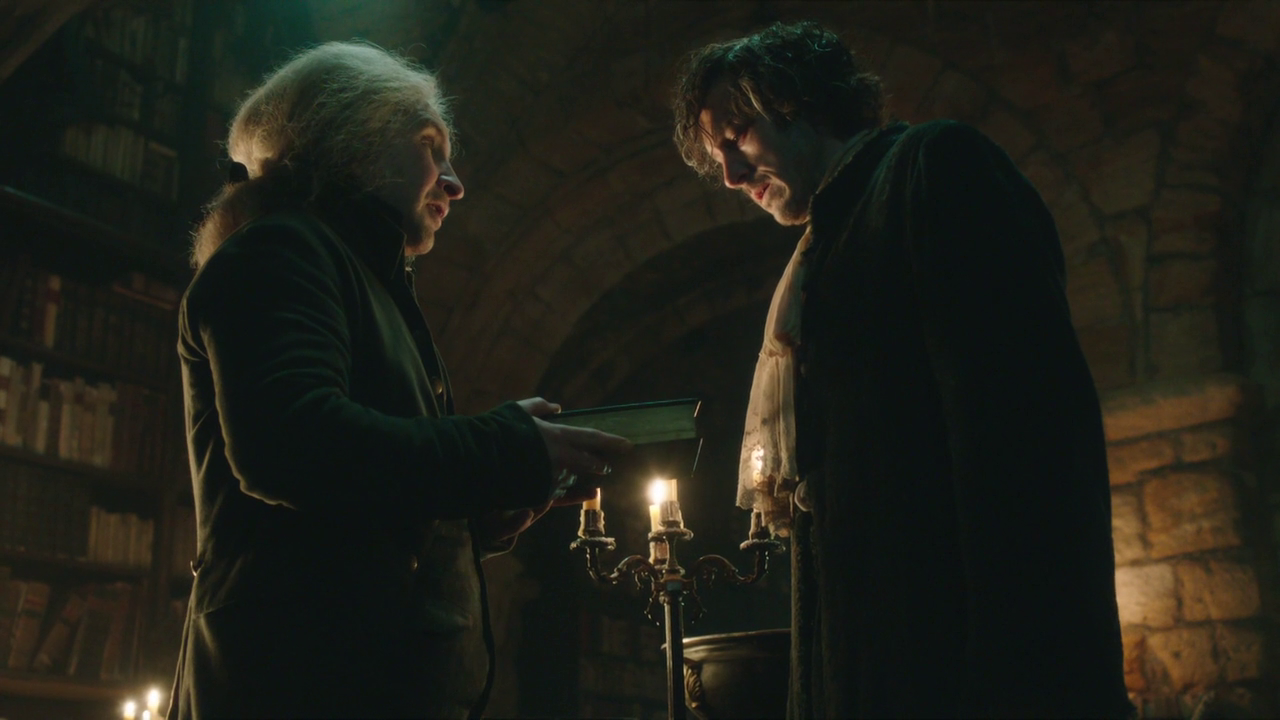
Mr. Norrell has saved one copy of Jonathan Strange's book.
Mr. Norrell has saved one copy of Jonathan Strange’s book.

Back at Hurtfew, Jonathan Strange and Mr. Norrell are trying to figure out how best to summon the Raven King. The trouble is that none of the names anyone ever called him were really his own. The Raven King is a title, and John Uskglass is just the name of some Norman nobleman who might have been his father. The idea occurs to them that they could just use the abbey–built by the Raven King, after all–to find him, and all they have to do now is figure out what summoning spell to use. This is when Mr. Norrell brings out his copy (the last copy!) of Jonathan Strange’s book, and it’s wonderful because this is it. This is the moment when it’s obvious that these guys are meant to be together forever. Because they need each other and they understand each other and they are stronger together than apart.

Lady Pole disappears from Lost-Hope mid-dance.

At Starecross, Segundus has succeeded in rejoining Lady Pole and her finger, and she wakes up spitting mad. Sir Walter seems oblivious to the fact that when his wife says that she “was bargained away for a wicked man’s career” she’s talking about him at least as much as she’s talking about Mr. Norrell. Meanwhile, Childermass goes searching for Vinculus after speaking to Stephen Black. Poor Stephen, of course, is still stuck in his prison when the Gentleman shows up in a rage over his loss of Lady Pole.

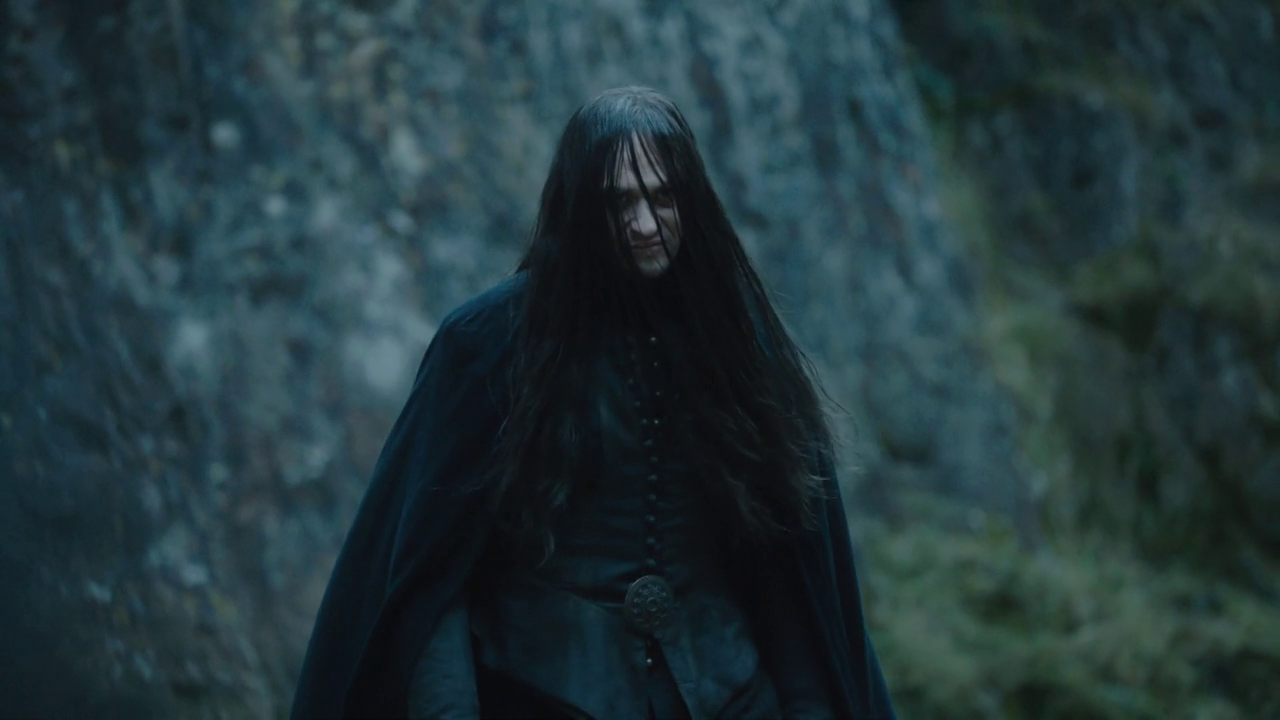
John Uskglass, The Raven King.

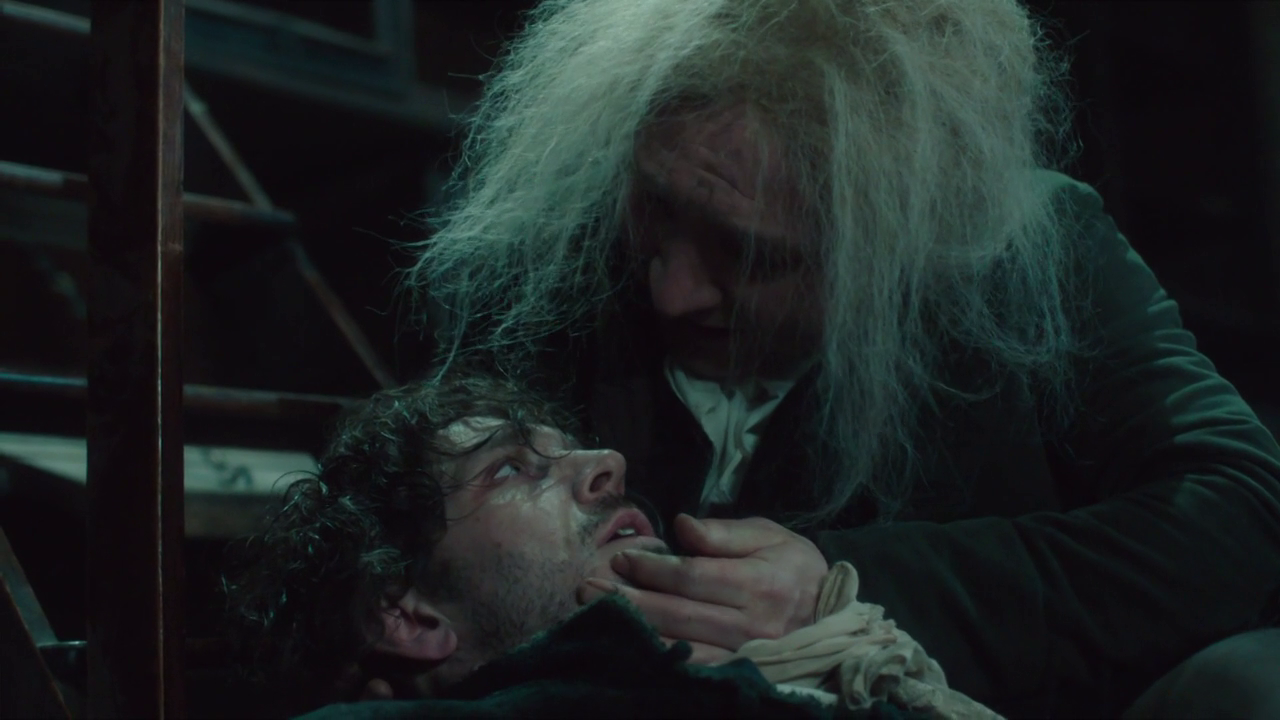
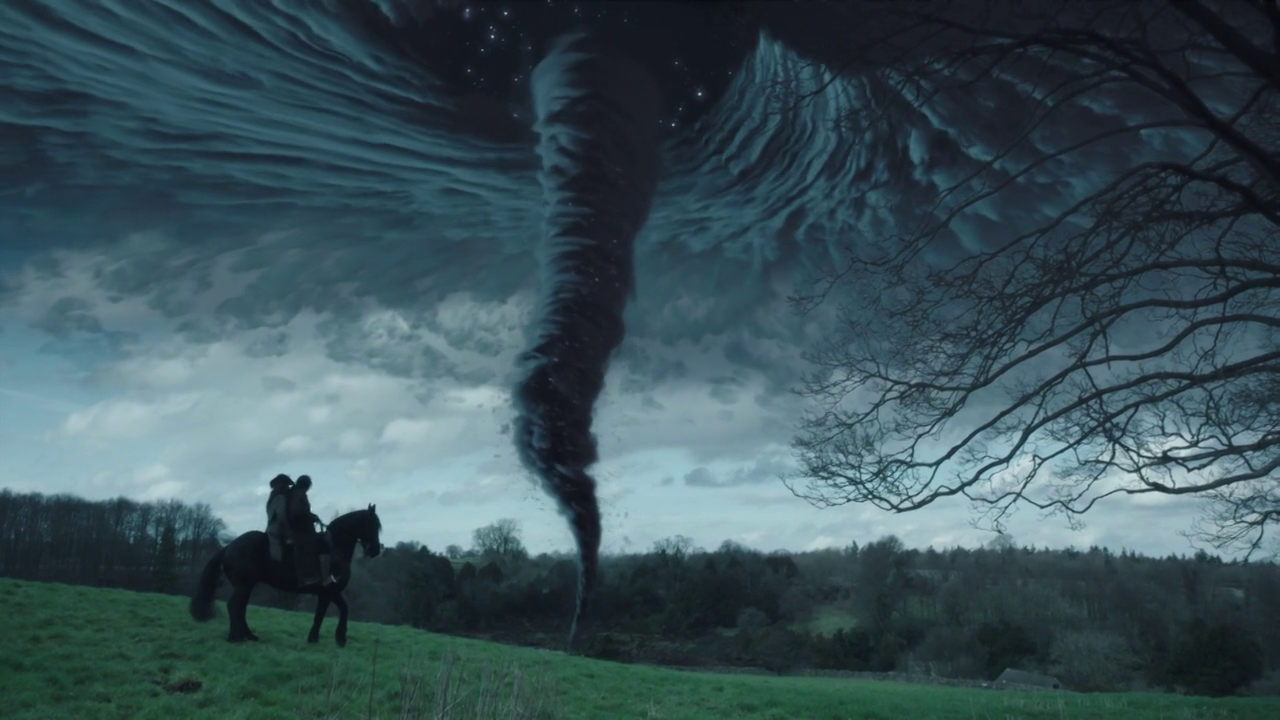
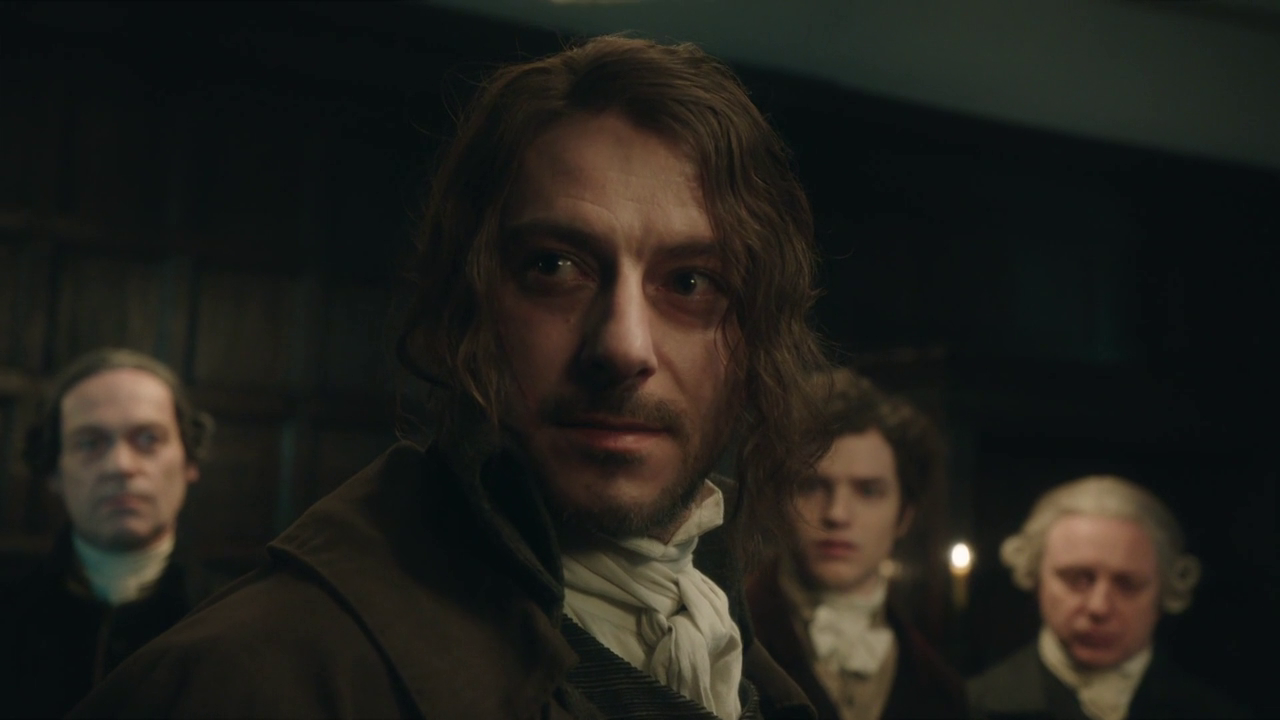
Jonathan Strange and Mr. Norrell succeed in summoning the Raven King, but they are quickly disappointed as he immediately leaves the room. He hasn’t come to help them at all; he’s got to go resurrect and rewrite Vinculus instead. While I have been generally pleased with the casting for this adaptation, I actually hate the way they portrayed the Raven King. All that long, stringy looking hair? Ugh. I suppose it could be worse, but this isn’t at all how I imagined him. I did like how they shot the resurrection of Vinculus, even though Paul Kaye hammed it up perhaps a tad too much.

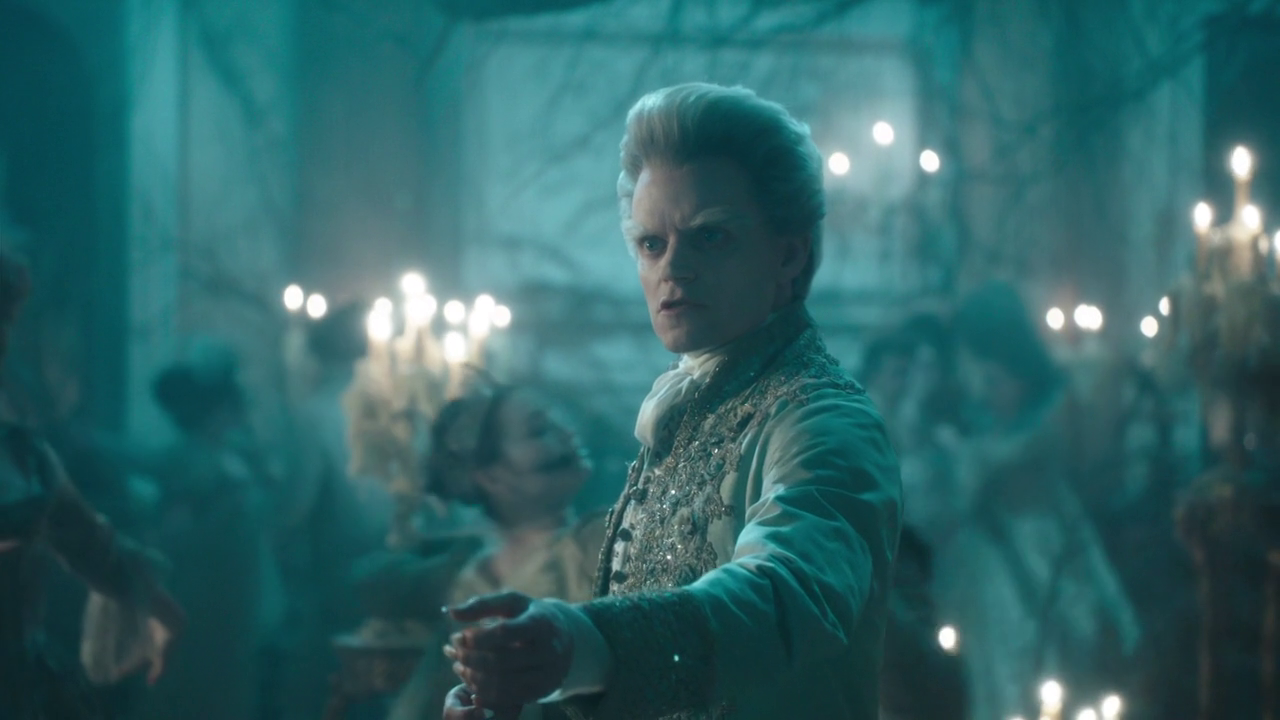
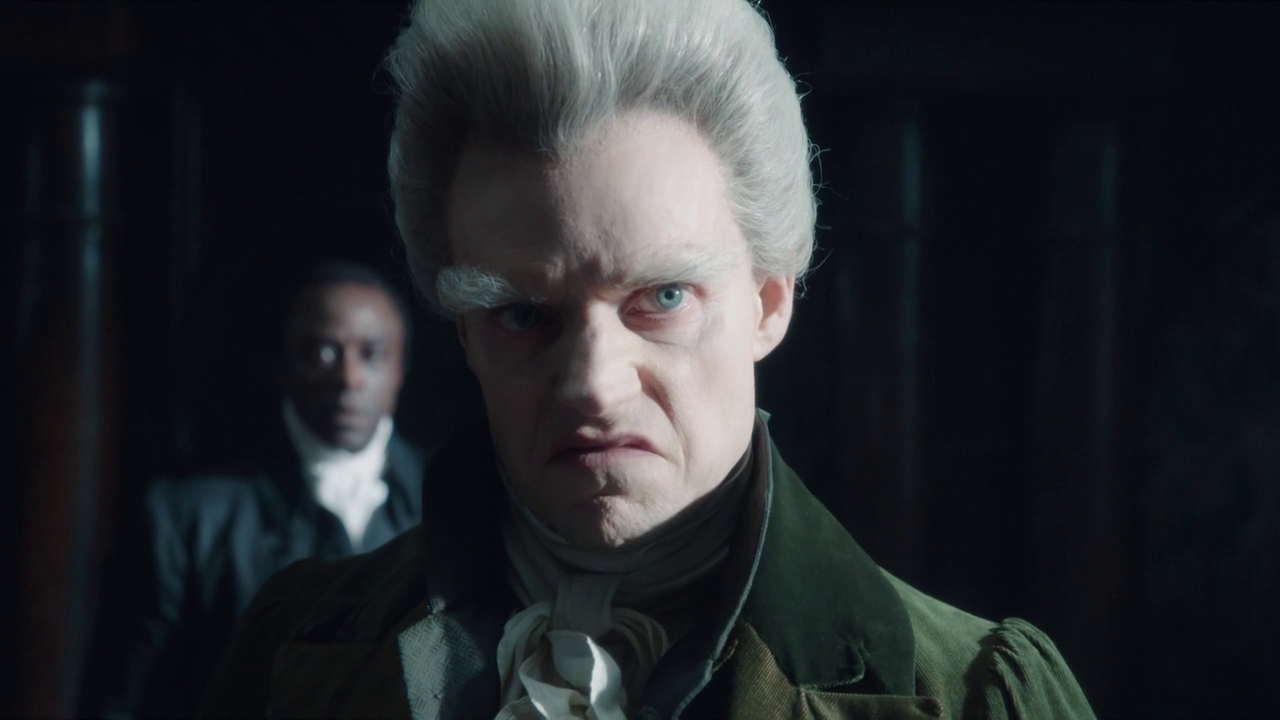
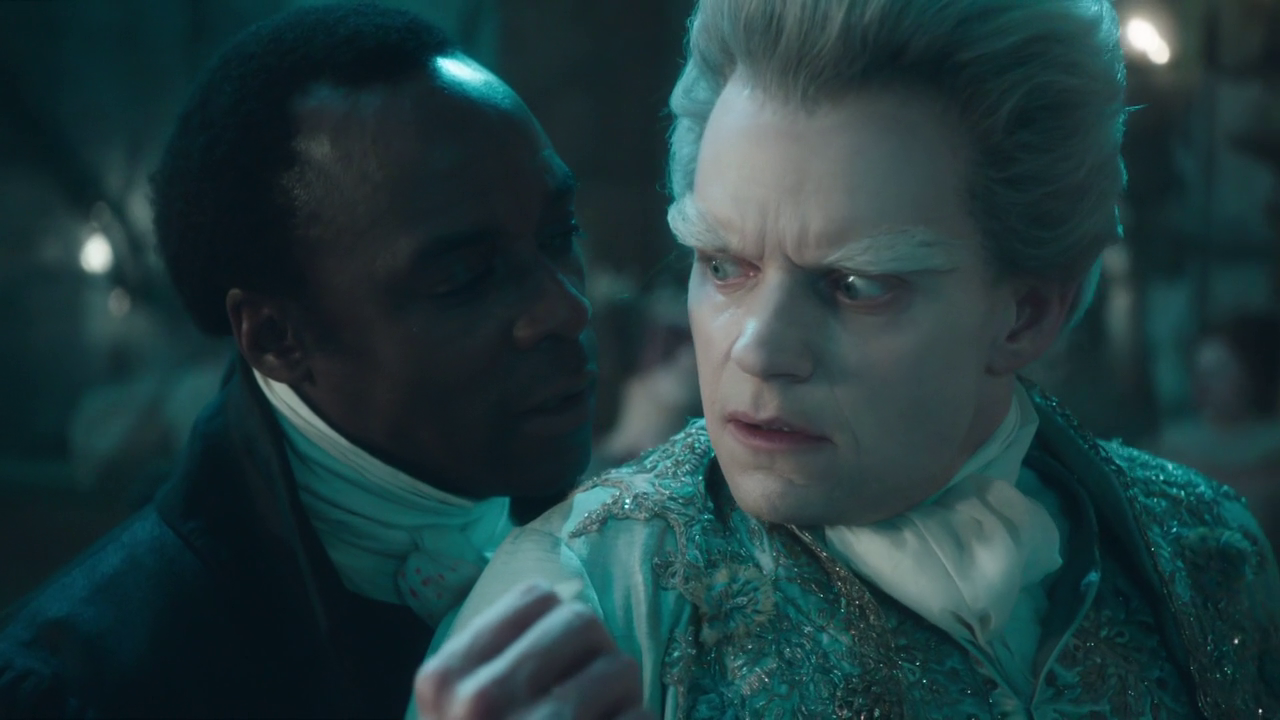
The Gentleman's face when Lady Pole confronts him.
The Gentleman’s face when Lady Pole confronts him.

At Starecross, the Gentleman has arrived and freed Stephen Black from his cell when he is confronted by Lady Pole. This is perhaps my favorite scene in the whole show. Lady Pole is amazing, and it’s incredibly gratifying to see her finally get to use her words after spending so long being unable to speak her mind. It doesn’t hurt that the Gentleman’s reaction is so great. Marc Warren really makes the best faces.

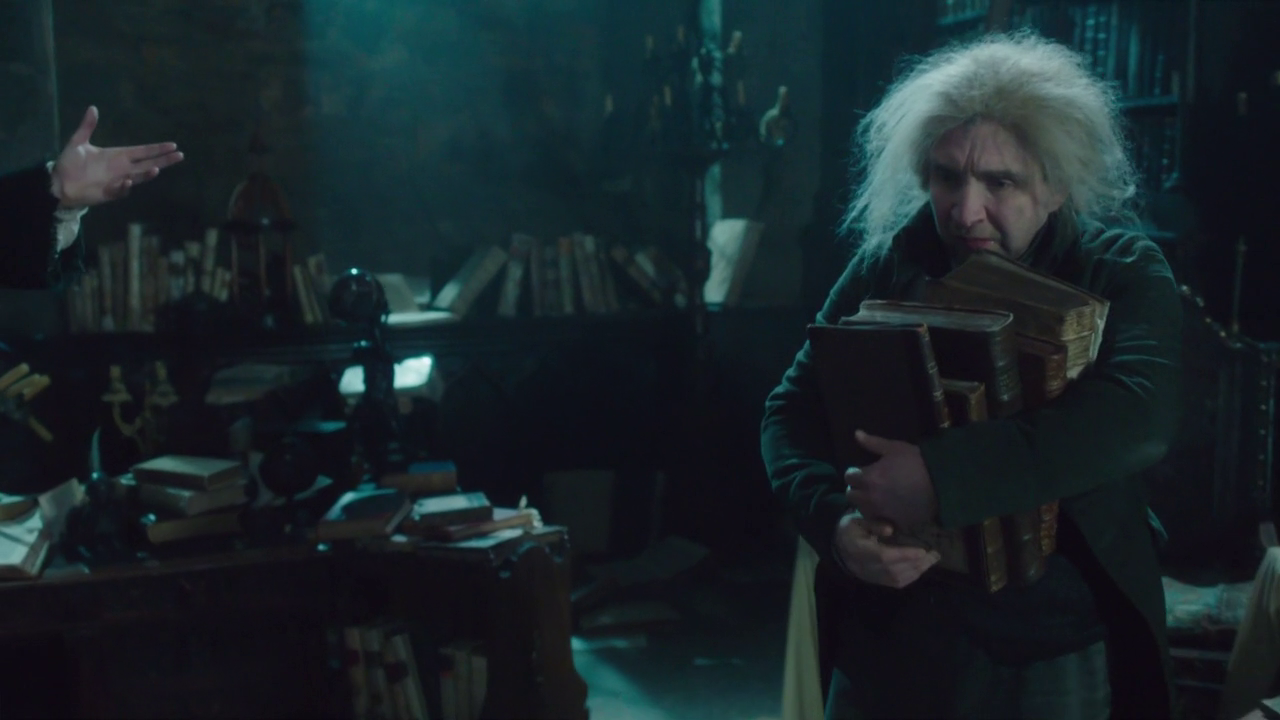
Sacrificing Norrell's books is not a popular idea.
Sacrificing Norrell’s books is not a popular idea.

Things get even better when Stephen Black gets summoned to Hurtfew by the magicians, who are trying to get the Raven King to come back and kill the fairy. They sacrifice Norrell’s library in order to put all of English magic at the disposal of “the nameless slave,” who is, currently anyway, Stephen. This would be all well and good if Lascelles didn’t choose just this moment to escape from the labyrinth and shoot Stephen in the black–just in time for the Gentleman to show up and see what has happened to his favorite. The distraught Gentleman turns Lascelles into ceramic (or something) and shatters him, then returns to Lost-Hope with Stephen’s body.

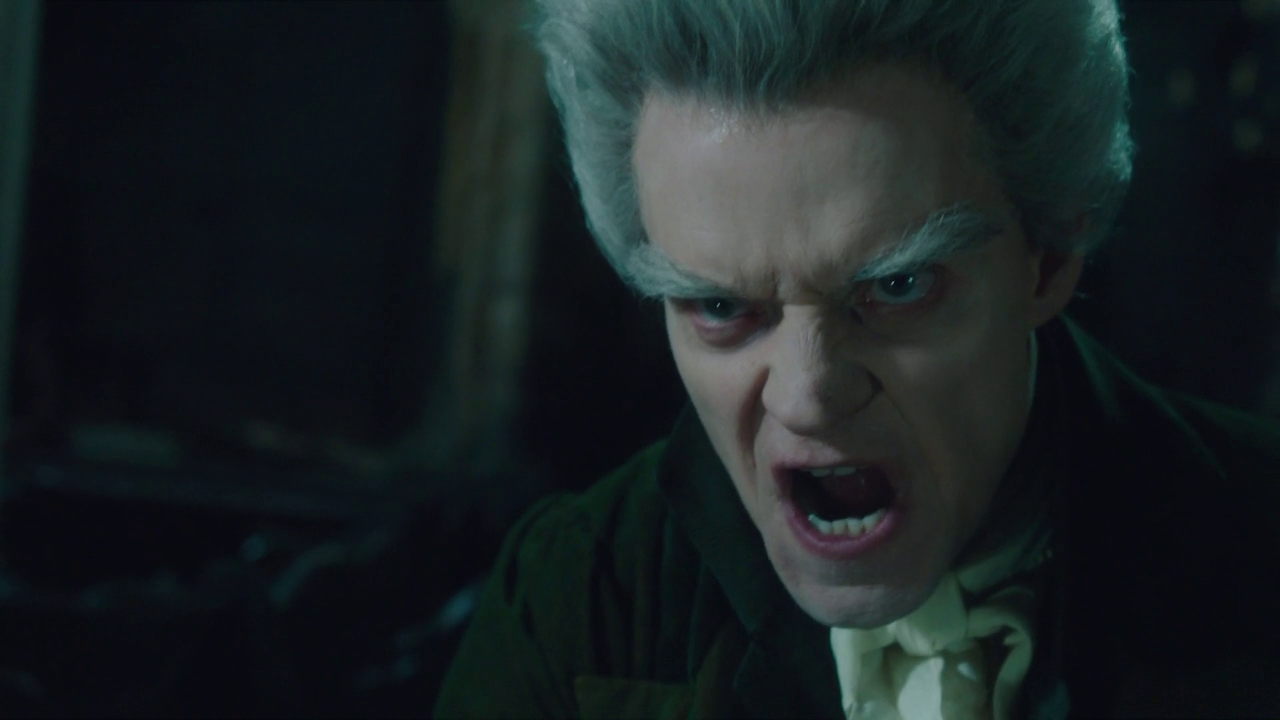
Another great Marc Warren face.

Lascelles’ fate is perhaps the one that is most obviously changed from what happened to him in the book, and it’s pretty disappointing. It’s not that it isn’t nice to see Lascelles sort of get what’s coming to him, but this end, at the hands of the Gentleman, just doesn’t have the same kind of more poetic justice as what happens in the novel. That said, doing the Castle of the Plucked Eye and Heart would probably have added several more minutes to an already packed episode, and not everyone would love it as much as I would. That said, I also felt like Lascelles’ shooting Stephen Black felt gratuitous, a somewhat cheap way to add another tiny bit of drama and, I guess, to give Lascelles something to do so he could be brought back on screen just long enough to die.

vlcsnap-2015-07-26-14h59m15s248
Mr. Norrell’s first journey to Faerie.

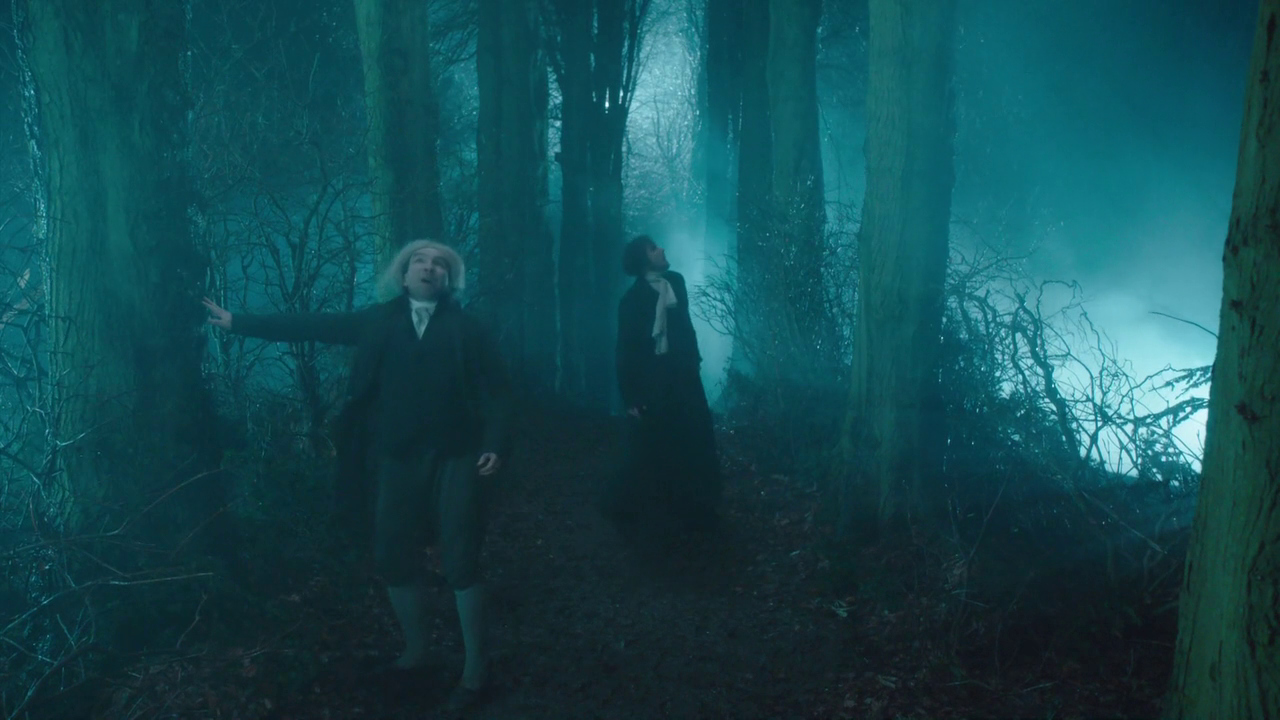
The final climax of the episode takes place at Lost-Hope, where the Gentleman has retreated to mourn Stephen Black. Following Lascelles’ death, Strange and Norrell waste no time in pursuing the Gentleman, which gives us one last brief journey through Faerie. Norrell is at his most likable when he is doing magic, and I enjoyed how much he enjoyed finally seeing Faerie for himself.

Jonathan Strange and Arabella Strange reunited.

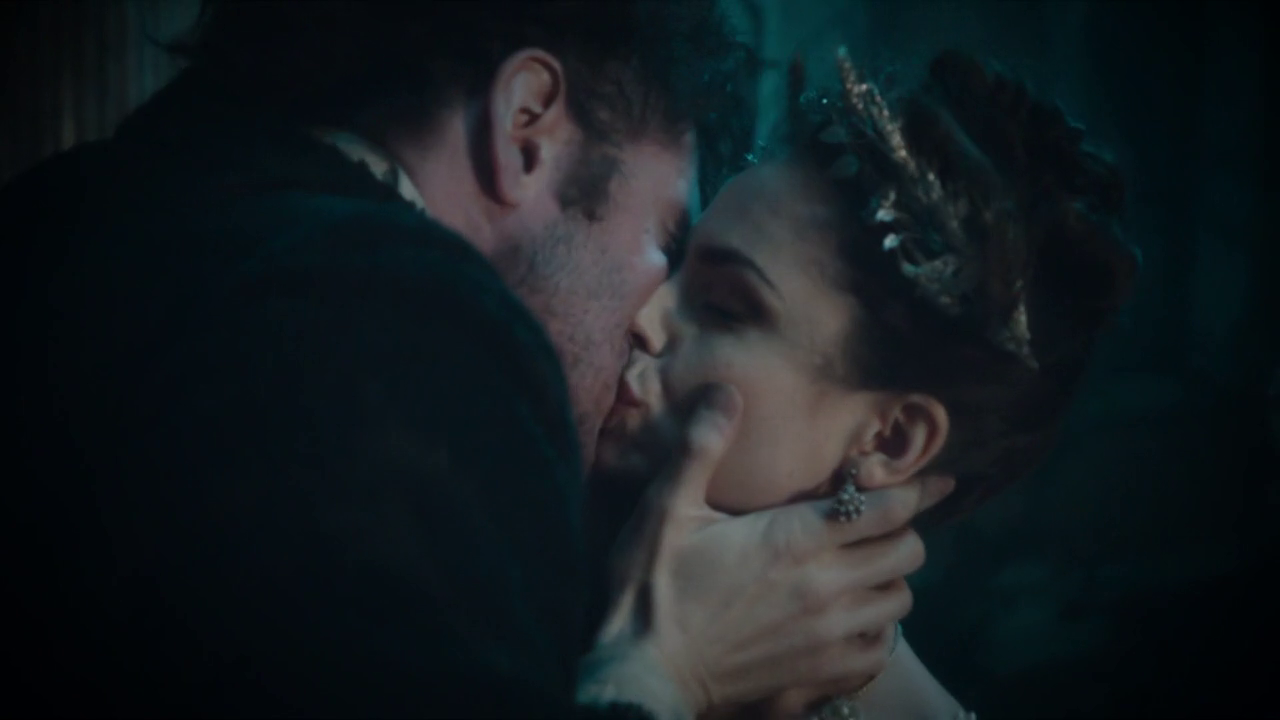
When the magicians finally get to Lost-Hope they split up, with Norrell going to find Stephen Black and Jonathan Strange looking for Arabella. In a sort of cheesy moment that is only necessitated by the rather silly decision to have Arabella brainwashed on the show, Jonathan Strange is able to get Arabella her memories back by kissing her. I still think these two are adorable together, but this was a bit too much. Right before things get really dangerous, Jonathan pushes Arabella through a mirror that takes her to the Greysteels in Venice.

Stephen Black and the Gentleman together for the last time.

What happens next is much more interesting, anyway. The Gentleman is surprised when Stephen seemingly rises from the dead full of magic. I do think Stephen’s moment of triumph here is a little tainted by the general mishandling of his character, but there’s still something very gratifying about seeing a character who has been so disempowered for so long finally having the power to change his situation. I did find myself feeling a little bad for the Gentleman in the end, but the biggest feeling I had about this sequence was that I wish we got to see something–anything–of what Lost-Hope will look like under Stephen Black’s administration.

OTP forever.
OTP forever.

After the Gentleman’s death, Strange and Norrell find themselves back at Hurtfew Abbey where they learn that the fairy’s death hasn’t broken the curse on Jonathan Strange after all. What’s more, it seems that he and Norrell are trapped together now. This might not be for very long, since Jonathan Strange is dying, but Norrell won’t leave his friend either way. Norrell holds Strange in his arms as the black tower sucks up the two magicians and Hurtfew Abbey itself. On a nearby vantage point, Childermass and Vinculus are watching, and Vinculus informs Childermass that Strange and Norrell were only a spell the Raven King has been casting this whole time.

The black tower disappears, taking Hurtfew Abbey with it.

The rest of the episode revisits the rest of the characters before returning at last to York, where the story began. Lady Pole is leaving her husband to join Arabella on the continent, which is awesome and makes me want another show that is just all about the adventures of Lady Pole, Arabella Strange, and Flora Greysteel. I might feel bad for Sir Walter, who seems a bit sad and taken aback by his wife’s decision, but Sir Walter is awful and I think leaving him is the best thing Lady Pole could do for herself. Her speech about not wanting to trade one kind of bondage for another is a little heavy-handed, but it could have been worse probably.

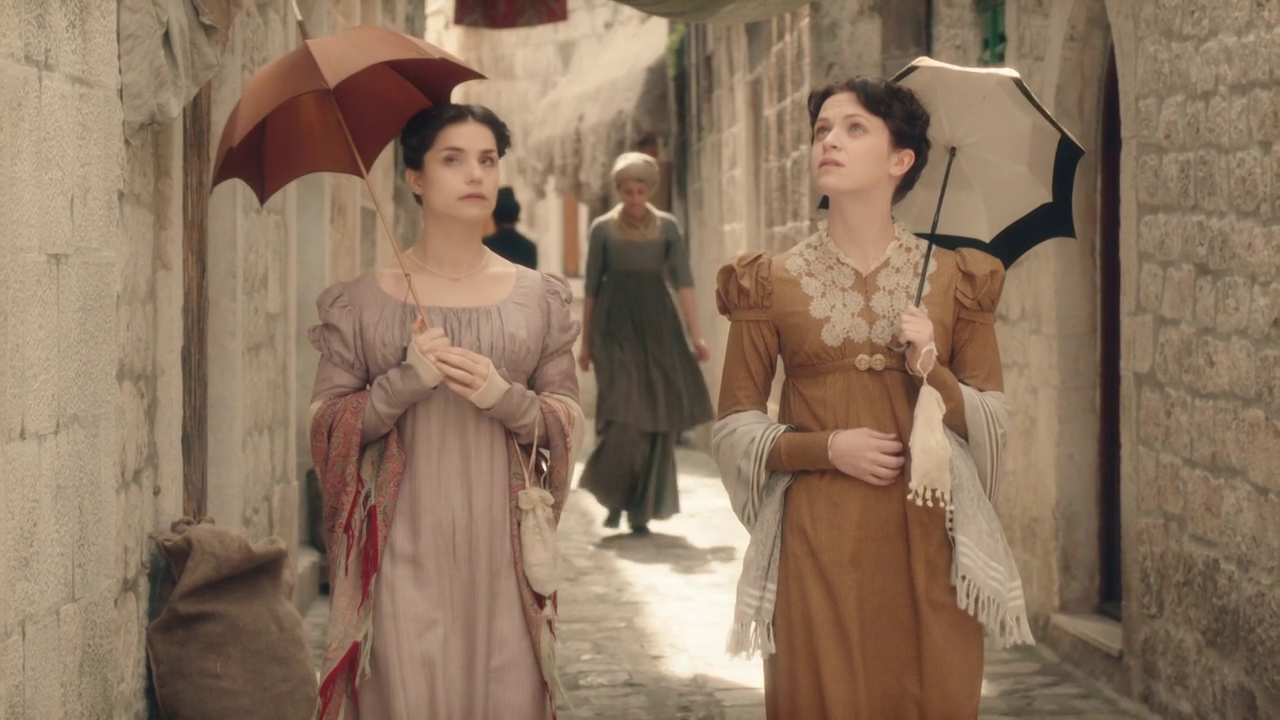
Arabella and Flora in Venice.

Speaking of Arabella and Flora, they are becoming good friends. Flora has brought Arabella to the place where Jonathan Strange once lived in Venice, and Arabella gets to have one last conversation with her husband there. The circumstances are somewhat different, but the conversation is much the same as the one they had at the end of the book where Jonathan tells her to be happy and not mourn too much for him. I was surprised that I didn’t find this scene particularly affecting (I really thought I would be sadder, to be honest), but I was glad that they retained the ambiguity of the book’s ending. I was half worried that the show would try to shoehorn in a happier ending for Jonathan and Arabella. Interestingly, though, this isn’t where the show ends at all.

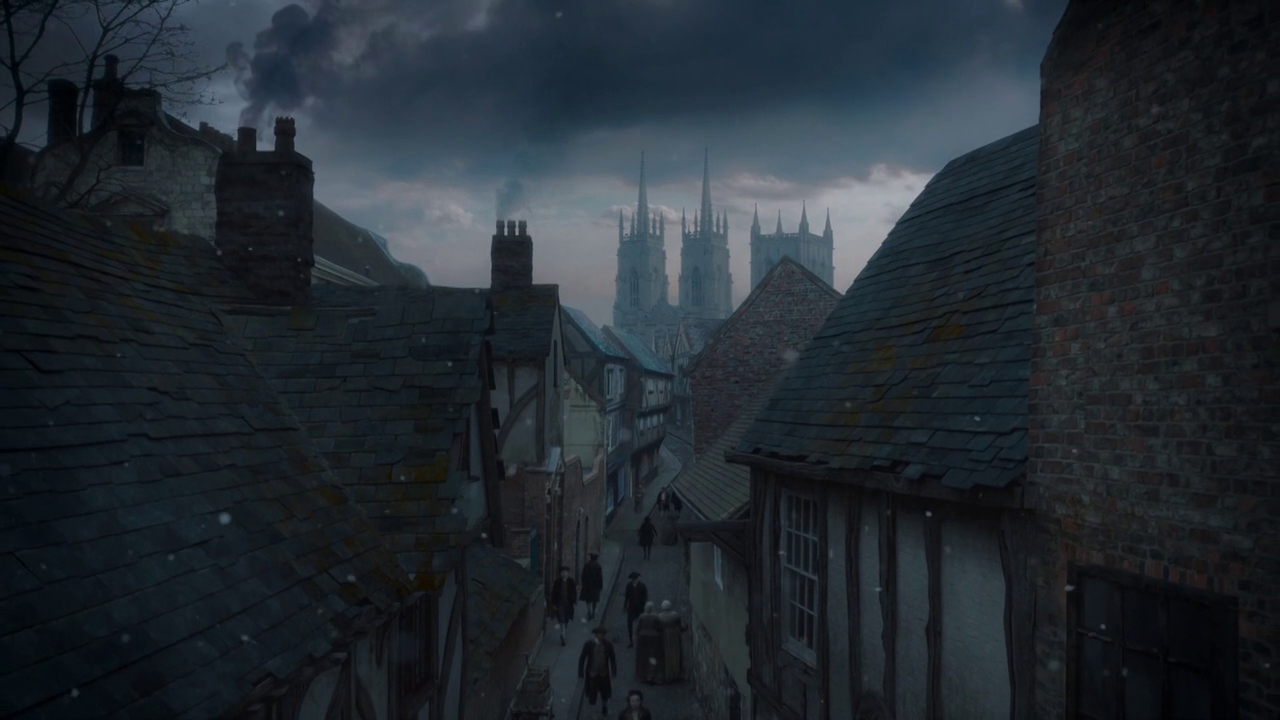
York.
Ending at the beginning. York.

The show ends, not with Jonathan and Arabella or even Strange and Norrell, but where it began, with the York Society of Magicians. Following the disappearance of Strange and Norrell, Childermass has gathered the group once more to tell them that their agreement with his master is null and void. They are all free to study and practice as much magic as they like. When they point out that they have no books now that Norrell and his library are gone, Childermass brings forward Vinculus, who is still the Book of the Raven King and newly rewritten. They will learn to read it together.

For all that this episode did a good job of collapsing its storylines and focusing the action into just a couple of places, it at times felt frantically rushed, and the final “where are they now?” montage seemed almost tacked on. Certain things seemed glossed over and unclear, although I suppose that, technically, all the ends of the story are tied up. But I would have liked to see just a bit more of everyone, especially Lady Pole, who was recreated so brilliantly in the show by Alice Englert, and Stephen Black, whose fate seems rather uncertain in the show, what with Lost-Hope crumbling and all.

Ultimately, for me, this show has turned out to be just slightly unsatisfying, which is almost worse than if it had just been terrible. There are a lot of things in this adaptation that I would have dont just a little differently, but nothing that I passionately feel needs to have been changed. That said, I’ve now watched it all the way through twice, and I liked it much better the second time. I think this will be a show that I watch over and over again and enjoy differently on each viewing, which is perhaps the best thing I could say about any miniseries.

Childermass announcing the beginning of a new age of English magic.

Weekend Links: July 25, 2015

“Many-Fur” by Maurice Sendak. Brain Pickings has collected some of the most beautiful Grimm illustrations ever created

The Awl on The Pixar Theory of Labor

Five Ways to Add More Diverse Writers to Your White Mail Dominated Reading Lists at Lady Business

Aliette de Bodard picks apart Chose Ones, Specialness, and the Narrative of the One.

“It’s the End of the World As She Knows It” – The New York Times discusses how women envision our dystopian and postapocalyptic futures.

Speaking of. . . Nerds of a Feather, Flock Together has 11 Tips For Surviving Our Current Dystopia

Den of Geek lists 50 Forgotten Sci-fi Movies From the 90s, just in case you’re bored this weekend.

The Earliest Science Fiction at Motherboard

The Mary Sue cover’s how Steam’s Rust takes on race and gender issues.

Portland Monthly profiles Ursula K. Le Guin.

io9 on Ursula K. Le Guin, Fyodor Dovstoevsky, and the Snuggly Comfort of Evil


Halfway through the season, Killjoys is still floundering

I would have liked “A Glitch in the System” if it were a 90-minute sci-fi thriller, but as an episode of this show it just didn’t work for me. Because I have a hard time just abandoning shows in the middle of a season, I will be continuing to watch, but I’m beginning to despair of the show ever finding its footing.

In this episode, we learned some things:

  1. D’avin is still having PTSD nightmares, but he’s going to Pawter for some kind of treatment.
  2. Apparently Killjoys also sometimes loot wrecked ships, I guess.
  3. D’avin and Johnny have some inside family joke about space rats that no one thinks is funny. Because it’s not funny.
  4. This wrecked ship is clearly a terrible place. Yep. Turns out it’s a torture ship, because that is a thing in this universe, although it largely goes unexamined and uncriticized in spite of the use of politicized terminology like “enhanced interrogation.” It feels more like dystopian window dressing than any sort of serious political or social commentary.
  5. The thing that D’avin did that is causing him so much mysterious manpain is murdering his whole squad, except he doesn’t remember anything about it other than that he did it. No one seems particularly surprised or concerned by this, although they do feel bad for D’avin because he’s clearly torn up over it.
  6. Dutch is a badass, and she jumps out into space with no suit on.
  7. Lucy is an asshole, and she likes Johnny best. Personally, I like jerk AIs although this is, admittedly, a silly trope.
  8. D’avin has some kind of memory dampeners implanted in his brain, which I guess explains his memory loss.
  9. Khlyen really wants Dutch to do murder for him, but I still don’t understand why it’s so important that it has to be her, what with her being so reluctant about it. This plot is moving along at an almost negative pace.
  10. This episode is very sadly devoid of the costume porn we saw in previous episodes. There’s not even a single pretty dress in it.

Here’s the thing about this show. It needs to pick a thing and stick with it. Early on, Killjoys was compared heavily to Firefly, but the major strength of Firefly was that it was essentially about just one thing: how the ragtag group of libertarians kept their ship running and avoided government interference in their professional crime. Sure, Firefly had a couple of background plots like with the Tams (although they were also just trying to avoid the government) and whatever was going on with Inara (who even knows?), but it was all very thematically consistent.

Killjoys is all over the place thematically; although it has some interesting ideas, it just never quite manages to be coherent. It could be that the season is building towards some kind of major resolution in the final couple episodes or something, but if I wasn’t so neurotically committed to seeing things through it would have already lost me as a viewer. Judging from the general lack of buzz and mediocre reception of the show I’ve seen elsewhere, whatever the show’s strategy is doesn’t seem to be working out so great for them.