All posts by SF Bluestocking

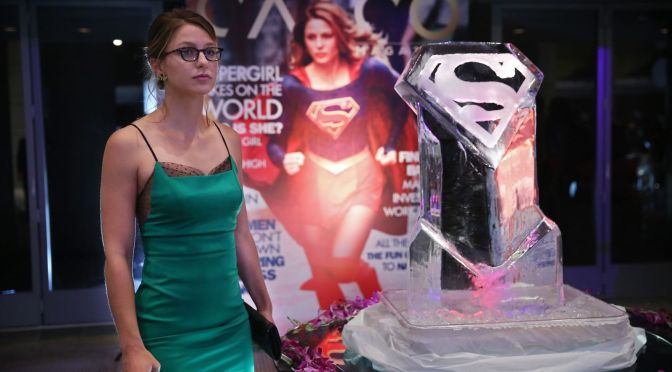
Supergirl finds its balance with “Fight or Flight”

This was my favorite episode of Supergirl yet, and it’s the first episode of the show so far that feels truly cohesive. Though it did slip into too-cheesy territory a couple of times, “Fight or Flight” worked really well thematically and finally brought all the show’s parts into a mostly comfortable balance. It’s the first time so far that I’ve felt like Kara’s regular life, her superhero alter ego’s trials, and the DEO belong in the same universe.

The first order of business in this episode is Supergirl’s interview with Cat Grant, which doesn’t go well and has Supergirl flying off in the middle of it after getting flustered and outing herself as Superman’s cousin. Cat then goes on to write her profile of Supergirl as more of a think piece on millennials. On the one hand, I think we’re all more than tired of the ubiquitous anti-millenial screeds disguising themselves as serious thought these days. On the other hand, Supergirl didn’t give Cat much to work with.

Kara, on the other hand, is much more capable of handling her tempestuous boss and gives a pretty impassioned speech defending Supergirl. I like that Kara’s transformation into Supergirl doesn’t make her flawless, and I really appreciate the way the show is portraying her different strengths and weaknesses in different situations. It’s interesting to see the way the show is exploring Kara’s dual identities. Unlike many superheros, Kara is in many ways more confident in her regular life, and it’s putting on her suit that turns her awkward and uncertain. As Supergirl she’s tongue-tied, but as Kara she’s totally willing to stand up to someone as fearsome as Cat Grant.

Speaking of Cat Grant, it was nice to see her loosen up a little this week and break out of stock character tropes. If she’s not going to be a villain, it’s good for her to be humanized some, and we get a good amount of that here. I love that, though Cat is very particular about her coffee and the environment in her office and thinks nothing of being verbally abusive about lack of perfection in these areas, she’s not threatened by criticism. This is something that we’ve seen in previous episodes as well, but it stood out to me this week, particularly when Kara disagreed with Cat’s portrayal of Supergirl in her magazine article. While I wouldn’t say Cat was encouraging to Kara in this scene, she also seemed to listen to her and take her seriously rather than simply dismissing her criticisms out of hand.

All that said, I can’t tell exactly what the show wants the relationship between Cat and Kara to be. For all her antagonistic qualities, I feel like Cat would be a great mentor. Otherwise, I worry that she’ll end up being too one note to be really interesting. With so many other things going on in the show, it’s important that each part avoid being boring. Calista Flockhart and Melissa Benoist work well together, and I’d hate to see the show squander a potentially great dynamic by adhering to closely to stereotypes.

The bad guy of the week this time around turns out to be an old foe of Superman, one who he hasn’t been able to defeat: Reactron. There’s a great moment when Kara mocks the villain’s name only to find out that James Olsen is the one who thought it us, and this might be my favorite Kara moment of the episode. She’s had such a huge crush on James, who is a little older and ridiculously handsome and just kind of generally dreamy, and the show has managed to capture perfectly that moment when someone finds out that the object of their affections isn’t a total paragon of wonderfulness, but is in fact a regular person who sometimes has ridiculous ideas just like anybody else.

In her conflict with Reactron—who wants to kill Supergirl to hurt Superman after finding out about their familial relationship—Kara is also trying very hard to differentiate herself from her cousin and build up her own reputation independently of any expectations based on her relationship to Superman. For both personal and PR reasons, it’s important that Kara manages to figure out, as she says, “what Supergirl means.”

The good news is that, by the end of this episode, both she and the audience have a much better idea of that. Even better news would be if this episode marks the end of Superman’s looming presence over this show. While I think it’s good for the show to address the issue, I think that focusing too much on Supergirl’s struggle to escape from under Superman’s shadow does more to invite comparisons than to dismiss them. I loved this episode, and I even loved the cheesy IM conversation between Kara and Superman. In fact, that is a great place to end this exploration of these themes for now. Clark’s sweet words of encouragement to Kara ought to act like closure for this subject and allow her (and the show) to move on to bigger and better things.

Stray thoughts on the episode:

  • I would 100% watch Keeping Up with the Kryptonians.
  • NO ONE on this show can keep a secret. They are literally all the worst at this. Every one of them.
  • Maxwell Lord is basically what I think would happen if Pharma Bro and Tony Stark had a baby.
  • I am so happy that Perd Hapley is the newscaster in National City.
  • Winn is really adorable, but he needs a personality trait or two besides “devoted to Kara.” So far, the show hasn’t made him into a total Nice Guy™, but there’s really no telling how long that can last if they don’t give the poor guy something else to do.
  • Alex and Kara seemed more like real sisters in this episode than they have before. The final scene with them hanging out is my favorite thing that’s happened in this show ever. Hopefully this is the beginning of a long term trend away from the somewhat canned-sounding platitudes that have been far too characteristic of their relationship before now.

Doctor Who: “The Zygon Inversion” is great, but only if you turn off your brain

“The Zygon Inversion” was not at all what I was expecting, but the more I think about it, the more I think that it’s probably exactly the sort of thematically confused, unsatisfying pablum I ought to expect from this show by now. Frankly, it was just a kind of bizarre episode made all the more frustrating for being technically very good.

We start with getting a different perspective of last week’s cliffhanger. It turns out that, while Clara’s being body-snatched she’s actually trapped in a sort of weird nightmare house where she is somewhat aware of what Zygon-Clara is up to and slightly capable of influencing Zygon-Clara’s actions. Nonetheless, she doesn’t have enough influence to prevent Zygon-Clara from destroying the plane carrying the Doctor and Osgood.

Straight from there, Zygon-Clara goes to destroy the life of, apparently, the first other Zygon she finds. Though he tries to escape, she succeeds in disabling the poor fellow’s ability to shapeshift, forcing him to reveal himself as an alien to a rather unimpressed-looking group of teenagers outside his apartment.

Meanwhile, real Clara is rewinding Zygon-Clara’s memories and sees that two people (Osgood and the Doctor, natch) managed to parachute out of the blown-up aircraft. Cut to Osgood and the Doctor, who have landed on a beach surrounded by wreckage that is curiously devoid of any other people. This sort of glossing over and trivializing of tragedy is both annoyingly characteristic of the show and rather at odds with the pacifist message of this episode in particular. The Doctor may profess all he likes that he doesn’t like this sort of thing, but his silence here is telling. He’s more concerned with Osgood’s broken glasses than with anyone else who might have been on the crashed plane.

Speaking of Osgood, I’ve never much liked her, but I found myself falling a bit in love with her this week, perhaps precisely because she’s such an unusual and slightly irritating character. I still can’t stand her silly costumes, but I love how much thought she’s clearly put into the idea of how she would go about trying to take over the world. It’s also worth noting that Osgood and her strict insistence on not revealing whether she is human or Zygon is possibly the single thing in this whole two-parter that makes proper sense. Goodness knows, the new mythology introduced here, with the Zygon pods and their needing a “live feed” to what’s in Clara’s brain (because apparently the Zygon’s aren’t just shapeshifters now) is more than a little silly.

Elsewhere, Zygon-Clara thinks she’s found the Osgood box, a device that will supposedly end the cease-fire, but instead she’s only got a laptop with a pretty mocking video telling her that she hasn’t got the box at all. She soon receives a call from the Doctor, during which he tips her off to Clara having the information that Bonne (Zygon-Clara’s real name, it turns out) wants.

This leads into another scene of weird and nonsensical lore-expansion as Bonnie goes to Clara’s pod to interrogate her. Bonnie is able to psychically link with Clara to chat, and we learn that even their heartbeats are linked, so they can’t lie to each other. Clara tells Bonnie about the Osgood box, although it’s pretty obvious that Clara is telling the truth very cleverly, and Bonnie sets off (with Clara’s pod in tow) to find the box for real.

In the meantime, Osgood and the Doctor go searching for the Zygon that Bonnie forcibly revealed after video of the incident has gone viral. They manage to find him, hiding a shop and completely devastated by his affliction. In a powerfully affecting scene, they confront the unmasked Zygon only to have him kill himself right before their eyes. Unfortunately, we’re not given much time to be affected by this turn of events because that’s when Zygon-Kate and a couple of Zygon-UNIT officers show up to take Osgood and the Doctor to the Zygon command center where Clara’s pod was stored. By the time they get there, Clara’s pod is gone and Bonnie has discovered the problem with the Osgood box—there’s two of it. In a tense scene, we learn that Zygon-Kate is actually real Kate, which is good (although it begs the question of how Bonnie didn’t know that Kate wasn’t a Zygon all this time), but also quickly compounds the problem. The Doctor, Osgood, and Kate rush off to where Bonnie is, where Kate immediately tries to figure out how to use the second box.

The last fifteen minutes of the episode are dominated by what is essentially one long, impassioned monologue by the Doctor as he talks us through this standoff. Peter Capaldi is absolutely at his best here, and the monologue itself is well-written, but it pretty much completely ignores the crux of the matter that was supposedly at hand last week—the desire of at least some of the Zygons to live openly among humans without having to hide their true selves, which led them to some regrettable and ill-advisedly radical and violent actions—in favor of addressing an altogether different issue. Namely, the general destructiveness of war and the ultimate futility and counterproductivity of violence as a way of resolving disagreements.

It’s a great speech, as far as it goes, and certainly Capaldi’s performance is superb, but it feels disconnected from and insensible of the underlying issues, and the return to the status quo at the end of the episode is profoundly unsatisfying as it solves nothing. The truth is, if you think about it much at all, the speech doesn’t go very far at all, and on rewatching it to write this, I was struck by the degree to which the Doctor entirely ignores the quite legitimate concerns and anger and fear of both Bonnie and Kate. Instead of actually engaging with the two women, the Doctor berates and shames them into compliance with his wishes by insulting and infantilizing them in turn.

Earlier in the episode, the Doctor quipped to Bonnie that he is old enough to be her messiah. This seemed like a weird thing to say (not least because he wouldn’t be Bonnie’s messiah, what with her not being human), and it becomes plain to see by the end of this scene that the Doctor has some very strange and inflated ideas of himself. I’m not quite ready yet to call it a messiah complex, but it’s decidedly odd and unfortunately grating, mostly because the Doctor seems absolutely incapable here of empathizing with or even granting basic respect to either Kate or Bonnie, although most of his ire seems to be reserved for the Zygon woman.

It’s downright uncomfortable to watch as he shouts Bonnie down, refuses to call her by her chosen name, and belittles her, only to then turn around and condescendingly offer her forgiveness for the things that she’s done. The spiritual connotations here are very clear, and unpleasant. They are also, so far, unexamined, and the overall tone of the episode is that the Doctor is the hero of this story.

In the midst of the Doctor’s rant, Bonnie accuses him of creating an untenable situation with his original peace agreement, which she insists is unfair to the Zygons—and it is unfair. In response, the Doctor denies any responsibility for the problems and blames Bonnie for the current impasse. The thing is, Bonnie is right. The terms of the peace agreement, like the terms of many agreements throughout history, may have been the best short term solution to an immediate problem, but they clearly are not perfect. While Bonnie’s argument that the Zygons have been treated “like cattle” doesn’t hold much water, and in fact seems to have been written to purposefully portray the character as unreasonable and even hysterical, the basic complaints introduced in “The Zygon Invasion” last week—in short, that the Zygons wanted to be free to be their authentic selves—were not unreasonable at all. It’s only by almost entirely refusing to engage with this reality that the Doctor is able to be seen as the voice of reason, and in the end Bonnie’s complaints are swept aside as she becomes a new Osgood dedicated to keeping the peace. The Doctor has succeeded in browbeating her into capitulation to the point where she gives up her own identity and adopts one that is shaped around creepy worship of the Doctor.

Needless to say, the messaging here is confused at best. Personally, I find it all a little creepily sinister. Most of all, though, I find it to be predictably reflective of Steven Moffat’s own uncritical fanboy views of the Doctor. Unfortunately, Steven Moffat’s dedication to Doctor Who doesn’t extend to preserving the things that have made the show such a long-running institution, and the biggest problem that I have with this episode, aside from the oddly religio-fascist messaging, is Moffat’s willingness to abandon canon and reshape it to suit his immediate needs with no thought to the long-term viability of the changes that he makes.

I think what annoys me the most about the type of expansions of Doctor Who lore that we’ve seen in these last two episodes is that they are so mystical in nature. This is another thing that is highly characteristic of the Moffat era, but I just don’t like it at all. The show has never shied away from dabbling in metaphysics, and there is no doubt that Doctor Who has always been more accurately categorized as fantasy than science fiction, but still.

Moffat era Who seems increasingly content to leave its own questions unanswered and is getting more and more concerned with what kind of stories and developments might be “cool” and less and less concerned with what actually makes sense within the Doctor Who universe. While I don’t have the history with or attachment to the Zygons that I did to, say, the Weeping Angels, the devolution of the Zygons into overly mystical absurdity is following a somewhat similar trajectory as the Angels’ decline.

Much of the show, even when it did deal with ghosts and monsters and mythological creatures, was about exploring more science fictional explanations for those various phenomena, with very few things ever being explained away by seemingly magical things. Here, we have magical-seeming explanations presented unquestioned and used for what seems to be pure storytelling convenience. Something that Steven Moffat seems to have never learned is that creativity is often about working within existing constraints (such as established lore in a shared universe, for example) in order to tell a great story. Instead, Moffat is far too quick to discard parts of canon that he finds inconvenient and change things however he likes in order to tell the stories that he wants to tell, regardless of basic sense-making and completely heedless of the history of the show or the work of people who came before him.

Unfortunately, this also ends up being disrespectful of the audience. It toys with audience expectations and discounts our intelligence in a way that highlights to me that Steven Moffat truly does view the rest of fandom (i.e. every fan who isn’t Steven Moffat) with complete and total disdain.

“The Zygon Inversion” might be a great episode, but only if you don’t think about it at all. I, for one, miss the days when this wasn’t the best I had to say about this show.

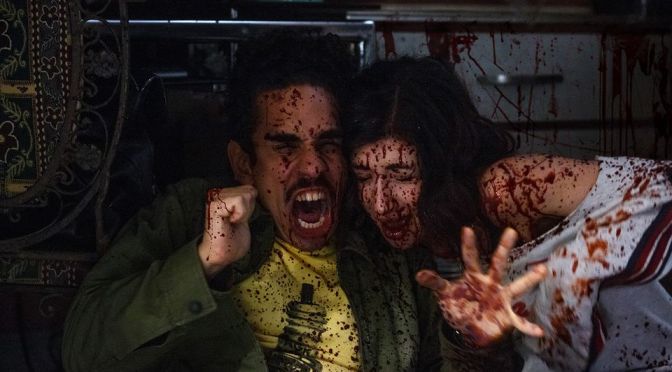
Ash vs. Evil Dead: “Bait” is a perfect balance of humor, drama, and fake blood

This week, the show picked up right where last week’s episode left off and continued to deliver on the early promise it showed in its first half hour.

“Bait” is the first episode of the show without Sam Raimi at the helm, but I can’t see that it suffers for it. Director Michael J. Bassett retains much of the distinct style Raimi has created for the franchise, but he isn’t afraid to add a few of his own flourishes, either. It has the effect of making the episode feel both reassuringly familiar and refreshingly different. Ash vs. Evil Dead isn’t like anything else on television right now, and it’s shaping up to be something very special.

Anyone who has read my writings on Game of Thrones must know that I have a deep and abiding love for awkward family dinners (this probably also explains my love of Gilmore Girls), and “Bait” delivers a great example of the form. From the moment that Ash and Pablo burst in to “rescue” Kelly, every scene with guest star Mimi Rogers is perfectly handled. The dinner itself was riotously funny as Ash tried to get get Kelly’s mom to admit that she was evil, and the subsequent fight is wonderfully bloody.

I was a little disappointed that Kelly herself didn’t get much to do throughout and was essentially a damsel in distress once her mother was revealed as a deadite, but I actually think there’s a certain sense of realism to this. There’s some very real horror in what Kelly has to go through in this episode, and Dana DeLorenzo does a nice job of balancing drama and humor in order to bring Kelly to life as a character with, I think, the potential to be downright trope-defying. The real test will be how Kelly’s character is handled going forward as we see how she emerges from this crucible.

Kelly being damseled can actually be compared to Pablo’s slightly similar situation earlier in the episode. On the way to Kelly’s house, Ash and Pablo are attacked on the road by their old boss, and it’s quickly clear (and explicitly, verbally called out) that Pablo doesn’t know what to do in spite of Ash’s assurance that getting hit will trigger fighting instincts. Pablo does fight, but ineffectively, and he ultimately has to be rescued by Ash as well, which is what prepares Pablo to be more helpful later on in the episode. There’s a nicely devised symmetry to the character arcs of Pablo and Kelly in this episode that prevents Kelly’s brief damsel moment from being a sexist misstep, although I still contend that she could have been a little more involved in the action.

All that said, “You know they were Jewish, right?” was a perfectly hilarious line, shot with gorgeous irony in the beautiful morning sunshine. What I loved about this scene was that, while it establishes Kelly as a sort of wise-cracking character, it also allows room for her to show real emotion and grieve with dignity. This is something that isn’t often seen in this kind of entertainment, where film-length projects often rush around from action scene to action scene and don’t devote much time to these sorts of character moments.

While Ash and company are having the family dinner from hell, Amanda Fisher is investigating the trailer park attack, which strikes her as similar and perhaps related to her own experience. She is shooed away from the scene by the actual officer in charge, since she’s still not back to work, but before she goes she finds a business card for Books from Beyond. The end of the episode sees her arriving there, while Ash, Pablo, and Kelly are on their way, which sets us up for next week’s show.

I would have liked to see a little more of Amanda Fisher this week, but there just wasn’t time with only a half hour to work with. However, I think the thirty-minute runtime is an asset for the show rather than a detriment. It encourages smart use of the time and prevents overlong scenes of blood and gore. So far, the show has been an agreeable mix of its parts, and the pacing is pleasantly engaging.

All it needs is more Lucy Lawless.

Book Review: Of Sorrow and Such by Angela Slatter

Of Sorrow and Such is a thoughtful piece of work whose contemplative tone would be restful if its subject matter wasn’t so infuriating. I love a good witch story. The thing is, stories about women being mistreated make me actually angry. This one does so in a great way.

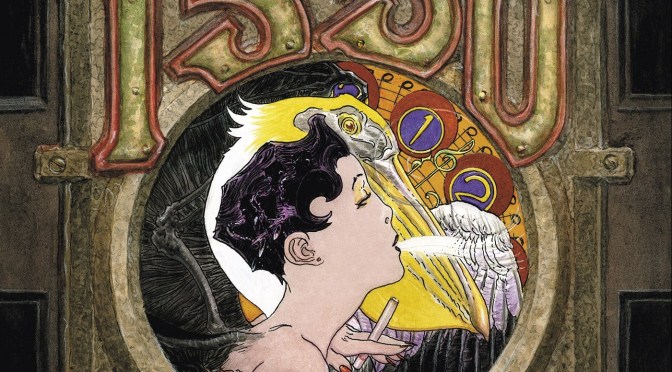
I adore witches of all sorts, and I have had a special place in my heart for these sort of vaguely historical witch stories since the first time I read The Witch of Blackbird Pond over twenty years ago. Edda’s Meadow is much less historical and much vaguer as a setting, but it definitely scratches that same itch. Also like The Witch of Blackbird Pond, Of Sorrow and Such is a book that is fundamentally (even more so, really) concerned with the relationships between women and how we help each other survive (or not) in hostile, sometimes murderously, misogynistic societies.

I think what I love best about witch stories is the way that they work on multiple levels to examine ideas about how women exist in the world. To be a witch is both a metaphor and a depiction of a kind of reality, and not just a historical one. Angela Slatter’s practiced deployment of these ideas tells me that she knew exactly what kind of story she was writing, and she skillfully manipulates her characters and setting for maximum emotional effect.

Mistress Gideon is a great character. In many ways she’s exactly the sort of woman that can be a role model for readers, but Slatter never places that burden upon her protagonist. She’s therefore allowed to be much more than that, and Slatter gives us a main character who is kind and wise and motherly and loving and fiercely protective of her daughter and friends, but who is also not all-knowing, who can be cruel when she thinks she needs to be, and who is quite capable of murder.

The other women that surround Mistress Gideon are just as well-drawn. Her daughter, Gilly, is both lovable and infuriating. The other women we meet also have their own assortments of good and bad qualities. From the passionate young shapeshifter who desperately wants to be herself to her repressed spinster sister-in-law to the pastor’s wife who won’t leave her husband but also won’t submit to his literally poisoning her, these might not be women I want to be, but they are certainly lifelike enough that I can imagine meeting them.

This, really, is Angela Slatter’s gift. She brings these characters to life and I love them and want to read more about them. Though this is the only thing I’ve read by this author, it’s most assuredly only the first thing. I am very much looking forward to reading more of her work in the future.

Weekend Links: November 7, 2015

I know it’s been a big week with Star Wars trailers (awesome) and Warcraft trailers (even more awesome) and stuff, but the thing that most excited my this week was the news that Philip Pullman’s His Dark Materials is being adapted into a miniseries by the BBC. I love the books so much, and I can’t wait to see how this new adaptation shapes up. I want to see some armored bear fights!

In Nigeria, new comics startup Comic Republic is working to spotlight female superheroes.

Brain Pickings shares Ursula K. Le Guin on the Sacredness of Libraries.

Meanwhile, Ursula K. Le Guin herself tries to answer where she gets her ideas from.

Elsewhere, Margaret Atwood discusses the ways that technology can help and hinder creativity.

The New Yorker takes on The Tangled Cultural Roots of Dungeons & Dragons.

Kirkus has a great list of Monstrous Women.

Gizmodo reports on the Best Cities in Which to Survive the Zombie Apocalypse.

I’m not sure if this piece at The Mary Sue–“Everything I Love is Problematic”–is a good piece about recognizing one’s own privilege and being self-aware of one’s own inadequacies and need to try hard or if I think it’s a boring piece of falsely modest, self-congratulatory humble-bragging.

There’s a nice piece at Slate about Ann Leckie’s Imperial Radch trilogy, which should serve as a reminder that if you haven’t yet you ought to go out and read these books immediately. I’m just finishing up Ancillary Mercy now, and it’s every bit as wonderful as the first two books of the series.

At Clarkesworld, Liu Cixin writes about Chinese Science Fiction and Chinese Reality.

Discover Magazine examines the ideas behind Liu Cixin’s The Dark Forest.

Author David Mitchell talks about genre on The Geek’s Guide to the Galaxy.

Pop Matters looks at the state of the post-apocalyptic story, especially as it relates to The Last Man on Earth, which you should definitely be watching.

At Tor.com, the question is (apparently) how to tell the difference between grimdark and horror. Personally, I didn’t realize this was that confusing, but this is an interesting read nonetheless.


Blizzard releases trailers for the Warcraft movie and the new WoW expansion

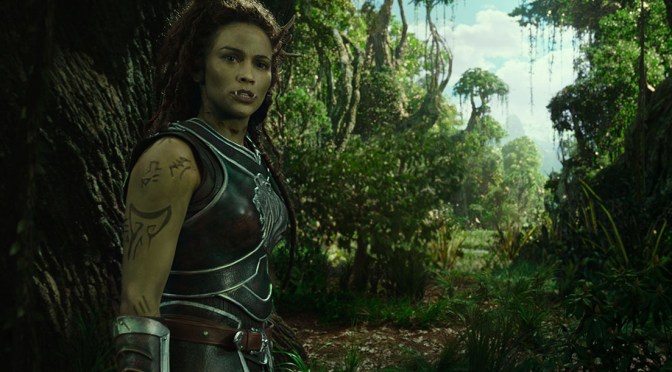
I wasn’t sure about the Warcraft movie when I first heard about it, but now I have to admit that I am beyond stoked about it. I would love to see more female characters, although we get to see both Garona and Draka in this trailer, but I’m just so thrilled with the way this looks I barely even care. If they don’t make this into a series of at least like eight movies, I’ll be very disappointed. Now I just have to make it til June without exploding from excitement.

Speaking of female characters, Sylvanas has been pretty much sidelined entirely throughout the Warlords of Draenor expansion, and in Cataclysm her storyline was partly about how sad she was about not being able to have babies, so I was both surprised and overjoyed to see her kicking ass in the Legion cinematic that was released today. Even more amazing? She’s fighting right next to Varian Wrynn.

This might be my favorite opening cinematic yet. We don’t get to see anything of the new continent, but that could be because the cinematic has green fire on pretty much everything.

I swear, every time I think I’m going to quit this game, it draws me right back in.

Book Review: Speak Easy by Catherynne M. Valente

Speak Easy is every bit as weird and wonderful as I could hope for or expect of a new novella by Catherynne M. Valente. As is characteristic of the author’s work, Speak Easy is a lush tapestry of beautiful prose, full of cunning wordplay, richly detailed descriptions, and a cast of eccentric characters.
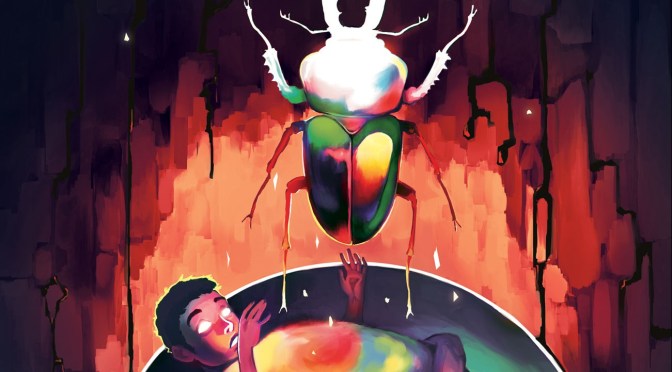
My favorite thing about any Cat Valente book is the sense of space she achieves in every world she creates. The hotel Artemisia is no different. Reading Speak Easy is like walking into the hotel and taking a guided tour with someone who has lived there their entire life. They know all its nooks and crannies, but there’s really no end to the secrets of the place. Every page of this book is full of life and color and drama, and Valente seems to almost effortlessly weave a picture of a vibrantly wonderful world.

Speak Easy is being sold as a retelling of The Twelve Dancing Princesses, but you may not see it unless you know the original fairy tale very well. Valente is a shrewd scholar of fairytales and mythology of all kinds, and she has a keen talent for adding her own embellishments and twists. Her deep love, appreciation, and understanding of the form shines from every single page.

At the same time, though, there’s an awful lot packed into this slim little story. It’s not just an old fairytale; it’s also A Midsummer Night’s Dream and a particular moment in America’s literary history. It’s tragedy and comedy and heaven and hell and the exploration of these dualities. It’s a story about creativity and what it takes to be an artist. It’s a story about stories and where they come from and who they belong to.

It will break your heart in the best way. Not gently, though.

My first exposure to Valente’s work was her Fairyland books for young readers, which I read aloud to my daughter until she finally decided she was too old for bedtime stories any longer. I’ve since decided that every single thing Cat Valente writes deserves to be read aloud, just for the sheer joy of feeling her words roll off one’s tongue. Read it to a baby (goodness knows they don’t know any better) or to your pet or just to yourself in the privacy of your own home. Just do it, because it’s beautiful. Then go do the same with all of Valente’s other work.

The only negative of this book is that the hardcover is extremely expensive. Unless you are a collector of books, I’d suggest opting for the ebook, which is the best $5 you could spend this year.

iZombie: “Love & Basketball” is the best episode of the season so far

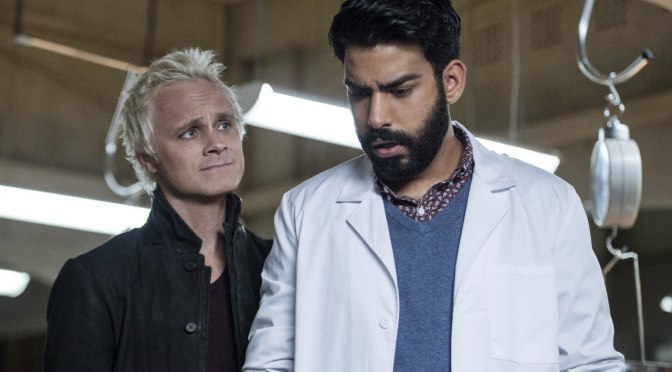
No Peyton this week, and no Vaughn, but there’s so much else going on in “Love & Basketball” that I can [mostly] forgive these sins. “Love & Basketball” is one of those rare episodes of television that manages to be just jam-packed with really interesting stuff, full of important emotional moments, and very funny. It would be very easy for this episode to become incoherent with so much going on, but it’s masterfully balanced here.

The episode picks up right where last week’s left off, with Liv and Major making out big time. Which Liv puts a big time stop to almost immediately, and there is so much that I love about this interaction and the following morning when Liv wakes Major up by taking his blood pressure. This is probably the funniest Major has ever been, which is a nice change after several weeks of him sort of alternating between boringly tortured and boringly insufferable to everyone around him. I still don’t love Liv and Major as a pairing, but I can kind of see the appeal now at least.

I even found myself rather liking Major when, after Liv delivers a long, basketball coach brain-inspired pep talk in Major’s (disgusting, by the way) bedroom, he just responds with a lovingly indulgent, “God, you are so weird.” If you are a Liv/Major shipper, this is basically a perfect episode for you, as it’s peppered throughout with these kind of cute moments. I do think the emotional arc of them going from wanting to tear each other’s clothes off to being best friends again to ending the episode with having a real serious relationship talk was a lot to squeeze into a single episode, but it mostly worked here. It didn’t even completely monopolize the episode; there was plenty of time for advancing other plots and revealing new information about other characters.

The larger of the two B-plots in “Love & Basketball” is definitely the actual case of the week, which Clive ends up mostly working alone. Even then, this storyline this week is much less about the actual murder mystery (which is, frankly, almost too convoluted) and more about giving Clive a good deal more screen time than he’s had so far this season. In the end, this turns out to be almost entirely in service of advancing the Meat Cute plot, which has apparently not been abandoned.

This is another story thread that this episode manages to pull of nicely, even though it seems like it would be a lot to squeeze in. Honestly, though? I think the most important part of these scenes is the new insight that we gain into Clive’s character. He’s apparently the kind of guy who will beat the shit out of a child abuser, which makes me like him even more than I previously did.

While following Clive around, we also get to see more of the new character that was introduced last week: Dale Bozzio the FBI agent. We learn a couple of big things about her. First, she’s totally hilarious. Second, she’s also interested in what happened at Meat Cute.

Finally, in the third major story thread this week, Ravi finally gets his hands on more of the tainted Utopium that he needs in order to re-develop the cure for Liv and the rest of the zombies. This is a pretty significant development, but the best thing about it in this episode is that we get a scene with just Ravi and Blaine. Fighting over the tainted Utopium. While “Friday I’m in Love” (Get it? The Cure!) plays in the background, which is my favorite thing that has ever happened on this show.

Leftover thoughts:

  • “Clear eyes, full stomachs, can’t lose” is a great line.
  • I hate the conflict between Gilda/Rita and Liv over Major. Gilda/Rita doesn’t even seem to like him very much, and I can always do without this type of sexual competitiveness and jealousy between women. It’s not entertaining to me. At all.
  • Blaine comes up with the very best business names. I’m sure I’d heard it before, but Shady Plots as the name of his funeral business? GENIUS.
  • The other medical examiner in Tacoma was super racist, right? If they were just trying to portray a kind of humorous city vs. country rivalry between Ravi and this guy, I feel like they went a little overboard with that dude’s really hostile bigotry. It wasn’t the whole scene, but it was early enough in the scene that it made it hard for me to laugh when the tone was more playful later in the conversation. I just felt bad for Ravi and Clive being stuck dealing with this jerk.
  • I don’t really get what’s going on with the zombies at Max Rager. How is it possible that this scientist lady doesn’t know that the zombies they are paying Major to kill are sentient people? That stuff was all just weird.

Magazine Review: Nightmare Magazine, October 2015, Queers Destroy Horror! Special Issue

While I’m not a regular reader of magazines, I have become absolutely hooked on the various Destroy SF projects of the last couple of years. October’s Nightmare Magazine special issue, Queers Destroy Horror was another great entry into the series.

The surprise for me in reading this issue, though, was that I found myself less enchanted with the fiction this time around and much more interested in non-fiction pieces, most of which were excellent.  Sigrid Ellis’s powerful piece about her complicated relationship with the works of Stephen King, “The Language of Hate” is worth the $2.99 I paid for the issue all by itself. The same could be said for Lucy A. Snyder’s “The H Word: A Good Story” and Michael Matheson’s “Effecting Change and Subversion Through Slush Pile Politics.”

The roundtable discussion and the author spotlights as well were particularly excellent in this issue, although I do find it a little disingenuous how often some version of the phrase ‘I don’t think of myself as a [identity] author” appeared. I know that identity issues are complicated (I’ve got my own, thanks), but still. I just find it a little cliché, this coyness about how one’s identity informs one’s work, and I sometimes think that it gets in the way of more useful insights. That said, there are still plenty of interesting things being said here.

While the non-fiction sections of this issue were superb, that’s not to say there was no good fiction, either. Matthew Bright’s Dorian Gray tale, “Golden Hair, Red Lips,” was a great way to kick off the issue, and I loved Alyssa Wong’s story, “Hungry Daughters of Starving Mothers.” My favorite of the short stories, though, was “Dispatches from a Hole in the World” by Sunny Moraine. It’s a wonderfully dark and atmospheric story, as well as a delightfully inventive and timely piece whose specific subject matter works perfectly to place it in a particular time and space and address a particular community. I loved it, although I expect that those less interested in or connected to the goings on of the internet may not quite “get it.”

While most other entries in the Destroy SF catalog include flash fiction, Queers Destroy Horror opted for poetry instead. Unfortunately, I’m not terribly into poetry as a general rule, but I did enjoy Lisa M. Bradley’s “The Skin Walker’s Wife” and Amal El-Mohtar’s Snow White-inspired poem, “No Poisoned Comb.” When I do like poetry, I usually prefer these sort of narrative pieces, and these two really hit the spot.

As always, I highly recommend checking out all of the Destroy SF material. I don’t know that I’d say there’s something for everyone, but it’s a great project that consistently turns out high quality collections of work that puts a spotlight on ordinarily marginalized voices in genre literature. It’s great stuff, and it’s not too late to buy this issue.

Minority Report: Sadly, I think I’m done with this show

“Honor Among Thieves” is another middling-to-bad episode of this almost-certainly doomed show, and I think this is likely the last episode I will have anything to say about. Even now, my thoughts on Minority Report are primarily general thoughts and disappointment that the show wasn’t better than it’s turned out to be.

This week’s episode was a pretty classic monster/case-of-the-week format, which worked marginally better than a couple of previous similar ones have for the show, but it still just didn’t make a lot of sense. I didn’t understand how Vega got fooled by the fake EMTs in the beginning of the episode, and it’s really all downhill from there as the story continues to develop.

There are a lot of flashbacks this week, detailing the removal of the precogs from the original milk bath and their initial release into the world, which apparently consisted of little more than a “Whoops! Sorry!” and a fat paycheck from the government before they were tossed out into the streets in a bad part of town and left to their own devices. On the one hand, that would be pretty much expected behavior for the US government. On the other hand, I have a very hard time believing that the kind of evil government that would enslave children would then encourage them to disappear so completely without some way of keeping track of them.

It’s also just plain painful to see how naïve the precogs were, especially the boys. It definitely helps to provide a little more understanding of why Agatha thinks they can’t take care of themselves. That said, I do not buy at all the idea that, in the beginning, it was Arthur who was the soft-hearted one who just wanted to help people. Even if that was the case, there’s really no hint in this episode of how or why Arthur and Dash so completely swapped opinions. I’m also not sure why they even bothered unveiling this bit of history this late in the season, especially when the rest of the episode goes on to further establish Arthur as a pretty big deal in the international organized crime scene. It doesn’t add depth to his character; rather, it makes him seem a hypocrite.

This episode also marks the first time that I haven’t enjoyed the show at least a little bit. Any sense of fun that the show has had up to this point seems to have drained out of it, and all that’s left seems to be a grim determination to finish these ten episodes so everyone can move along to other, hopefully more successful projects. I will probably finish watching the series, but I doubt I’ll be writing about it unless it somehow gets incredibly good sometime in the next three weeks. Right now, though, the show has become its own wet blanket.