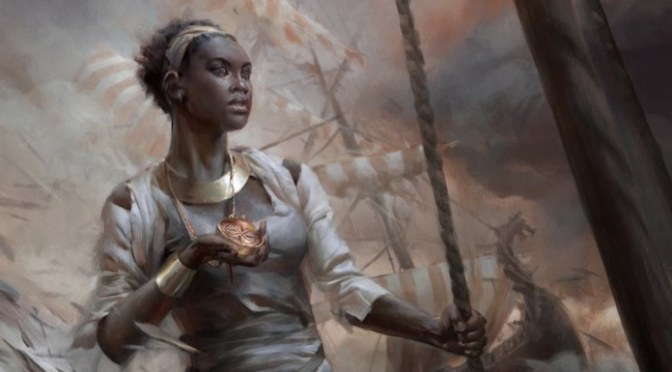
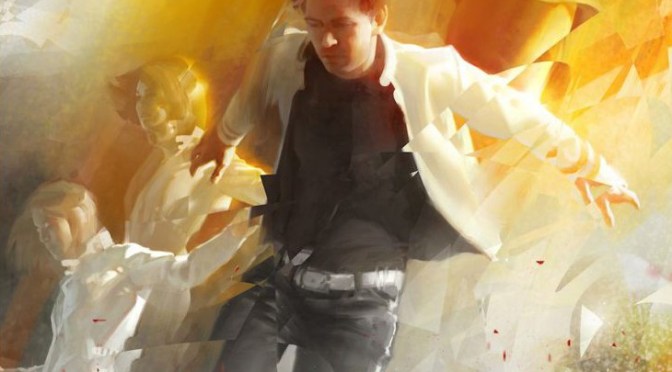
I expected to love The Drowning Eyes, but I’m sad to say I only liked it. The gorgeous cover art and the book’s description had me very excited about it, but it just wasn’t quite what I expected.
In spite of the way the book description reads, The Drowning Eyes is told almost entirely from Tazir’s point of view. I had expected it to be more equally split between Tazir and Shina, so this was a disappointment. Worse, Shina’s viewpoint was utilized suboptimally in addition to simply being underused; while it did offer a point of view through which the reader is given some extra information, mostly about Shina herself, there’s just not enough of it, and Tazir’s stronger personality is much more interesting and entertaining to read. Instead of being a good complement to Tazir’s sections, Shina’s brief POV scenes ended up being a somewhat irritating distraction from the real meat of the story.
I also thought there would be more swashbuckling adventure. Disappointingly, there was basically none. This was largely made up for by Shina’s actually really fascinating weather magic and the accompanying sort of religious order that she’s part of, but still. I feel like I was promised pirates, and all I received was the rather mysterious Dragon Ships, which are never really explained very well and aren’t actually that big a threat to the characters over the course of the journey described in the book. This also has the effect of making it feel throughout the book as if we’re being told over and over again how high the stakes are without it being backed up by any action that the reader is privy to.
It’s a problem, particularly when the personal stakes are plenty high enough to carry the story all on its own. Shina’s trauma could have been handled better and given a little more page space, and I would have loved to see more interaction with Shina and Tazir regarding Shina’s decision to give up her eyes. I love the whole idea of this practice, personally; all the best magic systems have heavy costs for power, and this is one that deserves to be explored more than it was. Tazir in general is a fascinating example of a type of female character that doesn’t usually get to exist—a somewhat grizzled, world-weary, and slightly misanthropic sea captain. I would read a dozen books about her adventures is Emily Foster would just write them. The supporting characters of Kodin and Chaqal are somewhere between underdeveloped and superfluous—especially Kodin—but this is something that, again, could be helped by just a couple more pages dedicated to each of them.
Where things really fell apart for me in this book was the abrupt ending to Shina’s quest and the disorienting shift five years into the future. Frankly, I just don’t care for it, and I would rather have seen Shina’s search for the idol wrapped up a little more neatly. The break between Chaqal and Tazir and then the one between Tazir and Kodin could have still been handled similarly, but closer to the events that actually precipitated these changes in the characters’ relationships. I suppose there’s something to be said for capturing the messiness of human relationships or something, but I would rather read a story that shows things happening instead of reminisces on them years after the fact.
Even with my criticisms of it taken into account, The Drowning Eyes is a wildly enjoyable novella. It’s full of a lot of things that I love in fantasy, and I sincerely hope that it’s part of some larger fantasy setting that we’re only just being introduced to. Probably the biggest issue I have with this novella is that it feels very much as if it’s only a part of something much larger, and I feel frustrated at not having that something larger in my hands to read right now.
“Windmills” is probably the most thematically coherent hour of The Expanse to date, and we’re finally seeing all of the show’s disparate story lines begin to converge on one place: Eros. This is a frustrating episode in some ways, as very little actually happens, but I have high hopes that this is the final bit of stalling for the series before things get really interesting over the next couple of weeks.
The Rocinante is well into its journey this week, on the way to rendezvous with the mysterious Lionel Polanski, but they’ve also got Avasarala’s spy in tow and Martian inspectors trying to board the ship. Unfortunately, these attempts to liven up the Rocinante’s traveling time fall a little flat, acting more as filler to give the crew something to do for an episode while Miller and Avasarala’s plots catch up to where the Roci is. Still, there is some interesting character work in the Rocinante segments of the episode, and dealing with Kenzo Gabriel and the Martians does provide a good framework for both showing what makes the Roci crew tick and exploring how their recent experiences are affecting them.
These scenes also highlight a pretty significant (and kind of fascinating) change from the source material. By this point in Leviathan Wakes, Holden was pretty well-cemented as the captain of the ship, but his position is much more ambiguous and precarious on the show. This makes all of the Roci crew’s dynamics much more compelling, though I did feel this week that they weren’t particularly fun to watch. The conflict between Holden and Amos was nicely done, but Holden ultimately offloads that whole responsibility to Naomi, which is wildly unfair and, frankly, irresponsible. Naomi continues to prove, however, that she’s the smartest and most capable person in every room she’s in by basically saving the day by hacking the Roci’s systems and heroically managing not to punch Holden right in the face. The only character on the crew who still seems somewhat flat is Alex, although I kind of love how much he’s just having a great time flying this badass spaceship.
Meanwhile, Avasarala is back in a pretty big way this week, as she travels personally and alone alone to the farming collective in Montana where Holden was raised so she can speak with his birth mother, Alice. From a kind of objective standpoint, this may be the weakest part of this episode, but it’s one of my favorite sequences so far on the show. First, it’s some of the most perfectly beautiful scenery we’ve seen so far, and it appears to be a real place with only the wind turbines composited in during post-production. Second, Avasarala’s costume for this is glorious. Everything this woman wears is amazing, but this red number, and the way she strides confidently across the pristine Montana snow, is like something out of a fairy tale. Finally, the conversation between Avasarala and Alice Holden shows us yet another new side of Chrisjen. I can’t remember the last time I saw this kind of woman-to-woman real talk, and I found it riveting.
My only complaint about this whole sequence is that I still don’t quite understand James Holden’s origins and the political and economic climate that created this place and these people. There’s a lot that can be inferred about their collectivist lifestyle, the intimation that they are potentially armed and dangerous radicals, and the knowledge of how they groomed Holden to be a part of their political scheming, but there were a lot of missed opportunities here. One way that this could have been improved upon would be to have Chrisjen interview all (or even just several) of Holden’s parents separately, which would have offered us a bigger picture of how this all works and created more and better ways in which to work in some more exposition about the state of Earth and how Holden and his family fit into it. Instead, Avasarala only really speaks with Alice, and most of their talk consists of them bonding over their shared experiences of motherhood, which feels a little simplistic and almost defeats the purpose, in my opinion, of even introducing the idea of this sort of family arrangement. Why bother if it’s not going to be explored when the chance appears?
On Ceres, Miller is left reeling after losing his job with Star Helix, and he spends most of this episode revisiting the places on the station that have figured most prominently in his story so far. He confronts a smug Anderson Dawes in a bar, breaks into Julie Mao’s place, and then returns to his own apartment, where he gathers his few things of value, leaves his hat hanging on the hook, and goes to pawn everything so he can buy a ticket on the next ship to Eros.
Miscellaneous thoughts:
“Donkey balls” is not nearly as funny a phrase as the show’s writers seem to think it is.
Apparently Miller also sent out some disturbing goodbye messages to his few friends. This was actually moderately amusing to me.
I know Octavia is sad now, but someday she will appreciate dodging the bullet that is Miller.
As much as I hate Miller’s hat, his greasy hair might actually be worse to look at.
There were a lot of wonderful set details this week, but the house in Montana was stunning. I just wish we’d gotten to see a little more of it.
“Changeling” is a tough episode to review. On the one hand, it’s a kind of objectively dull hour, with little forward movement, a lot of time spent standing around spouting expository dialogue, and not much actually happening. On the other hand, it’s an episode that is heavily focused on character, and this benefits nearly everyone on the show. It’s also nice to see a good deal more of Arborlon, which now feels much more like a real, living place. So while the episode is certainly flawed, I kind of loved it, and the end of “Changeling,” finally and for real, has our heroes actually setting out on their journey.
Episode four picks up right where the third one left off, with Amberle entering the Ellcrys tree. Once inside, she’s rather predictably subject to a vision and a test wherein she has to overcome her fears and master her emotions in order to prove that she’s capable (at least theoretically) of completing the quest the tree is going to give her. It’s pretty straightforward, standard issue chosen one stuff, but it’s nicely filmed and Poppy Drayton is convincing in her role as Amberle. She’s got an expressive face and isn’t afraid to use it, and this episode is definitely a showcase for her abilities as Amberle has to confront her fears, deal with a trauma, and come to terms with a tragedy before embarking on a journey that is going to change her life even more than it has been already.
The downside of this, though, is that Amberle doesn’t really get a lot to do once she emerges from the Ellcrys besides look very serious and sad and disapproving. This isn’t helped by the fact that she’s also being hunted by a changeling demon that wants to murder her, which keeps Amberle moving around quite a bit through the episode, but always within the palace at Arborlon and mostly with at least a couple of guards in tow. I was happy to see her get a nice quiet moment with her friend Catania. They have a nice chemistry, and it’s obvious that the two young women share a great deal of love and affection. It’s a good counterpoint to Amberle’s contentious relationship with Eretria, though I’m happy to say that the conflict between these two is more substantial than fighting over a boy (even if I suppose that Wil is part of it).
Probably my favorite Amberle scene this week, though, was when her grandfather, Eventine, gifts her with her father’s sword, along with a speech about how like her father she is. This is also a great scene for Eventine, who was kind of a jerk in his other scenes this week. For a guy who no longer plans to abdicate his throne, he sure does a lot of delegating of responsibility. Also, poor Arion! Arion is the worst, but I felt legitimately bad for him when Eventine told him that he’s not ready to be king. Maybe if Eventine had been a better dad, his heir wouldn’t be such a dick.
While Amberle is busy having a very serious coming of age moment as she accepts her sacred responsibility or whatever, Wil is busy banging Eretria and getting his elfstones stolen again. He is seriously so easy, which is cute in a way, but I can definitely understand why Amberle might be very worried about having to maybe kill him, what with his being self-destructively stupid and all.
In any case, Eretria gets caught and is being framed for murder and accused of trying to kill Amberle, but this all ends up with them figuring out that the demon is a shapeshifter. There is some kind of half-baked plot to trick the demon by using Eretria as a decoy, but it doesn’t work. However, Allanon manages to kill the changeling anyway, and by the end of the episode Amberle, Wil, and Eretria are setting out from Arborlon.
I’m curious to see how this works out, mostly because I wonder how long the show is going to make us wait for the inevitable showdown with Cephalo and the Rovers. I’m also not sure what the show is going to do with Bandon and his visions, which seem almost superfluous with Allanon around reading minds and looking stuff up in his magic book that conveniently has all the answers. Also, what is going to happen with Catania? I hope she’s going with them as well; otherwise, it will feel like sort of a waste for her to exist at all.
Mostly, though, I’m just very excited to see the real quest finally getting underway. Hopefully next week will see a lot more forward movement on the main plot—because it’s really the only one. As refreshing as it is to watch a show that is relatively free of subplots, this style of storytelling only really works if there is consistent linear development. Keeping all of the action (if you want to call it that) contained in one small setting (Arborlon) feels claustrophobic and is, ultimately, frustrating, especially when this bit with figuring out the changeling could have been handled in about ten minutes.
Still, I really like that this show seems to be so aware of what it is. It doesn’t put on airs, and it doesn’t try to pretend as if this isn’t a story we’ve seen a thousand times before, but it does seem fairly committed to doing a proper job of it. Though the writing doesn’t often rise above workmanlike and the story is pedestrian at best, The Shannara Chronicles is exactly the sort of gorgeously designed comfort-programming I want to watch these days. “Changeling” and its weird feeling of stasis is somewhat of a hiccup, but if the next six episodes are good, it will be easy to forgive the sins of this one.
Miscellaneous thoughts:
The seed prop is cool, but it looks a little too much like metal.
Spinning the camera around in a circle doesn’t hide the fact that you’re just filming a group of people standing around spouting exposition.
“Accomplishments? What would they be?” BURRRRN.
“I’ll never call you short tips again.”
“She attacked me in my room.” Oh, Wil. I was a little disappointed when Amberle didn’t point out his red ears.
I loved the interior shots of Arborlon. They’re not as nice to look at as the scenery porn in the show’s outside world, but it’s pretty impressive what they’ve done with relatively small sets.
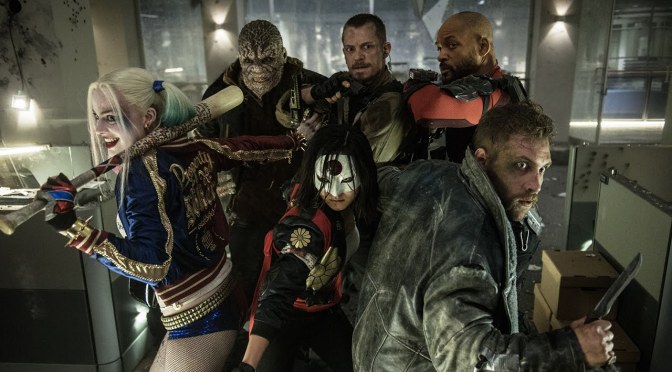
I was about 95% certain I was going to have zero interest in this movie, and I’m still not totally sold on it, but this trailer makes it looks at least moderately entertaining.
Jared Leto is still a horrible choice for the Joker, in my opinion, and Harley Quinn’s costume is a pile of sexist garbage. But Enchantress looks kind of cool, and Viola Davis and Adam Beach are in this movie. I guess the question is going to become, is it worth it to me to watch Harley Quinn run around in her underwear in order to see a couple of actors that I like in a movie based on a comic book that I’m only vaguely familiar with?
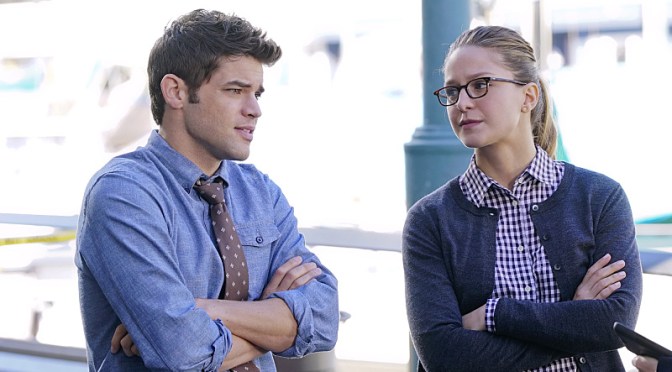
I think we all knew, as soon as it was revealed that Winn’s dad was in prison, that his daddy issues were going to rear their ugly head at some point. “Childish Things” is that point. Surprisingly, though, especially considering how painfully boring Winn has been in the series so far, this episode mostly works really well.
My biggest complaint about Winn Schott, from day one, has been that he was a pretty straightforward Nice Guy™ who spent all his time creepily hanging around Kara and resenting her for not wanting to bang him, and “Childish Things” addresses all that stuff head-on. It’s a surprising and refreshing change of pace for a show that has so far been content to leave Winn be, utilizing a constellation of unpleasant tropes pretty much totally uncritically regarding his relationship with Kara. When Winn’s deranged father escapes from prison, though, things come to a head and Winn and Kara are forced to deal with whatever lies between them. Kind of.
The best decision the writers made this week was having Kara react negatively to Winn trying to kiss her while they were sharing a moment of bonding over their respective murderous relatives. I fully expected, and frankly was almost rooting for, them to share an actual confused-feelings-full kiss, but that wasn’t what happened. Instead, Kara pulled away, as one does when someone misreads signals and goes for a kiss when it’s very unwanted. Watching, I was genuinely surprised. Unfortunately, this isn’t fully dealt with by the end of the episode. Though Winn finally lays all his cards on the table and confesses his love to Kara, she’s not equally candid in response, and the future of their friendship is still unresolved when the credits roll.
Winslow Schott, the Toyman, is equal parts ridiculous and deeply disturbing, and letting the audience meet him definitely helps to give his son, Winn, a lot more depth. The problem is that he’s never really a particularly worthy opponent for Supergirl. Although we can see how much interacting with his father affects the younger Schott, and those interactions (and the subsequent talks with Kara about them) are pretty compelling, there’s never much sense of danger from the Toyman himself. Instead, it’s Winn’s behavior that’s most concerning, and his concern that “bottling up his emotions” will turn him evil is something very close to a veiled threat. I suppose, if Winn does turn out to be the same sort of psycho as his father, he can at least rest easy knowing that he’ll be handily defeated by Supergirl in the space of a day or so.
The secondary plots are also only partially successful.
Lucy Lane appears to be officially moving to town now, and she’s getting a job at CatCo. I love James Olsen as much as the next girl, but he was profoundly dull this week. His failure to communicate about his feelings is frustrating, and I suppose works as a contrast to Winn’s newfound openness, but I still don’t understand why he was being so weird with Lucy. I loved Lucy and Cat together, but the conflict between Lucy and James ended up being not a conflict at all and simply cemented them together as one very boring couple.
Meanwhile, Alex and Hank were investigating Maxwell Lord, who is still the absolute worst. Kara’s attempts to encourage Hank to “come out” as a super-powered alien were positively cringe-inducing. I hate the whole idea of using super powers as a metaphor for other oppressions, and this instance of it is especially frustrating. While I liked Hank’s stuff this week, and I can see that he has some very real misgivings about using his powers, which was interesting, the reality is that there are basically zero drawbacks to his being a Martian. I mean, sure, people could be mean to him, but he still has godlike superpowers.
In the end, though, “Childish Things” is more good than not. The character work for Winn and Hank was largely excellent, and it was definitely necessary. And the episode ends with Kara and Alex spending time together—more of this, please (and more of Lucy and Cat).
Miscellaneous thoughts:
“She’s so nice!” is the best thing Lucy could possibly have said when emerging from a meeting with Cat Grant.
“I want to work for a cool, powerful, kickass woman instead of a bunch of old white men.” You and me both, Lucy.
I always loved Emma Caulfield on Buffy, so it was cool to see her show up as an FBI agent.
Speaking of childish things, if the snail eggs were delicious, why did Alex spit them out as soon as she found out what they were.
“Max Lord is nothing more than a reformed nerd with a God complex.” ACCURATE.
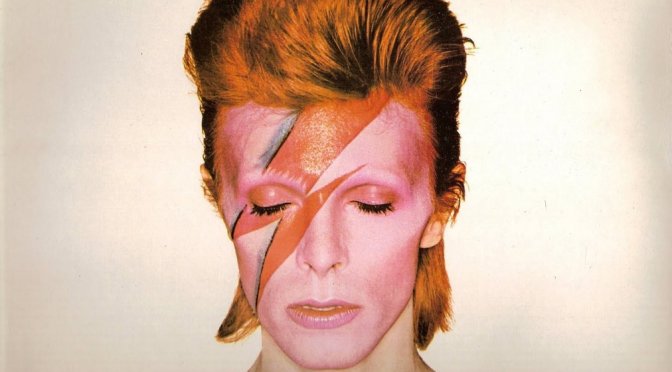
First David Bowie died on Sunday, and then Alan Rickman passed away later in the week. Both of these losses were unexpected; although neither man was very young, they were both larger than life, with careers spanning multiple decades in which they entertained and inspired multitudes. They are both gone too soon.
After the news broke of David Bowie’s passing, Neil Gaiman shared “The Return of the Thin White Duke” from his most recent story collection, Trigger Warning.
While many fans knew him as Professor Snape in Harry Potter, my favorite Alan Rickman role is his turn as Colonel Brandon in 1995’s Sense and Sensibility. The Guardian lists these and eight more performances to remember him by.
Tor.com has also collected links to ALL of their 2015 short fiction. Perfect for folks like myself who are likely to miss this stuff over the course of the year because we focus more on reading novel length work.
Inaugural issue of the Black Girl Magic Lit Mag, a speculative fiction literary magazine featuring Black female main characters and primarily written by Black female authors. Proving Black Girls are Magic one story at a time.
I received a free advance copy of this title from the publisher via NetGalley.
Lustlocked is the second in Matt Wallace’s Sin du Jour series, which began with the riotously funny Envy of Angels late last year. When I read the earlier volume, it was as part of my ongoing project of reading all of Tor.com’s new novellas, but I didn’t expect to like it much. Instead I found it quite enjoyable—smart and fast and a thoroughly fun read. I couldn’t wait for Lustlocked, and I was not disappointed.
It picks up more or less right where Envy of Angels ended, with Lena and Darren still kind of reeling from their experiences during their first days on the job at Sin du Jour and now faced with the decision of whether or not to sign on to the company on a more permanent basis. Of course they do, or there’d be very little story left to tell, and they (and we) quickly learn that there’s never a boring day at this catering outfit. The first job after Lena and Darren sign their contracts is a huge formal wedding for goblin royalty, which quickly gets out of hand when the bride complains that her in-laws aren’t always as nice to her as they could be and resident witch Boosha decides to do something about it.
Where Envy felt a little disjointed and too busy, with the fish-out-of-water story of Lena and Darren seeming almost incidental to the various other, more interesting storylines happening around it, Lustlocked finds a much better balance. There’s still an awful lot going on, including a sort of prologue that still seems somewhat out of place and disconnected from the main plot, which concerns a goblin wedding, but Lustlocked never feels overstuffed the way its predecessor sometimes did. Aside from the prologue, things flow along at a respectable and pleasantly methodical pace.
Where this second installment of the (hopefully open-ended and long-running) series really shines, though, is in continuing to bring to life its world and characters. Every new revelation about the mythology Matt Wallace is creating for this series is a new delight, and between Lustlocked itself and the bonus short story at the end (which was an excellent surprise) there was a ton of character background and development. I loved the sequence where Lena and Darren are being given a tour of the building, where I was glad to meet a couple of new characters. Wallace’s descriptions of food are delectably creative and full of vivid sensory descriptions, while his knowledge of the restaurant/catering/food business is definitely up to the task of making Sin du Jour feel like a real and lived-in place.
My only real criticism of the series so far is that I’m not quite sure what exactly Darren is there for. He didn’t make much of an impression on me in Envy, and he wasn’t much more present in Lustlocked. While Lena is really coming into her own as a character, Darren just kind of… exists. In a series as jam-packed with characters as this one, especially when being told in novella-length pieces, I kind of feel like every character really needs to exist for a specific reason. Lena is his roommate, and even she doesn’t seem to like or think about Darren very much at all, so he sadly ends up feeling superfluous.
In a bittersweet-in-hindsight turn of events, I read Lustlocked the day that David Bowie died, which feels a little like destiny, as it’s heavily implied in the book that David Bowie is/was an actual goblin king. I think this book might always be a little special to me because of that, as it’s a lovely tribute to the man, and one that I especially like because it is such pure, unadulterated fun. Of course David Bowie could be actual goblin royalty—IRL headcanon accepted.
I do not understand how a company as large as Lego can continue, year after year, to fuck up this spectacularly and still have the enormous brand following that it does. I mean, okay, I understand, but it pisses me off, a lot.
A gender neutral Lego ad from the early 1980s.
When I was a kid, Lego was still primarily focused on selling building sets that encouraged imaginative play and creativity, and their themed sets were generic–City, Castle, Space, etc.–but as the company grew and time passed, Lego has increasingly shifted into the licensed merchandise market, with themed sets for enormous properties like Lord of the Rings, Star Wars, and Marvel and DC comics. Along with that change in focus, Lego’s original sets have also changed and become more specific, with settings even being discontinued and replaced with new iterations on the old themes. In some ways this has been kind of cool, and there have been some interesting developments over the years. However, there have also been disappointments.
Lego Friends’ hyperfeminine, stereotypical ideal of girlhood.
After years of facing criticism for their increasing marginalization of girls, in 2012 Lego introduced the Friends line of building sets, specifically (and sexistly) tailored to what they believe girls are interested in. It started with, basically, a Lego dollhouse kind of deal and expanded to include Disney Princesses, Pop Stars, and even Elves. While some of these Lego-for-girls themes have been fun, they largely play into and promote gendered stereotypes. More importantly, and to greater negative effect, by mostly merchandising these “for girls” products separately from the rest of the “regular” Lego sets in stores, the gender problem has been compounded rather than solved.
It was bad enough when the problem was just that parents and fans of the brand wanted the toys to be more inclusive, but now the company has decided on a kind of “separate but equal” approach–and like all “separate but equal” policies, it’s not equal. At all. All it has done is clarify that, though Lego may have begun as a toy for all children, the company’s evolving vision is of Lego as a toy for boys unless specifically marked otherwise. Lego Friends made it very explicit what Lego, as a company, thinks a girl’s place is.
Here’s the thing, though. I still kind of love Lego. I get excited about new theme sets when they come out, especially new original themes because it’s neat to see what they come up with. So when I first read, in passing, about Nexo Knights, I was intrigued. While Lego has definitely changed up its castle stuff over the years, it’s basically always been various flavors of medieval fantasy. Nexo Knights is much more sci-fi, with robots and mech-armor and war machines as well as castles and knights. Which sounds pretty cool.
Today I finally got a chance to sit down and look through the sets online to see if there were any that I might need to buy. It turns out that, nope, I don’t want any of these. With Nexo Knights, Lego once again shows how little they think of girls when designing their play sets: only about a quarter of the Nexo Knights characters are girls or women.
Nexo Knights mini figs.
Of the actual knights, only one is a woman, Macy, who is identified by her large red ponytail and the feminine figure printed onto the body piece of the figure. Of course, on her character page, the first image we see of Macy is her in a dress, looking unhappy, and her backstory is all about how she hates being a princess and wants to be a knight and impress her father, King Halbert. Because we definitely, in 2016, still need to have toys normalizing the idea that girls always have to struggle for recognition and acceptance, not to mention the idea that to be “strong” a girl must reject femininity.
Queen Halbert
Unlike many fictional princesses, though, Macy does have a mother, Queen Halbert, who couldn’t even get her own name–she has to share her husband’s. We’re told on her character page that Queen Halbert “is quite capable at defending herself (and her husband),” and she’s pictured with a huge, rather badass-looking hammer. However, Queen Halbert only appears in one of the twenty Nexo Knights sets currently for sale, and the story line of the set? Is that you have to rescue Queen Halbert from Infernox, a sort of robot-y lava monster. It’s bad enough that the supposedly capable and tough queen only appears as a damsel in distress, but the other minifig included in the set, who is supposed to do the rescuing, is a man. Having her rescued by her daughter, Macy, would have neatly subverted the trope, but clearly Lego intends to stick with traditional, sexist gender roles as much as possible while still pretending as if they are creating strong female characters.
Ava Prentiss
Ava Prentiss is the one female character in Nexo Knights that I don’t think I can complain much about. She’s a student at the Knight’s Academy, and is really into computers. I actually kind of love the idea of this character as a way to introduce kids to the common SF theme of magic vs. technology. I only wish that Ava’s story included a friendship with Macy or Queen Halbert. All three of the “heroic” female characters in Nexo Knights seem to exist totally independent of each other, and none of them are mentioned in the stories of any of the others in either the Lego website content or the marketing copy for the actual sets.
Flama
To balance out the three good female characters in Nexo Knights, there are likewise three evil ones. In a way, this is refreshing and a step in the right direction for the brand; I can’t recall another Lego line that had this many lady villains. On the other hand, they’re also a mess of gendered weirdness.
Whiparella and Flama aren’t too bad. Whiparella is a sort of fiery naga-looking thing, which is pretty rad, and Flama is straight-up awesome-looking, though I am a little confused about why fire monsters need to have visibly feminine figures. Whiparella even has actual drawn-on breasts. Are fiery naga things mammals? I wasn’t aware.
Lavaria
The character that has me spitting mad, however, is Lavaria. I liked that she gets her own set, but I definitely got some vague succubus vibes from the image included with the product listing. When you look closer, though, you’ll see that Lavaria–though she has a cool spear thing, a shield, and this mech-spidery vehicle–is wearing what amounts to a sort of chain mail bikini type outfit. I suppose this could be explained by the description of Lavaria as more of a rogue-like character, though I would argue that being a rogue still doesn’t eliminate the necessity of protecting one’s vital organs in battle.
However, the worst thing about Lavaria shows up on her character page on the Lego website. You see, Lavaria is basically the Harley Quinn of Nexo Knights–the thing she “truly wishes for” is “a kiss from her wicked master,” Jestro. I’d love to say that this is as deep as the awfulness of this goes, but that’s not the case. It’s like an onion of sexist bullshit. The character pages give us quite a bit of information about the characters, and while Lavaria is described in some detail as a confident, villainous woman, Jestro is, well, something else. Namely, an inept, unintelligent buffoon, who is still inexplicably a love interest of sorts for Lavaria and the dominant half of the pair (he’s the main villain, she’s his sidekick).
Sadly, this new line of building sets could be seen as a sort of progress for Lego. Though only about a quarter of the total minifigs in the set, women and girls do make up fully a third of the named characters, and there is some amount of diversity in their personalities and backgrounds. This actually makes Lego’s failure in this set that much more frustrating. The movement towards something closer to gender parity shows that there is some recognition that the products have a problem, but the continued reliance on sexist tropes and antiquated (and insulting) gender roles shows that whoever is in charge at Lego still doesn’t truly understand or respect (or maybe just doesn’t really care about) the criticisms that have been levied against Lego products over the years.
Here’s the thing about Shadowhunters: I didn’t expect it to be good. Cassandra Clare’s books were heavily derivative but highly readable fluff, and the movie based on City of Bones was awful, but entertaining. I rather thought that the material would be much better suited to the episodic format of a television show, as the source material is very obviously influenced by shows like Buffy the Vampire Slayer. Sadly, this show is just terrible, and not even hilariously so. It’s just really, really, horribly bad in basically every way. I even watched the second episode as well thinking that surely it must get better, but that’s just not the case.
The first thing I noticed was that Clary’s hair is godawful. Looking at photos of the actress (Katherine McNamara) online, she does appear to be (possibly) a sort of natural strawberry blonde, but until I looked it up I would have sworn that orange-y mess on her head was a wig. Now I have to admit that it’s actually just a mix of hideous dye-job and turning up the saturation in post-production. Either way, though, it’s distractingly unnatural without feeling like part of any cohesive sense of style. Instead, it’s just a bright orange blob in the middle of every scene, threatening to burn itself into the viewer’s retinas.
Clary’s hair is really just the tip of this show’s visual atrocity iceberg, though. While not literally everything in the show looks bad, it’s pretty overwhelmingly cheap, ugly, and unoriginal, from hair to makeup to costumes to visual effects. It’s a colossal missed opportunity, if nothing else, since one of the main reasons to watch these sorts of urban fantasy shows is to see sexy people wearing hot clothes while fighting cool-looking monsters. Unfortunately, there has to be something distinguishing about a show to set it apart from the rest, and the styling of Shadowhunters is lazy, low-budget, and boring.
A short and probably incomplete list of examples:
Magnus Bane’s makeup, which makes him look like a 14-year-old goth kid who doesn’t know how to put on makeup yet.
Isabelle’s white club costume, which is ill-fitting and wildly unflattering, especially with the clown-like makeup they put on her.
Jace’s whole look. Sure, he’s a type, but it’s just too on the nose.
The shadowhunters’ seraph blades, which function like lightsabers and look like amorphous pieces of pointy clear acrylic hot glued to the end of LED flashlights.
The runes on the shadowhunters’ bodies are somewhere between weird birthmarks and weird rashes, and when they glow they look positively sickening.
The outfit Isabelle lends to Clary.
The monster effects are very uneven. Some, like the tentacle-faced demons, are almost okay-looking, but mostly they look cheesy.
All of the warlocks’ magic effects look silly.
The Institute is full of generic sci-fi computer stuff, which is a both a huge departure from the source material and at odds with the rest of the show’s aesthetic.
That blinking club sign that switches between “PANDEMONIUM” and “DEMON” was mildly clever the first time, but not the twenty-first time I saw it in less than two hours.
Some of the worst fight choreography I’ve ever seen.
In addition to being visually offensive to the senses, the show is also a complete storytelling disaster. Granted, it’s been a while since I’ve read the books the show is based on, but the first two episodes seem to have raced through probably half of the first book. At the same time, however, if feels as if very little has happened, and most of the characters have had remarkably little to actual do with their time on screen. Instead, most of these first couple of episodes is devoted to worldbuilding, but not through showing the audience what’s going on. Rather, there’s just a metric shitload of clunky exposition delivered primarily through embarrassingly bad dialogue.
Perhaps worst of all, almost no one seems to be able to actually act worth a damn in this show. The dialogue is bad enough as written, but it’s not helped by soulless, wooden delivery. This could be the result of terrible characterization, though. The show so far relies heavily on hackneyed archetypes, and each character seems to have a single personality trait, none of them likeable. Clary speaks in a creepy little girl voice; Isabelle is portrayed as a sexpot; Magnus Bane is simply sullen; Alec is grumpy and xenophobic; Jace is vaguely and unconvincingly Byronic; Simon is a pathetic Nice Guy™; Luke is strong and silent-ish. Every single one is a worn out stereotype, and there’s nothing clever or interesting or subversive about any of them.
Listen, as I said in the beginning, I didn’t expect this show to be great, or even particularly good. I did expect it to be fun. Instead, it’s an epic catastrophe of everything that can go wrong with this sort of genre program: nonsensical mythology, bad visuals, awkward exposition, moving through material at such a blazing fast pace that there’s no emotional depth, dour performances, no discernable sense of humor. It’s so irredeemably, relentlessly horrible that I don’t even want to keep watching for laughs.
I received a free advance copy of this title from the publisher via NetGalley.
I had no idea what to expect when I opened Patchwerk, aside from what the cover blurb says about it, so it was a complete and mostly pleasant surprise. I’d never heard of David Tallerman before, and this is the only thing I’ve ever read by him. Patchwerk is a type of sci-fi story that I don’t usually seek out—the “man invents something ill-advised and hijinks ensue” sort—so it was an interesting change of pace, although it was a great follow-up to Microsoft’s Future Visions anthology of “harder” sci-fi, which I just recently finished.
In some ways, Patchwerk is an interestingly experimental work, told in a series of alternate universe vignettes, each beginning where the previous one left off so that the reader learns what is going on at about the same rate as the characters do. At the same time, I figured it out before I think I was supposed to when I read it, so that the revelation when it came felt a little redundant and slightly condescending. It felt as if Tallerman thought he was being a good deal cleverer than he actually was when he came up with the concept for the book. Still, it wasn’t a particularly egregious example of this flaw, and the concept works well in other ways even if it fails somewhat as a tool for creating suspense.
What Patchwerk lacks in suspense—the stakes are said to be high (or at least implied to be), but things never do feel all that dire, and the ending was a little too pat—it makes up for in sheer action packed-ness. At no point was I ever bored reading this little book, and I finished it almost entirely in one sitting, on the edge of my seat the whole time. Though I complain that I figured some things out before the book confirmed them, I was so delighted with what was going on that it didn’t bother me at all while reading.
Perhaps my only significant complaint about this novella is a technical one. While I’d have to reread it to find specific examples, it seemed as if Tallerman shifted pretty freely between a close third person point of view focused on Dran and an omniscient narrator with some insights to Karen that Dran wouldn’t have been privy to on his own, and this was sometimes distracting. It might have benefited from another close read during the editing process to clarify some random-seeming point of view shifts that were a little distracting.
This definitely isn’t my favorite of Tor.com’s novellas, but it’s another solid entry into the catalog, and I’m glad to have read it. While it didn’t tickle my fancy as much as Of Sorrow and Such or Binti or Sorcerer of the Wildeeps, it was a nice journey outside my usual sub-genre choices, and it gave me something to think about for the afternoon that I read it.
 I expected to love The Drowning Eyes, but I’m sad to say I only liked it. The gorgeous cover art and the book’s description had me very excited about it, but it just wasn’t quite what I expected.


 Finally,
 I received a free advance copy of this title from the publisher via NetGalley.


 I received a free advance copy of this title from the publisher via NetGalley.
