All posts by SF Bluestocking

Book Review: The Girl Who Raced Fairyland All the Way Home by Catherynne M. Valente

Catherynne M. Valente’s first Fairyland book, The Girl Who Circumnavigated Fairyland in a Ship of Her Own Making, established this series from the very start as a superbly written and sublimely beautiful story for children, and The Girl Who Raced Fairyland All the Way Home is a totally fitting conclusion to the story of September and her friends. It would perhaps be too much to ask for every installment of the series to be as good as the first one, and the fourth one (The Boy Who Lost Fairyland) stood out as decidedly different from the rest. Still, it did help to set up this finale, which is every bit as good—and even a little more polished—as the rest of the series.

As with all of Valente’s previous Fairyland books, The Girl Who Raced Fairyland All the Way Home is both remarkably beautiful and remarkably fun to read. Having started off reading these books to my daughter as bedtime stories before she got too grown up to let me do it (and I’m convinced the only reason I got to keep reading to her until past her eleventh birthday was this series), I always suggest that those who can read the book aloud to the nearest child in their life, and that’s as true of the last volume of the series as it was of the first. Valente’s way with words only gets more refined with every novel she produces, and her gift for gorgeous near nonsense is on full display here.

Spoilers below this sentence. Continue reading Book Review: The Girl Who Raced Fairyland All the Way Home by Catherynne M. Valente

Wynonna Earp: The Good, the Bad, and the Ugly of “Purgatory”

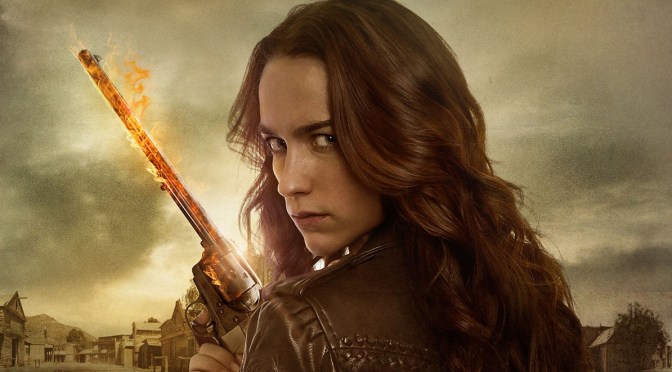
Friday saw the premier of another new show on SyFy, but Wynonna Earp arrived to little fanfare. The thing is, it’s not a bad little show, as far as I can tell. Sure, it’s got some kinks that need to be worked out, but there’s nothing wrong with it that justifies the nearly complete lack of promotion I’ve seen for the show. It doesn’t even seem to be getting reviewed by any of the regular places that I go to for television reviews, and that doesn’t bode well for the show going forward. We’ll see. In the meantime, let’s pick it apart a little.

Good: Showrunner Emily Andras also ran Lost Girl, another show that I liked quite a bit.

Bad: Andras describes Wynonna Earp as “Frozen meets Buffy which is just unfortunate-sounding. I know that what she means is that it’s a show that centers on the sometimes complicated relationship between sisters while they fight demons, but there have got to be better examples of sister-driven media than Frozen, and the last episode of Buffy: The Vampire Slayer aired almost fifteen years ago. It’s starting to just be sad that Buffy is still the go-to reference for girl-powered urban fantasy shows.

I mean, SERIOUSLY?

Ugly: While I haven’t read the comics, the source material looks like garbage. The cover art alone makes me want to go take about fourteen showers.

Good: That said, the show doesn’t reproduce the grossly objectifying imagery of the comics, and Wynonna is dressed perfectly sensibly so far.

Bad: The aesthetic of the show is, still, nothing particularly special, however. Wynonna is in the mold of other urban fantasy anti-heroines like Bo or Faith or, more recently, Jessica Jones, to whom I’m sure she’ll be compared ad nauseum. The rest of the characters likewise fall neatly into the looks of well-established genre tropes.

Ugly: The special effects in the first episode are mostly terrible. Wynonna’s first encounter with a demon, in particular, is hideous to look at, with everything obscured by a sort of blurry gloom that doesn’t manage to convey much of anything other than that the production of the episode was fairly cheap and lazy. I would say that this forest scene owes something to Ash vs. Evil Dead, but Wynonna Earp doesn’t have even a fraction of that show’s panache.

Good: Melanie Scrofano seems well-cast as the eponymous lead character, playing her as a decent amalgam of Jessica Jones and Lost Girl’s Bo, and she’s nicely supported so far by Dominique Provost-Chalkley as younger sister Waverly.

Good: We don’t get to see much of him, but Tim Rozon looks great as Doc Holliday. I can see the fanfic already.

Bad: Shamier Anderson is a little wooden and somewhat superfluous as Agent Dolls. The only bright side is that I think this is a bad writing problem, not a bad acting problem, which means that it would be easy for things to improve for Dolls as the show goes on.

Ugly: With the exception of Anderson, the cast is entirely white. In 2016, there’s really no excuse for this sort of tokenism.

Good: The first episode works nicely as a neatly self-contained origin story for Wynonna, with no mystery about or obfuscation of her history. The whole premise of the show is very straightforward, there’s a coherent mythology so far, and Wynonna Earp seems to be very aware of what it is. Some might consider it unambitious, and its admittedly someone derivative, but I find it refreshingly unpretentious.

Bad: The flip side of the above point is that there’s not a lot going on under the surface, at least not yet. Wynonna and Waverly are engaging enough, but they aren’t exactly compelling in this first episode.

Ugly: While the revenants that Wynonna is tasked with killing are supposedly part of a curse against her family, what they apparently really want to do is murder girls in general. Yuck. The brutal murder of Wynonna’s fell bus rider, Kiersten, in the first minutes of the episode was later confirmed to be at least the third such murder in recent months.

Good: The big fight scene at the end of the episode mostly worked, and there was even a glimmer of style (and none of the very silly special effects of the earlier scene) on display as Wynonna finally accepts her destiny and takes up the Peacemaker to step into her Chosen One role. It’s a bit of same old story at work, but it feels earned here, the end result is satisfying, and the episode ends exactly where it ought.

My final verdict?

Wynonna Earp is fun so far, and with twelve more episodes in the first season there’s plenty of room for it to get better. I’m not always a huge fan of urban fantasy serials like this, but the Western setting is just fresh enough to be a nice change of pace, and Wynonna is a type of heroine that I generally like. It’s not a show without flaws, but I can deal with some cheesy production values if the characters and story are good, and so far those aspects of the show are, overall, promising.

Wynonna Earp airs Fridays on SyFy at 10/9c.

Weekend Links: April 2, 2016 (Belated)

For once, the belated weekend links are not due to anything remotely my own fault. Yesterday we had about a ten-hour power outage due to high winds here in Cincinnati. It was actually nice just listening to the wind howl without any electronic noises, but only for the first couple of hours. It was less fun driving around town trying to find a place to eat that had electricity (though it was a good excuse for Thai food, in the end) and it turns out that reading from a Nook screen in total darkness only exacerbates an allergy-induced sinus headache. By about 10 pm, I gave up hoping that the power would come back on and just called it an early night, which turned out to be wise since it didn’t come back on until about 2:30 am.

Needless to say, no power and no internet is not conducive to being very productive. Today has been better, but I’m still, frankly, a little exhausted from my big Up and Coming read through, and this weekend just hasn’t been as relaxing/recharging as I’d hoped it would be. That said, I’ve got some interesting things in the works over the next few weeks, and I hope to be making some announcements in the near-ish future.

Due to the very busy week of non-internet reading, this is another lighter week for links, but I did still manage to find a few neat things to share.

The Powerpuff Girls reboot starts tomorrow, but in the meantime you can Powerpuff Yourself.

Man at Arms: Reforged did Xena’s Chakrams:

Party Over Here’s mansplaining hotline is a legitimately great idea:

The Fanwankers talked about Problematic Faves.

There’s a great piece at Mythcreants about Unreliable Narrators.

On Starships and Dragonwings has some tips for How to Use Biology Terms in Your Speculative Fiction.

Ken Liu’s piece on the differences between writing short and long fiction is a must-read.

In April’s Clarkesworld, Jason Heller writes about Hawkwind’s Space Rock Journey throughout Science Fiction and Fantasy.

At LitHub, Africa Has Always Been Sci-Fi: On Nnedi Okorafor and a New Generation of Afrofuturists.

Matt Ruff and Victor LaValle Take on Lovecraft and Race over at the B&N Review blog.

The winner of the 2015 BSFA Award is Aliette de Bodard’s The House of Shattered Wings.

The 2016 Aurora Awards finalists have been announced.

As have the winners and honor list for this year’s Tiptree Awards.

SF Signal’s April Cover Gallery for new releases is up. What are you most looking forward to this month?


My Final Hugo Ballot and a Bunch of More or Less Wild Speculations

Now that the Hugo nomination period is over (or will be in a couple of hours) it’s time for sharing ballots and wildly speculating about what we think is going to make the cut for the finalist list. My nominations and speculations about the categories I’m most interested in are below; I’d love to see yours in the comments.

Best Novel

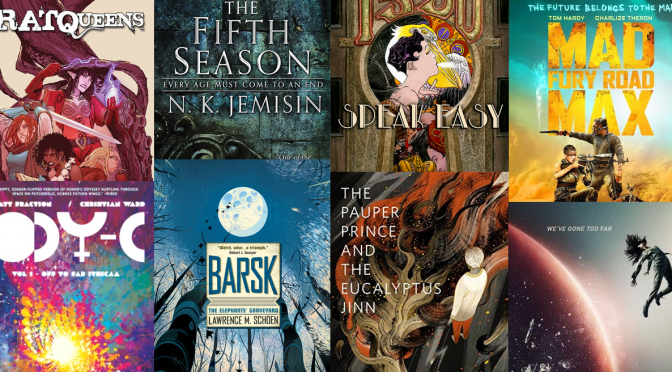
  • The Fifth Season by N.K. Jemisin
    I knew as soon as I finished The Fifth Season that it was going to be the best book I read in 2015, and nothing else really came close to it. It’s just a superb book, one of the most original fantasy novels I’ve read in years, and one that I think is likely to be influential in years to come, especially if the rest of the series holds to the same high standard as this first installment. I’ve seen this book getting a good amount of buzz among people who I usually agree with about these sorts of things, but that probably doesn’t mean much.
  • Barsk: The Elephants’ Graveyard by Lawrence M. Schoen
    Sadly, I think this title is a long shot even for the Hugo shortlist, in spite of its making the Nebula shortlist, which is actually what triggered my reading it. Because it was released so late in the year (12/28, I believe), I had actually been thinking of it as one of the first 2016 books, not a part of 2015 at all, and I suspect that a lot of other folks were under the same misconception.
  • The Grace of Kings by Ken Liu
    Ken Liu’s first novel is equal parts very familiar and very fresh. It’s an epic fantasy, but it’s far more influenced by literary epics than by mainstream fantasy, which seems to have prevented it from having the type of broad appeal I think it deserves. In an age where heavily character driven stories are extremely popular, The Grace of Kings isn’t, really, but it makes up for any failures of character development by having an excelling plot and superb worldbuilding.
  • The Just City by Jo Walton
    This little book has, I think, almost the opposite problem that Barsk has to overcome. The Just City came out early last year, and it’s such a sort of understated masterpiece that it might be very easy for it to be overlooked in favor of something more commercially popular, and I don’t expect to see it on the finalist list in a couple of months.
  • Sorcerer of the Wildeeps by Kai Ashante Wilson
    Sorcerer of the Wildeeps was published of part of Tor.com’s novella line, but it’s over the word count for that category and I haven’t seen any official word on its eligibility. My understanding, though, is that the folks who tally the votes will shift stuff like this into the proper category if necessary. Unfortunately, I don’t see this being competetive in the Best Novel category if that’s where it ultimately ends up, but there was no way I was going to leave it off my ballot.

Best Novella

  • Binti by Nnedi Okorafor
    This one is a story that grew on me; I like it better and better the more I think about it, and just the fact that I find myself thinking about it so much after so long speaks to it being something very special.
  • The Builders by Daniel Polansky
    I think The Builders is going to be hugely popular when the first round of votes are counted. It’s highly entertaining, just great fun to read, in addition to be extremely well-written.
  • The Pauper Prince and the Eucalyptus Djinn by Usman T. Malik
    I adored this novella, but it may be a little too grounded in the real world for a majority of Hugo voters to agree. Judging by the number of recommendation lists I saw it on, I expect it to have a good chance of making the final ballot, but I doubt it will win.
  • Speak Easy by Catherynne M. Valente
    Catherynne M. Valente is probably my favorite writer working today, and Speak Easy is marvelous from its gorgeous cover to every word on its pages.
  • The Citadel of Weeping Pearls by Aliette de Bodard
    Definitely my choices generally skew pretty heavily towards fantasy, but Aliette de Bodard writes some of the most beautiful space opera I’ve ever read. This may be a common nominee from the loves-Asimov’s-hates-Tor.com crowd, but I expect it’s a little cerebral for the folks who prefer books that are mostly full of spaceships and square-jawed Kirk-types. That said, I know the author was giving the story away for awards consideration, and that might have a big enough impact to ensure her a spot as a finalist. Alternatively, Tor.com’s new novellas could split the vote enough that it lowers the threshhold for finalists. With a dozen possible entries from Tor.com, it’s going to be an interesting year in this category.

Best Novelette

  • “The Oiran’s Song” by Isabel Yap
  • “The Long Goodnight of Violet Wild” by Catherynne M. Valente
  • “Another Word for World” by Ann Leckie
    This is the only story in this group that I think is a shoe-in for the category. Leckie’s Ancillary Mercy was well-liked and a solid finish to her trilogy, but I think it’s unlikely that it will get much traction for Best Novel. “Another Word for World”, however, is in a relatively sparse category to begin with (not many folks writing at novelette length), is by a popular author, and is available in a free anthology of mostly hard sci-fi.
  • “Follow Me Down” by Nicolette Barischoff
  • “Y Brenin” by C.A. Hawksmoor

Best Short Story

  • “Hungry Daughters of Starving Mothers” by Alyssa Wong
    I will be very surprised if this story doesn’t make the finalist list considering the amount of buzz it’s gotten, especially with Alyssa Wong also on a lot of short lists (mine included) for the Campbell.
  • “The Lily and the Horn” by Catherynne M. Valente
    I just really love Cat Valente, okay?
  • “Of Blood and Brine” by Megan E. O’Keefe
  • “The Robot Who Couldn’t Lie” by Sunil Patel
    This one’s a bit of a tearjerker, but I could see it having broad appeal, being at the intersection of human interest and hard sci-fi concepts. If it makes the finalist list, I’d say this would be a smart bet to win.
  • “Archana and Chandni” by Iona Sharma

Best Graphic Story

  • ODY-C Vol. 1: Off to Far Ithacaa
    I feel like basically no one else “got” this book, but I loved it almost beyond words. Probably it’s a long shot, but I’m not into super hero comics, so it’s not like it’s knocking something else off my list.
  • Nimona
    I only read this because my daughter did. She couldn’t put it down at the bookstore, and she finished it in an afternoon. I read it at least as quickly, and probably love it even more than she does.
  • Rat Queens Vol. 2: The Far Reaching Tentacles of N’Rygoth
    Obv.
  • Bitch Planet Vol. 1: Extraordinary Machine
    This is the badass feminist sci-fi comic I’ve been waiting for my whole life. I’m not sure I think it will have enough mainstream appeal to win a Hugo, but it definitely deserves a nomination.
  • Monstress #1
    This little book is stunningly beautiful, but again isn’t a mainstream choice. I have a feeling only one of my choices in this category will make the finalist list, and this isn’t it. (It’s Rat Queens. Calling that now.)

Best Dramatic Presentation (Long Form)

  • Crimson Peak
    There’s no way this will make the finalist list, but it’s probably my favorite movie of 2015, and I figured The Martian and Star Wars: The Force Awakens don’t need my help. 
  • Mad Max: Fury Road
    This is an obvious choice, and if it wasn’t for The Martian, I’d give good odds on Fury Road taking home a rocket.
  • Advantageous
    I’m guessing it’s very unlikely that this will even make finalist, but I just want everyone to go watch it on Netflix ASAP.
  • Jonathan Strange & Mr. Norrell
    I’m not a huge fan of book-to-television adaptations in general, but this one is remarkably good, true to the novel without being a slave to its source material.
  • Jessica Jones Season 1
    I know I’ve said I’m not into super heroes, but I am into Jessica Jones.

Best Dramatic Presentation (Short Form)

  • Into the Badlands “The Hand of Five Poisons”
    I almost nominated the whole first season of Into the Badlands in the Long Form category, but I don’t know if I can forgive it for ending on a cliffhanger and making me wait until 2017 for season two. That said, the episode in question is excellent, and the show in general has some of the best martial arts fight scenes ever put on television.
  • Minority Report “The American Dream”
    Sadly, Minority Report is dead, but it’s a show that I rather liked, and this episode came closest to living up to the show’s potential.
  • The Expanse “CQB”
    I’m not certain, but I think it’s highly likely that this is going to be this year’s winner in this category. Anyone who isn’t terrible loves this show, and this is almost certainly the best episode of the ones that aired in 2015.
  • Jessica Jones “AKA Smile”
    Best episode of the series, for sure.
  • Doctor Who “The Husbands of River Song”
    I was as surprised as anyone to like last year’s Christmas special, as I’ve long been a critic of Moffat-era Who, but it was quite good.

Campbell Award for Best New Writer

  • Becky Chambers
    The Long Way to a Small, Angry Planet was the only book I read twice last year, and Becky Chambers would probably be my first choice for the Campbell, but I would be thrilled for any of the authors I nominated to win.
  • Sunil Patel
  • Alyssa Wong
  • Iona Sharma
  • Isabel Yap


iZombie: “Pour Some Sugar, Zombie” strips away almost everyone’s secrets

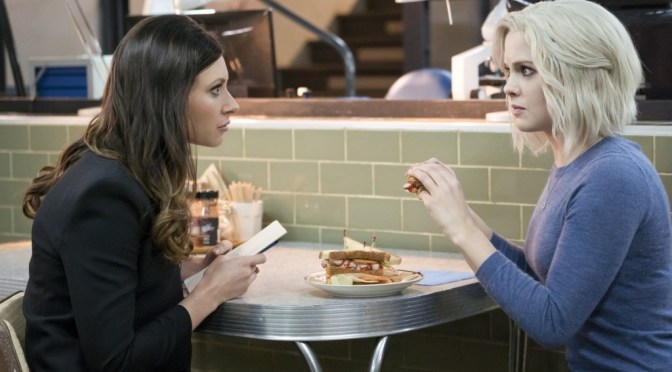
iZombie just gets better and better as it works its way towards the end of its second season. Like pretty much every episode these days, “Pour Some Sugar, Zombie” is jam-packed with important events, and that’s even without Drake, Mr. Boss, or Vaughn around to distract from the main characters. Smartly, this episode focuses primarily on Liv, Ravi, and Major, a nice change from last week which was very close to being entirely overstuffed.

The first and most exciting big news of the week is that Peyton is moving back in with Liv. I love that this wasn’t rushed, and the scene with Major and Ravi having drinks with the girls after helping Peyton carry boxes is just the beginning of a whole series of scenes this week that serve double purposes. In this case, it’s good to see the gang together and being friends—which is, incidentally, a great way to work in a somewhat dated reference to Friends—and the scene also introduces this week’s murder victim and sets up the case that Liv will be working on for most of the rest of the episode.

The case seems to be a pretty straightforward one to start with, and Liv isn’t even planning on eating Cassidy’s brain until Peyton shows up at the morgue to put in a special request. Unfortunately, the idea of Peyton hanging out with stripper brain Liv is much better than the execution of it here. There are elements of this sequence that I like, but it relies more than a little too heavily on stereotypes about dancers, made especially uncomfortable to watch by the fact that all of the dancers that appear in the episode are women of color, which adds a weirdly racialized tone to the stereotyping. Liv giving Peyton a lap dance could have been really funny, but instead it was just awkward, and not in a particularly fun way to watch.

The most compelling part of the episode actually ends up being Ravi’s journey to figuring out that Major is the Chaos Killer. This storyline is paced perfectly over the course of the episode so that the logical end of it, when Ravi finally confronts Major with his discoveries, feels organic and earned, a perfect dramatic payoff after a season’s worth of letting this hidden tension fester in the background. I like that Ravi doesn’t immediately go to Clive or Dale (or even Liv) when he figures it out, but instead confronts Major about it directly, and that it triggers Major’s reversion to zombie form makes it a great visual moment as well as a great emotional one.

In other news, after taking Ravi’s newest zombie cure last week, Blaine is no longer a zombie. However, he’s also no longer quite himself, either. There’s a lot of potential here for new directions in Blaine’s character growth, but I’m also somewhat concerned that this could be a prelude to writing him out of the series somehow, especially with Don E and Chief likely picking up the reins of Blaine’s business. That said, it seems much more likely that Don E and Chief’s move against Mr. Boss is going to fail spectacularly one way or another. My guess is that they are going to screw up big time in a way that helps to bring the conflicts between the show’s various factions to a head, and Blaine—either with his memory restored or not—will save the day somehow.

Also this week, after spending most of the episode bemoaning how she misjudged Drake, Liv finally finds out that he’s not a crook at all, but an undercover police officer. This is nicely seeded early in the hour when one of Drake’s handlers from vice shows up to ask Liv about him, but she ultimately finds out when she goes to visit Drake’s distraught mother. What remains to be seen is whether or not Liv actually does anything about this, especially in light of Major now being a zombie. As much as I, for the most part, dislike Liv and Major together, it’s a foundational fact of the show that the only reason they aren’t happily making little Livs and Majors now is because Liv is a zombie. Surely, this Chaos Killer business will get sorted out somehow, and then I expect Major and Liv to be interested in each other again, which makes Drake’s place on the show a little tenuous. I only hope he doesn’t go the way of poor Lowell.

With three episodes left in the season, there’s still a good amount of very tangled story left to unravel, but this episode has made some real headway in getting things set up for a wild ride of a season finale.

Miscellaneous Thoughts:

  • It’s good to get an update on zombie Rita, though I was hoping for something a little bigger from that development.
  • I know I complained about the stereotyping of the dancers, but “Helvetica” was a legitimately surprising and funny stripper name.
  • “Does he remember that he’s a dick?”


Supergirl: “World’s Finest” brings the Flash to town for reasons

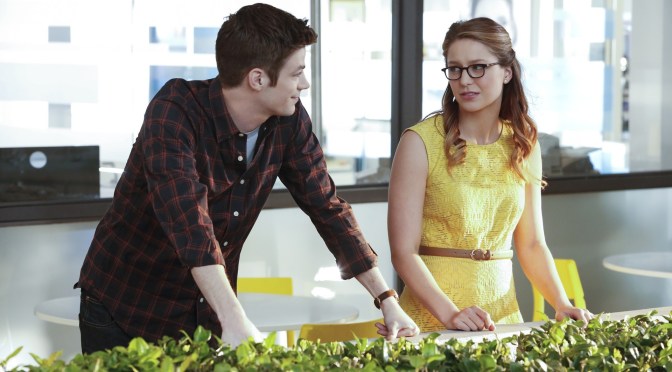
“World’s Finest” was, well, fine, but not great. I kind of think that as someone who hasn’t watched even a single episode of The Flash (though I am peripherally aware of it, what with not living under a rock), it was just hard for me to get very excited about the crossover between the two shows. That said, Barry Allen was a nice addition to the team for a single episode, but I don’t think I could deal with him more often. As Cat Grant pointed out: “He was so unfailingly charming and nice he either had to be a superhero or a Mormon.”

The story of the episode is set up early, with the revelation of Siobhan’s powers and her hatching of a plan to band together with Livewire to take down Supergirl and Cat Grant. Unfortunately, this pair never quite manage to be a credible threat to Supergirl or, frankly, anyone else. When they are finally defeated, it’s practically the definition of anticlimax. Although I did get a little misty-eyed when the people of National City finally seemed to rally around Supergirl, I felt like that development really wasn’t earned. I would have preferred to see the show hold off on Supergirl winning back the city’s love until the penultimate or even the final episode of the season, especially after the way this episode ends.

While Barry Allen’s presence is pleasant and an interesting way of shaking things up—particularly as a way of moving things along with Kara and James’s relationship—it’s really not enough to carry the hour. Far too much time is spent simply explaining why and how he’s there, including an absurd whiteboard drawing of several circles being used to explain the multiverse theory, which comes off more as condescending to the audience than anything else. It’s just not that complicated a concept, and the show uses rather silly comic book “science” to explain it anyway (apparently Barry is just that fast), so the whole sequence just ends up being kind of unintentionally funny.

I did rather like the instantly friendly dynamic between Barry and Kara, but it wasn’t any material that couldn’t have been better off given to Cat or Alex (who is sadly absent this week), and the one lasting impact Barry has on this version of National City could easily be missed by an unobservant viewer: his giving the local police a way to hold and take care of metahumans on their own so that human bad guys don’t have to be sent to the DEO. On the one hand, I appreciate that this is a way of revisiting and resolving a theme from earlier in the season, but it’s done in such an offhand way that it doesn’t seem very important. At the same time, with a likely-final confrontation with Non on the horizon, Lucy Lane in charge of the DEO, and Alex and Hank on the run, this could mean that the show is working towards removing the DEO from the picture altogether. This may not be a bad idea, as the show has always struggled to balance its vastly different settings and CatCo is the more compelling of them, but it also feels like a cheap way to shuffle Lucy out of the picture now that she’s no longer necessary to maintain a love triangle.

In many ways, “World’s Finest” feels a little like the show spinning its wheels. Before the final few minutes of the episode, very little of consequence actually happens, and then it’s as if everything is happening at once, leaving us with a cliffhanger setup for the last two episodes of the season.

Miscellaneous Thoughts:

  • Siobhan’s Silver Banshee makeup looked like garbage.
  • Winn was cute this week, which I never say, but it’s true this one time.
  • KARA AND JAMES IS HAPPENING… OH SHIT.
  • I feel like there is definitely going to be at least one major character death in the next two weeks, but I don’t even want to guess which one. Before this week I might have hoped for Winn, but he’s starting to grow on me now that he’s not being a gross Nice Guy™ towards Kara.

Let’s Read! Up and Coming: Part 12

Reading Up and Coming, even though I feel like it’s been a frantic and sometimes frustrating pace, has been totally worth it. This final group of authors has produced some of my favorite stories in the collection, and made for an altogether pleasant last day of reading.

Nicolas Wilson

Nicolas Wilson starts things off with “Trials,” which I mostly liked very well. It’s a very Star Trek-ish novelette with some fascinating aliens and a mostly compelling plot in which a man travels to a dangerous ice planet and has to negotiate a treaty with the people there. Though it’s somewhat (if not entirely) corrected by the ending of the story, the only serious issue I had with “Trials” was the narrator’s motivation being “earning” a woman’s love so he could steal her away from someone else. It’s not romantic or interesting; it’s infantilizing and unattractively obsessive, and that he transfers his affections so easily to the alien woman he meets only serves to reinforce that the narrator sees women as interchangeable objects rather than as people with agency of their own.

Wilson follows this up with “Multiply,” a cute piece of odd couple romantic comedy about a pair of AIs traveling together. It’s not bad, but it’s a fairly pedestrian premise with an execution that doesn’t really rise above workmanlike. I chuckled a couple of times, but the banter between the characters became grating about halfway through the story.

Alyssa Wong

I read and loved Alyssa Wong’s “Hungry Daughters of Starving Mothers” last year when it first came out, and if anything I loved it more the second time around. It’s definitely a story with several shades of meaning and multiple layers of genius to explore. “The Fisher Queen” is a similarly marvelous story about a young woman who finds out that her mother might be a mermaid of the sort that her people usually eat as fish, and in “Santos de Sampaquitas,” a young woman must deal with a god in order to protect her family. The beauty of Alyssa Wong’s language makes all three of these stories compulsively readable and highly enjoyable without distracting from the richness of her settings and the resonance of the themes she explores. Going into this project, Alyssa Wong was one of the writers I was almost certain I would nominate for the Campbell, on the strength of “Hungry Daughters of Starving Mothers” alone, and her other stories here only made me more sure of that choice.

Eleanor R. Wood

“Fibonacci” has an interesting structure and a lovely cadence to its storytelling, but very little plot and not much in particular to say about its subject matter. Still, I liked it the best of the three stories Eleanor R. Wood offered here. “Pawprints in the Aeolian Dust” has a premise that I enjoyed at first, but it moved along so slowly and methodically that I found myself bored and losing focus about halfway through. “Daddy’s Girl,” about a woman whose father is an android in need of repairs, is fine, but nothing particularly special, and its sweetness turned cloying at the end.

Frank Wu

I wanted to love Frank Wu’s “Season of the Ants in a Timeless Land,” but it’s another story that I, sadly, just found my mind wandering throughout. The romance, such as it was, was unconvincing, and none of the characters were compelling enough to keep my attention very long. I also found the religious allusions and the mysticism of the ending off-putting.

Jeff Xilon

From Jeff Xilon come “H,” a very short stream of consciousness in which a drug is used to make soldiers into a sort of hive mind and “All of Our Days,” about a man who misses out on a chance at immortality when he takes too long enjoying having a body. Neither of these were awful, but neither one stands out as very accomplished either.

J.Y. Yang

I loved “A House of Anxious Spiders” so, so much. J.Y. Yang’s imagery of people fighting with spiders that live in their mouths and then losing their voice until a new one hatches is clever and powerful, but never cutesy, and Yang doesn’t shy away from an insightful examination of the ways in which even people who love each other can hurt each other deeply. Sook Yee’s and Kathy’s cruelties to each other will feel almost too familiar to anyone who has argued about something real with a person who knows you well. In “Temporary Saints,” a woman prepares the bodies of children who were briefly able to perform miracles, and “Song of the Krakenmaid” finds a woman dealing with an interesting cryptid and a cheating girlfriend.

Honestly, I’m not sure how I’ve never come across any of J.Y. Yang’s stories before since they are relevant to basically all of my interests, but you can be sure I’ll be keeping an eye out for them in the future.

Isabel Yap

I didn’t love “Milagroso” in spite of its interesting ideas, and “Good Girls” was at times actually unappealing to me, but I love “The Oiran’s Song” passionately. It’s brutal and sad, but it’s also remarkably beautifully written, and Isabel Yap has a distinctive voice that I look forward to reading more of.

Jo Zebedee

I read just enough of this excerpt from Inish Carraig to send me over to Goodreads to find out more about the book, which confirmed that it is not one for me. However, though it only has a few reviews, they all seem to be very positive so far. If you like post-alien invasion stories, this one might be one to pick up.

Jon F. Zeigler

On the one hand, I love an original fairy tale, and “Galen and the Golden-Coat Hare” is a well-conceived and nicely written one. On the other hand, I dislike the deeply conservative message of this one, which frames poverty as a virtue that should be preserved and justice as the upholding of a fundamentally unjust status quo. Zeigler plays with some interesting fairy tale conventions, and there’s a clever conclusion to the story, but I just can’t bring myself to consider the ending a happy one.

Anna Zumbro

I know it’s only a quirk of alphabetical chance, but I was a little disappointed that the last two stories in Up and Coming weren’t more impactful. “The Pixie Game” and “The Cur of County Road Six” are both extremely short stories about kids being kind of awful to each other, and “The Cur” is a particularly ugly.

Final Verdict:

Alyssa Wong, of course, is definitely on my Campbell ballot, but Isabel Yap and J.Y. Yang are strong contenders for the couple of slots that I still haven’t sorted out yet.
Lucifer: “Pops” is all about Lucifer’s daddy issues, but it has other virtues

In “Pops,” Lucifer and Chloe investigate the murder of a well-known chef, and when the prime suspect turns out to be the man’s estranged son, it brings all of Lucifer’s festering issues with his own father even more to the surface than they usually are. I’ve been saying for weeks now that Lucifer is at its best when it deals more with its broader mythological ideas, and “Pops” is not an episode of Lucifer at its best. However, it’s surprisingly good nonetheless and proves that the show is capable of tackling family drama as well.

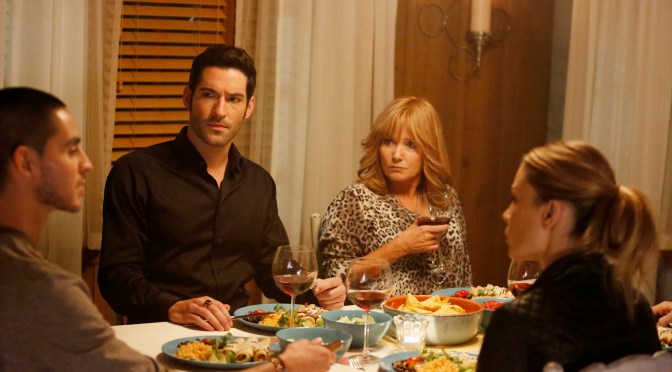
The murder mystery this week is slightly better than usual, and it actually has a couple of interesting twists and some nicely done misdirection before circling back around to its conclusion. As always, the case of the week is primarily a device with which to explore Lucifer’s copious existential crises, but this one works well as a self-contained plot in its own right and doesn’t distract too much from the family drama that is actually the main event in this episode as Chloe’s mother, Penelope Decker (guest Rebecca De Mornay), turns up for a surprise visit. When Penelope invites Lucifer to a family dinner, and Chloe invites Dan, and Lucifer invites their murder suspect, things go about as well as you might think. My favorite things about this episode, however, were all subplots, minor happenings, and set-up for the next couple of weeks and the season finale.

Hands down the best thing that happened this week was Maze finally getting some much-needed character development. Up to this point, we’ve almost exclusively seen her in scenes either with Lucifer or about Lucifer, and there’s been very little sense of who Mazikeen is as a person on her own. Now that she’s very much out of Lucifer’s good graces—and still very much stuck on Earth as long as he is—Maze finds herself at loose ends. She’s already said that she likes Lucifer’s therapist, Dr. Martin, and this week finds Maze seeking out the good doctor for some therapy of her own. When Dr. Martin suggests that perhaps Maze needs to try making some friends, Maze storms out in frustration, but she manages to make a friend after all: Chloe’s daughter, Trixie, who is goddamn adorable. Fresh from this success, a somewhat softened Maze returns to Dr. Martin and asks the other woman out for a drink, so maybe Maze has made an adult friend now as well. I’ve been overall very unhappy with the treatment of Maze on the show, so I can’t even say how excited I was to see her getting to just exist and have a little bit of story that is only about herself rather than revolving around Lucifer and his drama.

Before the episode ends, we also get an update on what’s going on with Dan and Malcolm. I don’t quite get why Dan would be so concerned with finding some reason to advocate for Lucifer’s life—I really just didn’t buy that whole situation at all—but I was interested to see the Malcolm and Dan stuff escalating so quickly. It’s safe to say, I’m sure, that Dan is still in the land of the living going into next week’s episode, but Malcolm has managed to, perhaps permanently, damage Dan’s relationship with Chloe and has driven her right into Lucifer’s arms. I don’t love the way that Lucifer’s unwillingness to take advantage of Chloe’s inebriated state is framed as character growth—because it suggests that maybe at some point he would have raped a drunk and vulnerable woman—but there’s still a good deal of sweetness in the way Chloe snuggles up next to her friend and passes out.

Overall, “Pops” is another solid hour of a show that I’ve really grown to love. It’s not perfect, but it continues to improve in multiple areas as it marches on towards the season finale.

Miscellaneous Thoughts:

  • I have no idea at this point if we’re supposed to like and root for Dan or if we’re supposed to be hoping that he dies tragically in the season finale.
  • I would watch a whole show based around Mazikeen’s friendships with Trixie and Dr. Martin.
  • No Amenadiel this week, and I find that I didn’t miss him. Or, I did, but I think trying to squeeze him into this episode would have pushed it over the edge from jam-packed with story to straight-up overstuffed.
  • Lucifer’s narcissism was especially over the top as he tried to get someone, anyone, to admit to having daddy issues as big as his own.
  • Chloe’s relationship with Penelope was well-done considering how little screen time was actually dedicated to it. I thought their reconciliation over wine near the end was a little too neat, but not terribly so.
  • I wonder how much Uber is paying for all their product placement in shows these days?

Let’s Read! Up and Coming: Part 11

Second group of authors of the day!

Joseph Tomaras

I actually have no idea where to start with any substantial analysis or review of Joseph Tomaras’s work. All I can say is that, without being an expert on critical theory and being white myself, it seems as if Tomaras chooses to write about a lot of experiences that aren’t his in a way that seems appropriative and voyeuristic. “Bonfires in Anacostia” was fine, if somewhat pessimistic, but “Thirty-Eight Observations on the Nature of the Self” asks the reader to empathize with a pedophile, which I just don’t have it in me to do today. “The Joy of Sects” is Tomaras’s weirdest story in this collection, and follows a trans woman as she infiltrates a sex cult as part of a Marxist conspiracy to suppress religion, another thing that my splitting allergy-induced headache prevented me from entirely wrapping my head around.

Vincent Trigili

Vincent Trigili’s “The Storymaster” is a bland, derivative piece with a long, dialogue infodump for an ending, which is my least favorite type of story. There are a lot of dragon story tropes strung together here, but not in an interesting way, and the infodump at the end neatly dispelled anything like mystery or tension within the story.

P.K. Tyler

Whereas Joseph Tomaras’s work was mildly troubling, P.K. Tyler’s novelette, “Moon Dust” just made me absolutely fucking furious. It’s a truly disgusting piece of internalized misogyny that only made me feel progressively enraged the more I read. Reading about a young woman being kidnapped, raped, impregnated, escaped, punished by her family and society, and then being expected to read her decision to keep and love the baby that is a product of her rape as a positive, edifying thing, made me want to vomit. That P.K. Tyler went to some lengths to frame Nilafay’s rape as consensual sex is just the cherry on top of this sundae of awfulness. I skipped Tyler’s second story altogether.

Tamara Vardomskaya

Both “The Metamorphoses of Narcissus” and “Acrobat Duality” were technically excellent stories that I just didn’t care for. “Acrobatic Duality” was somewhat the better of the two, but most of what turned me off was the author’s seeming disdain for fine art in “The Metamorphoses of Narcissus,” which framed art as frivolous and wasteful in contrast to the main character’s work as a nurse during a war and the fulfillment she finds as a wife.

Leo Vladimirsky

I’m always surprised that late stage capitalism isn’t more fertile ground for SF authors, but I was glad to see Leo Vladimirsky making use of it as a dystopian backdrop for the story in “Collar.” Unfortunately, “Dandelion,” about a couple who don’t share the gene for immortality, doesn’t quite live up to the promise of the previous tale.

Nancy S.M. Waldman

In a group of mediocre writers, Nancy S.M. Waldman stands out as the most consistently excellent, and I loved all three of the stories that she submitted for this anthology. “ReMemories” is a little scattered in terms of what ideas it wants to focus on, but it’s a strong piece with a good amount of emotional impact, some interesting technology ideas, and a hopeful ending. “And Always, Murder” has a fantastic cast of uplifted animals who have integrated themselves into human society with varying levels of success. “Sound of Chartreuse” is a little fussy and high-mindedly intellectual to be purely enjoyable, but it’s a smart bit of family history and the ideas about synesthesia and communication could stand to have even more development. I would definitely read a book about Carinth.

Thomas M. Waldroon

“Sinseerly a Friend & Yr. Obed’t” dealt with some country-ish folks and a lake full of alien sea monsters. It might be fine for the right reader, but I found it dull and uninspired.

Jo Lindsay Walton

I expected “It’s OK to Say if You Went Back in Time and Killed Baby Hitler” to be a funnier story than it was, just based on the title. However, I wasn’t disappointed with it, and Jo Lindsay Walton’s story of competing time travel companies is clever enough to deserve its title after all.

Kim Wells

Kim Wells’s “The Book of Safkhet: Chronicler of the Journey, Mistress of the House of Books” is a very weird mashup of science fiction (space ships), fantasy (dragons), and biblical allusions that just did not work for me at all. Sometimes an unlikely mix of story influences can fuse together into something great; this time, it’s just a big old confused mess.

Alison Wilgus

“King Tide” takes us into a relatively near future in which coastal areas have flooded due to climate change and gives the reader a peek into the life of a young couple living in the aftermath of it all. It’s a quietly reflective tale that, at the same time never gets too bogged down in sentiment. Alison Wilgus follows this up with “Noise Pollution,” which is an excellent piece of world building in which music provides the magic to combat noise. I love this idea and think it’s plenty good enough to carry a much longer work, but as a short story it feels a little overstuffed and underbaked.

Final Verdict:

My favorites of this group are Leo Vladimirsky and Nancy S.M. Waldman, by far, but Alison Wilgus is also an author who I’ll be keeping an eye out for, especially if she ever decides to expand upon the ideas she put forward in “Noise Pollution.”

Let’s Read! Up and Coming: Part 10

This is only the first of two posts for today, now that I’m finally caught up on reading. I had considered doing all twenty of today’s authors in one post, but decided it would just run far too long; I think most of these posts have run in the 1.5-2k word range and I think breaking it up into groups of ten has so far worked really well. This first group of the day has some stellar pieces that stand out against a backdrop of general mediocrity.

Elsa Sjunneson-Henry

“Edge of the Unknown” is a very silly story about how the girls at a finishing school for young witches react to Arthur Conan Doyle killing off Sherlock Holmes in “The Final Problem.” I didn’t hate it, but I’m just not enough of a Sherlock Holmes fan to care that much about a story with this premise.

Daniel Arthur Smith

Daniel Arthur Smith’s first story, “The Diatomic Quantum Flop,” opens with four stoner college dudes, which I found immediately off-putting. I literally can’t think of a cast of characters whose stories could be less interesting to me, but I have a feeling this story is fine for people who can identify with its characters. Smith follows this up with “Tower,” a story that reads a bit like a disaster action film concept. The point of view character in this one is a war veteran who reads like exactly the sort of square-jawed action hero who bores me to tears just thinking about him. Again, the story itself is fine, I guess, but not at all the sort of thing I would ever pick up to read on purpose. I skipped Smith’s novella excerpt, which for some reason starts with chapter four.

Lesley Smith

Lesley Smith’s “The Soulless: A History of Zombieism in Chiitai and Mihari Culture” is an imaginative and moderately interesting meta examination of pop cultural zombie mythology. I like the idea of looking at zombies from the perspective of an entirely different and alien race, and Smith has produced a workmanlike piece that doesn’t overstay its welcome or overwork its concept.

William Squirrell

I didn’t care that much for either “Götterdämmerung” or “Fighting in the Streets of the City of Time,” though neither was particularly bad, just unmemorable. However, I adore “I am Problem Solving Astronaut: How to Write Hard SF,” a very funny—I laughed aloud more than once—piece that takes aim and fires at some of the more common hard SF tropes. It contains the wonderful line: “The future is a perfect meritocracy in which everyone is measured against the same standard: Problem Solving Astronaut.”

Dan Stout

Dan Stout’s “Outpatient” is one of my favorite kind of sci-fi stories, the kind that deal with scientific fuck-ups, and this one is a doozy that is also a nice bit of psychological horror. “The Curious Case of Alpha-7 DE11” deals with an entirely different kind of scientific fuck-up, and it’s told in a very clever fashion, as a voicemail complaint from a mad scientist who is having a problem with a golem that he purchased. What I appreciate most about this story is that it was smart and funny, but not self-consciously so. There’s very little that I dislike more than a clever story that is obsessed with its own cleverness, as it distracts from the actual story and often ruins the joke. Not so here.

Naru Dames Sundar

All of Naru Dames Sundar’s three stories are deeply powerful in their own ways. “A Revolution in Four Courses” deals with the destruction of culture in the wake of imperialism, and it ends on a bittersweet note with an act of resistance that may or may not be futile but still makes for a compelling story. Sundar’s descriptions of food are wonderfully evocative and help to bring his fantasy world to life. In “Infinite Skeins,” a bereft mother searches through numerous parallel universes for her lost daughter, unmindful of what else she might lose in the process. And “Broken-Winged Love” examines some of the often complicated feelings of a mother for a child that isn’t exactly what she expected or hoped for.

Will Swardstrom

“Uncle Allen” isn’t the worst, but it’s too short a story to have the kind of inconsistencies I noticed while reading it, and it ends with a long info-dumping piece of dialogue that reveals information that isn’t particularly hinted at or supported by the story up to that point. Will Swardstrom’s other novelette, “The Control,” is only slightly better. Bek’s long journey through history is told, not shown, and “The Control” focuses on what, to me, is one of the least interesting parts of Bek’s story.

Jeremy Szal

I rather liked Jeremy Szal’s first story, “Daega’s Test,” a very short piece about advanced AIs testing each other, but things were downhill from there. “Last Age of Kings” is a ho-hum piece of sword and sorcery about a guy with a fridged wife, and “Skin Game” has something to say about government surveillance being bad, but it doesn’t do so very memorably.

Lauren C. Teffeau

Lauren C. Teffeau’s “Forge and Fledge” is a nicely written piece about a boy born on a penal colony in space, but I couldn’t for the life of me get into “Jump Cut.” There was some kind of sci-fi motocross and lots of cyberpunk-ish implanted technology, but the story just read like the plot of some kind of straight-to-Netflix space sports flick.

Natalia Theodoridou

Along with Naru Dames Sundar, Natalia Theodoridou is my favorite of this group of writers. “The Eleven Holy Numbers of the Mechanical Soul” is a sort of castaway story that finds a man alone on a barren-seeming planet building robot animals in order to keep himself company after the death of the other people he was traveling with. “On Post-Mortem Birds” is a much shorter and significantly more fanciful story about the birds that have to be freed from the dead, and it’s lovely and charming in every way. “Android Whores Can’t Cry” is a total change of pace again, and deals with some relatively well-trod storytelling ground in a compelling way. Theodoridou’s idea of android nacre is fascinating, and it’s a wonderful symbol that she interweaves deftly throughout the narrative.

Final Verdict:

Obviously the standout writers of this bunch of Natalia Theodoridou and Naru Dames Sundar, and I’m definitely considering a Campbell nomination for Theodoridou, who is in her second and last year of eligibility. Lesley Smith, William Squirrell and Dan Stout also turned in some well-worth-reading pieces.