All posts by SF Bluestocking

Doctor Who: “Knock Knock” is fine, I guess

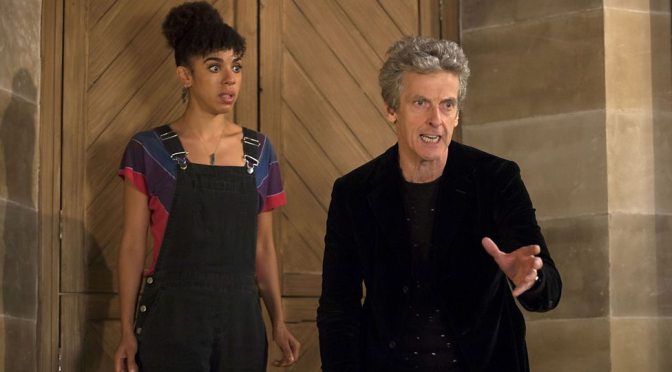
Doctor Who has always been an inconsistent show, and “Knock, Knock” is the first stumble of this season. It’s not that it’s terrible; it’s just that there’s nothing particularly good about it, either. The story is pedestrian, the special effects are lackluster, the scares aren’t scary enough, and Bill isn’t given nearly enough to do. Your mileage may vary, but I found it to be an overall very “meh” episode that failed to satisfactorily explore its themes.

**Spoilers below.**

The increased focus on showing us some of the companion’s life apart from the Doctor continued this week, with the whole episode’s story built around Bill moving out on her own—into a house with five housemates. They struggle, as many young students do, to find something affordable, but eventually settle on a huge, old house that’s serendipitously offered to them, suspiciously cheap (natch) by a very strange old man. It’s a classic horror movie set-up, and the first half or so of the episode follows the expected horror show formula: Bill and her friends sign an obviously shady contract, move in to their ill-advised lease, and the house eats one of them right away. The Doctor shows up, and hijinks ensue as the solve the mystery of the house and its appetites.

It’s the back third or so of the episode where all the actual Doctor Who happens, but there’s not much depth here. When the Doctor is helping Bill move in, he invites himself into the house and introduces himself to her new housemates, but steamrolls right over Bill’s objections and her attempts to set a totally reasonable boundary. This could, very generously, be interpreted as being in parallel to the toxic relationship between the episode’s antagonist and the wooden woman we come to find out is his mother. Even more tenuously, this theme of relationships needing to have proper boundaries set and respected could be connected to the final scene of the episode where it’s all but revealed that the Doctor’s prisoner is the Master (I mean, obviously it’s the Master, right?), but that’s a real stretch. I suppose the story of the boy who wanted to save his mother is a little sad, but it’s tough to have strong sympathetic feelings for a guy who murdered a couple dozen young people in the last sixty or so years.

All in all, it’s simply not clear what message we’re supposed to take away from any of this. The Doctor oversteps a reasonable boundary with Bill, but the ends here—Bill’s five housemates are all rescued by the end of the episode—seem to justify the means. Bill and her friends really were wrong to rent the house to begin with, the Doctor was right to be suspicious, and through the Doctor’s quick-thinking the day is saved. It’s a facile thesis, and the ending, with the five eaten young people (though, interestingly, only the five, not the eighteen or so others before them) rescued and whole, completely sidesteps having to deal with any permanent consequences for any of the decisions anyone made in this episode. Even the ending of the Landlord and his mother is depicted as more bittersweetly tragic than anything else, and he’s a literal murderer responsible for the deaths of numerous people and who has been keeping his own mother imprisoned and taking advantage of her memory loss for decades. It’s genuinely wild that anyone thought this story was a great idea.

Listen, though. It’s fine. The bar for this show’s success has been set absurdly low for the better part of a decade now, and this episode isn’t without its positives. There’s a genuinely funny moment when Bill breaks the news to one of her boy housemates that she prefers girls, and the boy in question just smiles good-naturedly and responds kindly and with good humor, just like any decent person ought to in that situation. The casting of David Suchet (of Poirot fame) as the Landlord is inspired. We finally do get very close to confirmation of who the Doctor and Nardole have got imprisoned (though Matt Lucas is still shamefully underused in this role). While “Knock, Knock” won’t go down as a standout episode in any aspect, it’s a perfectly serviceable bit of almost-mid-season filler/fluff. I suggest not thinking too hard about it. The folks running the show certainly didn’t.

Miscellaneous Thoughts:

  • Even that episode title was something of a missed opportunity. Was “Knock” not good enough? Or was “Knock on Wood” already taken?
  • Also, maybe it’s just because I recently had to deal with a bug infestation in my own home, but yuck. Also, also, where did all those bugs go at the end?
State of the Blog and Weekend Links: May 7, 2017

I don’t have much news this week, personal or otherwise. My productivity has been middling–not terrible, but not as good as I’d hoped coming into the week–partly do to depressing news stuff going on and partly due to new upstairs neighbors who are noisier than any upstairs neighbors I’ve ever had in the almost ten years I’ve lived here. Turns out, constant banging and yelling and loud television at all hours of the day and night has the effect of interfering with my sleep and triggering terrible headaches, which are kind of a distraction when I’m trying to write or do other quiet-ish activities.

I watched the first episode of American Gods, which was better than I expected, to be honest, and the new episode of Lucifer was pretty good, but I didn’t have much to say about either of them. “The Bone Orchard” was pretty much just exactly the first two chapters of the book and “Candy Morningstar” was fun but unexceptional.

I’ve been in a little bit of a reading slump for a couple weeks now, which is a bummer, especially as things I want to read start piling up. April was a little slow with new books, but just this week had half a dozen new releases I’d like to get through, and there’s at least two or three more every week between now and July. If I’m honest, I’ll probably end up having to scale back some of my reading plans in the next couple of months, not to read less, but just to prioritize the May and June releases I want to read so I can move on to some July-October ARCs I’ve already got sitting around. There is some very exciting stuff coming out in the back half of 2017, and I don’t want to miss any of it.

Finally, I think once a couple more TV shows I’m watching wrap up, I’ll be starting a new Let’s Read! project. Though I (sadly) never finished Dune last year due to a lot of travel and some other unforeseen stuff, this year I’m determined to get through Mervyn Peake’s Gormenghast trilogy. I managed to get some Ballantine mass markets from the 70s that are too wonderful not to read. I’m currently taking suggestions on how to split these up into manageable chunks for writing about.

The shortlist for this year’s Clarke Award was announced this week. Once again, I’ve read half of it. I have got to make some time to read The Underground Railroad and After Atlas.

Also posted this week are the nominees for the 2016 Shirley Jackson Award. I’ve read far fewer of these, but horror and dark fantasy have never been my favorite things to read. It’s nice to see The Ballad of Black Tom, The Dream-Quest of Vellitt Boe and The Starlit Wood on there, though.

If you’re interested in comics, the 2017 Eisner Awards finalist list is out, too. I’m not a

Speaking of new releases, Tor.com has got you covered for May:

One of the books that came out on May 2 that I’m looking forward to digging into this week is Robyn Bennis’s The Guns Above. To promote the book, Bennis has been making the rounds of the guest-blogging circuit, and it’s only made me more excited for this title.

There’s a great interview with Mishell Baker over at the Barnes & Noble Sci-Fi and Fantasy Blog. Baker also revealed the cover this weekend for the next book in her Arcadia Project series: Imposter Syndrome. It’s gorgeous, and I can’t wait to have all of this series on my shelf.

At the Wertzone, the next installment in the Cities of Fantasy series is all about Minas Tirith.

At Tor.com, Sarah Gailey’s piece on the alternate history that makes up American identity is a must-read.

You can now make yourself a Pop! figure avatar.

The first half of the content from the May/June 2017 Uncanny Magazine is up, and there’s so much great stuff in this issue. My recommendations:

Seriously. It’s a great issue of a great magazine, and the material that’s not online yet is just as amazing as what’s already out. I strongly suggest just subscribing to the magazine, and now is a great time to do it, during Uncanny‘s 2017 subscription drive over at Weightless Books. A subscription right now is $2 less than the regular price, and they’ve got some great perks on offer if they hit their milestones.

iZombie: “Spanking the Zombie” is half hilarity and half heartbreak

“Spanking the Zombie” is basically half fun murder mystery and half heartrending tragedy, but somehow it works. I do have a couple quibbles about it, but it’s overall a very good episode that avoids the biggest potential pitfalls in its concept, advances the overarching plot of the show in a big way and has a strong chance of making the viewer cry like a baby at the end.

**Spoilers below.**

This week, Liv and Clive are investigating the murder of Roxanne Greer, a dominatrix known to her clients as Sweet Lady Pain. Unfortunately, Roxanne’s brain isn’t fresh. Ravi has been keeping it soaking in memory serum for a couple of weeks, which leads to one of the grosser brain-cooking scenes in the show’s history. The blue color of the liquid the brain’s been in is a very unsettling non-food color, and pan-frying it doesn’t improve the look of it. Liv is also apprehensive about eating dominatrix brain at all, and her reluctance only just manages to avoid being kinkshaming. It’s a fine line, but they manage to convey pretty effectively that it’s more about that sort of thing being outside Liv’s personal comfort zone rather than having it come off as truly judgmental.

Liv almost immediately has a vision, which turns out to be the first of many intense visions she experiences this week, an unintended effect of the memory serum—which is interesting, since it supposedly had no effect on Blaine at all. I have the feeling that chances of Blaine faking his amnesia have risen considerably with this development, though we don’t see Blaine (or Peyton) at all this week. The other interesting thing that’s done with Liv’s visions this week is that, instead of filming all the visions so the audience gets to see what Liv sees, we see much more of Liv’s visions from the point of view of other characters. It’s a neat way of showing a little more of the mechanics of this mythology, and it feels significant, though it’s not clear what the significance of this new perspective might be just yet.

The murder mystery itself is nicely twisty and provides an excuse to bring back two of my favorite minor characters: erstwhile weatherman Johnny Frost (Daran Norris) and sleazy defense attorney Brandt Stone (Ken Marino), who are even more fun together than they have been apart. Obviously neither man is the murderer, but they are instrumental in figuring out who is. While they’re at it, they bring a level of humor and snark that, along with Liv’s vamping around dominatrix-style, makes this one of the funniest cases of the week in the show’s history. The only problem with this case is the wrap-up. Once the actual murderer is captured, he basically confesses immediately—with an odd line to the effect that it doesn’t even matter how or why he murdered Roxanne—and that’s the last we see of the guy.

It’s a strange anticlimax to an otherwise entertaining story, and the crack about the murderer’s motives and the details of the crime not mattering might be meant in a meta, self-deprecating way by the show’s writers, but it mostly just feels weirdly abrupt and dismissive of the whole previous half hour of storytelling. In a way, it’s true that the show’s murder mysteries are often episode filler and comic relief between more dramatic moments and more overarching plots, but it’s not true that these stories don’t matter or that no one cares about the resolution of them, even in an episode that’s about to end with a gut punch like this one does.

This episode starts and ends with Major. First, we see him participating in his first actual mercenary mission with the Fillmore Graves crew, during which he ends up being stabbed a whole bunch of times. When he returns to Seattle, he collapses and his friend Justin brings him to the morgue, where Ravi and Liv realize that it’s time for Major to take the cure, memory loss or not. First, though, they have to keep him alive until his stab wounds heal up enough that they won’t immediately kill him when he turns human, so they stabilize him and take him home. After Ravi goes to his own bed, Liv and Major kind of rekindle their relationship and say some tragically bittersweet goodbyes. It’s beautiful and sad, and I have so much love for how messy Liv and Major’s relationship is. They never manage to be quite at the same place at the same time, but there’s something wonderful about their quiet, consistent love for each other. Next week, I guess we’ll find out if Major really is going to lose his memories and what that’s going to mean for their friend group.

Miscellaneous Thoughts:

  • “Frankly, I resent being questioned every time a hooker or stripper or dominatrix gets killed in this town.”
  • All of Liv’s scenes with Jimmy the sketch artist were excellent.
  • Lack of Ravi/Peyton/Blaine drama was a definite plus this week. Ravi actually got to be likable again.
  • Don E. makes a new zombie/friend, and the Scratching Post is open for business, but this storyline felt decidedly tertiary and was completely disconnected from the main story this week. It’s fine, and cool scene with them playing air guitar together on the bar, but I still don’t see where this stuff is going.
  • No follow-up on Justin’s shock when he learns about the zombie cure, and he isn’t fully briefed on it before he disappears from the episode, but I can only imagine that this is going to be a big deal in the next week or two. Surely he will go back to Fillmore Graves and tell people there, and I have a feeling it’s not going to go over well.
  • “Give me a new name. One that’s less silly.” Oh, Major.

Book Review: Wicked Wonders by Ellen Klages

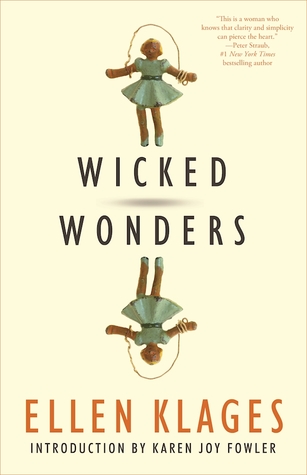
Ellen Klages is having a good year, which is also a boon for those of us who love good short fiction. Klages’ Tor.com novella, Passing Strange, is sure to be among the best of 2017, and it was a fortuitous discovery for me as I hadn’t read anything by Ellen Klages before. When I saw that she had a new collection of short fiction coming out from Tachyon just a couple of months later, I was thrilled.  I was even more thrilled when I got approved for the ARC on NetGalley, and my excitement turned out to be totally warranted. Wicked Wonders is, with one significant and honestly baffling exception, full of consistently thoughtful, clever, affecting stories, all overlaid by a sort of gently reassuring feeling of nostalgia.

The only major criticism I have of the collection specifically concerns the story “Woodsmoke,” which starts off as a nice story about girls bonding (maybe even falling in adolescent love) at a summer camp but then turns into the horrendously sensationalized reveal that one of the girls has an intersex condition, complete with immediate misgendering and melodramatic handwringing about “I don’t know your real name.” It’s a bizarre bait and switch that feels like a betrayal of the characters (who deserve better treatment) and the spirit of the story (which up to that point was fine, if unremarkable). Frankly, I don’t know what Klages was about with this story, and her explanation of it in the Story Notes section at the back of the book is unhelpful except to say that she hopes to make it part of a novel length work at some point (please no). If “Woodsmoke” had appeared early in the collection, I may have stopped reading the book altogether because it was so deeply upsetting; as it is, I can only recommend Wicked Wonders with a major reservation.

Regarding the rest of the collection, many of the stories in Wicked Wonders deal with childhood, and Klages has a real knack for capturing something of the bittersweetness of coming of age moments. “The Education of a Witch” explores a young girl’s identification with a villainess, and it’s a story that will likely be relatable, albeit in different ways, both to those of us who grew up before princess culture and those who grew up immersed in it. “Singing on a Star” is looks at the anxieties that surround a child’s first sleepover. Often, Klages’ stories feature precocious girls with creatively clever and interesting ways of looking at the world, as in “Gone to the Library” (which also features a cameo by Grace Hopper).

Most of these stories deal with transitions of one kind or another. In “Amicae Aeternum” (a story which legit made me weep when I read it and is literally making me tear up as I write this), a young girl says goodbye to her best friend before moving very far away. “Echoes of Aurora” is a gorgeously melancholy autumnal love story that deals with a non-childhood life change. “Hey, Presto!” is a smart and thoughtful coming of age story about a young woman reconnecting with her father and discovering they have more in common than she previously thought. In “Goodnight Moons,” a story that that recalls nothing more than Bradbury’s Martian Chronicles, an astronaut takes a much bigger leap for humanity than she thought she was going to when she signed up to go to Mars.

Also evident in this collection is a sharply wry sense of humor, and Klages often uses ironic turns of phrase and sly references to great effect. “Sponda the Suet Girl and the Secret of the French Pearl” is a smart and funny original fairytale that should appeal to fans of Ursula Vernon. “The Scary Ham” is a short, humorous nonfiction story about the grieving process (and it was a very scary ham). “Mrs. Zeno’s Paradox” carries social nicety between women to a logical extreme, making use of a single strong central joke for maximum effect.

To be sure, there’s a decided slightness to all the stories in this collection, which is sometimes at odds with the ostensibly serious subject matter Klages writes about. While there is a little darkness in some of the stories, Klages’ endings are almost universally happy, or at least optimistic, and I suspect this won’t appeal to all readers. Still, there’s something to be said for short, sweet stories that don’t require a great deal of thought to understand and enjoy, and Wicked Wonders, for the most part, has a pleasantly restful quality that makes it quietly delightful to read.

This review is based on an advance copy of the title received from the publisher via NetGalley.

Into the Badlands: “Black Heart, White Mountain” is laser-focused, but on all the wrong things

Season two of Into the Badlands has, overall, been a vast improvement on the first season, which was too short to really develop its ideas and suffered, furthermore, from poor pacing. The expanded episode order of season two has really given the writers more room to play and the whole story has been allowed to breathe in a way that just, generally, improves the viewing experience. However, too much of a good thing is possible, and “Black Heart, White Mountain” slows things down to a frustrating degree, with most of the episode laser-focused on Sunny, which means that the far more interesting storyline—Quinn and the Widow’s attack on new Baroness Jade—doesn’t get nearly enough screen time to do it justice.

**Spoilers below.**

The pre-credits scene this week is the beginning of a lengthy dream sequence Sunny has while unconscious, broken up into parts that stretch across most of the episode. It turns out that in Sunny’s dream life, he lives with Veil and their son, Henry, on a small farm in the woods, but as the episode goes on Sunny finds himself haunted and tormented by ghosts from his past that destroy his dream life while picking at all Sunny’s worst fears and insecurities. An aura of tragedy has surrounded Sunny all season, and it becomes palpable in this episode; Sunny is terrified that he will never be able to truly leave his past as a Clipper behind him and that it will poison everything he tries to do forever; he worries that his past will get people he loves killed; and he’s scared that his child might follow in his footsteps. It’s all pretty straightforward redemption arc material.

What’s not entirely clear is how the viewer is meant to feel about Sunny’s anxieties. On the one hand, in-universe, his concerns seem to be well-founded. The Badlands are an ugly place, and Sunny has made a long list of enemies. Without eliminating or making peace with his enemies and changing the whole rotten system, it seems likely that Sunny will never fully escape his past and that his son may make similar decisions to cope with living in such a deeply messed up world. On the other hand, it also feels as if we may be meant to see Sunny as different, even as uniquely incorruptible, persevering as he is to try and build a better life for himself and his family and to do the right thing as much as he’s able. Perhaps we’re meant to think Sunny’s anxieties are exaggerated or neurotic, and they’re being set up as potential conflict between Sunny and the more optimistic characters in his life, namely M.K. and Veil, both of whom have a faith in Sunny that Sunny doesn’t have in himself. Sunny seems like the kind of guy who would “selflessly” leave his family behind to save them from himself. I just hope that tired old trope isn’t the direction things are heading.

While Sunny is working through his inner demons, Bajie and M.K. have to figure out a way to save him. While their bonding and the revelations about both characters are well-done, like Sunny’s dream sequence they just take up far too much space in the episode. Things get slightly more exciting when they finally arrive at the monastery, where they try to sneak in and out while the monks are having dinner, only to be discovered (predictably) by the Master. The ensuing fight is underwhelming, and in the end M.K. and Bajie manage to find a cure for Sunny’s condition and make their getaway without too much trouble. That the Master is left, presumably, alive is simply par for the course with this show; all of Sunny and Bajie’s journey so far has basically been about pissing off every person of note in the world on their circuitous route back to the Badlands. I only wish the Master felt like more of a credible threat. This is the first episode in which the Master has been portrayed as explicitly villainous, and we still don’t know enough about her motives to be certain that M.K. and Bajie haven’t simply misunderstood what the Master is trying to do with the monastery and the way she trains those who share their “gift.” The ease with which she’s outwitted and defeated here doesn’t make her seem very dangerous.

The most interesting thing to me about this storyline, however, is Bajie’s story about his novice, Flea. When he first tells M.K. about her, Bajie lets M.K. believe that Flea died at the monastery, but we learn at the end that that’s not the case after all. Instead, Bajie freed Flea before he left, and he’s been searching for her ever since; the Badlands is the only place he hasn’t looked yet. Also, probably, the city that M.K.’s book and Sunny’s compass might lead them to. After killing off Ava so unceremoniously last week (and mostly forgetting about her this week), it was nice to have a missing woman who isn’t fridged, even if Bajie’s story about Flea has some holes in it and confuses his motivations. This is the first we’ve heard of Flea, and Bajie’s stated goal of finding her seems at odds with his previous reluctance about going to the Badlands at all. Generously interpreted (assuming we are to believe it at all, which is still questionable), this Flea story adds some depth and complexity to Bajie’s character, but it doesn’t feel organic or like a truly integrated part of his personality, and it’s rather a big change from what we’ve been shown about Bajie so far. That Bajie has stolen and kept Sunny’s compass further confuses things as it suggests that Bajie may just be out for himself after all. We’ll see.

The storyline that is shortchanged this week mostly concerns Jade, who is the first Baron targeted by Quinn and the Widow in the war of revenge against their former confederates. We first see Jade this week in the bath, but she quickly works out that something is wrong when her servants don’t respond to her calls, and she goes to see what’s going on. It turns out that her cogs are in revolt, her clippers are defecting, and Quinn and the Widow are in her house, capturing her by the time she’s finished getting dressed. There’s not much actual combat to be seen here, probably due to time constraints, which is too bad as I’m positively itching to see Jade get to actually fight; she certainly seems game for the challenge. Instead of a fight, we get a short conversation between Quinn and Jade where he accuses her of tearing apart his family and she stubbornly points out that he did that himself. Jade truly loved Ryder, and that’s something that Quinn doesn’t understand and isn’t willing to truly engage with. Jade is ready to die and tells Quinn so, but in the end, he decides to exile her instead.

This is either a sad ending for Jade or the start of a new and glorious redemption/revenge arc for her, and there’s some great potential here if the show decides to develop her character more. It’s far more interesting than anything Sunny, Bajie and M.K. did this week, in any case, and the storyline could have benefited from just a generally deeper treatment. Sarah Bolger as Jade nailed her scenes with Quinn, but it’s left unclear what she said that caused him to decide to spare her life, and we see almost nothing of note with the Widow and what went into her decision-making process here. The Widow doesn’t kill women; she just gives them to predatory men when it’s convenient to her, apparently. This is way beyond “problematic fave” territory at this point and well into “undeniably garbage, self-serving White Feminist” neighborhood. I’m curious how much longer Tilda is going to stick with her mother at this rate. She cannot be totally okay with this, right? Maybe if this storyline was given a bit more time to play out, we’d know.

Miscellaneous Thoughts:

  • Having Sunny start his dream sequence without his tattoos is a nice touch, though a little on the nose.
  • Artemis looks just like Samara from The Ring, and it’s kind of hilarious.
  • I wish they’d saved the episode title “The Hand of Five Poisons” for this episode. It would have worked on so many levels, so it’s a real missed opportunity.
  • What possible good could a gas mask do for Sunny when he starts having trouble breathing because his lungs are collapsing or whatever? It didn’t even look cool.
  • I would love to see a little more of the Master’s history with Bajie, as their antipathy felt very personal.

Doctor Who: “Thin Ice” is the best episode of the season yet, but it’s still a mixed bag

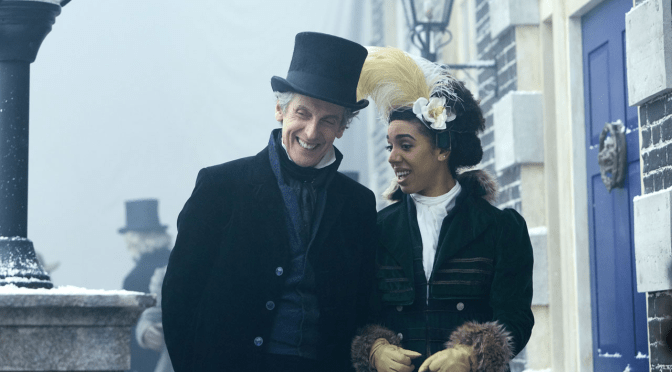
In “Thin Ice,” the Doctor and Bill visit the last ever Thames Frost Fair and uncover a mystery, as the Doctor and his companions are always wont to do. It’s highly reminiscent of other Regency-to-Victorian era episodes of the show as well as of the season five adventure, “The Beast Below.” If this season of the show has an overarching theme so far, it seems to be rehashing all the show’s old tropes in new arrangements, and this is both fascinating and frustrating. To be fair, there’s precious little new under the sun, and I don’t expect to be blown away by the originality of the show week after week, but I’m not certain that this most recent iteration of the series is doing enough to set itself apart from previous seasons. There’s some great stuff in “Thin Ice,” but there’s also some tiresomely dull stuff, a tendency to zoom past emotional moments without giving them time to really land, and a sense of self-righteous smugness about some of the episode’s messaging.

Once again, Bill is proving herself to be a great companion to the Doctor, and we’re starting to see more and more of the easy chemistry and nicely accomplished comedic timing between Pearl Mackie and Peter Capaldi. Bill’s a little bit street wise, and she’s got a sensible level of independence along with a stubborn streak that lets her stand up to the Doctor, who can be a little bit of an intellectual bully at times. Bill’s confidence and cleverness let her adapt to unexpected situations, and the joy she takes in novel experiences is infectious and quite fun to watch. At the same time, this season is continuing very deliberately the themes of the last two seasons relating to the Doctor’s lack of humanity, and like previous companions, Bill is becoming something of a conscience for her mentor. Unlike with the last couple of companions, however, the show is doing a great job of truly showing us why and how Bill is up to that often onerous task.

**Spoilers below.**

This week’s mystery revolves around a great beast chained to the bottom of the Thames, where an unscrupulous nobleman, one Lord Sutcliffe, is feeding it humans in order to extract a valuable and highly efficient fuel that the beast produces as waste. It’s a simple enough plot and a straightforward mystery without any unexpected twists or turns, but that’s fine. There’s something to be said for that kind of comfort television, and “Thin Ice” is definitely in the comfort TV neighborhood. It’s got lighthearted fun, cute kids, and a happy ending where a racist asshole gets what’s coming to him. There’s not much not to like about it. Unfortunately, there’s not much in particular to actively praise about the episode, either.

Perhaps the episode’s biggest problem, though it’s by no means a dealbreaker, is the ease with which it skips from emotional beat to emotional beat without taking time to really examine why these moments are supposed to work. Bill’s concerns about facing racism in Regency England are quickly moved past, as are her concerns about her potential to change the future in unexpected ways. In a show that in general takes a blithe attitude towards its treatment of most of the usual ethical and practical considerations surrounding time travel, it may be best to just leave it alone. I did rather like the Doctor messing with Bill about it, but even that isn’t terribly funny if you think about it; he’s joked around Bill’s concerns rather than actually answering them.

When a little boy dies right in front of Bill’s eyes, she’s outraged at the Doctor’s lack of reaction—and it’s not touched on, but he saves his sonic screwdriver without making a move to save the child—but even this is quickly glossed over. At first Bill seems deeply upset by the experience, and she’s angry with the Doctor for being able to move past it so quickly, but she moves past it fast enough herself. It’s an interesting way that the Doctor seems to corrupt his companions. By removing them so far in space and time from their natural contexts, the companions are often forced to abandon normal human standards of ethics and morality in favor of more broadly logical, but surely less humane, rules for living. For all that the show continues to try and portray the companions as a humanizing force in the Doctor’s life—and the Doctor gives Bill a great deal of power and agency in their partnership this week by treating her as a sort of commander—the ways in which the 2000-year-old Doctor changes his companions tend to never be adequately dealt with, and this episode is no different.

As far as the overall messaging of this episode, it’s a decidedly mixed bag. It’s nice to see fictional whitewashing called out, and I’m always happy to see a racist get punched in the face, but did the Doctor really need to give a long-winded speech about the sanctity of life or whatever? The decision to free the Thames sea serpent thing at the end of the episode is laudable, but it’s done with an awfully self-satisfied tone considering that there’s no assurance that the beast isn’t going to leave to be a human-eating menace elsewhere. As fantastical as the episode was, we also get a reminder that a black girl couldn’t inherit a fortune in 1814, which necessitates it being given to a little white boy with a much smaller role in the episode. It’s fine, I guess. Whatever. But the overall tone of the episode verges on smugness, especially in the delivery of the Doctor’s lines about whitewashing and his speech about what the true measure of humanity’s goodness is.

For all that the folks behind the show do seem to be making an effort to engage with and address common criticisms, they’ve still got a regrettable tendency to always want to prove that the Doctor is the smartest and best person in the room. He might need a human companion to keep him in check and remind him to do the human thing, but that’s not going to stop the Doctor from making self-indulgent pedantic speeches that challenge the humans around him to be better than they are. Yay.

Miscellaneous Thoughts:

  • The episode seems to imply that Frost Fairs were common occurrences on the Thames, but they weren’t. Even during a mini Ice Age that caused more extreme than usual winters in England, the Thames never froze solid enough for this kind of thing more than once every ten years or so.
  • I guess Nardole is part of the overarching plot this season but not adventuring with the Doctor and Bill. Too bad, though. I would like to see Matt Lucas get a bit more to do.

State of the Blog and Weekend Links: April 30, 2017

It’s been another largely uneventful week at the SF Bluestocking apartment, but getting my daughter packed and ready to go on her National Junior Honor Society trip to Washington, D.C. took a surprisingly large amount of time and energy now that I’m looking back at the week. I didn’t write as much as I’d hoped, and I haven’t even starting watching Hulu’s The Handmaid’s Tale yet, which is kind of a bummer. I did read a bit, finishing Cosmic Powers and then knocking out a couple of excellent novellas (Dianna Gunn’s Keeper of the Dawn and Buffalo Soldier by Maurice Broaddus), and I cooked a couple of good meals, but all in all it was somewhat of a disappointing seven days, capped off with spending most of today with piece of cat fur stuck in my eyeball because someone doesn’t like to be brushed and fights like a demon every time.

It could have been worse, though, and I’m looking forward to having some solid, uninterrupted work time tomorrow while my kid is still out of town. Plus, my copies of Saga Volume 7 and Angel Catbird Volume 2 arrived today, so I’m looking forward to a couple of easy reads before I get started on some of the May releases that are going to start piling up this week. I expect it to be a busy month.

As always, I’ll be covering Into the Badlands and iZombie this coming week. The first episode of American Gods also aired tonight, so I may write about that, time/passion permitting, and Lucifer is back tomorrow for another six episodes of season two, which I’m looking forward to. We’re also starting to get into the time of year where every movie I want to see comes out at about the same time, so we’ll see how that works out over the next few weeks. It’s an exciting time.

Anita Sarkeesian has finally finished with her Tropes vs. Women series of videos. Listen. They aren’t perfect, and there’s plenty to debate and criticize about them, but there’s some solid work in there as well.

I never get tired of reading interviews with John Waters.

Or with Aliette de Bodard, for that matter.

This discussion between Jeff VanderMeer and Cory Doctorow is suprisingly not insufferable.

Maurice Broaddus wrote this week about the Big Idea in his new novella, Buffalo Soldiers.

Good piece at Fantasy Faction about disability in SFF.

The Mary Sue wonders why Wonder Woman isn’t being as strongly promoted as some other genre films. Sexism, obv, and judging by the number of articles I’ve seen about it today, mean feminist types aren’t the only ones who have noticed.

Nerds of a Feather had more Dystopian Visions this week:

And wrapping up this week was Fantasy Cafe’s Women in SFF Month, a great project that I am super honored and proud to have been invited to participate in this year. My post was up on Friday, and I was in very good company this week.


iZombie: “Wag the Tongue Slowly” hangs some decent plot progress on a slight case of the week

After last week’s fast-paced hour of watching Ravi metaphorically punch himself in the crotch over and over again, “Wag the Tongue Slowly” is a bit lighter and, for the most part, a lot more fun. There’s no particular aspect of the episode that stands out as excellent, but there are modest advances made on all the season’s important storylines so far and the murder mystery of the week is entertaining, even if it is predictable. Even still, the episode ends on something of a low note, which makes me concerned about how far and deep the overall sense of foreboding they’re building is going to go and what that means for the characters we’ve come to love over the last couple of years. iZombie has always had a feeling of tragedy about it, but that’s being explored this season to a far greater degree than ever before.

**Spoilers below.**

The episode begins and ends with Blaine still not having recovered his memories of his previous life, which doesn’t bode well for Major or, eventually, Liv, who would also like to someday not be a zombie. However, this is potentially good news for Blaine and Peyton, who are very cozy now. There’s an interesting dynamic between Peyton and her friends because of this, but there’s a problem: no one in the situation comes off looking particularly good. Peyton’s an Assistant DA, which makes her involvement with Blaine—amnesia or not—a pretty significant ethical issue. Ravi’s been a disaster over Peyton all season. Major is relatively chill, though more due to fatalism than anything else, and Liv was actually kind of monstrous towards Peyton this week, piling on a guilt trip as if it’s Peyton’s fault that the memory serum isn’t working.

It’s an ugly moment for Liv, and an interesting choice to include in an episode where Liv eats the brain of someone so unlikable, especially when it seems clear that this ugliness is all Liv. Similarly, at the start of the episode, before Liv even partakes of gossip brain, she gives a recap of Ravi’s exploits last week that borders on mean-spirited. It’s not as if Liv has always been a perfectly likable protagonist, but her friendships with other characters are central to the show and a key to its popularity. This unkindness is a sharp corner in Liv that hasn’t been explored before. There’s always been some question of how much of Liv’s personality is her and how much is from the brains she eats, and this episode presents another possibility—that the brains might (at least sometimes) act as an intensifier for Liv’s personality rather than taking over her personality.

Meanwhile, Major finally makes some progress in his search for Natalie, with Ravi’s help of course. I could have done with more of Major and Ravi hanging out together, but it’s good to see some actual movement on this storyline, even if it turns out to be frustrating. Major actually finds Natalie, who’s awake and apparently trapped by some zombie businessman who’s keeping her locked up in a hotel, although it doesn’t seem as if she’s there entirely against her will. Needless to say, she’s not happy to see Major, and she insists that he leave her where she is so he doesn’t get himself killed. Before leaving, Major gives Natalie a dose of the zombie cure and a heads up about the amnesia thing, which is, frankly, a strange place to leave things. It doesn’t explain who took Natalie or why, it doesn’t resolve Major’s hunt for her except in the most basic fashion, and leaving a syringe of the zombie cure out in the wild feels like set-up for it to be used for purposes other than its intended one. Ravi’s Don Quixote allusion is nice, as is the use of “I Don Quixote” in the background, though.

The murder mystery, as I already mentioned, is a predictable one, but it’s still fun to watch. Office gossip Cheryl is underdeveloped as a victim, and what we do learn about her isn’t flattering. It’s no surprise that she’s pissed off everyone she works with to the point that they’re willing to play a dangerous “prank” on her. It was mildly surprising that Cheryl’s death wasn’t actually intentional, but the basic method of her death was obvious as soon as they started introducing all the people she worked with and every one of them had strong motives. These fast-paced interrogation montages are something the show has done before, and I like it every time, but this time was made even better by the hilarious faces Clive makes throughout. His and Liv’s “Ahhhh!” when they learn that Cheryl was a gossip was perfectly timed and a laugh out loud moment.

The final piece of story that is touched on this week is the ongoing investigation of the murder of Wally and his family. Liv and Clive split a stack of messages from an online forum between them to look for evidence, and they find information that points them towards a local shooting range that turns out to be run by a man whose brother died at the recent Max Rager party. He claims to have solid proof of the existence of zombies—at least of the shambling type—and he’s also got a conviction that “you can’t murder what ain’t alive.” While the shooting range owner has an alibi and Liv and Clive don’t have any solid evidence against him, this surely isn’t the last we’ve seen of this fellow.

Miscellaneous Thoughts:

  • “That can’t be the best use of taxpayer dollars.”
  • “Dude, don’t pitch problems.”
  • Ravi’s obsession with the porn actress was kind of extra gross after his behavior last week. Guess he’s just gonna wallow for a while in that hole he dug.
  • Wham Bam Gun Range. That is all.

Into the Badlands: “Leopard Stalks in Snow” takes some [possibly unnecessarily] dark turns

Into the Badlands has always been a show with sharp edges and dark corners, and “Leopard Stalks in Snow” takes things to perhaps the darkest place the show has ever been. We’re past the halfway point of the season now, and already we’re starting to see all the show’s disparate storylines begin to converge. This week showcases more than one significant reunion, a couple of big revelations and several potential major conflicts on the horizon. All in all, there’s a definite sense of an enormous storm brewing; it just remains to be seen if all this build-up is going to pay off in the end.

**Spoilers below.**

The pre-credits scene this week picks up right where last week’s episode ended. Lydia is reeling, disoriented and bloody after the explosion at the entrance to Quinn’s secret compound, and the men she led there are strewn about, some in actual pieces, as Quinn walks among them cutting the throats of the wounded. It might be the most gruesome scene of the show to date, to the point that it’s uncomfortable to watch. It’s saying something, really, that this isn’t the hardest to watch scene of the episode, to be honest, though Quinn’s quiet “Hello, Lydia” is chilling. Their reunion goes about as well as one might expect. Lydia is angry about Quinn killing Ryder; Quinn makes things all about himself; Lydia tries to stab her estranged husband; Quinn kisses her; and things get weird. I’m curious to find out if Lydia’s response here is real or if it’s calculatedly feigned. Either way, gross, and we don’t see Lydia again this week.

Sunny and Bajie get rid of Portia and Amelia early and unceremoniously, which is disappointing. I didn’t expect for those two to become a permanent fixture in the show, but the way they’re so quickly disposed of here—I don’t recall even seeing Amelia onscreen, and we only see Portia for a moment—borders on disrespectful and practically reduces them to furniture in Sunny and Bajie’s story. While Sunny does have a short talk with the man they leave Portia and Amelia with, that conversation is almost entirely about reassuring Sunny that he’s an okay guy and absolving him of responsibility for Portia’s injury. Sure, Into the Badlands has no dearth of interesting, complex and empowered female characters with stories of their own, but it wouldn’t have taken that much time to give Portia and Amelia the dignity of a proper ending to their story that wasn’t all about Sunny and his feelings.

Elsewhere, Ava catches up with M.K. and they continue traveling together, hoping to escape the Abbots, who are already hunting them using a device that can track M.K.’s gift. Before the Abbots catch up to the young fugitives, however, they’re sidetracked when the device picks up something else and leads them right to Bajie, who evades them by hiding underwater. Sunny follows the Abbots alone when Bajie refuses to go with him, and he catches up to them about the same time they catch up with M.K. and Ava, who are camping in an abandoned shopping mall Christmas display. This leads to the big showpiece fight scene of the episode, which is fine. We get to see Daniel Wu square off again Cung Le, which is cool; we learn that Bajie’s was once an Abbot as well, which is interesting; but the whole thing is marred by the tragically predictable fridging of Ava, who dies in the battle. And this after a genuinely compelling scene between M.K. and Ava where they Ava talks about her feelings of loss of identity now that they’d left the temple. This comes into play during Ava’s actual death scene, when she fears that if the Master lies, there may be no rebirth for her after death, just nothingness. Unfortunately for Ava, Sunny steals her thunder by having some kind of heart attack and collapsing, drawing M.K.’s attention away from her final moments so that it’s not just a fridging—it’s a poorly executed one in that the full impact of Ava’s death is considerably blunted.

I’m starting to think that, ultimately, the biggest and most interesting conflict of the season may end up being between the Widow and Tilda. Tilda’s big scene this week is with new butterfly Odessa, who is planning to leave after hearing that the Widow is planning to ally with Quinn to take down the other Barons. In response to Odessa’s concerns, Tilda shares her own story of how she met the Widow and why she calls the Widow “mother.” I’m not sold on the necessity of yet another story involving sexual abuse of a child, even if it does end with the Widow murdering her rapist husband and apologizing to Tilda for not doing it sooner, but it does set up a fascinating potential for future conflict. Tilda has deeply personal reasons for standing by the Widow, and Odessa brings an important outside perspective to challenge Tilda’s loyalty to her baron, but there’s an even bigger test of Tilda’s loyalty likely coming soon.

Last week, Veil finally escaped from Quinn, and this week she and Henry are found by one of the Widow’s butterflies and brought to the Widow’s estate where she meets Tilda again. The Widow offers Veil shelter and safety, theoretically anyway, in exchange for going back to work on trying to translate a book about the mysterious city that everyone is so obsessed with. However, when Quinn learns that the Widow is sheltering Veil, he demands Veil be returned to him as a condition of the alliance between himself and the Widow. Perhaps unsurprisingly, but nonetheless infuriatingly, the Widow, in the end, decides to turn Veil over to Quinn. It’s a horrendous betrayal of Veil, and the decision of a white woman to sell out a black woman to a white man for, essentially, personal gain is much worse than I think is even intended by the show. The Widow may think that she has a just cause and a greater good that she’s serving, but this action is also a betrayal of any principle she thinks she might have, and it’s solid proof that Odessa is right not to trust her. Veil’s expression of abject horror at the prospect of being sent back to Quinn is more than enough to paint the Widow as a villain here even if the Widow hadn’t just come up with some bullshit reason for why her conscience is clear. This isn’t the sort of thing she’ll be able to keep from her Regent, though, and Tilda isn’t going to like it.

Miscellaneous Thoughts:

  • “Like you don’t have secrets.”
  • Sunny’s compunctions about killing have evaporated pretty quickly.
  • I’m curious how far in the future this show is supposed to be set. If it’s far enough in the future that a holiday as recognizable as Christmas has faded into obscurity and is just some weird thing ancient people used to do, it would be unlikely that an elaborate mall display would still be intact. Alfred Gough and Miles Millar had a similar scene in their other far future fantasy show, The Shannara Chronicles, and it was just as weird and out of place there. I guess they just like that juxtaposition of the future-fantasy with ruins of modern times, but it’s not nearly as visually interesting or thematically compelling as they seem to think it is.
  • I wish Tilda and Odessa would have had a couple more scenes before now to lead up to their romance a little slower. There was that one scene a couple episodes ago where I was pretty sure they were flirting, but that was it until now. For all that the Widow fills her home with younger women, Tilda often feels very isolated, and the emotional intimacy she has with Odessa feels very abrupt, which makes the physical intimacy feel rushed as well. I like these characters together, but I’d love to see their story have a little more space to grow at a more leisurely pace, especially considering that the conflict between Tilda and the Widow seems likely to be hugely important in the coming weeks.
  • I would also love to go at least one episode without having to listen to Waldo mansplaining something.

Doctor Who: “Smile” has too many ideas and not much to say about any of them

True to Doctor Who tradition, the second episode of season ten sees the Doctor and Bill Potts traveling far into the future. Usually these far future trips are less plot-focused and more character-driven, often with a commentary about the human condition, and “Smile” is definitely in all of those neighborhoods. If last week’s “The Pilot” was about introducing the show to new viewers and putting the new companion through some of her madcap adventuring paces, “Smile” (like “The End of the World,” “New Earth,” “The Beast Below” and others) is about testing the companion’s limits and challenging her (and the viewer’s) expectations about the future. Unfortunately, not every episode of this type can be a classic like “The End of the World” or “The Beast Below,” and “Smile” isn’t great, mostly because it gets a bit bogged down in being a sort of vaguely anti-technology polemic against emoji.

**Spoilers below.**

Our first glimpse of Gliese 581d is of vast wheat fields and blue skies over a beautiful, albeit stark, white building. It’s not a particularly unique setting for a Doctor Who episode, and it’s the sort of bland sci-fi futurist imagery that just screams dystopia. It’s fine. It is a kind of dystopia, as we’re soon to find out, inhabited by emoji-faced robots, swarms of murderous microbots (Vardies) and a ship full of refugees from a future Earth crisis. The Doctor and Bill arrive right after the robots have murdered the first wave of human colonists who were responsible for preparing the planet to receive the rest of the refugees, who have been kept in stasis. After making a macabre discovery in a greenhouse, the Doctor and Bill have to piece together what happened to the original people before a bunch of very confused robots kill them all.

The emotional core of the episode is Bill coming to terms with a future for humanity that isn’t what she expected or hoped, and Pearl Mackie continues to play Bill with such expressive sensitivity (balanced by heaps of cleverness) that this emotional journey mostly works. There’s some incoherence in the middle as Bill throws herself into uncovering the truth about what’s happened on Gliese, but for the most part it’s easy enough to understand Bill’s feelings. Her sadness and distress as she learns about the future history of Earth are relatable enough, though the episode would have benefited from spending a little more time on Bill’s feelings, just in general. Mackie is such a beautifully emotive actor that it’s a shame to force her to cycle so quickly between feelings-having and doing cleverly competent companion stuff without allowing the feelings to breathe.

One could make the argument that this was intentional and thematically consistent in this episode, what with the enforced cheerfulness that Bill is forced to perform for the emoji-bots, but it’s an episode that is, frankly, full of mixed messaging and missed opportunities for thematic resonance. It touches on several theoretically interesting ideas—the alleged shallowness and limitations of emoji-based communications, the potential for miscommunication when using emoji, and the gendered (and age-dependent) enforcement of public happiness—without managing to have much to say about any of them. As uncomfortable as it is to see an older white man constantly reminding a young woman to “Smile!” the episode has remarkably little to say about the phenomenon, which seems like a huge missed opportunity, and I would love to see this idea tackled by a capable female writer with some awareness of the discourse surrounding this particular patriarchal expectation for women and children.

When it comes to being critical of emoji, the episode is a little more capable, but it relies on a straw man conception of what emoji are, how they are used and what they might be used for in the future. Rather than making any kind of insightful point, there’s an underlying tone of a middle-aged man grumbling about kids these days. Similarly, the warning tone the episode takes towards human reliance on automated technology in general suggests a, frankly, boring Neo-Luddite alarmism about the dangers of artificial intelligence and the hubris of human ingenuity. This messaging becomes even more muddled when combined with the seemingly agrarian aspirations of the Gliese settlers, which is strongly at odds with the warlike, violent humans that are awoken by the end of the episode, whose first instincts are to defend themselves with force against the confused robots that killed their friends.

There are a whole slew of popular sci-fi concepts and tropes in play here, but “Smile” would have been a stronger episode if it decided to focus on one or two and commit to exploring a strong central thesis. It’s not a terrible episode, and Bill continues to charm (she’s the most promising new companion since Donna, in my opinion), but it’s definitely a case of an episode trying to do both too much and too little, with a lazy premise and overall lack of cogent vision.

Miscellaneous Thoughts: