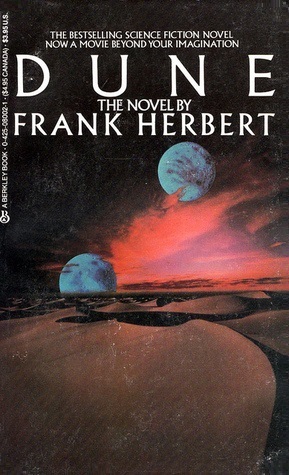
Let’s Read! Dune, Part Four

13249366I feel as if I could just title all of these posts so far “Duke Leto Deathwatch 2016” considering the amount of time I spend speculating on the time and manner and necessity of the Duke’s demise. I’m sad to report that after 162 pages, a full third of the way through this book, Duke Leto remains in the land of the living. There’s a light at the end of the tunnel, however, as Dr. Yueh finally makes his move and attacks the Duke in chapter eighteen. Before we get to that, however, there’s a good deal more set-up for the imminent tragedy.

The sixteenth chapter opens with an epigraph on greatness and myth-making from “Collected Sayings of Muad’Dib,” and the chapter sticks fairly closely to these themes as it continues to explore Duke Leto’s character and touches on Paul’s precociousness and the likelihood that Paul is this mythical Kwisatz Haderach figure. I still feel as if this is an enormous amount of ground-laying for a plot that is so highly conventional that surely people knew it by heart even in 1965. Most of the chapter is taken up with a long dinner, in which the Duke discusses his progressive goals for Arrakis and some of the recent problems on the planet with several locally important men. The thing that is most interesting here, however, is the dynamic between Duke Leto and Jessica. He doesn’t publicly disavow her like I thought he might, but he’s certainly cool and mistrustful towards her, and Jessica definitely notices.

It’s not until the next chapter, however, that Jessica takes action, and this is only when she’s directly confronted by a very drunk Duncan Idaho (literally the worst character name so far in the book; what was Frank Herbert thinking?) who accuses her to her face of being a Harkonnen spy. This finally helps her understand the Duke’s weird behavior, and Jessica is livid. She goes to discuss this garbage with Thufir Hawat, who is a massive dick to her because he doesn’t understand or trust the Bene Gesserit. A couple of major pieces of information come out of this interview, though. First, neither Jessica nor Hawat suspect who the actual spy/traitor is. Second, Jessica is pregnant with the Duke’s daughter. Third, Jessica is a woman of considerable intelligence and power in her own right.

Here’s the thing, though: If Jessica is so intelligent and powerful, why must she be so meek and subservient to Duke Leto? Serious question. It’s not that I don’t understand politics or the long-game scheming the Bene Gesserit seem to be engaged in. Sure, I buy it. They’re shaping the future of the galaxy, one eugenically planned Chosen One and one meticulously orchestrated and seeded “prophecy” at a time for some reason. Ethics or something, I guess, since Jessica seems to be somewhat unwilling to just straight up mind control dudes in order to get her way, although she’s not above terrifying poor old Hawat. And so, Jessica is a devoted concubine and attentive mother, demonstrably powerful but with no apparently ego or ambitions of her own. Instead, she’s focused almost entirely on securing her husband’s legacy and her son’s future, and her entire identity is wrapped up in these concerns.

I just find this stuff tiresome and sadly characteristic of many of the male-penned, progressive-for-their-time novels that make up so much of the SFF canon. Frank Herbert, like many authors of his age (and our age, if we’re being honest), can imagine a woman who is beautiful, strong, intelligent, brave, principled, and powerful, but only insofar as she’s appropriately in thrall to a Great Man™, busy nurturing a future Great Man™, or otherwise safely ensconced in some version of a 1950s gender role while the real protagonists (all men) do all the truly important stuff.

Jessica is too tamed by heteronormative not-marriage and by doting motherhood to be truly powerful, and she’s never treated as an equal to Leto or Paul in the narrative. When she does show her considerable power, it’s framed as irrational—she’s goaded into it by Hawat’s suspicions about her motives—and her connection to the Bene Gesserit, who are actually powerful, is portrayed as legitimately questionable. Certainly the Revered Mother is treated as a somewhat sinister figure, even as she’s also treated like an irrational old hag who isn’t to be taken seriously. It’s a treatment of women that is condescending in its magnanimity—because, you see, women can be powerful—but also sadly limiting of women’s opportunities and stories—because powerful women are frightening and emasculating, so they must be controlled in the narrative, preferably by men, at all times.

Maybe I’m wrong, but with the Duke’s demise imminent, I can’t help but feel that Jessica is going to spend the rest of the book subservient to her own son. And that’s if she’s not fridged for Paul’s character development, which seems like a distinct possibility at this point.
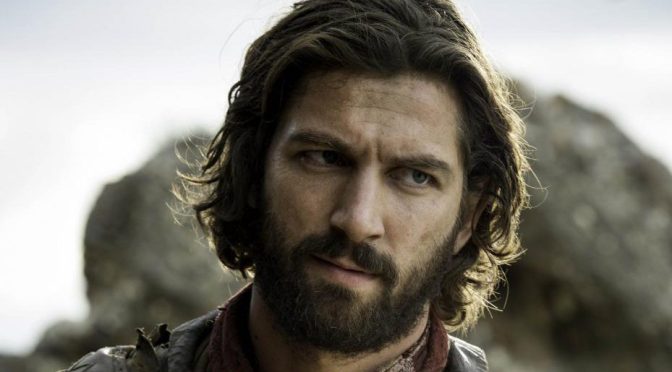

Game of Thrones Recap/Review: Season 6, Episode 4 “Book of the Stranger”

The main theme of my thoughts on last night’s Game of Thrones episode, “Book of the Stranger,” could probably be best summed up as “well, that could have been worse.” In many ways, season six is increasingly proving itself to be an improvement over last year’s stinking garbage fire of a season, but obviously “it could be worse” isn’t exactly a glowing endorsement, either. The good news, I suppose, is that there was some real forward movement in several storylines last night. There were even a few scenes that were really nicely done. However, there is some clumsy (and downright unpleasant, if not unsurprising) tying up of loose ends, a lot of hand-wavy “storytelling,” a some highly questionable (to say the least) messaging.

As always, spoilers under the cut. Continue reading Game of Thrones Recap/Review: Season 6, Episode 4 “Book of the Stranger”

Weekend Links: May 14, 2016

This week I’ve gotten a little farther into my Dune readalong, though not as far as I’d like. Unfortunately, I’ve still been dealing with some seasonal allergy and sinus issues (Thanks, Cincinnati spring!) and a bout of sort of generalized malaise that I’m trying to avoid nurturing into a full blown depressive episode. Instead, I’ve been trying to take it easy and go out in the sunshine when it’s available and avoid negative news, which is harder than you’d think. In any case, as a result, I haven’t actually done much internet reading this week aside from some entertainment news and a few author interviews.

Supergirl finally got its second season renewal confirmed, but with mixed news. Season two will be at the CW instead of CBS. The show always felt more like a CW show, and it seems like a better fit for that network, but I am concerned about the likely smaller budget it will receive over there. Still, I’m happy to see the show going on. Its first season was a mixed bag, but maybe season two will see Supergirl hit its stride.

Ronald D. Moore and Bryan Cranston are putting together a new sci-fi anthology series based on the works of Philip K. Dick.  On the one hand, I’m always glad to see a new sci-fi project getting made. On the other hand, I’d love to see something new and different instead of these endless reinterpretations of classic material.

On that note, I was excited to hear that an upcoming short story by Ken Liu, “The Hidden Girl,” has been optioned for film.

The first pictures from the upcoming Fox production of The Rocky Horror Picture Show are looking pretty decent. Laverne Cox looks incredible in costume.

It’s Eurovision Weekend! Which is the actual most wonderful time of the year.

I haven’t been completely able to avoid bad news this week, sadly. It was no surprise, however, to learn that sci-fi media coverage continues, in 2016, to be mostly by and about men. Because of course it is.

LitHub explains why fiction needs more women scientists.

Hodderscape takes us around the world with 18 book recommendations.

Book Riot suggests 5 queer comics for sci-fi fans.

Find out what Ursula K. LeGuin thinks you ought to read.

Fantasy Faction takes a look at the opposite of the Hero’s Journey.

Tor.com has a great piece on modern witches in fiction.

Ada Palmer’s superb Too Like the Lightning came out this week, and I’m slowly working my way through it because it’s a big, beautiful, challenging novel that deserves to be savored. In the meantime, I’ve been enjoying reading her interviews and guest posts when I come across them.

Finally, if you’ve enjoyed Michael R. Underwood’s first couple of Genrenauts novellas, published through Tor.com, you will want to check out his Kickstarter, which aims to publish the rest of Season One of the series by the end of this year.


Let’s Read! Dune, Part Three

I’m starting to worry that finishing Dune is going to be more of a chore than I originally anticipated, to be honest. It’s a novel that I think would be fine if I could sit and just devour it in a single sitting, but taking the time to do a close(ish) reading of it only highlights its flaws, the greatest of which, so far, is that very little has actually happened yet. I’m now over a quarter of the way through the book, and I still feel as if the story hasn’t quite begun. Instead, the whole thing is still rather hopelessly bogged down in exposition and world building. And it’s a lovely world that Frank Herbert created, but without any actual events occurring it feels empty and dull.
In the twelfth chapter of Dune, Paul attends a staff conference with his father, and we’re treated to even more details about just how difficult a situation House Atreides is in on Arrakis. In addition to the recent attempt on Paul’s life and the exodus of the spice miners who are essential to the economic operation of the planet, there’s also a smuggling problem, various environmental and geographic challenges, aging and broken mining equipment, and discontented Fremen to deal with. We also gain a better understanding of Duke Leto’s goals for his House and for Arrakis. Mostly, it seems that he wants to build a healthy, sustainable home for his House that will keep most of the people of Arrakis happy and allow him to stick it to his political and economic rivals, the Harkonnens.

The one thing that isn’t delved into much in chapter twelve is the identity of the traitor in Duke Leto’s household, but the next couple of chapters deal heavily with that. Thufir Hawat finds a scrap of a note that seems to implicate Jessica as the traitor in chapter thirteen, but Leto doesn’t believe it and even calls it out as a trick intended to sow strife in the household—which the reader, of course, knows to actually be the case. Nonetheless, chapter fourteen finds Duke Leto informing his son that he plans to publicly disavow Jessica in some way in order to try and flush out the real traitor. Schemes like this almost never end well in fiction, but we’ll see about this one—just not in today’s reading.

From a literary analysis standpoint, the most interesting thing about the thirteenth and fourteenth chapters is the symmetry of how they explore Duke Leto’s hopes and fears, the things that he finds beautiful and ugly about the world, and the internal conflict of his own optimism and cynicism. Leto is a man of many dualities and contradictions, and Herbert paints a picture of him here in deft strokes. Leto can trust his lover, but still be willing to hurt her. He hates Arrakis but can’t help but notice its beauty. He is “morally exhausted” and yet able to carry on with his plans. He is deeply concerned with the rightness and goodness of things, and he doesn’t seem to be a superstitious man, but he also isn’t above advising his son to capitalize on the superstitious beliefs of others if necessary.

The final chapter of today’s reading, the book’s fifteenth, is fully half of the material I read this morning and perhaps the longest chapter yet in the novel. It starts off promisingly, with an epigraph that finally reveals the identity of the Princess Irulan from whose works all of the epigraphs have been extracted. It’s also another epigraph that seems to heavily foreshadow the death of Duke Leto (so did the epigraph for chapter fourteen, and that one fairly explicitly), but the Duke is still in the land of the living at the end of the section. Instead of finally getting around to depicting Leto’s inevitable demise, this chapter splits its focus three ways, focusing in turn on:

  1. How awesome Paul is and how he totally fits the words of a local prophecy.
  2. What a great man Duke Leto is (and, by implication, how sad we’ll all be when he finally dies).
  3. How rad sandworms are.

Tying all these things together in chapter fifteen is the point of view of the Imperial planetologist (a sort of ecologist) Dr. Kynes, who is a guide of sorts—albeit an unreliable on—for Leto and Paul (and the reader) as they (we) tour the deserts of Arrakis by ornithopter in order to survey the land and better understand the production of spice. This is neat, but ultimately unfruitful. The undeniable highlight of the chapter is that we finally get to see a sandworm in action, but the lowlight has to be that nothing much comes of it. When some miners are endangered by the appearance of one of the enormous sandworms and Duke Leto insists on rescuing the workers even at the expense of the spice, I thought for sure that this was how he was going to die—heroically and tragically, leaving Paul to fend for himself with a very uncertain future.

Not so.

I’m not sure when the last time was that I read something where so much foreshadowing and buildup of dramatic necessity had so little payoff. When it finally comes, Duke Leto’s death had better be fucking epic.

Let’s Read! Dune, Part Two

13249366I was certain that this section of the book would have a lot more going on than the first few chapters, but that isn’t actually the case. Instead, though the Atreides family does finally make it to Arrakis, most of these pages are still dedicated to set up and exposition. The book continues to be highly readable and mostly enjoyable, but the final chapter in this section did finally manage to be truly disappointing when I thought—was certain—something was going to happen and then nothing of consequence did.

The first chapter of this section starts off well enough, giving the reader a little more insight to Paul’s father, Duke Leto Atreides. There’s a good amount of Leto thinking about how awesome Paul is at everything, but most of the chapter is about getting deeper into the economic and political situation that they find themselves in on Arrakis. Paul has a lot of questions for his father, mostly about the Reverend Mother’s warnings and pronouncements of doom, but Leto downplays the prophecy as being just “a woman’s [Jessica’s] fears” and advises Paul to treat it simply as evidence of Jessica’s great love for them. It’s an interesting moment that skirts the edges of the depiction vs. endorsement debate, to be honest. Certainly, this sexism belongs to the character of Leto Atreides, but is it also Frank Herbert’s sexism? With so little actually happening in the book so far, most of what we have at this point is still just narrative setup, and it’s hard to judge the overall treatment of women in the book until we see how the actual story unfolds.

The next chapter sees Leto interacting, for the first time in the novel, directly with Jessica, and it clarifies a lot of questions I had about Jessica’s relationship to the Duke and what her status in the household is. It turns out that, while she is Paul’s mother, she’s not the Duke’s wife, which puts her in a somewhat complicated position. The way it sounds here is that being just a concubine gives her somewhat more freedom than if she were married, at least when it comes to not having to participate in normal public wifely duties, but it also makes her standing and authority someone ambiguous. She does work as the Duke’s secretary, but it’s not exactly clear what work she does, and most of what we’re actually shown so far in the book is Jessica being responsible for fairly ordinary household duties rather than doing work related to the Duke’s business or politics. The most significant thing that I noticed about Jessica and Leto’s relationship, though, is how incredibly patronizing and condescending Leto is towards Jessica, both in the way he talks about her to Paul as I mentioned above, but also just straight to her face in a way that is infuriating to read about.

It’s good, I suppose, to get this window into their relationship, but it’s not a partnership that I find romantic, and it doesn’t go very far to make me care about Leto’s almost certainly impending death. Rather, I can’t help but feel as if Jessica and Paul would be better off without his toxic influence. The Duke is deeply chauvinistic, but the way he considers race is also pretty messed up. Duke Leto is described in racially coded terms and in a negatively connoted fashion as olive-skinned and dark-haired, but Jessica is described as fair, blonde, light-eyed and beautiful, something the Duke takes pride in. What he takes even more pride in, however, is the fact that Paul, though dark-haired, has inherited his mother’s lighter skin and eyes and generally favors her more in looks. With the Bene Gesserit, of which Jessica is a part, being so concerned with eugenics and breeding, it’s hard not to perceive Duke Leto’s reflections here as at least indicative of the character’s internalized racism but also quite possibly a sign of the author’s own unexamined racial prejudices.

Speaking of toxic influence, the Harkonnen stewards have certainly left Arrakis in a messed up state for the Atreides family to deal with, and most of this second section of the book is detailing just how hostile things are for the Duke, Paul, and Jessica. The land itself is unreceptive to life, with most of the planet taken up by vast deserts and devoid of water, which is precious and highly controlled. The people are suspicious, and many of the workers responsible for harvesting the spice that the Duke is supposed to be in charge of are planning to abandon the planet altogether. However, the most significant actual event in these chapters comes in chapter nine, in which Paul wakes up from his nap and only just manages to escape an attempt on his life, and with the help of the mysterious housekeeper, Shadout Mapes. It’s a brief moment of real danger and slight excitement in a story so far mostly made up of long pieces of exposition, but even that doesn’t do much to liven things up. Paul is so clearly a Chosen One and so obviously going to be the main character that it’s hard to believe that he’s actually in any real peril.

Finally, and speaking of real peril, the last chapter of this section begins with an epigraph that I was certain was foreshadowing that Leto’s abovementioned impending death was actually imminent. After the foiled attempt on Paul’s life and this chapter’s ominous introduction, I felt sure that Duke Leto was not long for this world. Unfortunately, that’s not the case, and instead we’re treated to what mostly amounts to even more exposition, though it’s all mixed together with some examination of Duke Leto’s toxic masculinity. Throughout the chapter, Leto is upset that he feels out of control, ashamed of his feelings of fear, and terrified for his son. He repeats, over and over again, “They have tried to take the life of my son!” and this mantra also contributes to the sense that Leto himself could be in danger as well, so it’s disappointing that he’s still living at the end of the chapter.

It’s obvious that Leto has to die in order for the story to progress, and I fully expect his death (likely murder) to be a major instigating event that sets Paul on whatever his path will be for the rest of the book. There’s a reason that many similar Chosen One and Hero’s Journey narratives just cut all this stuff out and start after the death of the parents, though, and that reason is that too much of this stuff can be very boring. That said, this pacing, excruciatingly slow and approaching dull as it is, still feels very deliberate, and Dune is a book that’s so well-loved and enduringly popular and influential that I’m inclined to give it the benefit of the doubt and assume that there will be some payoff. I just hope it comes soon.

Game of Thrones Recap/Review: Season 6, Episode 3 “Oathbreaker”

I purposefully avoid reading any other reviews of Game of Thrones before writing my own, so I’m not sure exactly what is being said about this episode yet, but I can already imagine the breathless joy with which “Oathbreaker” has been received. It seems like every episode this season has been getting rave reviews, in my opinion due to a mixture of the fact that it’s not nearly so bad as season five and that a lot of viewers seem to be under the impression that we’re somehow getting a sneak preview of what’s going to happen in the final two books. You might think that this would be faint praise, but mainstream reviewers all seem to be united in writing paeans to the show now that it’s quote unquote “moved past the books.” Sadly, though, all I can say in this episode’s favor is that it’s not the worst hour of Game of Thrones I’ve ever seen, even as I struggle to think of any particular highlights. Kit Harrington’s butt, I guess. That was nice. But that’s within the first two minutes, and then there’s another fifty or so minutes of sheer fucking nonsense to get through.

Spoilers, as always, under the cut. Continue reading Game of Thrones Recap/Review: Season 6, Episode 3 “Oathbreaker”

Weekend Links: May 7, 2016

May has started off much better than April ended, not that that’s any great feat. Still, it’s nice. There are leaves on the trees, I’ve been able to keep the windows open most days, I’m over (fingers crossed) the worst of my seasonal allergy nonsense for the year, and I’m really getting into my Dune readalong project. I’m also coming off of a slight reading slump in general, which is good because there’s so much I want to get through this month before we really get into summer releases.

In somewhat sad news, two blogs that I have followed for some years are closing down: SF Signal, which has been a fixture in the SFF online community for well over a decade, and My Bookish Ways. They will be missed.

Somewhat in response to the SF Signal announcement is Adam Whitehead’s post on Blogging in the Age of Austerity, which outlines some of the challenges facing fan writers and critics.

I’m also a little sad to see the end of this year’s Women in SF&F Month at Fantasy Book Cafe, but it’s not too late to head over and read through it if you haven’t yet.

The 2016 Hugo Awards finalist list has been updated to reflect the withdrawals of a couple of slated picks. “Cat Pictures Please” by Naomi Kritzer gives us one non-slate option in the Best Short Story category, and the withdrawal of Black Gate made room for Lady Business on the Best Fanzine list.

Though there was already a post at Black Gate about their decision to withdraw from consideration, Rich Horton’s post about the Hugos is worth a read.

Meanwhile, at Kirkus, Andrew Liptak writes about that time Scientologists tried to game the Hugos for L. Ron Hubbard.

If you’re totally fed up with the Hugo Awards stuff, nerds of a feather, flock together has the scoop on other genre awards.

Finalist lists were also released this week for the Locus Awards and the Shirley Jackson Awards.

Joe Abercrombie looks back on 10 years as a published author.

Peter Tieryas did an AMA in /r/sciencefiction to promote his novel, The United States of Japan, which I swear I’m going to get to read soon.

Fran Wilde did an AMA in /r/Fantasy, where she talked about her new Tor.com novella, The Jewel and Her Lapidary, which I’m hoping to get to this coming week, actually.

This weekend I’m reading Ada Palmer’s Too Like the Lightning, which will be out on Tuesday. She talked about the novel at My Bookish Ways this week, and wrote a guest post at SF Signal.

I love this interview with Usman T. Malik at Islam and Sci-Fi. His novella, The Pauper Prince and the Eucalyptus Jinn, was one of my favorites last year.

Daniel José Older has announced that he’ll be writing two more Shadowshaper novels.

The new issue of Uncanny Magazine is out, and I haven’t gotten through the whole thing yet, but Foz Meadows’ piece on diversity is a must-read.

Vice has a good piece on the upcoming documentary Invisible Universe: A History of Blackness in Speculative Fiction. The filmmakers are currently raising money for post-production, and you can contribute at the film’s website.

Even though I quit watching Sleepy Hollow ages ago, I was kind of devastated to hear about Abbie’s death in the season finale. Sadly, she’s not the only woman of color to get shafted on television this year. The Village Voice takes a look at how genre television systematically lets black women down.

Supergirl is still waiting for the final word on whether they’re getting a second season or not. Screen Rant makes the case for why the show deserves another season.

At Book Riot, Why Putting Guns in Fairy Tales Defeats the Purpose of Fairy Tales.

Also at Book Riot, 100 Must-Read Sci-Fi and Fantasy Novels by Women Authors.

Pornokitsh posted a list of 15 Amazing Women Writing Genre Fiction from the folks at Breaking the Glass Slipper.

This Mary Sue piece, On Robots as a Metaphor for Marginalization: The Stories We’re Not Telling, is one of the most genuinely interesting things I read this week, with lots of food for thought about how we write about robots.

Fandom Following’s piece on Game of Thrones and the idea of “balanced criticism” is the thing I read this week that was most applicable to me personally as a heavy critic of the series.

Tomorrow is Mother’s Day here in the US, and the Barnes & Noble Sci-Fi and Fantasy Blog has a list of the 10 Fiercest Mothers in SFF.

Finally, Radiohead has a new album coming out, and I’ve already been digging the first song they released from it on YouTube:

A second song was released today, and the full album should be out tomorrow.

Let’s Read! Dune, Part One

Good news: I think I’m going to love this book, which is good since I’m going to be writing quite a lot about it over the next month. Bad news: I have to figure out how to keep my posts on it to a reasonable length; Dune is a pretty dense book, with a lot to analyze and talk about.

As I mentioned yesterday, I’m breaking the book up into twelve sections of approximately forty pages each, and I’m treating each section that is headed up by an epigraph as a chapter, which is probably how I’ll refer to them even though they aren’t actually called chapters in the book. Today’s reading was pages one through forty-one in my edition of the book, which is broken up into five of these epigraph-headed chapters.

Each epigraph—seemingly all from the works of a fictional historian, Princess Irulan—introduces an idea, event, or point of view that is central to the following chapter, which is pleasant so far, though I’m somewhat concerned that the epigraphs will get tiresome as the book goes on. I’m not a huge fan of using epigraphs in this fashion in general, and I’m similarly not a fan of including lots of excerpts from fictional literature in fantasy and sci-fi. I know it’s a part of worldbuilding for some writers, and I’m sure some people love that crap, but I would be just as happy with simple chapter headings or short, evocative chapter titles instead. I’m perfectly capable of figuring out themes and stuff on my own, and these kinds of epigraphs always feel a little too much like authorial hand-holding to me. Still, it’s been a long while since I’ve read anything that uses this particular stylistic flourish, so it hasn’t worn out its welcome quite yet.

One thing that’s already notable about Dune is how dense with information Frank Herbert’s prose is. It’s really surprisingly lovely, and every page is full of wonderful descriptive language and whole treasure troves of metaphor and symbolism. It’s a science fiction novel written in the language of fantasy, with a tendency towards an almost mystical aesthetic, in spite of the book’s world being very high technology. My only complaint about the writing so far is that Herbert does seem to repeat phrases in ways that don’t seem particularly deliberate. It’s as if he just really likes certain imagery—such as the Reverend Mother’s “bird-bright eyes” which appear several times in the passages she’s part of. That said, I might not have noticed it if I wasn’t doing a sort of close reading of the text.

While there’s a ton of information packed into these first forty pages of the book, there’s actually not a lot of things actually happening. In fact, there’s essentially only a single actual event in the first five chapters: the boy Paul Atreides’s test with the Reverend Mother. The rest is character introductions, worldbuilding, and set up for the Atreides family’s imminent travel to Arrakis, which still hasn’t actually occurred yet. In a less well-written novel, this could make for a slow start, but Herbert’s style is engaging enough that he pulls off this exposition heavy beginning. I kind of wish already that I had broken the book into smaller sections to write about, but at the same time I didn’t want to stop reading when I got to the end of today’s section. I can already tell that it’s going to be hard to keep from rushing through the whole book in a single sitting.

The sheer lack of women in most of the seminal genre works by men is a major factor in my not reading much of that stuff at this point in my life. Often, if women do appear in these older works, they’re treated poorly in the narrative and written to conform to various sexist (and often downright misogynistic) ideals. It can make for boring (in the absence of women) and/or infuriating (with the presence of sexism) reading. So far, Dune looks as if it may fall into the latter category, though it’s not nearly so bad as some other books of its time period.

To start with, at least, women figure largely in Paul Atreides’s early life, though I have a sneaking suspicion that they won’t continue to appear so prominently in the story. His mother, Jessica, is a sort of nun or priestess, part of the Bene Gesserit, a school of politics and eugenics that I guess plays a large part in the administration of order in the Dune universe. Jessica was actually supposed to have a daughter who could have been married to the heir of the Atreides’s rivals, the Harkonnens, but she instead chose to give birth to a son, Paul, who she believes could be the “Kwisatz Haderach,” a sort of prophesied Chosen One. She’s raised Paul and provided him with special training in order to prepare him for the test he faces in the opening chapter. So far, Jessica is also a staunch advocate for her son, to the point where it’s even suggested that if he failed the test she might have killed herself, which about made my eyes roll right out of my head, but that’s not the most groan-worthy part of what I’ve read so far.

The second woman of importance so far is the Reverend Mother who administers a test to Paul in order to determine if he’s human or not, because apparently in the far future of Dune not all people are human. The Reverend Mother is elderly and wise, but also faintly cruel and rather sinister. Her interactions with Paul Atreides are mostly about establishing his status in the narrative (though not in the Reverend Mother’s eyes) as a Chosen One sort of character, and it also sets up what seems like a potentially adversarial relationship between Paul and the Bene Gesserit, or perhaps even between Paul and powerful women depending on how you choose to interpret all this set-up. Essentially, while the Reverend Mother is doubtful, Paul obviously totally is this Kwisatz Haderach figure of prophecy who is supposed to be the only man who can survive a Truthsayer drug, which will grant him powers that set him above all the women who currently hold some portion of similar powers as part of their Bene Gesserit training. I’m not sure how much the book is going to get into all this stuff at this rate, but gender definitely figures largely in the narrative Herbert is crafting here.

So far, Dune feels like a fairly straightforward Chosen One story, albeit heavy on politics so far. Paul Atreides isn’t a simple farm boy, but he does seem to have a grand destiny ahead of him and he’s introduced in much the same fashion as most other Gary Stu characters. He’s only fifteen, but he’s got a prophecy about him and he’s remarkably good at literally everything he’s done so far, which is a pretty good start for this sort of character. Still, it’s hard to mock Paul. So much of this early part of the book isn’t about him at all, and we spend most of our time with other characters and just learning about the Dune universe. I’d hate to pick on the protagonist this early in the book when there’s so much else going on that’s fascinating. While I’m not entirely sold on the whole prophesy thing, where Paul is supposed to be this great man who is marked, at least in part, by being better than a bunch of women at everything those women have been doing for I guess centuries, there’s a ton of other cool stuff in Dune so far.

The Harkonnen family, who I guess are supposed to be the Atreides family’s biggest social, political and business rivals, are introduced in the second chapter of the book, and they are so far much more interesting than anything Paul is up to. The Baron is a legitimately creepy dude, and the Mentat assassin Piter is sinister as hell. Even Feyd-Rautha, the Baron’s nephew/heir/lover, is an interesting sort of tertiary villain, though he isn’t particularly well-described, at least in comparison the Baron and Piter, who are both introduced at some length and have such distinct personalities that Feyd-Rautha’s relative taciturnity makes him more part of the background than anything else. The repeated descriptions of Baron Harkonnen’s fatness, greed and gluttony are perhaps very heavy-handed especially in light of modern trends towards less overtly and stereotypically negative portrayals of fatness, but the imagery of a man so fat that he uses an apparatus to prevent his having to carry his own weight is still a powerful symbol that sheds a good deal of light on what kind of man the Baron is.

The fifth chapter of Dune finally introduces us to the planet of Arrakis itself, although Paul and his family still haven’t started their journey to their new home. Instead of showing Arrakis to us right away, Herbert prepares the reader the same way Paul Atreides is prepared by his teacher, Dr. Yueh. It might seem like a bit too much telling rather than showing for modern readers, but Herbert’s descriptions of the planet’s environment, people, and GIANT FUCKING SAND WORMS are so vivid that you still kind of feel like you’re there. This type of exposition may be somewhat out of fashion, but it still gets the job done, and Dune isn’t old enough to feel truly archaic. Instead, it’s a novel that, at least in the first five chapters, feels distinctly ahead of its time.

That said, I’m ready to get to Arrakis already. I understand this is a politics-heavy novel, but there is some adventure, right?

Book Review: A Criminal Magic by Lee Kelly

A Criminal Magic is a weird book. To begin with, it was a slow starter for me, as neither of the point of view characters—Joan and Alex—really grabbed my attention until two or three chapters in for each. Once I got into it, though, I kind of loved it, in spite of some rather glaring flaws. This isn’t a great book, but it’s highly readable and very entertaining with a boldly non-normative ending that establishes Lee Kelly as a talented author willing to take significant risks.
Hands down the best aspect of A Criminal Magic is the magic itself. Kelly describes her characters’ magic beautifully, using wonderfully evocative language that creates clear pictures for the reader, which works really well to give the magical setting an immersive quality. When a key aspect of your novel is dealing with the effects of a magical drug on individuals, families, and society, you really have to sell the idea, and Kelly absolutely nails it. The experience of sorcerer’s shine and the magic shows put on by Joan and the other sorcerers is addictive to just read about, and it’s easy to believe in the world of the book, even if Kelly does focus on just a very small part of it.

The small scope of the story can be seen as a weakness, but Kelly seems to know just how to make the most of her small cast of characters, limited geography, and very few physical settings. There’s a single-mindedness to the storytelling in A Criminal Magic that almost forces the reader to stay focused on its action. It’s not a marvel of worldbuilding, and if you think too much about things it’s easy to come up with dozens of unanswered questions about how the world of the book works. Still, Kelly consistently gives all the information one needs to understand the story she’s telling, and when she does offer glimpses of the broader world outside of what we’re more explicitly shown in the novel, those glimpses are tantalizing and suggest that the author has definitely thought through much more of her world than we are seeing. This can be frustrating at times, but not too unpleasantly so.

The novel’s characters aren’t nearly so well-drawn as its setting, but there’s still quite a lot to like about them. Joan has a nice complexity to her, and I found myself charmed by her slight inclination to amorality, but I would have loved her to be more of a force of nature in the lives of others. With the exception of Alex, who basically falls for her at first sight, it didn’t always feel as if Joan made much of an impression at all on those around her. Alex is fine, though Kelly adheres a little too much for stock romantic hero tropes in writing him which makes him a little dull at times. The romance between Joan and Alex is both shallow and somewhat overwrought, and their dialogue is often hackneyed and unrealistic. There’s very little explanation for why these two characters fell so deeply in love so quickly other than that they are both beautiful—they each spend too much time thinking about how hot the other one is—and they both are sorcerers. Also, the story seems to demand a romance between them, so it happens.

The secondary and tertiary characters often feel inconsequential and are sadly unmemorable, mostly also falling into stock character archetypes. Even the villains are fairly one-dimensional. The characters who aren’t Joan or Alex also have a tendency to only exist at all when they are necessary to the plot or when it’s convenient for Joan or Alex to have feelings about them. Some of this is surely a feature-not-a-bug of the alternating first person point of view. With Alex and Joan each telling their own story, and both of them being somewhat self-centered people, the other characters are bound to fade into the background. Unfortunately, this means that characters like Joan’s family, Joan’s friend Grace, and Alex’s contact in the Prohibition Unit are more like plot devices than anything else. Joan’s relationship with Grace is particularly disappointing in this regard. It’s not uncommon for women in romance novels to not have close female friends, and it seems early on that Grace and Joan’s friendship is going to be important, but Grace barely appears in the second half of the book and the good groundwork laid early on for their friendship never does quite pay off.

While I haven’t seen it mentioned that much in reviews, it seems to me that the ending of A Criminal Magic ought to be the most polarizing aspect of the book for a lot of readers. I can’t decide if it’s a genius upending of conventions that sensibly rejects the pat ending of an ordinary romance novel or if it’s just bizarre to have the novel’s heroine metamorphose into a straight up femme fatale practically out of nowhere because I’m, frankly, not at all certain that Joan’s decision was earned. Sure, it was surprising, but not in an altogether good way. It’s a feminist statement, of sorts, but it’s a slightly garbled one. It’s a brave and unusual ending, but it feels oddly tacked on, coming at the end of a book that, while original, doesn’t exactly break a lot of new ground. Regardless, though, it’s thought-provoking, and the fact that I’m still thinking about it weeks after finishing the book says something about its power. I’m just not entirely sure what that something is.

Let’s Read! Dune by Frank Herbert

Last week I polled the SF Bluestocking readership to see what my Let’s Read! Project would be for the month of May, and Frank Herbert’s Dune is the book that came out on top, and pretty handily.

Dune is a novel that has been on my to-read list for literally years, but it’s also a book that I know very little about outside of the expected nerd culture references that it’s impossible to be into SFF and not have come across. I know it’s a book that has been heavily influential for both sci-fi and fantasy; I know that it takes place on a desert planet; I know that David Lynch did the movie back in 1984 (though I’ve never seen it in spite of having seen most of Lynch’s other work); and I know that it has sand worms in it, but only because I looked it up when it was referenced in that Fatboy Slim song that came out when I was in high school. I haven’t read any reviews of the book or movie, and having not read the book, I also haven’t done more than skim any of the many pieces about the book and its legacy that were published in the year of its 50th anniversary.

All in all, I’d say I’m coming into this about as entirely unspoiled as one can for a highly popular and widely read and referenced book that’s over half a century old. Which is kind of cool. I’m usually not even this unspoiled when I read new releases, just because of the sheer amount of advance reviews and promotion that is the standard these days.

If you are reading along with me:

  • My copy of Dune is the 1984 movie tie-in mass market (ISBN: 0425080021), if you care about reading the exact same edition. There are no extras that I know of, though it does have several appendices that look like they will be useful.
  • The text of this edition, not including the appendices, is 489 pages long. There don’t seem to be actual chapters, though there are often breaks in text with epigraphs that break things up (I’m guessing) like chapters. I plan to finish reading and writing about Dune by the end of the month, so I have broken it up into twelve sections, each one approximately 40 pages, though a couple are longer or shorter. I will be sure to include in each post the exact pages of what I’m covering.
  • As of right now, my goal is to get through three to four sections each week, with the first post appearing tomorrow, May 5.
  • Finally, I’m going to cap off the project with a Dune movie night on Saturday, May 25, with cheap wine and livetweeting and a blog post about the film the next day.
  • Updated to add: I may do a double movie night and watch the 1984 film and 2000 TV mini-series back to back, or perhaps do one on Friday and one on Saturday. I’ve been advised that I should actually watch the later adaptation first either way, however. In any case, I will have more details on that closer to the end of the project, and I’m open to suggestions for how I should do this thing.

I’m pretty excited about this book. I’ve been sort of systematically (albeit slowly) working through some SFF classics over the last couple of years, and this one is obviously pretty essential reading, if only for academic reasons. In any case, I’m finally going to find out what I’ve been missing out on all these years.

WIN_20160504_00_56_27_Pro