Category Archives: Television

The Expanse: “Rock Bottom” sets us up for a wild ride to come

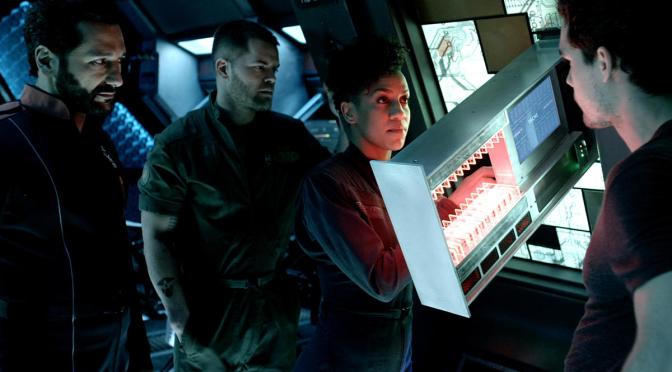
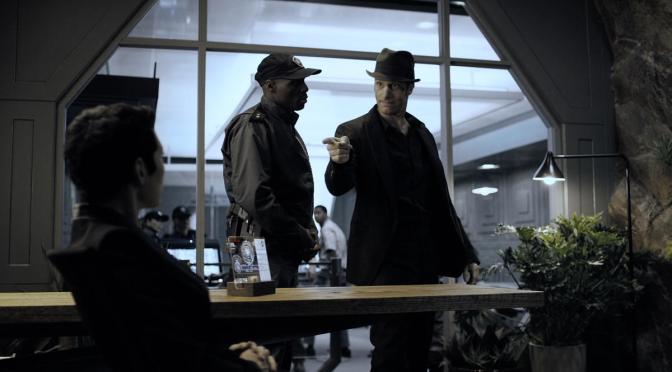
“Rock Bottom” is another solid episode that moves things along nicely, especially on Ceres, where Detective Miller is having the worst day.

First though, the episode opens with Chrisjen Avasarala, who I greatly missed last week and is in ruthlessly noble (or maybe nobly ruthless) rare form as she casually uses her position and inside knowledge to extort favors from a guy who doesn’t want to be involved with whatever she’s up to. I have said before that Shohreh Aghdashloo is creating Chrisjen Avasarala as a new science fiction icon, and every episode she’s in only further confirms that to be the case. This week, she doesn’t have a lot to do, but Avasarala’s ability to switch roles (here, between nurturing grandmother and cutthroat political player) is amazing to watch, if somewhat chilling.

My only criticism of Avasarala is really about the way she’s been written into this first season of the show. Since the character doesn’t appear in Leviathan Wakes, which material is primarily what has been adapted in the show so far, I’m concerned that not having much to do is going to be a perennial problem for Avasarala, especially if the show is pulling the current stuff she’s up to from the written material of later books. As much as I appreciate Avasarala, I would almost rather have waited until season two if it meant that I didn’t feel as if her storyline was so largely static and disconnected from the events in the Belt. That said, this week we did get to see her negotiate for use of a spy on Tycho, and we learned about her personal connection to Fred Johnson, which seems like a crucial bit of backstory and could turn out to be interesting later on. Still, I hate to see such a great character spending so much time basically spinning her wheels while there is much more interesting stuff going on elsewhere.

I kind of feel as if Holden and the rest of the Cant survivors’ journey ought to be the main event, but their arrival at Tycho and the sequence of events that end with them shipping back out on the Rocinante to go retrieve Fred Johnson’s mysterious contact, Lionel Polanski, are actually somewhat underwhelming. The show did manage to capture some of the tenseness in the first meeting between Johnson and Holden, but the more I see him, the more I’m not entirely happy with Steven Strait’s portrayal of Holden. Unless, of course, it’s the intention of the show that his face is supposed to be the most punchable one in every episode, in which case, mission accomplished. “Biggest dipshit in the universe,” indeed.

The negotiations that lead to Holden and the others all being able to leave Tycho together, which were pretty significantly detailed in Leviathan Wakes, feel a little glossed over and hand-wave-y here. I can understand the desire to avoid showing us a whole lot of people standing around arguing, and the generous reading of this adaptational choice is that the show’s writers don’t want to be holding the audience’s hand and that they trust us to figure things out for ourselves. This is certainly possible, but the explanation for how the crew all gets to leave together is almost a blink and you miss it moment, and I found myself filling in the details with recollections of how things went down in the novel. It’s not a huge problem, but it could definitely have been made a little more clear what happened.

The thing about the Rocinante crew’s time on Tycho that works, though, is the time that is spent this week showing us some more about who these characters are. Having them go out drinking and conversing in pairs (Holden and Naomi, Amos and Alex) is a nice reprieve from the constant stream of crises they’ve faced so far and continues some of the respite the characters got a taste of last week, but without ever feeling permanent. Instead, while the episode ends on a somewhat hopeful note for the crew, it also feels as if there is very clearly a storm on the horizon for them as the leave Tycho in their newly disguised ship.

Miller’s tribulations on Ceres steal the show this week, though this is mostly because Jared Harris is absolutely magnetic as Anderson Dawes. After being tased and kidnapped at the end of “Back to the Butcher,” Miller wakes up in a bad place and finds himself being interrogated/punished by Dawes, who it turns out is one of the show’s most compelling (albeit frightening) characters so far. More pertinently to Miller’s situation, Anderson Dawes is a true believer in his cause (Belter liberation), and he thinks that Miller is a traitor to their people. When Dawes realizes that Miller isn’t dangerous—that the detective is really just kind of sadly and creepily obsessed with Julie Mao—he decides to cut his losses and have Miller thrown out an airlock.

Fortunately, Octavia Muss shows up just in the nick of time to rescue Miller, and they retreat to Miller’s place, where Miller finally pieces together some of the last pieces of the puzzle of what’s going on with Julie Mao, the Scopuli, the OPA, and the destroyed ships. When he thinks he’s got it figured out, Miller finally gives in to Muss’s advice from last week. He takes it to his superior, Captain Shaddid, who promptly confiscates Miller’s evidence and fires him. Poor Miller just can’t get a break.

Miscellaneous thoughts:

  • I really like Octavia Muss, but the show doesn’t really seem to know quite what to do with her. This week was the most we’ve seen her get to do all season, but as soon as she’d outlived her usefulness, she’s shuffled off screen with unceremonious abruptness.
  • Naomi Nagata continues to be one of the show’s most interesting characters, but whatever her secret/mystery is has started to become somewhat infuriating. I’d love to get some piece of concrete information about her.
  • I’m a little baffled by this episode’s subplot with the space cops (unsurprisingly the same kind of brutal pigs as regular cops), the asteroid miners, and the suicide attack. While it’s tangentially connected to other things (nephew Diogo is one of the kids Miller busted in an earlier episode), it’s a fairly lengthy sequence that doesn’t have any direct impact on the rest of what’s going on, nor does it give us any new insight into other characters. If it’s just a bit of world building, it’s effective, but almost unnecessarily bleak and not that informative. Also, while Diogo is only listed on IMDb for two episodes, surely the show isn’t going to just leave things like this, with him just floating out in space by himself.
Why you should drop what you’re doing and watch Into the Badlands immediately

Listen. You should absolutely watch this show. I know it aired last year. I know it’s gotten largely middling reviews. I know it’s a slow starter. I know it ended on a bit of a cliffhanger in episode six. I know that AMC is dragging their feet on renewing it. But it’s really, really fucking good. Much better than its reviews give it credit for and much better than the overall tepid reception of the show would suggest. And there are actual reasons why this show should be on everyone’s watch list, reasons that have nothing to do with my own almost uncritical fangirling over it.

It’s a martial arts fighting show

Into the Badlands’ martial arts coordinator, Huan-Chiu Ku, has worked on numerous highly recognizable martial arts projects, including Crouching Tiger, Hidden Dragon and Kill Bill, and what he brings to the small screen is probably the best and most beautifully choreographed fights scenes to ever make their way to television. Every one of this show’s fights is at least good, and a high proportion of them are just breathtaking. If you at all enjoy choreographed martial arts, Into the Badlands is a must-see piece of the genre.

With an Asian lead

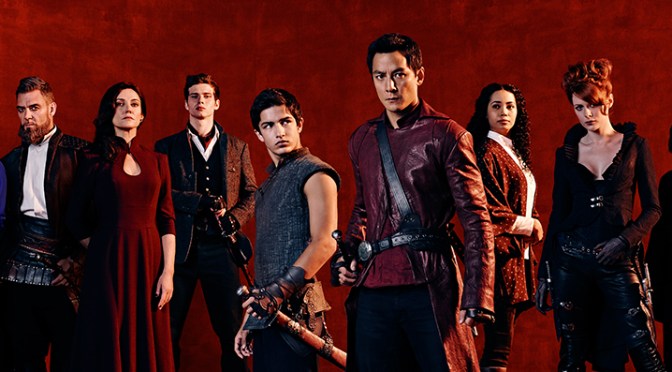
There’s a long, sad history of martial arts shows and films being made with white male leads in American cinema, but Into the Badlands has not one, but two Asian men in lead roles. Daniel Wu (Chinese-American) plays Sunny, and Aramis Knight (Indian/Pakistani/German) plays his apprentice, M.K. I’d be lying if I said that Daniel Wu’s gorgeous face wasn’t part of the reason I watched this show.

And a black woman as the main character’s love interest

Sunny is paired in the show with Veil (the luminous Madeleine Mantock), a doctor in the show’s post-apocalyptic town. If you’re old enough, as I am, to remember when Romeo Must Die cut out Jet Li kissing Aaliyah because audiences reacted with horrible racism to their interracial relationship, you’ll understand why Sunny and Veil’s relationship is important. What’s even better, though, is that Veil is so much more than just Sunny’s lover. As the show goes on, Veil proves to be a tough, resourceful, compelling character in her own right, which brings me to my next point.

And a whole host of badass women characters who mostly defy stereotyping

Veil might be my favorite character in Into the Badlands, but there’s also the Widow and her daughters, who are supposedly fighting to make a better world, including Tilda, who isn’t sure that her mother’s way is right. There’s Lydia, the formidable wife of the Baron Quinn, and there’s Quinn’s new (and ambitious) young wife, Jade. There’s Zypher, who has the same job as Sunny, but for another Baron. I would love to see at least a couple more women of color in the mix, but the diversity of personalities, roles, skills, and values these female characters display is also important and refreshing in a genre that often relegates women to a couple very passive or tokenized roles.

And surprisingly feminist sensibilities in general

I wouldn’t say that Into the Badlands is definitely a feminist show. Certainly, it doesn’t have any particular feminist message that it’s trying to get across. However, it’s a show that cares about being inclusive and diverse. It cares about examining power structures and oppression, and it cares about having a real conversation about it. It’s not a show that pretends to have all the answers; it’s a show that gives us a whole bunch of characters trying to figure things out, and it’s compelling as hell.

There’s really just nothing else like it on TV right now

The thing is, I’m not sure what we can reasonably compare Into the Badlands to. Sure, it’s firmly in the SFF genre, but its peculiar mix of post-apocalyptic and feudal influences (It’s loosely adapted from the Chinese classic Journey to the West) is pretty unique. It’s also bright and beautiful, filled with vivid and heavily saturated colors, excellent costumes, and amazing hair and makeup. It’s an original concept with a highly creative and recognizable style.

The story isn’t particularly groundbreaking, but it doesn’t need to be; it’s well done, nicely acted, and cleverly plotted over the six episodes of the first season. Admittedly, the first couple of episodes feel more full of potential than greatness, but I appreciate that the show doesn’t condescend to its audience. Events unfold in a natural progression, plot developments never feel forced or contrived, and there are several genuine surprises, especially in the back half of the season, that make the material feel fresh.

Watch it. ASAP. And then let AMC know that we want more of it.

The Shannara Chronicles: “The Chosen” is a Tangerine Dream soundtrack away from greatness

Though I loved them as a teenager, I don’t think I’ve even cracked the spine of a Shannara book in at least ten years. Still, I was delighted when I heard there was a television series in development based on Terry Brooks’ novels. With so much recent fantasy fare that is decidedly grimdark, The Shannara Chronicles is a much-needed palate cleanser, and since I’m a sucker for nostalgia projects there was basically no chance that I wasn’t going to watch (and love) this show. It’s definitely the most fun I’ve had watching a fantasy epic in a long time, and I would even argue that it’s solidly well-conceived, with decent acting, good plotting, and nice pacing.

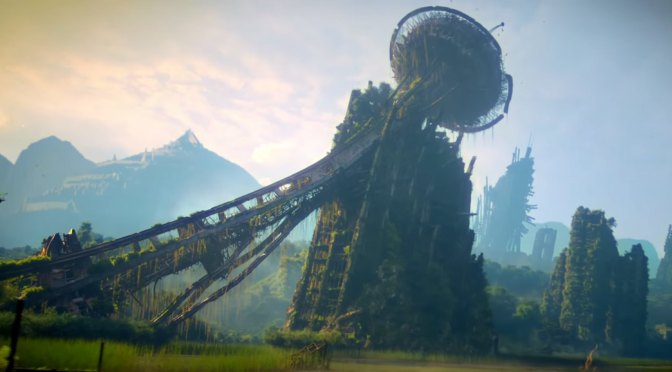
The opening shots and credits for The Shannara Chronicles are absolutely gorgeous, and the whole show so far is just one stunning piece of CGI scenery porn after another. It’s so pretty that I don’t even care that after thousands of years, none of the metal structures they show would still be standing in any form. It’s not as if the broken Space Needle, desiccated ship, or various rotten vehicles and satellite dishes and so on add any particular sense of realism to the setting. They are cool, though, and the vivid, highly saturated colors put this show essentially one Tangerine Dream soundtrack away from aesthetic perfection. I can even forgive the show for creating an elven city that looks—no joke—like they just tried to imagine what might happen if Lothlorien and Minas Tirith had a baby city in the post-apocalypse. In fact, I rather like this kind of overt callback to LOTR. It’s probably best for Shannara to just own its heritage right out of the gate.

The costuming is nicely contemporary-feeling, but without just being a showcase for designer dresses like some other teen shows. I don’t feel like I’ve been transported in time when I see the show’s elves or Rovers, but I also don’t feel like I’ve been transported to prom night at a prep school. The costumes for Amberle and Eretria are reasonably practical for the activities the women are engaging in, which I appreciate, and neither of them is overly sexualized.

The show in general displays a pleasantly frank attitude towards sexuality, in line with its YA sensibility and current trends in YA fiction. There’s no sex actually confirmed to be happening, but Amberle is not assumed to be virginal, in spite of being an elf princess. Her aunt actually assumes otherwise when Amberle goes to her for help, thinking that the princess could be dealing with an unwanted pregnancy. While this is somewhat played for laughs, it’s indicative of the show’s relaxed way of dealing with teenage sexuality—in this future world it’s normal, accepted, and issues seem to be handled practically and non-judgmentally. There is a love triangle suggested (Amberle, Wil, Eretria), but the show so far hasn’t made romance a too-central part of the story it’s telling. Instead, it seems more concerned with just introducing us to the characters, introducing the characters to each other and getting on with the adventure.

The actual story is pretty pedestrian stuff—an evil dark lord coming back with demons, a farm boy with a great destiny and a secret heritage, Manu Bennett as sexy Gandalf—but it’s done well, and I’d always rather see a derivative tale told nicely than an avant garde disaster. The show definitely struggles with dialogue in this first episode, though. Although I’m not always hip to kids’ lingo these days, I actually enjoy the teen-speak of the young adult characters, but there were more than a few hilariously bad speeches. Hopefully this will get worked out better in future episodes as they find a balance between creating relatable young characters and plausible fantasy heroes. One area the writers shined in, on the other hand, was in incorporating expositional dialogue. So many sci-fi and fantasy projects get bogged down with clunky, uninteresting exposition, but this one works it in pretty deftly. I won’t say it’s not noticeable, but it’s not ham-fisted or dull.

Probably my favorite thing about the show so far, though, is the ways in which it improves upon the source material. Admittedly, it’s been a good while since I read the book, but I remember it as heavily focused on Wil, with Amberle in particular as a much less active character. Here, though, Wil’s hero’s journey exists in parallel with Amberle’s and they support each other on their way. Even Eretria seems a bit more lifelike than I remember, though it’s not clear yet where she fits into the bigger story except as the other prong of the love triangle. Regardless, it’s nice to see the story kind of updated and expanded to give the girls larger and more heroic roles, and I’m legitimately excited to see what happens next.

Miscellaneous thoughts:

  • The show could definitely be more racially diverse. There are a lot of people of color in crowd scenes and background roles, and it’s cool to see a black woman as the Commander of the elven army, but all of the main roles except Manu Bennett’s Allanon were cast with white people. So it’s not the worst show in terms of diversity, but it could have been better.
  • I would have especially liked to see more of the Rovers cast as non-white actors. I know it’s from the books, but if you’re going to use tired old stereotypes of travelling people in your story, you could at least not make them all super white to boot.
  • I don’t like the chestplate thing that Manu Bennett wears. It looks weird.
  • The CGI scenery looked amazing, but the CGI for the demons left something to be desired.

The Expanse: “Back to the Butcher” feels like a calm before a storm

“Back to the Butcher” feels like the show letting out a sort of sigh after four episodes of high tension, action-filled spectacle. Everyone gets to relax a little, including we viewers, and it’s interesting to see what the show’s characters do with their brief quiet time.

So far, while the show has avoided a truly episodic narrative, there’s still been a definite pattern and rhythm to the storytelling and how it shifts between Miller, the Cant survivors, and Avasarala. Last week was the first time since episode one that a new point of view was introduced. This week, Avasarala doesn’t appear at all, and there is a lengthy flashback sequence about Fred Johnson instead. It’s informative, but it stops short of telling the full story of this character and how he went from being Fred Johnson, The Butcher of Anderson Station, to Fred Johnson, high level OPA member. Having read Leviathan Wakes, I am familiar with the story, but I’m not sure if the Anderson Station stuff made much sense to anyone who hasn’t read at least the first book. It seems like there is enough information offered to let the viewer connect the dots, but I expect that next week we’ll hear more about it from Fred himself.

The reason we spend so much time on Fred Johnson, of course, is that he’s the first/only person to offer the now-fugitive Cant survivors some kind of lifeline. When the episode opens, they’re adrift in space, turning everything off so they can’t be found, and with a dead Martian (sadly, Lopez didn’t make it) on their purloined and highly recognizable ship. Catching up on newsfeeds now is also the first time the Cant survivors learn of how Holden’s announcement has gone over on the stations.

It’s an interesting situation for the crew, and while the debate over what to do next isn’t exactly compelling, I am just happy that there is a debate. In the book, this was all story that was told from Holden’s point of view, and it’s greatly improved by adapting it as an ensemble drama. I’m especially (still) enjoying Naomi’s increased importance on the show, and I love her friendship with Amos. This time on the ship—renamed the Rocinante when they finally decide to accept Fred Johnson’s offer of help—is a nice respite for everyone, and while there’s not a ton of actual time dedicated to it, there’s a lot of well-done touches that bring these characters to life a little more.

On Ceres, Miller is still digging deeper into his investigation of Julie Mao, to the point that he’s stopped drinking and is alienating his friends and coworkers. He’s approached this week by Anderson Dawes, who offers him a trade; Dawes will give Miller the guy who attacked Havelock if Miller will keep Dawes in the loop on the Julie Mao case. This all seems to be related in a subtle way to Miller’s crisis of identity and his torn loyalties, and it’s cleverly sharing screen time this week with what’s going on at Star Helix while Miller is busy elsewhere. I was legitimately surprised by Miller’s kidnapping at the end of the episode, though. That’s not at all where I thought things were going, and now I have to wait until next week to see a whole lot of shit hit the fan on the station.

Miscellaneous thoughts:

  • I want to know everything about Naomi.
  • Holden’s face when he finally gets his coffee might be the first time I’ve really found him likeable.
  • I like Octavia Muss a lot, but I wish she’d be given more to do than just act as a voice of reason and be ignored by Miller. It feels as if the show kind of wants to give her a bigger role, but they don’t want to actually do it, and so she’s turning out to be less a character and more of a device to be an impediment to Miller and give the appearance of the show having more female characters than it does. Here’s hoping that she gets more to do later on.
  • The Anderson Station story kind of destroyed me. It’s great world building and character background, too, but it’s good on its own and is a great example of how to properly utilize flashbacks.
  • Jared Harris steals every scene he’s in as Anderson Dawes. He’s a much more menacing-seeming character on the show than in Leviathan Wakes, but I like it.

Supergirl: “Blood Bonds” turns back every advance made in the last episode

I’m a little concerned that Supergirl is starting to become tiresome. After a winter finale that ended literally in the middle of what seemed to be a pivotal fight, I expected something much better than what we’re given in “Blood Bonds,” which is a huge mess of spinning wheels and downright silly diversions that do nothing to move any of the show’s several major plots forward.

The fight that we were in the midst of in the last episode was wrapped up within moments this week when Non kidnaps Hank Henshaw. The rest of the episode is concerned largely with figuring out how to get Henshaw released without “negotiating with terrorists.” A secondary plot in the episode is Kara trying to convince Cat Grant that Kara is definitely not Supergirl, even though Cat is not stupid, and there’s even a sort of tertiary plot with James and Winn stalking and harassing Maxwell Lord. In short, “Blood Bonds” is a huge mess, and while it was another amazing episode for Kara’s character, I’m finally starting to doubt that Melissa Benoist is really capable of carrying the whole show on her own indefinitely.

Non’s kidnapping of Hank is actually pretty anti-climactic in the end. It does give us a glimpse of Alex Danvers in charge, which is nice, but I’m still a little confused by what feels like a very abrupt about face on Alex’s part regarding her distrust of Hank. I’m not sure how learning that he’s an extremely powerful alien just completely put an end to all of Alex’s questions and concerns. I’m also not sure what the show is going for, more broadly, with Non and Astra. There were several flashback sequences this week that shed a little more light on this pair and our understanding of Astra is certainly improved, but there’s also that scene where Non just murders some guy for no real reason. In any case, everything is back to the status quo by the end of the episode: Astra is on the loose and still an ecoterrorist, and Kara has conflicted feelings about it. The only thing that’s changed at all is that Kara now knows that Hank is actually Martian Manhunter—but that’s literally the only forward progress on any front in this episode.

When Kara isn’t negotiating with actual terrorists this week, she’s working absurdly hard to try and prove to her boss that she’s not Supergirl. Cat has threatened to fire her because she thinks that if Kara is Supergirl, then saving people is way more important than answering phones and bringing Cat coffee, and Kara’s fight to keep her position at CatCo, while somewhat absurd, produces the most authentically emotional moments of the episode. Melissa Benoist and Calista Flockhart have a great onscreen dynamic, and I would absolutely watch a show that was just about their relationship. The only problem with this all is that, again, I’m not really sure what the show is going for. Kara is obviously the worst at keeping a secret, but I think Cat would not be a bad person to let in on things, and if it’s the job that Kara is really worried about, I feel pretty certain that Cat could be persuaded to let her keep it. It just doesn’t make that much sense, for all the it’s fun to watch.

The tertiary plotline in “Blood Bonds” is almost too silly to bother mentioning. While Kara is busy this week, James and Winn decided, for some reason, that they were going to launch their own investigation into Maxwell Lord. Clearly, Max is a turd of a human being, and he’s acted shady about all kinds of things so far, but I don’t think he’s done much that James and Winn would know about to trigger their snooping. Alternatively, if they really think Max is so dangerous, I feel like their half-baked plan to spy on him somehow is just ridiculous. In any case, it gets James into trouble when he’s caught by a couple of Max’s goons and Max decides to beat up on him a little—which also gets him in trouble with Kara, who doesn’t like her human friends taking even the smallest, most calculated risks. The best part of this whole debacle, though? James doesn’t manage to find out anything new about Max at all; it’s only revealed to the audience at the end of the episode that Max is doing some kind of science experiment on a young woman who bears a more-than-passing resemblance to Supergirl.

This show is almost increasingly inconsistent, and its reliance on Melissa Benoist’s talent to redeem so many huge, glaring flaws seems certain to be its undoing. As much as I love her, and as much as I have so far maintained that Melissa Benoist is a delightful angel who definitely does carry the show, there’s ultimately only so much that one woman can do. Supergirl needs to decide what kind of show it wants to be or else it’s going to force viewers to decide whether or not they want to stick with it.

Miscellaneous thoughts:

  • I hate Maxwell Lord with a passion. As far as I’m concerned, his is definitely the most punchable face on television right now. It’s not that he’s such a great villain or anything. He’s just a huge douchebag.
  • They should have done the Hank Henshaw kidnap before revealing his identity to the audience. There was basically no sense of real peril or danger for him this week, which made everything Alex and Kara were going through to rescue him feel like melodramatic theatre.
  • I love seeing Kara work through her feelings about things. That’s definitely the thing this show does best, and while it may struggle in many other areas, Kara’s character growth is always excellent.

Ash vs. Evil Dead: “The Dark One” is a near-perfect finish to a solid first season

The frantic pacing of last week’s penultimate episode feels like it’s mostly paid off, as “The Dark One” is a nearly perfect finale to the first season. While I’m still a little bummed that we didn’t get more fighting with Evil Ash, and I still think Amanda Fisher was criminally poorly utilized, this episode was truly excellent as well as being, hands down, the most truly horror-filled half hour of the season.

Last week’s “Bound in Flesh” ended with Pablo being possessed by the front cover of the Necronomicon. This week, he’s spirited away by Ruby, dragged down into the basement of the house to be used in, well, obviously nothing good. Ash follows, reluctantly, to try and rescue his young friend. Meanwhile, Kelly and Heather find themselves trapped upstairs until Kelly is thrown out by the house and has to try and find a way back in. It sounds chaotic, but on screen all these moving pieces are perfectly harmonized and manage to feel fast-paced but not rushed as in some previous episodes.

I’ve written pretty consistently about the ways that I think Amanda Fisher was served badly in the narrative of the season, and I still stand by everything I’ve ever said about her. She was a likeable character that the writers just never seemed to know what to do with. What I found interesting about this last episode, however, is that even though Amanda’s story was disastrously mishandled and unforgivably botched at every turn, the effect of her death and her return as a Deadite actually worked as intended—if the intent was to raise the stakes for all of the other characters in this final showdown (of sorts) with Ruby.

The most truly masterful part of “The Dark One” is the real sense of peril that pervades the episode, and Amanda Fisher’s death made this possible by showing that any one of the characters could die—even when as important-seeming as she was. When Pablo got possessed by the book, that danger felt real. Similarly, when Kelly is ejected from the house, I was legitimately concerned for her safety. Poor Heather, who I thought might have a chance, actually didn’t make it through the episode.

One of the enduring problems of the horror genre, especially in television, is getting the audience to believe the danger that characters face. In an ongoing series, there’s some expectation that most of the people we meet and care about will be around for a good while. Ash vs. Evil Dead, though, has definitely proven that it’s not afraid to kill people off, and if it doesn’t kill its characters outright it’s certainly willing to torture them. Even now, I get the feeling that the only person in the show who is really, truly safe is Ash himself.

The other way in which this episode shined was in the sheer amount of actual horror it delivered. The Evil Dead franchise has always been secondarily comedic, and there were still a few laughs this week, but there were also great gouts of fake blood and body parts, flayed skin, Pablo vomiting up Ruby’s “babies” and said babies (actually about the size of a kindergartener) running around and attacking people. Kelly’s time outside the house is just harrowing, and Pablo’s ordeal was a masterpiece of body horror that was actually difficult to watch. That it was all filmed as artfully as anything else in the series so far was just a bonus.

I have seen some complaints about the actual ending of the episode, but I think Ash’s deal with Ruby was exactly in character while still reflecting his emotional journey over the course of the season. Ash has never been a particularly intelligent or forward-thinking guy, so of course he would sell out the rest of the world to save these young people that he’s come to deeply care for in spite of himself. The trio riding off into the post-apocalyptic hellscape Ash has created is a perfect set up for the second season of the show.

Miscellaneous thoughts:

  • The roaches from Heather’s crotch felt weirdly out of place. So much of the horror of Evil Dead has always been gore and blood and Deadites that the bugs seemed like a weird thing to include. It was also kind of a weirdly sexualized and gendered horror, if you think about it, which doesn’t seem quite fair to a character who is going to end her time on the show getting her head dropkicked by Kelly.
  • When Kelly was outside the house, all I could think was “please no tree rape.” Thank goodness they didn’t go that direction.
  • Ruby’s Basic Instinct pose is iconic.

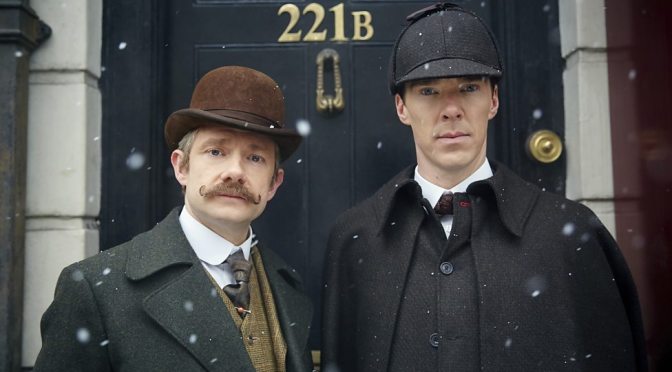
Sherlock: “The Abominable Bride” displays all of this show’s worst tendencies in one place

I’m not quite sure how to encapsulate my disappointment and disgust for “The Abominable Bride” in just a few hundred words. Sherlock has never been one of my favorite shows, and it’s far from even being my favorite iteration of the relatively recent spate of Sherlock Holmes adaptations—hello, Elementary. Still, I really liked the first and second series of it. Each of those six episodes was fast-paced, cleverly plotted, and gorgeously filmed, and Sherlock has the distinction of being one of the first shows to integrate text messaging in a way that was both visually interesting and useful to its storytelling.

However, it’s always been a show that suffers from a serious case of Steven Moffat, Mark Gatiss, and their obsession with their ideal of a Great Man who is a total trash monster of a human being but is so full of genius that we’re supposed to forgive his every garbage word and action (that Moffat and Gatiss write). In Sherlock, of course, this is exemplified in the titular character, but the show’s John Watson is also pretty unlikable. Both of these pieces of work—either Moffat/Gatiss OR Sherlock/Watson, I guess—are in rare form in “The Abominable Bride,” which is not a fun old-timey holiday special like it was marketed as, but instead turns out (in a twist worthy of M. Night Shyamalan) to be a journey into Sherlock’s “mind palace” (a phrase and concept so insufferably pretentious that I hate to even type it).

Most of the episode, then, takes place inside Sherlock’s head, and it’s, frankly, a new insight into his character that I wish I didn’t have. The whole ninety or so minutes is just a mix of things that don’t make much sense and things that make me hate Sherlock with a deep and abiding passion. That is to say, it’s pretty much straight fan service at this point, but only for the fans to whom all of Moffat and Gatiss’s worst tendencies are assets rather than annoyances. For me, “The Abominable Bride” was just one long, escalating feeling of outrage.

Probably the worst part of the episode for me was the way it handled its women characters. Largely, this is because none of them are proper characters at all. Instead, they are women the way that Sherlock imagines them.

Mrs. Hudson is a petty, passive-aggressive shrew, and the joke about her is that she’s angry because Watson doesn’t give her any lines in his story. Both Watson and Sherlock are “comically” amazed that she would feel this way and literally point out that bringing tea is Mrs. Hudson’s only function in the narrative.

Mary Watson is an almost mythical presence in Sherlock’s mind palace, but she also, ultimately, is given little to do. Instead, she largely figures into things as a competitor for her husband’s time and affection, and Watson’s neglect of his wife and their marriage is treated as a joke while Mary’s feelings are portrayed (to the degree that they are portrayed at all) as decidedly secondary to her husband’s and Sherlock’s. In the end, Mary Watson is a largely silent figure and cheerfully indulgent of her husband and his friend. It’s as if she is representative of how the viewer ought to feel; we might be irritated with Sherlock and Watson, but we’re also meant to accept it as the necessary price of their greatness.

Poor Molly Hooper may be the worst-served woman in “The Abominable Bride.” Previously on the show, she’s shown some romantic interest in Sherlock, and Sherlock has behaved terribly to her every chance he gets. Here, inside Sherlock’s mind, we see that he, on some level, thinks of Molly as a man. Certainly, he doesn’t think of her as sexual or attractive, and in the mind palace we see this represented with Sherlock’s imagining of Molly in drag. On another level, Sherlock sees Molly as part of a somewhat incomprehensible-to-him mass of womankind—but a mass of women who are also secretive and furtively malevolent.

Throughout the episode are sprinkled numerous running jokes that seem to refer to criticisms the show has received regarding its treatment of women, but they seem more a mockery of the show’s critics than any sincere attempt at conversation. The main “villain” in Sherlock’s mind palace is a secret society of murderous feminists, and by the end of the episode they don’t even matter because they were just a way for Sherlock to work through his feelings about/for Moriarty the whole time.

Probably the worst sin of “The Abominable Bride,” however, is the revelation of Sherlock’s drug abuse/addiction, which has previously gone entirely unmentioned in this iteration of Sherlock Holmes. I do remember an instance in an early episode of Sherlock using multiple nicotine patches, but that’s it. So the reveal here that the whole episode was just Sherlock overdosing on the plane from the end of the last episode came as a surprise, to say the least, but not a good one. The reactions of Mycroft and Sherlock in the real world of the show are totally unearned and inexplicable, a perfect example of Steven Moffat’s tendency to rely on his audience’s arcane fandom knowledge and uncritical suspension of disbelief to make the emotional beats of his stories work. You know, instead of just putting in the work himself to write a stories and emotional/character arcs that feel natural and make sense.

Miscellaneous thoughts:

  • Lestrade’s facial hair was kind of hot.
  • So was Molly Hooper’s mustache.
  • The costumes for Mary Watson and the Bride were gorgeous.
  • The queerbaiting in this episode was atrocious.

The Expanse: In “CQB” shit gets REAL

While Avasarala gets a bit of a break this week and Miller’s investigation is moving along at a glacial pace, shit gets real for the Cant survivors in “CQB.” We’re also introduced to a new character, Fred Johnson, who is busy building a generation ship for Mormons but is also involved with the OPA. It’s an eventful episode, and the show is starting to move away from its (necessarily) heavy focus on world building in favor of more and better storytelling.

Once again, I have to compliment the decision to avoid any attempt to squeeze this story into an episodic narrative. In “CQB” the strengths of the “one long movie split into ten parts” approach start to become even more apparent, although it ends with another near-cliffhanger that might be frustrating—especially now that we’re stuck waiting a full week to find out what happens next. That said, I can’t wait to watch the whole series in one sitting eventually.

Perhaps the greatest positive of this storytelling style is that it allows for a flexible approach to including characters and switching between storylines. This week, we’re only given a couple of short scenes with Avasarala after the previous episode was dominated by her presence. By giving her a short break, the episode makes time for Fred Johnson, whose story as introduced in this episode both clarifies and complicates things. It’s good to see the show taking advantage of the freedom they have to slowly introduce characters and concepts without having to try and give every character equal time in each episode. It allows for the building of a lot of suspense, and as the mystery gets thicker each week I look forward to seeing more pieces of the puzzle revealed like this.

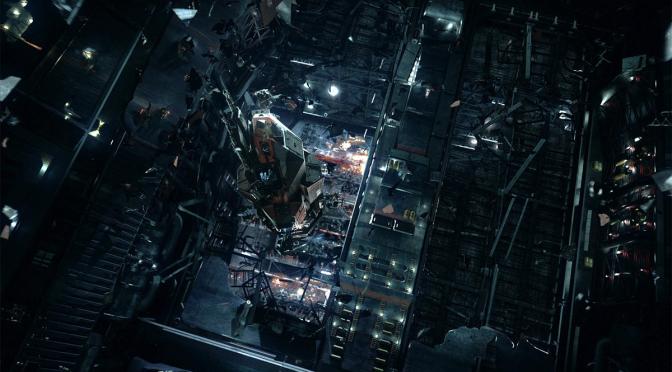
The big event of “CQB,” of course, is the close quarters battle referred to by the title, which takes place on the Donnager when it’s attacked and boarded by the same mysterious ships that destroyed the Canterbury. There were a couple of moments where this little saga started to get a little tiresome, most notably during the scenes where Holden is trying to rescue the rest of the Cant survivors, but there was some great stuff here, too.

I know this is a high-budget prestige show, but it’s still pretty impressive the things that the production team is able to accomplish. The battle scenes on the Donnager are a perfect example of smart decision making behind the scenes, and the show has managed to craft an important battle scene that has a good sense of scale and feels action-packed in spite of most of the scale and action being only implied. The exemplary instance of this is when Lopez, Holden and company are trying to escape across a bridge (an interesting callback to Star Wars, which seems to influence a good deal of the aesthetic of The Expanse) while being shot at from all sides. It’s nicely done, but it a way that seems calculated to not break the bank. I feel like the show is more interested in spending their budget on costumes and extras to build up the world rather than in blowing their wad on two minutes of combat in episode four.

Overall, “CQB” is a great achievement. It moves all of the stories along, thickening the plot and introducing new strands even as it lets the viewer untangle some of its web. On the emotional front, I do think the show is still struggling a little to make us really care deeply about its characters, but they definitely succeeded in pulling heartstrings with the destruction of the Donnager and the deaths of Shed and Captain Yao this week. At the same time, the revelation that Havelock is (at least for the moment) still alive couldn’t have come at a better time to cheer me up, and Avasarala’s contemplativeness was an excellent way to balance out some of the episode’s more stimulating parts.

Miscellaneous thoughts:

  • Avasarala might not get a lot of screen time this week, but the scene with her talking with her grandson on the rooftop is one of my favorite scenes on the show so far. I love how well they’re doing at letting her exist as a complex and sometimes contradictory character without being judged or punished by the narrative. Too often, women characters only get to be clever, ambitious and ruthless at great cost to themselves, but Avasarala has a pretty good life.
  • “Slingshotting” is such a wildly irresponsible and stupid idea, of course people are going to do it.
  • Octavia Muss’s face when Miller was digging around in that dude’s leg for the thing was exactly what I was feeling.
  • Speaking of Muss, I want more of her, please.
  • When the episode didn’t open with Havelock’s dead body I was pretty sure he was going to make it, but I was still happy when that fact was confirmed.
  • Shed’s death was exactly like it was in Leviathan Wakes, but I’m not sure the show really communicated how traumatic that was for everyone who witnessed it. I think this is because they just didn’t have red enough blood, so the gruesomeness of it kind of got lost in the dark palette of the Donnager scenes.

Best of 2015: Favorite Television

2015 has been a sort of strange year for television. On the one hand, there were quite a few shows that I was excited about at the beginning of the fall season, but when it came down to it I found that I just didn’t have time to watch all of them (The Last Kingdom and The Bastard Executioner were two that didn’t make the cut). Of the ones that I did watch, a couple turned out to be totally unwatchable disappointments (Scream Queens and Heroes Reborn fell into this group). And a couple of the shows I was most looking forward to (X-Files, The Shannara Chronicles, Lucifer, The Magicians, Shadowhunters) don’t actually premier until January. Most of what I’ve watched this year, then, has been things that I was already watching and enjoying. Only a few of the year’s new shows really stuck, and at least one of those is almost certainly not getting a second season.

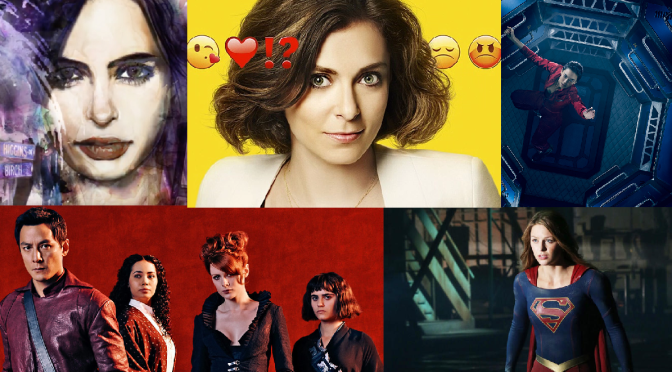
Jessica Jones

This Netflix gem is kind of objectively the best new show of the year. It can be tough to watch, with its themes about rape and abuse, in spite of the fact that none of the sexual violence is ever actually shown on screen. Jessica Jones is a deeply compelling character who fits a lot of common noir tropes, but a lot of that is subverted by her journey being one of personal healing rather than a revenge tale. In the end, Jessica wants mostly to protect others rather than just avenge herself, making her a complicated and fascinating feminist hero. I can’t wait to see what she does next.

Supergirl

This year CBS gave us a very different kind of feminist hero in Supergirl, and I love that we now live in a world where both Kara Danvers and Jessica Jones are getting their own vastly different shows. Supergirl is much more overtly and earnestly feminist than the Netflix series, which can be frustrating at times, especially when the show garbles its 101 level messaging, but Melissa Benoist carries the whole show on her super-strong shoulders by creating a Kara who is tough and brave, but most of all deeply kind. When Strong Female Characters are often imagined as ass-kicking fighters, it feels pretty revolutionary to have a super-powered woman on television who is as deeply empathetic and caring as Benoist’s Supergirl.

Crazy Ex-Girlfriend

Crazy Ex-Girlfriend is a show that I almost didn’t watch at all because I found the title so off-putting. It’s also the show that’s been, by far, the most pleasant surprise of the year. Hot shot lawyer Rebecca is so miserable with her life that she makes a totally bonkers decision to move to a small town in California where her ex-boyfriend, Josh, lives. It’s an absurdly silly premise, but I haven’t related to a character this much in a very long time. I, too, struggle with mental illness, and I, too, have often thought that making some enormous and ill-advised change in my life would somehow magically fix everything. Essentially, this show is a humorous take on how this kind of insane decision could work out for someone. Spoiler alert: everything is terrible-ly hilarious. Also, there are songs, because everyone involved in the show is a musical theatre nerd.

The Expanse

It’s great to see SyFy actually getting back to its roots and producing more, well, sci-fi. I didn’t love their adaptation of Childhood’s End (although I appreciate the attempt), but The Expanse is truly excellent. It’s space opera, but also a sort of mash-up with a noir detective story and a futuristic political drama. There are several notable women characters, including Chrisjen Avasarala (played by the incomparable Shohreh Aghdashloo), who I am certain is going to end up being the iconic character of the show. It’s worth watching just for her parts, but the rest of it is pretty great, too.

Into the Badlands

For some reason, almost no one seemed to talk much about Into the Badlands during its six-episode first season on AMC, but it’s a fucking excellent show that has surprisingly feminist sensibilities as well as some of the most incredibly choreographed martial arts fight scenes I’ve ever seen on television. Just in general, Into the Badlands is a gorgeously imagined and shot show, with highly saturated colors, striking cinematography, and great costumes. It’s also got a relatively diverse cast headed up by two Asian men (Daniel Wu and Aramis Knight) in the lead roles. A black woman (Madeleine Mantock) is the main character’s love interest, but she’s also a doctor and a revolutionary of sorts in her own right. The numerous other women on the show also eschew stereotyping, and while they exist in a fairly sexist fictional world, their roles and struggles aren’t entirely dictated by that. The only negative of this show is that it’s only six episodes for now and a second season hasn’t been confirmed, which makes the cliffhanger ending at the end of episode six potentially very frustrating/upsetting.

Minority Report

This show had tepid ratings and mediocre reviews and is the abovementioned likely-cancelled show, but I enjoyed it. The actors had a decent chemistry, though the writing could have been stronger all around, and I’d have liked to see the show explore more of its bigger ideas instead of adhering mostly to a case of the week format. Sadly, Fox has a tendency to invest in development for interesting sci-fi shows but then cut them off quickly if they don’t perform well, and that’s what happened with Minority Report. The news that their episode order had been cut from thirteen to ten after something like episode three of the first season didn’t help ratings. Still, the show was entertaining and had a lot of promise. It even managed to wrap up episode ten in a way that will act as a reasonably satisfying end to the story if there are no more episodes. It’s still available for binge watching on Hulu if you run out of other things to watch.

The X-Files Reopened builds our expectations up to epic heights

If you’re a stickler for spoilers, I actually suggest skipping this video altogether, but if you’re like me and don’t care about learning a few things in advance, it’s amazing.  I haven’t been this excited about anything in a very long time, and I’m thrilled to learn that there are going to be some stand-alone monster of the week episodes in the mix.

The only problem, of course, is that there’s no way that six episodes is going to be anywhere near enough.