Category Archives: Book Reviews

Book Review: Passing Strange by Ellen Klages

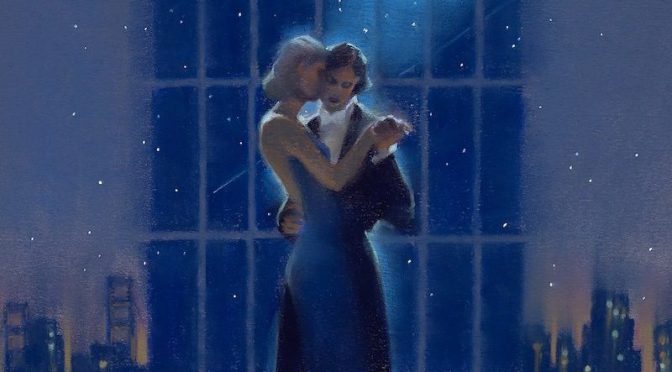
Passing Strange is an absolutely magical story and by far my favorite thing I’ve read so far in 2017. In this gorgeously imagined romance, Ellen Klages brings the queer side of 1940s San Francisco to glittering life and peoples it with characters who are fresh and interesting and yet still feel like the kind of old friends one wants to visit with over and over again. It’s a book that works precisely because of the specificity of its characters and its setting in time and space, and Klages does a great job of balancing the reality of history with the light fantasy elements she introduces over the course of her story. It’s still early in the year, but I fully expect Passing Strange to make a lot of year’s best lists, my own included.

Structurally, Passing Strange is slightly odd, with a lopsided framing story that leads off with an almost too-long sequence in the modern day (or possibly the near future) that introduces an extended flashback and then a final very short coda that wraps up both stories with a clever punchline. While the payoff is totally worth it in the end, it did make for a bit of a slow start to the book, and I was a little disappointed that Helen Young didn’t get more page time in the middle parts, especially when there were other characters introduced who felt much less consequential overall as a consequence of the bookends of Helen’s present day story. The problem, however, is mostly a matter of managing expectations. It’s not that Helen is unimportant after all or that other characters are given too much importance in the narrative. It’s simply that the early focus on Helen kind of leads the reader to think we’re getting more of Helen’s story, and the realization that we’re not takes a while and then doesn’t fully make sense until very late in the book. That said, once I figured out what Klages was doing, I found it easy to appreciate the deliberate way in which she reveals her story.

Passing Strange is less a straightforward love story (though romance figures largely in it) and more a detailed portrait of a specific time and place and an examination of a particular set of experiences, here, the lives of queer women in San Francisco in the 1940s. I love the way Klages introduces her characters once the flashback starts, and the picture she paints of all these interconnected women, their struggles and friendships and the joy they have in spite of often difficult circumstances is vivid and real-feeling. Klages seamlessly weaves together scenes of sweetness with scenes of visceral pain without shying away from depicting the ugliness of the era (which is sadly not always very different from our current one) but without dwelling on darkness. It’s a balancing act that can be hard to manage, and Klages does so superbly, crafting a story that is true to reality but still ultimately optimistic.

If there’s any real complaint to be made about Passing Strange, it’s that the fantasy elements of the story are only slight until the very end, when magic is almost (but not quite) a deus ex machina. It’s hinted at throughout the book that magic is both real and not very uncommon, but there’s only one actual magical event of any significance, and it’s not tied to the other magics that are described elsewhere in the book. Just in general, I would have loved to see all of the various magic and witchery suggested in the story be expanded upon more fully, to be honest. The richness of 1940s San Francisco is a lush backdrop for the story already, but Klages hints at an equally rich world of magic just out of the reader’s sight.

All this said, Passing Strange is still a near-perfect novella. The few complaints I have about it all amount to just wanting more of it. I want more stories about women loving women, and I want them to have grand romances, magical adventures, and happy endings. As delightful as Haskell and Emily and their friends are, they aren’t enough. Passing Strange deserves to be more than a singular work of its type, and if Ellen Klages ever decides to revisit this setting or any of these characters, I’m here for it. If anyone else is writing anything like this I’m looking for it.

This review is based on an advance copy of the book received from the publisher through NetGalley.
Book Review: The Fortress at the End of Time by Joe M. McDermott

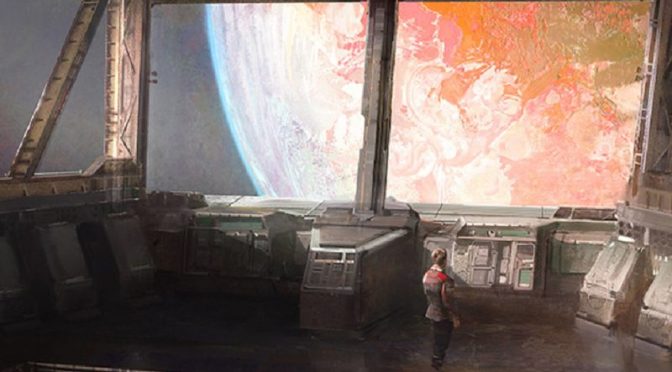
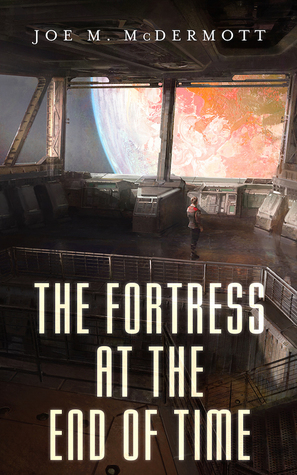
Joe M. McDermott’s The Fortress at the End of Time might be a little bit genius, but I can’t decide if I loved it or hated it. It’s got a great classic sci-fi sensibility if, but I’m generally not one for classics. It’s a novel that, while short, is often boring, but intentionally so and in a way that mostly works if you’re a patient reader. It’s got some big ideas that are worthy of considered exploration, but none that are particularly fresh. It’s solidly written with a distinctive voice and style, but there’s nothing especially exceptional about it. It’s a book that I’m glad to have read because it is a bit outside of my usual fare and a nice change, but I don’t feel compelled to read either more of McDermott’s work or more of this sort of thing in general. It’s not that The Fortress at the End of Time is unremarkable or pedestrian; it’s just a profoundly workmanlike example of its type of thing–thoughtful medium-hard military-ish sci-fi that has something to say about some stuff–if you like this sort of thing. I can easily imagine this being a book that lots of other people love, but I can’t muster any very strong feelings about it, myself.
The story is told in first person from the point of view of one of the most unpleasant characters I’ve had the misfortune to read about in some time. Ronaldo Aldo was raised on Earth and attended a military officers’ school, after which a copy of him (not really a clone, despite what the cover blurb says) is made and stationed on a remote military base at the far end of the galaxy, where he finds himself lonely, bored, and with few opportunities for success or advancement. While the book seems intended to explore the banality of that sort of everyday experience–not everyone can be a Captain Kirk, natch–I found Aldo so unlikable that it was difficult to root for him at all. For me, this is primarily because Ronaldo Aldo is a man who really doesn’t care for women, in spite of being straight and wanting to fuck/possess one (or more) of his own.

The first introduction to Aldo is his attempt to flip a coin with a friend of his over who gets to fuck a woman they are both hanging out with, only to find out that his friend and the woman are already a couple. It speaks to Aldo’s self-centeredness and obliviousness that he didn’t know that the people who are supposed to be his two best friends are in love, and it speaks to Aldo’s deep-seated misogyny that he ever thought it was appropriate to flip a coin for access to a woman’s body. McDermott doesn’t portray this behavior favorably, and I think that it’s intended to make Aldo unlikable from the start as well as set a baseline for his behavior towards women from which we can measure change over the course of the rest of the book.

However, Aldo’s subsequent arc never actually improves his attitudes towards women very much. Throughout the book, Aldo thinks of every woman he meets (and there are few enough of them) in terms of sexual attractiveness, which is consistently gross and off-putting, specifically because there are so few female characters in this book. Aldo’s championing of women at the Citadel feels hollow, and his “romantic” relationships are dysfunctional, with the dysfunction almost entirely on his side. Aldo continues to be slightly obsessed throughout the book with the girl from the very beginning; then he almost immediately becomes infatuated with the beautiful wife of one of the other officers at the Citadel, who he later has an affair with.

Aldo magnanimously gets involved with a young trans woman, but he primarily thinks of her in terms of her beauty and her transness, which is in turns almost fetishized and slightly vilified. Amanda’s transness is suggested to be a ploy to be able to marry a man and thus gain more land on the surface of the planet, and this plays off of some extremely negative tropes about duplicitous trans women who want to “trick” good men into being with them. I’d say that the treatment of this in the book falls in depiction rather than endorsement territory, but I’m not sure it’s handled as well as it could have been. There is quite a lot of time spent on talking about Amanda’s transness, in general but especially about her lack of childbearing ability (Future people can replicate whole people but can’t give a trans woman a uterus yet? Okay.) and there are several times where characters misgender and deadname her in ways that are derogatory and unpleasant to read.

Still, thematically, The Fortress at the End of Time is moderately ambitious, and McDermott does a good job of staying on target with the story he’s trying to tell. There’s not much fat that could have been trimmed here, and the deliberately slow pacing works nicely to highlight McDermott’s theses. The interplay between the planetside monastery and the Citadel could have been given somewhat more page time, but I may only feel that way because I could have done with less of Aldo’s feelings. All in all, though, The Fortress at the End of Time is fine. It’s not great, but it’s good, and sometimes that’s plenty. This isn’t a book that was perfect for me, but if you like this sort of retro-styled sci-fi or if you have a thing for unlikable protagonists and likely unreliable narrators, it’ll be right up your alley.

This review is based on a copy of the title received from the publisher through NetGalley.

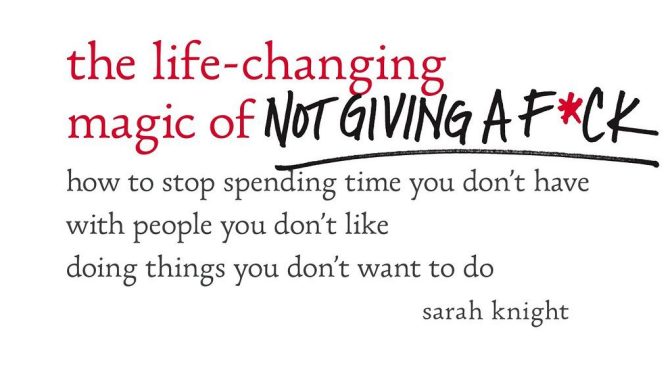
Book Review: The Life-Changing Magic of Not Giving a F*ck by Sarah Knight

So, it’s less than a month into the new year and I have a to-read list a mile long that I’ve already deviated from by reading this. This is exactly why I needed this book, which is all about the type of mental and emotional de-cluttering that I’ve been working on with mixed success for a couple of years now. You could probably also benefit from this book, even if it’s just as a quick-ish afternoon read for a few laughs–though I think most of us could learn at least a couple of things from Sarah Knight’s humorous suggestions for living one’s best life.
The book is well-organized into clearly labeled and defined sections that break things down into manageable chunks, and Knight does a good job of describing a system that can be applied to one’s life in stages. Because this sort of de-cluttering is something I’ve been thinking about and working on for some time, it wasn’t all new information–she’s not exactly reinventing the wheel here–but I found it validating to read something that is supportive of what I’ve been trying to do, and Knight’s systematic approach to things is genuinely useful and helped me realize some of the flaws in my own haphazard way of dealing with life stuff. There is definitely a focus on bourgeois concerns that may be alienating (or at least mildly-to-moderately irritating) to some readers–like, there’s a lot of stuff on weddings and who on earth goes to that many weddings?–but most of Knight’s advice and systems are portable in ways that can be adapted to any lifestyle. The book is also just repetitive enough that if you find your eyes glazing over during another passage about destination bachelorette parties or something, you can–and I learned this from the book!–choose not to give a fuck about it and skip ahead to something more useful to you.

I guess, if you’re religious or just don’t care for repeated usage of the f-word, you could just grab your nearest copy of the prayer for serenity and hope for the best, but there are some great tips here for setting priorities and establishing boundaries that help to maximize your enjoyment of life and minimize stress and resentment. Plus, it is pretty short.

Book Review: Windwitch by Susan Dennard

I read Truthwitch around this time last year and enjoyed it in spite of its flaws, which were, well, many. But it was the start of a new series, and it featured a great friendship between two young women and had an interesting idea for a system of magic. Plus, while my tastes certainly skew towards the literary end of SFF, I appreciate some light reading to break up my routine from time to time. So I was pretty excited about Windwitch after enjoying its predecessor so much. Unfortunately, it turned out to be my biggest reading disappointment in a long while. Windwitch is the absolute worst sort of boring, insipid, YA claptrap I’ve read in years.

In Truthwitch, the story revolved primarily around Safi and Iseult, but Windwitch finds the two girls separated entirely. Obviously, based on the title, readers of the first book could expect Merik to feature largely in this one, and he does, but he is also disconnected from Safi and Iseult so that none of the primary characters from the last book actually interact with each other in any significant way. Instead, they’re shuffled around and paired off with others–Safi with Vaness and then both of them with a group of Hell-Bards, Iseult with Aeduan, and Merik with Cam and then sort of with his sister Vivia (who has been upgraded to a POV role)–but none of these interactions are very compelling, and very little actually happens at all, in spite of the book feeling fast-paced for most of its page count.

Safi and Vaness go on a journey, get captured a couple of times, and have to escape, only to learn that they don’t actually know what they’re doing. Iseult and Aeduan are also going on a journey, but they never get anywhere and then end up learning that they have to do something different from what they thought they were doing for the whole rest of the book. And Merik is trying to do something in Nubrevna but then finds out that he didn’t actually know anything about anything. Which, I guess, is supposed to be the main theme of the book–this whole no one knowing anything–but by the end of the book I found I simply didn’t care. It’s not even that the characters make foolish decisions or that everything feels so contrived and senselessly convoluted. Frankly, it’s all just so boring that I ended up just skimming whole chapters to get through it faster, and don’t think I missed out on anything.

None of this is helped by the fact that major aspects of the Witchlands’ magic system are still not very well-explained. It was only about halfway through this book that I finally decided that I’m just going to understand people who are “Cleaved” to be something like zombies, for example, even though I don’t think it’s at all conclusive from the text that this is the case. The magic of all the various characters continues to feel poorly defined, and the way Dennard uses it in the story is inconsistent. I’m sure that she has rules for how she’s writing the Witchlands magic, but whatever they are they’re basically incomprehensible to the reader. This was true enough in Truthwitch, and I called it forgivable because it was a first book in a new series and I otherwise enjoyed it. I thought that surely some of the fuzzier details of things would come into focus in this second book. They did not.

To add to these problems, none of the relationships or character arcs in Windwitch are at all interesting or entertaining except for Vivia’s and hers is subordinated to her brother Merik’s. Vivia didn’t figure largely in Truthwitch, but here she becomes a POV character with an interesting motivation–she’s trying to run her country while her father is ill, and she’s facing sexism in Nubrevnan society while also struggling with her ongoing grief over her mother’s death and her feelings of rather well-justified resentment toward her brother for the way that he has been given choices, responsibilities, and power that Vivia has had to work hard for. In the whole book, Vivia is the only character who has clearly defined and sensible motivations that are complex enough to generate real interest in her story, but she’s not given much page space and much of it is wasted on her almost obsessive thinking about her unspoken and possibly unrequited romantic feelings for another woman. I love women who love women, and goodness knows we could use more lesbians in fantasy, but this sort of relentless pining with no progression in the relationship is tiresome under normal circumstances. Here, where Vivia is legit dealing with a crisis situation as her country starves while being on the brink of war, her constant thoughts about the object of her affection are just plain intrusive–for Vivia and the reader.

Elsewhere, Iseult and Aeduan’s interactions are a study in what I guess passes for romantic/sexual tension. The difference here is that neither of them seem to have the least bit of self-awareness about their burgeoning attraction. I’m sure all this barely contained wanting to bone is great fuel for shippers and fanfic writers, but again there’s very little forward progress on that front. The revelation that Aeduan shares Nomatsi heritage with Iseult starts off feeling significant, but it never bears any actual fruit in terms of a deeper understanding or fellowship between them. Their physical interactions are too PG to ever be truly sexy, all written with a weirdly puritanical coyness that I found actively unpleasant to read.

They could have been worse, though. They could have been more like the interactions between Merik and his sidekick Cam or between Safi and the hell-bard (and by the way, I don’t think Susan Dennard actually knows what a bard is) Caden. The thing is, while I hate the dull, predictable chemistry between Safi and Caden, and I hate the way that Vaness is allowed to fade into the background of Safi’s POV sections, and I hate Safi’s sort of generalized insouciance and her terrible jokes… I despise Merik and his treatment of Cam.

Cam is a trans boy with what sounds like vitiligo, and he’s clever and brave and loyal and long-suffering. Because Merik is pretty much an asshole to Cam through the whole book about everything. The worst part, however, is just how much time Merik (well, Susan Dennard, really) spends commenting on Cam’s transness. It’s as if Dennard decided to make Merik the mouthpiece for her to work through all her own confused feelings about trans people, and Cam spends most of the book being misgendered inside Merik’s head–until the very end of the book when Merik magnanimously decides that he needs to focus on thinking about Cam with the proper pronouns. It’s not good enough. Cam is obviously trans from the beginning of the book, and Merik’s inability to either understand or accept that for almost four hundred pages doesn’t reflect well on him. It’s only when Merik meets someone who know’s Cam’s original name that things seem to click for Merik, and a ridiculous amount of page space is dedicated to Merik essentially marveling that being trans is a thing.

Being cis myself, I don’t feel qualified to fully unpack all this, but it seems like a particularly ham-handed way of including a trans character. Without any scenes from Cam’s POV, there’s very little insight into how he feels about any of this. The disconnect between the way Merik talks to Cam and the way he thinks about Cam is messed up as well. He’s very particular about calling Cam “boy” throughout the book–which has a weird racial dynamic as well, since Merik codes white and Cam is described as being dark-skinned with lighter patches–but he consistently thinks of Cam as “girl” even though he first knew Cam only as a boy. It’s just a huge mess of a well-meaning (I think) but ultimately insufficient attempt at inclusiveness.

Which is pretty par for the course with this book, which is, overall, a big mess in which almost nothing really works. The things that do work–Vivia’s storyline, Aeduan (though not Aeduan with Iseult)–seem to work almost be accident, not through any particular skill or intention of the author. Honestly, I’m not quite sure anymore what Susan Dennard is trying to do with this series. I might come back for Bloodwitch next year, because I do like Aeduan and am mildly interested to see if anything gets any better, but Windwitch honestly made me question every positive feeling I had about Truthwitch.

Book Review: Difficult Women by Roxane Gay

Listen. It’s almost impossible for any collection of twenty-one short stories to please everyone all of the time, but with Difficult Women Roxane Gay comes closer than most to nailing it. The stories in this volume are, from start to finish, thoughtful, clever, funny, tragic and hopeful in turn. These stories are a rage-filled paean to the strength and resilience and weakness and fragility and everything in between of women. This is an ugly, heart-wrenching, beautiful book, and if Roxane Gay wrote three hundred forty-four more stories like this I would treat them like a devotional and reread them every year for the rest of my life.
Probably what I love best about Difficult Women is that Roxane Gay is so unconcerned with dualities. She avoids trite, reductive storytelling in favor of exploring the complexities of every day life. Gay’s difficult women deal with trauma and loss, they fall in love, and they fuck. They are kind and brave and capricious and cruel and yielding and stubborn and cold-hearted and hot-tempered and more, and every woman Gay writes about here contains multitudes. It’s impressive to find so much intricacy of character in short fiction, and Gay turns out one fascinating story after another.

That said, there’s a significant amount of thematic overlap and repetition between entries in the collection. Sexual violence, dead children, and abusive lovers figure largely in these tales, and this can at times create a sense of grimness that won’t be appealing to all readers. Certainly there are some lighter stories included, but I found those to have a slighter quality than those stories that dealt with weightier material. Altogether, though, the stories of Difficult Women are well-chosen and smartly arranged so that the reader is never overwhelmed by darkness, and those couple of slighter stories, while not among my favorites, perform an important function in the collection as a whole by periodically lightening the mood and offering the reader a perfect opportunity to grab a drink or take a break.

In style and genre, Gay is clearly a writer of wide-ranging interests, with several stories veering into the realm of magical realism and one (“The Sacrifice of Darkness”) that is unambiguously speculative in nature. Gay writes stories in numerous settings about characters of different ages, races and classes, floating in and out of her characters’ lives with what might seem like ease for the reader but I expect is the result of years of life experience and meticulous study of people combined with finely honed craft. Stylistically, these stories all tend towards a forthrightness that challenges the reader to really see and empathize with the characters with all their flaws and defies moralistic judgments. This is a collection that is keenly intellectual, but never self-consciously so. Even Gay’s symbolism is generally natural and easy to grasp, and she doesn’t bother with any too-precious conceits, complex metaphors or arcane allusions that might make the text inaccessible.

In the end, Difficult Women is just what it says it is and what it appears to be. It’s a work of elegant simplicity and brutal honesty and deeply humane reflections on the human condition. I look forward to shamelessly pushing it on literally everyone I know.

Book Review: Dusk or Dark or Dawn or Day by Seanan McGuire

It’s early enough in the year that I don’t have much to compare it to yet, but I feel confident in saying that Dusk or Dark or Dawn or Day is one of the year’s great novella-length works. It’s smartly written, well-paced, has a compelling cast of characters and an original mythology, and is altogether compulsively readable. It’s perfect reading for a cold day or a rainy afternoon, exactly the sort of thing that is easy to zip through in a single sitting like I did.
It might be easy to just focus on the characterization of this book as “that book about the ghost who works at the suicide hotline,” but Dusk or Dark or Dawn or Day is something really special and interesting that isn’t done justice by that facile, humorous-sounding description. Yes, Jenna is a ghost and she works at a suicide hotline, but this isn’t a funny book and, while a fast read, isn’t really the kind of light reading that superficial description would suggest, either. There’s some lightness here, but this is a book that deals mostly with themes relating to grief and mortality and Seanan McGuire has something quite serious to say about these issues. She does touch on some ideas about community and found family, but those are mostly incidental to the story and more implied than explicitly examined in the text.

Because the book is so emotionally and thematically weighty, the plot is a fairly basic one. After the introduction of Jenna’s predicament and some explanation of her life as a ghost, Jenna and her friend, a witch, have to rescue a bunch of other ghosts when they mysteriously disappear. We never meet any of the disappeared ghosts, so there’s not much emotional stake in their rescue, but the book isn’t really about them at all. Instead, the first person narrative puts the reader completely inside Jenna’s head for the duration of the story. And while Jenna is a kind and caring person, there’s an interesting detachment in her ways of caring for her pets (all elderly cats) and the people in her after-life, and McGuire does a great job of exploring how Jenna’s circumstances have changed her perspective and her understanding of life and death.

McGuire also has an interesting take on witches here, where they have magics tied to any number of things–streets, rats, corn… presumably the options are basically unlimited–that fuel their powers and inform and limit their abilities. The relationship between witches and ghosts is complex and adversarial rather than symbiotic, but it adds another dimension to the reader’s understanding of the themes. Like ghosts, witches exist in a social space somewhat removed from humanity, and both ghosts and witches live extended lifetimes and are subject to forces and motivations outside their control. McGuire’s “What If?” question in this book is broad and perhaps ill-defined, but I love the multiple angles from which she’s chosen to try and answer it.

Looking back on the reading experience of this one, I think the genius of Dusk or Dark or Dawn or Day is that McGuire has used an extremely simple and fairly straightforward plot in order to hang a ton of mythology and worldbuilding upon, but she’s managed to do it in a way that feels complete and not as if it’s just an introduction to a bigger fictional world or a longer series. Sure, there’s tons of storytelling potential here, and there is at least one character (Delia, if you want to know) that I’d love to see McGuire return to in the future. But Jenna’s story in this volume is completely self-contained and entirely emotionally satisfying. I would definitely like to read more about this fantasy world, but I don’t think any sequels are necessary. I’d love for these kinds of singularly lovely standalone stories become a trend even more than I want to see sequels or companions to this story.

This review is based upon an advance copy of the title received from the publisher through NetGalley.

Book Review: The Bear and the Nightingale by Katherine Arden

The Bear and the Nightingale is an excellent fairy tale-inspired historical fantasy that should appeal to fans of Naomi Novik’s Uprooted and Catherynne M. Valente’s Deathless. Katherine Arden has crafted a well-researched, beautifully written, and overall marvelously realized debut novel that nonetheless has some deep and unsettling flaws that I expect will keep it from being among my favorite novels of 2017 and, frankly, make it somewhat unlikely that I will return to the series (this is the first of a planned trilogy).
First, the good.

If you like historical fantasy or fairy tale retellings, this one is a great choice. Arden has chosen a couple of somewhat obscure-to-Anglophone-readers fairy tales to use as the backbone of her story, and she’s chosen a setting–circa 14th century Russia–that isn’t widely used. Both of these factors set The Bear and the Nightingale nicely apart from the ongoing glut of retold and reimagined fairy tales on the market. These things are always a dime a dozen, so it’s refreshing to see something original being done in the genre, and to have an original idea coupled with a well-researched setting that offers a great sense of place is something really special.

I also kind of love that The Bear and the Nightingale isn’t a romance, though it has some romantic, in the literary sense, elements. Instead, it’s a bildungsroman of sorts, beginning before the birth of its primary protagonist, and Vasilisa grows from precocious child to independent young woman over the course of the novel. Romantic relationships barely figure into the story at all, and it instead focuses on exploring Vasilisa’s relationships with her family and community in order to explore bigger ideas about tradition, religion, gender equality, and growing up. Too often, books like this focus primarily on getting their heroine heterosexually paired off and settled down at the end, so I’m always glad to read something that avoids that narrative that domestic partnership and nuclear familial conventionality are the ultimate happy ending. The somewhat ambiguous, but hopeful, ending of The Bear and the Nightingale suits me far better.

Sadly, while the good parts of The Bear and the Nightingale are excellent, the bad parts are pretty terrible. Mostly, the bad parts all involve Vasilisa’s stepmother, Anna Ivanovna, for whom everything is terrible all the time.

**Spoilers below this line.** Continue reading Book Review: The Bear and the Nightingale by Katherine Arden

Magazine Review – FIYAH Literary Magazine Issue One: REBIRTH

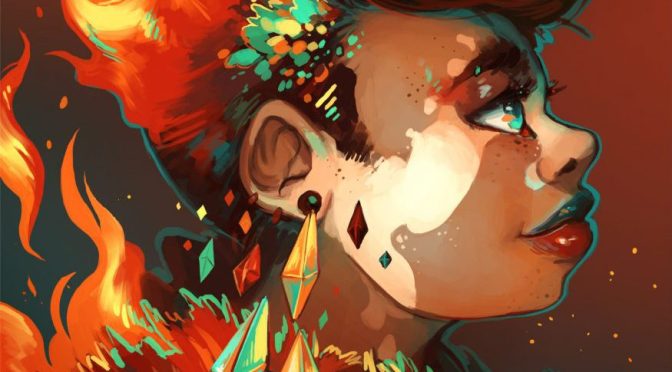
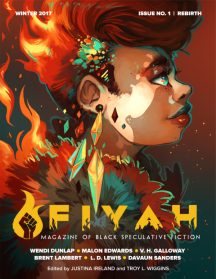
fiyah1In an age of constant reboots and reimaginings of old media, the new FIYAH Literary Magazine stands out as one of the most promising such projects in recent years. Inspired by the work of Jazz Age black writers and motivated by current events and the ongoing dearth of recognition and opportunities for black writers in SFF, executive editors Justina Ireland and Troy L. Wiggins have created a unique and special space that is as much needed now as ever before. From its stunningly beautiful cover art to the very last page of perfectly curated fiction, Issue One: REBIRTH is a gorgeous celebration of black excellence that every serious fan of speculative fiction should be reading this winter.
My personal favorite story of the issue is the final one, “Chesirah” by L.D. Lewis, which combines fantastical and science fictional elements to great effect. My second favorite, V.H. Galloway’s compelling “Sisi Je Kuisha (We Have Ended)”, introduced me to a bit of central African folklore that I knew nothing about before reading it, which then sent me down a marvelously fascinating and informative rabbit hole of internet research about Bantu languages and Congolese history. Meanwhile, “The Shade Caller” by DaVaun Sanders is a thoughtful exploration of otherness and the power of community. An excerpt from Sanders’ novel, The Seed-Bearing Prince is also included, though I skipped it in favor of just buying a copy (just $0.99 for Kindle) and adding it to my to-read list.

The first three stories of the issue didn’t blow me away the same way the final three did, but I suspect it’s a mix of personal preference and the fact that I’m white. All of the stories in FIYAH are by, about and for black people, or at least not for white people. Reading these stories while white, one gets the distinct impression that you are the outsider here, and I found myself throughout feeling grateful for the gift of these deeper glimpses into an experience that I can only ever understand imperfectly. It’s a feeling that I often have while reading the works of people unlike myself, just seldom ever through half a dozen stories in a row.

And this might be the most refreshing thing about FIYAH and the thing that makes this project so important for the SFF community. Here, black stories by black authors are in a unique context, in conversation with each other and not singled out as token stories in other publications where they’re almost forced to be in conversation with whiteness. There’s a unity and cohesiveness to this collection that is too often reserved for more privileged perspectives that are allowed to drown out the voices of minorities. FIYAH gathers the voices of black writers together in a way that both amplifies their collective impact and highlights the diversity within the group.

The only quibble I have about this first issue is actually a technical one. Sadly, the EPUB format (my preferred file type as a Nook user) is not well-formatted, and I was unable to adjust the font size to read it more easily. It also didn’t have the best document navigation, and if I wanted to jump to a story I had to do it from the table of contents page rather than the little menu thingy in the bottom left corner of the device. It’s not a deal breaker, obviously, but it was inconvenient, and I (vainly) hated the reminder that I might need to get my eyes checked as I approach middle age. Fortunately, when you buy the issue, you have access to EPUB, MOBI, and PDF downloads, so it’s easy enough to find one that will work for you, but I’m hoping that this problem is fixed in future issues.

Magazine Review: Uncanny Magazine Issue 14 Jan/Feb 2017

I’ve read Uncanny Magazine sporadically since they started publishing, but I finally decided to back their Kickstarter and subscribe for Year Three. I’d definitely rate that among my best decisions of 2016, not least of all because it means that I’ve gotten to start off 2017 with a brand new issue that is jam-packed full of the usual sorts of excellent stories, poetry and essays that have been characteristic of the publication since the beginning.

Sam J. Miller’s “Bodies Stacked Up Like Firewood” centers around a trans man’s suicide, and is the first story to make me cry in 2017. Miller deftly and sensitively explores the grief of his characters, utilizing a slight speculative element for a haunting effect that left me perfectly primed for reading the second story that has made me cry this year, A. Merc Rustad’s “Monster Girls Don’t Cry.” I just recently read Rustad’s lovely “This is Not a Wardrobe Door” in Fireside, so I was excited to find a second of their stories so soon and thrilled to find that this one is even better than the first. I’m a huge fan of stories where outsiders come to own their identities, and I love a literal metaphor, so “Monster Girls Don’t Cry” is right up my alley. I fully expect it to be one of my favorites of the year.

Kassandra Khaw’s “Goddess, Worm” is nice but not terribly memorable. “The Thule Stowaway” by Maria Dahvana Headley is rather long and challenging, especially if you don’t know the works and biography of Edgar Allan Poe very well. I could see it being a great favorite for the right reader, however. From Theodora Goss comes “To Budapest, with Love,” which is a thoughtful meditation on ideas of alienness that I didn’t find that compelling. “Some Cupids Kill With Arrows” by Tansy Rayner Roberts is a charming and funny romance that I will definitely be linking to all my classics-loving friends when it’s free to read on February 7 (and hounding them to just buy the issue in the meantime). The Ann Leckie reprint, “The Unknown God,” is fine, but not as exciting as some of her other work that I’ve read.

I’m no poetry expert, but I loved Nin Harris’s “Jean-Luc, Future Ghost” and even think I understood it. Longer poems by Carlos Hernandez and Nicasio Andres Reed round out the section but are beyond my ability to critique other than to say I liked them.

Mark Oshiro offers an important perspective on and critique of Fantastic Beasts and Where to Find Them in his essay “Inferior Beasts.” Natalie Luhrs makes an excellent case for romance in “Why You Should Read Romance” and Angel Cruz’s essay, “Blood of the Revolution: On Filipina Writers and Aswang,” is fascinating. The standout essay of the issue, however, is Delilah S. Dawson’s powerful “I Have Never Not Been an Object.” Finally, Julia Rios, in her second issue as print interviewer, talks with A. Merc Rustad and Maria Dahvana Headley, who each offer some great insight into the stories they had in this issue, their respective processes, and what they’ll be up to next.

Like any collection of fiction and essays, Uncanny Magazine #14 has its highs and lows subject to the reader’s tastes, but it’s overall a solid issue of an above average publication. Even the pieces that didn’t especially speak to me personally were obviously chosen with care for their high quality, and I continue to be extremely happy that I finally decided to become a subscriber.

The Best of 2016: Novellas

love novellas, and this year they constituted about a third of my reading. I’m still reading almost all of the Tor.com novellas as they come out, and I’ve started paying more attention to other novella-length work, though I still stick to professionally published books rather than delving into the vast world of self-pubbed stuff out there. Consequently, this list is definitely a bit biased towards the Tor.com books, but I did try to check out some different stuff in 2016. If I missed one of your favorites, be sure to leave it in the comments.

Coral Bones by Foz Meadows
2016 was a good year for Foz Meadows, whose most recent novel, An Accident of Stars, is a fun, fresh and feminist take on the portal fantasy genre. However, this short novella–included in Abaddon Books’ Monstrous Little Voices: New Tales from Shakespeare’s Fantasy World–is wonderful. It’s a new perspective on The Tempest‘s Miranda, and Meadows takes a look at what it might really mean for a young person’s identity to be brought up in that kind of isolation. It’s a thoughtful portrait of an outsider figuring out their place in the world, a clever riff on Shakespeare’s own themes, and a playful update to a very old classic.
Buy it here.
Or buy the collection here.

The Ballad of Black Tom by Victor LaValle
There were several Lovecraft-inspired novellas published in 2016, but Victor LaValle’s is definitely the best of them. The Ballad of Black Tom is directly in conversation with Lovecraft, being a retelling of sorts of the insidiously racist short story “The Horror at Red Hook,” and LaValle ably weaves together a general critique of Lovecraft’s racism with a fairly straightforward tribute to Lovecraft’s enduring influence on the genre, crafting a smartly written and well-paced homage that perfectly encapsulates the complicated feelings that many people have towards Lovecraft.
Buy it here.
Read “The Horror at Red Hook” here.

Lustlocked and Pride’s Spell by Matt Wallace
Matt Wallace’s Sin du Jour series continued this year with its second and third installments, and they are excellent. Matt Wallace has a gift for telling funny stories that aren’t trying to be too clever, and each volume of this series is better than the one before. Wallace starts with a simple joke and focuses on creating a diverse cast of interesting characters to carry the story, and it works. Every time.
Buy Lustlocked.
Buy Pride’s Spell.
Buy Envy of Angels (the first book in the series).
Pre-order book four, Idle Ingredients.
Read the Sin du Jour short story, “Small Wars.”

Runtime by S.B. Divya
I would never have guessed I would love Runtime as much as I did, as I’m generally not into anything even remotely sports-related, but this story about a young woman entering a cyborg race with the hope of bettering herself and achieving a more secure future for her family is a fantastic fast read.
Buy it here.

Spiderlight by Adrian Tchaikovsky
While I haven’t been as into nostalgia in my media as some have this year, I absolutely adored this D&D-ish sword and sorcery adventure from Adrian Tchaikovsky. It’s got an unexpected and unique protagonist, some interesting ideas, and an entertaining villain. Tchaikovsky pokes gentle fun at some classic tropes and deftly uses others in a way that shows his deep love for and broad knowledge of the genre.
[Edit: Just learned that Spiderlight is actually 300 pages long, so not actually a novella. I was so delighted by it that I rushed through it in a single sitting and didn’t even notice.]
Buy it here.

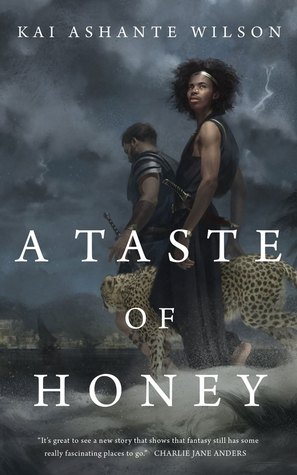
A Taste of Honey by Kai Ashante Wilson
Kai Ashante Wilson’s 2015 novella, Sorcerer of the Wildeeps, marked him as an author to watch, and this 2016 effort, set in the distant past of the same world, establishes Wilson as one of the most original and compelling voices in fantasy right now.
Buy it here.

The Convergence of Fairy Tales by Octavia Cade

The Convergence of Fairy Tales is this year’s Book Smugglers Halloween horror story, and it’s also their very first novella. Hopefully, it’s the first of many, because it’s really, really good. The unifying theme behind many of my favorites of 2016 is rage, and this is a very angry book. Which makes sense, as it’s the story of the princess from some of Western culture’s most beloved–and most monstrously unfair–fairy tales, stitched together here as the story of a singular heroine who learns to channel her pain and fury into action that helps her move on from what has been done to her. It’s a powerful validation of rage as a response to injustice and victimization, and it’s beautifully written to boot.
Buy it here.

carrigernovellasPoison or Protect and Romancing the Inventor by Gail Carriger
I have enjoyed Gail Carriger’s steampunk-ish romance adventure novels in the past, but I’ve never gotten hugely into them, and this year I learned why. They’re all just too long. 2016 found Carriger kicking off not one but two novella series–the first dealing with the now-grown characters from her YA Finishing School books and the second detailing the romances of queer minor characters from the Parasol Protectorate and Custard Protocol series–and the first installments of both are delightfully fun and sexy enough to be exactly what I need to fill my occasional desire for light smut.
Buy Poison or Protect.
Buy Romancing the Inventor.

The Raven and the Reindeer by T. Kingfisher (Ursula Vernon)
The Snow Queen reimagined as a queer romance adventure? Yes, please. I do think this book might be over the word count for eligibility as a novella for the Hugo Awards but not by much, and it’s short enough and a fast enough read that it feels more like a novella than even a short novel. Simply magical. If you haven’t read this one yet, it’s the ideal book to curl up with a cup of hot cocoa and a blanket and read on a cold winter’s night.
Buy it here.