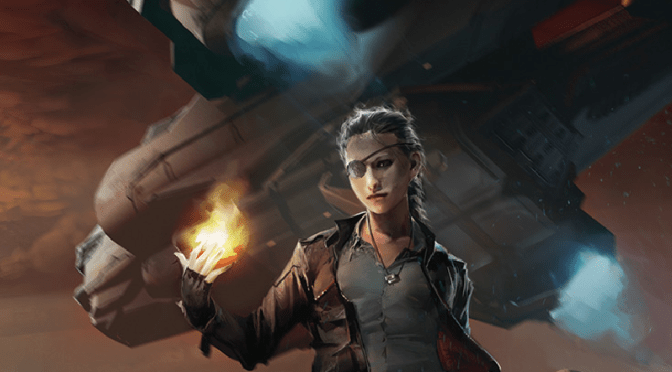
 I read quite a few debut novels and had a cool half dozen on my reading list for the first three months of 2017, but Alex Wells’ Hunger Makes the Wolf was the one I was most looking forward to in the first quarter of this year. I’m happy to say that it did not disappoint. While it may lack some of the great depth and the high level of craft of some of the other debuts I’ve read so far this year, Hunger Makes the Wolf more than makes up for it in other areas. It’s a well-conceived, smartly plotted, enthusiastically fast-paced sci-fi adventure with some cool ideas and a couple of excellent lead characters who’ve got plenty growing still to do in future books.
Sometimes you just want to read something fun that reminds you of other things you like, without having to think too hard to understand it, and Hunger Makes the Wolf contains shades of all kinds of things that are relevant to my reading interests. There are shades of Firefly, Dune, Mad Max: Fury Road, and even Star Wars here, and it’s by far the most fun thing I’ve read since I read the first two books of K.B. Wagers’ Indranan War trilogy at the end of last year. Like Wagers, Alex Wells manages to draw elements from many inspirations and still create a story with plenty of originality and individual flair. The overall effect is enjoyably familiar without ever feeling like a clone of someone else’s work, and if you like any or all of the above-mentioned stories, this one will be right up your alley.
I know I’ve said that this isn’t a particularly deep novel, but I don’t know if I can reiterate enough how much that’s not a criticism. The plot is straightforward, with an easy-to-understand conflict and clearly defined villains and heroes. At the same time, the villains are never caricatures of evil, and the heroes have enough internal conflict and nuance to be compelling. Hunger is, at heart, about two things—personal political awakenings and grassroots resistance against tyranny—and Wells comes at these themes with a cleverly simple approach that makes his points easy to understand while still recognizing the complexity of characters and situations. This is all well-supported by a setting that, while obviously derivative of several other popular works, is described in plenty of vivid detail and has several unique quirks—namely an interesting (if somewhat mysterious) magic system—to set it apart from the pack.
Hob Ravani is a great protagonist of the tough-as-nails ass-kicking kind, and her journey of self-discovery is neatly described throughout the novel. The story of a young person stepping into a leadership role they aren’t entirely prepared for might be a little formulaic, but it’s executed here with loving gusto and a great deal of charm. Though Hob’s friend Mag starts off as something of a damsel in distress, she quickly comes into her own as a resistance leader in her own right. Mag’s fledgling romance with another persecuted woman deserved a little more page time, but I’d say that Mag, in general, deserves more page time. I love the way Hob and Mag complement and balance each other in the story, and Wells does a nice job of showing the ways in which people can work together from different directions and points of view to accomplish goals that are bigger than themselves.
If there’s any major criticism I have of Hunger Makes the Wolf it’s that there isn’t enough of it. It stands alone well enough, but it feels very obviously like the first book of a series. Everything about it feels like an introduction, just the first act in a much longer story arc, and there are quite a few things left unresolved at the end of the novel. The good news is that it is the first book in a series. The bad news is that now I have to wait for it, and I’m terribly impatient. It turns out that stories about anti-capitalist space biker witches are kind of my jam.
This review is based on a copy of the book received from the publisher through NetGalley.
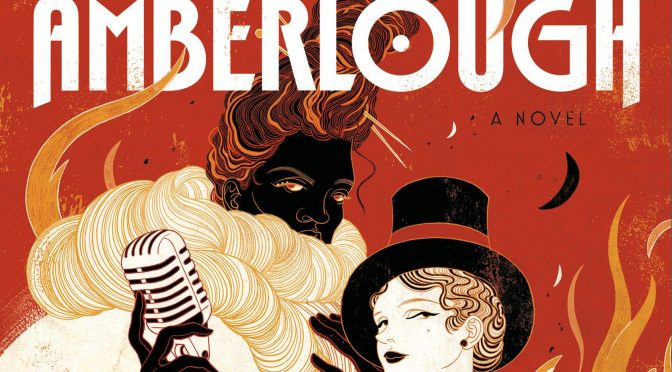
 Amberlough is a brilliantly inventive and gorgeously accomplished first novel for Lara Elena Donnelly, who manages to both test the limits of the fantasy genre and craft a whip smart and timely political thriller at the same time. Comparisons to Cabaret and Le Carré are accurate enough (and certainly intriguing enough for marketing reasons), though I always think we do a disservice to fresh, original work by using such comparisons to shape reader expectations. Amberlough is a fine novel on its own merits, full of bold world building, great characters, big ideas and a thoughtfully bittersweet ending.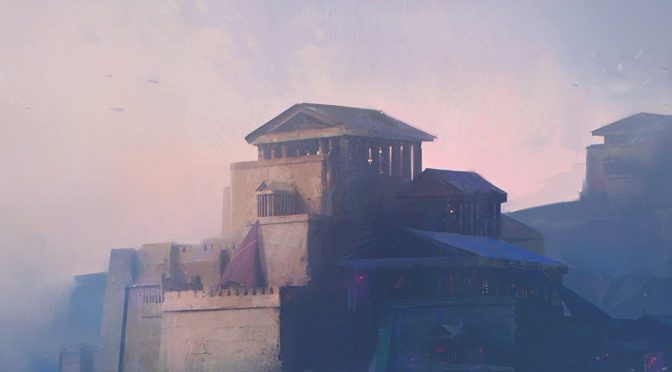
 Ada Palmer’s Too Like the Lightning was one of my favorite novels of 2016, and it was certainly among the year’s most unusual and ambitiously daring pieces of speculative fiction. Nevertheless, it felt a little unfinished, and anyone who loved it has no doubt been waiting with bated breath for the sequel that seemed necessary to complete what Too Like the Lightning started. Seven Surrenders is everything I thought/hoped it would be, with a vivid setting, intricate plot, high level philosophical and political ponderings and fascinating cast of characters, a truly worthy sequel to its brilliant predecessor and a powerfully compelling introduction to the conflict to come in the next book in the series.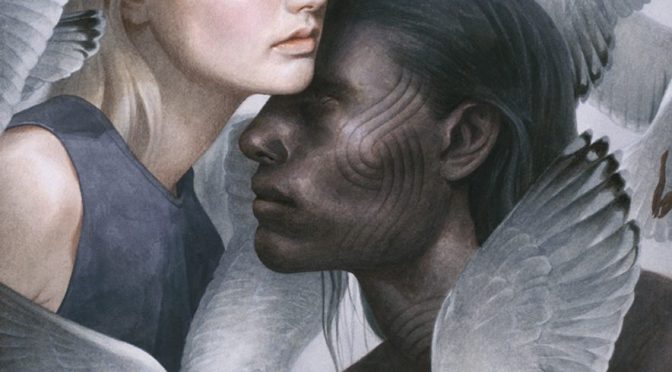
 So, I read Miranda and Caliban because I love Shakespeare and had never gotten around to reading any of Jacqueline Carey’s other work. I also read two other Tempest-based stories last year (Margaret Atwood’s Hag-Seed and Foz Meadows’ Coral Bones—both excellent) and thought it would be interesting to compare this one to the others. For what it’s worth, Miranda and Caliban is beautifully written, well-structured and readable, but the question I kept coming back to the longer I read it was “Is it necessary?” Sadly, I don’t think it is. I don’t regret having read it, but I also wouldn’t say that it deepened my understanding of The Tempest, Shakespeare or their themes, and what insight it gave me into the author’s understanding of these things didn’t impress.
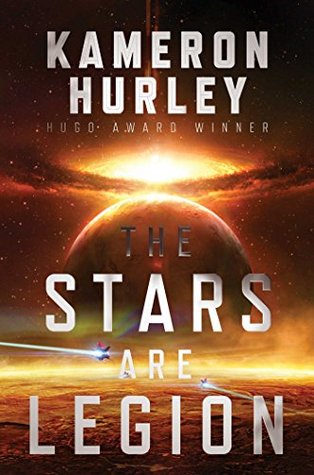 The Stars Are Legion is almost certainly the sunniest novel Kameron Hurley has ever written, which was a pleasant surprise. At the same time, it’s still very recognizably a Kameron Hurley novel, with its badass women, moral ambiguity, and copious grossness. It might be the most ambitious Hurley novel to date, at least thematically; it’s a smart, quick read; and it’s full of the inventive worldbuilding that Hurley is best known for. That it’s a standalone novel rather than the first in yet another new series that I’d have to follow for several years is just icing on the cake.
 Six Wakes is a smart, fresh, fast-paced whodunit. With clones. In space. The story starts with six clones waking up in a bloody mess and all of them with no memories of the last twenty-five or so years of their lives as the skeleton crew of a generation ship. The rest of the book alternates between the crew’s present day investigations to out what happened to them and flashbacks that show their history and allow the reader to slowly put the pieces of the puzzles together. It’s a clever construction that makes world building and character development equal priorities while never sacrificing entertainment value or readability. Mur Lafferty delivers diverse and compelling characters, a great series of twists and turns, and a satisfying conclusion with space for a sequel or simply for other books in the same setting. Which I will certainly read if they are forthcoming.
 Thoraiya Dyer’s Crossroads of Canopy was one of my most anticipated debut novels of 2017, and I’m pleased to report that it did not disappoint. Crossroads is a truly tremendous book, full of fantastically original worldbuilding, fascinating mythology, and a cast of compelling characters led by one of my favorite fantasy heroines in a very long time. It’s a gorgeously magical and delightfully challenging novel that only gets lusher and more incredible the longer you read it.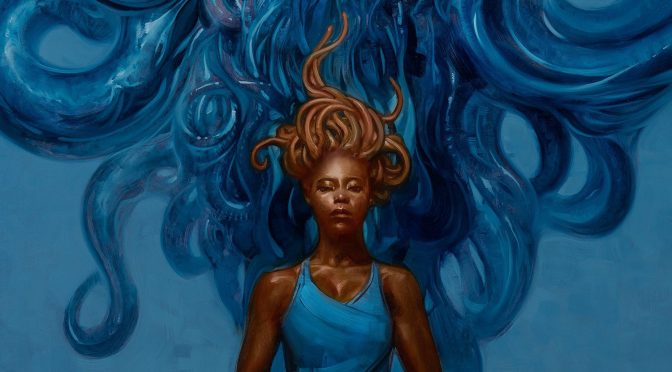
 I didn’t love Binti when I read it in 2015, in spite of having loved everything else I’d read by Nnedi Okorafor up to that point. It was on the short side for a novella, and I’d recently read Okorafor’s absolutely superb Lagoon, which set the bar high for Binti. There were things I loved about it, but I was definitely in the minority of readers who didn’t consider it one of the top novellas of the year, so I wasn’t sure how I would like Binti: Home. This book is about twice as long as its predecessor and addresses many of the things I considered shortcomings in Binti, though it does end on a particularly unsatisfying near-cliffhanger made even worse by the lack of release date for the planned third book that will complete the series.
 Lady Castle is, for me, the first must-read comic of 2017. I don’t read a ton of comics, to be honest, and I’m pretty choosy about what I spend my time and money on, usually going for limited projects with women writers and artists and steering clear of superhero stuff. I’ve also, in recent years begun avoiding any of the trite ’90s-esque girl power stuff being put out by a certain breed of right on self-identified feminist white dudes, which has sadly left me with a medieval fantasy adventure comic-shaped hole in my life. Long story short, Lady Castle is exactly the comic that I’ve been yearning for over the last several years. It’s perfect and I love it and you should be reading it right now if you haven’t already.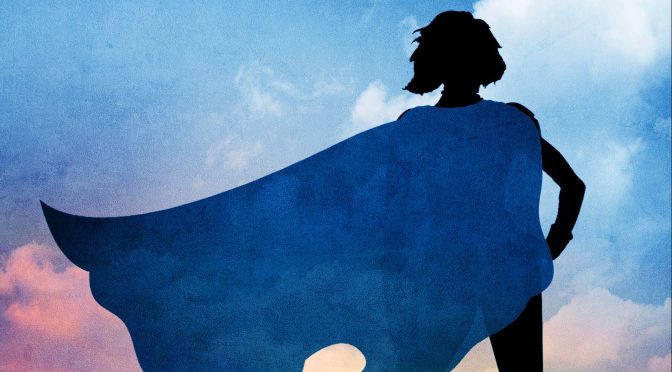
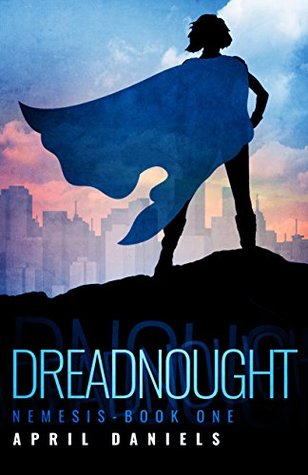 I love that Dreadnought is a thing that exists in the world more than I actually enjoyed reading the book, though I did rather like it. It’s being marketed as great for fans of last year’s The Heroine Complex and Not Your Sidekick, and both of those were titles that I just never did quite manage to get around to reading, mostly because I’m not super into super hero stories. Like these other books, Dreadnought centers around an unconventional protagonist, in this case a fifteen-year-old closeted trans girl named Danny who has to quickly come to terms with her identity when she is unexpectedly gifted with both superpowers and the body she’s always known she should have. Danny is a smart, plucky, relatable heroine who I expect will be an education for some readers and a much-needed bit of representation for others. Nonetheless, Dreadnought is a book that I read with the constant awareness that it wasn’t for me. Danny’s story of self-discovery and actualization is one that will be compelling for any reader, but I imagine it will resonate most deeply with readers who share more of Danny’s experiences as a trans girl.
 SF Bluestocking