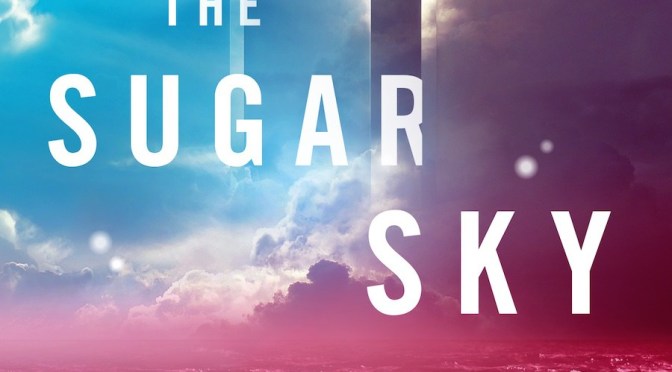
 So, I’ve finally figured out what it is about Seanan McGuire’s Wayward Children that prevents me from really loving these books the way so many other people do. I just, on a fundamental level, don’t find the fantasy of this series to be an appealing one. I’m slightly distrustful of anything, in general, that smacks of radical individualism, so I’m just not especially taken with the idea that some people are just too special and different for the world they’re born into and must travel to an entirely different world to achieve self-actualization and fulfillment, with the finding and keeping of that world as their personal happy ending. It’s fine. I get it. I think I would have loved this stuff when I was a teenager. In my mid-thirties, however, I struggle with some of the broader implications of it, which impacts my overall enjoyment of the story. I don’t begrudge anyone else the escapist fantasy of a better world of their very own, but my own fantasies at this point in my life are less escapist and more about making this world a better, kinder and more just place for everyone.
All that said, Beneath the Sugar Sky is by far my favorite installment of the Wayward Children to date. Though the series may not, generally, be my cup of tea, there’s a lot to like about this volume, which both delves a bit deeper into the overall mythology of the series and gives the universe of the Wayward Children a welcome infusion of lightness after two installments that were decidedly darker in tone. Without losing any of the series characteristic gravitas and utilizing a refreshingly straightforward fantasy quest narrative, McGuire uses Beneath the Sugar Sky to explore a Nonsense world, Confection, that’s been built, layer after layer after layer, out of baked goods. It’s an altogether more purposeful-feeling story than either of the previous two books in the series, and that includes a stronger and more satisfying ending than its predecessors as well.
The book starts off by introducing a new point of view character, Cora, who has just recently arrived at Eleanor West’s school after a stint as a mermaid. She’s a likeable and engaging character, but she’s sadly not given much to do once Rini arrives and the quest kicks in to gear. If there’s any major craft problem with this novella it’s simply that there are too many point of view characters and none of them ever quite feel like main characters. At the same time, though, this ensemble quality is one of the things I enjoyed most about Beneath the Sugar Sky, as it works to offset the strong messaging about the importance of individuals and the value of individual identities and personal journeys to self-actualization. I would have liked more of Cora, mostly because I really, really like Cora, but I wouldn’t want to sacrifice a minute of time the book spends with Kade or Rini or Nadya, either.
The quest narrative and Nonsense setting makes this the most purely fantastical of the Wayward Children books yet, and it leaves behind almost entirely the mystery of Every Heart a Doorway and the Gothic-toned family drama of Down Among the Sticks and Bones. While Every Heart primarily dealt with the fallout after children are expelled from their worlds and Sticks and Bones delved into one of the doorway worlds, Beneath the Sugar Sky offers a full-on epic journey as Rini and her new friends search for the pieces of her mother, Sumi, and try to find a way to put her back together again before Rini is erased from existence. Straightforward as this quest may be, there’s still plenty of room for creative flourishes, twists and turns, and a couple of genuine surprises that let us know that McGuire isn’t sticking strictly to any storytelling formula. The worldbuilding is as at least as inventive as in the previous two books of the series, and there’s a delightfully joyous tone in McGuire’s descriptions of Confection that makes the chapters set there (and that’s most of them) great fun to read.
So, Beneath the Sugar Sky is fine. I’m still not sold on the whole premise of this series as a desirable fantasy, but I think that’s just me being curmudgeonly. Certainly, after this book, it’s started to grow on me a bit more. I like that this book is a standalone, albeit to a lesser degree than either of the first two as it deals with events from the first book in particular. Still, I’ll be recommending it to some of my similarly curmudgeonly acquaintances who weren’t enchanted by Every Heart, and I’m somewhat more excited to see what Seanan McGuire does next in this universe, especially if it involves more of Cora.
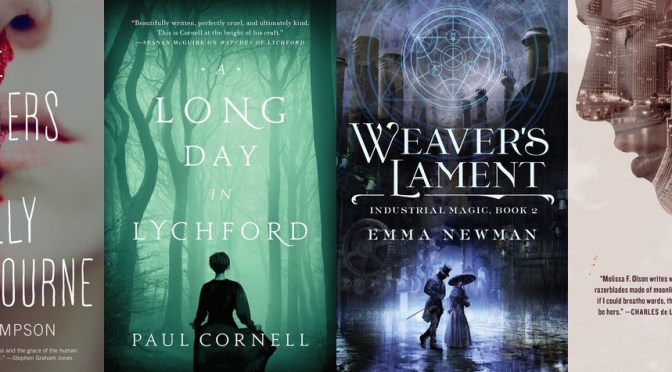
 The Murders of Molly Southbourne
 A Long Day in Lychford
 Weaver’s Lament
 Switchback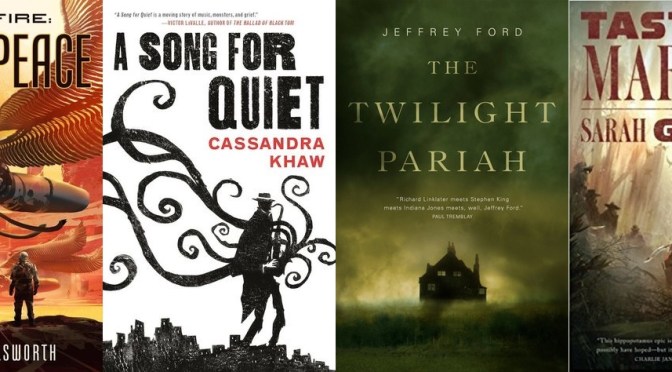
 Starfire: A Red Peace
 A Song for Quiet
 The Twilight Pariah
 Taste of Marrow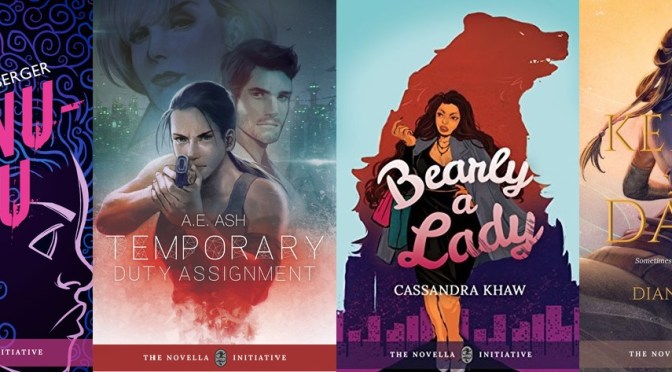
 With just eleven days left on the
  About Keeper of the Dawn, I said that it “combines a smartly plotted adventure with a sweetly written romance in a richly imagined fantasy world,” though I did find it a little overstuffed with plot; it could easily have been a full-length novel, but it was nonetheless an enjoyable read. I didn’t write much about Reenu-You, partly because it dealt with race issues that I (as a white woman) didn’t feel equal to discussing or criticizing in any depth. However, it’s a story that still, months later, has stuck with me. Michele Tracy Berger’s take on corporate malfeasance and the importance solidarity and sisterhood is powerful and timely (and, frankly, likely to be more so in the years to come).
 The first Book Smugglers novella of the summer was Cassandra Khaw’s Bearly a Lady, which is without a doubt the best (or at least my personal favorite) of their releases to date. It’s certainly the most polished of the series so far, largely absent some of the copy-editing issues that plagued (albeit very minorly–I’m just nit-picky) the first couple books. The thing about Bearly a Lady, however, is that it’s simply a great deal of fun, a smart, silly, sexy romp that was exactly what I wanted to read at the time, and I am very hopeful that Khaw will write more stories about Zelda the werebear and her friends. The book is also well worth picking up for Khaw’s essay on
  The most recent Book Smugglers novella is Temporary Duty Assignment by A.E. Ash. Temporary Duty Assignment walks an interesting middle ground between Reenu-You‘s story of people injured an evil corporation and Bearly a Lady‘s light-hearted romance. The sci-fi elements of the book are thoughtful, but it’s the characters that take center stage. Super soldier Sam and scientist Caleb are both delightful, and it’s easy to root for them, both separately and together in this second chance romance. I could have gone for a bit more romance, personally, though I liked that what romance there was, while not without problems, wasn’t especially fraught or complicated. It’s always clear and easy to understand why Sam and Caleb want to be together, and their problems have been ones of timing rather than incompatibility or mistreatment of each other. All in all, Temporary Duty Assignment is a sweet, clever sci-fi romance that’s well worth reading, but if you aren’t sure and want a small taste before diving into the novella,
 The Ghost Line
 The Lamb Will Slaughter the Lion
 Acadie
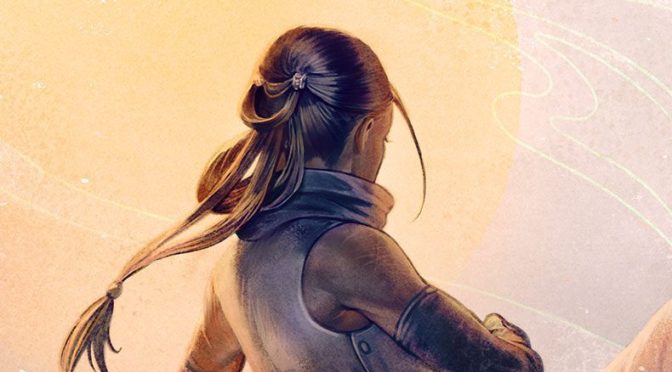
 Dianna Gunn’s Keeper of the Dawn combines a smartly plotted adventure with a sweetly written romance in a richly imagined fantasy world with plenty of space for more stories if the author chooses to return to it. Unfortunately, it’s all a bit much for a novella-length work. It’s a little overstuffed, and the sequence of events, while well-considered, has a tendency to read like a run-on sentence of “and then this happened and then this happened” and so on; all characters aside from the protagonist are underdeveloped, sometimes to the point of being cardboard; and the denouement could have used good deal more space to breathe. Still, there’s a lot to like about Keeper of the Dawn, and there aren’t so many YA lesbian romances featuring asexual heroines that it’s not still important representation despite its flaws—especially when the biggest flaw is simply that the story could have used another hundred pages or so to address its shortcomings.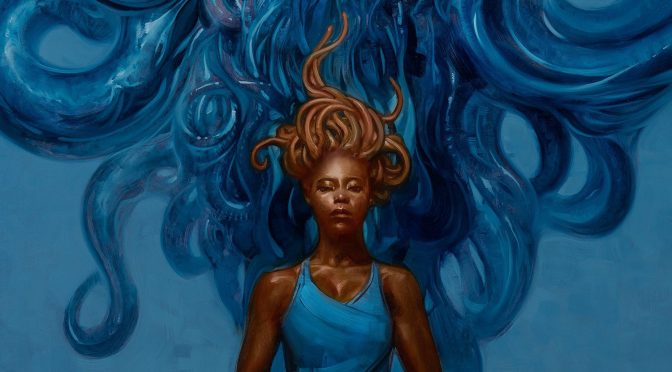
 I didn’t love Binti when I read it in 2015, in spite of having loved everything else I’d read by Nnedi Okorafor up to that point. It was on the short side for a novella, and I’d recently read Okorafor’s absolutely superb Lagoon, which set the bar high for Binti. There were things I loved about it, but I was definitely in the minority of readers who didn’t consider it one of the top novellas of the year, so I wasn’t sure how I would like Binti: Home. This book is about twice as long as its predecessor and addresses many of the things I considered shortcomings in Binti, though it does end on a particularly unsatisfying near-cliffhanger made even worse by the lack of release date for the planned third book that will complete the series.
 Passing Strange is an absolutely magical story and by far my favorite thing I’ve read so far in 2017. In this gorgeously imagined romance, Ellen Klages brings the queer side of 1940s San Francisco to glittering life and peoples it with characters who are fresh and interesting and yet still feel like the kind of old friends one wants to visit with over and over again. It’s a book that works precisely because of the specificity of its characters and its setting in time and space, and Klages does a great job of balancing the reality of history with the light fantasy elements she introduces over the course of her story. It’s still early in the year, but I fully expect Passing Strange to make a lot of year’s best lists, my own included.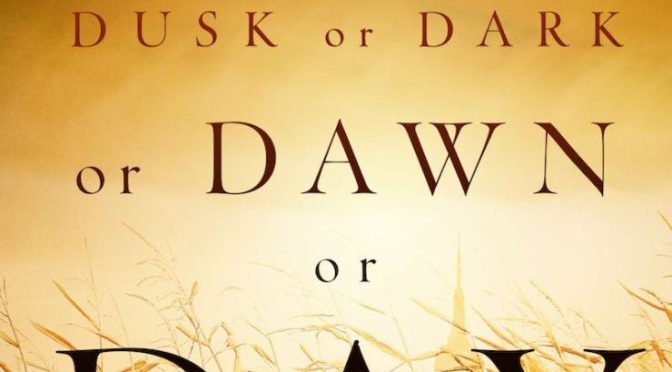
 It’s early enough in the year that I don’t have much to compare it to yet, but I feel confident in saying that Dusk or Dark or Dawn or Day is one of the year’s great novella-length works. It’s smartly written, well-paced, has a compelling cast of characters and an original mythology, and is altogether compulsively readable. It’s perfect reading for a cold day or a rainy afternoon, exactly the sort of thing that is easy to zip through in a single sitting like I did.
 Coral Bones by Foz Meadows
 Buy Lustlocked.
 Spiderlight by Adrian Tchaikovsky
 The Convergence of Fairy Tales by Octavia Cade
 Poison or Protect and Romancing the Inventor by Gail Carriger
 The Raven and the Reindeer by T. Kingfisher (Ursula Vernon)
 SF Bluestocking