Category Archives: Fantasy

Book Review: A Criminal Magic by Lee Kelly

A Criminal Magic is a weird book. To begin with, it was a slow starter for me, as neither of the point of view characters—Joan and Alex—really grabbed my attention until two or three chapters in for each. Once I got into it, though, I kind of loved it, in spite of some rather glaring flaws. This isn’t a great book, but it’s highly readable and very entertaining with a boldly non-normative ending that establishes Lee Kelly as a talented author willing to take significant risks.

Hands down the best aspect of A Criminal Magic is the magic itself. Kelly describes her characters’ magic beautifully, using wonderfully evocative language that creates clear pictures for the reader, which works really well to give the magical setting an immersive quality. When a key aspect of your novel is dealing with the effects of a magical drug on individuals, families, and society, you really have to sell the idea, and Kelly absolutely nails it. The experience of sorcerer’s shine and the magic shows put on by Joan and the other sorcerers is addictive to just read about, and it’s easy to believe in the world of the book, even if Kelly does focus on just a very small part of it.

The small scope of the story can be seen as a weakness, but Kelly seems to know just how to make the most of her small cast of characters, limited geography, and very few physical settings. There’s a single-mindedness to the storytelling in A Criminal Magic that almost forces the reader to stay focused on its action. It’s not a marvel of worldbuilding, and if you think too much about things it’s easy to come up with dozens of unanswered questions about how the world of the book works. Still, Kelly consistently gives all the information one needs to understand the story she’s telling, and when she does offer glimpses of the broader world outside of what we’re more explicitly shown in the novel, those glimpses are tantalizing and suggest that the author has definitely thought through much more of her world than we are seeing. This can be frustrating at times, but not too unpleasantly so.

The novel’s characters aren’t nearly so well-drawn as its setting, but there’s still quite a lot to like about them. Joan has a nice complexity to her, and I found myself charmed by her slight inclination to amorality, but I would have loved her to be more of a force of nature in the lives of others. With the exception of Alex, who basically falls for her at first sight, it didn’t always feel as if Joan made much of an impression at all on those around her. Alex is fine, though Kelly adheres a little too much for stock romantic hero tropes in writing him which makes him a little dull at times. The romance between Joan and Alex is both shallow and somewhat overwrought, and their dialogue is often hackneyed and unrealistic. There’s very little explanation for why these two characters fell so deeply in love so quickly other than that they are both beautiful—they each spend too much time thinking about how hot the other one is—and they both are sorcerers. Also, the story seems to demand a romance between them, so it happens.

The secondary and tertiary characters often feel inconsequential and are sadly unmemorable, mostly also falling into stock character archetypes. Even the villains are fairly one-dimensional. The characters who aren’t Joan or Alex also have a tendency to only exist at all when they are necessary to the plot or when it’s convenient for Joan or Alex to have feelings about them. Some of this is surely a feature-not-a-bug of the alternating first person point of view. With Alex and Joan each telling their own story, and both of them being somewhat self-centered people, the other characters are bound to fade into the background. Unfortunately, this means that characters like Joan’s family, Joan’s friend Grace, and Alex’s contact in the Prohibition Unit are more like plot devices than anything else. Joan’s relationship with Grace is particularly disappointing in this regard. It’s not uncommon for women in romance novels to not have close female friends, and it seems early on that Grace and Joan’s friendship is going to be important, but Grace barely appears in the second half of the book and the good groundwork laid early on for their friendship never does quite pay off.

While I haven’t seen it mentioned that much in reviews, it seems to me that the ending of A Criminal Magic ought to be the most polarizing aspect of the book for a lot of readers. I can’t decide if it’s a genius upending of conventions that sensibly rejects the pat ending of an ordinary romance novel or if it’s just bizarre to have the novel’s heroine metamorphose into a straight up femme fatale practically out of nowhere because I’m, frankly, not at all certain that Joan’s decision was earned. Sure, it was surprising, but not in an altogether good way. It’s a feminist statement, of sorts, but it’s a slightly garbled one. It’s a brave and unusual ending, but it feels oddly tacked on, coming at the end of a book that, while original, doesn’t exactly break a lot of new ground. Regardless, though, it’s thought-provoking, and the fact that I’m still thinking about it weeks after finishing the book says something about its power. I’m just not entirely sure what that something is.
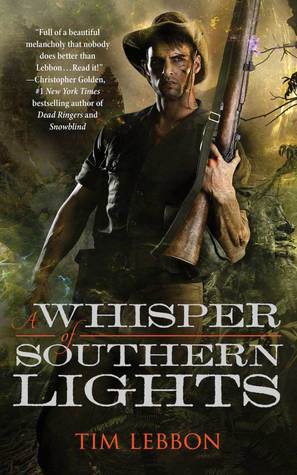
Book Review: A Whisper of Southern Lights by Tim Lebbon

A Whisper of Southern Lights is the second novella I’ve read by Tim Lebbon, and it’s probably the last. I didn’t care much for Pieces of Hate a couple of months ago, or that book’s bonus novelette “Deadman’s Hand,” but I thought I would check this one out nonetheless. Generally Tor.com’s novellas are of good quality, and I thought that perhaps I just needed to give Lebbon’s Assassin Series a second try. Unfortunately, I liked this entry of the series even less than the previous installment.
The basic plot of this series is that this guy, Gabriel, is an ordinary man whose wife and children were murdered by a demon, Temple, after which Gabriel is made immortal and set to hunt Temple across time and continents. Over hundreds of years, the two immortal enemies meet and fight several times, but neither comes out ahead, and there doesn’t seem to be any actual purpose to their struggle. Indeed, when Gabriel and Temple do brush up against regular mortals, it tends to be fatal one way or another.

In A Whisper of Southern Lights, Gabriel is hunting for Temple in the chaos of the Second World War. He finds him in Singapore, where both of them are working to discover some knowledge possessed by a soldier who is being kept by the Japanese as a prisoner of war. However, for all that this sounds as if there would be some specificity to the tale, everything about this book is vague and generic. Even the racial slurs and the venom with which the soldier character thinks about the Japanese are entirely boring because it’s so obviously exactly the sort of thing I feel ought to be expected from this series as it moves into this setting. Gabriel continues to be a completely non-descript character, and Temple is still a caricature of evil. The man with the snake in his eye is as mysterious as ever, and the mythology of Gabriel, Temple, and their eternal struggle is still murky and ill-defined.

Worst of all, though, is that there’s very little reason to care about any of the characters at all. Even the soldier who is a temporary point of view character isn’t very likeable. He’s a random sort of fellow, not highly educated or a deep thinker, and without any particular virtue to make us root for his continued survival except that he is human, while Temple is not and even Gabriel is something else by now. It does seem unfair that some random guy would get caught up in their conflict, but with no real sense of what the conflict is even about and little enough to like about any of the characters, it’s hard to get invested in the events of the novella.

It seems as the Tim Lebbon wants to convey something deep and profound about the nature of war or of good and evil or humanity or something, but it’s hard to convey much of anything if you can’t string together a coherent story and make readers care about it. Your mileage may vary, but I’m getting off this ride before I waste any more of my time on waiting for it to come to some kind of point.

This review is based upon a copy received from the publisher through NetGalley.

A Whisper of Southern Lights will be released on May 10, 2016. 

Book Review: Sister Light, Sister Dark by Jane Yolen

Somehow, I’ve never gotten around to reading much by Jane Yolen, so I was excited to see this title pop up on NetGalley prior to its rerelease (with new and striking cover art) as an ebook. Sadly, it was just okay. First published in 1988, Sister Light, Sister Dark has aged fairly well, all things considered, but like many feminist fantasy works of the ‘80s, it tends towards second-wave gender essentialism and a sort of pseudo-pagan sensibility. There’s nothing particularly offensive or terribly problematic about it, really, but it’s a subgenre that has just been done to death and has a definite sameness to similar work that will almost certainly make it feel dated and derivative to modern readers. It’s also a book that has some definite love-it-or-hate-it qualities.

The most obviously polarizing aspect of the book happens to also be pretty much its central conceit. It’s not just a straightforward story. Instead, it’s told in a mix of ways—with section headings like History, Myth, Legend, and Parable—so that it’s almost an epistolary novel. I loved this, myself, and thought that it worked well to provide multiple avenues for involving the main story’s themes as well as adding a meta dimension through which to explore bigger ideas about history, storytelling and mythmaking. There are times where parts of the story are repeated, however, and moments where the musings and speculations of the imagined historians are tiresome. If you enjoy the conceit and “get it” it’s nicely done, but if you prefer to just read the main narrative with no interruptions you might resent the breaks in the tale and the shifting perspectives on the story.

Though I in general like the multimedia-ish formatting of the story, I could have done without the Song parts. For some reason, lots of fantasy authors fancy themselves poets as well, and the truth is that they mostly ought to just stay in their lane. I know that poetry is a common feature of fantasy of this book’s age, but it’s just never very good and the poetry here is no different. It’s sophomoric at best and distracts from rather than adds to the story.

Perhaps one of the biggest draws for feminist readers may be that this is a novel that is full of female characters. It’s even touted in the marketing copy that it’s a world with no men, though this isn’t strictly true. There are plenty of men; it’s just the rather narrow world of the main protagonists that is made up of villages of matriarchal, mother-worshipping women. Unfortunately, Jane Yolen doesn’t actually have all that much to really say about gender. Her women-only towns have a more or less utopian maiden-mother-crone hierarchy that isn’t very compelling, and the patriarchal cities and armies that they encounter are, frankly, just too expected to be at all interesting.

Even the individual characters are just alright. Jenna is a pretty archetypal Chosen One, which means that her backstory is the most interesting thing about her. Though the book is largely about looking at what it means for a girl to grow up with the weight of her community’s expectations, fears and doubts on her, the examination of these themes through Jenna’s character is ultimately shallow. By the end of the book, Jenna seems to have conformed to or lived up to the prophecy that she’s supposed to be the fulfillment of, but the story as told in this book stops short of her actually doing anything very momentous.

Jenna’s relationships with others are as one-dimensional as she is. She has no mother, being thrice-orphaned, and her relationships with mother figures aren’t very important. Her friendship with Pynt is a significant part of the story, but both girls are immature and selfish to start with and the relationship is easily dumped towards the end of the story in favor of the suggestion of Jenna having a romance and a grand destiny in the future instead—not to mention that Pynt is essentially replaced when Jenna calls forth her dark sister, Skada. Her antagonistic relationship with the head priestess of her village has potential, but the priestess is more a caricature of petty small-mindedness than anything else.

Perhaps the most frustrating aspect of the book for me, however, is this whole dark sister concept. I want to love the idea, but it just didn’t work for me, mostly because it’s talked up through the whole book but when Jenna actually gets her sister nothing much happens. Instead, Skada is just sort of there, without anything of importance to do. I fully expected the dark sister thing to be a way of exploring the characters’ dual natures or of personifying the idea that people are often of two minds about things, but that’s not the case. It ends up just being a piece of window dressing that is never utilized to its full potential, which is a shame.

All the same, I think I would have loved this if I’d found it twenty years ago. Today, though, it just doesn’t hold up that well, even if the new cover art is gorgeous.

This review was based upon a free copy of the title received from the publisher through NetGalley.

Book Review: Every Heart a Doorway by Seanan McGuire

Every Heart a Doorway is a sort of interesting twin to The Girl Who Raced Fairyland All the Way Home, which I reviewed yesterday. In many ways, they are very similar books, both being fairly sophisticated examinations of the children’s portal fantasy genre, but Seanan McGuire’s novella of course has sharper edges and a more nuanced message than Catherynne M. Valente’s middle grade masterpiece. Like Valente’s series, however, Every Heart a Doorway is a book that is absolutely necessary for its audience, which I would say is primarily teens and young adults, but ought to include basically everyone. It’s a book that many people will identify with, and those who don’t see themselves in its pages could probably stand to learn a few things from it.
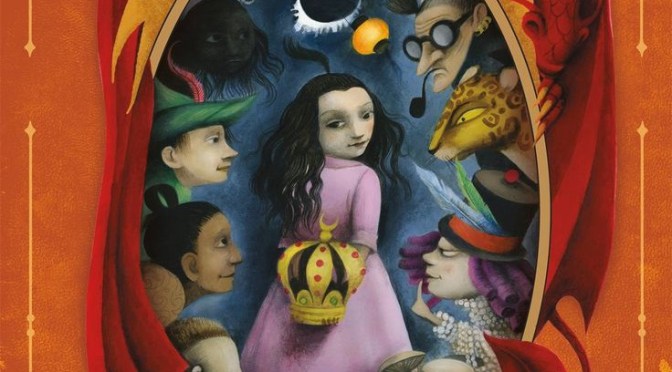
While Valente offers her heroine the opportunity to stay in the world she has found a home in, McGuire turns her eye to the young people who don’t get to stay. Eleanor West is one such child, and she runs a boarding school for as many others like herself that she can collect. It’s here that main protagonist Nancy finds herself when she’s sent home from an underworld that she loved because the Lord of Death wanted her to be sure before she committed to staying forever. At Eleanor’s school, Nancy meets other young people like herself and learns more about the different possible worlds while she waits and hopes for her door to reappear. Most of all, Nancy learns that most people never do find their door again, and much of the book is dedicated to exploring the different ways in which Nancy and the other characters are dealing with this reality.

Whereas Valente’s Fairyland ultimately delivers a fantasy in which one can find harmony and unity by integrating different aspects of oneself and changing one’s world to suit, McGuire offers a very different solution to problems of belonging, predicated on the sad truth that sometimes, if we can’t change the world we live in, we have to leave it behind. It’s a bittersweet lesson, and it comes at a steep price, but it also comes with the assurance that it’s okay to leave. In some ways, it’s the ultimate “it gets better” message, but what McGuire gives us in Every Heart a Doorway is something much deeper and more nuanced than that platitude. For Nancy and her friends, things don’t always get better or easier, but they nonetheless have the strength to find joy and meaning in their lives regardless.

Every Heart a Doorway is a book about making the best of things, but it’s also a book about not being afraid to take chances and not feeling guilty about doing what is best for yourself. It encourages a sort of healthy selfishness that more people—specifically marginalized people, who are often expected to be absurdly self-sacrificing—ought to cultivate. There are no martyrs here. There are tragedies, but not inevitable ones, and the overall message is one of hope, though a much more complicated and ambiguous sort of hope than in Valente’s series. This is an altogether more grown-up book, and in all the best possible ways.

This review was based upon a copy of the book received from the publisher for review through NetGalley.

Book Review: The Girl Who Raced Fairyland All the Way Home by Catherynne M. Valente

Catherynne M. Valente’s first Fairyland book, The Girl Who Circumnavigated Fairyland in a Ship of Her Own Making, established this series from the very start as a superbly written and sublimely beautiful story for children, and The Girl Who Raced Fairyland All the Way Home is a totally fitting conclusion to the story of September and her friends. It would perhaps be too much to ask for every installment of the series to be as good as the first one, and the fourth one (The Boy Who Lost Fairyland) stood out as decidedly different from the rest. Still, it did help to set up this finale, which is every bit as good—and even a little more polished—as the rest of the series.
As with all of Valente’s previous Fairyland books, The Girl Who Raced Fairyland All the Way Home is both remarkably beautiful and remarkably fun to read. Having started off reading these books to my daughter as bedtime stories before she got too grown up to let me do it (and I’m convinced the only reason I got to keep reading to her until past her eleventh birthday was this series), I always suggest that those who can read the book aloud to the nearest child in their life, and that’s as true of the last volume of the series as it was of the first. Valente’s way with words only gets more refined with every novel she produces, and her gift for gorgeous near nonsense is on full display here.

Spoilers below this sentence. Continue reading Book Review: The Girl Who Raced Fairyland All the Way Home by Catherynne M. Valente

Let’s Read! Up and Coming: Part 12

Reading Up and Coming, even though I feel like it’s been a frantic and sometimes frustrating pace, has been totally worth it. This final group of authors has produced some of my favorite stories in the collection, and made for an altogether pleasant last day of reading.

Nicolas Wilson

Nicolas Wilson starts things off with “Trials,” which I mostly liked very well. It’s a very Star Trek-ish novelette with some fascinating aliens and a mostly compelling plot in which a man travels to a dangerous ice planet and has to negotiate a treaty with the people there. Though it’s somewhat (if not entirely) corrected by the ending of the story, the only serious issue I had with “Trials” was the narrator’s motivation being “earning” a woman’s love so he could steal her away from someone else. It’s not romantic or interesting; it’s infantilizing and unattractively obsessive, and that he transfers his affections so easily to the alien woman he meets only serves to reinforce that the narrator sees women as interchangeable objects rather than as people with agency of their own.

Wilson follows this up with “Multiply,” a cute piece of odd couple romantic comedy about a pair of AIs traveling together. It’s not bad, but it’s a fairly pedestrian premise with an execution that doesn’t really rise above workmanlike. I chuckled a couple of times, but the banter between the characters became grating about halfway through the story.

Alyssa Wong

I read and loved Alyssa Wong’s “Hungry Daughters of Starving Mothers” last year when it first came out, and if anything I loved it more the second time around. It’s definitely a story with several shades of meaning and multiple layers of genius to explore. “The Fisher Queen” is a similarly marvelous story about a young woman who finds out that her mother might be a mermaid of the sort that her people usually eat as fish, and in “Santos de Sampaquitas,” a young woman must deal with a god in order to protect her family. The beauty of Alyssa Wong’s language makes all three of these stories compulsively readable and highly enjoyable without distracting from the richness of her settings and the resonance of the themes she explores. Going into this project, Alyssa Wong was one of the writers I was almost certain I would nominate for the Campbell, on the strength of “Hungry Daughters of Starving Mothers” alone, and her other stories here only made me more sure of that choice.

Eleanor R. Wood

“Fibonacci” has an interesting structure and a lovely cadence to its storytelling, but very little plot and not much in particular to say about its subject matter. Still, I liked it the best of the three stories Eleanor R. Wood offered here. “Pawprints in the Aeolian Dust” has a premise that I enjoyed at first, but it moved along so slowly and methodically that I found myself bored and losing focus about halfway through. “Daddy’s Girl,” about a woman whose father is an android in need of repairs, is fine, but nothing particularly special, and its sweetness turned cloying at the end.

Frank Wu

I wanted to love Frank Wu’s “Season of the Ants in a Timeless Land,” but it’s another story that I, sadly, just found my mind wandering throughout. The romance, such as it was, was unconvincing, and none of the characters were compelling enough to keep my attention very long. I also found the religious allusions and the mysticism of the ending off-putting.

Jeff Xilon

From Jeff Xilon come “H,” a very short stream of consciousness in which a drug is used to make soldiers into a sort of hive mind and “All of Our Days,” about a man who misses out on a chance at immortality when he takes too long enjoying having a body. Neither of these were awful, but neither one stands out as very accomplished either.

J.Y. Yang

I loved “A House of Anxious Spiders” so, so much. J.Y. Yang’s imagery of people fighting with spiders that live in their mouths and then losing their voice until a new one hatches is clever and powerful, but never cutesy, and Yang doesn’t shy away from an insightful examination of the ways in which even people who love each other can hurt each other deeply. Sook Yee’s and Kathy’s cruelties to each other will feel almost too familiar to anyone who has argued about something real with a person who knows you well. In “Temporary Saints,” a woman prepares the bodies of children who were briefly able to perform miracles, and “Song of the Krakenmaid” finds a woman dealing with an interesting cryptid and a cheating girlfriend.

Honestly, I’m not sure how I’ve never come across any of J.Y. Yang’s stories before since they are relevant to basically all of my interests, but you can be sure I’ll be keeping an eye out for them in the future.

Isabel Yap

I didn’t love “Milagroso” in spite of its interesting ideas, and “Good Girls” was at times actually unappealing to me, but I love “The Oiran’s Song” passionately. It’s brutal and sad, but it’s also remarkably beautifully written, and Isabel Yap has a distinctive voice that I look forward to reading more of.

Jo Zebedee

I read just enough of this excerpt from Inish Carraig to send me over to Goodreads to find out more about the book, which confirmed that it is not one for me. However, though it only has a few reviews, they all seem to be very positive so far. If you like post-alien invasion stories, this one might be one to pick up.

Jon F. Zeigler

On the one hand, I love an original fairy tale, and “Galen and the Golden-Coat Hare” is a well-conceived and nicely written one. On the other hand, I dislike the deeply conservative message of this one, which frames poverty as a virtue that should be preserved and justice as the upholding of a fundamentally unjust status quo. Zeigler plays with some interesting fairy tale conventions, and there’s a clever conclusion to the story, but I just can’t bring myself to consider the ending a happy one.

Anna Zumbro

I know it’s only a quirk of alphabetical chance, but I was a little disappointed that the last two stories in Up and Coming weren’t more impactful. “The Pixie Game” and “The Cur of County Road Six” are both extremely short stories about kids being kind of awful to each other, and “The Cur” is a particularly ugly.

Final Verdict:

Alyssa Wong, of course, is definitely on my Campbell ballot, but Isabel Yap and J.Y. Yang are strong contenders for the couple of slots that I still haven’t sorted out yet.

Let’s Read! Up and Coming: Part 11

Second group of authors of the day!

Joseph Tomaras

I actually have no idea where to start with any substantial analysis or review of Joseph Tomaras’s work. All I can say is that, without being an expert on critical theory and being white myself, it seems as if Tomaras chooses to write about a lot of experiences that aren’t his in a way that seems appropriative and voyeuristic. “Bonfires in Anacostia” was fine, if somewhat pessimistic, but “Thirty-Eight Observations on the Nature of the Self” asks the reader to empathize with a pedophile, which I just don’t have it in me to do today. “The Joy of Sects” is Tomaras’s weirdest story in this collection, and follows a trans woman as she infiltrates a sex cult as part of a Marxist conspiracy to suppress religion, another thing that my splitting allergy-induced headache prevented me from entirely wrapping my head around.

Vincent Trigili

Vincent Trigili’s “The Storymaster” is a bland, derivative piece with a long, dialogue infodump for an ending, which is my least favorite type of story. There are a lot of dragon story tropes strung together here, but not in an interesting way, and the infodump at the end neatly dispelled anything like mystery or tension within the story.

P.K. Tyler

Whereas Joseph Tomaras’s work was mildly troubling, P.K. Tyler’s novelette, “Moon Dust” just made me absolutely fucking furious. It’s a truly disgusting piece of internalized misogyny that only made me feel progressively enraged the more I read. Reading about a young woman being kidnapped, raped, impregnated, escaped, punished by her family and society, and then being expected to read her decision to keep and love the baby that is a product of her rape as a positive, edifying thing, made me want to vomit. That P.K. Tyler went to some lengths to frame Nilafay’s rape as consensual sex is just the cherry on top of this sundae of awfulness. I skipped Tyler’s second story altogether.

Tamara Vardomskaya

Both “The Metamorphoses of Narcissus” and “Acrobat Duality” were technically excellent stories that I just didn’t care for. “Acrobatic Duality” was somewhat the better of the two, but most of what turned me off was the author’s seeming disdain for fine art in “The Metamorphoses of Narcissus,” which framed art as frivolous and wasteful in contrast to the main character’s work as a nurse during a war and the fulfillment she finds as a wife.

Leo Vladimirsky

I’m always surprised that late stage capitalism isn’t more fertile ground for SF authors, but I was glad to see Leo Vladimirsky making use of it as a dystopian backdrop for the story in “Collar.” Unfortunately, “Dandelion,” about a couple who don’t share the gene for immortality, doesn’t quite live up to the promise of the previous tale.

Nancy S.M. Waldman

In a group of mediocre writers, Nancy S.M. Waldman stands out as the most consistently excellent, and I loved all three of the stories that she submitted for this anthology. “ReMemories” is a little scattered in terms of what ideas it wants to focus on, but it’s a strong piece with a good amount of emotional impact, some interesting technology ideas, and a hopeful ending. “And Always, Murder” has a fantastic cast of uplifted animals who have integrated themselves into human society with varying levels of success. “Sound of Chartreuse” is a little fussy and high-mindedly intellectual to be purely enjoyable, but it’s a smart bit of family history and the ideas about synesthesia and communication could stand to have even more development. I would definitely read a book about Carinth.

Thomas M. Waldroon

“Sinseerly a Friend & Yr. Obed’t” dealt with some country-ish folks and a lake full of alien sea monsters. It might be fine for the right reader, but I found it dull and uninspired.

Jo Lindsay Walton

I expected “It’s OK to Say if You Went Back in Time and Killed Baby Hitler” to be a funnier story than it was, just based on the title. However, I wasn’t disappointed with it, and Jo Lindsay Walton’s story of competing time travel companies is clever enough to deserve its title after all.

Kim Wells

Kim Wells’s “The Book of Safkhet: Chronicler of the Journey, Mistress of the House of Books” is a very weird mashup of science fiction (space ships), fantasy (dragons), and biblical allusions that just did not work for me at all. Sometimes an unlikely mix of story influences can fuse together into something great; this time, it’s just a big old confused mess.

Alison Wilgus

“King Tide” takes us into a relatively near future in which coastal areas have flooded due to climate change and gives the reader a peek into the life of a young couple living in the aftermath of it all. It’s a quietly reflective tale that, at the same time never gets too bogged down in sentiment. Alison Wilgus follows this up with “Noise Pollution,” which is an excellent piece of world building in which music provides the magic to combat noise. I love this idea and think it’s plenty good enough to carry a much longer work, but as a short story it feels a little overstuffed and underbaked.

Final Verdict:

My favorites of this group are Leo Vladimirsky and Nancy S.M. Waldman, by far, but Alison Wilgus is also an author who I’ll be keeping an eye out for, especially if she ever decides to expand upon the ideas she put forward in “Noise Pollution.”

Let’s Read! Up and Coming: Part 10

This is only the first of two posts for today, now that I’m finally caught up on reading. I had considered doing all twenty of today’s authors in one post, but decided it would just run far too long; I think most of these posts have run in the 1.5-2k word range and I think breaking it up into groups of ten has so far worked really well. This first group of the day has some stellar pieces that stand out against a backdrop of general mediocrity.

Elsa Sjunneson-Henry

“Edge of the Unknown” is a very silly story about how the girls at a finishing school for young witches react to Arthur Conan Doyle killing off Sherlock Holmes in “The Final Problem.” I didn’t hate it, but I’m just not enough of a Sherlock Holmes fan to care that much about a story with this premise.

Daniel Arthur Smith

Daniel Arthur Smith’s first story, “The Diatomic Quantum Flop,” opens with four stoner college dudes, which I found immediately off-putting. I literally can’t think of a cast of characters whose stories could be less interesting to me, but I have a feeling this story is fine for people who can identify with its characters. Smith follows this up with “Tower,” a story that reads a bit like a disaster action film concept. The point of view character in this one is a war veteran who reads like exactly the sort of square-jawed action hero who bores me to tears just thinking about him. Again, the story itself is fine, I guess, but not at all the sort of thing I would ever pick up to read on purpose. I skipped Smith’s novella excerpt, which for some reason starts with chapter four.

Lesley Smith

Lesley Smith’s “The Soulless: A History of Zombieism in Chiitai and Mihari Culture” is an imaginative and moderately interesting meta examination of pop cultural zombie mythology. I like the idea of looking at zombies from the perspective of an entirely different and alien race, and Smith has produced a workmanlike piece that doesn’t overstay its welcome or overwork its concept.

William Squirrell

I didn’t care that much for either “Götterdämmerung” or “Fighting in the Streets of the City of Time,” though neither was particularly bad, just unmemorable. However, I adore “I am Problem Solving Astronaut: How to Write Hard SF,” a very funny—I laughed aloud more than once—piece that takes aim and fires at some of the more common hard SF tropes. It contains the wonderful line: “The future is a perfect meritocracy in which everyone is measured against the same standard: Problem Solving Astronaut.”

Dan Stout

Dan Stout’s “Outpatient” is one of my favorite kind of sci-fi stories, the kind that deal with scientific fuck-ups, and this one is a doozy that is also a nice bit of psychological horror. “The Curious Case of Alpha-7 DE11” deals with an entirely different kind of scientific fuck-up, and it’s told in a very clever fashion, as a voicemail complaint from a mad scientist who is having a problem with a golem that he purchased. What I appreciate most about this story is that it was smart and funny, but not self-consciously so. There’s very little that I dislike more than a clever story that is obsessed with its own cleverness, as it distracts from the actual story and often ruins the joke. Not so here.

Naru Dames Sundar

All of Naru Dames Sundar’s three stories are deeply powerful in their own ways. “A Revolution in Four Courses” deals with the destruction of culture in the wake of imperialism, and it ends on a bittersweet note with an act of resistance that may or may not be futile but still makes for a compelling story. Sundar’s descriptions of food are wonderfully evocative and help to bring his fantasy world to life. In “Infinite Skeins,” a bereft mother searches through numerous parallel universes for her lost daughter, unmindful of what else she might lose in the process. And “Broken-Winged Love” examines some of the often complicated feelings of a mother for a child that isn’t exactly what she expected or hoped for.

Will Swardstrom

“Uncle Allen” isn’t the worst, but it’s too short a story to have the kind of inconsistencies I noticed while reading it, and it ends with a long info-dumping piece of dialogue that reveals information that isn’t particularly hinted at or supported by the story up to that point. Will Swardstrom’s other novelette, “The Control,” is only slightly better. Bek’s long journey through history is told, not shown, and “The Control” focuses on what, to me, is one of the least interesting parts of Bek’s story.

Jeremy Szal

I rather liked Jeremy Szal’s first story, “Daega’s Test,” a very short piece about advanced AIs testing each other, but things were downhill from there. “Last Age of Kings” is a ho-hum piece of sword and sorcery about a guy with a fridged wife, and “Skin Game” has something to say about government surveillance being bad, but it doesn’t do so very memorably.

Lauren C. Teffeau

Lauren C. Teffeau’s “Forge and Fledge” is a nicely written piece about a boy born on a penal colony in space, but I couldn’t for the life of me get into “Jump Cut.” There was some kind of sci-fi motocross and lots of cyberpunk-ish implanted technology, but the story just read like the plot of some kind of straight-to-Netflix space sports flick.

Natalia Theodoridou

Along with Naru Dames Sundar, Natalia Theodoridou is my favorite of this group of writers. “The Eleven Holy Numbers of the Mechanical Soul” is a sort of castaway story that finds a man alone on a barren-seeming planet building robot animals in order to keep himself company after the death of the other people he was traveling with. “On Post-Mortem Birds” is a much shorter and significantly more fanciful story about the birds that have to be freed from the dead, and it’s lovely and charming in every way. “Android Whores Can’t Cry” is a total change of pace again, and deals with some relatively well-trod storytelling ground in a compelling way. Theodoridou’s idea of android nacre is fascinating, and it’s a wonderful symbol that she interweaves deftly throughout the narrative.

Final Verdict:

Obviously the standout writers of this bunch of Natalia Theodoridou and Naru Dames Sundar, and I’m definitely considering a Campbell nomination for Theodoridou, who is in her second and last year of eligibility. Lesley Smith, William Squirrell and Dan Stout also turned in some well-worth-reading pieces.

Let’s Read! Up and Coming: Part 9

So, the good news is that I still have time to finish this project by the end of the day on Wednesday. The bad news, of course, is that I had about a two-day-long funk last week that has put me pretty far behind where I’d intended to be by this point. This was compounded over the weekend by family obligations and the fatigue brought on by my allergies when I’m pretty sure literally every tree in my town bloomed at once. It’s pretty, and the whole town smells like flowers, but it makes me feel like I’m going to die. However, today I’ve got some non-drowsy allergy meds in me and I’m feeling productive, so I expect to get, well, not caught up, quite, but close.

I think my favorite thing about this project so far—though it makes it hard to really compare these authors to each other—has been that Up and Coming showcases an incredible number of ways of being good. There’s really no way that any reader is going to universally enjoy the stories on offer, and every group I’ve written about has been a mixed bag, but it’s always interesting.

Kelly Robson

I only read a page or two of the excerpt from The Waters of Versailles before I switched over to Some of the Best from Tor.com 2015 in order to read all of Kelly Robson’s novella. It didn’t turn out to be as superlatively excellent as I’d hoped, but it is a great read, perhaps enhanced by my having recently watched A Little Chaos, about a totally different project at Versailles, which had the setting fresh in my mind. Kelly Robson does a much better job than that film, though, of utilizing Versailles, and Sylvain de Guilherand is a much more interesting fictional character than Kate Winslet was, even if the stories do both deal with people who feel somewhat unhappy and displaced at the French court.

“The Three Resurrections of Jessica Churchill” is a weird story. It’s beautifully written and powerful, but it also includes an extremely brutal and graphic rape/murder that I wasn’t prepared for and it touches specifically on the sadly still-timely issue of the disappearance of First Nations women in Canada. On the author’s website, she does warn that the story is extremely violent, but it doesn’t seem to have been published with any kind of warning elsewhere, and I think that this is a case where a trigger warning might be necessary to give readers some advance warning.

I don’t think I quite get “Two-Year Man” as it’s a story with some weird messaging. It’s just as nicely written as the other Robson pieces included here, but the main character is very unsettling. While I finished the story, I found it to be a largely unpleasant read that left me with more questions than I like to have at the end of a short story. There’s something to be said, I suppose, for not tying everything up too neatly, but I don’t like it when I have questions about everything from world building issues to thematic concerns to character motivations.

Andy Rogers

Andy Rogers’ “The Doom of Sallee” is, I guess, a time travel story, or maybe some kind of alternate universe? It wasn’t terribly clear, and it wasn’t interesting enough for me to keep reading and rereading it to try and figure it out. I tried to read his novella, Brothers in Arms, but got about three pages into it before I couldn’t take anymore sci-fi soldier talk. That said, I don’t have anything bad to say about Andy Rogers. His work seems fine, just decidedly not for me.

Lauren M. Roy

“The Eleventh Hour” contemplates what one might do if given an hour—a literal, physical hour in this case, which is a moderately cool idea—to save the world. It’s a clever story, but not especially impactful or memorable aside from the idea of a physical representation of an hour that the main character has to decide how to spend.

Steve Ruskin

“Grand Tour” is a nicely structured piece with an interesting speculative element. Steve Ruskin’s story of a widowed artist with a magical camera lucida makes for an entertaining read, and it’s smartly bookended with complementary scenes that have unifying motifs. Séances (really, Spiritualism in general) don’t appear enough in fantasy, to be honest, and it’s good to see an author utilizing some of that history in a compelling way.

K.B. Rylander

“We Fly” by K.B. Rylander is a story with some interesting ideas, and Rylander speculates on an interesting possible dilemma related to the mind-uploading technology that she’s writing about. However, the devil is always in details, and there were some small things that I didn’t like, just casual mentions of unsettlingly authoritarian policies in the world of the story that make it feel dystopian in way that is both frightening and largely unexplored in the narrative. I did like Natasha’s gesture of resistance at the end, but I’m not sure if it matters. Then again, that could be the point. I would love to give this story to a classroom full of eighth graders and ask them what they think; it seems like a perfect story for that kind of analysis.

Hope Erica Schultz

Hope Erica Schultz leads with “Mr. Reilly’s Tattoo,” which I didn’t hate, though it was a bit too saccharine for me to truly like it. “The Princess in the Basement” is similarly sweet, and a little too heavy-handed with its messaging right at the end, but it’s a decent enough modern fairy tale.

Effie Seiberg

I vaguely remember something about the story Effie Seiberg had in Women Destroy Science Fiction! a couple of years ago, but I’m pretty sure that the three newer stories she’s included in Up and Coming are going to stick with me much longer. “Re: Little Miss Apocalypse Playset” is a story about corporate evil (and the apocalypse) told in the form of an internal email chain. It’s smart and funny, but not too precious. “Thundergod in Therapy” tells the story of a retired Zeus, and I liked it well enough that I can forgive it for not really delivering on the “in Therapy” part of its title.

The best of Seiberg’s three stories here, however, is hands down “Rocket Surgery.” Of these selections, it deals with the biggest ideas and has the most ambitious themes. It’s also the timeliest and most insightful as a piece of science fiction that can be read as a commentary on current trends in technology and society. Most importantly, when looking at Seiberg as a contender for a major award, “Rocket Surgery” works to show that the author has more range as a writer and depth as a thinker than is exhibited in her more humorous pieces. I’m not sure where Seiberg will ultimately end up when I make my final decisions on who to nominate for the Campbell Award, but “Rocket Surgery” is an early addition to my longlist for next year’s Best Short Story Hugo.

Tahmeed Shafiq

I’m very sad about the 2014 publication date for “The Djinn Who Sought to Kill the Sun.” If it had been published in 2015, it would definitely be a shoe-in for a Best Novelette Hugo nomination. It works wonderfully as a fairy tale and as a gorgeously imagined story about healing from grief and trauma by finding purpose and a way forward into the future instead of dwelling in the past. I can’t find that Tahmeed Shafiq has published anything else since this story, but if this is the quality of work he was producing at age sixteen(!), I am very excited to see what he might produce in the future.

Iona Sharma

This is the first time I’ve read anything by Iona Sharma, and I can’t believe it’s taken me so long to find her. “Archana and Chandni” is the sci-fi lesbian wedding family dramedy I never knew I desperately wanted to read. It’s seriously a kind of perfect story. I didn’t love “Alnwick” quite so much, but it’s a well-executed blend of relationship drama and hard sci-fi that manages to do all of its ideas justice, even if it doesn’t have the sheer charm that “Archana and Chandni” possesses in spades.

Anthea Sharp

“Ice in D Minor” is a beautifully melancholy (though ultimately hopeful) piece about a composer tasked with writing music that will help to cool the warming planet. “The Sun Never Sets” is a first contact story set in Victorian England, which I was predisposed to love—especially when it opened with a young woman who is an amateur astronomer. Unfortunately, the story takes a weird, imperialist turn that, in hindsight, is telegraphed by the title, and isn’t as clever or amusing as I think it is intended to be. Sadly, my overall opinion of Anthea Sharp’s work isn’t improved by her final piece, “Fae Horse,” which starts with a young woman trying to escape being burned as a witch and finishes with that young woman sacrificing her identity and humanity in order to rescue a man. It’s finely written, but I would have liked it better if Eileen didn’t get such a raw deal in the end.

Final Verdict:

Iona Sharma and Effie Seiberg are new favorites, for sure, and I was disappointed that Tahmeed Shafiq doesn’t seem to have published anything in the last two years, but the majority of authors in this group were only okay. I’m sure I’ll be happy to read some of them again if I come across them in the future, but I doubt I’ll be seeking them out particularly.

Let’s Read! Up and Coming: Part 8

I’m still struggling to get caught up to where I’d like to be with this project, but I’m also still on track to at least finish it when I originally planned. Sadly, today was not a day for stand-out stories, either bad or good, which made this section a bit of a slog to get through.

Samuel Peralta

Both of Samuel Peralta’s stories are highly conventional and rather cloyingly sweet. “Hereafter” is a time travel romance that may lean towards bittersweet, but it’s overall fairly low drama and ultimately low risk, with very little to say about time travel or the human condition. “Humanity” is interestingly put together, interweaving news clippings with the more personal story of a first responder tasked with rescuing a woman and her robot daughter from a serious car accident. It’s not bad, but the ending is expected, and the slight message doesn’t really justify the gravitas of the story’s title.

All that said, it may be that Peralta’s gifts are more focused on editing; many of the authors in this collection are ones who have had their first work published in Peralta’s ongoing series of SFF anthologies—the Future Chronicles, which is up to fourteen titles now, all available for under $6 each for the Kindle.

Andrea Phillips

Andrea Phillips’s “In Loco Parentis” is a compelling take on the future of parenting, though in a definitely “the more things change, the more they stay the same” way. Still, Phillips has imagined some interesting technology and tells a story that is firmly grounded in current trends in parenting and tech. I went ahead and read the included excerpt from Phillips’s novel, Revision, and then immediately wished I hadn’t; it’s gone straight to my to-read list, but there’s no telling at this point when I’ll get around to it, which is a bummer.

Mark Robert Philps

I didn’t expect to like this novella that much in the beginning, but “Dragonfire is Brighter That the Ten Thousand Stars” is much better than its unwieldy and moderately pretentious title lets on. The real accomplishment here, though, is in the world building. Mark Robert Philps has created a really interesting alternate history that could easily carry a whole series of longer works if he’s of a mind to write them. The plot here is relatively simple, with no particularly surprising twists, but it’s well-paced, highly readable, and overall nicely executed enough that I would be happy to read more by this author.

Monica Enderle Pierce

“Judgement” is a somewhat overlong sort of wild west fantasy, which aligns it with current trends in fiction, Monica Enderle Pierce doesn’t quite manage to pull it off here. I rather like her dragon-as-executor-of-frontier-justice idea, which is a concept I haven’t come across before, but none of the human characters were very interesting and the protagonist, Peregrine, is actively unlikeable. Furthermore, everything is tied up far too neatly at the end, with a surprise revelation of Peregrine’s conveniently useful magical abilities and a too-large infodump that tosses in several hackneyed ideas at the last minute.

Ivan Popov

“The Keresztury TVirs” is the first translated piece (from Bulgarian) in Up and Coming, but it’s unfortunately not that impressive. It’s a story about TV viruses told in the form of a review of a book about the history of their creation and usage as tools of propaganda and mind control. I suppose the story has a moderately interesting retro sensibility, but it just didn’t work for me.

Bill Powell

Due to formatting issues, I had a hard time just reading “The Punctuality Machine, or, A Steampunk Libretto.” It’s written as a short, farcical play, but half of the first word of almost every line was cut off in the epub version of the book that I’m reading on my Nook. Still, I was mostly able to muddle through, and I enjoyed Bill Powell’s clever wordplay and sense of comedic timing.

Stephen S. Power

“Stripped to Zero” is a solidly well-written and timely story about the steady creep of technology into our lives and the ways in which we’re always being watched, analyzed, and advertised to. It’s somewhat pessimistic, but not crushingly so. In “Wire Paladin,” Stephen S. Power continues to examine some of these same big ideas, but with a darkly funny twist at the end. I was glad to have read these two stories together, as they complement each other well. I didn’t like “Automatic Sky”—about a pair of somewhat star-crossed lovers—at all, but I expect your mileage may vary with it.

Rhiannon Rasmussen

I vaguely remember reading “The Hymn of Ordeal, No. 23” in Women Destroy Science Fiction, but only vaguely, and it didn’t make much more of an impression on me this time around. My love for second person point of view is well-known, but I just didn’t connect with this story the way I feel is intended. On the bright side, Rhiannon Rasmussen makes up for this by offering two more stories that I loved. “Charge! Love Heart!” is a kind of great, somewhat meta teen rom-com, and “How to Survive the Apocalypse” is a definitely great, very meta piece that pokes fun at a lot of zombie apocalypse tropes.

Chris Reher

From Chris Reher comes “The Kasant Objective,” about a crew hired to find a lost research team, only to find out that they are really being asked to aid in an alien invasion. There’s a lot going on here, and it’s frankly more than can be really effectively dealt with in a short story. The basic idea is moderately interesting, but this treatment of it was just too shallow to be good.

Ethan Reid

This excerpt from Ethan Reid’s sequel to his first novel seems fine, but I have basically negative interest in post-apocalyptic horror of this kind. For the right reader, I’m sure this is very good, but for me it’s a hard pass.

Final Verdict

Overall, today’s bunch was just average, but I do look forward to reading more in the future by Andrea Phillips and Rhiannon Rasmussen. I also think I might have to start buying some of the anthologies Samuel Peralta puts out, even if his own writing isn’t really my jam.