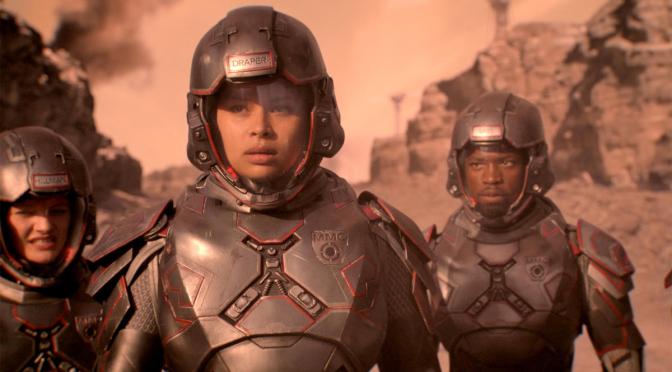
Season two of The Expanse isn’t wasting time with handholding or revisiting last season’s material, so I hope everyone has been paying attention. “Safe” is a whirlwind of fresh exposition and new character introductions that moves through the aftermath of the Eros massacre at a blistering pace to set the stage for the Battle of Thoth Station that takes place in “Doors & Corners.” It’s a good thing these two episodes were aired together because they would each have been frustrating to write about separately, one being a huge helping of infodumping mixed with survivor’s guilt and the other being dominated by the lengthy battle sequence that overshadows its first half. As a pair, these episodes work well as an introduction to the themes and conflicts of the show’s second season. Apart, not so much.
Spoilers ahead for the episodes and the first two books of the series!
Having read Leviathan Wakes last year and Caliban’s War in preparation for this season, I wasn’t expecting to see Bobbie Draper (newcomer Frankie Adams) so soon, but “Safe” opens with her introduction. It’s a smart transition into the new season, immediately adding an additional layer of complexity to the story by starting with a new character, kicking off a dialogue-heavy episode with some action, and showing the audience Mars for the first time. Chronologically, this scene takes place before the start of Caliban’s War, and by the end of “Doors & Corners” we’re still pretty firmly in Leviathan Wakes territory, which makes me curious about how far into the second book we can reasonably expect the show to get this year. My guess is not nearly as far as I’d like, especially in Bobbie’s story, but I like this opening scene so much and Bobbie’s viewpoint is utilized so well in “Safe” that I can’t be upset about it.
It’s great to see Mars at last, and they do a good job here of communicating to the audience what the dream of Mars is—a terraformed paradise as we see in Bobbie’s snapshot of the future Mariner Valley—and what that means to young people like Bobbie. She and the rest of the Martian military get a good amount of screen time in these episodes as they work, possibly in vain, to avoid war with Earth. If the show is planning on following the course of the books, the groundwork being laid here is essential to getting viewers invested in these characters, their conflicts and their fates. So far, they’re nailing it, following up the initial action scene with some more domestic scenes of military camaraderie and using Bobbie’s interactions with Lieutenant Sutton (Hugh Dillon) to give us a ton of exposition about Mars and their goals in the solar system while also deftly painting Bobbie as a tough, passionately opinionated woman who often seems to only be barely held in check by her military training and discipline. When Bobbie ends “Safe” with the observation that war with Earth may be necessary and inevitable, she looks like she might be willing (and certainly seems capable) of waging that war all by herself.
On the Rocinante, “Safe” picks up with them having just left doomed Eros. Kicking off this first Roci segment with Holden’s nightmare that they may all be infected by protomolecule was a touch melodramatic—it’s very obviously a dream, and the ongoing fears Holden and the rest of the crew have after the trauma of their experiences on Eros are better communicated elsewhere—but in the broader context of two solid episodes that work in such excellent harmony, it’s practically forgettable and definitely forgivable. I suppose it serves as a reminder of what the protomolecule looks like so that we recognize it when Amos opens up a canister of it a couple minutes later, but I’m not sure it’s truly necessary, especially when the canister is confirmed by others to be the same stuff that they saw on Eros and they also have recorded scientific notes on the substance that explain more about it. Still, the fact that everything in “Safe” happens so quickly and in so many short scenes that it’s easy to lose this tiny dream sequence in the crush of information being thrown at the viewer almost makes it worse and more silly to have included it in the first place. In any case, the protomolecule canister is soon safely (hopefully) hidden near an asteroid, and the Rocinante is on its way back to Tycho and Fred Johnson with the other evidence found on Eros.
Much of the time spent with the Roci crew in “Safe” as well as parts of the first half of “Doors & Corners” is dedicated to the characters’ various reactions to trauma and survivor’s guilt. Alex (Cas Anvar) in particular struggles with his feelings of guilt and shame over not having rescued more of the Belter population of Eros, and it’s nice to see him getting more to do and the beginnings of a more distinct character arc this season. Meanwhile, Miller and Holden are still recovering from the massive dose of radiation they were subjected to on Eros. Miller is still angry at Amos for killing Miller’s friend Sematimba, while Holden is still unsure if he has what it takes to lead the crew. The resolution of the conflict between Miller and Amos works for the characters even if it is somewhat expected. It’s Alex, incidentally, whose basic decency sets the stage at the end of “Safe” for Miller and Amos to finally let bygones be bygones, and the cheese story is definitely in the running for my favorite scene from either of these episodes. It’s a great scene of domestic bliss on the Rocinante before they return to Tycho and get back into the shit.
Even more expected than the conflict and resolution between Miller and Amos, and somewhat spoiled by the season previews, is the start of the romance between Holden and Naomi, which I was surprised to not hate nearly as much here as I did when I read Leviathan Wakes. I mean, there’s still no way that Holden could ever possibly deserve Naomi Nagata, who is an actual perfect angel, and I still feel like things are very one-sided, with Naomi as the primary provider of emotional support. With Naomi also being responsible for Amos and whatever his deal is, it doesn’t seem quite fair. Still, Steven Strait and Dominique Tipper are both hot, and they have a nice chemistry that makes it fun to watch them squish their bodies together. It also helps that there’s nothing overwrought about the relationship and it doesn’t take up much screen time so it hasn’t completely outstayed its welcome yet.
The Rocinante material is dialogue heavy for all of “Safe” and this continues through the first half of “Doors & Corners” after they arrive at Tycho to report in with OPA leader Fred Johnson (Chad L. Coleman). There’s a lot of sly exposition in these first few minutes that helps to give us a much better understanding of the OPA, its factions, and how the events at Eros have changed things in the Belt. Fred Johnson gets nearly as much screen time in this one episode as he did all last season, and we see a new depth to his character now that he’s playing a larger role in the story. Coleman brings a decent gravitas to the role, and this week we get to see a lot of Fred Johnson’s complexity as he finds himself pushed back into a martial role that is far different than the politicking that he wants to be doing.
On Earth, we’re already starting to dig into some of Chrisjen Avasarala’s Caliban’s War content, and it’s interesting to see how this material is being adapted to try and keep it from getting too far ahead of the Rocinante plot, which still has probably two more episodes worth of Leviathan’s Wake material to cover. Avasarala’s story this season starts with an assassination attempt right after she’s given a public statement blaming Fred Johnson and the OPA for the Eros incident and the attack on the Donnager. She contacts an old friend of her son’s, Cotyar, to join her security team and work as a spy, though it’s still not clear by the end of “Doors & Corners” exactly what Cotyar is for. Avasarala herself splits her time between working to prevent all-out war between Earth, Mars and the Belt and trying to puzzle out Errinwright’s plot against her so she can keep working to prevent the war without getting herself murdered in the process. Shohreh Aghdashloo is always a commanding presence as Avasarala, and I generally find her to be the most fascinating character on the show. Unfortunately, much of her story in these first couple of episodes feels repetitive, as if it’s just spinning its wheels until the other plots catch up.
That said, even while spinning its wheels, the Avasarala plot manages to be compelling enough to mostly hold its own, especially in “Safe” though Avasarala also gets a great scene with Admiral Souther in “Doors & Corners.” There are several scenes of actual UN meetings which are entertaining if you appreciate that sort of peeking into the workings of government, and it appears that several other characters are going to play larger roles here as the season continues. Having read the first two books of the source material, I’m glad to see so much of it showing up here, and I’m hopeful that this means we’ll get significantly far into Caliban’s War later this season. My only concern is that by starting to dig into the conspiracy against Avasarala this early, it could be redundant to do it all over again later if the show decides to hew too closely to the source material. So far, however, the show has mostly made smart adaptational choices, seeming both cautious about huge changes and appropriately reverent of the books. I don’t think there’s much to really worry about on that score.
Overall, these two episodes are a pitch perfect start to the new season. There’s a certain amount of risk-taking going on with introducing some completely new characters and expanding the roles of some others requiring more skillful juggling to do everyone justice, and the show so far is pulling it off. Thematically, these episodes are solidly ambitious, but in a way that grows organically out of the previous season. The exploration of various forms of survivor’s guilt in “Safe” and the journey of the Roci crew towards something like healing (but that, ultimately, turns out to be political awakening) was particularly well done. Bobbie’s point of view offers an important new perspective on Mars that rounds out the viewer’s understanding of the major factions in the solar system, and by the end of “Doors & Corners” we have a much better idea of what the protomolecule is and some inklings of what that might mean to the warring factions. Visually, the show is a marvel, with gorgeous costumes and props, excellent sets and practical effects, and slick, polished CGI to enhance great photography.
The Expanse continues to be the most exciting thing on television, and I can’t wait to see what happens next.
Miscellaneous Thoughts:
- I know that “I don’t use sex as a weapon, little ones; I use weapons as weapons” is sort of the Bobbie Draper pull quote of the night, but I actually don’t love it. I am still feeling pumped from Bobbie’s speech at Phoebe, though.
- A line I do love: Naomi saying “I’m not scared. I’m angry.”
- I liked the scene with Mao and Errinwright plotting together, but it felt somewhat derivative. The roses made Mao feel a little bit President Snow-ish, and the location they used looks very similar to one I’ve seen in a couple of other SyFy productions. I might be wrong about the specifics, but either way it all seemed a little too paint-by-numbers for me. I’d have liked to see something more visually distinctive and memorable.
- I’ve never been wholly on board, in the books or on the show, with Miller’s creepy obsession with Julie Mao, but it seems like that has been wound down now. Here’s hoping.
- On the one hand, Holden and Naomi banging in the airlock is hot as hell. On the other hand, if that airlock was open to space for them to come in, wouldn’t that hard ass wall be cold as shit?
- The FedEx branding on the boarding pods was a nice touch.
- Loved the ending of “Doors & Corners.” I love that scene in the book, and it was deployed here for maximum “Oh, shit!” effect. Good job, show.
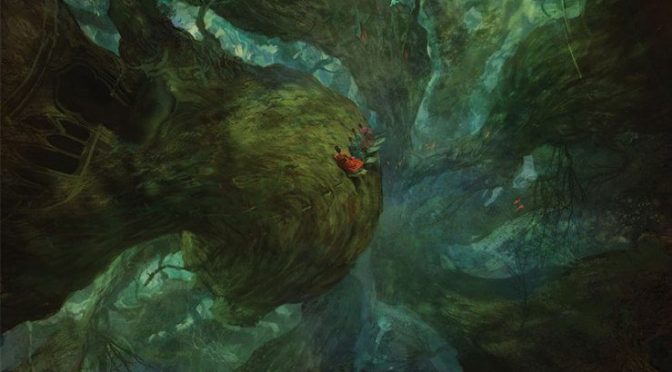
 Thoraiya Dyer’s Crossroads of Canopy was one of my most anticipated debut novels of 2017, and I’m pleased to report that it did not disappoint. Crossroads is a truly tremendous book, full of fantastically original worldbuilding, fascinating mythology, and a cast of compelling characters led by one of my favorite fantasy heroines in a very long time. It’s a gorgeously magical and delightfully challenging novel that only gets lusher and more incredible the longer you read it.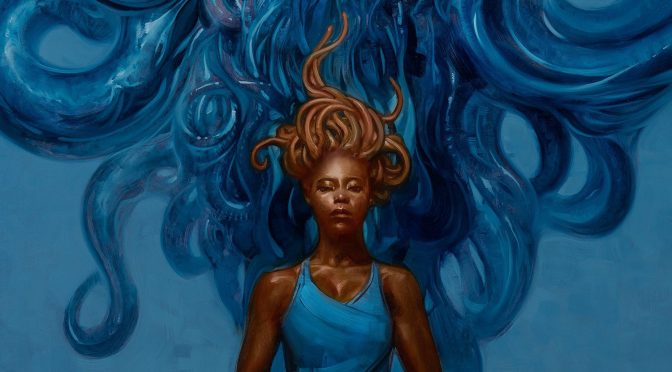
 I didn’t love Binti when I read it in 2015, in spite of having loved everything else I’d read by Nnedi Okorafor up to that point. It was on the short side for a novella, and I’d recently read Okorafor’s absolutely superb Lagoon, which set the bar high for Binti. There were things I loved about it, but I was definitely in the minority of readers who didn’t consider it one of the top novellas of the year, so I wasn’t sure how I would like Binti: Home. This book is about twice as long as its predecessor and addresses many of the things I considered shortcomings in Binti, though it does end on a particularly unsatisfying near-cliffhanger made even worse by the lack of release date for the planned third book that will complete the series.
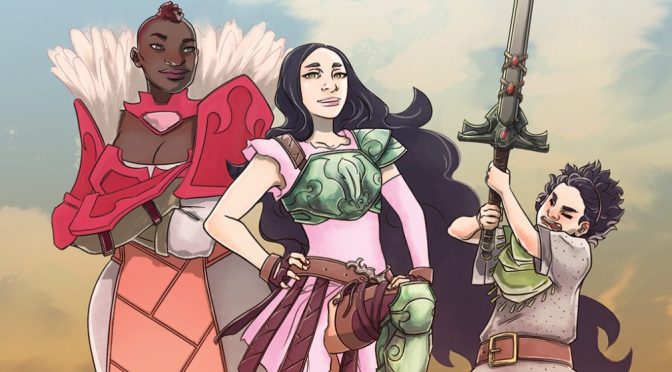
 Lady Castle is, for me, the first must-read comic of 2017. I don’t read a ton of comics, to be honest, and I’m pretty choosy about what I spend my time and money on, usually going for limited projects with women writers and artists and steering clear of superhero stuff. I’ve also, in recent years begun avoiding any of the trite ’90s-esque girl power stuff being put out by a certain breed of right on self-identified feminist white dudes, which has sadly left me with a medieval fantasy adventure comic-shaped hole in my life. Long story short, Lady Castle is exactly the comic that I’ve been yearning for over the last several years. It’s perfect and I love it and you should be reading it right now if you haven’t already.
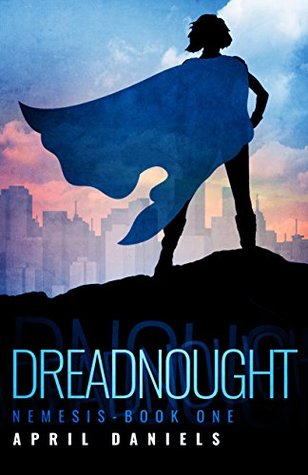 I love that Dreadnought is a thing that exists in the world more than I actually enjoyed reading the book, though I did rather like it. It’s being marketed as great for fans of last year’s The Heroine Complex and Not Your Sidekick, and both of those were titles that I just never did quite manage to get around to reading, mostly because I’m not super into super hero stories. Like these other books, Dreadnought centers around an unconventional protagonist, in this case a fifteen-year-old closeted trans girl named Danny who has to quickly come to terms with her identity when she is unexpectedly gifted with both superpowers and the body she’s always known she should have. Danny is a smart, plucky, relatable heroine who I expect will be an education for some readers and a much-needed bit of representation for others. Nonetheless, Dreadnought is a book that I read with the constant awareness that it wasn’t for me. Danny’s story of self-discovery and actualization is one that will be compelling for any reader, but I imagine it will resonate most deeply with readers who share more of Danny’s experiences as a trans girl.
 Passing Strange is an absolutely magical story and by far my favorite thing I’ve read so far in 2017. In this gorgeously imagined romance, Ellen Klages brings the queer side of 1940s San Francisco to glittering life and peoples it with characters who are fresh and interesting and yet still feel like the kind of old friends one wants to visit with over and over again. It’s a book that works precisely because of the specificity of its characters and its setting in time and space, and Klages does a great job of balancing the reality of history with the light fantasy elements she introduces over the course of her story. It’s still early in the year, but I fully expect Passing Strange to make a lot of year’s best lists, my own included.

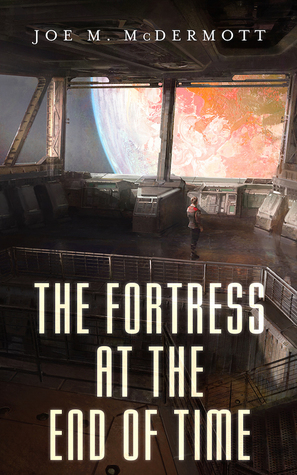 Joe M. McDermott’s The Fortress at the End of Time might be a little bit genius, but I can’t decide if I loved it or hated it. It’s got a great classic sci-fi sensibility if, but I’m generally not one for classics. It’s a novel that, while short, is often boring, but intentionally so and in a way that mostly works if you’re a patient reader. It’s got some big ideas that are worthy of considered exploration, but none that are particularly fresh. It’s solidly written with a distinctive voice and style, but there’s nothing especially exceptional about it. It’s a book that I’m glad to have read because it is a bit outside of my usual fare and a nice change, but I don’t feel compelled to read either more of McDermott’s work or more of this sort of thing in general. It’s not that The Fortress at the End of Time is unremarkable or pedestrian; it’s just a profoundly workmanlike example of its type of thing–thoughtful medium-hard military-ish sci-fi that has something to say about some stuff–if you like this sort of thing. I can easily imagine this being a book that lots of other people love, but I can’t muster any very strong feelings about it, myself.
 So, it’s less than a month into the new year and I have a
  SF Bluestocking