Book Review: Miranda and Caliban by Jacqueline Carey

So, I read Miranda and Caliban because I love Shakespeare and had never gotten around to reading any of Jacqueline Carey’s other work. I also read two other Tempest-based stories last year (Margaret Atwood’s Hag-Seed and Foz Meadows’ Coral Bones—both excellent) and thought it would be interesting to compare this one to the others. For what it’s worth, Miranda and Caliban is beautifully written, well-structured and readable, but the question I kept coming back to the longer I read it was “Is it necessary?” Sadly, I don’t think it is. I don’t regret having read it, but I also wouldn’t say that it deepened my understanding of The Tempest, Shakespeare or their themes, and what insight it gave me into the author’s understanding of these things didn’t impress.

Miranda and Caliban tells the story of about ten of the twelve years that Prospero and Miranda spent on the island prior to the start of the play, beginning with six-year-old Miranda and story of the “taming” of the wild boy Caliban, who comes to be Prospero’s servant and Miranda’s friend. Over the years of the novel, the narrative is split between Miranda and Caliban’s points of view as they are both educated and come of age on the island, detailing their friendship and their respective relationships with both Prospero and Ariel. Rather than digging deeply for a fresh take on this material, however, Carey chooses to depict it as largely standard fare coming of age tragedy, and the tone of that tragedy infects the entire book with a bittersweetness that quickly turns cloying.

Though I went into the book knowing the ending, I was disappointed that there were so few surprises in store over the course of four hundred pages. There’s not a single event in Miranda and Caliban that couldn’t have easily been extrapolated from the play, and everything that happens is so absolutely banal that it’s barely enough to hold one’s attention. I kept expecting a twist or turn that would challenge my expectations or offer some new thought on the play, but Miranda and Caliban is literally exactly what it claims to be. I suppose that’s fine, but the tragic nature of the story also prevents it from being bland, relaxing comfort food, which sends me right back to the question of the necessity of this book.

Even the revelation of Miranda as an artist with a kind of magic of her own that complements her father’s doesn’t do much to elevate the novel. While Miranda is bright and clever and kind, she remains, ultimately, a passive character in a story that is happening around and to her. She’s never able to use her magic to help herself, her brief romance with Caliban is too inevitable-seeming to evoke much passionate feeling, and in the end she seems resigned to being a pawn of her father’s with no particular ambitions or goals of her own. Caliban, for his part, is much the same as depicted in the play, if perhaps somewhat more sympathetic with a fuller knowledge of his childhood. However, he too is at the mercy of Prospero and, later, of Ariel, with no opportunity to change his sad fate and no fresh shading added to color our understanding of his actions.

It’s possible that readers unfamiliar with The Tempest may feel differently, coming to this book with fewer expectations and preconceptions about the material, and longtime lovers of Carey’s work may just be happy for a new title by a favorite author, but as a first exposure to Carey’s work I can’t say there’s much here that makes me want to come back to it. Pretty prose and a flair for the occasional poetic description isn’t enough to redeem a dull and flawed premise, especially one that has so little of substance to say.

On the other hand, look at that incredible cover with art by Tran Nguyen and designed by Jamie Stafford-Hill. It’s gorgeous enough that even if you don’t love the book you might want it on your shelf.

This review is based on a copy of the title received for review via NetGalley.

State of the Blog and Weekend Links: February 26, 2017

The farther we get into 2017, the more I’m worried that I’m getting stuck in a new normal. When my productivity first tanked a few weeks ago, I thought that it would just be a temporary funk, but now it’s starting to feel like I’m slipping slowly into a full-blown depressive episode, which is worrisome (though not inevitable).

That said, there’s been some good news this week. I’ve got a couple of possibly upcoming projects that I’m excited and hopeful about, and the check engine light on my car turned out to be from a faulty part from the $1400 worth of repairs I had done a few weeks ago, so it was still under warranty. This coming week, I’ve got a couple of new ideas for how to restart my own mental systems–namely, quitting caffeine, taking yoga back up, and being sure to go to sleep at a reasonable hour–and hopefully head off the above-mentioned depressive episode. Also, I’m thinking of taking a short break from reading–a week or two, perhaps–until I get caught up on book reviews and other writing projects. I’ve been distracting myself a lot lately by just reading books, but it’s getting to the point that reading more is just adding to an intimidating backlog of stuff that I have opinions on.

So, that’s the goal for the upcoming week. Lots of writing. Some exercising. And, weather permitting, some time outdoors, though it’s supposed to rain most of the next few days.

Today, however, I’ve got links to share!

We’re getting into genre awards season, and several shortlists were announced this week:

At Tor.com, ten authors weighed in on the hard vs. soft sci-fi debate.

P. Djeli Clark and Troy L. Wiggins talked about the history and future of FIYAH.

Tor.com also announced the acquisition of a new novel–in verse!–by Jane Yolen. It’s about Baba Yaga, too, which makes it relevant to most of my interests.

Fantasy Literature’s Short Fiction Monday this week had links to some great free-to-read fiction by some of my favorite writers, including N.K. Jemisin, Elizabeth Bear, and Aliette de Bodard.

Ashok Banker has a new story in Lightspeed, “Six-Gun Vixen and the Dead Coon Trashgang” plus an Author Spotlight.

At Mary Robinette Kowal’s blog, Maurice Broaddus talks about his favorite bit of his new short fiction collection, Voices of Martyrs. I’m about a third of the way through the collection now, and it’s really excellent.

Paste Magazine has a good piece on how Dana Scully influenced a generation.

Kate Heartfield wrote about indigenous authors in science fiction in “Decolonizing the Future.”

V.E. Schwab’s A Darker Shade of Magic is going to be a movie, which reminds me that I really need to get around to reading the other two books in that trilogy.

This McSweeney’s piece on Five Beautiful Dead Bodies Every Aspiring Actress Dreams of Playing just about made me choke on my drink.

Finally, it’s been all over the news this week, but if you haven’t heard, NASA announced the discovery of SEVEN earthlike planets in the Trappist-1 system, about 40 light years away. There are some cool posters over at the Trappist-1 website.


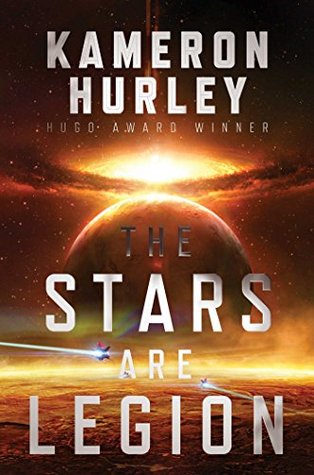
Book Review: The Stars Are Legion by Kameron Hurley

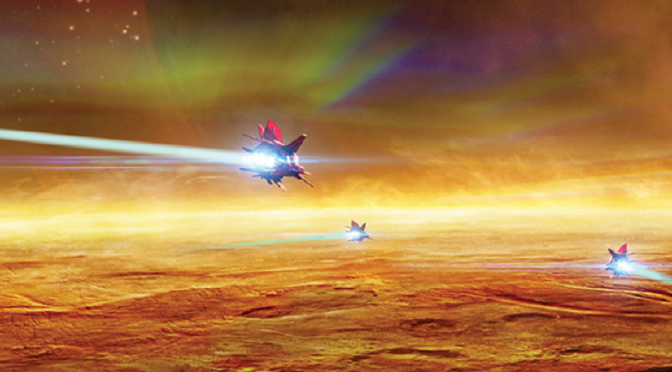
The Stars Are Legion is almost certainly the sunniest novel Kameron Hurley has ever written, which was a pleasant surprise. At the same time, it’s still very recognizably a Kameron Hurley novel, with its badass women, moral ambiguity, and copious grossness. It might be the most ambitious Hurley novel to date, at least thematically; it’s a smart, quick read; and it’s full of the inventive worldbuilding that Hurley is best known for. That it’s a standalone novel rather than the first in yet another new series that I’d have to follow for several years is just icing on the cake.

To start with, there are only women characters in this book. They live in a vast fleet of living world ships and reproduce through a kind of parthenogenesis that doesn’t always produce human babies. Unfortunately, the world ships are sick and dying, and the women who inhabit the ships are at war with each other. It’s against this backdrop that we’re introduced to Zan, who has no memories as well as a quest and an arduous journey ahead of her, and Jayd, who has a valuable womb and a complicated, high stakes plan that takes several hundred pages to unfold. The book has been called, somewhat jokingly, Lesbians in Space, and this has even been adopted as something of a marketing phrase for the title. However, though all the women in the book are lesbians, there’s not much romance to be had, the sexual relationships depicted are dysfunctional at best, and the overall tone of the novel is much darker than that blithe description, humorous as it is, would indicate. I was only mildly disappointed by this, but it does seem like a failure to manage reader expectations.

That said, Hurley’s choice to have only women characters is an excellent one for the story she’s telling. War is a common theme in Hurley’s work, and complex highly stratified societies are recurring as well. Here, the decision to have complex, highly stratified and brutal societies made up of only women makes it impossible to interpret them through the lens of patriarchy. The violence endured and meted out by the characters in The Stars Are Legion isn’t gendered, and we’re able to examine it as a function of corrupt hierarchical systems without the complication of sexist gender dynamics. Hurley creates a truly alien world that frees her characters from real-world constraints and expectations and frees herself as an author from having to communicate her ideas about war, pregnancy and birth, violence and abuse, and healing with any consideration of men’s opinions, points of view or desires. This is a novel that is probably as free of the male gaze as it’s possible for a book to be, and that’s refreshing.

As always, Hurley’s worldbuilding is excellent, and the enormous world ships she imagines are just marvelous. The first part of the book is full of almost over-the-top ugliness as we first meet Zan and Jayd and are introduced to the warring spacefaring families they are members of. The world ships themselves are living things, metal is rare, and everything seems to be at least slightly sticky and/or oozing. The women themselves are battle-scarred and often cruel, even our protagonists, and things get even weirder and more viscerally disgusting when Zan finds herself “recycled,” cast down into the bowels of the ship where she finds a great abattoir ruled by enormous woman-eating beasts. Hurley’s vivid description is at times slightly overwhelming in this section, and readers without a stomach for gore may find it deeply unpleasant. If you make it through the first part of the book, however, it pays off big time. Zan’s journey back to the top of the world is compelling stuff, and the slow reveal of Zan’s history and purpose as she journeys through alien lands to finally achieve what she and Jayd planned together is masterfully executed. The other women Zan meets along the way are fascinating characters as well, and the lands they move through are less bloody than the areas described in part one but just as slimily odd and even more wonderful.

If there’s any major criticism that can be levied against this book it’s that Zan is almost too interesting. Her story tends to dominate the book, and it’s so full of adventure and excitement that Jayd’s story of political maneuvering, manipulation, and patiently waiting and hoping for Zan to return has a hard time holding the reader’s interest. In the end, it’s Zan who must make pivotal decisions and take actions to create a different ending to a story that has played out in many variations many times before. It’s not that Jayd is uninteresting or even particularly passive. It’s just that Zan has an epic journey to take in search of her own identity, while Jayd’s struggle to survive by her wits and charm doesn’t have nearly as much sightseeing to it. While Zan and Jayd have a close to equal number of POV chapters, Jayd’s story never has as much room to breathe as Zan’s, and nothing Jayd does feels quite as consequential as what Zan does.

Still, The Stars Are Legion ticks off a lot of boxes on my list of things I want to read. I love difficult and unlikable female characters, and Jayd and Zan are a pair of glorious, passionate, murderous bitches like no others. I never get tired of Kameron Hurley’s weird fixation on bugs and organic tech and lavishly described gore. An all-women space opera with war and generation ships and parthenogenesis and a bit of a hero’s journey and a message, ultimately, of something like hope? Perfect.

The Expanse: “Home” is a one way trip to total emotional devastation

I know I complained a little last week that this week’s material wasn’t covered in that episode, but after watching “Home” I have to take most of that complaining back. This content deserved its own episode, and the execution of it—shifting between point of views, building tension, and ending with a pivotal shared moment—is truly marvelous. “Home” does a brilliant (and beautiful) job of examining the complexity of a single event, and it’s completely emotionally devastating. Well-constructed, perfectly paced, and thematically coherent and powerful, this is hands down the best episode of the show to date.

**Spoilers below!**

Every episode this season has made good use of its pre-credits scenes, but this one is my favorite. Last week’s episode ended with the Nauvoo missing Eros, and this one picks up right at that moment again, with a pre-credits montage of everyone basically trying to figure out what happens that sets the tone for most of the rest of the episode. On Eros, Miller is still busy holding down a button to keep a bomb from exploding. At the UN, Avasarala is being briefed on what is known about Eros so far, which isn’t much. And on the Rocinante, the crew is scrambling to figure out what happened and what to do next, as Eros is on a collision course straight for Earth. It’s a dramatic and effective introduction to the holding pattern that defines the episode. Earth, the Rocinante, and later Fred Johnson are made desperate and helpless by their inability to stop Eros as it becomes clear that the protomolecule won’t allow itself to be destroyed, so the episode is split between their increasingly futile actions and Miller, who goes on a journey that allows him to finally finish his quest for Julie Mao.

The UN Security Council is in disarray as they work to do something to prevent the impending apocalypse that would be caused by Eros—an asteroid three times the size of the one that killed the dinosaurs—striking the planet. The two-pronged solution is to evacuate as many people as possible while launching half of Earth’s nukes at the asteroid in the hope of destroying it before it reaches the planet. In short scenes, we see the initial chaos and disagreement slowly shift to grudging consensus, though not true unity of purpose. The divisions in Earth’s government run deep, and Errinwright will have a lot to answer for when his conspiracy with Jules-Pierre Mao eventually comes out.

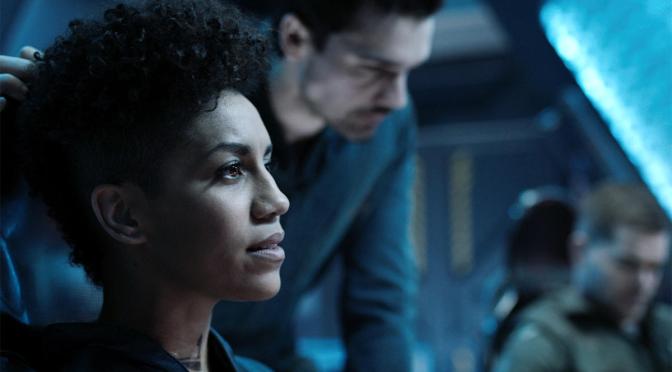
In the end, however, we’re reminded that the Earth material really is Chrisjen’s story, and it’s her reactions and her emotional arc that we’re meant to follow here. Shohreh Aghdashloo has an incredible, room-filling presence, and in all the scenes in the UN situation room there’s always a sense that it’s Chrisjen who is in charge. It’s her solo scenes, however, that hold most of the power this week. Though it was her conversation with her husband, Arjun, that brought tears to my eyes (that time delay was absolutely gutting), it’s her quiet strength in choosing to stay on Earth—the classic heroism of any captain going down with their ship—that made me really cry. It’s a role and responsibility seldom given to women in fiction and perhaps never depicted with such craft. The production values and cinematography on this show have always been excellent, but the set for Avasarala’s office, her beautiful costume, the lighting, and the framing of the shot all work together to create an iconic moment for the character.

On the Rocinante, the crew starts the episode scrambling to figure out a way to rescue Miller before they’re commandeered to help target the Earth missiles that have been sent to destroy Eros. I love that the show has made Holden and Naomi into more nearly equal partners than they ever were in Leviathan Wakes, and it’s great to see the whole crew working so well together in this episode as they chase Eros sunwards. The building sense of drama works surprisingly well as the ship speeds up to keep pace with the asteroid and the crew is forced to turn to a drug cocktail that will allow them to withstand the high-G force. I do wish that more time had been dedicated to Holden working out his differences with Miller; that all has seemed somewhat glossed over in the last couple of episodes. That said, by making Naomi a better developed character and having her connect with Miller, it’s not entirely necessary for Holden and Miller to have some kind of big hug-it-out scene about things. It’s enough that Holden cares because he’s a decent guy when Naomi cares because of a genuine bond of friendship with the other Belter, and allowing these characters to share the emotional weight of dealing with this stuff is a big improvement over the way it was handled in the source material, where the whole first book was told from just Holden and Miller’s points of view.

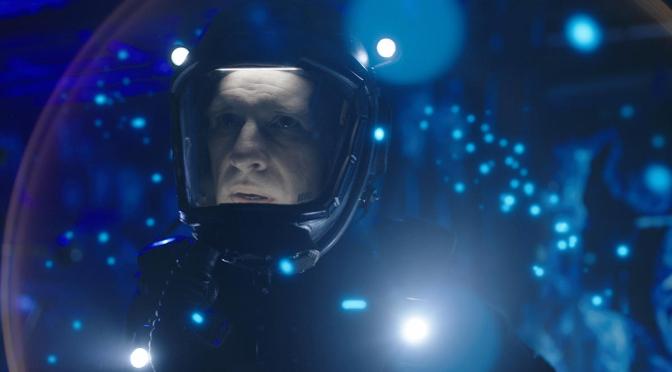
While everyone else is trying without success to find a way to stop Eros from crashing into Earth, Miller must travel through the insides of Eros to find the heart of the protomolecule infection. The show smartly limits the other characters all to, essentially, single rooms from which to work while emphasizing Miller’s arduous physical journey, which has elements of dreamlike wonderland mixed with eldritch horror. The on-screen journey parallels what has become, for Miller, and almost spiritual journey, and the moment when he realizes that the center of the protomolecule infection is at the Blue Falcon where they found Julie in season one is only surpassed by his awestruck explanation to Holden and Naomi about what he’s seeing. The juxtaposition of Miller’s travels through Eros with the relative stillness of the rest of the cast is a perfect way of heightening the sense of epicness, and I must reiterate that I’m so glad this portion of the story was given a full hour so it has plenty of time to breathe and build up to the final scenes.

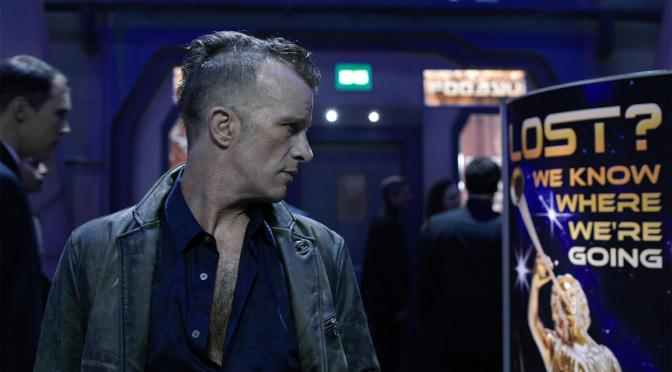
When Miller finally reaches Julie herself, she’s unconscious, covered in the protomolecule and dreaming of flying her racing ship back to Earth. He’s able to gently her, but she’s confused and disoriented, and it’s heartbreaking how all she wants is to go home. It’s melodramatic, but it’s a kind of melodrama that I love and when Miller tells her that she can’t go home anymore I about lost it completely. There’s a part of me that feels as if I ought to hate this story, and I didn’t love it in the book if I’m perfectly honest. However, Thomas Jane’s Miller is much, much better than Miller ever was in the books, and his desire to find and help Julie has always felt sweet rather than creepy. This meeting at the Blue Falcon is the final test of the show’s ability to really make this story work, and it does. Miller’s gentleness with Julie is beautiful and represents a real character development on his part, and even the way he kisses her and lays his head on her chest as they head off to eventually crash into Venus feels like a kindness that stems from feelings of true and selfless love. The moment felt truly earned by the time it had arrived, and I found that I mostly just felt glad that Julie wasn’t alone any longer.

The episode ends with a short montage of characters watching Eros make its way to Venus, and it’s a wonderfully low-key way to wind things down after the tension and stress of the preceding hour. Miller’s protégé Diogo is getting OPA tattoos, which hopefully bodes well for his continued presence on the show. Avasarala is lying on her rooftop watching the night sky, a lovely callback to a similar scene in season one but also a great image in its own right; she was willing to die with the planet she loves, and now she can relax knowing that it’s safe, at least momentarily. Fred Johnson watches the last leg of Eros’s journey on the news feed on Tycho while the Rocinante crew watches the same coverage on their ship. Finally, as Eros silently crashes on Venus, the Rocinante crew has a drink and toasts Miller’s empty chair. The quietness and stillness of all these moments, free of dialogue as they are, is exactly the right way to have ended an episode that was split between frantic activity and a fraught journey. There’s a sense of the momentousness of it, but also the sense that life keeps going on even after such a major crisis. As a way of wrapping up the material from the first book in the series, “Home” couldn’t have been much better.

Miscellaneous Thoughts:

  • Errinwright’s panicked, furious call to Jules-Pierre Mao is a great scene. Errinwright can be a bit of an opaque character at times, and this is probably the most emotion he’s shown about anything so far on the show.
  • Fred Johnson doesn’t get a ton of screen time this week, but he makes the most of what he gets, planting the seeds of a fragile accord with Earth, or at least with Chrisjen Avasarala. His “And so it goes” brought a tear to my eye, as all Vonnegut allusions, even much cheerier ones than this, are like to do.
  • I love Chrisjen’s conversation with Arjun, but it would have been even more heartbreaking if we’d seen even a little bit more of him in the preceding four episodes. One can easily believe the love between these two characters as portrayed by two skilled actors, but a little more showing of their relationship would not have been amiss.
  • We don’t see any Mars action, though we do hear about the Martian government. It makes me almost wish for some Mars POV analogous to Avasarala, but I must admit that it would only make the show bloated. Still, Mars is such a big part of things that it’s too bad we don’t get to see and root for them the way we do with Earth and the Belters.
  • A+ use of music this week. This show always does a great job in this department, but this episode was superb.

State of the Blog and Weekend Links: February 19, 2017

This turned out to be a slightly more productive week than the last one was, but it still wasn’t great. I continue to struggle with staying on task and avoiding news, which also means I continue to struggle with all the feelings of anger, worry and frustration that comes along with even minimal knowledge of current events. That said, the biggest thing that impeded productivity this week was just plain old adulting stuff. Our upstairs neighbors had bed bugs, so we had to have our place treated as well (again, ugh), which is stressful and highly disruptive, requiring extra laundry and moving stuff and this time an unfortunately unavoidable trip to an Ikea store. There’s basically no way that any week containing a trip to Ikea is going to be a good one, even in the best of times.

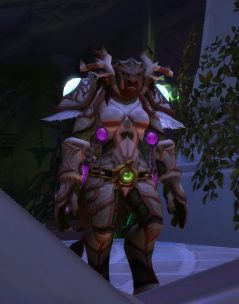
bmp_nighthold1Still, it wasn’t all bad. I got my Six Wakes review out along with my unpopular opinions about the most recent episode of The Expanse. I read Miranda and Caliban, which was probably not the best choice for my first reading of something by Jacqueline Carey. I got an early copy of Seven Surrenders in the mail the other day, so I’ve been working through that and it’s amazing. I’ve taken a bunch of photos of my cat, Spot’s, adorable romance with the large stuffed dog my daughter keeps on her bed. I druid healed some stuff in World of Warcraft for the first time in basically ever, and it was weird but fun. Then cleared all of Nighthold except for Gul’dan, which was pretty rad. My alts are all shamefully neglected, but it turns out that after all these years I’m still a druid person.

As always, I’m not making any promises about post frequency this week, but I’m optimistic. I’m halfway done already with a couple of book reviews, I’ll always write about The Expanse, and I’ve still got a couple of other projects knocking around on my to-do list. I also just ordered the 1970s Ballantine mass market editions of the Gormenghast trilogy, which I think is going to be my classic SFF reading/blogging project for the year, though I haven’t decided how I want to do it yet. Right now I’m just excited to be feeding my 1970s paperback addiction.

Kameron Hurley wrote a great post over at Boing Boing this week: “What Will Sink Our Generation Ships? The Death of Wonder”

If you’re into long reads, The Wertzone has conveniently listed the longest SFF novels of all time.

nerds of a feather, flock together collected a Taster’s Guide to January’s Speculative Short Fiction that’s very worth a look, especially if you don’t have time to read all the publications they suggest stories from.

Lady Business published their excellent list of Hugo Nomination Rrecommendations, which I know added a couple things to my TBR list. Also, SF Bluestocking is on their for Best Fanzine, which completely made my week. (Thanks, Renay!)

Jacqueline Carey wrote both a Big Idea and My Favorite Bit pieces about her new novel, Miranda and Caliban.

A. Merc Rustad is probably my favorite new-to-me writer from 2016, and they have a new story in Lightspeed, “Later, Let’s Tear Up the Inner Sanctum.” They also just revealed the cover for their first collection, So You Want to Be a Robot and Other Stories, coming in May from Lethe Press. This is the most exciting single-author collection of the year so far, hands down.

You can preorder the book now.

The Expanse: “Godspeed” doesn’t go as fast or as far as I hoped it would

After all last week’s great setup, I rather expected “Godspeed” to be a more action-packed episode and to move at a faster clip through the remainder of the story from Leviathan Wakes. Instead, this episode focuses a lot more on some compelling emotional beats and then stops just short of a major climax that I was really looking forward to seeing. So, in a way, “Godspeed” was something of a letdown. At the same time, however, the episode flows nicely for the most part; there’s some necessary character development, especially for Holden; and the CGI team really brought their A-game in bringing the space action to life. This wasn’t the episode I wanted or expected it to be, but it’s not bad, and the preview for next week’s episode looks promising enough that I’m glad that this last bit of Leviathan Wakes material is being given more room to breathe.

Book and show spoilers below.

“Godspeed” opens with Avasarala and Cotyar investigating the derelict stealth ship that Fred Johnson directed them towards last week. They’re having the wreckage explored, and the place is just dripping with evidence—an expensive warship with one of the stolen drives from the Bush shipyards, full of dead crew all of whom are found to have last worked at Protogen, which ties this all clearly to Jules-Pierre Mao and to the destruction of Phoebe. It’s not long before Avasarala has put together a significant portion of the plot between Mao and Errinwright, and she soon has both men in a room together to straighten things out. After this conversation, Mao is spooked, but Errinwright is still in denial about what Avasarala knows, which leads Mao to terminate their association. Still, plots are afoot, and Avasarala doesn’t have the full picture just yet, even if she is much cleverer than Errinwright gives her credit for being.

Sadly, though, most of this still feels like buildup to future events. I love Chrisjen Avasarala. I could watch just ten straight hours a year of her being the smartest person in every room, and the costumes, hair and makeup for this character are always exquisite. But none of what happened this week felt urgent, and none of it resolved anything. This season began Avasarala’s story with a dramatic attempt on her life, which was good. It gave us some real action on Earth and raised the personal stakes for the character, which led to her discovery of Errinwright’s plotting against her. That was good, entertaining stuff. Now, it feels as if the show is trying to send Avasarala down the rabbit hole to see how deep things go, but without much support. Mao and Errinwright might be worthy opponents for our Chrisjen, but they haven’t gotten much screen time before now, and watching the unraveling of their plans isn’t the best way to make them feel threatening. Cotyar is inscrutable, and he doesn’t seem in danger of getting a big shot of character development any time soon. Even Avasarala herself seems somewhat flat and one note so far this season, in spite of Shohreh Aghdashloo’s formidable acting chops.

Having read Caliban’s War, I expect that this is simply because there’s not a whole lot for her to do until Bobbie Draper shows up in a couple more episodes. It’s just unfortunate that in the meantime, the politicking on Earth feels less and less consequential with each scene we see. Much of what Avasarala is uncovering now is stuff that took her halfway through Caliban’s War to figure out (and then only with Bobbie’s help), which makes my concern now that by the time Bobbie Draper gets to Earth and Chrisjen meets her, they won’t have much to do together. This might make sense if somehow the show is hoping to squeeze the rest of Caliban’s War into the back half of this season, but that would make for either a lot of rushing things or a lot of cut book material. With the show being so true to the books up to this point, that seems unlikely, which could suggest invented material for the show, as with the pre-Ganymede scenes for Bobbie and her unit, but that’s been a mixed success at best. I guess we’ll find out in a couple of weeks once Bobbie gets to Ganymede and the Eros stuff is behind us.

There was, incidentally, no sign of the Martians this week, as aside from the brief scenes of Avasarala, Mao and Errinwright the rest of the episode followed through on Miller’s suggestion to Fred Johnson last week that they use the Nauvoo to ram Eros and the protomolecule into the sun. There was some great character work in these segments, especially from Chad L. Coleman as Fred Johnson and Steven Strait as Holden, two characters who had to deal with making major decisions in this episode. There’s also a great deal of fantastic CGI space action, with the launch of the Nauvoo a particular highlight and the boarding of Eros another. From a technical standpoint, the show absolutely nailed the things it needed to nail this week. When it comes to maintaining a cohesive narrative and thematic arc, “Godspeed” is somewhat less successful.

Things start out well enough on the Tycho with a pre-credits introductory scene in which Miller and Fred Johnson bring Holden and Naomi in on their plan for the Nauvoo and Eros. Holden, self-righteous as ever, is still sore about Miller killing Dresden, but he quickly sees the necessity of dealing with Eros as soon as possible and agrees to help with relatively little fuss. The scene is good, but the sudden end of Holden’s antipathy towards Miller after this final short display of it is too abrupt and feels unearned. It’s only Naomi who is willing to talk to Miller before they go back to Eros, but later in the episode when Miller is in danger, Holden seems to have forgotten their disagreement entirely. Any kind of short interaction between Holden and Miller to resolve their argument would have made a difference here, and we surely could have given up a few seconds of CGI spaceship porn to make room for it.

The standout scenes of the episode showed the commandeering and launch of the Nauvoo, but here the sheer CGI gorgeousness of it almost overshadowed the rest of what was happening. The scenes of the Mormons being evacuated from the Nauvoo, which also serves as their temple, are heart wrenching, but again this is material that feels somewhat rushed over. Jeff Clarke is perfectly cast as Elder McCann and imbues the Mormon leader with a humane earnestness that makes him a surprisingly likable minor character, and he deserved a little more consideration than he got. On the other hand, the final scene of Fred Johnson ordering the launch is perfectly executed, and Chad L. Coleman makes the most of his own limited on screen time to effectively convey Fred’s conflicted feelings about what they’re doing.

When Holden and company reach Eros, they find a small ship docked with the station full of doctors on a humanitarian mission to help the people trapped inside. Deciding how to deal with this might be the hardest thing Holden has had to do to date, and it’s certainly Holden at his most compelling so far. When the doctors on the Marasmus mistake the Rocinante for Martian ship, Holden plays along, hoping to scare them away from Eros without violence, but before the Marasmus can make their escape it’s discovered that they have already been inside the station and in contact with the protomolecule. The captain of the Marasmus intends to broadcast their Eros findings to the rest of the solar system, which could only add to the chaos and misinformation that has been fueling many of the events that have taken place since Holden’s own ill-advised broadcast about the destruction of the Canterbury. Holden has been through a lot since then, and circumstances have continually forced him to compromise his ideals and adapt to unfamiliar situations, which has made him far more circumspect about spreading information. In the end, Holden is forced to destroy the Marasmus, a symbolic killing of his own old self that should have interesting repercussions for the character down the road.

The pacing of the episode is strange throughout the hour, and the ending feels both sudden and anticlimactic. It’s not that it’s particularly telegraphed earlier on or anything, but the news that it’s Eros that is changing course and heading towards Earth just isn’t at all surprising when it happens. The voices coming from the station all this time have been a clear hint that something there might be sentient, and it prevents the ending of “Godspeed” from functioning as a proper cliffhanger, especially since we already know that Naomi can remotely disable the detonator that Miller has his finger on. It’s pretty obvious where this is going, and I just wish it would hurry up and get there so it can move on to whatever comes next.

Miscellaneous Thoughts:

  • “The Mormons are gonna be pissed.”
  • I loved the quick scene of Mao watching the news and finding out that his assets are frozen. François Chau has these amazing subtle facial expressions that make him perfect for this role and highly entertaining to watch. I’ll never not get a kick out of seeing wealthy business tycoon villains get the wind taken out of their sails.
  • Andrew Rotilio continues to be all charm as Diogo.
  • Not enough Alex and Amos, to be honest.
  • Even a weak episode of The Expanse has a lot of things going for it.

Book Review: Six Wakes by Mur Lafferty

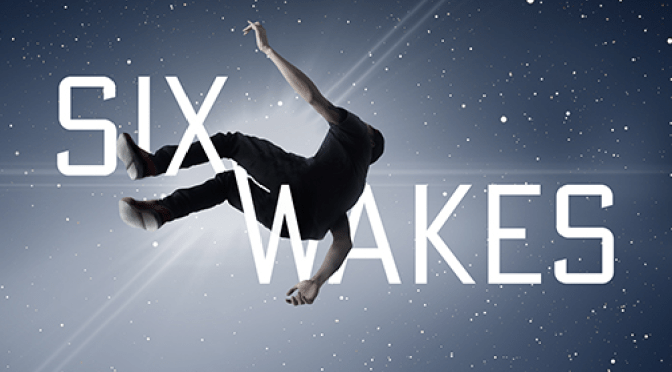
Six Wakes is a smart, fresh, fast-paced whodunit. With clones. In space. The story starts with six clones waking up in a bloody mess and all of them with no memories of the last twenty-five or so years of their lives as the skeleton crew of a generation ship. The rest of the book alternates between the crew’s present day investigations to out what happened to them and flashbacks that show their history and allow the reader to slowly put the pieces of the puzzles together. It’s a clever construction that makes world building and character development equal priorities while never sacrificing entertainment value or readability. Mur Lafferty delivers diverse and compelling characters, a great series of twists and turns, and a satisfying conclusion with space for a sequel or simply for other books in the same setting. Which I will certainly read if they are forthcoming.

The ensemble cast is for the most part well-balanced. Each character has a strong and distinctive personality and an interesting backstory, and it’s fascinating to watch them slowly orient themselves around each other and piece together the relationships and connections between them. Maria Arena, mentioned in the cover copy of the book, definitely takes center stage, however, and her story turns out to be the glue that holds the rest together. None of the characters is particularly likable, though Maria and Hiro are probably the closest thing we’ve got to true protagonists. For most of the book, all the characters are at odds with each other, each one suspicious of the rest, traumatized by their experiences, and deeply unsettled by the memory loss they’re all suffering from. All of them are keeping secrets from the others, and their individual stories delve more deeply into what they have to hide, explaining some of their histories as clones and how they ended up on the Dormire to begin with.

Lafferty does a great job of metering out information to the reader, though there is a tendency towards intermittent infodumping throughout the novel. Revelations, when they come, are often sudden and quickly realized by the characters, and the reader is forced to keep up with the sometimes-blazing pace of exposition. I’m not always a fan of this sort of twist-a-minute style of storytelling, but Lafferty pulls it off here with great panache. The cycle of paranoia, tension, and revelatory payoff makes for an almost un-put-downable story that doesn’t offer many natural points at which to take a break. That said, a couple of major reveals in about the last quarter of the book were pretty heavily telegraphed early on, and I felt more than once that I was more meant to be shocked than actually surprised by certain turns of events. Still, even the more predictable parts of the book were well-done and not so hackneyed as to truly diminish my enjoyment of it. Rather, they were pleasantly comfortable and reassuring; there’s a reason that some tropes appear time and again in fiction—because they never do quite get old.

The mechanisms of cloning and the society built upon cloning technology that Lafferty imagines aren’t even remotely unique, but her in-depth treatment of the ethics and ideas surrounding cloning is nevertheless highly thoughtful and more than moderately insightful most of the time. Six Wakes offers a plausible imagination of the future and a thorough examination of how advanced cloning—of the functional immortality kind—might work in practice, both for the individuals who partake in the practice and the broader world that must change to accommodate them. On the other hand, there are some oversimplifications of issues, a little bit of handwaving about the actual science of it all, and a somewhat strange deus ex machina to help end the story that could have been handled a little better. Still, none of this is deal breaking stuff, and even the slightly weird ending manages to be charming as opposed to irritating.

Probably, a nit-picky reader could find plenty to criticize about Six Wakes, but none of the nits I can think of in it are the ones I would choose to pick at. It’s a nicely written character study with some interesting ideas about the future, and Mur Lafferty has a flair for drama that is perfectly suited to this sort of Clue-style mystery. I wasn’t shocked by the way things turned out at the end of the book, but I didn’t really expect or want to be. Frankly, what I appreciate most about Six Wakes might be its total lack of cynicism or pretension. Lafferty sets out to entertain the reader and provoke some thought, and she succeeds marvelously on both counts without overstaying her welcome. Six Wakes stands alone perfectly, but I’d be glad to read about what happens to these characters next. Failing that, I’ll be looking forward to whatever Mur Lafferty does next.

Weekend Links: February 12, 2017

So, I managed to get my review of The Expanse out on time this week, but nothing else to speak of. It’s disappointing, but I’m starting to feel like this cyclical sort of pattern of productivity may be a new normal for a little while, though I do have some plans this week to try and institute some new routines that I think are going to help. Mostly, this will involve exercising–outdoors, since it’s unseasonably warm out–and unplugging from the internet for at least a couple of hours a day so I can work without distractions.

world-sucks

Everything is pretty terrible right now, and sort-of-joking about how I get to spend every day watching the fall of American democracy isn’t working as a coping mechanism. Things are getting more and more genuinely frightening and worrisome every day; everyone at my congressman’s office hates me because I call all the time; and the reality is that my personal power to change things is very limited. My sitting around being horrified and anxious and feeling helpless all the time doesn’t do anyone any good, least of all myself.

On the bright side, I read quite a lot this week. I finished Six Wakes by Mur Lafferty, The Stars Are Legion by Kameron Hurley, and Matt Wallace’s new Sin du Jour novella, Idle Ingredients. I’m also in the middle of Amberlough by Lara Elena Donnelly right now, but I’m hoping to finish it tonight or early tomorrow, so I ought to have several book reviews to publish this week. I’ve also got a project to work on that I’ve teased a little before but am hoping to dig into for real this week.

No promises about how much I’ll actually accomplish, though, to myself or otherwise. I figure low expectations may be the key to happiness and satisfaction at this point.

Uncanny Magazine released the second half of their Issue 14 content this week. If you haven’t seen it yet, Delilah S. Dawson’s essay “I Have Never Not Been An Object” is a must-read.

And the Tansy Rayner Roberts’ short “Some Cupids Kill With Arrows” is quick, funny, and festively-appropriate right now.

There’s a great new interview with Nisi Shawl over at Apex, and Nisi shares some exciting news at the very end.

Worlds Without End has a new list of science fiction by women writers. It’s heavy on classic work and only 98 titles long, but there’s a decent enough selection if that’s the sort of thing you’re looking for.

There’s just another couple of days to back Problem Daughters–“an anthology of science fiction & fantasy from the fringes of feminism”–and they’re very close to their full goal. To promote the project, there’s an Intersectional SFF Roundtable at Apex. [I didn’t feel able to adequately explain my weird feelings about this link and the use of the term “intersectional” but several other writers, including L.D. Lewis and Justina Ireland have explained it at length. Currently, Apex has released a half-assed apology for something about the piece and removed it from their site, and I’m just following the arguments about it all now. I apologize for any harm that may have been caused by my own uncritical sharing of the link.] Future Fire also published a roundtable discussion this week, this one on female protagonists.

Kameron Hurley and Lara Elena Donnelly were busy promoting their respective novels this week.

At Tor.com, Kameron Hurley talked about worldbuilding and challenging expectations in “Who Owns the Stars? Creating a Space Opera Universe”.

Terrible Minds hosted both authors this week, Hurley wrote about writing during times of political upheaval, and Lara Elena Donnelly listed five things she learned writing Amberlough.

At Mary Robinette Kowal’s blog, Hurley and Donnelly each wrote about their favorite bits of their stories.

And at John Scalzi’s blog as well, Hurley and Donnelly tackled the Big Ideas in their work.

The Expanse: “Static” is a solid set-up for major events coming next week

After last week’s action-packed season premiere, “Static” is a fairly quiet interlude that splits its time between character development moments—as various people deal with fallout from last week’s events—and exposition and set up for another major event (or two) next week that should wrap up the end of Leviathan Wakes material and put us into Caliban’s War in episode five. The Expanse has always laid out its episodes in this sort of cyclical pattern, alternating between action and exposition, punctuating the flow of its overall story with periods of calm and excitement, but with mixed success. The show’s quieter episodes have had a tendency to feel like wheel-spinning, and there’s some of that here, but there’s also copious evidence that the show’s writers have taken some of the common criticisms of season one to heart and found a much better balance between exposition and events. To be sure, there are a few clunky moments in “Static,” but it was never boring, and there’s plenty going on the keep viewers excited for next week’s episode.

Spoilers below for the episode and books.

“Static” starts with an event leftover from last week, the destruction of Deimos by the Earth navy, which comes even before the opening credits. The opening shot of Earth’s missiles zooming towards Deimos quickly cuts to Bobbie Draper and her squad of Martian marines watching the news, which details the tiny moon’s complete obliteration and the deaths of all seventeen of its residents. We then get a short scene of Avasarala and Errinwright discussing the possible war with Mars, which turns to a voiceover on top of scenes of the Martian marines training. It’s a smart use of a couple of minutes that further sets up the rivalry between the Avasarala and Errinwright philosophies and highlights the seriousness of the situation. This whole opening sequence also resonates thematically with the rest of the episode (and, I expect, much of this season of the show), which deals heavily with ideas about the value of human life, whose lives matter, and the ease and difficulty with which different characters treat different lives as disposable. Sadly, Chrisjen doesn’t get much to do the rest of the episode, though her “What the fuck is that?” when she finally gets a message back from Fred Johnson near the end of the hour promises that she’ll have plenty to do in the next episode or two.

Similarly, Bobbie and the rest of the Martian marines are subjected to a somewhat boring and, frankly, redundant subplot this week. We get to see the way that the three native-born Martians single out and pick on the Earth born Private Travis, which was already touched upon in the first episode of the season. In the end, this relatively minor personnel issue is resolved and Bobbie and company are sent on to Ganymede, which book readers will recognize as the place where we first meet Bobbie in Caliban’s War. I suspect that all this time spent with Bobbie’s team is meant to help viewers connect with her and them before the Ganymede incident, but all these characters struggle with likability—probably because they spend so much time on petty bickering. It’s an interesting adaptational dilemma, though, if you think about it. On the one hand, I’m glad that the show didn’t work too hard to paint Bobbie and her team as overly soft and lovable. Bobbie’s not, in general, a super likable character, and the show is portraying her pretty much how she appeared in the book. On the other hand, they’re going to a lot of trouble to try and make the viewer care about this team of people and it’s, one, not working very well and, two, strongly telegraphing that this group of characters is marked for tragedy. The ominous way that Sutton pronounces “Ganymede” is a dead giveaway.

Most of “Static” takes place at Tycho Station, to which the Rocinante and Fred Johnson have returned with prisoners from Thoth. While the crippled ship is being repaired, its crew is fractured. After shooting Dresden last week, Miller is out, banished from the Rocinante by a furious, self-righteous Holden and from Tycho by Fred Johnson, who is himself struggling to figure out next steps in how to deal with Eros and the conflict between Earth and Mars that is sure to spill over into the Belt and Outer Planets. Holden and Naomi have a disagreement about Miller and Dresden, which sends Naomi off the Rocinante for some girl time with Fred Johnson’s assistant, Samara, and leads Holden to focus on interrogating their most important prisoner, a scientist named Paolo Cortazar. Amos starts the episode by having a commiserating drink with Miller but turns out to be instrumental in getting Cortazar to talk. Meanwhile, Alex is eaten up with guilt over the deaths of the twenty-five Belters on the second boarding pod at Thoth, and he spends the whole episode running and rerunning simulations of the fight in order to figure out a way that he could have saved them. All of this works together to produce a strange effect that is probably not quite exactly what the writers hoped for. The idea of breaking up the crew and then putting them back together at the end of the episode is a solid one, and it ought to be enough to fuel an episode, but the truth is that not all the conflicts here really work. There aren’t always clear consequences for characters’ actions, and the interpersonal stakes feel low when compared to the major events happening in the story.

This is probably most glaring in Miller’s storyline this week. In his first appearance of the episode, Miller is assaulted and berated by Holden, who is outraged at Miller’s extrajudicial killing of the unarmed Dresden. Fred is more quietly angry at Miller, perhaps angry less at Miller’s action and more at Miller’s usurping of Fred’s authority in the situation, perhaps for some other complex reason. It’s not always easy to tell with Fred Johnson, who is still a somewhat mysterious character in the show. In any case, Fred orders Miller off Tycho ASAP and sends Miller off to, presumably, find a ship to take him off. However, this isn’t what Miller does at all. It turns out that almost no one is actually that upset with Miller. In fact, some of the Belters on Tycho seem almost to hero worship the ex-cop, and Miller loafs around the station for somewhere between a day or so and a couple of weeks. The timeline is confusing. He has a drink with Amos, then goes to the Mormon temple on Tycho and lets some poor nice Mormon waste time giving Miller the whole spiel about the generation ship, the Nauvoo, parked outside Tycho. Miller is also having visions of Julie Mao, who seems to be beckoning him back to Eros, so he decides Eros needs to be destroyed and goes back to Fred Johnson to suggest that they use the Nauvoo to do it, and Fred agrees with no real argument. It’s a weird storyline because it feels important and somewhat dramatic during the watching, but its internal logic doesn’t actually hold up to much scrutiny. It’s Fred’s easy agreement at the end that really killed my suspension of disbelief, but this plot overall relies a little too heavily on the ability of viewers to fill in blanks and imagine character motivations and rationalizations that aren’t adequately supported by what is shown on screen.

The disagreement between Holden and Naomi is an obvious one. Holden, self-righteous prig that he is, hates that Miller shot Dresden, who was unarmed and not obviously presenting any imminent threat to the people who were in the room with him on Thoth. Naomi, however, sees the wisdom of Miller’s decision, though she isn’t entirely approving of it being so unilaterally decided and carried out, and she urges Holden towards forgiveness and clemency or at least pragmatism. This argument sends the two apart for most of the remainder of the episode, with Holden working with Fred and Amos to get information out of the scientist, Cortazar, while Naomi drinks and plays and dances with her new friend Samara. Before the end of the episode, Holden and Naomi have one more conversation where they reconcile, and this puts them right with each other in time for whatever comes next for them. The thing is, this is the first test of their relationship, but it never feels truly consequential. When they aren’t in the same room, it’s as if the two characters don’t even exist to each other, and their reconciliation feels too easily accomplished at the end after such a significant philosophical disagreement.

Still, “Static” is a good episode that does a lot of necessary ground laying for next week’s major events. The Nauvoo exposition was nice and not too clunky, the use of the Eros noises as a soundtrack was mostly well-done, and while quieter than the first two episodes of the season, this one didn’t feel slower or less interesting. I’m happy to see that we’re on track to finish Leviathan Wakes by the end of episode four, though. I cannot wait to get deeper into Caliban’s War material. The back half of this season should be awesome for female characters, and that is definitely relevant to my interests.

Miscellaneous Thoughts:

  • I love Errinwright’s line at the end of the opening sequence, where he turns Avasarala’s own words against her: “It’s like you always said; Earth must come first.” This is a great way of pointing out Chrisjen’s own hypocrisy in using rhetoric that can be easily interpreted in ways she doesn’t intend but probably should have been able to foresee.
  • I noticed that “Nauvoo” doesn’t set off spellcheck, so I googled it and learned an interesting bit of Mormon history that I was previously unaware of, so that was neat.
  • It’s interesting how Amos is used this week to relate to both Miller and Cortazar. One man has a rough exterior but an excess of empathy, while the other has been altered to feel none, yet Amos connects with both of them. I’m not always sure that the writers are sure what they want Amos to be.
  • I would have loved to see Alex’s story given more time this week, as well as some more interaction with other characters. He felt very alone and adrift in his pain, but it seemed as if this mini-storyline was almost an afterthought.
  • I genuinely hated the short EDM montage with the music made from the Eros recording. I’m not big on montages in general, but this one in particular was egregiously bad. It communicated nothing that hadn’t already been conveyed in the previous scenes, and it was heavy handed way of making a thematic connection between disparate storylines.

Weekend Links: February 5, 2017

Well, it’s been another week of watching the American experiment fail in increasingly less slow motion, but I’m feeling pretty good, all things considered. It’s been a fairly productive week for me, though (as always) not as productive as I’d like. Still, I feel as if I’m picking up steam as the year goes on rather than otherwise, and that’s encouraging after what a shit show 2016 was for me.

February, of course, is Black History Month in the United States, and this year I’m celebrating (and suggesting everyone celebrate) by supporting black writers and artists. On February 1, I started a Twitter thread to which I’ll be adding a recommendation (or several) every day throughout the month. I’ve storified it, and I’ll be updating this weekly if you’d rather follow along that way.

Locus Magazine released their 2016 Recommended Reading List.

Uncanny Magazine shared the results of their 2016 Favorite Fiction Reader Poll. Surprising no one, Brooke Bolander’s “Our Talons Can Crush Galaxies” came out on top.

nerds of a feather, flock together posted their Hugo Award Longlist in four parts: Fiction Categories, Visual Work Categories, Individual Categories (I’m on this one! Which basically made my week.), and Institutional Categories.

The newest Book Smugglers Quarterly Almanac is now available.

Nnedi Okorafor’s Binti: Home (I liked it) was released on Tuesday. You can read interviews with the author at Clarkesworld and Wired.

Earlier this week, I reviewed Crossroads of Canopy by Thoraiya Dyer. I highly recommend checking out her guest post at Tor.com about the tendency of fantasy to focus on the restoration of monarchy and her Big Idea post over at John Scalzi’s blog.

I just finished Six Wakes by Mur Lafferty this weekend, so I’ll be reviewing it early this week. In the meantime, be sure to read Mur’s Big Idea.

Mari Ness’s fairy tale series continues with a great post on Little Red Riding Hood.

I love these literary constellations by artist Nick Rougeux.

It’s been a while since an SMBC comic made me feel so sad.


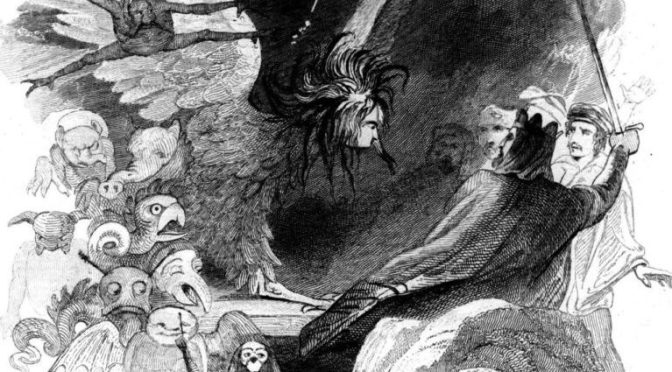
Literary Hub shared some weird/cool Victorian illustrations for Shakespeare’s plays. There are more at Fine Books & Collections, or you can just view the whole archive online.