The Shannara Chronicles: “The Chosen” is a Tangerine Dream soundtrack away from greatness

Though I loved them as a teenager, I don’t think I’ve even cracked the spine of a Shannara book in at least ten years. Still, I was delighted when I heard there was a television series in development based on Terry Brooks’ novels. With so much recent fantasy fare that is decidedly grimdark, The Shannara Chronicles is a much-needed palate cleanser, and since I’m a sucker for nostalgia projects there was basically no chance that I wasn’t going to watch (and love) this show. It’s definitely the most fun I’ve had watching a fantasy epic in a long time, and I would even argue that it’s solidly well-conceived, with decent acting, good plotting, and nice pacing.

The opening shots and credits for The Shannara Chronicles are absolutely gorgeous, and the whole show so far is just one stunning piece of CGI scenery porn after another. It’s so pretty that I don’t even care that after thousands of years, none of the metal structures they show would still be standing in any form. It’s not as if the broken Space Needle, desiccated ship, or various rotten vehicles and satellite dishes and so on add any particular sense of realism to the setting. They are cool, though, and the vivid, highly saturated colors put this show essentially one Tangerine Dream soundtrack away from aesthetic perfection. I can even forgive the show for creating an elven city that looks—no joke—like they just tried to imagine what might happen if Lothlorien and Minas Tirith had a baby city in the post-apocalypse. In fact, I rather like this kind of overt callback to LOTR. It’s probably best for Shannara to just own its heritage right out of the gate.

The costuming is nicely contemporary-feeling, but without just being a showcase for designer dresses like some other teen shows. I don’t feel like I’ve been transported in time when I see the show’s elves or Rovers, but I also don’t feel like I’ve been transported to prom night at a prep school. The costumes for Amberle and Eretria are reasonably practical for the activities the women are engaging in, which I appreciate, and neither of them is overly sexualized.

The show in general displays a pleasantly frank attitude towards sexuality, in line with its YA sensibility and current trends in YA fiction. There’s no sex actually confirmed to be happening, but Amberle is not assumed to be virginal, in spite of being an elf princess. Her aunt actually assumes otherwise when Amberle goes to her for help, thinking that the princess could be dealing with an unwanted pregnancy. While this is somewhat played for laughs, it’s indicative of the show’s relaxed way of dealing with teenage sexuality—in this future world it’s normal, accepted, and issues seem to be handled practically and non-judgmentally. There is a love triangle suggested (Amberle, Wil, Eretria), but the show so far hasn’t made romance a too-central part of the story it’s telling. Instead, it seems more concerned with just introducing us to the characters, introducing the characters to each other and getting on with the adventure.

The actual story is pretty pedestrian stuff—an evil dark lord coming back with demons, a farm boy with a great destiny and a secret heritage, Manu Bennett as sexy Gandalf—but it’s done well, and I’d always rather see a derivative tale told nicely than an avant garde disaster. The show definitely struggles with dialogue in this first episode, though. Although I’m not always hip to kids’ lingo these days, I actually enjoy the teen-speak of the young adult characters, but there were more than a few hilariously bad speeches. Hopefully this will get worked out better in future episodes as they find a balance between creating relatable young characters and plausible fantasy heroes. One area the writers shined in, on the other hand, was in incorporating expositional dialogue. So many sci-fi and fantasy projects get bogged down with clunky, uninteresting exposition, but this one works it in pretty deftly. I won’t say it’s not noticeable, but it’s not ham-fisted or dull.

Probably my favorite thing about the show so far, though, is the ways in which it improves upon the source material. Admittedly, it’s been a good while since I read the book, but I remember it as heavily focused on Wil, with Amberle in particular as a much less active character. Here, though, Wil’s hero’s journey exists in parallel with Amberle’s and they support each other on their way. Even Eretria seems a bit more lifelike than I remember, though it’s not clear yet where she fits into the bigger story except as the other prong of the love triangle. Regardless, it’s nice to see the story kind of updated and expanded to give the girls larger and more heroic roles, and I’m legitimately excited to see what happens next.

Miscellaneous thoughts:

  • The show could definitely be more racially diverse. There are a lot of people of color in crowd scenes and background roles, and it’s cool to see a black woman as the Commander of the elven army, but all of the main roles except Manu Bennett’s Allanon were cast with white people. So it’s not the worst show in terms of diversity, but it could have been better.
  • I would have especially liked to see more of the Rovers cast as non-white actors. I know it’s from the books, but if you’re going to use tired old stereotypes of travelling people in your story, you could at least not make them all super white to boot.
  • I don’t like the chestplate thing that Manu Bennett wears. It looks weird.
  • The CGI scenery looked amazing, but the CGI for the demons left something to be desired.
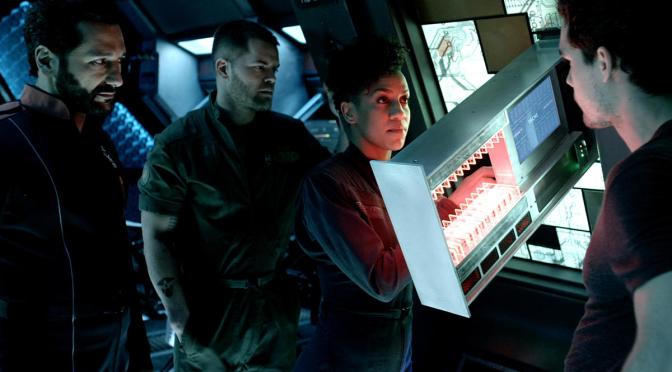
The Expanse: “Back to the Butcher” feels like a calm before a storm

“Back to the Butcher” feels like the show letting out a sort of sigh after four episodes of high tension, action-filled spectacle. Everyone gets to relax a little, including we viewers, and it’s interesting to see what the show’s characters do with their brief quiet time.

So far, while the show has avoided a truly episodic narrative, there’s still been a definite pattern and rhythm to the storytelling and how it shifts between Miller, the Cant survivors, and Avasarala. Last week was the first time since episode one that a new point of view was introduced. This week, Avasarala doesn’t appear at all, and there is a lengthy flashback sequence about Fred Johnson instead. It’s informative, but it stops short of telling the full story of this character and how he went from being Fred Johnson, The Butcher of Anderson Station, to Fred Johnson, high level OPA member. Having read Leviathan Wakes, I am familiar with the story, but I’m not sure if the Anderson Station stuff made much sense to anyone who hasn’t read at least the first book. It seems like there is enough information offered to let the viewer connect the dots, but I expect that next week we’ll hear more about it from Fred himself.

The reason we spend so much time on Fred Johnson, of course, is that he’s the first/only person to offer the now-fugitive Cant survivors some kind of lifeline. When the episode opens, they’re adrift in space, turning everything off so they can’t be found, and with a dead Martian (sadly, Lopez didn’t make it) on their purloined and highly recognizable ship. Catching up on newsfeeds now is also the first time the Cant survivors learn of how Holden’s announcement has gone over on the stations.

It’s an interesting situation for the crew, and while the debate over what to do next isn’t exactly compelling, I am just happy that there is a debate. In the book, this was all story that was told from Holden’s point of view, and it’s greatly improved by adapting it as an ensemble drama. I’m especially (still) enjoying Naomi’s increased importance on the show, and I love her friendship with Amos. This time on the ship—renamed the Rocinante when they finally decide to accept Fred Johnson’s offer of help—is a nice respite for everyone, and while there’s not a ton of actual time dedicated to it, there’s a lot of well-done touches that bring these characters to life a little more.

On Ceres, Miller is still digging deeper into his investigation of Julie Mao, to the point that he’s stopped drinking and is alienating his friends and coworkers. He’s approached this week by Anderson Dawes, who offers him a trade; Dawes will give Miller the guy who attacked Havelock if Miller will keep Dawes in the loop on the Julie Mao case. This all seems to be related in a subtle way to Miller’s crisis of identity and his torn loyalties, and it’s cleverly sharing screen time this week with what’s going on at Star Helix while Miller is busy elsewhere. I was legitimately surprised by Miller’s kidnapping at the end of the episode, though. That’s not at all where I thought things were going, and now I have to wait until next week to see a whole lot of shit hit the fan on the station.

Miscellaneous thoughts:

  • I want to know everything about Naomi.
  • Holden’s face when he finally gets his coffee might be the first time I’ve really found him likeable.
  • I like Octavia Muss a lot, but I wish she’d be given more to do than just act as a voice of reason and be ignored by Miller. It feels as if the show kind of wants to give her a bigger role, but they don’t want to actually do it, and so she’s turning out to be less a character and more of a device to be an impediment to Miller and give the appearance of the show having more female characters than it does. Here’s hoping that she gets more to do later on.
  • The Anderson Station story kind of destroyed me. It’s great world building and character background, too, but it’s good on its own and is a great example of how to properly utilize flashbacks.
  • Jared Harris steals every scene he’s in as Anderson Dawes. He’s a much more menacing-seeming character on the show than in Leviathan Wakes, but I like it.

Supergirl: “Blood Bonds” turns back every advance made in the last episode

I’m a little concerned that Supergirl is starting to become tiresome. After a winter finale that ended literally in the middle of what seemed to be a pivotal fight, I expected something much better than what we’re given in “Blood Bonds,” which is a huge mess of spinning wheels and downright silly diversions that do nothing to move any of the show’s several major plots forward.

The fight that we were in the midst of in the last episode was wrapped up within moments this week when Non kidnaps Hank Henshaw. The rest of the episode is concerned largely with figuring out how to get Henshaw released without “negotiating with terrorists.” A secondary plot in the episode is Kara trying to convince Cat Grant that Kara is definitely not Supergirl, even though Cat is not stupid, and there’s even a sort of tertiary plot with James and Winn stalking and harassing Maxwell Lord. In short, “Blood Bonds” is a huge mess, and while it was another amazing episode for Kara’s character, I’m finally starting to doubt that Melissa Benoist is really capable of carrying the whole show on her own indefinitely.

Non’s kidnapping of Hank is actually pretty anti-climactic in the end. It does give us a glimpse of Alex Danvers in charge, which is nice, but I’m still a little confused by what feels like a very abrupt about face on Alex’s part regarding her distrust of Hank. I’m not sure how learning that he’s an extremely powerful alien just completely put an end to all of Alex’s questions and concerns. I’m also not sure what the show is going for, more broadly, with Non and Astra. There were several flashback sequences this week that shed a little more light on this pair and our understanding of Astra is certainly improved, but there’s also that scene where Non just murders some guy for no real reason. In any case, everything is back to the status quo by the end of the episode: Astra is on the loose and still an ecoterrorist, and Kara has conflicted feelings about it. The only thing that’s changed at all is that Kara now knows that Hank is actually Martian Manhunter—but that’s literally the only forward progress on any front in this episode.

When Kara isn’t negotiating with actual terrorists this week, she’s working absurdly hard to try and prove to her boss that she’s not Supergirl. Cat has threatened to fire her because she thinks that if Kara is Supergirl, then saving people is way more important than answering phones and bringing Cat coffee, and Kara’s fight to keep her position at CatCo, while somewhat absurd, produces the most authentically emotional moments of the episode. Melissa Benoist and Calista Flockhart have a great onscreen dynamic, and I would absolutely watch a show that was just about their relationship. The only problem with this all is that, again, I’m not really sure what the show is going for. Kara is obviously the worst at keeping a secret, but I think Cat would not be a bad person to let in on things, and if it’s the job that Kara is really worried about, I feel pretty certain that Cat could be persuaded to let her keep it. It just doesn’t make that much sense, for all the it’s fun to watch.

The tertiary plotline in “Blood Bonds” is almost too silly to bother mentioning. While Kara is busy this week, James and Winn decided, for some reason, that they were going to launch their own investigation into Maxwell Lord. Clearly, Max is a turd of a human being, and he’s acted shady about all kinds of things so far, but I don’t think he’s done much that James and Winn would know about to trigger their snooping. Alternatively, if they really think Max is so dangerous, I feel like their half-baked plan to spy on him somehow is just ridiculous. In any case, it gets James into trouble when he’s caught by a couple of Max’s goons and Max decides to beat up on him a little—which also gets him in trouble with Kara, who doesn’t like her human friends taking even the smallest, most calculated risks. The best part of this whole debacle, though? James doesn’t manage to find out anything new about Max at all; it’s only revealed to the audience at the end of the episode that Max is doing some kind of science experiment on a young woman who bears a more-than-passing resemblance to Supergirl.

This show is almost increasingly inconsistent, and its reliance on Melissa Benoist’s talent to redeem so many huge, glaring flaws seems certain to be its undoing. As much as I love her, and as much as I have so far maintained that Melissa Benoist is a delightful angel who definitely does carry the show, there’s ultimately only so much that one woman can do. Supergirl needs to decide what kind of show it wants to be or else it’s going to force viewers to decide whether or not they want to stick with it.

Miscellaneous thoughts:

  • I hate Maxwell Lord with a passion. As far as I’m concerned, his is definitely the most punchable face on television right now. It’s not that he’s such a great villain or anything. He’s just a huge douchebag.
  • They should have done the Hank Henshaw kidnap before revealing his identity to the audience. There was basically no sense of real peril or danger for him this week, which made everything Alex and Kara were going through to rescue him feel like melodramatic theatre.
  • I love seeing Kara work through her feelings about things. That’s definitely the thing this show does best, and while it may struggle in many other areas, Kara’s character growth is always excellent.

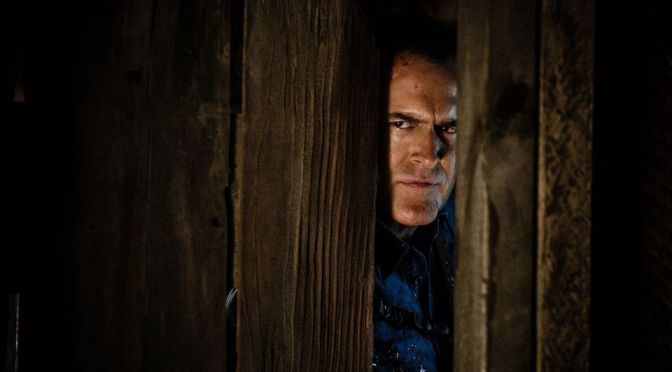
Ash vs. Evil Dead: “The Dark One” is a near-perfect finish to a solid first season

The frantic pacing of last week’s penultimate episode feels like it’s mostly paid off, as “The Dark One” is a nearly perfect finale to the first season. While I’m still a little bummed that we didn’t get more fighting with Evil Ash, and I still think Amanda Fisher was criminally poorly utilized, this episode was truly excellent as well as being, hands down, the most truly horror-filled half hour of the season.

Last week’s “Bound in Flesh” ended with Pablo being possessed by the front cover of the Necronomicon. This week, he’s spirited away by Ruby, dragged down into the basement of the house to be used in, well, obviously nothing good. Ash follows, reluctantly, to try and rescue his young friend. Meanwhile, Kelly and Heather find themselves trapped upstairs until Kelly is thrown out by the house and has to try and find a way back in. It sounds chaotic, but on screen all these moving pieces are perfectly harmonized and manage to feel fast-paced but not rushed as in some previous episodes.

I’ve written pretty consistently about the ways that I think Amanda Fisher was served badly in the narrative of the season, and I still stand by everything I’ve ever said about her. She was a likeable character that the writers just never seemed to know what to do with. What I found interesting about this last episode, however, is that even though Amanda’s story was disastrously mishandled and unforgivably botched at every turn, the effect of her death and her return as a Deadite actually worked as intended—if the intent was to raise the stakes for all of the other characters in this final showdown (of sorts) with Ruby.

The most truly masterful part of “The Dark One” is the real sense of peril that pervades the episode, and Amanda Fisher’s death made this possible by showing that any one of the characters could die—even when as important-seeming as she was. When Pablo got possessed by the book, that danger felt real. Similarly, when Kelly is ejected from the house, I was legitimately concerned for her safety. Poor Heather, who I thought might have a chance, actually didn’t make it through the episode.

One of the enduring problems of the horror genre, especially in television, is getting the audience to believe the danger that characters face. In an ongoing series, there’s some expectation that most of the people we meet and care about will be around for a good while. Ash vs. Evil Dead, though, has definitely proven that it’s not afraid to kill people off, and if it doesn’t kill its characters outright it’s certainly willing to torture them. Even now, I get the feeling that the only person in the show who is really, truly safe is Ash himself.

The other way in which this episode shined was in the sheer amount of actual horror it delivered. The Evil Dead franchise has always been secondarily comedic, and there were still a few laughs this week, but there were also great gouts of fake blood and body parts, flayed skin, Pablo vomiting up Ruby’s “babies” and said babies (actually about the size of a kindergartener) running around and attacking people. Kelly’s time outside the house is just harrowing, and Pablo’s ordeal was a masterpiece of body horror that was actually difficult to watch. That it was all filmed as artfully as anything else in the series so far was just a bonus.

I have seen some complaints about the actual ending of the episode, but I think Ash’s deal with Ruby was exactly in character while still reflecting his emotional journey over the course of the season. Ash has never been a particularly intelligent or forward-thinking guy, so of course he would sell out the rest of the world to save these young people that he’s come to deeply care for in spite of himself. The trio riding off into the post-apocalyptic hellscape Ash has created is a perfect set up for the second season of the show.

Miscellaneous thoughts:

  • The roaches from Heather’s crotch felt weirdly out of place. So much of the horror of Evil Dead has always been gore and blood and Deadites that the bugs seemed like a weird thing to include. It was also kind of a weirdly sexualized and gendered horror, if you think about it, which doesn’t seem quite fair to a character who is going to end her time on the show getting her head dropkicked by Kelly.
  • When Kelly was outside the house, all I could think was “please no tree rape.” Thank goodness they didn’t go that direction.
  • Ruby’s Basic Instinct pose is iconic.

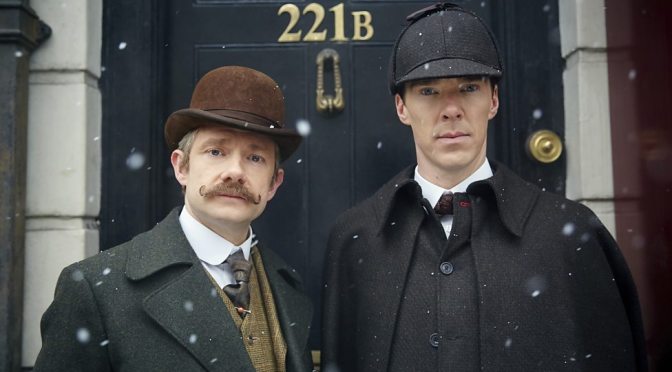
Sherlock: “The Abominable Bride” displays all of this show’s worst tendencies in one place

I’m not quite sure how to encapsulate my disappointment and disgust for “The Abominable Bride” in just a few hundred words. Sherlock has never been one of my favorite shows, and it’s far from even being my favorite iteration of the relatively recent spate of Sherlock Holmes adaptations—hello, Elementary. Still, I really liked the first and second series of it. Each of those six episodes was fast-paced, cleverly plotted, and gorgeously filmed, and Sherlock has the distinction of being one of the first shows to integrate text messaging in a way that was both visually interesting and useful to its storytelling.

However, it’s always been a show that suffers from a serious case of Steven Moffat, Mark Gatiss, and their obsession with their ideal of a Great Man who is a total trash monster of a human being but is so full of genius that we’re supposed to forgive his every garbage word and action (that Moffat and Gatiss write). In Sherlock, of course, this is exemplified in the titular character, but the show’s John Watson is also pretty unlikable. Both of these pieces of work—either Moffat/Gatiss OR Sherlock/Watson, I guess—are in rare form in “The Abominable Bride,” which is not a fun old-timey holiday special like it was marketed as, but instead turns out (in a twist worthy of M. Night Shyamalan) to be a journey into Sherlock’s “mind palace” (a phrase and concept so insufferably pretentious that I hate to even type it).

Most of the episode, then, takes place inside Sherlock’s head, and it’s, frankly, a new insight into his character that I wish I didn’t have. The whole ninety or so minutes is just a mix of things that don’t make much sense and things that make me hate Sherlock with a deep and abiding passion. That is to say, it’s pretty much straight fan service at this point, but only for the fans to whom all of Moffat and Gatiss’s worst tendencies are assets rather than annoyances. For me, “The Abominable Bride” was just one long, escalating feeling of outrage.

Probably the worst part of the episode for me was the way it handled its women characters. Largely, this is because none of them are proper characters at all. Instead, they are women the way that Sherlock imagines them.

Mrs. Hudson is a petty, passive-aggressive shrew, and the joke about her is that she’s angry because Watson doesn’t give her any lines in his story. Both Watson and Sherlock are “comically” amazed that she would feel this way and literally point out that bringing tea is Mrs. Hudson’s only function in the narrative.

Mary Watson is an almost mythical presence in Sherlock’s mind palace, but she also, ultimately, is given little to do. Instead, she largely figures into things as a competitor for her husband’s time and affection, and Watson’s neglect of his wife and their marriage is treated as a joke while Mary’s feelings are portrayed (to the degree that they are portrayed at all) as decidedly secondary to her husband’s and Sherlock’s. In the end, Mary Watson is a largely silent figure and cheerfully indulgent of her husband and his friend. It’s as if she is representative of how the viewer ought to feel; we might be irritated with Sherlock and Watson, but we’re also meant to accept it as the necessary price of their greatness.

Poor Molly Hooper may be the worst-served woman in “The Abominable Bride.” Previously on the show, she’s shown some romantic interest in Sherlock, and Sherlock has behaved terribly to her every chance he gets. Here, inside Sherlock’s mind, we see that he, on some level, thinks of Molly as a man. Certainly, he doesn’t think of her as sexual or attractive, and in the mind palace we see this represented with Sherlock’s imagining of Molly in drag. On another level, Sherlock sees Molly as part of a somewhat incomprehensible-to-him mass of womankind—but a mass of women who are also secretive and furtively malevolent.

Throughout the episode are sprinkled numerous running jokes that seem to refer to criticisms the show has received regarding its treatment of women, but they seem more a mockery of the show’s critics than any sincere attempt at conversation. The main “villain” in Sherlock’s mind palace is a secret society of murderous feminists, and by the end of the episode they don’t even matter because they were just a way for Sherlock to work through his feelings about/for Moriarty the whole time.

Probably the worst sin of “The Abominable Bride,” however, is the revelation of Sherlock’s drug abuse/addiction, which has previously gone entirely unmentioned in this iteration of Sherlock Holmes. I do remember an instance in an early episode of Sherlock using multiple nicotine patches, but that’s it. So the reveal here that the whole episode was just Sherlock overdosing on the plane from the end of the last episode came as a surprise, to say the least, but not a good one. The reactions of Mycroft and Sherlock in the real world of the show are totally unearned and inexplicable, a perfect example of Steven Moffat’s tendency to rely on his audience’s arcane fandom knowledge and uncritical suspension of disbelief to make the emotional beats of his stories work. You know, instead of just putting in the work himself to write a stories and emotional/character arcs that feel natural and make sense.

Miscellaneous thoughts:

  • Lestrade’s facial hair was kind of hot.
  • So was Molly Hooper’s mustache.
  • The costumes for Mary Watson and the Bride were gorgeous.
  • The queerbaiting in this episode was atrocious.

Weekend Links: January 2, 2016

Happy New Year! As I said yesterday, I’m definitely looking forward to kicking this year’s ass. First, though, I’ve got to make it through what is passing for winter in southwest Ohio but really feels much more like spring. The abundance of increasingly redundant year-end retrospective posts says early January, but the amount of bird shit on my car says mid-March. Regardless of the number of very confused songbirds outside my window, there’s not been an awful lot going on this last week, although that doesn’t mean I haven’t rustled up anything interesting.

The USPS announced that they will be releasing Forever stamps in 2016 with Star Trek designs. Also some very cool-looking stamps with planets on them AND some special stamps just featuring Pluto.
George R.R. Martin has a lengthy update on what’s going on with The Winds of Winter. It’s not great news–it seems very unlikely now that we’ll see it before late this year–but it’s nice to know.

Rhianna Pratchett shared some memories of her late father in The Guardian.

N.K. Jemisin has a new column in the New York Times. In her first installment, she tells us what’s good and new in sci-fi and fantasy.

The L.A. Times looks at book trends to watch for in 2016. Science fiction, paper books, and diversity are all on the menu.

Fandom Following has a great piece up on media realism.

Mythcreants examines five bad defenses of bad stories.

This year mark’s the four hundredth anniversary of the Bard’s death, and Tor.com kicks off the year with a great list of gender-, race-, and sexuality-bent Shakespeare.

The Daily Dot talks about why we need more diverse superheroes.

Okayafrica collects the best moments of 2015 in African sci-fi.

Taylor Swift released a new music video, for her song “Out of the Woods,” and it’s pretty excellent:


Happy New Year! Time to kick 2016’s ass!

This is the first year in a long time that I’ve felt like making proper New Year’s resolutions, although I did have a few half-assed ones last year. Frankly, it’s just really nice to be starting the year off with a goal greater than just not being completely crushed under the weight of depression and anxiety. I haven’t felt this level of positivity since, well, maybe ever. It certainly helps that 2015 was a pretty alright year for me, all things considered.

That said, I think that part of the reason I did have some struggles in 2015 is because I didn’t really have a proper plan for the year. So, 2016 is going to be largely about establishing routines and building better habits. It’s also going to be a year about getting on the road to achieving some long term goals, now that I’m at a point where I’m no longer just dealing with immediate crises all the time.

Health and Fitness Goals

My go-to resolution in this category, for years has been “quit smoking.” This was always a lie, because I loved smoking and didn’t really want to quit, but in 2015 I did it anyway. It turns out smoking hinders bone healing, so I gave it up cold turkey when I broke my food, and it seems silly to start up again now—especially since I made it through the holiday season without doing it.

After breaking my foot last year, basically all of my health and fitness goals except quitting smoking were heavily compromised for the rest of the year. By Thanksgiving, I was ready to just give up, and the last week I’ve basically been subsisting on leftover cookies and Red Bull, with the occasional McDonald’s double cheeseburger(s). All that is stopping as of Monday (I’ve still got a few leftovers to deal with). Concrete goals:

  1. Walk at least one mile, at least five days per week, leftover broken foot pain and swelling permitting.
  2. Do 30-45 minutes of cardio at least five days per week.
  3. Start logging my meals in MyFitnessPal again. This was actually really helpful last year, so I think it’s a good habit to get back into.
  4. No more energy drinks. I want to get back to only drinking water and the occasional tea or coffee.
  5. No more fast food. Or at least much, much less than I’ve been having. It’s all terrible for me, it doesn’t even taste that good, and it makes me feel like shit afterwards most of the time.
  6. Cook more often and more adventurously. To this end, I’ve already subscribed to RawSpiceBar, which will get me three new spice mixes, plus recipes, every month. I am super excited about this.

Professional Goals

This is the year that I finally break down and go to college. After three years of no regular job, and with very few prospects, I’m doing it. If I get started now, my hope is that I can finish my bachelor’s in three years and get a decent job by the time my daughter is out of high school.

  1. Finish the college application process by January 30.
  2. Figure out how I’m going to pay for college.
  3. Keep looking for part time and freelance work to supplement my partner’s income and help defray some college expenses.

Financial Goals

2015 was the first year in a long time where we were consistently caught up on things. Even my breaking my foot and my daughter fracturing her elbow a few months later weren’t completely devastating events. My daughter and I both got new computers, and I was able to replace/upgrade some things in my kitchen. 2016, however, is going to be a year of paying things off and saving money.

  1. Have an actual written budget for our household.
  2. Start being more conscientious about writing grocery lists—and sticking strictly to them. Probably the number one way in which we overspend is by buying extras at the grocery store.

Blogging and Writing Goals

In 2015, I started SF Bluestocking as a new and more serious blogging project to encourage me to write when I realized that using Tumblr as my main platform was actually stifling my productivity. This blog has been steadily gaining readers month after month, and I’ve probably written more in the last six months than I had in the previous two years. In 2016, I hope to continue to grow the blog, but I’m also starting to recognize that my vision of what it could be is bigger than what I can accomplish on my own, but also highly dependent on how the next year shapes up in terms of my furthering my education. In the long term, obviously, university will make me a better writer and increase the quality of my work. Short term, though, I expect that I will at some point become temporarily less active, so I’m trying to plan accordingly.

  1. I need to set realistic goals for myself. This means that perhaps I can’t keep up writing about half a dozen or so shows every week AND read AND see movies AND write about other things that I’m interested in AND have a life away from my computer. So sometime in the next couple of days, I’m going to sit down and make a calendar, with deadlines and everything, to help me manage my time better.
  2. I need to work with other people. While I am concerned about my ability to manage things here and go to school full time, I think that finding a partner or two or three for this endeavor would be more of a help than a hindrance. I feel like SF Bluestocking is a project that will only benefit by a bigger and more diverse group of people working on it. I don’t have a plan for this yet, but my goal is to figure it out by the end of March.
  3. I used to write a lot of fiction, but I haven’t in many years even though I loved doing it and wasn’t terrible at it. In 2016, unrelated to the SF Bluestocking project, my goal is to write one piece of short fiction, at least 1500 words, every month.
  4. And have one finished piece of fiction by the end of the year that I would feel comfortable trying to get published.

Personal and Lifestyle Goals

This is where I’m getting into weird territory because I can’t remember the last time I was in a good enough spot on January 1 to even be contemplating this sort of thing. It’s a real testament to my improved mental health that I’m able to do it this year, so I don’t want to go crazy with making huge plans that I won’t actually go through with. Instead, I’ll stick to just a few modest goals that feel pretty doable.

  1. Learn a new language. I’ve already downloaded Duolingo on my phone, and I’m starting with German. It’s kind of cheating, since I took three years of German in high school, but that was over fifteen years ago, and I’ve apparently forgotten a lot.
  2. Once a month, do something nice with my daughter, just the two of us. We don’t spend enough quality time together, which is too bad, because, really, she just gets cooler the older she gets (currently twelve).
  3. Keep my home work space clean. There’s a lot about it that isn’t ideal, but the least I can do is minimize clutter. Hopefully, this will help with some of my productivity issues.
  4. Read more mindfully. Last year, I’d hoped to read two books a week, but feel short. This year, I’m scaling back my reading goal by about 25% and planning to be even choosier about what I read than I already have been. The biggest change, though, is that I’m planning to read at least one nonfiction title per month. I feel like I forget nonfiction exists sometimes if I don’t make a point of seeking it out on purpose, so this year I’ll be doing that.

Looking back at this list, I feel like it’s longer and more ambitious than I originally intended, but I’m gonna just go with it.

What’s your New Year’s resolution/plan?