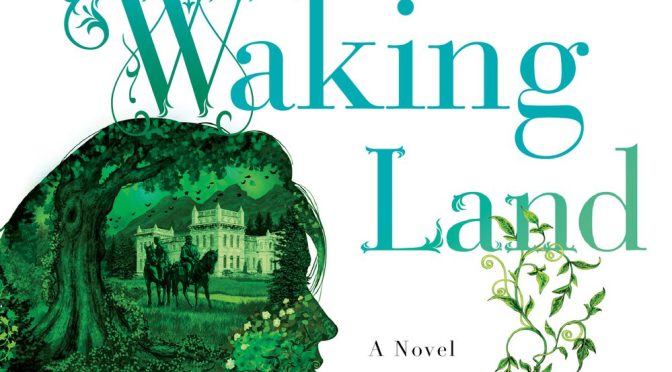
 This book was slow enough in its first third or so that I nearly put it down in frustration, but when it gets good it gets very good. It’s got some issues with exposition and pacing that are likely just due to its being a first novel, but there’s quite a lot to enjoy about it nonetheless. For one thing, it’s got a drop dead gorgeous cover (designed by Kathleen Lynch and illustrated by Ben Perini), and inside you’ll find an intriguing magic system, a resourceful (if flawed) heroine, and an interesting take on fantasy politicking, and if The Waking Land isn’t a great read, it’s still a more or less promising debut that sets up Callie Bates as an author to watch.
Elanna Valtai has been raised like a daughter by the king who exiled her parents after a failed rebellion, but when the king is poisoned she finds herself on the run, forced to confront some unpleasant realities that she’s been kept ignorant of, and discovering parts of herself she didn’t know existed. It’s a solidly conventional fantasy set-up, part coming of age and part political intrigue, but Bates tweaks the narrative just enough to keep things somewhat fresh. Elanna’s attachment to her foster father and the way she identifies with her adopted country turn out to be an interesting exploration of something very like Stockholm syndrome, and there’s a lot of page time dedicated to Elanna’s feelings about her confused identity. It’s easy to follow Elanna’s growth from the sheltered girl who thought she’d come to terms with her childhood trauma to a girl learning that she didn’t even understand what had been done to her to a self-actualized woman who has resolved her inner conflicts and is ready to both forge her own path and work together with others to build a better future for their people.
One thing I love about Elanna is that, though she’s not, in general, unlikeable, she’s written with very little seeming concern about likeability. Instead, while not written in a naturalistic fashion—it’s hard to have true naturalism in this kind of fantasy—she is allowed to just exist and have feelings without any attempts within the text to justify or make excuses for her worst tendencies. When Elanna is selfish or cowardly or uncertain, the text is nonjudgmental and, for a book with first person narration, nicely free of self-loathing. Elanna’s internal conflicts are rarely about whether she feels capable of achieving what she wants; instead, she struggles both with knowing what she wants for herself and with trying to figure out the best way to live up to her inherited responsibilities. That said, in early chapters, Elanna’s self-absorption and ignorance can be tiresome. It makes for a compelling and coherent character arc when she finally starts to grow up a little, and Elanna proves herself time and again as a staunch friend, loving daughter and loyal ally, but there are a solid hundred pages where she borders on being insufferable.
On a more positive note, the setting and supporting characters are mostly strong. Bates has crafted a smartly imagined fantasy world with a sort of 17th century aesthetic and elements of French and what seems like Welsh (or some mix of Welsh, Scottish and Irish) culture. There’s gunpowder-based technology, extravagant palaces, salons with shade of the Enlightenment, and a democratic-revolution-minded rebellion in the works. The magic system is left somewhat ill-defined, but it’s also not overpowered, and none of the book’s major conflicts are resolved through solely mystical means. For a YA fantasy, naming conventions are reasonably good; “Elanna Valtai” is the fussiest name in the book, and the rest of the characters and places are named pronounceably and with consistency and good sense. There’s even some effort made at diversity, though it’s done in that weirdly subtle, vague way that seems calculated to be inoffensive to a presumed white audience.
The biggest problem weighing down the story, however, is a lot of very clunky exposition (including a wholly unnecessary prologue) all of which is only made more unwieldy by the choice to tell the story in first person present tense. While this seems to be the reigning popular point of view for YA fantasy, Bates struggles to make it work here, especially in lengthy expository sections about Elanna’s background, the backgrounds of other characters, the history of the land and the political situation. Sadly, the earliest parts of this novel really are enough of a slog to deter many discerning readers; at 400 pages, The Waking Land feels much longer than it is, and there are faster and more evenly paced options for those without the patience to stick this one out until it gets better.
This review is based on a copy of the title received from the publisher through NetGalley.
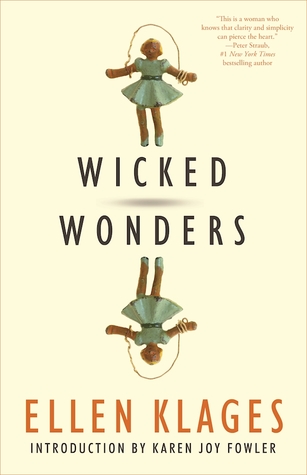 Ellen Klages is having a good year, which is also a boon for those of us who love good short fiction. Klages’ Tor.com novella, Passing Strange, is sure to be among the best of 2017, and it was a fortuitous discovery for me as I hadn’t read anything by Ellen Klages before. When I saw that she had a new collection of short fiction coming out from Tachyon just a couple of months later, I was thrilled. I was even more thrilled when I got approved for the ARC on NetGalley, and my excitement turned out to be totally warranted. Wicked Wonders is, with one significant and honestly baffling exception, full of consistently thoughtful, clever, affecting stories, all overlaid by a sort of gently reassuring feeling of nostalgia.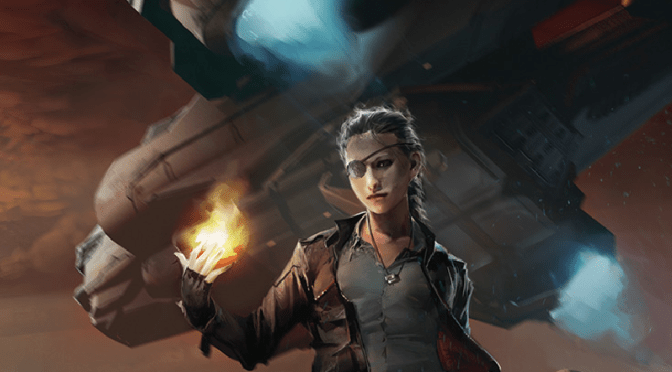
 I read quite a few debut novels and had a cool half dozen on my reading list for the first three months of 2017, but Alex Wells’ Hunger Makes the Wolf was the one I was most looking forward to in the first quarter of this year. I’m happy to say that it did not disappoint. While it may lack some of the great depth and the high level of craft of some of the other debuts I’ve read so far this year, Hunger Makes the Wolf more than makes up for it in other areas. It’s a well-conceived, smartly plotted, enthusiastically fast-paced sci-fi adventure with some cool ideas and a couple of excellent lead characters who’ve got plenty growing still to do in future books.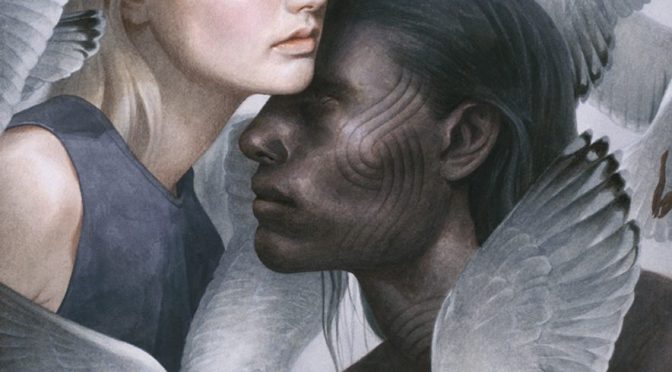
 So, I read Miranda and Caliban because I love Shakespeare and had never gotten around to reading any of Jacqueline Carey’s other work. I also read two other Tempest-based stories last year (Margaret Atwood’s Hag-Seed and Foz Meadows’ Coral Bones—both excellent) and thought it would be interesting to compare this one to the others. For what it’s worth, Miranda and Caliban is beautifully written, well-structured and readable, but the question I kept coming back to the longer I read it was “Is it necessary?” Sadly, I don’t think it is. I don’t regret having read it, but I also wouldn’t say that it deepened my understanding of The Tempest, Shakespeare or their themes, and what insight it gave me into the author’s understanding of these things didn’t impress.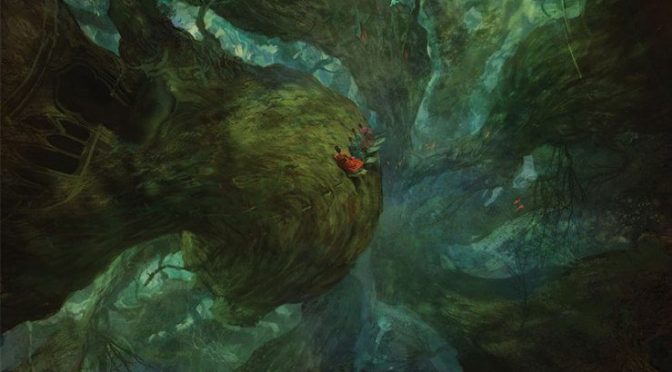
 Thoraiya Dyer’s Crossroads of Canopy was one of my most anticipated debut novels of 2017, and I’m pleased to report that it did not disappoint. Crossroads is a truly tremendous book, full of fantastically original worldbuilding, fascinating mythology, and a cast of compelling characters led by one of my favorite fantasy heroines in a very long time. It’s a gorgeously magical and delightfully challenging novel that only gets lusher and more incredible the longer you read it.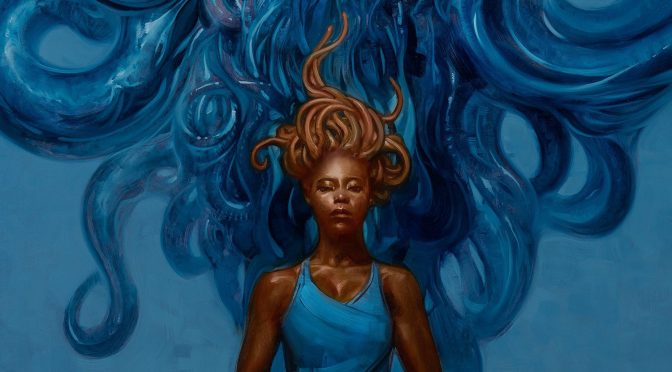
 I didn’t love Binti when I read it in 2015, in spite of having loved everything else I’d read by Nnedi Okorafor up to that point. It was on the short side for a novella, and I’d recently read Okorafor’s absolutely superb Lagoon, which set the bar high for Binti. There were things I loved about it, but I was definitely in the minority of readers who didn’t consider it one of the top novellas of the year, so I wasn’t sure how I would like Binti: Home. This book is about twice as long as its predecessor and addresses many of the things I considered shortcomings in Binti, though it does end on a particularly unsatisfying near-cliffhanger made even worse by the lack of release date for the planned third book that will complete the series.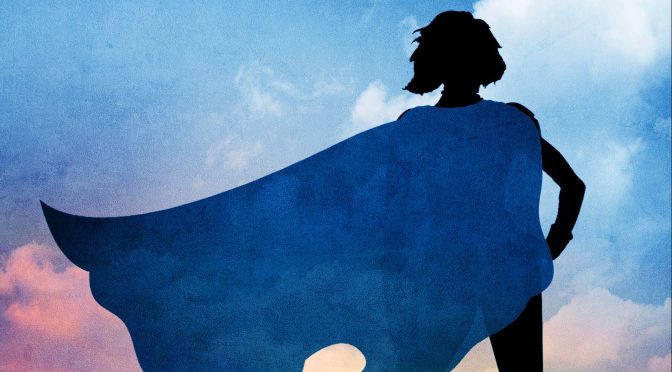
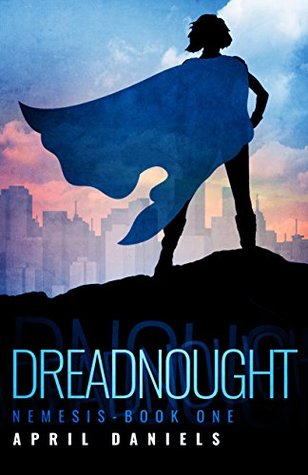 I love that Dreadnought is a thing that exists in the world more than I actually enjoyed reading the book, though I did rather like it. It’s being marketed as great for fans of last year’s The Heroine Complex and Not Your Sidekick, and both of those were titles that I just never did quite manage to get around to reading, mostly because I’m not super into super hero stories. Like these other books, Dreadnought centers around an unconventional protagonist, in this case a fifteen-year-old closeted trans girl named Danny who has to quickly come to terms with her identity when she is unexpectedly gifted with both superpowers and the body she’s always known she should have. Danny is a smart, plucky, relatable heroine who I expect will be an education for some readers and a much-needed bit of representation for others. Nonetheless, Dreadnought is a book that I read with the constant awareness that it wasn’t for me. Danny’s story of self-discovery and actualization is one that will be compelling for any reader, but I imagine it will resonate most deeply with readers who share more of Danny’s experiences as a trans girl.
 Passing Strange is an absolutely magical story and by far my favorite thing I’ve read so far in 2017. In this gorgeously imagined romance, Ellen Klages brings the queer side of 1940s San Francisco to glittering life and peoples it with characters who are fresh and interesting and yet still feel like the kind of old friends one wants to visit with over and over again. It’s a book that works precisely because of the specificity of its characters and its setting in time and space, and Klages does a great job of balancing the reality of history with the light fantasy elements she introduces over the course of her story. It’s still early in the year, but I fully expect Passing Strange to make a lot of year’s best lists, my own included.
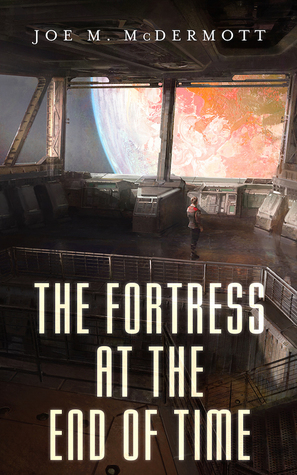 Joe M. McDermott’s The Fortress at the End of Time might be a little bit genius, but I can’t decide if I loved it or hated it. It’s got a great classic sci-fi sensibility if, but I’m generally not one for classics. It’s a novel that, while short, is often boring, but intentionally so and in a way that mostly works if you’re a patient reader. It’s got some big ideas that are worthy of considered exploration, but none that are particularly fresh. It’s solidly written with a distinctive voice and style, but there’s nothing especially exceptional about it. It’s a book that I’m glad to have read because it is a bit outside of my usual fare and a nice change, but I don’t feel compelled to read either more of McDermott’s work or more of this sort of thing in general. It’s not that The Fortress at the End of Time is unremarkable or pedestrian; it’s just a profoundly workmanlike example of its type of thing–thoughtful medium-hard military-ish sci-fi that has something to say about some stuff–if you like this sort of thing. I can easily imagine this being a book that lots of other people love, but I can’t muster any very strong feelings about it, myself.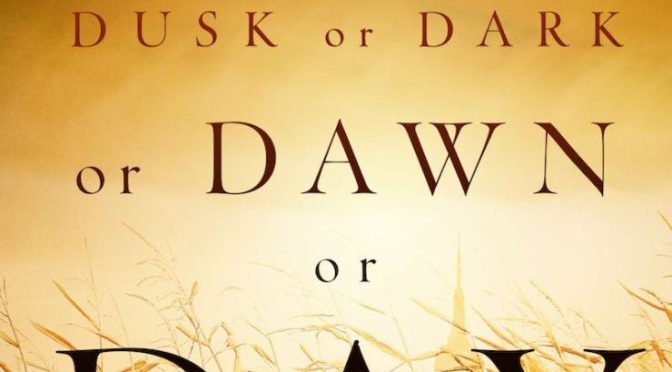
 It’s early enough in the year that I don’t have much to compare it to yet, but I feel confident in saying that Dusk or Dark or Dawn or Day is one of the year’s great novella-length works. It’s smartly written, well-paced, has a compelling cast of characters and an original mythology, and is altogether compulsively readable. It’s perfect reading for a cold day or a rainy afternoon, exactly the sort of thing that is easy to zip through in a single sitting like I did.
 SF Bluestocking