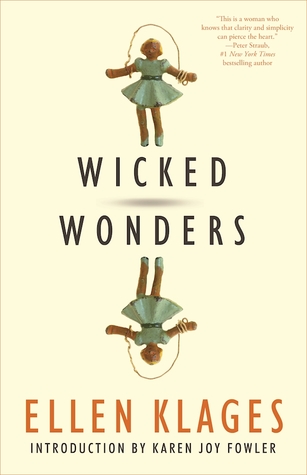
 Ellen Klages is having a good year, which is also a boon for those of us who love good short fiction. Klages’ Tor.com novella, Passing Strange, is sure to be among the best of 2017, and it was a fortuitous discovery for me as I hadn’t read anything by Ellen Klages before. When I saw that she had a new collection of short fiction coming out from Tachyon just a couple of months later, I was thrilled. I was even more thrilled when I got approved for the ARC on NetGalley, and my excitement turned out to be totally warranted. Wicked Wonders is, with one significant and honestly baffling exception, full of consistently thoughtful, clever, affecting stories, all overlaid by a sort of gently reassuring feeling of nostalgia.
The only major criticism I have of the collection specifically concerns the story “Woodsmoke,” which starts off as a nice story about girls bonding (maybe even falling in adolescent love) at a summer camp but then turns into the horrendously sensationalized reveal that one of the girls has an intersex condition, complete with immediate misgendering and melodramatic handwringing about “I don’t know your real name.” It’s a bizarre bait and switch that feels like a betrayal of the characters (who deserve better treatment) and the spirit of the story (which up to that point was fine, if unremarkable). Frankly, I don’t know what Klages was about with this story, and her explanation of it in the Story Notes section at the back of the book is unhelpful except to say that she hopes to make it part of a novel length work at some point (please no). If “Woodsmoke” had appeared early in the collection, I may have stopped reading the book altogether because it was so deeply upsetting; as it is, I can only recommend Wicked Wonders with a major reservation.
Regarding the rest of the collection, many of the stories in Wicked Wonders deal with childhood, and Klages has a real knack for capturing something of the bittersweetness of coming of age moments. “The Education of a Witch” explores a young girl’s identification with a villainess, and it’s a story that will likely be relatable, albeit in different ways, both to those of us who grew up before princess culture and those who grew up immersed in it. “Singing on a Star” is looks at the anxieties that surround a child’s first sleepover. Often, Klages’ stories feature precocious girls with creatively clever and interesting ways of looking at the world, as in “Gone to the Library” (which also features a cameo by Grace Hopper).
Most of these stories deal with transitions of one kind or another. In “Amicae Aeternum” (a story which legit made me weep when I read it and is literally making me tear up as I write this), a young girl says goodbye to her best friend before moving very far away. “Echoes of Aurora” is a gorgeously melancholy autumnal love story that deals with a non-childhood life change. “Hey, Presto!” is a smart and thoughtful coming of age story about a young woman reconnecting with her father and discovering they have more in common than she previously thought. In “Goodnight Moons,” a story that that recalls nothing more than Bradbury’s Martian Chronicles, an astronaut takes a much bigger leap for humanity than she thought she was going to when she signed up to go to Mars.
Also evident in this collection is a sharply wry sense of humor, and Klages often uses ironic turns of phrase and sly references to great effect. “Sponda the Suet Girl and the Secret of the French Pearl” is a smart and funny original fairytale that should appeal to fans of Ursula Vernon. “The Scary Ham” is a short, humorous nonfiction story about the grieving process (and it was a very scary ham). “Mrs. Zeno’s Paradox” carries social nicety between women to a logical extreme, making use of a single strong central joke for maximum effect.
To be sure, there’s a decided slightness to all the stories in this collection, which is sometimes at odds with the ostensibly serious subject matter Klages writes about. While there is a little darkness in some of the stories, Klages’ endings are almost universally happy, or at least optimistic, and I suspect this won’t appeal to all readers. Still, there’s something to be said for short, sweet stories that don’t require a great deal of thought to understand and enjoy, and Wicked Wonders, for the most part, has a pleasantly restful quality that makes it quietly delightful to read.
This review is based on an advance copy of the title received from the publisher via NetGalley.
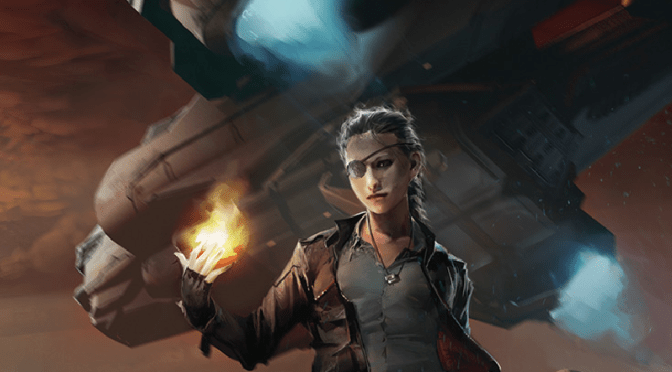
 I read quite a few debut novels and had a cool half dozen on my reading list for the first three months of 2017, but Alex Wells’ Hunger Makes the Wolf was the one I was most looking forward to in the first quarter of this year. I’m happy to say that it did not disappoint. While it may lack some of the great depth and the high level of craft of some of the other debuts I’ve read so far this year, Hunger Makes the Wolf more than makes up for it in other areas. It’s a well-conceived, smartly plotted, enthusiastically fast-paced sci-fi adventure with some cool ideas and a couple of excellent lead characters who’ve got plenty growing still to do in future books.
 So, I read Miranda and Caliban because I love Shakespeare and had never gotten around to reading any of Jacqueline Carey’s other work. I also read two other Tempest-based stories last year (Margaret Atwood’s Hag-Seed and Foz Meadows’ Coral Bones—both excellent) and thought it would be interesting to compare this one to the others. For what it’s worth, Miranda and Caliban is beautifully written, well-structured and readable, but the question I kept coming back to the longer I read it was “Is it necessary?” Sadly, I don’t think it is. I don’t regret having read it, but I also wouldn’t say that it deepened my understanding of The Tempest, Shakespeare or their themes, and what insight it gave me into the author’s understanding of these things didn’t impress.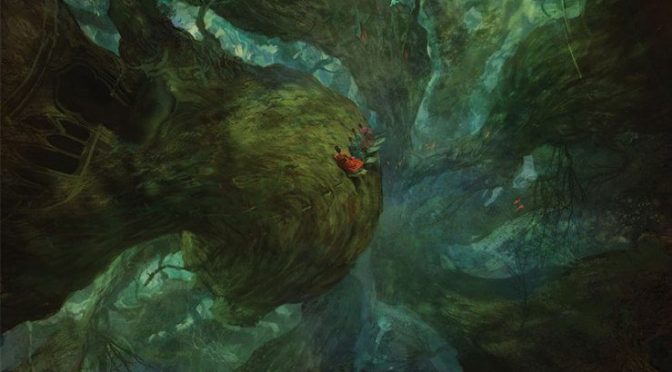
 Thoraiya Dyer’s Crossroads of Canopy was one of my most anticipated debut novels of 2017, and I’m pleased to report that it did not disappoint. Crossroads is a truly tremendous book, full of fantastically original worldbuilding, fascinating mythology, and a cast of compelling characters led by one of my favorite fantasy heroines in a very long time. It’s a gorgeously magical and delightfully challenging novel that only gets lusher and more incredible the longer you read it.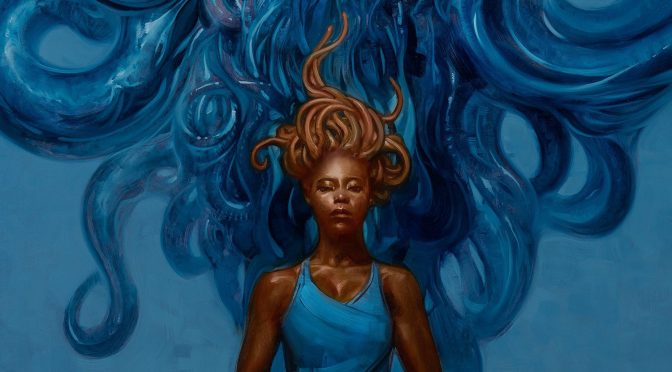
 I didn’t love Binti when I read it in 2015, in spite of having loved everything else I’d read by Nnedi Okorafor up to that point. It was on the short side for a novella, and I’d recently read Okorafor’s absolutely superb Lagoon, which set the bar high for Binti. There were things I loved about it, but I was definitely in the minority of readers who didn’t consider it one of the top novellas of the year, so I wasn’t sure how I would like Binti: Home. This book is about twice as long as its predecessor and addresses many of the things I considered shortcomings in Binti, though it does end on a particularly unsatisfying near-cliffhanger made even worse by the lack of release date for the planned third book that will complete the series.
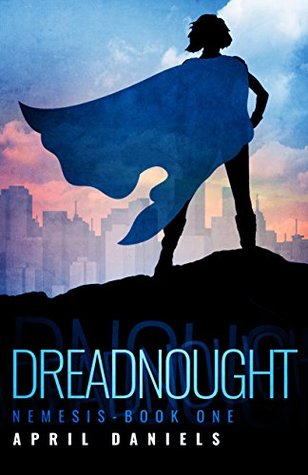 I love that Dreadnought is a thing that exists in the world more than I actually enjoyed reading the book, though I did rather like it. It’s being marketed as great for fans of last year’s The Heroine Complex and Not Your Sidekick, and both of those were titles that I just never did quite manage to get around to reading, mostly because I’m not super into super hero stories. Like these other books, Dreadnought centers around an unconventional protagonist, in this case a fifteen-year-old closeted trans girl named Danny who has to quickly come to terms with her identity when she is unexpectedly gifted with both superpowers and the body she’s always known she should have. Danny is a smart, plucky, relatable heroine who I expect will be an education for some readers and a much-needed bit of representation for others. Nonetheless, Dreadnought is a book that I read with the constant awareness that it wasn’t for me. Danny’s story of self-discovery and actualization is one that will be compelling for any reader, but I imagine it will resonate most deeply with readers who share more of Danny’s experiences as a trans girl.
 Passing Strange is an absolutely magical story and by far my favorite thing I’ve read so far in 2017. In this gorgeously imagined romance, Ellen Klages brings the queer side of 1940s San Francisco to glittering life and peoples it with characters who are fresh and interesting and yet still feel like the kind of old friends one wants to visit with over and over again. It’s a book that works precisely because of the specificity of its characters and its setting in time and space, and Klages does a great job of balancing the reality of history with the light fantasy elements she introduces over the course of her story. It’s still early in the year, but I fully expect Passing Strange to make a lot of year’s best lists, my own included.
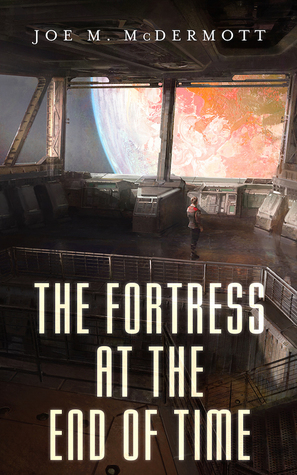 Joe M. McDermott’s The Fortress at the End of Time might be a little bit genius, but I can’t decide if I loved it or hated it. It’s got a great classic sci-fi sensibility if, but I’m generally not one for classics. It’s a novel that, while short, is often boring, but intentionally so and in a way that mostly works if you’re a patient reader. It’s got some big ideas that are worthy of considered exploration, but none that are particularly fresh. It’s solidly written with a distinctive voice and style, but there’s nothing especially exceptional about it. It’s a book that I’m glad to have read because it is a bit outside of my usual fare and a nice change, but I don’t feel compelled to read either more of McDermott’s work or more of this sort of thing in general. It’s not that The Fortress at the End of Time is unremarkable or pedestrian; it’s just a profoundly workmanlike example of its type of thing–thoughtful medium-hard military-ish sci-fi that has something to say about some stuff–if you like this sort of thing. I can easily imagine this being a book that lots of other people love, but I can’t muster any very strong feelings about it, myself.
 It’s early enough in the year that I don’t have much to compare it to yet, but I feel confident in saying that Dusk or Dark or Dawn or Day is one of the year’s great novella-length works. It’s smartly written, well-paced, has a compelling cast of characters and an original mythology, and is altogether compulsively readable. It’s perfect reading for a cold day or a rainy afternoon, exactly the sort of thing that is easy to zip through in a single sitting like I did.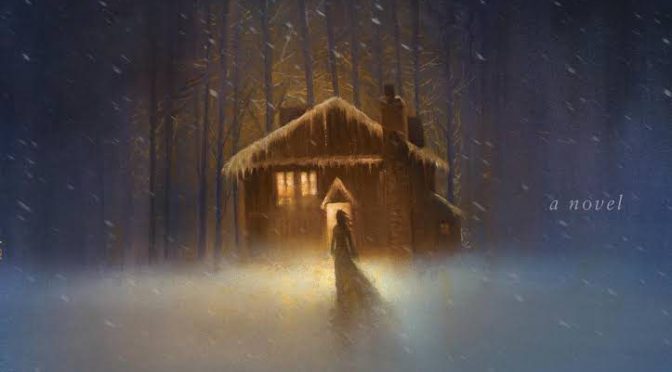
 The Bear and the Nightingale is an excellent fairy tale-inspired historical fantasy that should appeal to fans of Naomi Novik’s Uprooted and Catherynne M. Valente’s Deathless. Katherine Arden has crafted a well-researched, beautifully written, and overall marvelously realized debut novel that nonetheless has some deep and unsettling flaws that I expect will keep it from being among my favorite novels of 2017 and, frankly, make it somewhat unlikely that I will return to the series (this is the first of a planned trilogy).
 SF Bluestocking