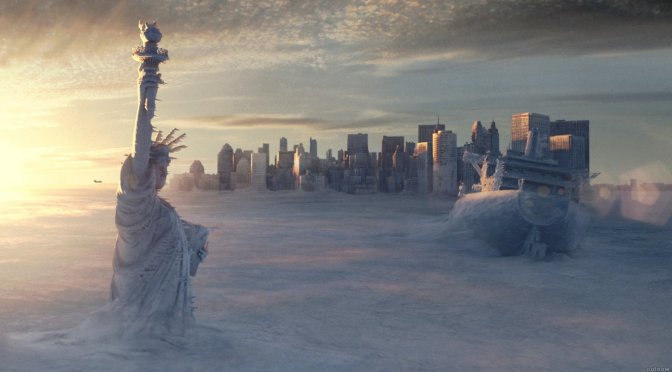
Independence Day: Resurgence gets a trailer, is surprisingly exciting

I didn’t think I would care that much about this movie, and I haven’t paid attention to the production news at all, so this was really my first look at it.

Thoughts:

  • Kind of disappointed that they didn’t get James Duval back. I had a huge crush on him in the mid-90s.
  • Thrilled that they got Jeff Goldblum. I’ve had a crush on him since the mid-90s, which is much less weird the older I get.
  • Excellent use of the Independence Day speech.
  • Will definitely be seeing this one at the theatre.

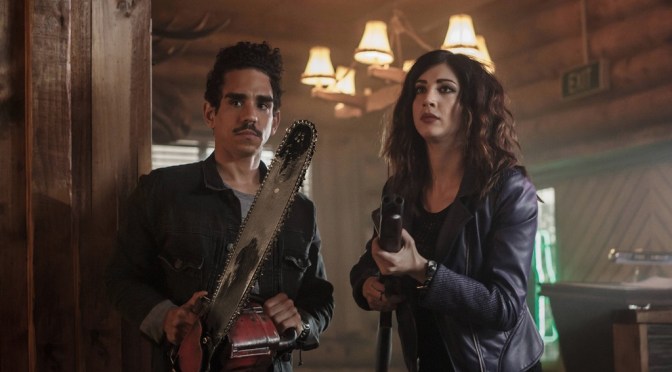
Ash vs. Evil Dead: “Fire in the Hole” almost crashes and burns because of a nonsensical “romance”

I both deeply enjoyed this episode and felt as if I needed to shower once it was over, which I think is going to be, ultimately, how I feel about this whole show. This week, once again, I find myself thankful for Ash vs. Evil Dead’s half hour running time. While it’s fun to watch the show’s copious gory action scenes, and there’s some occasionally great banter, I don’t think I could stand any more, timewise, than what we’re getting.

The biggest problem I have with Ash vs. Evil Dead in general is the show’s seeming inability to write anything substantially good (or even just sensible) for Amanda Fisher to do. In “Fire in the Hole”, that becomes a huge issue in an episode that is otherwise quite good.

After having Amanda spend over half the season chasing after Ash with the mistaken belief that he was the bad guy in charge of the Deadites, she was fairly easily disabused of that notion last week. I didn’t love the way that happened, but alright. The show was always moving towards having her join up with Ash’s little gang, and Ruby being evil (although this is somehow completely unnoticed by Amanda) had always been pretty strongly telegraphed. Last week we also saw Amanda being surprisingly (and disappointingly) susceptible to Ash’s dubious (and, frankly, disgusting) charms.

This week, Amanda and Ash get handcuffed together and this gross “romantic” dynamic gets dialed up to eleven. This might be slightly tolerable if it didn’t require the complete destruction of Amanda’s character for it to even remotely “work.” The thing is, Ash is stupid, sexist, and only marginally competent at the best of times. Amanda was introduced in the first episode as an intelligent and generally sensible police officer on a hunt for the truth about a supernatural experience. She quickly transformed into a nonsensically violent and irrational impediment to our heroes, and now she’s changed again into a doe-eyed, empty-headed object for Ash to seduce.

It’s depressing (read: blind-rage-inducing) to see a potentially interesting female character so systematically diminished over the course of a series in 2015. I have the feeling that this is preparation for some kind of grand gesture or heroic act on Amanda’s part in the final episode or so of the season, but it’s mostly just tiresome. The idea that a clever, professional woman with a proper career and literally any other options would fall for Ash is the most laughable part of this show, and I don’t think that’s the intention of the writers.

Similarly frustrating is Kelly’s lack of character arc, though she’s not been wronged in the narrative in nearly the way that Amanda has. The “friendzoning” storyline with Pablo sucks, and I hate that Kelly’s development is in general kept decidedly subordinate to Pablo’s and Ash’s, and I didn’t love seeing her get semi-damselled again this week, but at least Kelly gets to use a big-ass gun instead of just gazing with inexplicable desire at some dickhead for twenty-five minutes.

Miscellaneous thoughts:

  • The brief nude shots of Lucy Lawless were lovely.
  • I know it helps to make disposable characters seem like they “deserve” to die, but I don’t think it was at all necessary to have the survivalists straight up threaten to rape Kelly.
  • Lem is my favorite Deadite on the show to date.
  • Ray Santiago is a national treasure.
  • At this point, I am firmly on Team Severed Hand.

Weekend Links: December 12, 2015

The most important news of the week is obviously that Margaret Atwood is writing a graphic novel called Angel Catbird. The bad news is that we have to wait until fall of 2016 to actually read it.

The Phrontistery is a thing that exists in the world, and it’s incredible. I’ve been reading a little bit every day since I discovered it, and I’ve learned far more wonderfully obscure words than I can ever hope to use.

Someone made a Christmas album that is goat noises instead of words. You’re welcome.

This weekend, you can watch the biggest meteor shower of the year if you are lucky enough to have a clear night.

This happened on SNL this past weekend. You’re welcome again:

Atlas Obscura has a short history of Martians.

Amazing Stories looks at Frankenstein imagery through the years.

The Barnes & Noble Sci-Fi and Fantasy blog has an informative piece on the history of science fiction in China.

Zigzag Timeline talks about 10 bizarre ways that reading/writing while underrepresented messes with your head.

Wole Talabi lists some of his favorite African SFF short stories of the year.

Tor.com has a list of the sci-fi and fantasy characters they couldn’t stop talking about in 2015.

Buzzfeed has their lists up of 2015’s best fantasy and sc-fi.

Paste Magazine collects the best comic books of 2015, which reminds me how much I ought to read more comics.

Loser City is listing the best 100 comics of the last five years, which makes me feel even more like I’ve missed out on a whole sector of publishing.

Bookworm Blues has an epic best of 2015 list.

And if you’re like me and already building your reading list for 2016, Beauty in Ruins has an early list of the most anticipated fantasy reads to look forward to over the next year.


Book Review: Winter by Marissa Meyer

This entire series of books has been middling at best, and Winter is no different in that regard than its predecessors. Still, it’s an enjoyable read. The biggest problem with Winter is simply that it’s enormously overlong. At over eight hundred pages, and broken up into nearly a hundred chapters, most of which are very short, it’s a monstrously lengthy read. Unfortunately, there’s just not enough going on in Winter to justify all that length, and while I did enjoy it, my biggest feeling when I finished was resentment at how long it took to finish.

The first three books in this series (I’m not counting Fairest, which I haven’t—and don’t intend to—read) were each one better than the one before. Although none of them exhibited any particular excellence, there was definitely a trend towards improvement that unfortunately seems to have plateaued—and that’s only if one is being generous. To be honest, Winter is just a huge disappointment.

I loved Cress in her book (after feeling very lukewarm about Scarlet), and I had hoped that Winter would be a similarly interesting character. Sadly, she’s not. For most of the book it felt as if even the author wasn’t sure exactly what to do with Winter, and the princess often languishes in the background, both figuratively and literally. While Marissa Meyer has often utilized fairy tale elements in interesting ways in this series, her choice to include Snow White’s poisoning and the glass coffin was simply a mistake. It had no significant effect on the story, never felt as if Winter was in any real danger, and was just one of the many ways in which Winter was kept sidelined and ineffectual in her own book.

The truth about Winter is that, for all its ridiculous length, not much actually happens in its pages. It’s as if all the story was told in the first three books and this one is just eight hundred pages of tying up loose ends. Winter’s personal story never manages to feel like much of a story at all, and while I appreciate that Meyer didn’t end Winter’s tale by having her be cured of her mental illness, I rather felt as if Winter was actually forgotten by the end of the novel, which focused mostly on wrapping up Cinder’s story. I mean, good, I guess, that Winter gets her man in the end, but that’s frankly more irritating than not, since it’s just part of the compulsory romantic pairing off of all the series’ characters.

This isn’t to say there’s nothing to like about Winter, but there’s absolutely nothing about this story that deserved such a lengthy treatment. Meyer does a nice job of cramming a happy ending into the last fifty or so pages for everyone, but it’s all really just a little too neat without having any particular dash of cleverness or panache. Even Cinder’s decision to reject being queen in favor of turning the Lunar government into some kind of democracy (it’s rather vague) just feels too on the nose and follows less from the story or character Meyer has created up to this point than it does from sheer convenience. The author wants Cinder to give up being queen and go back to Earth, and so she does.

It’s this sort of writing for narrative convenience that makes this series’ ending ultimately unsatisfying. After four books (six if you count a prequel and the upcoming collection of short stories that correspond to each book) and eight hundred pages in this one alone, all filled with things supposedly happening, none of it matters. We get the ending Marissa Meyer wanted to write, but it’s not an ending that feels real or earned or at all worth the journey to get there.

The best thing I can say about this series is that it’s an enjoyable read, but it’s got so little substance that I can’t recommend it except as pure guilty pleasure fluff reading. That may have its place, but this final book stretched too long to even be as enjoyable as the previous entries in the series.

iZombie: “Cape Town” is thick with narrative justice

This season of iZombie has been an examination of how Liv’s zombie-ism affects her life and relationships, and this episode really digs deep into the ideas that it’s introduced over the last few weeks. “Cape Town” opens with the inevitable argument between Liv and Major after last week’s ending, moves on to the murder of a masked vigilante, has some fun with new villain Stacey Boss, and then hurtles towards a devastating nadir of a midseason finale.

The biggest surprise of the episode, for me, anyway, was the slight abatement of my hatred for Major. This was helped along by “Cape Town”’s B-plot, which explained Major’s situation a little better and worked to make a little more sense out of what’s going on with his zombie-freezing operation. It’s definitely a case of “telling” rather than “showing,” but it works here, with Major spending most of the episode having a heart to heart with a suicidal zombie prostitute. It’s surprising enough that the show handles this material sensitively and respectfully, but that Major comes out of it a somewhat more-polished turd than he was before is a real achievement.

My only serious complaint about Major’s scenes this week is that the woman he spends all this time talking to is never named. I appreciate that the show does such a good job of differentiating between the woman’s choice to engage in sex work and the sex slavery that’s made her suicidal, and her story is definitely a heart wrenching way to offer a sort of worst (or at least worse) case scenario of the zombie experience. It helps Major to understand Liv a little better, though it’s too little, too late for now, as we see at the end of the episode. Still, the Major stuff this week was effective. When Liv breaks things off, I actually felt bad for him on some level—even if it was on a level somewhere underneath my cheering for even the temporary ending of this relationship.

Ultimately, “Cape Town” becomes an attempt to answer some of the existential questions raised by the predicament of Liv and the other zombies. We see how integral to Liv’s identity her job is and how important her zombie powers have become to her, but we also see how her being a zombie interferes with her ability to function. For all that Liv disparages the masked vigilantes that (apparently) Seattle is just infested with, she sees herself in much the same way. The difference is that Liv actually does have super powers, even if they do come with some significant drawbacks.

In this way, “Cape Town” is also a great example of the show doing some of its best work as an interrogation of genre more generally. The masked hero conceit may be a little on the nose, but it’s well done, and this episode utilizes a lot of smart humor to balance out its darker elements and keep it from just being crushingly depressing.

Miscellaneous thoughts:

  • Ravi’s face when Liv starts spouting super hero platitudes is amazing. No one could be more delighted by this turn of events than Ravi is.
  • Stacey Boss is quickly becoming my favorite villain in the history of this show. I have a deep appreciation for disgustingly banal evildoers, and this guy is a perfect example of the type.
  • “I’m a brain dealer, not a doctor!”
  • I’m a little surprised at how easily Liv decides to make another zombie. Worth it for Blaine’s “Welcome to Team Z” speech, though.
  • Peyton is missing again this week, as are Gilda/Rita and Dale. I thought Peyton would be back for sure, with both Boss and Blaine in the episode, but no such luck.
  • It’s also getting a little tiresome for women of color to only be included in this show as murderers, negative stereotypes, and otherwise disposable characters.
  • The breakup between Clive and Liv is about a million times more devastating than the one between Liv and Major.
  • Ravi’s face when he sees Hope, though, is the saddest thing in the whole episode. I feel like Ravi’s face is always the place to look when you want to know how to feel about this show.

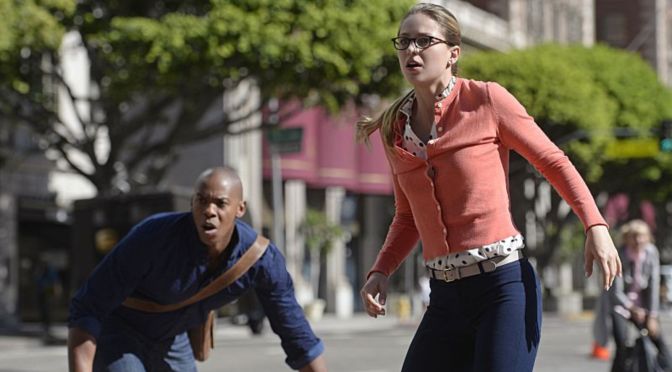
Supergirl: “Human For a Day” is the best episode of the season so far

“Human for a Day” is the Supergirl’s best offering to date, though it’s not without some of the same problems that have plagued the show since day one. It’s definitely an improvement on last week, though, and the episode crams a good amount of story into its hour without being overstuffed. It also continues to prove that the greatest strength of the show is its consistently optimistic outlook that never quite becomes Pollyannaish. This week in particular, the show injects just the right amount of darkness to highlight its hopefulness and make its points really stick.

As much as I want to love this show for being unabashedly and openly feminist, it’s become very clear that Supergirl is at its best when it explores more universal themes. This week, we don’t get any ponderously delivered speeches about gender roles, and it’s a pleasant change. Instead, “Human for a Day” digs a little deeper into what it means to be a hero by giving Kara a taste of what it’s like to go through life without her powers and examining some of the everyday heroism of ordinary people. It’s not thematically groundbreaking, but it’s well executed and avoids some of the after school special tone of previous episodes. ­

Following her battle with Red Tornado, Kara is left basically human until her powers recharge from exposure to Earth’s sun. I actually kind of love how comically fragile she is. Last week, the first thing she did was cut herself on some glass, and after like two days of being human she’s gotten a cold after one bus ride. Then, she breaks her arm by falling over during a particularly ill-timed earthquake. Also, this functions as an excuse to have James Olsen take off his shirt to make a sling for her, which is the best thing that could happen in this episode. Mehcad Brooks should always wear tank tops.

The earthquake leads to a fresh round of Maxwell Lord complaining about how bad Supergirl and the government are, even comparing her to heroin and welfare, because he’s the absolute worst. Kara and James go to talk to Lord and I guess ask him to stop talking bad about Supergirl, but this is really just a way to get Kara back out of the office so she can be confronted with her inability to help people. In a pretty bold (for this show) move, someone actually dies because of Kara’s temporary ordinariness.

It’s absolutely heartbreaking (mostly thanks to Melissa Benoist’s fine work in the role) to see Kara pleading in anguish for her powers to come back so she can save a woman’s father, but this man’s death and a nicely done pep talk from James motivate Kara to go put on her suit and do what she can to help when they see a robbery in progress. Supergirl manages to talk an armed robber down from killing a shopkeeper, and James photographs her at the crucial moment. It’s a powerful scene—even occurring in tandem with another lengthy Cat Grant speech (albeit a much better written one than usual)—and a new iconic image of Supergirl using her words instead of brute force to solve problems.

With Lucy temporarily out of the picture, this week sees Kara and James growing closer together in multiple ways, with both of them opening up about some deeper feelings. Unfortunately, their undeniable chemistry is still not being acted upon, which is a problem. These two clearly care for each other, and obviously want to bang, to the point where even James’s relationship with Lucy is unbelievable. This week, James becomes even more important to Kara when his being in danger is the thing that provides her with the adrenaline rush she needs to jump start her Kryptonian powers. This is clumsily handled, and I’m not sure it’s necessary; I would have been just as happy if her powers had returned in a less dramatic fashion.

Even the B-plot more or less works this week, and we get a big reveal about Hank Henshaw much earlier than I expected. I really thought we’d get at least a few more episodes of build-up to this, with Alex and Kara doing a little more detective work or with a longer arc of Alex’s growing discomfort with Hank finally coming to a head. Instead, that arc is condensed into just half of this episode, which suggests that the reveal is just the beginning of the story here. It was nice to really get a chance to see Alex being pretty badass, but I don’t love how irrational and even stupid some of her actions were in light of the DEO headquarters being under attack from the inside by an alien with mind control powers. During a crisis just doesn’t seem like the best time to handcuff your boss in a room and accuse him of murdering your father, and I know the show tried to sell us on the idea that Alex just doesn’t trust Hank anymore, but her reasoning here is pretty specious.

In the end, though, this is a solid episode that showcases some of the series’ best performances, moves along several storylines, and delivers a compelling (and refreshingly coherent) message. My hope for the show now is that it can continue to do the same thing going forward. It’s mostly fun to watch and has an excellent cast, but Supergirl is held back by its villain of the week format and simplistic ideas. It would be nice to see the show move forward with a new focus on an overarching story and pay less attention to writing each episode with a platitudinous message at the end.

Miscellaneous thoughts:

  • I’m curious about how much thought was put into developing James’s story about his father. There were fewer than 500 US casualties in the Gulf War, and fewer than 150 of those were combat-related (according to the Department of Defense). While it wouldn’t be impossible that his father could be one of them, and the unlikeliness of it might make that even more tragic than if it had happened in Vietnam or WWII, I also wonder if perhaps this was just not thought through very much at all. It does bring up an interesting question, though. How does one update the parent-lost-in-a-war backstory in an age when it’s become a highly unlikely event? It’s a character background that is a major part of a particular type of American story, but the fact is that almost no Americans die in wars these days. Looking back at comic books in particular, war has always figured largely into the comics landscape, but how has that changed? And does it change the backstory when the war in question was not exactly a good or just war—just a senseless or even unjust one? How is this kind of backstory changed when the unfortunate dead parent is no longer an honorable or heroic figure by virtue of their war service? When military service may even be disreputable or unethical? Or when the death is simply tragic, such as accidental deaths and deaths of soldiers by suicide?
  • The Martian Manhunter reveal was a moment where I keenly felt my lack of indepth knowledge about the comics. Apparently, this is really exciting for a lot of folks, and I’m just kind of like, “Cool, but who is this guy?”
  • I’m starting to really hate Winn. Maybe Kara and James do need to sort themselves out, but Winn’s behavior in this episode was even more atrocious than normal. He’s literally the only character in the show that doesn’t work, to be honest, and it’s getting worse. Winn is getting less likable every week, and at this point, it’s not even a little bit understandable why Kara puts up with him. He’s not her friend, and he clearly resents her and wants to punish her for not wanting to fuck him. It’s ugly to watch, and it’s exacerbated by the show’s failure to handle the material critically or even sensibly.
  • The only character worse than Winn might be Maxwell Lord, but at least that guy is supposed to be a huge douchebag.
  • Astra is back! Thank goodness for that. Another week or two, and we might have forgotten about her entirely.

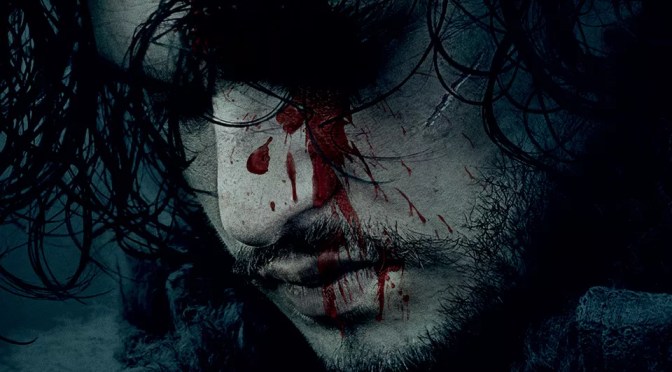
Game of Thrones: This teaser is trash, and I am trash for watching it

I was so exhausted and angry and just generally wiped out by dealing with this show by the end of last season (3-5k words per episode on it will do that to a person) that I wasn’t a hundred percent certain I would keep watching it. But who am I kidding? Of fucking course I’m going to be watching this garbage show in April, and I will be writing about it, and in the meantime I will be following the promotion of it, because that’s what I do.

Ash vs. Evil Dead: “The Killer of Killers” is a great, bloody mess

“The Killer of Killers” is a return to better, though not perfect, form for the show after several weeks of frustrating sidelining of its female characters and a couple of episodes that were disappointingly light on the stylishly (and hilariously) gory action scenes that are the most recognizable characteristic of this franchise. This episode brings back the action (with interest!) and, while it’s not a great episode for the show’s ladies, they’ve definitely got a little more to do than they had last week or the week before. Unfortunately, any gains the women made this week were offset by the unpleasantness of Ash’s misogynistic behavior being played for laughs.

The show opens with Ruby and Amanda arriving, again, at a place that Ash and company have just left. The poke around separately in one of the few legitimately creepy sequences of the season so far, and then the Brujo’s charred corpse comes out of his funeral pyre, accuses Ruby of some kind of betrayal, and then drags her into the flames. Amanda, doing the smart thing for once, gets in the car and drives off after Ash, but not before we’re shown that Ash’s severed hand is, ominously, missing.

Meanwhile, Ash, Pablo, and Kelly have stopped for breakfast at a sort of greasy spoon kind of place. I’m not sure why they don’t just dine and dash, but instead we’re treated to a too-long bit of Ash disgustingly sexually harassing their waitress. It’s probably the most unfunny this series has been so far, and that the waitress is one of the unfortunate victims when all hell shortly breaks loose only adds insult to injury—made still worse again when Ash quickly moves on to harassing Amanda as soon as she arrives on the scene. The action the follows helps to gloss over some of this nonsense—mostly with enormous gouts of fake blood—but it’s kind of a mess nonetheless.

Still, “The Killer of Killers” turns out to be a solid episode if you don’t think too hard about it. It’s highly entertaining, and it benefits greatly from the show’s short running time. Ash might be abrasive and his antics might be stupid and/or offensive, but he consistently provides enough laughs that he doesn’t overstay his welcome. And while the show is still not doing the best job of utilizing its secondary characters, this week was an improvement over last week, and uniting Amanda with the rest of the group feels like an importance piece falling into place.

Miscellaneous thoughts:

  • I’m so glad the goat didn’t die.
  • I was honestly shocked that they killed a kid, and I’m not sure how I feel about it. It wasn’t too much enough for me to not watch the show any longer, but still.
  • It was great to see Kelly finally get in on the action without being possessed or needing to be rescued.
  • One of these days, Amanda will learn that you have to shoot deadites in the head, but it wasn’t today.
  • “When you were possessed, you tried to fuck me and kill me,” is my favorite line of dialogue in this show, ever. I hate the “friendzone” narrative that Pablo and Kelly seem to be getting forced into, but I love this frank conversation opener.

Doctor Who: “Hell Bent” is a hell of a finale after a rocky season

“Hell Bent” is a hell of an episode of a show that I have largely lost faith in over the last few years. My expectations for Doctor Who under the leadership of Steven Moffat have pretty much completely evaporated, and Moffat’s handling of the Doctor’s history, especially as it concerns Gallifrey, has consistently been one of the least interesting-to-me hallmarks of the Moffat era. The previews for this episode showed that Gallifrey was exactly where the Doctor was going in this finale, so my expectations of enjoying it were correspondingly low. I’m happy to have been pleasantly surprised.

Of course, I say “pleasantly surprised,” but the truth is that “Hell Bent” blew all my expectations out of the water. While it doesn’t redeem multiple seasons’ worth of bad writing, poor characterization, whiz-bang endings, and a general trend towards “style” over substance, this episode—especially in conjunction with the previous two—stands out as a stellar accomplishment, the type of truly excellent storytelling that Steven Moffat is, sadly, only all-too-occasionally capable of.

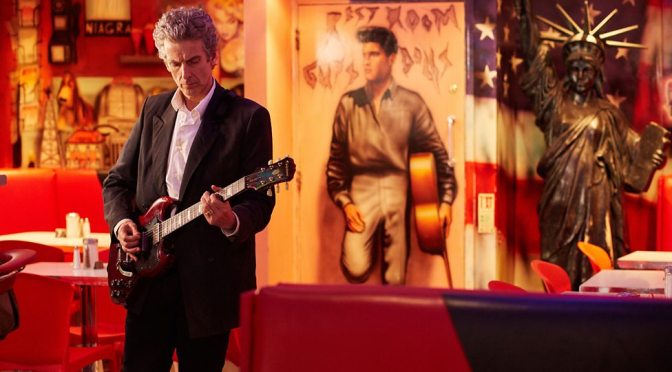
The framing device for the episode is the Doctor in a 1950s style diner in Nevada, telling the story of Clara to…Clara herself. This is the first surprise of the episode, which I had thought would be another no-companion episode that would deal with some kind of epic storyline on Gallifrey. It turns out that is not at all the case. The Gallifrey stuff, honestly, ends up being almost incidental rather than integral to real story, which is an exploration of the Doctor’s unhinged grief over Clara’s death and a way to provide an even better ending for Clara than the quite serviceable one we got in “Enter the Raven.”

That said, it takes until about halfway through the episode before we actually learn what the Doctor is on Gallifrey for. Spending nearly thirty minutes with the Doctor dicking around in a barn, prevaricating about what he knows about the Hybrid, and banishing all his political enemies is a shameless waste of time. Though I suppose this is Moffat’s attempt to establish Gallifrey’s place in the show’s current mythology, it’s a tiresome and senselessly circuitous route to take to the crux of the story: The Doctor is really on Gallifrey to gain access to an extraction chamber that will allow him to remove Clara from time at the moment of her death in order to save her life.

Once the Doctor has safely rescued Clara, we get more of the same speech that she gave before she walked out to meet the raven in the first place, which is a nice bit of emotional continuity while the Doctor steals another Tardis so he can take Clara to the end of the universe. He’s convinced that this journey will give time a chance to heal and set Clara’s heart beating again, which is a weird piece of mysticism, but it gets us to where Ashildr/Me is waiting for the Doctor with some perfectly delivered philosophical advice. This is also where things get really interesting, as the Doctor spills his plans to Me while Clara listens in from inside the Tardis.

In a sometimes incoherent discussion, we learn that it’s possible that the “Hybrid” that is supposed to be so dangerous might actually be the combination of the Doctor and Clara, something the Doctor acknowledges as a possibility. This, you see, is why the Doctor’s big plan is to resurrect Clara only to then remove all her memories of him and then leave her forever, something like what happened to Donna Noble, only even more infuriating because the Doctor’s decision here isn’t motivated by a desire to minimize harm. He’s just being high-handed and, frankly, selfish, which Me reminds him of.

Even better, when the Doctor and Me enter the Tardis, Clara is prepared. She’s used the Doctor’s sonic sunglasses to reverse the effect of the memory erasing device so it will work on the Doctor instead of on her, and she’s adamantly opposed to giving up her past. It’s a scene that finally brings home the idea that Clara really is perhaps too much like the Doctor for anyone’s good, and it’s also the first time since Martha Jones’ departure that a companion has left the Doctor so entirely on her own terms, and it’s really wonderful.

Jenna Coleman really shows her range in this episode as she refuses to have her own life and experiences subordinated to the Doctor’s will, and it doesn’t hurt that the Capaldi’s performance is absolutely superb both in his final scene on the newly stolen Tardis and in the scenes in Clara’s diner that bookend the main storyline. The best moment of the night, though, is a tie between the bittersweet instant when the Doctor insists that he will know Clara if he ever sees her again and Clara realizes that he’s really forgotten her and the moment very shortly after that when we get to see Clara fly off together with Me in the extra absconded-with Tardis.

If the first half of “Hell Bent” is an exercise in self-important grandstanding (it really, really is, on the part of Moffat and the Doctor both), the second half is a well-conceived, beautifully acted, and deeply resonant conclusion to Clara Oswald’s tenure as companion. “Face the Raven” was the best ending it was reasonable to expect for Clara, but “Hell Bent” is the ending that she deserved.

Miscellaneous thoughts:

  • I love Donald Sumpter, but I miss Timothy Dalton as Rassilon.
  • I’m don’t understand why Moffat seems to like Ohila so much, and I’m not sure why the Sisterhood of Karn is on Gallifrey this week.
  • The old-style Tardis that they steal is apparently the original design, and it looks kind of surprisingly great in color.
  • Clara and Me turned loose on the universe, taking the long way back to Gallifrey in a Tardis of their own, is basically my favorite thing that’s happened on Doctor Who in ages. However, this is the second time (The first time was when he gave us Lady Vastra and Jenny.) that Moffat has created a premise for a spin-off series that I want to see more than I want to see more Doctor Who. I desperately want to see Clara and Me’s adventures in time and space—as long as Steven Moffat isn’t anywhere near them.
Weekend Links: December 5, 2015

In spite of it not feeling like it (at least in Cincinnati, where we’re still having daily highs in the 50s and 60s), it is December, and if you need something to help you get into the holiday spirit, Book Riot has a wonderful literary Advent calendar.

Climate change has been on my mind this unseasonably warm week, so I’ve got a pair of climate change links to get us started on the more substantial side of things.

If Atwood’s Gizmodo piece isn’t enough for you, she’s also featured in the New York Times’ By the Book this week, and it’s just more proof that she’s one of the world’s most wonderful human beings.

I finally got around to watching Jessica Jones last weekend, though I haven’t written my piece on it yet. However, lots of other people are still churning out several pieces a day on it. These are my favorites this week:

In tangentially related news, Scientific American published a piece on some science that’s being done on how we’re affected by female superheroes. Discouragingly, it seems that the psychological benefits of seeing strong, capable female characters may be almost entirely offset by having them dressed in sexualizing and objectifying costumes.

I loved this piece at Smart Pop Books about love as a political act in The Hunger Games.

Black Girl Nerds has some great suggestions on what a new Star Trek ought to look like.

At Slate, there’s a great piece up on utopian and dystopian visions of Afrofuturism and whether or not we’re seeing more characters of color in science fiction.

At Book Riot, it’s posited that there are two types of girls: those who read Madeleine L’Engle and those who didn’t.

If you are one of the people who hasn’t read her and wants to start, there’s a ranking of Madeleine L’Engle’s YA canon at Flavorwire. Personally, I’d rank A Wrinkle in Time highest, but I never did get around to reading all of the listed books when I was a girl.

What I did read when I was a girl, though, was lots and lots of books about horses, so I was tickled to see Tor.com’s list of the greatest horses of fantasy this week. I was appalled, however, that not one horse from anything by Tamora Pierce made their list. An absolute travesty.

Electric Literature interviewed Catherynne M. Valente about her new novel, Radiance.

A.C. Wise interviewed A.M. Dellamonica about her latest, A Daughter of No Nation, which came out on Tuesday.

And the final installment of Queers Destroy came out this week as well. You can buy Queers Destroy Fantasy here, and I highly recommend that you do.


Sci-fi and Fantasy books, tv, films, and feminism