I’m not sure if “Bizarro” is objectively the best episode yet of Supergirl, but it definitely ranks among my personal favorites so far. This show has a strong tendency to rush through material and miss opportunities for emotional shading and depth, but it hit all the right notes this week as Supergirl faced off against her doppelganger while also trying to have a life as Kara Danvers. Supergirl had already delivered one incoherent mess of an episode while trying to communicate a very garbled something about Kara’s struggles to balance the different aspects of her identity, and that made it particularly pleasing to see the show get it right (or nearly so) this time around.
The main plot of the episode deals with the conflict between Kara and Bizarro, but it can really be better understood as a more internal conflict as Kara struggles to maintain her own identity in the face of her responsibilities and the weight of dealing with her specialness. She accepts Bizarro more and more fully over the course of the episode, until by the end she actually identifies with the other woman. It doesn’t show the viewer anything particularly new about Kara, but it does allow Kara to reaffirm her identity to herself. She’s been trying all season so far to separate Kara and Supergirl and compartmentalize her life in a way that allows her to “have it all,” but here she’s forced to integrate her dual identities and come to terms with the fact that she is different and she really might not be able to have a normal life.
The secondary plots this week are both intertwined with and perfectly complementary to the Kara/Bizarro stuff.
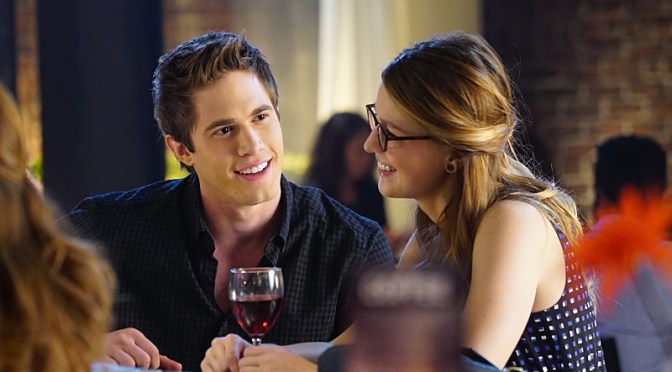
The first and more significant one is Kara’s attempt to date Cat Grant’s son, Adam. Unsurprisingly, it doesn’t work out, though not for the reason I expected. Rather, the relationship ends before it even really begins because Kara just can’t see a way to fit him into her already very hectic—and dangerous—schedule. As sad as this is, especially considering how adorable this pair was together, the real gut punch comes when we learn how this affects Kara’s relationship with Cat. Cat’s remarks to Kara might not seem entirely fair to the viewer who knows the whole story, but from Cat’s point of view Kara has kind of betrayed her. Kara brought Adam to town and was an integral part of Cat’s reunion with her son, but now Kara has failed to deliver on the promise that implied—namely, that she would be Cat’s ally in reforging that mother-son relationship. Instead, Kara has somewhat quixotically started something that she isn’t capable of seeing all the way through, and she’s put her own sanity ahead of her desire to be all things to all people. It might not be fair of Cat to punish Kara by cutting her off emotionally, but it’s definitely understandable and sad for everyone involved.
Finally, there are the other men in Kara’s life, Winn and James, who managed to also be moderately interesting and less tiresome than usual this week. Winn seems to have mostly gotten over Kara’s rejection of him. I cringed when he used the term “friendzone,” but I can mostly forgive it as it’s said without rancor. What I can’t forgive is the gross way Winn suggests to James that James could “have” Kara any time he wants. Yuck. I’m also having an increasingly difficult time forgiving James for continuing his relationship with Lucy when he’s obviously got feelings for Kara. I don’t care if he never manages to ask Supergirl out—especially since that feels like a kind of weird transference of affections situation anyway—but I hate that he’s stringing Lucy along in the meantime. We haven’t gotten to see much of Lucy yet, but she seems like a nice woman who is genuinely in love with James and willing to relocate to pursue him. It’s kind of a dick move to let her do that when he’s obsessed with Supergirl.
The best parts of “Bizarro,” however, are the parts involving its titular character. There are several decently produced fight scenes, and Bizarro is infused with enough real pathos to make her the most compelling single-episode antagonist the show has given us so far. Overall, it’s a solid episode that manages to hit all its plot beats on time and effectively develop its themes without dipping into the after school special territory the show is sometimes prone to. Most gratifyingly, it manages to say something about a moderately complex feminist issue without putting it in Cat Grant’s mouth in the form of a clunky speech.
Miscellaneous thoughts:
- Loved the Dr. Frankenstein vibe at the beginning. It’s a little heavy-handed, but it’s an appropriate allusion that works to make Maxwell Lord a more well-rounded villain. It’s very unsettling how deeply he seems to believe in what he’s doing.
- It strains credibility a little that Kara is so quick to blame everything on Maxwell Lord. Sure, he’s a pain in the ass, but she just seems awful certain, awfully fast and in a way that feels more for narrative convenience than for any logical reason.
- That brown sweater Kara wore to the office was wonderful.
- I need Alex to get more and better character development.
- Lucy was visiting her dad this week, apparently. I have a feeling that this is a hint that we’ll be seeing him again soon.


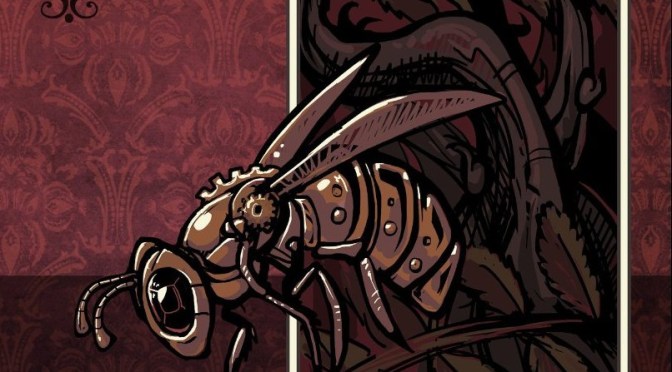
 As is often the case with popular fairy tales, there’s very little new story to be wrung out of “Beauty and the Beast” these days, so I was a little skeptical of Bryony and Roses. Even after reading T. Kingfisher’s (a pen name of Ursula Vernon) Toad Words and Other Stories, which is full of superb fairy tale reimaginings, I was unsure if there was anything she could do to freshen up such an old and well-worn story path. An opening note that admitted an enormous debt to Robin McKinley, whose Rose Daughter is perhaps the definitive feminist “Beauty and the Beast,” was frankly more concerning than reassuring. I ought not have worried so much. Just like in her earlier fairy tale work, Vernon-as-Kingfisher does an incredible job of exploring and revitalizing ancient material, infusing it with a bright, modern, thoroughly feminist (and unequivocally delightful) sensibility.
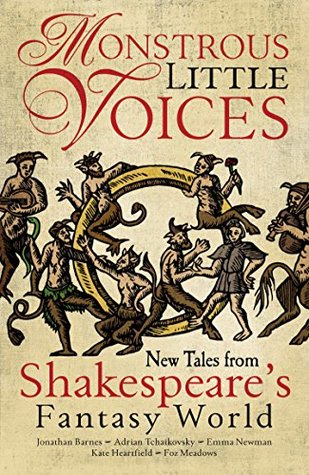 Monstrous Little Voices is a collection of five short novellas that take place within a fantasy world based upon the works of William Shakespeare, and it’s about 80% brilliant, which is pretty good for an anthology. There’s something of an overarching storyline connecting the stories, in addition to common themes and motifs, and this is nicely executed without making the stories feel totally linear or requiring them to be read in order. At the same time, each one also stands alone quite well.


 SF Bluestocking