Category Archives: Television

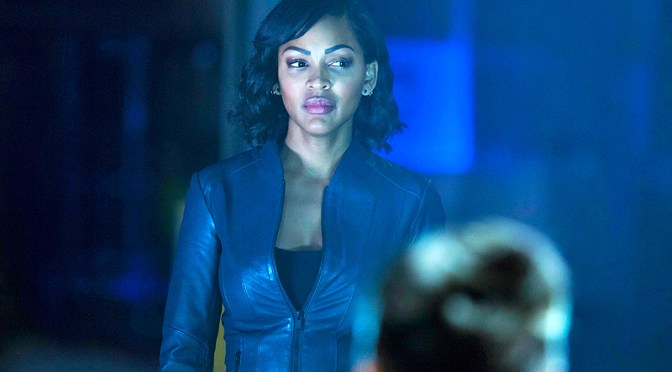
iZombie: Peyton is great, but Peyton plus Blaine is better

iZombie surprised me this week, by following up last week’s very good episode with another that I like even better. “Even Cowgirls Get the Black and Blues” is an episode about heartbreak, which it deals out in spades, and, relatedly, the ultimate randomness and meaninglessness of the universe. Nevertheless, this is also an episode full of hope, although I wouldn’t exactly call it optimistic, either.

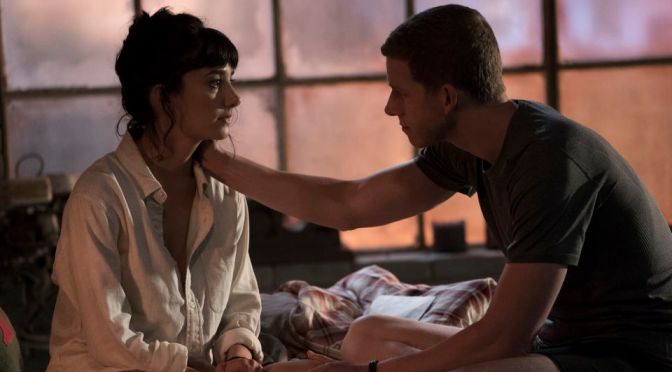
The biggest surprise this week by far was how much Peyton was in the episode. Last week, we seemed to have gotten her back in exchange for no Blaine at all, but this week we get some of both—and both together, which is something I never knew I always wanted. Peyton and Blaine together is only my second favorite development of the episode, though.

The very best thing that happened this week? Peyton and Liv’s actual reunion at the start of the episode. After the last few episodes, which really focused on the breakdown of basically all of Liv’s relationships and Liv’s growing feelings of isolation and disconnectedness, it’s so nice to see something in her life going well. I was a little concerned last week when Peyton just left the birthday cake for Liv, but it turns out she really was just busy. When Liv tracks Peyton down at the gym, Peyton is pleased to see her friend, apologetic about the months of radio silence, and ready to talk about things.

Unfortunately, Liv is called away to help Ravi, but this isn’t the last we see of Peyton. Honestly, though, after all the time this show has spent sidelining and just plain disappearing Peyton altogether, I find it a little hard to credit this turnaround in their treatment of this character. This week sort of doubled down on Peyton’s storyline from last week and tied it together with Blaine’s in a way that makes me think that Peyton is going to continue to play a significant role in this season’s overarching plot. That said, the show has teased Peyton’s importance before with no payoff, so I’m trying to manage my expectations about this until I see at least a few more episodes in this same vein.

Blaine, of course, is shaping up to be a great villain, and this week he’s delightfully evil as he continues looking for the recipe for the tainted Utopium from the boat party. I pretty much loved everything about every scene Blaine was in this week. His texting henchman is excellent, and all of the Blaine scenes this week had the great balance of darkness and humor that characterizes this show at its best.

Aside from Peyton’s return, the other big emotional component of this episode concerns Liv’s relationship with Major. I’m very surprised to see this plot moving along as quickly as it seems to be, although I’m also not convinced that this really is Major’s rock bottom. If it is, it’s going to be profoundly unsatisfying and will really cement Major’s position as one of the most boring ex-boyfriends on television.

In basically every way possible, Major behaves abominably to everyone he comes in contact with this week, which is par for the course with this fetid pile of unexamined privilege. The difference between this week and every other week, however, is that we’re actually starting to see him being called out on it. Peyton has been back all of two days and has noticed what a weirdo Major is being. Ravi actually confronts Major about his bizarre behavior. Even Liv finally goes to Major and tells him that they are for real over. And then Major shows up on Liv’s doorstep and it looks like maybe this thing is back on—although I’d call it even odds that making out with his zombie ex-girlfriend might just be another rung on Major’s descent into crisis.

The problem with Major, of course, is that he’s just plain unlikable. I think I could deal with that if Major’s character arc was taking him towards being a villain, but he’s just awful as a romantic hero. Peyton’s return and her reunion with Liv, with its hugs and apologies and empathy, really helps to highlight just how terribly unreasonable Major has been in the way he’s treated Liv. It was gratifying this week to see Liv herself get to call Major out for this, but the ending of the episode reveals just how much Liv is still dealing with her own feelings of self-loathing, guilt, and shame—and how vulnerable and starved for affection she really is.

Overall, “Even Cowgirls Get the Black and Blues” is a solid episode. The murder mystery sort of fades into the background, and the effects of the murdered woman’s brain on Liv was subtly and sensitively handled, which was a nice change from some recent episodes where Liv picked up a few too many of her brains’ worst qualities. I liked the way that the randomness of the murder ended up echoing the randomness of Liv’s being turned into a zombie in the first place, and it was good to see Liv starting to deal with her feelings in a better way than she has been. Key to that development is Peyton’s return, and it’s very clear that Peyton’s forgiveness and acceptance of Liv is vitally important. I just hope that Peyton sticks around this season.

Miscellaneous thoughts:

  • Ravi’s new girlfriend, Stephanie, seems nice, but I got a sort of weird vibe when she congratulated him on banging Peyton.
  • Minor is a great name for that dog, which is totally adorable.
  • Is Babineaux getting a love interest? That would be swell, because that poor man hasn’t had much to do this season so far.
  • Ravi was awesome this week, in general. He dressed like a cowboy, was a supportive friend to Liv, and called Major out in a pretty significant way.

Minority Report: “Fiddler’s Neck” could have been a nice change of pace, but ends up being a little dull

The more I watch Minority Report, the more I come to terms with all the reasons why this show is almost certainly going to be cancelled after just one ten-episode arc. It makes me a little sad because I think the show, in the beginning, had a lot of potential, but it’s basically all been squandered with bad writing and ill-conceived plots.

“Fiddler’s Neck” takes us to the weird Luddite island where Dash and Arthur grew up after the end of precrime and where Agatha still lives. It’s a nice change of pace, although the episode more or less maintains the case-of-the-week format that has previously been established. This time, though, we get lots of Agatha-related flashbacks, as this week’s case involves the daughter of her old flame. We also finally get to see Agatha and Vega in the same room, which I have mixed feelings about.

Fiddler’s Neck, apparently, used to be a peninsula and is only an island as a result of global warming. We even get a shot of the ruins of an amusement park to show how bad the global warming and coastal flooding is. Fiddler’s Neck is also, apparently, a refuge for libertarians, anti-vaxxers, and natural-living folks of all types. It’s basically so backward the US government gave up on trying to control it, and so it’s a place governed by its own sort of local militia—which turns out to just be a group of crooked rednecks with shotguns. It makes sense, I guess, why the precogs would end up there, but it also makes a lot of sense that Dash and Arthur would get the hell out as soon as they could.

Most of this episode was in service to giving us a better idea of who Agatha is, which I was excited about since she’s been one of the more consistently interesting characters on the show. It turns out, however, that she’s actually kind of boring. Certainly, her doomed love story with the guy who hired her to work on his farm when she first came to the island is dull and cliché, anyway.

I had high hopes for Agatha and Vega together, but even that didn’t really pay off. Agatha was coldly aloof, and Vega spent most of the episode just looking like she smelled something nasty. There were no sparks, no big arguments, and no major meeting of the minds between these two, and I felt like the end of the episode signified nothing more than a return to the status quo. With only ten episodes to work with, I hate to see any episode do as little as this one did to either provide interesting exposition or further the plot.

I’m so sad about this show. It’s one that I think started off with a lot of things going for it, but week after week it continues to fail to deliver on a premise that ought to be really interesting. Instead, Minority Report has turned out to be just a second-rate cop show with some flashy sci-fi window dressing. It’s likable lead actors do the best they can with poor scripts and boring stories, but their charm really only goes so far.

Miscellaneous thoughts:

  • This was an excellent episode for world building, which would have been awesome if it was the second or third episode of the series. This late in the game, it feels superfluous, especially since the most interesting parts don’t really contribute much to the main story.
  • The B-plot, which had Akeela discovering an investigation of Blake and then going to Wally for help, was just awful. Disconnected from the main plot, poorly written, badly executed, and Wally was really unnecessarily nasty to Akeela.
  • I laughed out loud when Vega was trying to show how big she thinks an ear of corn is.

Supergirl: I’m only half in love with this show, but it’s still early

Supergirl’s first episode is everything I dreamed it would be. It’s a huge info dump of some of the most ridiculous superhero mythology ever conceived, and it’s self-consciously (and at times misguidedly) feminist in a way that I hope doesn’t turn out to be characteristic of the series. But it’s also enormously fun.

Melissa Benoist is mostly responsible for this as she plays Kara Zor-El with a sort boundless enthusiasm and charm that makes her instantly lovable. Benoist’s charisma isn’t the only thing to love about this Supergirl, though. While the episode itself is full of dull/silly-but-necessary backstory that is told in flashbacks and voiceovers, Kara’s character is shown to us and by the end of this pilot, we have a pretty good idea of who she is.

I adore Kara’s straightforward earnestness and her apparent total lack of any ability to keep a secret. I love that Kara isn’t a reluctant superhero, although the pilot is careful to show that her transition from determinedly ordinary woman to costumed hero isn’t going to be entirely seamless. Still, this isn’t some kind of chosen one scenario, Kara’s powers aren’t a surprise or a burden, and it looks like most of Kara’s challenges are going to be external ones.

Even better, this pilot basically starts with the assumption that Kara is smart, strong, and capable of dealing with these challenges. The only time we see Kara out of sorts is when she meets James (not Jimmy) Olsen (Mehcad Brooks) who is so hot that she’d have to be far more than superhuman not to be flustered. In her other interactions, even with her demanding boss, Cat Grant (Calista Flockhart), Kara is confident and earnest without being annoying.

This characterization of Kara is probably the most feminist thing about this show, and it’s definitely the feminist thing about the show that feels least studied and forced. I appreciate that the show is explicitly feminist, and I there are actually a couple of more self-aware moments that are downright hilarious (the waitress who just straight up says “Can you believe it? A female hero! Nice for my daughter to have someone like that to look up to,” for example), but I’m not convinced yet that this is entirely intentional. Cat Grant’s speech about the “Supergirl” name was downright cringeworthy, and the misogynist villain was a bit of a flop.

The show also isn’t as feminist in its execution as it ostensibly is in its writing. While there are multiple female characters, and the episode passes the Bechdel test many times over, Kara doesn’t seem to have any actual female friends. There are also no women of color in this first episode at all, and while it’s nice to see a race bent James Olsen, I did get the uncomfortable feeling that Mehcad Brooks was being used as “exotic” eye candy.

It could be that these are things that will be improved upon in future episodes. This is only the pilot, after all, and often there are major changes made between pilots and subsequent episodes. I sincerely hope that this is the case here, because I think Supergirl has the makings of a truly good show.

Doctor Who: “The Woman Who Lived” is the show’s best episode in years

“The Woman Who Lived” is the first episode this year that I’ve unequivocally loved. In fact, I’d say it’s the best episode of Doctor Who since 2010’s “Vincent and the Doctor.” It’s certainly the best episode so far of the Capaldi era, which has generally been lackluster to say the least. Interestingly, and I think not insignificantly, this is also the first Doctor Who episode written by a woman (Catherine Tregenna) since 2008. It shows, and in a good way as I think “The Woman Who Lived” is an episode that very much benefits from a woman’s touch.

The most important woman involved in this episode, though, is the titular one, played with rather surprising deftness and nuance by Maisie Williams. I wasn’t particularly impressed by Williams’ workmanlike turn as Ashildr last week, but this was no simple reprisal of that role. Rather, after some eight hundred years, Ashildr has taken and abandoned many names and now refers to herself as just “Me.” She’s known colloquially, however, as the Knightmare, an infamous highwayman, and she meets the Doctor when they both are trying to steal the same object in 17th century England.

At first, Me thinks that the Doctor has come back for her, and she hopes that he will take her with him on his travels, but he quickly disabuses her of this notion. It turns out that she’s got a back-up plan, involving a lion-alien and an ancient space artifact and a gateway to maybe Hell, but this is really all secondary to her interactions with the Doctor and the emotional journey that they both go through over the course of the episode.

A major theme this season has been the need for this Doctor to reconnect with his humanity, to rediscover his purpose, and after 800 years of functional immortality the woman who was once Ashildr finds herself in much the same position. She’s a perfect foil for the Doctor here and forces him to look at his own life choices and deal with some of the consequences of the decision that he made for her. This is exactly the sort of accountability that the Doctor needs and that used to be more commonly provided by his companions, but it’s nice to see here, especially handled so nicely.

I’m not back to the level of enthusiasm I had for Doctor Who, say, five years ago, but this episode is the most enjoyable the show has been for me in a long time. It was smart, funny, and hit all the appropriate emotional notes perfectly.

Some stray thoughts:

  • Though the idea doesn’t make a ton of sense, I love the thought that Me’s memories fade over time, and her library of journals detailing her many lifetimes is fascinating.
  • I really was impressed with Maisie Williams in this episode. It’s a little surprising to see someone so young be really believable as an eight hundred-year-old immortal.
  • I could have done without the lion alien, to be honest. He was really just silly-looking, and I think Me could have easily come up with her plan some other way, perhaps using some other artifact or device.
  • I love puns so much.
  • I found that I didn’t really miss Clara this week. She’s had so little to do lately, that it’s hardly noticeable when she’s gone.


iZombie: Peyton is back, but Blaine is conspicuously absent

Peyton is back! Finally! And it looks like she might be getting a good amount of screen time, as she’s already getting embroiled in some of the show’s bigger plots (though she doesn’t know it yet).

This week’s murder mystery was only moderately interesting, functioning largely as a vehicle for advancing other plots. It just never quite got off the ground under its own steam, and even watching Liv strut around in rich bitch mode wasn’t that entertaining. The writing seemed torn between trying to take the stance of “trophy wives are people too” and joking too gently at these women’s expense, which is just unfortunate as it means the episode flounders a bit and doesn’t manage to be either funny or insightful. The one redeeming feature of this week’s whodunnit might have been the revelation of the murderer, except by the time that happened I didn’t even care anymore and it was quickly overshadowed by Peyton stuff.

It seems that Major is going to figure larger in this season than in the first one, but he continues to be a bore. It looks like he won’t be hitting rock bottom with his burgeoning addiction anytime soon, and in fact he seems almost too functional, all things considered. He’s certainly functional enough to bang Gilda (who it turns out is Vaughn’s illegitimate daughter?!). I’m not sure who of that pair I feel more sorry for, to be honest. That sounds like it would be the saddest, most vanilla sex ever. Also, is Major Lilywhite really the guy you run to in a fit of post-adolescent youthful rebellion? Poor Gilda.

Ravi was excellent this week. I like Rahul Kohli best when he’s less funny, to be honest, and Ravi is an excellent voice of reason, with good insights. That said, it was a little disappointing to see him so completely oblivious to Liv’s pain this week. So was Clive, but Clive has the excuse of having limited exposure to Liv–basically he sees her just often enough to think she’s probably insane. Speaking of Clive, though, he’s been kind of tragically underused this season so far. It seemed like he and Liv were becoming something like friends last year, but now he seems to exist only to react to her bizarre behavior.

With Blaine missing in action after the reveal of his zombie dad last week, this episode’s big villain was Vaughn du Clark, who was really wonderfully wicked. His interactions with Liv were particularly fun to watch for his part, although Liv’s strange behavior was a bit much. It mostly worked, but this week it was all due to Steven Weber’s excellence as Vaughn.

The most important part of “Real Dead Housewife of Seattle,” however, really is Peyton’s return. With Liv having so few female characters to interact with, Peyton is a pretty vital part of the show that has been missing far too often and, this time, for far too long. Her return was handled nicely, and I thought I might cry when Liv opened her fridge and found that cake. Now I just need for Peyton and Liv to find themselves in the same room. You know, talking and stuff, because I can’t imagine that Peyton has really, fully wrapped her head around the zombie thing yet.

Minority Report: “The Present” is mostly about delving into the past

I’m increasingly feeling very, very alone in my affection for this show, but even this big old mess of an episode hasn’t turned me off entirely. In fact, I think part of my loyalty to the show is exactly because it’s such a disaster, and “The Present” has unfortunate writing and story decisions in spades.

Up until now, Vega has remained a fairly undeveloped character, but this is her episode. It’s been strongly hinted at since the beginning that the reason Vega got into police work and the reason she was so interested in pre-crime was due to a personal tragedy, and this is the week that we finally learn all about it. Yes, “The Present” is Lara Vega’s origin story.

The episode opens with a flashback to a rainy night in 2048, where a different Officer Vega is patrolling a dark alley (called “the Sprawl” of all things) on foot, by himself, whistling and checking his pocket watch, in the pouring rain, (ominously) eight months before pre-crime. His body cam badge flickers off and he starts to get scared–because, really, there is absolutely no way this perfectly cliche scene was ever not going to end with him getting murdered–then turns around and gets shot. After, we see a guy with no eyes walking away.

As ridiculously over-the-top comic book-like as this is, it wouldn’t stand out nearly so much if the rest of the episode supported this kind of melodrama, but it doesn’t. Instead, most of the rest of “The Present” is just Vega being awful to pretty much every single person she comes in contact with because apparently she and her dad shared a birthday, and she’s got feelings about it. Add in some serious ethics violations and straight up police brutality, and Vega comes off here as extremely unlikable at best. At worst, she’s an absolute monster who should have her badge taken away and never be allowed near a firearm ever again.

There was just so much in “The Present” that doesn’t make sense.

  • Why would a police officer be walking on patrol in the rain through an uninhabited dystopian wasteland alone in the first place?  I mean, what legit police business could he have there all by himself?
  • Is it really necessary for Vega to be so unilaterally terrible to everyone? It’s really grating, and not even a little bit endearing, especially since she’s actually pretty self-aware about it. If she’s aware that she’s being so awful, couldn’t she have even the tiniest bit of self-control? Instead, she just spews her feelings on everyone.
  • Vega doesn’t seem like a big enough sports fan to really want a 45-year-old team jersey. It’s older than she is, for goodness’ sake.
  • Also, even if the Washington team did change its name, and even if they did for some reason only make 500 fan jerseys that year, they would be rare collectibles. You wouldn’t wear them (and certainly wouldn’t let a young child wear one), as they would be fairly expensive pieces of memorabilia.
  • Are Vega and Akeela really such good friends that Akeela would spring for such an expensive birthday gift? I mean, we keep being told that they’re friends, but we only get to actually see it in rare flashes.
  • Why does Arthur even bother acting all cool and in control and putting up a fight? Five episodes in, and it’s very clear that he’s a total pushover for his brother and, rather inexplicably, Vega.
  • If Agatha is wrong about Vega, why aren’t Dash and Arthur a little more proactive in figuring out what Agatha is actually right about? We know that all three of the precogs have visions, and those visions are demonstrably real. It just seems to me that ensuring their continued freedom ought to be more of a priority.
  • Why does Wally have so much equipment? Yes, he explained how he got it, but that explanation made no sense.
  • I think it’s great that ex-criminals can be reformed and stuff, but it seems unlikely that one would be put in charge of a rehabilitation center. And why would she keep a trophy from the time she murdered someone for drug money out in plain sight?
  • And “make it look like a mugging” is all well and good, but who mugs an on-duty police officer?

I’m sure there was more, but I’m really feeling a little overwhelmed by how much sense this episode didn’t make. There were a few cool things, but they all seem inconsequential in comparison to the incredible amount of nonsense going on in “The Present.”

  • Love the body cam integrated into the badge. This actually seems like a useful and sensible invention.
  • Washington Red Clouds could work, although 2019 might be a little too optimistic as a date for the name change.
  • Dash presenting Vega with birthday flowers was adorable.

Until next week. I don’t watch previews for this show, so I have no idea what’s going to happen next. Probably something absurd. I’m still enjoying this show, but it’s firmly in guilty pleasure territory now. I hate to say it, but I think Fox made the right call in cutting their order for it. Only five episodes to go!

Doctor Who: “The Girl Who Died” is more of what I suppose is the show’s new normal

I think the thing that is bothering me the most about this season of Doctor Who so far is that people seem to be generally enjoying it, and it appears to be receiving largely favorable reviews in spite of being, objectively, pretty bad. It’s a sign of how much Steven Moffat’s tenure as show runner has damaged the show that we’re all looking at these last few episodes like, “Wow, that was alright. That was fun.” I feel like our collective expectations for the show have just gotten so low that basically anything remotely coherent that’s not overtly offensive just blows us away. It’s pretty sad.

And that’s how I feel about “The Girl Who Died.” Like every other episode so far this year, it’s not terrible. It certainly makes a good deal more sense and relies on much less deus ex machina than last season. It even has a couple of moments where it feels like a proper episode of Doctor Who instead of Steven Moffat’s Mediocre Doctor Who Fanfic Hour. But it’s not good. (So why these sort of breathless puff pieces?)

“The Girl Who Died” commits two major sins, in my book. First, it continues the shows recent tradition of giving Clara almost nothing to do aside from cheerleading for the Doctor. Second, it shoves literally every point it’s trying to make down the viewers’ throats, explaining it all as if we’re all very, very stupid. The worst part of all of this is that the show has been doing this every week now, for five weeks straight, spoon-feeding us every plot point and straight up telling us how to feel about it. This episode, especially in its epilogue, is the absolute pinnacle of this kind of insufferable hand-holding. Before I get too far into that, though, let’s look at what Clara got to do this week.

Things actually started out promising, albeit with a cold open that apparently has nothing whatsoever to do with the rest of the story other than to give Clara an excuse to spend half the episode wearing a space suit. The real story starts when Clara and the Doctor find themselves captured by vikings and taken to the vikings’ village, where the Doctor tries to trick their kidnappers into thinking he’s Odin. Someone else has beaten him to it, though: a warlike alien, who beams all the best warriors in the village–along with Clara and a viking girl named Ashildr (guest star Maisie Williams)–up to his spaceship.

On the spaceship, the warriors are unceremoniously vaporized, while Clara and Ashildr manage to escape that immediate danger. When they find out that the warriors were harvested for testosterone (okay…), Clara gets one legitimately hilarious line and then manages to almost talk a way out of the situation for herself and Ashildr, only to have Ashildr start an actual war with the alien. They’re then beamed back to earth where they have to explain the the farmers and craftspeople that are left that they now have to fight a bunch of terrifying space people.

For the rest of the episode, Clara is relegated to nearly silent emotional support for the Doctor as he works through his feelings about saving people and possibly changing time or whatever. In the final fight against the alien, Clara gets to take a cell phone video and then pose with it a la Vanna White while the Doctor threatens to take it viral if the alien doesn’t leave earth alone. It’s actually kind of disturbing just how quiet Clara gets in the back half of the episode. Even though she gives all the appearance of being present, she’s little more than a prop for the Doctor’s angst to reflect off of.

Maisie William’s Ashildr fares little better, to be honest, and never manages to become a truly fleshed out character though Williams does her best with the weak material she’s given to work with. Ashildr and the other vikings barely react to the loss of all their village’s warriors, which makes no sense considering that everyone supposedly loves this community so much that they’d rather get killed by aliens than leave. There’s also just not much substance to Ashildr herself. Though we’re told that she feels sort of like an outcast (which again belies her attachment to her village) and that she likes stories and makes puppets, we’re not shown any of it, just told it, and then only when the plot demands a character with a strong attachment to the town and a penchant for puppets and storytelling.

The all around lack of subtlety in this episode would be astounding if it wasn’t so characteristic of the show these days. The (frankly extremely belated) revelation of why the Doctor “chose” his current face would have been nicer if it hadn’t served as such a great reminder of the show’s better days. A perfectly passable and sense-making ending–with the Doctor reviving Ashildr and leaving the extra dose of space magic healing for her–was ruined with a long sequence of heavy telegraphing about what next week’s episode is going to be about. Worst of all was that lengthy spinning shot of Ashildr with the Doctor talking in voice over. That was just downright silly.

The thing about Moffat-era Doctor Who that was re-emphasized in this episode is that Steven Moffat just doesn’t know how to quit while he’s ahead. Over and over again, he fails to create mystery, using foreshadowing that is so heavy-handed that there’s no such thing as spoilers for his episodes anymore. He comes up with ideas that are interesting and works with themes that ought to be compelling, only to have his stories consistently devolve into masturbatory self-congratulation as he wastes three quarters of an episode telling-not-showing us all just how clever he is.

I’ll be watching and writing about next week’s episode because I like Maisie Williams and I hate to leave a thing half-finished, but I’m not sure how much longer I can keep going with this show. I’m already exhausted, and I’m not even halfway through the season. Week after week, I have the same complaints, and the biggest one is Steven Moffat, who is quickly running this show right into the ground. I might keep watching the trainwreck happening, but I don’t know if I have it in me to keep writing a thousand words about it each week.

iZombie: “Zombie Bro” is a return to most excellent form for the show

I think I almost one hundred percent loved this episode, which I was looking forward to with some trepidation after the racist mess that was the season premier. Everything about “Zombie Bro” worked, though. There were lots of “bro” puns, some interesting revelations, and a gut punch at the end that promises some serious drama in the future.

The murder victim of the week is stabbed to death at a frat party, which kicks off an investigation that has a couple of parallels with and tonal similarities to last week’s mystery. It’s interesting to me that they would do two such thematically similar episodes back to back, but I like the confidence that shows. It seems obvious that the writers aren’t worried about the audience getting bored and are certain that the other elements of the show will keep people coming back. In light of how heavily I criticized last week’s episode, I also kind of like that this episode felt sort of like a do-over of that shitshow, and I know that if I ever rewatch this series in the future I’ll be pretending that this was the season premiere.

Highlights of “Zombie Bro” include:

  • “E tu, bro-te?” (Have I mentioned how much I love puns?)
  • The guy with the same name as the murder victim.
  • Liv’s inappropriate laughter.
  • Furries.
  • Liv’s police tape dress, which is a miracle of handicraft that I wish I thought I could pull off for Halloween. (Sadly, I think I’m just too busty for that look.)
  • Princess Sparkles.
  • Major not knowing how to buy drugs. Because of course he doesn’t.
  • Ravi not knowing how to take drugs.
  • Seriously, all of the banter between Major and Ravi in this episode was great. I’m really starting to love these guys together, and I want more of this dynamic.
  • Liv’s is still Major’s in case of emergency number.
  • Ravi dancing shirtless. Thank you, iZombie writers.
  • Major falling asleep in Liv’s lap. I don’t care for Major that much, but I’d have to be a monster to not be affected by this scene.
  • Ravi trying to make sense of his messages to himself the next day. You can really see the moment when he gives up.
  • We get to meet Blaine’s dad, and it’s probably the best Blaine scene to date. This makes so much sense.
  • That whole ending, which was just heartbreaking.

As much as I loved “Zombie Bro” it’s not without its flaws.

  • Peyton is still missing in action, and this week she didn’t even get a mention. By the time she comes back, we’re going to have straight up forgotten what she even looks like.
  • Liv dragging Gilda to the frat party could have been really fun, but instead Gilda just came off as a wet blanket and Liv came off like some kind of weirdo with a case of arrested development who dragged her new roommate to a frat party. It was a completely wasted opportunity, and Liv and Gilda barely even interacted with each other. Considering how much both Liv and I are longing for Liv to have a friendship with another woman, I was pretty disappointed by this.
  • Everything Major-related that doesn’t directly involve Liv or Ravi. When he’s with other characters, Major is great, but by himself he’s just a big beige bore, especially since Liv and Ravi are both people who Major could talk to about the stuff he’s going through and he just sort of stubbornly refuses to.

Overall, though, this was great episode, and I’m very much looking forward to the rest of the season and trying to pretend that “Grumpy Old Liv” never happened.

Minority Report: “Fredi” offers character development, but not much else

To be fair, the character development in “Fredi” was both much-needed and refreshing after three weeks of heavily plot-focused story-telling. However, as nice as it was to learn a little more about Akeela and see Dash get a bit more to do, it wasn’t enough to carry an episode with such a hackneyed (albeit technically well-executed) case of the week.

The biggest problem I have with Minority Report at this point, though, is that I don’t think the writers really know how to embrace the aspects of the show’s concept and source material that could really set it apart from the pack of similar procedural programs. The pilot episode was a promising mess, with too many, too-conflicting ideas, but it also had a distinctness and specificity that has been largely missing in subsequent episodes. Most significantly, the major problem and moral conflict that was introduced in the pilot–essentially, how to deal with damage caused by pre-crime–seems to have been entirely abandoned, and it hasn’t really been replaced with any similarly weighty conflict.

“Fredi” opens with the official commencement of the Hawk-Eye program as the civilian analysts graduate their training and move on to working with their assigned officers. Right at the end of this opening scene, Dash has his vision of the week, helpfully warned about it by the device Wally gave him last week.  This vision is even less helpful than useful, but the mystery this week gives Dash some good opportunities to show off what he’s capable of doing on his own as he goes “undercover” to date the woman, Fredi, that he thinks is going to be murdered.

This is actually a tough story to squeeze into one episode. It’s not that there’s a lot that happens; on the contrary, there are relatively few events going on in “Fredi.” It’s just that the emotional arc of the episode, with Dash’s romance with Fredi, the revelation of Fredi’s search for the truth about her sister’s death, and the final “twist” ending, feels so rushed that it becomes unbelievable. I liked seeing this side of Dash explored, and it’s good to know that he’s not as helpless socially as he’s seemed the last few weeks, but I’ve never been a fan of these sorts of whirlwind fictional romances. It’s the right emotional trajectory, but it happens so quickly that the impact of it all is too diminished to be truly effective.

Still, there were some parts of the episode that worked.

I was thrilled to see Akeela get a little more screen time. I liked her meeting with Wally, and I thought her scenes with Vega worked well. I’m starting to feel like these two women are actually friends, and I hope we get to see some more of them doing things together in the future, hopefully a little less focused on Dash-voyeurism.

Another pairing that I liked? Dash and Arthur. Arthur’s willingness to drop whatever he is doing in order to be available for his brother is actually a sort of fascinating piece of characterization. It shows that Dash isn’t the only one with some issues with codependency, but it also shows just how deep their bond really goes. Dash’s reliance on Arthur for assistance can be a little tiresome, and I’d like to see Arthur’s area of expertise be a little more specifically defined and limited, but I will forgive it this week because I thought the eyeball printer was awesome even though I’m not sure how Arthur knows that guy.

Finally, Agatha might be the most interesting character on the show, and the mystery of exactly what she’s up to is genuinely intriguing. She sent Charlie to get her a schematic for the milk bath that she and the twins were kept in during pre-crime, and I honestly have no idea what she might need that for–which is a feeling I love having about shows. This secondary plot could stand to be a little more tonally connected to everything else, but it’s the last vestige of some of the big ideas that were introduced in the pilot.

Mostly, “Fredi” is notable as the first episode of the show that felt more like a straightforward procedural.

When I watched the pilot, the thing that I found most interesting was that question of what to do with the survivors of the pre-crime system, both precognitives and pre-criminals; the contrast between those two experiences; and the ethical and moral questions presented by Dash’s return to law enforcement. The pilot was, as I said, a mess, but I had high hopes that this could be a smart, timely show to address some important topics. Even the shift in the last couple of episodes to a less substantive case of the week format didn’t faze me because the institution of the Hawk-Eye program was on the horizon, and that should present a ton of ethically grey material to explore. Then we get “Fredi,” which basically ignores Hawk-Eye altogether after the first few minutes, as if the whole Hawk-Eye thing was just a way to give Dash and Vega a cover for working together. It’s disheartening that the first case they work on after getting the official go-ahead is one that isn’t related to Hawk-Eye at all.

Fox has already cut their series order for this show from thirteen episodes to ten, and while this is a normal pattern for the network, I’m having a hard time seeing why they should keep this show around longer than that. I’m probably going to give it a couple more weeks at least because I’m still enjoying it, but it’s sad to see what I think could have been a winning premise and excellent source material being squandered like this. Minority Report could have been something really special if it had embraced the cerebral concepts it originally introduced, but instead it’s spent the last three weeks distancing itself as far as possible from them.

Random thoughts:

  • I’m not sure how I feel about the explanation for Akeela’s face tattoos. I thought facial recognition software was already more advanced than that.
  • I had the strongest feeling all through the episode that I recognized the actress playing Fredi, and I did! She’s Sheila Vand, who played The Girl in A Girl Walks Home Alone at Night. She just looks very different in color.
  • If you haven’t seen it yet, go watch A Girl Walks Home Alone at Night immediately. It’s on Netflix, and it’s wonderful.
  • I love Rizwan Manji, who played the guy with the eyeball printer.
  • Seriously, that eyeball printer is pretty cool.
  • But how did that eyeball not get squished just rolling around in Fredi’s purse?

“Before the Flood” is Doctor Who at its most mediocre and frustrating

This most recent episode of Doctor Who wasn’t completely awful, but it just felt a bit ho hum, to be honest. I hate being condescended to, and I hate watching characters I like being condescended to, so I kind of hated “Before the Flood” in spite of its not being a particularly bad episode.

It really just rubbed me wrong right out of the gate, with a quick explanation of the bootstrap paradox. You know, just in case there’s anyone watching Doctor Who or interested in science fiction who isn’t at least somewhat familiar with one of the most common concepts of how time travel might work. We might not know it by this name, but we’re all pretty familiar with the idea. And, frankly, this explanation seemed patronizing enough that it ought to irritate folks even if they find it informative.

So, that happened.

We’re then launched into an episode that cements, in my mind anyway, Peter Capaldi’s Doctor as the most unlikable iteration to date. The Doctor has always been inconsiderate, self-absorbed, and somewhat manic, but in the past his actions have generally been governed (and his worst tendencies have been tempered) by a deep-seated basic decency, a reverence for life, and a real desire to help people. That’s not so much the case these days.

And this new Doctor isn’t just cavalier with people’s feelings, he’s cavalier with their lives, and there are basically no consequences for the Doctor at all. Indeed, he seems entirely unaffected at the end of this episode. The worst part, though, is that it seems that in order to protect the Doctor from criticism by the audience, all of the characters’ emotional reactions feel weirdly muted, and “Before the Flood” ends with the Doctor giving a whiz-bang explanation of how clever he was to have figured out what was going on. Considering how many people died–and at least one was clearly preventable–you’d think the mood might be a little more somber. The Doctor’s self-congratulatory tirade here is grating.

This season’s rather depressing treatment of Clara continued this week, with the companion once again sidelined with little to do and nothing to actively contribute to solving the week’s problem. She did talk to the Doctor on the phone, which gave him the information he needed to figure out what he needed to do, but Clara didn’t actually get to have any ideas of her own or take any actions that helped move the plot along.

I’m entirely convinced that Steven Moffat has no idea what the Doctor’s companions are for, and that Clara is the culmination of Moffat’s successful campaign to turn the companion into a piece of pretty furniture who occasionally makes nurturing noises. Clara seems to only exist now in order to be an object that the Doctor is ostensibly very passionate about rescuing.

The treatment of women in general has been pretty awful in this most recent pair of episodes. I wanted to scream when the Doctor (half-heartedly, really) tried to get O’Donnell to stay in the Tardis for protection. The Doctor seemed to deliberately imply that his solicitude was vaguely sexist, which of course prompted a feisty rejoinder from O’Donnell about how she’s not going to stand for that sort of nonsense. So she leaves the Tardis and is promptly killed by the Fisher King. I’m not sure there are even words to fully convey just how much I hate this particular, highly insulting and misogynistic trope.

For all the promise Cass showed as a character last week, she has just as little to do this week as Clara, and in the end is reduced to a romantic reward for the guy who is only alive in the first place because of Cass stopping him from seeing the words carved into the spaceship. Also to make Bennet look emotionally intelligent so we can see how much O’Donnell’s senseless death helped him to grow as a person. O’Donnell and Cass deserve so much better than this.

I said, though, that the episode was mediocre. It was, objectively, in spite of the many things about it that really pissed me off.

It had a genuinely creepy monster in the Fisher King, who looked really cool, although his taunting of the Doctor sounded a little too reminiscent of, well, a bunch of other enemies of the Doctor in previous episodes. And Paul Kaye as the Tivolian undertaker, Prentis, is an absolute treasure, if almost unrecognizably made up. In the end, the Doctor’s solution to their predicament was actually pretty clever, although it would have been more surprising and less grating if it wasn’t for that absolutely insufferable opening monologue.

Like many episodes in the Moffat era, “Before the Flood” is a mix of some of the best and worst of Doctor Who. The last two seasons of the show have more than demonstrated that it really, really could have been worse.