Category Archives: Television

Supergirl: “Truth, Justice and the American Way” breaks into some bigger thematic ground

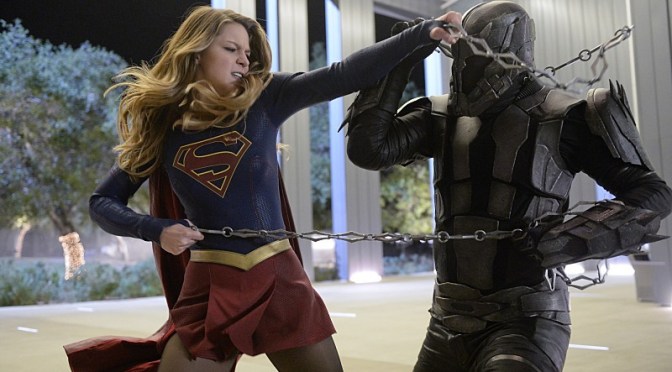
“Truth, Justice, and the American Way” isn’t a perfect episode, but it is on the excellent side for this series, mostly because it finally deals with some of the larger issues that are almost implicit in the premise of Supergirl. The ethical issues surrounding Supergirl’s work with the DEO and her own vigilante fighting for justice have been building all season, and things finally come to something of a head this week. Though the episode isn’t without some hiccups, it’s great to see it being more thematically ambitious.

First, though, the episode almost gets bogged down in HR issues. This week we find Kara back at the office, where she has to deal with some competition in the form of a second assistant that Cat has hired to take up some of the slack for Kara, who has been very flaky recently. I hate everything about this storyline so, so much. Yes, Kara has been flaky, and yes, she drove Cat’s son away, but it’s incredibly unprofessional for Cat to punish Kara like this, especially as publicly as she does here. I also despise that all of Kara’s relationships with women are so fraught, and it sucks that the show has introduced yet another woman for Kara to contend with.

Sure, Siobhan is aggressively unlikeable, but I even hate that framing of things. Siobhan is ambitious, and she is competitive with Kara, but this is a dynamic being fostered by Cat Grant, who is at her most petty and manipulative in her dealings with Kara this week—and all of these women are written that way. By the time you add in Lucy Lane, who is getting suspicious and jealous of her boyfriend’s relationship with Supergirl, CatCo has become a toxic mess for Kara to navigate in. Even outside of her day job, she’s dealing with her aunt Astra’s death, and she doesn’t even know yet that Alex is keeping a pretty big secret from her.

Admittedly, it’s not just Kara’s relationships with women that are on the rocks. She and Winn are still not talking much; she’s so angry with Hank over Astra that she is having trouble working with him; and James just gave her an ultimatum. However, in an ostensibly feminist show, it would be nice to see Kara able to have even one good, healthy relationship with another woman. Instead, the show’s writers seem determined to trot out every tired, catty, bitchy stereotype about women’s interpersonal relationships that they can fit into a single episode. This has been an ongoing problem for the show, but this week all of Kara’s relationships seem to be at nadirs, which makes the problem that much more pronounced and unpleasant to watch.

The real meat of “Truth, Justice, and the American Way” is, or ought to be if he didn’t have to share so much time with Kara’s office tribulations, the villain of the week. In an interesting change of pace, this week’s villain isn’t an inmate of Fort Rozz—he’s one of the guards, and he’s systematically hunting down and executing former inmates without regard to their present circumstances or even their original crimes and sentences. This is set up as a counterpoint to what Supergirl and the DEO are doing, and specifically to their indefinite detention of Maxwell Lord, who isn’t even an alien and probably ought to have some rights or something as an American citizen. Master Jailer is probably the best idea the show has had yet for a villain, but the execution of his story could definitely have been better.

As I already mentioned, this story—which deals with some of the show’s heavier ethical issues, namely the legality and, well, justice of extrajudicial justice—shares far too much time with material that doesn’t really fit together with it. The conclusions reached by the end of the hour feel almost glib, and Kara is portrayed as almost foolishly naïve rather than principled. The questions asked in the episode are worthwhile and certainly deeper than most of the other themes so far this season, but the answers just aren’t quite satisfactory. Still, it’s a step in a good direction for the show, and I would actually love to see this become a recurring theme to be examined in more depth in the future.

Miscellaneous thoughts:

  • Hated Kara’s astonishment that Cat could pronounce Siobhan. There’s not really any comparison between “Kara”—a name that can be mispronounced in many irritating and disrespectful ways—and “Siobhan”—which can only be mispronounced in ways that make the mispronouncer look ignorant.
  • This episode wasn’t terribly dark, really, but it was remarkably light on humor, which gave it a weird tone.
  • I was surprised that they went with a couple of straight up Gitmo references when talking about what Supergirl and the DEO do. It’s interesting to see what real-world things get worked into the show.
  • “It’s under the floor” was beyond words stupid. I mean, they didn’t even look for a cellar or anything first, and bad stuff is always underground. Get it together, Alex.


Lucifer: “Sweet Kicks” is a sour bore

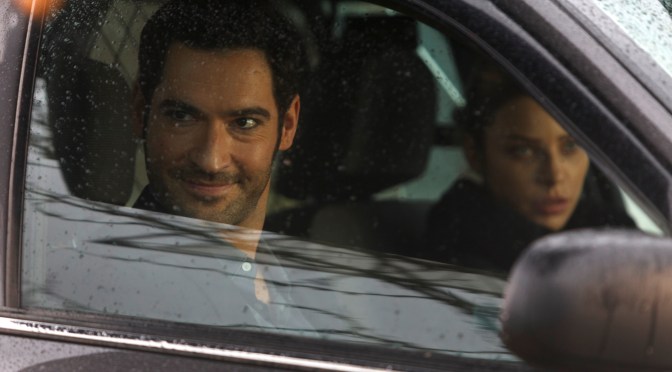
Lucifer continues to disappoint, and “Sweet Kicks” is an almost entirely forgettable episode. I was moderately interested in this show before it first aired, even though I hadn’t read the comics, but after five episodes it’s only managed to be (mostly) inoffensively humdrum. There’s something to be said for a show playing its cards close to its chest, but there’s got to be something to keep people coming back week after week, and this show hasn’t really got it.

Tom Ellis’s charm has finally worn completely thin, and even his good humor wasn’t enough to elevate this episode to a bare minimum level of entertaining. Instead, Lucifer’s desire to “explore mortality” comes off as stupid, which is compounded when he proves himself essentially incapable of taking any responsibility for his own actions. Sure, I suppose the episode has something to say about his missing the forest of what it means to be mortal for the trees, but without any actual character growth, this isn’t particularly interesting.

Chloe is even more of a cold fish than usual this week, and spends nearly all her time on screen looking disapprovingly at Lucifer, accusing him of childishness (accurately), and devising petty and minor punishments for Lucifer’s irritating behaviors. It’s not cute or funny, though, and there’s no banter to their relationship. Lucifer is using her (although it was nice of him to not try and sleep with her this week), with no regard to how his presence might endanger her or jeopardize her career, and Chloe has a completely deadpan dislike for him that is the opposite of fun.

The character that I actually kind of liked best this week was Dan, who is somewhat useless in the narrative, but who is such a genuinely nice-seeming man that I can’t help but want good things to happen to him. While he doesn’t get a lot to do in terms of actually being part of the plot, he’s a piece of scenery in Chloe’s life that more or less works, and he’s one of the only characters who is consistently intelligent-seeming. I like that he seems to genuinely care about Chloe and isn’t afraid of Lucifer. That said, my bar for favorite character on this show is set pretty low at this point.

While Lucifer and Chloe are dealing with a deeply boring case of the week, Maze is meeting up with Amenadiel behind Lucifer’s back. Both of them want Lucifer to return to Hell, if for different reasons, so they’re going to plot together in order to get him to do what they want. These two are the only characters on the show who have any discernable sexual tension or chemistry, and they’re hands down more interesting to watch than anything Lucifer and Chloe get up to.

Honestly, I’m not sure how much longer I’m going to continue to cover this show. It’s not really good or bad enough for me to have any strong feelings about it one way or the other, and there’s plenty of other things I could be working on instead. Next week’s episode title suggests something more mythology-laden than what we’ve had so far, so I will decide then if I’m going to stick it out until the end of the season. With The X-Files finished with, I’m sure next week I’ll feel less overloaded, but I could always drop Lucifer and start writing about my deep and abiding hatred of Quentin Coldwater (The Magicians) instead.

Miscellaneous thoughts:

  • I don’t really “get” the sexy therapist character. Dr. Martin isn’t necessarily any specific misogynistic stereotype, but she seems more like a character from a crappy porno than a character who belongs in a prime time television show. Also, she doesn’t seem to exist for any particular purpose except to be funny, and she’s not.
  • Why did they have to kill the pig?
  • Maze is a legit badass, and I hate that she’s basically in an abusive relationship with Lucifer, who treats her like garbage. Tom Ellis isn’t nearly charming enough to make this okay.

The X-Files: “My Struggle II” is an epic disaster

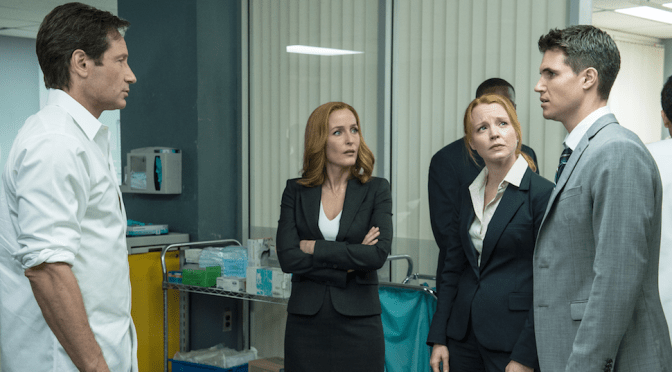
I said right at the start of Season Ten that The X-Files is the same as it ever has been, and this continues to be basically true. “My Struggle II” is an hour-long roundup of all the show’s worst tendencies in one place, only without many of the show’s strengths to otherwise recommend it. The fact that it ends on a cliffhanger, with no assurance that it will ever be continued, is just the icing on the cake of overall mediocrity-to-badness that has been every episode of Season Ten except for “Mulder and Scully Meet the Were-Monster.”

Like “My Struggle,” “My Struggle II” is a mythology episode, wholly devoted to continuing the story that the earlier episode began. The thing is, these two episodes don’t tell a fully contained story at all. They don’t work as bookends for the season because there’s no actual ending here, but there’s also no real narrative symmetry, despite the use of a similar introduction to the episode, this time with a Scully voiceover. A better use of Scully’s voiceover would have been at the end of the episode to bring closure to the miniseries and the show in general, but of course this can’t have happened after a cliffhanger ending like what we got.

The worst part of “My Struggle II,” though, is that it just doesn’t make a lick of sense. The hour manages to feel at once overstuffed and devoid of story, a whole lot of sound and fury signifying nothing. Things happen, but they’re so absurd that it’s very difficult to suspend enough disbelief to even accept the basic premise. I could believe in the existence of a conspiracy, but the idea that a shadowy cabal of one percenters would somehow decide to just kill large swaths of humanity in the way that it’s show in The X-Files is just silly. Ultimately, it’s just fantastical, an episode of evil for evil’s sake, to be taken about as seriously as any cartoonish fantasy villain who wants to cover the whole world in darkness or some such nonsense.

Even the smaller events of the episode make little sense. Why are Miller and Einstein still hanging around? Why did the Cigarette Smoking Man save Reyes? Why use programmed diseases (that are usually vaccinated against) to kill people instead of programming in, say, cancer or some other illness that actually has a genetic component? What is the clear liquid Scully is administering to people? Why does Mulder need stem cells? And why does he need stem cells specifically from his and Scully’s son? Why is Tad O’Malley back after disappearing so completely back at the end of “My Struggle,” and why? There are so many questions, but almost no answers.

I was afraid that Season Ten would turn out this way—as a springboard for either more nostalgia-based programming or as a setup for a spin-off series, which seems highly possible at this point, with the return of Miller and Einstein in the finale. It was nice, in a way, to see something huge actually—finally—come of all the conspiracy theorizing the show has done over the last twenty-odd years, but now that the show has gone big, I wish it would go home.

Miscellaneous thoughts:

  • The reveal of the Cigarette Smoking Man’s face was pretty rad.

iZombie: “The Whopper” continues the show’s trend towards generalized excellence

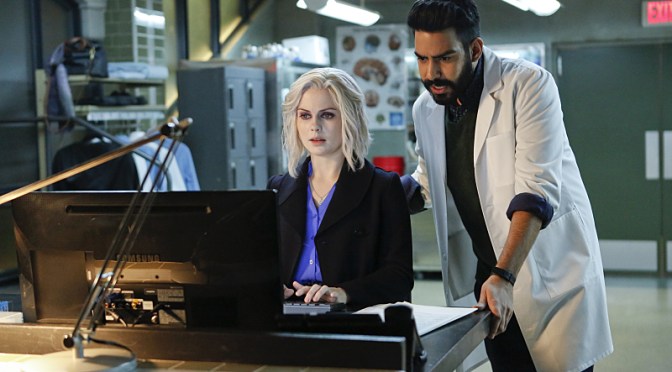
Since returning from the winter break, iZombie has managed to really hit its stride. It’s always been a good show, but the last few weeks it seems to have settled into a comfortably consistent excellence that makes it a joy to watch, but not a whole lot of fun to write about since all I want to do is incoherently and excitedly flail about how much I’m loving the show right now. I haven’t liked iZombie this much since the second half of season one, and it seems to only be getting better.

There’s no Peyton this week, which is a bummer, but there’s really no space for her in this slightly convoluted episode and I’d rather do without her than have her shoehorned in when so much else is going on. Likewise absent are Vaughn and Gilda/Rita, but with so much Blaine and Boss drama happening I didn’t miss Max Rager drama.

Of course, it helps that all of the show’s villains are getting increasingly and more entertainingly intertwined every week. In “The Whopper,” Liv is investigating a murder that has occurred almost at the intersection of all the show’s various villainous schemes. Meanwhile, Blaine’s henchmen have captured Major, who let’s Blaine in on what the “Chaos Killer” is up to, though he doesn’t tell Blaine that he’s working for Vaughn Du Clark. While that’s going on, Stacey Boss is busy promoting Liv’s new boyfriend, Drake, from henchman to hitman.

It’s a solid episode, with a lot of laughs in spite of dealing with some fairly serious material and including a lot of setup for what is being built up to be a major three- or four-way conflict by the end of the season. All the show’s significant players—Liv and company, Blaine, Stacey Boss, Vaughn Du Clark, and the FBI—are getting steadily closer to figuring out how they’re all connected, and it’s obvious that shit is going to get real very soon. The only question is who is going to put all the pieces together first.

I can’t wait.

Miscellaneous thoughts:

  • I loved everything about the scene with the girl they brought in to identify that two-month-old corpse.
  • Blaine’s henchmen are the best. They have such a fun dynamic, and I could watch a whole show just about them.
  • I was glad to see Clive finally point out Liv’s dramatic personality shifts. It’s about time.
  • RIP New Hope.
  • This show has some of the greatest musical choices. That last number was perfect from start to finish.

The Shannara Chronicles: “Utopia” is WHAT THE FUCK DID I JUST WATCH?

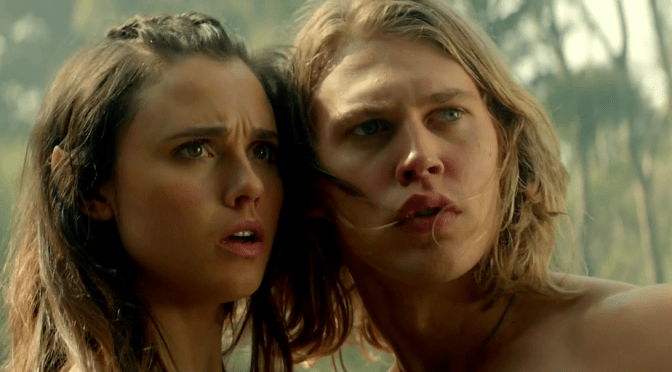
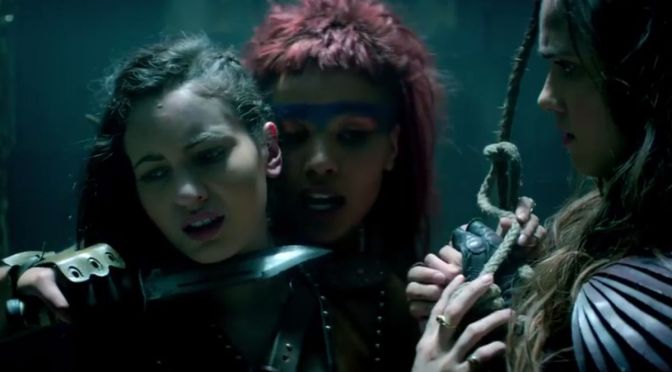
The Shannara Chronicles is a wild fucking ride, folks. A couple of weeks ago I was ready to ragequit the show. Then last week the show seemed to be improving and getting back on track with the quest to get to Safehold and save the Ellcrys. I knew at least part of “Utopia” would be dedicated to rescuing Eretria, but I didn’t expect it to take the entire episode. And, you guys. I’m not sure I can even put into words what a complete disaster this episode was. There are all kinds of things I expected going into this series, and a few more things got added after I got a good look at the show, but “Utopia” is just mind-blowingly terrible on basically every level.

It starts off more or less how I expected it to, with Eretria being carted off by her evil ex-girlfriend and Wil and Amberle determined to find their friend, although I feel like “friend” is a very generous term for their relationship with the human girl. You know, what with all the subterfuge and thievery and betrayal and stuff. But, okay, they’re friends, and Wil and Amberle are going to find Eretria. But first, they’re going to almost bone, in a very boring and unsexy soft focus scene. Just in case anyone did manage to find Wil and Amberle’s tryst somewhat romantic, it’s interrupted, right when it’s heating up, by the worst possible development: the return of Cephalo.

Listen, I know that there was pretty much no way that Cephalo wasn’t coming back, and I even expected it to be something like this, but it would be nice to be pleasantly surprised once in a while. Sadly, nothing involving Cephalo in this episode is even remotely surprising. Amberle and Wil release him from the troll cage he’s caught in with minimal arguing about it, and Cephalo promptly tries to steal the elfstones again and bails on the party. He doesn’t try to rape anyone, which is good, I suppose, but he is given a completely unearned hero’s death and a touching parting scene where he tells Eretria that she’s “the best thing [he’s] ever done,” because apparently keeping a child as an actual slave and training her to be a thief/murderer and keeping her in line through abuse and by threatening to sell her to your terrifying friends is definitely something to be proud of. I mean, it’s not like Eretria was so desperate for anything resembling safety and love and basic kindness that she fell in with a weird cult this week or anything. Oh, wait. A+ parenting job, Cephalo.

Speaking of the weird cult! So, the elf hunters show up at a weird human settlement that looks less like a fantasy village and more like a hipster farming co-op, and it turns out that’s a pretty accurate description. Somehow, this little village, under the leadership of a guy named Tye, has managed to either save or rediscover quite a lot of pre-apocalypse human technology, everything from anesthetic to electric lights to Star Trek. This makes no sense at all and doesn’t seem to have any thematic purpose. It’s a tempting place for Eretria, but I think that any place where people are nice and she feels secure would be a temptation for her.

The way the citizens of Utopia almost worship the ancient technology is actually creepy, and though this weirdness foreshadows, I guess, the revelation that they sacrifice people to the nearby trolls, it also kind of breaks the fantasy setting. While the world of Shannara was always a post-apocalyptic fantasy world, it wasn’t revealed until much later in the books that it was actually our world, and the reason people didn’t know is because almost nothing survived of it after several thousand years. In the show, they seem to have shortened the timeline, and they’ve certainly been sure to use the detritus of our current world as a backdrop for the fantasy story they’re telling. This has mostly worked, and it’s been a good way for The Shannara Chronicles to set itself apart, visually, from other fantasy worlds. However, it’s definitely a situation where less is more—the dilapidated Space Needle is good for background and world building, but it’s nonsensical to spend most of an episode at a rave on a hipster commune.

It could have been worse, but not by much, and unfortunately this isn’t even so bad it’s good. While I did laugh, often and loudly, at “Utopia,” it was mocking, not mirthful. I will definitely be watching the final two episodes of the season, but I don’t think I’ll be coming back for season two if it happens. I really wanted to like this show, and I think I’ve been a good sport about it and very willing to overlook some of its flaws because it’s nice to look at and a nice break from the darker fantasy fare that is more common these days. “Utopia” is so awful that I want to take back everything nice I ever said about the show, and I’m frankly embarrassed to have defended and recommended it to people.

Whoops.

Miscellaneous thoughts:

  • Apparently Bandon is the next druid.
  • Ander decides that maybe he wants to be King after all.
  • This show should spend less money on cream colored dresses from Anthropologie and more money on making their trolls. Having them dressed in rags and gas masks is lazy and cheap.
  • Why is Eretria’s ex-girlfriend killed? Yeah, she wasn’t a nice person, but that seemed kind of random and unnecessary since she’d already been safely written out of things after she sold Eretria to the hipster cult. She wasn’t even a loose end at that point, so there was no reason to revisit her at all, which makes her death truly gratuitous.

The X-Files: “Babylon” is a confused mess only salvaged by some great Scully/Mulder stuff

“Babylon” almost works, but gets bogged down in its own self-importance. It’s got a message of some kind, about terrorism and faith and the cyclical nature of the universe or something, but it’s senselessly garbled by mixed messaging.

The episode opens with a too-long sequence of a young Muslim man praying, being harassed by rednecks, meeting a friend, and then walking into an art gallery right before the place explodes. We later learn that the two men were suicide bombers who decided to attack the gallery because it was displaying art that they considered sacrilegious. Here’s the thing, though. That revelation feels almost like a betrayal by the time it comes. The first young man, Shiraz, is definitely humanized in the episode’s prologue, and that introduction that heavily suggests to the viewer that we’re about to get a very different story than what is delivered. Furthermore, there’s such a slyness to the way these scenes are filmed that there’s no way this misdirection is unintentional.

Unfortunately, this humanization of Shiraz doesn’t actually work the way I think it’s intended to, even taking into account his mother, Noora’s, insistence that Shiraz never detonated his bomb. Instead, it serves to make the act of terrorism feel even more cold and calculated than if Shiraz had been shown more stereotypically, and it’s not entirely redeemed by the fact that Shiraz is able to mystically—by way of Mulder’s symbolism-laden trip—give the FBI intelligence that helps them root out the rest of the terror cell. In the greater context of the episode, the introductory scenes meant to show us Shiraz as a person turn out to not actually give us very much information about him at all, and in light of his participation in a suicide attack, the veneer of normalcy we’re shown turns out to be very thin.

Even the nods to the hatred and discrimination faced by American Muslims don’t really land properly. The truck full of rednecks mocking Shiraz in the episode opening isn’t specific or unpleasant enough to act as a motive for Shiraz to decide to participate in a suicide bombing. Although many American Muslims deal with that kind of casual hatred and racism daily, it’s shown here as a singular occurrence and not as a very serious event. The idea of anti-Muslim bigotry is supported later in the episode by the ravings of the racist nurse who literally tries to murder Shiraz by turning off his life support, but even this is portrayed more as the aberrant, irrational behavior of an individual rather than a systematic problem that has serious negative impact on the day to day lives of millions of people. Every other character in the episode is shown as at least somewhat sympathetic towards Shiraz—at least recognizing what happened to him as a tragedy—and just genuinely concerned about stopping terrorism, which of course is a laudable goal, but it sets up a self-serving dichotomy where any white viewer who manages to go through life without actively trying to murder or harass Muslims can identify with the “good guys” and feel a little self-righteous about not being one of those bigots who are shown as a minority.

And, frankly, none of this even matters that much, since Shiraz and his terrorist friends aren’t motivated by some high-minded anti-racist ideals. It’s explicitly stated in the episode that this terrorist attack was directly in response to the art gallery displaying sacrilegious art. By removing any guesswork or speculation regarding the terrorists’ motive, the show actually cuts itself off from the avenue it seems to be trying to take by highlighting the unreasonably bigotry of some white Americans as a counterpoint to the unreasonable actions of Shiraz’s terror cell. I get where they were going with these ideas, but the execution is just off, especially when these themes have to share space and time with Mulder and Scully and their respective journeys.

This week, Mulder and Scully are joined by a pair of doppelgangers, Agents Miller and Einstein, who were moderately amusing in scene released in a preview clip last week but who otherwise drag the episode down. Miller is young, handsome, and enthusiastic, but he seems slightly stupid and doesn’t actually have much to do in the episode. Einstein makes more of an impression, but this is mostly because she’s so entirely humorless that it’s actually kind of impressive. While this pair is supposed to be younger versions of Mulder and Scully, I don’t remember Mulder ever being so credulous or Scully ever being so dour. I guess there’s some kind of joke here, but it stopped being funny, or even very entertaining, very early on.

The saving grace of the episode is Mulder and Scully themselves. Looking back on my decades-long love for this show, I have to admit that it’s mostly because of these characters, who are far more memorable than any of the various cases or plots they’ve been involved in. Like the previous nine seasons of The X-Files, Season Ten functions best as a character study, and as with the first four episodes, the best moments of “Babylon” are when Mulder and Scully are together, from Scully’s cheerful “Only the FBI’s most unwanted!” to their final scene of the episode as the hold hands and talk outside the house they once shared. All the years of will-they-or-won’t-they waffling in their relationship has finally matured into a deep, if somewhat ambiguous, intimacy, and their comfort with and love for each other is really beautiful to see. The show might struggle in every other area, but not in this most important one.

Lucifer: “Manly Whatnots” is a string of missed opportunities

We’re now four episodes into Lucifer, and this show just can’t seem to manage anything better than mediocrity. Sure, it’s entertaining, but I can’t help but feel as if every episode so far has missed opportunities for adding some real depth and nuance to the characters and substance to the show. The ridiculously titled “Manly Whatnots” is the most frustrating episode yet on this score.

The case of the week involves the disappearance and supposed murder of a young woman who has gotten involved with a pickup artist guru, which is a great way to get Lucifer involved with a pickup artist guru, which ought to have made for an amazing and thematically resonant episode. Unfortunately, rather than exploring the issues of consent, coercion, abuse, rape and/or stalking this setup perfectly lends itself to, the show decides to play pretty much the whole thing for laughs and only examine a couple of these themes in the shallowest possible fashion. It’s honestly kind of unbelievable just how much the show missed the boat with this one when it should have been an easy slam dunk to tie things together and provide Lucifer with some interesting things to think about regarding his behavior towards Chloe (which is atrocious this week, by the way).

Lucifer’s denseness (the character’s and the show’s, frankly) is incredibly disappointing, and both character and show seem incapable of taking themselves very seriously. Here, the show even goes out of its way to identify the parallels between what Lucifer does and pickup guru Carver’s cult of toxic masculinity and misogynistic exploitation, only to pull all punches at the end of the episode and entirely sidestep any critical examination of Lucifer’s behavior. This might have worked better if the case itself were compelling enough to carry the episode, but there’s really not much going on here and the mystery, well, isn’t much of one.

Furthermore, the reveal of what really happened to Lindsay goes from groan-worthy to cringe-inducing as Lucifer turns on her when he learns about her revenge scheme against Carver, who it turns out was sexually predatory towards Lindsay several years before, wrote about it in his book, and didn’t even remember her name or face, which is why she was able to successfully trick him now. On the one hand, this could be intended to show that Lucifer has a very real character flaw—he believes himself to be the ultimate arbiter of justice and meting out appropriate punishments, but he’s not infallible. Here, even though I tend to agree with him that Carver probably doesn’t deserve to be actually murdered, his fury at Lindsay—who Carver violated and left deeply hurt and damaged by the experience—seems disproportionate. However, this show isn’t that subtle and doesn’t seem capable of handling that sort of nuance. Rather, Lucifer’s anger at Lindsay is portrayed as righteous and works to further elevate him in the narrative as a voice of reason and as the arbiter of justice he seems to see himself as.

It’s a missed opportunity at best and a piece of gross sexism at worst, since Lucifer’s character is established at Lindsay’s expense and to Carver’s benefit—even though Lindsay was treated poorly by the misogynistic Carver and Carver’s reformation is recent, conditional, and selective. He says that he’s fallen in love with Lindsay, but he literally can’t remember her name or face in spite of having taken her virginity. And he continues to profit off of selling his particular brand of aggressive rape culture to other men. So, yeah, sure, he doesn’t deserve to die, but Lindsay and her brother don’t seem to have intended to kill him. They just wanted to extort a ransom from him and break his heart, probably. In any case, the whole saga could have been a much more interesting critique of toxic masculinity and a compelling examination of this facet of Lucifer’s human-ish persona. Instead, it turns into a sort of mealy mouthed morality play that doesn’t have much to say about anything at all.

There are some strides made this week with Chloe’s continued disbelief of Lucifer’s claims about being the Lord of Hell. She’s not quite bought his story yet, but the best scenes of the night were regarding this story, and we learn that perhaps part of the reason Chloe isn’t susceptible to Lucifer’s “charms” is because she doesn’t actually believe in Hell at all, even if she’s not a complete atheist. In another scene, Chloe gets to see the terrible scars on Lucifer’s back where his wings were cut off, and it’s clear that this challenges her understanding, but it’s still not enough to convince her. Unfortunately, Lucifer’s final plan to prove his imperviousness by having her shoot him doesn’t turn out the way he hopes, but we’ll have to wait til next week to find out what happens next.

It’s nice to see the show relying somewhat less on Tom Ellis’s pretty face to carry the whole thing, but even as his charm begins to feel strained and the good humor seems increasingly forced, the writers haven’t managed to inject the show with anything more substantial. This episode totally squanders a promising concept without even scratching the surface of its potential, and with nearly a third of the season gone this doesn’t give me much hope for improvement in the coming weeks.

Miscellaneous thoughts:

  • Who else is totally shipping Maze and Amenadiel after this episode?
  • I’m not sure if Lucifer presenting himself nude to Chloe is just a completely gross act of sexual harassment or if it’s redeemed by the fact that Lucifer is never actually sexually menacing. Also, this is the first time in the show that they’ve managed to have anything even resembling sexual tension between these two characters.
  • Lucifer is a total dick to Dr. Martin this week, and it’s not funny or endearing in any way.

iZombie: “Physician, Heal Thy Selfie” is the best episode of the season so far

“Physician, Heal Thy Selfie” is by far my favorite episode of season two, and maybe of the show so far. There’s just so much great stuff going on here, with Peyton playing a big role, Blaine in the same room as Stacey Boss, more Vaughn Du Clark, and basically all the story lines being tied together in a big way. While I generally enjoy iZombie, it’s been a while since the show has had an episode that is this close to perfect.

This episode gives Peyton so much screen time, you guys. It’s the first time that she’s felt this much like an integral part of the show, and I wish we could get this much of her more often. One of the episode’s best scenes is when Peyton and Liv confront Blaine together, and it’s a display of solidarity between the two women that does more make their friendship feel real than a season and a half of verbally being told that they are best friends. Peyton’s scenes with Ravi are also wonderful, and should give Peyton/Ravi shippers plenty to fantasize about this week.

It’s a great week for villains, and all of the show’s baddies get things to do. Major is dealing with Vaughn, who uses his time this week to reassert his dominance over Major when he finds out that Major hasn’t been as diligent in his zombie-killing as Vaughn wants. This is the one story line this week that still seems somewhat disconnected from the rest of the show’s events, but the scenes work well enough on their own that they don’t need to be particularly tied to everything else just yet.

Meanwhile, Blaine has bigger problems than Peyton not wanting to bang him again. When Blaine’s funeral home is handling the funeral for Stacey Boss’s nephew, Boss realizes that Blaine is still alive and takes some time to calculate the interest on Blaine’s debts. Fortunately for Blaine, Boss hasn’t realized yet that Blaine is the new major drug dealer in town—although Liv does by the end of the episode. In any case, Stacey Boss and Blaine in the same room together is one of the best things that could have happened on this show, and it’s everything I imagined it would be.

The case of the week in this episode is used really cleverly, and it’s good to see the show mixing things up a little in the way it handles Liv’s brain-eating. Three headless bodies means that the brain Liv eats this week has nothing to do with the case, but she still has to deal with having some of the personality traits of a social media-crazed Millenial. I only wish that the few jokes that this generates were as clever as the general idea of showing that Liv has skills that can help her solve cases even without the unfair advantage she gets by eating the brains of murder victims. I might have chuckled a little when Liv Instagrammed her sushi (#BrainFood!), but the concept quickly wore thin.

After a lot of episodes this season that seemed dedicated to pushing all of the characters and stories farther apart from each other, I’m happy to see things coming back together. I won’t say that a resolution to anything is in sight, but after this week I do feel like everyone is in the same story instead of in two or three different ones.

Great lines in this episode:

  • “Looks like a no brainer to me.”
  • “The violent soundscape of nature is making my ears bleed.”
  • “Like Starbucks. Or the eye of Sauron.”

Miscellaneous thoughts:

  • Not really related to this episode, but I love that viewers were so concerned about Minor.
  • Speaking of Starbucks, it was pointed out in The Mary Sue’s episode recap that Liv is somehow getting pumpkin spice lattes in February, and now it’s really bothering me.
  • I hope that Peyton moving into her own place again doesn’t mean she’s going to disappear for another extended period of time.
  • I had almost forgotten that Gilda/Rita was still Liv’s roommate. I would have been fine, though, if the show had just quietly retconned this so that Peyton could move in with Liv.

The Shannara Chronicles: “Breakline” is a solid episode, but in a world that feels very small

After two weeks of Game of Thrones-ing things up, The Shannara Chronicles finally delivers another solid episode with a better balance between the monster of the week and a B-plot back at Arborlon. I’m also happy to report that nothing rape-y happens this week, which is also a nice change of pace.

The opening glosses over exactly how Wil, Amberle, and Eretria survived their fall at the end of “Pykon” as well as what exactly happened to the Reaper that had followed them. We also don’t learn this week what happened to Cephalo after he cut the zipline on the young people, but I feel it’s safe to say we probably haven’t seen the last of him. Normally this kind of narrative shortcutting would irritate me, but I can’t say I was disappointed to have an episode free of sexual predators, especially when it turns out to be a well-conceived, nicely paced, action-packed hour that is probably the best episode of the season so far. In any case, we start the episode with our protagonists separated and trying to find their way back to each other, and this occupies the majority of the episode.

Wil almost immediately has an encounter with a young elf, Perk, who has been attacked by a group of human elf hunters who cut off one of his ears. Because apparently gnomes think that elf ears have “medicinal” properties. This is profoundly silly, but okay. Wil treats Perk’s wound with some kind of herb (marijuana, obv), and they head off to find the elf hunters, who have captured Perk’s partner and who Wil worries may have captured Amberle and Eretria. Meanwhile, Eretria and Amberle do have a run-in with the elf-hunters, but they manage escape. However, Amberle irresponsibly drops her sword, which tips the elf hunters off to who she is and ensures that they will keep hunting the girls, who manage to fall through an ancient rooftop into a remarkably well-preserved, albeit filthy, high school gymnasium still decorated for prom. I absolutely adored these parallel adventures, though for very different reasons.

Wil is kind of a fascinating character to me because he’s not a fighter at all, and this week we get to see more of his real strength, which is healing. One thing that is great about this show as an adaptation of The Elfstones of Shannara is that it mostly leaves Wil alone when it comes to this. It would have been easy to turn him into a more traditionally swashbuckling sort of fantasy hero, but instead the show has pretty consistently portrayed Wil as a character who prefers to solve problems creatively rather than violently and who genuinely wants to help people. So his interactions with Perk this week are excellent and do a nice job of challenging Wil’s ideals of how the world ought to be. It forces some character growth, by making Wil think about things from a different perspective, but I really appreciate that it doesn’t change who Wil is at heart. He might be able to help Perk and accept help from Perk, but Wil isn’t ready to abandon his own personal ethos.

For me, Eretria and Amberle’s journey through the Pompeii-esque ruins of a 21st century high school really stole the show this week. I thought the bath scene in “Pykon” was just a case of boring old queerbaiting, but “Breakline” takes the time to develop the relationship between the two women a little more. I’m not sure if I’m ready to say that Ambertria is real, but it’s close. I only wish the elf hunters had caught up to them about thirty seconds sooner. I loved the scene, but the dialogue turned very clunky and felt as if the writers don’t trust the audience to understand Amberle and Eretria’s relationship without having it spelled out for us. It’s a classic case of telling instead of showing, and nothing spoils an intimate moment like having the intimacy explained to us like we’re two.

The only major criticism I have of the Wil-Amberle-Eretria stuff this week, however, is that the show continues to suffer from a sort of small world syndrome. We’re getting to see some new settings and stuff, which is nice, and I loved the world building power of Amberle and Eretria’s trip through the old school, but what are the odds that the elf hunters are being led by Eretria’s jilted ex-girlfriend? I mean, good job on further confirming that Eretria is canonically bisexual, I guess, but come on. It’s just not reasonable that basically every new character we meet in this fantasy world knows each other, and it really diminishes the feeling that our heroes are on an epic quest. Eretria being captured by her evil ex at the end of the episode means that we’ll still be dealing with this newest diversion for at least part of next week’s episode as well. I’m concerned that this means that all the epic parts of Elfstones are going to be crammed into episodes nine and ten, which could make the ending feel very rushed and even anticlimactic. We’ll see.

The B-plot of “Breakline” deals with Arion and Ander being sent by fake Eventine to try and use the warlock sword against the Dagda Mor. I’m not sure why the princes go along with this obviously terrible idea, but it ends up getting Arion killed and Ander has to be rescued by Allanon. Arion’s death feels really unceremonious and abrupt, in spite of being fairly heavily telegraphed, probably because Ander just leaves him lying there on the ground. While I’m not a stickler for adaptations hewing too closely to their source material, it’s too bad that Arion’s death is treated as such a small, personal event, with no witnesses besides Ander and Allanon. Similarly, the defeat of fake Eventine happens in a room with just a couple of people. Surely crowd scenes can be expensive, but these types of events demand a larger audience if they’re going to feel as epic as they ought.

Miscellaneous thoughts:

  • I wish we got a better look at Perk’s bird thingy. I remember the Wing Riders being pretty cool in the books, and I’d love to see more of them in the show.
  • Bremen looks a lot like Rutger Hauer, and I actually got a little excited for a second thinking it might be him, but it wasn’t. I feel cheated by this.
  • I’ve seen a lot of people making fun of Allanon’s transformer sword, but I actually kind of love that cheesy effect.
  • I loved Amberle’s dice.

Lucifer: “The Would-Be Prince of Darkness” shows marked improvement over the last couple weeks

“The Would-Be Prince of Darkness” opens with a profoundly stupid bait and switch, which is so obvious and heavy-handed that I was a little second-hand embarrassed for everyone involved in writing, performing and filming the scene. Even at this early stage of the show, we know that Lucifer isn’t actually encouraging a young woman to commit suicide. It’s not funny, there’s no real suspense, and it’s drawn out for several seconds longer than it ought to have been, even if I could agree that this little prologue should exist at all. Frankly, the whole thing is a little creepy, as Lucifer sounds very serious about getting this girl to jump into a pool at a party.

Which is, I think the biggest problem this show has in general—a tendency to take itself entirely too seriously without actually having anything substantive to say for itself. At some point Lucifer has to start just owning its absurd premise and either really having fun with it or using it to explore some deeper and more compelling ideas. The good news, however, is that although this newest episode starts off on a sour note, it does show some signs of moving in the right direction.

A largely forgettable case of the week is mostly made up for by Lucifer’s own investigation of a man who has been using Lucifer’s name to get laid. Lucifer’s decision to not actually punish the guy is telling, and it’s interesting to see him talk about it with his therapist after the fact. Lucifer’s sessions with Dr. Martin are a bit better integrated this week than they have been, although I’d like to see these scenes be a little less full of explanation. They would work better as a complement to well-developed ideas throughout the episode instead of sounding like an 8th grade report on the episode’s themes put into dialogue.

Much more than the previous episodes, this one felt like it was really about Lucifer, with all the rest of the show’s characters properly put into their places as characters in Lucifer’s story. Chloe seems to be coming closer to an epiphany about Lucifer’s true identity, and her ex seems to be finding his place in the show. Maze seemed to be making up for Amenadiel’s absence this week by being more unpleasant than usual, but it worked for the episode, even if she doesn’t seem to have much of an effect on Lucifer. Tom Ellis is still carrying the show, but that’s starting to feel less strained, and hopefully things will continue to get better.

It’s nice to see that Lucifer is improving, even if it’s not exactly doing so in leaps and bounds. “The Would-Be Prince of Darkness” definitely works marginally better than either of the show’s first two episodes, though, even if it doesn’t manage to elevate itself to anything truly deserving the descriptor “good.”