Category Archives: Books

Book Review: Crossroads of Canopy by Thoraiya Dyer

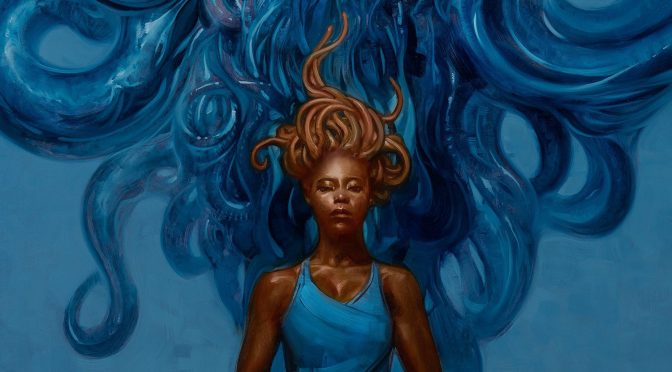
Thoraiya Dyer’s Crossroads of Canopy was one of my most anticipated debut novels of 2017, and I’m pleased to report that it did not disappoint. Crossroads is a truly tremendous book, full of fantastically original worldbuilding, fascinating mythology, and a cast of compelling characters led by one of my favorite fantasy heroines in a very long time.  It’s a gorgeously magical and delightfully challenging novel that only gets lusher and more incredible the longer you read it.

Things start off promisingly with the introduction of Unar, an abused child about to be sold by her parents, and Dyer does a good job in the opening couple of chapters of introducing the city of Canopy and something of its societal structures and religion. Things quickly shift gear, however, when Unar evades enslavement by pledging herself as a servant of the life/fertility goddess, Audblayin. This initial transition and subsequent time jump–about ten years–are more than a little jarring, verging on confusing, and the rest of the first half of the novel often struggles with keeping a good pace and maintaining connections between many moving parts. It makes for a slow start to the book that may be offputting for less dedicated readers, but I still found Unar’s story gripping enough to keep reading, and it pays off big time in the back half of the novel, where things get amazing.

In the end, I loved the deliberateness of the way the tone and depth of the story reflects Unar’s character growth. We start the journey with her as a young child, inquisitive about her world, engaged in what’s going on around her, and this is reflected in the vividness of the opening chapters, in which Dyer paints a clear picture of the world of Canopy. As a teenager, Unar has become ambitious, but also self-absorbed, convinced that she has a great destiny, obsessed with achieving it, and resentful towards anyone who she sees as an enemy or impediment (and that’s basically everyone). She chafes at the restrictions of Audblayin’s Garden, flouts rules, and ultimately takes actions that force her onto a very different path than what she thinks she deserves. Most of Unar’s story, then, is about Unar’s long, painful struggle to understand her world and her place in it, and the way that Dyer deploys worldbuilding details reflects that, taking the reader on the same journey that Unar must take from disconnection to understanding. It makes for somewhat frustrating reading early on, but the payoff at the end, when so many things really come into focus for Unar–and for the reader–is well worth the wait.

Unar herself is one of the most fascinating and infuriating and deeply lovable protagonists I’ve read about in years. I love her pure, unadulterated stubbornness and grit and her dogged belief in herself, even as she grows to learn that her destiny–if it is a destiny at all–isn’t what she wanted it to be. I love Unar’s ability to make mistakes, even disastrous ones, and still keep going because even when she doesn’t have a clue what she’s doing, she can’t stand to give up. Most of all, I love Unar’s ever present drive to be better. She has a strong sense of justice that evolves and grows over the course of the novel as she comes to think more of others and learns more about the world outside herself. Crossroads of Canopy is Unar’s coming of age story, but more than that it’s a story about Unar’s political awakening.

I have long had a soft spot for difficult women as protagonists, and Unar is exactly the kind of character I want to read about these days. Certainly she grows up in many ways throughout this book, but Unar’s deeper and more important journey is to figure out where she fits into an imperfect world and how she can leverage her strengths–both personal and magical–in order to fight the injustice she is still slowly coming to understand at the end of this story. I cannot wait to find out what Unar does next.

Book Review – Binti: Home by Nnedi Okorafor

I didn’t love Binti when I read it in 2015, in spite of having loved everything else I’d read by Nnedi Okorafor up to that point. It was on the short side for a novella, and I’d recently read Okorafor’s absolutely superb Lagoon, which set the bar high for Binti. There were things I loved about it, but I was definitely in the minority of readers who didn’t consider it one of the top novellas of the year, so I wasn’t sure how I would like Binti: Home. This book is about twice as long as its predecessor and addresses many of the things I considered shortcomings in Binti, though it does end on a particularly unsatisfying near-cliffhanger made even worse by the lack of release date for the planned third book that will complete the series.

The story in Home picks up with Binti and Okwu a year into their studies at Oomza University, and Binti is still struggling to deal with the trauma of her experiences in the first book as well as more generally with the transition to University life. I would have liked to read more about this, but instead the book moves on fairly quickly to Binti’s decision to return home, Okwu in tow, to visit her family and participate in a pilgrimage. There’s something to be said for jumping straight into things, but Binti spent the whole first book getting to university, and it’s somewhat disappointing to see her leaving again so quickly.

That said, part of the reason I struggled to connect with Binti in the first book was because I didn’t think there was a strong enough sense of who she was before she left Earth. In Home, however, we get a much fuller picture of what Binti’s life was like before she decided to go to Oomza. I loved getting to meet her family and friends, and Okorafor does a lovely job of examining how Binti has changed and how the loss of her has affected her community. There is a lot of wonderful exploration of the dynamics of this sort of close-knit family and community and the drama and upheaval caused Binti’s leaving and returning and likely leaving again. After leaving and undergoing so much drastic change and growth away from the other Himba, Binti has to face consequences that she didn’t expect.

I don’t think I realized quite how young Binti was in the first book, which made some things a little weird in this one. I guess because Oomza is a university I perceived Binti as more U.S. college-aged, which seemed backed up by the character’s seeming maturity and independence. In Home, it’s more clear that she’s still a teenager, and what I (in my thirties) would consider a young one. Back within the context of her family and community, Binti feels younger and much less sure of herself, which I found both interesting and frustrating. As happy as I was to see more of Binti with her family on Earth, in some ways her character in Home feels like a significant regression. It’s relatable, sure, to see her revert to some childish behaviors and dynamics with her parents and siblings, but it’s not always altogether enjoyable.

Still, Binti: Home is a significant improvement upon its predecessor. A lot more happens in this volume of Binti’s story, and Binti herself feels much more fully developed in general, even if she does feel very young at times. Okorafor’s themes about identity, home, and family are evergreen ones, and examining them through the story of a Himba girl transplanted across the galaxy and back again bring a freshly fascinating perspective to classic coming of age questions. My only real complaint about Binti: Home is the aforementioned cliffhanger ending. When I finished the last page, I was devastated to realize that was the end and that we don’t know yet when the rest of the story will be out. It needs to be soon.

This review is based upon a free advance copy of the title received from the publisher via NetGalley.

Comic Review: Lady Castle #1

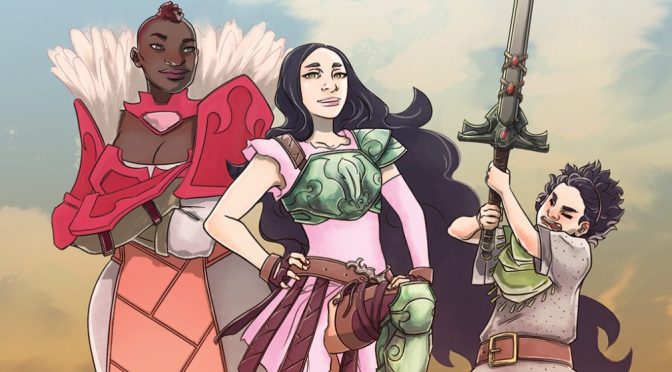
Lady Castle is, for me, the first must-read comic of 2017. I don’t read a ton of comics, to be honest, and I’m pretty choosy about what I spend my time and money on, usually going for limited projects with women writers and artists and steering clear of superhero stuff. I’ve also, in recent years begun avoiding any of the trite ’90s-esque girl power stuff being put out by a certain breed of right on self-identified feminist white dudes, which has sadly left me with a medieval fantasy adventure comic-shaped hole in my life. Long story short, Lady Castle is exactly the comic that I’ve been yearning for over the last several years. It’s perfect and I love it and you should be reading it right now if you haven’t already.

Delilah S. Dawson has been on my to-read list for some time, and this was a great first taste of her work. Lady Castle is smart and funny, with snappy dialogue, but it’s never twee or precious. It’s clever, but straightfowardly so, which works really well to make the book great fun to read, especially in combination with Ashley Woods’ brightly colorful and crisp artwork. I’m not always a huge fan of this style of obviously animation-influenced comic art, but I like it here. Each character is recognizable and distinctive, and the style is a perfect fit for the tone of the story.

Probably my favorite thing about Lady Castle, however, is that it wears its feminism on its sleeve, but without beating the reader over the head with a trite message. The “what if all the men disappeared” set-up isn’t unique or groundbreaking in genre fiction, but the smart, incisive commentary on issues of gender, specifically the difference in governance styles between men and women, is timely and valuable. It’s a great piece of escapist fiction, and I laughed aloud more than once while reading it, but it’s also a book with some smart things to say about important subjects at the perfect time. This is exactly the kind of enjoyable feminist story I want to read to relax and distract myself from the ubiquitous ongoing coverage of U.S. conservatives working to destroy everything good in the world.

Book Review: Dreadnought by April Daniels

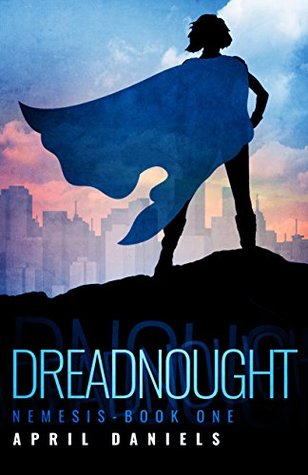
I love that Dreadnought is a thing that exists in the world more than I actually enjoyed reading the book, though I did rather like it. It’s being marketed as great for fans of last year’s The Heroine  Complex and Not Your Sidekick, and both of those were titles that I just never did quite manage to get around to reading, mostly because I’m not super into super hero stories. Like these other books, Dreadnought centers around an unconventional protagonist, in this case a fifteen-year-old closeted trans girl named Danny who has to quickly come to terms with her identity when she is unexpectedly gifted with both superpowers and the body she’s always known she should have. Danny is a smart, plucky, relatable heroine who I expect will be an education for some readers and a much-needed bit of representation for others. Nonetheless, Dreadnought is a book that I read with the constant awareness that it wasn’t for me. Danny’s story of self-discovery and actualization is one that will be compelling for any reader, but I imagine it will resonate most deeply with readers who share more of Danny’s experiences as a trans girl.

Superhero narratives have long dealt with issues surrounding identity and marginalization, and author April Daniels has written a novel firmly in that tradition. Daniels’ geek credentials are on full display here, and it’s obvious that she has a thorough knowledge of genre conventions, which she deploys in a perfectly pitched tale that is both a top notch example of its type and a wholly fresh take on a set of familiar tropes. Dreadnought‘s fairly straightforward hero’s journey structure is a tried and true framework that works well here to provide a foundation upon which Daniels can build a strong, clearly messaged modern superhero story. It’s an excellent example of the value of not reinventing the wheel, and Daniels shows a good instinct for when to utilize common tropes and when to subvert or interrogate them for maximum effect.

I love that there’s no real preamble to Danny’s story. Daniels digs right into things from the first page, with Danny undergoing her transformation almost immediately and being thrust into a vastly changed life by chapter two. The pace of events never does let up, which makes for fast reading. I didn’t make it through Dreadnought in a single reading session, but only because I had other obligations that kept me from it. Each scene in the novel feels necessary and has an easily identifiable purpose, moving along the plot, fleshing out characters, or communicating part of the book’s message. This trimness is a great asset, especially in the YA market where the fashion for some years now has been great sprawling, meandering fantasy stories with indistinct characters and bland ideas. At an economical 276 pages, Dreadnought is a refreshing departure from that trend.

Trans issues take up a lot of page space in Dreadnought, but I still wouldn’t say its a particularly message-heavy title. Danny is a transgender teen, so she’s got a lot of stuff to deal with, but Daniels presents it all matter-of-factly and in a naturalistic enough fashion that most of it feels about the same as reading about any other teen drama. It’s not that Danny’s struggles with parents, friends, doctors, and various associates aren’t specific to her trans-ness; it’s just that these things seldom feel like the point of the book. While Danny’s trans-ness figures largely in the novel and is inextricably bound up with her superhero abilities, being trans is only one part of Danny’s character, and many of the scenarios Danny must deal with as a teen with sudden superpowers are pretty standard stuff for the genre. Sure, she has to deal with some blatant transphobia from her parents and others, and that will no doubt be new to many readers, but a lot of her problems are still just versions of the same banal coming of age crap everyone has to deal with as a teenager trying to figure out their place in the world.

In most ways, Dreadnought is a run of the mill teen power fantasy. It’s always obvious who the villains are in this book, and while it doesn’t flinch away from depicting some darkness, I never felt any real fear that the bad guys were going to win. Even the authorial choice to complicate things by exploring the double-edged nature of super powers as both blessing and curse and the decision to interrogate the whole “with great power comes great responsibility” thing isn’t altogether new or particularly noteworthy. It’s well done, though, and it’s still sadly rare for there to be a book like this written by a trans woman about a trans girl. April Daniels offers a fresh perspective on her topics of choice and has created a great character with whom a disgracefully under-served population will be able to identify. Dreadnought isn’t an exceedingly ambitious novel, but it is a well-written, highly entertaining, and ultimately optimistic origin story of a heroine I look forward to reading more about.

This review is based on a copy of the title received from the publisher via NetGalley.

Book Review: Difficult Women by Roxane Gay

Listen. It’s almost impossible for any collection of twenty-one short stories to please everyone all of the time, but with Difficult Women Roxane Gay comes closer than most to nailing it. The stories in this volume are, from start to finish, thoughtful, clever, funny, tragic and hopeful in turn. These stories are a rage-filled paean to the strength and resilience and weakness and fragility and everything in between of women. This is an ugly, heart-wrenching, beautiful book, and if Roxane Gay wrote three hundred forty-four more stories like this I would treat them like a devotional and reread them every year for the rest of my life.

Probably what I love best about Difficult Women is that Roxane Gay is so unconcerned with dualities. She avoids trite, reductive storytelling in favor of exploring the complexities of every day life. Gay’s difficult women deal with trauma and loss, they fall in love, and they fuck. They are kind and brave and capricious and cruel and yielding and stubborn and cold-hearted and hot-tempered and more, and every woman Gay writes about here contains multitudes. It’s impressive to find so much intricacy of character in short fiction, and Gay turns out one fascinating story after another.

That said, there’s a significant amount of thematic overlap and repetition between entries in the collection. Sexual violence, dead children, and abusive lovers figure largely in these tales, and this can at times create a sense of grimness that won’t be appealing to all readers. Certainly there are some lighter stories included, but I found those to have a slighter quality than those stories that dealt with weightier material. Altogether, though, the stories of Difficult Women are well-chosen and smartly arranged so that the reader is never overwhelmed by darkness, and those couple of slighter stories, while not among my favorites, perform an important function in the collection as a whole by periodically lightening the mood and offering the reader a perfect opportunity to grab a drink or take a break.

In style and genre, Gay is clearly a writer of wide-ranging interests, with several stories veering into the realm of magical realism and one (“The Sacrifice of Darkness”) that is unambiguously speculative in nature. Gay writes stories in numerous settings about characters of different ages, races and classes, floating in and out of her characters’ lives with what might seem like ease for the reader but I expect is the result of years of life experience and meticulous study of people combined with finely honed craft. Stylistically, these stories all tend towards a forthrightness that challenges the reader to really see and empathize with the characters with all their flaws and defies moralistic judgments. This is a collection that is keenly intellectual, but never self-consciously so. Even Gay’s symbolism is generally natural and easy to grasp, and she doesn’t bother with any too-precious conceits, complex metaphors or arcane allusions that might make the text inaccessible.

In the end, Difficult Women is just what it says it is and what it appears to be. It’s a work of elegant simplicity and brutal honesty and deeply humane reflections on the human condition. I look forward to shamelessly pushing it on literally everyone I know.

The SF Bluestocking 2017 Winter Reading List

I know it’s a little bit past the actual beginning of winter, but I think from now on I’m just going to break these seasonal reading lists up into more or less three month time periods and name them for the closest corresponding season. It’s just not practical to try and do a full year’s worth of books that I’m excited about, even in January, especially when there are plenty of still-to-be-announced releases for later in the year that I don’t even know about yet. So, this list will get you (and me) through March.

Magazines
I’m starting this year off with magazine subscriptions for the first time in many years. (Like, now that I think about it, I think the last time I regularly read any magazine was Marion Zimmer Bradley’s Fantasy Magazine back in the early ’90s. Yikes.) Here’s what I’m definitely reading (and recommending, natch) in the first few months of 2017:

Tor.com Novellas and Short(-ish) Novels
I plan to continue reading all of these as they are published (or as ARCs if I am lucky and they show up on NetGalley). I know I’ve been full of praise for the last couple of years for Tor.com’s novellas, but I still basically love them. The novella length (and price!) is great for quick reading, and Tor.com publishes a great variety of new and established authors in a good mix of subgenres that offers plenty that I like and enough stuff outside my usual comfort zone to keep things interesting and challenging. After 2016, there are a couple of authors that I will be avoiding in the future because I just don’t care for their books at all, but other than that I expect to keep on reading these faithfully. The first quarter of 2017 has quite a lot to be excited for.

  • Dusk or Dawn or Dark or Day by Seanan McGuire – January 10
  • Sin du Jour: The First Course by Matt Wallace – January 10 (Contains books 1-3 of the series. I probably won’t be rereading it, but if you haven’t read it at least once, you should.)
  • The Fortress at the End of Time by Joe M. McDermott – January 17
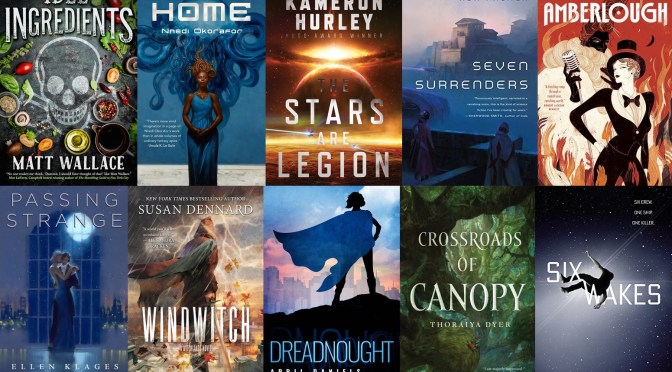
  • Passing Strange by Ellen Klages – January 24
  • Binti: Home by Nnedi Okorafor – January 31
  • Idle Ingredients by Matt Wallace – February 7
  • An Impossible War by Andy Remic – February 14 (This is one I’ll be skipping, but it’s surely a better fit for someone.)
  • Cold Counsel by Chris Sharp – February 21
  • Agents of Dreamland by Caitlin R. Kiernan – February 28
  • Standard Hollywood Depravity by Adam Christopher – March 7
  • Brother’s Ruin by Emma Newman – March 14
  • Chalk by Paul Cornell – March 21

2017-winter-tor

Everything Else
Everything else obviously is the majority of what I’ve got on my TBR list. There are a handful of things here that I’m not 100% sure about, but in order to hit my Goodreads challenge numbers I’ll have to get through most of these. I hope I can, because there’s a ton of great stuff coming out over the next couple of months.

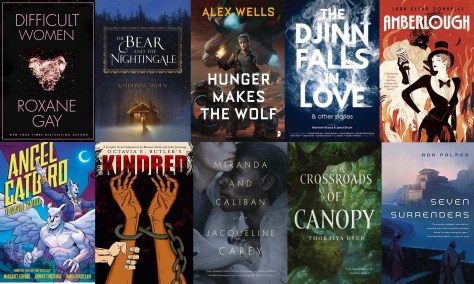
  • Difficult Women by Roxane Gay – January 3
  • Windwitch by Susan Dennard – January 10
  • The Bear and the Nightingale by Katherine Arden – January 10
  • Kindred: A Graphic Novel Adaptation by Octavia E. Butler, John Jennings (Illustrator), Damian Duffy (Adapted by) – January 10
  • Dreadnought by April Daniels – January 24
  • Six Wakes by Mur Lafferty – January 31
  • Crossroads of Canopy by Thoraiya Dyer – January 31
  • Amberlough by Lara Elena Donnelly – February 7
  • The Stars are Legion by Kameron Hurley – February 7
  • Miranda and Caliban by Jacqueline Carey – February 14
  • Angel Catbird Volume 2: To Castle Catula by Margaret Atwood and Johnny Christmas – February 14
  • Seven Surrenders by Ada Palmer – February 21
  • Hunger Makes the Wolf by Alex Wells – March 7
  • The Djinn Falls in Love and Other Stories edited by Mahvesh Murad and Jared Shurin – March 14

2017-winter-novels

The Best of 2016: The Best Books I Didn’t Get Around To Actually Reading

It’s been no secret around here that this was a rough year for me, pretty much from start to finish. I won’t rehash it all here, but it has definitely sucked, big time, and as a result I didn’t accomplish nearly as much in 2016 as I’d originally planned. While I did meet my reading goal, at least in terms of number of books, much of what I read was novellas and comic books and magazines. Many of the books I was excited about this year I just never managed to get to. Some of these I hope to squeeze into 2017. Some of these I’ll probably only read if they make awards shortlists. Some of these there’s no telling if I’ll ever make it back to, what with all the amazing new stuff coming out year after year.  In any case, this is the stuff I missed out on in 2016:

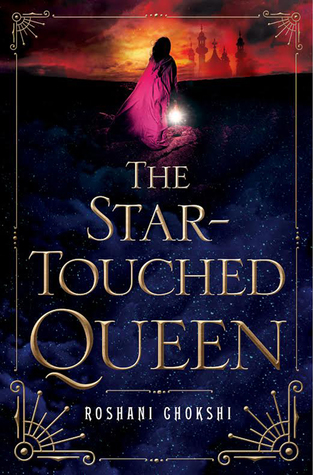
The Star-Touched Queen by Roshani Chokshi
This book got a lot of buzz earlier this year, but, frankly, I just haven’t been in the mood for YA or even most YA-adjacent stuff, and I’ve been trying to minimize the number of series I start and never finish.

Three Dark Crowns by Kendare Blake
I read and enjoyed Anti-Goddess a couple of years ago, but never did come back around to finish that series and Blake’s earlier stuff never interested me. Three Dark Crowns sounds like it has a lot of potential, though. Unfortunately, it’s another first book in a series and I read some early reviews that, while positive, suggested a very abrupt ending that made me think I should wait til the whole series is out before getting into it.

Heroine Complex by Sarah Kuhn AND Not Your Sidekick by C.B. Lee
If I’m honest, I think I want to want to read these more than I actually want to read them. The thing is, I’m just not that into superheroes in general, and I always have a hard time getting excited about them, even when promised diversity and trope-busting and fun. These are still on my radar, and I might get around to them someday, but there’s no telling if or when the right mood will strike me.

Arabella of Mars by David D. Levine
I think the main reason this book made it onto my list for the year was that it sounds so exactly like the sort of thing I would have loved to read when I was my daughter’s age. It also has an enticing cover. Unfortunately, some vague feelings of nostalgia and a pretty package weren’t enough for me to make this title a priority.

The Devourers by Indra Das
The Devourers is going on the same to-read-someday list as The Buried Giant and Station Eleven. I swear I will read it eventually.

Borderline by Mishell Baker
I don’t read a lot of urban fantasy, but I’ve heard such good things about this series that I’m still hoping to read this before the second book comes out in the spring.

Ghost Talkers by Mary Robinette Kowal
I read Mary Robinette Kowal’s “The Lady Astronaut of Mars” ages ago and have been determined to read her novels ever since. I never picked up the Glamourist Histories because I didn’t think I would want to spend the time reading all of them this year, but I really thought I would be able to read this standalone when it came out. Unfortunately, that was right when I was in the middle of a bunch of traveling and by the time I got resettled, it was part of a huge backlog of stuff I’ve spent most of the rest of the year trying to finish.

Cloudbound by Fran Wilde
I really liked Fran Wilde’s first Bone Universe book, Updraft, but I haven’t been as excited about Cloudbound, probably because it seems to focus more on a secondary character from the first book that I didn’t care for very much. I expect this is one I’ll come back to when the third book comes out in 2017.

After Atlas by Emma Newman
Planetfall was excellent, and I’ve heard great things about this companion novel, but I’ve honestly just run out of time and chose to work on knocking out some longer books over the last couple of weeks instead.

Infomocracy by Malka Older
Listen. I know that everyone loves this book, and I’ve read an enormous number of good reviews of it by people whose opinions I value, but I just have not had the energy to read it. I was all ready to start it after Hillary Clinton won the election in November, and then she didn’t, and I’ve been reading somewhat lighter, more escapist stuff instead. This is the only book on this list that I am pretty much 100% going to read before I send in my next Hugo ballot.


The Best of 2016: Novels

2016 has been a tremendous year for novels, and even without reading everything I had hoped to finish this year it was hard to pare this list down to a manageable number of titles.

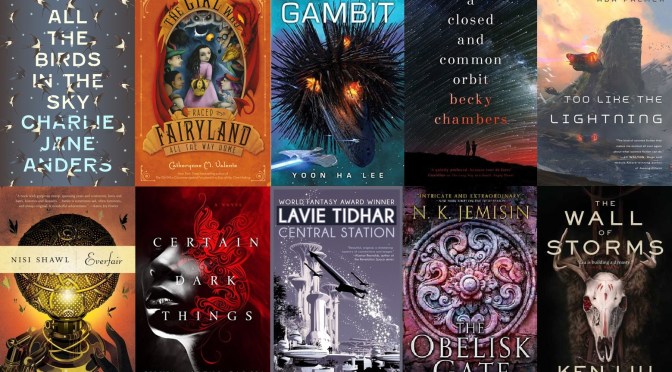
All the Birds in the Sky by Charlie Jane Anders
I said in my original review of All the Birds in the Sky, way back in January, that I didn’t think anything else I was going to read in 2016 was going to top it. In hindsight, it was really early to say that. I don’t think I would now say that this book is the best thing I read in 2016, but it is my favorite standalone novel of the year for sure. That said, I love this book with the passion of a thousand burning suns. The older book that it most reminds me of is Good Omens by Neil Gaiman and Terry Pratchett, another book that I have a furious adoration for, but it’s not really very much like that book at all, at least not in any specific or quantifiable way. Rather, it’s sweet and funny and whimsically magical in a way that I find comforting, and that’s something that I enjoyed at the beginning of 2016 and that I need at the end of it. I feel very certain that, like Good OmensAll the Birds in the Sky will be a book that I will return to time and time again in the future whenever I want to read for peace and quiet.
The Obelisk Gate by N.K. Jemisin
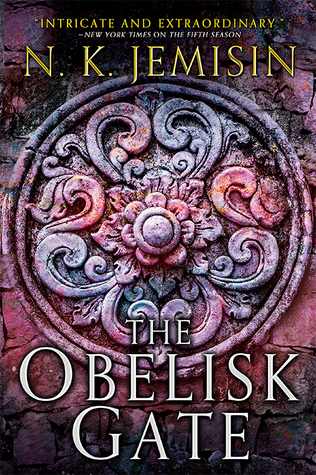
The Fifth Season was one of the most brilliant and ambitious novels of 2015, and I honestly didn’t think there was any way The Obelisk Gate would be as good as its predecessor. And maybe it isn’t, because The Fifth Season really is that incredible, but it’s damn close. In The Obelisk Gate, Essun’s story picks up where it left off at the end of the first book, and we’re taken back in time to pick up the point of views of Essun’s daughter, Nassun, and the Guardian, Schaffa. It’s much more obvious in this book how all the point of views are interconnected, though Essun feels somewhat cut off from the others for most of the novel, so there’s none of the build up and mystery and satisfying revelation that The Fifth Season offered. Probably you can really only do that once. And so, The Obelisk Gate is in many ways far more straightforward and traditionally structured than The Fifth Season, but what The Obelisk Gate lacks in structural ingenuity and novelty it more than makes up for with worldbuilding and thematic ambition. The world of the Stillness gets far more detailed this time around, and we learn a lot more about the orogenes, their powers, and the Guardians’ purpose. By the end of the book, the outlines of an epic confrontation in the third book (The Stone Sky, out in August 2017) have begun to crystallize, and I cannot wait to read it.

The Wall of Storms by Ken Liu
Ken Liu has been on fire the last couple of years, and he’s quite deservedly been getting a lot of attention for his work as a translator and editor. His collection of his own short fiction, The Paper Menagerie and Other Stories, was released earlier this year to widespread acclaim, and he is working hard to help bring Chinese sci-fi to Anglophone readers, with a collection of it, Invisible Planets, out a couple months ago. Liu is such a busy guy doing so much important and attention-worthy work that it would be easy to overlook his epic fantasy series, The Dandelion Dynasty, of which The Wall of Storms is the second installment. It would be a huge mistake to overlook this book. Last year’s The Grace of Kings was a gorgeously ambitious book, but my feelings were somewhat ambivalent about it, mostly because of its lack of female characters and the marginalization of what few there were in favor of focusing on the friendships and relationships between men. The Wall of Storms more than makes up for that, and largely redeems its predecessor in hindsight, so if you were put off by that aspect of the first book in the trilogy be sure to give this one a chance. The Wall of Storms expands upon the world Liu created in The Grace of Kings and takes a good, hard look at the aftermath of a revolution, the qualities and values of leaders, the philosophy of governance, and the legacies of conquest and colonization. This is an even more ambitious, erudite and complex novel than the first book in the series, and it deserves to be a serious contender for next years genre awards.

Everfair by Nisi Shawl
Everfair is the book I fell in love with in 2016 that is most outside my normal reading comfort zone. I rarely read steampunk at all–it’s just not really my thing, as a general rule–and never any steampunk as literary as this, so Everfair was a definitely challenge for me. At its heart, though, I think Everfair may be best understood as a sprawlingly epic historical romance, a multi-generational family drama that largely revolves around the difficult relationship between mixed-race but light-skinned Frenchwoman Lisette and her white lover, Daisy. Writing from multiple points of view in vignettes that span some thirty years, Nisi Shawl imagines an alternate history of the Congo in which genocide never happened and instead a utopian society sprang up where people of many races work together to try and build a place where all are welcome. It’s against this backdrop that Shawl examines race issues as they affect the fledgling country of Everfair as well as Lisette and Daisy’s relationship. It’s a book about identity, politics, power dynamics, and the complexities of the human heart. In a year that has been so marked by racism, cynicism, and lack of empathy for others, a beautifully thoughtful and humanist novel like Everfair should be considered required reading.

Ninefox Gambit by Yoon Ha Lee
Yoon Ha Lee’s short fiction collection, Conservation of Shadows, was one of my favorite reads in 2015, so I was thrilled when I learned that he would be publishing his first novel this year and set in the same universe as one of my favorite stories from Conservation of ShadowsNinefox Gambit did not disappoint. In a universe ruled by a hexarchate that maintains control over numerous planets and space stations by way of strict calendrical mathematics laws that dictate the limits and workings of reality itself, it’s vastly important that everyone stick to the same calendar. When heretics threaten the system by developing their own calendar–and their own technology based upon it–Captain Kel Charis is forced to join forces with the remains of one of the hexarchate’s most brilliant military tacticians in order to quash the rebelling faction. The problem is that Shuos Jedao, while gifted, is also considered to be insane after a legendary incident in which he was responsible for the massacre of two armies. Charis has to figure out how to utilize Jedao’s expertise to accomplish her assignment without being manipulated by him or falling prey to his madness. In some ways this book feels like setup for the rest of the series to follow, but it stands well on its own merits as a strange and marvelously beautiful piece of military sf/space opera.

Too Like the Lightning by Ada Palmer
I don’t think there’s every been a book quite like Ada Palmer’s debut novel. Too Like the Lightning is a complex, challenging, wildly original book that contains several slowly and methodically unfolding mysteries in its pages. Where Palmer shines brightest, however, is in the worldbuilding department. The utopian future imagined here is in turns alluring and alien and at times faintly sinister, especially as the story goes on and more of the dystopia within the utopia is revealed. I loved the crash course in 18th and 19th century philosophy I got while reading this book, between Palmer’s excellent exposition and my own googling and wikipedia reading (I highly recommend brushing up on at least the bare bones of the Enlightenment before reading this one), and I loved the book’s exploration of the tension between the personal and the political, individualism and collectivism, freedom and justice. Too Like the Lightning won’t be a book for everyone–I expect some readers to be turned off by how cerebral it is, while others will find some of the book’s darker elements disturbing–but I found it singularly riveting and can’t wait to read the sequel, Seven Surrenders, in 2017.

A Closed and Common Orbit by Becky Chambers
Becky Chambers’ The Long Way to a Small, Angry Planet was my favorite book of 2015, so I was thrilled when I learned that there would be a companion novel coming out this year. A Closed and Common Orbit picks up right at the end of The Long Way and follows the development of Lovelace (who quickly renames herself Sidra) after she leaves the Wayfarer in the android body kit that was originally meant for her previous installation, Lovey. The other half of Orbit deals with the backstory of Pepper, who was a minor character in The Long Way but plays a major role in Sidra’s story here before the two stories fully intersect at the novel’s climax. Orbit has significant thematic overlap with The Long Way, with both books dealing with ideas about families and homes of choice, but Orbit is a more focused book with a much smaller cast of characters who are mostly tied to a particular location rather than roaming the galaxy. The journeys here aren’t necessarily more personal, but they are more internal and specific to Sidra and Pepper, who are Orbit‘s only POV characters, which is a smart way for Chambers to continue covering similar emotional ground while still setting this second book neatly apart from the first. It’s a wonderful bit of optimistic, joyful comfort reading of a sort that I know that I, personally, always enjoy.

Certain Dark Things by Silvia Moreno-Garcia
Silvia Moreno-Garcia is a new-to-me-in-2016 author, though I suppose she was on the edge of my radar for a couple of years before I finally picked up her first novel, Signal to Noise. If you’ve read her earlier novel, Certain Dark Things is not very like it at all. Whereas Signal to Noise was on the far magical end of magical realism, Certain Dark Things is very explicitly supernatural and full of some of the coolest vampires I’ve read about in ages. There’s very little new ground to be covered in the vampire genre, and it’s easy to identify the ways in which Moreno-Garcia’s vampires are derivative of previous fictional bloodsuckers, but it’s also clear that Moreno-Garcia knows the genre well. The novel is peppered with references to enough pop-cultural vampires and vampire tropes that genre conventions Moreno-Garcia utilizes have been chosen with care. Certain Dark Things has a wonderful sense of place (like Signal to Noise, it’s set in Mexico City) and a distinctive dark sensibility (eschewing true romance, unlike many similar vampire stories) that sets it apart from the crowd. Moreno-Garcia has also built enough mythology and done enough worldbuilding here that it would be easy for her to revisit the setting and expand upon the ideas of this book. I’m not certain if that would be a necessary or desirable thing, as it’s easy for vampire stories to become overwrought and cliche, but if there’s never a sequel or companion novel to this one, Silvia Moreno-Garcia has already done a great job of injecting some fresh blood into an old genre.
Central Station by Lavie Tidhar
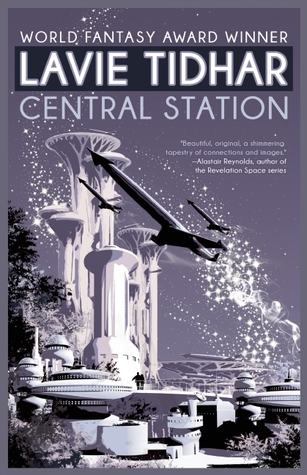
Lavie Tidhar has been around for a while as an author and editor, but Central Station is the first of his books I’ve read and I still haven’t gotten around to reading any more. I hate to say that what attracted me to this title first was its gorgeous cover, but it’s true. It’s got such a wonderfully retro feel to it with its monochromatic color scheme and phallic rockets and towers, I just knew it would be a book I would want to have on my shelf. It was a pleasant surprise to find out that the innards of Central Station were every bit as enchanting as its outside. In the future, Tel Aviv is now at the base of a giant space station, and millions of people now come and go through the city while millions more live their lives in the space station’s shadow. Tidhar collects and connects vignettes of life around Central Station to create a wonderful tapestry of thoughtful futurist mythmaking. A strange child grows up looking for others like himself. A man returns from space and reconnects with an old lover. A cyborg soldier leftover from a great war falls in love. A robot priest guides his flock. While the book isn’t as entirely cohesive as it might have been if it was written on purpose rather than cobbled together from earlier short fiction, Tidhar has nonetheless successfully arranged numerous slices of life into an overall pleasing composition that paints a compelling picture of a possible future.
The Girl Who Raced Fairyland All the Way Home by Catherynne M. Valente
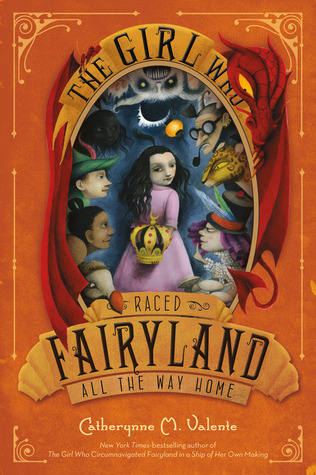
This isn’t Catherynne M. Valente’s best book. It’s not even the best book of her Fairyland series, for all that it is a wonderful ending to September’s story. But “not Cat Valente’s best” is still incredible. As with all the previous Fairyland books, this one is beautifully written. Valente has a true gift for language, and I never get tired of reading as much of her work as is available each year. The Girl Who Raced Fairyland All the Way Home smartly subverted my expectations–which in hindsight I ought to have expected–and gave September exactly the happy ending that she most deserved. I wept many bittersweet tears at the end, not least because I was sad that my daughter, now thirteen, has been too old to want me to read the last couple of books aloud to her like I did when she was smaller. I say it every time I review this series, but I cannot recommend enough that you find a small child–your own or any one that you can borrow from a friend or relative–and read these books aloud with them. If you can’t do that, maybe get the audio books and let someone read them to you. Valente’s sumptuous descriptions and excellent alliterations deserve to be spoken as often as possible.
The Best of 2016: Novellas

love novellas, and this year they constituted about a third of my reading. I’m still reading almost all of the Tor.com novellas as they come out, and I’ve started paying more attention to other novella-length work, though I still stick to professionally published books rather than delving into the vast world of self-pubbed stuff out there. Consequently, this list is definitely a bit biased towards the Tor.com books, but I did try to check out some different stuff in 2016. If I missed one of your favorites, be sure to leave it in the comments.

Coral Bones by Foz Meadows
2016 was a good year for Foz Meadows, whose most recent novel, An Accident of Stars, is a fun, fresh and feminist take on the portal fantasy genre. However, this short novella–included in Abaddon Books’ Monstrous Little Voices: New Tales from Shakespeare’s Fantasy World–is wonderful. It’s a new perspective on The Tempest‘s Miranda, and Meadows takes a look at what it might really mean for a young person’s identity to be brought up in that kind of isolation. It’s a thoughtful portrait of an outsider figuring out their place in the world, a clever riff on Shakespeare’s own themes, and a playful update to a very old classic.
Buy it here.
Or buy the collection here.

The Ballad of Black Tom by Victor LaValle
There were several Lovecraft-inspired novellas published in 2016, but Victor LaValle’s is definitely the best of them. The Ballad of Black Tom is directly in conversation with Lovecraft, being a retelling of sorts of the insidiously racist short story “The Horror at Red Hook,” and LaValle ably weaves together a general critique of Lovecraft’s racism with a fairly straightforward tribute to Lovecraft’s enduring influence on the genre, crafting a smartly written and well-paced homage that perfectly encapsulates the complicated feelings that many people have towards Lovecraft.
Buy it here.
Read “The Horror at Red Hook” here.

Lustlocked and Pride’s Spell by Matt Wallace
Matt Wallace’s Sin du Jour series continued this year with its second and third installments, and they are excellent. Matt Wallace has a gift for telling funny stories that aren’t trying to be too clever, and each volume of this series is better than the one before. Wallace starts with a simple joke and focuses on creating a diverse cast of interesting characters to carry the story, and it works. Every time.
Buy Lustlocked.
Buy Pride’s Spell.
Buy Envy of Angels (the first book in the series).
Pre-order book four, Idle Ingredients.
Read the Sin du Jour short story, “Small Wars.”

Runtime by S.B. Divya
I would never have guessed I would love Runtime as much as I did, as I’m generally not into anything even remotely sports-related, but this story about a young woman entering a cyborg race with the hope of bettering herself and achieving a more secure future for her family is a fantastic fast read.
Buy it here.

Spiderlight by Adrian Tchaikovsky
While I haven’t been as into nostalgia in my media as some have this year, I absolutely adored this D&D-ish sword and sorcery adventure from Adrian Tchaikovsky. It’s got an unexpected and unique protagonist, some interesting ideas, and an entertaining villain. Tchaikovsky pokes gentle fun at some classic tropes and deftly uses others in a way that shows his deep love for and broad knowledge of the genre.
[Edit: Just learned that Spiderlight is actually 300 pages long, so not actually a novella. I was so delighted by it that I rushed through it in a single sitting and didn’t even notice.]
Buy it here.

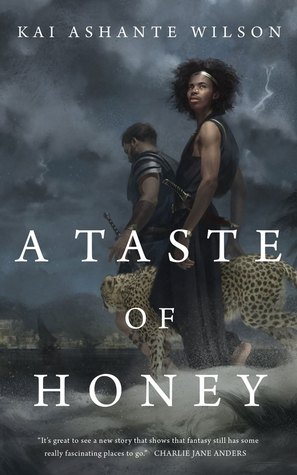
A Taste of Honey by Kai Ashante Wilson
Kai Ashante Wilson’s 2015 novella, Sorcerer of the Wildeeps, marked him as an author to watch, and this 2016 effort, set in the distant past of the same world, establishes Wilson as one of the most original and compelling voices in fantasy right now.
Buy it here.

The Convergence of Fairy Tales by Octavia Cade

The Convergence of Fairy Tales is this year’s Book Smugglers Halloween horror story, and it’s also their very first novella. Hopefully, it’s the first of many, because it’s really, really good. The unifying theme behind many of my favorites of 2016 is rage, and this is a very angry book. Which makes sense, as it’s the story of the princess from some of Western culture’s most beloved–and most monstrously unfair–fairy tales, stitched together here as the story of a singular heroine who learns to channel her pain and fury into action that helps her move on from what has been done to her. It’s a powerful validation of rage as a response to injustice and victimization, and it’s beautifully written to boot.
Buy it here.

carrigernovellasPoison or Protect and Romancing the Inventor by Gail Carriger
I have enjoyed Gail Carriger’s steampunk-ish romance adventure novels in the past, but I’ve never gotten hugely into them, and this year I learned why. They’re all just too long. 2016 found Carriger kicking off not one but two novella series–the first dealing with the now-grown characters from her YA Finishing School books and the second detailing the romances of queer minor characters from the Parasol Protectorate and Custard Protocol series–and the first installments of both are delightfully fun and sexy enough to be exactly what I need to fill my occasional desire for light smut.
Buy Poison or Protect.
Buy Romancing the Inventor.

The Raven and the Reindeer by T. Kingfisher (Ursula Vernon)
The Snow Queen reimagined as a queer romance adventure? Yes, please. I do think this book might be over the word count for eligibility as a novella for the Hugo Awards but not by much, and it’s short enough and a fast enough read that it feels more like a novella than even a short novel. Simply magical. If you haven’t read this one yet, it’s the ideal book to curl up with a cup of hot cocoa and a blanket and read on a cold winter’s night.
Buy it here.

Book Review: Goldenhand by Garth Nix

Goldenhand is a welcome return to Garth Nix’s Old Kingdom universe, but it unfortunately feels, overall, a bit half-baked. It’s an enjoyable read if one doesn’t think too hard about it, but the truth is that Goldenhand is problematic in numerous ways that detract from the joy of revisiting such a well-loved fantasy world.

Goldenhand is a direct continuation of Lirael’s story following the events of Abhorsen and picking up about a year or so later. It also incorporates events from the novella The Creature in the Case, which continued the story of Nicholas Sayre after he returns to Ancelstierre at the end of Abhorsen. Lirael has been hard at work learning in her role as Abhorsen-in-waiting to her sister, Sabriel, and she’s given the chance to take on more responsibility when Sabriel and Touchstone go on their first vacation in twenty years. Meanwhile, after accidentally freeing and empowering a dangerous free magic creature, Nick is on his way back towards the Old Kingdom in pursuit of it. Meanwhile, Chlorr is still stirring up trouble in the north, and it turns out there’s a whole previously unmentioned group of people that are being used for Chlorr’s nefarious ends. There’s a lot going on, at least ostensibly. Perhaps the biggest problem with Goldenhand is that, despite the ambitious worldbuilding and great number of things happening, none of it particularly works.

It was interesting at first to be introduced to Ferin and her people, but with only Ferin as a point of view for that part of the world and no sense of what normal life is like for the tribes, there’s ultimately very little to learn about these new people and their culture. Ferin herself has a very specific and non-normative experience within that culture—she was raised to be basically a sacrifice, sequestered from the rest of the tribe and denied even the humanity of a proper name (“Ferin” is from a childish mispronunciation of “Offering”)—and she’s the only one of her people the reader meets directly. The rest are faceless villains and obstacles for our heroes to overcome, and there’s no real sense of who these people are and how they normally fit into the regular fabric of the Old Kingdom. This diminishes the reader’s investment in Ferin’s history and struggle, and it’s not helped along by Ferin’s extremely practical nature. She’s so pragmatic about everything that happens to her that it ends up feeling as if she isn’t affected very much by anything she goes through. This would be frustrating in a minor character, but Ferin is a point of view character for fully half of this book, and it’s extremely difficult to become really immersed in a perspective that is so poorly socialized and without enough context for understanding why and how she’s the way she is. Ferin is a weird character, and not in a good way. Rather, she takes up a lot of page space without ever being compelling enough to be a proper balance or complement to Lirael, who we already know from previous books.

Sadly, Lirael, too, is a lot less interesting this time around. Lirael and Abhorsen were heavily focused on Lirael’s journey to discovering her own identity and finding her place in the world, and there was a clear and well-executed character arc as she came of age. Goldenhand gives us a Lirael who is much more confident and self-assured to start with, which isn’t necessarily a bad thing, but this Lirael doesn’t have nearly so much to learn or so far to travel, for all that she goes fully from one end of the Kingdom to the other. Some attention is paid both to Lirael’s lost hand and her grief over her missing friend, the Disreputable Dog, but neither of these things are given the weight they ought to have. Indeed, Prince Sameth has already built a magical gold hand for Lirael by the start of the book, which effectively erases her disability. Most of Lirael’s thoughts about her hand are marveling at how functional the magical prosthetic is rather than lamenting the loss of the real hand. Similarly, Lirael does at times miss the Dog, but with everything else going on there’s not much time for truly exploring her feelings of sadness and loss. Instead, Lirael’s primary arc in this book is a romantic one, mostly centered around her growing feelings for Nick and her relationship with him. While Lirael’s final dealing with Chlorr/Clariel seems intended to be a climax for the story, it happens quickly and the novel is then ended rather abruptly, which prevents the event from having much emotional weight.

This lack of impact is, frankly, characteristic of Goldenhand. Erasing Lirael’s disability and glossing over her grieving process in favor of focusing on her burgeoning relationship with a man she barely knows (and who doesn’t get much development of his own, by the way) makes for a very slight novel. Both that romance and Lirael’s quest to stop Chlorr once and for all rely far too much on previous books in the series to generate what interest they do hold. If you haven’t read Lirael, Abhorsen, and Clariel (and preferably The Creature in the Case as well), you’re likely to find yourself more than a little at sea in Goldenhand. Goldenhand is not an entry point into the Old Kingdom for new readers; it’s a book for superfans who will consume anything they can get in this setting without being too picky about things making sense. This overall effect might have been counteracted if Ferin’s story was stronger, but Ferin’s goals and purpose are never quite clear; she is trying to do something to save her people I guess, but most of her chapters are taken up by an aimless chase that never manages to feel dangerous or high stakes enough to justify its existence. Instead of acting as a powerful new addition to the series, Ferin’s story functions mostly as a rather dull and uninspired distraction in what might otherwise have been a decent piece of fan service.

While Garth Nix does a lot of work here to expand the world of the Old Kingdom and provide more theoretically fertile ground for, presumably, future sequels, Goldenhand is plagued with enough craft problems and various missteps that it’s hard to get very excited to learn what comes next. Unless it involves queer Ellimere (I mean, come on—everyone else has been paired off heterosexually now) and lots of Mogget (there was not nearly enough Mogget in this book), I can’t say I’m very interested.